The prevalence of healthcare-associated infections in the United States decreased between 2011 and 2015 with the notable exception of pneumonia, including hospital-acquired pneumonia (HAP) and ventilator-associated pneumonia (VAP). The estimated number of cases of these infections remained unchanged, together accounting for ˜25% of healthcare-associated infections. Reference Magill, O’Leary and Janelle1 VAP specifically is associated with prolonged durations of intensive care unit stay, hospital stay, and mechanical ventilation. All-cause mortality associated with VAP ranges from 20% to 65%, compared with mortality rates of 10% to 35% in similar cohorts without VAP; the attributable mortality of VAP is estimated at 13%. Reference Muscedere and Day2,Reference Melsen, Rovers and Groenwold3
Clinical practice guidelines for the management of adults with HAP and VAP, such as those from the Infectious Diseases Society of America (IDSA) and the American Thoracic Society (ATS), seek to inform best practices by using evidence-based guidelines to balance the benefits of effective empiric antibiotic choices with the potential harms of exposure to broad-spectrum therapies that may not be necessary. Reference Kalil, Metersky and Klompas4 For both HAP and VAP, guidelines recommend empiric treatment informed by the local antibiogram, which reflects the prevalence of pathogens and their resistance patterns. In practice, these empiric regimens often include antibiotics, usually vancomycin, with activity against methicillin-resistant Staphylococcus aureus (MRSA), as well as antibiotics active against Pseudomonas aeruginosa and other gram-negative bacteria.
Guidelines also recommend using the results of microbiological studies of respiratory samples to guide antibiotic therapy. Despite the lack of evidence demonstrating that respiratory cultures in patients with HAP or VAP improve clinical outcomes, identifying resistant pathogens permits the adjustment of ineffective initial empiric therapy in patients with a poor clinical response. Conversely, obtaining cultures of respiratory samples can guide de-escalation of unnecessarily broad regimens based on results of antibiotic susceptibility testing, limiting the potential collateral damage of antibiotics. A crucial assumption underlying this rationale is that clinicians respond to microbiological results and adjust antibiotics accordingly. However, the influence of the results of respiratory cultures on antibiotic decisions made by clinicians are often uncertain. To address this dilemma, we used administrative and microbiological data from the Veterans’ Health Administration (VHA) to conduct a retrospective cohort study that assessed changes in antibiotics prescribed to patients with HAP and VAP following results of respiratory cultures, comparing patients with samples that grew respiratory pathogens to patients with cultures that were reported as normal respiratory flora or no growth.
Methods
After obtaining approval from the institutional review board, we conducted a retrospective cohort study of patients treated in the VA healthcare system between October 1, 2014, and September 30, 2018. Using the Veterans’ Affairs Informatics and Computing Infrastructure (VINCI) to access the VHA Corporate Data Warehouse, microbiology tables were queried for cultures from sputum, bronchial alveolar lavage fluid, and endotracheal aspirates collected ≥3 days following hospitalization. Inclusion criteria were patients with an International Classification of Disease (ICD) code for pneumonia, a current procedural terminology (CPT) code indicating a chest radiograph or computerized tomography (CT) scan between the day before specimen collection and day 7 as well as being on antibiotics the day before, the day of, or the day following sample collection (Supplementary Table 1 online). Reference Zilberberg, Nathanson, Sulham, Fan and Shorr5
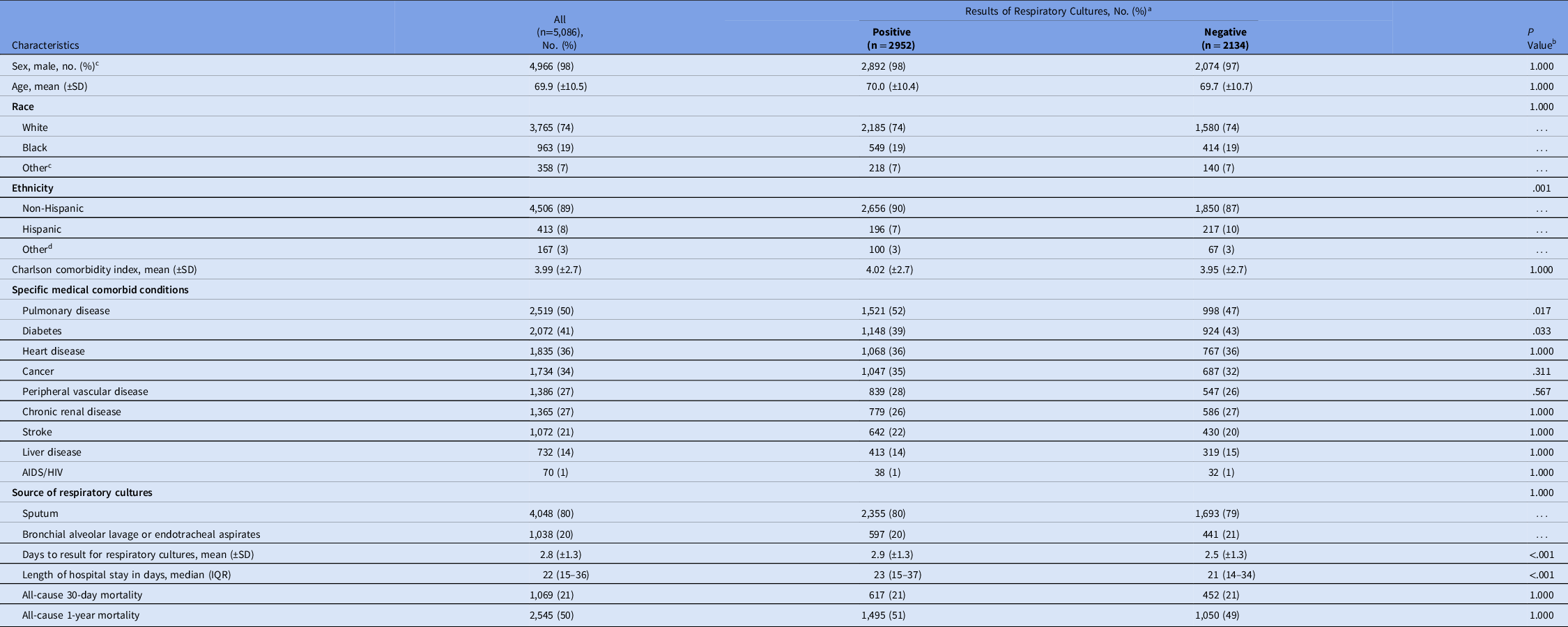
Characteristics of Patients with Hospital-Acquired Pneumonia and Ventilator-Associated Pneumonia at the Veterans Health Administration between Fiscal Years 2015–2018

Note. SD, standard deviation; IQR, interquartile range.
a All values written as no. (%) unless otherwise indicated.
b P-value compares cases with positive and negative respiratory cultures. Bonferroni adjustments were applied to P values.
c Positive cultures yielded growth of a respiratory pathogen; negative cultures were described as normal flora, negative, or no growth.
d Other includes American Indian, Alaska Native, Asian, Native Hawaiian or Pacific Islander and unknown; ethnicity includes unknown.
Exclusion criteria based on respiratory cultures were those rejected by the microbiology laboratory (defined as a laboratory comment consistent with rejection), a final culture result date that was the same as the specimen received date, cultures with a missing result date, or cultures that were not finalized within 7 days of sample collection. Exclusion criteria based on patients, which were designed to exclude those with community-acquired pneumonia, were respiratory samples were collected within ≤2 days of hospital admission, those for whom positive blood cultures were collected within ≤2 days of hospital admission, and those with ICD codes for pneumonia in the 90 days prior to hospital admission. To assess changes in antibiotics based on the culture results, we also excluded patients who died or were discharged within the 5 days following collection a respiratory culture. We sampled 50 patients from the cohort and reviewed their medical records to assess the validity of our inclusion and exclusion criteria; 26 had HAP and 24 had VAP.
We analyzed the incident case for each patient and assessed the following: age, sex, race, ethnicity, Charlson comorbidity index (CCI), length of stay, and all-cause mortality at 30 days and 1 year. The CCI was determined using ICD codes. Reference Quan, Sundararajan and Halfon6 For respiratory cultures associated with each case, we determined the date and time of receipt in the microbiology laboratory as well as the date and time of the final report including, when available, identification of bacterial species and results of antibiotic susceptibility testing. For antibiotic prescriptions associated with each case, we determined the antibiotics received on the day the respiratory sample was collected (day 0) and each subsequent day through day 7. We further characterized antibiotics using the Antibiotic Spectrum Index (ASI) score. Reference Gerber, Hersh, Kronman, Newland, Ross and Metjian7
For comparisons between groups, we used t tests or Kruskal-Wallis tests for continuous variable and χ Reference Muscedere and Day2 tests for categorical variables. Bonferroni adjustments were applied in 3 instances: (1) tests comparing characteristics and outcomes across patient groups; (2) tests comparing distribution of ASI values between patient groups over time; and (3) tests comparing the proportion of patients in each group receiving a given antibiotic class over time. All statistical analyses were performed using R version 4.0.2 software (R Foundation for Statistical Computing, Vienna, Austria) with data management and graphics from several packages. Reference Development Core Team8–Reference Kassambara, Kosinski, Biecek and Fabian14
Results
Within the VHA healthcare system between fiscal years 2015 and 2018, 20,147 hospitalized patients were treated for pneumonia, for whom 53,083 respiratory samples were collected ≥3 days after admission (Supplementary Fig. 1 online). After excluding cases in which the respiratory sample was rejected by the microbiology laboratory and then excluding cases of possible community-acquired pneumonia, our cohort included 5,092 patients with 5,143 respiratory cultures that either grew a respiratory pathogen (henceforth positive) or were described as normal flora, negative or no growth (henceforth negative). An additional 6 patients were excluded because they had both a positive and negative respiratory culture result associated with the same case.
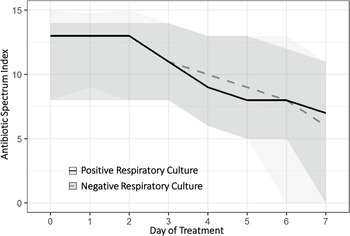
Change in the antibiotic spectrum index (ASI) score in the week following collection of a respiratory culture (day 0) from patients with hospital-acquired or ventilator-associated pneumonia. The line is the mean ASI with the surrounding shaded area indicating the interquartile range. The solid black line with the lighter background indicates respiratory cultures with a positive microbiological result, and the dashed grey line with the darker background indicates respiratory cultures that were negative, no growth, or grew normal flora. The interquartile range for the groups overlaps. There are no differences between the distributions of ASI except for day 7 (adjusted Kruskal-Wallis P < .001).

Our final cohort included 5,086 patients with an incident case of HAP or VAP: 2,952 (58%) with positive and 2,134 (42%) with negative cultures (Table 1). The mean age of the patients was 69.9 years (SD, ±10.5). Most patients were white (74%) and non-Hispanic (89%), with a mean Charlson comorbidity index of 4.0 (SD, ±2.7). The most common comorbid condition was chronic pulmonary disease, which affected 2,519 patients (50%). Substantive differences in the demographics or comorbid diseases between the HAP/VAP patients with positive and negative respiratory cultures were not evident. Notably, all-cause mortality was similar for those with positive compared to negative respiratory cultures: 21% at 30 days and ˜50% at 1 year (Supplementary Fig. 2 online).
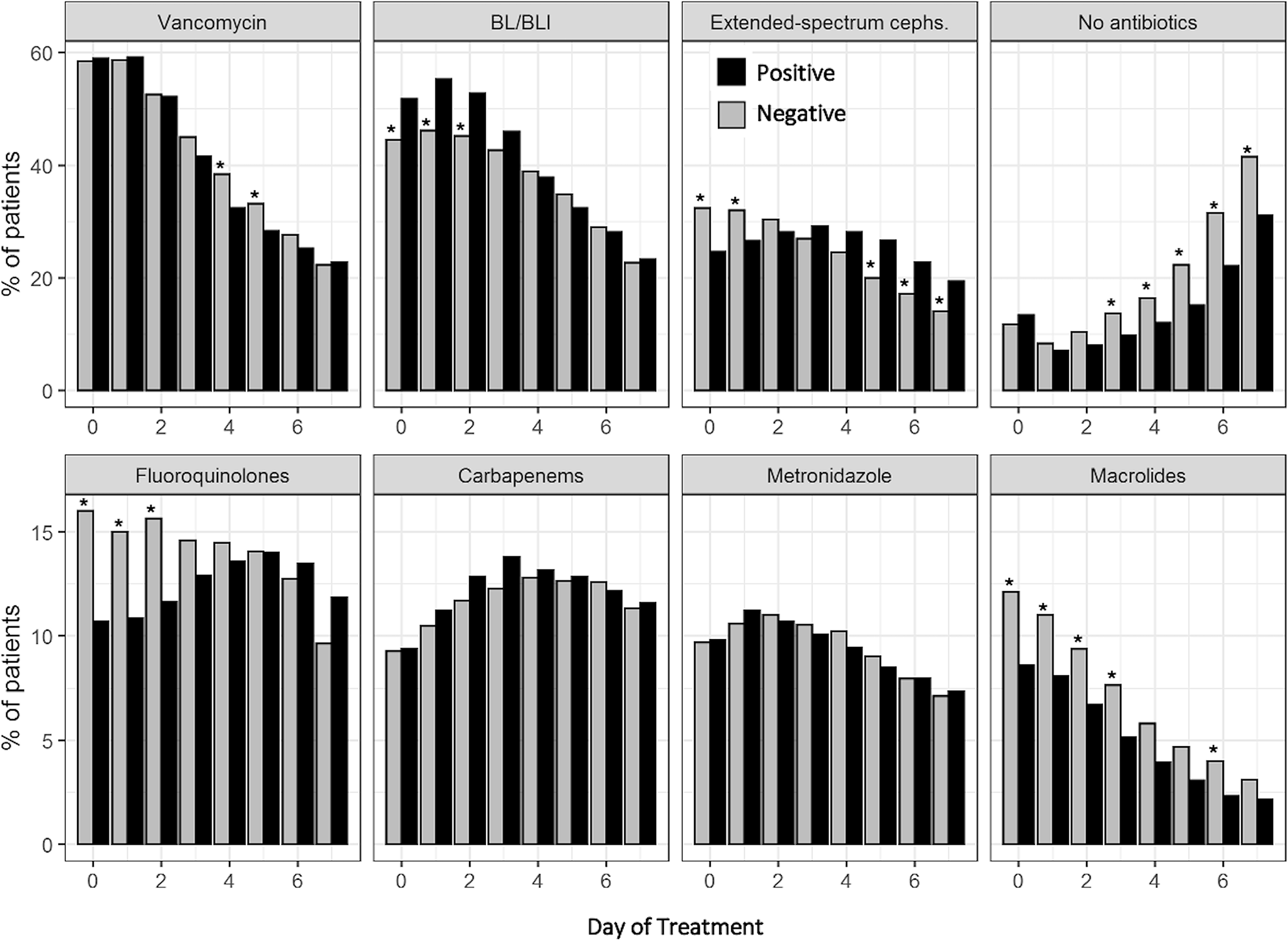
Changes in antibiotic classes prescribed to patients with hospital-acquired or ventilator-associated pneumonia. The y-axis indicates the proportion of patients receiving different classes of antibiotics on day of sample collection (day 0) through day 7 after sample collection. Black bars indicate patients with respiratory cultures positive for a respiratory pathogen; grey bars indicate patients with respiratory cultures recorded as negative, no growth, or normal flora. The scale for the y-axis differs in the upper and lower graphs. * indicates a significant difference (Bonferroni-adjusted P < .05) between the percent of patients with positive compared to negative respiratory cultures for that day. BL/BLI; β-lactam/β-lactamase inhibitors. Extended-spectrum cephalosporins are detailed in Supplementary Table 2 (online).

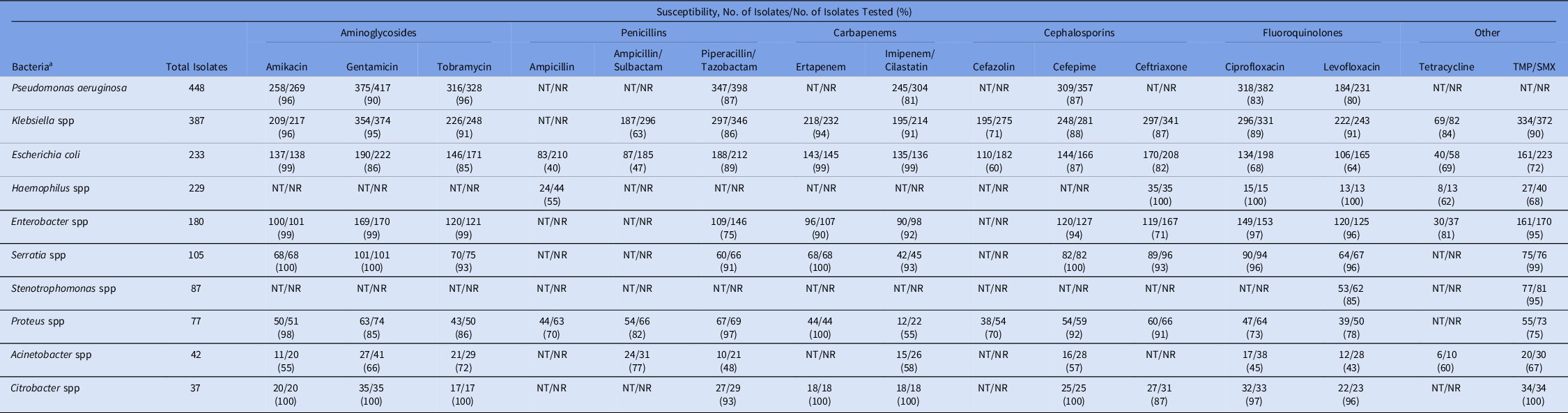
From the 5,131 respiratory-tract samples that were cultured, the mean time to a final result was 2.8 days (SD, ±1.3); positive cultures returned later (2.9 days; SD, ±1.3) than negative cultures (2.5 days; SD± 1.3; adjusted P < .001). From the 2,952 cases with positive cultures, microbiology reports identified 3,881 organisms, of which 825 (21%) were fungi, including 547 isolates of Candida spp. Among the 3,056 bacterial isolates, the most common gram-positive organism was Staphylococcus aureus (n = 697) (Table 2). Of those, 638 isolates were tested for oxacillin susceptibility and 328 (51%) were resistant. Pseudomonas aeruginosa was the most common gram-negative bacterial species reported (n = 448) (Table 3). The susceptibilities of P. aeruginosa isolates follow: 81% were susceptible to imipenem/cilastin, 83% to ciprofloxacin, 87% to cefepeime, 87% to piperacillin/tazobactam, and 96% to amikacin. Lactose-fermenting gram-negative bacteria, including 387 isolates of Klebsiella spp and 233 of Escherichia coli and, were also common.
Gram-Positive Bacteria Recovered from Respiratory Cultures from Patients with Hospital-Acquired or Ventilator-Associated Pneumonia and Susceptibilities to Antibiotics

Note. TMP/SMX, trimethoprim/sulfamethoxazole; NT/NR, not tested/not relevant.
a Additional isolates (not shown): Corynebacterium spp. (n=18), other gram-positive organisms, not further specified (n=9), Bacillus spp (n=7), Diptheroids (n=6), Rothia spp. (n=5), Micrococcus spp (n=2), and Actinomyces spp (n=1).
Gram-Negative Bacteria Recovered from Respiratory Cultures from Patients with Hospital-Acquired or Ventilator-Associated Pneumonia and Susceptibilities to Antibiotics

Note. TMP/SMX, trimethoprim/sulfamethoxazole; NT/NR, not tested/not relevant.
a Additional isolates (not shown): other gram-negative organisms, not further specified (n=54), Moraxella spp (n=44), Morganella (n=15), Pseudomonas spp other than P. aeruginosa (n=9), Providencia (n=8), Achromobacter (n=7), Raoultella spp (n=6), Hafnia alvei (n=5), Alcaligenes spp (n=4), Neisseria spp (n=4), Legionella spp (n=4), and ≤3 isolates from the following genera: Pasteurella, Eikenella, Aeromonas, Bordatella, Capnocytophaga, Cedecea, Kluyvera, Panotea, and Salmonella.
To evaluate the impact of the results of respiratory samples on clinical decisions regarding antibiotic use, we assessed the ASI scores from the day of specimen collection (day 0) through day 7. From a median of 13 on day 0, the ASI score for patients with positive and negative respiratory cultures decreased to 8 by day 6, indicating a de-escalation of antibiotics in general (Fig. 1). Assessment of the proportion of patients receiving specific antibiotic classes showed a steady decrease in the most commonly prescribed classes, vancomycin and β-lactam/β-lactamase inhibitor combinations (BL/BLIs), starting on day 1 (Fig. 2). Macrolides, which were prescribed to fewer patients overall, followed a similar pattern. Comparing the use of antibiotic classes between HAP/VAP patients with positive and negative respiratory cultures, the most notable finding was the increased proportion of patients with negative cultures off antibiotics from day 3 onward. Patients with negative cultures were also more likely to receive macrolides. Patients with positive cultures were more likely to receive BL/BLIs from days 0 to 2 and extended-spectrum cephalosporins from days 5 to 7. For antibiotics classes that are infrequently prescribed, a greater proportion of patients with positive cultures received first- or second-generation cephalosporins and penicillins, whereas a greater proportion of those with negative cultures received tetracyclines (Supplementary Fig. 3 and Supplementary Table S2 online).
Discussion
This comparison of antibiotics administered to VHA patients who had HAP/VAP demonstrated little substantive differences between patients with positive and negative cultures, suggesting that results of respiratory cultures were not a strong influence on antibiotic treatment decisions. The changes in the proportion of patients on specific antibiotic classes indicates that clinicians modify the empiric antibiotic regimens initial chosen during treatment of patients with HAP/VAP. The decrease in the most commonly prescribed antibiotics and corresponding increase in the number of patients without antibiotics suggests that de-escalation and antibiotic discontinuation altogether were aspects of the clinical practice for patients with HAP/VAP. Our results suggest that the outcomes of respiratory cultures were not a strong factor for those clinical decisions.
Comparisons of demographics, pre-existing medical conditions, and source of respiratory samples between those with positive and negative culture results indicated that our cohort was homogenous. Although the median length of hospital stay was slightly longer for those with negative cultures, this likely did not represent a meaningful clinical difference. The groups within our cohort had nearly identical rates of survival at 30 days and 1 year of 21% and ˜50%, respectively, which are consistent with previous reports. Reference Muscedere and Day2,Reference Kalil, Metersky and Klompas4
In addition to the similar rate of antibiotic de-escalation among those with positive and negative respiratory cultures, assessment of specific classes also showed some interesting findings. For BL/BLIs, extended-spectrum cephalosporins, and fluoroquinolones, significant differences were evidenct between those with positive and negative respiratory cultures on days 0 through days 1 or 2, before the microbiology reports were finalized for either group. Given the overall homogeneity of the cohort, these differences may reflect clinical decisions based on microbiological results that preceded these cases; the VHA electronic medical records facilitated review of previous culture data going back months to years. Decisions to prescribe BL/BLIs empirically, for example, may have been based on the microbiological history for those individuals. Following the return of the microbiological results, those with positive results were more likely to remain on extended-spectrum cephalosporins, suggesting that these decisions were based on the identification of specific bacterial pathogens and their accompanying susceptibility data.
Purposeful de-escalation, an important antibiotic stewardship practice, is inferred from the increase in the proportion of all patients not on any antibiotics from day 2 onward. Reference Dellit, Owens and McGowan15 This correlated with the proportion of patients on BL/BLIs also decreased from >45% on day 1 to <25% by day 7. The use of vancomycin decreased from >55% of patients receiving this agent on days 0 and 1 to <25% by day 7. These results suggest that prescribers were adhering to recommendations to stop empiric coverage for MRSA if microbiological evidence of this pathogen was not present. Reference Dangerfield, Chung, Webb and Seville16,Reference Parente, Cunha, Mylonakis and Timbrook17 The finding that more patients with negative respiratory cultures were off antibiotics was likely multifactorial. One possibility is that negative cultures supported clinical decision-making favoring noninfectious diagnoses.
The microbiological data reported here resonate with other efforts to identify bacterial pathogens associated with HAP/VAP. Reference Naidus, LaSalvia, Marcantonio and Herzig18–Reference Weber, Rutala, Sickbert-Bennett, Samsa, Brown and Niederman20 Because S. aureus was a predominant pathogen and ˜50% of isolates were methicillin-resistant, empiric coverage for MRSA in patient with HAP or VAP is justified. Reference Kalil, Metersky and Klompas4 The resistance profiles of gram-negative bacteria reflect trends previously observed at VHA and illustrate the challenge of selecting effective empiric antibiotic therapy in patients with HAP/VAP. Reference Madaras-Kelly, Jones and Remington21,Reference Jones, Jones and Huttner22 Local antibiograms and evaluation of risk factors for multidrug-resistant organisms likely serve as the best guide to determine which agent to select for empiric treatment against extended-spectrum β-lactamase–producing Enterobacterales, carbapenem-resistant Enterobacterales, and P. aeruginosa, among other difficult-to-treat gram-negative bacteria. Aminoglycosides retained good activity, and their use can be considered as part of combination regimens for the treatment of HAP/VAP in patients at high risk for mortality. Reference Kalil, Metersky and Klompas4
The impact of microbiological studies with faster results on the antibiotic management of HAP/VAP is an area of active investigation. In our cohort, conventional microbiologic methods for organism identification and antibiotic susceptibility testing were applied, with most results available after 2 or more days. MRSA nasal screening, which yields results more quickly than conventional microbiological cultures, has a poor positive predictive value (45%) and high negative predictive value (95%) for MRSA as a cause of pneumonia, assuming a prevalence of 10%. Reference Parente, Cunha, Mylonakis and Timbrook17 A meta-analysis examining the utility of Gram stains on respiratory samples in patients for whom a diagnosis of VAP is being considered (and assumes a 20%–30% prevalence of VAP among that group) estimated a high negative predictive value of a negative Gram stain (91%) and a poor positive predictive value of a positive Gram stain (40%), suggesting that a positive Gram stain should not be used to narrow therapy until cultures are available. Reference O’Horo, Thompson and Safdar23 A planned randomized control trial to assess antibiotic treatment of VAP based on Gram stain results may offer additional insights. Reference Yoshimura, Yamakawa, Kinoshita, Ohta and Morimoto24 PCR-based diagnostics can detect pathogens and resistance mechanisms in respiratory samples of patients with HAP/VAP within hours. Reference Enne, Baldan and Russell25 Digital microscopy permits phenotypic antibiotic susceptibility testing from blood cultures samples within several hours Reference Ehren, Meißner and Jazmati26 and may become available to support antibiotic treatment decisions in HAP/VAP in the future.
Other studies from the VA have explored relationships between the results of microbiological studies and antibiotic use in patients with pneumonia. A study of patients treated at the VHA between 2008 and 2011 for healthcare-associated pneumonia (HCAP), which is retired terminology, found that de-escalation occurred in 35% of patients with positive cultures from lower respiratory tract samples without negative impact on patient outcomes. Reference Madaras-Kelly, Jones and Remington21,Reference Bohan, Remington, Jones, Samore and Madaras-Kelly27 Jones et al Reference Jones, Jones and Huttner22 focused on cultures obtained during the first 2 days of hospitalization in patients with the diagnosis of pneumonia between 2006 and 2010 and found increased use of broad-spectrum agents despite low prevalence of MRSA and Pseudomonas spp, suggesting poor matching between antibiotic coverage and pathogens. Reference Jones, Jones and Huttner22 Additional analyses focused on cases occurring between 2009 and 2010 found poor correlation between the probability of empiric antibiotic coverage and the probability of detecting MRSA and P. aeruginosa, suggesting that respiratory samples that yield microbiological data could better align antibiotic regimens with resistant pathogens. Reference Jones, Brown and Jones28 Analysis of pneumonia cases diagnosed at VA medical centers 3 days after hospitalization for patients admitted between 2012 and 2015 showed that thresholds for administration of empiric coverage against MRSA when its prevalence is 20%–30%, as recommended by Infectious Diseases. Society of America/American Thoracic Society (IDSA/ATS) guidelines, is associated with overtreatment. Reference Bostwick, Jones, Paine, Goetz, Samore and Jones29 Taken together, these studies point to the utility of results of microbiological studies to guide the management of patients with pneumonia. The findings presented here for HAP/VAP suggest that additional guidance of how to respond to culture results may enhance ongoing antibiotic stewardship efforts. The observed decrease in vancomycin use, which aligns evidence-based recommendations regarding MRSA that are easy to understand and widely applicable, is one such example. In contrast, implementing similar practices for gram-negative pathogens remains a particular challenge, notwithstanding existing guidelines. Reference Kalil, Metersky and Klompas4,Reference Tamma, Aitken, Bonomo, Mathers, van Duin and Clancy30
Our study has important limitations. First, it was not designed to assess the appropriateness of antibiotic therapy according to bacterial identification and antibiotic susceptibility testing results. Further, we did not assess the clinical events and reasoning related to each case such as recent antibiotic exposure, concomitant infections, or other issues considered by the treating clinicians. Second, to focus on antibiotic modifications following microbiological results from respiratory samples, we excluded patients with positive blood cultures. Blood cultures can improve the yield of microbiological diagnosis of HAP and VAP Reference Bostwick, Jones, Paine, Goetz, Samore and Jones29 and are more frequently obtained than respiratory samples. Reference Jones, Jones and Huttner22 Third, we did not attempt to differentiate between HAP and VAP. Rather, we tailored our inclusion and exclusion criteria to use administrative data to differentiate HAP and VAP from community-acquired pneumonia. Fourth, we excluded patients who died within 5 days of culture specimen, introducing a survival bias into our cohort that we found acceptable given the aim of our investigation. Finally, the ASI accounts for all of the antibiotics administered on a given day, such that de-escalation to a new agent (eg, changing from meropenem to ceftriaxone) will result in a higher total ASI for that day. This factor may have inflated the ASIs earlier in the course of therapy, whereas the ASIs from later in the course reflected definitive antibiotic choices that were less subject to change. Evaluation of the proportion of specific antibiotic classes, as well as the proportion of patients off antibiotics, confirms the general trend of antibiotic de-escalation following specimen collection.
The treatment of patients with HAP or VAP is challenging because of the inherent tension between risks associated with ineffective antibiotic therapy and the potential for collateral damage of broad-spectrum antibiotics. Results of microbiological testing of respiratory samples have the potential to guide clinicians as they adjust ineffective treatments or de-escalate antibiotic regimens. Overall, our observations in a cohort of VHA patients with HAP/VAP indicated that respiratory culture results had little influence on modifications in the spectrum of antibiotic regimens. Rather, antibiotic de-escalation was common among all HAP/VAP patients. Future efforts to improve antibiotic use in patients with HAP or VAP may be enhanced by rapid diagnostics as well as by further implementation of evidence-based recommendations, similar to those for stopping empiric coverage against MRSA, that are relatively easy to apply to most patients. Finally, the results indicate that the general integration of antibiotic stewardship principles, including de-escalation, into clinical care of patients with HAP or VAP at the VHA.
Supplementary material
To view supplementary material for this article, please visit https://doi.org/10.1017/ice.2021.186
Acknowledgments
The findings and conclusions in this document are those of the authors, who are responsible for its content, and do not necessarily represent the views of the VA or of the US government.
Financial support
This work was supported by Accelerate Diagnostics and by funds and facilities provided by the Cleveland Geriatric Research Education and Clinical Center (GRECC) at the VA Northeast Ohio Healthcare System.
Conflicts of Interest
R.J. and F.P. have received research funding from the Pfizer and Merck outside of the submitted work. R.J. has participated in advisory boards for Pfizer and Merck. R.A.B. reports grants from Allecra, Entasis, Merck, Roche, Wockhardt, Shionogi, and Achaogen, outside the submitted work. None of the authors have relevant conflicts of interest to disclose.