Introduction
Male circumcision remains one of the oldest and most widespread surgical procedures worldwide. The major reasons why it is undertaken vary from religious, cultural, social to medical (WHO & UNAIDS, 2007). However, Bonner (Reference Bonner2001) and Doyle (Reference Doyle2005) asserted that male circumcision practice is not universally standard and, therefore, many forms of circumcision procedures are practised around the world. In some cases, the whole foreskin is removed, while in other instances a small part of the foreskin is cut. According to Jewish law, even boys who are born with a naturally circumcised penis must be circumcised through a drop of blood drawn ritually from an already circumcised penis (Hoffman, Reference Hoffman1996). Nevertheless, according to Rain-Taljaard et al. (Reference Rain-Taljaard, Lagarde, Taljaard, Campbell, MacPhail, Williams and Auvert2003), male circumcision is the removal of the foreskin or prepuce, either surgically or non-surgically, which covers the head (glands) of the flaccid penis. The current medical form of circumcision entails the complete surgical removal of the foreskin of the penis by a health professional. In recent years, the main reason for undertaking male circumcision in sub-Saharan Africa has been to reduce or minimize the risk of sexually transmitted infections (STIs), including HIV, from infected women to men (Wabwire-Mangen et al., Reference Wabwire-Mangen, Odiit, Kirungi, Kisitu and Wanyama2009).
Most countries in southern Africa that are currently embracing Medical Male Circumcision (MMC) are mainly driven by the objective of HIV prevention, especially amongst previously non-circumcising ethnic groups. Medical Male Circumcision was endorsed by WHO/UNAIDS in 2007 as an HIV-combating strategy, hence generating a lot of interest. The major motivation for MMC being adopted as a new health intervention came from three randomized controlled trials conducted in South Africa, Kenya and Uganda (Auvert et al., Reference Auvert, Taljaard, Lagarde, Sobngwi-Tambekou, Sitta and Puren2005; Bailey et al., Reference Bailey, Moses, Parker, Agot, Maclean, Krieger and Ndinya-Achola2007; Gray et al., Reference Gray, Kigozi, Serwadda, Makumbi, Watya, Nalugoda and Wawer2007). These showed that circumcision substantially reduces the chances of transmission of HIV through heterosexual intercourse by approximately 60%. An uncircumcised penis contains Langerhans cells with HIV receptors that can be the primary entry point for the HIV virus (Szabo & Short, Reference Szabo and Short2000). Removing the Langerhans cells leaves the glands penis thinly keratinized, thus reducing HIV infection. Other studies have shown that male circumcision reduces the incidence of other STIs such as syphilis and gonorrhoea (Gray et al., Reference Gray, Serwadda, Tobian, Chen, Makumbi, Suntoke and Wawer2009; Tobian et al., Reference Tobian, Serwadda, Quinn, Kigozi, Gravitt, Laeyendecker and Gray2009).
The launch and adaptation of the MMC programme in fourteen southern African countries to accelerate the scaling up of male circumcision commenced in 2007. Zimbabwe, like other southern African countries with high HIV prevalence, drafted a male circumcision policy in late 2009 to guide its uptake. Male circumcision is free and available on a voluntary basis to all eligible men, mainly in government health facilities. Individuals are neither forced nor coerced but they willingly decide. The programme ambitiously aimed at circumcising 80% of adult men between the ages of 15 and 49 years from 2011 to 2015 (MOHCW, 2010). Despite wide mass media exposure and the availability of free circumcision services, the uptake of male circumcision has been slow with only 14.3% of the target group having been circumcised by 2016 after the government introduced a male circumcision policy in 2009 (ZIMSTAT & ICF International, 2016), which increases the urgency of investigating this issue. This study therefore sought to assess the predictors of male circumcision among men between 15 and 35 years of age in Harare, Zimbabwe.
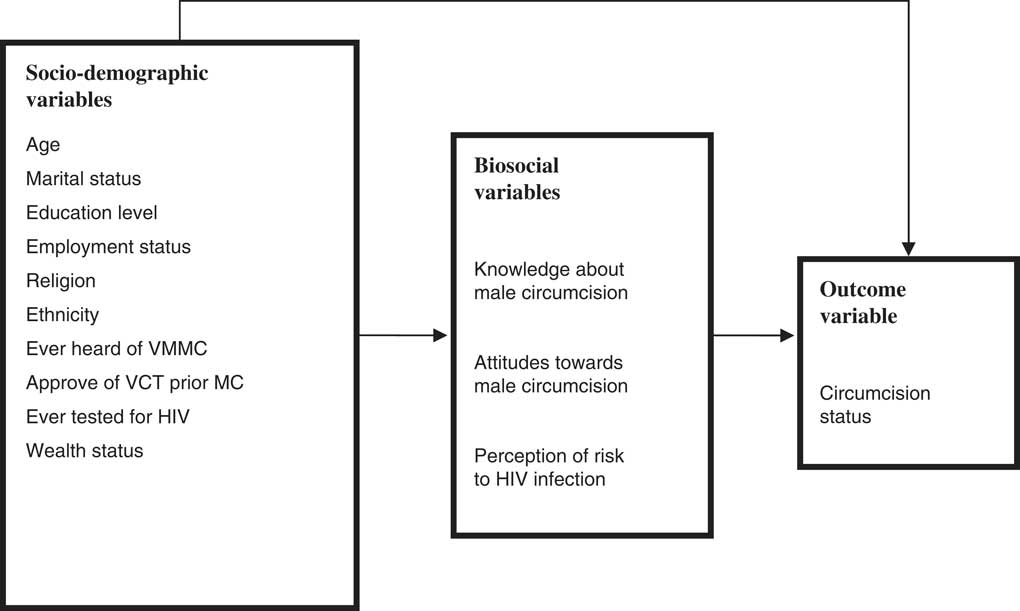
The linkage between circumcision status and other variables in Zimbabwe is demonstrated in Fig. 1. The conceptual framework assumes that socio-demographic variables operate through biosocial factors to influence circumcision status. The biosocial factors include knowledge about male circumcision, attitudes towards male circumcision and perception of risk of HIV infection. It is strongly suggested that in Zimbabwe, being circumcised is primarily influenced by religious and cultural factors (MOHCW, 2009). In other words, belonging specifically to Islam and Judaism, for instance, and being Venda, Shangani, Remba and Tonga automatically defines one’s circumcision status. Circumcision status is assumed to be determined by other socio-demographic factors such as age, marital status, education, wealth status, employment status and approval of Voluntary Counselling and Testing (VCT) prior to male circumcision and ever being tested for HIV.
Link between male circumcision and socio-demographic and biosocial variables. VCT, Voluntary Counselling and Testing; VMMC, Voluntary Medical Male Circumcision.
Methods
Study design
The study adopted a cross-sectional survey study design. It consisted of face-to-face interviews conducted between May and August 2014 in all four districts of Harare Province, Zimbabwe. A total of 853 men aged 15–35 years were identified as eligible for the study using the Kish (Reference Kish1995) sample size determination formula. The rationale in restricting the sample study to this age group was to incorporate men aged 20–29 years, who are known to have the highest incidence of new HIV infections (MOHCW, 2009). In all, 784 men were successfully interviewed, yielding a response rate of 92%. A total of 118 reported being circumcised.
Sampling
The study sample was selected using a multistage (three stage) sampling design. Using the 2012 Zimbabwe Census as the sampling frame, the first stage involved the selection of Primary Sampling Units (PSUs), which were the Enumeration Areas (EAs). The second stage involved the selection of households (Secondary Sampling Units, SSUs). A household was defined as a group of people living, eating together and sharing the same sleeping arrangements (Beaman & Dillon, Reference Beaman and Dillon2012). The third stage involved the selection of individuals within the households in the selected EAs. A list of male household members and their ages was drawn after eliciting the information from the head of household or from any knowledgeable adult person present in the household at the time of the survey. This household enumeration ensured that all household members who were aged between 15 and 35 years were identified and given an equal chance to participate in the survey. An eligible participant was a male household member between the ages of 15 and 35 years. When multiple households existed within a single dwelling unit, a Kish grid was used to randomly select a responding household and one member of the selected household was eligible to participate. If the selected household had no eligible respondent, the next household within the same dwelling unit was selected. Thus, a Kish grid was used in the selection of a respondent in a multiple respondent household and multiple dwelling units.
Variables
Dependent variable
The dependent variable was circumcision status, measured by one closed-ended question: ‘Some men are circumcised, that is, the foreskin is completely removed from the penis. Are you circumcised?’ The responses were (1) ‘Yes’ and (2) ‘No’. No medical examination was conducted to ascertain the circumcision status of the respondents. The responses were self-reported circumcision status.
Biosocial variables
These included ‘knowledge about male circumcision’, ‘attitudes towards male circumcision’ and ‘perception of risk of HIV infection’.
Knowledge about male circumcision was captured by ten items. The responses to the knowledge questions were (1) yes and (2) no when respondents answered correctly to a series of knowledge questions about circumcision. A knowledge score was obtained by summing up the individual knowledge questions. Questions included: ‘What do you understand by the term male circumcision?’; ‘Is male circumcision as good as an “invisible condom” in prevention of HIV transmission?’; ‘Does male circumcision reduce the chances of transmitting HIV?’; ‘Does male circumcision reduce penile cancer?’; ‘Are circumcised men still recommended to use condoms?’; ‘Does male circumcision improve penile hygiene?’; ‘Can male circumcision alone prevent HIV contraction?’; ‘Can an HIV-negative woman contract HIV/STI after having unprotected sex with a HIV-positive circumcised man?’; ‘Can an HIV-negative circumcised man contract HIV/STI after having unprotected sex with an HIV-positive woman?’; and ‘After being circumcised, must a man abstain from sexual intercourse for six weeks?’
Attitudes towards male circumcision was measured by asking the respondents to rate their level of agreement or disagreement with a series of five statements. The responses were (1) strongly disagree, (2) disagree, (3) neutral, (4) disagree and (5) strongly agree. An attitude towards male circumcision score was computed by summing up the responses to the following statements: ‘An HIV-infected man should be circumcised’; ‘Promoting male circumcision is good for health’; ‘Is it easier to keep clean if circumcised’; ‘Uncircumcised men are more likely to contract HIV/STI’; and ‘Promoting male circumcision would cause an increase in risk sexual behaviour.’
Perception of risk of HIV infection was measured as a categorical variable. The respondents were asked the following question: ‘Do you think you are at risk of contracting HIV infection?’. The responses were (1) Yes, at higher risk, (2) Yes, at low risk and (3) No at risk at all.
Socio-demographic variables
The respondents were asked about their age in completed years, and these were categorized into 5-year age groups: 15–19 years, 20–24 years, 25–29 years and 30–35 years. Education was categorized as: primary, secondary and higher than secondary. Marital status was categorized as: never married, married/living together and never formerly married. Wealth status was measured using a household goods index, which was re-coded into: low, medium and high wealth status. The measure was derived from the presence of eleven household assets within the respondent’s household: generator, solar panel, radio, television, refrigerator, non-mobile telephone, computer, washing machine, car and electricity connected to the dwelling unit. Employment status was classified into unemployed or employed. Religion was categorized into: Mainstream Christian, Pentecostal, Apostolic Sect, Other Christian and No religion, while ethnicity was categorized into Shona and Other. Respondents were also asked whether they had ever tested for HIV. The responses were ‘yes’ or ‘no’. Respondents were asked whether they approved of Voluntary Counselling and Testing (VCT) prior to circumcision (yes or no). Lastly, respondents were asked whether they had ever heard of Voluntary Medical Male Circumcision (VMMC) (yes or no).
Procedure
Male research assistants administered a structured questionnaire through face-to-face interviews. The rationale was to be gender-sensitive because male circumcision issues are somewhat personal. If the selected respondent was not found at home at the time of the survey, two call-backs were done before replacing them with a neighbouring household respondent.
Data analysis
Data were captured and statistically analysed using SPSS version 22. Univariate analysis was done to show the distribution of the main background characteristics of the study sample. Bivariate analysis (χ 2 test) was used to examine the statistically significant relationship between the background variables and the dependent variable (male circumcision status) as well as background variables and the biosocial variable ‘perception of risk of HIV infection’. Analysis of variance (ANOVA) was used to compare the differences in mean of the knowledge about male circumcision, and mean attitude towards male circumcision. Post hoc analysis (Tukey’s HSD test) was computed to establish which group mean(s) were significantly different. For the test of significance for two groups, an independent sample t-test was used to compare the differences in mean. In addition, multivariate regression analysis (negative log-log regression) was used to evaluate the independent contribution of each predictor variable in explaining the variation in the dependent variable, controlling for the effects of other predictor variables in the model. Negative log-log models are frequently used when the probability of an event is very small or very large (McCullagh, Reference McCullagh1980). Unlike logit and probit models, the negative log-log function is asymmetrical. In SPSS the nlog-log link function is the same as the complementary log-log in STATA. The total number of cases in this model was 784; however, the number of circumcised men was 118, representing only 15% of the sample.
Ethical considerations
Ethical clearance was granted by the Medical Research Council of Zimbabwe (approval No. MRCZ/A/1848). Written informed consent was obtained from all study participants after the objectives of the study had been explained to them. In addition, the respondents were assured of confidentially and anonymity.
Results
Demographic characteristics of respondents
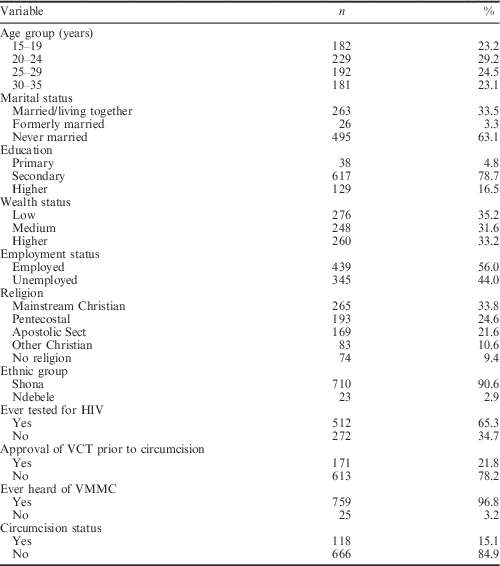
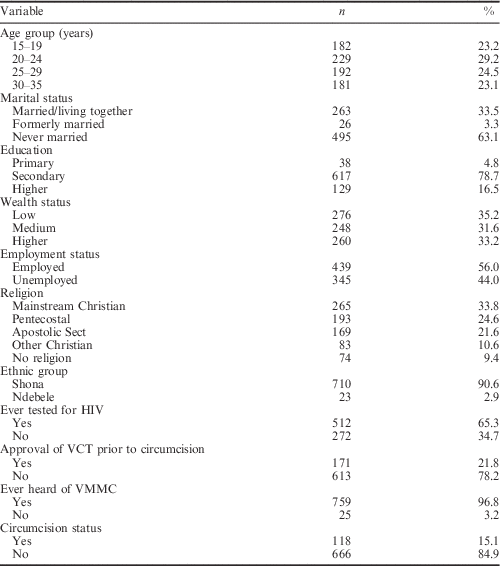
Table 1 presents the socio-demographic characteristics of the respondents. Of the total sample of 784 males aged 15–35 years, almost equal proportions were distributed in the four age groups The majority of the respondents were never married (63%), had achieved secondary education (78.7%) and were employed (56%). One-third of the respondents were Mainstream Christians (33.8%); Other Christians constituted 10.9%, Pentecostal constituted a quarter (24.6%) of the respondents, while 21.6% of the respondents belonged to the Apostolic Sect. The majority (65.3%) of the respondents said they had never been tested for HIV. An overwhelming majority (90.6%) of the respondents were of the Shona ethnic group and most of them were not circumcised (84.9%). In addition, 78.2% did not approve of HIV testing prior to circumcision, although 65% had been exposed to VMMC messages prior to the survey.
Socio-demographic characteristics of study respondents, males aged 15–35, Harare, N=784
Knowledge on male circumcision
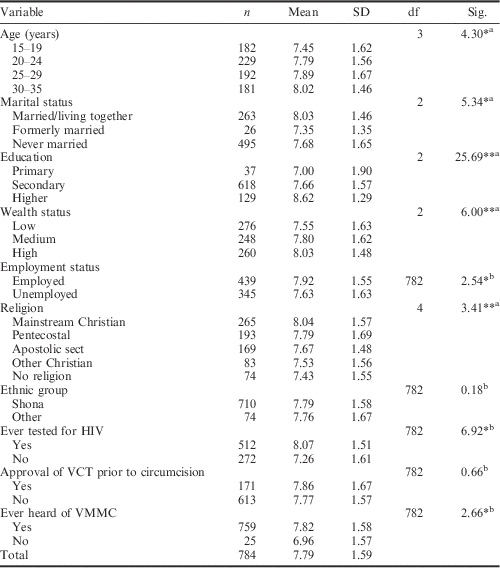
Table 2 shows the relationship between the socio-demographic characteristics and mean knowledge on male circumcision scores. The overall mean knowledge score was 7.79 (SD=1.59, range 1–10). The mean score increased with age: 7.45 (SD=1.62) among men aged 15–19 years, 7.79 (SD=1.56) among men aged 20–24 years, 7.89 (SD=1.67) among men aged 25–29 years and 8.02 (SD=1.46) among men aged 30–35 years. The ANOVA test indicated that at least one of the groups was significantly different. Specifically, Tukey’s HSD test showed that the mean knowledge scores of respondents aged 25–29 and 30–35 years were significantly higher than that of respondents aged 15–19 years. However, the score of respondents aged 20–24 years was not significantly different from that of respondents aged 15–19 years.
Knowledge on male circumcision scores by socio-demographic characteristics, males aged 15–35, Harare

a F-values from one-way ANOVA.
b Independent t-test.
*p<0.05; **p<0.01.
The mean knowledge score was highest among married men (mean=8.03, SD=1.46) and lowest among formerly married men (mean 7.35, SD=1.35). The ANOVA test was significant, indicating that at least one of the groups was significantly different (F[2]=5.34, p<0.05). Tukey’s HSD test showed that mean knowledge on male circumcision among married men was significantly higher (mean 8.03, SD=1.46, p<0.087) than that for never-married men (mean=7, 68, SD=1.65, p<0.010). On the other hand, the mean knowledge score among formerly married men was significantly lower (mean=7.35, SD=1.35, p<0.087) than that of never-married group (mean 7.68, SD=1.46, p<0.010).
The mean knowledge score increased with level of education. The lowest score (mean=7.00, SD=1.90) was among men who had attained primary education, and the highest was among men with higher than secondary education (mean=8.03, SD=1.29). The ANOVA analysis showed that there was a statistical significant difference mean knowledge score and level of education (F[2]=25.69, p<0.001). The post hoc analyses (Tukey’s HSD test) showed that there was a statistical significant difference between all the groups, secondary (mean=7.66, SD=1.57, p<0.031) and higher education (mean=8.036, SD=1.29, p<0.001).
As wealth status increased, knowledge about male circumcision also increased. The mean score was 7.55 (SD=1.63) among those who were in the low wealth status group, 7.80 (SD=1.62) among the medium group and 8.03 (SD, 1.48) among the high group (mean=8.03, SD=1.48). The ANOVA test showed that there was a significant difference between the groups (F[2]=6.00, p<0.002). The post hoc analyses showed that the high wealth status group (mean=8.03, SD=1.48, p<0.01) was not significantly different from the low wealth status group (mean=7.55, SD=1.63, p<0.01), and the medium wealth status group did not differ significantly with any of the two groups.
An independent sample t-test indicated that respondents who were employed had a higher mean knowledge about male circumcision (mean=7.92, SD=1.55) than their unemployed counterparts (mean=7.63, SD=1.63; t[782]=2.54, p=0.011]. The ANOVA indicated that there was a statistical difference in the mean knowledge score for two religious groups. It was lowest among respondents who had no religion (mean=7.53, SD=1.55) and highest among Mainstream Christians (mean=8.04, SD=1.57). The ANOVA test was significant (F [4] =3.41, p=<0.009) and the post hoc analysis showed that only the score among Mainstream Christians (mean=8.04, SD=1.57, p<0.029) and those with no religion were significantly different (mean=7.53, SD=1.55, p<0.029).
Since post hoc analysis cannot be performed for variables with two categories, the means were simply compared using an independent sample t-test. There was a significant difference in mean knowledge score for respondents who reported ever testing for HIV (mean=8.09, SD=1.51) and those who had never tested for HIV (mean=7.26, SD=1.61; t[782]=6.92, p=0.001). Although respondents who approved of VCT before circumcision scored higher (mean=7.86, SD=1.67) than their counterpart who did not approve of it (mean=7.77, SD=1.57), this difference was not statistically significant (t[782]=0.66, p<0.507). An independent t-test was conducted to compare the differences in the mean knowledge about male circumcision according to whether respondents had ever heard of VMMC. A significant difference was found between ‘ever heard of VMMC’ (mean=7.82, SD=1.58) and ‘never heard of VMMC’ scores (mean=6.96, SD=1.57; t[782]=2.66, p<0.008).
Attitude towards male circumcision.
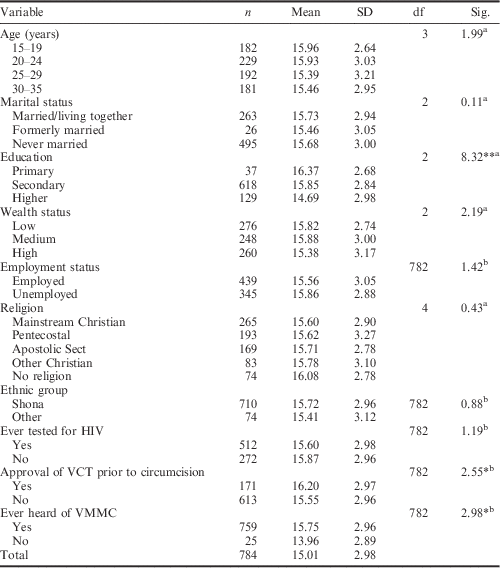
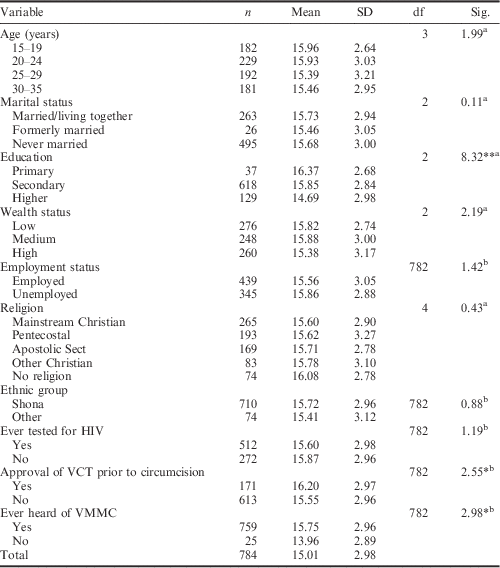
Table 3 shows the mean attitude towards male circumcision scores. The overall mean score was 15.01 (SD=2.98, range=5–25). The ANOVA test showed that there were no statistically significant differences by age, marital status, wealth status and religion, with the exception of level of education. There was a statistical difference among the respondents by level of education (F[2]=8.32, p<0.001). Post hoc analysis (Tukey’s HSD test) showed that there was a significant difference in scores for respondents with primary education (mean=16.37, SD=2.64, p<0.009) and those with higher than secondary education (mean=14.76, SD=3.47, p<0.009). In addition, there was a significant difference in score between respondents with secondary education (mean=15.85, SD=2.84, p<0.001) and those with higher education (mean=14.69, SD=2.98, p<0.001).
Attitude towards male circumcision scores by socio-demographic characteristics, males aged 15–35, Harare
a F-values from one-way ANOVA.
b Independent t-test.
*p<0.05; **p<0.01.
An independent t-test comparing differences in mean attitude score by approval of HIV testing before male circumcision indicated that respondents who approved of this had a higher score (mean=7.86, SD=1.67) than those who did not approve (mean=7.77, SD=1.57; t[782]=2.55, p=0.011). Also, a statistically significant difference in score for those who had ever heard of VMMC (M=15.75, SD=2.96) and those who had never heard of it was observed (mean=13.96, SD=2.89; t[782]=2.98, p=0.003).
Perception of risk of HIV infection
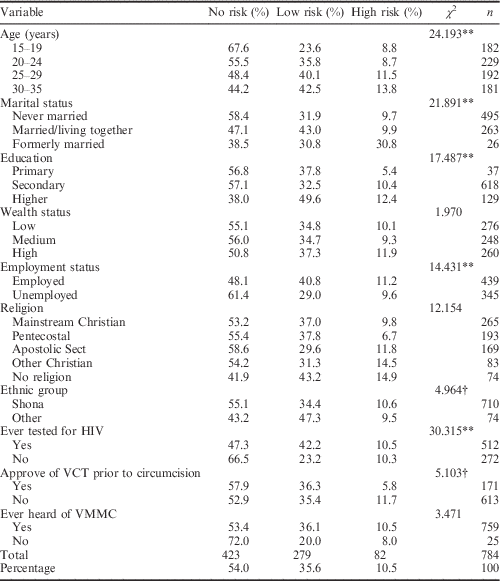
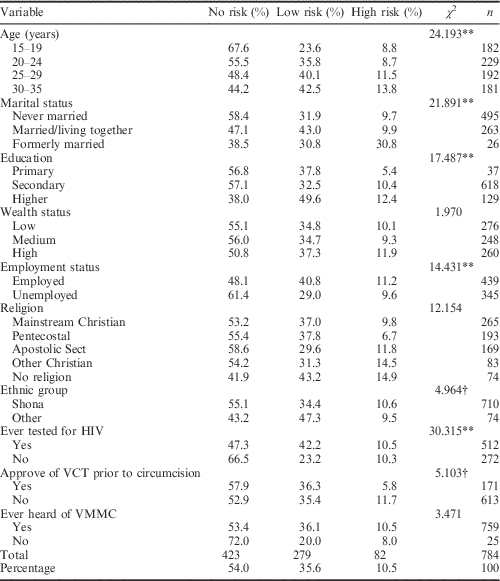
Chi-squared analysis was used to examine the relationship between socio-demographic characteristics and perception of risk of HIV infection (Table 4). There was a significant association between all socio-demographic characteristics and perception of risk of HIV infection with the exception of wealth status, religion and ever heard of VMMC. There was an interesting pattern in the relationship between age and perception of risk of HIV infection. Whereas perception of low risk and high risk of HIV infection increased with age, perception of no risk decreased with age.
Perception of risk of HIV infection by socio-demographic characteristics, males aged 15–35, Harare
†p<0.1; *p<0.05; **p<0.01.
About a third (30.8%) of formerly married men indicated that they were at high risk of HIV infection; only 10% of never-married men, and the same proportion of men who were married/lived together, indicated that they were at high risk of HIV infection. A higher proportion (43.0%) of men in union indicated that they were at a low risk of HIV infection; on the other hand, about the same proportion of never-married men (31.9%) and those formerly married (30.8%) indicated that they were at low risk of HIV infection.
There was a positive relationship between education and perception of high risk of HIV infection, with nearly half (49.6%) of respondents with higher than secondary level of education indicating that they were at low risk of HIV infection. About a third (32.5%) of the respondents with secondary education, and close to two-fifth (37.8%) of those with primary education, indicated they were at low risk of HIV infection. There was a significant relationship between employment status and risk perception of HIV. A higher proportion of respondents who were employed (40.8%) perceived themselves to be at low risk of HIV infection compared with 11.2% of the unemployed.
About the same proportion of the Shona ethnic group (10.6%) and Other ethnic group (9.5%) indicated that they were at a high risk of HIV infection. However, respondents in the Other ethnic group (47.3%) indicated that they were at a low risk compared with the Shona (34.4%) ethnic group. Respondents who had ever tested for HIV (10.5%), and those who had never tested (10.3%), indicated that they were at high risk of HIV infection. However, a higher proportion (42.2%) of those who had ever tested for HIV indicated that they were at low risk of HIV infection compared with 23% of those who had never tested for HIV.
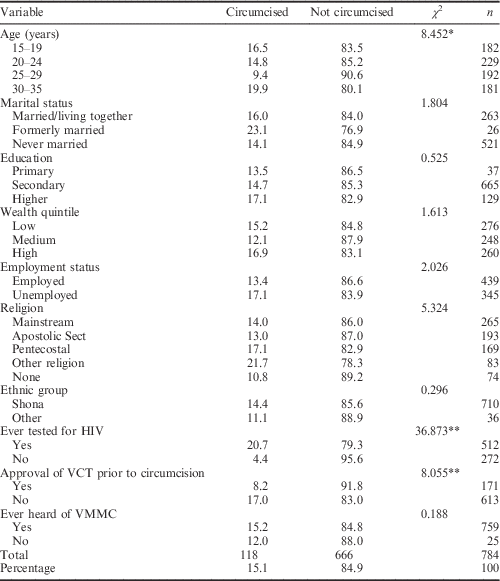
Factors affecting circumcision status
Table 5 shows data on the relationship between the socio-demographic characteristics of the respondents and their circumcision status. A chi-squared test of independence was used to assess whether there were significant associations between each of the background characteristics and male circumcision status. A significant association was found between age, ever tested for HIV and approval of VCT before circumcision and circumcision status. The percentage of respondents who were circumcised decreased with age, from 16.5% among those aged 15–19 years to less than 10% (9.4%) among men aged 25–35 years, and sharply increasing to 19.9% among men aged 30–35 years. A statistically significant relationship was found between ever tested for HIV and male circumcision status. A fifth (20.6%) of the respondents who indicated that they had ever tested for HIV were circumcised and less than 5% (4.4%) of those who have never tested were circumcised. Seventeen per cent of the respondents who did not approve of VCT prior to circumcision were circumcised compared with 8.2% of those who did approve of it. Among the respondents who said they had ever heard of VMMC, 15.2% were circumcised compared with 12.0% who said they had never heard of VMMC.
Male circumcision status by socio-demographic characteristics, males aged 15–35, Harare

*p<0.05; **p<0.01.
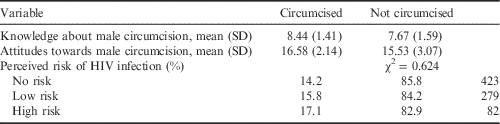
Table 6 shows the association between the biosocial characteristics of the respondents and their circumcision status. The mean knowledge score was higher among men who were circumcised (mean=8.44, SD=1.41) compared with men who were not circumcised (mean=7.67, SD=1.59). Favourable attitudes were higher among men who were circumcised (mean=16.58, SD=2.14) than among those were not circumcised (mean=15.53, SD=3.07). There was a positive relationship between perceived risk of HIV infection and circumcision status. As risk perception increased, the proportion circumcised also increased. While about 17.1% of respondents who perceived themselves to be at high risk of HIV infection were circumcised, only 14.2% of those who perceived themselves to be at no risk were circumcised.
Biosocial factors by circumcision status, males aged 15–35, Harare
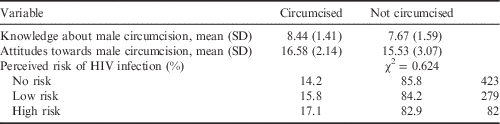
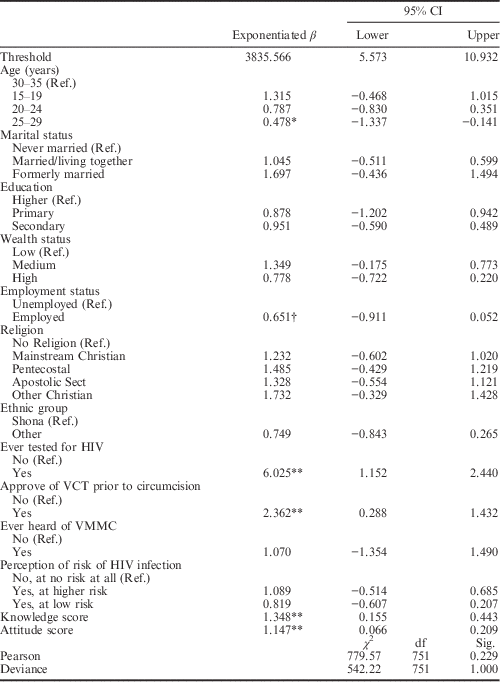
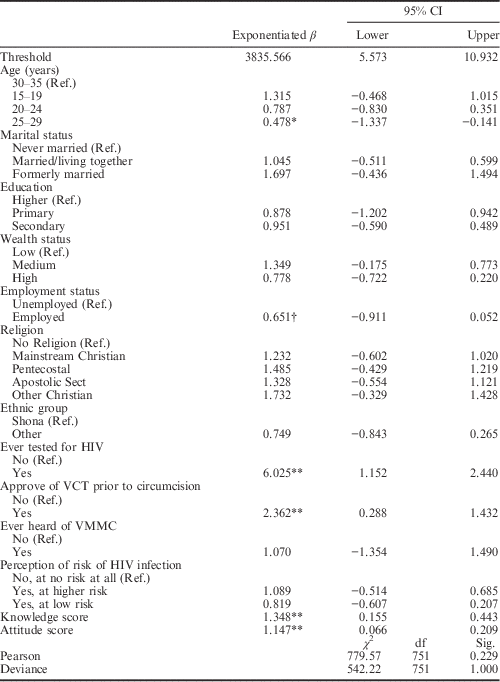
Table 7 shows the results of a negative log-log multivariate regression analysis of the influence of socio-demographic and biosocial factors on male circumcision status. Age, ever tested for HIV, approval of VCT before circumcision, employment status and knowledge and attitude towards male circumcision were found to be the main predictors of male circumcision. Men aged 25–29 years were less likely to be circumcised than men aged 15–35 years (OR= 0.48, p<0.015). However, the odds of men aged 15–19 years and those aged 20–24 years were not significantly different from those aged 30–35 years. Ever tested for HIV had a strong association with male circumcision status. Respondents who had ever tested for HIV prior to the survey were more likely to be circumcised than those who had never taken the test (OR=6.03, p<0.001). The odds of respondents who were employed being circumcised were lower than those who were unemployed (OR=0.65, p<0.080).
Odds ratios of predictors of male circumcision status, males aged 15–35, Harare, N=784
Negative log–log regression.
†p<0.1; *p<0.05; **p<0.01.
Respondents who approved of VCT prior to circumcision were less likely to be circumcised than those who did not approve of it (OR=0.42, p<0.003). There was a positive significant relationship between knowledge of male circumcision and male circumcision status. For each unit increase in knowledge score, the odds of being circumcised increased from 1.000 to 1.35 (p<0.001). Each unit increase in attitude score increased the odds of being circumcised from 1.000 to 1.15 (p<0.001).
Discussion
Male circumcision has, over the years, been changed from being viewed as an ethnic practice to being a more acceptable health practice in Zimbabwe (Khumalo-Sakutukwa et al., Reference Khumalo-Sakutukwa, Lane, van-Rooyen, Chingono, Humphries, Timbe and Morin2013; Sibanda, Reference Sibanda2013). While male circumcision is not widespread in Harare, the findings of this study appear to suggest an increase in the circumcision rate. Data from the 2012 Zimbabwe DHS showed that 7.0% of respondents aged 15–35 in Harare reported being circumcised (ZIMSTAT & ICF International, 2012), compared with 15.1% of respondents in this study. This could be attributed to male circumcision awareness and educational programmes introduced by the government and non-governmental organizations in the quest to reduce HIV infections.
The findings of this study suggest that age has a significant influence on circumcision status. Men aged 25–29 years were less likely to circumcise than those aged 30–35. These findings are similar to those of eight out of twelve studies conducted in eastern and southern African countries, which showed that older men were significantly more likely to be circumcised (Tram & Bertrand, Reference Tram and Bertrand2014). However, other studies have found that older men (25 years and above) were less likely to undergo circumcision (Gasasira et al., Reference Gasasira, Sarker, Tsague, Nsanzimana, Gwiza, Mbabazi and Mugwaneza2012). The most plausible reason for this could be that this older age group comprises individuals who are independent and can make personal decisions about their own health from a well-informed perspective. However, it is interesting to note that the 15–19 age group was 1.3 times more likely to circumcise compared with those aged 15–35 years, though the results were not significant. This could be attributed to programmes that target schools for circumcision. Hence, respondents in this age group were more likely to be circumcised because of peer pressure.
The study also noted that respondents who were employed were less likely to be circumcised than their counterparts who were unemployed. This concurs with other studies, which have shown that employed men were shunning circumcision because of the need for time off work for the circumcision and healing (Obure et al., Reference Obure, Nyambedha, Oindo and Kodero2009; Herman-Roloff et al., Reference Herman-Roloff, Otieno, Agot, Ndinya-Achola and Bailey2011). Perhaps men who are employed think that the opportunity cost of losing an income is greater than the benefit of male circumcision. In addition, by 2013 the informal sector accounted for over 89% of employment in Zimbabwe, with most people being involved in informal work such as cross-border trading, i.e. the buying and selling of household wares and clothes with neighbouring countries (Saungweme et al., Reference Saungweme, Matsvai and Sakuhuni2014).
Those who had ever tested for HIV/AIDS were six times more likely to be circumcised. The Zimbabwe Male Circumcision Policy states that an HIV test is a prerequisite before Medical Male Circumcision and is part of the package of health checks offered by the public circumcision services (MOHCW, 2009). Circumcision of men living with HIV is not recommended because of the increased risk of passing HIV infection to female partners during healing. Perhaps respondents who had ever tested for HIV attained a higher self-efficacy compared with those who had never tested for HIV. Self-efficacy is in most cases heavily influenced by individuals evaluating their previous mastered experience. Therefore, once individuals are confident in overcoming fear of initial HIV testing they are more likely to seek circumcision, which has HIV testing as a prerequisite. Overcoming the fear of HIV testing has a strong positive impact on men’s readiness to undergo male circumcision and accepting it.
The study also found that knowledge of male circumcision was highest among circumcised men. In countries with low male circumcision prevalence, knowledge about circumcision is used as a benchmark for an increase in acceptability and uptake of male circumcision. This study corroborates the findings of previous studies in sub-Saharan Africa, which showed that knowledge about circumcision was positively associated with acceptability (Westercamp & Bailey, Reference Westercamp and Bailey2007; Wilcken et al., Reference Wilcken, Keil and Dick2010; Mavhu et al., Reference Mavhu, Buzdugan, Langhaug, Hatzold, Benedikt, Sherman and Cowan2011; Gasasira et al., Reference Gasasira, Sarker, Tsague, Nsanzimana, Gwiza, Mbabazi and Mugwaneza2012). Although circumcised respondents were very few in the sample, these were fully aware of the partial protective effect of male circumcision. They were also aware that male circumcision reduces the chances of contracting HIV/AIDS; male circumcision is not as effective as a condom, and circumcised men are still advised to have protected sex. Thus, the results are consistent with findings among the Luo of Kenya, that knowledge of male circumcision conferred partial protection against HIV (Bailey et al., Reference Bailey, Muga, Poulussen and Abicht2002).
Knowledge alone may not be enough to generate HIV-related health-seeking behaviours, but a positive attitude could be directly related to the knowledge. Reported attitude towards circumcision was found to be one of the most important predictors of male circumcision in this study. Exposure to male circumcision programmes helps improve attitude levels. As reported by Bektaş and Kulakaç (Reference Bektaş and Kulakaç2007), individuals’ attitudes become more positive after being educated on a topic. This study showed that respondents had favourable attitudes towards male circumcision. The results concur with those of a study in Malawi, which found that men who were circumcised had increased odds of having a positive opinion of male circumcision (Dionne & Poulin, Reference Dionne and Poulin2013). The study attributed regional differences in the prevalence of male circumcision to differences in attitudes towards male circumcision in Malawi.
The study has its limitations. The study sample was obtained from one of ten Zimbabwe provinces and the data might not have been entirely representative. The self-reported prevalence of male circumcision (15.1%) was higher than the national prevalence (9%) measured in the 2012 Zimbabwe DHS (ZIMSTAT & ICF International, 2012), suggesting that the study might not be representative of predictors of male circumcision among men aged 15–35 years. The reason for this difference is not clear, but the authors hypothesize that it could be the result of using self-reported circumcision status. No medical examination was done to establish the circumcision status of respondents, and some could have lied about this to conform to societal expectations.
In conclusion, circumcision status was found to be a function of ever being tested for HIV, age, approval of VCT prior to circumcision, knowledge about male circumcision and attitudes towards male circumcision. The uptake of male circumcision is determined by a multiplicity of factors, chief among them being the availability of comprehensive information on the benefits of male circumcision as well as the HIV status of the individual, hence duality will shape perception and attitudes towards acceptance of male circumcision.
There is a need for advocacy that focuses on the health benefits of male circumcision and the perception of risk of HIV infection considering the high levels of STIs in Harare youth (United Nations World Food Programme, 2015) and the relatively low level of male circumcision (ZIMSTAT & ICF International, 2012). Young men aged 15–35 need to have a clear understand of HIV risk and how male circumcision may be partially protective. However, ambiguity in messaging should be avoided so people are aware that male circumcision only offers partial protection so they do not engage in unprotected sex. There is a risk that some might treat male circumcision as an ‘invisible condom’, defeating the object of male circumcision. The study showed that those respondents who were employed, whether formally or informally, were less likely to undergo circumcision. Since most Zimbabwean men are informally employed it is important to create demand for male circumcision among this group. Devices such as PrePex (a non-surgical male circumcision device) save time during the circumcision procedure; they are less painful, and healing time is reduced.
Acknowledgments
The study was funded by the Research Focus Area ‘Population and Health’, Faculty of Human and Social Sciences, North-West University, Mafikeng, South Africa. The authors acknowledge the input of colleagues for their constructive criticisms and suggestions.