Introduction
There is currently considerable interest in reducing the input of nitrogen (N) fertilizer in the production of food for beef cattle, from both environmental and economic perspectives. As legumes fix atmospheric N they can reduce the requirement for inorganic N fertilizer. The seeds of legumes such as lupins and peas have been shown to have protein concentrations ranging from 290 to 447 g/kg dry matter (DM) (Petit et al., Reference Petit, Rioux and Ouellet1997; Petterson et al., Reference Petterson, Sipsas and Mackintosh1997; Fychan et al., Reference Fychan, Marley, Theobald, Roberts and Jones2009) and their nutritive value has been similar to that of other protein sources such as rapeseed or soyabean meals. However, when harvested as the whole crop, legumes have low DM concentrations ranging from 160 to 190 g/kg, which leads to the production of large volumes of effluent (Fraser et al., Reference Fraser, Fychan and Jones2005). One way by which this problem could be reduced or eliminated is by including a crop with a high DM concentration, such as a cereal with the legume. For example, oats have been sown with legumes to provide physical support to enable the legumes to climb, increase light interception and facilitate mechanical harvesting (Caballero et al., Reference Caballero, Goicoechea and Hernaiz1995). Intercropping legumes and cereals have been shown to increase yield and reduce requirements for N fertilizer (Singh et al., Reference Singh, Joshi and Verma1989). However, research findings on the potential of legume/cereal whole crop silages in the diet of beef cattle are limited (Dawson, Reference Dawson2012). Triticale has been suggested as a suitable cereal to include with legumes as it is less competitive than other cereals (Ross et al., Reference Ross, King, O'Donovan and Spaner2005). Limited research has been undertaken to evaluate lupins alone as a whole crop for beef cattle (Fraser et al., Reference Fraser, Fychan and Jones2005), or a mixture of lupins and triticale (Dawson, Reference Dawson2012). However, there would appear to be no information available on the value of vetch/cereal whole crop silage in the diet of beef cattle.
The fatty acid (FA) composition of the human diet, especially in relation to polyunsaturated FA (PUFA) and long chain n-3 PUFA, in particular, has important implications for human health (Department of Health, 1994; Simopoulos, Reference Simopoulos2001). The main method for manipulating the FA composition of beef is by changing dietary ingredients (Steen et al., Reference Steen, Kilpatrick and Porter2002, Reference Steen, Lavery, Kilpatrick and Porter2003; Scollan et al., Reference Scollan, Richardson, De Smet, Moloney, Doreau, Bauchart, Nuernberg, Hocquette and Gigli2005). The diet offered to beef cattle has been shown to influence the FA composition of lean meat with feeding legumes such as red clover increasing n-3 PUFA in lean beef through a reduction in biohydrogenation within the rumen (Scollan et al., Reference Scollan, Hocquette, Nuernberg, Dannenberger, Richardson and Moloney2006). However, there appears to be no past research carried out on offering lupins or vetch whole crop silage to beef cattle on the FA composition of beef. The current study was undertaken to examine the effects of including lupin/triticale and vetch/barley whole crop silages in the diet of beef cattle on animal performance, the instrumental assessment of meat quality and the FA composition of beef.
Materials and methods
Treatments and design
Eighty continental cross-bred steers were used to evaluate ten dietary treatments in a factorial arrangement based on five silages × two concentrate intakes. The five silage treatments consisted of grass silage (GS) as the sole forage, lupin/triticale silage (LTS) as the sole forage, a mixture of LTS and GS at a ratio of 70:30 on a DM basis, vetch/barley silage (VBS) as the sole forage, a mixture of VBS and GS at a ratio of 70:30 on a DM basis. The silages were supplemented with 2 and 5 kg of concentrates/head/day. Protein intakes were equalized across the five silage treatments by addition of sufficient soyabean meal to the diets to achieve crude protein intakes of 1239 and 1468 g/day for the 2 and 5 kg intakes of concentrates, respectively.
Diets
Grass silage was made from grass harvested on 18 July (first regrowth), 22 August (second regrowth) and 27 September (third regrowth) from a predominantly perennial ryegrass sward. The swards received 50 kg of N/ha after the previous harvest on each occasion. The grass was allowed to wilt for 24 h and was then harvested with a self-propelled precision-chop forage harvester (John Deere 6850, John Deere, Moline, Illinois, USA) and ensiled in trench silos following treatment with a bacterial inoculant (Ecosyl, Lactobacillus plantarum; Ecosyl Products Ltd., Middlesborough, UK) at a rate of 3 litres/t after mixing in water according to the manufacturer's specifications.
Lupins (Lupinus luteus L.)/triticale (Triticosecale) and vetch (Vicia sativa)/barley (Hordeum vulgare) were sown at rates of 142 and 185 kg/ha, respectively, on 15 and 16 April. The lupins/triticale and vetch/barley seed mixtures contained legume/cereal ratios of 51:49 and 67:33, respectively. The varieties sown for LTS and VBS were Wodjil (spring yellow lupin), Logo (spring triticale), Nitra (spring vetch) and Static (spring barley), respectively. Two days after sowing, the legume/cereal seed mixtures received 55 kg of N and 30 kg of potash/ha and a pre-emergent herbicide, Stomp (BASF plc, Agricultural Products, Cheshire, UK), was applied at a rate of 4 litres/ha. Both legume/cereal crops were harvested on 10 August. The timing of harvest of legume/cereal whole crop silages was based on vetch and lupin pod maturity, gauged by the degree of pod fill and texture and colour of lupin and vetch seeds. The legume/cereal whole crops were harvested directly using a self-propelled precision-chop forage harvester (John Deere 6850) fitted with a crimper header (Kemper model Champion 4500, Stadtlohn, Germany). Both legume/cereal whole crops were treated with an inoculant (Wholecrop gold, Biotal Ltd, Cardiff, Wales) at a rate of 4 litres/t and were then ensiled in trench silos and thoroughly compacted before sealing with two layers of polythene sheeting. All forages were grown at Hillsborough, Northern Ireland, UK (54°27′N−6°4′W).
The concentrate offered throughout the experiment contained 495, 200, 150, 100, 30 and 25 g/kg fresh weight of rolled barley, soybean meal, sugarbeet pulp, maize meal, molasses and minerals/vitamins, respectively. The fresh weights of the legume/cereal silages and GS were loaded into a mixer wagon (Redrock, Armagh, Northern Ireland, UK), at a ratio of 70:30 on a DM basis, based on the daily DM concentrations of the silages offered the previous week. They were mixed thoroughly immediately before being offered to the animals. They were offered once daily in the morning in sufficient quantities to allow a refusal of 50–100 g/kg intake. Concentrates were offered on top of the silage, once daily for the 2 kg/head and twice daily for the 5 kg/head. Additional soyabean meal was added to the concentrates given in the morning to equalize protein intakes for the five silage diets.
Animals and management
The cattle used in the experiment were sourced from eight suckler farms across Northern Ireland. They were initially 557 (s.d. 32) kg liveweight and 19 (s.d. 1.2) months of age. The breed and age of the animals were taken from the computerized data set held by the Department of Agriculture for Northern Ireland for all cattle in the Province. The cattle used in the experiment were allocated to the ten dietary treatments, care being taken that they were balanced for genotype and farm of origin. Four weeks before the beginning of the experiment they were housed in groups of four in slatted floor pens fitted with calan electronically operated feeding doors (American Calan plc, USA) and were fed medium quality GS supplemented with 3 kg of concentrates/head/day. During this pre-experimental period, the animals were trained to use the electronic feeding doors and were treated for internal and external parasites using ivermectin (1.0% w/v, Ivomec, MSD-Agvet, UK). At the beginning of the experiment they were allocated to the pens so that all cattle within each pen were on the same dietary treatment, and the animals on each treatment were randomized throughout the house.
Measurements
The weights of the lupins/triticale and vetch/barley crops were recorded at the time of harvesting. The quantities of silage and concentrates offered were recorded daily throughout the experiment and refusals were removed and recorded twice/week. Silage DM concentration was determined daily by drying at 85 °C and the daily dried samples were bulked weekly for the determination of acid detergent fibre (ADF), neutral detergent fibre (NDF) and ash. Fresh silage was also dried at 60 °C for 24 h for determination of starch and water-soluble carbohydrate (WSC) concentrations once/fortnight. Fresh silage samples were taken once/week throughout the study for determination of volatile corrected DM concentration (as described by Porter and Murray, Reference Porter and Murray2001), pH, and the concentrations of total N, ammonia-N, volatile FA (VFA), alcohols and gross energy (GE). Digestible organic matter concentration in the DM was predicted weekly for GS by Near Infrared Reflectance Spectroscopy on fresh silage samples based on the Hillsborough Feeding Information System (Park et al., Reference Park, Agnew, Gordon and Steen1998). Concentrates offered were sampled daily and bulked weekly for the determination of oven DM, total N, GE, ADF, NDF and ash concentrations.
The total tract digestibilities and nitrogen retention of the five diets were determined using 15 additional steers (three/silage treatment) which had been given the diets for 20 days. These animals were housed in the same facility, were of similar breed type and liveweight as the animals on the main experiment and were offered the silages ad libitum and supplemented with 2 kg of concentrates/head/day. Seven days before the collection of faeces and urine, they were moved to individual stalls which were designed to facilitate the separate collection of faeces and urine. A 48-h period was allowed between recorded feed intake and the total collection of faeces and urine which were collected daily for 6 days. The volatile corrected DM concentration of each of the silages was determined daily. Feed and faeces samples were bulked for 3-day periods and analysed for DM, ash, N, ADF, NDF and GE concentrations. The concentrations of metabolizable energy (ME) in the total diets were estimated by assuming that methane production was 0.08 of GE intake. (Blaxter and Clapperton, Reference Blaxter and Clapperton1965). The apparent digestibilities of the LTS and VBS were determined using four castrated male sheep/silage when the silages were offered as the sole diet at a maintenance level of energy intake.
The oven DM concentrations of the feedstuffs and faeces were determined by drying in a forced draught oven. Representative samples of the silages were taken daily, bulked weekly and dried at 85 °C for 18 h. Representative samples of the concentrate were taken daily, bulked weekly and dried at 100 °C for 24 h. Faecal samples were taken daily for the 6 days of the feed in period for the determination of digestibilities. Those for each animal were bulked for the 6 days and a representative sample was dried at 100 °C for 72 h. The pH of fresh silage samples taken twice weekly was determined on an aqueous extract prepared by soaking 30 g of silage in 150 ml of distilled water for 24 h. Mercuric chloride (0.5 ml) was added to the extract to prevent microbial activity. The pH was determined using a Metrohm 736 titroprocessor fitted with a Metrohm LL Unitrode Pt 1000 pH meter (Metrohm UK Ltd., UK). The N concentration of fresh silage, dried concentrates and fresh faeces were determined by the Kjeldahl method. Ammonia-N concentrations of fresh silage were determined using the aqueous extract of silage obtained for the determination of pH. Two ml of 10 M sodium hydroxide (NaOH) were added to the samples to release ammonia, and ammonia-N concentrations were determined using a Metrohm 736 titroprocessor fitted with an Orion 9512 ammonia sensing electrode (Thermo Scientific, Beverly, USA). Volatile fatty acids, lactic acid and ethanol and propanol concentrations of fresh silage were determined using 0.3 ul samples of aqueous extract of the silages, by gas-liquid chromatography using a Varian Star 3400 CX gas chromatograph fitted with a 25 m, 0.53 mm i.d. S.G.E. BP 21 column 0.5 um film thickness (Varian Ltd Oxford, UK) (Porter, Reference Porter1992). Gross energy concentrations of fresh silage, dried concentrations and dried faeces were determined by bomb calorimetry (Parr 6300, Parr Instruments Company, Illinois, USA) according to the method described by Porter (Reference Porter1992). Dried samples of feedstuffs and faeces were analysed for ADF, NDF and ash. The ADF was determined using the method of AOAC (Reference Horwitz and Latimer1997) using 1 g dried, milled samples. The NDF was determined using 1 g dried samples according to the method of Van Soest et al. (Reference Van Soest, Robertson and Lewis1991). Values are expressed exclusive of residual ash. Ash concentrations were determined by incineration of 5 g samples in a muffle furnace at 600 °C for 8 h (AOAC Reference Horwitz and Latimer2005).
Steers were weighed on 2 consecutive days at the beginning of the experiment and prior to slaughter and at fortnightly intervals throughout the experiment. Liveweight gains were calculated by linear regression using all of the weights recorded throughout the experiment. Animals were slaughtered in groups of 20 after 105, 119, 126 and 140 days of the experiment. Two animals per treatment were slaughtered on each of the four occasions. Animals were selected according to liveweight with all animals being weighed on each of the 4 days prior to slaughter; the two heaviest animals per dietary treatment were then selected to be slaughtered the next day.
On the day of slaughter, selected steers were taken from their pens in the morning, mixed on a lorry and transported to a commercial abattoir located 42 km from the Institute. Animals were stunned using a pneumatically operated captive bolt stunning system and bled immediately after stunning at an EU approved abattoir which had routine veterinary inspection provided by the Department of Agriculture for Northern Ireland. Carcass weight was recorded for each steer at slaughter. For the calculation of daily carcass gains, the initial carcass weights were predicted using the relationship between liveweight and carcass weight developed by Keady and Kilpatrick (Reference Keady and Kilpatrick2005). The carcasses were graded for conformation and fatness by visual assessment according to the European Carcass Classification Scheme as described by Kempster et al. (Reference Kempster, Cuthbertson, Harrington, Kempster, Cuthbertson and Harrington1982). Weights of kidney, cod and channel (KCC) fat, removed during the carcass dressing procedure, were recorded for each animal. All carcasses were changed from achilles suspension at 45 min post-mortem to suspension from the aitch bone (tenderstretch) and chilled under standard commercial conditions. The carcasses were placed in a chill cooler subjected to a temperature of 10 °C for 10 h after which the air temperature was reduced to 1 °C for 24 h. Subsequently, the carcasses were stored at 2–4 °C. At 48 h post-mortem the carcasses were quartered between the 10th and 11th ribs and the depth of subcutaneous fat over the M. longissimus dorsi (LD) muscle was measured at points 0.25, 0.5 and 0.75 way across the maximum width of the muscle on both sides of each carcass as described by Kempster et al. (Reference Kempster, Cook and Smith1980). The amount of marbling fat in the cut surface of the LD was assessed using the eight-point scale of the US Department of Agriculture photographic standards (Agricultural Research Council, 1965).
The fore-rib joint, from between the 6th/7th rib to between the 10th/11th rib, was removed from the left forequarter of each carcass as described by Kempster et al. (Reference Kempster, Cook and Smith1980) without being trimmed. These joints were dissected into separable lean, separable fat and bone using the method described by Cuthbertson et al. (Reference Cuthbertson, Harrington and Smith1972).
Instrumental assessment of meat quality
Meat quality assessment was undertaken on LD muscle obtained from the fore-rib joint. At 7 days post-mortem a 3 cm thick slice of LD was removed at the 10th/11th rib in the carcass and placed on a glass plate with the freshly cut side facing upwards and left to bloom for 1 h prior to measuring lean colour. The colour of the lean meat was measured by reflectance spectra (380–800 nm) at 1 nm intervals using a Monolight Spectrophotometer, Model 6800 Controller fitted with a 0/45o reflectance head (Monolight Instruments Ltd., Weybridge, UK). The colour space values, L* (lightness), a* (redness), and b* (yellowness), were calculated according to Commission Internationale de l'Eclairage (CIE) specifications using the software supplied by Monolight Instruments (UK) Ltd. Hue angle values and metric Chroma values were calculated as described by Dawson (Reference Dawson2012).
A 1-g sample of LD muscle was taken from the freshly cut surface and homogenized in 10 ml of distilled water and the pH of the homogenate measured using a Sentron pH meter, 7 days post-mortem. Cooking loss and shear force values were determined at 7 and 21 days post-mortem on a 35–40 mm thick slice of the LD cut transversely to the muscle fibre direction from the posterior end of the fore-rib joint. Steak slices were weighed, placed in a polythene bag and cooked by placing in a water bath at 75 °C for 50 min; after this time the mean internal temperature was 71 °C (range 70–72 °C). The steaks were cooled subsequently in an ice water bath for 1 h with subsequent storage in a cold room at 4–5 °C. Excess liquid was removed by gently patting the slices with absorbent paper toweling, and the slices were then re-weighed to calculate the cooking loss. Ten cores, 12.7 mm in diameter were drilled from each slice parallel to the muscle fibre direction, using a standard manual corer designed for this purpose, and the cores were sheared transversely with a Warner Bratzler shear blade fitted to a Model 6021 Instron Universal Testing Instrument (Instron, High Wycombe, Buckinghamshire, UK).
Fatty acid analysis
Fatty acid analyses were undertaken on silage samples which were taken at 3-week intervals throughout the experiment and frozen at −12 °C within 3 h of being removed from the silo. All silage samples were freeze-dried and finely milled. Lipid was extracted from milled silage samples using a standard chloroform/methanol extraction method (Bligh and Dyer, Reference Bligh and Dyer1959) and FA methyl esters (FAME) were prepared using methanoic potassium hydroxide (KOH) as described by O'Fallon et al. (Reference O'Fallon, Busboom, Nelson and Gaskins2007). Fatty acid analyses were also undertaken on lean meat which was dissected from the LD muscle obtained from the fore-rib joint, which was frozen at −20 °C 4 days post-mortem and thawed 1 day prior to FA analysis. Lipid was extracted from homogenized beef from the LD muscle and FAME were prepared using a direct method for FAME synthesis without prior organic solvent extraction, as described by O'Fallon et al. (Reference O'Fallon, Busboom, Nelson and Gaskins2007). The FA compositions of milled silage and meat were then determined using capillary column gas-liquid chromatography. An aliquot (1.0 ul) of the FAME was injected onto a capillary column (0.25 mm internal diameter [id], 120 m length), wall coated open tubular (WCOT) fused silica-coated BPX70 (Phenomenex Cheshire, UK), in a Varian Star 3800 gas chromatography (Varian Associates Ltd., Walton on Thames, UK) equipped with a temperature programmable injector operated in the split mode and a flame ionization detector. The column temperature was programmed from 50 to 225 °C to improve separation and resolution, by holding at 50 °C for 4 min initially, heating to 120 °C at 20 °C/min, holding for 10 s, heating to 180 °C at 2 °C/min holding for 10 s and finally heating to 225 °C at 4 °C/min and holding for 40 min. Helium at 1.0 ml/min was used as a carrier gas. An internal standard (C13:0) and a mixture of external methyl ester standards of expected FA composition of the sample (Sigma Aldrich, Gillingham, UK) were used for identification and recovery efficiency purposes. Fatty acids recorded were expressed as mg FA/g tissue and g FA/100 g total FA for the FA composition of lean meat and milled silage samples, respectively.
Statistical analysis
Data on intakes, performance, carcass and meat quality were recorded on an individual animal basis (n = 80) and all analyses were carried out on this basis, with the pen being taken into account as a random effect. The data were analysed using a linear model with a Genstat REML estimation procedure (Payne et al., Reference Payne, Murray, Harding, Baird and Souter2009) for the analysis of variance of unbalanced data. The model fitted fixed effects for initial liveweight, genotype, farm of origin and the five silages × two concentrates factorial design. The model used was as follows:
 $$Y_{ij} = M + {\rm L}{\rm W}_{ij} + G_r + F_s + S_t + C_u + {\rm S}{\rm C}_{tu} + P_i + E_{ij}$$
where Y ij is the response of the j th animal in the i th pen, M is the overall mean effect, LWij is the initial liveweight of the j th animal, G r is the effect of the r th genotype, F s is the effect of the s th farm of origin, S t is the effect of t th silage, C u is the effect of the u th level of concentrates, SCut is the interaction effect of the t th silage with the u th level of concentrates, P i is the effect of the i th pen and E ij is the random error associated with the j th animal in the i th pen. Individual treatment means were compared using Fishers least significant difference test. There were no effects of genotype or farm of origin, and there were no interactions between silage type and level of concentrate feeding.
Results
The yields of the lupins/triticale, vetch/barley and perennial ryegrass crops were 7.6, 6.6 and 8.5 t DM/ha, respectively.
Chemical composition of feeds and fatty acid profiles
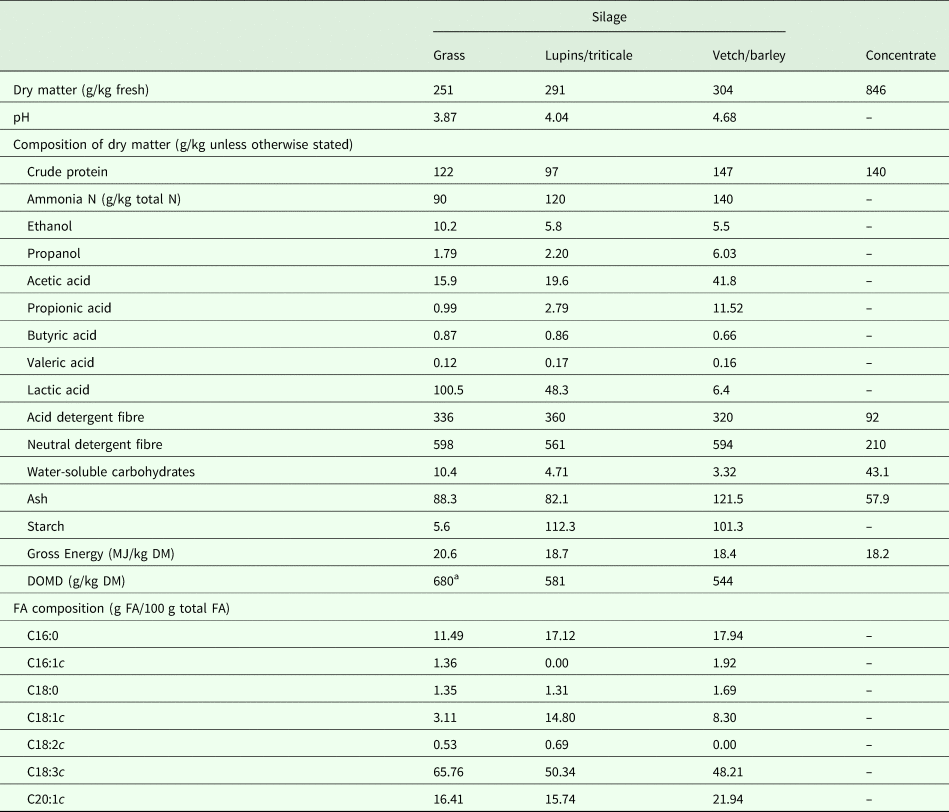
The chemical composition and FA profiles of the silages and concentrates offered are presented in Table 1. The GS was well preserved, as indicated by its low pH and low ammonia N and butyric acid concentrations. Lupins/triticale and VBS had pH values and ammonia N concentrations of 4.0 and 4.7 and 120 and 140 g/kg total N, respectively. However, they were reasonably well preserved as indicated by their low butyric acid concentrations. The crude protein (CP) concentration in LTS was low at 97 g/kg DM while the VBS and GS had CP concentrations of 147 and 122 g/kg DM, respectively.
Chemical compositions and fatty acid (FA) profiles for the silages and concentrate

a NIR prediction of grass silage DOMD.
Digestibilities of the total diets
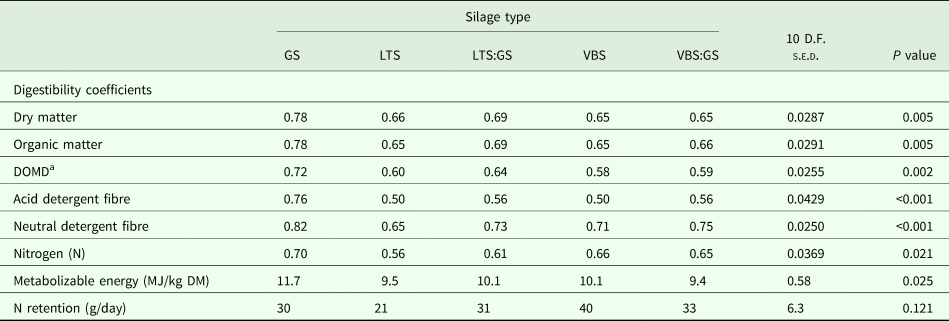
The effects of silage type on the digestibilities of the total diets are presented in Table 2. Offering GS as the only forage resulted in higher DM (P < 0.05), N (P < 0.05), organic matter (OM; P < 0.01), ADF (P < 0.001) and NDF (P < 0.001) digestibilities, digestible organic matter in the DM (DOMD) and ME concentrations (P < 0.05) of the diets than when LTS, LTS:GS, VBS and VBS:GS were offered. Animals offered LTS had a lower (P < 0.001) NDF digestibility than animals offered LTS:GS, VBS and VBS:GS while diet had no significant effect on N retention (Table 2).
Effects of silage type on total diet digestibilities when the animals were given 2 kg of concentrates/head daily
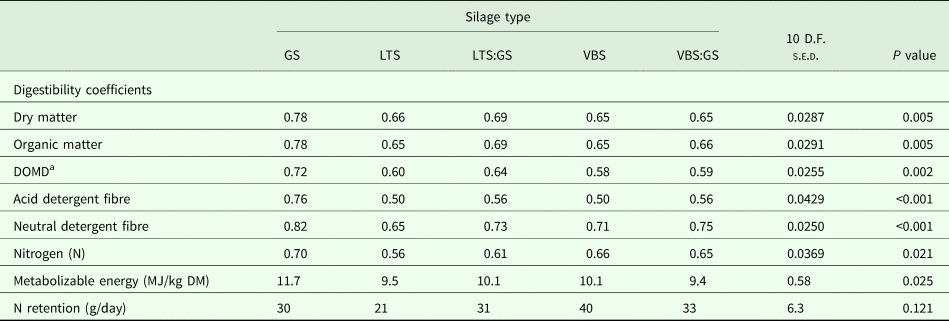
GS, Grass silage; LTS, Lupins/triticale silage; LTS:GS, Lupins/triticale silage: Grass silage at a 70:30 DM ratio; VBS, Vetch/barley silage; VBS:GS, Vetch/barley silage: Grass silage at a 70:30 DM ratio.
a DOMD = digestible organic matter concentration in the DM.
Dry matter intake and animal performance
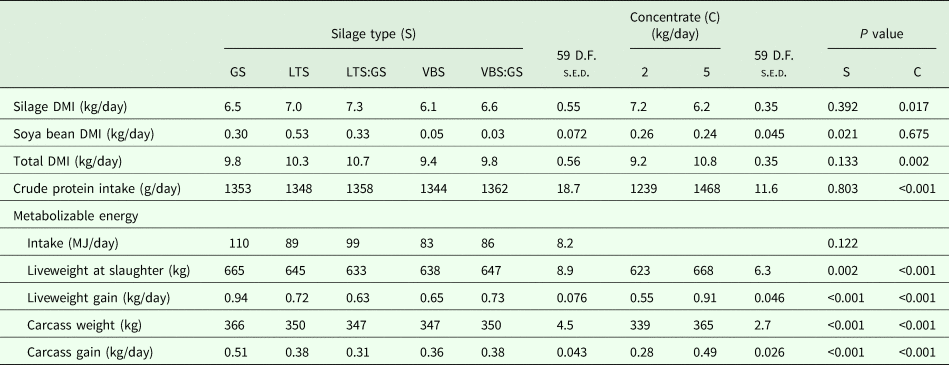
The effects of silage type and concentrate intake on protein and DM intakes and animal performance are presented in Table 3. There were no silage type × concentrate intake interactions. Silage type had no significant effect on silage DMI, total DMI, CP intake or ME intake (MEI). Supplementation with up to 0.5 kg/head/day of soyabean meal for the LTS treatment was successful in equalizing the CP intakes across the five silage diets. Increasing concentrate intake from 2 to 5 kg/head/day decreased silage DM intake (P < 0.01) and increased total DM intake (P < 0.01) and total CP intake (P < 0.001).
Effects of silage type and concentrate intake on protein and dry matter intakes and animal performance.

GS, Grass silage; LTS, Lupins/triticale silage; LTS:GS, Lupins/triticale silage: Grass silage on a 70:30 DM ratio; VBS, Vetch/barley silage; VBS:GS, Vetch/barleysilage: Grass silage on a 70:30 DM ratio.
Metabolizable energy intakes are calculated from digestible energy intakes when the silages were supplemented with 2 kg of concentrates/head daily.
Relative to animals offered GS as the sole forage, animals offered LTS or VBS as either the sole forage or in combination with GS had lower (P < 0.001) liveweight gains, carcass gains and carcass weights. Animals offered LTS, LTS:GS, VBS and VBS:GS had lower liveweights at slaughter than animals offered GS. Increasing concentrate intake from 2 to 5 kg/head/day increased (P < 0.001) liveweight at slaughter, liveweight gain, carcass gain and carcass weight.
Carcass characteristics
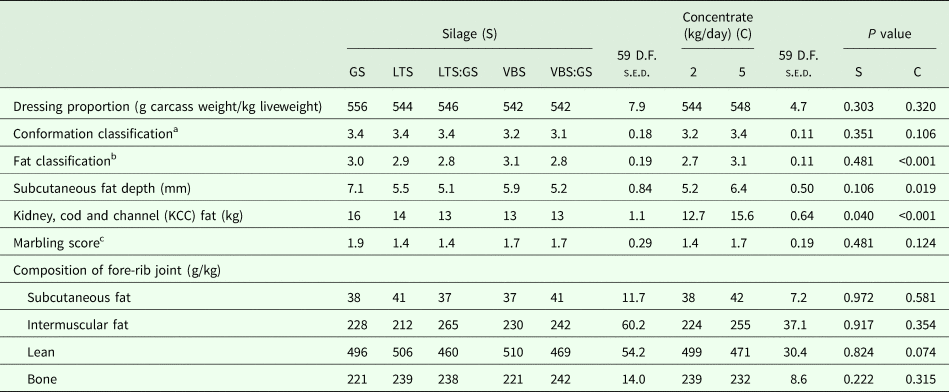
The effects of silage type and concentrate intake on carcass characteristics are presented in Table 4. The type of silage offered to the animals had no effect on dressing proportion, carcass conformation, fat classification, subcutaneous fat depth marbling score of the LD muscle or subcutaneous fat, intermuscular fat, lean or bone concentrations in the fore-rib joint. However, steers fed GS produced a significantly greater (P < 0.05) weight of KCC fat than the VBS, the 70:30 ratio of LTS:GS and the 70:30 ratio of VBS:GS. Increasing concentrate intake from 2 to 5 kg/day increased carcass fat classification, the weight of KCC fat (P < 0.001) and subcutaneous fat depth (P < 0.05). Concentrate intake had no significant effect on dressing proportion, carcass conformation, or marbling score of the LD muscle or on the subcutaneous fat, intermuscular fat, lean or bone concentrations in the fore-rib joint.
Effect of silage type and concentrate intake on carcass characteristics.

GS, Grass silage; LTS, Lupins/triticale silage; LTS:GS, Lupins/triticale: Grass silage on a 70:30 DM ratio; VBS, Vetch/barley silage; VBS:GS, Vetch/barley silage: Grass silage on a 70:30 DM ratio.
a 5 point scale, 1 = worst; 5 = best.
b 5 point scale, 1 = leanest; 5 = fattest.
c 8 point scale, 1 = lowest marbling; 8 = highest marbling.
Meat quality
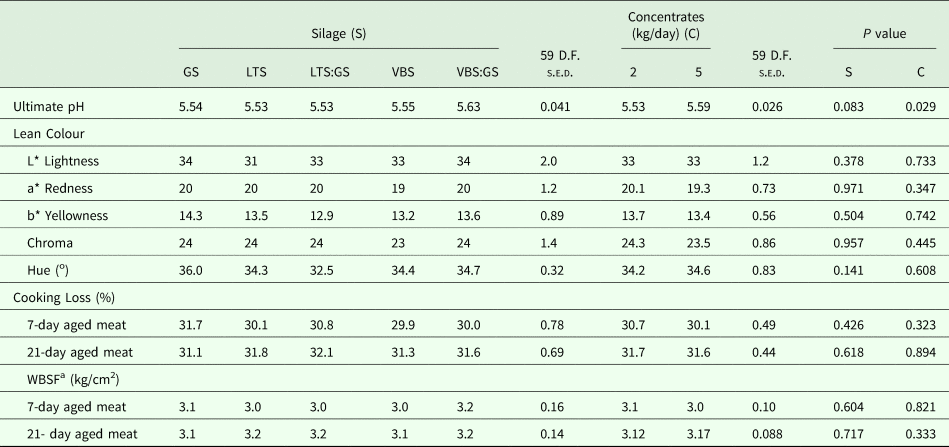
The effects of silage type and concentrate intake on the colour and quality of meat from the LD muscle are presented in Table 5. Silage type had no significant effect on ultimate pH, instrumental assessment of meat quality or the colour of the LD muscle. Concentrate intake had no effect on the instrumental assessment of meat quality or meat colour of the LD muscle, although meat from animals offered 5 kg concentrates/head/day had a higher pH (P < 0.05) than that from animals given 2 kg of concentrates/head/day.
Effect of silage type and concentrate intake on lean colour and instrumental assessment of meat quality of M. longissimus dorsi (LD) muscle

GS, Grass silage; LTS, Lupins/triticale silage; LTS:GS, Lupins/triticale silage: Grass silage on a 70:30 DM ratio; VBS, Vetch/barley silage; VBS/GS, Vetch/barley silage: Grass silage on a 70:30 DM ratio.
a Warner Bratzler Shear Force.
Fatty acid composition
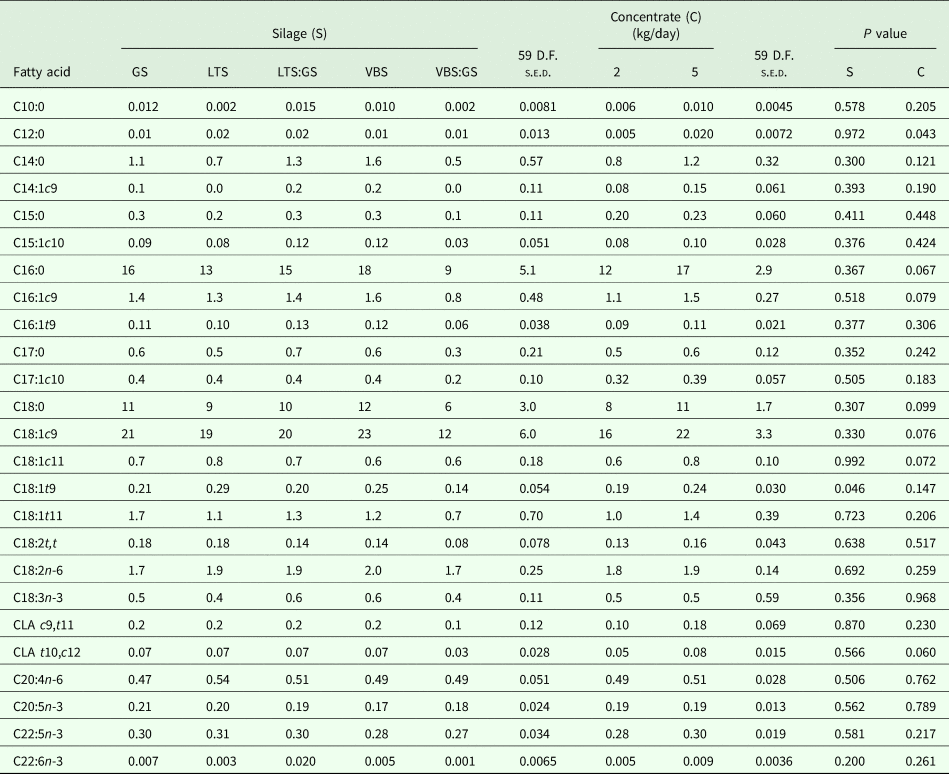
The effect of silage type and concentrate intake on the concentrations of individual FA (mg FA/g of tissue) of LD muscle are presented in Table 6. Animals offered VBS:GS had a lower (P < 0.05) concentration of C18:1t9 than animals offered LTS. Increasing the quantity of concentrate offered to the animals from 2 to 5 kg/head/day increased (P < 0.05) the concentration of C12:0 in the LD muscle.
Effect of silage type and concentrate intake on the concentration of individual fatty acids (mg FA/g of tissue) in M longissimus dorsi muscle

GS, Grass silage; LTS, Lupins/triticale silage; LTS:GS, Lupins/triticale silage: Grass silage on a 70:30 DM ratio; VBS, Vetch/barley silage; VBS:GS, Vetch/barley silage: Grass silage on a 70:30 DM ratio.
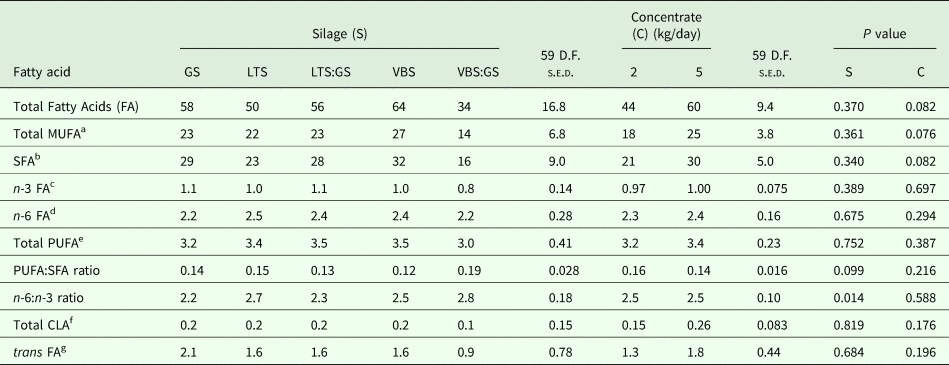
Effects of silage type and concentrate intake on FA groupings (mg FA/g of tissue) and nutritional FA ratios of LD are presented in Table 7. Animals offered VBS:GS or LTS had a higher (P < 0.05) n-6:n-3 ratio in lean meat than animals offered LTS:GS and GS. Supplementary concentrate intake had no effect on FA groupings or FA ratios.
Effect of silage type and concentrate intake on fatty acid groupings (mg FA/g of tissue) and nutritional fatty acid ratios of M longissimus dorsi muscle

GS, Grass silage; LTS, Lupins/triticale silage; LTS:GS, Lupins/triticale silage: Grass silage on a 70:30 DM ratio; VBS, Vetch/barley silage; VBS:GS, Vetch/barley silage: Grass silage on a 70:30 DM ratio.
a Monounsaturated fatty acid (C14:1c9; C15:1c10; C16:1c9; C17:1c10; C18:1c9; C18:1c11).
b Saturated fatty acid (C10:0; C12:0; C14:0; C15:0; C16:0; C17:0; C18:0).
c n-3 (C18:3n-3; C20:5n-3; C22:5n-3, C22:6n-3).
d n-6 (C18:2n-6; C20:4n-6).
e Polyunsaturated fatty acid (C18:2 n-6; C18:3 n-3; C20:4 n-6; C20:5 n-3; C22:5 n-3; C22:6 n-3).
f Conjugated linoleic acid (C18:2 c9 t11; C18:2 t10 c12).
g trans-FA (C16:1t9; C18:1t9; C18:1t11; C18:2t9).
Discussion
Crop yields and silage quality
The yields of the legume/cereal crops were considerably lower than the yields of 10.4–13.0 t/ha recorded for whole crop winter wheat (O'Kiely and Moloney, Reference O'Kiely and Moloney2002; Keady, Reference Keady, Park and Stronge2005; Walsh et al., Reference Walsh, O'Kiely, Moloney and Boland2008a). However, Dawson (Reference Dawson2012) recorded a similar yield to those recorded in the present study for a crop of spring lupins/triticale (7.5 t DM/ha).
The GS offered in the current experiment had a good fermentation, as indicated by a pH of below 4, high lactic acid concentration and low concentrations of ammonia N and butyric acid. It also had a reasonably high digestibility (DOMD 680 g/kg DM) relative to silages produced on beef farms in Northern Ireland. (Lively et al., Reference Lively, Dawson and Kennedy2009).
There is very little comparable information in the scientific literature on the quality of legume/cereal whole crop silages and subsequent performance when the silages are fed to beef cattle. In the present study, the whole-crop legume/cereal silages had poorer fermentation than the GS, as indicated by the higher ammonia N and low lactic acid concentrations. However, they also had very low butyric acid concentrations, similar to the butyric acid concentration in the GS. The poorer fermentation in the whole-crop silages may have been due to the low WSC concentration in these silages limiting the fermentation. Dawson (Reference Dawson2012) also obtained a high pH (4.7), a high ammonia N concentration (173 g/kg total N) and a very low lactic acid concentration (9 g/kg DM) in a LTS silage. This is likely to have been due to the presence of the legume in these silages (Steen and McIlmoyle, Reference Steen and McIlmoyle1982; Lee et al., Reference Lee, Evans, Nute, Richardson and Scollan2009). The VBS and LTS had similar DM concentrations but VBS had a substantially higher pH, while higher pH values have usually been associated with higher DM concentrations (O'Kiely and Moloney, Reference O'Kiely and Moloney1995; Zahiroddini et al., Reference Zahiroddini, Baah, Absalom and McAllister2004). The higher pH in VBS than in LTS is likely to have been associated with a higher legume content in VBS, as indicated by its higher protein concentration and higher content of legume in the seed mixture. The higher pH in legume silages is due to their higher buffering capacity, higher N concentration and lower WSC concentration than in perennial ryegrass silages (Nash, Reference Nash1985). The ratios of lactic acid to total acids in LTS and VBS were 0.67 and 0.11, respectively, which indicates a more heterofermentative bacterial fermentation in VBS than in LTS, which is to be expected when ensiling a forage with a higher content of legumes (Dewhurst et al., Reference Dewhurst, Evans, Scollan, Moorby, Merry and Wilkins2003).
Lupins have been shown to be a potential protein source with seed CP concentrations of up to 447 g/kg DM reported from indeterminate (multiple branching plants) lupin species (Fychan et al., Reference Fychan, Marley, Theobald, Roberts and Jones2009). In contrast, in the current study, LTS had a low CP concentration of only 97 g/kg DM. No field measurements of crop establishment were recorded in the current experiment, although poor lupin establishment was observed which could be responsible for the low CP concentration observed in LTS. The VBS had a higher CP concentration than LTS, again indicating a higher proportion of legume within the VBS.
Dry matter intake
The current study was designed to examine the performance of beef cattle offered legume/cereal whole crop silages with protein intake equalized across silage treatments through the addition of soyabean meal. In the current study, the inclusion of legume/cereal whole crop silages with GS had no effect on silage or total DMI in contrast to previous studies with whole crop silages (O'Kiely and Moloney, Reference O'Kiely and Moloney2002; Keady et al., Reference Keady, Lively, Kilpatrick and Moss2007; Dawson, Reference Dawson2012). This may be attributed to the poorer fermentation of LTS and VBS in the present study reducing the beneficial effect of a higher DM concentration on silage and total DMI in comparison with animals offered GS as the sole forage. The lower total diet digestibility for the animals offered LTS and VBS is also likely to have reduced DMI, although Dewhurst et al. (Reference Dewhurst, Evans, Scollan, Moorby, Merry and Wilkins2003) found that legumes of a lower DM digestibility had higher DMI than GS of a higher digestibility when both were offered to dairy cows.
The DMI of the animals given GS is similar to that of cattle of similar liveweight in a previous study (Steen et al., Reference Steen, Kilpatrick and Porter2002). When concentrate intake was increased from 2 to 5 kg/head/day, total DMI was increased by 0.62 kg DM/kg of additional concentrates. This is similar to the responses obtained in previous studies (Drennan and Keane, Reference Drennan and Keane1987; Steen et al., Reference Steen, Kilpatrick and Porter2002).
Animal performance
The daily liveweight and carcass gains of the animals given GS in the current study are slightly lower than those of steers offered GSs of a similar quality and supplemented with a similar quantity of concentrates in previous studies (Drennan and Keane, Reference Drennan and Keane1987; Steen, Reference Steen1998; Steen et al., Reference Steen, Kilpatrick and Porter2002). The cattle used in the present study had a high liveweight gain of approximately 0.90 kg/day from birth until the beginning of the experiment and this may have resulted in a slightly lower level of performance during the experiment.
In the current study, animals offered legume/cereal whole crop silage, either as the sole forage or in combination with GS had on average 30% lower carcass gains and 18 kg lower carcass weight than those given reasonably high-quality GS. Dawson (Reference Dawson2012) obtained higher liveweight and carcass gains with similar cattle offered LTS/GS than in the present study. However, this is likely to have been due to the fact that the silage contained only 0.40 LTS and 0.60 good quality GS. However, liveweight and carcass gains in the present study were low compared with those recorded previously for whole crop cereal silages. O'Kiely and Moloney (Reference O'Kiely and Moloney1995) and Walsh et al. (Reference Walsh, O'Kiely, Moloney and Boland2008b) obtained carcass gains of 629 and 736 g/day, respectively, for cattle offered whole crop barley silage with a similar input of concentrates, whereas carcass gains in the current study averaged only 370 g/day for animals offered LTS and VBS. The higher animal performance observed by Walsh et al. (Reference Walsh, O'Kiely, Moloney and Boland2008b) compared with that obtained in the current study may be attributed to a higher DMI, higher DM digestibility (722 g/kg) and a better fermentation of the silages offered. The DM digestibility of the whole crop barley diet offered by Walsh et al. (Reference Walsh, O'Kiely, Moloney and Boland2008b) was 67 and 76 g/kg higher than LTS and VBS diets, respectively in the current study.
In the present study, when concentrate intake was increased from 2 to 5 kg/head/day, liveweight and carcass gains were increased by 141 and 82 g/kg increase in concentrate DMI. These responses are somewhat greater than those generally obtained in previous studies (Drennan and Keane, Reference Drennan and Keane1987; Steen et al., Reference Steen, Kilpatrick and Porter2002; Dawson, Reference Dawson2012; AE Robson and RWJ Steen, unpublished data) which is likely to have been due to the poorer quality of the silages used in the current study. They are also greater than the responses obtained with similar silages by PC Kennedy (personal communication), which can be attributed to the lower overall level of concentrate supplementation used in the present study (3.5 kg/head/day) than by PC Kennedy (personal communication) (5.5 kg/head/day).
In the current experiment, there was little difference in dressing proportion between the silage treatments. This is in contrast to previous results (O'Kiely and Moloney, Reference O'Kiely and Moloney1999; Keady et al., Reference Keady, Lively, Kilpatrick and Moss2007), where dressing proportion decreased when whole crop wheat silage was offered to finishing beef cattle in comparison with GS. Keady et al. (Reference Keady, Lively, Kilpatrick and Moss2007) attributed the difference in dressing proportions to increased gut fill in animals offered whole crop wheat silage in comparison with GS.
In the present study, the weight of KCC fat was higher for animals offered GS as the sole forage than for animals offered legume/cereal whole crop silages. However, animals offered GS had a faster rate of carcass gain and produced heavier carcasses and when the results were adjusted to a constant carcass weight, silage treatment had no effect on the weight of internal fat deposits. The absence of any difference in carcass fatness between the animals given GS as the sole forage and those given LTS and VBS is surprising in view of the higher growth rate and the heavier carcasses produced by the animals given GS as the sole forage. This may indicate that for animals with similar growth rates and similar carcass weights, those given LTS or VBS may produce fatter carcasses than those given GS. The increase in carcass fat classification when concentrate intake was increased from 2 to 5 kg/head/day is greater than the effects obtained in previous studies which involved a similar increase in concentrate intake (Steen et al., Reference Steen, Kilpatrick and Porter2002; Dawson, Reference Dawson2012; PC Kennedy, personal communication; AE Robson and RWJ Steen, unpublished data). However, this result should be treated with caution, as the increase in fat classification was not reflected in a significant increase in the fat content of the fore-rib joint.
Meat quality
In the current study, offering legume/cereal whole crop silages had no effect on meat quality parameters. Warner Bratzler Shear Force (WBSF) values for each treatment between 7- and 21-day ageing were within the range reported by Shackelford et al. (Reference Shackelford, Koohmaraie, Whipple, Wheeler, Miller, Crouse and Reagan1991a, Reference Shackelford, Koohmaraie, Miller, Crouse and Reagan1991b, Reference Shackelford, Wheeler and Koohmaraie1997) as being acceptably tender. The low WBSF values for meat recorded at 7-day ageing and the small change at 21-day ageing can be attributed to the tenderstretch method used to hang the carcasses post-slaughter. Previous research has demonstrated that hanging carcasses via the tenderstretch method reduces treatment differences in tenderness (Lively et al., Reference Lively, Keady, Moss, Patterson and Gordon2005). The similar WBSF values recorded overall silage treatments are in contrast to the findings of McCormick (Reference McCormick1994) and French et al. (Reference French, Stanton, Lawless, O'Riordan, Monahan, Caffrey and Moloney2000), who reported a negative relationship between growth rate prior to slaughter and tenderness of the meat. In the current study, animals offered legume/cereal whole crop silages had lower liveweight and carcass gains (approximately 30%) than those offered GS as the sole forage, however no differences in WBSF values were observed.
The higher pH observed in meat from animals offered the higher level of concentrate supplementation was unexpected. However, the pH of meat from both treatments was below the threshold for dark cutting of pH 6 and although statistically significant on a numerical basis, this was a very small difference (0.06 between the two treatments) and would be unlikely to be of any commercial significance. (Thompson, Reference Thompson2002).
Fatty acids
Previous studies have demonstrated that the inclusion of legume forages such as red clover and protein supplements such as lupins may decrease the concentrations of medium chain saturated FA (C12:0–C16:0) and increase the concentrations of long-chain unsaturated FA (C18:1–C18:3) in lean beef and milk from dairy cows (Dewhurst et al., Reference Dewhurst, Shingfield, Lee and Scollan2006; White et al., Reference White, Staines and Staines2007, respectively). However, no known research has examined the effect of feeding legume/cereal whole crop silages on FA composition of beef.
In the majority of studies (Steen et al., Reference Steen, Kilpatrick and Porter2002, Reference Steen, Lavery, Kilpatrick and Porter2003; French et al., Reference French, O'Riordan, Monahan, Caffrey and Moloney2003; Steen and Porter, Reference Steen and Porter2003; Scollan et al., Reference Scollan, Hocquette, Nuernberg, Dannenberger, Richardson and Moloney2006), intramuscular fat contents have ranged from 20 to 50 mg FA/g of tissue, in comparison with the current study in which an average of 52.3 mg FA/g of tissue was recorded for the silage treatments. The higher concentration of intramuscular fat may be attributed to the higher lifetime growth rate and higher slaughter weight of the animals in the current study than in previous studies.
The higher concentration of C18:1t9 in the intramuscular fat of animals offered LTS as the sole forage is in contrast to the values recorded for animals offered VBS:GS, however, no difference was recorded for concentrations of total trans FA. White et al. (Reference White, Staines and Staines2007) recorded a decrease in the concentrations of medium-chain saturated FA (C12:0–C16:0) and an increase in longer chain saturated (C18:0) and unsaturated FA (C18:1–C18:3) in milk (g FA/100 g FA) when solvent-extracted soyabean or feather meal was replaced with lupins (L. albus). Silage treatment had no effect on medium or long chain saturated FAs in the meat or total PUFA, monounsaturated FA (MUFA) or conjugated linoleic acids (CLA) concentrations. In the current study, animals offered LTS as the sole forage received the highest concentration of soyabean meal (0.53 kg/head/day), which may have reduced any potential beneficial effects of lupins in improving the FA composition of meat.
The lack of difference in the FA composition of meat from animals offered different diets is in contrast to the results of the majority of studies that have examined the effect of offering fresh grass and high-concentrate diets on FA composition of lean beef (Steen et al., Reference Steen, Kilpatrick and Porter2002, Reference Steen, Lavery, Kilpatrick and Porter2003; Steen and Porter, Reference Steen and Porter2003; Dewhurst et al., Reference Dewhurst, Shingfield, Lee and Scollan2006). The inclusion of a legume forage in the current study was expected to change the FA composition of lean meat in comparison with that from animals offered GS as the sole forage. However, this may have been offset by the legume being sown and offered in combination with a cereal, which has been shown to increase the SFA concentration of lean beef (Warren et al., Reference Warren, Enser, Richardson, Wood and Scollan2003). Furthermore, the inclusion of a cereal with the legumes in the whole crop silages in the present study is likely to have resulted in the similar concentrations of individual FA in the three silages. Supplementing the silages with an average of 3.5 kg of concentrate/head/day would also have reduced the effect of the type of forage offered on the FA composition of the meat. Animals offered GS and LTS:GS had a lower n-6:n-3 ratio in the lean meat than animals offered LTS or VBS:GS, however, while these differences were statistically significant they are unlikely to be important biologically and the lean meat from animals offered each of the silages had an n-6:n-3 ratio of <4, which is below the value recommended by Simopoulos (Reference Simopoulos1999). Research studies reviewed by Griffin (Reference Griffin2008) and Woods and Fearon (Reference Woods and Fearon2009) have indicated that the n-6:n-3 ratio is of limited importance in relation to cardiovascular diseases (CVD) partly due to the lack of distinction between α-linolenic acid and the metabolically more active long-chain n-3 PUFA, C20:5n-3 (eicosapentaenoic acid), C22:5n-3 (docosapentaenoic acid) and C22:6n-3 (docosahexaenoic acid). Previous studies have shown that offering fresh grass rather than a high-concentrate diet produced two- to three-fold increases in the concentrations of these three metabolically active long-chain n-3 PUFA in muscle (Steen et al., Reference Steen, Kilpatrick and Porter2002; Reference Steen, Lavery, Kilpatrick and Porter2003), and a similar increase in the concentration of conjugated linoleic acid (Steen and Porter, Reference Steen and Porter2003). The lack of a significant effect of concentrate intake on total SFA concentration or C18:3n-3, C 20:5n-3, C22:5n-3 or C22:6n-3 concentrations in the current study is similar to the findings of French et al. (Reference French, Stanton, Lawless, O'Riordan, Monahan, Caffrey and Moloney2000), who offered either 4 or 8 kg of concentrate/head/day. In contrast, Warren et al. (Reference Warren, Enser, Richardson, Wood and Scollan2003) offered a higher variation in concentrate intakes and recorded over a four-fold increase in C18:3n-3 when offering GS in comparison with a higher concentrate diet.
Conclusions
It is concluded that offering legume/cereal whole crop silage as the sole forage or in combination with GS rather than GS alone reduces daily liveweight and carcass gains of beef steers and has no beneficial effects on meat quality or FA composition of lean meat. In view of the low yields of the whole crop legume/cereal silages and the poor animal performance sustained by them, the results of the current study do not justify the inclusion of legume/cereal silage in the diets of beef cattle. However, if the yields of legume/cereal whole crop could be increased by, for example, using autumn-sown LTS or LWS then they may be more viable as a feed for commercial beef cattle.
Acknowledgements
The authors thank Mr K Mathers and the staff of the Beef Unit for technical assistance and Mr M. Porter and the Laboratory staff for chemical analyses.
Financial support
PC Kennedy acknowledges funding for a postgraduate scholarship from The Agricultural and Horticultural Development Board of England and Wales.
Conflict of interest
None.
Ethical standards
All animals were cared for at all times in accordance with the requirements of the UK Animals (Scientific Procedures) Act 1986 and were supervised by the veterinary surgeon who is the designated inspector for animals kept under the regulations of this Act.