A large body of research highlights the importance of examining the mechanisms underlying young children's development of internalizing and externalizing symptoms, which precede and predict numerous adverse developmental outcomes across the life span (Hofstra & Verhulst, Reference Hofstra and Verhulst2000; Pardini, White, & Stouthamer-Loeber, Reference Pardini, White and Stouthamer-Loeber2007). Young children of caregivers with high levels of depressive symptoms may experience more disrupted parenting behaviors and be at high risk for developing psychopathology symptoms (Reising et al., Reference Reising, Watson, Hardcastle, Merchant, Roberts, Forehand and Compas2013). Nevertheless, heterogeneity exists in children's sensitivity to the influence of caregivers’ depression, with some highly sensitive children more likely to develop psychopathology symptoms than others. According to the differential susceptibility theory (DST), children's differential sensitivity to environmental inputs is associated with the functioning of their stress response systems, including the hypothalamic–pituitary–adrenal (HPA) axis and its end product, cortisol (Belsky, Bakermans-Kranenburg, & Van IJzendoorn, Reference Belsky, Bakermans-Kranenburg and Van IJzendoorn2007; Belsky & Pluess, Reference Belsky and Pluess2009).
Cortisol activity patterns in response to stressors are considered indices of differential sensitivity to social contexts (Belsky & Pluess, Reference Belsky and Pluess2009). As such, high levels of cortisol stress response should amplify the relations between caregivers’ depressive symptoms and children's internalizing and externalizing symptoms. However, greater sensitivity to environmental influences is also hypothesized to increase children's adaptive responsiveness to early interventions (Belsky et al., Reference Belsky, Bakermans-Kranenburg and Van IJzendoorn2007; Belsky & Pluess, Reference Belsky and Pluess2009). Internalizing and externalizing behaviors are known to be attenuated when children attend early intervention programs that use video feedback strategies to promote naturally occurring and developmentally supportive parenting behaviors (Balldin, Fisher, & Wirtberg, Reference Balldin, Fisher and Wirtberg2018). The current study leveraged data from a randomized controlled trial and tested the differential susceptibility hypotheses by examining how children's responses to the Filming Interactions to Nurture Development (FIND) program – a brief and strength-based video feedback parenting intervention – varied as a function of cortisol activity patterns and caregivers’ depressive symptoms. Cortisol activity in response to a structured stress paradigm were indicated by cortisol area under the curve with respect to ground (AUCg). High levels of cortisol AUCg were expected to exacerbate the associations between caregivers’ depressive symptoms and children's psychopathology symptoms. However, highly reactive children receiving the FIND intervention were also expected to benefit more from the program and exhibit attenuated psychopathology problems. To our knowledge, this is the first study that tested children's stress response as a differential susceptibility biomarker in relation to both vulnerabilities to adverse conditions and positive adaptations to intervention effects.
The Developmental Psychopathology and Research Domain Criteria (RDoC) Approaches
This study is informed by integration of the developmental psychopathology and RDoC approaches (Franklin, Jamieson, Glenn, & Nock, Reference Franklin, Jamieson, Glenn and Nock2015; Mittal & Wakschlag, Reference Mittal and Wakschlag2017). The RDoC project, launched by the National Institute of Mental Health (NIMH), is a dimensional approach that aims to develop novel methods to classify psychopathology symptoms (e.g., internalizing and externalizing) based on multiple levels of analyses, such as genes, physiology, neurobiology, and observational behaviors (Cuthbert & Insel, Reference Cuthbert and Insel2013; Insel et al., Reference Insel, Cuthbert, Garvey, Heinssen, Pine, Quinn and Wang2010). The RDoC framework suggests five major domains of functioning that have critical implications for psychopathology research – positive valence, negative valence, cognitive functions, social processes, and arousal/regulatory functions (Cuthbert, Reference Cuthbert2014). Further, developmental scientists indicate that integrating the developmental psychopathology perspective within the RDoC can resolve some potential issues of the RDoC approach (Franklin et al., Reference Franklin, Jamieson, Glenn and Nock2015; Mittal & Wakschlag, Reference Mittal and Wakschlag2017). By taking developmental processes and environmental/contextual influences into account, this integration can further improve the knowledge about and treatment for psychopathology (Franklin et al., Reference Franklin, Jamieson, Glenn and Nock2015).
The current study is informed by the RDoC and developmental psychopathology approaches in several ways. First, the investigation of children's developmental heterogeneity in the context of caregivers’ depressive symptoms is informed by the multifinality concept from the developmental psychopathology perspective, which suggests that similar early experiences might lead to multiple developmental outcomes (Cicchetti & Rogosch, Reference Cicchetti and Rogosch1996). Second, this study examined children's development of psychopathology symptoms using multiple levels of analyses, including environmental inputs (i.e., caregivers’ depressive symptoms), neurobiological processes (i.e., HPA axis), and behaviors (i.e., internalizing and externalizing symptoms). The HPA axis – an arousal/regulatory system that modulates individuals’ stress responses – is suggested by the RDoC framework as one major functional domain critical for understanding psychopathology (Cuthbert, Reference Cuthbert2014). Third, this study adopted a transdiagnostic dimensional approach that focused on young children's internalizing and externalizing symptoms regardless of diagnostic thresholds, which is a key feature of both RDoC and developmental psychopathology perspectives (Franklin et al., Reference Franklin, Jamieson, Glenn and Nock2015). This transdiagnostic dimensional approach might be especially effective in the early detection and prevention of future psychopathology among infants and toddlers.
Caregivers’ Depressive Symptoms and Children's Psychopathology Symptoms
Caregivers’ mental health status robustly predicts their children's development of psychopathology and behavioral problems (Goodman et al., Reference Goodman, Rouse, Connell, Broth, Hall and Heyward2011). Young children of caregivers with high levels of depressive symptoms are at elevated risk for developing internalizing and externalizing problems (Eckshtain, Marchette, Schleider, Evans, & Weisz, Reference Eckshtain, Marchette, Schleider, Evans and Weisz2019; Kane & Garber, Reference Kane and Garber2009; Mäntymaa et al., Reference Mäntymaa, Puura, Luoma, Latva, Salmelin and Tamminen2012). This association between caregivers’ depressive symptoms and children's psychopathology can be partially explained by maladaptive parenting behaviors (Hammen, Brennan, & Shih, Reference Hammen, Brennan and Shih2004; Reising et al., Reference Reising, Watson, Hardcastle, Merchant, Roberts, Forehand and Compas2013). In particular, caregivers with high levels of depressive symptoms are more likely to adopt inconsistent or disrupted parenting strategies, such as harshness, withdrawn behaviors, and diminished responsiveness and sensitivity (Lovejoy, Graczyk, O'Hare, & Neuman, Reference Lovejoy, Graczyk, O'Hare and Neuman2000; Vreeland et al., Reference Vreeland, Gruhn, Watson, Bettis, Compas, Forehand and Sullivan2019). These intrusive or withdrawn parenting behaviors may disrupt young children's emotional security and increase their risk for developing internalizing and externalizing problems (Callahan, Scaramella, Laird, & Sohr-Preston, Reference Callahan, Scaramella, Laird and Sohr-Preston2011; Serbin, Kingdon, Ruttle, & Stack, Reference Serbin, Kingdon, Ruttle and Stack2015). Further, depressive symptoms and inconsistent or disrupted parenting behaviors are more likely to be observed in caregivers experiencing economic disadvantages (Sullivan et al., Reference Sullivan, Benoit, Breslend, Vreeland, Compas and Forehand2019). In the context of low socioeconomic status (SES), children might be more susceptible to the negative impact of caregivers’ depressive symptoms and exhibit increased psychopathology symptoms (Reising et al., Reference Reising, Watson, Hardcastle, Merchant, Roberts, Forehand and Compas2013; Vreeland et al., Reference Vreeland, Gruhn, Watson, Bettis, Compas, Forehand and Sullivan2019).
Despite the consistent links between caregivers’ depressive symptoms and children's psychopathology, children present significant individual heterogeneity in their response to the influence of caregivers’ depressive symptoms (Somers, Luecken, Spinrad, & Crnic, Reference Somers, Luecken, Spinrad and Crnic2019). Some children are highly vulnerable and develop increased psychopathology symptoms. However, other children present resilience and show low levels of internalizing and externalizing symptoms, despite the experiences of caregivers’ psychopathology. This heterogeneity is documented by research on the DST (Belsky, Reference Belsky, Ellis and Bjorklund2005; Belsky et al., Reference Belsky, Bakermans-Kranenburg and Van IJzendoorn2007).
Cortisol AUCg as a Differential Sensitivity Biomarker
From a neurobiological perspective, the DST links children's differential response to comparable environmental inputs, such as the influence of caregivers’ depressive symptoms, to their variability in biological stress response systems (Belsky & Pluess, Reference Belsky and Pluess2009; Ellis, Boyce, Belsky, Bakermans-Kranenburg, & Van IJzendoorn, Reference Ellis, Boyce, Belsky, Bakermans-Kranenburg and Van IJzendoorn2011). These specific biological processes are hypothesized to interact with positive or negative rearing environments and induce qualitatively different behavioral adjustment, following a “for better and for worse” pattern (Belsky & Pluess, Reference Belsky and Pluess2009; Ellis et al., Reference Ellis, Boyce, Belsky, Bakermans-Kranenburg and Van IJzendoorn2011). Interacting with negative/adverse environments, neurobiological functions underlying heightened stress response may amplify children's vulnerability and lead to elevated risk for psychopathology (i.e., “for worse”; developmental vulnerability). In contrast, heightened neurobiological stress reactivity can also augment youths’ adaptive response to the positive influence of supportive environments (i.e., “for better”; developmental enhancement). Therefore, the DST suggests that young children's differential response to the impact of caregivers’ depressive symptoms is linked to their neurobiological stress response processes.
The HPA axis (and its end product, cortisol) is one critical biomarker linked to children's differential sensitivity to environmental influences. In response to acute stressors, the HPA axis initiates a lagged stress response, resulting in cortisol secretion, within minutes, to regulate blood pressure, glucose metabolism, and immunity (Gunnar & Vazquez, Reference Gunnar and Vazquez2006; Sapolsky, Romero, & Munck, Reference Sapolsky, Romero and Munck2000). A rapid cortisol level increase followed by a quick decline indicates an efficient and adaptive stress response (Zorn et al., Reference Zorn, Schür, Boks, Kahn, Joëls and Vinkers2017). Cortisol response to a structured stress paradigm can be assessed in different ways, such as standardized residual scores obtained by regressing poststress on prestress cortisol levels (Kudielka, Schommer, Hellhammer, & Kirschbaum, Reference Kudielka, Schommer, Hellhammer and Kirschbaum2004), area under the curve (AUC) (Pruessner, Kirschbaum, Meinlschmid, & Hellhammer, Reference Pruessner, Kirschbaum, Meinlschmid and Hellhammer2003), and piecewise latent growth models (e.g., Bernard & Dozier, Reference Bernard and Dozier2010; Brown et al., Reference Brown, Schlueter, Hurwich-Reiss, Dmitrieva, Miles and Watamura2020). The method of using the AUC to represent cortisol stress activity incorporates the repeated measures of cortisol levels across multiple time points (Pruessner et al., Reference Pruessner, Kirschbaum, Meinlschmid and Hellhammer2003). In particular, AUC with respect to ground (AUCg) is often used as a measure of total cortisol output or concentration, which treats value zero as the reference baseline and accounts for both intensity (i.e., the initial cortisol level) and sensitivity (i.e., changes in cortisol levels at multiple time points) of cortisol response to the stress paradigm (Pruessner et al., Reference Pruessner, Kirschbaum, Meinlschmid and Hellhammer2003). In contrast, AUC with respect to increase (AUCi) uses the initial cortisol level as a reference baseline and only takes sensitivity into account (Pruessner et al., Reference Pruessner, Kirschbaum, Meinlschmid and Hellhammer2003), which emphasizes cortisol changes over time (Fekedulegn et al., Reference Fekedulegn, Andrew, Burchfiel, Violanti, Hartley, Charles and Miller2007). To capture the effects of both intensity and sensitivity of cortisol response to the structural stress paradigm, the current study tested cortisol AUCg as a differential sensitivity indicator (more rationale is provided in the Method section).
Within a group, high levels of cortisol response to a structured stress paradigm (relative to the sample average) is a key indicator of individuals’ elevated sensitivity to both positive and negative social contexts (Del Giudice, Ellis, & Shirtcliff, Reference Del Giudice, Ellis and Shirtcliff2011; Ellis et al., Reference Ellis, Boyce, Belsky, Bakermans-Kranenburg and Van IJzendoorn2011). For example, Obradović, Bush, Stamperdahl, Adler, and Boyce (Reference Obradović, Bush, Stamperdahl, Adler and Boyce2010) reported that children with high cortisol stress reactivity (assessed via the standardized residual scores of cortisol levels from prestress to poststress protocol) showed reduced prosocial behaviors in the context of high adversity but also presented more prosocial behaviors under low-adversity rearing environments. In another study, Kopala-Sibley et al. (Reference Kopala-Sibley, Dougherty, Dyson, Laptook, Olino, Bufferd and Klein2017) found that children with a high cortisol stress response (assessed via cortisol AUCg and AUCi) were more vulnerable to the effects of low-quality parent–child relationships and thus exhibited elevations in observed negative emotionality. These studies indicate that young children's high cortisol activity in response to a structured stress paradigm may serve as a vulnerability biomarker that exacerbates their risk for psychopathology outcomes in the context of caregivers’ depression.
Effects of Early Intervention Buffering Children's Vulnerability: The FIND Program
Even though children with heightened cortisol stress activity may be more vulnerable to the impact of caregivers’ depressive symptoms, this vulnerability is not permanent and unamendable. The DST suggests that these vulnerable children who have elevated cortisol stress activity are also predisposed with developmental enhancement/adaptive sensitivity (Belsky et al., Reference Belsky, Bakermans-Kranenburg and Van IJzendoorn2007). Such adaptive sensitivity enables biologically sensitive children to benefit more from supportive and positive social contexts, such as the effects of intervention programs (Ellis et al., Reference Ellis, Boyce, Belsky, Bakermans-Kranenburg and Van IJzendoorn2011). Thus, early intervention programs that target at-risk children and families may improve caregiving practices and further buffer children's vulnerability to the influence of caregivers’ depressive symptoms, reducing their risk for developing internalizing and externalizing symptoms.
Video feedback parenting intervention strategies can be particularly effective in improving caregiving experiences and attenuating vulnerability among children of caregivers with high levels of depressive symptoms. In video feedback intervention, caregivers are filmed during interactions with their children and then invited to watch the films under the guidance of a coach (Balldin et al., Reference Balldin, Fisher and Wirtberg2018). These programs typically focus on highlighting naturally occurring and developmentally supportive parenting behaviors that are already innate to the caregivers (Axberg, Hansson, Broberg, & Wirtberg, Reference Axberg, Hansson, Broberg and Wirtberg2006). The effectiveness of video feedback intervention in enhancing positive Caregiver×Child interactions, improving parenting functioning, and promoting positive child development has been extensively documented in empirical research (Balldin et al., Reference Balldin, Fisher and Wirtberg2018). For caregivers with high levels of depressive symptoms, these strength-based intervention strategies can affirm their beliefs in becoming successful parents, increase confidence and competence in parenting tasks, and enable them to address their children's needs more consistently (Balldin et al., Reference Balldin, Fisher and Wirtberg2018; Fisher, Frenkel, Noll, Berry, & Yockelson, Reference Fisher, Frenkel, Noll, Berry and Yockelson2016). Through improving parenting functioning, video feedback intervention practices can attenuate the relationship between caregivers’ depressive symptoms and children's psychopathology and promote children's developmental competence. Moreover, according to the DST, children with heightened sensitivity may experience greater benefit from video feedback intervention programs because of their elevated adaptive sensitivity (i.e., sensitivity to supportive environments that are associated with adaptive developmental outcomes) to improved caregiving environments (Ellis et al., Reference Ellis, Boyce, Belsky, Bakermans-Kranenburg and Van IJzendoorn2011).
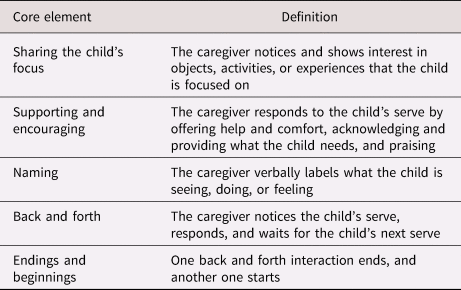
FIND is a brief and strength-based video feedback parenting intervention program that uses video coaching strategies to promote developmentally supportive “serve and return” interactions between caregivers and young children (Fisher et al., Reference Fisher, Frenkel, Noll, Berry and Yockelson2016; Schindler, Fisher, & Shonkoff, Reference Schindler, Fisher and Shonkoff2017). “Serve and return” indicates Caregiver×Child interactions where children serve up invitations to engage with caregivers through actions, vocalization, and gaze, and caregivers return the serves by responding to children's needs (Shonkoff & Bales, Reference Shonkoff and Bales2011). These attuned, reciprocal, and well-regulated interactions have been shown to be critical for young children's brain development (Shonkoff & Bales, Reference Shonkoff and Bales2011). FIND further divides serve and return interactions into five core elements that are easy to implement – sharing the child's focus, supporting and encouraging, naming, back and forth, and endings and beginnings (Fisher et al., Reference Fisher, Frenkel, Noll, Berry and Yockelson2016). Definitions of these five elements are provided in Table 1.
Five core elements of the Filming Interactions to Nurture Development (FIND) intervention program

FIND includes 10 weekly home-visit sessions, with two sessions (one filming session and one coaching session) dedicated to each core element. During the filming session, Caregiver×Child interactions in routine activities are filmed for 10 min. After the filming session, recorded films are sent back and edited by the research team to highlight three or four brief clips where the caregiver and child demonstrate the targeted core element. Then, during the coaching session, coaches watch and narrate the selected video clips with the caregivers, highlighting how the targeted core element is demonstrated in the video clips and describing how this element can support children's optimal development (for more details, see Fisher et al., Reference Fisher, Frenkel, Noll, Berry and Yockelson2016; Schindler et al., Reference Schindler, Fisher and Shonkoff2017). FIND has been shown to improve at-risk caregivers’ parenting functioning, such as increased self-efficacy, sense of competence, involvement, and responsive parenting skills, as well as reduced parenting stress (Liu et al., Reference Liu, Phu, Dominguez, Hurwich-Reiss, McGee, Watamura and Fisher2021; Schindler et al., Reference Schindler, Fisher and Shonkoff2017). Further, research also suggests that FIND can indirectly decrease children's risk for psychopathology symptoms through improving parenting functioning (Liu et al., Reference Liu, Phu, Dominguez, Hurwich-Reiss, McGee, Watamura and Fisher2021; Schindler et al., Reference Schindler, Fisher and Shonkoff2017). However, it remains to be tested whether the effects of FIND on caregiving experiences can buffer children's biologically embedded vulnerability to the impact of caregivers’ depressive symptoms.
The Present Study
Using data collected through a randomized controlled trial study, the present study adopted RDoC-informed approaches to investigate whether the effects of the FIND intervention program could attenuate children's vulnerability, as indicated by high levels of cortisol AUCg, to the impact of caregivers’ depressive symptoms.
We first hypothesized that the associations between caregivers’ depressive symptoms and children's psychopathology symptoms would be exacerbated among children with high levels of cortisol AUCg before the intervention implementation (i.e., heightened vulnerability) – Hypothesis 1. The moderating effects of cortisol AUCg on the associations between caregivers’ depressive symptoms (during pre-intervention assessment) and changes in children's psychopathology symptoms (from pre- to postintervention assessments) were then tested in the control and FIND groups, respectively. In the active control group, it was hypothesized that children with high cortisol AUCg would maintain vulnerability and show significantly more increases in psychopathology symptoms under the influence of caregivers’ depressive symptoms, compared to those with low cortisol AUCg – Hypothesis 2a. In contrast, for children in the FIND intervention group who had high cortisol AUCg, the associations between caregivers’ depressive symptoms and changes in psychopathology symptoms were hypothesized to be ameliorated/nonsignificant – Hypothesis 2b. Lastly, we hypothesized that children's cortisol AUCg served as a differential susceptibility indicator that potentiated heightened sensitivity, for better and for worse, to both the negative impact of caregivers’ depressive symptoms and the positive influence of the FIND intervention program – Hypothesis 3 (Belsky et al., Reference Belsky, Bakermans-Kranenburg and Van IJzendoorn2007).
Method
Participants and procedures
Data were drawn from a randomized controlled trial with a sample of low-SES families recruited from Early Head Start (EHS) programs in the Denver metropolitan area. A total of 202 families who were eligible for EHS services and had children aged 4–36 months were enrolled for screening. Eligibility criteria included (a) children not presenting developmental delay and (b) no regular use of medications that interfere with salivary cortisol assays. After screening, 138 caregiver–child dyads were eligible for this study. These families participated in a pre-intervention assessment session, during which survey data on demographics, caregivers’ depressive symptoms, and children's psychopathology symptoms were collected. In the pre-intervention session, saliva samples were also collected when caregivers and children were completing a structured stress paradigm. After completing the intervention, families were assessed using the same measures given during the pre-intervention assessment, including the stress paradigm using counterbalanced stimuli. All assessment sessions and the intervention took place in participants’ homes. Each family received US$50 compensation per research visit. The final sample consisted of 91 families who completed both pre-intervention and postintervention assessment sessions (37 in the active control group and 54 in the FIND intervention group). Most caregivers were mothers (n = 90, 98.9%), with one father as caregiver in the sample. There were 58.2% (n = 53) male and 41.8% (n = 38) female children in this sample. For the final sample, the mean age of caregivers was 32.59 years (SD = 6.17) and the mean age of children was 23.15 months (SD = 9.94). The majority of caregivers identified as Hispanic/Latino(a) (80.2%, n = 73). Most families (68.1%, n = 62) completed the research and intervention components in Spanish; 31.9% (n = 29) completed in English. The average annual household income was US$30,294 (SD = US$21,590), with 62.9% of families below the federal poverty line and 92.1% below 200% of the federal poverty line.
Random assignment and intervention conditions
Participants’ assignment into two conditions (i.e., FIND intervention or active control), as noted above, was conducted following screening using conditional randomization. After the screening processes, eligible families were randomly assigned to conditions with a greater probability of the intervention than the control group assignment by design. Families were informed of the condition at the end of the pre-intervention assessment so that coaching could be scheduled on site. There were 50 families assigned to the active control group and 88 families assigned to the FIND intervention group. Uneven sample sizes were a deliberate design decision to include maximum access to active intervention in these vulnerable populations. For the active control group, families received standard services from EHS programs with no additional support or intervention provided. For the FIND group, families completed the 10-session FIND intervention program in addition to standard EHS services. As already mentioned, the final sample included 37 families in the active control group and 54 families in the FIND intervention group. Throughout the study procedure, research personnel (except the primary investigator and lead research assistant) were blinded from the group assignment and were unaware of the treatment applied to any given group so that in-person assessments, data cleaning, and coding were completed by researchers blinded to the group assignment conditions.
FIND intervention implementation
FIND is a brief micro-social video coaching program that targets caregivers and aims to promote developmentally supportive interactions between caregivers and their young children (Fisher et al., Reference Fisher, Frenkel, Noll, Berry and Yockelson2016; Schindler et al., Reference Schindler, Fisher and Shonkoff2017). Caregivers and their children completed 10 weekly home-visit sessions that alternated between video recording sessions and coaching sessions (Fisher et al., Reference Fisher, Frenkel, Noll, Berry and Yockelson2016). As described earlier, FIND targets five elements on serve and return – sharing the child's focus, supporting and encouraging, naming, back and forth interaction, and endings and beginnings (Fisher et al., Reference Fisher, Frenkel, Noll, Berry and Yockelson2016). Every core element consisted of two sessions – the filming session and the coaching session – across 2 weeks. FIND intervention coaches included three trained therapists from the Mental Health Center of Denver and two independent mental health specialists with master's degrees in social work. All the coaches first completed an initial FIND training that lasted for 2–3 days; this included an overview of the program, training on the five FIND elements, role-playing coaching sessions, and training on video coaching technology. After the initial training, the coaches continued to meet regularly with a FIND trainer via phone or web conference in a group format over the course of the study. The goal of these meetings was to build expertise among the group of coaches in order to implement the program with fidelity and eventually build advanced coaching skills.
FIND intervention fidelity coding
All the coaching sessions were videotaped to allow the research team to monitor the intervention implementation. A fidelity coding system was created based on the FIND coaching session feedback forms, with one fidelity coding form created for each element in both English and Spanish. Each fidelity coding form included four key activities during the coaching session: (a) reviewing all prior elements, (b) discussing childcare notes, (c) introducing the new element, and (d) frame-by-frame analysis (i.e., narration). In each key activity, crucial items were listed on the coding form, and the fidelity coders first rated Yes or No to reflect whether the coach completed this item. Next, based on pre-established criteria and the rated crucial items, each activity received an overall score (1 = Yes or 0 = No). After obtaining the scores for all four key activities, an average score was calculated to reflect the fidelity of the coaching session that targeted a certain element. Lastly, an average overall fidelity score was obtained across the five elements for each family. At the beginning of fidelity coding training, three expert fidelity coders rated and came to a consensus on coaching sessions of two families, one in English and one in Spanish. Videos of these two families were then used for the fidelity coders’ initial training. After 4 weeks of training, six fidelity coders reached interrater reliability of above 75% (percentage agreement) and were assigned to code independently. To assess interrater reliability, 20% of all coaching sessions were randomly selected and double coded.
Stress paradigm and collection of saliva samples
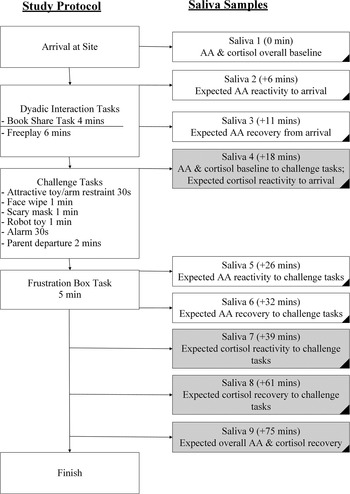
During the pre-intervention assessment, a structured stress paradigm protocol was implemented in order to obtain children's cortisol stress response (for details, see Brown et al., Reference Brown, Schlueter, Hurwich-Reiss, Dmitrieva, Miles and Watamura2020). The structured stress paradigm lasted 26 min. To start, the caregiver was instructed to interact with their child normally in a book share task and a free play task. Then, the caregiver and child were transitioned to a pop-up tent to complete a series of challenge tasks (i.e., stress paradigm) in which the caregiver was asked not to talk to the child and to maintain a neutral face throughout the tasks. The child was secured into a swivel booster seat inside the tent, across from their caregiver. The challenge tasks were administered in the following sequence: an attractive toy/arm restraint task, a face wipe task, a scary mask task, a robot toy task, an alarm task, and a parent departure task. In the attractive toy/arm restraint task, the child interacted with an attractive toy for 30 s and then the toy was removed from the child's reach with the child's arms lightly restrained. In the face wipe task, the caregiver wiped the child's face for 1 min while a research assistant lightly restrained the child's arms. In the scary mask task, a research assistant put on either a scary gorilla or wolf mask and faced the child for 1 min. In the robot toy task, the research assistant activated a scary spider or dinosaur robot in front of the child and out of their reach for 1 min. In the alarm task, a loud alarm was placed behind the tent for 30 s. Lastly, in the parent departure task, the caregiver was asked to say goodbye to their child and leave the room, together with the research assistant, for 2 min.
At any point, if a child cried for 30 s continuously (this occurred for two thirds of children of the total sample), this stress paradigm was discontinued and the researcher waited until the protocol time passed before continuing to implement other study paradigms. The caregiver was instructed to comfort the child normally when they re-entered the room or when the protocol was discontinued due to the child's crying. Saliva samples were collected at nine time points during the pre-intervention assessment in order to obtain the children's cortisol and alpha-amylase (AA) stress response (see Figure 1). About half of the children (n = 47, 52%) provided eight (n = 10, 11%) or all nine (n = 37, 41%) saliva samples; 12% (n = 11) provided seven samples, 9% (n = 8) provided six samples, 9% (n = 8) provided 3–5 samples, 4% (n = 4) provided two samples, and 9% (n = 8) provided one sample. A small portion (5%, n = 5) did not provide saliva samples. On sampling collection days, parents reported on several conditions relevant to salivary cortisol values, including food/caffeine intake, child wake/sleep times, medication use, and any illness symptoms.
Procedure for collection of saliva samples.

Infant synthetic saliva swabs (Salimetrics, State College, PA, USA) were used to collect saliva samples. All samples were stored in −20 °C storage until sent to the Biochemical Laboratory, Psychobiology, University of Trier, Germany for assay. Trained laboratory staff assayed cortisol concentrations from saliva samples in duplicate using a time-resolved fluorescence immunoassay (Dressendörfer, Kirschbaum, Rohde, Stahl, & Strasburger, Reference Dressendörfer, Kirschbaum, Rohde, Stahl and Strasburger1992). The intra-assay coefficient of variation (CoV) for this assay ranged between 4.0% and 6.7% and the corresponding inter-assay CoV was 7.1%–9.0%. The intra-assay CoV for samples used in the current study was 6.5% (Brown et al., Reference Brown, Schlueter, Hurwich-Reiss, Dmitrieva, Miles and Watamura2020). Salivary cortisol data were carefully inspected for outliers (i.e., three standard deviations above or below the mean) within sample type, with consideration for qualitative observations of staff and caregivers and assay notes of any abnormalities or potential contamination. Two participants had winsorizing applied to one sample due to excessively high values. One participant had their initial saliva sample deleted due to high values and food intake prior to sample collection. One participant had all samples deleted due to excessively high values and sample collection shortly after wake time, as well as qualitative notes that the child was teething and experiencing higher duress than typical. Normality of salivary cortisol data was examined and untransformed values were determined as appropriate to retain.
Measures
Caregivers’ depressive symptoms (pre-intervention)
Caregivers’ depressive symptoms were assessed via the Center for Epidemiological Studies-Depression (CES-D) scale (Radloff, Reference Radloff1977). The CES-D has been widely used to assess depressive symptoms across different age ranges (Lewinsohn, Seeley, Roberts, & Allen, Reference Lewinsohn, Seeley, Roberts and Allen1997) and with ethnically diverse caregivers (Roth, Ackerman, Okonkwo, & Burgio, Reference Roth, Ackerman, Okonkwo and Burgio2008). For this study, the CES-D included 20 items that asked caregivers to rate how often they experienced depressive symptoms in the past week (α = .81). Example items included “I was bothered by things that usually don't bother me” and “I felt that I could not shake off the blues even with help from my family or friends.” Responses ranged from 0 = rarely or none of the time to 3 = most or almost all the time. A sum score was calculated by adding the 20 items, which ranged from 0 to 60, with higher scores indicating greater depressive symptoms. Research suggests that a cutoff score of 16 or greater indicates a high risk for clinical depression (Lewinsohn et al., Reference Lewinsohn, Seeley, Roberts and Allen1997). Therefore, a dichotomous variable was created to index caregivers’ depressive symptoms, with 1 = coded for high levels of depressive symptoms (sum score ≥ 16) and 0 = coded for low levels of depressive symptoms. This dichotomous variable was used in the analyses.
Child internalizing and externalizing problems (pre- and postintervention)
Child internalizing and externalizing symptoms were measured using two scales – the Child Behavior Checklist – Preschool version (CBCL/1.5-5) (Achenbach & Rescorla, Reference Achenbach and Rescorla2001) and the Brief Infant–Toddler Social Emotional Assessment (BITSEA) (Carter & Briggs-Gowan, Reference Carter and Briggs-Gowan2005).
The CBCL/1.5-5 is a 99-item checklist that has been widely used and well-validated to measure child behavior problems (Achenbach & Rescorla, Reference Achenbach and Rescorla2001). It was administered to children at or older than 18 months (pre-intervention 65.93%; postintervention 89.87%). Caregivers were instructed to answer how much a series of behavior problems fit their children using a 3-point scale with responses ranging from 0 = not true to 2 = very often true. Internalizing symptoms included four syndrome scales: emotionally reactive, anxious/depressed, withdrawn, and somatic complaints (αpre = .74, αpost = .64). Example items included “feelings are easily hurt” and “seems unresponsive to affection.” Externalizing problems were quantified with two syndrome scales: attention problems and aggressive behaviors (αpre = .82, αpost = .78). Example items included “destroys things belonging to his/her family or other children” and “physically attacks people.”
The BITSEA is designed to assess socioemotional problems and competencies of infants and toddlers (Carter & Briggs-Gowan, Reference Carter and Briggs-Gowan2005). It was administered to children below 18 months old (pre-intervention 34.07%; postintervention 10.13%). Caregivers answered how much a series of statements fit their child using a 3-point scale ranging from 0 = not true/rarely to 2 = very true/often. Internalizing problems covered areas such as anxiety and depression. Example items included “seems nervous, tense, or fearful” and “often gets very upset.” Externalizing problems included overactivity, aggression, and defiance. Example items included “hits, shoves, kicks, or bites children (not including brother or sister)” and “is destructive, breaks or ruins things on purpose.”
Lastly, a composite score that indicated the endorsement rate (i.e., the percentage of endorsed items out of the total possible scores, in the range 0–1) in the CBCL/1.5-5 and BITSEA was calculated for each child in order to obtain scores that represent internalizing and externalizing problems across age groups and adjust for missing items. These composite scores of internalizing and externalizing problems were used in the analyses, with higher scores indicating more psychopathology symptoms.
Cortisol AUCg (pre-intervention)
As mentioned earlier, cortisol activity patterns in response to stress can be indexed by AUCg or AUCi. Research has documented compelling evidence that infants and toddlers have low cortisol sensitivity to stressful situations and thus may not show significant changes in cortisol levels over time (Dozier, Peloso, Lewis, Laurenceau, & Levine, Reference Dozier, Peloso, Lewis, Laurenceau and Levine2008; Gunnar & Quevedo, Reference Gunnar and Quevedo2007; Kudielka, Hellhammer, & Kirschbaum, Reference Kudielka, Hellhammer, Kirschbaum, Harmon-Jones and Winkielman2007; McRae et al., Reference McRae, Saladin, Brady, Upadhyaya, Back and Timmerman2006). Further, Gunnar and Fisher (Reference Gunnar and Fisher2006) suggest that it is still difficult for laboratory-induced stress paradigms to elicit large cortisol reactivity in young children. In the current sample, only 24.7% of young children in the current sample exhibited positive AUCi in response to the structural stress paradigm, which prohibited us from using AUCi as an ideal measurement of the cortisol stress response. Instead, AUCg takes cortisol levels into consideration and is likely to be more closely related to environmental inputs and behavioral outcomes among young children (Dozier et al., Reference Dozier, Peloso, Lewis, Laurenceau and Levine2008). Therefore, the current study calculated AUCg as an indicator of children's differential sensitivity, with higher AUCg scores indexing elevated sensitivity to environmental influences. However, it is noteworthy that the same stress paradigm used in the current study has been previously found to initiate significant HPA axis reactivity among young children who experienced low levels of positive parenting, using a different analytical strategy (i.e., piecewise latent growth models) (Brown et al., Reference Brown, Schlueter, Hurwich-Reiss, Dmitrieva, Miles and Watamura2020).
The time when the first saliva sample was collected ranged from 7:52 a.m. to 5:35 p.m., with 59.5% of data collected before noon. Cortisol levels have a diurnal rhythm that impacts AUCg scores: in the full sample, the time of collection was significantly and negatively associated with children's cortisol levels of the first saliva sample (r = −.311, p < .01) and with children's cortisol AUCg scores (r = −.232, p < .05). Therefore, the time of collection was controlled for in all models in this study.
Status variables and covariates
The intervention group assignment was coded as 0 for the active control group and 1 for the FIND intervention group. Time was coded as 1 for pre-intervention and 2 for postintervention assessments. Caregiver-reported demographics included biological sex, age, and ethnicity of the caregiver and their child. Children's biological sex was coded as 0 for males and 1 for females. Children's ages were reported in months and caregivers’ ages were reported in years. The ethnicity of the children and caregivers was both coded as 0 for non-Hispanic/Latino(a) and 1 for Hispanic/Latino(a).
Analytical plan
Preliminary analyses
Given that this study did not aim to test the direct intervention effects in targeted outcomes, we did not use intention-to-treat analyses. Instead, we only included families who completed both pre-intervention and postintervention assessment sessions (N = 91). Correlation analyses were used to examine associations among the study variables. Independent-sample t tests (for continuous and scale variables) and chi-square (χ2) tests (for categorical variables) were conducted to compare active control versus intervention group differences in demographics and key study variables. Then, paired-sample t tests were used to examine mean pre-intervention and postintervention differences in children's internalizing and externalizing problems.
Structural equation models (SEMs): Hypotheses 1 and 2
The study hypotheses were tested using SEMs in Mplus version 8.3 (Muthén & Muthén, Reference Muthén and Muthén2018). Missing data rates ranged from 0% to 13.2%, with an average of 4.7% across all study variables. Missing data patterns met Little's missing completely at random assumption, χ2 (13) = 14.384, p = .347. Thus, the full-information maximum likelihood algorithm was used to estimate missing data. Model fit was assessed through χ2, the comparative fit index, and the standardized root mean residual. A nonsignificant χ2, a comparative fit index larger than .95, and a standardized root mean residual smaller than .08 indicate a good model fit (Hu & Bentler, Reference Hu and Bentler1999). In all the SEMs, children's biological sex, age, and ethnicity were controlled, and nonsignificant covariates were then trimmed from the model to keep parsimony and retain statistical power. The time of collection for the first saliva sample was also controlled in all models to eliminate the effects of diurnal cortisol patterns.
To test the first hypothesis, a model was constructed to examine the moderating effect of cortisol AUCg on the associations between caregivers’ depressive symptoms and children's internalizing and externalizing problems. In this model, all variables were assessed during the pre-intervention sessions. An interaction term of caregivers’ depressive symptoms and cortisol AUCg (mean-centered) was calculated and added to the model. A statistically significant interaction effect indicated a significant moderating role of cortisol AUCg on the associations between caregivers’ depressive symptoms and children's problem behaviors. The simple slope method (Aiken, West, & Reno, Reference Aiken, West and Reno1991; Jaccard, Turrisi, & Jaccard, Reference Jaccard, Turrisi and Jaccard2003) was used to probe significant interaction effects, in which the associations between the independent (i.e., caregivers’ depressive symptoms) and dependent (i.e., children's psychopathology symptoms) variables were plotted at high and low values of cortisol AUCg (i.e., M ± 1 SD).
To examine the second hypothesis, multigroup analyses were conducted to examine the moderating effects of pre-intervention cortisol AUCg on the links between caregivers’ pre-intervention depressive symptoms and children's pre–postintervention changes in psychopathology symptoms in the active control and FIND intervention groups, respectively. To assess changes in psychopathology symptoms, these models controlled for corresponding problem behaviors during the pre-intervention assessment. Internalizing and externalizing problems were analyzed in separate models to reduce the number of parameters in the SEMs and increase statistical power. When a difference in a certain path was detected, a nested model was analyzed, where this path was constrained to be the same across the active control and FIND groups. Then, χ2 analysis was conducted to examine if the difference on this path across the two groups was statistically significant. Interaction effects were also probed using the simple slope method (Aiken et al., Reference Aiken, West and Reno1991; Jaccard et al., Reference Jaccard, Turrisi and Jaccard2003) in the active control and FIND groups, respectively.
Test for differential susceptibility: Hypothesis 3)
Three critical tests – the region of significance (RoS), the proportion of interaction (PoI), and the proportion affected (PA) tests (Del Giudice, Reference Del Giudice2017; Roisman et al., Reference Roisman, Newman, Fraley, Haltigan, Groh and Haydon2012) – were conducted as a rigorous examination of the third study hypothesis. These tests aimed to distinguish the differential susceptibility “for better and for worse” pattern (i.e., differential sensitivity exhibits in both negative and positive environments) from the diathesis–stress theory (i.e., differential sensitivity only shows in negative environments) (Monroe & Simons, Reference Monroe and Simons1991) and vantage sensitivity theory (i.e., differential sensitivity only shows in positive environments) (Belsky & Pluess, Reference Belsky and Pluess2009). In the current study, caregivers’ high depressive symptoms and the FIND intervention effects represented the negative and positive spectra of early experiences, respectively. In particular, the three tests investigated the hypothesis that children with high cortisol AUCg were more vulnerable to the negative impact of caregivers’ high depressive symptoms in the control group (“for worse”) but could also benefit more from the influence of the FIND intervention program (“for better”).
To conduct the three critical tests, the simple slope method (Aiken et al., Reference Aiken, West and Reno1991; Jaccard et al., Reference Jaccard, Turrisi and Jaccard2003) was used to probe the associations between the control/intervention group assignment (X-axis) and children's psychopathology symptoms (Y-axis) at high and low values of cortisol AUCg (i.e., M ± 1 SD). These analyses only employed data from children whose caregivers had high levels of depressive symptoms (i.e., above the clinical cutoff scores) so that the active control and FIND groups on the X-axis indicated the negative and positive spectra of rearing experiences, respectively.
The first test, RoS, examined whether cortisol AUCg and psychopathology symptoms were significantly associated at both positive (i.e., intervention group) and low (i.e., control group) ends of early environments. The second test, PoI, indicated the proportion of variance accounted for in the “for better” region compared to the “for worse” region. Lastly, PA represented the proportion of the sample falling in the “for better” region. The DST was supported only when (a) the RoS appeared in both control and intervention groups, (b) the PoI ranged between 0.2 and 0.8, and (c) the PA ranged between 16% and 84% (Del Giudice, Reference Del Giudice2017; Roisman et al., Reference Roisman, Newman, Fraley, Haltigan, Groh and Haydon2012). In contrast, a RoS only on the negative environment extreme (i.e., in the control group), a PoI score smaller than 0.2, or a PA index smaller than 16% would support the diathesis–stress model; a RoS only on the positive environment extreme (i.e., in the FIND intervention group), a PoI score larger than 0.8, or a PA index larger than 84% would support the vantage sensitivity model (Del Giudice, Reference Del Giudice2017; Roisman et al., Reference Roisman, Newman, Fraley, Haltigan, Groh and Haydon2012). It is also important to note that the PA was predetermined in this study by the group assignment (with 50% of children with high caregivers’ depressive symptoms in the FIND intervention group) and was thus less relevant for hypothesis testing.
Results
Intervention dosage and fidelity
Among the 54 families assigned to the FIND intervention group, the majority (74.1%, n = 40) completed all sessions dedicated to the five core elements; 14.8% of the families (n = 8) completed sessions related to four core elements and 7.4% (n = 4) completed sessions related to three core elements. The intervention fidelity rate across the five elements was 83.2% (SD = 16.8%). The endings and beginnings session had the highest mean fidelity (M = 87.0%, SD = 18.1%), followed by the sharing the child's focus session (M = 86.1%, SD = 19.6%), the naming session (M = 84.7%, SD = 22.7%), the supporting and encouraging session (M = 83.5%, SD = 21.7%), and the back and forth session (M = 79.9%, SD = 26.7%). Among all the coded sessions, 58.7% of sessions reached 100% of fidelity, while 83.0% of sessions reached 75% of fidelity. Interrater reliability for the double-coded sessions was high (percent agreement of 89%).
Preliminary analyses
The study variables were correlated in the expected direction. For example, higher levels of caregivers’ depressive symptoms were linked to children's increased internalizing (r pre = .08, r post = .18) and externalizing (r pre = .34, r post = .30) problems. Hispanic/Latino(a) children exhibited lower levels of externalizing problems during the pre-intervention assessment compared to non-Hispanic/Latino(a) children (r = −.30). Full information of the correlation coefficients and descriptive statistics of all the study variables are provided in Table 1 of the Supplementary Material for the.
The χ2 test indicated significant differences in child biological sex between the two groups: compared with the control group (27.03%), the intervention group had significantly more female children (51.85%), χ2 (1) = 11.13, p < .001. Except for biological sex, the control and intervention groups did not show significant differences in other demographics and study variables (see Table 2 of the Supplementary Material for the full information). Children showed reduced psychopathology symptoms from pre- to postintervention: the paired-sample t tests suggested significant decreases in children's internalizing problems, M difference = −.06, t (72) = −3.54, p < .01, but not externalizing problems, M difference = −.02, t (72) = −1.14, p = .26, across time in the combined sample of 91 families.
Pre-intervention model: Hypothesis 1
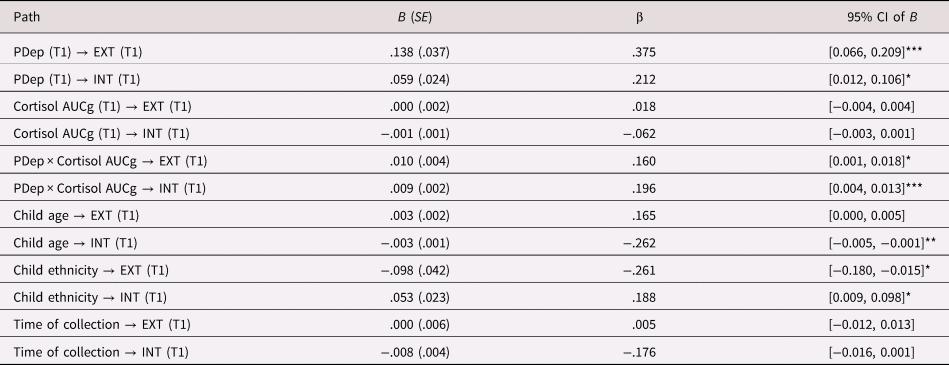
The SEM that tested the moderating role of children's cortisol AUCg on the associations between caregivers’ depressive symptoms and psychopathology during the pre-intervention assessment is presented in Table 2. A visual presentation of this model was also provided in Figure 1 of the Supplementary Material. The results indicated that higher levels of caregivers’ depressive symptoms were linked to children's elevated externalizing problems, β = .375, 95% CI [0.066, 0.209], p < .001, and internalizing problems, β = .212, 95% CI [0.012, 0.106], p < .05. Older children exhibited reduced internalizing problems, β = −.262, 95% CI [−0.005, −0.001], p < .01. Hispanic/Latino(a) children showed higher levels of internalizing problems, β = .188, 95% CI [0.009, 0.098], p < .05 and lower levels of externalizing problems, β = −.261, 95% CI [−0.180, −0.015], p < .05, compared with non-Hispanic/Latino(a)children. The interaction term of caregivers’ depressive symptoms and children's cortisol AUCg was significantly associated with externalizing problems, β = .160, 95% CI [0.001, 0.018], p < .05, and internalizing problems, β = .196, 95% CI [0.004, 0.013], p < .001. These results suggested that high cortisol AUCg scores significantly exacerbated the connections between caregivers’ depressive symptoms and children's concurrent psychopathology symptoms.
Structural equation model of the moderating effects of cortisol stress reactivity on the associations between caregivers’ depressive symptoms and children's psychopathology symptoms during pre-intervention assessment
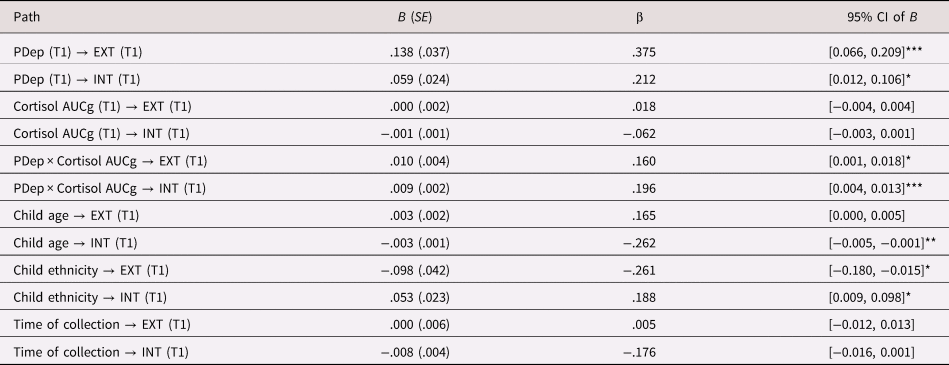
Note: T1 = pre-intervention assessment, PDep = caregivers’ depressive symptoms, Cortisol AUCg = child cortisol area under the curve with respect to the ground, EXT = externalizing problems, INT = internalizing problems. Child ethnicity was coded as 1 for Hispanic/Latino(a)and 0 for non-Hispanic/Latino(a). Caregivers’ depressive symptoms were coded as 1 for above clinical cutoff (Center for Epidemiological Studies-Depression (CES-D) scale ≥ 16) and 0 for below clinical cutoff. Time of collection indicates the time when the first saliva sample was collected during the pre-intervention assessment session. Model fit was excellent: χ2 (8) = 5.755 (p = .675), comparative fit index = 1.000, root mean square error of approximation = .000. *p < .05, **p < .01, ***p < .001
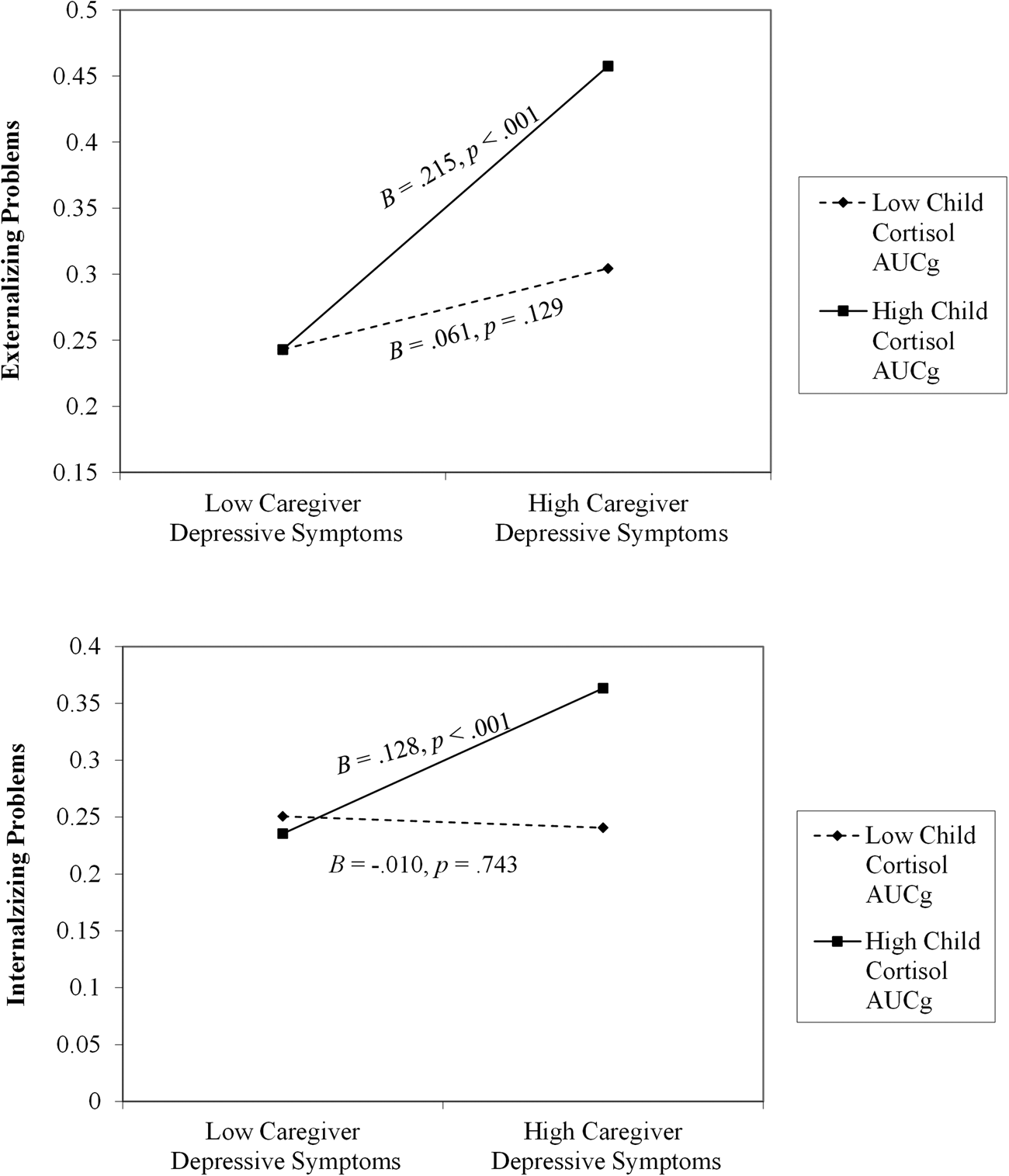
Figure 2 presents the interpretation of these moderating effects. Accordingly, in a family environment where caregivers exhibited few depressive symptoms, children's internalizing and externalizing problems did not differ by their cortisol AUCg scores. However, when exposed to caregivers with high levels of depressive symptoms, children who had elevated cortisol AUCg (as indicated by the solid lines in Figure 2) presented significantly higher levels of internalizing (B = .128, p < .001) and externalizing (B = .215, p < .001) problems compared to children with low cortisol AUCg (as indicated by the dashed lines) (internalizing: B = −.010, p = .743; externalizing: B = .061, p = .129). In other words, high levels of cortisol stress response might indicate an elevated vulnerability that intensified the links between caregivers’ depressive symptoms and children's psychopathology symptoms.
Interpretation of the moderating roles of children's cortisol area under the curve with respect to ground (AUCg) on the associations between caregivers’ depressive symptoms and children's psychopathology symptoms during pre-intervention assessment.

Postintervention model: Hypothesis 2
Externalizing problems
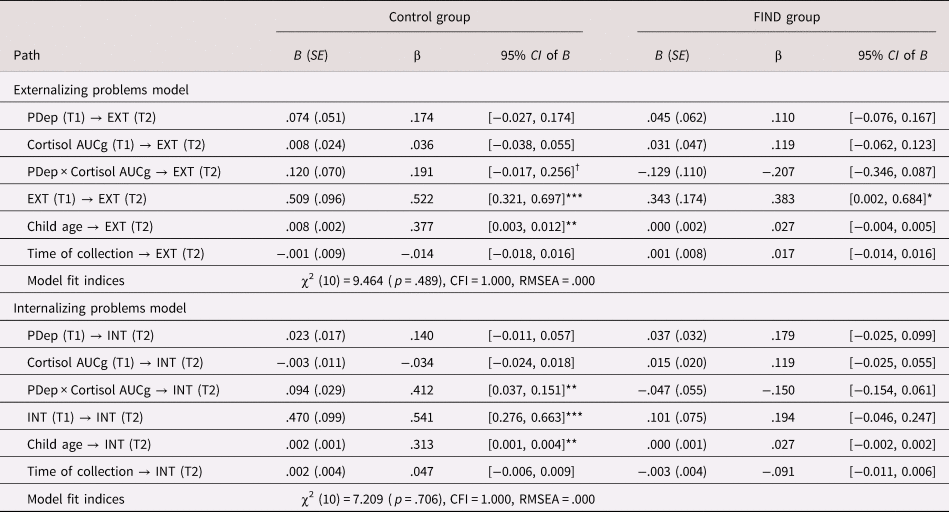
The upper part of Table 3 presents the SEMs that examined how the interaction of cortisol AUCg and caregivers’ depressive symptoms, both assessed during the pre-intervention sessions, was associated with changes in children's externalizing problems (from pre- to postintervention) in the active control and FIND groups. After trimming nonsignificant covariates, these models controlled for children's age, pre-intervention externalizing problems, and time of collection of the first saliva sample. A visual presentation of this model is also provided in Figure 2 of the Supplementary Material. The results indicated significant stability in children's externalizing problems from pre- to postintervention assessments: control group, β = .522, 95% CI [0.321, 0.697], p < .001; FIND group, β = .383, 95% CI [0.002, 0.684], p < .05. The moderating effect of cortisol AUCg on the associations between caregivers’ depressive symptoms and children's changes in externalizing problems was marginally significant in the active control group, β = .191, 95% CI [−0.017, 0.256], p < .10, but not in the FIND intervention group, β = −.207, 95% CI [−0.346, 0.087], p = .241. Multigroup analyses further indicated that this group difference was statistically significant, χ2 (1) = 4.806, p < .05.
Structural equation models of the moderating effects of cortisol stress reactivity on the associations between caregivers’ depressive symptoms and children's psychopathology symptoms during post-intervention assessment in FIND and control groups
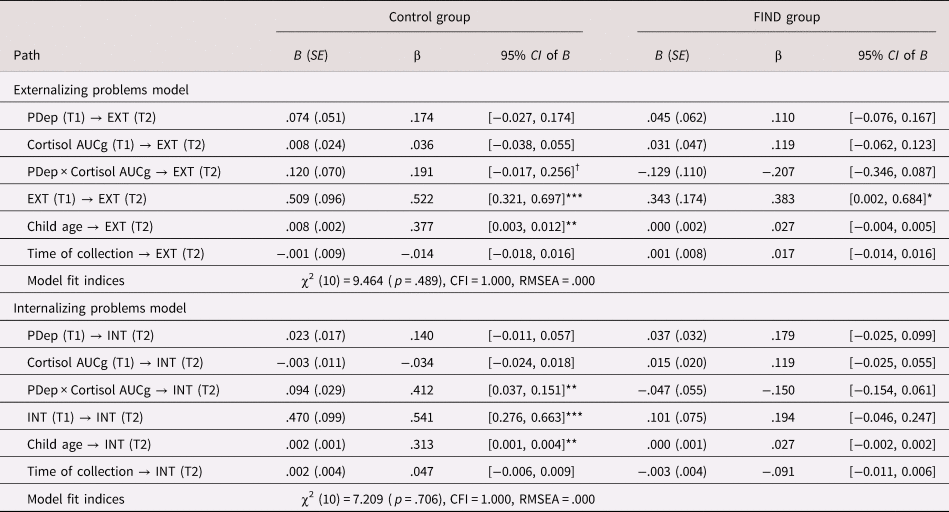
Note. T1 = pre-intervention, T2 = postintervention, PDep = caregivers’ depressive symptoms, Cortisol AUCg = child cortisol area under the curve with respect to the ground, EXT = externalizing problems, INT = internalizing problems, CFI = comparative fit index, RMSEA = root mean square error of approximation. Caregivers’ depressive symptoms were coded as 1 for above clinical cutoff (Center for Epidemiological Studies-Depression (CES-D) scale ≥ 16) and 0 for below clinical cutoff. Time of collection indicates the time when the first saliva sample was collected during the pre-intervention assessment session. †p < .10, *p < .05, **p < .01, ***p < .001.
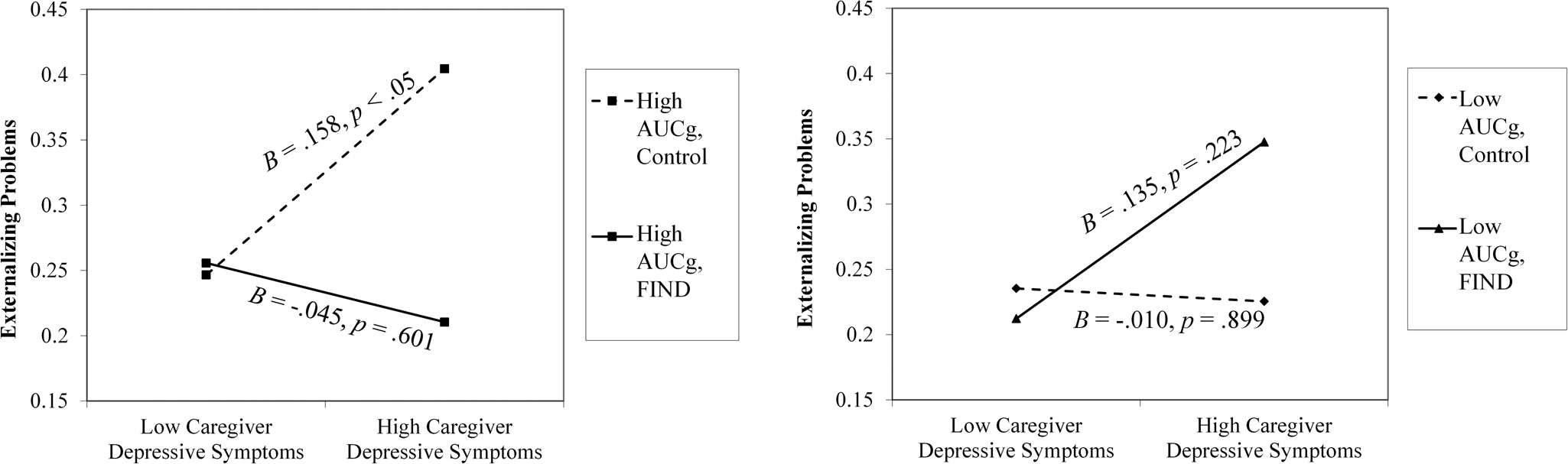
Figure 3 presents the interpretation of the moderating effects of cortisol AUCg on the links between caregivers’ depressive symptoms and children's changes in externalizing problems in the active control and FIND groups. The left-hand panel of Figure 3 presents the results of children with elevated cortisol AUCg (M + 1 SD). Accordingly, for children in the active control group (as indicated by a dashed line), higher levels of caregivers’ depressive symptoms were associated with increased externalizing problems (B = .158, p < .05). In other words, children in the active control group who had high levels of cortisol AUCg were more vulnerable to the negative impact of caregivers’ depressive symptoms. However, for children in the FIND intervention group (as indicated by a solid line), the association between caregivers’ depressive symptoms and changes in externalizing symptoms was not significant (B = −.045, p = .601), suggesting that this vulnerability was attenuated among children whose caregivers completed the FIND intervention. The right-hand panel of Figure 3 presents the results of children with low cortisol AUCg (M = −1 SD), in which the associations between caregivers’ depressive symptoms and children's changes in externalizing problems were not statistically significant in either the active control group (B = −.010, p = .899) or the FIND intervention group (B = .135, p = .223).
Interpretation of the moderating effects of children's cortisol area under the curve with respect to ground (AUCg) on the associations between caregivers’ depressive symptoms and children's externalizing problems in active control and Filming Interactions to Nurture Development (FIND) groups.

Internalizing problems
The lower part of Table 3 presents the SEMs that examined how the interaction of cortisol AUCg and caregivers’ depressive symptoms, both assessed during the pre-intervention sessions, was associated with changes in internalizing problems (from pre- to postintervention) in the active control and FIND groups. These models controlled for children's age, pre-intervention internalizing problems, and time of collection of the first saliva sample. A visual presentation of this model is also provided in Figure 2 of the Supplementary Material. The results indicated significant pre–postintervention stability of children's internalizing problems in the active control group, β = .541, 95% CI [0.276, 0.663], p < .001, but not in the FIND group, β = .194, 95% CI [−0.046, 0.247], p = .178. The moderating effects of cortisol AUCg on the associations between caregivers’ depressive symptoms and children's changes in internalizing problems were significant in the active control group, β = .412, 95% CI [0.037, 0.151], p < .01, but not in the FIND group, β = −.150, 95% CI [−0.154, 0.061], p = .394. Multigroup analyses further indicated that this difference was statistically significant between the active control and FIND groups, χ2 (1) = 6.311, p < .01.
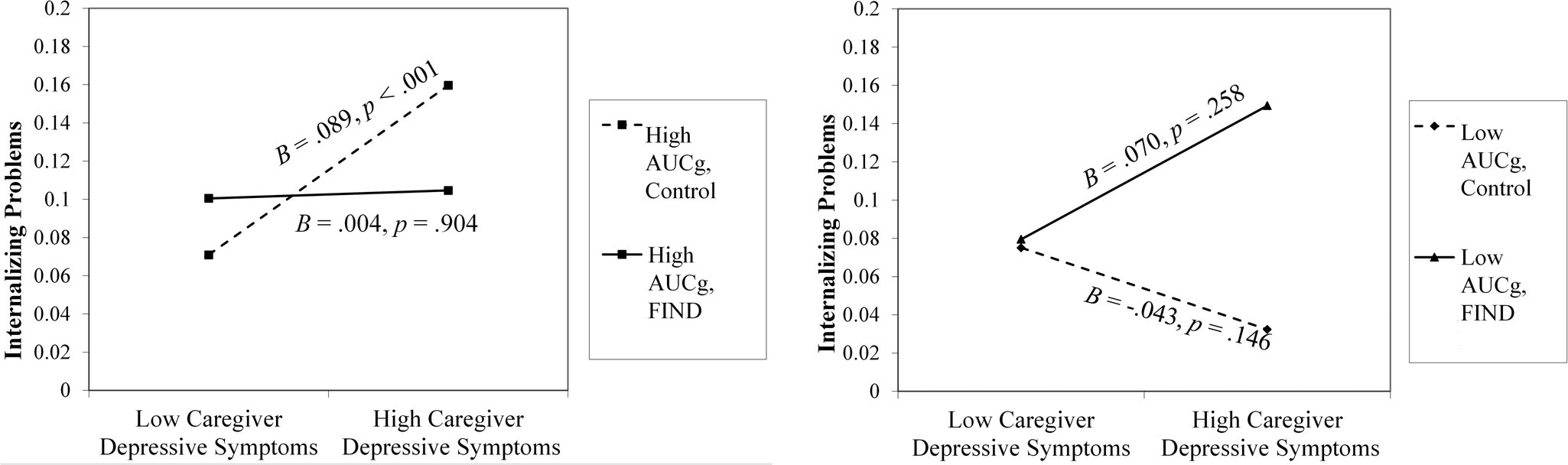
Figure 4 presents the interpretation of the moderating effects of cortisol AUCg on the connections between caregivers’ depressive symptoms and changes in children's internalizing problems in the active control and FIND groups. The left-hand panel of Figure 4 shows the results of children with elevated cortisol AUCg (M + 1 SD). Accordingly, in the active control group (as indicated by a dashed line), higher levels of depressive symptoms among caregivers were associated with increases in internalizing problems among young children (B = .089, p < .001). This finding suggests that children in the active control group who had high levels of cortisol AUCg maintained heightened vulnerability to the influence of caregivers’ depressive symptoms. In contrast, for children in the FIND group (as indicated by a solid line), caregivers’ depressive symptoms were not significantly associated with internalizing problems (B = .004, p = .904), indicating that their vulnerability to caregivers’ depressive symptoms was buffered by the FIND intervention effects. The right-hand panel of Figure 4 shows the results of children with low cortisol AUCg (M − 1 SD), in which the associations between caregivers’ depressive symptoms and children's internalizing problems were not statistically significant in either the active control group (B = −.043, p = .146) or the FIND group (B = .070, p = .258). Overall, the study findings suggest that high cortisol AUCg was associated with increased vulnerability under exposure to caregivers’ elevated depressive symptoms, but also potentiated children to benefit more from the FIND-related improvements in caregiving environments.
Interpretation of the moderating effects children's cortisol area under the curve with respect to ground (AUCg) on the associations between caregivers’ depressive symptoms and children's internalizing problems in active control and Filming Interactions to Nurture Development (FIND) groups.

Testing the differential susceptibility patterns: Hypothesis 3
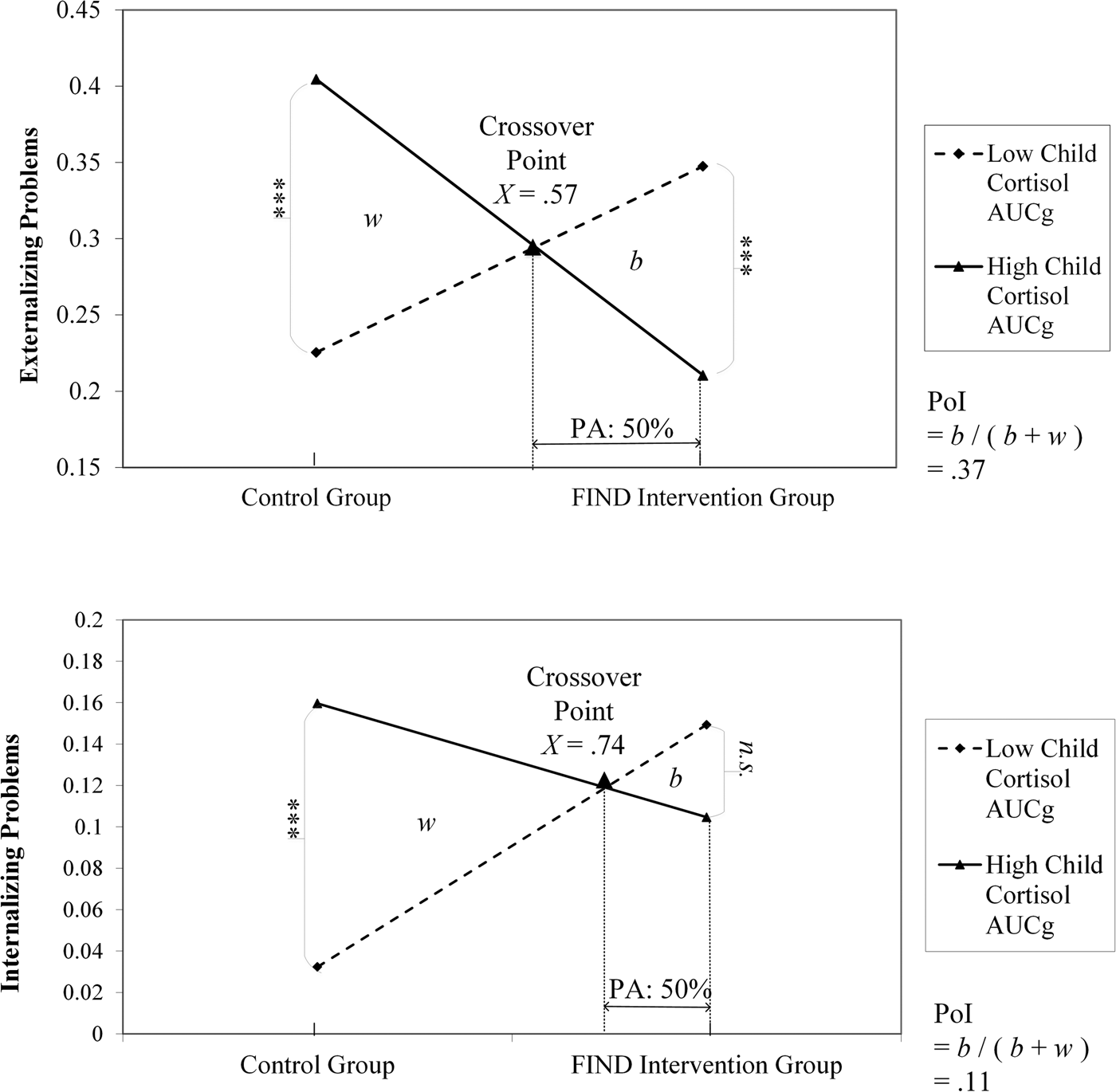
Figure 5 presents the three critical tests used to examine sensitivity patterns and distinguish the differential susceptibility from diathesis–stress and vantage sensitivity hypotheses (Del Giudice, Reference Del Giudice2017; Roisman et al., Reference Roisman, Newman, Fraley, Haltigan, Groh and Haydon2012). The results related to children's externalizing symptoms were consistent with the differential susceptibility hypothesis because these effects passed the RoS (showed in both intervention and control groups), PoI (.37), and PA (50%) tests. Accordingly, compared to those with low cortisol AUCg (indicated by the dashed line), children who had high cortisol AUCg (indicated by the solid line) and experienced high levels of caregivers’ depressive symptoms were more likely to develop elevated externalizing problems in the active control group (i.e., “for worse”), but also exhibited reduced externalizing problems after exposure to the benefits of the FIND intervention (i.e., “for better”). In contrast, the results related to children's internalizing problems were more aligned with the diathesis–stress model, as suggested by the RoS (showed only in the active control group) and PoI (.11) tests. In particular, children reared by caregivers with high depressive symptoms and had high cortisol AUCg (indicated by the solid line) were more likely to develop elevated internalizing problems in the active control group (i.e., “for worse”), but they did not exhibit significantly different internalizing problems than those with low cortisol AUCg (indicated by the dashed line) after exposure to the FIND intervention effects (i.e., no “for better” pattern).
Examination of the differential sensitivity hypothesis.

Discussion
Caregivers’ depressive symptoms are consistently associated with children's internalizing and externalizing symptoms (Eckshtain et al., Reference Eckshtain, Marchette, Schleider, Evans and Weisz2019; Kane & Garber, Reference Kane and Garber2009; Mäntymaa et al., Reference Mäntymaa, Puura, Luoma, Latva, Salmelin and Tamminen2012). However, individual differences associated with children's neurobiological stress response processes potentiate some children to be more sensitive to both positive and negative environmental influences than others (Ellis et al., Reference Ellis, Boyce, Belsky, Bakermans-Kranenburg and Van IJzendoorn2011). The current study first found that heightened cortisol AUCg served as a sensitivity indicator that exacerbated the links between caregivers’ depressive symptoms and children's internalizing and externalizing symptoms during pre-intervention assessments. Then, this study investigated whether children's vulnerability to the negative impact of caregivers’ depressive symptoms could be buffered when their caregivers completed FIND, a brief strength-based early parenting intervention program. The results indicated that children in the active control group who had high cortisol AUCg remained at elevated vulnerability to the influence of caregivers’ depressive symptoms. However, in the intervention group, the links between caregivers’ depressive symptoms and changes in children's psychopathology symptoms were attenuated among those with a high cortisol AUCg. Overall, this study suggests that the benefits of FIND could buffer children's vulnerability, as indicated by heightened cortisol AUCg, to the negative influence of caregivers’ depressive symptoms. Lastly, rigorous statistical tests were also conducted to examine the patterns of cortisol AUCg as a sensitivity indicator (Del Giudice, Reference Del Giudice2017; Roisman et al., Reference Roisman, Newman, Fraley, Haltigan, Groh and Haydon2012), which could exacerbate children's developmental vulnerability and enhancement under the influence of negative and positive rearing environments, respectively. In particular, findings on children's externalizing problems supported the differential susceptibility “for better and for worse” hypothesis (Belsky et al., Reference Belsky, Bakermans-Kranenburg and Van IJzendoorn2007). In contrast, results on internalizing problems were more aligned with the diathesis–stress model (Monroe & Simons, Reference Monroe and Simons1991).
FIND effects attenuating children's biologically embedded vulnerability
In this study, the effect of caregivers’ depressive symptoms on the development of internalizing and externalizing symptoms was found to be attenuated among children in the FIND intervention group who had high levels of cortisol stress activity patterns. This effect was likely achieved through improving caregivers’ parenting skills, enhancing sensitive and responsive parenting behaviors, and increasing caregivers’ self-efficacy. Caregivers with high levels of depressive symptoms tend to exhibit low self-efficacy and confidence in parenting tasks, experience more parenting stress, and show more negative parenting behaviors (Caldwell, Shaver, Li, & Minzenberg, Reference Caldwell, Shaver, Li and Minzenberg2011; Leahy-Warren, McCarthy, & Corcoran, Reference Leahy-Warren, McCarthy and Corcoran2012; Lovejoy et al., Reference Lovejoy, Graczyk, O'Hare and Neuman2000; Vreeland et al., Reference Vreeland, Gruhn, Watson, Bettis, Compas, Forehand and Sullivan2019). FIND, as a strength-based intervention, focuses on promoting the naturally occurring serve and return interactions between parent–child dyads that are innate to caregivers. By emphasizing and promoting caregivers’ innate skills that they have already been practicing and explaining how these behaviors can support children's positive development, FIND can further affirm caregivers’ beliefs in becoming successful parents (Fisher et al., Reference Fisher, Frenkel, Noll, Berry and Yockelson2016). As shown in previous studies, FIND is effective in improving caregivers’ self-efficacy and sensitivity and reducing parenting stress (Fisher et al., Reference Fisher, Frenkel, Noll, Berry and Yockelson2016; Liu et al., Reference Liu, Phu, Dominguez, Hurwich-Reiss, McGee, Watamura and Fisher2021). Further, FIND focuses on parenting skills that are easy to master and implement in daily Caregiver×Child interactions. This makes the FIND intervention suitable for all caregivers, especially those experiencing mental health challenges such as depression. Overall, FIND promotes developmentally supportive parenting experiences for young children of caregivers with high levels of depressive symptoms. These intervention-induced positive changes in parenting environments are particularly beneficial for children with a heightened cortisol AUCg given their elevated adaptive sensitivity to supportive rearing experiences.
Cortisol AUCg as a differential susceptibility biomarker
The findings of the current study support the differential susceptibility hypothesis by showing that children with high cortisol AUCg were more likely to develop internalizing and externalizing symptoms under the influence of caregivers’ depressive symptoms (i.e., “for worse”), but also showed disproportionally attenuated externalizing problems when exposed to the FIND intervention program (i.e., “for better”), compared to those with low cortisol AUCg. These “for better and for worse” findings are also partially consistent with the biological sensitivity to context theory (Boyce & Ellis, Reference Boyce and Ellis2005; Ellis, Essex, & Boyce, Reference Ellis, Essex and Boyce2005). However, this theory was not fully supported because this study did not investigate the curvilinear U-shaped associations between early experiences and children's neurobiological sensitivity (Boyce & Ellis, Reference Boyce and Ellis2005; Ellis et al., Reference Ellis, Essex and Boyce2005).
The role of cortisol AUCg as a sensitivity biomarker is associated with cortisol's functions in regulating individuals’ responses to stressors, such as energy mobilization, alertness, vigilance, and memory sensitization (Barsegyan, Mackenzie, Kurose, McGaugh, & Roozendaal, Reference Barsegyan, Mackenzie, Kurose, McGaugh and Roozendaal2010; Del Giudice et al., Reference Del Giudice, Ellis and Shirtcliff2011; Flinn, Reference Flinn2006). Children with low levels of cortisol stress activity may not show significant changes in response to positive or negative environmental changes. Thus, their psychopathology outcomes are not highly affected by caregivers’ depressive symptoms or intervention practices (Boyce & Ellis, Reference Boyce and Ellis2005; Ellis et al., Reference Ellis, Boyce, Belsky, Bakermans-Kranenburg and Van IJzendoorn2011). In contrast, heightened cortisol activity patterns enable children with increased awareness, vigilance, and fear when they are exposed to stressful situations, which increases their likelihood of using avoidance (i.e., internalizing) or “acting out” (i.e., externalizing) as coping strategies (Boyce & Ellis, Reference Boyce and Ellis2005). Under the influence of positive environments, however, highly sensitive children might be more attuned to the self and the environment, which enables them to be more aware of positive changes in the parenting environment and yield greater benefits from these FIND-related changes (Boyce & Ellis, Reference Boyce and Ellis2005).
It is also important to note that the developmental enhancement potentiated by high cortisol AUCg was only found to be related to children's externalizing problems but not internalizing problems. This was likely due to the relatively low endorsement rate and difficulty in detecting internalizing symptoms because of its convert and internal nature (Nezhad, Khodapanahi, Yekta, Mahmoodikahriz, & Ostadghafour, Reference Nezhad, Khodapanahi, Yekta, Mahmoodikahriz and Ostadghafour2011). In addition, it is also noteworthy that families in the active control group received standard EHS services that have also been shown to improve caregivers’ parenting skills (Love, Chazan-Cohen, Raikes, & Brooks-Gunn, Reference Love, Chazan-Cohen, Raikes and Brooks-Gunn2013; Mckelvey et al., Reference Mckelvey, Schiffman, Brophy-Herb, Bocknek, Fitzgerald, Reischl and Cunningham Deluca2015). However, after the EHS services, biologically sensitive children in the active control group still showed significant vulnerability to the impact of caregivers’ depressive symptoms. It is possible that EHS-induced changes in parenting behaviors were not sufficient and salient enough to counterbalance the impact of caregivers’ depressive symptoms in the low-SES context. FIND's effect in buffering young children's vulnerability and reducing psychopathology symptoms was above and beyond the positive effects of EHS.
Limitations
This study has several limitations. First, caregivers’ depressive symptoms and children's internalizing and externalizing problems were all assessed using caregivers’ reports, which might have induce reporter bias. Second, even though we expected changes in parenting behaviors to be the main mechanism through which FIND attenuated children's vulnerability and reduced psychopathology symptoms, this mechanism was not tested directly. Future intervention evaluation studies that incorporate parenting behaviors measured through observational methods would further strengthen the findings of this study. Third, given the difficulty of initiating large cortisol reactivity using a structured stress paradigm among infants and toddlers (Gunnar & Fisher, Reference Gunnar and Fisher2006) and the small proportion of children who showed elevated cortisol reactivity (i.e., positive AUCi) in the current sample, this study only tested AUCg as an indicator of children's cortisol activity during the structured stress paradigm. Future research that examines cortisol stress response as a differential susceptibility indicator could benefit from using advanced methods, such as piecewise latent growth models (Brown et al., Reference Brown, Schlueter, Hurwich-Reiss, Dmitrieva, Miles and Watamura2020; Muthén & Muthén, Reference Muthén and Muthén2018), to quantify children's cortisol reactivity to structural stress paradigms.
Lastly, the FIND contents were not specifically adapted to the families’ cultural backgrounds despite the large proportion of Hispanic/Latino(a)families in this sample. However, research has shown that the key component of FIND (i.e., serve and return interactions) supports the optimal development of young children across different cultures (Briggs et al., Reference Briggs, Silver, Krug, Mason, Schrag, Chinitz and Racine2014). To confirm that FIND is culturally appropriate, the research team also conducted a focus group among the targeted population before the study implementation. In addition, both research and intervention sessions were conducted using the families’ native or preferred language, which has been shown to yield beneficial results (Ortiz & Del Vecchio, Reference Ortiz and Del Vecchio2013). Future studies need to test for cultural differences in the effectiveness of FIND and adapt this intervention program to different cultural contexts in order to create a culturally sensitive and effective early parenting intervention program.
Implications
This study demonstrates the value of using RDoC and the developmental psychopathology perspectives in evaluating early childhood intervention programs. The focus of RDoC on multiple levels of analyses, in addition to the consideration of environmental and developmental contexts, are consistent with the tenets of the translational neuroscience framework, which emphasizes using neuroscientific tools to guide clinical research and inform intervention design (Fisher et al., Reference Fisher, Frenkel, Noll, Berry and Yockelson2016; Horn, Fisher, Pfeifer, Allen, & Berkman, Reference Horn, Fisher, Pfeifer, Allen and Berkman2020). For example, this study revealed an important neurobiological moderator – cortisol stress activity – that affects the effectiveness of the FIND intervention program. Intervention researchers can use this information to identify children who are more or less likely to respond to intervention strategies and tailor intervention practices accordingly.
Overall, RDoC-informed approaches can help intervention researchers further understand whether an intervention program is effective, how the program exerts effects (i.e., the underlying multilevel mechanisms), and who can benefit more from these programs. Therefore, the RDoC perspective is valuable to consider during intervention design, especially during the creation of conceptual models or theories of changes in intervention programs. Intervention evaluation studies can benefit from assessing RDoC-informed main functional domains, such as the arousal/regulatory systems, in order to better understand the mechanisms underlying intervention-related changes. In turn, intervention evaluation studies can also contribute to the RDoC initiative by revealing the multilevel mechanisms, including neurobiological processes, that are useful in classifying psychopathology symptoms.
Supplementary Material
The supplementary material for this article can be found at https://doi.org/10.1017/S0954579421000687.
Acknowledgments
We are grateful to the families who participated in this project and to the staff and students at the University of Denver and the University of Oregon who worked on the project.
Funding Statement
This research was supported by the Administration for Children and Families (grant no. YR0056 awarded to Sarah Enos Watamura).
Conflicts of Interest
None.