




No CrossRef data available.
Article contents
Sleep disturbances in palliative cancer patients attending a pain and symptom control clinic
Published online by Cambridge University Press: 24 August 2005
Abstract
Objective: The nature of sleep disturbances in palliative cancer patients has not been delineated clearly or fully understood due to limited clinical information. The purpose of this study was to describe sleep disturbance patterns, treatments, and communication in an advanced cancer outpatient population attending a pain and symptom control clinic.
Method: One hundred oncology outpatients who came for consultation at a multidisciplinary pain and symptom control clinic were asked and agreed to complete a self-report questionnaire that elicited information about their sleeping habits, sleep concerns, sleep enhancement strategies, and related communication with health care providers.
Results: The majority of participants (72%) reported a wide variety of sleep disturbances, after cancer diagnosis, with the three most frequent elevated symptoms (≥5) being not feeling rested in the morning (72%), difficulty staying asleep (63%), and difficulty falling asleep (40%). Approximately one-fifth of participants (19%) reported having insomnia problems prior to their cancer diagnosis. In a correlational comparison with four other symptoms (i.e., fatigue, pain, anxiety, depression), the three highest correlations were between difficulty falling asleep and fatigue (r = 0.612), early awakening and fatigue (r = 0.596), and difficulty falling asleep and anxiety (r = 0.572). Fifty-three percent of participants reported using a variety of interventions for their sleep problems, the most frequent being sleep medication (37%). Of the 52 participants who reported an elevated level of concern about their sleeping difficulties (≥5), 48 (92%) discussed their concerns with a health care provider. However, of the 20 participants with elevated symptoms (≥5) and low levels of concern (<5), only 7 (35%) communicated their concerns to a health care provider.
Significance of results: The results of this study underline the importance of routine clinical assessments to detect sleep problems and interventions designed specifically to improve the overall sleep quality of cancer patients.
Information
- Type
- Research Article
- Information
- Copyright
- © 2005 Cambridge University Press
INTRODUCTION
Restorative sleep is an essential need for all humans, and it may be especially critical for cancer patients, who seem to be more prone to disturbed sleeping patterns. Reportedly, sleep disturbances can result in a variety of psychological and somatic conditions, such as an increase in fatigability, irritability, aggressiveness, cognitive impairments, mood changes, poor coordination, psychomotor retardation, and decreased tolerance for pain (Chuman, 1983; Savard & Morin, 2001). Although most clinicians generally agree that sleep disturbances are a common problem among cancer patients, the incidence and extent of the phenomenon have not yet been clearly defined. Notwithstanding the scarcity of published evidence, The World Health Organization (1986) has proclaimed sleep improvement as one of the primary aims of its cancer pain relief efforts. However, before any sleep promoting strategies for cancer patients can be ascertained, it is critical to research more closely the prevalence and nature of their sleep deficiencies.
Previous pilot studies (Beszterczey & Lipowski, 1977; Hugel et al., 2004) and literature reviews (Hu & Silberfarb, 1991; Davidson et al., 2002) indicated that cancer patients were more likely to experience difficulty with sleep latency, sleep duration, and sleep efficiency. Other studies also suggested that sleep is more severely disturbed in cancer patients than in the general population or nonmalignant medical patients (Kaye et al. 1983; Silberfarb et al., 1985). In oncology patients, the prevalence of sleep problems that interfere with daytime functioning ranges from as low as 24% to as high as 59% (Grond et al., 1994; Degner & Sloan, 1995; Owen et al., 1999; Fortner et al., 2000).
This prospective study focused specifically on palliative cancer patients attending a pain and symptom control clinic. It was designed to investigate the following research questions: (1) How common are sleep disturbances reported by this patient population? (2) How severe are their symptoms? (3) What are the relationships between specific sleeping difficulties, pain, fatigue, depression, and anxiety? (4) What are the treatment/remedy choices for sleep disturbances and what is their perceived effectiveness reported by patients? (5) Are patients communicating their sleep concerns and symptoms to health care providers?
METHODS
Sample
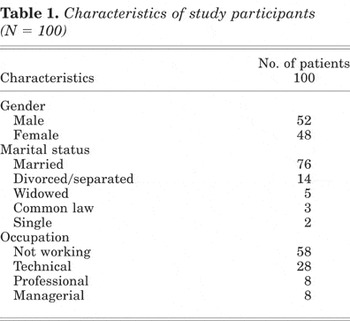
The study participants were recruited from a population of palliative oncology outpatients attending a pain and symptom control consultation clinic at a comprehensive cancer center in Western Canada. They represented a diverse sample of cancer sites and disease stages. The criteria for inclusion in this study consisted of a diagnosis of cancer, palliative (i.e., incurable), no documented brain metastasis, ambulatory, a minimum age of 21, the ability to speak and read English, Folstein Mini Mental State (Folstein et al., 1975) examination score of at least 28/30, the ability to give and sign an informed consent, living at home, an adequate functional status (i.e., minimum assistance required for activities of daily living), and no known psychiatric disorder. One hundred and twelve consecutive patients who met the study criteria (59 males, 53 females) were invited to participate. In total, 100 patients (52 males, 48 females) agreed to participate and completed the questionnaire. The mean age was 60.1 years (SD 13.1 years, range 21–86 years). Table 1 shows the sociodemographic characteristics of the study participants. The five most common cancer sites, in descending order of frequency, were breast (26%), lung (20%), gastrointestinal (14%), genitourinary (8%), and gynecological (7%).
Characteristics of study participants (N = 100)

Procedures
The protocol for this descriptive correlational survey study was approved by the research and ethics committee of the host institution. Potential participants who met the aforementioned criteria were initially approached by a skilled interviewer—a graduate student in psychology, who was trained by the principal investigator and who knew none of the participants. At this time, participants were given an explicit verbal description of the study and were invited to participate. After informed signed consent had been obtained, the graduate student proceeded to administer the sleep questionnaire.
Measures
Sleep Questionnaire
Although there are many sleep scales/questionnaires in use, no universally accepted assessment instrument is currently available. The retrospective self-report sleep questionnaire (see the Appendix) used in this study was developed by the investigators with the intent of keeping it brief and simple. The questionnaire was constructed based on items from sleep questionnaires found in the literature (McGhie & Russell, 1962; Carpenter & Anorykowski, 1998; Engstrom et al., 1999), as well as additional items generated by the investigators. The nine-item questionnaire covered the following themes: presence of sleep disturbance symptoms, sleep pattern, changes since cancer diagnosis, level of concern about sleep, related communication with health care professionals, and use of sleep inducement/enhancement techniques. Participants were instructed to rate their sleep features, during the past month, on a 10-point numerical scale (where 0 meant none or not at all and 10 meant very much or worst possible). The only exception was the effectiveness of treatment, where a higher score denoted greater efficacy.
Edmonton Symptom Assessment System (ESAS)
The ESAS (Bruera et al., 1991) is composed of nine visual analogue scales (VAS) for assessing nine different symptoms (pain, fatigue, nausea, depression, anxiety, drowsiness, appetite, well-being, shortness of breath). Each VAS represents a continuum of experience, with higher scores denoting a worsening level of symptoms. The ESAS is administered to all patients attending the designated pain and symptom control clinic, to assess symptom severity. For the purpose of this study, the investigators included four of the ESAS ratings: Pain, Fatigue, Depression, and Anxiety.
Data Analysis
The data were analyzed using descriptive statistics and correlational analyses. Mean scores and standard deviations for all components of the sleep questionnaire were calculated. Pearson correlations between pain, fatigue, depression, anxiety, and individual questionnaire items were also calculated. The data were analyzed using the Statistical Package for Social Sciences (SPSS) with set alpha levels of 0.05 and 0.01. We considered score values ≥ 5 as elevated, based on Serlin et al.'s (1995) definition of cutpoints, on a 0–10 numerical rating scale.
RESULTS
Using the research questions as a guiding framework, the findings will be presented according to the following four themes: (a) symptom frequency and severity, (b) relationships with other symptoms, (c) sleep inducement and maintenance techniques, and (d) communication with health professionals.
Symptom Frequency and Severity
Symptom Frequency
The majority of participants (72%) reported a wide variety of sleep disturbances, after being diagnosed with cancer, in comparison with only 19% of participants who indicated that their sleeping difficulties predated their cancer diagnosis. The reported sleep disturbances in this study were classified under four key categories: sleep latency (difficulty falling asleep), sleep interruptions (difficulty staying asleep), early morning awakening, and feeling unrested in the morning. The frequency of elevated symptoms (≥5) in descending order were not feeling rested in the morning (72%), difficulty staying asleep (63%), difficulty falling asleep (40%), and early awakening (37%). Most participants (52%) indicated that they slept too few hours, as compared with those (31%) who reported sleeping too many hours. Fifty-nine percent of participants stated that the above sleep disturbances occurred at least 5 or more nights per week (M = 5.68 days, SD = 2.0). Fifty-six percent reported that they remained awake in bed 2 h or longer every night and 44% reported that their total sleeping hours per night was 5 hours or less. Sixty percent of participants indicated some combination of sleep onset, nocturnal awakening, and sleep maintenance problems. The reported sleeping patterns typically followed a cycle of falling asleep, awakening, staying awake, and then falling asleep before awakening again, until becoming fully awake earlier than desired in the morning. Participants, however, reported only a moderate level of concern, on average, (M = 4.38, SD = 3.59) about the quality of their sleep and their sleep patterns.
Symptom Severity
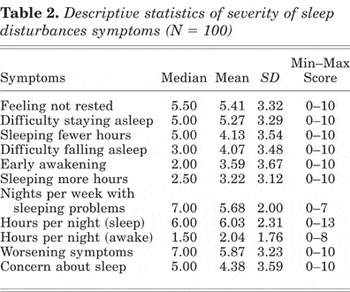
Most participants (87%) reported that their sleep patterns had worsened since the cancer diagnosis (M = 5.87, SD = 3.23). The three most severe sleep disturbance symptoms were not feeling rested in the morning (M = 5.41, SD = 3.32), difficulty staying asleep (M = 5.27, SD = 3.29), and sleeping fewer hours (M = 4.13, SD = 3.54). A summary of the severity of sleep disturbance symptoms appears in Table 2. In terms of other symptoms, on average, participants identified fatigue as the most severe symptom (M = 5.83, SD = 2.51) followed by pain (M = 5.40, SD = 2.55), anxiety (M = 4.43, SD = 2.71), and depression (M = 4.19, SD = 2.51).
Descriptive statistics of severity of sleep disturbances symptoms (N = 100)

Relationships with Other Symptoms
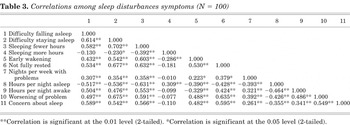
In a comparison of sleep disturbance symptoms, the three highest correlations were between difficulty staying asleep and sleeping fewer hours than usual (r = 0.702), not feeling rested in the morning (r = 0.677), and worsening symptoms since the cancer diagnosis (r = 0.675). These findings are summarized in Table 3.
Correlations among sleep disturbances symptoms (N = 100)

When comparing sleep disturbance symptoms with other symptoms (i.e., pain, anxiety, depression, fatigue), the three highest correlations were between difficulty falling asleep and fatigue (r = 0.612), early awakening and fatigue (r = 0.596), and difficulty falling asleep and anxiety (r = 0.572). The following variables were moderately correlated, ranging from 0.402 to 0.507: sleeping fewer hours and fatigue (r = 0.507), early awakening and depression (r = 0.489), difficulty falling asleep and pain (r = 0.437), not feeling rested and anxiety (r = 0.416), difficulty staying asleep and fatigue (r = 0.415), and hours per night awake and pain (r = 0.402). See Table 4 for a summary of these results.
Correlations between sleep disturbance symptoms, pain, fatigue, anxiety, and depression (N = 100)

Sleep Inducement and Maintenance Techniques
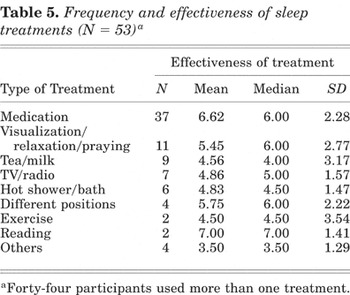
Fifty-three percent of the participants identified a variety of strategies they had tried to help them remedy their sleeping problems. Forty-four percent reported using more than one sleep inducement/maintenance technique. Sleep medication was the treatment of choice for 37% of participants, with moderately high effectiveness (M = 6.62, SD = 2.28). The second most frequent coping technique was an aggregation of three nonpharmacological approaches, relaxation, visualization, and praying (11%), in which patients may have used at least one of these strategies, with an effectiveness mean score of 5.45 (SD = 2.77). This was followed by 9% who reported using tea/milk (effectiveness, M = 4.56, SD = 3.17) and 7% who reported watching TV or listening to a radio as sleep inducement (effectiveness, M = 4.86, SD = 1.57). Assuming “different positions” was also identified as an effective technique (M = 5.75, SD = 2.22) but it was reportedly utilized by only 4% of the participants. Reading was rated as the most effective strategy (M = 7.00, SD = 1.41), but was used very infrequently (2%). A summary of the reported frequencies and effectiveness of different sleep treatments appears in Table 5.
Frequency and effectiveness of sleep treatments (N = 53)a

Communication with Health Care Professionals
Of the 72 participants who reported elevated sleep disturbances (≥5), 52 indicated an elevated level of concern (≥5) about their sleeping difficulties. Forty of the 52 (77%) discussed their concerns with a physician, and an additional 8 (15%) related their concerns to other health care professionals (primarily nurses and pharmacists). However, of the 20 patients who reported symptom elevation (≥5) in either falling asleep, staying asleep, sleeping fewer hours, early awakening, or not feeling rested in the morning, but who indicated lower levels of concern about their sleep (<5), only 4 (20%) reported their symptoms to their physicians and 3 (15%) mentioned them to other health care professionals.
DISCUSSION
Symptom Frequency and Severity
The findings of this study demonstrate that sleep disturbances are highly prevalent among palliative cancer patients attending a pain and symptom control clinic. Seventy-two percent of the participants reported a multitude of sleep problems that recurred most nights. The results are consistent with Hugel et al.'s (2004) findings that 70% of palliative cancer patients had insomnia symptoms.
One issue to consider is whether insomnia had preceded the cancer diagnosis or occurred after onset. In this study, only 19% of the participants reported experiencing sleeping difficulties prior to the cancer diagnosis. This number has to be interpreted with caution because, according to reported national and regional surveys in the literature, the prevalence of insomnia in the general population is much higher and estimated to be 30–35% (Kales et al., 1982). Such discrepancies may be explained by the observed tendencies of cancer patients to exaggerate aspects of their “good old days” before the cancer struck and minimizing unpleasant symptoms, difficulties, or disorders that predated the cancer diagnosis.
Relationships with Other Symptoms
Pain
Pain is one of the most feared consequences of cancer (Levin et al., 1985). Cancer pain can cause both physical and psychological distress that adversely impacts patients' well-being and quality of life (Ferrel et al., 1983; Sela et al., 2002). Cancer-related pain has been estimated to afflict 40–55% of patients at diagnosis and 60–95% of those at advanced or terminal stages (Bonica, 1984; Foley, 1985). As many as 59% of cancer patients referred to a pain clinic reported sleep disturbances, and the extent of their reported sleep problems reportedly was proportional to the severity of their pain (Grond et al., 1994). Cancer pain may affect both the initiation and maintenance of sleep (Dorrepaal et al., 1989; Strang, 1992). The results of this survey did not demonstrate a strong correlation between reported pain and sleep disturbances. Pain correlated moderately with difficulty falling asleep (r = 0.437) and the duration of staying awake at night (r = 0.402). One explanation for this moderate correlation may be that patients who met the inclusion criteria for this study were relatively high functioning and their pain was reasonably under control (their mean score for pain was 5.40, SD = 2.55, median = 5.00). Conceivably, their lower level of pain was less likely to interfere with or adversely affect their sleep.
Fatigue
Fatigue is one of the most frequently reported symptoms in cancer patients (Richardson, 1995). In one study, 75% of advanced cancer patients described it as severe (Stone et al., 1999). In another study, 78% of cancer patients who received treatment within the previous 2 years reported severe fatigue and 71% of the surveyed sample indicated that their fatigue was interfering with their normal functional ability (Ashbury et al., 1998). Fatigue has also been identified as a dominant predictor of poor quality of life among cancer patients (Greenberg, 1998). In this study, the mean fatigue score was 5.83 (SD = 2.51). The extent of the relationship between fatigue and sleep difficulties appeared to be quite strong. Correlations were moderately high between fatigue and difficulty falling asleep (r = 0.612), early awakening (r = 0.596), and sleeping fewer hours (r = 0.507). It is not possible, however, to identify a causal relationship between fatigue and sleep problems. Sleep disturbances may lead to fatigue (as a result of sleep deficiency) or fatigue may exacerbate insomnia symptoms. It is also feasible that in some patients both fatigue and sleep disturbances are instigated by the same underlying somatic and/or psychological processes.
In summary, there is no clear cause–effect relationship between cancer related pain, fatigue, and sleep disturbances. It is plausible that some of the insomnia symptoms may be induced or aggravated by pain and fatigue. Conversely, the sleeping difficulties may be prompted by some abnormalities that commonly occur in advanced cancer patients, such as hormonal or metabolism changes.
Depression and Anxiety
Depression is the most prevalent affective disorder faced by cancer patients. The incidence of depression reportedly ranges from 20–58% (Bottomley, 1998; Valente & Saunders, 1997) and increases with higher levels of disability, advanced illness, and pain (Massie & Holland, 1990; Grassi et al., 1996). Anxiety is reported to be common in 77% of cancer patients (Ashbury et al., 1998).
The literature addressing the effects of depression and anxiety on sleep in the general adult population is voluminous. The general consensus seems to be that insomnia is a symptom of emotional disequilibrium. Hence, as anxiety and depression increase so does the lack of sleep, and, conversely as sleep decreases, anxiety and depression increase as well (Smith & Renshaw, 1975). Many health care providers are inclined to assume that insomnia in cancer patients is a result of nonspecific “stress” (such as depression and anxiety) associated with the cancer process (Warnock, 1974). Consequently, many clinicians postulate that measures designed to relieve depression and anxiety will also alleviate the insomnia symptoms.
The results of this study support the notion that depression, anxiety, and sleep disturbances may be somehow related. Depression was moderately correlated with early awakening (r = 0.489) (a known symptom of underlying depression; Ray, 1991). Anxiety was moderately correlated with difficulty falling asleep (r = 0.572), not feeling rested (r = 0.416), and difficulty staying asleep (r = 0.376). It is impossible to determine whether depression and anxiety are catalysts to sleep disturbances. Depression, anxiety, and sleeping difficulties may coexist without having causal relationships. Conversely, depression and anxiety may also be a part of a complex web, which globally contributes to insomnia in cancer patients. It is likely that sleep problems may be better addressed as an independent variable and treated as such.
Sleep Inducement and Maintenance Techniques
Fifty-three patients reportedly utilized a broad repertoire of personal coping strategies and interventions to alleviate their sleep disturbances, and most of them used more than one technique. Sleep medications were most commonly used. Thirty-seven participants reported taking prescribed sleeping aids, with an efficacy mean score of 6.62 (SD = 2.28). The findings validate the usefulness of the current common practice of prescribing hypnotics to cancer patients (Derogatis et al., 1979). However, the utility of pharmacological agents may be optimized when they follow a sleep assessment of the individual's sleep pattern, taking into account the onset, peaks, and half-lives of the indicated drugs. Besides sleep medications, patients reported an array of nonpharmacological sleep-inducement strategies, in addition to or in place of drug therapy. Given the reported effectiveness of nonpharmacological interventions, patients should be encouraged to utilize more of these techniques (such as relaxation, visualization, changing position, and reading) as an adjunct to pertinent drug therapy.
Communication with Health Care Professionals
Although the majority of the patients (92%) who expressed sleep concerns discussed them with health care professionals, only 35% of patients with elevated symptoms (≥5) who indicated lowest levels of concern (i.e., <5) did so. It is possible that amid the myriad of symptoms patients experience as a result of their cancer and its treatment, sleeping difficulties may be perceived as less important. Patients may view their sleep deficiencies as relatively minor inflictions of their cancer ordeal, inconvenient but bearable. The survey evidence suggests that some cancer patients may be reluctant or choose not to report their sleep difficulties to their physicians. Because sleep disturbance is a subjective experience with few visible signs, the communication gap may prolong and confound the negative effects of sleep disturbances. Health care providers cannot simply assume that patients will report their related sleep problems voluntarily, without specifically being asked. Physicians and nurses should routinely inquire about and conduct a shorter symptomatic assessment during clinic visits or other contacts. Periodically they may utilize comprehensive questionnaires or clinical interviews that focus on the patients' sleep patterns and the nature, duration, and intensity of their sleeping difficulties.
Study Limitations
This study may have several limitations. First, with respect to the population, the study participants represented cancer patients who were referred to and attended a Pain and Symptom Control Clinic. Such a referral implied severe pain and/or uncontrolled symptoms. Furthermore, the majority of participants in our study were advanced cancer patients with no curative treatment indicated. As such, the generalizability of the findings to the broader cancer population, in different stages of the disease, may be limited. Second, the data are based on retrospective self-report ratings, data which may be subject to recall biases. In addition, the analysis was correlational in nature, making implications about causality inappropriate. Despite these limitations, self-report questionnaires and correlational analysis are a very common methodology and can serve as a basis on which further research can be developed.
Clinical and Research Implications
The findings indicate several implications for the improvement of patient care. The effective management of sleep disturbances must begin with proper assessment. Critical to the management of sleep problems in cancer is the development of assessment tools for the systematic evaluation of patients' sleep and response to treatment. Future longitudinal studies should be designed prospectively, incorporating comprehensive sleep assessment at set intervals, in order to determine the course of insomnia at different stages in the disease trajectory. After determining the nature of a patient's sleep disturbances, it will be easier to customize and select the most appropriate agent that offers the individual patient the most benefits.
More studies need to be conducted to determine the efficacy and applicability of different techniques. For example, randomized trials attempting to ameliorate sleep difficulties, either by controlling depression and anxiety using psychotropic medication or through a direct symptomatic treatment of sleep deficiencies, are warranted. Future studies should apply, as well, to nonpharmacological treatments. For example, a different approach may be needed for patients who experience difficulty falling asleep (such as sleep hygiene, stimulus control), as compared with patients who have difficulty staying asleep (who may benefit more from cognitive behavioral strategies).
The findings of this study underline the magnitude and complexity of sleep problems in cancer patients. Further research on the relationship between pain, fatigue, depression, anxiety, and sleep disturbances is needed. Research questions that warrant more investigation include: How does cancer pain affect initiation and maintenance of sleep? Do sleep disturbances exacerbate pain intensity? To what extent is fatigue heightened by fragmented sleep? Does fatigue inhibit sleep onset? To what extent are emotional distress and sleep deficiencies linked?
Future research also needs to explore and delineate the exact mechanisms by which sleep is disturbed in cancer patients. Objective tools, such as polysomnographic measures of sleep, may help reveal the general nature and specific sleep characteristics of this patient population. These measures may also elucidate the differences in the sleep experience that may be uniquely correlated with other factors (e.g., psychological dimensions of pain). Effective interventions are predicated on accurate diagnosis and identification of the clinical syndromes.
Appendix: Sleep Questionnaire

References
REFERENCES
Ashbury, F.D.,
Findlay, H.,
Reynolds, B.,
et al.
(1998).
A Canadian survey of cancer patients experiences: Are their needs
being met?
Journal of Pain and Symptom Management,
16,
298–306.Google Scholar
Beszterczey, A.K. &
Lipowski, Z.J.
(1977).
Insomnia in cancer patients.
Canadian Medical Association Journal,
116,
355.Google Scholar
Bonica, J.J.
(1984).
Management of cancer pain. In
Recent Results in Cancer Research,
Zimmerman, M.,
Drings, P. &
Wagner, G. (eds.),
Berlin:
Springer,
89,
13–27.
Bottomley, A.
(1998).
Depression in cancer patients. A literature review.
European Journal of Cancer Care,
7,
181–191.Google Scholar
Bruera, E.,
Kuehn, N.,
Miller, M.J.,
et al.
(1991).
The Edmonton Symptom Assessment Symptom (ESAS): A simple method for
the assessment of palliative care patients.
Journal of Palliative Care,
7,
6–9.Google Scholar
Carpenter, J.S. &
Anorykowski, M.A.
(1998).
Psychometric evaluation of the Pittsburgh sleep quality
index.
Journal of Psychosomatic Research,
45,
5–13.Google Scholar
Davidson, J.R.,
Maclean, A.W.,
Brundage, M.D.,
et al.
(2002).
Sleep disturbances in cancer patients.
Social Science and Medicine,
S4,
1309–1321.Google Scholar
Degner, L.F. &
Sloan, J.A.
(1995).
Symptom distress in newly diagnosed ambulatory cancer patients and
as a predictor of survival in lung cancer.
Journal of Pain and Symptom Management,
10,
423–432.Google Scholar
Derogatis, L.R.,
Feldstein, M.,
Morrow, G.,
et al.
(1979).
Survey of psychotropic drug prescriptions in any oncology
population.
Cancer,
44,
1919–1929.Google Scholar
Dorrepaal, K.L.,
Aaronson, N.K., &
Van Dam, F.S.
(1989).
Pain experience and pain management among hospitalized cancer
patients: A clinical study.
Cancer,
63,
593–598.Google Scholar
Engstrom, C.A.,
Strohl, R.A.,
Rose, L.,
et al.
(1999).
Sleep alteration in cancer patients.
Cancer Nursing,
22,
143–148.Google Scholar
Ferrel, B.R.,
Wisdom, C., &
Wenzl, C.
(1983).
Quality of life as an outcome variable in the management of cancer
pain.
Pain,
17,
277–288.Google Scholar
Foley, K.M.
(1985).
The treatment of cancer pain.
New England Journal of Medicine,
313,
84–95.Google Scholar
Folstein, M.F.,
Holstein, S., &
McHugh, P.R.
(1975).
“Mini-mental state”: A practical method for grading the
cognitive state of patients for the clinician.
Journal of Psychiatric Research,
12,
189–198.Google Scholar
Fortner, B.V.,
Kasprowicz, S.,
Wang, S.,
et al.
(2000).
Sleep disturbance and quality of life in cancer patients.
Sleep,
23,
103–104.Google Scholar
Grassi, L.,
Marzola, M.,
Maestri, A.,
et al.
(1996).
Depression symptoms and quality of life in home-care as-sisted
cancer patients.
Journal of Pain and Symptom Management,
12,
300–307.Google Scholar
Greenberg, D.B.
(1998).
Fatigue. In
Psycho-Oncology,
Holland, J.C. (ed.)
Oxford, UK:
Oxford University Press.
Grond, S.,
Zech, D.,
Diefenbach, C.,
et al.
(1994).
Prevalence and pattern of symptoms in patients with cancer pain: A
prospective evaluation of 1635 cancer patients referred to a pain
clinic.
Journal of Pain and Symptom Management,
9,
372–382.Google Scholar
Hu, D.S. &
Silberfarb, P.M.
(1991).
Management of sleep problems in cancer patients.
Oncology,
5,
23–27.Google Scholar
Hugel, H.,
Ellershaw, J.E.,
Cook, L.,
et al.
(2004).
The prevalence, key causes and management of insomnia in palliative
care patients.
Journal of Pain and Symptom Management,
27,
316–321.Google Scholar
Kales, A.,
Kales, J., &
Soldatos, C.R.
(1982).
Insomnia and other sleep disorders.
Medical Clinics of North America,
66,
971–988.Google Scholar
Kaye, J.,
Kaye, K., &
Madow, L.
(1983).
Sleep patterns in patients with cancer and patients with cardiac
disease.
Journal of Psychology,
114,
107–113.Google Scholar
Levin, D.,
Cleeland, C.S., &
Dar, R.
(1985).
Public attitudes toward cancer pain.
Cancer,
56,
2337–2339.Google Scholar
Massie, M.J. &
Holland, J.C.
(1990).
Depression and the cancer patient.
Journal of Clinical Psychiatry,
75,
12–17.Google Scholar
McGhie, A. &
Russell, S.
(1962).
The subjective assessment of normal sleep patterns.
Journal of Mental Science,
108,
642–652.Google Scholar
Owen, D.C.,
Parker, K.P., &
McGuire, D.B.
(1999).
Comparison of subjective sleep quality in patients with cancer and
healthy subjects.
Oncology Nursing Forum,
26,
1649–1651.Google Scholar
Ray, C.
(1991).
Chronic fatigue syndrome and depression: Conceptual and
methyhodological ambiguities
(editorial). Psychological Medicine,
21,
1–9.Google Scholar
Richardson, A.
(1995).
Fatigue in cancer patients: A review of the literature.
European Journal of Cancer Care,
4,
20–32.Google Scholar
Savard, J. &
Morin, C.M.
(2001).
Insomnia in the context of cancer: A review of a neglected
problem.
Journal of Clinical Oncology,
19,
895–908.Google Scholar
Sela, R.A.,
Bruera, E.,
Conner-Spady, B.,
et al.
(2002).
Sensory and affective dimensions of advanced cancer pain.
Psycho-oncology,
11,
23–34.Google Scholar
Serlin, R.C.,
Medoza, T.R.,
Nakamuray, Y.,
et al.
(1995).
When is cancer pain mild, moderate or severe? Grading pain severity
by its interference with function.
Pain,
61,
277–284.Google Scholar
Silberfarb, P.M.,
Hauri, P.J.,
Oxman, T.E.,
et al.
(1985).
Insomnia in cancer patients.
Social Science & Medicine,
20,
849–850.Google Scholar
Smith, J. &
Renshaw, D.
(1975).
A clinical study of insomnia.
American Family Physician,
11,
140–141.Google Scholar
Stone, P.,
Hardy, J.,
Broadly, K.,
et al.
(1999).
Fatigue in advanced cancer: A prospective cross-sectional
study.
British Journal of Cancer,
79,
1479–1486.Google Scholar
Strang, P.
(1992).
Emotional and social aspects of cancer pain.
Acta Oncologica,
31,
323–326.Google Scholar
Valente, S.M. &
Saunders, J.M.
(1997).
Diagnosis and treatment of major depression among people with
cancer.
Cancer Nursing,
20,
168–177.Google Scholar
Warnock, J.
(1974).
Controlled study of trancopal in the treatment of sleep disturbances
due to anxiety.
Journal of International Medical Research,
6,
115–120.Google Scholar
World Health Organization
(1986).
Cancer Pain Relief.
Geneva:
Author.
Characteristics of study participants (N = 100)
Descriptive statistics of severity of sleep disturbances symptoms (N = 100)
Correlations among sleep disturbances symptoms (N = 100)

Correlations between sleep disturbance symptoms, pain, fatigue, anxiety, and depression (N = 100)
Frequency and effectiveness of sleep treatments (N = 53)a
 You have
Access
- 74
- Cited by