Education and support for family ‘carers’ has been consistently recommended by clinical practice guidelines in the UK (NICE, 2014a; 2014b), the USA (Dixon et al., Reference Dixon, Dickerson, Bellack, Bennett, Dickinson, Goldberg, Lehman, Tenhula, Calmes, Pasillas, Peer and Kreyenbuhl2010; Dixon and Schwarz, Reference Dixon and Schwarz2014), and in Australia and New Zealand (Galletly et al., Reference Galletly, Castle, Dark, Humberstone, Jablensky, Killackey, Kulkarni, McGorry, Nielssen and Tran2016). These services are offered to individuals who provide regular support to a family member or friend (‘relative’) who is diagnosed with schizophrenia or another serious mental health condition, and fall into two overlapping types: family psychoeducation interventions (FPI) and family education programs (FEPs). The former is comprised of clinician-led family sessions offered over 6–9 months to carers along with their relative (typically diagnosed with schizophrenia) with the reduction of relapse rates as a primary target and the reduction of burden and distress in carers an important secondary outcome (Dixon et al., Reference Dixon, Dickerson, Bellack, Bennett, Dickinson, Goldberg, Lehman, Tenhula, Calmes, Pasillas, Peer and Kreyenbuhl2010). A multiple family group format (McFarlane, Reference McFarlane2002) is possible but not the norm. While FPIs are efficacious in achieving these outcomes (Pharoah et al., Reference Pharoah, Mari, Rathbone and Wong2010), and have been available for decades, they have not been adopted at expected rates by mental health services, clinicians and carers (Kavanagh et al., Reference Kavanagh, Piatkowska, Clark, O'Halloran, Manicavasagar, Rosen and Tennant1993; Fadden, Reference Fadden1997; Dixon et al., Reference Dixon, McFarlane, Lefley, Lucksted, Cohen, Falloon, Mueser, Miklowitz, Solomon and Sondheimer2001; Cohen et al., Reference Cohen, Glynn, Murray-Swank, Barrio, Fischer, McCutcheon, Perlick, Rotondi, Sayers, Sherman and Dixon2008; Drapalski et al., Reference Drapalski, Marshall, Seybolt, Medoff, Peer, Leith and Dixon2008; Harvey and O'Hanlon, Reference Harvey and O'Hanlon2013; Haddock et al., Reference Haddock, Eisner, Boone, Davies, Coogan and Barrowclough2014; Ince, Haddock and Tai, Reference Ince, Haddock and Tai2016), leaving many carers without assistance to address common carer-related experiences such as isolation (Hayes et al., Reference Hayes, Hawthorne, Farhall, O'Hanlon and Harvey2015), self-blame and guilt/shame (McCann et al., Reference McCann, Lubman and Clark2009; Cherry et al., Reference Cherry, Taylor, Brown, Rigby and Sellwood2017).
FEPs (Solomon, Reference Solomon1996; Dixon et al., Reference Dixon, Dickerson, Bellack, Bennett, Dickinson, Goldberg, Lehman, Tenhula, Calmes, Pasillas, Peer and Kreyenbuhl2010) developed in parallel with FPIs. While FEPs include similar content to FPIs, they differ in their greater emphasis on the carer's wellbeing. Usually conducted in a group format without the relative attending, participants are typically carers for individuals diagnosed with a serious mental health condition (schizophrenia, bipolar disorder). Exposure of carers to peers is an essential element, varying from peers as fellow participants in clinically-auspiced groups (Chien et al., Reference Chien, Norman and Thompson2004; Riley et al., Reference Riley, Gregory, Bellinger, Davies, Mabbott and Sabourin2011; Onwumere et al., Reference Onwumere, Zhou, Desai, Learmonth, Reynolds and Gaughran2017) to peer-led programs auspiced by carer-run organisations (Dixon et al., Reference Dixon, Lucksted, Medoff, Burland, Stewart, Lehman, Fang, Sturm, Brown and Murray-Swank2011; Stephens et al., Reference Stephens, Farhall, Farnan and Ratcliff2011). For carers, FEPs appear to provide a relatively accessible and acceptable alternative to FPIs. While not as robust as that for FPIs, there is mounting evidence demonstrating the efficacy of FEPs, across differing health systems and cultural settings, in reducing carer burden and psychological distress, and improving family functioning (Chien et al., Reference Chien, Norman and Thompson2004; Dixon et al., Reference Dixon, Lucksted, Medoff, Burland, Stewart, Lehman, Fang, Sturm, Brown and Murray-Swank2011; Stephens et al., Reference Stephens, Farhall, Farnan and Ratcliff2011; Bademli et al., Reference Bademli and Cetinkaya Duman2014; Yesufu-Udechuku et al., Reference Yesufu-Udechuku, Harrison, Mayo-Wilson, Young, Woodhams, Shiers, Kuipers and Kendall2015).
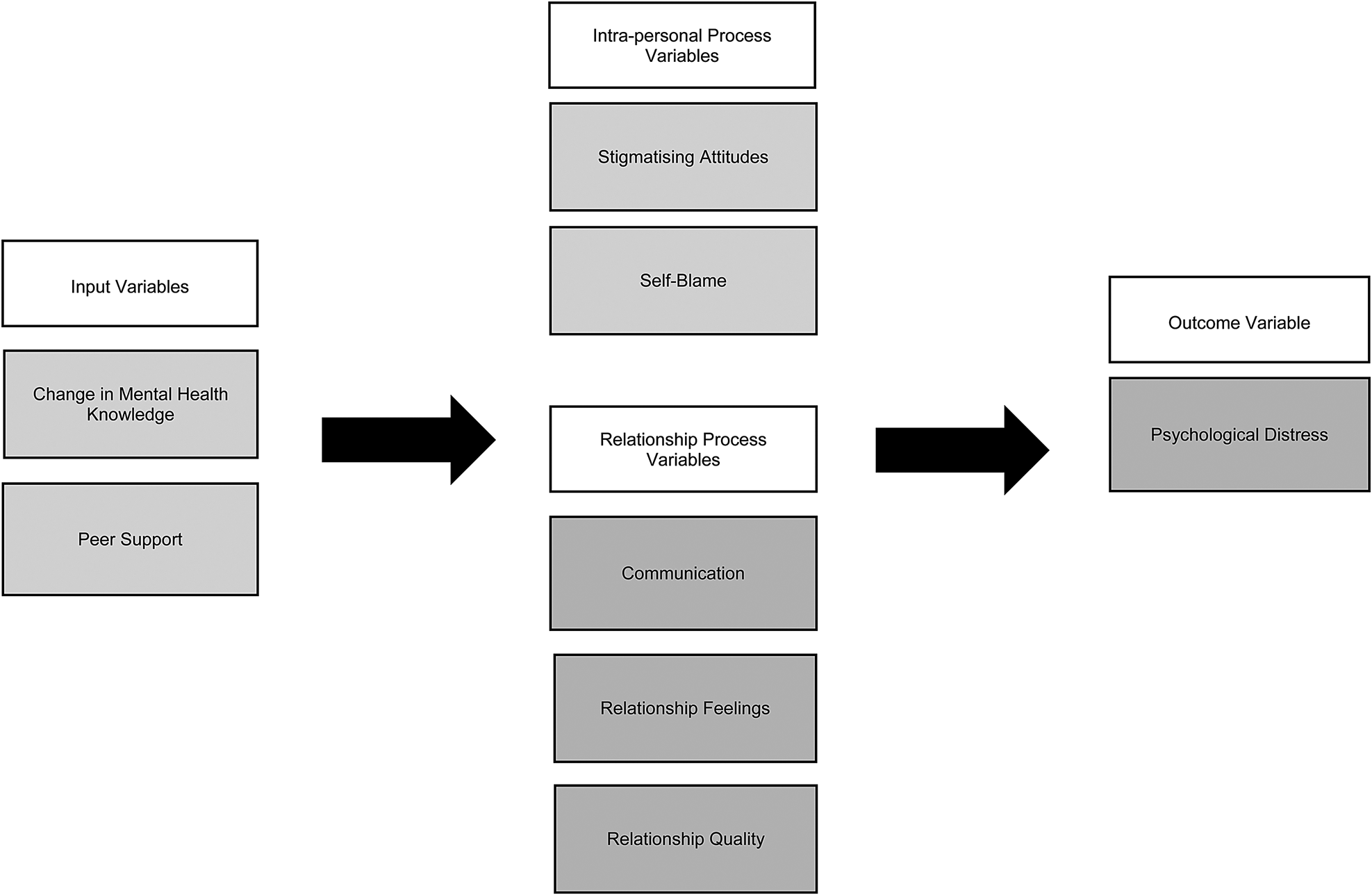
Researching the mechanisms by which FEPs lead to improved outcomes has received little attention. Qualitative evaluations of FEPs run in various service settings in different countries identified similar potential mechanisms: reduction in carers' stigmatising attitudes of mental health conditions, increased mental health knowledge resulting in appraisal changes, experiencing peer support, building communication and self-management skills, feeling less isolated in their carer role (Chien et al., Reference Chien, Norman and Thompson2006; Lucksted et al., Reference Lucksted, Stewart and Forbes2008; Bademli et al., Reference Bademli and Cetinkaya Duman2016). Bringing together this qualitative data with conceptual frameworks that underlie FEPs, namely, the biopsychosocial model of mental illness (Engel, Reference Engel1977), group psychotherapy research (Yalom and Leszcz, Reference Yalom and Leszcz2005), the stress-appraisal-coping theory (Lazarus and Folkman, Reference Lazarus and Folkman1984) as applied to the caregiving experience (Szmukler et al., Reference Szmukler, Burgess, Herrman, Benson, Colusa and Bloch1996), and the conceptualisation of social support as coping assistance (Thoits, Reference Thoits1986), we proposed a model to explain how FEPs result in reductions in carers' psychological distress (Fig. 1). The model identified two key ingredients: receiving support from others who have a similar lived experience, and increased mental health knowledge. We proposed that these key ingredients lead to reductions in carers' appraisals (stigmatising attitudes about, and perceived responsibility for, their relatives' condition), improved communication and strengthened family/friend functioning. Changes in these processes were hypothesised to result in reductions in carers' psychological distress, a more distal outcome.
A process model for distress reduction in family education programs.

We are not aware of any studies that explore evidence for these mechanisms in carers participating in FEPs. Wellways' Building-a-Future program is an Australian FEP modelled on NAMI's Family-to-Family program and adapted to the Australian cultural and mental health context (Stephens et al., Reference Stephens, Farhall, Farnan and Ratcliff2011). We aimed to evaluate the effectiveness of the Wellways FEP using a naturalistic wait-list control design, and to quantitatively investigate a model of the change processes.
Method
Intervention
Building-a-Future is a 12-session support and education group designed for family and friend caregivers of people diagnosed with a mental health condition that draws upon biopsychosocial and stress-vulnerability-coping models, peer support and community development principles. It aims to assist carers through education about mental health conditions and services whilst providing support and encouraging the development of effective strategies for caring for their relative and themselves. Small groups (8–14) are led by trained facilitators who have first-hand experience of the caregiving role. The relative does not attend the group. Eight structured 3-h core group sessions held weekly provide information, skills-training and discussion opportunities, and four 3-h consolidation group sessions held monthly focus on knowledge and skill enhancement, and socialisation (for details see Stephens et al., Reference Stephens, Farhall, Farnan and Ratcliff2011). Although originally focussed on caregiving for a relative diagnosed with schizophrenia, Wellways' longstanding carer-developed program draws attendance from carers whose relative may have one of a number of mental health conditions. This reflects the common demands and stressors of caregiving irrespective of the relatives' condition.
Design
This ‘real-world’ effectiveness study incorporated a naturalistic wait-list control longitudinal design to determine whether participation in the intervention resulted in hypothesised changes. All individuals who enrolled early enough were invited to complete an initial assessment (time 0) that served as their own control over a wait-list period. Subsequent assessments were completed at the core program's start (time 1) and end (time 2), 3 months into the 4-month consolidation period (time 3), and 6 months after the consolidation period ended (time 4). La Trobe University (LTU) co-authors served as program evaluation consultants.
To test our model of the FEP change processes (Fig. 1), we applied a repeated-measures design using data from each time point except time 0. Due to the proportion of missing data, we created a subsample (n = 195) comprised of participants who had no missing values for the outcome variable at each time point. This subsample also had a lower proportion of missing data for all other model variables.
Statistical analyses
A linear mixed-effects model (IBM's SPSS Statistics Version 24) was used to determine whether there would be a significant difference in the outcome and process variables across each time period. Linear mixed-effects modelling accommodates for missing data by estimating parameters rather than using list-wise deletion, thus enabling the full sample to be used.
We used multivariate latent growth modelling (MLGM; IBM's SPSS AMOS Version 24) to determine whether intervention input variables influenced the simultaneous growth of the process variables and the growth of the outcome variable, given its ability to answer questions related to developmental growth and predictors of growth over several time points (Curran et al., Reference Curran, Obeidat and Losardo2010). Specifically, we tested whether the longitudinal trajectory in psychological distress among carers over the 12-month evaluation would be predicted by intervention input variables, and whether the growth trajectory of process variables over the same period would mediate these associations. We estimated missing population parameters with full-information maximum likelihood estimation procedures that assume that data are missing-at-random and used a multiple imputation method to estimate missing values in the subsample for all variables. The indices used to assess good overall model fit to the data were: χ2 with a p value >0.05; χ2/df ratio <2; comparative fit index (CFI) and Tucker–Lewis Index (TLI) >0.95; root-mean-square error of approximation (RMSEA) <0.06 (Hu and Bentler, Reference Hu and Bentler1999; Hooper et al., Reference Hooper, Coughlan and Mullen2008).
Procedure
All adult carers who enrolled in the Building-a-Future program in any state in Australia between 2009 and 2016 were invited to participate in the evaluation by Wellways staff; written consent was required for participation. Participants were mailed a questionnaire and a stamped, self-addressed envelope at each time point except time 1 where some were distributed on site. The questionnaires were returned by mail or collected at group sessions. The questionnaire included socio-demographic items, and input, outcome and process measures. Wellways staff maintained the questionnaires, and provided the de-identified data to LTU co-authors for analyses. LTU's Human Research Ethics Committee approved the study (FHEC08/R9). The authors assert that all procedures contributing to this work comply with the ethical standards of the relevant national and institutional committees on human experimentation and with the Helsinki Declaration of 1975, as revised in 2008.
Participants
Participants were 1016 carers from 207 programs in six states in Australia. Of these, 116 returned the questionnaire at time 0; both the number of questionnaires distributed and the number of program attendees who enrolled early enough for inclusion in the wait-list period is not known. The median length of the wait-list period was 25 days (n = 91). The rate of returned questionnaires to those mailed were: 98.7% of 967 mailed at time 1, 66.4% of 732 at time 2, 72.6% of 492 at time 3 and 85.0% of 341 at time 4. The number of carers enrolled in the program and reasons for evaluation attrition were not recorded. The intended consolidation sessions were implemented variably such that some cohorts received all four and others none.
Measures
Measures were selected after extensive consultation with program facilitators to ensure their suitability. Generally, all items on measures were summed with higher scores reflecting higher levels of each construct.
Carer distress
The Depression, Anxiety and Stress Scale-21 (DASS) is a valid and reliable measure of psychological distress (Lovibond and Lovibond, Reference Lovibond and Lovibond1995), comprised of three seven-item subscales rating from 0 (did not apply to me) to 3 (applied to me very much or most of the time) the extent to which each statement applied to them over the past week.
Mental health knowledge
Mental health knowledge was measured using an adapted version of the Family-to-Family Outcome Survey Scales–Knowledge of Serious Mental Illness (Dixon et al., Reference Dixon, Lucksted, Stewart, Burland, Brown, Postrado, McGuire and Hoffman2004). Participants rated the extent to which they agreed with each of seven items on a four-point scale ranging from strongly disagree to strongly agree. Change in Knowledge was calculated by subtracting the time 2 score from the time 1 score.
Peer support
This measure of perceived group helpfulness was adapted from Roy et al.'s 12-item scale (Reference Roy, Turcotte, Montminy and Lindsay2005), which was based on the short form of Yalom's Curative Factor Scale (Lieberman et al., Reference Lieberman, Yalom and Miles1973). Only at time 2, participants rated the extent to which each item was true according to their experience of the group on a five-point scale (1 = not true to 5 = true).
Process variables
Adapted from Westbrook and Bauman's scale (Reference Westbrook and Bauman1996), the seven-item Self-blame measure (items included perceived responsibility for their relative's condition, feelings of guilt/shame) and the three-item Stigmatising attitudes measure (items included stereotypes about mental illness) asked participants to rate the extent to which they agreed with each item on a four-point scale ranging from strongly disagree to strongly agree.
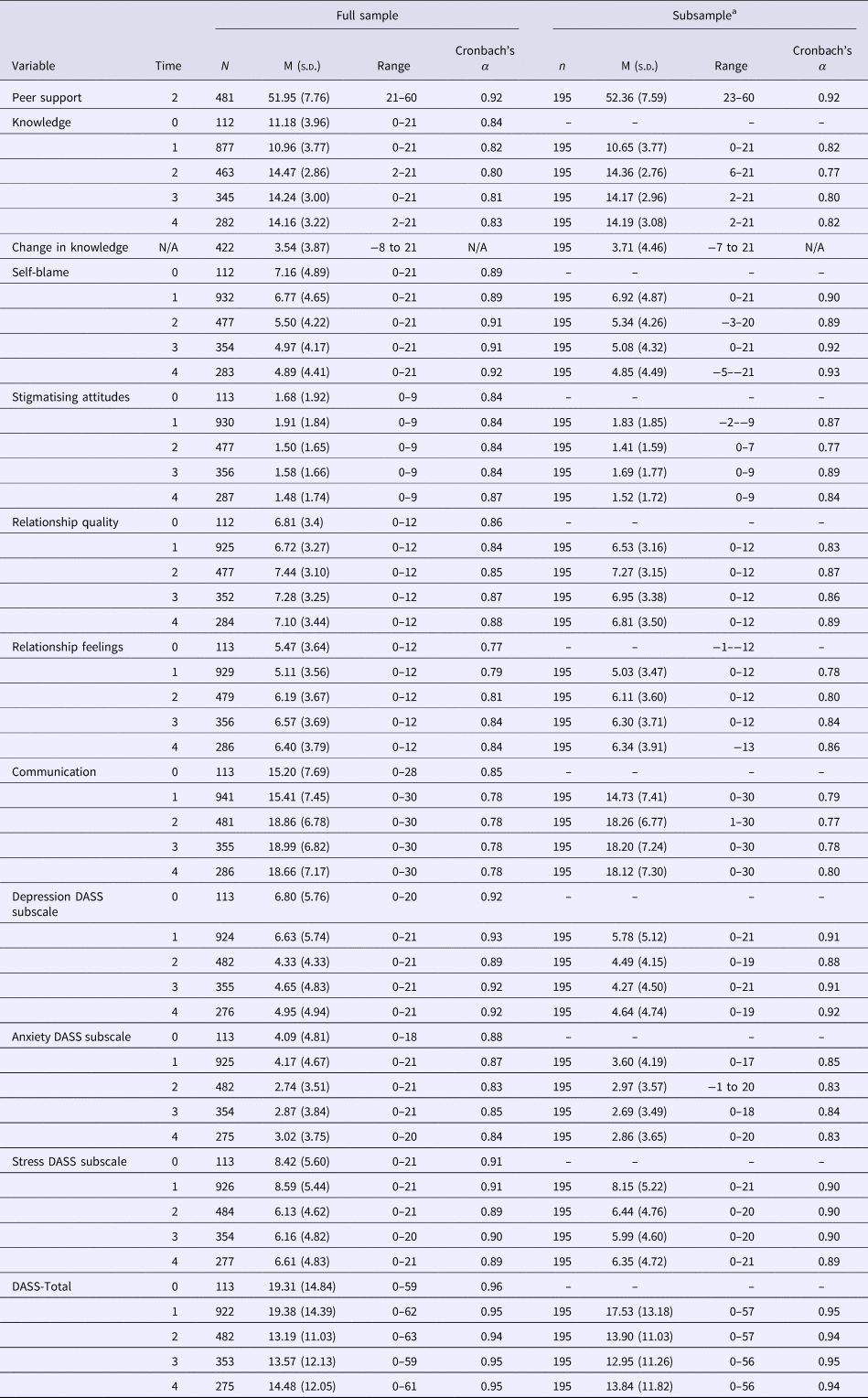
Three scales were developed to assess participants' appraisal of their relationship with their relative over the past 2 weeks. The scales were face valid and had high internal consistency (Table 2). Relationship quality. Using a four-point scale, participants rated four questions addressing relationship closeness, ability to communicate, perceived similarity with their relative and how well they get along. Relationship feelings. Participants rated on a four-point scale the extent they felt strained, sad, angry and appreciated in their relationship. Communication. Participants rated on a scale from 0–100 their perception of their ability to talk with their relative about the mental health condition; about any problems or issues; and the extent to which they understood their relative's experience of living with a mental health condition.
Results
Demographic information
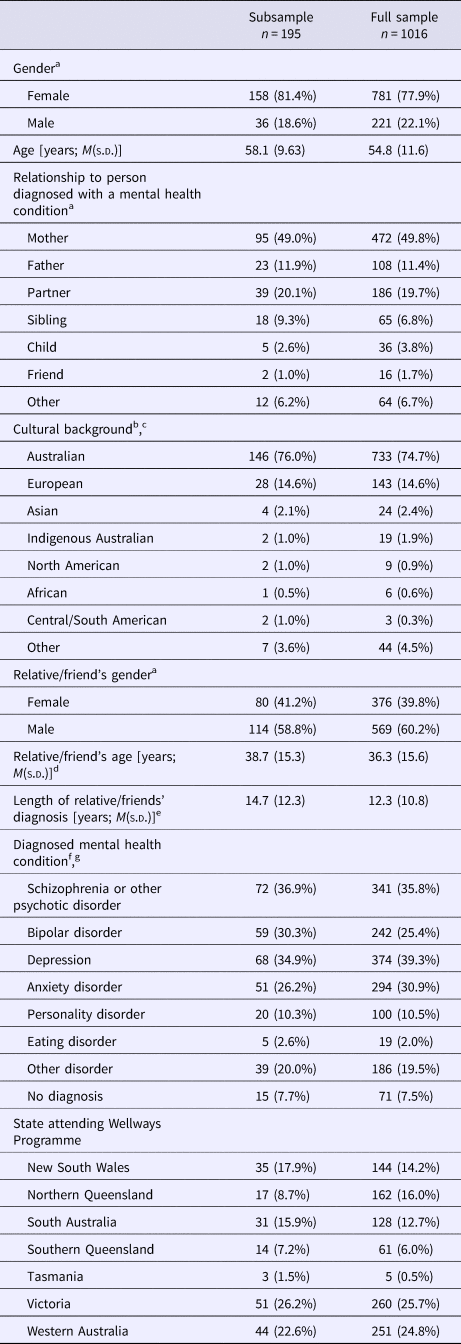
As detailed in Table 1, three-quarters of participating carers were Australian women, half were mothers of the individual diagnosed, and on average aged in their mid-50s. The supported relative was typically male, aged in their mid-30s with more than a decade of experience of a mental health condition. Participants reported their relatives' diagnosed mental health condition (more than one could be selected); one-third of the relatives were diagnosed with a psychotic disorder, one-quarter bipolar disorder and two-fifths depression. The demographic composition of the subsample and full sample were similar.
Demographic information at time 1 for participants in full sample and subsample

Percentages are valid per cent.
a n = 194.
b n = 192.
c n = 981.
d n = 193.
e n = 166.
f n = 952.
g Diagnosed conditions equate to more than 100% as multiple diagnoses were possible.
Preliminary analyses
Due to the proportion of missing data, analyses were conducted to determine whether the MLGM missing-at-random assumption was met. Participants' missing status was defined as ‘retained’ (no missing outcome variable at time 1–4) and ‘not retained’ (at least one missing outcome variable). Using a Bonferroni-adjusted alpha level of 0.01 per test (0.05/5), logistic regression analyses including all model variables at time 1 indicated that there were no significant differences in scores based on missing status. Of the socio-demographic variables, only age [B = −0.027, Wald χ2(1) = 10.326, p = 0.001, exp(B) = 0.973, 95% CI 0.957–0.989] predicted missing status such that the older the participant the more likely they completed all of the subsequent evaluations.
Outcome analyses
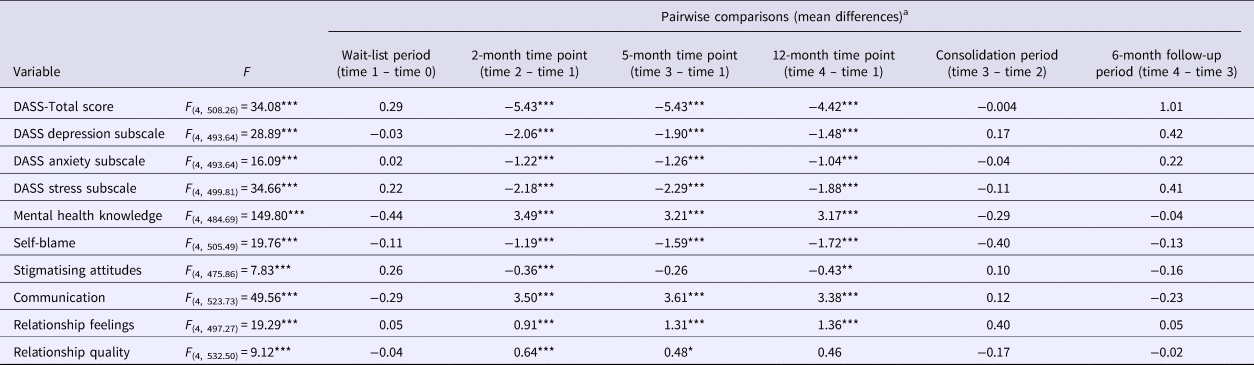
Descriptive statistics for model variables in both samples are reported in Table 2, the linear mixed-effects analyses statistics in Table 3, and correlations among variables in the online Supplementary material. Eleven participants were excluded from these analyses as their wait-list period was either less than 7 days or greater than 6 months. Overall, there was no change in variables during the wait-list period; however, there were significant changes in the variables from the start to the end of the core program, and no further significant change in scores during the consolidation and follow-up period. The estimated mean DASS-Total score at the program's start (M = 19.38, s.e. = 0.47) did not significantly differ from the total score at the beginning of the wait-list period, which suggests that the average level of psychological distress did not change over the wait-list period. Psychological distress levels at the program's start, however, were significantly higher than levels at the core program's end, as well as 3 months into the consolidation period and at the 6-month follow-up. Average distress scores did not significantly change from the core program's end through the consolidation and follow-up period. Generally, the same pattern of results (in predicted directions) emerged for mental health knowledge (starting estimated M = 10.97, s.e. = 0.13), self-blame (M = 6.73, s.e. = 0.15), stigmatising attitudes (M = 1.91, s.e. = 0.06), communication (M = 15.39, s.e. = 0.25), relationship feelings (M = 5.12, s.e. = 0.12) and relationship quality (M = 6.71, s.e. = 0.11).
Descriptive statistics for model variables using full sample and subsample

A dash indicates that data were not generated in the subsample.
a Imputed data used. DASS = the Depression, Anxiety and Stress Scale-21.
Linear mixed-effects analysis results and post-hoc tests

a Sidak adjustment for multiple comparisons.
DASS= the Depression, Anxiety and Stress Scale-21.
*p < 0.05, **p < 0.01, ***p < 0.001.
Process analyses
Using the sub-sample data, we built an MLGM based on the proposed process model (Fig. 1) by first testing unconditional univariate latent growth models for each of the process and outcome variables. Next, we added time-invariant covariates (input variables) as predictors of the outcome variable, DASS-Total Slope. The model met adequate fit criteria to the data, χ2(11) = 19.035, ns, χ2/df = 1.730, CFI = 0.976, TLI = 0.967, RMSEA = 0.061. Peer support, but not change in knowledge, significantly predicted the trajectory of DASS-Total from the program's start through the consolidation and follow-up period. The standardised path coefficient from Peer Support to the DASS-Total Slope was significant (β = −0.918, p = 0.013) suggesting that a higher rating of group helpfulness predicts a more rapid decline in carers' distress over the 12-month evaluation while controlling for the influence of change in knowledge. We tested this model with data from the full sample. The model had poorer but adequate fit to the data, and a similar relationship among the variables (see online Supplementary material).
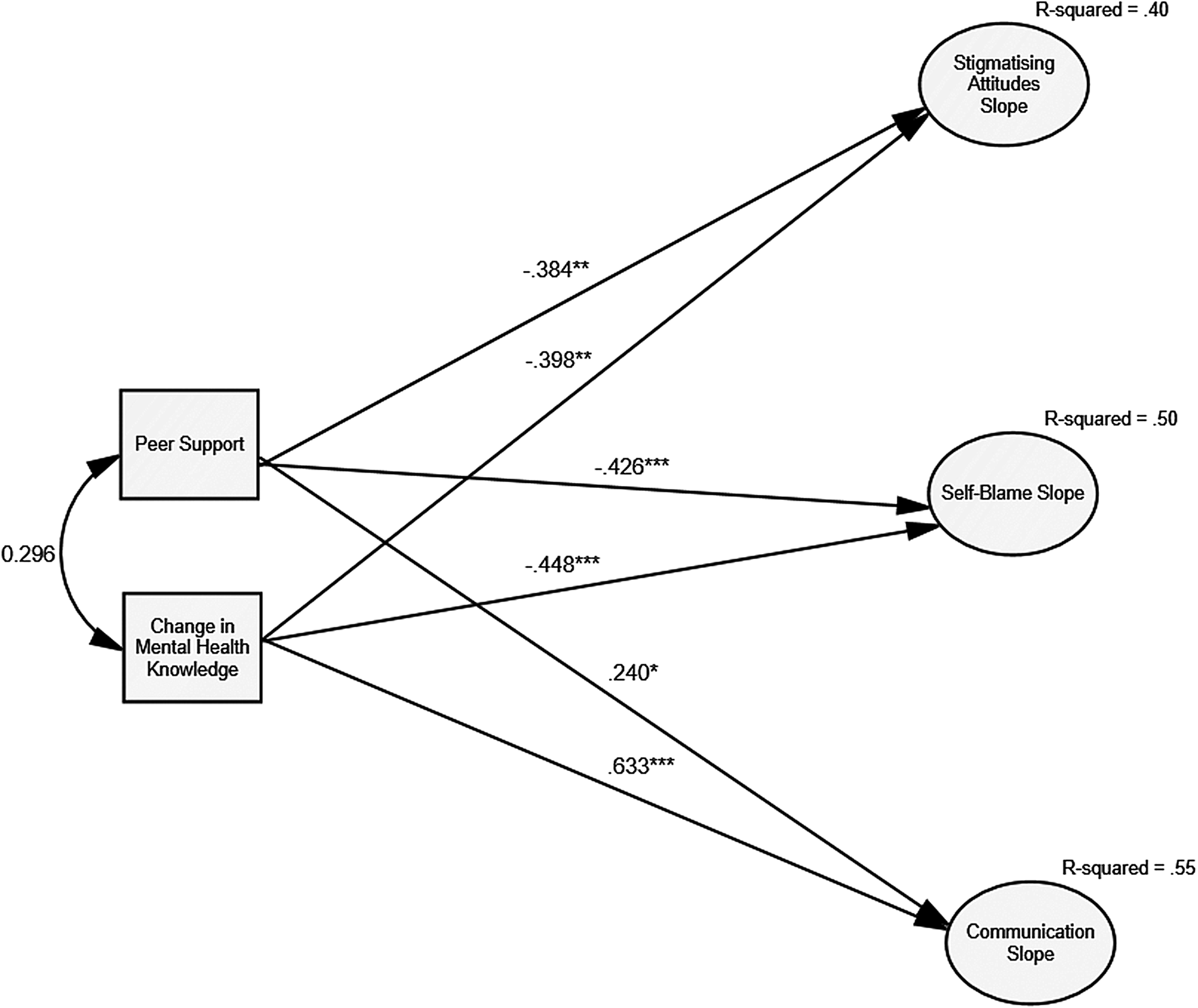
We continued to build the proposed model by including the growth trajectories for each of the process variables one-by-one to understand the relationships among these variables over time. When building the proposed model, there was evidence of multicollinearity among variables when the DASS-Total latent factor was in the model, which only resolved when excluded. Thus, it was not practical to test the full proposed model. We then used model fit indices and covariances to build the most comprehensive model that had a good model fit. The final model incorporated both input variables and three process variables, χ2(78) = 117.514, p = 0.003, χ2/df = 1.507, CFI = 0.967, TLI = 0.961, RMSEA = 0.051. The standardised path coefficients are reported in Fig. 2. Both the level of group helpfulness and the change in knowledge significantly predicted the self-blame and the stigmatising attitudes trajectories, and the communication trajectory, from the program's start to the 6-month follow-up. More knowledge gained during the program and higher ratings of group helpfulness predicted a more rapid decline in levels of self-blame and stigmatising attitudes, and a more rapid increase in communication with their relative over the 12-month study, while controlling for the influence of the other input. Testing this model using data from the full sample showed a good fit, and similar relationships as in the subsample (online Supplementary Fig. 1).
Final multivariate latent growth model for growth in process variables from the start of the core program through the consolidation and follow-up period using the subsample. Path coefficients are standardised. Intercept, observed indicators and covariances among the residual variances are omitted from the figure. *p < 0.05, **p < 0.01, ***p < 0.001.

Discussion
We conceptualised a model of change for FEPs, comprising program inputs (peer support; knowledge) and intervening processes (stigmatising attitudes; self-blame; communication; relationship feelings; relationship quality) impacting the primary overall outcome of caregiver distress. We utilised a large ‘real-world’ data set from a program for relatives of people who are living with a major psychiatric disorder to examine outcomes, and hypothesised change processes. The new data set, use of a wait-list condition and linear mixed-effects modelling extended a previous evaluation (Stephens et al., Reference Stephens, Farhall, Farnan and Ratcliff2011) by demonstrating that change over 13 months in the overall outcome variable of caregiver distress and in each process variable – proximal outcomes in their own right – was attributable to the program. Improvements occurred over the course of the core program, but not over the wait-list period, and were maintained during the consolidation period and 6-months after the consolidation program ended. The strong implication is that the Wellways program was associated with these sustained changes. Further, our model of change processes was partially supported. Multivariate latent growth modelling showed that greater mental health knowledge and higher levels of perceived group helpfulness each contributed to a reduction in carers' stigmatising attitudes and self-blame over time, and improved communication with their relative from the program's start through to 6 months after the 12-session program ended. Furthermore, higher levels of perceived group helpfulness, but not change in knowledge, uniquely predicted the growth trajectory of the primary outcome measure, carer's psychological distress. These results add to the growing evidence that FEPs are effective in not only reducing carer's psychological distress, but also in reducing self-blame and stigma and in strengthening the relationship with the person they support (Pickett-Schenk et al., Reference Pickett-Schenk, Cook, Steigman, Lippincott, Bennett and Grey2006; Yesufu-Udechuku et al., Reference Yesufu-Udechuku, Harrison, Mayo-Wilson, Young, Woodhams, Shiers, Kuipers and Kendall2015; Mercado et al., Reference Mercado, Fuss, Sawano, Gensemer, Brennan, McManus, Dixon, Haselden and Cleek2016) via the experience of a supportive peer group and/or gain in knowledge.
Change processes
This is the first study to test a longitudinal model of change processes involved in FEPs. Our model included two intra-personal process variables: self-blame and stigmatising attitudes of mental illness. Regarding self-blame, perceived group helpfulness and change in mental health knowledge significantly predicted a decline in carers' level of self-blame, and feelings of guilt/shame related to their relatives' diagnosed condition. This is consistent with results from qualitative evaluations of FEP in China (Chien et al., Reference Chien, Norman and Thompson2006) and the USA (Lucksted et al., Reference Lucksted, Stewart and Forbes2008) in which carers felt less guilty about their relatives' diagnosed condition and engaged in less blaming after participation. While there was a parallel reduction in carers' psychological distress throughout this evaluation, we were unable to test whether these growth trajectories predicted reductions in distress because of the complexity of the proposed model and the nature of the data.
Stigma is not only a source of psychological distress for carers of adults diagnosed with a mental health condition, but it has also been associated with the use of less effective coping strategies (Muralidharan et al., Reference Muralidharan, Lucksted, Medoff, Fang and Dixon2016). Our study suggests that FEPs can address stigma. Stigmatising attitudes reduced over the evaluation, and perceived group helpfulness and increased mental health knowledge significantly predicted this decline. This finding extends qualitative evaluations in which carers stated that they felt less stigmatised after participation in an FEP (Chien et al., Reference Chien, Norman and Thompson2006). However, we were unable to determine whether the decline in self-stigma predicted the decline in distress over the same period.
Our model also included relationship process variables. The quality of communication between carers and their relative has been a focus of FPIs and FEPs, with the carer's improved empathy and reduced dominance in the relationship mediating the effect of FPIs on the relatives' clinical outcome (Giron et al., Reference Giron, Nova-Fernandez, Mana-Alvarenga, Nolasco, Molina-Habas, Fernandez-Yanez, Tabares-Seisdedos and Gomez-Beneyto2015). In two qualitative evaluations (Chien et al., Reference Chien, Norman and Thompson2006; Lucksted et al., Reference Lucksted, Stewart and Forbes2008), carers reported that their participation in an FEP led to improved communication. Our results provide larger scale support for these findings in FEPs: perceived group helpfulness and increased mental health knowledge predicted improved communication between carers and their relative.
The two other relationship processes, relationship feelings and relationship quality, also improved throughout the intervention and follow-up. Because carers' causal attributions of their relatives' mental health-related behaviours affect their interactions (Kuipers et al., Reference Kuipers, Onwumere and Bebbington2010; McFarlane, Reference McFarlane2016), it is notable that over the evaluation period, carers' feelings towards their relative and the quality of their relationship improved. Similarly, carers who participated in evaluations of FEPs demonstrated (Pickett-Schenk et al., Reference Pickett-Schenk, Cook, Steigman, Lippincott, Bennett and Grey2006) and reported (Lucksted et al., Reference Lucksted, Stewart and Forbes2008) a reduction in negative feelings towards their relative. However, we were unable to test the associations among these factors and the program's key ingredients, as none of the preliminary models that included these two variables met criteria for an adequate fit. Further study on the effect of FEPs on relational communication and carer outcomes is warranted.
Service implications
Our findings on processes, from data collected alongside routine service delivery, strengthen the validity of the FEP model as practised, thus adding justification for increasing investment in the availability of this model. In the Family Forum's (Cohen et al., Reference Cohen, Glynn, Murray-Swank, Barrio, Fischer, McCutcheon, Perlick, Rotondi, Sayers, Sherman and Dixon2008) proposed stepped-care recommendation, carers should be invited to participate in an FEP before engaging in FPIs. This makes sense: Peer leadership, along with (typically) a non-clinical service auspice, likely enhance acceptability; and, although training for facilitators is typically required, a workforce of non-professionals is less costly than utilising mental health specialists. Further, disseminability of FEPs has been demonstrated both by the Wellways and the Family-to-Family programs (Lucksted et al., Reference Lucksted, Medoff, Burland, Stewart, Fang, Brown, Jones, Lehman and Dixon2013). Given the difficulties discussed earlier in disseminating FPIs, the ready availability of FEPs may reduce the burden on the health-care system.
Carers in this study had some mental health knowledge at the program's start. Although further knowledge gained predicted change in process variables, it did not predict the change in distress over the study beyond the effect of peer support. One explanation may be that formal mental health information was a less needed or less powerful ingredient than peer support for our cohort whose relatives had been diagnosed on average for more than a decade. This is understandable, given the persisting social isolation and lowered quality of life of carers (Hayes et al., Reference Hayes, Hawthorne, Farhall, O'Hanlon and Harvey2015). Similar increases in knowledge were reported in evaluations of other FEPs (Pickett-Schenk et al., Reference Pickett-Schenk, Lippincott, Bennett and Steigman2008; Dixon et al., Reference Dixon, Lucksted, Medoff, Burland, Stewart, Lehman, Fang, Sturm, Brown and Murray-Swank2011); some participants indicated that the knowledge gained largely revised prior knowledge acquired on their own, as many had been carers for decades (Lucksted et al., Reference Lucksted, Stewart and Forbes2008). These findings suggest that the need for mental health information will vary over time, with carers of individuals who are recently diagnosed more likely to benefit from this ingredient.
Theoretical implications
Our study strengthens the evidence that a critical element for the effectiveness of FEPs is the experience of learning with a small group of peers, and (typically) a trained peer leader, who is also supporting a relative diagnosed with a similar condition. This is consistent with Thoits' (Reference Thoits1986) re-conceptualisation of social support as coping assistance, in which she purports that the stress-buffering derived from others is most likely to be garnered from individuals with similar lived experiences who are not distressed, due to a greater likelihood of perceived empathic understanding. Furthermore, Thoits proposed that empathic understanding derived from peers first reduces feelings of shame related to one's emotional reaction to caregiving stress; that is, carers' emotional responses to caregiving likely needs to be normalised first by social comparison to a peer(s) in the same caregiving role. Once normalisation occurs, then carers may be receptive to informational support from peers that can then alter the nature of the stressor and/or the stress reaction. FEP design and training may benefit from further investigation of this theoretical framework.
Our findings are also consistent with the cognitive model of caregiving in psychosis (Kuipers et al., Reference Kuipers, Onwumere and Bebbington2010). This model implicates carers' appraisals of their relatives' behaviours as triggers of a cascade of consequences from carer reactions to their relative, their openness to services, and, ultimately, their own health. Although FPI is the intervention type most associated with changing family carers' appraisals, we found that mental health knowledge and peer support predicted reductions in self-blame and stigmatising attitudes, suggesting that appraisals are likely also changed by FEPs, which extends results from a meta-analysis that found carer-only interventions can change the experience of caregiving (Yesufu-Udechuku et al., Reference Yesufu-Udechuku, Harrison, Mayo-Wilson, Young, Woodhams, Shiers, Kuipers and Kendall2015).
Strengths and limitations
This study is not a randomised controlled trial and causal conclusions about the effectiveness of Wellways' FEP cannot be definitively made; however, the trajectory of change in outcome and process variables – from baseline through intervention to follow-up – indicates that this was highly likely due to the program. Further, the substantive numbers studied in a routine practice setting lends high external validity and complies with guidance on evaluating complex interventions (Craig et al., Reference Craig, Dieppe, Macintyre, Michie, Nazareth and Petticrew2008). While there was a large proportion of data missing, the MLGM analyses conducted with the full sample revealed a similar pattern of relationships among the variables as those with the socio-demographically similar subsample. The degree of missing data, however, is not unusual for a real-world intervention with an extended follow-up (Pickett-Schnek et al., Reference Pickett-Schenk, Cook, Steigman, Lippincott, Bennett and Grey2006; Dixon et al., Reference Dixon, Lucksted, Medoff, Burland, Stewart, Lehman, Fang, Sturm, Brown and Murray-Swank2011). To minimise its impact, we selected statistical methods that estimated population parameters using all data available.
The study's naturalistic wait-list control design matched Wellways' dual aim, service provision and evaluation, but contributed to the small proportion of participants who had wait-list data. We chose statistical methods designed to mitigate this limitation. Additional limitations include the shorter median duration of the wait-list period than the core program, and its variable length; the reliance on self-report measures; and the use of study-developed scales.
The carers in this sample were supporting relatives diagnosed with a range of mental health conditions and were at different points in their caregiving journey. However, the scope of this study did not extend to examining subgroup differences.
Conclusions
This study strengthens evidence of the effectiveness of FEPs for carers of individuals diagnosed with serious mental health conditions, including maintenance of treatment gains over a 6-month follow-up. Key program features of knowledge gain and peer group experience are related to intrapersonal and relationship-related changes. Attendance figures suggest that FEPs are an acceptable form of service. Ready accessibility of FEPs for carers within stepped-care mental health service systems is reasonable with the current level of evidence while awaiting more definitive trials.
Supplementary material
The supplementary material for this article can be found at https://doi.org/10.1017/S0033291719000965
Author ORCIDs
John Farhall, 0000-0003-2439-2830, Marilyn L. Cugnetto, 0000-0002-6974-7140
Acknowledgements
This research received no specific grant from any funding agency, commercial or not-for-profit sectors.
Conflict of interest
None.