INTRODUCTION: SOAS
SOAS, first established in 1916 as the School for Oriental Studies, has one of the largest archival collections in the University of London. It might be fondly imagined that research amongst the archives focuses on Tibetan woodblock print books or palm leaf manuscripts written in Pali, and indeed there is a substantial collection of vernacular manuscripts relating to all the regions studied by SOAS. However, it is the 19th and 20th century archives, virtually all in English, which are the most heavily used by researchers. These archives fall into three broad categories:
• missionary organisations, charities and NGOs
• British businesses based in Africa, Asia or the Middle East
• Individuals whose lives and works relate to the geographical areas of study at SOAS.
On the face of it, these might seem unlikely to provide fruitful sources for anyone pursuing legal academic studies, least of all in the field of legal biography, and yet there are surprisingly rich pockets of information to be found here.
MISSIONARY ARCHIVES
One would expect SOAS to have strong source material on Asia, Africa and the Middle East, but its archive collections actually cover a much wider geographical area, thanks largely to the world-wide involvement of the various missionary and charitable organisations whose records we hold. SOAS students studying human rights law will find significant archival evidence of the devastating impact of early colonialism on the indigenous population of Australia, for example. Early 19th century correspondence from the London Missionary Society (LMS) in New South Wales describes the persecution of Aborigines, including cases of summary executions, the outbreak of violence between settlers and Aborigines, and prescient warnings of the likely extinction of Aborigines in that region, only 40 years after the arrival of the ‘First Fleet’ to Botany Bay.
There is a wealth of material in the archives collection in general outlining human rights issues and the support of ethnic minorities where these rights are threatened. Missionary and charity organisations are often in the forefront of campaigns to protect the rights of indigenous peoples. These include the struggle against slavery and apartheid, the protection of land rights, and protests at the erosion of civil and political liberties. Although often stigmatised by modern-day historians as instruments of colonial expansion, 19th and 20th century missionary organisations often led vigorous campaigns to protect the land rights and territorial claims of the people they served. In the 20th century, this role was increasingly taken on by campaigning organisations such as Survival International and Liberation (formerly the Movement for Colonial Freedom), both of which have deposited their archive collections at SOAS.
The archives of missionary societies in general are a great source of information since missionaries were expected to send regular letters and reports on their progress to the mission headquarters and these have survived to a large extent. Dating from the 18th century onwards, they provide some of the earliest documentation of contact with overseas communities, their first recorded histories and often the first forms of written language as missionaries attempted to translate the Bible and other works into the local vernacular. They are a rich source for the social, medical, educational and political history of these regions. Missionaries were often ardent campaigners for the rights of the indigenous communities they worked among, particularly for the poor and disenfranchised elements of society.
CASE STUDY I: THE BECHUANALAND PROTECTORATE
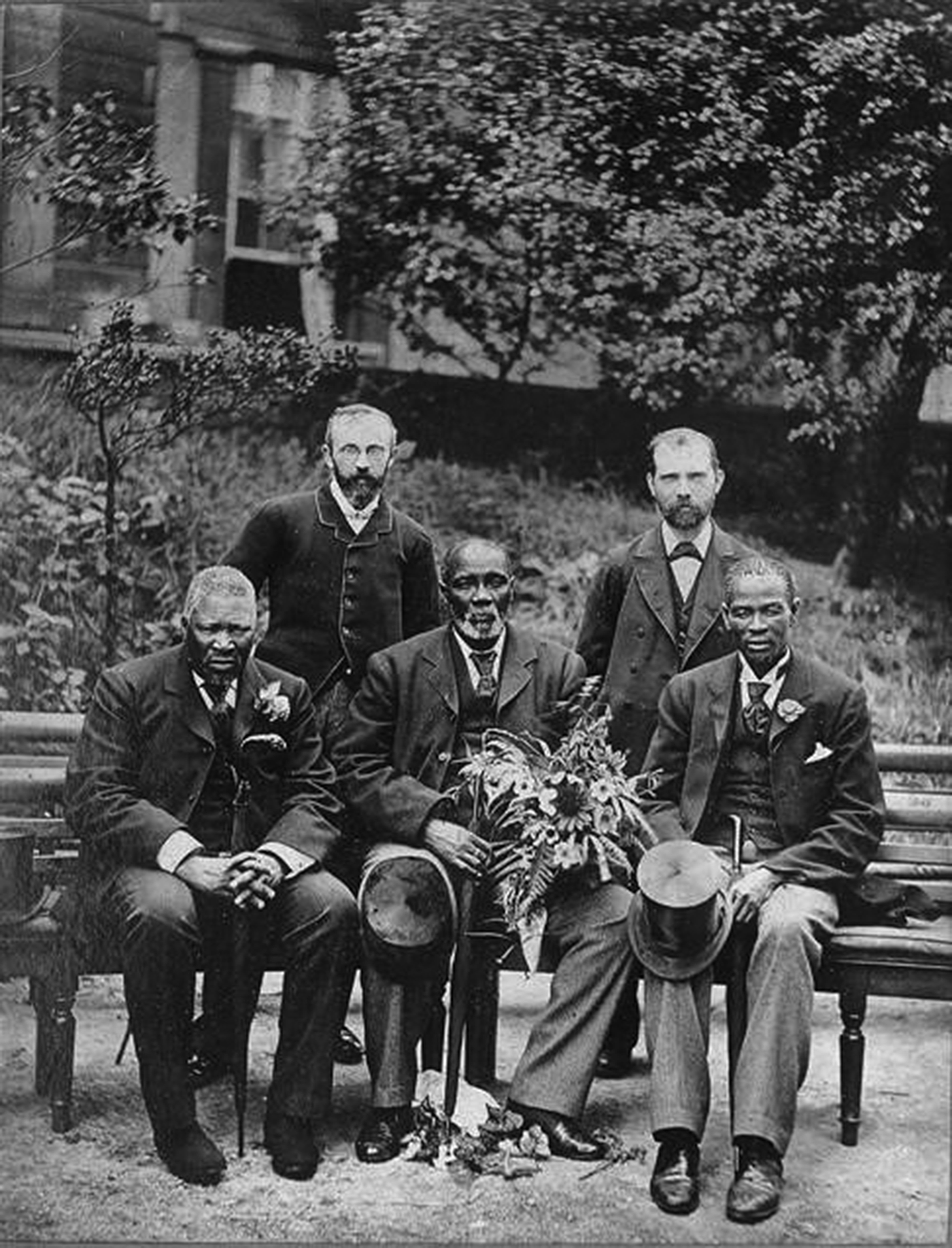
Much of the campaigning undertaken by missionary organisations had legal ramifications. For example, Botswana, one of the most stable and prosperous countries in modern-day Africa, would probably not exist as a discrete entity were it not for the close collaboration and mutual support between the 19th century leaders of the Tswana people and missionaries from the London Missionary Society. In the 1880s and 1890s, Khama III, head of the Bamangwato and paramount chief of the Tswana people in what is now modern day Botswana, converted to Christianity, and by extension so did his people. The decision to do so may not have been based solely on spiritual considerations. The Tswana were under pressure from all sides – raids by the Ndebele from the North, incursions by German settlers to the West, and above all, the threat by Cecil Rhodes' British South Africa Company to take over the territory. In 1895 a visit to London by Khama and other Tswana Chiefs was organised to protest at Rhodes' plans and to petition that the Bechuanaland Protectorate be established. In partnership with resident missionary William Charles Willoughby, the group were able to make their case and were even granted an audience with Queen Victoria (signalling their acceptance by the British Government). Had the Protectorate not been established, Bechuanaland would have been subsumed into South Africa, instead of which it retained its own identity and ultimately became a successful, independent nation. The relationship between the LMS and Tswana leaders remained close, and indeed the first post-independent Botswana government included some former missionaries as senior ministers.
Even as a Protectorate, Bechuanaland was not immune to the impact of apartheid government in neighbouring South Africa, introduced there in 1948. It was Khama III's grandson and heir, Seretse Khama, who was to feel the full force of the new regime. Seretse's father, Sekgoma II, had died in 1925 when Seretse was only four years old. While his uncle Tshekedi governed as regent, Seretse was groomed to take on the mantle of kgosi when he was deemed sufficiently mature to rule in his own right. After education in South Africa, Seretse was sent to Oxford to study law at Balliol College before joining the Inner Temple in London in 1946 to train as a barrister.
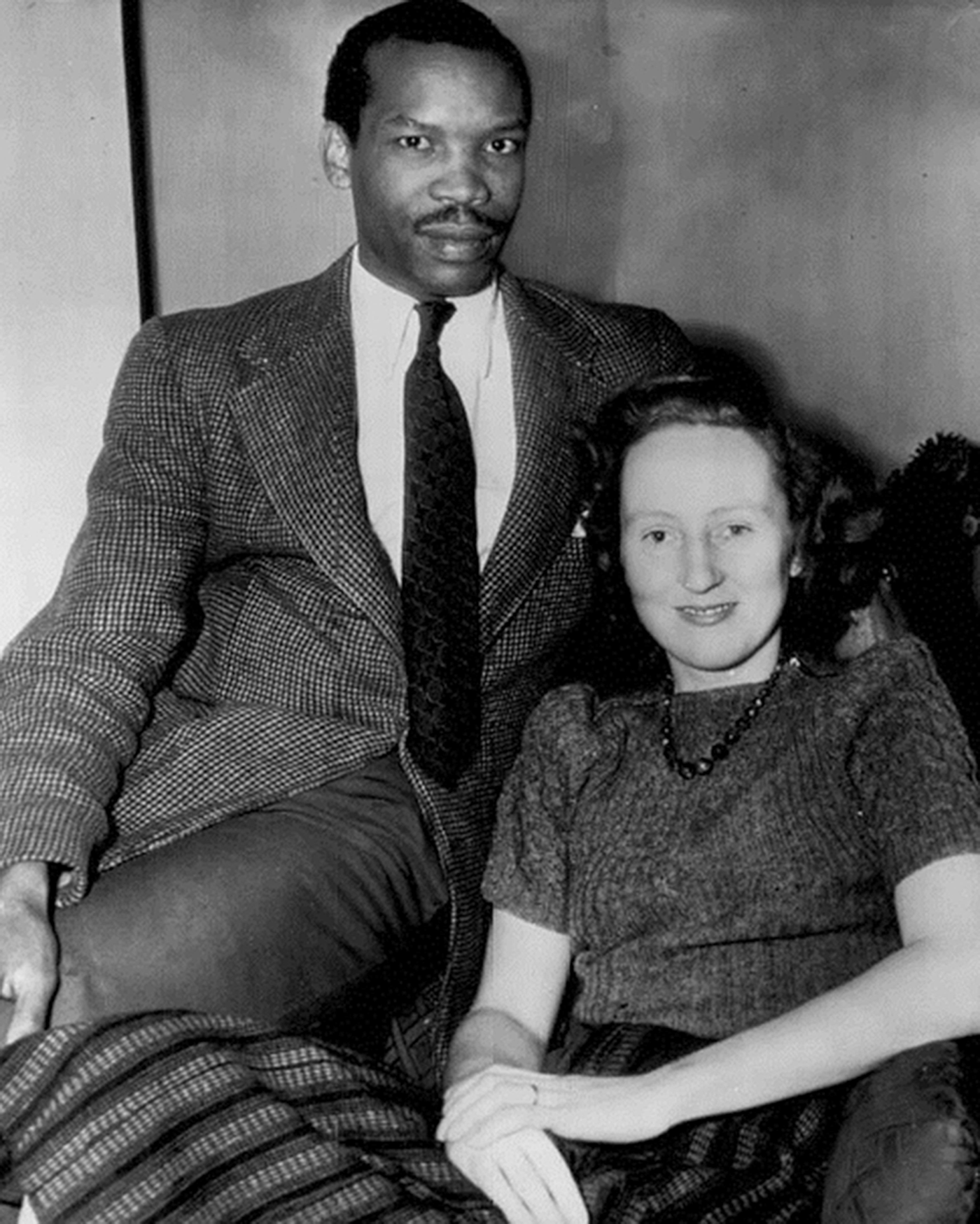
It was while he was living in London that Seretse attended a social evening arranged by the London Missionary Society where he met Ruth Williams, then working as a Lloyds clerk. Within a year the couple had decided to marry, but the decision provoked a storm of protest both in the UK and Africa. The LMS archives held at SOAS outline the unfolding drama, with both the Government and the Church uniting to try and prevent the marriage. A telegram from the archives, dated 24 September 1948, is one example of the pressure brought to bear on the couple. It was sent from South Africa by Douglas Buchanan, lawyer for Seretse's uncle Tshekedi, to RG Orchard, Foreign Secretary to the LMS:
“Confidential STOP Seretse … marrying English girl on second October STOP Chief and tribe desire you take all possible steps to prevent this STOP Only ostracism and misery awaiting girl STOP Marriage possibly cause Seretses deposition STOP Tribe will pay damages STOP … Please act immediately – Douglas Buchanan”
Seretse Khama and his wife, Ruth, from the SOAS archives (SOAS – CWM Archive).

The telegram sent by Douglas Buchanan (SOAS – CWM Archive).
A photograph of Khama III with the son of his LMS missionary friend, WC Willoughby, sitting on his knee. Willoughby accompanied Khama on his mission to the UK in 1895 (SOAS – CWM Archive).
Denied a religious service by the Anglican Church, Ruth and Seretse were eventually married at Kensington Registry Office in 1948. On being informed of the marriage, Seretse's uncle demanded his immediate return to Bechuanaland and the annulment of the marriage. Seretse did return to Africa but would not relinquish his bride and, after a series of kgotlas (public meetings), was re-affirmed by the elders in his role as the kgosi in 1949. Ruth Williams, who had accompanied her husband to his homeland, had won the people over. Admitting defeat, Tshekedi left Bechuanaland, while Seretse returned to London to complete his studies.
But the matter did not rest there. The South African government would not countenance an interracial couple ruling just across their northern border and put pressure on Britain's Labour government to have Seretse removed from his chieftainship. Heavily in debt after the end of the Second World War and entering the start of the nuclear arms race, Britain could not afford to lose access to South African gold and uranium supplies. There was also a fear that South Africa might take more direct action against Bechuanaland, through economic sanctions or a military incursion. The British government therefore launched a parliamentary enquiry to examine Seretse's fitness for the chieftainship. Though the investigation reported that he was in fact eminently fit to rule Bechuanaland, “but for his unfortunate marriage”, the government ordered the report suppressed (it would remain so for thirty years), and exiled Seretse and his wife from Bechuanaland in 1951.
Throughout the world and across the political spectrum, protests were made against the government's decision. In Britain itself there was widespread anger at the decision and calls for the resignation of Lord Salisbury, the minister responsible for implementing the action against Seretse. A deputation of six Bamangwato leaders travelled to London to see both the exiled Seretse and Lord Salisbury, an echo of the deputation of the three kgosis who had been so favourably received by Queen Victoria back in 1895. This time, however, the deputation met with no success.
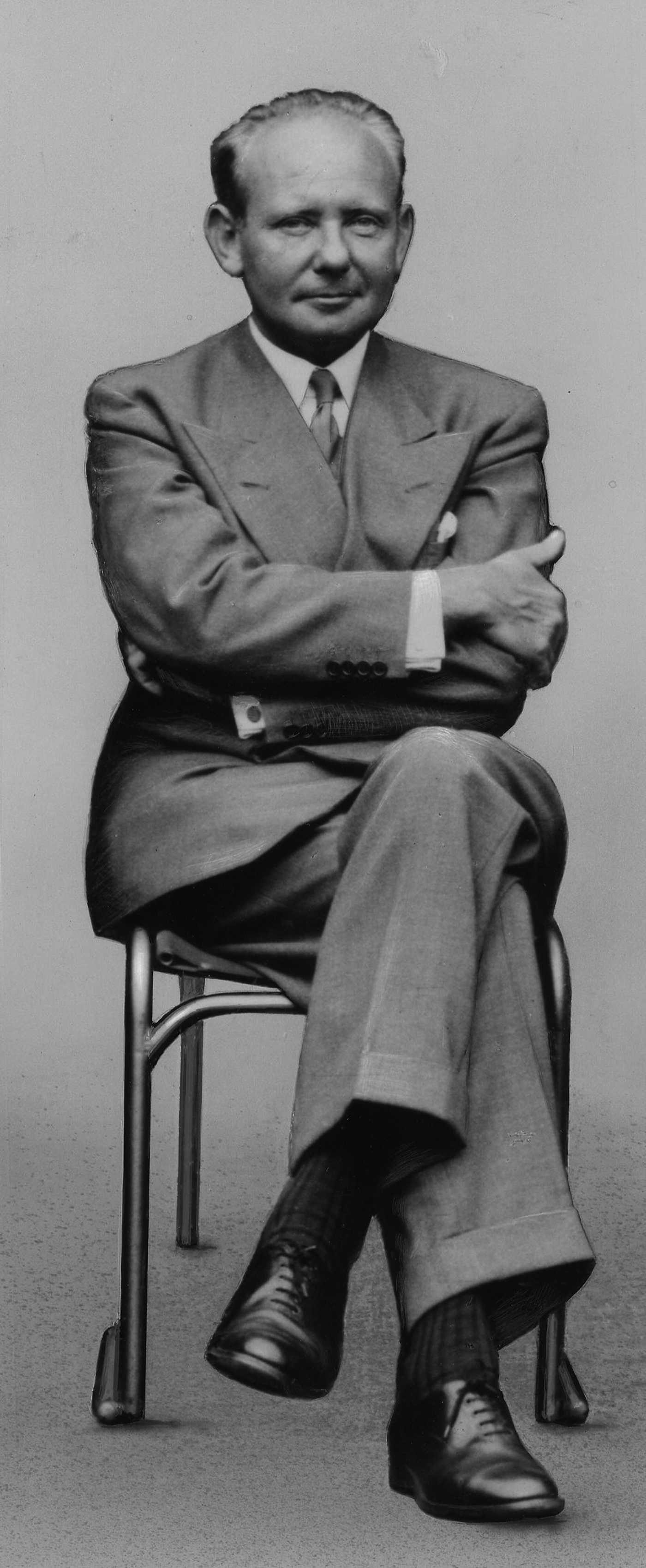
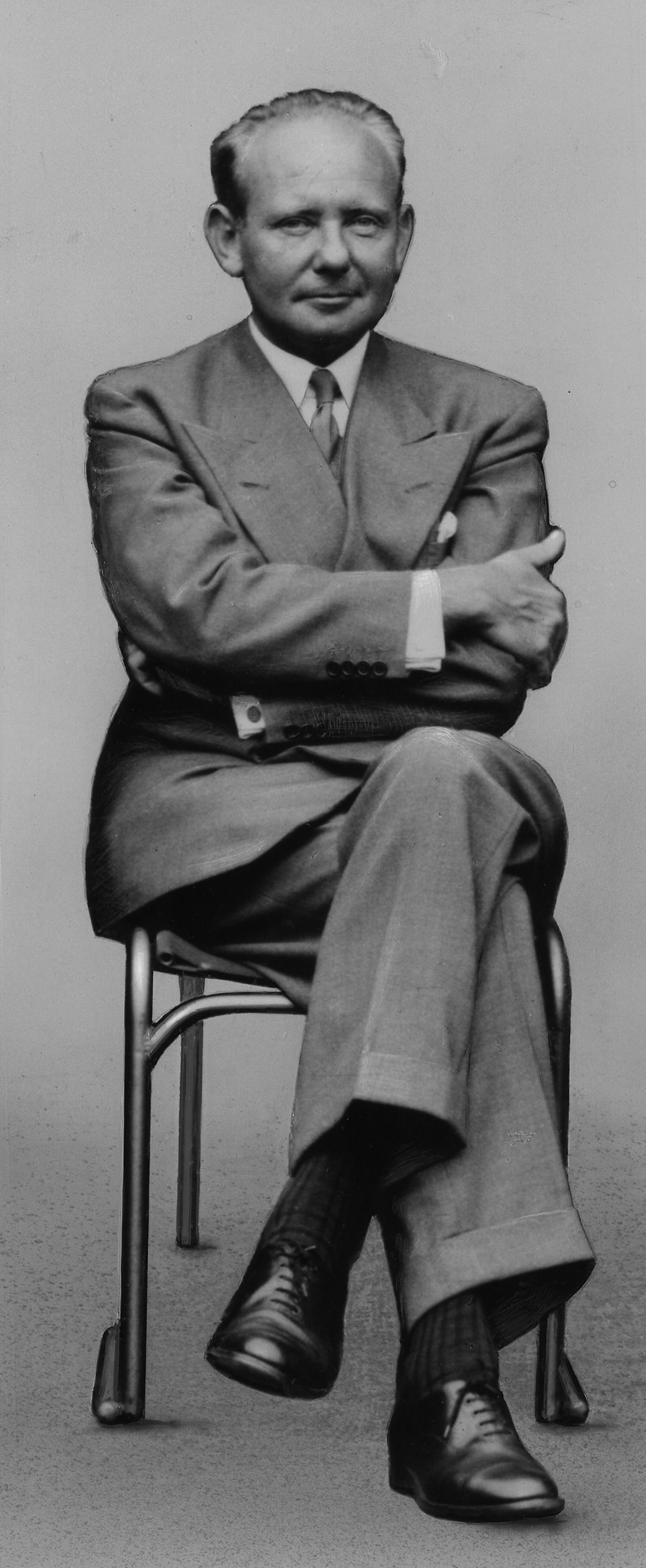
The alleged photograph of Sir Norman Anderson.
Nevertheless, the Bamangwato refused to yield to the order by the British High Commissioner in Bechuanaland to replace Seretse with another leader. Eventually, Seretse and Ruth Khama were allowed to return to Bechuanaland in 1956 as private citizens, after renouncing all claims to the paramount leadership. For the next few years, Seretse kept a low profile, but in 1961, with decolonisation on the way in Africa, he decided to make a bid for political leadership and established the nationalist Bechuanaland Democratic Party. His treatment by the British government and his steadfast refusal to give way over his marriage in the face of fierce opposition had only served to enhance Seretse's reputation and standing amongst the electorate and his party won a landslide victory. He was duly elected Prime Minister of Bechuanaland in 1965, and ultimately President of newly-independent Botswana in 1966. The British establishment, which only a decade previously had effectively sought to outlaw Seretse from his own country, now awarded him the honour of KCMG.
This is a portrait of the three kgosi who travelled to the UK in 1895 to lobby the Government to create the Bechuanaland Protectorate. Khama III is seated on the right, W C Willoughby is standing on the left (SOAS – CWM Archive).
The archives of the LMS, as well as those of the Movement for Colonial Freedom (which campaigned on Seretse's behalf) provide first-hand evidence of the whole saga. They present a fascinating, unsynthesised insight into the case and some of the legal ramifications – the prevention of the couple's marriage in church, their exile from Bechuanaland, Seretse's forced ‘abdication’ – as well as how matters were finally resolved.
CASE STUDY II: SIR NORMAN ANDERSON
Perhaps a less dramatic and more straightforward example of legal biography from the SOAS archives can be found in the papers of Sir Norman Anderson. James Norman Dalrymple Anderson (1908–1994) was a missionary and Arabist who carried out ground-breaking research into Islamic law.
Graduating with a triple first in law from Trinity College, Cambridge, in 1931, Anderson spent eight years in Egypt as a missionary and later as a student of Arabic at the American University in Cairo. He joined the British Army at the outbreak of war, and in 1940 was made Arab liaison officer for the Libyan Arab Force. In 1945 he became Political Officer for Sanussi Affairs. (The Senussi or Sanussi are an Islamic political-religious Sufi order and tribal group based in Libya and the Sudan. They led a strong resistance movement against a number of colonial powers, but provided staunch support to the British during the North African campaign in the Second World War). Anderson later became Secretary for Arab Affairs in the Civil Affairs branch of GHQ Middle East.
In 1946, Anderson attended the Foreign Ministers conference in New York as Adviser to Ernest Bevin, then Foreign Secretary, on the future of former Italian Colonies in the Middle East. The Foreign Ministers Council had been established in 1945 after the Potsdam Conference to draw up peace treaties and settle territorial questions in the aftermath of the war in Europe. Anderson lectured on Islamic law in the Law Schools at Cambridge for three years, and then at SOAS from 1947 to 1971. He was Professor of Oriental Laws in the University of London between 1954 and 1975.
From 1949 to 1950, he spent six months on study leave in the Middle East as part of a special study of modern developments in Islamic law. He subsequently spent three months in East Africa in 1950, and three months in West Africa, in 1951, carrying out a Survey for the Colonial Office regarding the application of Islamic law in British African possessions. He wrote and published several books and articles on Islamic Law in Eastern Africa, and on Islamic law and marriage and divorce in the Middle East. His papers include correspondence, articles and documents concerned with Islamic law in the Middle East and East Africa.
Despite his status as an eminent academic and leading figure in both political and legal circles in the Islamic world, there is a curious anomaly in the archives at SOAS. There are few photographs of Anderson in the collection, but one image has been confidently labelled for decades as a portrait of him dating from around the 1930s or '40s. In fact it is now clear that the photograph is of someone else altogether – who, we don't know. This demonstrates that, for all the claims that archives represent a more reliable and unvarnished source than published material, researchers still need to retain a healthy dose of scepticism even when dealing with primary source material such as this. Incidentally, if anyone reading this article can shed light on the identity of the man in the photograph, please contact the SOAS Library so that we can put right this long-standing error.
WHERE TO NEXT?
SOAS Library welcomes all researchers wanting to use the archive collections held here. For further information about SOAS archives in general, and sources relating to legal studies in particular, go to http://www.soas.ac.uk/archives. Researchers can browse through our on-line catalogue available at http://squirrel.soas.ac.uk/dserve/ although be aware that the on-line catalogue is not fully comprehensive yet, and you'll still need to check the hard-copy unpublished catalogues available in the Special Collections Reading Room at SOAS Library. For specific queries, feel free to contact us at docenquiry@soas.ac.uk.