Introduction
Recent efforts in psychosis research have focused on the period from the onset of psychotic symptoms to appropriate psychiatric intervention, known as the duration of untreated psychosis (DUP). Findings from literature reviews suggest that delays in the treatment of the first episode are associated with poor clinical and functional outcome, and that it may be possible to reduce the duration of this delay (Norman & Malla, Reference Norman and Malla2001; Melle et al. Reference Melle, Larsen, Haahr, Friis, Johannessen, Opjordsmoen, Simonsen, Rund, Vaglum and McGlashen2004; Marshall et al. Reference Marshall, Lewis, Lockwood, Drake, Jones and Croudace2005; Perkins et al. Reference Perkins, Gu, Boteva and Lieberman2005). Although there is little consensus as to what constitutes a long DUP, it is consistently associated with lower overall functioning, more severe positive and negative symptoms, lower quality of life, and a reduced likelihood of achieving remission (Marshall et al. Reference Marshall, Lewis, Lockwood, Drake, Jones and Croudace2005), in addition to poor response to psychiatric treatment (Perkins et al. Reference Perkins, Gu, Boteva and Lieberman2005). This evidence has sparked substantial efforts in secondary prevention and early intervention for psychosis (McGorry et al. Reference McGorry, Killackey and Yung2007).
The emphasis on early detection and reduction of treatment delay in first-episode psychosis (FEP) has led to an interest in the modes and routes by which patients experiencing psychotic symptoms access help. These pathways to care are defined as ‘the sequence of contacts with individuals and organizations prompted by the distressed person's efforts, and those of his or her significant others, to seek help’ (Rogler & Cortes, Reference Rogler and Cortes1993). Care pathways are not random, and are influenced by social, cultural, and health service factors. The pathways to care encompass not only the help-seeking behavior of the patient and family members, but also the accessibility of health services and the identification of, and response to, the symptoms of early psychosis by each contact on the pathway (Singh & Grange, Reference Singh and Grange2006). This concept is of particular importance in FEP, given the poor functional and clinical outcomes associated with a long DUP (Norman & Malla, Reference Norman and Malla2001; Marshall et al. Reference Marshall, Lewis, Lockwood, Drake, Jones and Croudace2005; Perkins et al. Reference Perkins, Gu, Boteva and Lieberman2005), and the suffering endured by patients and their families. Both help-seeking and referral delays impact the length of time that psychotic symptoms go untreated, and there is evidence that referral delays may be responsible for a substantial proportion of the DUP (Norman et al. Reference Norman, Malla, Verdi, Hassall and Fazekas2004; Bechard-Evans et al. Reference Bechard-Evans, Schmitz, Abadi, Joober, King and Malla2007).
Prior research on the pathways to care of patients with FEP presents a complex picture. In addition to general practitioners and psychiatrists, the pathways may involve such diverse contacts as emergency services, social services, police, school counselors, and religious agencies. Involuntary and negative contacts are frequent (Garety & Rigg, Reference Garety and Rigg2001), such as with police or emergency services, and may be subsequently associated with poor engagement in treatment (Compton, Reference Compton2005) and dissatisfaction with services (Bhugra et al. Reference Bhugra, Harding and Lippett2004). Thus, gaining an understanding of the factors that influence the pathways to care of patients with FEP is crucial to achieving the objectives of improving access to treatment through early symptom detection and reductions in treatment delay.
The objective of this systematic review was to summarize the literature on the pathways to care of patients with FEP, and to describe the sex, socio-economic, and ethnic determinants of these pathways, to the extent that they are known in the nascent research literature. Additionally, we sought to examine the evidence on the association between the pathway to care and the DUP.
Method
Definition of terms
The term Care Pathway Contact refers to the individual, agency, or service provider with whom the patient came into contact on the pathway to mental health care. The First Contact refers to the care pathway contact from whom help was first sought after the onset of psychotic symptoms. This is of interest because it gives an indication of how patients and family members initiate help-seeking and highlights the care pathway contacts who could be targeted for early intervention. The Referral Source denotes the care pathway contact who suggested or arranged for contact with mental health services or a specialized treatment program. This care pathway contact highlights the service providers who are most involved in facilitating connections with mental health services and is of interest for informing policies on access to specialized services, whether through an open referral system or a gatekeeper mechanism.
Search strategy
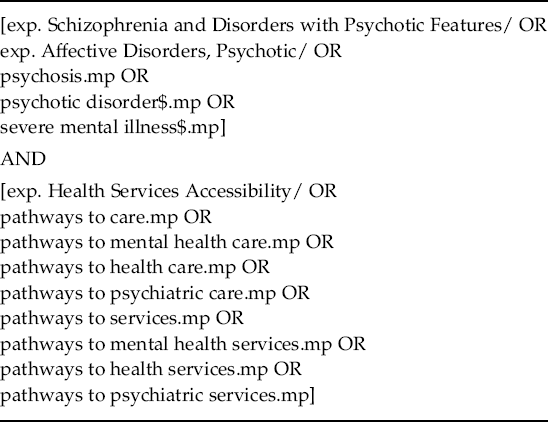
We conducted an electronic search using the Medline (1950–2009), HealthStar (1966–2009), EMBASE (1980–2009) and PsycINFO (1985–2009) databases. The Medline search terms are presented in Appendix 1. This search strategy was developed in consultation with a professional librarian, and was adapted for EMBASE, PsycINFO and HealthStar using analogous terms.
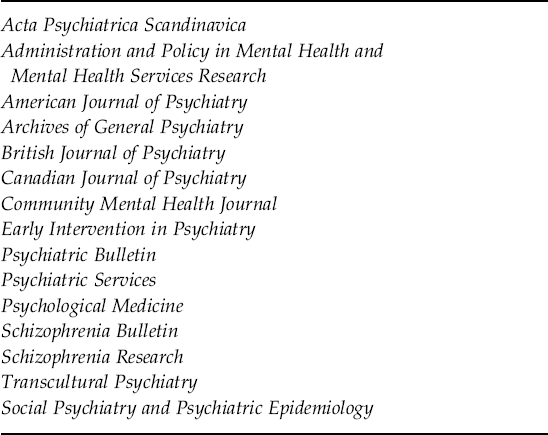
We obtained further studies by a manual search of 15 relevant journals (Appendix 2). We also manually searched personal files and the bibliographies of all relevant studies and review articles, and conducted forward citation searching using the ISI Web of Knowledge to locate all articles that had cited the included studies. Finally, we located a systematic review that focused on the psychometric properties of pathways to care instruments for patients with FEP (Singh & Grange, Reference Singh and Grange2006), and used it to corroborate the findings from our search strategy. We regularly updated all segments of the literature search, with the final update in December 2009.
Selection of relevant studies
We screened the titles and abstracts of all citations and obtained the full-text version of relevant studies to review for inclusion eligibility. The studies were included if they had used an observational design and presented quantitative data on the pathways to care of patients with FEP. We did not impose any language restrictions in our search strategy.
We used a cut-off publication year of 1985, given that the concept of pathways to psychiatric care was first introduced in 1980 (Goldberg & Huxley, Reference Goldberg and Huxley1980) and the earliest article identified by the systematic review of Singh & Grange (Reference Singh and Grange2006) was published in 1989.
Data extraction and synthesis
For all studies that met the inclusion criteria, two independent reviewers extracted data on the proportion of patients seeking help from each type of care pathway contact. We extracted the data using pilot tested forms, and we resolved discrepancies by consensus. Authors were contacted for further information or clarification when the data were aggregated or unclear.
Studies were subdivided based on whether they examined the first contact on the pathway to care or the referral source. Contacts were categorized as follows: (a) Physician: includes general practitioners, psychiatrists, or out-patient mental health services; (b) Non-Physician: includes private psychologists, counsellors, social workers, religious agencies, or self-referral (referral source only); (c) Emergency: refers to emergency departments, crisis teams, or in-patient units. The care pathway contacts were grouped as ‘Emergency Services’, given that involuntary and negative pathways to care are associated with poor engagement with services (Compton, Reference Compton2005). Additionally, we aggregated contacts with ‘Physician Services’ because many health-care systems require a physician referral to access specialized mental health services. Studies differed on whether they included family and/or police as care pathway contacts. When they were included, we grouped these data in the non-physician and emergency categories respectively.
Substantial clinical, statistical, and contextual heterogeneity precluded a meta-analysis, therefore we synthesized the data descriptively. This heterogeneity probably resulted from the variation in study settings, as studies were conducted across several countries and health-care systems. The lack of a validated tool with established psychometric properties for measuring pathways to care also prevented a meta-analysis (Singh & Grange, Reference Singh and Grange2006), as the included studies used a variety of different definitions of pathways to care and methods for assessment.
Results
The electronic database search retrieved 1110 studies, of which 45 were deemed relevant for this review. The manual search additionally retrieved 14 studies that were missed in the electronic search, likely due to the lack of a standardized search term for pathways to care (Appendix 1). In total, 59 full-text articles were identified, and we excluded 35 of these studies because they did not use an FEP population (n=18), provide quantitative data on pathways to care (n=12), and/or use an observational design (n=9), or because they presented duplicate data that were available in another article (n=4) (Bhugra et al. Reference Bhugra, Corridan, Rudge, Leff and Mallett1999; Fuchs & Steinert, Reference Fuchs and Steinert2002; Cougnard et al. Reference Cougnard, Kalmi, Desage, Misdrahi, Abalan, Brun-Rousseau, Salmi and Verdoux2004a; Morgan et al. Reference Morgan, Mallett, Hutchinson, Bagalkote, Morgan, Fearon, Dazzan, Boydell, McKenzie, Harrison, Murray, Jones, Craig and Leff2005a). An additional six studies were located through regular updates of the literature search.
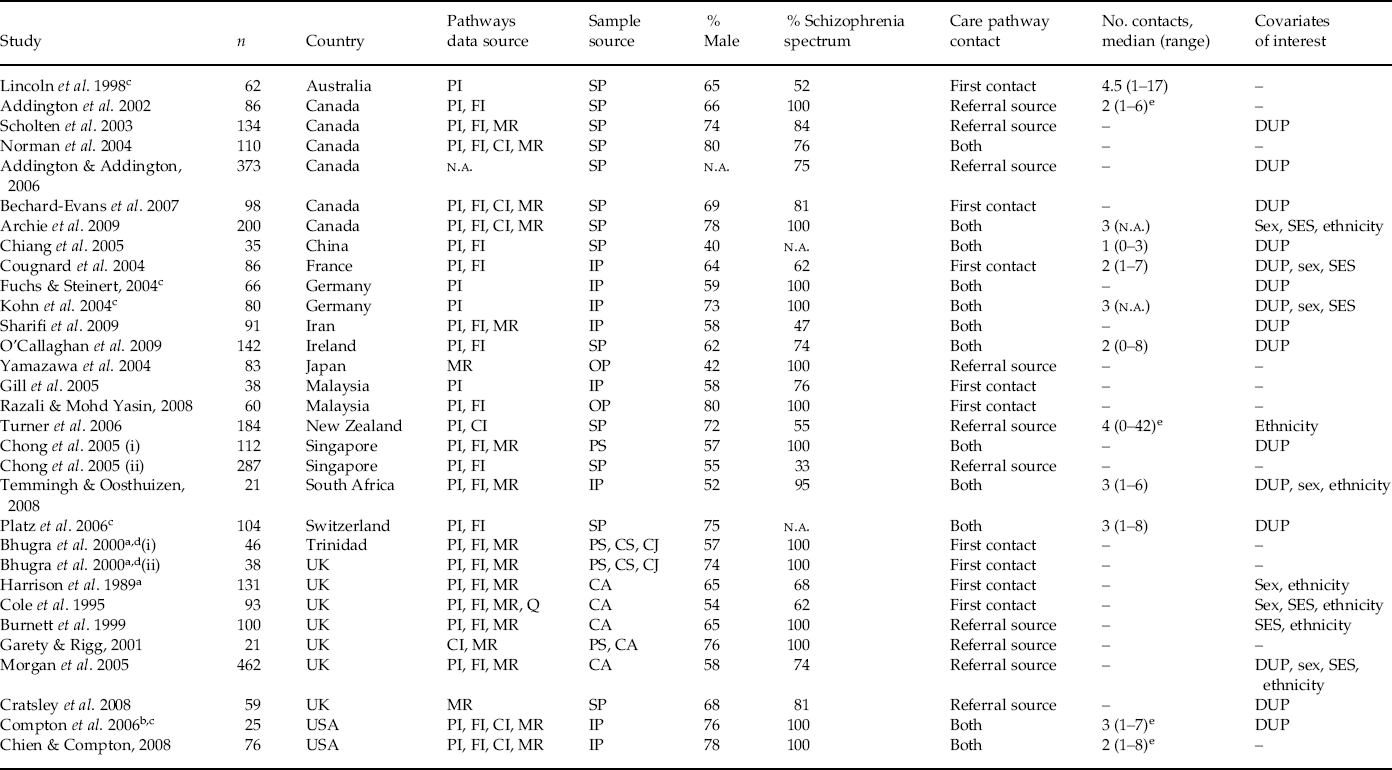
Thirty studies met the inclusion criteria for our review (Appendix 3). Specifically, 21 studies examined pathways to care generally, and nine explored the sex, socio-economic, and/or ethnic determinants of the pathways (Fig. 1). Additionally, 15 studies examined the impact of the pathway to care on the DUP.
Flow chart of systematic review search strategy and study inclusion.

Study characteristics
The characteristics of the included studies are summarized in Table 1. Studies were conducted in a variety of countries (n=16), and one was published in a language other than English (Kohn et al. Reference Kohn, Pukrop, Niedersteberg, Schultze-Lutter, Ruhrmann, Bechdolf, Berning, Maier and Klosterkotter2004). The sample sizes varied substantially, ranging from 21 to 462 participants (median across studies=86). The studies generally used a descriptive and cross-sectional design. Given that there is no validated instrument for measuring pathways to care (Singh & Grange, Reference Singh and Grange2006), the data collection methods varied across the studies, which used some combination of patient, family, or clinician interviews and/or medical records (Table 1).
Characteristics of studies included in the review (n=30)

Data source: PI, patient interview; FI, family/friend interview; CI, clinician/caseworker interview; MR, medical records; Q, questionnaire.
Sample source: SP, specialized treatment program; PS, psychiatric services; CS, community services; IP, in-patient; OP, out-patient; CA, catchment area; CJ, criminal justice.
Covariates examined: DUP, duration of untreated psychosis; SES, socio-economic status.
a All patients in the sample were African Caribbean.
b All patients in the sample were African American.
c Contacts included prodromal period.
d Samples from two different countries within the same study.
e Range presented, median estimated from mean value. n.a., not available.
The studies used different indices of the pathway to care, with eight examining the first contact, 10 examining the referral source, and 12 presenting data on both (Table 1). Additionally, 12 studies assessed the total number of care pathway contacts (Table 1), with the median number of contacts ranging from 1 to 4.5 (median across studies=3). In some circumstances, the first contact on the pathway to care was also the referral source into treatment, but only five studies provided the data in sufficient detail to allow the impact of this to be assessed (Fuchs & Steinert, Reference Fuchs and Steinert2004; Kohn et al. Reference Kohn, Pukrop, Niedersteberg, Schultze-Lutter, Ruhrmann, Bechdolf, Berning, Maier and Klosterkotter2004; Chiang et al. Reference Chiang, Chow, Chan, Law and Chen2005; Chong et al. Reference Chong, Mythily, Lum, Chan and McGorry2005; Sharifi et al. Reference Sharifi, Kermani-Ranjbar, Amini, Alaghband-rad, Salesian and Seddigh2009). Finally, six studies included family members and 19 included police as potential care pathway contacts (Tables 2 and 3), highlighting differences across studies in the definition of the pathway to care.
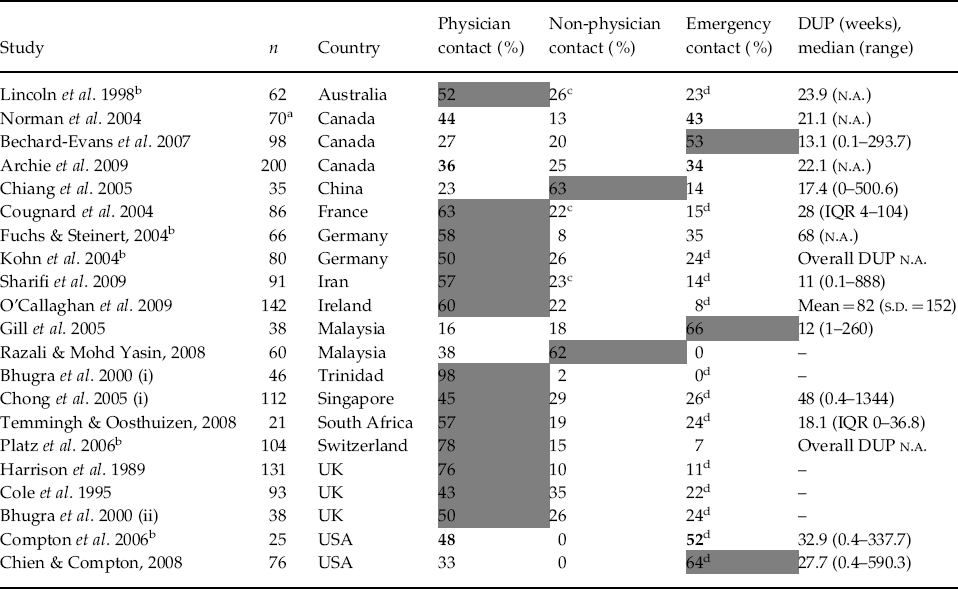
Summary of findings from studies examining the first contact on the pathway to care (n=21). Data represent the percentage of patients making contact with a physician, non-physician or emergency services. Shaded cells indicate the type of contact that the largest proportion of patients used in each study, and bolded figures indicate that similar percentages of patients made contact with two of the care pathway contacts

DUP, Duration of untreated psychosis; n.a., not available; s.d., standard deviation; IQR, interquartile range.
a Prodromal patients removed from sample.
b Contacts included prodromal period.
c Family members included as potential care pathway contacts.
d Police included as potential care pathway contacts.
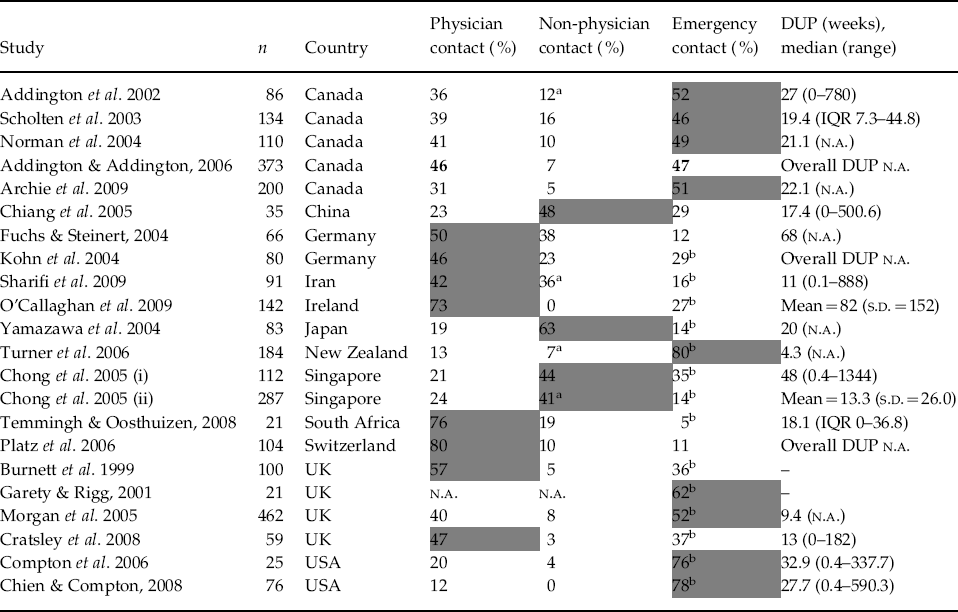
Summary of findings from studies examining the source of referral on the pathway to care (n=21). Data represent the percentage of patients making contact with a physician, non-physician or emergency services. Shaded cells indicate the type of contact that the largest proportion of patients used in each study, and bolded figures indicate that similar percentages of patients made contact with two of the care pathway contacts

DUP, Duration of untreated psychosis; n.a., not available; s.d., standard deviation; IQR, interquartile range.
a Family members included as potential care pathway contacts.
b Police included as potential care pathway contacts.
First contact on the pathway to care
Twenty studies examined the first contact on the pathway to care, with one study presenting data from two different countries (Bhugra et al. Reference Bhugra, Hilwig, Mallett, Corridan, Leff, Neehall and Rudge2000), for a total of 21 datasets (Table 2). The first contact for the largest proportion of patients was a physician in 13 of 21 studies. Three additional studies found a similar proportion of patients used a physician or emergency services as the first contact, three studies found that the majority (52–66%) used emergency services, and two found that the majority (62–63%) of patients made first contact with a non-physician.
When we examined the findings by region, all of the eight European studies found that a physician was the first contact for the largest proportion of patients. By contrast, none of the five North American studies found that a physician was the first contact for the largest proportion of patients, with two studies finding that the largest proportion of patients used emergency services, and three finding that approximately equal proportions used a physician or emergency services (Table 2). We also examined the findings by availability of universal health insurance and by whether the country uses a gatekeeper system for access to specialist services, but did not observe notable trends for either of these factors.
Referral source on the pathway to care
Twenty-two studies examined the referral source on the pathway to care (Table 3). In contrast to the first contact, the referral source for the largest proportion of patients was emergency services in nine of 22 studies. One additional study found that an approximately equal proportion of patients were referred by emergency services and a physician. A physician was the referral source for the largest proportion of patients in eight studies, and a non-physician in four studies.
When we examined the findings by region, six of the eight European studies found that the physician was the source of referral for the largest proportion of patients. By contrast, six of seven North American studies found that emergency services were the referral source for the largest proportion of patients, with the seventh study finding an equal proportion referred by emergency services and a physician. Four of five Asian studies found that the largest proportion of patients used a non-physician as the referral source (Table 3). We again examined the findings by both the availability of universal health insurance and the use of a gatekeeper system in the jurisdiction of interest, but did not observe any notable trends.
Determinants of the pathway to care
Of the 30 included studies, only nine examined the sex, socio-economic, and/or ethnic determinants of the pathways to care of patients with FEP (Table 1). Some studies also explored other determinants of the pathway to care. However, these are beyond the scope of this review given our stated objective and the limited number of studies available.
Seven studies explored sex as a determinant of the care pathway (Table 1), and three found no association (Cole et al. Reference Cole, Leavey, King, Johnson-Sabine and Hoar1995; Cougnard et al. Reference Cougnard, Kalmi, Desage, Misdrahi, Abalan, Brun-Rousseau, Salmi and Verdoux2004b; Kohn et al. Reference Kohn, Pukrop, Niedersteberg, Schultze-Lutter, Ruhrmann, Bechdolf, Berning, Maier and Klosterkotter2004). A Canadian study found that males were nearly five times more likely to make first contact with the emergency department (Archie et al. Reference Archie, Akhtar-Danesh, Norman, Malla, Roy and Zipursky2009), and a British study found that males were less likely to be admitted by a general practitioner (Morgan et al. Reference Morgan, Mallett, Hutchinson, Bagalkote, Morgan, Fearon, Dazzan, Boydell, McKenzie, Harrison, Murray, Jones, Craig and Leff2005b). A study from South Africa found that males were more likely to be admitted involuntarily (Temmingh & Oosthuizen, Reference Temmingh and Oosthuizen2008). Two British studies found evidence that sex may act as an effect modifier in the relationship between ethnicity and compulsory admission; however, the findings were conflicting, with one finding ethnic differences for males only (Morgan et al. Reference Morgan, Mallett, Hutchinson, Bagalkote, Morgan, Fearon, Dazzan, Boydell, McKenzie, Harrison, Murray, Jones, Craig and Leff2005b) and the other finding ethnic differences only for females (Harrison et al. Reference Harrison, Holton, Neilson and Owens1989).
Several socio-economic indicators were examined as determinants of the pathway to care in six studies (Table 1). Five studies found no evidence that socio-economic factors are predictive of the care pathway (Cole et al. Reference Cole, Leavey, King, Johnson-Sabine and Hoar1995; Burnett et al. Reference Burnett, Mallett, Bhugra, Hutchinson, Der and Leff1999; Cougnard et al. Reference Cougnard, Kalmi, Desage, Misdrahi, Abalan, Brun-Rousseau, Salmi and Verdoux2004b; Morgan et al. Reference Morgan, Mallett, Hutchinson, Bagalkote, Morgan, Fearon, Dazzan, Boydell, McKenzie, Harrison, Murray, Jones, Craig and Leff2005b; Archie et al. Reference Archie, Akhtar-Danesh, Norman, Malla, Roy and Zipursky2009). Findings from a German study suggest that patients with semi-skilled or no vocational training were more likely to make first contact with police (Kohn et al. Reference Kohn, Pukrop, Niedersteberg, Schultze-Lutter, Ruhrmann, Bechdolf, Berning, Maier and Klosterkotter2004).
Ethnicity as a determinant of the pathway to care was examined in seven studies (Table 1), of which three found no evidence of ethnic differences (Cole et al. Reference Cole, Leavey, King, Johnson-Sabine and Hoar1995; Turner et al. Reference Turner, Smith-Hamel and Mulder2006; Temmingh & Oosthuizen, Reference Temmingh and Oosthuizen2008). Two British studies found that Afro-Caribbean patients were less likely to be referred by a general practitioner and more likely to have police involvement on their pathway to care (Burnett et al. Reference Burnett, Mallett, Bhugra, Hutchinson, Der and Leff1999; Morgan et al. Reference Morgan, Mallett, Hutchinson, Bagalkote, Morgan, Fearon, Dazzan, Boydell, McKenzie, Harrison, Murray, Jones, Craig and Leff2005b), and a third found longer treatment-delays for Afro-Caribbean patients (Harrison et al. Reference Harrison, Holton, Neilson and Owens1989). A study from Canada found that Asian and patients of other ethnic backgrounds (not including Afro-Canadian) were three to four times more likely to make first contact with emergency services than white patients (Archie et al. Reference Archie, Akhtar-Danesh, Norman, Malla, Roy and Zipursky2009). Lastly, three of the four studies reporting ethnic differences in the pathway to care also found evidence of differences in compulsory admissions for ethno-racial minority patients (Harrison et al. Reference Harrison, Holton, Neilson and Owens1989; Morgan et al. Reference Morgan, Mallett, Hutchinson, Bagalkote, Morgan, Fearon, Dazzan, Boydell, McKenzie, Harrison, Murray, Jones, Craig and Leff2005b; Archie et al. Reference Archie, Akhtar-Danesh, Norman, Malla, Roy and Zipursky2009).
The pathway to care and DUP
Twenty-four studies provided data on the DUP of participants, which varied substantially across studies (Tables 2 and 3), probably due in part to differences in definition and measurement (Compton et al. Reference Compton, Carter, Bergner, Franz, Stewart, Trotman, McGlashan and McGorry2007). The median DUP ranged from 4 weeks for a study from New Zealand (Turner et al. Reference Turner, Smith-Hamel and Mulder2006) to 68 weeks for a study from Germany (Fuchs & Steinert, Reference Fuchs and Steinert2004) (median across studies=21.6 weeks).
Of the 23 studies that measured DUP, 15 examined a putative association between the pathway to care and DUP (Table 1). Ten studies assessed the impact of the first contact, with two finding no significant association (O'Callaghan et al. Reference O'Callaghan, Turner, Renwick, Jackson, Sutton, Foley, McWilliams, Behan, Fetherstone and Kinsella2009; Sharifi et al. Reference Sharifi, Kermani-Ranjbar, Amini, Alaghband-rad, Salesian and Seddigh2009) and a third having an insufficient sample to allow conclusions to be drawn (Temmingh & Oosthuizen, Reference Temmingh and Oosthuizen2008). A Canadian study found evidence that patients whose first contact was with a non-physician had a significantly longer DUP (Bechard-Evans et al. Reference Bechard-Evans, Schmitz, Abadi, Joober, King and Malla2007). Descriptive data from German studies also indicated a longer DUP for patients who made first contact with a non-physician or at a hospital for another complaint (Fuchs & Steinert, Reference Fuchs and Steinert2004), and a shorter DUP for patients who made first contact with emergency services (Kohn et al. Reference Kohn, Pukrop, Niedersteberg, Schultze-Lutter, Ruhrmann, Bechdolf, Berning, Maier and Klosterkotter2004). By contrast, a U.S. study found longer treatment delays when first contact was with a general practitioner (Compton et al. Reference Compton, Esterberg, Druss, Walker and Kaslow2006). Data from France suggest longer delays when first contact is with a private psychiatrist, as compared with a general practitioner or public psychiatrist (Cougnard et al. Reference Cougnard, Kalmi, Desage, Misdrahi, Abalan, Brun-Rousseau, Salmi and Verdoux2004b). Similarly, a study from China also suggests that DUP is longest when the first care pathway contact is a psychiatrist or psychologist (Chiang et al. Reference Chiang, Chow, Chan, Law and Chen2005). Finally, a study from Singapore found no difference between making first contact with a traditional or religious healer as compared with those who sought help from another type of care pathway contact (Chong et al. Reference Chong, Mythily, Lum, Chan and McGorry2005).
Five studies assessed the impact of the referral source on the DUP, with two finding no significant association (Scholten et al. Reference Scholten, Malla, Norman, McLean, McIntosh, McDonald, Eliasziw and Speechley2003; O'Callaghan et al. Reference O'Callaghan, Turner, Renwick, Jackson, Sutton, Foley, McWilliams, Behan, Fetherstone and Kinsella2009). A study from Canada found that patients referred from in-patient units to early intervention services had a significantly shorter DUP, whereas patients referred by community agencies, psychologists, or psychiatrists had a significantly longer DUP (Addington & Addington, Reference Addington and Addington2006). Similarly, a study from Switzerland found delays in time to referral when the referral source was a psychiatrist, psychologist, or non-physician service, as compared with referral by a general practitioner or psychiatric services (Platz et al. Reference Platz, Umbricht, Cattapan-Ludewig, Dvorsky, Arbach, Brenner and Simon2006). Data from the UK suggest that individuals referred by a home treatment team or the emergency department had the lowest DUP (Cratsley et al. Reference Cratsley, Regan, McAllister, Simic and Aitchison2008).
Lastly, a study from the UK reversed the direction of the association and looked at the impact of DUP in predicting the type of care pathway contact. This study found that having a long DUP (>66 days) was not predictive of having a general practitioner or criminal justice source of referral (Morgan et al. Reference Morgan, Mallett, Hutchinson, Bagalkote, Morgan, Fearon, Dazzan, Boydell, McKenzie, Harrison, Murray, Jones, Craig and Leff2005b).
Discussion
The findings from our systematic review on the pathways to care of patients with FEP suggest that the type of contact differs depending on whether the first contact or the referral source is considered. These contact points represent different time-periods in the course of illness, and may suggest a failure to identify previously untreated patients with psychotic symptoms presenting to a general practitioner. This could be because the symptoms are subtle, the assessment contact is too brief, or the presentation of a psychotic disorder is an infrequent event in a general practice. The care pathways also differed by geographical region, probably because of differences in social, cultural, and health service contexts. These regional trends highlight the need for research that is specific to the jurisdiction of interest.
Our findings support prior claims that involuntary and negative pathways to care, such as with police or emergency services, are frequent for patients with FEP (Garety & Rigg, Reference Garety and Rigg2001). This is of particular concern given that negative pathways to care may be associated with poor engagement in treatment (Compton, Reference Compton2005) and greater dissatisfaction with services (Bhugra et al. Reference Bhugra, Harding and Lippett2004). Qualitative research on help-seeking in FEP also indicates that negative experiences with psychiatric services may have an impact on future delays in help-seeking (Monteiro et al. Reference Monteiro, Dos Santos and Martin2006). Taken together, these findings suggest that we need to pay greater attention to the potentially deleterious impact of the involvement of police, ambulance, and emergency services on the pathway to care.
Contacts with non-physicians tended to be infrequent relative to contacts with physicians and emergency services, except in some specific Asian jurisdictions. Lincoln et al. (Reference Lincoln, Harrigan and McGorry1998) suggest that non-physician contacts may be involved as part of a ‘parallel help-seeking strategy’, which would not be captured by the indices used by the included studies. Qualitative research on help-seeking in early psychosis indicates that non-physician contacts play an important role in linking the families of patients with psychiatric services (Wong, Reference Wong2007a, Reference Wongb) and families may use personal contacts as resources to expedite the help-seeking process (Bergner et al. Reference Bergner, Leiner, Carter, Franz, Thompson and Compton2008). There is also evidence that patients tend to under-report contact with non-physician services, possibly because of the perception that informal contacts do not warrant equal status on the help-seeking pathway (Lincoln & McGorry, Reference Lincoln and McGorry1995).
The studies that explored the sex, socio-economic, or ethnic determinants of the pathways to care had conflicting findings, probably reflective of contextual differences across studies. In addition, the objective of the included studies was generally not to explore the sociodemographic determinants of the pathway to care, but rather to use these variables as covariates for other analyses. Of exception, several studies did focus on ethnic differences as the primary objective. The included studies were also limited in their power to explore these determinants, and future research may obtain a better understanding from studies that are designed and powered to examine the sociodemographic determinants of the pathway to care.
There is some evidence to suggest that the pathway to care has an impact on the DUP; however, the results were inconsistent across studies, so it is difficult to draw conclusions. It is probable that the type of care pathway contact varies the length of time between contact and referral into an appropriate treatment program. Indeed, data from Canada suggest that referral delay between the first contact and the initiation of adequate treatment accounts for a substantial proportion of the total DUP (Bechard-Evans et al. Reference Bechard-Evans, Schmitz, Abadi, Joober, King and Malla2007). There is also evidence that patients who are already receiving mental health care at the time of onset of psychosis have a referral delay that is almost four times that of those who seek care after onset (Norman et al. Reference Norman, Malla, Verdi, Hassall and Fazekas2004), which is consistent with several of the included studies that found a longer DUP was associated with contact with a psychiatrist and/or psychologist (Cougnard et al. Reference Cougnard, Kalmi, Desage, Misdrahi, Abalan, Brun-Rousseau, Salmi and Verdoux2004b; Chiang et al. Reference Chiang, Chow, Chan, Law and Chen2005; Addington & Addington, Reference Addington and Addington2006; Platz et al. Reference Platz, Umbricht, Cattapan-Ludewig, Dvorsky, Arbach, Brenner and Simon2006). This may be due to the difficulties that service providers face in recognizing and responding to the changes in symptoms that occur at the onset of psychosis if patients are in treatment for other psychiatric conditions. It is also possible that clinicians have difficulties persuading patients to accept treatment for a different condition.
It is noteworthy that several additional factors have been found to impact the pathway to care in FEP. However, a comprehensive summary of these factors is beyond the scope of this review, and the small number of studies examining such determinants limits drawing any conclusions. In brief, living alone at the time of onset (Cole et al. Reference Cole, Leavey, King, Johnson-Sabine and Hoar1995; Burnett et al. Reference Burnett, Mallett, Bhugra, Hutchinson, Der and Leff1999) and a lack of family involvement on the pathway to care (Cole et al. Reference Cole, Leavey, King, Johnson-Sabine and Hoar1995; Morgan et al. Reference Morgan, Mallett, Hutchinson, Bagalkote, Morgan, Fearon, Dazzan, Boydell, McKenzie, Harrison, Murray, Jones, Craig and Leff2005b) increased the likelihood of a negative care pathway. Additionally, the presence of definitive psychotic symptoms, as compared with insidious symptoms, impacts the type of care pathway contacts used (Platz et al. Reference Platz, Umbricht, Cattapan-Ludewig, Dvorsky, Arbach, Brenner and Simon2006), and patients presenting with delusions, hallucinations, depression, or suicidal ideation tend to be more likely to have successful treatment contacts (Addington et al. Reference Addington, Van Mastrigt, Hutchinson and Addington2002). However, the mode of onset of psychosis was not found to impact various indices of the pathway to care (Chien & Compton, Reference Chien and Compton2008). There is also some evidence to suggest that specific diagnostic groups may have a different likelihood of a negative pathway to care (Cougnard et al. 2004 a; Morgan et al. Reference Morgan, Mallett, Hutchinson, Bagalkote, Morgan, Fearon, Dazzan, Boydell, McKenzie, Harrison, Murray, Jones, Craig and Leff2005a).
Although we have presented the findings on the determinants of the pathway to care independently, it is probable that there is substantial interaction between various factors. Some investigators have acknowledged this by including interaction terms in their multivariate models, and have found some evidence of an interaction between socio-economic status (SES) and ethnicity (Burnett et al. Reference Burnett, Mallett, Bhugra, Hutchinson, Der and Leff1999) and for both sex and age with ethnicity (Morgan et al. Reference Morgan, Mallett, Hutchinson, Bagalkote, Morgan, Fearon, Dazzan, Boydell, McKenzie, Harrison, Murray, Jones, Craig and Leff2005b). It is also possible that patients entering the treatment system through emergency services may have shorter delays but may be more likely to be admitted involuntarily. Similarly, there may be some overlap between an insidious mode of onset of psychosis and long prodromal period, as the transition from prodromal phase to psychotic phase is usually less dramatic. In general, the limited evidence on such interactions prevents us from speculating on the exact nature of the complex interplay between the various factors. Future studies will need to employ more comprehensive approaches using alternative methodologies to gain further insight into the mode of action of such interactions.
Finally, it is also important to consider the nature of the pathway to care during the prodromal phase of FEP, when the symptoms are first beginning to emerge. Despite this, few studies included in our review examined prodromal contacts. Findings from these studies suggest that individuals are more likely to make contact with physician and non-physician services during the prodrome, and with emergency services after the onset of psychotic symptoms (Norman et al. Reference Norman, Malla, Verdi, Hassall and Fazekas2004; Addington & Addington, Reference Addington and Addington2006; Platz et al. Reference Platz, Umbricht, Cattapan-Ludewig, Dvorsky, Arbach, Brenner and Simon2006). A more complete understanding of the help-seeking attempts made during the prodromal phase of illness is crucial for secondary prevention and early intervention efforts.
Our findings are limited by the lack of a standard and validated measure of pathways to care (Singh & Grange, Reference Singh and Grange2006), which restricts the comparability of the outcome data across studies. Furthermore, the included studies differed with respect to the definition of the pathway to care, and the inclusion or exclusion of different types of contacts can have an impact on the observed indices of the pathway to care. The trends and conclusions drawn from these data should be interpreted with caution given this heterogeneity in the outcome measure.
Despite these limitations, we are able to conclude that prior research on the pathways to care of patients with FEP has not sufficiently explored whether sex, SES, or ethnicity are determinants of the care pathways, or the impact of the pathway to care on DUP. Additional determinants warrant further investigation; greater understanding of the complex interactions between individual determinants and of the nature of the pathway to care during the prodrome is needed. Future studies should be designed and powered to examine these determinants of the pathways to care, and investigators should make explicit the definitions of pathways to care used. Finally, studies that aim to understand the potential impact of negative pathways to care on subsequent engagement and satisfaction with services are needed, and research specific to the jurisdiction of interest is warranted.
Understanding the determinants of the pathways to mental health care and the impact on DUP is crucial for informing the provision of mental health services. Such research is needed to identify disparities in the delivery and uptake of health and social services, the barriers that patients face when seeking help for psychotic symptoms, and inconsistencies in the response of service providers to help-seeking contacts. By increasing access for patients experiencing a first episode of psychosis, we can potentially improve the outcomes of the disorder, prevent significant disability and delay in achieving social, educational and career milestones, and help to ease the psychological distress experienced by patients and their family members.
Acknowledgements
We are grateful to the authors of the included studies who generously shared data and information to aid in the completion of this review, and to the anonymous reviewers who provided insightful feedback to improve the quality of this manuscript. We also gratefully acknowledge J. Cohen for assistance with data extraction.
This study was funded by a Canadian Institutes of Health Research (CIHR) Interdisciplinary Capacity Enhancement Grant in Health Inequalities (Project no. HOA-80072). K. Anderson is a trainee in the Research in Addictions and Mental Health Policy and Services (RAMHPS) Program, funded by CIHR, and is supported by a Frederick Banting and Charles Best Canada Graduate Scholarship from CIHR. Dr Fuhrer holds a CIHR Canada Research Chair in Psychosocial Epidemiology, and Dr Malla holds a CIHR Canada Research Chair in Early Psychosis.
Declaration of Interest
None.
Terms used for Medline search strategy

Journals included in the manual search strategy