Introduction
Pruritus (or itch) is the unpleasant cutaneous sensation that induces the desire to scratch the affected area of skin. About two-thirds of older people have concerns about their skin, with pruritus being the most frequent complaint.Reference Beauregard and Gilchrest1 Pruritus can be caused by various dermatological, systemic, neurological and psychogenic diseases, as well as being an adverse cutaneous drug reaction.Reference Reich, Ständer and Szepietowski2 The structural and physiological cutaneous changes of intrinsic ageing, combined with lifetime cumulative effects of extrinsic environmental insult, can produce a marked susceptibility to pruritic dermatoses in older people.Reference Farage, Miller, Berardesca and Maibach3 Moreover, the higher frequency of systemic diseases and the prevalence of polypharmacy in older people further increases their susceptibility to pruritus and adverse cutaneous drug reactions.Reference Reich, Ständer and Szepietowski2 Pruritus in older people is often chronic and determination of its aetiology can pose a diagnostic challenge.Reference Reich, Ständer and Szepietowski2 It can significantly affect patients’ quality of life, comparable to that of chronic pain.Reference Kini, DeLong, Veledar, McKenzie-Brown, Schaufele and Chen4 This may in part be attributed to the unsatisfactory therapeutic effect of treatments for pruritus in many cases.Reference Kini, DeLong, Veledar, McKenzie-Brown, Schaufele and Chen4
This article aims to review the current published literature on pruritus in older people with a practical approach to its evaluation and management in non-specialist settings. Key relevant articles written in English on the pathophysiology of pruritus, pruritic dermatoses, non-dermatological diseases associated with pruritus, and topical and systemic treatments for pruritus in older people were identified via a search in PubMed with the terms ‘pruritus’, ‘itch’, ‘older’ and ‘elderly’. Additional relevant articles were identified in the references of the retrieved articles, and a search in PubMed of the associated dermatological, systemic, neurological and psychogenic diseases.
Pathophysiology of pruritus
The pathophysiology of itch is complex and there is no universal neuromediator of pruritus.Reference Steinhoff, Bienenstock, Schmelz, Maurer, Wei and Bíró5 Histamine released from mast cells has been thought to be the predominant mediator of pruritus.Reference Ward and Bernhard6, Reference Grundmann and Ständer7 However, many patients with pruritus do not respond to anti-histamines. Various other disease-specific neuromediators (like neuropeptides, proteases, opioids, kinins and cytokines) that act peripherally and centrally have been identified.Reference Steinhoff, Bienenstock, Schmelz, Maurer, Wei and Bíró5 These findings have led to the development of targeted anti-pruritic treatments.
The sensation of pruritus is transmitted on sensory C-fibres located in the papillary dermis and epidermis that ascends through the dorsal horn in the spinal cords, and then via the contralateral spinothalamic tract to reach the thalamus.Reference Ikoma, Cevikbas, Kempkes and Steinhoff8 C-fibres are also temperature sensitive and this explains exacerbation of pruritus in a warmer environment. Pain, also transmitted through sensory C-fibres, is able to suppress pruritus due to an inhibitory action on neighbouring pruriceptive neurones by the nociceptive neurones in the spinal cord.
Ageing affects three key components, which predisposes older people to inflammatory dermatoses and pruritus.Reference Berger and Steinhoff9 Firstly, an increase in epidermal surface pH, and a reduced production of skin surface lipids and humectants leads to a diminished epidermal barrier repair. This results in xerosis (dry skin) and increased risk of antigen penetration into the epidermis, with the induction of pro-inflammatory cytokines, causing dermatitis. Secondly, loss of naïve T-cells leads to a pro-inflammatory immune system, and a defect in the function of T- and B-cells. This results in a reduced ability of older people to react effectively to infectious agents. Thirdly, neurodegeneration in central and peripheral sensory nerves may produce pruritus.
Evaluation of pruritus in older people
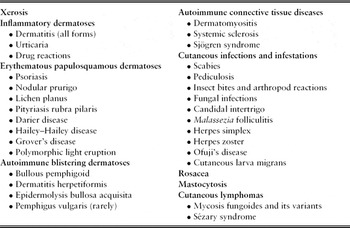
When evaluating a patient with pruritus, the first aim is to determine whether there is an associated rash, which would suggest an underlying primary dermatosis. Primary dermatoses usually present with pruritus at the body sites with associated cutaneous changes. The various pruritic dermatoses that occur in older people are listed in Table 1.Reference Reich, Ständer and Szepietowski2 Of these, xerosis is the most common cause.Reference Reamy and Bunt10
Pruritic primary dermatoses in older people

Adapted from Reich et al. (2011)Reference Reich, Ständer and Szepietowski2
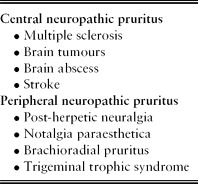
Localized pruritus in a dermatomal distribution without cutaneous changes or with only secondary cutaneous changes from scratching suggests neuropathic pruritus. There is frequently an associated paraesthesia, hyperaesthesia or hypoaesthesia from sensory damage.Reference Yosipovitch and Samuel11 Alloknesis, a phenomenon where an innocuous light touch can easily induce pruritus, is also present in many cases but is not unique to neuropathic pruritus as it can be present in various inflammatory dermatoses.Reference Yosipovitch and Samuel11Table 2 lists the causes of neuropathic pruritus.Reference Reamy and Bunt10–Reference Cohen, Frank, Salbu and Israel12
Causes of neuropathic pruritus

Adapted from Reamy & Bunt (2011),Reference Reamy and Bunt10 Yosipovitch & Samuel (2008)Reference Yosipovitch and Samuel11 and Cohen et al. (2012)Reference Cohen, Frank, Salbu and Israel12
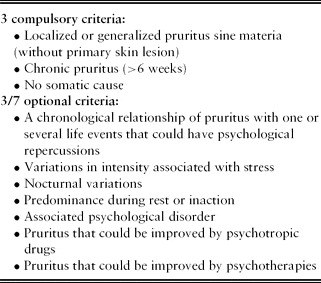
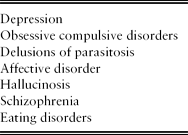
Patients deemed to have an excessive impulse to scratch or pick at normal skin should prompt a suspicion of psychogenic pruritus.Reference Yosipovitch and Samuel11 These patients may have an underlying psychiatric disease or a concurrent chronic pruritus of another cause.Reference Reich, Ständer and Szepietowski2, Reference Yosipovitch and Samuel11 The French Psychodermatology Group has proposed diagnostic criteria for psychogenic pruritus, as shown in Table 3.Reference Misery, Alexandre and Dutray13Table 4 displays the causes of psychogenic pruritus.Reference Yosipovitch and Samuel11, Reference Ständer, Böckenholt and Schürmeyer-Horst14
The French Psychodermatology Group diagnostic criteria for psychogenic pruritus

Adapted from Misery et al. (2007)Reference Misery, Alexandre and Dutray13
Causes of psychogenic pruritus
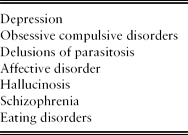
Adapted from Grundmann & Ständer (2011)Reference Grundmann and Ständer7 and Yosipovitch & Samuel (2008)Reference Yosipovitch and Samuel11
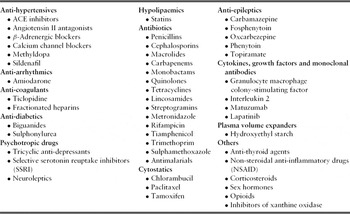
Drug-induced pruritus is usually acute, lasting less than 6 weeks.Reference Reich, Ständer and Szepietowski15 Patients may give a history of a clear time-relation between taking the drug and the onset of pruritus, although there is occasionally a delay of several weeks or even months.Reference Reich, Ständer and Szepietowski2 A wide range of drugs has been reported to cause pruritus, as listed in Table 5.Reference Reich, Ständer and Szepietowski15 The common culprits are aspirin, opioids, angiotensin-converting enzyme (ACE) inhibitors and statins.
Drugs that could cause pruritus

Adapted from Reich et al. (2009)Reference Reich, Ständer and Szepietowski15
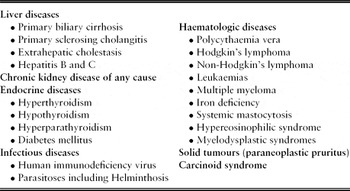
Generalized pruritus without skin lesions (GPWSL) is a diagnosis of exclusion that presents with widespread excoriations and erythema (secondary cutaneous changes from scratching) on a background of normal skin, without any cutaneous features of primary dermatoses. It is associated with an underlying systemic disease in 13–50% of patients.Reference Sommer, Hensen, Böckenholt, Metze, Luger and Ständer16 This pruritus has a less abrupt onset compared with that in primary dermatoses.Reference Reamy and Bunt10Table 6 lists the systemic diseases associated with generalized pruritus.Reference Reich, Ständer and Szepietowski2, Reference Sommer, Hensen, Böckenholt, Metze, Luger and Ständer16
Systemic diseases associated with generalized pruritus

Adapted from Reich et al. (2011)Reference Reich, Ständer and Szepietowski2 and Grundmann & Ständer (2011)Reference Grundmann and Ständer7
Screening investigations for pruritus
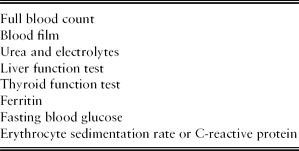
A thorough evaluation of a patient with GPWSL is paramount and should include a careful history and full examination to assess for an associated systemic disease, which should include examination for lymphadenopathy and hepatosplenomegaly.Reference Reamy and Bunt10 Investigations that should be requested if the underlying systemic cause is not obvious are listed in Table 7.Reference Reich, Ständer and Szepietowski2, Reference Reamy and Bunt10, Reference Cohen, Frank, Salbu and Israel12 Other investigations such as chest radiography, urinalysis and stool examination for parasites should be requested based on history and examination findings. It is also important to consider human immunodeficiency virus in atypical presentations of pruritus.
Screening investigations for pruritus of unknown cause
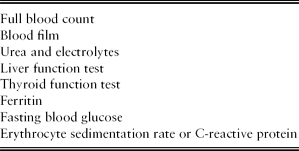
Adapted from Reich et al. (2011)Reference Reich, Ständer and Szepietowski2, Reamy & Bunt (2011)Reference Reamy and Bunt10 and Cohen et al. (2012)Reference Cohen, Frank, Salbu and Israel12
Common pruritic primary dermatoses in older people
Below are common primary dermatoses that can produce widespread pruritus in older people. Important clinical features in relation to older people are emphasized to aid in the diagnosis of each dermatosis.
Scabies
This is a contagious cutaneous infestation where household members could also be affected. Patients present with generalized intense pruritus with burrows, papules, nodules and pustules that are usually distributed on interdigital web spaces, wrists, elbows, feet, genitals, buttocks and axillae. Scabies infestation is not uncommon among older people in institutional settings, and the risk of recurrent infestation is higher in people with dementia.Reference Makigami, Ohtaki, Ishii, Tamashiro, Yoshida and Yasumura17
Xerosis/asteatotic dermatitis
This is the most common cause of pruritus in older people.Reference Reamy and Bunt10 The prevalence of xerosis increases with ageReference Paul, Maumus-Robert, Mazereeuw-Hautier, Guyen, Saudez and Schmitt18 and is predisposed by the intrinsic age-related physiological skin changes, use of diuretics or similar drugs, and low humidity from household heating.Reference White-Chu and Reddy19 This leads to dry, cracked and fissured skin, erythema, scaling and lichenification (if chronic) distributed on the limbs and trunk.
Atopic dermatitis/atopic eczema
These patients often have a personal or family history of atopy. The cutaneous features are xerosis and ill-defined erythematous patches and plaques with scales and lichenification. It is important to note that in older people, the classical flexural site involvement in the antecubital and popliteal areas is uncommon but instead manifests predominantly in the face, neck, trunk and extensor extremities.Reference Tanei and Katsuoka20, Reference Tanei21 Eczematous erythroderma is also a common manifestation in older people.Reference Tanei and Katsuoka20
Nodular prurigo
This can be associated with atopic dermatitis. It presents on the extremities with multiple, pruritic dome-shaped nodules, which are often excoriated and ulcerated.
Contact dermatitis
Irritant contact dermatitis tends to be more common than that due to allergies. Clinical findings would reveal erythema and dryness distributed on exposed sites, which are usually the upper and lower limbs in older people.Reference Goh and Ling22 An airborne cause should be suspected if the distribution is generalized. Common allergens in older people are nickel, fragrance mix, medicaments (like clioquinol-mix and Balsam of Peru) and para-phenylenediamine.Reference Goh and Ling22, Reference Onder and Oztas23
Psoriasis
Patients who develop psoriasis at an older age have a lower incidence of a positive family history.Reference Kwon, Kwon and Youn24 The papules and plaques of psoriasis are erythematous and well defined with silvery-white scales, which in older people are more frequently distributed on the scalp, palms and soles, but less on the classic elbow, knee and trunk areas.Reference Kwon, Kwon and Youn24, Reference Ferrándiz, Pujol, García-Patos, Bordas and Smandía25 Fingernail dystrophy may also be present. Psoriasis in older people has a less severe but more persistent clinical course.Reference Ferrándiz, Pujol, García-Patos, Bordas and Smandía25
Lichen planus
The classical morphology of lichen planus is violaceous, flat-topped, polygonal papules with white lines known as Wickham striae. The lesions are usually distributed on the flexor surfaces of the upper and lower limbs, genitals, scalp and nails.Reference van Voorhees, Vittorio and Werth26 Associated oral ulceration can occur.
Urticaria
Urticaria is characterized by transient pruritic wheals or erythematous patches on the skin, with a widespread distribution that resolves within 24 hours without scarring. Facial angio-oedema may occur. It is recognized that drugs (commonly aspirin, NSAIDs and codeine) and associated internal medical conditions are frequent causes of urticaria in older people.Reference Ventura, Napolitano, Buquicchio, Cecere and Arsieni27
Bullous pemphigoid
This is the most common autoimmune blistering dermatosis that occurs predominantly in older people.Reference Schmidt, della Torre and Borradori28 It manifests as a prodromal eruption of pruritic, excoriated, eczematous, urticarial and papular lesions that evolves within weeks to months to form tense bullae, which are usually distributed on the axillae, groins, thighs, flexural sites and abdomen.
Dermatitis herpetiformis
This is associated with a gluten-sensitive enteropathy in most patients.Reference Gawkrodger, Blackwell, Gilmour, Rifkind, Heading and Barnetson29 It presents with episodic groups of vesicles, papules and urticarial plaques that are usually distributed on extensor sites, buttocks, scapular and sacral areas.
Common systemic diseases associated with pruritus
When GPWSL is established, the next aim is to look for an underlying systemic cause of the pruritus. The itch threshold can be lowered by systemic diseases, where a mild stimulus can trigger an exaggerated pruritic response, and can be further exacerbated by xerosis in older people.Reference Cohen, Frank, Salbu and Israel12 Institutionalized older people or those with dementia who are generally inactive are more susceptible to pruritic stimuli.Reference Cohen, Frank, Salbu and Israel12 The patterns of pruritus produced by different systemic diseases are described below.
Chronic kidney disease
Pruritus is present in about 50% of patients with chronic kidney disease (CKD), with or without dialysis.Reference Khanna, Singal and Kalra30, Reference Thomas, Pawar and Thomas31 It is often generalized but may be localized, usually on the back and the arm of dialysis.Reference Ponticelli and Bencini32 It does not occur in acute renal failure.Reference Cohen, Frank, Salbu and Israel12 The pathogenesis of pruritus in CKD is complex, and the presence of xerosis in these patients may be contributory.Reference Khanna, Singal and Kalra30
Cholestasis
Pruritus is present in 25% of patients with obstructive jaundice.Reference Mels, Mancuso and Burroughs33 It can be generalized and is typically worse on the palms and soles.Reference Reamy and Bunt10 The pruritus is more pronounced at night.Reference Cohen, Frank, Salbu and Israel12 Although bile acids are implicated as pruritogens in cholestatic pruritus, there is little correlation between the bilirubin level and pruritus severity.Reference Mels, Mancuso and Burroughs33
Thyroid disease
Pruritus can occur in both hyperthyroidism and less frequently hypothyroidism, which is significantly higher in autoimmune thyroid diseases.Reference Artantas, Gul, Kilic and Guler34 The intractable pruritus in hyperthyroidism could be due to the warmth produced from increased blood flow.Reference Cohen, Frank, Salbu and Israel12 Hyperthyroidism could also cause cholestatic jaundice, which leads to pruritus.Reference Hasan, Tierney and Baker35 Pruritus in hypothyroidism is usually the result of xerosis.Reference Cohen, Frank, Salbu and Israel12 Adequate treatment of the thyroid disease usually resolves the pruritus.Reference Cohen, Frank, Salbu and Israel12
Diabetes mellitus
Pruritus is rarely a feature of diabetes mellitus, but can be associated with diabetic polyneuropathy.Reference Yamaoka, Sasaki and Yamasaki36 Adequate control of elevated blood glucose levels may improve the pruritus.Reference Cohen, Frank, Salbu and Israel12
Polycythaemia vera
Pruritus is present in about 50% of patients and is a defining feature of polycythaemia vera.Reference Diehn and Tefferi37 The characteristic prickling pruritus occurs after contact with warm water, known as bath itch or aquagenic pruritus.Reference Archer, Camp and Greaves38
Iron deficiency anaemia
Patients with iron deficiency may not be anaemic, which suggests that the pruritus is associated with low iron rather than low haemoglobin level. Adequate iron supplementation could improve the pruritus.Reference Lonsdale-Eccles and Carmichael39
Malignancy
The presence of a malignancy should not be missed when evaluating a patient with GPWSL. Pruritus is often a presenting symptom of lymphoma,Reference Reamy and Bunt10 which can be intractable and have a burning character. It has the strongest association with Hodgkin's lymphoma, occurring in up to 30% of patients.Reference Yosipovitch40 Pruritus can also present in multiple myeloma, leukaemia and is often intractable in paraneoplastic syndromes of solid tumours (nasopharynx, prostate, gastric, breast, brain, uterine, colon, lung, pancreas and insulinoma).Reference Reamy and Bunt10, Reference Yosipovitch40
Common causes of neuropathic pruritus
The proposed mechanisms behind neuropathic pruritus are local C-fibre nerve damage and uninhibited central or spinal tract neuronal transmission of pruritus.Reference Yosipovitch and Samuel11 The cause of neuropathic pruritus can usually be identified from the site of the pruritus with a supporting history.
Post-herpetic neuralgia
Neuropathic pruritus commonly accompanies neuropathic pain in patients with post-herpetic neuralgia, particularly when the face and neck are affected.Reference Yosipovitch and Samuel11
Brachioradial pruritus
This condition is characterized by pruritus distributed locally on the dorsolateral aspect of the arm with cutaneous changes of chronic sun damage and xerosis. Compression of the nerve roots as they emerge from the cervical cord is thought to be the most important aetiological factor in this condition. It may be aggravated by sun exposure and is sometimes worse in the summer months. Patients may report using ice packs to relieve the pruritic areas, a symptom known as the ‘ice pack sign’.Reference Yosipovitch and Samuel11
Notalgia paraesthetica
Notalgia paraesthetica mainly affects the interscapular area at the T2–T6 dermatomes. A well-defined hyperpigmented patch may be present due to persistent scratching. It can also involve the shoulders and upper chest.
Common causes of psychogenic pruritus
Diagnosing and managing patients with psychogenic pruritus can be challenging. Patients should be approached with a sympathetic attitude, as establishing trust is essential.Reference Yosipovitch and Samuel11 Pruritus on the face and scalp is more common in psychogenic pruritus.Reference Ferm, Sterner and Wallengren41 Pruritus can be a presenting complaint in parasitophobia, depression, psychosis, adjustment disorders, trichotillomania and dysmorphophobia.Reference Ferm, Sterner and Wallengren41, Reference Schneider, Driesch, Heuft, Evers, Luger and Ständer42
Depression
Depression presents with pruritus in 4.3% of patients.Reference Ferm, Sterner and Wallengren41 Depression is common (32.4%) in patients with chronic idiopathic generalized pruritus.Reference Sheehan-Dare, Henderson and Cotterill43 Studies have shown resolution of depression-associated pruritus when the depression was adequately treated with anti-depressants. Whether this is due to improvement of the depression or the anti-pruritic effect of anti-depressants is unknown.Reference Pacan, Grzesiak, Reich and Szepietowski44
Delusions of parasitosis
Patients with delusions of parasitosis have a false belief that an infestation with insects or parasites is the cause of their pruritus. Examination reveals scattered excoriations from the patients’ self-mutilating behaviour to remove the insects or parasites. Sometimes no cutaneous changes may be present. Patients may bring in fragments of the ‘insects’ or ‘parasites’ revealing non-specific debris on examination, a behaviour known as the ‘matchbox sign’.Reference Yosipovitch and Samuel11
Drug-induced pruritus
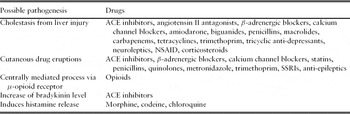
The pathogenesis of drug-induced pruritus depends on the ingested drugs but is often unknown.Reference Reich, Ständer and Szepietowski2, Reference Reich, Ständer and Szepietowski15Table 8 outlines the possible pathogenesis of pruritus by common drugs taken in older people.Reference Reich, Ständer and Szepietowski15 In most cases, pruritus resolves within 6 weeks after cessation of the causing drug. Withholding the suspected drug for at least 6 weeks is therefore recommended to prove causation of the pruritus.Reference Reich, Ständer and Szepietowski15
The possible pathogenesis of pruritus by common drugs in older people

Adapted from Reich et al. (2009)Reference Reich, Ständer and Szepietowski15
Management of pruritus in older people
When considering treatment for pruritus in older people, it is essential to recognize that their cognitive and physical impairments could affect compliance, in particular of topical treatments.Reference Patel and Yosipovich45 The aid of family members and carers may be required. In addition, the prevalence of co-morbidities (especially liver and kidney diseases) and polypharmacy in older people increases the risk of drug interactions with systemic anti-pruritic treatments that could result in hazardous adverse reactions. Management should therefore be tailored to the patients’ mental and physical state, their co-morbidities and severity of the pruritus, weighing the risks and benefits of the considered anti-pruritic treatments.Reference Cohen, Frank, Salbu and Israel12, Reference Lonsdale-Eccles and Carmichael39, Reference Patel and Yosipovich45
It is paramount to first establish the cause of the pruritus before initiating anti-pruritic therapies, as adequate treatment of the underlying cause alleviates the pruritus.Reference Lonsdale-Eccles and Carmichael39 Recalcitrant primary dermatoses and complex systemic diseases should be managed by the appropriate specialists. Drugs suspected to be the cause of the pruritus should be stopped or an alternative considered. The challenge arises for clinicians when no cause of the pruritus has been identified, as its pathophysiology is poorly understood, and limited successful treatment options are available.Reference Ward and Bernhard6
General measures to ensure optimal skin hydration
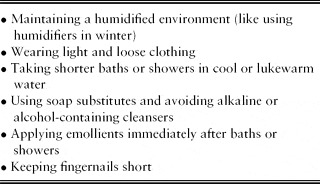
In all patients with pruritus, irrespective of the cause, general measures aiming to ensure optimal skin hydration and to prevent the itch–scratch cycle need to be addressed first, as listed in Table 9.Reference Reich, Ständer and Szepietowski2, Reference Cohen, Frank, Salbu and Israel12, Reference Patel and Yosipovich45 These measures also help to keep the skin cool, as the sensation of pruritus can be heightened by warmth.Reference Patel and Yosipovich45
General measures to ensure optimal skin hydration and prevent the itch–scratch cycle

Adapted from Reich et al. (2011)Reference Reich, Ständer and Szepietowski2, Cohen et al. (2012)Reference Cohen, Frank, Salbu and Israel12 and Patel & Yosipovich (2010)Reference Patel and Yosipovich45
Emollients and emollient bath additives/shower preparations
Emollients are the mainstay of treatment, especially in patients with xerosis, and should be applied regularly at least twice daily.Reference Reich, Ständer and Szepietowski2, Reference Cohen, Frank, Salbu and Israel12 They improve the skin barrier function, preventing transepidermal water loss and entry of irritants.Reference Patel and Yosipovich45 Ointments are more effective but are less well tolerated than creams or lotions. Emollient bath additives and shower preparations should compliment the regular use of emollients, as they also help to decrease xerosis.Reference Reich, Ständer and Szepietowski2 Alkaline cleansers and preparations containing alcohol can dry the skin and should be avoided.
Emollient preparations containing urea have been shown in studies to further improve skin hydration and exhibit anti-microbial activity.Reference Grether-Beck, Felsner and Brenden46 They may be useful in older people but can cause skin irritation. Preparations like menthol in aqueous cream are helpful by distracting the pruritus with cold sensation.Reference Patel, Ishiuji and Yosipovitch47 Menthol has favourable safety and toxicity profiles, making it a good anti-pruritic option in older people.Reference Cohen, Frank, Salbu and Israel12 However, the effects are short term (less than 30 minutes) and it requires frequent applications.Reference Reich, Ständer and Szepietowski2 Emollients containing lauromacrogols are reputed by experts to relieve pruritus via their mild anaesthetic effect, but no studies of their use are available in the medical literature.
Topical treatments
Besides emollients, other topical treatments are generally more suitable for localized pruritus, as generalized use may be impractical and could instead produce adverse reactions in older people.
Topical corticosteroids
Topical corticosteroids indirectly exert their anti-pruritic effects secondary to their anti-inflammatory properties in inflammatory dermatoses.Reference Reich, Ständer and Szepietowski2, Reference Cohen, Frank, Salbu and Israel12, Reference Patel and Yosipovich45 Potent or very potent topical corticosteroids are required in most cases of pruritic dermatoses for adequate therapeutic effect. They should not be used solely for anti-pruritic purposes in the absence of an inflammatory dermatosis. Moreover, older people are more vulnerable to the adverse effects of skin atrophy, telangiectasia and hypothalamus–pituitary axis suppression of topical corticosteroids, which should be used with caution.Reference Patel and Yosipovitch48
Topical calcineurin inhibitors
Topical calcineurin inhibitors are non-steroidal anti-inflammatory agents without the adverse effects of topical corticosteroids. They have been shown to have direct anti-pruritic effects via their action on transient-receptor potential vanilloid receptor-1 (TRPV1) in cutaneous sensory neurons.Reference Pereira, Boulais, Lebonvallet, Pennec, Dorange and Misery49 They are useful to treat pruritus in older people, avoiding the concerns of skin atrophy. However, stinging is a common side-effect and generalized usage may be expensive.
Topical anaesthetics
Topical anaesthetic preparations containing pramoxine, lidocaine and the eutectic mixture of lidocaine with prilocaine have all been shown to have anti-pruritic effects.Reference Patel and Yosipovitch48 Pramoxine-based lotions are reported to be effective in alleviating uraemic pruritus in adult haemodialysis patients.Reference Young, Patel and Camacho50 These agents are likely to be more suitable for short-term use in localized pruritus, as their use in generalized pruritus may be hindered by impracticality in application, cost, hypersensitivity, potential systemic toxicity and methaemoglobinaemia with prilocaine.
Topical doxepin
Topical doxepin (a tricyclic anti-depressant with histamine H1 and H2 receptor antagonism) is licensed for the relief of pruritus in several forms of dermatitis. It should be applied to a maximum of 10% of body surface area and the total daily dose must not exceed 3 g.Reference Reich, Ständer and Szepietowski2 Transient stinging sensation after application, and drowsiness from systemic absorption is common, which limits its use in older people.Reference Cohen, Frank, Salbu and Israel12
Topical crotamiton
Topical crotamiton is licensed for pruritis, although no evidence of its clinical use as an anti-pruritic agent is found in the literature. It may be helpful for localized pruritus and may be trialled for widespread pruritus if emollients are unsatisfactory.
Topical capsaicin
Topical capsaicin, like tacrolimus, also acts through TRPV1 to exert its anti-pruritic effects.Reference Pereira, Boulais, Lebonvallet, Pennec, Dorange and Misery49 It has been shown to be beneficial in nodular prurigo, uraemic pruritus, aquagenic pruritus, and in particular notalgia paraesthetica and brachioradial pruritus.Reference Patel and Yosipovitch48 However, the initial transient burning and stinging sensations during the first few days of application discourages its use by patients. This common adverse effect can be counteracted by co-prescribing a topical anaesthetic.Reference Patel and Yosipovitch48
Topical aspirin
Topical aspirin with dichloromethane solution has been demonstrated to be beneficial in lichen simplex chronicus.Reference Patel and Yosipovitch48 This may be an alternative anti-pruritic agent for older people who are unable to tolerate potent topical corticosteroids.Reference Cohen, Frank, Salbu and Israel12 It should be used for localized pruritus due to the risk of salicylate toxicity if applied in a widespread area.
Systemic treatments
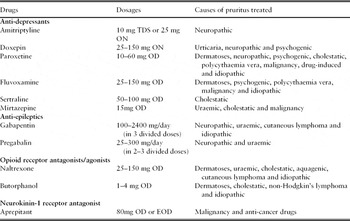
If topical treatment is inadequate in controlling pruritus, be it due to ineffectiveness, impracticality or non-concordance, systemic treatment should be considered based on co-morbidities and drug history.Reference Grundmann and Ständer7, Reference Cohen, Frank, Salbu and Israel12 Certain systemic treatments may be more effective than others depending on the cause of the pruritus. The systemic treatments (besides anti-histamines) used to treat pruritus are summarized in Table 10.
Systemic treatments (besides anti-histamines) used to treat pruritus

TDS, three times a day; ON, once at night; OD, once a day; EOD, every other day.
Anti-histamines
Histamine is one of several neurotransmitters that stimulate pruritus via sensory C-fibres, by binding with histamine H4 receptors and to a lesser degree with H1 receptors.Reference Grundmann and Ständer7 Anti-histamines are effective in pruritus caused by histamine-mediated dermatoses like urticaria and mastocytosis.Reference Reich, Ständer and Szepietowski2 They are less effective in pruritus from other causes.Reference Patel and Yosipovitch48 H1 receptor antagonists (H1RA) are the only anti-histamines available currently to treat pruritus. H2 receptor antagonists are ineffective.Reference Tivoli and Rubenstein51
Nevertheless, the relief of pruritus from anti-histamines has been proposed to be due to their sedative effects rather than their antagonistic action on histamines.Reference Krause and Shuster52 Sedating H1RA (like hydroxyzine and chlorphenamine) therefore tends to be more effective than non-sedating H1RA (like cetirizine and loratadine), where the former is particularly useful for nocturnal pruritus.
Besides urticaria, standard doses of non-sedating H1RA are of limited efficacy for pruritus of other causes. High doses (four times the licensed dose) or a combination of different H1RA are required.Reference Grundmann and Ständer7 However, high-dose anti-histamines should be used with caution in older people due to their sedative and anti-cholinergic adverse effects, and interactions with other drugs in those with polypharmacy.
Anti-depressants
The exact anti-pruritic mechanism of anti-depressants is unknown.Reference Grundmann and Ständer7, Reference Patel and Yosipovich45 Amitriptyline, a tricyclic anti-depressant, has been reported to be useful in neuropathic pruritus.Reference Grundmann and Ständer7 Doxepin, another tricyclic anti-depressant with both anti-histamine and anti-depressant properties, is useful in psychogenic and neuropathic pruritus, as well as in urticaria.Reference Grundmann and Ständer7, Reference Gupta and Guptat53
The selective serotonin reuptake inhibitors (SSRI) paroxetine and fluvoxemine are shown to reduce pruritus in atopic dermatitis, nodular prurigo, Hodgkin's and non-Hodgkin's lymphoma, rectal carcinoma, polycythaemia vera, psychogenic pruritus and pruritus of unknown cause, with satisfactory tolerability in older people.Reference Ständer, Böckenholt and Schürmeyer-Horst14 Paroxetine can also improve cholestatic, neuropathic, drug-induced and paraneoplastic pruritus.Reference Zylicz, Krajnik, Sorge and Costantini54 Sertraline, another SSRI, has been shown to be an effective and well-tolerated treatment for cholestatic pruritus, where the most common ‘side-effect’ was increased mood stability.Reference Mayo, Handem, Saldana, Jacobe and Rush55
Mirtazepine, a presynaptic α2-adrenoreceptor antagonist, is reported to be beneficial in cholestatic, uraemic and paraneoplastic pruritus.Reference Davis, Frandsen, Walsh, Andresen and Taylor56 Its sedative effect is also useful for nocturnal itch.Reference Hundley and Yosipovitch57
Anti-epileptics
Gabapentin and pregabalin are anti-epileptics that are thought to exert their anti-pruritic effects by decreasing the neuronal transmission of central itch pathways.Reference Reich, Ständer and Szepietowski2, Reference Lonsdale-Eccles and Carmichael39 Both anti-epileptics have been used for neuropathic pruritus due to brachioradial pruritus, post-herpetic neuralgia and trigeminal trophic syndrome, and in uraemic and post-burn pruritus.Reference Reich, Ständer and Szepietowski2, Reference Yosipovitch and Samuel11 Gabapentin has also been used to treat pruritus in multiple sclerosis, spinal tumours, notalgia paraesthetica, cutaneous lymphoma and in pruritus of unknown cause.Reference Yosipovitch and Samuel11, Reference Patel and Yosipovitch48, Reference Yesudian and Wilson58 Gabapentin can, however, worsen cholestatic pruritus,Reference Bergasa, McGee, Ginsburg and Engler59 and may not be as effective as desloratadine in uraemic pruritus.Reference Marquez, Ramonda and Lauxmann60
Both anti-epileptics should be prescribed at low doses and tapered up cautiously in older people (especially those with renal impairment) to reduce the risk of adverse reactions like dizziness, peripheral oedema and worsening of diabetes mellitus.Reference Grundmann and Ständer7, Reference Cohen, Frank, Salbu and Israel12, Reference Patel and Yosipovitch48
Opioid receptor antagonists and agonists
The occurrence of opioid-induced pruritus has led to the trial use of opioid receptor antagonists to treat pruritus.Reference Grundmann and Ständer7 Naloxone (reported to be useful in chronic urticaria, mycosis fungoides, and uraemic, cholestatic and post-burn pruritus) has the disadvantage of having no oral preparations.Reference Phan, Bernhard, Luger and Ständer61 Naltrexone has been used more extensively than nalmefene (which may not be available in the United Kingdom). They have shown an anti-pruritic effect in a variety of dermatological and systemic diseases like atopic dermatitis, psoriasis vulgaris, nodular prurigo, cutaneous lymphoma, and uraemic, cholestatic and aquagenic pruritus, as well as in pruritus of unknown cause.Reference Grundmann and Ständer7 Butorphanol is an intranasal opioid receptor agonist preparation reported to be effective for pruritus in nodular prurigo, primary biliary cirrhosis, non-Hodgkin's lymphoma, perforating collagenosis and idiopathic pruritus in the elderly.Reference Phan, Lotts, Antal, Bernhard and Ständer62 Nalfurafine is effective in uraemic pruritus, but is currently only approved in Japan.Reference Grundmann and Ständer7
Older people may be more susceptible to the adverse effects (like nausea, vomiting and drowsiness) of opioid receptor antagonists and agonists, which should therefore be initiated at low doses and under specialist supervision.Reference Cohen, Frank, Salbu and Israel12, Reference Patel and Yosipovich45
Aprepitant
Aprepitant is a neurokinin-1 receptor (found increased on the keratinocytes of patients with chronic pruritus) antagonist approved for the prevention of chemotherapy-induced nausea, which has recently been used successfully to relieve pruritus in Sézary syndrome, cutaneous lymphoma, solid tumours, and anti-cancer treatments with anti-epidermal growth factor receptor antibody, tyrosine kinase inhibitors and biological drugs.Reference Torres, Fernandes, Selores, Alves and Lima63, Reference Santini, Vincenzi and Guida64
Conclusion
The cutaneous, neurological and immunological changes associated with intrinsic ageing predispose older people to pruritus from a wide range of causes. Evaluation should be systematic and thorough to identify associated dermatological, neurological, psychogenic and systemic diseases. Xerosis is the most common cause of pruritus in older people. Malignancy, in particular Hodgkin's lymphoma, is a diagnosis not to be missed, as this is most likely to result in increased mortality. Most drug-induced pruritus is acute and usually resolves within 6 weeks on cessation of the drug.
Treatment consideration for pruritus should be tailored to the patients’ co-morbidities and social circumstances. Regular use of emollients, complimented by general measures to ensure optimal skin hydration and to prevent the itch–scratch cycle, is the main therapeutic strategy for pruritus of any cause. Topical treatments are generally more suitable for localized pruritus due to impracticality of application and adverse effects from widespread use. Anti-histamines are the predominant systemic agents for pruritus of any cause and have a favourable safety profile in older people, although they can be inadequate in many cases. Numerous other classes of drugs have been reported to be beneficial depending on the aetiology of the pruritus, but may be limited by their adverse effects.
Conflicts of interest
The authors declared no conflicts of interest.