Family caregiving (informal and in-home care) for older adults with cognitive, functional, and physical impairments has become an increasingly important issue in all parts of the world including the 22 countries of the Arab region (Algeria, Bahrain, the Comoros Islands, Djibouti, Egypt, Iraq, Jordan, Kuwait, Lebanon, Libya, Morocco, Mauritania, Oman, Palestine, Qatar, Saudi Arabia, Somalia, Sudan, Syria, Tunisia, the United Arab Emirates, and Yemen) in the Middle East and North Africa. In this part of the world, the relative proportion of older adults within the population has increased recently (approximately 4.1% in 2010 to 12% projected in 2050; Sibai, Rizk, & Kronfol, Reference Sibai, Rizk and Kronfol2014) with concomitant increases in diseases associated with advanced age, such as Alzheimer’s disease and other forms of dementia (Abdelmoneium & Alharahsheh, Reference Abdelmoneium and Alharahsheh2016; Ward & Younis, Reference Ward and Younis2013). In the past, caring for an older adult within the social institution of family, particularly within the extended family networks in many social contexts, was the norm (Kosberg, Reference Kosberg1992; Szinovacz & Davey, Reference Szinovacz and Davey2008); however, with the increasing rate of progressive cognitive decline and functional disability associated with dementia, the caregiving of older adults now demands a higher level of attention, longer periods of time, and intensive care requirements (Kalaria et al., Reference Kalaria, Maestre, Arizaga, Friedland, Galasko, Hall and Antuono2008; Muangpaisan, Hori, & Brayne, Reference Muangpaisan, Hori and Brayne2009). Despite this fact and changes in family structure in the Arab region (e.g., declines in fertility rates and in extended family networking), the capacity of families to manage the challenges of long-term care is remarkable, especially considering that many families have limited knowledge, training, support, and resources to provide appropriate care (Abdelmoneium & Alharahsheh, Reference Abdelmoneium and Alharahsheh2016). Even with institutionalized care of older adults in the advanced stages of the disease, families continue to be involved in caregiving (Dunkin & Anderson-Hanley, Reference Dunkin and Anderson-Hanley1998).
Previous research with self-reported measures for family caregivers (e.g., Adelman, Tmanova, Delgado, Dion, & Lachs, Reference Adelman, Tmanova, Delgado, Dion and Lachs2014; Ankri, Andrieu, Beaufils, Grand, & Henrard, Reference Ankri, Andrieu, Beaufils, Grand and Henrard2005; Chou, Chu, Tseng, & Lu, Reference Chou, Chu, Tseng and Lu2003; Feinberg, Reference Feinberg2002; Dunkin & Anderson-Hanley, Reference Dunkin and Anderson-Hanley1998; Montgomery, Stull, & Borgatta, Reference Montgomery, Gonyea and Hooyman1985) has indicated that regardless of the positive outcomes associated with providing care (e.g., Cohen, Colantonio, & Vernich, Reference Cohen, Colantonio and Vernich2002; Harwood et al., Reference Harwood, Barker, Ownby, Bravo, Aguero and Duara2000; Roff et al., Reference Roff, Burgio, Gitlin, Nichols, Chaplin and Hardin2004), caregiving may have associated negative consequences for the caregiver. Negative outcomes of caregiving, often quantitatively measured as “caregiver burden” (Grad & Sainsbury, Reference Grad and Sainsbury1963), have been well documented in the Western literature (e.g., Montgomery, Gonyea, & Hooyman, Reference Montgomery, Gonyea and Hooyman1985; Montgomery, Rowe, & Kosloski, Reference Montgomery, Rowe, Kosloski, Blackburn and Dulmus2007; Zarit & Femia, Reference Zarit and Femia2008; Zarit, Reference Zarit1985). At the same time, research and knowledge translation on the impact of caregiving is still limited in the Arab region context. This paradox might be due to the relatively recent shift in demographics coupled with a lack of specialists, required skills, knowledge, social awareness (Halabi & Zafar, Reference Halabi and Zafar2010), and adapted screening tools for older adults with dementia (Chaaya et al., Reference Chaaya, Phung, El Asmar, Atweh, Ghusn, Khoury and Waldemar2016) and their caregivers. Thus, some scholars (e.g., Abdelmoneium & Alharahsheh, Reference Abdelmoneium and Alharahsheh2016; Halabi & Zafar, Reference Halabi and Zafar2010) recommend more attention and research effort be focused on family care of aging adults in the Arab region. Because the impact of caregiving can vary widely from one family to another and from culture to culture resulting from individual differences, availability of resources, and variation in social and cultural constructs related to the experience of caregiving, there is clearly a need to examine the caregiving experience and its related constructs in various societies and cultures.
Feinberg (Reference Feinberg2002) argued that “burden” as a construct may not be culturally appropriate, because it may carry negative connotations about the role of the family caregiver. For example, in Saudi Arabia, one of the largest Arabic states in the Arab region with a predominantly young population (65.4% of the population is between the ages of 15 and 64; Stats Saudi, 2016), adult children often regard caring for an older parent as a source of spiritual pleasure (e.g., the way to heaven and reward after life; Osman, Shukri, & Othman, Reference Osman, Shukri and Othman2011) and personal enrichment or satisfaction (e.g., honouring one’s mother; Sibai et al., Reference Sibai, Rizk and Kronfol2014) and a way of showing appreciation and reciprocating to one’s parents for their own caregiving contribution – a cultural norm known as “bir” in the Arabic language and Islamic teachings (Alobaidi & Aldamigh, Reference Alobaidi and Aldamigh2001) or “filial piety” in the Chinese tradition of Confucianism (Osman et al., Reference Osman, Shukri and Othman2011). In contrast to these norms, placing a parent (e.g., with dementia) in a special care facility could be viewed as a source of offense to one’s parent and could cause deep feelings of personal guilt and shame (at the social level; Rappoport & Lowenstein, Reference Rappoport and Lowenstein2007). Rather, alternative options of care may be approached, such as in-home care and support of housemaids (live-in foreign hired workers), which is common in the Arab region (Sibai et al., Reference Sibai, Rizk and Kronfol2014) and Saudi Arabia specifically (Alobaidi & Aldamigh, Reference Alobaidi and Aldamigh2001).
Although the use of the term burden may be controversial in some cultures, this term is frequently used in Western, Eastern, and Middle Eastern caregiving research, and also (nationally) by Saudi experts (e.g., physicians and other health and social care professionals) in their communication with family caregivers in the field or through media posts, to describe various aspects of the caregiving experience. In the interest of achieving better conceptual clarity and more precise assessments of stress levels associated with the caregiving experience, the Family Caregiver Alliance (FCA) has recommended that the term burden be avoided (Ahern et al., Reference Ahern, Guberman, Levine, Maslow, Montgomery, Reinhard and Zarit2006). Furthermore, the lack of proper definition and assessment of personal and cultural constructs associated with caregiving could lead to direct and indirect costs to the community, economy, and health care system for both older adults with dementia and their family caregivers.
Culturally sensitive assessment tools are essential to inform the development of care services and policies in the target culture. One way to advance research on caregiver assessment is to develop translated versions from existing validated Western scales that better reflect the perspective and uniqueness of people living in the target culture. Such tools would need to take into consideration the definition of caregiver burden used in creating the measure and related contextual aspects (e.g., dominant religious beliefs, social assumptions, norms relative to family networking, education, age, gender, income, and availability of support services) as understood by gerontological and caregiving experts and by family caregivers (as members of the care team). Thus, in validating relevant tools for different cultural contexts, there is a substantial need to apply qualitative research methods, such as focus groups, cognitive interviews, and ethnographic observations, in conjunction with the standardization and validation of (imported) quantitative measures across cultures (Cheung, van de Vijver, & Leong, Reference Cheung, van de Vijver and Leong2011; Weech-Maldonado, Weidmer, Morales, & Hays, Reference Weech-Maldonado, Weidmer, Morales, Hays, Cynamon and Kulka2001).
In the current study, we used a modified version (Savundranayagam, Montgomery, & Kosloski, Reference Savundranayagam, Montgomery and Kosloski2011) of the Montgomery Borgatta Caregiver Burden Scale ([MBCBS]; Montgomery, Borgatta, & Borgatta, Reference Montgomery, Borgatta, Borgatta, Liu and Kendig2000; Montgomery, Stull, et al., Reference Montgomery, Gonyea and Hooyman1985), one of the most commonly used Western assessment tools to assess various dimensions that might have changed in a caregiver’s life due to his or her caregiving role and responsibilities (Farley, Demers, & Swaine, Reference Farley, Demers and Swaine2008; Savundranayagam, et al., Reference Savundranayagam, Montgomery and Kosloski2011). We used an integrated (mixed methods) approach combining quantitative and qualitative methods to translate and validate a Saudi Arabian version of MBCBS. Thus, the two primary objectives of this study were (1) to translate the MBCBS into Arabic and validate it in the Saudi Arabian context, and (2) to explore the feasibility of using an integrated (mixed methods) approach to measurement validation as a research methodology for cross-cultural measurement equivalence to compare Saudi family caregivers and family caregivers from other cultures (e.g., American and Canadian caregivers) that use the American and French Canadian versions of the MBCBS.
Theoretical Framework
In the present study, we used personal construct theory (Kelly, Reference Kelly1955) as a theoretical foundation to explore the construction of the family caregiving experience in the target culture (Hamad et al., Reference Hamad, AlHadi, Lee, Savundranayagam, Holmes, Kinsella and Johnson2017). This exploration included the examination of personal constructs (participants’ words, phrases, or expressions) and individual construct systems (individuality) and group (or familial) construct systems (commonality) related to caregiving. Within the context of personal construct theory, family caregivers can be seen as scientists; they have their own constructs or representations of their world and ways of understanding current events and predicting future events that are based on past events or experiences (e.g., the child-parent relationship and a family caregiving system that characterizes the surrounding culture compared to the caregiver-care recipient relationship resulting from Alzheimer’s disease progression). The exploration of personal and group constructs in this study involved the exploration of content (structured translated items and subscales) of MBCBS through the use of two constructivist methods of personal construct theory: (1) the repertory grid technique (Kelly, Reference Kelly1955) and (2) the laddering procedure (Hinkle, Reference Hinkle2010; Hill, Reference Hill, Neimeyer and Neimeyer1995). We compared the personal (individual) and shared (common) constructs gained from these methods with the original MBCBS items and underlying constructs of subscales.
Methodology
Study Design
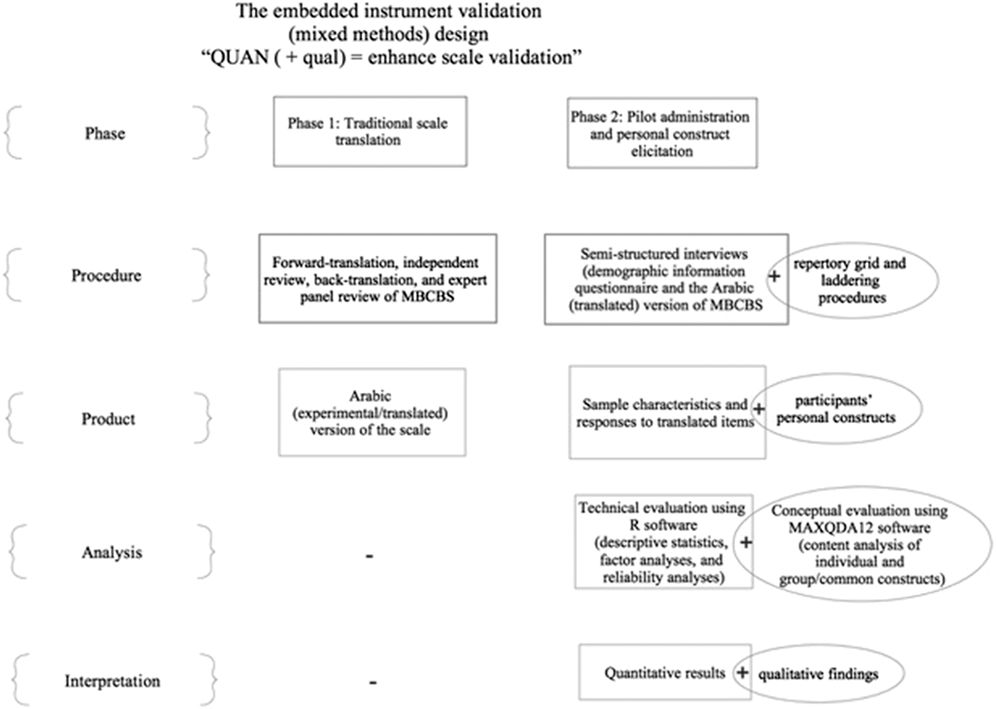
We used an embedded instrument validation (mixed methods) design (Creswell & Plano Clark, 2011) to integrate quantitative and qualitative data in order to develop and evaluate an Arabic version of the modified MBCBS. The embedded design combines the collection and analysis of quantitative and qualitative data within the traditional quantitative measurement validation design. The notation of the design can be written as QUAN (+ qual) = enhance scale validation (Creswell & Plano Clark, 2011). In this design, qualitative data provides additional information about the validity of the instrument, especially its content and construct validity by focusing on the content and the meaning of the scale items (conceptual or qualitative equivalence) in addition to the quantitative item properties (technical or quantitative equivalence). To develop a validated Arabic version of the modified MBCBS, we conducted the study in two phases. The first phase included traditional scale translation, consisting of (a) a forward-translation and independent review and (b) a back-translation and expert panel review to ensure meaning and wording clarity (Weech-Maldonado et al., Reference Weech-Maldonado, Weidmer, Morales, Hays, Cynamon and Kulka2001). In the second phase, as will be detailed in later sections, we administered the translated Arabic scale to the study sample and conducted a personal construct elicitation of the scale items. We collected both types of data in a semi-structured interview format, then analysed each type of data separately and subsequently merged for convergence and confirmation of both results (see Figure 1 for study design).
A diagram of the embedded instrument validation of the Montgomery Borgatta Caregiver Burden Scale (MBCBS), within a mixed methods (QUAN + qual) design

Participants and Procedure
Saudi family caregivers were invited to participate in the present study. For inclusion criteria, all participants were in-home family caregivers (of a family member who lives with dementia at home, not in hospital or residential care settings), such as a parent or other relative aged 50 years or older, diagnosed with Alzheimer’s disease or other form of dementia. Participants were primary caregivers aged 18 years or older who provided at least one weekly activity of daily living ([ADL], e.g., bathing, dressing, toileting) or instrumental activity of daily living ([IADL], e.g., cooking, driving, shopping), and who had been caregivers to the family member for at least the past 6 months. Participants who did not meet the inclusion criteria were excluded from the study.
A convenience sample of 20 family caregivers was recruited in several ways. We sent emails to dementia specialists (e.g., geriatricians, neurologists) at King Saud University Medical City (Riyadh, Saudi Arabia) to share the details of the study with their patients via poster in the office waiting room. A recruitment poster was shared via the social media accounts of the Saudi Alzheimer’s Disease Association (SADA). In addition, we contacted caregivers through client registry databases, through the SADA, and invited them to participate in the study. Snowball sampling was also used such that family caregivers who participated in the study were asked if they could refer other interested family caregivers (from other families) to the researchers. After participants read a letter of information about the study, and provided informed consent, they met with one of the investigators (first author) or a research assistant (a graduate medical student) to be interviewed at the SADA, geriatric clinic, or via telephone. The study was approved by the Health Sciences Research Ethics Board at the University of Western University, London, Ontario, Canada, and by the Institutional Review Board (IRB) of King Saud University, Riyadh, Saudi Arabia. Permission to translate the original scale for use in this study was obtained from MBCBS copyright holder Rhonda J. V. Montgomery, Professor Emerita at the University of Wisconsin-Milwaukee.
Methods
The Modified MBCBS
The modified version of MBCBS (Savundranayagam et al., Reference Savundranayagam, Montgomery and Kosloski2011; see Appendix A) measures three burden scores: objective burden ([OB]; i.e., disruption of a caregiver’s life due to caregiving tasks; 6 items), relationship burden ([RB]; i.e., relationships between caregiver and care receiver based on the demands of caregiving responsibilities; 5 items), and stress burden ([SB]; i.e., emotional impact of caregiving; 5 items). The scale items – predictors of burden – are framed by asking caregivers to respond to a general question: “As a result of assisting the care receiver, have the following aspects of your life changed?” Items are answered on a 5-point scale ranging from 1 (“not at all”) to 5 (“a great deal”). The burden scores in each subscale are summed, with higher scores (e.g., 23 in OB, 13.5 in SB, and 15 in RB) indicating greater burden. Results for each dimension of the scale (type of burden) may indicate different support interventions (Savundranayagam et al., Reference Savundranayagam, Montgomery and Kosloski2011).
Personal Construct Elicitation Methods
This study entailed two methods, a repertory grid technique (Kelly, Reference Kelly1955; see Appendix B) and a laddering procedure (Hinkle, Reference Hinkle2010; Hill, Reference Hill, Neimeyer and Neimeyer1995; see Appendix C) for eliciting individual cognitive maps representing the personal construal of each individual’s world or caregiving experience. More specifically, we used the repertory grid technique and the laddering procedure to qualitatively evaluate the items in each subscale of the caregiver burden’s measure and overall construct. The repertory grid technique (Kelly, Reference Kelly1955) is a matrix that consists of elements or roles (columns) and constructs (rows). To elicit elements, we asked participants to generate a list of up to 10 roles in which they engaged in the past (e.g., “me in the past”, “daughter”), in the present (e.g., “caregiver”, “wife”, “mother”, “worker”), or anticipated engaging in the future (e.g., “me in the future”, “future self”). Construct elicitation (two poles) involved our asking the participants if each item on the translated scale was similar to or different from their caregiving experience.
For example, for item 6 on the SB subscale (“have your caregiving responsibilities: made you nervous?”), participants were asked, “Does the word ‘nervous’ explain or describe your current situation?” If participants answered in the affirmative (“Yes”), the word “nervous” made the first pole of the construct, and then they were asked to give a word that had a similar meaning to nervous (e.g., “edgy” or “becomes easily irritated”) to make the second pole of the construct. If they answered in the negative (“No”), then they were asked to give a word that better explained the situation (e.g., “emotional stability”). This construct elicitation continued until all scale items were evaluated and completed. The participant’s self-identified roles (elements) were then rated on a 5-point rating scale based on the two poles of each construct (1 or 2 indicates the left pole or the original translated item, 3 indicates a neutral response, and 4 or 5 indicates the right pole or the participant’s elicited construct).
Following the repertory grid technique, we applied the laddering procedure (Hinkle, Reference Hinkle2010; Hill, Reference Hill, Neimeyer and Neimeyer1995), including “value laddering” (also termed “laddering up”) and “act laddering” (“laddering down”) to evaluate the construct of the scale (caregiver burden). The purpose of this procedure was to explore the higher levels of constructs (fundamental constructs) related to caregiving. For example, working from elicited constructs (e.g., burden vs. responsibility) towards a superordinate construct (e.g., a sense of duty), participants were asked to answer “why questions” for each elicited construct. For subordinate constructs (e.g., “spending more time and energy for my parent”), participants were asked “how questions” regarding elicited constructs. In other words, we used value laddering to “ladder upwards” and act laddering to “ladder downwards”. The laddering continued until participants could not ladder any further (i.e., they agreed that the uppermost response was a fundamental value within their general construction of caregiving). For more details about laddering procedure, see Hill (Reference Hill, Neimeyer and Neimeyer1995).
Analysis Procedures
Applying a Traditional Psychometric Approach to the Translated Scale
We applied traditional psychometric analyses to analyse the study’s quantitative data, specifically the statistical package R (version 3.2.2) to analyse the translated scale data . We calculated descriptive statistics on the sample characteristics and presented them as frequencies and percentages for categorical data and as mean and standard deviation (SD) for continuous variables. We employed different methods of factor analysis to evaluate the similarity of the factorial structure of the translated scale with other versions of the scale that are published in the literature.
We note that our sample size is insufficient to make strong inferences about the factor structure; however, we believe that exploratory as well as confirmatory approaches to factor analysis (Floyd & Widaman, Reference Floyd and Widaman1995) will provide a provisional evaluation of the extent to which the translated version generally conforms to the factor structure (underlying dimensions or subscales in the translated version) of the three-scale solution of the untranslated (original) version (Savundranayagam et al., Reference Savundranayagam, Montgomery and Kosloski2011).
Finally, the reliability analyses were based on Cronbach’s alpha coefficient of internal consistency, with values of at least 0.70 demonstrating acceptable internal consistency.
Content Analysis Applied to Methods of Personal Construct Theory
For the qualitative data, individuals’ (caregivers’) constructs produced from both the repertory grid technique and laddering procedure were analysed separately by a study investigator (first author) and a research assistant (graduate medical student) using an initial eyeball inspection of the elicited constructs (e.g., becoming familiar with the nature and rating of the constructs; Jankowicz, Reference Jankowicz2003) and interpretive content analysis (Drisko & Maschi, Reference Drisko and Maschi2015). In that analysis, both manifest and latent meanings were considered with reference to the Saudi Arabian context (i.e., referring to the Islamic teachings that place a very high value on the family and care of the older population). To facilitate the analysis, data was translated (from Arabic into English) and transcribed verbatim into Microsoft Excel files and then transferred to MAXQDA12 (qualitative and mixed method data analysis software) to perform further analysis (e.g., highlighting codes, creating word clouds, and comparing constructs across participants). Participants’ personal constructs (words or phrases) were used as units of analysis; thus, where possible, each response was translated into a string of “noun equivalents” to reduce the amount of analysed data.
After the two analysts reached an agreement about the generated codes of participants’ constructs and overall conceptualization of coded data, data were illustrated on individual cognitive maps using iMindMap9 (mind mapping software). These cognitive maps depict representations of each participant’s construct system (way of thinking) about the context of “being a caregiver” compared with other roles in the participant’s life. Although the content of these maps was data-derived (based on the participants’ construal of their caregiving situations), we deductively derived the categorization of these maps from the predetermined subscales of the original scale. We next aggregated individual maps (for commonality) into a group cognitive map by counting the number of repeated constructs used by each participant. The results of this procedure were then expressed graphically as a group cognitive map that we used to compare the experience of Saudi caregivers to the accounts of North American caregivers, and North American versions of the scale.
Results
Quantitative Evaluation of Psychometric Data
In addition to the content validity of the translated version of the scale, the results of the quantitative data include statistical data from the standard procedure of traditional psychometric analyses. For example, data included descriptive statistics of the sample socio-demographic data and characteristics of scale items, factor analysis procedures, and reliability analyses of scale items compared to the original scale and a translated scale in another cultural group (French Canadian version).
Content Validity (Experts’ Evaluation) of the Translated Version
The process of translating the original scale included forward translation and an independent review (by a bilingual doctoral student and a bilingual psychiatrist), back translation, as well as a review by an expert panel, which included one bilingual doctoral student, and test construction, occupational therapy, and family caregiving experts. The initial translation of the scale from English into Arabic was undertaken by two professional translators, and before starting, the translators were introduced to the objectives of the study, the demographic characteristics of the study population, and the targeted reading level of the translation. Once the scale was translated into Arabic, the scale was reviewed by the two bilingual reviewers (first and second author). The review of the forward translation was followed by back translation into English by two independent bilingual translators. The back translators had no access to the original English version of the scale and did not consult with either the forward translators or the study investigators. The expert panel reviewed the back-translated version to detect any discrepancies in meaning or conceptual equivalence between the scale’s original version and the back-translated version. The similarities and differences between the two versions were discussed, and consensus among the experts suggested no correction or modifications to the back-translated scale.
As a result of this evaluation, the translated (Arabic) version of the scale was introduced to study participants via study investigators (first author or a graduate medical student) who met (either face-to-face or via telephone) with each person individually for approximately 60 to 90 minutes (both responding to the scale and evaluating the scale items and construct). During the interview, participants responded to the translated scale first with no influence or input from the interviewers. Next, participants were asked questions regarding word clarity and their agreement with the meaning of scale items. For those who met via telephone, the scale was sent to them first via email (to respond to the scale) and then contacted at the same time for scale evaluation.
Characteristics of Family Caregivers
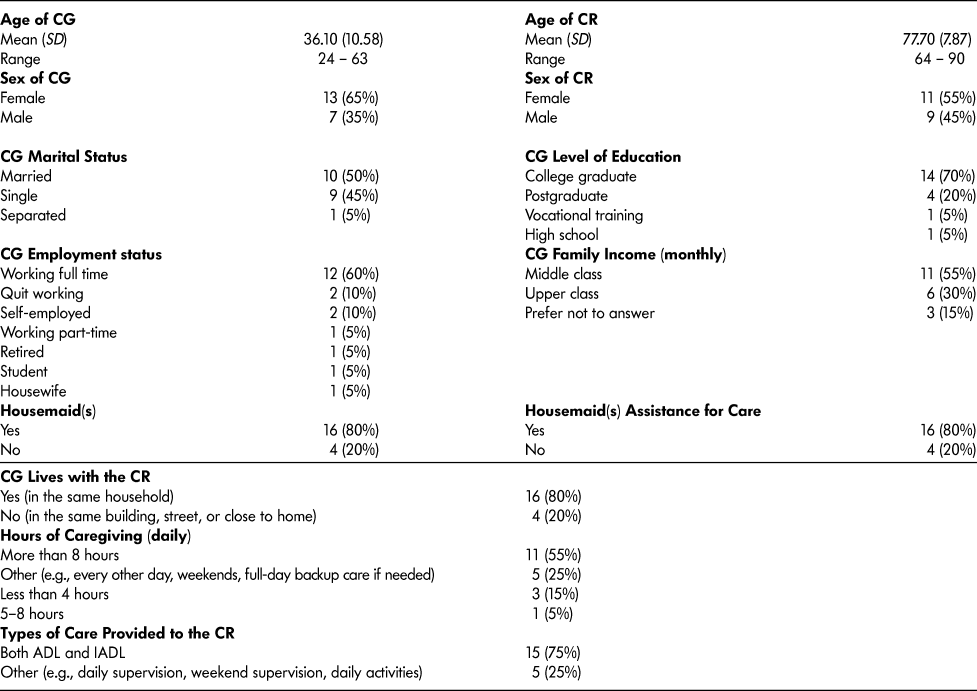
The socio-demographic characteristics of the sample are presented in Table 1. Twenty family caregivers from two of the largest Saudi cities (Riyadh and Jeddah) were interviewed. Due to some religious considerations and social restrictions in Saudi society (e.g., refusal of face-to-face interviews, gender match of interviewer, and sensitivity of the topic of taking care of a parent with dementia) and circumstances in caregivers’ lives (e.g., lack of time, transportation difficulties, inability to leave the person with dementia at home), 14 (70%) of the caregivers were interviewed face-to-face and 6 (30%) were interviewed via telephone. The average age of participants was 36.10 years for caregivers and 77.70 years for care receivers with probable diagnosis of Alzheimer’s disease (80%) or mixed dementia (20%). Most caregivers were female (65%), middle class (55%), adult children (90%), with college-level education (70%), living with the person with dementia (80%) in an extended family household (60% with 3 to 10 family members) and with an average of five years of caregiving experience for the person with dementia (mean = 5.70, SD = 2.74).
Characteristics of family caregivers (n = 20)

Note: CG = caregiver; CR = care receiver; ADL = activities of daily living; IADL = instrumental activities of daily living
Although half of the caregivers (55%) spent more than 8 hours (daily) assisting the person with dementia (75% of assistance with both ADL and IADL activities), approximately half (45%) received no formal (non-family) support. Instead, 80 per cent of the entire sample had an average of 1 housemaid (private workers employed and paid by the caregivers) to provide help with the household chores (e.g., vacuuming, cleaning, washing, and ironing, or other related services), with 20 per cent of those (often untrained) workers providing help with the caregiving needs. Only two participants had a private nurse (living at home) to provide (mostly medical) help with the caregiving needs resulting from the advanced disease stage of the care receiver. For those who received formal support (55%), only 15 per cent received basic in-home care services, and 30 per cent either navigated the programs provided by the Saudi Alzheimer’s Disease Association or acted as advocates for issues related to family caregiving (e.g., creating or participating in a virtual support groups via social medical platforms). For caregivers’ own health concerns, most caregivers were concerned about either physical symptoms (e.g., hypertension, back pain, stomach ache) or psychological issues (e.g., concerns of the care recipient’s health status and fears of experiencing future memory problems).
Scores on the Burden Scales
The level of stress burden (SB) (mean = 11.50, SD = 3.76, range=5 to 17) and objective burden (OB) (mean = 18.55, SD = 5.95, range = 7 to 26) was the highest, with 65 per cent and 60 per cent of caregivers respectively, above the average score of the study population. Less level of burden was found on the relationship burden (RB) (mean = 15.95, SD = 3.20, range = 10 to 22) with 50 per cent of caregivers above the average score of the study population. The percentages of participants’ responses to scale items in each subscale are provided in Appendix D.
Factor Analysis
For exploratory purposes, participants’ scores on the translated scale were first subjected to parallel analysis to determine the number of factors that could be extracted for the data. In parallel analysis, the eigenvalues from a common factor analysis (study data) are plotted against estimated eigenvalues from random or stimulated data (Floyd & Widaman, Reference Floyd and Widaman1995). Results of parallel analysis suggested that the scale had two distinct factors, both with an eigenvalue greater than one (6.22 and 1.65 respectively). We also conducted a preliminary two-factor analysis to examine items’ standardized loadings. After defining problematic items (with loadings less than 0.30), we undertook further exploratory factor analysis to assess adequacy and compare the factor structure of the translated scale using four models: (1) two-factor model with all translated (original) items; (2) two-factor model (excluding four problematic items); (3) two-factor model (excluding the five items of the RB subscale); and 4) two-factor model (excluding the five items of the RB subscale and one additional problematic item from the SB subscale).
The summary table of the factor analysis model solutions (see Appendix E), and the results of the two-factor model (model 4) have better fit indices for the translated scale than other models of exploratory factor analysis. The root mean square of the residuals statistic for this model is smaller (at 0.12) and the comparative fit index (CFI) is larger (at 0.754), and both of these assessment measures indicate a better model fit of exploratory factor analysis. Furthermore, four models of a confirmatory factor analysis were also conducted to confirm the findings of the exploratory factor analysis models (Harrington, Reference Harrington2009) as compared to the structure of the three-factor model of the original (untranslated) scale (Savundranayagam et al., Reference Savundranayagam, Montgomery and Kosloski2011). The results of the two-factor model of confirmatory factor analysis (model 7) indicate a better score (0.092) of standardized root mean square residuals and comparative fit index score (0.856), which confirms the results of model four of the two-factor model of exploratory factor analysis (after the items of the RB subscale and item 9 of the SB subscale were dropped in both exploratory factor analysis and confirmatory factor analysis models). Although the fit indices are suboptimal, the final model presented within the analysis is the best model that could be constructed from these items. In addition, we found the correlation coefficient between the OB and SB subscales to be high (0.74). In contrast, the correlation of RB subscales was very low with either the SB (0.01) or OB (0.05) subscales.
Reliability (Internal Consistency) Analyses
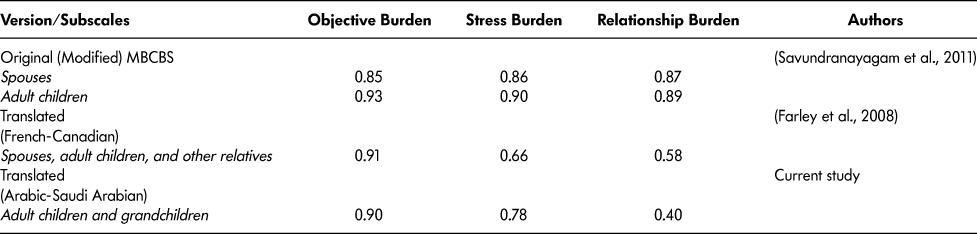
A comparison of reliability scores (Cronbach’s alpha) of the translated scale revealed that the two-factor model of exploratory factor analysis (model 4) had a higher reliability score (0.92) than the other exploratory factor analysis models. In addition, reliability scores of the subscales show that the OB subscale had a higher reliability than either SB or RB subscales (0.78 and 0.40 respectively), and the overall reliability score of the translated scale (with all translated items) was 0.88.
Participants’ (Qualitative) Evaluation of Scale Items and Construct
The qualitative data of the study include the results of conceptual evaluation procedures for the content of scale items and construct of caregiver burden from the perspective (worldview) of study participants. These results include content analysis of the data gained from the repertory grid technique (grids) and laddering procedure (ladders). Because we did not examine the results of qualitative data (personal constructs) in either the modified (Savundranayagam et al., Reference Savundranayagam, Montgomery and Kosloski2011) or French version of the scale (Farley, Demers, & Swaine, Reference Farley, Demers and Swaine2008), these results were limited only to our sample and could only broadly be compared to the overall results of the other versions.
Grids
To seek convergence of quantitative data of the translated (Arabic) scale items, we gained from the previous (quantitative) data, we compared common constructs generated from personal (individual) cognitive maps elicited from study participants to the results of the translated (original) items and subscales. As mentioned in the previous section, the OB subscale (“impact of caregiving daily tasks”) was the most reliable (0.90) in our sample. Participants’ constructs for this particular subscale showed similar meanings to the original items; however, participants’ responses to several items (item 4, 7, and 13) in our sample were similar and classified based on gender or culturally related events. For example, in item 4, the “recreational activities” included familial or social activities (e.g., gathering with family or friends), spiritual activities (visiting the holy mosques), and personal care activities (time for gym, or time to pay attention to nails, hair, skin, etc.). Similarly, in item 7, “social life suffering” is related either to less time for family gatherings or time with friends. In addition, showing up with the care receiver at a family gathering was related to “social embarrassment” of the caregiver or in “social pressure” to justify the changes that have happened to the care receiver.
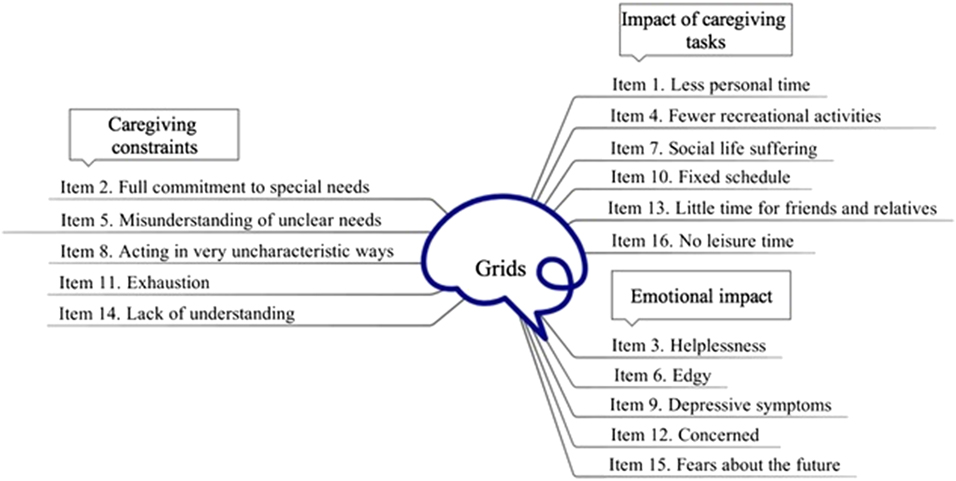
In contrast to the OB subscale, the RB subscale had the lowest reliability score (0.40) due to its questionable items in our sample. In addition, the CFI score of the scale with all translated (original) items (0.481) was improved (CFI = 0.754) when the items of the RB subscale (items 2, 5, 8, 11, 14), and item 9 (“have your caregiving responsibilities depressed you?”) of the SB subscale were removed. The content analysis of participants’ constructs of the RB subscale (“caregiving constraints” in our sample) showed that the common constructs used by our participants conceptually contrasted with the overall conceptual meaning of the original subscale. Where the common theme of the original RB subscale is the “subjective demand burden” – i.e., the degree to which the care receiver was being overly demanding, manipulative, making unreasonable requests, and so on – the common construction of the translated subscale shows that caregivers perceived their lives to be constrained by full commitment to (vs. manipulated or dominated by) care responsibilities for a “patient” or an “older adult with special needs”. If there is “exhaustion” (vs. being taken advantage of) from increased responsibilities or “lack of understanding” (vs. conflicts with the care receiver) by the care receiver’s special needs or “resentment” towards family members, it was often due to “misunderstanding of unclear requests or needs” (vs. unreasonable requests), and “acting in very uncharacteristic ways” (vs. beyond what the care receiver needed).
For example, for item 8, although verbally nonaggressive behaviours (e.g., repetitive questions or requests) or physically aggressive behaviours (e.g., hitting or biting) among care receivers were mentioned by some participants, “complete silence sometimes” or “no communication” was mentioned by others depending on the stage of the disease, or personality factors (e.g., quiet personality led to fewer requests, or strong personality led to aggressive behaviour) in some way as related to the former personality of the care receivers.
With regard to item 9 in the SB (the “emotional impact” in our sample), although the mean score of this item is 1.75 and standard deviation is 1.12 (see Appendix D for item characteristics), participants’ constructs showed symptoms of depression in their responses (e.g., sadness, crying or tearfulness, loss of enjoyment, and mood swings).
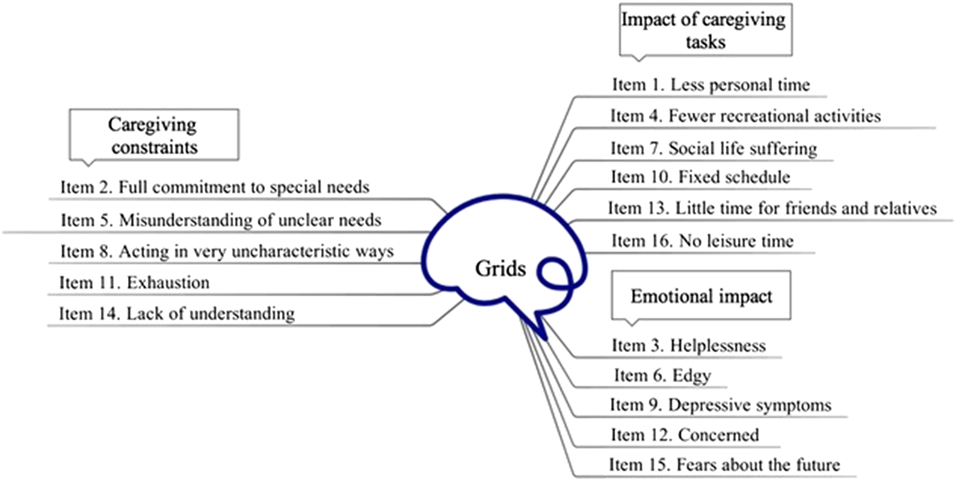
Other items in the SB subscale may also show meanings similar to the original items; Figure 2 shows a group cognitive map that compares participants’ common constructs to the scale’s original items. Overall, participants’ roles ranged from a minimum of 6 roles to a maximum of 10 roles, including the caregiver role (“my role now”) and most common roles of friend (70%), sister (65%), and full-time worker (60%), with an average rating of 4 across all constructs indicating participants’ preferences to use their own words or constructs to describe their unique situation.
Group cognitive map (participants’ constructs of scale items and constructs of subscales)
Ladders
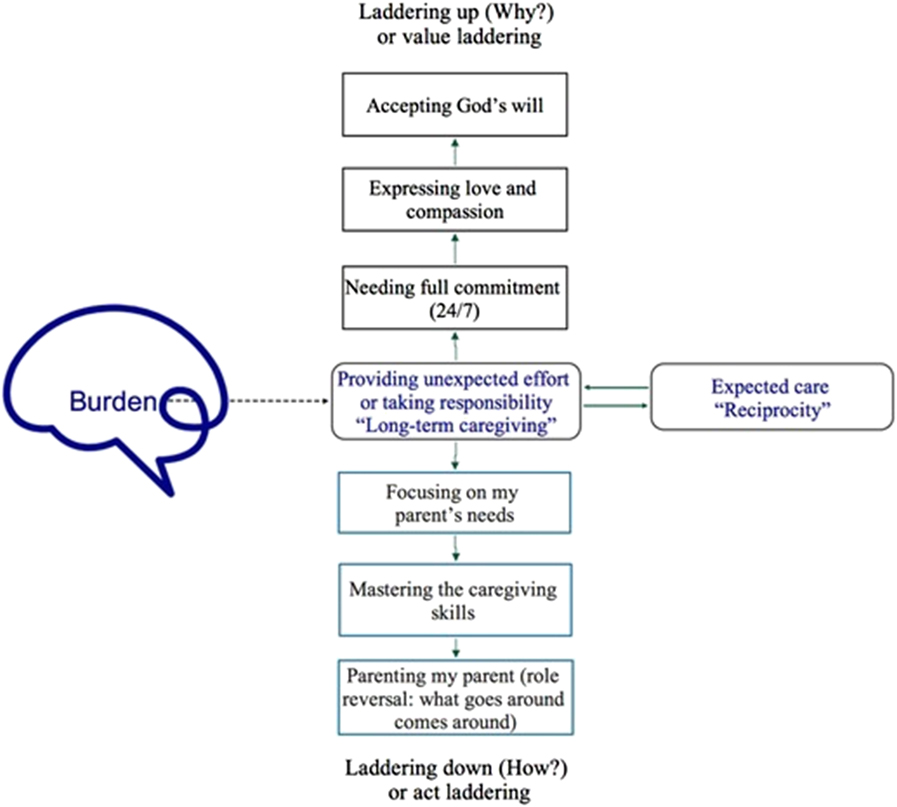
For conceptual evaluation of the caregiver burden construct, participants in our study were not comfortable with the use of the concept of burden. When burden was used (i.e., by 4 caregivers), it was adopted with caution and with direct reference to the word “rewarding” (“rewarding burden”) when the caregivers were the only primary caregivers (or felt that they were the only caregivers) responsible for providing daily caregiving tasks (or at least the required supervision). Although caregivers, as adult children and grandchildren, were socially “expected to care” for their older parents and grandparents, they described their experience of “long-term caregiving” as an “unexpected effort” they had in their lives. Many indicated, however, that burden was a “very harsh” word to describe their experience and that it may have contradicted the blessing tasks they were committed to provide to their care receivers (parents or grandparents), which were characterized by “full commitment”, “love”, and “compassion” (as value constructs) and directly related to “God’s will” (highest laddering or value construct). Thus, participants generally preferred to use the word “commitment”, “effort”, or “responsibility” (vs. burden) to describe their situation.
Many participants indicated that they felt “overwhelmed” by the changes and needs associated with the disease and that they wanted to know how to handle the needs of the care receiver in a way that would “comfort” their parent with dementia. Participants indicated a need to learn “how to live with the disease” and “focus on my parent’s needs” as a priority (first level of act construct); as well as a need to “master the caregiving skills” (second level of act construct), which needed “patience, knowledge, and training”. Participants indicated that a large part of mastering the skills required effort (1) to “deal with the care receiver’s memory and behavioural challenges” in the middle stages of the disease and (2) to deal with “severe physical disability” in the advanced stages of the disease, requiring “advanced medical care” (e.g., tube feeding, providing wound care) and in-home equipment (e.g., wheelchair, adjustable hospital bed). Another part of this effort frequently expressed by participants was the emotional feeling of not doing enough (or “guilt”) related to the ability to do their best to meet their responsibility as adult children (“role reversal” or “parenting my parent”), and to make their parent feel “comfortable” in their later life; the feeling that caregivers themselves indicated they wanted to experience when they get older (see Figure 3 for aggregated laddering of “caregiver burden” in Saudi Arabia).
Aggregated laddering (participants’ constructs of “caregiver burden”)

Discussion
Because there is no published literature on assessing the experience of family caregivers of persons with dementia in Saudi Arabia, we believe that this study is the first of its kind in this context. The aim of this study was to contribute to the literature on caregiver assessment by enhancing the process of validating an existing caregiver scale in the target culture in order to adequately address the needs, expectations, and construct system related to the investigated phenomenon (experience of family caregiving) in the target population (Saudi family caregivers). The constructive methods of personal construct theory (using repertory grid technique and laddering procedure) applied in this study, in addition to the traditional quantitative methods (demographic information questionnaire and translated scale) of evaluating the psychometric properties of the scale were fruitful in examining the caregiving experience from the perspective of family caregivers. These methods were also helpful in facilitating a cross-cultural comparison of this population (Saudi family caregivers) with that of the original scale (American family caregivers) and other cultural groups for whom the scale was validated (French Canadian family caregivers). Through the use of personal construct methods, such a comparison is important for replicating the constructs and the meaning of the items as well as in designing and developing programs and support services that are socially and culturally related and meet the needs of the target population.
Overall, the results of this study are partially consistent with the findings of a local (unpublished) social survey (Alobaidi & Aldamigh, Reference Alobaidi and Aldamigh2001) on the socio-demographics of dementia and its related factors (e.g., lack of knowledge and social awareness about dementia, family care system, living arrangements, hiring private workers, role conflicts, supporting the care receiver with both ADL and IADL, and challenges in dealing with uncharacteristic behaviour of the care receiver) in Saudi Arabia. However, the care receivers in this study were mostly female (55%), which is slightly higher than the reported percentage of females in the survey (44%). Our results also affirm the applicability of multiple dimensions of family caregiving across three cultures, and contribute to the identification of negative as well as positive consequences of family caregiving (e.g., Adelman, Tmanova, Delgado, Dion, & Lachs, Reference Adelman, Tmanova, Delgado, Dion and Lachs2014; Cohen, Colantonio, & Vernich, Reference Cohen, Colantonio and Vernich2002; Dunkin & Anderson-Hanley, Reference Dunkin and Anderson-Hanley1998; Etters, Goodall, & Harrison, Reference Etters, Goodall and Harrison2008; Feinberg, Reference Feinberg2002; Pearlin, Mullan, Semple, & Skaff, Reference Pearlin, Mullan, Semple and Skaff1990). Regardless of religious and societal elder care assumptions and positive outcomes caregivers may experience, the results also show that a comprehensive family caregiver assessment (e.g., a holistic assessment and understanding of the caregiver’s view and desired outcomes; Ahern et al., Reference Ahern, Guberman, Levine, Maslow, Montgomery, Reinhard and Zarit2006) is essential to ensure quality of life for both the caregivers and care receivers (Adelman et al., Reference Adelman, Tmanova, Delgado, Dion and Lachs2014). There is also a need for a potential care partnership plan that integrates the long-term care of Alzheimer’s disease and other forms of dementia between family caregivers (informal care) and formal care providers, including quasi-formal or community services, in cultures in which family are the primary care providers (Walker, Reference Walker, Liu and Kending2000).
In our sample, the SB subscale and the OB subscale seemed to have high impacts on Saudi caregivers (mostly female), similar to family caregivers in Western (e.g., del-Pino-Casado, Frías-Osuna, Palomino-Moral, & Pancorbo-Hidalgo, 2011; Farley et al., Reference Farley, Demers and Swaine2008; Leggett, Zarit, Taylor, & Galvin, Reference Leggett, Zarit, Taylor and Galvin2011; Savundranayagam et al., Reference Savundranayagam, Montgomery and Kosloski2011) and non-Western societies (e.g., Lai, Reference Lai2010; Salama & Abou El-soud, 2012; Sinunu, Yount, & El Afify, Reference Sinunu, Yount and El Afify2009). However, some emotional impacts, such as “depression”, may not have been explicitly expressed by family caregivers, as in the case of item 9. This may have beeen due to lack of clarity on the concept of depression, or “stigma” associated with mental illness within our sample, as has been shown to be the case in many Asian (Lauber & Rössler, Reference Lauber and Rössler2007) and Arab families (Dalky, Reference Dalky2012). Another explanation is that admitting to having depression would have meant that “I do not want to take care of my parents”, which contradicts the blessings and religious teachings of providing care to the elderly parent that caregivers were raised to embrace (Osman et al., Reference Osman, Shukri and Othman2011). Thus, sublimation may also have played a role in this, which may have decreased the level of low mood and depression associated with the caregiving.
With regards to the RB subscale, although the study results do not confirm the three-factor model of confirmatory factor analysis (see Appendix E) found in the original (untranslated) scale (Savundranayagam et al., Reference Savundranayagam, Montgomery and Kosloski2011), the two-factor model (model 4 of exploratory factor analysis and model 7 of confirmatory factor analysis) is consistent with previous findings from a French Canadian study (Farley et al., Reference Farley, Demers and Swaine2008) in that the RB subscale was psychometrically inadequate and may not be recommended for use in caregiver assessment of either population (see Table 2). However, no further explanation about the appropriateness of the meanings or word clarity of this subscale was provided in the French Canadian study (Farley et al., Reference Farley, Demers and Swaine2008). From the results of the caregivers’ constructs used to describe this dyadic relationship in our study, we argue that older person-caregiver relationships may be personally and culturally relevant and can vary from population to population (e.g., spouses vs. adult children, and male vs. female caregivers) and culture to culture (single vs. multiple caregivers, and an individualistic vs. collectivistic caregiving system).
Reliability scores of the original and other versions of the MBCBS scale

MBCBS = Montgomery Borgatta Caregiver Burden Scale
Although caregiving for a person with dementia is demanding and may not prevent the perceived impact or negative feelings from the caregiving experience, words or phrases such as “to manipulate you”, “unreasonable requests”, “demands over and above what he or she needs”, “taken advantage of by your relative”, and “caused conflicts” may be negatively interpreted by adult children family caregivers who have strong familial norms of respect for their older parents or relatives, either because of their past memories or experiences (parent-child relationship) or assumed filial and social commitments to older persons in society (Osman et al., Reference Osman, Shukri and Othman2011). Such negative feelings may be redirected to the causes of the feelings (e.g., caregiving constraints) rather than the feelings themselves (e.g., perceived strain on relationship) due to the sensitivity of the topic or feelings of personal guilt or social shame (Rappoport & Lowenstein, Reference Rappoport and Lowenstein2007).
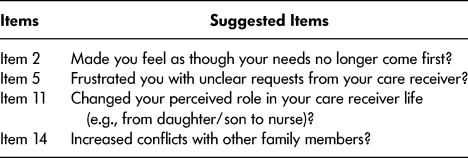
Nonetheless, the challenges related to problematic behavioural symptoms seem to be a negative outcome for family caregivers across cultures (e.g., Chiu, Chen, Yip, Hua, & Tang, Reference Chiu, Chen, Yip, Hua and Tang2006; Donnelly, Reference Donnelly2005; Fuh, Reference Fuh2006; Kar, Reference Kar2009; Matsumoto et al., Reference Matsumoto, Ikeda, Fukuhara, Shinagawa, Ishikawa, Mori and Tanabe2007), including adult children caregivers in cultures assessed with both the original (Savundranayagam et al., Reference Savundranayagam, Montgomery and Kosloski2011) and our translated scale. In addition, in a family-oriented caregiving system (similar to our sample), conflicts and disagreements (item 14) may also be directed towards factors other than the dyadic relationship with the care receiver, such as family members involved in the caregiving relationship (e.g., partners, children, or siblings; Choi, Reference Choi1993; Kim & Lee, Reference Kim and Lee2003). For meaning clarity and conceptual validation across cultures, instead of dropping items or excluding such a particular subscale (e.g., the RB subscale), we suggest reconstruction of the scale and inclusion in the assessment of a more robust examination and understanding of the specific processes and (personal and group) constructs related to this relationship domain. Accordingly, we have made suggestions for alternative items (see Table 3).
Potential culturally sensitive items for the relationship burden subscale (caregiving constraints)

Note: Items are suggested based on the content analysis of participants’ constructs (grids).
Along with the results we achieved with the RB subscale, the examination of the caregiver burden construct in this study suggests that burden as a construct may not ring true in the Saudi Arabian context, and may need to be avoided (Ahern et al., Reference Ahern, Guberman, Levine, Maslow, Montgomery, Reinhard and Zarit2006; Feinberg, Reference Feinberg2002). Saudi caregivers and other family-oriented cultures with significant spiritual or religious values (e.g., Chinese, African American; Dilworth-Anderson, Goodwin, & Williams, Reference Dilworth-Anderson, Goodwin and Williams2004; Lai, Reference Lai2010) may embrace positive, socially developed constructs (e.g., role reciprocity, filial piety, wisdom of older persons, living arrangements) associated with elder care before the dementia caregiving journey even begins. In these cultures, understanding the personal and cultural constructs that inform the relationship between the caregiver and care receiver, or the family caregiving system in general, can help to identify contradictions between old constructs and the need to develop new constructs related to the new situation. Such examination of constructs can be helpful in differentiating between culturally expected, and unexpected care for a person with dementia. Further, contradictions in caregivers’ construct systems may arise not from the relationship itself (e.g., old positive constructs associated with the child-parent relationship), but from an inability to adapt to the new situation (e.g., the need to modify the old constructs to inform the caregiving experience either with the care receiver or family members).
Negativity can arise in light of the older person’s severe illness, lack of family networking support (e.g., marriage partners, children, grandchildren, and cousins), and inability to maintain other roles in life, such as employment (outside the home) and other challenges related to caregiving expenses. Moreover, such constructs (“as oldest adult child I am the one who is responsible for taking care of my parent” or “what goes around comes around”) may prevent caregivers from seeking help either inside (family support) or outside (formal support) the family, even in a society with the appropriate services available. Support services are needed to help caregivers “reconstruct” and adjust to the new experience of long-term caregiving (Hamad et al., Reference Hamad, AlHadi, Lee, Savundranayagam, Holmes, Kinsella and Johnson2017). More advanced psychological (cognitive) approaches are also recommended for the same purpose (Cheng, Lau, Mak, Ng, & Lam, Reference Cheng, Lau, Mak, Ng and Lam2014). For potential formal care, instead of seeking help from untrained hired workers or private nurses (not covered by social insurance programs), advanced in-home care support services can also be critical for family-oriented caregiving systems (Walker, Reference Walker, Liu and Kending2000).
Conclusions and Limitations
The results of this study should be considered with caution due to several limitations. First, although this study is the first of its kind about caregiving experiences in the Saudi Arabia context, the sampling frame of this study is geographically restricted to only two urban areas of two regions (Jeddah in Hejaz and Riyadh in Najd) based on the responses we collected from participants. Participants received the study information mainly from the Saudi Alzheimer’s Disease Association social media accounts and client registry databases, and snowballing, and they were willing to share their caregiving experience. Thus, more research is needed about the experience and challenges of family caregiving across populations (e.g., spouses vs. adult children) and in other areas of Saudi Arabia (e.g., rural areas vs. modern cities). Second, the sample size (n = 20) may restrict the generalizability of the quantitative results to other regions in Saudi Arabia or other cultural groups with divergent attributes, such as low levels of education or income. In particular, the suboptimal fit indices that we identified within the factor analysis suggest that these results should be confirmed with larger and more diverse samples in the future.
Overall, however, the interpretations drawn from the quantitative analyses are supported by the findings within the qualitative data. Participants’ responses were structured by reference to the predetermined categories or subscales of MBCBS and theoretical foundation and methods of PCT that may provide a common basis for credibility and transferability of study results to other regions in Saudi Arabia or other cultures with similar attributes and familial values or social assumptions with respect to the older population. Furthermore, the content analysis of the qualitative data began in parallel with recruitment of participants and was found to have reached saturation after recruiting 15 participants. However, we continued the recruitment (and analysis of the content of participants’ constructs) until no new constructs were expressed by the 20 participants. Third, although we believe that the theoretical framework and methodological perspective adopted in this study have not previously been used to examine existing measures and related constructs, this framework and methodology may hold promise for similar research with other cultural groups. Because family is the main source of elder care in many family-oriented cultures, future studies should go beyond the traditional methodologies of cross-cultural measurement validation and use constructive methods to evaluate scale items and constructs associated with global gerontological phenomena in different cultures and contexts, from the perspective of the target culture. Such a constructivist investigation can offer caregivers an active voice in the research process, and assist policymakers to articulate the real needs of caregivers in their own terms rather than in predetermined terms or categories chosen by caregiving experts or policymakers.
Supplementary Material
To view supplementary material for this article, please visit https://doi.org/10.1017/S071498081800003X