


INTRODUCTION
Since the days of Madison and Jefferson, political scientists and legal theorists have questioned whether shorter, entrenched constitutions are more desirable than longer, frequently amended documents. Behind this normative debate lies an empirical question: what factors shape amendment rates? If constitutional designers desire entrenchment, for example, what should they do? According to some scholars, rigid amendment rules constrain elites seeking constitutional change (Dixon and Holden Reference Dixon, Holden and Ginsburg2012; Elkins, Ginsburg, and Melton Reference Elkins, Ginsburg and Melton2009; Ferejohn Reference Ferejohn1997; La Porta et al. Reference La Porta, López-de-Silanes, Pop-Eleches and Shleifer2004; Lijphart Reference Lijphart2012; Lorenz Reference Lorenz2005; Lutz Reference Lutz1994; Negretto Reference Negretto2012; Rasch and Congleton Reference Rasch, Congleton, Congleton and Swedenborg2006; Tsebelis Reference Tsebelis2022), whereas others have suggested that amendment culture plays a larger role than institutional rules (Contiades and Fotiadou Reference Contiades, Fotiadou and Contiades2013; Fruhstorfer and Hein Reference Fruhstorfer, Hein, Fruhstorfer and Hein2016; Ginsburg and Melton Reference Ginsburg and Melton2015; Tarabar and Young Reference Tarabar and Young2021).
Existing accounts of constitutional amendments have major weaknesses. Institutional approaches analyze how rules affect the supply of amendments without examining the conditions that stimulate amendment demand. Meanwhile, a nation’s amendment culture may be endogenous to its amendment rules by creating norms about the desirability of amendments. Thus, it is unclear whether amendment culture changes over time and, if so, why. And, no study to date has disaggregated the behavior of different players in the amendment process.
We advance the study of constitutional amendments by modeling amendment rates as an interplay between social forces and institutional rules. We theorize that social capital creates a political environment more conducive to constitutional reform. Robust levels of social capital help elites, citizens, and social movements overcome the transaction costs created by amendment rules. We follow Keele’s (Reference Keele2007, 242) definition: “Social capital is comprised of civic participation and trusting attitudes.” Thus, our analysis leverages the bundle of attitudes and behaviors scholars use to operationalize the effects of interpersonal networks: political trust, civic engagement, and group membership (Putnam Reference Putnam2000, 19). Our theory is not contingent on resolving scholarly disagreements about the formation and perpetuation of social capital. While these debates are important, it is the existence of trusting attitudes and civic activity that animates our analysis.
We analyze amendment rates of democratic constitutions globally and U.S. state constitutions, using social capital indicators from three datasets. Our cross-sectional and longitudinal analyses indicate that amendment rules matter, but different polities are better equipped to navigate amendment rules depending on their civic connectedness. The American states provide a rigorous test for our theory: subnational amendments occur frequently, suggesting that transaction costs are low. Nevertheless, the results of a novel, two-stage model of amendment proposals and ratifications indicate that social capital trends affect state-level constitutional reform.
DETERMINANTS OF AMENDMENT RATES
Scholars have not discovered a clear relationship between amendment rules and amendment rates partly because operationalizing amendment processes is difficult. Many studies make different assumptions when constructing ordinal or linear indices, creating weak cross-measure correlations (Ginsburg and Melton Reference Ginsburg and Melton2015, 698). A more sophisticated measure comes from Tsebelis (Reference Tsebelis2022), who finds a heteroskedastic relationship, as flexible amendment rules provide a necessary but insufficient condition for constitutional change. These methodological challenges have produced contradictory findings. Some studies suggest that rigid amendment rules reduce amendment frequency (Dixon and Holden Reference Dixon, Holden and Ginsburg2012; Fruhstorfer and Hein Reference Fruhstorfer and Hein2021; Lijphart Reference Lijphart2012; Lutz Reference Lutz1994; Negretto Reference Negretto2012; Tsebelis Reference Tsebelis2022), whereas others produced null results (Ferejohn Reference Ferejohn1997; Ginsburg and Melton Reference Ginsburg and Melton2015; Lorenz Reference Lorenz2005; Rasch and Congleton Reference Rasch, Congleton, Congleton and Swedenborg2006).
As Albert (Reference Albert2019, 2, 97–8) acknowledges, “No part of a constitution is more important than the rules we use to change it,” yet “studies of formal amendment difficulty are insufficient and incorrect if they evaluate only the codified rules of change without attention to the larger political and cultural contexts in which those rules are situated.” One prominent amendment culture study comes from Ginsburg and Melton (Reference Ginsburg and Melton2015), who, in a break from their previous scholarship (Elkins, Ginsburg, and Melton Reference Elkins, Ginsburg and Melton2009), find that institutional factors do not influence amendment rates when models include a measure of amendment culture. However, their measure does not reflect attitudinal data, even though Ginsburg and Melton (Reference Ginsburg and Melton2015, 699) define amendment culture as a “shared set of attitudes about the desirability of amendment.” Instead, they measure culture using the amendment rate of a country’s prior constitution. This is problematic considering amendment rules often do not change when a nation replaces its constitution (Miller et al. Reference Miller, Hamm, Aroca and Hedlund2021, 16).
Tarabar and Young (Reference Tarabar and Young2021) use Hofstede’s cultural dimensions as proxies for constitutional attitudes and find that more individualistic and long-term-oriented societies have higher amendment rates, whereas cultures that avoid uncertainty have fewer amendments. The Hofstede measures are based on survey data collected from employees of IBM subsidiaries during the 1960s and 1970s.Footnote 1 Even if these data were more extensive and nationally representative, they are based on an assumption that culture does not vary over time or subnationally.
Social capital offers an opportunity for theoretical and empirical insights beyond what the literature offers. While social capital does not directly measure amendment attitudes, trust and activism may be factors that shape a constitutional culture. Scholars have found that social capital affects policy innovation (Putnam Reference Putnam1993, 82–120; Reference Putnam2000, 346–7) and we extend this insight to constitutional innovation. Constitutional rules impose transaction costs (Buchanan and Tullock Reference Buchanan and Tullock1965) and, in general, social capital reduces transaction costs (Fukuyama Reference Fukuyama1995). Thus, we predict that amendments will be adopted more frequently in polities with higher levels of social capital or at times within a polity’s history when social capital is comparatively higher.
Amendment Rules and Transaction Costs
Amendment rules structure negotiation and decision costs to make constitutional reform less frequent than legislative change. Constitutional designers commonly employ several strategies. Requiring supermajorities to approve amendments means any change must satisfy the preferences of a larger proportion of the decision-making body. Increasing the number of veto points in the amendment process serves a similar function. Some constitutions provide multiple amendment paths, increasing the strategic choices available to reformers. Social movements and interest groups are sensitive to these costs, taking positions on the rigidity of amendment rules based on whether they prefer the status quo (Dinan Reference Dinan2016).
Higher decision costs create higher renegotiation costs, especially when constitutions fail to specify important details (Dixon and Ginsburg Reference Dixon and Ginsburg2011). Rigid amendment rules raise information costs because decision-makers must be confident that any lasting bargain they reach will be beneficial. When information costs associated with constitutional change are high, the familiarity of the status quo may seem preferable (Blake and Anson Reference Blake and Anson2020; Zink and Dawes Reference Zink and Dawes2016). Flexible amendment rules, by contrast, facilitate constitutional experimentation because if a reform causes problems, they can be more easily solved with a future amendment.
Elites are better at navigating these costs than citizens because they possess strategic incentives and clearer preferences (Fruhstorfer and Hein Reference Fruhstorfer and Hein2021; Negretto and Sánchez-Talanquer Reference Negretto and Sánchez-Talanquer2021). When negotiation and decision costs are high, political actors may utilize other strategies. Judicial review can alter the meaning of existing constitutional provisions, creating a need for public trust in the courts. Elites can also pursue state-level constitutional reform or entrench constitutional principles in ordinary legislation (Woodward-Burns Reference Woodward-Burns2021).
Social Capital and Transaction Costs
The trust, reciprocity, and civic activity produced by social capital help elites, ordinary citizens, and social movements overcome the transaction costs identified earlier. Social capital reduces coordination costs for social movements, facilitating member recruitment, resource mobilization, and coalition formation (Edwards Reference Edwards and Snow2013). With greater resources, social movements can pursue costlier reform strategies. For example, as social capital in the United States increased in the early twentieth century (Putnam Reference Putnam2000), temperance groups updated their strategies from enforcing local nuisance laws to state-level constitutional reform, followed by a federal statute banning the interstate shipment of alcohol, then the Eighteenth Amendment (Compton Reference Compton2014). Social movements reduce information costs for elites by clarifying constituent preferences (Tavits Reference Tavits2006). When groups are active on both sides of an issue, social movements illuminate the compliance costs of a potentially polarizing amendment.
Social capital facilitates elite coalitions needed to satisfy amendment rules. Boix and Posner (Reference Boix and Posner1998) draw connections between social capital and consociational politics, where cross-cleavage/cross-party coalitions are common. Trust helps elites overcome status quo bias. For example, Diani (Reference Diani2006, 134) argued that social capital is “conducive to more open attitudes by the elites to political challengers” and “greater openness of the political opportunity structure.” Social capital generates democratic deliberation, which diminishes political polarization (Fishkin Reference Fishkin2011). Distrust, however, is associated with the rise of populism and partisan exploitation of constitutions (Landau Reference Landau2013).
Evaluating how citizens approach constitutional reform is also important, as referenda are the most common amendment ratification method (Elkins and Hudson Reference Elkins, Hudson, Landau and Lerner2019). On ballot measures, voters utilize elite cues as heuristics (Bowler and Donovan Reference Bowler and Donovan2000). For those cues to work, they must seem trustworthy. Indeed, political trust strongly affects support for referenda in Switzerland (Kriesi Reference Kriesi2005). Social capital enables social movements to provide more information to voters. If citizens have no direct role in the amendment process, they can still hold elites accountable. Claibourn and Martin (Reference Claibourn and Martin2007) find that participation in voluntary societies is associated with increases in political knowledge and accountability. Furthermore, Uslaner (Reference Uslaner2000, 570) argued that trusting voters “place a high value on compromise and legislative productivity, rather than ideological purity and stalemate.”
Nevertheless, the influence of social capital may be limited. Putnam and others assume that when citizens join groups, they form social bonds that translate into trusting attitudes. However, voluntary memberships do not automatically stimulate social trust and expressions of trust vary across citizens—usually “winners” in society are more trusting (Newton Reference Newton2001). Social capital also produces socially undesirable consequences: exacerbating racial inequalities (Hero Reference Hero2003) and producing gendered effects on political involvement (Lowndes Reference Lowndes2004).
Building on Tsebelis’s (Reference Tsebelis2022) finding that constitutional rigidity has heteroskedastic effects, we predict that social capital provides a necessary but insufficient condition for amendments. That is, low social capital levels are strongly associated with fewer amendments, but the effect of robust social capital is more variable. Amendment frequency depends on a number of contextual factors, but these factors might only come into play in trusting and participatory political environments.
ANALYSIS
We analyze an aggregate, cross-national dataset of amendment rates using World Values Survey (WVS) data; a longitudinal, cross-national dataset of amendments using V-Dem data; and a longitudinal, U.S. state-level dataset of amendment proposals and ratifications. We limit our analysis to democratic nations, where amendment rules are more likely to constrain regimes, and social capital is more likely to influence political action. Following Tsebelis (Tsebelis Reference Tsebelis2022), we define democracies as nations with a Polity 4 score of 6 or higher. In the WVS and U.S. state analyses, we utilize distributional negative binomial regression. In the V-Dem analysis, the dependent variable indicates the adoption of at least one amendment in a country-year, so we use logistic regression.Footnote 2
We use Bayesian simulation to estimate all models (Western and Jackman Reference Western and Jackman1994). Gelman and Hill (Reference Gelman and Hill2007) suggest that Bayesian analysis recovers variance components more reliably and permits the evaluation of uncertainty around random effects estimates. We characterize the uncertainty of model parameters and predictions by summarising the posterior distribution. What scholars would call “confidence” in the Frequentist paradigm is analogous to a Bayesian’s “credibility.”
To measure credibility, we calculate the proportion of the posterior distribution that lies on the same side of zero as the posterior mean. We refer to this as the Bayesian p-value or the “posterior probability.” Credible intervals of
 $ 80\% $
allow for hypothesis testing at the
 $ 90\% $
Bayesian p-value level. We use an average first-difference approach to assess how constitutional rigidity and social capital affect the expected value and residual variability in amendment rates. Holding other variables at their observed values, we measure
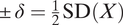 $ \pm \delta =\frac{1}{2}\mathrm{SD}(X) $
of the variable of interest and average the difference in predicted values for
 $ x-\delta $
and
 $ x+\delta $
.
The WVS provides three indicators of political trust: confidence in government, political parties, and courts. A reliability analysis suggests that a single index represents the main source of variation among these measures (Cronbach’s
 $ \alpha $
= 0.92). We also create additive indices measuring participation in voluntary organizations and civic activism—based on respondents’ petitioning, boycotting, and protest history. While these variables do not directly measure resources available to social movements, scholars use these data to compare the effects of social movements across nations (e.g., Norris, Walgrave, and Van Aelst Reference Norris, Walgrave and Van Aelst2005). Each indicator is a weighted, cross-wave national average of the 57 democracies surveyed by the WVS.Footnote
3
Here, the dependent variable is the number of years in which amendments were ratified during the democratic lifespan of the current constitution, with the logged democratic age of the constitution serving as an exposure term. We leverage Tsebelis’s (Reference Tsebelis2022) constitutional rigidity measure—a sum of each approval threshold in the amendment process, accounting for inter-chamber differences in party composition. Previous studies indicate that amendment rates are higher in countries with longer constitutions (e.g., Ginsburg and Melton Reference Ginsburg and Melton2015). Thus, our models control for constitutional length, as measured by the logged number of words.
Figure 1 shows the effect of rigidity and social capital measures from three models on the amendment rate (mean function) and the residual standard deviation. A standard-deviation change in constitutional rigidity tends to reliably decrease the number of amendments ratified over time. All differences are credible at the 90% level. A similar change in social capital reliably increases the number of amendments ratified for civic activism and the political trust index, whereas the effect of group membership is not credibly different from zero.
Effects of Constitutional Rigidity and Social Capital on Amendment Rates
Note: See Table A4 (models 4-6) for model results.

Social capital also tends to increase the residual variation of amendments, supporting our hypothesis that social capital is a necessary but insufficient condition. In other words, as social capital increases, so does the possibility of adopting amendments, but other country-specific factors determine whether amendments become a reality. Consistent with Tsebelis (Reference Tsebelis2022), more rigid constitutions have credibly less residual variation.
The Indian constitution has been amended over one hundred times since 1950. India has relatively flexible amendment rules—in the 10th percentile according to Tsebelis (Reference Tsebelis2022)—as many provisions can be amended by a parliamentary majority. But, as we have argued, flexibility does not guarantee amendment frequency. Social capital provides another important factor: India ranks among the top half of countries surveyed in the 2014 WVS with respect to confidence in government (22/59) and the top third in confidence in courts (20/59) and political parties (15/57). Indian citizens are also highly engaged, socially and politically. India ranks among the top 10 countries in group membership (out of 57) and 11th (out of 54) for attending political demonstrations. By contrast, Spain has a rigidity score similar to India (13th percentile), yet India’s amendment rate is more than 10 times higher. One reason might be that Spain ranks 55th in confidence in government, 44th for courts, 46th for parties, and 35th for group membership, only outranking India in participation in demonstrations (second).
To examine within-country, over-time variation, we analyze V-Dem data on 80 democracies from the adoption of their current constitution through 2013. We replicate Tsebelis’s (Reference Tsebelis2022) rigidity measure using legislative fractionalization, courtesy of the PolCon dataset, as a substitute for the annual inter-chamber distance in party composition. The measures correlate at around 0.7 in 2013, although there is only within-country variation in 16 nations. We pair these data with V-Dem’s Civil Society Participation Index (CSPI), an annual, composite indicator of the degree to which organizations are engaged in politics.
Like Beck, Katz, and Tucker (Reference Beck, Katz and Tucker1998), we estimate a binary time-series cross-sectional model, although we treat the data as hierarchically structured—with country random intercepts—and model time dependence by estimating a random effect on the spell length. Like Tarabar and Young (Reference Tarabar and Young2021), we control for real per capita GDP (growth rate and logged base level), Polity’s executive constraint scores, episodes of political violence, and ethnic fractionalization. Following Bell and Jones (Reference Bell and Jones2015), we create between- and within-country variables. We are primarily interested in within-country variation, as the WVS analysis explored between-country variation.Footnote 4
The left portion of Figure 2 visualizes the credible, negative effect of constitutional rigidity in all 16 nations where constitutional rigidity varies over time. This finding suggests that as divisions between legislative chambers increase, the probability of amendment decreases. As indicated on the right side of Figure 2, increases in CSPI scores are reliably associated with increased amendment activity in every democracy save two (South Korea and Denmark). The magnitude of these effects varies across countries, which is unsurprising given the heteroskedastic findings from the WVS analysis.
Effects of Constitutional Rigidity and Social Capital on Amendment Probability in Democracies
Note: See Table A6 (model 1) for model results.

Moreover, the variable effect sizes are consistent with existing scholarship. According to Ginsburg and Melton (Reference Ginsburg and Melton2015, 689), India, Brazil, and Mexico are paradigmatic examples of flexible amendment cultures, whereas the United States and Japan represent rigid amendment cultures. As displayed on the right side of Figure 2, social capital exerts a comparatively large effect in India (8th-largest), Mexico (22nd-largest), and Brazil (24th-largest), and a smaller effect in the United States (67th-largest) and Japan (75th-largest). Thus, our results suggest that civil society plays an important role in shaping amendment culture.
It is possible that social capital trends are endogenous to constitutional reform. Some democratically transformative amendments may enable activism or inspire trust. The structure of the V-Dem dataset allows us to test for endogeneity. As detailed on pages 4–7 of the Supplementary Material, there is no evidence that constitutional amendments affect future social capital levels. We also examine whether social capital exerts stronger effects when citizens are directly involved in the amendment process. Fifty-nine of the 78 democracies in the analysis hold amendment referenda, but within-country social capital fluctuations produce effects that are statistically no different from non-referenda nations.Footnote 5
Amendment rules often require sequential decision-making, yet scholars have created singular measures of constitutional rigidity, rather than one for each player in the sequence. We fill this gap in the literature with data on U.S. state constitutional amendments. In every state but Delaware, voters ratify amendments proposed by legislatures, and we model these actions separately.Footnote 6 We replicate Tsebelis’s (Reference Tsebelis2022) constitutional rigidity measure but make separate calculations for the proposal and ratification stages. We use a moving average of Hawes, Rocha, and Meier’s (Reference Hawes, Rocha and Meier2013) annual, state-level social capital indicator—a factor analysis combining measures of group membership, civic engagement, and community volunteerism from every continental state. Our data are organized biennially from 1987 to 2009.
The amendment proposal model includes within- and between-state levels of social capital and rigidity while controlling for word length. Like the V-Dem analysis, we include state-level random intercepts to capture unobserved unit-level factors that affect amendment demand (like Alabama’s home rule constraints).Footnote 7 We also model ratification as a function of within-state social capital changes, adding controls for the between-state effects of rigidity and social capital.Footnote 8 We then simulate the changes in amendment proposals, given a half-standard-deviation plus-or-minus change in social capital. Next, we predict the number of ratified amendments, based on a similar change in social capital and accounting for the change in proposed amendments.Footnote 9
Within the structure of American federalism, state constitutions are more detailed and dynamic than the U.S. Constitution. The transaction costs imposed by state constitutional rules seem manageable, given the frequency of change. Indeed, we find that over-time changes to a legislature’s party composition do not credibly affect amendment proposal rates. Likewise, between-state rigidity differences (e.g., a two-thirds legislative vote versus a simple majority) do not affect amendment proposals, although between-state differences in referendum rules credibly affect voter ratification rates. Meanwhile, within-state increases in social capital reliably produce a higher number of proposed amendments, and this increase translates more or less directly into additional ratifications through an increased offset term in the ratification model.
As visualized in Figure 3, social capital helps to explain cross-state differences in amendment activity, producing the largest effect in Alabama—the state which adopted the most amendments. In Massachusetts, which had the fewest amendments, social capital exerted the 40th-largest effect. Using the posterior mean of predicted amendment proposals as the offset term, social capital effects are statistically reliable in 32 of the 47 states analyzed.
Effect of Social Capital on State Constitutional Amendment Ratifications
Note: See Table A8 (models 1-2) for model results.

DISCUSSION
Our analyses of constitutions in U.S. states and democracies globally indicate that amendment frequency is a product of amendment rules, group membership, civic activism, and political trust. Unlike previous studies, we demonstrate how these factors affect constitutional reform over time and across the stages of the amendment process. We also build upon prior research that finds social capital facilitates social movement organization and elite coalition formation. Consequently, we contribute to ongoing debates regarding the umbrella term of social capital by specifying how specific attitudinal and behavioral components work and why they matter.
At the same time, this study has limitations and leaves other important questions unaddressed. Data constraints prevent testing which social capital indicators play a bigger role at which stage of the amendment process. While social norms, like trust and participation, are factors that influence amendment culture, collecting direct, comparative measures of constitutional attitudes would be helpful. It remains to be seen if our theory generalizes to other contexts, including the erosion of democratic constitutions, constitutions in nondemocracies, or international legal agreements (like Brexit). It is also unclear whether our theory applies when countries replace, rather than amend, their constitution.
Experiments and case studies would provide further insights into how the causal mechanisms operate and vary across contexts. Such research would provide greater precision to the general pattern we identify—that higher levels of social capital and less rigid amendment rules may increase amendment activity, but these effects are variable. On the other hand, when social capital is low and rigidity is high, constitutional change often becomes extremely difficult.
SUPPLEMENTARY MATERIAL
To view supplementary material for this article, please visit https://doi.org/10.1017/S0003055423000606.
DATA AVAILABILITY STATEMENT
Research documentation and data that support the findings of this study are openly available at the American Political Science Review Dataverse: https://doi.org/10.7910/DVN/KGRITG.
Acknowledgments
The authors wish to thank Lawrence Baum, Adam Brown, Zachary Elkins, Carolyn Forestiere, Hans Hacker, Ran Hirschl, Alexander Hudson, Aubrey Jackson Soller, Susan Sterett, Fernando Tormos-Aponte, Lydia Tiede, Mila Versteeg, Christopher Wleizen, the students of the UMBC Honors College, and the anonymous reviewers for their invaluable feedback. Previous versions of this article were presented at the Global Law & Politics Workshop and the annual meetings of the Midwest Political Science Association and the American Political Science Association.
CONFLICT OF INTEREST
The authors declare no ethical issues or conflicts of interest in this research.
ETHICAL STANDARDS
The authors affirm this research did not involve human subjects.


 Open access


Comments
No Comments have been published for this article.