


Introduction
Personalised nutrition has emerged as a revolutionary paradigm in nutritional science, shifting from the traditional ‘one-size-fits-all’ approach to tailored dietary recommendations based on individual characteristics, including genetic makeup, metabolic profile, microbiome composition, and lifestyle factors(Reference Rozga, Latulippe and Steiber1,Reference Donovan, Abrahams, Anthony, Bao, Barragan and Bermingham2) . This paradigm shift has been catalysed by remarkable advancements in omics technologies, artificial intelligence (AI)(Reference Sosa-Holwerda, Park, Albracht-Schulte, Niraula, Thompson and Oldewage-Theron3), digital health tools, and big data analytics over the past two decades(Reference Kolodziejczyk, Zheng and Elinav4–Reference Pratelli, Tamburini, Badami, Lo Pizzo, De Blasio and Carlisi7).
The concept of personalised nutrition is deeply rooted in the understanding that individuals respond differently to identical dietary interventions due to their unique physiological and genetic profiles(Reference Kolodziejczyk, Zheng and Elinav4,Reference de Toro-Martín, Arsenault, Després and Vohl8) . This inter-individual variability has been well documented in numerous studies, highlighting the limitations of population-based dietary guidelines and underscoring the potential benefits of personalised approaches(Reference Berry, Valdes, Drew, Asnicar, Mazidi and Wolf9,Reference Cecil and Barton10) . The integration of multi-omics data – genomics, metabolomics, proteomics, and microbiomics – has further illuminated the complex interactions between nutrition, genetics, and health outcomes, providing a scientific foundation for precision nutrition strategies(Reference Missong, Joshi, Khullar, Thareja, Navik and Bhatti11).
The growing global burden of diet-related chronic diseases, including obesity, type 2 diabetes, cardiovascular diseases, and certain cancers, has created an urgent need for more effective nutritional interventions(Reference Defraeye, Bahrami, Kowatsch, Annaheim, Bragt and Rossi12,Reference Celis-Morales, Livingstone, Marsaux, Macready, Fallaize and O’Donovan13) . Conventional approaches have shown limited success in addressing these challenges, prompting researchers, clinicians, and policymakers to explore personalised nutrition as a potentially more effective alternative(Reference Bush, Blumberg, El-Sohemy, Minich, Ordovás and Reed14,Reference Singar, Nagpal, Arjmandi and Akhavan15) . Furthermore, increased consumer interest in health optimisation and preventive healthcare has driven market demand for personalised nutrition products and services(Reference Moore16).
Despite significant progress in personalised nutrition research, the field faces several challenges, including methodological standardisation, ethical considerations regarding data privacy and equity, regulatory frameworks, clinical validation, and implementation barriers(Reference Bremer17–Reference San-Cristobal, Milagro and Martínez20). Additionally, the scientific literature on personalised nutrition has expanded rapidly across multiple disciplines, creating a fragmented knowledge landscape that can be difficult to navigate comprehensively.
Bibliometric analysis offers a powerful approach to mapping the intellectual structure and evolution of scientific fields through quantitative analysis of publication patterns, citation networks, and collaborative relationships(Reference Zheng, Xu, Gao, Liu, Cheng and Xiong21,Reference Zhou, Zheng, Xu, Li, Li and Li22) . While a recent bibliometric study has valuably addressed the conceptual definitions of precision versus personalised nutrition(Reference Hinojosa-Nogueira, Subiri-Verdugo, Díaz-Perdigones, Rodríguez-Muñoz, Vilches-Pérez and Mela23), there remains a significant need for a comprehensive survey that maps the field’s dynamic evolutionary phases – particularly the transition toward multi-omics and AI-driven integration. Applying this methodology to personalised nutrition research can provide valuable insights into the field’s development trajectory, identify influential research clusters and knowledge gaps, reveal collaboration patterns, and highlight emerging trends and future directions.
Therefore, the present study aims to conduct a systematic bibliometric survey of personalised nutrition research, analysing publication trends, thematic evolution, collaborative networks, and citation patterns. By employing advanced scientometric techniques and visualisation methods, we seek to provide a comprehensive mapping of the intellectual structure of personalised nutrition research, identify key research frontiers, and offer evidence-informed perspectives on future research directions. This analysis will serve as a valuable resource for researchers, funding agencies, policymakers, and industry stakeholders involved in advancing the field of personalised nutrition science.
Materials and methods
Information sources and search strategy
We conducted a comprehensive bibliometric analysis of the personalised nutrition research landscape using the Web of Science Core Collection. While this database is widely recognised as an authoritative source, it was specifically prioritised in this study to ensure the high consistency of citation metadata required for accurate scientometric mapping. Utilising a single, standardised data source avoids the significant technical issues regarding data incompatibility and duplication errors that inherently arise from merging heterogeneous databases, thereby ensuring the reliability of the network analysis(Reference Donthu, Kumar, Mukherjee, Pandey and Lim24). Our search strategy was designed to capture the full spectrum of personalised nutrition research published up to 31 December 2024.
The search query was developed through iterative refinement by a multidisciplinary team comprising nutrition scientists and evidence-based medicine experts. The final search string incorporated terms related to personalised nutrition and its various conceptualisations: TS=(‘personalized nutrition’ OR ‘personalised nutrition’ OR ‘individuali* nutrition’ OR ‘precis* nutrition’ OR ‘stratif* nutrition’ OR ‘targeted* nutrition’ OR ‘customi* nutrition’ OR ‘personalized diet*’ OR ‘personalised diet*’ OR ‘individuali* diet*’ OR ‘precis* diet*’ OR ‘stratif* diet*’ OR ‘targeted* diet*’ OR ‘customi* diet*’ OR ‘tailor* nutrition’ OR ‘tailor* diet*’). These terms were applied to titles, abstracts, and keywords, and we also tracked citations of retrieved documents to ensure comprehensive coverage while maintaining specificity to the research domain.
Following initial retrieval, we implemented a systematic screening process guided by predefined inclusion and exclusion criteria. The analysis was restricted to original research articles and reviews; other document types, such as editorials, letters, and meeting abstracts, were excluded. Studies were included if they: (I) focused on personalised approaches to human nutrition; (II) examined the relationship between individual variability factors (genetic, metabolic, microbiome, etc.) and nutritional responses; or (III) developed methodologies, frameworks, or technologies for personalised nutritional assessment or intervention. We excluded studies that: (I) focused exclusively on animal or agricultural applications without human health relevance; (II) mentioned personalisation only peripherally without substantive discussion; (III) were editorials, letters, or commentaries lacking original research data; or (IV) failed to establish clear connections between individualised approaches and nutritional science. No language restrictions were applied to capture the global research landscape, although we observed that the majority of publications were in English.
Data processing and analysis
The retrieved bibliographic records were exported in both CSV and BibTeX formats for comprehensive analysis. Data cleaning and preprocessing were conducted using a combination of Python programming (Python 3.13.2) and Microsoft Excel. This process involved removing duplicates, standardising author names, institutions, and keywords, and ensuring consistency in bibliographic information.
For data analysis and visualisation, we employed a multi-software approach to leverage the strengths of different bibliometric tools. VOSviewer (version 1.6.20) was utilised to construct and visualise bibliometric networks, including co-authorship, co-occurrence, and citation networks(Reference van Eck and Waltman25,Reference Zheng, Xiong, Li, Liu, Xu and Luo26) . The software’s clustering algorithm enabled identification of coherent research communities and thematic clusters within the personalised nutrition literature.
Bibliometrix (R package, version 4.1.1) was employed for advanced bibliometric analyses, including performance analysis, science mapping, and trend identification. This R-based tool provided robust capabilities for analysing the conceptual, intellectual, and social structures of the research field through techniques such as co-word analysis, co-citation analysis, and bibliographic coupling(Reference Zheng, Xu, Gao, Liu, Cheng and Xiong21,Reference Aria and Cuccurullo27) .
Bibliometric indicators and visualisation
Our bibliometric analysis incorporated multiple dimensions to provide a comprehensive understanding of the personalised nutrition research landscape: (I) Publication Dynamics: we analysed annual publication volumes, growth rates, and cumulative publications to understand the temporal evolution of the field. (II) Collaboration Patterns: we examined co-authorship networks at institutional, national, and individual levels to reveal collaborative structures and influential research groups. (III) Geographical Distribution: we mapped research output by country and region, analysing both production volume and international collaboration networks to identify global research hubs and collaboration patterns. (IV) Impact Assessment: citation analysis was conducted to identify high-impact publications, authors, and institutions, complemented by alternative metrics to capture broader research influence. (V) Knowledge Structure: through co-citation analysis and bibliographic coupling, we identified foundational works, research fronts, and intellectual lineages within personalised nutrition research. (VI) Thematic Analysis: using keyword co-occurrence networks and topic modelling techniques, we identified major research themes, their interrelationships, and evolution over time.
Visualisation outputs were categorised into network maps (showing relationships between entities), density maps (highlighting concentrated research areas), and temporal maps (illustrating evolution over time). Threshold values for inclusion in visualisations were set based on the distribution of each metric to ensure clarity while maintaining comprehensiveness.
Patient and public involvement
The research methodology was entirely document-based, focusing on published literature rather than patient data or public participation. Therefore, no ethical considerations regarding human subjects were required, and approval from a research ethics committee was not necessary for this bibliometric investigation. This approach aligns with standard practices for scientometric analyses that exclusively utilise publicly available publication metadata.
Results
Literature search and screening results
Our initial search yielded 3,608 articles related to personalised nutrition. Following the preliminary exclusion of non-research document types based on the specific classifications indexed in the Web of Science – including Meeting Abstracts (n = 197), Editorial Materials (n = 133), Corrections (n = 13), Letters (n = 12), News Items (n = 7), Retracted Publications (n = 2), and Meetings (n = 1) – 3,243 publications remained. Subsequent screening based on title and abstract content resulted in the exclusion of an additional 84 studies that did not meet our inclusion criteria. The final dataset comprised 3,159 articles eligible for comprehensive bibliometric analysis.
Annual publication volume and trend analysis
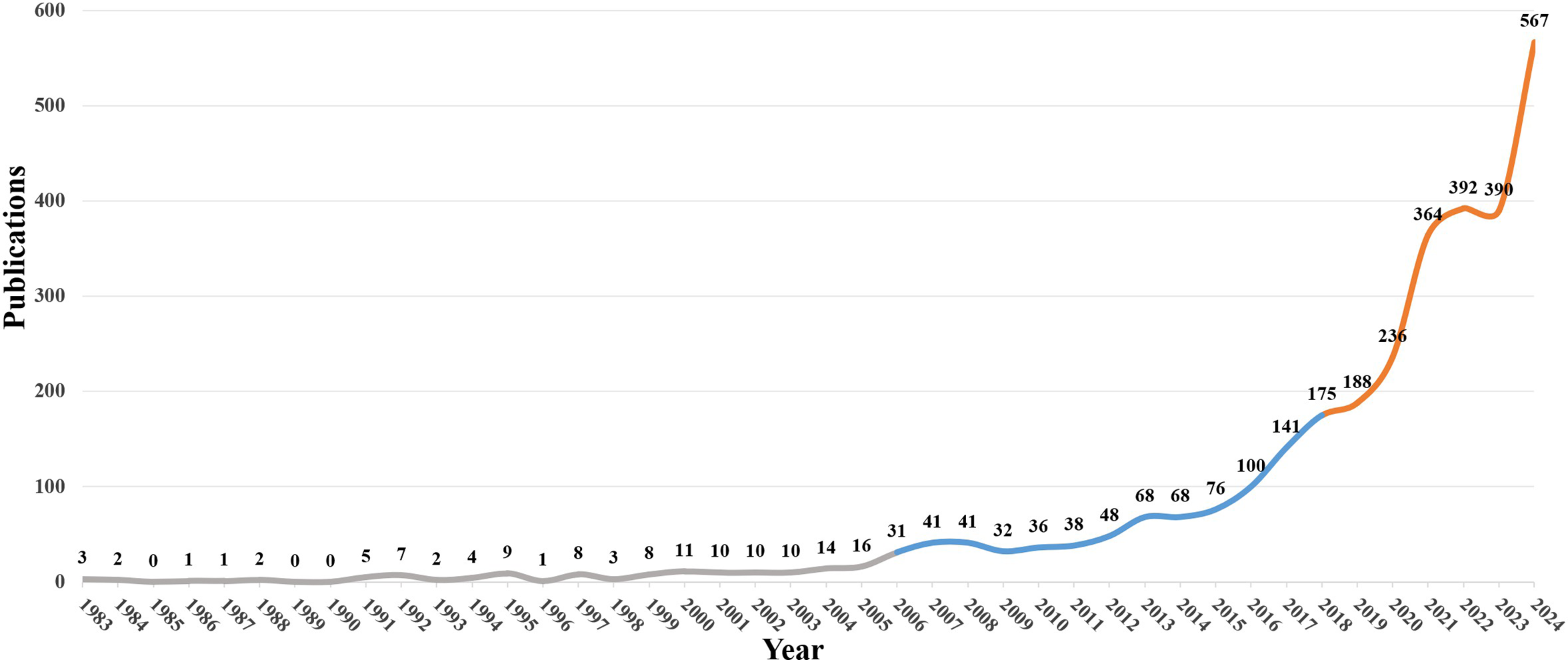
The included research spans a 41-year period (1981–2024), with the evolution of personalised nutrition research exhibiting three distinct developmental phases (Figure 1). The inaugural phase (1983–2005) was characterised by minimal research activity, with fewer than 15 publications annually, representing the nascent stage of the field. During this period, personalised nutrition existed predominantly as a theoretical framework with limited empirical investigation.
Annual publication volume and temporal trends in personalised nutrition research (1981–2024).

The second phase (2006–2017) demonstrated gradual but consistent growth in publication volume, culminating in 100 articles by 2017. This period signified the field’s developmental stage, coinciding with substantial advances in nutrigenomic research and enhanced recognition of inter-individual variability in dietary responses.
The third phase (2018–2024) exhibited exponential growth, with publication output surging from 141 articles in 2018 to 567 articles in 2024, representing a 302.1% increase over this six-year interval. Particularly noteworthy was the pronounced increase between 2023 and 2024, when publications rose by 45.4% (from 390 to 567 articles). This acceleration reflects the field’s maturation and mainstream acceptance, catalysed by technological innovations in omics sciences, AI applications in nutrition, and escalating clinical interest in precision health methodologies.
Status of high publication institutions, co-authorship and global collaboration
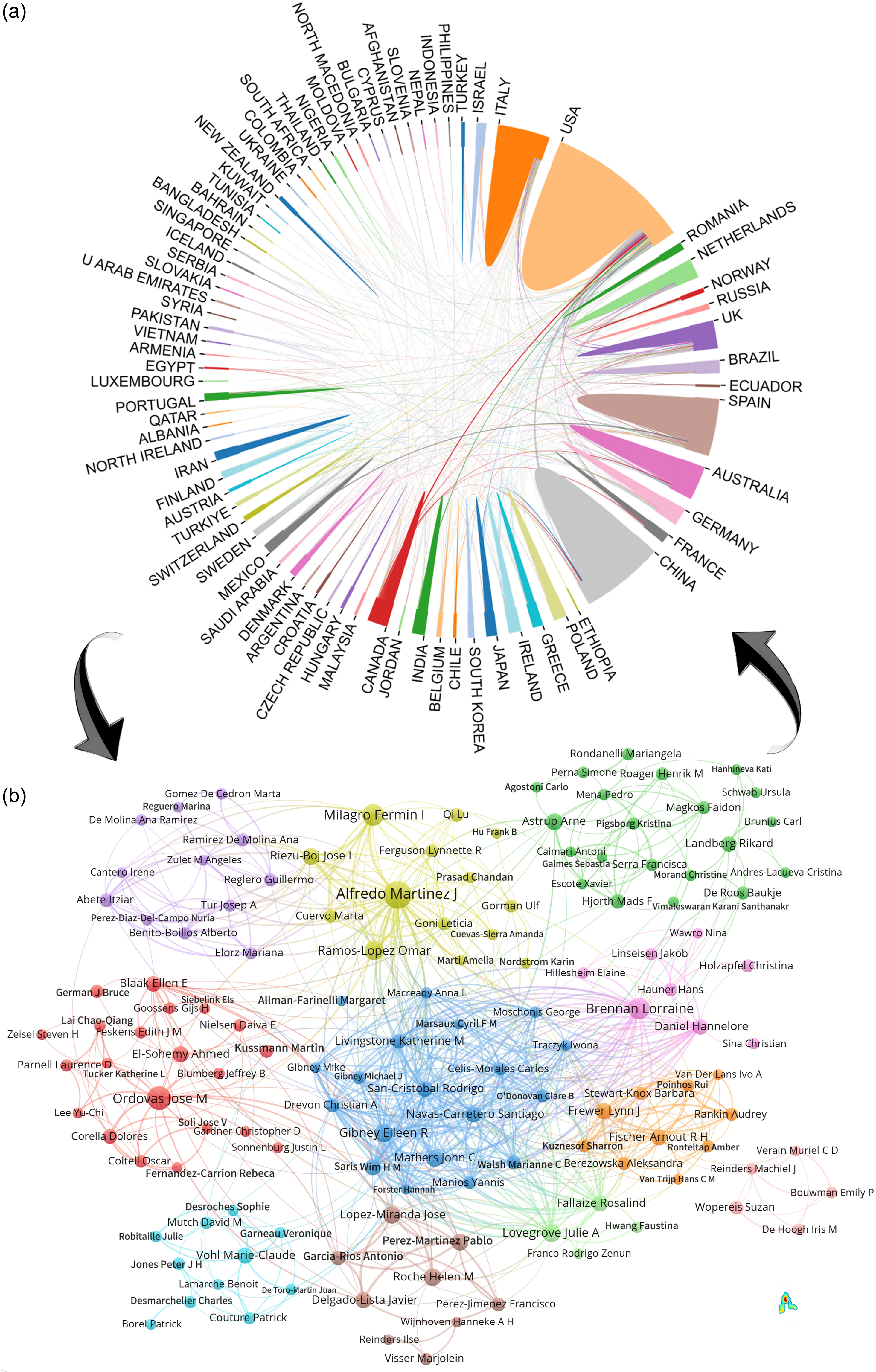
The global distribution analysis of personalised nutrition research reveals distinct patterns of scientific output and collaboration among different countries and institutions (Figure 2). The visualisation demonstrates a highly interconnected international research landscape with several prominent collaborative clusters.
Global distribution of personalised nutrition research: (a) country contributions and (b) author collaboration networks.

The United States has emerged as the principal contributor to this field, followed by Spain, China, Italy, the United Kingdom, and the Netherlands. This distribution reflects the multinational nature of personalised nutrition research, with strong contributions from North American and European institutions, alongside increasingly significant participation from Asian research centres.
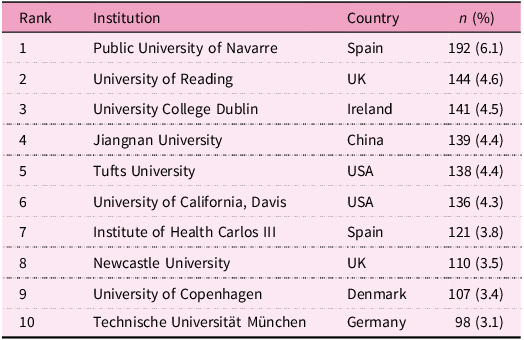
Examination of institutional productivity (Table 1) indicates that European institutions hold a dominant position in personalised nutrition research. The Public University of Navarre (Spain) ranks first, with 192 publications (6.1% of total output), followed by the University of Reading (UK) with 144 publications (4.6%) and University College Dublin (Ireland) with 141 publications (4.5%). Jiangnan University (China) stands as a prominent representative of Asian institutions, ranking fourth with 139 publications (4.4%). North American contributions are well represented by Tufts University (138 publications, 4.4%) and the University of California, Davis (136 publications, 4.3%). This institutional diversity underscores the global reach and collaborative nature of the field.
Leading institutions in personalised nutrition research (top ten)

n, number.
Author collaboration network analysis (Figure 2b) reveals several distinct yet interconnected research clusters, highlighting the interdisciplinary composition of the field. The core members of most collaborative teams predominantly originate from the high-producing institutions listed in Table 1, including Martinez, J.A., Ordovas, J.M., Milagro, F.I., and Riezu-Boj, J.I. from the University of Navarra and Instituto de Salud Carlos III (Spain). Additionally, central figures in various collaborative networks include Brennan, L., Gibney, E.R., and Roche, H.M. from the UCD Institute of Food and Health (Ireland); Ramos-Lopez, O. from the Autonomous University of Baja California; Lovegrove, J.A. from the University of Reading; and Lopez-Miranda, J. from Hospital Universitario Reina Sofía, Universidad de Córdoba, IMIBIC. These researchers have established foundational work in nutrigenomics and personalised dietary interventions.
Distribution of high-volume journals
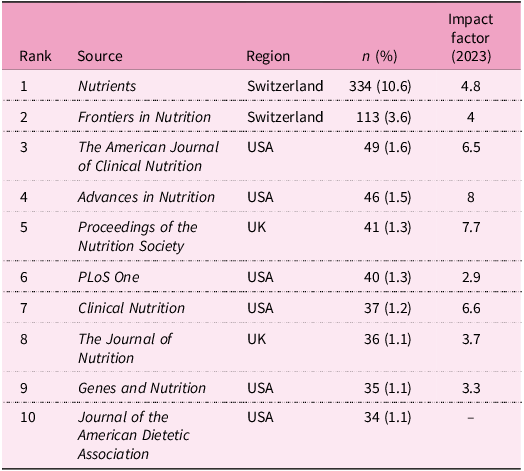
Analysis of publication venues reveals distinctive dissemination patterns of personalised nutrition research across scholarly journals (Table 2). The majority of high-volume journals are categorised under ‘NUTRITION & DIETETICS’, with only PLoS One classified as ‘MULTIDISCIPLINARY SCIENCES’, demonstrating the field’s primary anchoring within nutrition-specific platforms.
Leading journals in personalised nutrition research (top ten)

n, number.
Switzerland-based open-access journals dominate the publication landscape, with Nutrients leading at 334 articles (10.6%) and Frontiers in Nutrition ranking second with 113 publications (3.6%). United States journals constitute a significant proportion of preferred venues, with five journals appearing in the top ten, including the prestigious American Journal of Clinical Nutrition (impact factor (IF): 6.5) and Advances in Nutrition (IF: 8.0). The United Kingdom contributes through high-impact publications like Proceedings of the Nutrition Society (IF: 7.6). This distribution underscores how specialised nutrition journals provide authoritative perspectives and directional guidance for the field, highlighting the significant position and increasing prominence of personalised nutrition within contemporary nutritional science.
Research hotspot distribution and hotspot clustering network analysis
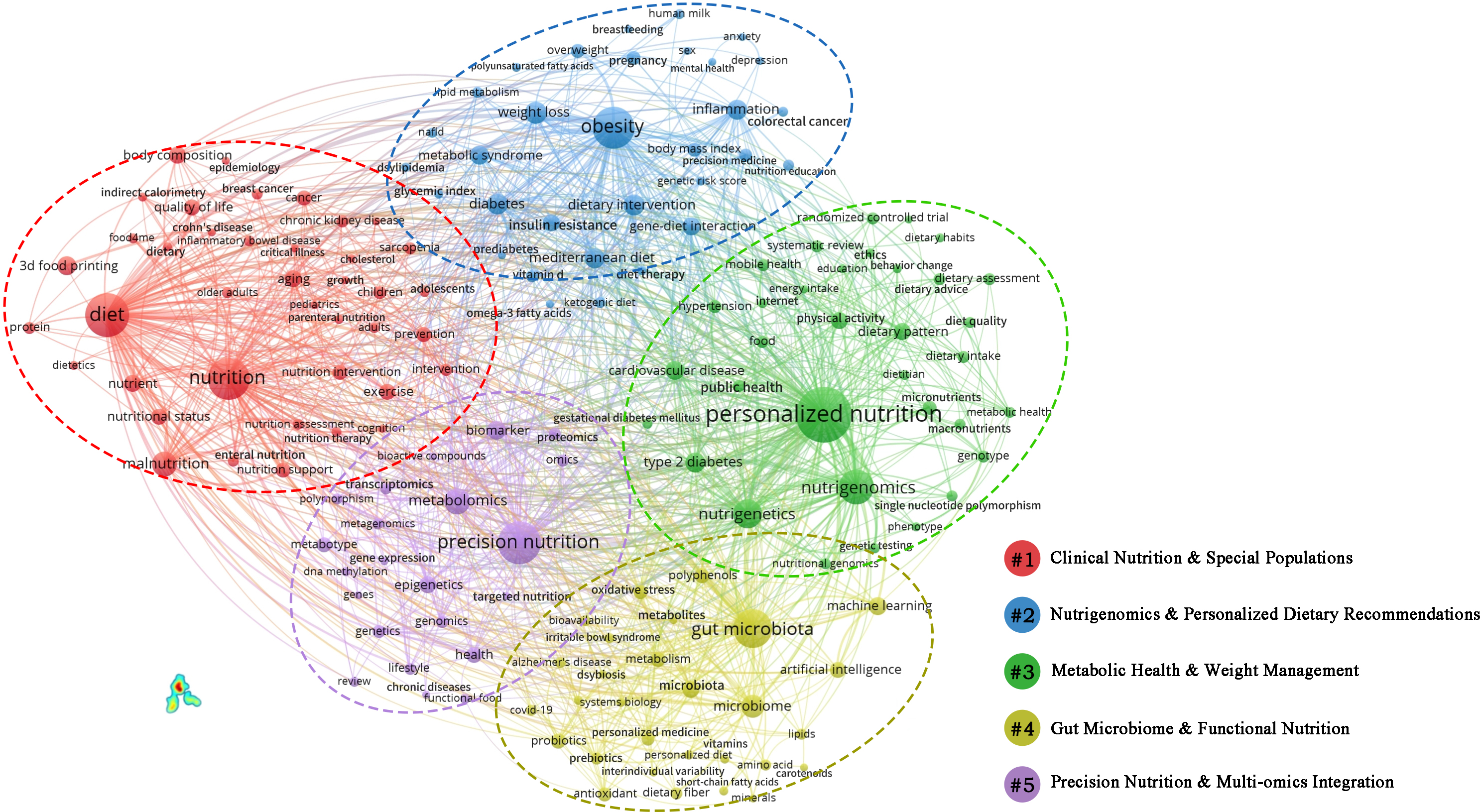
To identify research focus areas and evolution patterns in personalised nutrition, we conducted a keyword co-occurrence network analysis using VOSviewer. This analysis identified five distinct research clusters that represent the primary research directions in this field (Figure 3). The identified clusters reflect the multidisciplinary nature of personalised nutrition research, integrating clinical nutrition, nutrigenomics, metabolic health, microbiome research, and multi-omics approaches.
Keyword co-occurrence network and clustering of research hotspots in personalised nutrition.

Cluster 1: clinical nutrition and special populations
Cluster 1 centres on clinical nutrition applications and interventions for specific populations. The primary keywords include ‘diet’ (n = 273), ‘nutrition’ (n = 255), and ‘malnutrition’ (n = 90). This cluster emphasises personalised nutrition approaches for vulnerable groups, including aging populations (‘aging’, n = 42; ‘older adults’, n = 18), clinical patients (‘cancer’, n = 34; ‘chronic kidney disease’, n = 22; ‘inflammatory bowel disease’, n = 20), and paediatric populations (‘children’, n = 26; ‘adolescents’, n = 12). Notable subthemes include nutrition support strategies (‘nutrition support’, n = 35; ‘enteral nutrition’, n = 20; ‘parenteral nutrition’, n = 14), assessment methodologies (‘nutrition assessment’, n = 18; ‘indirect calorimetry’, n = 13), and targeted interventions for specific conditions (‘sarcopenia’, n = 23; ‘breast cancer’, n = 17). This cluster demonstrates how personalised nutrition principles are being integrated into clinical practice settings with attention to age-specific and disease-specific nutritional requirements.
Cluster 2: nutrigenomics and personalised dietary recommendations
Cluster 2 focuses on the core conceptual framework of personalised nutrition, with ‘personalized nutrition’ as the most prominent keyword (n = 447). This cluster emphasises the genetic foundations of individualised dietary recommendations through ‘nutrigenomics’ (n = 172) and ‘nutrigenetics’ (n = 119). Research in this cluster targets major chronic diseases including ‘type 2 diabetes’ (n = 58) and ‘cardiovascular disease’ (n = 56), while exploring dietary patterns and assessment methodologies (‘dietary pattern’, n = 44; ‘dietary assessment’, n = 23). Implementation aspects feature prominently, including ‘mobile health’ (n = 22), ‘dietary advice’ (n = 21), and ‘randomized controlled trial’ (n = 21). The cluster also addresses public health integration (‘public health’, n = 22) and ethical considerations (‘ethics’, n = 12). This research direction represents the translation of genetic knowledge into practical dietary guidance and the evaluation of its effectiveness through rigorous clinical trials.
Cluster 3: metabolic health and weight management
Cluster 3 centres on metabolic disorders and weight management, with ‘obesity’ as the dominant keyword (n = 256). This cluster focuses on interventions for weight-related conditions, including ‘weight loss’ (n = 69), ‘diabetes’ (n = 66), and ‘dietary intervention’ (n = 64). Key research areas include inflammatory processes (‘inflammation’, n = 58), specific dietary approaches (‘Mediterranean diet’, n = 57), and metabolic disturbances (‘metabolic syndrome’, n = 55; ‘insulin resistance’, n = 42). The gene–environment interaction perspective is represented by ‘gene-diet interaction’ (n = 46). This cluster also addresses life-stage specific applications (‘pregnancy’, n = 28) and targeted dietary strategies (‘ketogenic diet’, n = 17; ‘vitamin D’, n = 21). The research in this cluster demonstrates how personalised nutrition approaches are being developed to address the global epidemic of obesity and related metabolic disorders through tailored interventions.
Cluster 4: gut microbiome and functional nutrition
Cluster 4 represents the rapidly expanding research on gut microbiota and its role in personalised nutrition, with ‘gut microbiota’ as the primary keyword (n = 216). This cluster emphasises the microbiome analysis (‘microbiome’, n = 80; ‘microbiota’, n = 44) and advanced computational approaches (‘machine learning’, n = 49; ‘artificial intelligence’, n = 37). Functional nutrition aspects include ‘probiotics’ (n = 35), ‘polyphenols’ (n = 34), ‘prebiotics’ (n = 23), and ‘dietary fiber’ (n = 21). The cluster connects microbiome modulation to specific health conditions (‘COVID-19’, n = 19; ‘Alzheimer’s disease’, n = 18; ‘irritable bowel syndrome’, n = 16). The metabolic significance of the gut microbiome is highlighted through keywords like ‘short-chain fatty acids’ (n = 12) and ‘dysbiosis’ (n = 10). This cluster represents the frontier of personalised nutrition research, where individual differences in gut microbiota composition are recognised as crucial determinants of dietary responses.
Cluster 5: precision nutrition and multi-omics integration
Cluster 5 focuses on advanced scientific approaches that enable precision nutrition, with ‘precision nutrition’ as the dominant keyword (n = 264). This cluster emphasises multi-omics technologies including ‘metabolomics’ (n = 101), ‘epigenetics’ (n = 43), ‘genomics’ (n = 22), ‘proteomics’ (n = 22), and ‘metagenomics’ (n = 18). Biomarker discovery and application feature prominently (‘biomarker’, n = 54; ‘metabotype’, n = 32). The cluster addresses molecular mechanisms underlying personalised responses (‘polymorphism’, n = 20; ‘DNA methylation’, n = 13; ‘gene expression’, n = 11). The integration of these technologies supports comprehensive approaches to ‘health’ (n = 39) through ‘lifestyle’ (n = 21) modifications. This research direction represents the cutting-edge scientific foundation that enables increasingly precise nutritional recommendations based on comprehensive biological profiling.
Hotspot evolution trend and theme distribution
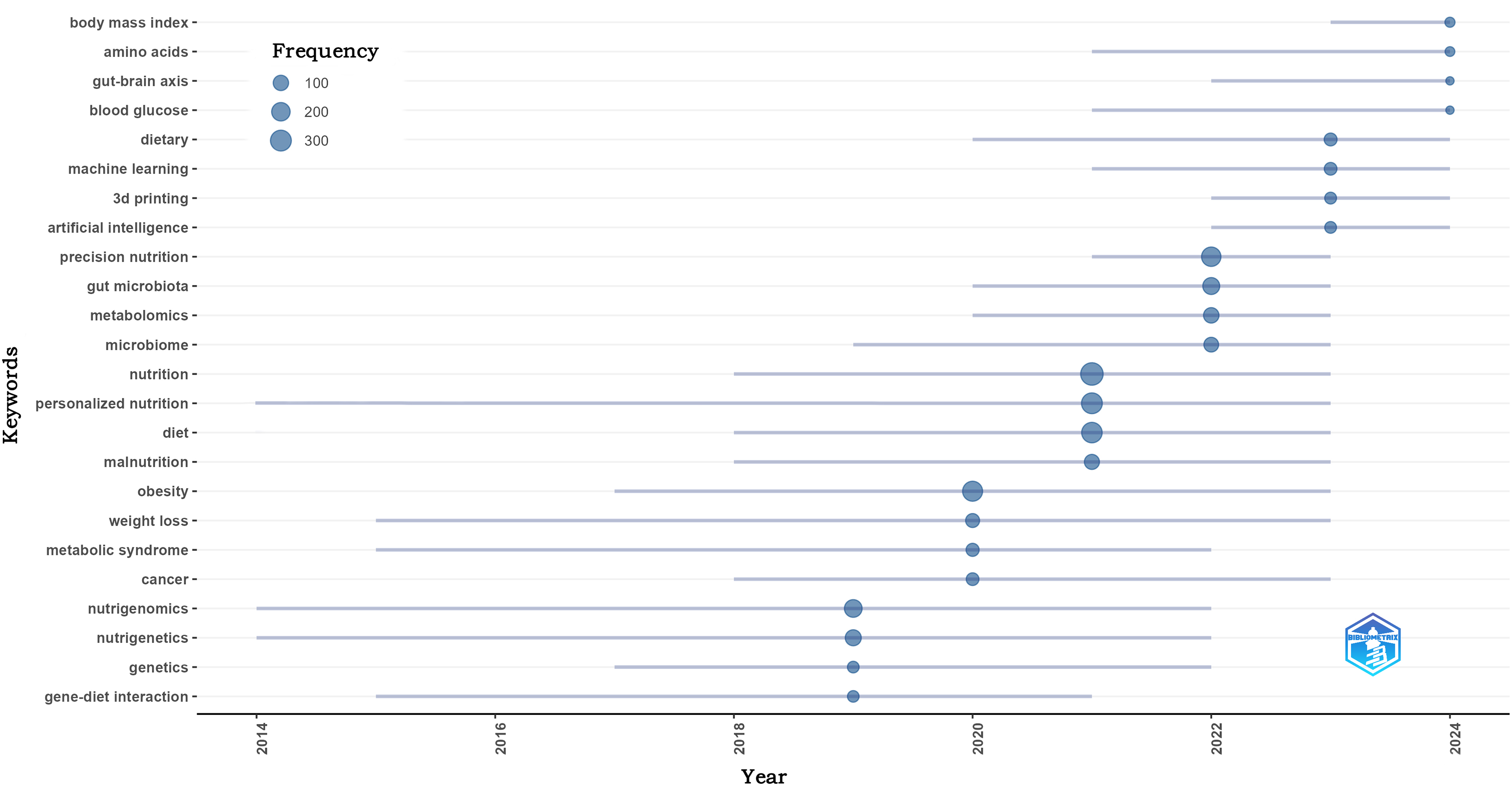
The temporal evolution of research hotspots in personalised nutrition reveals significant shifts in focus areas and methodology over the past decade (Figure 4). In this visualisation, the size of each bubble represents the keyword frequency in the literature, while the horizontal line span indicates the time period during which each topic remained most active in research publications. Our trend analysis captures the field’s transformation from foundational genetic concepts to advanced technological applications.
Temporal trend and keyword frequency in personalised nutrition research (2014–2024).

Early personalised nutrition research (2014–2018) centred on genetic foundations, with keywords such as ‘nutrigenomics’, ‘nutrigenetics’, and ‘gene-diet interaction’ emerging as pioneering concepts that established the biological basis for personalised dietary responses. This period laid the theoretical groundwork for understanding how genetic variations influence nutritional requirements and responses.
The middle period (2018–2020) witnessed the expansion toward clinical applications with increased focus on prevalent health conditions including ‘obesity’, ‘weight loss’, ‘metabolic syndrome’, and ‘cancer’. During this phase, fundamental concepts like ‘diet’, ‘nutrition’, and ‘personalized nutrition’ gained considerable traction, signalling the field’s maturation from theoretical framework to practical application.
The most recent period (2020–2024) demonstrates a pronounced technological and methodological advancement with the emergence of cutting-edge terms like ‘precision nutrition’, ‘gut microbiota’, ‘metabolomics’, and ‘microbiome’. This shift coincides with the integration of advanced analytical approaches including ‘machine learning’, ‘artificial intelligence’, and ‘3D printing’. Emerging topics such as ‘gut-brain axis’, ‘blood glucose’, and ‘amino acids’ indicate an increasing focus on specific physiological mechanisms and functional biomarkers.
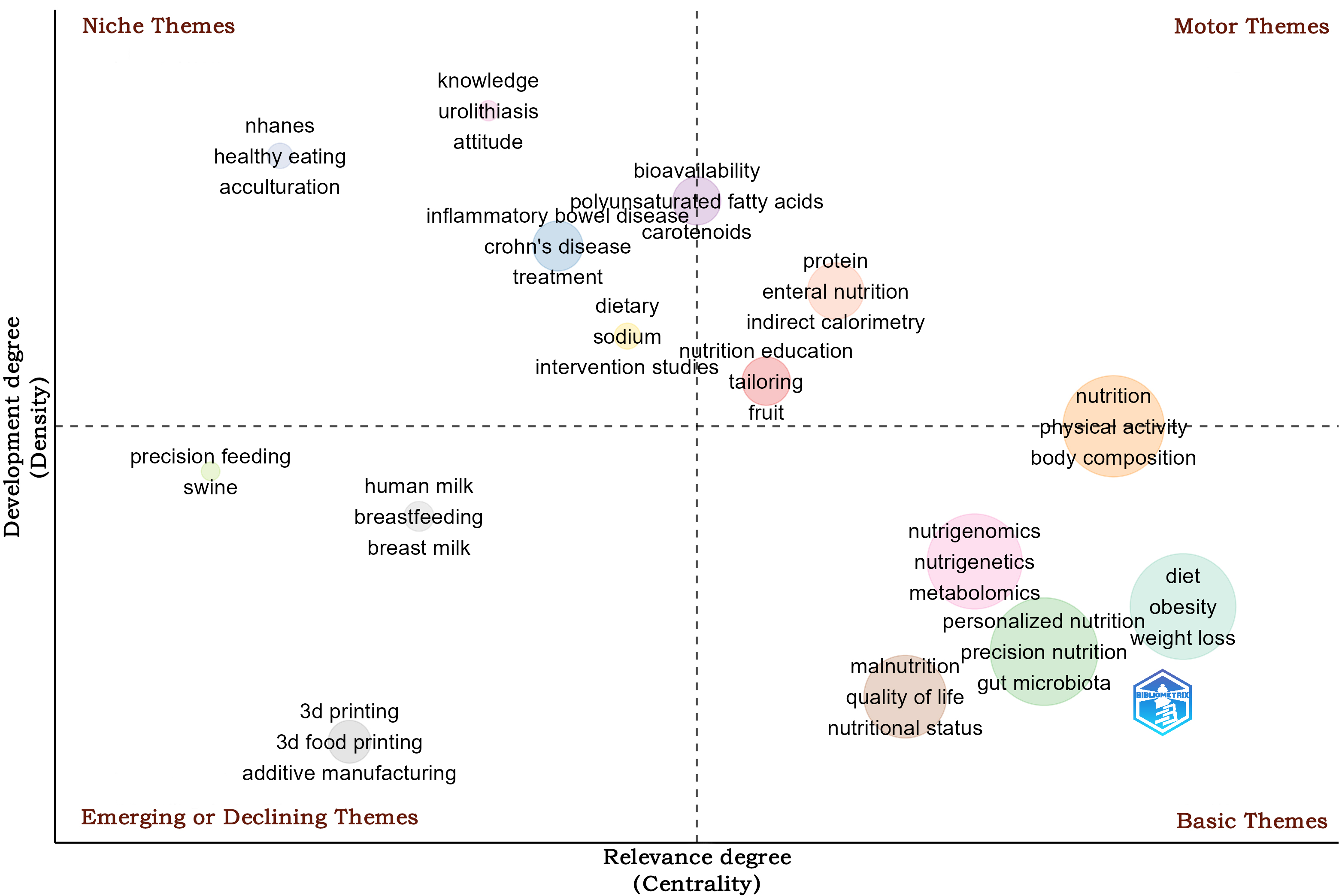
To further understand the strategic positioning of research themes in the field, we constructed a thematic map (Figure 5), plotting keywords according to their centrality (relevance to the field) and density (development degree). This analysis reveals four distinct strategic quadrants that characterise the research landscape: (I) The Motor Themes quadrant (upper right) identifies well-developed concepts that drive the field, including ‘nutrition’, ‘physical activity’, and ‘body composition’. These themes represent established research pillars with both high centrality and development. (II) The Basic Themes quadrant (lower right) contains foundational concepts like ‘diet’, ‘obesity’, ‘weight loss’, ‘personalized nutrition’, ‘precision nutrition’, ‘gut microbiota’, ‘malnutrition’, ‘quality of life’, and ‘nutritional status’. These themes are central to the field but have not yet reached their full development potential, suggesting opportunities for future research expansion. (III) The Niche Themes quadrant (upper left) includes specialised topics such as ‘healthy eating’, ‘acculturation’, ‘inflammatory bowel disease’, ‘Crohn’s disease’, and ‘intervention studies’. These themes demonstrate high development within specialised research communities but remain peripheral to the mainstream focus of personalised nutrition. (IV) The Emerging or Declining Themes quadrant (lower left) features topics including ‘3D printing’, ‘3D food printing’, ‘additive manufacturing’, ‘precision feeding’, and ‘breastfeeding’. Some of these represent nascent technologies with potential for future growth, while others may be declining in research interest.
Strategic thematic map of personalised nutrition research: analysis of keyword centrality and development degree.

The temporal distribution from Figure 4 aligns with our strategic theme mapping in Figure 5, showing how the field has evolved from genetic fundamentals (Clusters 2 and 3) to clinical applications (Cluster 1) and finally to advanced technological approaches and microbiome integration (Clusters 4 and 5). The positioning of newer technologies like 3D food printing in the emerging themes quadrant, alongside the placement of gut microbiota and precision nutrition in the basic themes quadrant, confirms our trajectory analysis that personalised nutrition is moving beyond genetic testing toward comprehensive, multifactorial approaches that integrate diverse biological data through advanced computational methods.
Landmark studies shaping the field
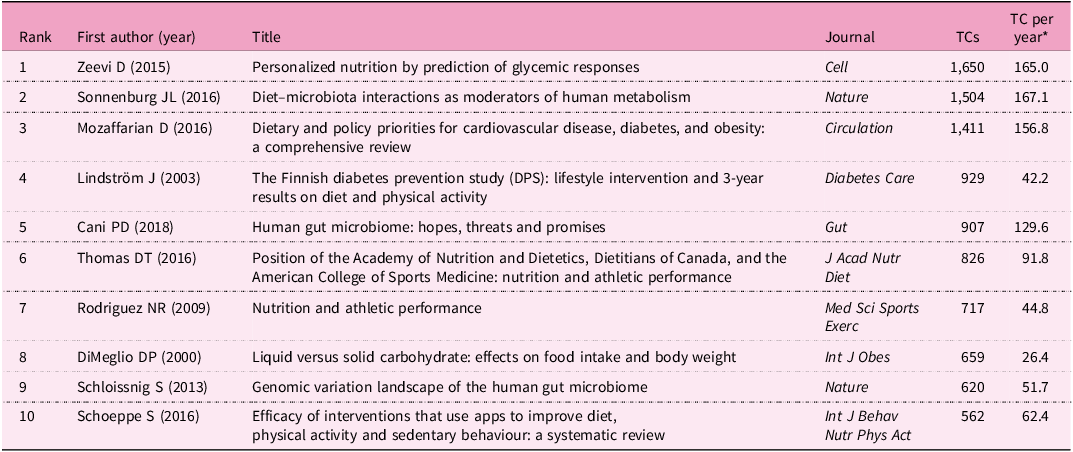
The top ten highly cited publications in personalised nutrition research (Table 3) provide critical insights into the influential work that has shaped the field. These landmark studies align closely with the research hotspots identified in our cluster analysis and thematic mapping, reinforcing the key developmental trajectories of personalised nutrition research.
Highly cited publications in personalised nutrition research (top ten)

TCs, total number of citations; * refers to the number of citations as of 2024.
The most cited paper by Zeevi et al.(Reference Zeevi, Korem, Zmora, Israeli, Rothschild and Weinberger28) revolutionised the concept of personalised nutrition by demonstrating that identical meals produce highly variable glycaemic responses among individuals. Their machine-learning algorithm, integrating multiple parameters including gut microbiota, accurately predicted personalised glycaemic responses and validated the effectiveness of tailored dietary interventions. This landmark study provided compelling evidence that ‘universal dietary recommendations may have limited utility’, establishing a scientific foundation for the precision nutrition approach that has since gained significant traction.
Microbiome research emerges as a cornerstone of personalised nutrition, represented by several influential publications. Sonnenburg et al.(Reference Sonnenburg and Bäckhed29) articulated the critical role of gut microbiota as a ‘mediator of dietary impact on host metabolic status’, while Cani et al.(Reference Cani30) provided a nuanced perspective on the microbiome’s influence on metabolic disorders. Schloissnig et al.(Reference Schloissnig, Arumugam, Sunagawa, Mitreva, Tap and Zhu31) made the crucial discovery that individuals maintain ‘unique metagenomic genotypes’ with remarkable temporal stability, providing a biological basis for personalised dietary recommendations. These publications collectively established the microbiome as a fundamental consideration in nutrition personalisation, driving the integration of microbiome analysis into dietary intervention strategies.
Clinical applications of personalised nutrition are prominently featured in the citation classics. The Finnish Diabetes Prevention Study(Reference Lindström, Louheranta, Mannelin, Rastas, Salminen and Eriksson32) provided some of the earliest robust evidence that ‘intensive lifestyle intervention produced long-term beneficial changes’ in metabolic parameters and ‘reduced diabetes risk’. Mozaffarian et al.(Reference Mozaffarian33) synthesised evidence on dietary priorities for cardiometabolic diseases, noting that effective personalisation depends more on factors like ‘physical activity, abdominal adiposity, gender, socioeconomic status, and culture’ than genetics alone. These studies established the clinical validity and real-world effectiveness of personalised nutrition approaches for disease prevention.
Athletic performance nutrition represents another influential theme, with position statements by Thomas et al.(Reference Thomas, Erdman and Burke34) and Rodriguez et al.(Reference Rodriguez, DiMarco, Langley, Denny, Hager and Manore35) emphasising that athletic performance and recovery are ‘enhanced by well-chosen nutrition strategies’. Their recommendation for ‘personalized nutrition plans’ developed by nutrition specialists established sports nutrition as a distinct domain within personalised nutrition that integrates individual physiological requirements with performance objectives.
DiMeglio et al.(Reference DiMeglio and Mattes36) made the important discovery that ‘liquid carbohydrate promotes positive energy balance, whereas a comparable solid carbohydrate elicits precise dietary compensation’. This finding highlighted how food physical properties influence metabolic responses and weight regulation – a fundamental concept in developing personalised approaches to weight management.
The technological dimension of personalised nutrition is represented by Schoeppe et al.(Reference Schoeppe, Alley, Van Lippevelde, Bray, Williams and Duncan37), whose systematic review of app-based interventions provided early evidence for the efficacy of digital tools in improving dietary behaviours. Their finding that ‘multi-component interventions appear to be more effective than stand-alone app interventions’ has guided the development of integrated digital approaches to nutrition personalisation.
The chronological distribution of these highly cited works traces the intellectual evolution of personalised nutrition from studying specific physiological mechanisms to developing integrated, technology-enabled intervention systems. The concentration of citations in studies examining individual response patterns, microbiome integration, and digital delivery methods reflects the field’s trajectory toward comprehensive personalisation frameworks that consider multiple biological, behavioural, and environmental factors. These seminal publications have collectively established the scientific foundation for the ongoing transformation of nutritional science from population-based recommendations to precisely tailored interventions optimised for individual response patterns.
Discussion
This comprehensive bibliometric analysis provides valuable insights into the development trajectory, geographical distribution, research hotspots, and intellectual foundations of personalised nutrition research over the past four decades. Through the systematic examination of 3,159 publications, we have mapped the evolution of this rapidly expanding field from its theoretical origins to its current status as a multidisciplinary scientific domain with significant clinical and technological dimensions. Our findings reveal several important patterns and implications for future research directions.
Accelerating growth and paradigm shift in nutritional science
The dramatic surge in personalised nutrition research represents a fundamental paradigm shift in nutritional science rather than merely increased academic interest. This exponential growth pattern parallels the rapid development of genomic medicine and AI in healthcare, where cumulative scientific advances are increasingly translating into broader implementation.
The democratisation of technology underpins this remarkable growth trajectory, substantially reducing costs while increasing accessibility to the advanced analytical methods essential for personalised approaches. Genome sequencing costs have plummeted from $100 million to affordable levels for ordinary individuals(Reference McCarthy, McLeod and Ginsburg38), with metabolomic and microbiome analyses experiencing similar cost reductions(Reference Bauermeister, Mannochio-Russo, Costa-Lotufo, Jarmusch and Dorrestein39). Concurrently, mounting evidence(Reference Cecil and Barton10,Reference Lampe, Navarro, Hullar and Shojaie40) of inter-individual variability in dietary responses has undermined confidence in universal dietary recommendations, generating scientific and clinical demand for personalised approaches. The landmark study by Zeevi et al.(Reference Zeevi, Korem, Zmora, Israeli, Rothschild and Weinberger28) provided compelling empirical evidence that identical meals produce markedly different glycaemic responses among individuals, directly challenging the one-size-fits-all model of nutritional guidance.
The geographical distribution of this research reveals established centres of excellence while highlighting opportunities for global collaboration. The collaborative efforts between academic institutions, professional associations, government agencies, and industry could substantially advance progress in this field(Reference Thomas, Erdman and Burke34). Despite strong collaborative clusters formed around major European and North American institutions, cross-regional partnerships remain relatively limited. Enhanced collaboration, particularly between established Western institutions and emerging Asian centres, represents a significant opportunity to combine complementary expertise and accelerate research progress. Such international partnerships are especially valuable for large-scale studies requiring diverse population samples to develop truly generalisable personalised nutrition approaches.
The broader precision medicine movement has created a receptive scientific and clinical environment for personalised nutrition concepts. As healthcare increasingly embraces tailored interventions based on individual characteristics, personalised nutrition offers a preventive complement to personalised therapeutic approaches. The rapid advancements of AI and large language models (LLMs) have made personalised nutrition increasingly accessible, enabling individually tailored recommendations for diverse populations. This accelerating growth pattern indicates that personalised nutrition is transitioning from a specialised research niche to a mainstream scientific paradigm with potential to fundamentally transform nutritional practice and policy.
Systems biology perspective: beyond genetic determinism
Personalised nutrition has matured beyond its initial genetic foundations toward a systems biology approach that better captures the complex determinants of dietary responses. While early research prioritised nutrigenomic mechanisms(Reference Zinck and MacFarlane41), the field has recognised that individual responses emerge from complex interactions between human physiology, microbial ecology, and environmental factors rather than isolated genetic variants(Reference Mullins, Bresette, Johnstone, Hallmark and Chilton42).
The gut microbiome stands as a pivotal element in this systems perspective, functioning as a dynamic interface between diet and host metabolism. Unlike fixed genetic factors, the microbiome offers both explanatory power and intervention potential through its responsiveness to dietary modification(Reference Saxena, Sharma, Saxena and Patel43,Reference Karakan, Gundogdu, Alagözlü, Ekmen, Ozgul and Tunali44) . This biological integration represents a conceptual breakthrough, enabling more sophisticated understanding of how dietary components influence health outcomes through multiple interconnected pathways(Reference Banka, Das, Das, Ghosh, Ghosh, Andres, Ali, Pester and Tanabe45).
This systems perspective necessitates methodological innovation in how researchers design studies and interpret results. Rather than seeking universal dietary truths, the field increasingly acknowledges contextual complexity – recognising that optimal nutrition depends on individual biological characteristics, health status, and even temporal factors. Future research should prioritise longitudinal designs that capture dynamic biological responses to dietary interventions, moving beyond static profiling toward understanding nutritional responses as dynamic processes unfolding through multiple biological systems.
AI: reshaping nutritional science
AI is fundamentally transforming how personalised nutrition research is conducted and applied(Reference Banka, Das, Das, Ghosh, Ghosh, Andres, Ali, Pester and Tanabe45). Beyond merely serving as an analytical tool, AI enables new approaches to understanding individual variation and developing responsive interventions(Reference Panagoulias, Sotiropoulos and Tsihrintzis46). Machine learning algorithms can identify complex, non-linear patterns in multidimensional data that traditional statistical methods cannot detect, enabling researchers to move beyond simple correlations toward predictive models that capture the multifactorial nature of dietary responses.
The integration of AI with biological data creates opportunities for developing dynamic, adaptive approaches to personalisation that continuously learn from individual responses. This evolution points toward the development of ‘nutritional digital twins’ – virtual models that simulate an individual’s metabolic physiology to predict responses in real-time. This represents a paradigm shift from static dietary recommendations toward responsive systems that evolve with changing physiological states and contextual factors. Real-time monitoring technologies coupled with AI-powered decision support could create nutritional guidance systems that provide contextually appropriate recommendations based on immediate physiological needs(Reference Lopez-Barreiro, Garcia-Soidan, Alvarez-Sabucedo and Santos-Gago47).
However, realising this potential requires addressing significant challenges. The interpretability of complex algorithms, potential for algorithmic bias, and questions of data ownership all require careful consideration. Future research must balance predictive power with scientific interpretability, ensure algorithms are trained on diverse populations, and develop frameworks for responsible AI deployment that respect individual autonomy while providing meaningful guidance.
Clinical nutrition: personalising for vulnerable populations
The significant focus on clinical applications for special populations highlights a crucial dimension of personalised nutrition that extends beyond consumer wellness applications. Personalisation approaches may offer particular value for vulnerable groups with complex nutritional needs – including older adults, cancer patients, and those with chronic conditions – where standardised recommendations often prove inadequate.
This clinical focus serves as an important counterbalance to market-driven developments, emphasising that personalised nutrition’s greatest impact may come from addressing conditions where nutritional heterogeneity is pronounced but poorly addressed in current practice. Conditions like cancer cachexia, sarcopenia, inflammatory bowel disease, and chronic kidney disease present significant clinical challenges precisely because patient responses to nutritional interventions vary substantially based on individual factors(Reference Wang, Zeng, Li, Fang, Xu and Shi48).
Future research should develop specialised assessment protocols and intervention strategies for these vulnerable populations, balancing comprehensive biological characterisation with clinical feasibility. Particular attention should focus on integrating personalised nutrition into existing care pathways, developing interdisciplinary approaches that connect nutritional science with medical specialities, and creating accessible implementation models suitable for diverse healthcare settings.
Technological integration and implementation science
The convergence of advanced analytical technologies with digital delivery systems represents a promising direction for translating personalised nutrition research into practical applications(Reference Coman, Ianculescu, Paraschiv, Alexandru and Bădărău49). Mobile technologies enable unprecedented data collection while simultaneously serving as channels for delivering personalised guidance at scale, potentially democratising access to personalised approaches beyond elite healthcare settings.
However, technological sophistication alone is insufficient. Creating effective personalised nutrition systems requires bridging the gap between scientific complexity and practical implementation. Future research must address how personalised approaches can be effectively integrated into existing healthcare systems, made accessible across diverse populations, and sustained beyond initial interventions.
Implementation science represents a critical frontier, examining questions of cost-effectiveness, scalability, and real-world impact. Research priorities should include developing tiered personalisation approaches that match assessment intensity to clinical need, designing digital ecosystems that balance scientific sophistication with user accessibility, and creating policy frameworks that support responsible implementation while addressing ethical concerns around data privacy and health equity.
Convergence and future directions
The most promising advances in personalised nutrition are emerging at the intersection of previously distinct domains. The integration of microbiome science, metabolomics, AI, and clinical nutrition creates a more comprehensive framework than any single approach alone, acknowledging the multifactorial nature of dietary responses. Emerging technologies like 3D food printing represent intriguing possibilities for personalised nutrition delivery, potentially enabling precise control over nutrient composition and food properties based on individual requirements(Reference Abedini, Sohrabvandi, Sadighara, Hosseini, Farhoodi and Assadpour50,Reference Escalante-Aburto, Trujillo-de Santiago, Álvarez and Chuck-Hernández51) . The synergy between advanced nutritional profiling and custom food fabrication could transform how personalised recommendations are implemented, addressing the persistent gap between theoretical personalisation and practical dietary change.
Future research should explore how these converging technologies can create integrated systems that connect assessment, interpretation, recommendation, and implementation. Priority should be given to developing accessible personalisation frameworks that balance comprehensive biological understanding with practical feasibility, and to creating evidence-based implementation strategies that can function effectively across diverse healthcare and community settings.
Ultimately, this shift towards practical implementation aligns closely with the emerging ‘Food as Medicine’ movement. As personalised nutrition matures, it provides the precise, data-driven framework necessary to operationalise ‘Food as Medicine’ in clinical practice – moving from general dietary advice to prescriptive nutritional interventions that treat or prevent specific chronic conditions based on an individual’s unique biological profile(Reference Defraeye, Bahrami, Kowatsch, Annaheim, Bragt and Rossi12).
Limitations
Several limitations should be considered when interpreting the results of this bibliometric analysis. First, while our search strategy was comprehensive, the reliance on a single database means that some relevant publications may have been excluded. However, given the significant overlap of high-quality literature across major databases, we consider this dataset to be sufficiently representative of the field’s core topological structure and primary evolutionary trends, despite the exclusion of some peripheral studies. Second, keyword analysis, though informative, has inherent limitations in capturing the full conceptual complexity of research articles. Authors may use different terminology to describe similar concepts, and the significance of keywords can vary across disciplines and time periods.
Furthermore, citation metrics, while useful for identifying influential works, can be affected by factors beyond scientific quality, including article age, journal visibility, and self-citation practices. Additionally, our analysis aggregated preclinical (cell/animal) and clinical (human) studies into a single dataset to map the field’s comprehensive translational trajectory. While this approach enables the visualisation of knowledge flow from mechanistic exploration to practical application, it may obscure distinct trends specific to each research stage. Finally, our analysis captures the state of personalised nutrition research through to the end of 2024; however, given the field’s rapid evolution, new research directions may emerge quickly. Regular updates to this type of bibliometric analysis would be valuable for tracking the ongoing development of this dynamic field.
Conclusions
This bibliometric survey delineates the structural evolution of personalised nutrition from a theoretical niche into a multidisciplinary scientific domain. Our analysis confirms a fundamental trajectory: the field has transcended its inaugural focus on static nutrigenetics to embrace a dynamic systems biology paradigm. This evolution is characterised by the integration of multi-omics data – particularly the fluid interactions between the gut microbiome and host metabolism – moving the field beyond simple gene–diet associations toward a comprehensive understanding of biological variability interacting with the complexity of the exposome.
Integration across previously distinct domains represents the most promising direction for the field. The convergence of microbiome research, metabolomics, and clinical nutrition creates a comprehensive framework, where AI serves as the catalyst for developing dynamic predictive models and precision delivery systems. However, to translate these biological possibilities into public health realities, future research must extend beyond mechanisms to address critical implementation challenges. Developing accessible assessment protocols, establishing robust evidence of cost-effectiveness, and rigorously addressing ethical considerations are essential. Ultimately, this holistic approach ensures that personalised nutrition evolves from a niche luxury into a sustainable strategy delivering equitable health impacts across diverse populations.
Data availability statement
Data available on request.
Acknowledgements
We gratefully acknowledge the Supercomputing Center of Lanzhou University for providing high-performance computing resources and technical support for the bibliometric data processing. We also express our sincere appreciation to the editors and anonymous reviewers for their constructive critiques and insightful suggestions, which have significantly strengthened the quality and scientific rigour of this manuscript.
Authorship
Q.Z. and Z.Z. wrote the first draft of the manuscript, did the literature review and systematic search, and interpreted the results. T.L. and J.X. were responsible for the study concept and design. Q.Z., Z.Z., Y.Z., and Y.C. were responsible for the data collection and collation. Q.Z., K.W., N.W., M.L., and L.Z. conducted data integration and figures. J.T. supervised the study. All authors reviewed and approved the final submitted version. J.T. had final responsibility for the decision to submit for publication.
Financial support
This work was supported by the Major Science and Technology Project of Gansu Province (Social Development Field) (24ZD17FA003), the Gansu Hai-Zhi Plan Project (KPZX-011030) and Gansu Provincial Higher Education Graduate ‘Innovation Star’ Project (2026CXZX-017).
Competing interests
The authors declare no competing interests.
Ethical standards
This study did not involve human participants. Data sources for this study were taken from publicly available databases. Ethical approval was not required to be obtained for this study.
Consent to participate
Not applicable.
Consent for publication
We give our consent for the publication.
Provenance and peer review
Not commissioned; externally peer reviewed.