A large body of research has documented the association between the accumulation of risk factors and the psychosocial adjustment of young children (Barocas, Seifer, & Sameroff, Reference Barocas, Seifer and Sameroff1985; Sameroff, Seifer, Zax, & Barocas, Reference Sameroff, Seifer, Zax and Barocas1987). The central notion behind this work is that the experience of any single risk factor may not result in an increased risk of problems with psychosocial adjustment per se; instead, risk factors “accumulate” such that exposure to a higher number of risks increases the likelihood of poor adjustment, overwhelming coping resources and tipping the scale from healthy to unhealthy trajectories. Such models reflect the fact that risks tend to covary (Evans & Kantrowitz, Reference Evans and Kantrowitz2002; Rutter, Reference Rutter, Garmezy and Rutter1993).
An exciting new line of research is beginning to examine the associations between cumulative risk exposure and physiological markers of stress (Evans, Reference Evans2003; Evans & English, Reference Evans and English2002; Evans & Kim, Reference Evans and Kim2007; Evans, Kim, Ting, Tesher, & Shannis, Reference Evans, Kim, Ting, Tesher and Shannis2007; Gustafsson, Anckarsäter, Lichtenstein, Nelson, & Gustafsson, Reference Gustafsson, Anckarsäter, Lichtenstein, Nelson and Gustafsson2010). Research on the neurobiology underlying the stress response (and in particular, the concept of allostasis; McEwen, Reference McEwen1998; Sterling & Eyer, Reference Sterling, Eyer, Fisher and Reason1988) makes a compelling case for the consideration of physiological as well as psychosocial outcomes of cumulative risk. The concept of allostasis implies that when an organism experiences or anticipates a stressor, it accommodates physiologically by adjusting parameters across multiple systems to be better adapted to the stressful circumstances. Following a single, acute stressor, the system may revert to its initial setpoints, but repeated or chronic exposure to stress requires the organism to make lasting adaptations to its physiology. These changes come at a physiological cost: allostatic load (McEwen & Stellar, Reference McEwen and Stellar1993), or the accumulating wear-and-tear that results from making repeated or sustained adaptive shifts across a broad range of physiological systems in order to match internal functioning to environmental demand (McEwen, Reference McEwen1998; McEwen & Seeman, Reference McEwen, Seeman, Davidson, Scherer and Hill Goldsmith2003). Failure to make adaptive shifts in stress biology, and as a result being unprepared for environmental disruptions, also comes at a cost; and this is another contributor to allostatic load (McEwen, Reference McEwen1998).
Stress research in both the social and biological sciences implies costs to the individual of repeated exposures to stress. In this paper, we examine the influence of such stressors, in the form of cumulative risk, on levels of the hormone cortisol, a key product of the stress-sensitive hypothalamic–pituitary–adrenal (HPA) axis. The HPA axis is an important physiological marker of neurobiological accommodations to stress that may underlie the link between experiences of adversity and psychopathology. Consistent with diathesis-stress theory (Eaton, Reference Eaton2000), we examine individual differences in the response to stress through the study of gene–environment interactions (Moffitt, Caspi, & Rutter, Reference Moffitt, Caspi and Rutter2006). Prior work has suggested that individual differences, including genetically influenced predispositions, might modify the individual's first and subsequent allostatic accommodations to stressors (Ganzel, Morris, & Wethington, Reference Ganzel, Morris and Wethington2010). Thus, we examine how an individual's genetic profile may alter the association between cumulative risk exposure and physiological markers of stress. Although many studies have examined gene–environment interactions predicting mental health outcomes (especially with regard to the serotonin transporter gene [5-HTT]; Caspi et al., Reference Caspi, Sugden, Moffitt, Taylor, Craig and Harrington2003), fewer studies have examined the moderating role of genetic markers in predicting physiological outcomes of life stressors (but for some exceptions, see Alexander et al., Reference Alexander, Kuepper, Schmitz, Osinsky, Kozyra and Hennig2009; Cicchetti, Rogosch, & Oshri, Reference Cicchetti, Rogosch and Oshri2011; Mueller et al., Reference Mueller, Armbruster, Moser, Canli, Lesch and Brocke2011).
In sum, this study bridges three bodies of research: social science research on the consequences of cumulative risk; neurobiological research on the physiological response to stress; and research on measured gene–environment interactions, with genetic polymorphisms as moderators of the stress/risk process. In particular, we address these associations for a sample of low-income children in preadolescence and early adolescence. As others have cogently argued (Evans & Kim, Reference Evans and Kim2007), this is a key age group in which to examine such risk–physiology associations, given the hormonal, social, emotional, and physical changes that occur during this period alongside the important shifts that occur in children's ecological contexts (e.g., the changing school context of middle school).
The HPA Axis: Diurnal Rhythms, Stress, and Psychopathology
The HPA axis, one of the body's key stress-sensitive physiologic systems, has been of much interest in research on psychopathology as a mechanism by which subjective stress may be translated into biological changes relevant to the development of psychopathology (Adam, Sutton, Doane, & Mineka, Reference Adam, Sutton, Doane and Mineka2008). Activation of the HPA axis results in increased adrenal secretion of the hormone cortisol. Basal cortisol levels follow a strong circadian pattern across the day, with momentary stress-related HPA axis activation producing increases in cortisol levels that are superimposed on this underlying diurnal pattern. The diurnal cortisol rhythm is typically characterized by high levels upon waking, a substantial (50%–60%) increase in cortisol concentration in the 30–40 min after waking (the cortisol awakening response [CAR]), and a subsequent decline over the remainder of the day, reaching a low point or nadir around midnight (Kirschbaum & Hellhammer, Reference Kirschbaum and Hellhammer1989; Pruessner et al., Reference Pruessner, Wolf, Hellhammer, Buske-Kirschbaum, von Auer and Jobst1997; Weitzman et al., Reference Weitzman, Fukushima, Nogeire, Roffwarg, Gallagher and Hellman1971). This diurnal rhythm is driven by a light-activated central “clock” in the suprachiasmatic nucleus of the hypothalamus (Nader, Chrousos, & Kino, Reference Nader, Chrousos and Kino2010) and occurs as part of the basic circadian machinery for regulating alertness, appetite, and metabolic function (Dallman et al., Reference Dallman, Akana, Bradbury, Strack, Hanson and Scribner1994).
Prior research has revealed that children's cumulative exposure to psychosocial and physical environment risk factors is associated with elevated total cortisol production along with other physiological indicators of allostatic load (Evans, Reference Evans2003; Evans & English, Reference Evans and English2002). However, fewer studies have examined the associations between cumulative risk exposure and aspects of the diurnal cortisol rhythm. One study of early adolescents revealed an inverse U-shaped pattern of association between cumulative risk exposure (low socioeconomic status and number of negative and traumatic life events) and the CAR, such that moderate but not high levels of cumulative risk were associated with an elevated CAR (Gustafsson et al., Reference Gustafsson, Anckarsäter, Lichtenstein, Nelson and Gustafsson2010). Another recent study with preschool children found that cumulative family risk was associated with lower morning cortisol levels and a flatter diurnal cortisol slope (Zalewski, Lengua, Kiff, & Fisher, Reference Zalewski, Lengua, Kiff and Fisher2012). These studies provide evidence that cumulative risk exposure may be associated with alterations in the diurnal cortisol rhythm, but further research is needed to replicate and extend these findings.
More generally, exposure to a range of specific, adverse psychosocial experiences has been found to modify the shape of the diurnal cortisol rhythm (Adam, Klimes-Dougan, & Gunnar, Reference Adam, Klimes-Dougan, Gunnar, Coch, Dawson and Fischer2007). For example, perceived loneliness, perceived stress and anger, living in a home with lower parent relationship satisfaction and low maternal warmth, and exposure to low socioeconomic status in childhood and adolescence have all been associated with flatter diurnal cortisol slopes (Adam, Hawkley, Kudielka, & Cacioppo, Reference Adam, Hawkley, Kudielka and Cacioppo2006; DeSantis, Kuzawa, & Adam, Reference DeSantis, Kuzawa and Adam2011; Doane & Adam, Reference Doane and Adam2010; Hauner et al., Reference Hauner, Adam, Mineka, Doane, DeSantis and Zinbarg2008; Pendry & Adam, Reference Pendry and Adam2007). Antenatal exposure to maternal anxiety has also been associated with a flattened diurnal cortisol slope in early adolescence (Van den Bergh, Van Calster, Smits, Van Huffel, & Lagae, Reference Van den Bergh, Van Calster, Smits, Van Huffel and Lagae2008). Exposure to maternal postnatal depression has been associated with higher morning cortisol levels (Halligan, Herbert, Goodyer, & Murray, Reference Halligan, Herbert, Goodyer and Murray2004), and experiencing inconsistent and disorganized parenting in childhood has been associated with a higher CAR in adolescence (Ellenbogen & Hodgins, Reference Ellenbogen and Hodgins2009). In a meta-analysis of studies investigating the CAR in relation to specific life stressors and mood states, Chida and Steptoe (Reference Chida and Steptoe2009) found that feelings of fatigue, burnout, and exhaustion were associated with a lower CAR, although current job stress and general life stress were both associated with a higher CAR. Finally, a meta-analysis revealed a significant association of chronic stress exposure with flattened diurnal slope, lower morning cortisol levels, higher evening cortisol levels, and greater daily cortisol volume (Miller, Chen, & Zhou, Reference Miller, Chen and Zhou2007). The association between morning cortisol and chronic stressor exposure, however, was moderated by the controllability of the stressor and the time since stressor onset; morning cortisol levels were elevated during stressors that were still ongoing or potentially controllable, but depressed for stressors that were uncontrollable or were no longer ongoing. Thus, the direction of effects of psychosocial adversity may depend on what portion of the diurnal rhythm is being measured, and may also vary according to stressor timing and the ability of the individual to actively cope with the stressor.
Alterations in diurnal cortisol rhythms have in turn been associated with a host of negative physical and mental health outcomes (Adam & Kumari, Reference Adam and Kumari2009). Regarding mental health outcomes specifically, flattened diurnal cortisol rhythms have been shown to predict greater mental health symptom severity among early adolescents both concurrently and longitudinally (Shirtcliff & Essex, Reference Shirtcliff and Essex2008). Similarly, cortisol levels have been found to be elevated across the day in children and adolescents with concurrent depression, with elevated evening cortisol in particular being associated with greater severity of depressive symptoms (Dahl et al., Reference Dahl, Ryan, Puig-Antich, Nguyen, Al-Shabbout and Meyer1991; Lopez-Duran, Kovacs, & George, Reference Lopez-Duran, Kovacs and George2009; Van den Bergh & Van Calster, Reference Van den Bergh and Van Calster2009). In prospective studies, high peaks in morning cortisol and a higher CAR have been found to predict the onset of major depressive disorder in youth (Adam et al., Reference Adam, Doane, Zinbarg, Mineka, Craske and Griffith2010; Goodyer, Herbert, Tamplin, & Altham, Reference Goodyer, Herbert, Tamplin and Altham2000; Halligan, Herbert, Goodyer, & Murray, Reference Halligan, Herbert, Goodyer and Murray2007). Conversely, prior episodes of major depressive disorder have been found to predict flattened diurnal cortisol slopes in late adolescence (Doane et al., Reference Doane, Mineka, Zinbarg, Craske, Griffith and Adam2013).
Brain-Based Allostatic Load and the HPA Axis: Reciprocal Interactions
Although the precise neurobiological mechanisms linking diurnal cortisol rhythms and psychopathology are still unclear, altered HPA axis function may be both a product and a cause of central nervous system adaptations to stress that increase risk for psychopathology. Activity of the HPA axis is modulated by various brain regions that are involved in the processing of threat-related information, including the amygdala, hippocampus, and medial prefrontal cortex (mPFC; Franklin, Saab, & Mansuy, Reference Franklin, Saab and Mansuy2012; Herman, Ostrander, Mueller, & Figueiredo, Reference Herman, Ostrander, Mueller and Figueiredo2005). Structural and functional abnormalities in these regions are observed following chronic stress in humans and animals (Frodl & O'Keane, Reference Frodl and O'Keane2013; McEwen, Reference McEwen2007; Taylor, Eisenberger, Saxbe, Lehman, & Lieberman, Reference Taylor, Eisenberger, Saxbe, Lehman and Lieberman2006) and are associated with stress-related psychopathology, including depression and posttraumatic stress disorder (Disner, Beevers, Haigh, & Beck, Reference Disner, Beevers, Haigh and Beck2011; Koenigs & Grafman, Reference Koenigs and Grafman2009; Sheline, Reference Sheline2003). Such central allostatic accommodations to stress may disrupt the normal pattern of cortisol secretion throughout the day through top-down regulation of HPA axis activity, thereby resulting in disrupted diurnal cortisol rhythms as a peripheral marker of central allostatic load.
Cortisol also exerts bottom-up actions on brain structure and function via glucocorticoid receptors and mineralocorticoid receptors expressed in numerous brain regions, including the hippocampus, amygdala, and mPFC (Herman et al., Reference Herman, Ostrander, Mueller and Figueiredo2005). Over time, chronically elevated cortisol concentrations, such as are associated with chronic stress exposure, can induce potentially deleterious structural and functional changes in these regions (de Kloet, Vreugdenhil, Oitzl, & Joëls, Reference de Kloet, Vreugdenhil, Oitzl and Joëls1998; McEwen, Reference McEwen2007; Wellman, Reference Wellman2001), which may mediate some of the cognitive and emotional symptoms observed in affective disorder (Liston et al., Reference Liston, Miller, Goldwater, Radley, Rocher and Hof2006; McEwen, Reference McEwen2005). It is intriguing that recent research suggests that atypically elevated cortisol concentrations during the low point of the diurnal rhythm (evening in humans) may exert amplified effects on target tissues because of enhanced glucocorticoid receptor activity at this time (Kino & Chrousos, Reference Kino and Chrousos2011). Thus, elevated cortisol concentrations in the evening may be particularly likely to contribute to brain-based allostatic load.
The 5-HTTLPR Genotype: A Potential Moderator of the Association Between Life Adversity and HPA Axis Functioning
The degree to which diurnal cortisol rhythms are sensitive to life stressors can vary greatly between individuals. For example, some but not all children who experience maltreatment exhibit abnormal diurnal cortisol rhythms (Cicchetti & Rogosch, Reference Cicchetti and Rogosch2001; Cicchetti, Rogosch, Gunnar, & Toth, Reference Cicchetti, Rogosch, Gunnar and Toth2010; Cicchetti et al., Reference Cicchetti, Rogosch and Oshri2011). Consistent with the diathesis-stress perspective, these findings suggest that some individuals are more psychophysiologically susceptible to adverse experiences than are others. A growing research base has documented that genetic variations, among many other personal and environmental risk and protective factors, influence individual differences in susceptibility to disorder following life adversity (Moffitt et al., Reference Moffitt, Caspi and Rutter2006).
One genetic marker that has been shown to moderate individuals' psychological and physiological responses to life stressors is a variable length polymorphism in the promoter region of the 5-HTT gene (SLC6A4). The 5-HTTLPR gene displays short and long allelic variants, with the short allele exhibiting lower transcriptional efficiency and reduced serotonin transporter function in vitro (Heils et al., Reference Heils, Teufel, Petri, Stöber, Riederer and Bengel1996; Lesch et al., Reference Lesch, Bengel, Heils, Sabol, Greenberg and Petri1996). The accumulated evidence suggests that the short allele is associated with a phenotype of negative affectivity (Caspi, Hariri, Holmes, Uher, & Moffitt, Reference Caspi, Hariri, Holmes, Uher and Moffitt2010) or hypervigilance to environmental stimuli (Homberg & Lesch, Reference Homberg and Lesch2011). Numerous studies have revealed that individuals carrying the 5-HTTLPR short allele show increased vulnerability to a variety of psychopathological conditions in the context of environmental adversity. The strongest evidence has emerged for the 5-HTTLPR short allele as a marker of vulnerability to depression following life stressors (reviewed in Caspi et al., Reference Caspi, Hariri, Holmes, Uher and Moffitt2010; Karg, Burmeister, Shedden, & Sen, Reference Karg, Burmeister, Shedden and Sen2011; Uher & McGuffin, Reference Uher and McGuffin2008, Reference Uher and McGuffin2010). The short allele has also been found to increase the risk of antisocial behavior in maltreated children (Cicchetti, Rogosch, & Thibodeau, Reference Cicchetti, Rogosch and Thibodeau2012) and aggression in chronically stressed young adults (Conway et al., Reference Conway, Keenan-Miller, Hammen, Lind, Najman and Brennan2012).
Research in both humans and animal models reveals that variations in the 5-HTTLPR can influence HPA axis functioning. The serotonergic system is involved in early developmental programming of the HPA axis, particularly through effects on glucocorticoid receptors that are integral to negative feedback regulation of cortisol production (Andrews & Matthews, Reference Andrews and Matthews2004; Jiang, Wang, Luo, & Li, Reference Jiang, Wang, Luo and Li2009). In addition, there is abundant evidence that serotonergic activity modulates HPA axis functioning in adult animals and humans (Firk & Markus, Reference Firk and Markus2007; Porter, Gallagher, Watson, & Young, Reference Porter, Gallagher, Watson and Young2004). Thus, altered functioning of the HPA axis could contribute to the enhanced vulnerability to psychopathology conferred by the short allele of the 5-HTTLPR (Firk & Markus, Reference Firk and Markus2007).
In addition, several recent studies have demonstrated an association between the 5-HTTLPR short allele and increased cortisol responses to laboratory stress tasks among preadolescent and early adolescent girls (Gotlib, Joormann, Minor, & Hallmayer, Reference Gotlib, Joormann, Minor and Hallmayer2008) and young adults (Way & Taylor, Reference Way and Taylor2010), although other studies have failed to replicate this association (Alexander et al., Reference Alexander, Kuepper, Schmitz, Osinsky, Kozyra and Hennig2009; Armbruster et al., Reference Armbruster, Mueller, Moser, Lesch, Brocke and Kirschbaum2009; Bouma, Riese, Nederhof, Ormel, & Oldehinkel, Reference Bouma, Riese, Nederhof, Ormel and Oldehinkel2010; Wüst et al., Reference Wüst, Kumsta, Treutlein, Frank, Entringer and Schulze2009) and one study found that individuals homozygous for the long allele had the highest cortisol response to stress (Mueller et al., Reference Mueller, Armbruster, Moser, Canli, Lesch and Brocke2011). A recent meta-analysis of this literature revealed a small but statistically significant association between the 5-HTTLPR short allele and enhanced cortisol reactivity to laboratory stress tasks (Miller, Wankerl, Stalder, Kirschbaum, & Alexander, Reference Miller, Wankerl, Stalder, Kirschbaum and Alexander2013). Several studies have also examined direct associations between the 5-HTTLPR and cortisol levels outside the laboratory, with mixed results. The 5-HTTLPR short allele has been linked to higher morning cortisol levels in preadolescents and early adolescents at elevated risk for depression (Chen, Joormann, Hallmayer, & Gotlib, Reference Chen, Joormann, Hallmayer and Gotlib2009; Goodyer, Bacon, Ban, Croudace, & Herbert, Reference Goodyer, Bacon, Ban, Croudace and Herbert2009) but not in an adult twin sample of individuals at high or low familial risk for depression (Vinberg, Mellerup, Andersen, Bennike, & Kessing, Reference Vinberg, Mellerup, Andersen, Bennike and Kessing2010).
Inconsistencies in the association between the 5-HTTLPR and HPA axis functioning would be expected if this association is moderated by life experiences. Alexander et al. (Reference Alexander, Kuepper, Schmitz, Osinsky, Kozyra and Hennig2009) and Mueller et al. (Reference Mueller, Armbruster, Moser, Canli, Lesch and Brocke2011) both reported that the short allele was associated with higher cortisol reactivity to laboratory stressors among individuals who had experienced a greater number of stressful life events. It is interesting that Mueller et al. (Reference Mueller, Armbruster, Moser, Canli, Lesch and Brocke2011) observed that young adults homozygous for the long allele displayed lower cortisol reactivity with increasing exposure to early life stressors. These intriguing findings suggest that the long allele may be associated with hyporeactivity of the HPA axis following repeated stressors, particularly those occurring early in life.
To date, few studies have examined 5-HTTLPR moderation of the impact of cumulative risk or stressful life events on cortisol measured outside the laboratory. Two recent studies with samples at elevated risk for depression did not observe a moderating effect of 5-HTTLPR genotype on the association between psychosocial adversity and morning cortisol levels in adolescents (Goodyer et al., Reference Goodyer, Bacon, Ban, Croudace and Herbert2009) or between recent stressful life events and morning or evening cortisol levels in adults (Vinberg et al., Reference Vinberg, Mellerup, Andersen, Bennike and Kessing2010). However, these studies did not examine dynamic measures of the diurnal cortisol rhythm, such as the CAR or diurnal cortisol slope (Adam, Reference Adam2012).
The Current Study
The current study examines the relation between cumulative risk exposure and diurnal cortisol rhythms by taking advantage of a unique sample of young adolescents who took part in a larger experimental evaluation of a program intended to reduce depression among low-income parents. In this paper, we use the rich data collected on this sample of low-income parents and their preadolescent and early adolescent-age children to examine questions beyond the scope of the experimental evaluation, that is, to assess the association between cumulative risk exposure and HPA axis functioning, and the moderating role of 5-HTTLPR genotype. We assess youths' HPA axis functioning in the context of their everyday lives using six saliva samples collected over 2 days to characterize their average diurnal cortisol rhythms (CAR, diurnal cortisol slope, and area under the curve [AUC] as an estimate of total cortisol output). Our primary hypothesis based on prior research is that higher cumulative risk exposure will be associated with dysregulation of the HPA axis in the form of a flattened diurnal cortisol slope. Although it is also hypothesized that cumulative risk will be associated with the average CAR and AUC, a specific direction for these associations is not hypothesized because prior research suggests that the direction and magnitude of these effects is likely to vary depending on the time since onset of the stressor and the presence of concurrent psychopathology (Adam et al., Reference Adam, Sutton, Doane and Mineka2008; Miller et al., Reference Miller, Chen and Zhou2007). Finally, we examine how the relations between cumulative risk and our measures of HPA axis functioning are moderated by 5-HTTLPR genotype, with the expectation that the hypothesized association between cumulative stress and a flatter diurnal cortisol slope will be strongest among short allele carriers, who have been shown in prior research to display greater sensitivity to environmental stress.
Method
Sample and procedure
The study sample consists of 138 youth ages 9 to 17 (M = 12.5 years, SD = 2.0) from 116 Medicaid-eligible families in Rhode Island. These families were recruited to participate in an evaluation of the Working toward Wellness telephonic care management program, which was part of the multisite Enhanced Services for the Hard-to-Employ Demonstration and Evaluation Project conducted by MDRC. Working toward Wellness was a program that provided low-income depressed parents with a care manager who encouraged them to participate and persist in professional mental health treatment (Kim, LeBlanc, & Michalopoulos, Reference Kim, LeBlanc and Michalopoulos2009; Kim, LeBlanc, Morris, Simon, & Walter, Reference Kim, LeBlanc, Morris, Simon and Walter2010). Parents in the study were randomly assigned to a treatment group that received the Working toward Wellness program or to a control group that received information about available services in the community. Although the program did increase parents' use of mental health services, the evaluation showed few effects of the program on parents' depression, no effects on parenting behaviors, and no systematic effects on physiological or behavioral outcomes for children (Kim et al., Reference Kim, LeBlanc, Morris, Simon and Walter2010).
Recruitment for the evaluation targeted Medicaid-recipient adults of working age who were residing with minor children and who received a score indicating at least “mild” depressive symptoms on the Quick Inventory of Depressive Symptomatology—Self-Report (QIDS-SR; Rush et al., Reference Rush, Trivedi, Ibrahim, Carmody, Arnow and Klein2003). Adults who screened positive for high suicide risk, bipolar disorder, mania, or substance dependence were excluded, as were those who were already receiving mental health treatment. Participating adults had an average QIDS-SR score of 15 (“moderate to severe” depressive symptoms), were 90% female with a mean age of 35 years (range = 18–62), and were of diverse self-identified racial/ethnic backgrounds (33% Hispanic, 45% non-Hispanic White, 12% non-Hispanic Black, and 6% other).
For each participating mother up to two children aged 8 to 14 at the time of study enrollment were selected for in-depth data collection (n = 264). See Kim et al. (Reference Kim, LeBlanc, Morris, Simon and Walter2010) for a detailed description of sample intake and focal child selection procedures. Data collection with this sample included a baseline survey conducted with parents at study enrollment, a 6-month follow-up survey conducted with parents, administrative data on Medicaid services throughout the follow-up period, and a survey and physiological data collection conducted with parents and youth at 18 months follow-up (see below). Maternal informed consent and youth informed assent were obtained separately for survey, cortisol, and DNA data collection. Of the 264 youth selected for in-depth data collection, 220 provided survey data, 186 assented to provide saliva samples for cortisol analyses, and 192 assented to provide saliva samples for DNA analyses. In total, 138 children provided sufficiently complete survey, cortisol, and DNA data to be included in the current analyses (details on completeness criteria and missing cortisol and DNA data are provided below).
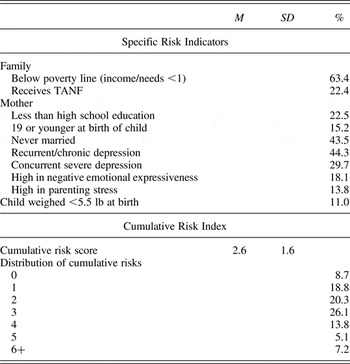
Overall, 50% of the youth included in the sample for the present study are female and 63% come from families whose income and family size places them below the federal poverty line. The sample includes youth from a variety of racial/ethnic backgrounds, with 41% identified as Hispanic, 37% as non-Hispanic White, 16% as non-Hispanic Black, and 7% as other. Table 1 provides information on participants' exposure to the risk factors examined in the present study (discussed below). Youth who were excluded from the analysis sample because of missing data did not differ significantly from those included in the sample on age, gender, race/ethnicity, or exposure to any of the risk factors presented in Table 1.
Participant exposure to specific and cumulative risks (n = 138)

Note: The percentages for each risk indicator exclude youth who are missing data on that indicator (below poverty line: 7 missing, TANF receipt: 31 missing, birth weight: 1 missing, recurrent/chronic depression: 32 missing). TANF, Temporary Assistance for Needy Families.
Measures
The measures used in the current analyses are derived from surveys completed by mothers 6 and 18 months following their enrollment in the Working toward Wellness study, and survey and physiological data collected from youth at the 18-month follow-up.
Youth demographics
On the 18-month follow-up survey, youth reported information on their own demographic characteristics, including gender and race/ethnicity. For two youth who did not self-report their own race, their mothers' reports of race/ethnicity were used. Children were grouped into four racial/ethnic categories: non-Hispanic White (used as the reference category for all regression analyses), non-Hispanic Black, Hispanic, and other (e.g., Asian or Native American).
Cumulative risk
The 6- and 18-month follow-up surveys for mothers included information on demographic characteristics, household composition and income, family relations, and current and past mental and physical health. Ten risk indicators were coded based on mothers' responses: family poverty, receipt of Temporary Assistance for Needy Families (TANF) benefits, low maternal education, adolescent motherhood, single motherhood, recurrent/chronic maternal depression, concurrent severe maternal depression, negative emotional expressiveness within the family, mother's perceived stress related to parenting, and low child birth weight (serving as a proxy for prenatal stress exposure and early health-related adversity; e.g., Horta, Victora, Menezes, Halpern, & Barros, Reference Horta, Victora, Menezes, Halpern and Barros1997; Wadhwa, Reference Wadhwa2005). These risk factors were selected based on evidence of associations with children's HPA axis functioning and mental health (Essex, Klein, Cho, & Kalin, Reference Essex, Klein, Cho and Kalin2002; Evans & English, Reference Evans and English2002; Evans & Kim, Reference Evans and Kim2007; Ewell Foster, Garber, & Durlak, Reference Ewell Foster, Garber and Durlak2008; Indredavik et al., Reference Indredavik, Vik, Heyerdahl, Kulseng, Fayers and Brubakk2004; Lupien, King, Meaney, & McEwen, Reference Lupien, King, Meaney and McEwen2000, Reference Lupien, King, Meaney and McEwen2001; Repetti, Taylor, & Seeman, Reference Repetti, Taylor and Seeman2002; Talge, Neal, Glover, & the Early Stress, Translational Research and Prevention Science Network: Fetal and Neonatal Experience on Child and Adolescent Mental Health, Reference Talge, Neal and Glover2007; Zalewski et al., Reference Zalewski, Lengua, Kiff and Fisher2012).
The criteria for assigning youth to “at-risk” status on each of the 10 risk indicators were the following: (a) their family fell below the federal poverty line based on their current income to needs ratio; (b) anyone in their household currently received TANF or had received TANF a year prior; (c) their mother had earned less than a high school education; (d) their mother was less than 20 years old at the time of their birth; (e) their mother had never been married; (f) their mother suffered from recurrent depressive episodes or chronic depression (defined as reporting more than five episodes of depression in her lifetime, or being depressed on and off again or always); (g) their mother was currently suffering from severe depression (defined as self-reporting a score greater than 15 on the 16-item QIDS; Rush et al., Reference Rush, Trivedi, Ibrahim, Carmody, Arnow and Klein2003); (h) their mother reported expressing moderate levels of anger and hostility within the family context (defined as self-reporting an average score of 3 [sometimes] or more on the negative dominant subscale of the Self-Expressiveness in the Family Questionnaire; Halberstadt, Cassidy, Stifter, Parke, & Fox, Reference Halberstadt, Cassidy, Stifter, Parke and Fox1995); (i) their mother reported high levels of stress (defined as self-reporting an average score of 4 [agree] or more on the parental distress subscale of the Parenting Stress Index—Short Form; Abidin, Reference Abidin1995); and (j) they were underweight at birth (defined as weighing <5.5 lb).
Each risk indicator was scored as 1 if the youth was at risk and 0 if not at risk. Thirty-one youth were missing data on their family's TANF receipt, 32 were missing data on their mother's recurrent/chronic depression, 7 were missing data on their family's income to needs ratio, and 1 was missing data on birth weight. In total, 56% of the sample had data for all 10 risk indicators, 37% had data for 9 risk indicators, and 7% had data for 8 risk indicators. In each case where data were missing for a particular risk indicator, a score of 0 (not at risk) was assigned, as a conservative estimate of risk. The 10 risk indicators were summed to form an overall cumulative risk index for each youth. To minimize the potential influence of outliers and reduce positive skew, the cumulative risk index was top-coded prior to analysis. Specifically, youth whose scores were 7 or greater (n = 3) were assigned a score of 6.
5-HTTLPR
During the 18-month follow-up home visit, trained research staff collected saliva samples from 192 youth who assented to provide DNA data using the Oragene DNA collection kit. All samples were delivered to Salimetrics, LLC (State College, PA) for DNA extraction and genotyping. DNA was isolated from the saliva using the QIAmp DNA Mini Kit column-based system (Qiagen, Product Number 51306). Eight samples yielded insufficient quantities of DNA for genotyping. For the remaining 184 samples, 5′ fluorescent labeled oligonucleutide primers from Applied Biosystems, Inc., were used to assay the 5-HTTLPR 22 base pair variable number tandem repeat for biallelic classification as short and long alleles. For the primary analyses individuals carrying at least one short allele (SS/SL) were contrasted with individuals homozygous for the long allele (LL). Supplementary analyses examined whether there is additive effect of the short allele carrier by contrasting the SS and SL genotypes separately with the LL genotype.
Salivary cortisol
During the 18-month follow-up home visit, trained research staff instructed participating youth on the procedures for providing cortisol saliva samples by expectorating through a straw into a vial and guided them through the process of collecting one practice saliva sample (not used in the current analyses). Youth were then asked to provide saliva samples on their own over 2 consecutive days at three different times each day: immediately after awakening (wake-up), 30 min after awakening (wake-up + 30), and immediately prior to going to bed (bedtime). The importance of taking each sample at the correct time was stressed, and youth were provided with a timer to use to help them remember to take their wake-up +30 sample on time. To avoid sample contamination, they were also instructed not to brush their teeth or to eat or drink anything in the half hour before providing each sample. Youth were instructed to record the date and time of each sample on the vial and to store all samples in the refrigerator inside a provided container before returning them by mail; a $20 gift card was provided as an incentive for returning their samples. Because previous research has shown that participant awareness of objective sample time monitoring can increase compliance rates (Broderick, Arnold, Kudielka, & Kirschbaum, Reference Broderick, Arnold, Kudielka and Kirschbaum2004), all youth were told that their sample storage container had a “track cap” that recorded each time the container was opened. For cost reasons, most participants were not actually provided with “track cap” containers, but a randomly selected subsample of 31 youth were given sample vial containers with Medication Event Monitoring System caps (MEMS™, Aardex Group Ltd.), which electronically recorded the date and time of each bottle cap opening. Objective compliance analyses using this subsample are reported below.
All cortisol saliva samples were delivered to the Technical University of Dresden Biological Psychology Laboratory (Dresden, Germany, Dr. Clemens Kirschbaum, Director) for assaying of cortisol concentrations. The lower limit of detection of the assay was 0.036 µg/dl (1 nmol/L). Each saliva sample was assayed in duplicate, and the values of the two assays were averaged. Samples with greater than 20% variation between assays were tested a third time, and the two closest values from the three assays were averaged. The mean intraassay coefficient of variation was 5.6%. To reduce the influence of outliers, cortisol values for each sample time (wake-up, wake-up + 30, and bedtime) were Winsorized to 3 SD above the mean for that sample time. One individual with extremely high cortisol values was dropped from the analysis sample. All cortisol values are reported in micrograms per deciliter (μg/dl).
Of the 186 youth who assented to provide salivary cortisol samples, 145 returned at least one of the six requested vials. Seven percent of the returned vials could not be assayed because of insufficient saliva, and an additional 9% of the returned vials did not have the sample time recorded on the label. Missing sample times were estimated based on the individual's nonmissing sample times, where available; otherwise, it was assumed that the participant took each sample at the average time for that sample type (details available from the authors upon request). The mean wake-up sample time was 7:48 a.m. (SD = 1.7 hr). Wake-up + 30 samples were considered to be valid if they were taken between 20 and 40 min following the wake-up sample; 78% of the samples met this criterion. Bedtime samples were considered valid if they were taken at least 9 hr after the wake-up sample; 96% of the samples met this criterion, and the mean bedtime sample time was 9:41 p.m. (SD = 1.6 hr). The primary analysis sample was limited to youth who provided a valid wake-up and bedtime saliva sample on at least one day (n = 138). Analyses on the CAR were conducted on the subset of these youth who also provided a valid wake-up and wake-up + 30 saliva sample on at least one day (n = 117).
Three measures were used to summarize youths' diurnal cortisol rhythms. For days on which valid wake-up and wake-up + 30 samples were obtained, the CAR, quantifying the magnitude of the early-morning rise in cortisol, was calculated by subtracting the wake-up cortisol level from the wake-up + 30 cortisol level. The AUC with respect to ground, estimating the total amount of cortisol output over the course of the day (not including the rise associated with the CAR), was calculated as the area of the trapezoid defined by the wake-up and bedtime cortisol levels separated by the number of hours elapsed between these samples (as described in Pruessner, Kirschbaum, Meinlschmid, & Hellhammer, Reference Pruessner, Kirschbaum, Meinlschmid and Hellhammer2003). The diurnal cortisol slope, quantifying the rate of change in cortisol levels per hour from morning to night, was calculated by subtracting the wake-up cortisol level from the bedtime cortisol level and dividing this difference by the number of hours elapsed between these samples. A negative diurnal cortisol slope indicates the expected pattern of declining cortisol levels over the course of the day; more negative slope values indicate a steeper diurnal decline whereas less negative or positive slope values indicate a flatter diurnal pattern. Each summary measure was calculated for each day on which valid cortisol samples were available and then averaged across the two sampling days. In order to aid in the interpretation of findings for these summary measures, analyses were also conducted on the wake-up and bedtime cortisol levels averaged across days. The average wake-up and bedtime cortisol level measures were square-root transformed to correct for positive skew.
MEMS verification of the accuracy of self-reported sample times
To check the accuracy of youths' self-reported sample times, a subsample of 31 youth received saliva sample storage containers with MEMS caps that electronically recorded date and time stamps for each time the container was opened. Participants were instructed to store all of their saliva sample vials in the provided sample storage container and to only open the container in order to deposit a completed sample vial. Self-reported sample times were considered accurate if they matched a MEMS cap opening time to within 10 min for the wake-up and wake-up + 30 samples, or within 30 min for the bedtime sample. Of note, these analyses are likely to underestimate actual self-report accuracy rates, because a failure to open and close the MEMS cap each time a sample was provided could result in an “inaccurate” classification even though the sample time was accurately recorded on the vial (e.g., if the youth opened the storage container before providing the wake-up sample and waited until after providing the wake-up + 30 sample to close the container, the wake-up + 30 sample time would not be correctly reflected in the MEMS cap opening time). Nevertheless, these analyses are useful for suggesting a floor level of saliva sampling compliance that can be expected to exist in the present data.
Across all 160 cortisol samples supplied by these 31 youth, 87 (54%) had sample times recorded on the vial that matched a MEMS cap opening time according to the above criteria. Broken out by sample type, accuracy rates were slightly higher for the wake-up samples (63%) than for the wake-up + 30 samples (50%) or the bedtime samples (50%). For each sample type, more than 70% of youth recorded a sample time that matched a MEMS cap opening time on at least one of the two sampling days, although this rate tended to be lower on the second day.
Substances that may influence cortisol levels
At the end of each day on which saliva samples were collected, participants were asked to complete a structured diary, which included information about any medications taken during the day. From this information, indicators were coded for use of oral contraceptives (n = 2) and steroid-based medications (n = 1). In addition, an indicator for daily cigarette smoking (n = 2) was coded from youths' 18-month survey reports. These indicators were included as covariates in all analyses, consistent with current practice in the field (Adam & Kumari, Reference Adam and Kumari2009).Footnote 1
Analytic strategy
Descriptive statistics including univariate distributions and bivariate correlations were examined for all analysis variables. In addition, chi-square tests were conducted to check for associations between the 5-HTTLPR genotype and each risk indicator, and an independent-samples t test was conducted to test for different mean scores on the full cumulative risk index by genotype group (i.e., testing for gene–environment correlation). Chi-square tests were also conducted to assess the potential racial/ethnic stratification of the 5-HTTLPR genotype. Prior research has revealed unequal 5-HTTLPR allelic distributions across racial groups (Gelernter, Kranzler, & Cubells, Reference Gelernter, Kranzler and Cubells1997), and thus it is critical to assess the association between these two potential moderators of the relation between cumulative risk and stress physiology.
To address the primary research questions of this study, each cortisol measure was regressed on cumulative risk exposure, 5-HTTLPR genotype, and the interaction between cumulative risk and 5-HTTLPR genotype, using the surveyreg procedure in SAS version 9.2. This procedure yields generalized least squares estimates of the regression coefficients and uses a Taylor series linearization method to estimate standard errors accounting for the clustering of some youth within families (SAS Institute Inc., 2009; Thomas & Heck, Reference Thomas and Heck2001). In all models, the mother's ID was used as the clustering variable to account for the 22 sibling pairs included in the analysis sample. Two models were run for each outcome. Model 1 examined the main effects of cumulative risk and 5-HTTLPR genotype (coded as SS/SL = 1, LL = 0), controlling for youth-level demographics (gender, age, and ethnicity), the number of hours elapsed between the wake-up and bedtime cortisol samples (“hours awake”), and dichotomous indicators for cigarette smoking, use of oral contraceptives, and use of steroid-based medications. Model 2 included all the effects in Model 1 with the addition of an interaction term between cumulative risk and 5-HTTLPR genotype (SS/SL vs. LL) to test for genetic moderation of the cumulative risk effect. For Model 2, cumulative risk was mean centered according to field standards for tests of moderation (Aiken & West, Reference Aiken and West1991). Both raw estimates and effect sizes (the effect in standard deviation units) of all associations of interest are reported. In addition, supplementary analyses were conducted contrasting the SS, SL, and LL genotypes to determine whether the short allele was exerting an additive effect. The results of these analyses are reported in footnotes.
The primary analyses concerned the average CAR, slope, and AUC as summary measures of youths' diurnal cortisol rhythms across the two cortisol sampling days. Effects on average wake-up and bedtime cortisol levels were examined in order to clarify their contributions to the effects on these summary measures. Finally, a series of sensitivity analyses were run to examine whether effects were moderated by gender or race/ethnicity and to test the sensitivity of results to participant noncompliance with the sampling protocol, the presence of outliers in the cortisol measures, and the influence of experimental treatment group status.
Results
Descriptive and bivariate statistics
Cumulative risk
Descriptive statistics for youths' scores on each risk indicator and the full cumulative risk index are provided in Table 1. Less than 9% of the sample had no risk factors beyond Medicaid eligibility and maternal mild to severe depressive symptoms at study enrollment (the inclusion criteria for the sample), and over half of the sample (52%) had three or more additional risk factors. The most common risk factor was household income below the federal poverty line (63%), and the least common was low birth weight (11%).
5-HTTLPR genotype
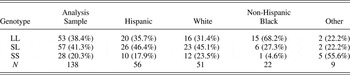
The distributions of the 5-HTTLPR biallelic genotypes in the analysis sample and within each racial/ethnic subgroup are presented in Table 2. Consistent with previous reports (Gelernter et al., Reference Gelernter, Kranzler and Cubells1997), genotype frequencies differed significantly between racial/ethnic groups (χ2 = 17.5, p = .01), with non-Hispanic Black youth being more likely to express the LL genotype. This confound is partially addressed (for main effects) by the inclusion of racial/ethnic identity as a covariate in all regression analyses. In addition, the pattern of findings was examined within racial/ethnic subgroups to assess whether the associations between 5-HTTLPR genotype and cortisol measures differed between these groups.
5-HTTLPR genotype frequencies in the analysis sample and in race/ethnicity subgroups

Note: 5-HTTLPR, serotonin transporter linked polymorphic region; L, long allele; S, short allele.
No significant gene–environment correlations were observed in the full analysis sample. Specifically, average scores on the cumulative risk index did not differ between the short carrier and LL genotype groups (t = 1.01, p = .31). Furthermore, the proportion of youth meeting risk status on each indicator did not differ significantly between the SS/SL and LL groups, although there was a trend for parental stress to be a more common risk factor in the LL group (χ2 = 3.54, p = .06). Youths' average age also did not differ significantly between the two genotype groups (t = 1.42, p = .16), and the gender ratios were balanced (χ2 = 0.03, p = .86).
Salivary cortisol
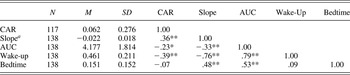
Table 3 provides descriptive statistics for each cortisol measure and the correlations among these measures. Average cortisol levels demonstrated the expected decline over the course of the day, from an average of 0.46 µg/dl at wake-up to 0.15 µg/dl just before going to bed, with the average slope being –0.02 µg/dl/hr. The average CAR, slope, and AUC were only moderately intercorrelated (rs < .40), confirming that they captured relatively independent features of the diurnal cortisol rhythm. As expected based on the algorithm used to calculate the summary measures, the diurnal cortisol slope was negatively related to wake-up levels and positively related to bedtime levels, whereas the AUC was positively related to both wake-up and bedtime levels.
Descriptive statistics and bivariate correlations for cortisol measures

Note: Cortisol is measured in micrograms per deciliter (µg/dl). Pearson's correlation coefficients are calculated using square root transformed values for the average wake-up and bedtime cortisol levels. All means and standard deviations are calculated on the nontransformed cortisol measures. N, sample size; CAR, cortisol awakening response; AUC, area under the curve.
a The cortisol slope is coded so that more negative values indicate a steeper decline in cortisol levels per hour awake.
*p < .05. **p < .01.
Main effects of cumulative risk and 5-HTTLPR genotype predicting cortisol
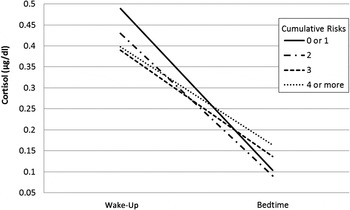
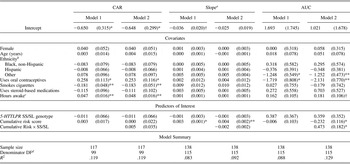
The first series of regression analyses tested whether cumulative risk exposure and 5-HTTLPR genotype (SS/SL vs. LL) directly relate to youths' diurnal cortisol rhythms. Parameter estimates from these analyses are presented in the Model 1 columns of Table 4 and Table 5, and effect sizes (ES) for the predictors of interest are presented in Table 6. Results demonstrate that youths' exposure to higher levels of cumulative risk was predictive of flatter diurnal cortisol slopes, b = 0.003, SE = 0.001, p = .02; ES = 0.28, 95% CI = (0.05, 0.51). Thus, on average, youth who were 1 SD higher on the cumulative risk index had diurnal cortisol slopes that were flatter (less negative) by 0.28 SD. These flattened slopes were driven by trends for lower wake-up cortisol levels, b = –0.016, SE = 0.009, p = .08; ES = –0.16, 95% CI = (–0.35, 0.02), and elevated bedtime cortisol levels, b = 0.019, SE = 0.011, p = .08; ES = 0.19, 95% CI = (–0.03, 0.41). Figure 1 graphs the average covariate-adjusted wake-up and bedtime cortisol levels for youth with varying levels of cumulative risk exposure. From this graph, it is clear that youth with no more than one risk factor had the steepest diurnal cortisol slopes, with high average cortisol levels at wake-up and low levels at bedtime relative to youth with more risk exposure. In contrast, youth with four or more risk factors had relatively low wake-up cortisol levels and relatively high bedtime cortisol levels on average, resulting in a flatter diurnal slope. The rate of diurnal cortisol decline for youth with two or three risk factors fell in between these extremes. Cumulative risk was not significantly predictive of the average CAR or AUC, and the main effect of 5-HTTLPR genotype (SS/SL vs. LL) was not significantly predictive of any of the cortisol measures.Footnote 2
The average wake-up and bedtime cortisol levels for youth with different levels of cumulative risk exposure. The average wake-up and bedtime cortisol values are adjusted for all covariates included in the regression models.

Parameter estimates for regression models predicting summary cortisol measures

Note: Unstandardized regression coefficients are reported with standard errors in parentheses. Cortisol is measured in micrograms per deciliter (µg/dl). CAR, cortisol awakening response; AUC, area under the curve; 5-HTTLPR, serotonin transporter linked polymorphic region; SS/SL, short allele carrier.
a The cortisol slope is coded so that more negative values indicate a steeper decline in cortisol levels per hour awake.
b The reference category is White, non-Hispanic.
c Hours awake is calculated as the average number of hours between the wake-up and bedtime cortisol samples.
d Denominator DF are calculated as the number of families minus 1.
†p < .10. *p < .05. **p < .01.
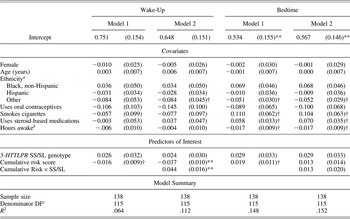
Parameter estimates for regression models predicting wake-up and bedtime cortisol levels

Note: Unstandardized regression coefficients are reported with standard errors in parentheses. Cortisol is measured in micrograms per deciliter (µg/dl). Wake-up and bedtime cortisol values are square root transformed to correct for positive skew. 5-HTTLPR, serotonin transporter linked polymorphic region; SS/SL, short allele carrier.
a The reference category is White, non-Hispanic.
b Hours awake is calculated as the average number of hours between the wakeup and bedtime cortisol samples.
c The denominator DF are calculated as the number of families minus 1.
†p < .10. **p < .01.
Effect sizes and 95% confidence intervals for predictors of interest

Note: Effect sizes are reported with 95% confidence intervals in parentheses. Model 1 and Model 2 correspond to the models presented in Tables 4 and 5. Effect sizes and confidence intervals for covariates are not presented. CAR, cortisol awakening response; AUC, area under the curve; 5-HTTLPR, serotonin transporter linked polymorphic region; L/L, homozygous long allele; SS/SL, short allele carrier.
a Cortisol slope is coded so that more negative values indicate a greater decline in cortisol levels over the course of the day.
b The effect size for 5-HTTLPR SS/SL genotype can be interpreted as the estimated difference between the SS/SL and LL youth in standard deviation units on the outcome measure.
c The effect size for cumulative risk score can be interpreted as the estimated difference in standard deviation units on the outcome measure associated with a difference of 1 SD in cumulative risk.
d The effect size for the Cumulative Risk × 5-HTTLPR SS/SL can be interpreted as the difference between the SS/SL and LL simple-slope effect sizes for cumulative risk predicting the outcome measure. The estimated effect sizes of the cumulative risk simple slopes for LL and SS/SL youth are presented below this line.
†p < .10. *p < .05. **p < .01.
Interactions between cumulative risk and 5-HTTLPR genotype predicting cortisol
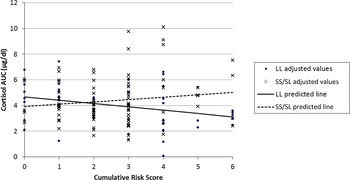
The second series of regression analyses tested whether the effects of cumulative risk exposure on average diurnal cortisol rhythms were moderated by 5-HTTLPR genotype (SS/SL vs. LL). Parameter estimates from these analyses are presented in the Model 2 columns of Tables 4 and 5, and effect sizes for the interaction term and for the simple slopes of cumulative risk exposure among SS/SL and LL youth are presented in Table 6. These analyses showed a statistically significant interaction between cumulative risk and 5-HTTLPR genotype predicting average AUC across the 2 days, b = 0.473, SE = 0.182, p = .01; ES = 0.42, 95% CI = (0.10, 0.74), ΔR 2 = .04. This interaction is graphed in Figure 2. The ΔR 2 of .04 for this interaction term indicates that the interaction explained an additional 4% of the total variance in average AUC relative to the variance that was explained by the covariates and main effects alone. The effect size of 0.42 for this interaction term is equal to the difference between the SS/SL and LL simple-slope effect sizes for cumulative risk predicting average AUC. Tests of simple slopes revealed that, among LL youth, higher cumulative risk scores were associated with significantly lower AUC averages, b = –0.232, SE = 0.116, p = .05; ES = –0.21, 95% CI = (–0.41, 0.00). In contrast, among SS/SL youth, there was a trend-level association between greater cumulative risk scores and higher AUC averages, b = 0.241, SE = 0.145, p = .099; ES = 0.21, 95% CI = (–0.04, 0.47).
The association between cumulative risk and cortisol area under the curve (AUC) by serotonin transporter linked polymorphic region genotype. Cortisol AUC values are adjusted for all covariates included in the regression models. LL, homozygous long allele; SS/SL, short allele carrier.

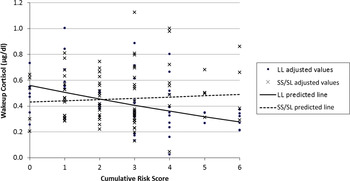
Interactions between cumulative risk and 5-HTTLPR genotype predicting wake-up and bedtime cortisol levels were examined in order to clarify their contributions to the overall AUC effects. The interaction between cumulative risk and genotype was significant when predicting youths' average wake-up cortisol levels, b = 0.044, SE = 0.016, p < .01; ES = 0.46, 95% CI = (0.12, 0.79), ΔR 2 = .05 (see Figure 3), but not when predicting their average bedtime levels, b = 0.013, SE = 0.020, p = .52; ES = 0.13, 95% CI = (–0.27, 0.52), ΔR 2 = .004. Tests of simple slopes revealed that for L/L youth, greater cumulative risk exposure was associated with lower wake-up cortisol levels, b = –0.037, SE = 0.010, p < .01; ES = –0.38, 95% CI = (–0.58, –0.18). In contrast, for youth carrying the short allele, wake-up cortisol levels were not significantly associated with cumulative risk, b = 0.007, SE = 0.013, p = .59; ES = 0.07, 95% CI = (–0.20, 0.35). However, there was a trend for greater cumulative risk exposure to be associated with higher bedtime cortisol levels among short allele carriers, b = 0.026, SE = 0.016, p = .098; ES = 0.26, 95% CI = (–0.05, 0.57). Thus, the significant negative association between cumulative risk and cortisol AUC among LL youth was driven by a reduction in wake-up cortisol levels with greater risk, whereas the trend-level positive association between cumulative risk and cortisol AUC among SS/SL youth was driven by a trend-level elevation of bedtime cortisol levels with greater risk. In contrast, no significant interactions between cumulative risk and 5-HTTLPR genotype were found for the prediction of average diurnal cortisol slope or CAR.Footnote 3
The association between cumulative risk and wake-up cortisol levels by serotonin transporter linked polymorphic region genotype. Wake-up cortisol values are adjusted for all covariates included in the regression models. LL, homozygous long allele; SS/SL, short allele carrier.

Sensitivity tests
Consistency of findings across genders
Because gender differences have been reported in HPA axis functioning (Kudielka & Kirschbaum, Reference Kudielka and Kirschbaum2005), the interactions between gender and the main effects of cumulative risk and 5-HTTLPR genotype, as well as a three-way interaction among gender, risk, and genotype, were examined predicting each summary cortisol measure. The three-way interaction is low powered, so the coefficients for the risk by genotype interaction effect were also examined within gender subgroups.
Gender did not significantly moderate the main effects of cumulative risk or 5-HTTLPR genotype on any of the summary cortisol measures, although there was a trend (p = .08) for the main effect of cumulative risk on diurnal cortisol slope to vary across genders. Simple-slope analyses revealed that the association of cumulative risk with diurnal cortisol slope among boys was positive but of small magnitude and not statistically significant, b = 0.002, SE = 0.002, p = .42; ES = 0.14, 95% CI = (–0.20, 0.47), whereas the association among girls was positive, of relatively large magnitude, and statistically significant, b = 0.005, SE = 0.001, p < .01; ES = 0.47, 95% CI = (0.23, 0.72). None of the three-way interactions between gender, cumulative risk, and 5-HTTLPR genotype were significant, and the coefficients for the risk by genotype interaction were of similar magnitude and direction across gender subgroups (full results available upon request).
Consistency of findings across racial/ethnic subgroups
The higher prevalence of the long allele observed among non-Hispanic Black youth in this sample raises the possibility that the correlates of this allele also differ between racial/ethnic subgroups. Therefore, all regression analyses were also examined within racial/ethnic subgroups, and an interaction term between 5-HTTLPR genotype and racial/ethnic subgroup was examined to test for statistical significance of group differences in the main effect of genotype. No significant interactions emerged between race/ethnicity (with the “other” group collapsed with “non-Hispanic White” because of small sample size) and 5-HTTLPR genotype predicting the summary cortisol measures, and the parameter estimates for the 5-HTTLPR main effect were generally of similar magnitude and direction across racial/ethnic subgroups. The sample size precluded the use of statistical significance tests of racial/ethnic differences in the moderation of cumulative risk effects by 5-HTTLPR genotype. However, inspection of the parameter estimates for the risk by 5-HTTLPR interaction term within racial/ethnic subgroups revealed that they were similar across subgroups (full results available upon request).
Robustness to participant noncompliance with the cortisol sampling procedures
All regression analyses were also conducted with the addition of several indicators for potential noncompliance in the timing of the cortisol samples, based on youths' self-reported sample times. These noncompliance indicators included the number of missing sample collection times, the number of minutes between the self-reported wake-up cortisol sample time and the wake-up time reported on the daily diary (which was filled out at the end of the day), and the number of minutes by which the self-reported wake-up + 30 (CAR) sample time differed from the targeted 30 min following the wake-up sample. In addition, to test for potential bias related to natural variation in sample timing, models were tested controlling for the time of day when the bedtime cortisol sample was provided as well as an indicator for bedtime samples that were taken more than 16 hr after the wake-up sample to account for the rise in cortisol levels following the nighttime nadir. Results of models including these additional covariates were highly similar to the results of the primary analyses in terms of the magnitude, direction, and statistical significance of coefficients for all predictors of interest, revealing that the findings are robust to cortisol sampling noncompliance and sample-timing effects.
Robustness to cortisol outliers
To test the influence of cortisol outliers on the results presented above, all regression analyses were rerun with each cortisol measure top-coded to 2.5 SD above the mean. In addition, measures that include negative values (i.e., the CAR and slope) were bottom-coded to 2.5 SD below the mean. The parameter estimates from these analyses were nearly identical to those reported above, and all statistically significant effects remained as such.
Influence of treatment group
Because the Working toward Wellness intervention did not produce systematic effects on physiological or behavioral outcomes for children (Kim et al., Reference Kim, LeBlanc, Morris, Simon and Walter2010), treatment assignment was not included in the primary analyses. However, as a sensitivity test, all analyses were also run including an indicator for treatment group. This treatment indicator was not significant in any of the models, and it did not alter the magnitude or statistical significance of any of the coefficients of interest.
Discussion
This study explored the association between cumulative risk exposure and diurnal cortisol rhythms, and moderation of this association by variation in 5-HTTLPR genotype in an ethnically diverse, low-income sample of children and early adolescents whose mothers were experiencing depressive symptoms. Examining the associations between cumulative risk exposure and diurnal cortisol rhythms provides insight into one pathway by which social adversity can result in physiological adaptations associated with risk for various physical and mental health problems (Repetti et al., Reference Repetti, Taylor and Seeman2002).
Main effects of cumulative risk on diurnal cortisol rhythms
Although cumulative risk exposure was not associated with the CAR or with total daily cortisol output as estimated by the wake-up to bedtime AUC, greater cumulative risk exposure was associated as expected with flatter diurnal cortisol slopes, averaged across 2 days of sampling. Specifically, youth who were 1 SD higher on cumulative risk exposure had, on average, a diurnal cortisol slope that was flatter by 0.28 SD. This flattening of the diurnal slope was driven by trends for lower morning and higher evening cortisol levels with greater cumulative risk exposure. There was also a nonsignificant trend for the association between cumulative risk exposure and flatter diurnal cortisol slopes to be stronger among girls than among boys.
The finding of an association between cumulative risk exposure and flatter diurnal cortisol slopes is consistent with a growing research base supporting an association between chronic or additive life stressors and a flattening of the diurnal cortisol rhythm (Essex et al., Reference Essex, Shirtcliff, Burk, Ruttle, Klein and Slattery2011; Miller et al., Reference Miller, Chen and Zhou2007; Zalewski et al., Reference Zalewski, Lengua, Kiff and Fisher2012). For example, using a cumulative family adversity index in a substantially lower-risk sample of 3-year-old children, Zalewski et al. (Reference Zalewski, Lengua, Kiff and Fisher2012) obtained a standardized regression coefficient of 0.13 for greater cumulative adversity predicting flatter diurnal cortisol slopes, after controlling for the child's gender, family income, and cortisol sampling variables. The meta-analysis by Miller et al. (Reference Miller, Chen and Zhou2007) revealed that individuals who had experienced specific chronic stressors versus those who had not experienced those stressors had diurnal cortisol slopes that were flatter by an average of 0.39 SD. Thus, the effect size observed in the present study is in line with effect sizes obtained in similar studies of the relation between life stressors and the diurnal cortisol slope.
This study contributes to a presently sparse literature on the effects of cumulative socioeconomic and psychosocial risks on HPA axis functioning. These results build upon the work of Evans and colleagues (Evans, Reference Evans2003; Evans & English, Reference Evans and English2002), who observed associations between cumulative risk exposure and elevated overnight urinary cortisol concentrations, by providing evidence that cumulative risk exposure is associated with alterations in the dynamics of cortisol secretion and regulation over the course of the day.
Although the neurobiological mechanisms responsible for the flattening of the diurnal cortisol rhythm following chronic stress are not yet clearly delineated, the elevation of evening cortisol levels may reflect increased top-down excitatory input to the HPA axis from stress-sensitive neural regions such as the amygdala (Franklin et al., Reference Franklin, Saab and Mansuy2012). Alternatively, elevated evening cortisol levels may reflect an upward shift in the set point for negative feedback regulation of the HPA axis, perhaps via altered expression or sensitivity of hippocampal mineralocorticoid receptors, which mediate tonic inhibition of HPA axis activation during the low point in the circadian rhythm (Bradbury, Akana, & Dallman, Reference Bradbury, Akana and Dallman1994; Spencer, Kim, Kalman, & Cole, Reference Spencer, Kim, Kalman and Cole1998). In contrast, the lowering of morning cortisol levels could reflect an adaptive response to protect central and peripheral tissues from damage that can result from excessive activity of glucocorticoid receptors, which are occupied only at high cortisol concentrations such as during the peak of the diurnal cycle or during acute stress (de Kloet et al., Reference de Kloet, Vreugdenhil, Oitzl and Joëls1998; McEwen, Reference McEwen2007). Finally, recent research has demonstrated that chronic stress can produce alterations in central circadian processes (Jiang et al., Reference Jiang, Li, Liu, Sun, Zhou and Zhu2013) that also regulate HPA axis activity (Nader et al., Reference Nader, Chrousos and Kino2010); thus, central circadian disruptions may contribute to altered diurnal cortisol secretion following chronic stress. Future research in both humans and animal models will be required to clarify the specific neurobiological mechanisms by which chronic stress can induce a flattening of the diurnal cortisol rhythm.
Regardless of why it occurs, a flattened diurnal cortisol slope constitutes an allostatic state that, if maintained over time, may contribute to allostatic load across multiple neurobiological systems, resulting in compromised physical and mental health (McEwen, Reference McEwen2004). For example, in adults, flatter diurnal cortisol slopes have been associated with the presence of coronary calcification (Matthews, Schwartz, Cohen, & Seeman, Reference Matthews, Schwartz, Cohen and Seeman2006), higher levels of inflammatory markers (DeSantis et al., Reference DeSantis, DiezRoux, Hajat, Aiello, Golden and Jenny2012), shorter telomere length (Tomiyama et al., Reference Tomiyama, O'Donovan, Lin, Puterman, Lazaro and Chan2012), fatigue (Kumari et al., Reference Kumari, Badrick, Chandola, Adam, Stafford and Marmot2009), and depression (Knight, Avery, Janssen, & Powell, Reference Knight, Avery, Janssen and Powell2010). With regard to developing psychopathology in children and adolescents, flattened diurnal cortisol slopes have been associated with greater severity of internalizing and externalizing symptoms (Shirtcliff & Essex, Reference Shirtcliff and Essex2008), comorbidity of internalizing and externalizing symptoms following maltreatment (Cicchetti & Rogosch, Reference Cicchetti and Rogosch2001), and comorbidity of mood and anxiety disorders (Doane et al., Reference Doane, Mineka, Zinbarg, Craske, Griffith and Adam2013).
It is not yet known whether flattened diurnal cortisol secretion is an etiological factor in the development of psychopathology following life adversity or if it is a peripheral marker of allostatic load in brain regions such as the amygdala, mPFC, and hippocampus that regulate HPA axis activation (Franklin et al., Reference Franklin, Saab and Mansuy2012) and that show structural and functional alterations in stress-induced psychopathology (Disner et al., Reference Disner, Beevers, Haigh and Beck2011; Koenigs & Grafman, Reference Koenigs and Grafman2009; Sheline, Reference Sheline2003). However, there is evidence to suggest that sufficiently elevated evening cortisol levels could produce bottom-up effects on neural information processing, resulting in impaired or emotionally biased memory formation and maladaptive coping behaviors that increase the risk of developing affective disorder (Herbert et al., Reference Herbert, Goodyer, Grossman, Hastings, de Kloet and Lightman2006). It is intriguing that flatter diurnal cortisol slopes have been associated with greater amygdalar and hippocampal reactivity to stressful images (Cunningham-Bussel et al., Reference Cunningham-Bussel, Root, Butler, Tuescher, Pan and Epstein2009), demonstrating a link between diurnal cortisol rhythms and central mediators of the stress response.
Disruptions in the typical circadian rhythm of glucocorticoid concentrations may also desynchronize central and peripheral circadian processes, thereby placing increased allostatic load on multiple physiological systems (Karatsoreos & McEwen, Reference Karatsoreos and McEwen2011). For example, experimentally induced disruptions in glucocorticoid rhythmicity in rats have been shown to abolish the typical circadian fluctuation of hippocampal 5-HT2C serotonin receptor expression (Holmes, French, & Seckl, 1997). Dysregulated circadian rhythms in HPA axis activity, central neurochemical signaling, immune function, and metabolic activity have all been proposed to contribute to the development of affective disorders, although the precise mechanisms by which this occurs are only beginning to be explored (McClung, Reference McClung2013).
Moderation by 5-HTTLPR genotype
A second aim of the current study was to assess whether patterns of association between cumulative risk exposure and diurnal cortisol rhythms vary based on youths' 5-HTTLPR genotype. Because prior research has suggested that 5-HTTLPR short allele carriers display greater sensitivity to environmental stressors (Caspi et al., Reference Caspi, Hariri, Holmes, Uher and Moffitt2010), it was hypothesized that the association between cumulative risk exposure and diurnal cortisol slope would be strongest among short allele carriers. In the current study, the significant association between greater cumulative risk and flatter diurnal cortisol slopes was not moderated by 5-HTTLPR genotype. Thus, the flattening of the diurnal cortisol rhythm with greater exposure to accumulated risks was observed regardless of 5-HTTLPR genotype.
However, our results do suggest that 5-HTTLPR genotype significantly moderated the association between cumulative risk and average cortisol AUC. Among LL youth, greater cumulative risk exposure was associated with a lower cortisol AUC, whereas among youth carrying, there was a trend (p < .10) for greater cumulative risk exposure to be associated with a higher cortisol AUC. The size of the effect of cumulative risk on the AUC was of similar magnitude but in reverse directions across genotype groups (ES = –0.21 for LL youth and 0.21 for youth carrying the short allele, even though the latter effect did not quite reach statistical significance). Thus, the overall null association between cumulative risk and cortisol AUC can be explained by an underlying crossover interaction between risk and 5-HTTLPR genotype group. It is interesting that the reduction in cortisol AUC among higher risk LL youth appears to be driven by lower wake-up cortisol levels (ES = –0.38), while the trend-level elevation of cortisol AUC among higher risk short allele carriers appears to be driven by a trend for higher bedtime cortisol levels (ES = 0.26).
The finding of a significant interaction between cumulative risk and 5-HTTLPR genotype predicting wake-up cortisol levels is in contrast to two previous studies using samples at elevated risk for depression that did not observe any interaction between 5-HTTLPR genotype and psychosocial adversity or stressful life events predicting morning cortisol levels (Goodyer et al., Reference Goodyer, Bacon, Ban, Croudace and Herbert2009; Vinberg et al., Reference Vinberg, Mellerup, Andersen, Bennike and Kessing2010). This apparent contradiction could be due to differences between the samples or the nature of the risks assessed; for example, the present sample experienced much higher levels of socioeconomic risk. However, our finding is complementary to the results of Mueller et al. (Reference Mueller, Armbruster, Moser, Canli, Lesch and Brocke2011), who observed that a greater number of stressful life events in early childhood was associated with lower cortisol reactivity to a stress task among young adults homozygous for the 5-HTTLPR long allele. Both of these findings would suggest that the long allele is associated with attenuated HPA axis activity in the context of high cumulative risk.
The pattern of gene–environment interaction effects observed in the present study could be interpreted to mean that these allelic variants of the 5-HTTLPR may predispose individuals to different patterns of psychophysiological adaptations in the context of cumulative risk, rather than imbuing one group of individuals with “sensitivity” and the other with “resilience” to adversity. Such differences could reflect different genetically mediated styles of coping with adversity (Koolhaas et al., Reference Koolhaas, Korte, De Boer, Van Der Vegt, Van Reenen and Hopster1999). Although either pattern of psychophysiological adaptation could lead to resilient functioning, in some youth these adaptations may be excessive or poorly suited to the current environmental context, which could increase their risk for divergent physical and mental health disturbances.
For example, the attenuation of HPA axis activity in LL youth exposed to numerous cumulative risks may be physiologically adaptive in the short term, by downregulating basal HPA axis function in order to protect the brain and body from the adverse effects of chronically high levels of circulating cortisol. However, if this pattern of attenuated cortisol output becomes extreme or is maintained over long periods of time, it is likely to result in dysregulation of other counterregulatory systems, such as the immune system, and increased risk of the physical and mental health concomitants of allostatic load (McEwen, Reference McEwen1998).
Moreover, there is evidence to suggest that the lower morning cortisol levels exhibited by the high-risk LL youth in this study might be indicative of increased risk for externalizing behavior problems and psychopathy. Lower morning cortisol levels have been associated with higher levels of psychopathic personality traits (Loney, Butler, Lima, Counts, & Eckel, Reference Loney, Butler, Lima, Counts and Eckel2006; Shoal, Giancola, & Kirillova, Reference Shoal, Giancola and Kirillova2003) and greater risk for externalizing but not internalizing behavior problems among boys (Cicchetti & Rogosch, Reference Cicchetti and Rogosch2001; Shirtcliff, Granger, Booth, & Johnson, Reference Shirtcliff, Granger, Booth and Johnson2005; Shoal et al., Reference Shoal, Giancola and Kirillova2003). To date, studies of the 5-HTTLPR genotype have primarily focused on the heightened vulnerability to anxiety and depression associated with the short allele, and relatively few studies have reported on whether the long allele might convey risk of another kind. Glenn (Reference Glenn2011) observed that the behavioral and psychophysiological phenotypes most often associated with the 5-HTTLPR LL genotype overlap strikingly with those implicated in risk for psychopathy and therefore argued that the long allele may confer risk for psychopathy. In support of this argument, Sadeh et al. (Reference Sadeh, Javdani, Jackson, Reynolds, Potenza and Gelernter2010) observed that lower socioeconomic status was associated with higher levels of callous–unemotional traits among long allele homozygotes but not among short allele carriers. It is therefore tempting to speculate that the reduction in cortisol AUC driven by lower morning cortisol levels observed among higher risk LL youth in the present study could reflect a neurobiological process underlying increased risk for psychopathy in some individuals. However, because psychopathy is rare, this risk would likely only be actualized in a small proportion of individuals who might display extreme attenuation of basal HPA axis functioning combined with other propsychopathy risk factors.
In contrast, the trend-level finding in the current study for an association between greater cumulative risk exposure and a higher cortisol AUC among youth carrying the short allele, combined with prior research findings of enhanced cortisol reactivity to laboratory stressors among short allele carriers (Miller et al., Reference Miller, Wankerl, Stalder, Kirschbaum and Alexander2013), suggests that the psychological vulnerability conveyed by the short allele may be mediated by increased acute stress reactivity that is not accompanied by subsequent downregulation of basal HPA axis functioning. That is, the trend-level elevation in average cortisol AUC among higher risk short allele carriers, which was driven in particular by a trend for elevated bedtime cortisol levels, could reflect greater HPA axis reactivity to stressors and negative mood states experienced during the course of the day (Adam et al., Reference Adam, Hawkley, Kudielka and Cacioppo2006), and/or reduced tonic inhibition of HPA axis activity during the low point of the diurnal rhythm (Holsboer, Reference Holsboer2000). Elevated basal cortisol levels have been observed among depressed children and adolescents (Lopez-Duran et al., Reference Lopez-Duran, Kovacs and George2009), with some evidence for elevated evening levels in particular being associated with greater severity of depressive symptoms (Dahl et al., Reference Dahl, Ryan, Puig-Antich, Nguyen, Al-Shabbout and Meyer1991; Van den Bergh & Van Calster, Reference Van den Bergh and Van Calster2009). Thus, elevated cortisol AUC and particularly elevated evening levels among higher risk SS/SL youth would be consistent with research suggesting that the short allele conveys vulnerability to depression following life stressors (Caspi et al., Reference Caspi, Hariri, Holmes, Uher and Moffitt2010). However, given that this association was not quite statistically significant at the .05 probability level in the present sample, further research is clearly required to assess its replicability and validity.
Limitations
The results from this study should be interpreted with several important limitations in mind. The first is that the cumulative risk index is only a rough proxy for childhood adversity and does not directly measure specific stressful life experiences, nor does it assess critical aspects of the stressors themselves. Reviews of the literature have suggested that precise measurement of environmental stressors is an important factor in the replication of gene–environment interactions (Caspi et al., Reference Caspi, Hariri, Holmes, Uher and Moffitt2010; Vrshek-Schallhorn et al., Reference Vrshek-Schallhorn, Mineka, Zinbarg, Craske, Griffith and Sutton2014). The risk index also does not provide information on youths' perceptions of the severity or controllability of the life stressors that they have experienced, the chronicity of stressor exposure, or the timing of stressor onset relative to the date of cortisol sampling, all of which have been shown to moderate the effect of chronic stressors on HPA axis functioning (Miller et al., Reference Miller, Chen and Zhou2007). In contrast, the cumulative risk index reflects a wide variety of factors that are known to influence diurnal cortisol rhythms; thus, the strength of this measure lies in the accumulation of correlated risk factors rather than in precise measurement of any specific risk factor.
A second potential limitation regards the accuracy and reliability of measurement of the diurnal cortisol rhythm. Accurate assessment of the diurnal cortisol rhythm requires precise timing of salivary cortisol samples, particularly in the morning when cortisol levels are changing rapidly. This presents a particular challenge when high-risk youth are asked to provide their own samples, because life stressors or a disorganized home environment would interfere with their ability to take each sample at the designated time. However, it is notable that sensitivity tests suggested that measured noncompliance did not systematically bias the findings presented above. In addition, reliability of measurement increases with a greater number of repeated samples. In the present study, in order to minimize participant burden, cortisol samples were collected across only 2 days. However, repeated measurements over 3 or more days have been recommended, and up to a week of measurement may be required for dynamic measures, such as the CAR and slope, to exhibit high levels of reliability (Rotenberg, McGrath, Roy-Gagnon, & Tu, Reference Rotenberg, McGrath, Roy-Gagnon and Tu2012). The wide confidence intervals obtained around the estimated effect sizes suggest that low measurement reliability may contribute to some of the null findings in the present study.
A third limitation is one that is shared by many studies examining interactions between candidate genes and measured environments. The psychiatric literature on measured gene by environment interactions has been criticized because reports of novel interaction effects often fail to hold up to replication attempts, suggesting that many published significant effects are false positives (Duncan & Keller, Reference Duncan and Keller2011). In our case, the possibility cannot be ruled out that the significant interaction between 5-HTTLPR genotype and cumulative risk predicting the cortisol AUC may be a Type I error, and the unexpected observation of risk-associated reductions in cortisol AUC among youth with the LL genotype, which is conventionally viewed as the “low-susceptibility” variant, merits further caution in interpretation of this finding. Well-powered replication studies must be conducted before the validity of this finding can be judged. However, the likelihood that the current finding is a false positive is somewhat reduced because the analyses were grounded in a biologically plausible model for an intermediate phenotype in the extensively studied association between the 5-HTTLPR and stress-induced psychopathology (Firk & Markus, Reference Firk and Markus2007). Biological intermediate phenotypes may be more proximal and sensitive reflections of genetic variation than are psychiatric diagnostic categories (Meyer-Lindenberg & Weinberger, Reference Meyer-Lindenberg and Weinberger2006), thereby potentially yielding larger effect sizes and greater statistical power to detect true effects. Research exploring such plausible biological intermediate phenotypes is essential to furthering our understanding of how genetic variants influence mental and physical health (Rutter, Reference Rutter2008). Again, however, only with replication of these results can we be confident in their validity.
A fourth limitation is that the study sample was composed of youth from low-income households whose mothers had been experiencing depressive symptoms. Thus, even those at low cumulative risk relative to others in this sample may be considered at high risk in nonselected samples. Further research should be conducted to determine whether the associations observed in this study would also be observed in lower risk samples.
Conclusion
This paper examines the association between cumulative risk exposure and diurnal cortisol rhythms among young adolescents. Dysregulation of diurnal cortisol is a key physiological marker of neurobiological processes that may underlie the link between adverse childhood experiences and psychopathology. The findings extend social science research on the mental and physical health consequences of cumulative risk to reveal effects on the daily functioning of the physiological stress-response system. Moreover, our work on gene–environment interactions demonstrates that not all individuals respond to stress in the same way, such that measured genetic variation modifies an individual's physiological adaptation to adversity. By bridging research in the social sciences on cumulative risk and neurobiological research on the physiological response to stress, this study furthers our understanding of the neurobiological processes by which social adversity can contribute to the development of psychopathology in high-risk youth.