Introduction
The genus Paurodontoides was proposed by Jairajpuri and Siddiqi (Reference Jairajpuri and Siddiqi1969). They transferred Neotylenchus linfordi Hechler, 1962 to the genus Paurodontoides based on the following features: framework eight-sectored, lateral sectors reduced, stylet small (9–10 μm long in type species), knobs distinct in type species, asymmetrical, subventrals notched, lateral field with four incisures, basal pharyngeal bulb elongate pyriform, with a short stem-like basal extension opening into the intestine slightly ventrally, post-uterine sac (PUS) present, female tail elongate filiform, male tail conoid and completely enveloped by bursa. Siddiqi (Reference Siddiqi1986) transferred Neotylenchus latus Thorne, 1935 to Paurodontoides. Andrássy (Reference Andrássy1976) considered Paurodontoides as a junior synonym of Stictylus Thorne, 1941. Sumenkova (Reference Sumenkova1975), Geraert et al. (Reference Geraert, Raski and Choi1985), and Fortuner and Raski (Reference Fortuner and Raski1987) accepted Andrássy's opinion and synonymized Paurodontoides and Bealius Massey & Hinds, 1970 with Stictylus. Siddiqi (Reference Siddiqi1986, Reference Siddiqi2000) considered Paurodontoides as a valid genus and proposed the family Paurodontidae Thorne, 1941 as a junior synonym of Sphaerulariidae Lubbock, 1861. Some nematologists accepted Siddiqi's opinion (Chizhov, Reference Chizhov and MD2004; Andrássy, Reference Andrássy2007; Handoo et al., Reference Handoo2010; Esmaeili et al., Reference Esmaeili, Heydari and Ye2016 a, Reference Esmaeili, Heydari and Yeb; Golhasan et al., Reference Golhasan, Heydari and Miraeiz2016). According to the classification by Siddiqi (Reference Siddiqi2000), Paurodontoides is a member of the subfamily Paurodontinae Thorne, 1941 belonging to the family Paurodontidae, in superfamily Sphaerularioidea Lubbock, 1861. The genus Paurodontoides includes two nominal species: P. linfordi (Hechler, 1962) Jairajpuri & Siddiqi, Reference Jairajpuri and Siddiqi1969 and P. latus (Thorne, 1935) Siddiqi, 1986. It comes very close to the genus Paurodontus Thorne, 1941 and the genera are separated from each other based on the position of the vulva from the anus and the nature of the bursa at the male tail.
Recently, two monotypic genera (Abursanema Yaghoubi, Pourjam, Pedram, Siddiqi & Atighi, 2014 and Veleshkinema Miraeiz, Heydari, Álvarez-Ortega, Pedram & Atighi, 2015) and five species (Paurodontella iranica Golhasan, Heydari & Miraeiz, 2016; P. parapitica Esmaeili, Heydari & Ye, 2016; P. persica Esmaeili, Heydari & Ye, 2017; P. gilanica Yaghoubi, Pourjam & Pedram, 2018; Anguillonema amolensis Mobasseri, Pedram & Pourjam, 2017; A. iranicum Yaghoubi, Pourjam & Pedram, 2018 and Deladenus persicus Miraeiz, Heydari & Golhasan, 2017) from the suborder Hexatylina Siddiqi, 1980 have been described from Iran.
During a nematology survey conducted in western Iran in 2017, a population of Paurodontoides was recovered from bark samples collected from dead or weakened pine trees. The population size ranged from one to 10 nematodes per 100 g of the bark. It belongs to the genus Paurodontoides mainly by having a short stylet with asymmetrical minute rounded knobs, with the dorsal knob smaller and anteriorly located compared to the subventral knobs, four incisures in the lateral fields, a short stem-like extension projecting into the lumen of intestine, and a prominent PUS. These traits prompted us to perform a detailed morphological and molecular study to compare this population with previously described species of the genus and also with some species in the genus Paurodontus having close morphology. The detailed observations revealed the recovered species is distinct from all species of both aforementioned genera, and it is described herein as Paurodontoides siddiqii n. sp.
The objectives of this study were to describe the newly recovered species and perform molecular phylogenetic analyses of it based on two partial rDNA 18S and 28S D2-D3 sequences.
Materials and methods
Sampling, extraction, mounting and drawing
Specimens of Paurodontoides siddiqii n. sp. were obtained from bark samples of a dead Mondell pine tree (Pinus eldarica L.) collected in Kermanshah Province, western Iran in August 2017. To obtain a cleaner suspension of nematodes, the tray method (Whitehead and Hemming, Reference Whitehead and Hemming1965) of extraction was employed. Nematodes of interest were hand-picked, killed, fixed and transferred to anhydrous glycerin (De Grisse, Reference De Grisse1969). Permanent slides were prepared, and studied under a light microscope (Nikon E200). Drawings were made using a drawing tube attached to the same microscope. Photographs of live nematodes were taken using a digital camera.
Molecular characterization
For DNA extraction, an adult nematode was hand-picked and placed in a small drop of TE buffer (10 mm Tris–Cl, 0.5 mm EDTA; pH 9.0, Qiagen) on a clean slide and crushed using a sterilized razor blade. The suspension, as the DNA template, was collected by adding 20 μl TE buffer and stored at –20°C until used for polymerase chain reaction (PCR). A combination of forward primer 1096F (5′-GGT AAT TCT GGA GCT AAT AC-3′) and reverse primer 1912R (5′-TTT ACG GTC AGA ACT AGG G-3′) and forward primer 1813F (5′-CTG CGT GAG AGG TGA AAT-3′) and reverse primer 2646R (5′-GCT ACC TTG TTA CGA CTT TT-3′) were used for PCR amplification and DNA sequencing of SSU (Holterman et al., Reference Holterman2006). The D2-D3 expansion segments of 28S rDNA were amplified using the D2A (5′-ACA AGT ACC GTG AGG GAA AGT TG-3′) and D3B (5′-TCG GAA GGA ACC AGC TAC TA-3′) primers (Nunn, Reference Nunn1992). PCR was performed in a final volume of 25 μl, which contained 12.5 μl 2X GoTaq DNA polymerase mix (Promega Corporation, Madison, WI, USA), 1.2 μl each of the forward and reverse primers (5 pm/μl), 8 μl distilled water and 2.1 μl of DNA template. The PCR cycle conditions for both markers were as follows: one cycle of 94°C for 2 minutes, followed by 35 cycles of 94°C for 30 s, annealing temperature of 55°C for 40 s, 72°C for 80 s, and finally one cycle of 72°C for 10 minutes. PCR products were purified after amplification using ExoSAP-IT (Affmetrix, USB products) and sequenced directly for both strands using the same primers with an ABI 3730XL sequencer (Macrogen Macrogen Corporation, South Korea). The newly obtained sequences were submitted to the GenBank database under accession numbers MG836263 for 18S rDNA and MG836264 for partial 28S rDNA D2-D3.
Phylogenetic analyses
The chromatograms of the newly obtained DNA sequences were edited with ChromasPro1.5 2003-2009 (Technelysium Pty Ltd, Helensvale, Australia). The available sequences of representatives of Hexatylina were retrieved from GenBank for 18S or 28S datasets. The downloaded sequences and the newly obtained sequences of the new species were aligned using ClustalW (http://workbench.sdsc.edu; Bioinformatics and Computational Biology group, Dept. Bioengineering, UC San Diego, CA). Outgroup taxa for each dataset were chosen according to previous study (Esmaeili et al., Reference Esmaeili, Heydari and Ye2016a). The model of base substitution was selected using MODELTEST version 3.06 (Posada and Crandall, Reference Posada and Crandall1998) based on the Akaike criterion (Arnold, Reference Arnold2010). Bayesian analysis was performed using MrBayes 3.1.0 (Huelsenbeck and Ronquist, Reference Huelsenbeck and Ronquist2001), running the chains for 1,000,000 generations and setting the ‘burnin’ at 25%. The Markov chain Monte Carlo (MCMC) method was used within a Bayesian framework to estimate the posterior probabilities (pp) of the phylogenetic trees (Larget and Simon, Reference Larget and Simon1999) using the 50% majority-rule. The λ2 test for homogeneity of base frequencies and phylogenetic trees were performed using PAUP* version 4.0 (Sinauer Associates, Inc. Publishers, Sunderland, MA).
Results
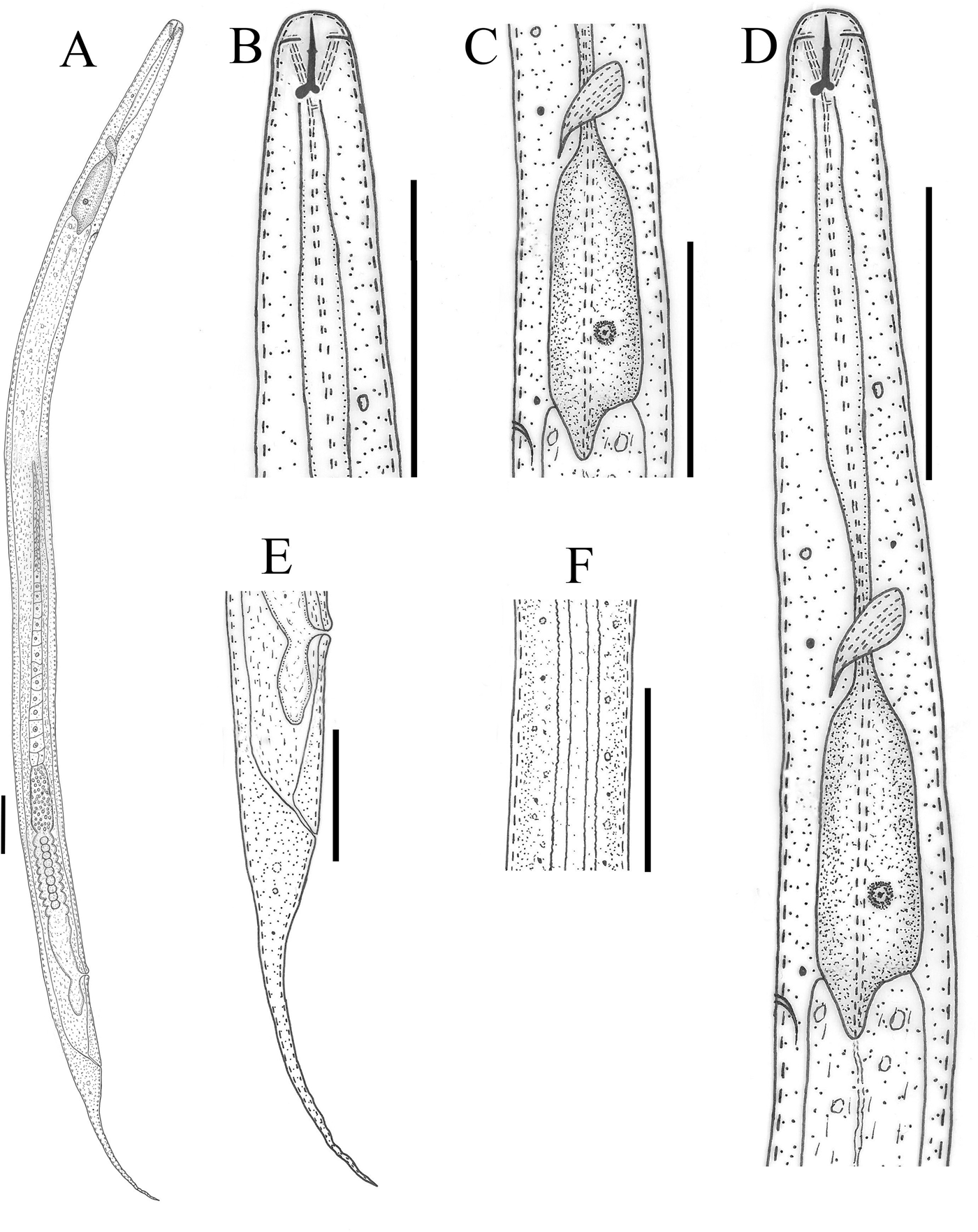
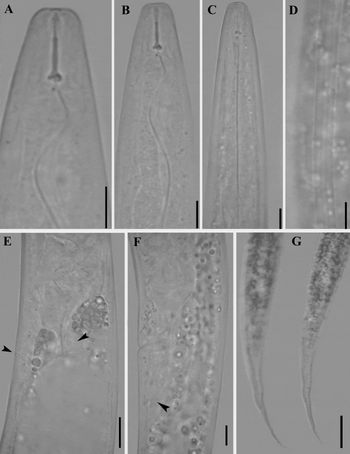
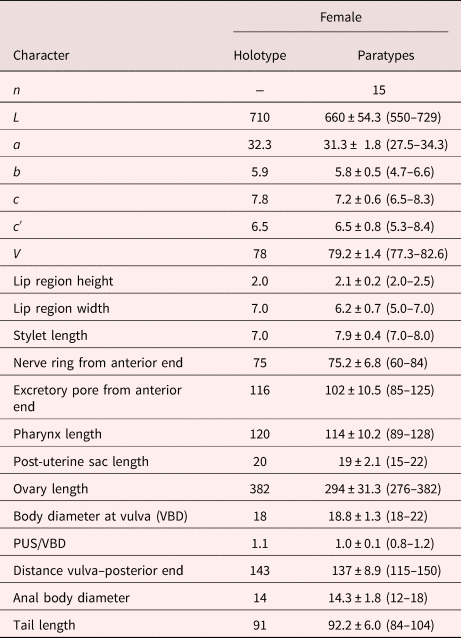
Paurodontoides siddiqii n. sp. (figs 1 and 2; see table 1 for measurements)
Description
Female. Body straight to slightly ventrally arcuate when heat-relaxed. Cuticle weakly annulated. Lateral field 3–4 μm wide at mid-body, with four incisures (i.e. three bands) at vulval region, not areolated. Lip region flattened, smooth and continuous with body contour. Stylet length almost equal to head width, delicate with asymmetrical knobs, the subventral knobs larger than the dorsal knob and posterior to it. The dorsal gland orifice (DGO) just posterior to the subventral knobs. Procorpus wide, muscular, metacorpus not well developed, without refractive valve, isthmus narrow, basal bulb large, with short stem-like extension projecting into the lumen of the intestine, 5–8 μm long. Neck region (anterior end to base of pharynx) 89–128 μm long, comprising 16–21% of total body length. Nerve ring surrounds isthmus at 60–84 μm distance from anterior end. Excretory pore near the base of the pharyngeal bulb or posterior to it, with moderately sclerotized duct. Hemizonids distinct, 2–3 μm long, anterior to excretory pore. Reproductive system monodelphic–prodelphic, occupying 77–80% of the body length, ovary outstretched, with double and single rows of oocytes in proximal and distal part respectively, oviduct cellular, spermatheca rounded to ellipsoid, axial, filled with spheroid sperm cells, crustaformeria composed of 8–10 rows of cells, vulva a transverse slit, vagina extending into body for slightly less than 50% body diameter, PUS prominent, occupying 33–52% of distance from vulva to anus and c. 0.9 times the corresponding body diameter long. Vulva–anus distance 40–52 μm long. Tail elongate-filiform.
Male. Not found.
Type host and locality. Isolated from wood and bark samples of a dead tree of Pinus eldarica in Torshekiban forest, city of Gilan-e-Gharb, Kermanshah Province, western Iran, in August 2017. GPS coordinates: 33°59′N, 46°12′E, 1248 m a.s.l.
Type material. Holotype female (slide 001PSS) together with seven paratype specimens (five females, slides: 002PSS–004PSS) were deposited in the Nematode Collection of the Department of Plant Protection, College of Agriculture and Natural Resources, University of Tehran, Karaj, Iran. Three paratype females deposited in the USDA Nematode Collection, Beltsville, MD, USA, and five paratype females deposited in the National Nematode Collection of the Department of Nematology, Iranian Research Institute of Plant Protection, Tehran, Iran.
Line drawing of female of Paurodontoides siddiqii n. sp. (A) Entire body; (B) anterior end; (C) basal bulb region; (D) pharynx; (E) vulva to tail end; (F) lateral fields. Scale bars: 30 μm.

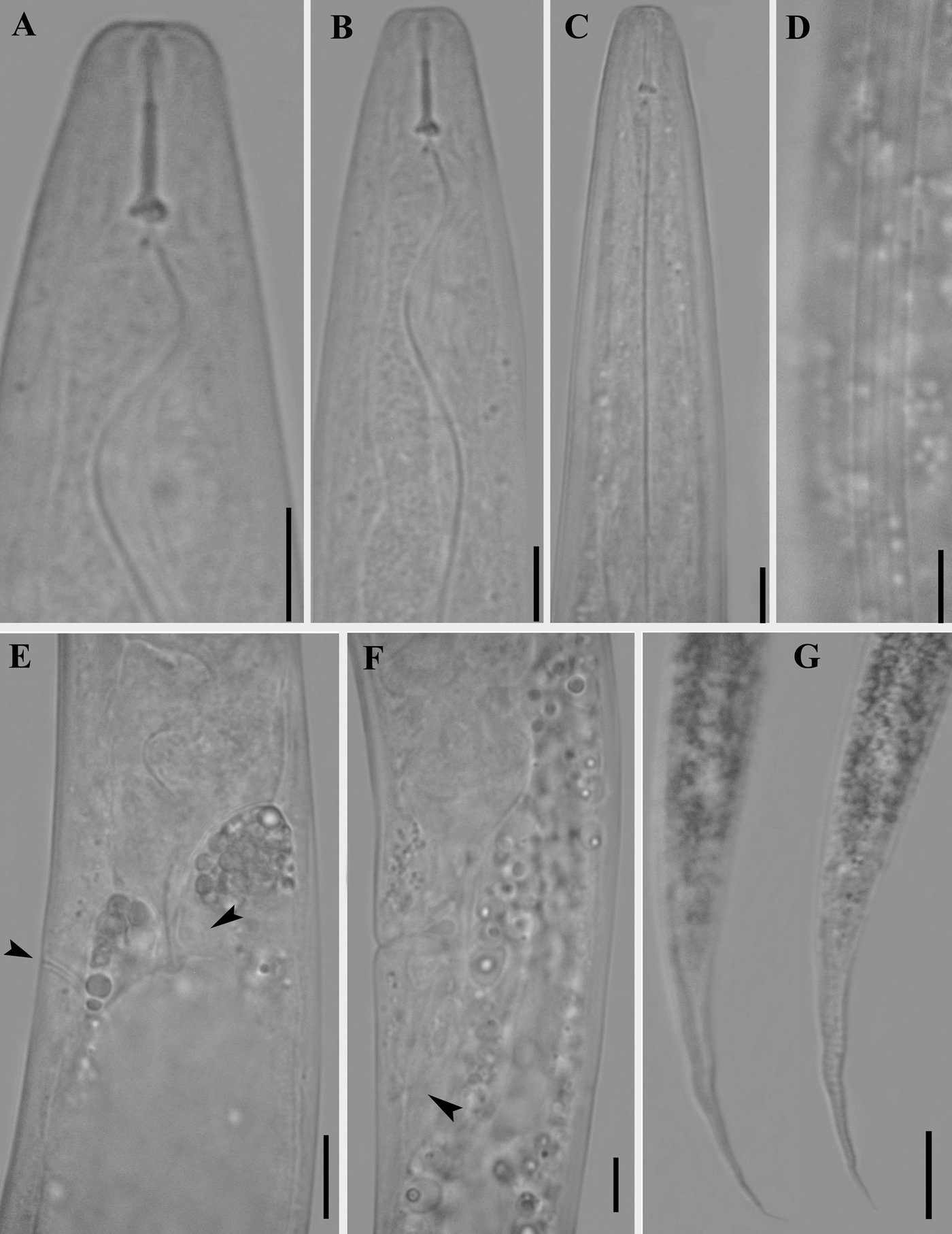
Photomicrographs of female of Paurodontoides siddiqii n. sp. (A, B, C) Anterior end; (D) lateral fields; (E) basal bulb region, with arrowheads showing the excretory pore and basal pharyngeal bulb stem; (F) vulva region, with arrowhead showing the post-uterine sac; (G) posterior ends (tails). Scale bars: 5 μm.
Morphometrics of female of Paurodontoides siddiqii n. sp. from Iran. All measurements are in μm and in the form mean ± SD (range).
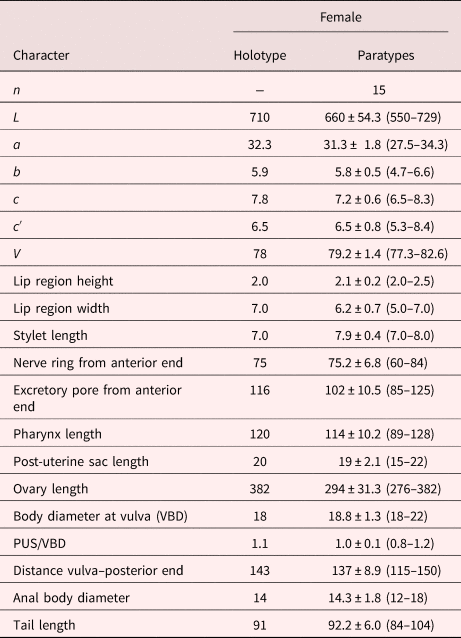
n, number of specimens observed; L, body length; a = L/maximum width; b = L/pharyngeal length; c = L/tail length; c' = tail length/body diameter at anus; V = distance of vulva from anterior end × 100/L
Diagnosis and relationships
Paurodontoides siddiqi n. sp. is characterized by 660 (550–729) μm long females having a lateral field with four lines, stylet 7.9 (7–8) μm long with asymmetrical knobs, the subventral knobs larger than the dorsal and posterior to it, excretory pore at 102 (85–125) μm from anterior end, basal bulb with short stem-like extension projecting into the intestine and elongate-filiform tail.
According to Siddiqi (Reference Siddiqi2000), Paurodontoides contains two known species, namely the type species, P. linfordi, and P. latus.
The new species differs from the type species, P. linfordi, by having slightly shorter stylet (7–8 vs 9–10 μm), lateral field with smooth outer incisures vs crenate, the position of the excretory pore (at the level with, or posterior to basal bulb-intestine junction vs anterior to it), and absence of male in population vs presence.
Compared to P. latus, the new species has a shorter body (550–729 vs 700–1100 μm), shorter stylet (7–8 vs 10–12 μm), greater a (27.5–34.3 vs 17 in the female), lower c (6.5–8.3 vs 18 in the female), more anteriorly located vulva (V = 78 vs 85), position of excretory pore (at the level with, or posterior to basal bulb–intestine junction vs anterior to it), female tail shape (elongate-filiform vs conical, ventrally bent, with small rounded tip) and absence of male vs presence.
Because of close morphological similarities between two genera, Paurodontoides and Paurodontus Thorne, 1941 (both genera are differentiated based on the position of vulva from anus and the nature of bursa at male tail), the new species was also compared with similar species under Paurodontus.
By having a prominent PUS (vs a short PUS in Paurodontus spp.), stylet knob characters (asymmetrical in the case of the new species and type species of the genus), and vulva at less than two body widths from anus (vs more than two body widths), the new species was assigned to the genus Paurodontoides.
In comparison with four known species of the genus Paurodontus having four lines in lateral field, the new species has asymmetrical stylet knobs (vs symmetrical).
From P. brassicae Das & Shivaswamy, 1980, the new species differs by having lower c (5.3–8.4 vs 9.6–12.1) and by the position of the excretory pore (at the level or posterior to pharyngeal bulb–intestine junction vs anterior); from P. chawdhuri Husain & Khan, 1965 by a shorter body (550–729 vs 750–930 μm), shorter stylet (7–8 vs 11 μm), lower b (4.7–6.6 vs 7.8–8.8) and lower c (5.3–8.4 vs 11.5–23.2); from P. gracilis Thorne, 1941 by absence vs presence of chamber encircling pharyngeal bulb, prominent PUS vs rudimentary, ovary arranged in double vs single file; and from P. similis Siddiqi, 1961 by having shorter stylet (7–8 vs 9–10 μm), lower c (5.3–8.4 vs 9.5–10.5) and tail with pointed tip vs rounded.
Etymology
Named in honor of Prof. Mohammad Rafiq Siddiqi, the pioneer taxonomist of hexatylenchid nematodes.
Phylogenetic position of Paurodontoides siddiqii n. sp. within Sphaerularioidea
The partial 18S rDNA gene sequence of P. siddiqii n. sp. (GenBank accession number MG836263) had < 96% identity with available DNA sequences deposited in GenBank. The highest matched sequence was that of Ficotylus congestae Davies, Ye, Giblin-Davis and Thomas, 2009 (EU018049), with 96% identity (34 indels, 23 gaps). The 28S D2-D3 sequence of P. siddiqii n. sp. (MG836264) was < 82% homologous from any available DNA sequences from GenBank. The BlastN search revealed the highest match was with Sphaerularia spp. (AB300596, DQ328726, AB733665 and AB733664), with 80–82% identity (44–72 indels, 36–49 gaps).
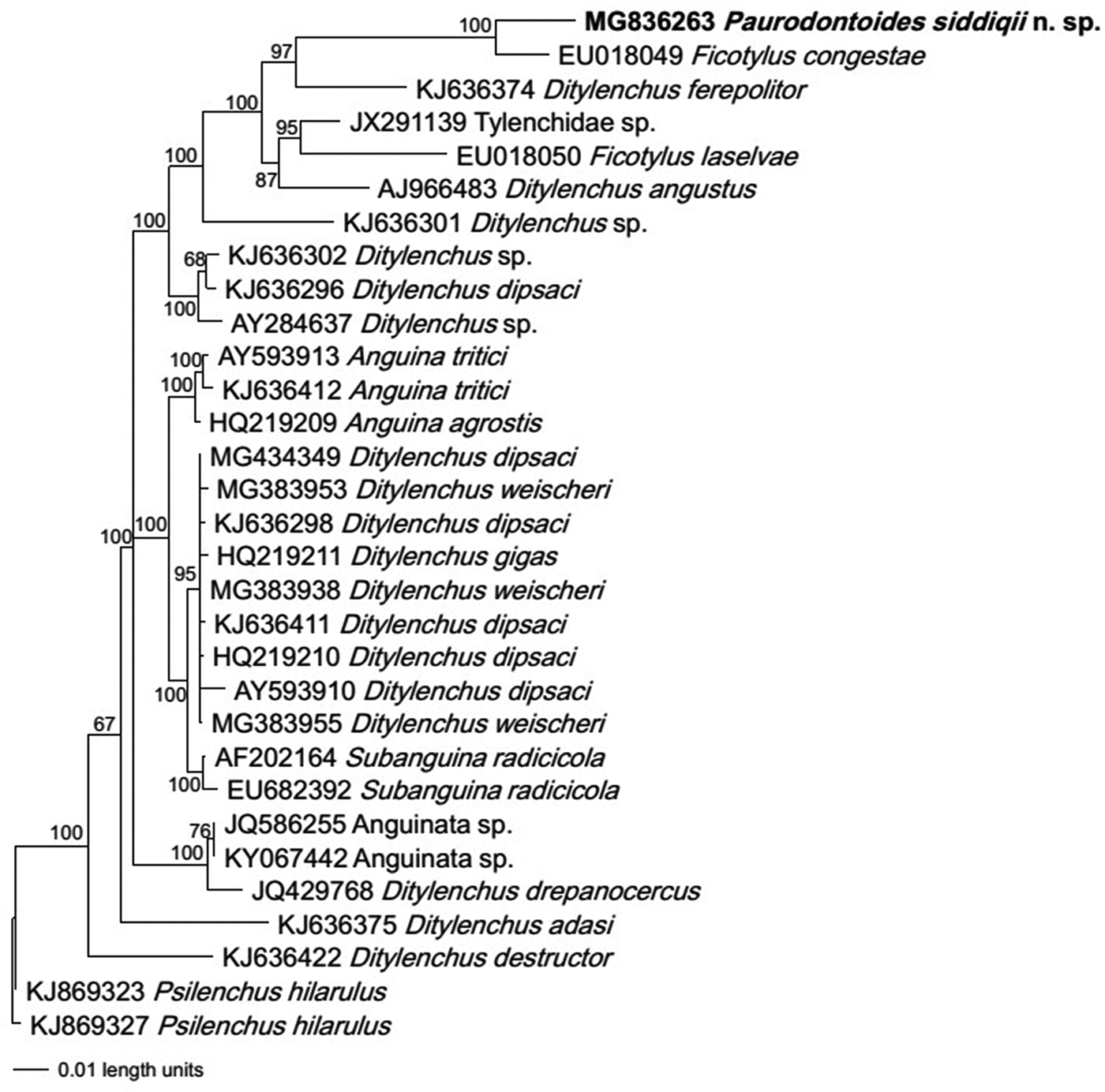
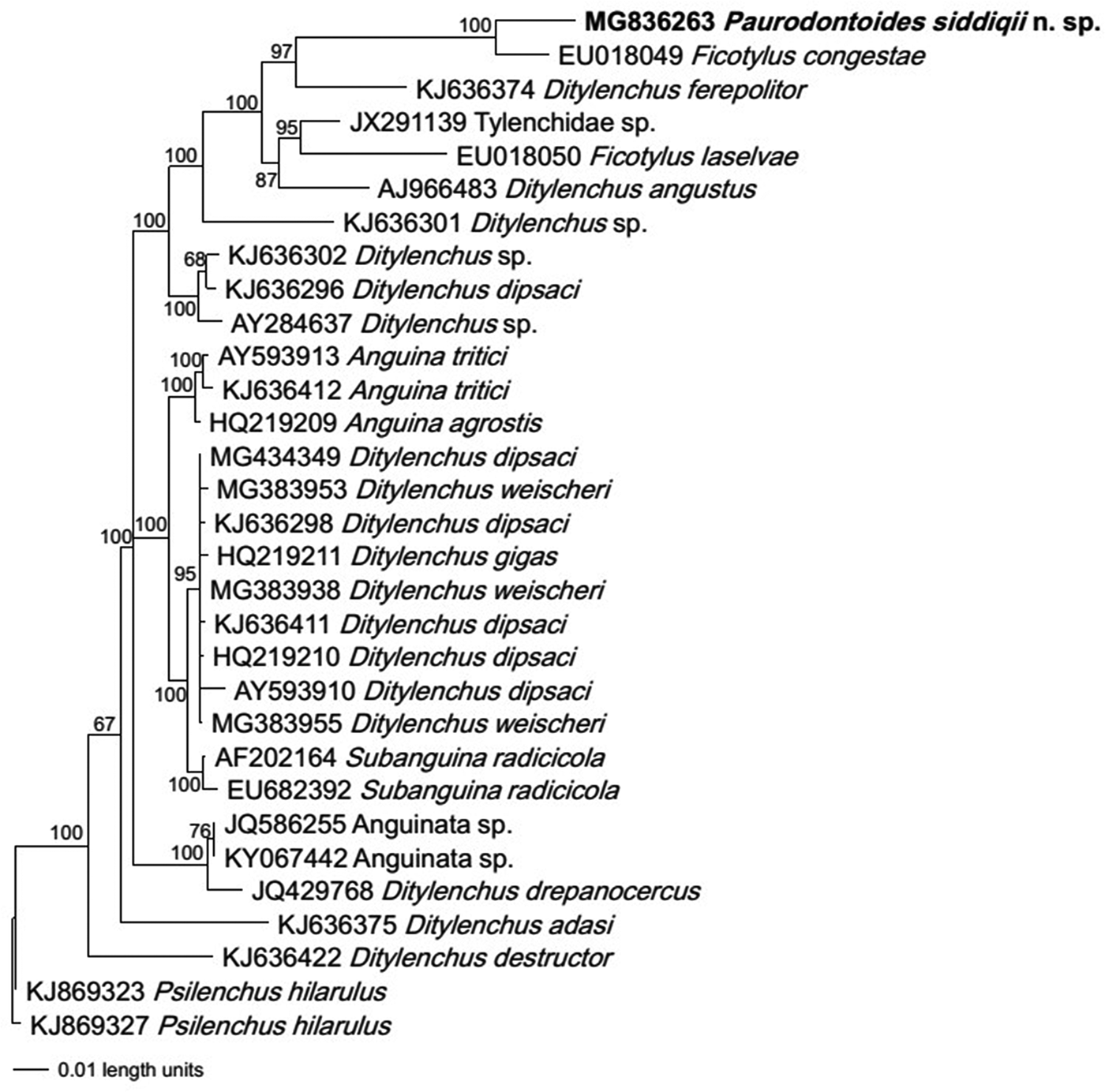
The phylogenetic tree inferred using the partial 18S rDNA by Bayesian inference (BI) using the GTR + I+G model is presented in fig. 3. This tree includes 29 ingroup and two outgroup taxa (the species names and accession numbers in the tree). Psilenchus hilarulus de Man, 1921 (KJ869323, KJ869327) in the family Tylenchidae was used as the outgroup taxon in phylogenetic analysis. A λ2 test (λ2 = 12.704562 (df = 90), P = 1.00000000) revealed the highest homogeneity in 18S sequences among the species selected. This tree revealed that the new species forms a clade with Ficotylus congestae (EU018049), with 100% support. The species Ditylenchus ferepolitor (KJ636374) is the sister taxon to this clade.
Bayesian consensus tree inferred from 18S under GTR+I+G model (-lnL = 5899.2671; AIC = 11,818.5342; freqA = 0.2451; freqC = 0.2176; freqG = 0.2709; freqT = 0.2664; R(a) = 1.4026; R(b) = 4.5611; R(c) = 2.166; R(d) = 0.3455; R(e) = 9.0799; R(f) = 1; Pinva = 0.5473; Shape = 0.8251). Posterior probability values exceeding 50% are given on appropriate clades.
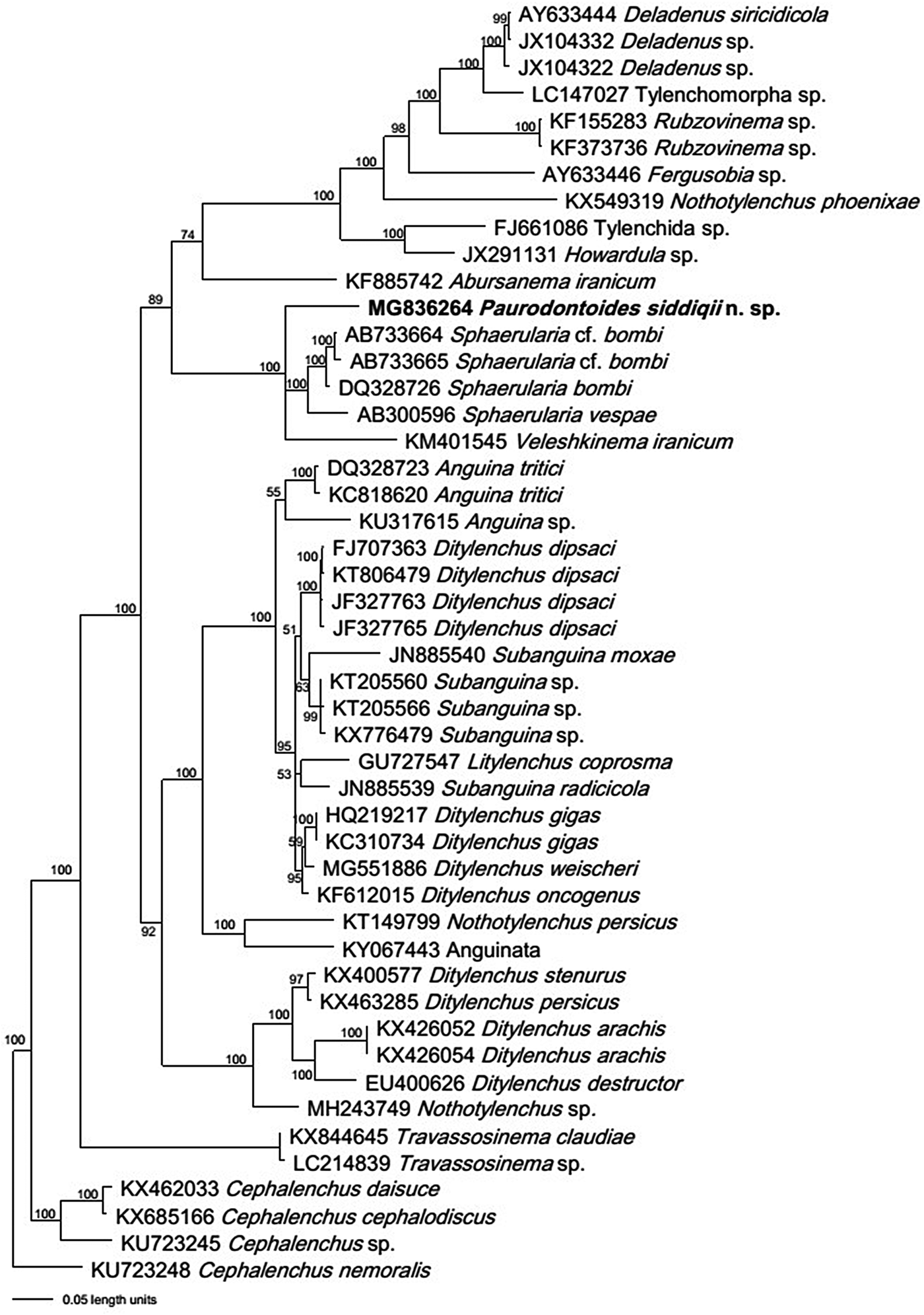
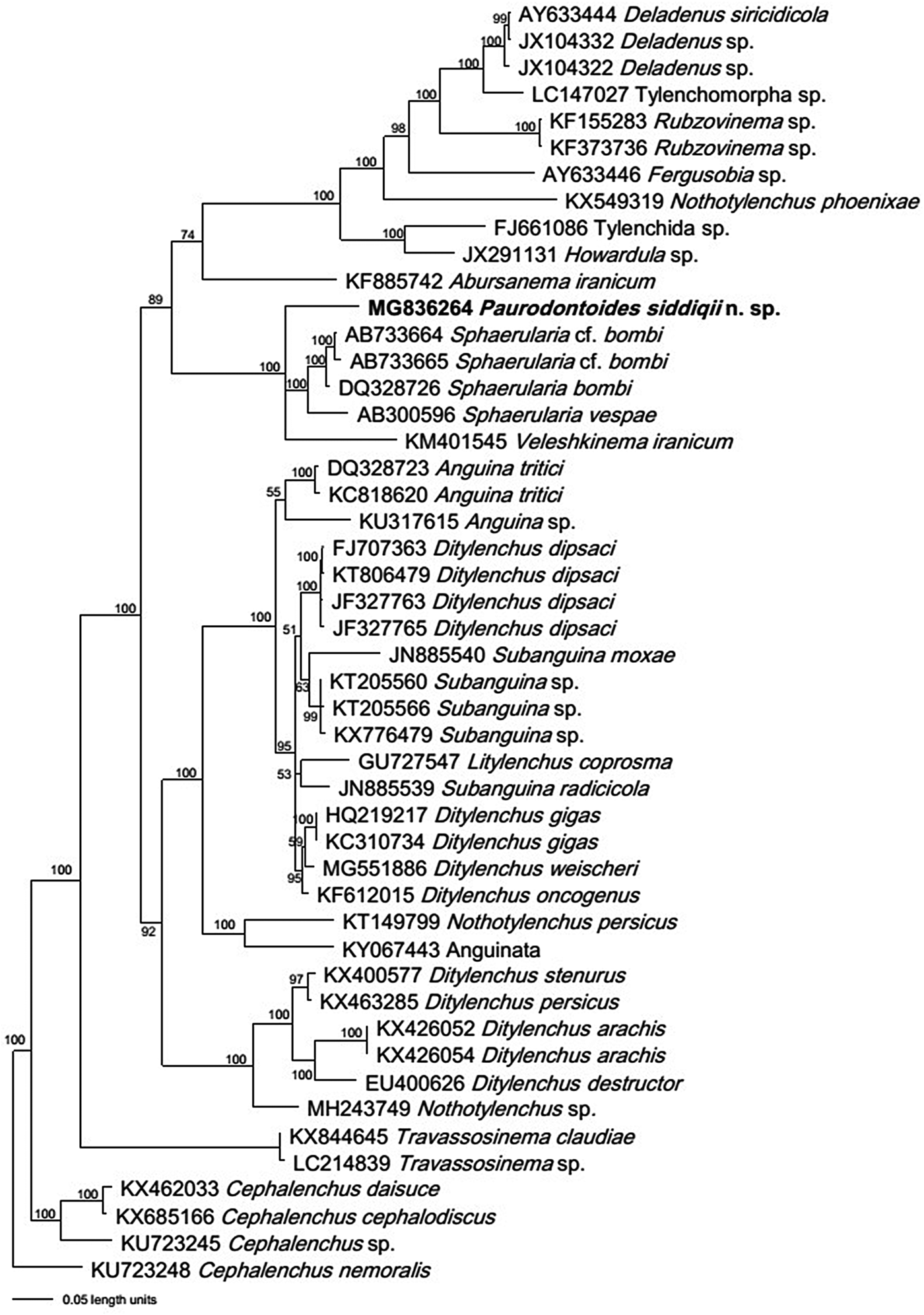
The Bayesian phylogenetic tree inferred using the 28S D2-D3 dataset using the GTR+I+G model is presented in fig. 4. This tree contained 44 ingroup and four outgroup taxa (the species names and accession numbers in the tree). This tree is rooted with Cephalenchus sp. (KU723245), C. nemoralis Mizukubo and Minagawa, 1985 (KU723248), C. cephalodiscus Sultan and Jairajpuri, 1982 (KX685166) and C. daisuce Mizukubo and Minagawa, 1985 (KX462033). A λ2 test (λ2 = 142.028327 (df = 141), P = 0.45986390) revealed a medium level of homogeneity with high variation in 28S sequences among the species selected. In this tree, members of the superfamily Sphaerularioidea have divided into two main monophyletic groups, anguind and sphaerulariid species, with 100% support. In this tree, the new species form a clade with members of the Sphaerulariidae (Veleshkinema iranicum (KM401545) and Sphaerularia spp.).
Bayesian consensus tree inferred from 28S D2/D3 under GTR+I+G model (-lnL = 9676.082; AIC = 19372.1641; freqA = 0.2129; freqC = 0.2017; freqG = 0.2956; freqT = 0.2899; R(a) = 1.0709; R(b) = 7.4588; R(c) = 2.4965; R(d) = 0.9473; R(e) = 10.8704; R(f) = 1; Pinva = 0.2218; Shape = 1.1544). Posterior probability values exceeding 50% are given on appropriate clades.
Discussion
According to Siddiqi, the families Sphaerulariidae and Paurodontidae are synonymous, and the study of this new species (as a member of Paurodontidae) in our phylogenetic trees based on two different regions of the rDNA gene supports his opinion. Results from our phylogenetic analysis are in agreement with Yaghoubi et al. (Reference Yaghoubi2014), Miraeiz et al. (Reference Miraeiz2015), Esmaeili et al. (Reference Esmaeili, Heydari and Ye2017) and Mobasseri et al. (Reference Mobasseri, Pedram and Pourjam2017), indicating the close relationships amongst the genera of Sphaerulariidae and Paurodontidae.
The genus Paurodontoides is one of the rare Tylenchomorpha De Ley & Blaxter, 2002 genera. It is characterized mainly by having stylet knobs, excretory pore almost at the level with nerve ring, basal bulb with a stem-like extension projecting into the intestine, presence of a prominent PUS, simple vulval lips and bursa completely enclosing tail tip (Siddiqi, Reference Siddiqi2000). However, the assigning of Paurodontoides to Paurodontinae by Andrássy (Reference Andrássy2007) could be logical, as the characters of pharynx (basal bulb with a stem-like extension projecting into the intestine in various positions) support such a taxonomic placement. There are also similarities in their biology (fungus-feeding generation is well known and nothing is known about entomoparasitic forms). Currently, only two species of Paurodontoides are described (Siddiqi, Reference Siddiqi2000), both of which are poorly described in the shape of original descriptions (no other reports or redescriptions are available), and light microphotographs or molecular data are not available.
The new species belongs to the genus Paurodontoides on the basis of commonly shared characters, i.e. an elongate fusiform and not well-developed median pharyngeal bulb, basal bulb with a stem-like extension projecting into the intestine, and presence of a prominent PUS. The new species shares some morphological characters (e.g. nonvalvate median pharyngeal bulb and a stem-like basal bulb with an extension projecting into the intestine) with some other members of the family Paurodontidae, including Abursanema, Bealius, Misticius Massey, 1967 and Paurodontella Husain & Khan, 1968. Paurodontoides siddiqii n. sp. can be distinguished from Abursanema by having a stylet with basal knobs (vs without knobs). It differs from Misticius by its excretory pore opening at the end of basal bulb region (vs near the stylet base). It can be distinguished from Bealius by having a prominent PUS (vs absent), and it can be distinguished from Paurodontella by presence of prominent PUS (vs absent or rudimentary).
Recently, molecular markers and phylogenetic inferences have been proven to be an effective method of delimiting species of the complex and morphologically conserved sphaerularioid group members (Yaghoubi et al., Reference Yaghoubi2014; Golhasan et al., Reference Golhasan, Heydari and Miraeiz2016; Miraeiz et al., Reference Miraeiz2015; Esmaeili et al., Reference Esmaeili, Heydari and Ye2016a, Reference Esmaeili, Heydari and Yeb, Reference Esmaeili, Heydari and Ye2017). According to our 18S and partial 28S trees (figs 3 and 4) and other previous studies (Koshel et al., Reference Koshel2014; Yaghoubi et al., Reference Yaghoubi2014; Miraeiz et al., Reference Miraeiz2015; Esmaeili et al., Reference Esmaeili, Heydari and Ye2016a, Reference Esmaeili, Heydari and Yeb, Reference Esmaeili, Heydari and Ye2017; Golhasan et al., Reference Golhasan, Heydari and Miraeiz2016; Mobasseri et al., Reference Mobasseri, Pedram and Pourjam2017), most genera and families of Hexatylina are not monophyletic, using rDNA sequences; however, the molecular sequences are not available for most representatives of this suborder (sensu Siddiqi, Reference Siddiqi2000).
In this study a new species of Paurodontoides was described using morphological and molecular data. Based on morphological similarities, the new species was assigned to the genus. This is the first species in Paurodontoides with DNA sequence data. In the future, more DNA sequences are needed from two closely related genera, Paurodontoides and Paurodontus, to examine their phylogenetic relationships. This could shed light on the taxonomic status of species. Although several families and genera of this group of nematodes are not monophyletic based on ribosomal DNA sequence data, they are still useful to separate different species.
Acknowledgements
The authors thank Mrs Fatemeh Ansari for her help during sampling.
Financial support
The authors thank the University of Tehran for financial support.
Conflict of interest
None.
Author ORCIDs
R. Heydari 0000-0002-9847-089X.