Introduction
Mating behaviour of brachyuran crabs has previously been studied, and information on mating strategies has accumulated in various species with the process being categorized into types and its ecological significance discussed (Hartnoll, Reference Hartnoll1969; Salmon, Reference Salmon, Rebach and Dunhum1983; Christy, Reference Christy1987; Diesel, Reference Diesel, Bauer and Martin1991; Asakura, Reference Asakura, Martin, Crandall and Felder2009). However, information still tends to be biased to some families, for example, terrestrial or semi-terrestrial crabs (including burrowing ones) which are easy to observe in their natural habitat (Ocypodidae, Grapsidae and Varunidae), or commercially important crabs that are easy to collect and breed (Portunidae, Cancridae and Majidae), to name a few among more than 93 families (Ng et al., Reference Ng, Guinot and Davie2008).
Leucosiidae belongs to a group in which mating behaviour is poorly known, despite the large number of species included in this family that are widely distributed in temperate and tropical sea areas (Ng et al., Reference Ng, Guinot and Davie2008). In leucosiid crabs, there are some unique morphological characteristics which are related to their behaviour. In many species, the carapace is hemispherical and protected by a very hard and thick exoskeleton, with a shortened cephalic region where tiny eyes frontally protrude. They have elongated chelipeds and short walking legs by which they slowly walk forward. The whole body of adult females is like a spherical cobblestone, because their abdomen is hemispherically swollen as well as their carapace, and they completely place embryos within the inside gap. Even ovigerous females usually fold their abdomens so closely to their thoracic part, that presence of embryos cannot be confirmed merely by external observation. These characteristics are considered to be adaptive for wandering and burying themselves in soft sediment, and defending themselves against large predators (Kobayashi & Vazquez Archdale, Reference Kobayashi and Vazquez Archdale2017). Probably their mating behaviour is also specific, in accordance with their life mode. However, detailed observation of their mating behaviour and discussion of their reproductive strategies is still limited to a few species (Hale, Reference Hale1926; Naidu, Reference Naidu1954; Schembri, Reference Schembri1983), similar to many other families.
Pyrhila pisum (De Haan) is a leucosiid crab distributed in eastern Asia, including the continental coastal zone of the Yellow Sea and East China Sea, and temperate and subtropical Japan (Galil, Reference Galil2009; Suzuki, Reference Suzuki2012). Although P. pisum's occurrence in the tidal flats was limited to the warmer seasons and they migrate to deeper subtidal areas in the winter, observation and collection in the tidal flats was comparatively easy and an outline of its reproductive ecology could be elucidated in western Japan (Kobayashi & Vazquez Archdale, Reference Kobayashi and Vazquez Archdale2017).
Elongate male chelipeds are efficiently used during their mating behaviour. Male P. pisum often embrace females from behind with their chelipeds and the first ambulatory legs, which represents their guarding behaviour. These paired couples often walk in tandem along the shore in the intertidal area (Kobayashi & Vazquez Archdale, Reference Kobayashi and Vazquez Archdale2017). Guarding behaviour, associated with copulation, has been reported in many brachyuran species (Wilber, Reference Wilber1989; Goshima et al., Reference Goshima, Koga and Murai1996; Jivoff & Hines, Reference Jivoff and Hines1998; Kamio et al., Reference Kamio, Matsunaga and Fusetani2000; Rondeau & Sainte-Marie, Reference Rondeau and Sainte-Marie2001; Snow & Neilsen, Reference Snow and Neilsen2011; Sal Moyano et al., Reference Sal Moyano, Gavio, McLay and Luppi2014; Waiho et al., Reference Waiho, Mustaqim, Fazhan, Norfaizza, Megat and Ikhwanuddin2015), but this is a rare case in which guarding behaviour can be easily and commonly observed in their natural habitat. Similar characteristics may be observed among other species, but this not applicable to all leucosiid crabs (Schembri, Reference Schembri1983; Almeida et al., Reference Almeida, Hiyodo, Cobo, Bertini, Fransozo and Teixeira2013); probably these differences have derived from the evolution, through sexual selection, under different environmental conditions. The ecological significance of these characteristics can be explained by detailed observation and experiments on their mating behaviour in conjunction with knowledge of their reproductive strategy (Andersson, Reference Andersson1994; Davies et al., Reference Davies, Krebs and West2012). Therefore, the purpose of the present study is to accumulate information on the mating behaviour of this crab as an example for leucosiid crabs.
Our previous research partly revealed the mating behaviour of P. pisum. Female adult P. pisum copulated during intermoult phase regardless of their ovigerous conditions. Although their occurrence in the tidal flats covered most of their reproductive season, the proportion of successful pairing in the population was low (11.9% in total) and both ovigerous and non-ovigerous adults were found mostly in a non-paired condition. This suggests that the pairing activity did not always succeed nor continue for a long time, and males often lost their guarded mates (Kobayashi & Vazquez Archdale, Reference Kobayashi and Vazquez Archdale2017).
The process of copulation and guarding behaviour of P. pisum has not yet been confirmed. In their natural habitat, guarding pairs are much more frequently found than those copulating (Kobayashi & Vazquez Archdale, Reference Kobayashi and Vazquez Archdale2017). Among many brachyuran crabs, two types of guarding behaviour can be categorized during the process of mating: pre-copulatory and post-copulatory guarding. The ecological significance of this guarding can be explained by the adaptive behaviour of males to increase their fitness; males assure paternity of their spawned eggs by guarding their mates (Hartnoll, Reference Hartnoll1969; Christy, Reference Christy1987; Diesel, Reference Diesel, Bauer and Martin1991). In the case of pre-copulatory guarding, copulation is closely related to the optimal condition of females; which is limited to the short time when they are in their soft-shell condition just after moulting (like some Portunidae and Cancridae) or have partial softening of their genital openings (as some Grapsidae and Ocypodidae). In these cases, males often start guarding juvenile females just before their puberty moult (Edwards, Reference Edwards1966; Savage, Reference Savage1971; Berrill & Arsenhault, Reference Berrill and Arsenhault1982). In contrast, post-copulatory guarding does not necessarily depend on the female's shell condition, including during their intermoult period, when they can mate at any time (some Grapsidae, Majidae and Ocypodidae). This type of guarding is related to fertilization and spawning; and males guard mates in order to block copulation from competing males until spawning, sometimes within their territorial burrows. It may also be effective to guard females which are close to ovulation (Edwards, Reference Edwards1966; Diesel, Reference Diesel1986; Kobayashi, Reference Kobayashi, Okutani, Ohta and Ueshima1999). The aim of this study was to identify P. pisum's reproductive strategy and to determine the main function of their male guarding behaviour as pre-copulatory or post-copulatory guarding. The detailed process of mating behaviour was recorded by observations conducted in both the laboratory and in the natural habitat, and the significance of their guarding behaviour is discussed.
Materials and methods
The study site and methods of categorizing crab specimens and confirming their copulation were the same as in our previous study (Kobayashi & Vazquez Archdale, Reference Kobayashi and Vazquez Archdale2017), and the observations and experiments were carried out nearly in parallel to the survey of Kobayashi & Vazquez Archdale (Reference Kobayashi and Vazquez Archdale2017) lasting several years. Each observation and experiment was conducted on different dates, in order to avoid affecting results.
Study site and crab specimens
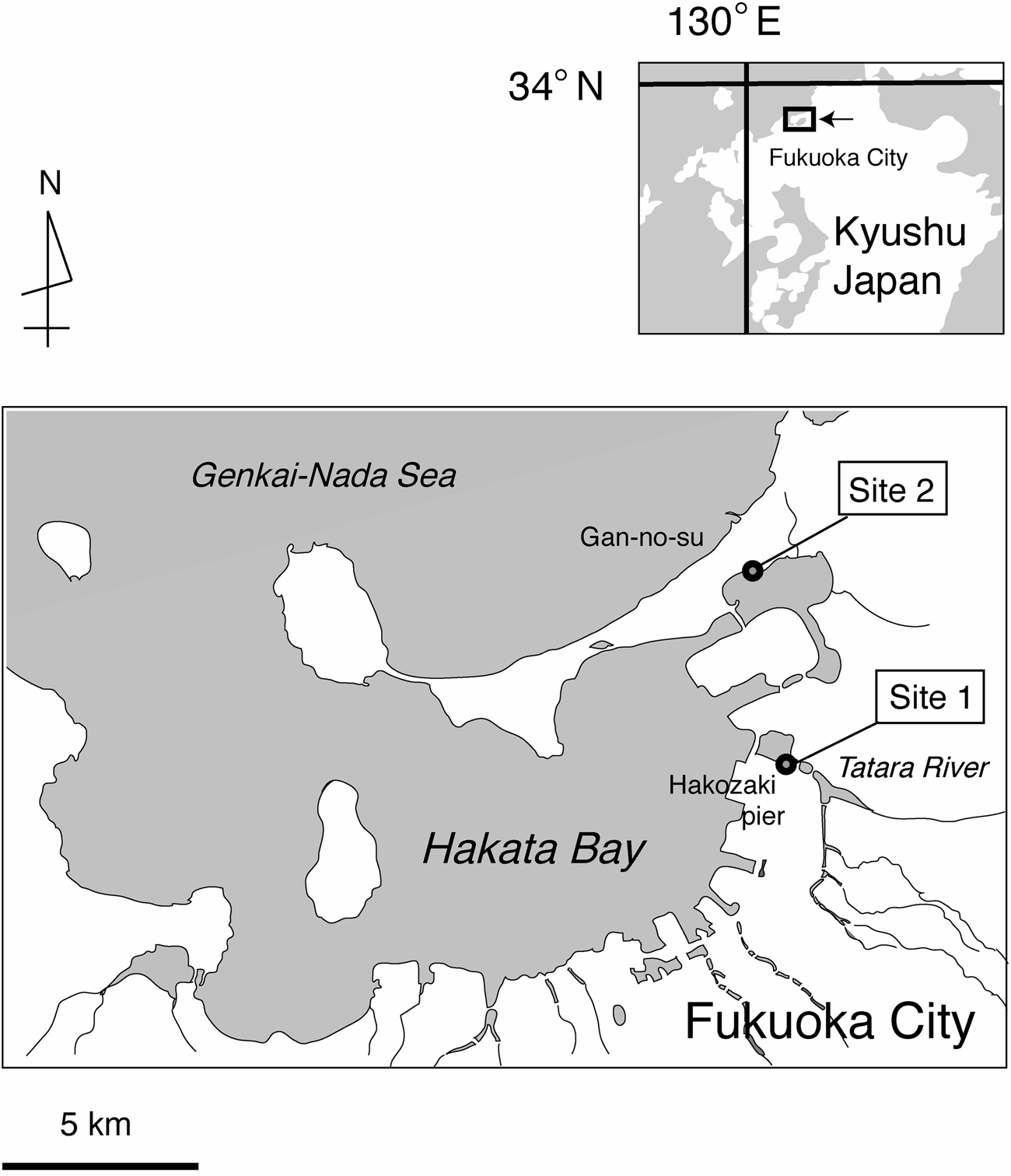
Two sites were selected for the study in Fukuoka, Kyushu, western part of Japan (Figure 1); a tidal flat along the river channel of the west side of Tatara River at the Hakozaki pier (Site 1), located in south-eastern Hakata Bay (33°38′N 130°25′E, nearly 3000 m2), and the other a sandy beach of Gan-no-su (Site 2), located in north-eastern Hakata Bay (33°40′N 130°24′E, nearly 20,000 m2). Within Hakata Bay, P. pisum occurs abundantly on the tidal flats which are widely distributed in coastal and lower tidal river areas. Ecological surveys of P. pisum started at Site 1 in 2005, but the population drastically decreased after dredging was conducted in the river mouth of the Tatara River in 2007. Thus, from 2008, Site 2, which covers a wide area with crab rich distribution, was added as another sampling site.
Map of Hakata Bay, Fukuoka, Japan showing collection sites.

Females can be categorized into juveniles (immature stage) and adults (reproductive stage), based on their morphological differences (Higashi & Furota, Reference Higashi and Furota1996); where juveniles showed nearly flattened bell-shaped abdomens and exposed edges of the thoracic sterna similar to males, while in adults the abdomen was spherically swollen, nearly oval and all parts of their thoracic sterna were covered. The whole body of the adult females was almost spherical, while those of juvenile females and males were nearly semi-spherical. As for males, adult males could be distinguished from juveniles by their elongated chelipeds, which are used to grasp mates during guarding. In the present study, only adult crabs were used for observation and experimentation.
Observations of the mating process of P. pisum in the laboratory
Mating behaviour of P. pisum was observed in the laboratory and the continuous process of copulation and guarding behaviour was confirmed in June–July 2006. Adult P. pisum were used for the mating experiments within a day after collecting them from Site 1. After the observation, the crabs were released back into their natural habitat. One pair (one adult male and one adult female) was randomly selected each time and set in a transparent cubic plastic case 10 cm on each side, with seawater to a depth of 5 cm. Coarse sand was provided as substrate to a 1-cm depth within the case. Their behaviour was visually observed intermittently as long as possible, with the exception of several hours for a few times when the duration of the mating behaviour was extended. When the duration extended over one day, small clam flesh was fed without disturbing the mating pair once a day. This feeding did not affect the guarding behaviour, because males tightly grasped their mates with their chelipeds and first ambulatory legs. They continued guarding while eating. The time of the mating process, including pre-copulatory guarding, copulation and post-copulatory guarding, was measured to the nearest second. After they separated from each other, the presence or absence of ovulation was confirmed. Copulation was determined by observing the posture of the pairs; and confirmed when they were facing each other with their abdomens extended and the males' pleopods attached to the females' genital apertures.
Observation of mating behaviour of P. pisum in their natural habitat
Behaviour of P. pisum was observed on the shore in Site 1 during the ebb tide of daytime in June–July 2006. Wandering adult P. pisum individuals were followed for 15 min and when they contacted any organisms, the species was recorded. If the crabs encountered conspecific crabs, their sex was confirmed. The difference between active contact (followed crabs approached the object) and passive contact (followed crabs did not approach the object by themselves) were also categorized.
In Site 1, species of small animals moving on the surface of the sediment, whose body size range and velocity of locomotion overlap with P. pisum, were limited; only a varunid crab Hemigrapsus takanoi Asakura and Watanabe, and a pagurid hermit crab Pagurus minutus (Fabricius) were encountered. During the observation, the frequency of H. takanoi moving on the surface of the sediment was lower than P. pisum. Pagurus minutus were commonly found, but their appearance was clearly different from the shape of P. pisum, as most of them use the slender shells of the batillariid snail Batillaria sp.
In addition, fights between adult males over their mates were observed in Site 1 in July–August 2006. Guarding pairs in tandem were found in the shore during the ebb tide of daytime, and situations, when a male P. pisum encountered a guarding pair and fought over a female, were observed for at most 5 min. The results of these fights were recorded and, after the fight, both males were captured and the carapace widths (CW), both of the winner and the loser, were recorded.
Carapace width relationships of paired crabs
Pairs of P. pisum, including those copulating or guarding, were collected from Site 2 during the ebb tide for 1–3 days during 3 periods (19–24 June, 27 July and 12–15 August) in 2011 and 4 periods (4–6 May, 23–26 May, 15–18 July and 15–18 August) in 2012. The carapace width (CW) of each crab was measured using a Vernier calliper; the CW relationship for each pair was plotted. Presence of correlation in the CW relationships was analysed by Kendall's rank correlation test.
Observation of mating behaviour under long-term rearing conditions
To verify the possibility of multiple copulations and guarding behaviour in P. pisum (long-term rearing experiment), 15 adult crabs of each sex were collected from Site 2 and reared in the laboratory from 13 June 2014. Individual crabs were marked by gluing a letter-notched coloured plastic plate with an identity number (01–15 using a different colour for each sex) to their carapace. Crabs were reared in a plastic container case (72 cm × 42 cm × 40 cm) containing seawater to a depth of 12 cm, and aeration was supplied through a small airlift filter. They were fed daily mainly with bivalve flesh, small fish and nereid polychaete worms; food remains and excretions were removed every day. No sand substrate was provided so the crabs could be clearly seen, and their tags identified properly and to prevent them from burying themselves. Determination of presence of mating behaviour (copulation and guarding) and identification of the mating pairs by their identity number were conducted within a few seconds 2–4 times every day, by noting the time in minutes. Weak reflected light was used during night-time observation to decrease its impact. The ovigerous condition of females was not recorded in this experiment to eliminate handling stress during observations. This rearing experiment ended on July 26, because of significant crab mortality. The duration of continuous mating behaviour with the same mate was calculated for each crab.
Observation of embryos of copulating ovigerous females
The relationship of copulation and the ovigerous condition of female P. pisum was confirmed by observing the embryos of copulating ovigerous females. Adult P. pisum males and ovigerous females were collected in Site 1 several times from late July to late August 2017. These crabs were reared in an aquarium for less than 1 month for each crab. During rearing, copulating pairs were picked up, and the embryos of ovigerous females were observed under a binocular microscope and their developmental stages were recorded. The embryos were categorized according to the following six developmental stages. Stage I: no cleavage, just after spawning; Stage II: cleavage present in the yolk; Stage III: transparent embryo with no pigmentation in half of the total egg volume; Stage IV: crescent-shaped compound eyes present, yolk with four lobes occupying more than one third of the total egg volume; Stage V: compound eyes are oval-shaped, yolk decreases to less than one third of the total egg volume, and is composed of two lobes or separated into two small particles; and Stage VI: just after hatching when only the membrane remains.
Results
Observation of mating behaviour of P. pisum in captivity
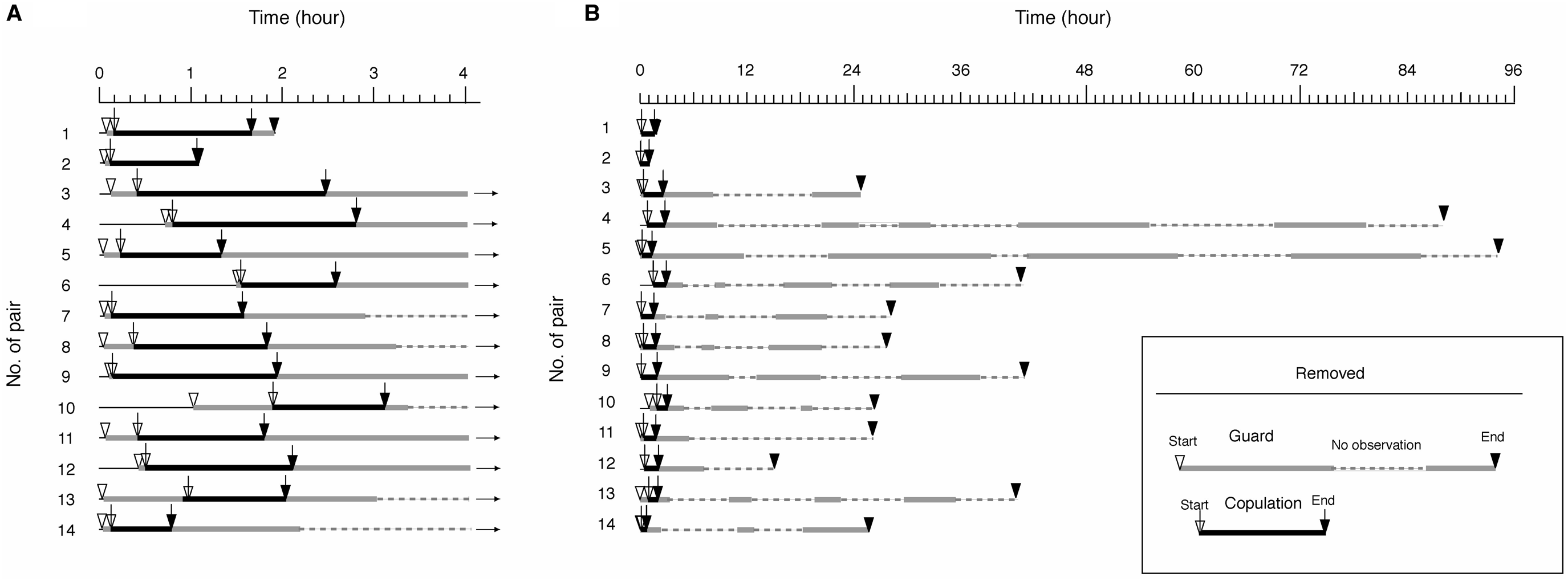
Successful mating was observed in 14 pairs (Figure 2). Most males actively contacted females soon after beginning the observation; 10/14 (71.4%) did this within 10 min, and all were within 1.5 h. If females did not reject the males, males soon started guarding without any courtship behaviour (pre-copulatory guarding). After a short time of pre-copulatory guarding, males turned from the back end to the front of the females with their abdomen extended, and females also extended their abdomens. Following this, the males' pleopods were attached to the female's genital openings and copulation started. The duration of pre-copulatory guarding ranged from 1 min 30 s to 57 min, and in 12/14 (85.7%) cases it lasted less than 30 min. They stopped moving and the copulation continued for ~1–2 h; the duration of copulation varied from 40 min to 2 h 9 min and 15 s, and in 10/14 (71.4%) pairs it continued between 1 and 2 h (Figure 2A).
Mating behaviours observed for each pair of Pyrhila pisum in captivity. (a) records within 4 h. (b) records within 96 h.

Afterwards 13/14 (92.9%) of the males resumed their guarding behaviour (post-copulatory guarding). The continuous guarding behaviour was observed intermittently because this post-copulatory guarding lasted much longer than before copulation in many cases. The possible duration of post-copulatory guarding widely varied from 15 min (No. 1) to more than 3 days (Nos. 4 and 5) (Figure 2B).
Observation of mating behaviour of P. pisum in their natural habitat
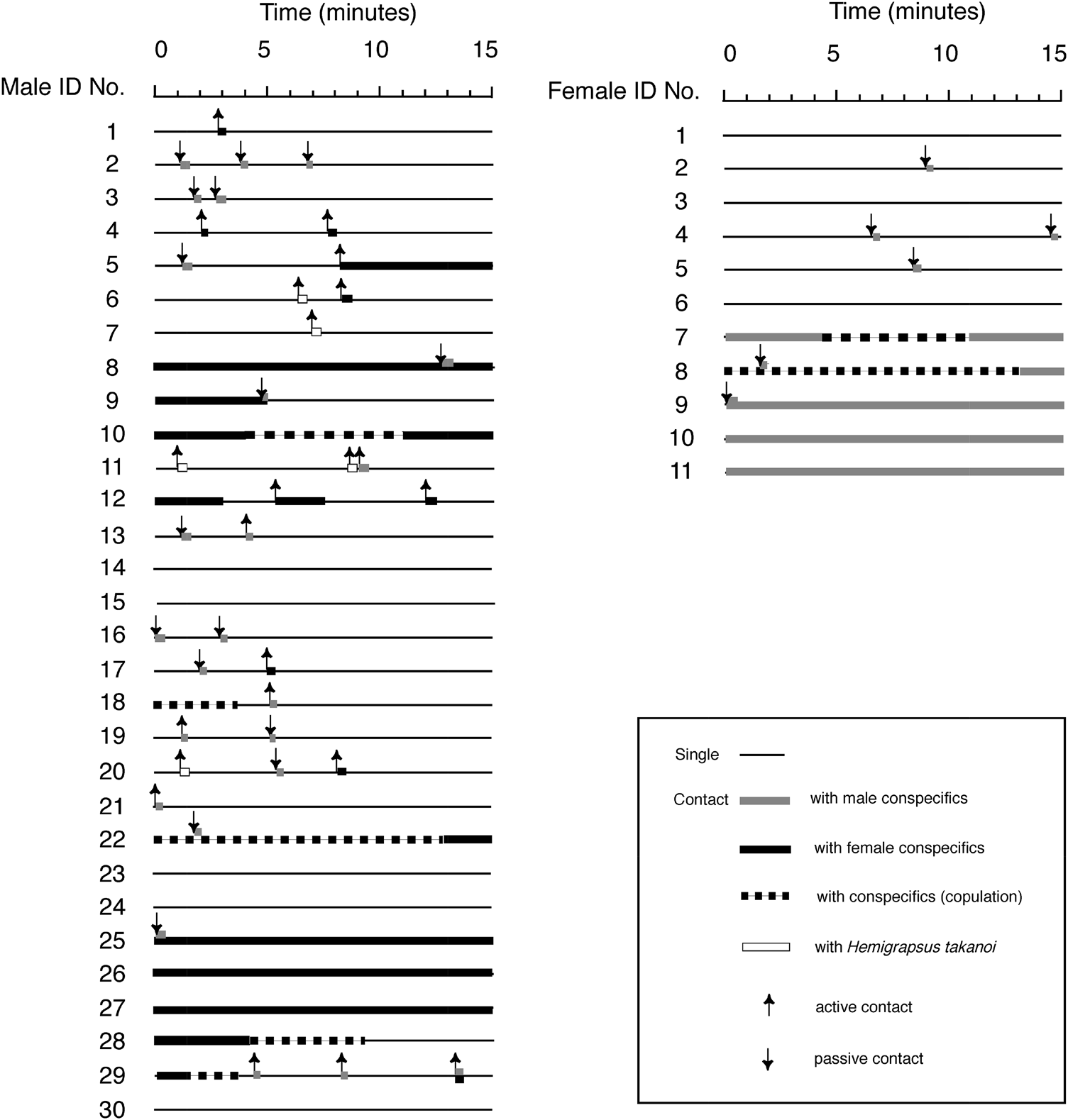
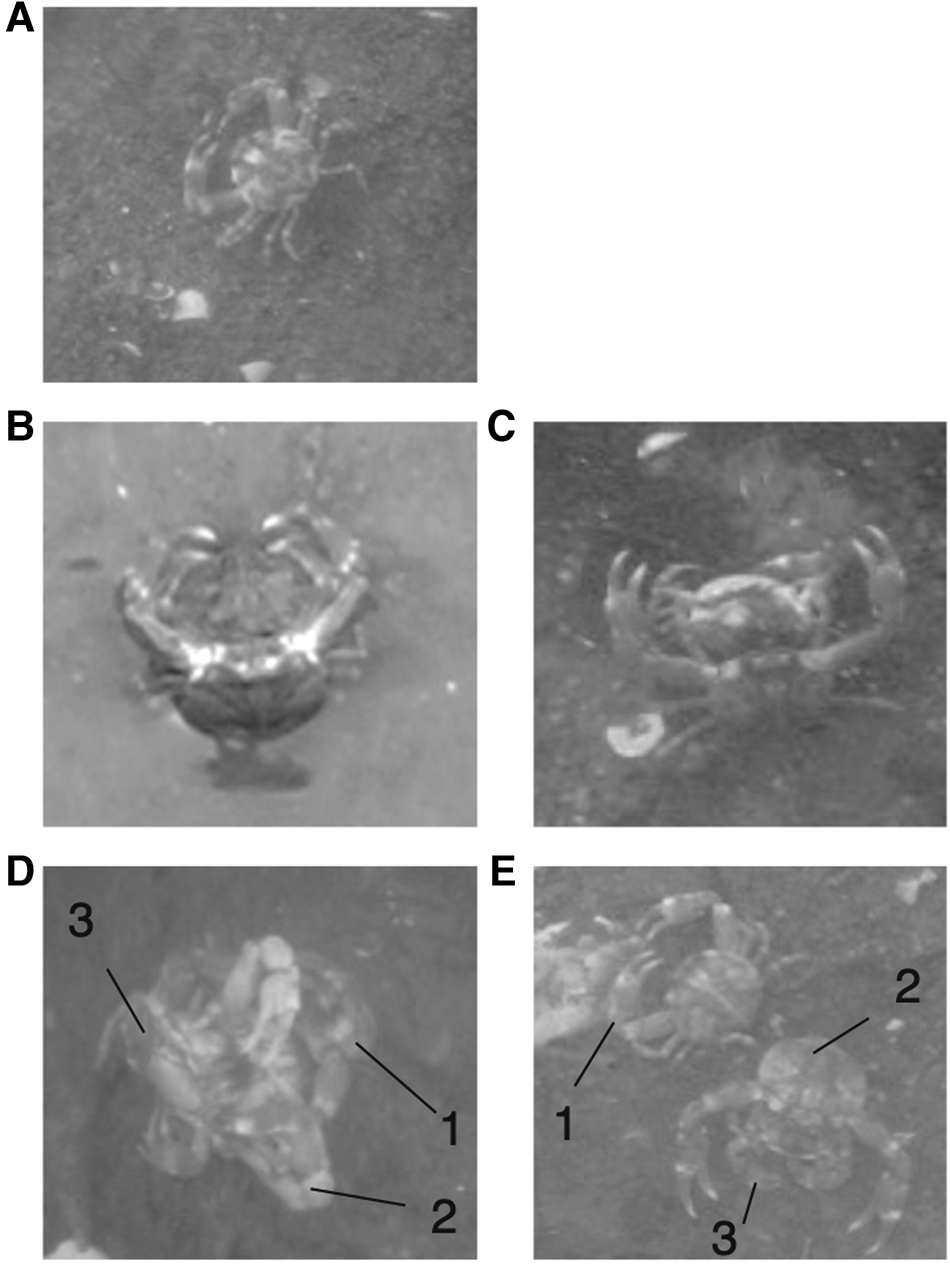
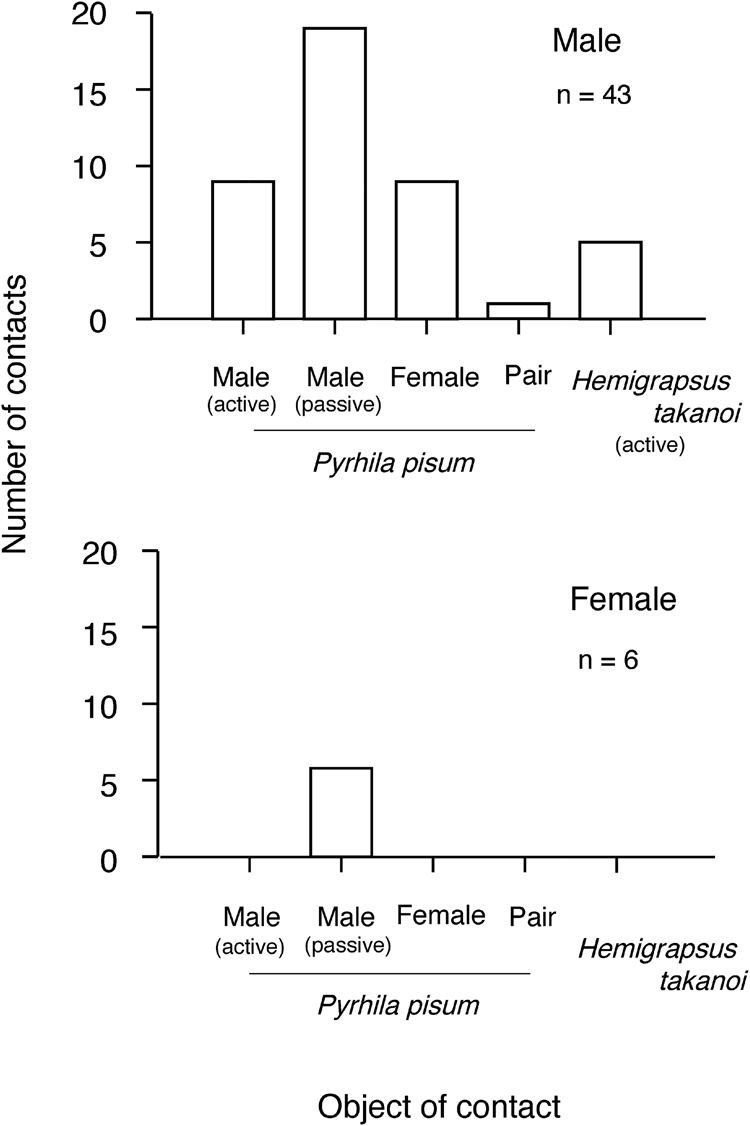
During June–July 2006, 30 males and 11 females were observed in Site 1 (Figure 3). In this intertidal area, males were actively wandering along the shoreline (Figure 4A). They were mostly found underwater, but sometimes walked up to the surrounding wetland. Some crabs exhibited copulation or guarding behaviour during observation (Figure 4B, C). The wandering males frequently contacted other individuals, which consisted of single males, single females and pairs of P. pisum, and Hemigrapsus takanoi without apparently distinguishing them. In contrast, females did not contact so frequently, and only did so passively with male conspecifics (Figure 5). The most frequently contacted object for males was other male conspecifics, especially in cases when they passively contacted. When the observed males actively contacted other individuals, they approached their targets and similarly touched them with their chelae regardless of their sex or species. In all cases, except when male and female started mating, contacted crabs soon separated from each other without fighting. They all separated from each other within 15 s. Even in the male–male cases, they did not continue fighting for a long time (less than 1 min), suggesting that males did not approach male conspecifics for the purpose of fighting with competitors. Their behaviour towards H. takanoi was not predation, because they did not exhibit grasping, tearing off or biting their prey.
Behaviours of individual male and female of Pyrhila pisum with active or passive contacts observed in the intertidal area in Site 1.

Photographs of mating behaviour of Pyrhila pisum captured from a video movie taken in Site 1. (a) a male adult wandering on the shore. (b) copulation. (c) post-copulatory guarding. (d) and (e) male–male fight over a female, a challenger is clinging to a pair in tandem (d) and outcome of the fight, in which the challenger detached from the pair (e). 1: challenger male, 2: guardian male, 3: female.

Contacted objects by Pyrhila pisum of each sex observed in the intertidal area in Site 1.

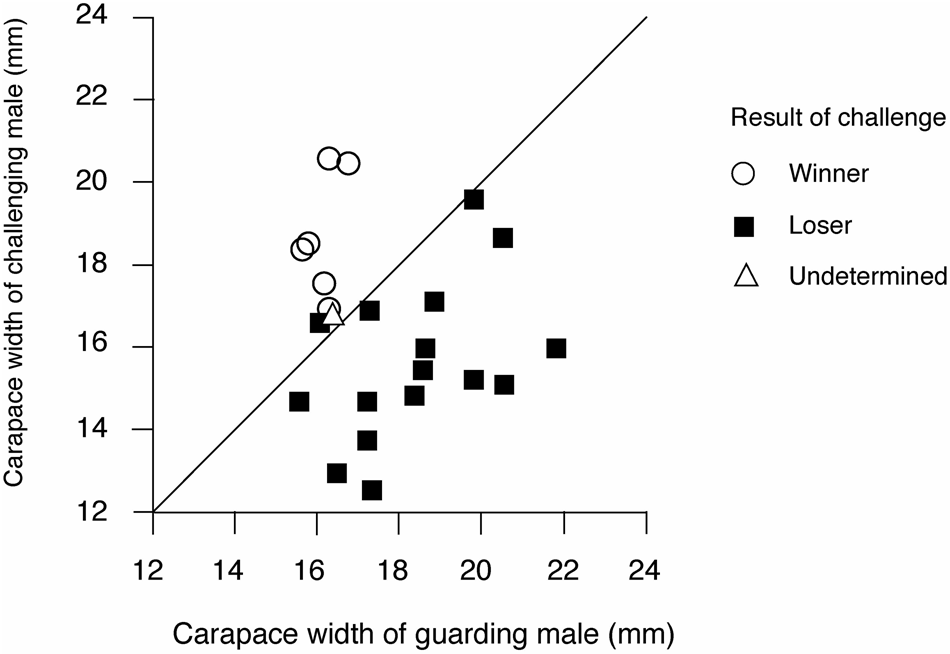
Twenty-two guarding males were observed in the intertidal area and 24 males attempted to steal guarded females. The guardian males fought with the challengers and the outcomes were determined within 1–2 min in most cases. The losing males soon detached from females (Figure 4D, E). Seven challengers won and 16 lost, while in one case the winner or loser could not be decided during the 5-min observation. Carapace width (CW) of the challenger was always larger than that of the guardian's when the challengers won (6/6), and in contrast the loser was usually smaller (88.2%, 15/17). In the undetermined case, difference of CW was less than 0.5 mm (Figure 6). There was a significant bias in the result of the fights in the size relationship between challengers and guardians (χ2 test, P < 0.01).
Carapace width relationship and results of fights between adult males over females of Pyrhila pisum observed in the intertidal area in Site 1.

Size composition of paired adult crabs
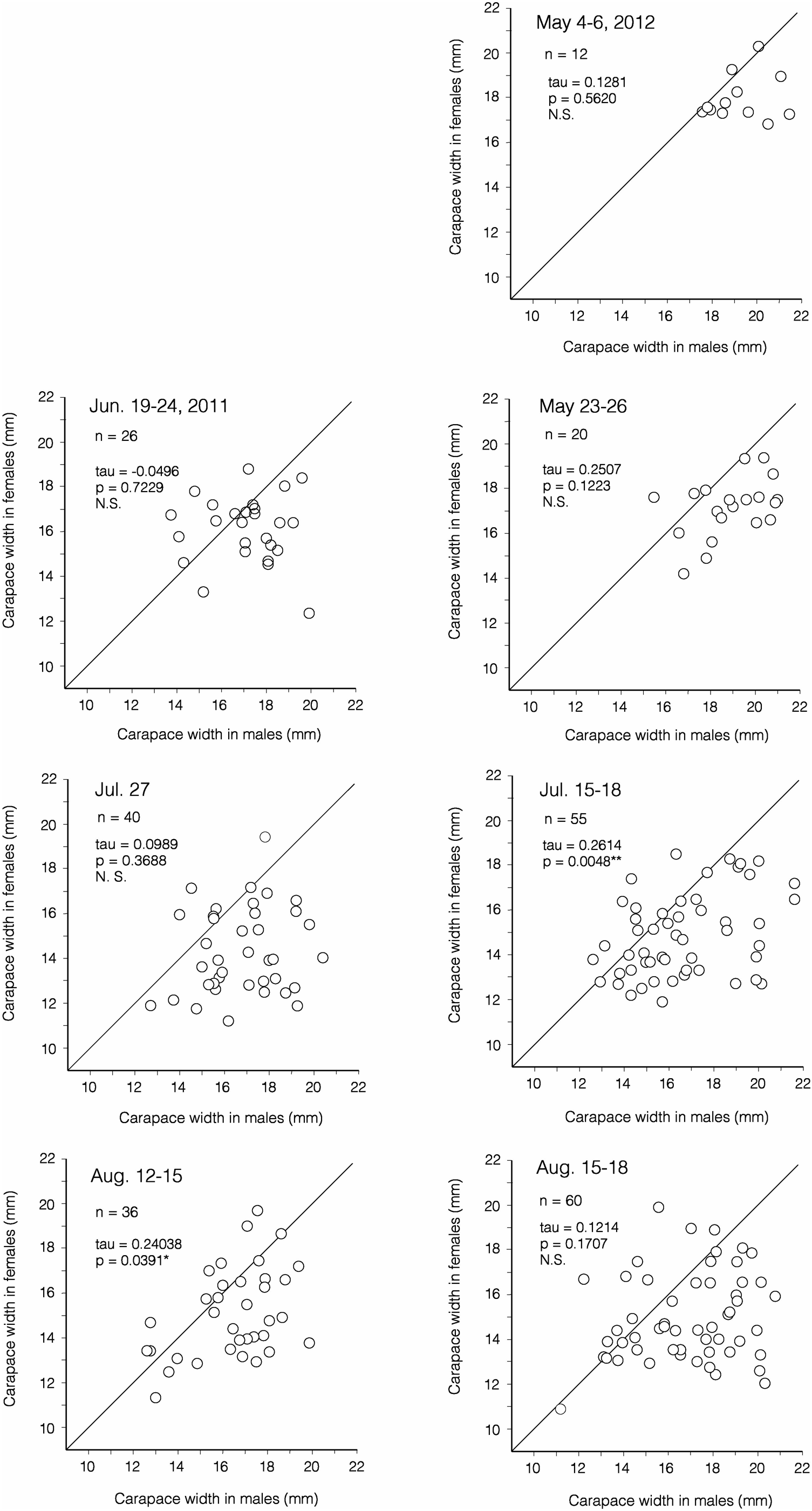
The carapace width size relationship of pairing crabs in each sampling period is shown in Figure 7. In early May, paired crabs were all large ones of ~>17 mm in CW, and the smaller crabs were gradually added later in the season. In late August, pairs included various sizes ranging from 11–22 mm CW. Males tended to be larger than females; combinations showing female CW < male CW were 61.1–85.0% in each period. As for the presence of correlation between sexes, significant correlations were detected during 12–15 August 2011 and 15–18 July 2012 (Kendall's rank correlation test; P = 0.0391 and P = 0.0048), but none in the other samplings (P > 0.05). There was no seasonal tendency in the presence of a significant correlation.
Relationship of carapace width between mating pairs of Pyrhila pisum collected from Site 2, in each period from June to August 2011 and from May to August 2012 (Survey 4), with the result of Kendall's rank correlation test. N.S.: non-significant, *P < 0.05, **P < 0.01.

Long-term rearing experiment
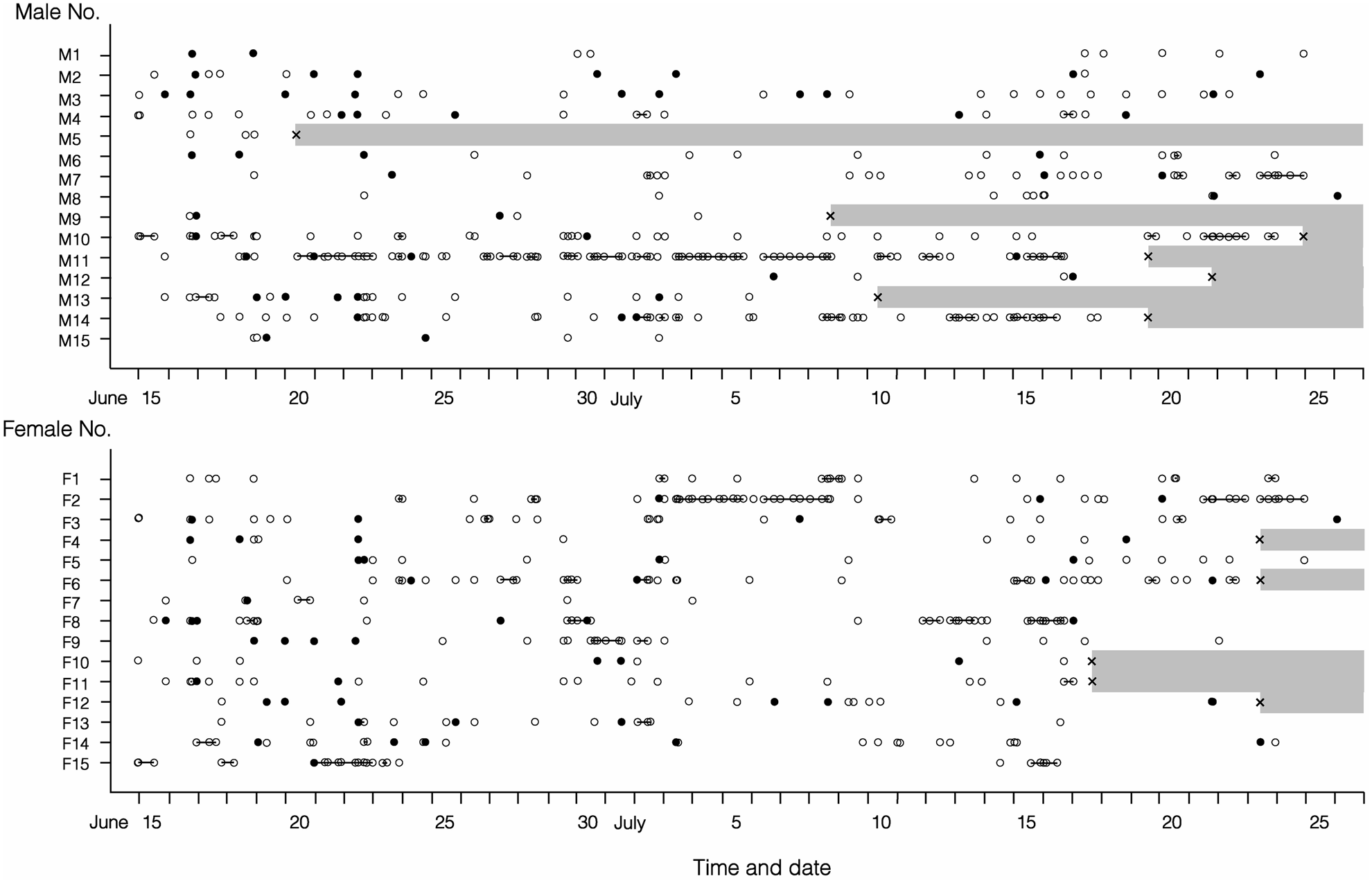
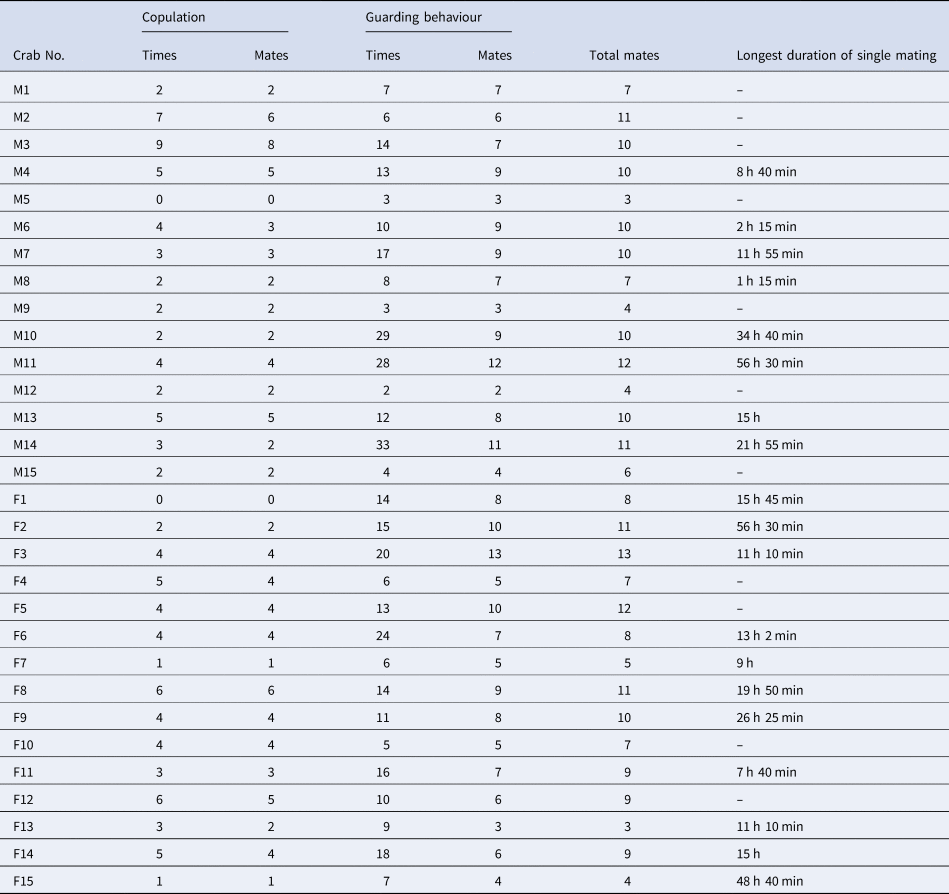
Although crabs could be observed for a limited time, it was confirmed that all males and females copulated or exhibited guarding behaviour with multiple mates. They did not moult during the 42 rearing days of the experiment (Figure 8, Table 1). As far as the crabs were observed, males could copulate a maximum of 9 times with 8 mates, while females 6 times with 6 mates. Guarding was observed occurring a maximum of 33 times with 12 mates in males, and 20 times with 13 mates in females. In total, male crabs mated with a maximum of 12 mates and females with 13 mates. Copulation was not always accompanied by guarding, and the duration of mating varied widely. In some cases guarding the same mate was not continuously observed, while in others, long-time guarding exceeded 1 day. The longest duration time of mating was 56 h and 30 min. These results mostly coincided with those observed in the single pair experiment.
Temporal change in the occurrence of copulation and guarding behaviour for each individual crab in captivity. Solid and open circles indicate copulation and guarding behaviour, respectively. Horizontal bars connecting the circles mean continuous behaviour with the same mates. x represents death of that crab and the shaded area that no data were collected after death.

Results of long-term rearing experiment of Pyrhila pisum, showing the number of times, mates and the longest duration of a single mating for each crab

Observation of embryos of copulating ovigerous females
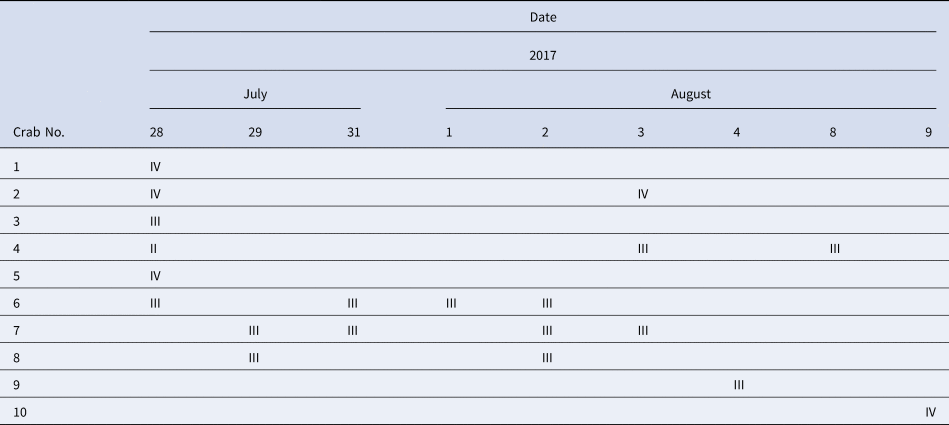
From 28 July to 23 August 2017, 22 copulations by 21 males and 12 ovigerous females were observed (Table 2). Developmental stages of the embryos carried by the copulating females varied from cleavage of surface (Stage II) to after eye pigmentation (Stage IV). The same ovigerous females copulated repeatedly after several days.
Developmental stages of embryos carried by copulating ovigerous female Pyrhila pisum

Discussion
Through observations in the laboratory and natural habitat we have revealed the process of mating behaviour of Pyrhila pisum. Male crabs actively search for their mates in their habitat, as shown in the male-biased sex ratio collected in the intertidal area (Kobayashi & Vazquez Archdale, Reference Kobayashi and Vazquez Archdale2017). However, they cannot recognize female conspecifics before contacting them, and they do not use any signals between sexes to confirm their mates. Males approach their mates only using vision, without receiving any other attraction cues from females. Thus they cannot confirm suitable mates until they have contacted other objects and identified them. Although they can discriminate brachyuran crabs from other animals, they may approach any crab of a similar size including other species that might be found in their path. Their searching behaviour is not species-specific and very primitive. This might be related to the environment where they mate. Pyrhila pisum mates around the shore including both dried up wetlands and underwater. In many burrowing ocypodid crabs which mate on the dried up wetlands, species-specific courtship behaviour by males (e.g. waving of chelae and sound production) is accompanied; females which found the males through vision and hearing are induced to enter the male's territory. Such a process tends to be highly developed among crabs living in a terrestrial environment (Christy & Salmon, Reference Christy and Salmon1984). While in the case of crabs mating underwater, such as portunid and carcinid crabs, pre-moult females often release sex pheromones to attract conspecific males which successfully start pre-copulatory guarding and copulation. Water is an important medium for sex pheromone transport (Dunham, Reference Dunham1978). Probably because the environment where P. pisum mates varies and is unstable (e.g. disturbed by waves), they could not develop any highly specialized strategy.
In addition, the development of eyesight is a necessary condition for discriminating appropriate mates using vision. Land crabs using courtship behaviour have large compound eyes for detecting approaching predators and discriminating predators from conspecific mates. They can quickly identify potential predators and hide themselves in their burrows (Zeil & Hemmi, Reference Zeil and Hemmi2006). In contrast in P. pisum, their compound eyes are miniscule and probably not so functional as those of other crabs. They did not need to develop vision so much because they are protected by a very hard exoskeleton and specific predators are rare in their habitat. Their wandering habit without using refuges for shelter may also be one of the reasons why the mating of P. pisum is not so elaborate; a sedentary habit within territorial burrows can create individual resource-defending behaviour in many ocypodid crabs. Mate choice of females, which is often accompanied with elaborate male courtship behaviour, is based on the assessment of quality of the resources such as breeding site or refuge (Christy, Reference Christy1987). Pyrhila pisum is not sedentary and does not need these resources.
Female P. pisum can copulate during their intermoult phase and even in ovigerous condition. The present observation of mating of ovigerous females suggested that the duration during which females can copulate is long and their timing of copulation until the next oviposition is not fixed. According to a histological observation of the female reproductive organs of the leucosiid crab Ebalia tumefacta (Montagu), they appear to possess an asymmetric vagina that is attached with strong musculature without an operculum, which is unknown among other brachyuran families. This organ enables them to open and close their vagina freely, and to copulate regardless of the timing of moulting (Hayer et al., Reference Hayer, Shubert and Brandis2015). If this is a common characteristic among leucosiid crabs, it is likely that female P. pisum can copulate at any time, even in their ovigerous condition.
In their natural habitat, the number of guarding pairs was much larger than those copulating (Kobayashi & Vazquez Archdale, Reference Kobayashi and Vazquez Archdale2017), and this reflected the duration of guarding which was much longer than that of copulation. According to the observation of mating behaviour of pairs, the duration of copulation lasted mostly between 1–2 h. There were both pre- and post-copulatory guardings, but the duration of the pre-copulatory guarding (mostly less than 30 min) was much shorter than that of the post-copulatory guarding (maximum of 3 days). Thus it can be estimated that guarding behaviours found in their natural habitat comprised mostly of the post-copulatory type. Probably this is related to multiple and non-restricted mating of females. If the females can copulate at any time regardless of the softening of their exoskeleton, guarding behaviour after copulation brings added benefit to males (Grafen & Ridley, Reference Grafen and Ridley1983; Yamamura, Reference Yamamura1986). Their pre-copulatory guarding may function only as a preparation for copulation.
In cases when males encountered pairing crabs, the females could be successfully stolen from their guardians when the challengers were larger in body size, suggesting that the effectiveness of the guarding behaviour depends on male size. Small adult crabs of 16 mm > CW are young and in their first-year after attaining maturity, and large ones are in their second-year (Kobayashi & Vazquez Archdale, Reference Kobayashi and Vazquez Archdale2017). Thus most small crabs start reproduction just after their puberty moult after July, and the reproductive seasons of crabs of both sizes overlap in the later reproductive season. During this season, the replacement of guardians may frequently occur in high population densities, and mating success of small young males is lower than that of larger old ones. As for females, acceptability may not be fixed to a particular physiological condition, and they can copulate repeatedly. The termination of guarding is not linked to female ovulation, and the duration of post-copulatory guarding varied widely but could last as long as ~3 days, according to the observations in both cases in each pair and in a group. Probably the duration of guarding is not fixed and varies in their natural habitat, where environmental conditions are unstable and frequent replacement of mates occurs. Because the guarding behaviour in P. pisum males is not related with the defence of mates from predators, it mainly affects their male–male competition. However, it may not be so effective as to guarantee fertilization by their own sperm for males, although they can decrease the possibility of their mates copulating with other males, especially smaller ones, to some degree.
Size-assortative mating has been well documented among crustaceans, such as amphipods and decapods including brachyuran crabs, which perform guarding behaviour during mating (e.g. three portunid crabs Scylla spp. and a fiddler crab Uca mjoebergi Rathbun; Clark & Backwell, Reference Clark and Backwell2016; Fazhan et al., Reference Fazhan, Waiho, Wan Norfaizza, Megat and Ikhwanuddin2017). This has been explained by several hypotheses (Crespi, Reference Crespi1989). In the case of P. pisum, guarding males tended to be larger than their mates, but a significant size correlation could not be detected in many cases. Probably the tendency of size-assortative mating is weak or absent in this crab. This pattern might be caused by the presence of a mate choice and intersexual conflict. During a successful guarding, females are always passive and their behaviour is strongly restricted by the males. However, the size of the female's seminal receptacles limits repeated copulation, especially for small females. Thus females may be cryptic and reject males to reduce their number of matings, and it is likely that females choose some males. In contrast, males are generally opportunistic and do not choose particular mates with reference to their body size. If females can mate any time physiologically and males cannot find females just before fertilization and spawning because no signals are released from them, copulation does not assure a successful fertilization by their own sperm. In such a case, it may be adaptively significant for males not to be choosy for particular mates and adopt a strategy of repeat mating with as many mates as possible.
As for females, there may be some mate choice due to male body size. In their natural habitat, male crabs that contacted with females soon separated from each other except when they started mating, suggesting that males usually accept females' rejection. Thus females may choose males larger than themselves, and reject mating with smaller males to some degree. Consequently, smaller males may often mate with small females, but larger males can mate with females of various sizes. In some cases, this tendency may have created a positive significant correlation between the body size of each sex. A similar tendency of mate preference has been documented by experiments in a varunid crab Gaetice depressus (De Haan); male crabs mated indiscriminately with regard to the body size of females, but females showed a preference for the larger males and rejected males smaller than themselves (Fukui, Reference Fukui1995). Additional experiments on mate preference are necessary to verify the presence of mate choice by female P. pisum.
Among leucosiid crabs, the process of mating behaviour has been scarcely reported. In the few cases described, females copulated in their hard-shell condition. Male Ebalia tuberosa mainly uses its tactile sense to confirm the suitability of mates, which may be similar to P. pisum. However, they exhibit only pre-copulatory guarding while preparing for copulation (Schembri, Reference Schembri1983). Although further examples are needed, the long post-copulatory guarding may have evolved under strong male–male competition under high population density, with remarkable sexual dimorphism in their chelipeds (Yamamura, Reference Yamamura1986). During their reproductive season, P. pisum aggregate in high densities in the intertidal area of the tidal flats; this contrasts with E. tuberosa, which inhabits the deep-sea bottom (Kobayashi & Vazquez Archdale, Reference Kobayashi and Vazquez Archdale2017). Copulation while females were in their ovigerous condition was commonly observed in P. pisum, and has also been observed in Philyra scabriuscula (Fabricius) and Ebalia tuberosa (Naidu, Reference Naidu1954; Schembri, Reference Schembri1983). This habit, which is rarely known among brachyuran crabs, may be found in other species of this family. Further observations on the other species are necessary, to elucidate the mating behaviour of leucosiid crabs.
In many cases, the well-studied mating behaviour of brachyuran crabs focused on species with highly developed and species-specific mating behaviour (e.g. Uca spp. of Ocypodidae; Christy & Salmon, Reference Christy and Salmon1984; Perez et al., Reference Perez, Rosenberg and Pie2012). It may not be particularly common among brachyuran crabs, but there is a possibility that there are still some species whose mating behaviour remains primitive, as in the case of P. pisum, among many families which have not been studied up to this date. Additional surveys on these crabs from viewpoints similar to our study will be needed to develop a comprehensive understanding of the reproductive ecology of brachyuran crabs.