Introduction
Commercial use of carbohydrase enzymes (CE) in diets based on so-called ‘viscous’ grains is an established practice today. The vast majority of the poultry diets, however, are based on corn and soybean meal (corn-soy). The general perception about these diets is that, by virtue of having high innate digestibility of energy and nutrients, the scope of further improvement by CE is too narrow to be of significance. The objective of the current article is to assess the validity of this perception in light of the published literature. The theoretical bases of CE response in improving the nutritive value of corn-soy diets are presented. Factors that can explain the observed variation in these responses are included in the following review.
Non-starch polysaccharides in corn and soybean meal
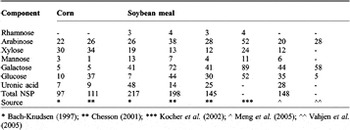
The concentration of total non-starch polysaccharides (NSP) and its constituent sugars in corn and soybean meal are presented in Table 1. A considerable variation in the content analysis for soybean meal among different published sources is evident. The observed variability may arise from a number of factors including plant cultivar, growing conditions, processing, and analytical techniques used to assess the constituents. For example, the distribution pattern of different NSPs within the bean has been an important variable when comparing the de-hulled vs. non-de-hulled meals, whereby arabinose and mannose are concentrated more in the soy-hulls (Vahjen et al., Reference VAHJEN, BUSCH and SIMON2005). Close association of the NSPs in plant cell wall with the other non-carbohydrate components including the lignin and protein (Smits and Annison, Reference SMITS and ANNISON1996) and complexity branching of these NSPs (Chesson, Reference CHESSON2001) have been reported for soybean meal. These complex factors associated with the target substrate in corn-soy diets led to the suggestion that ‘an extensive blend of CE must have been supplemented if any performance response has to be achieved’ (Slominski, Reference SLOMINSKI2011). Although this proposition holds promise in majority of the cases, the evidence to suggest a success of CE preparations possessing single enzyme activity are also convincing (see later section). In this context, the prediction of the response seems to associate with the factors other than that exclusively to the range of the enzyme activities displayed.
Component carbohydrates (g/kg) of the non-starch polysaccharides from corn and soybean meal.

* Bach-Knudsen (1997); ** Chesson (Reference CHESSON2001); *** Kocher et al. (Reference KOCHER, CHOCT, PORTER and BROZ2002); ^ Meng et al. (Reference MENG, SLOMINSKI, NYACHOTI, CAMPBELL and GUENTER2005); ^^ Vahjen et al. (Reference VAHJEN, BUSCH and SIMON2005)
Effect on nutrient digestibility and broiler performance
In relation to the complexity and the relative content of various NSPs in the corn-soy diet, a range of CE preparations with single- to multiple-activities have been tested both in vitro and in vivo. For the purpose of the current article, the term CE includes two distinct classes of activities being amylase and those collectively classified as NSP-degrading enzymes. This distinction is based on the fact that the former is intended to augment the endogenous amylase activity while the later is not part of the mono-gastric digestive system. The expression is made for the presence of the major or ‘guaranteed’ enzymes as reported in the original papers, without making mention of the relative activities of each in the test diets. This over-simplification was deemed justified in view of confusion existing for the nomenclature, absence of universally-accepted methods for measuring the activity, description of the source organism, and the potential variation in the activity of enzymes derived from the same organism (Bedford and Schulze, Reference BEDFORD and SCHULZE1998; Bedford, Reference BEDFORD2002). Another source of perplexity rose from the fact that a number of researchers used commercial CE products possessing a protease activity. An attempt has been made to separate the presentation of data from such studies relating to the parameters of direct concern e.g. protein or amino acid digestibility. The results of CE on the growth performance, however, are presented without making a distinction between these two parameters.
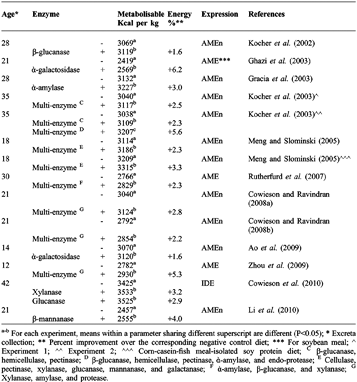
Effect of carbohydrase supplementation on energy digestibility of corn-soy diets.
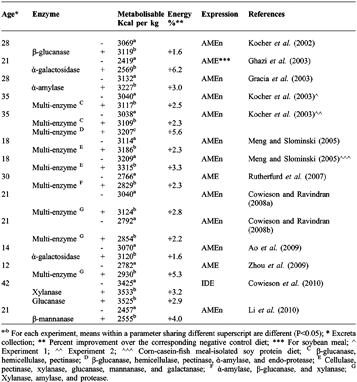
a-b For each experiment, means within a parameter sharing different superscript are different (P<0.05); * Excreta collection; ** Percent improvement over the corresponding negative control diet; *** For soybean meal; ^ Experiment 1; ^^ Experiment 2; ^^^ Corn-casein-fish meal-isolated soy protein diet; C β-glucanase, hemicellulase, pectinase; D β-glucanase, hemicellulase, pectinase, α-amylase, and endo-protease; E Cellulase, pectinase, xylanase, glucanase, mannanase, and galactanase; F α-amylase, β-glucanase, and xylanase; G Xylanase, amylase, and protease.
Table 2 summarises the research findings on the effect of CE on energy digestibility of corn-soy diets. Data is consistent with an average improvement of the metabolisable energy (AME) content by a factor of 3% (from 1.6 to 6.2%). The improvement in AME seems to be a cumulative response to the improved digestibilities of starch, fat and protein. The effect of CE on starch and fat digestibility in corn-soy diets was studied by several researchers, with conflicting outcomes (Zanella et al., Reference ZANELLA, SAKOMURA, SILVERSIDES, FIQUEIRDO and PACK1999; Meng and Slominski, Reference MENG and SLOMINSKI2005; Meng et al., Reference MENG, SLOMINSKI, NYACHOTI, CAMPBELL and GUENTER2005; Gracia et al., Reference GRACIA, ARANIBER, LAZARO, MEDEL and MATEOS2003; Reference GRACIA, LAZARO, LATORRE, MEDEL, ARANIBER, JIMENEZ-MORENO and MATEOS2009; Li et al., Reference LI, XIANG, YIQUN, ZHIMIN and YUNHE2010). This lack of consistency appeared to relate to whether the measurements were made at ileal or faecal level in general, whereby the measurements made at excreta level showed no effect of CE supplementation (Rebole et al., Reference REBOLE, RODRIQUES, ALZUETA, ORTIZ and TREVINO1999; Gracia et al., Reference GRACIA, ARANIBER, LAZARO, MEDEL and MATEOS2003; Reference GRACIA, LAZARO, LATORRE, MEDEL, ARANIBER, JIMENEZ-MORENO and MATEOS2009; Juanpere et al., Reference JUANPERE, PEREZ-VENDRELL, ANGULO and BRUFAU2005; Li et al., Reference LI, XIANG, YIQUN, ZHIMIN and YUNHE2010). This relationship was demonstrated more convincingly by the researchers showing a positive effect of CE on ileal (and not excreta) digestibility of starch and fat (Zanella et al., Reference ZANELLA, SAKOMURA, SILVERSIDES, FIQUEIRDO and PACK1999; Meng and Slominski, Reference MENG and SLOMINSKI2005). These findings suggest that, consequential to the microbial fermentation in the hindgut, the assessments made at excreta level may mask the effect of enzyme supplementation on the nutrient and energy digestibility. In this context, the measurement of ileal digestible energy seems more defendable compared with the conventional AME assays (Cowieson et al., Reference COWIESON, BEDFORD and RAVINDRAN2010).
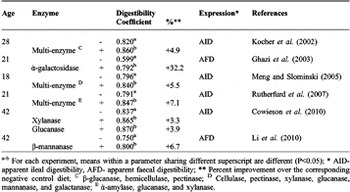
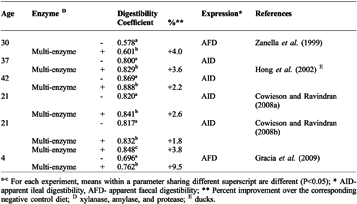
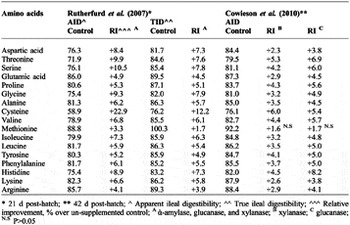
In contrast to the general belief that the effect of CE would have been confined only to an improved energy content, fairly significant improvements in protein digestibility (3.3 to 7.1%; mean = 5%) has been reported (Table 3a). Comparable responses in terms of improved digestibility of protein were recorded for the CE preparations possessing an additional protease activity (Table 3b). Only two studies showing the effect of CE on the digestibility of amino acid in corn-soy diets were found (Table 4).
Effect of carbohydrase supplementation on digestibility of protein.

a-b For each experiment, means within a parameter sharing different superscript are different (P<0.05); * AID- apparent ileal digestibility, AFD- apparent faecal digestibility; ** Percent improvement over the corresponding negative control diet; C β-glucanase, hemicellulase, pectinase; D Cellulase, pectinase, xylanase, glucanase, mannanase, and galactanase; E α-amylase, glucanase, and xylanase.
Effect of carbohydrase plus protease supplementation on digestibility of protein.
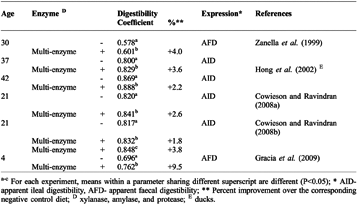
a-c For each experiment, means within a parameter sharing different superscript are different (P<0.05); * AID- apparent ileal digestibility, AFD- apparent faecal digestibility; ** Percent improvement over the corresponding negative control diet; D xylanase, amylase, and protease; E ducks.
Despite using the similar procedure, the ileal digestibility values for amino acids in the unsupplemented control, and the magnitude of improvement following CE supplementation, was quite different among these studies.
Effect of carbohydrases on digestibility of amino acids in corn-soy diets.

* 21 d post-hatch; ** 42 d post-hatch; ^ Apparent ileal digestibility; ^^ True ileal digestibility; ^^^ Relative improvement, % over un-supplemented control; A α-amylase, glucanase, and xylanase; B xylanase; C glucanase; N.S P>0.05
This difference seems to originate from the variation in quality of soybean meal used in the basal diets and the age of the birds at which the determinations were made, i.e. 21 versus 42 d, respectively in studies of Rutherfurd et al. (Reference RUTHERFURD, CHUNG and MOUGHAN2007) and Cowieson et al. (Reference COWIESON, BEDFORD and RAVINDRAN2010). An effect of age was apparent for amino acids including aspartic acid, threonine, cysteine, and lysine where low ileal digestibility values at 21 versus 42 d were reported in study of Cowieson et al. (Reference COWIESON, BEDFORD and RAVINDRAN2010). It is apparent from both these studies that CE improved the ileal digestibility of all amino acids and that the magnitude of effect was different among amino acids e.g. true ileal digestibility improvement was 1.7% for methionine vs. 12.2% for cysteine (Rutherfurd et al., Reference RUTHERFURD, CHUNG and MOUGHAN2007; Table 4). An analysis of these datasets revealed a strong correlation between the percentage improvement in digestibility of individual amino acids and the innate digestibility of the corresponding amino acid in the negative control diets (r = -0.95 and -0.90 respectively in case of apparent and true ileal digestibility in Rutherfurd et al., Reference RUTHERFURD, CHUNG and MOUGHAN2007; r = -0.86 and -0.72, for apparent ileal digestibility respectively for xylanase and glucanase supplementation in Cowieson et al., Reference COWIESON, BEDFORD and RAVINDRAN2010). Despite the observed variation in absolute values, it is interesting to note that the average of the improvements for all amino acids was essentially the same for data from Rutherfurd et al. (Reference RUTHERFURD, CHUNG and MOUGHAN2007) and that of the glucanase-supplemental group in Cowieson et al. (Reference COWIESON, BEDFORD and RAVINDRAN2010), being 27% of the undigested fraction. The average improvement with xylanase supplementation was 20% of the undigested fraction (Cowieson et al., Reference COWIESON, BEDFORD and RAVINDRAN2010). These estimates were higher compared with the suggested 16% improvement attributed to xylanase supplementation (Cowieson and Bedford, Reference COWIESON and BEDFORD2009). Similar improvements in amino acid digestibility of corn-soy diets have also been reported with supplementation of CE with protease activity (Zanella et al., Reference ZANELLA, SAKOMURA, SILVERSIDES, FIQUEIRDO and PACK1999; Hong et al., Reference HONG, BURROWS and ADEOLA2002; Cowieson and Ravindran, Reference COWIESON and RAVINDRAN2008a). Data from these studies is not presented in the current article for the reason that the responses could have been confounded by the presence of protease. Although the xylanase was a common factor, use of different source organisms and supplemental activity across the studies makes it difficult to draw meaningful conclusions regarding the contribution of carbohydrase versus the protease fraction. All these studies however point out an obvious opportunity for improving the digestibility of protein and amino acids in corn-soy diets.
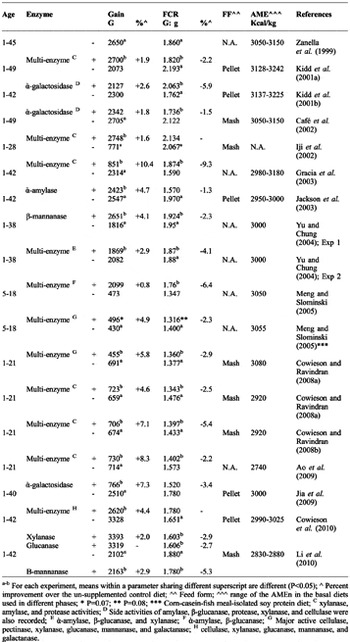
Quite convincing responses in terms of an improved body weight gain and feed efficiency following CE supplementation of corn-soy diets have been reported- average improvement of 4.3 and 3.7%, respectively. These responses are suggestive of a positive effect of CE on the energy and protein/amino acid digestibilities, though it is not possible to clearly separate the part of improvement arising from either of these components on case to case basis.
Effect of carbohydrases on the performance of broilers fed corn-soy diets.

a-b For each experiment, means within a parameter sharing different superscript are different (P<0.05); ^ Percent improvement over the un-supplemented control diet; ^^ Feed form; ^^^ range of the AMEn in the basal diets used in different phases; * P=0.07; ** P=0.08; *** Corn-casein-fish meal-isolated soy protein diet; C xylanase, amylase, and protease activities; D Side activities of amylase, β-glucanase, protease, xylanase, and cellulase were also recorded; E α-amylase, β-glucanase, and xylanase; F α-amylase, β-glucanase; G Major active cellulase, pectinase, xylanase, glucanase, mannanase, and galactanase; H cellulase, xylanase, glucanase, mannanase, and galactanase.
The magnitude of effect on live performance questions the general perception that the effectiveness of CE is confined only to the diets based on viscous grains, and that typical corn-soy diets are beyond the scope of CE application.
Mode of action
The observation that positive effects of CE have been recorded with supplementation of enzyme/complexes displaying altogether a different spectrum of activities is somewhat confusing (Table 5) e.g. supplementation of xylanase, and glucanase individually to corn-soybean meal based diets resulted in significant, and comparable, improvement in amino acid digestibility and feed efficiency (Cowieson et al., Reference COWIESON, BEDFORD and RAVINDRAN2010). This suggests that a typical corn-soy diet presents an array of substrates in quantities enough to exhibit anti-nutritional properties, thus offering an opportunity for each of the corresponding enzymes to ameliorate these negative effects. In such a scenario, the positive effect can be a collective response to the action of enzyme/s to its intended substrate/s (specific) as well as those where various enzymes may compete for similar substrates (non-specific). Alternatively, a close association of various NSPs within the plant cell-wall could also be a factor whereby depolymerisation of cell wall content by one particular enzyme might well liberate the associated entities and vice versa. Direct evidence to prove this later proposition has not yet been presented. Furthermore, enzymes acting via different and indirect mechanisms may provide a probable explanation to these effects e.g. an improved nutrient assimilation with supplemental mannanase is believed to be mediated via down-regulation of the innate immune response, rather than a direct effect on the nutrient digestibility (Li et al., Reference LI, XIANG, YIQUN, ZHIMIN and YUNHE2010). Several excellent reviews have been published to elucidate the underline mechanisms whereby NSPs exert their anti-nutritional effects and how these effects are alleviated by supplementation of CE (Bedford, Reference BEDFORD1993; Reference BEDFORD1996; Bedford and Morgan, Reference BEDFORD and MORGAN1996; Smits and Annison, Reference SMITS and ANNISON1996; Bedford and Schulze, Reference BEDFORD and SCHULZE1998; Chesson, Reference CHESSON2001; Cowieson et al., Reference COWIESON, HRUBY and PIERSON2006; Slominski, Reference SLOMINSKI2011). The intention here is not to repeat these mechanisms in detail, rather to take a brief look on these with relevance to corn-soy diets.
viscosity-based mechanisms
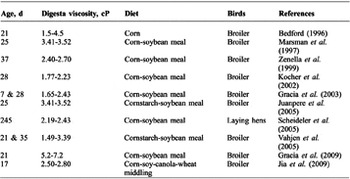
Water soluble NSPs inhibit nutrient digestion and absorption by increasing intestinal viscosity. An increase in intestinal viscosity slows down the diffusion rates of the substrates, enzymes, and digestion end-products thus impairing nutrient digestibility. Generally, the gut viscosity model is used to predict the potential effect of NSPs, and CE supplementation thereof, in diets containing viscous grains. For wheat-based diets, Bedford and Schulze (Reference BEDFORD and SCHULZE1998) reported a linear improvement in feed efficiency of broiler with a concomitant reduction in digesta viscosity brought about by graded levels of CE supplementation. Relative to wheat (3 to 45 cP; mean = 12 cP) and barley (5 to 225 cP; mean = 25 cP), the intestinal viscosity ranging from 1.5 to 4.5 with a mean value of 2.4 cP for corn has been reported by Bedford (Reference BEDFORD1996). The mean value, as well as the variance, for corn was clearly far less than that recorded for wheat and barley. Digesta viscosity values recorded with complete diets based on corn and soybean meal are presented in (Table 6). With a single exception, the presented evidence is consistent with fairly low estimates of digesta viscosity averaging below 3 cP (Table 6). It is important to note that the high viscosity values (7.5 cP for cooked-flaked corn) and reduction of viscosity by CE (4.2 cP) in study of Gracia et al. (Reference GRACIA, LAZARO, LATORRE, MEDEL, ARANIBER, JIMENEZ-MORENO and MATEOS2009) did not affect the body weight gain and feed efficiency. In this context, it seems reasonable to suggest that the effect of CE in improving the nutritive value of a corn-soy diet is not mediated via modulation of the digesta viscosity.
Digesta viscosity measurements with corn-soy base diets.

nutrient encapsulation
NSPs may exert their effect by physical entrapment of starch and proteins thereby decreasing their digestibility. Breakdown of the cell wall content under the action of appropriate CE is expected to release these entrapped nutrients and render them available for digestion and absorption. This proposition is supported by the reports demonstrating an improved digestibility of starch (Gracia et al., Reference GRACIA, ARANIBER, LAZARO, MEDEL and MATEOS2003; Zanella et al., Reference ZANELLA, SAKOMURA, SILVERSIDES, FIQUEIRDO and PACK1999; Meng and Slominski, Reference MENG and SLOMINSKI2005) fat (Zanella et al., Reference ZANELLA, SAKOMURA, SILVERSIDES, FIQUEIRDO and PACK1999; Gracia et al., Reference GRACIA, LAZARO, LATORRE, MEDEL, ARANIBER, JIMENEZ-MORENO and MATEOS2009) and protein (Kocher et al., Reference KOCHER, CHOCT, PORTER and BROZ2002; Meng and Slominski, Reference MENG and SLOMINSKI2005; Cowieson et al., Reference COWIESON, BEDFORD and RAVINDRAN2010; Li et al., Reference LI, XIANG, YIQUN, ZHIMIN and YUNHE2010) in corn-soy diets following supplementation of CE. For example, improved protein digestibility could have been a result of disruption of the cell wall matrix and/or hydrolysis of certain carbohydrate-protein complexes, either ways, leading to release of protein for endogenous proteolytic activity. More direct evidence to support this proposition was provided in the finding that supplementation of CE (α-amylase, β-glucanase, and xylanase) improved ileal digestibility all amino acids determined with corn-soy diet (Table 4) and that the improvement was solely due to an actual breakdown of protein and absorption of the amino acids rather than indirect effect of reduced endogenous amino acid losses (Rutherfurd et al., Reference RUTHERFURD, CHUNG and MOUGHAN2007). It is important to note that the possibility of the ‘nutrient encapsulation’ effect cannot be ruled out even with the diets based on ‘viscous’ grains. Supplementation of a complex CE preparation to wheat-soybean meal diet has been shown to improve digestibility of protein that, despite the use of wheat as a sole cereal, seems independent of modulation of the digesta viscosity very low digesta viscosity (3.3 cP) was recorded for the un-supplemental control diet (Meng et al., Reference MENG, SLOMINSKI, NYACHOTI, CAMPBELL and GUENTER2005).
In view of the reports demonstrating an increased flow of endogenous amino acids in the presence of ‘viscous’ NSPs in the diet (Angkanaporn et al., Reference ANGKANAPORN, CHOCT, BRYDEN, ANNISON and ANNISON1994) it can be envisaged that the effect of CE on amino acid digestibility in diets based on these grains would be mediated by a mechanism different from that demonstrated by Rutherford et al. (2007) for a corn-soy diet. Assuming this is a valid proposition, the extent to which CE would improve the digestibilities of individual amino acids is expected to vary depending upon the ingredient composition of diet.
modulation of the gut microflora
Indigestible NSPs provide substrate for the microbial fermentation in the distal gut, and thus promote an increased bacterial population. Presence of these bacteria may affect nutrient digestion and assimilation via different mechanisms:
i) to compete with nutrient supply with the host
ii) reduced nutrient/energy assimilation via triggering an immune response
iii) through production of metabolites which can alter the gut pH (Bedford, Reference BEDFORD1996; Bedford and Schulze, Reference BEDFORD and SCHULZE1998).
Jackson et al. (Reference JACKSON, ANDERSON, HSIAO, MATHIS and FODGE2003) showed that supplementation of β-mannanase to corn-soy-based diet resulted in significant improvement in live performance and reduced lesion scores in chicks orally inoculated with Eimeria sp. and Clostridium perfringens. This suggested that the NSP fraction of soybean meal may present a more conducive environment for the proliferation of the pathogenic microbes. Based on the findings that the positive effect of β-mannanase was equal in magnitude with that of supplementation of the same diets with bacitracin methylene disalicylate, the authors suggested that β-mannanase can be considered as one of the potential alternatives to antibiotic growth-promoters (Jackson et al., Reference JACKSON, ANDERSON, HSIAO, MATHIS and FODGE2003). More work is needed to define the precise role of CE in modulating the gut microflora in birds fed on corn-soy diets.
Causes of variable response to NSP enzymes in corn-soybean meal based diets
Unlike the effect on the diets based on viscous grains, a large variation in the response of CE had been reported for corn-soy diets. These responses varied from a positive (Rutherfurd et al., Reference RUTHERFURD, CHUNG and MOUGHAN2007; Cowieson et al., Reference COWIESON, BEDFORD and RAVINDRAN2010; Li et al., Reference LI, XIANG, YIQUN, ZHIMIN and YUNHE2010) to none (Rebole et al., Reference REBOLE, RODRIQUES, ALZUETA, ORTIZ and TREVINO1999; Kocher et al., Reference KOCHER, CHOCT, ROSS, BROZ and CHUNG. T.K.2003; Juanpere et al., Reference JUANPERE, PEREZ-VENDRELL, ANGULO and BRUFAU2005) or even negative (Kocher et al., Reference KOCHER, CHOCT, PORTER and BROZ2002; Vahjen et al., Reference VAHJEN, BUSCH and SIMON2005) effects on the nutrient digestibility and performance. In case of a positive response, the magnitude is quite variable (+0.8 to +10.4% for body weight gain, and -1.5 to -9.3% for feed efficiency; Table 5). The following factors are thought to explain this variability.
quality of corn and soybean meal
Compared with the other feed ingredients, corn and soybean meal are regarded as being consistent sources of highly digestible nutrients. This proposition, however, needs to be reviewed in light of the reports showing considerable variability in the quality of corn and soybean meal from different sources. Douglas et al. (Reference DOUGLAS, PARSONS and BEDFORD2000) reported about 10% difference in body weight gain and feed efficiency of broilers fed diets based on soybean meals collected from twelve different locations. The same study revealed that although the supplementation of CE resulted in an overall improvement in the digestible energy, the effect was more pronounced with the meals showing innately low digestible energy (i.e. those of poorer quality). More recently, in a comprehensive study using meals from USA, Argentine, India and Malaysia, it was demonstrated that soybean meals were quite different in quality as was their ability to support performance yield of broilers (Creswell and Swick, Reference CRESWELL and SWICK2009).
It has long been accepted that starch is fully digested in the small intestine (Moran, Reference MORAN1982). We now know that considerable amount of starch escapes digestion in the small intestine (Noy and Sklan, Reference NOY and SKLAN1995; Carre et al., Reference CARRE, MULEY, GOMEZ, OURY, LAFFITTE, GUILLOU and SIGNORET2005; Tester et al., Reference TESTER, KARKALAS and QI2004). In the case of corn, lower starch digestibility at ileal vs. excreta level (92.7 vs. 97.6%) confirms the proposition of starch digestion being incomplete in the small intestine and completed in the hindgut as a result of microbial fermentation (Meng and Slominski, 1995). The concentration of the starch that escapes intestinal digestion depends upon both the intrinsic (grain type, genotype etc.) and extrinsic (grain processing) factors. Amylase: amylopectin ratio, crystalline structure, presence of the α-amylase inhibitors, grain hardness, and the presence of NSPs are important intrinsic factors affecting the starch digestibility (Carre, Reference CARRE2004; Tester et al., Reference TESTER, KARKALAS and QI2004; and Cowieson, Reference COWIESON2005). Exposure to high temperature and moisture has shown to promote some inter-molecular hydrogen bonds between the starch molecules which may result in the formation of aggregates with crystalline structure. This starch is called retrograded starch and is resistant to enzymatic hydrolysis. Fortunately, the conditions (temperature x moisture x time) applied during the normal pelleting process do not promote formation of retrograded starch (Carre, Reference CARRE2004; Svihus, 2010 personal communication). The process of grain drying, involving quick heating-cooling of grains, could be an exception. Since this process involves the temperature of up to 95°C for an extended period of time of 10-15 minutes, risk of the formation of retrograded starch cannot be overlooked especially in cases where the grain moisture is in excess of 15% (Ito et al., Reference ITO, SAITO, SUGARAWA, MOCHIDA and NAKAKUKI1999). A comprehensive account of the variability in corn quality had been presented in review of Cowieson (Reference COWIESON2005).
feed form
Use of pelleted versus mash diets is expected to modulate the response to supplemental exogenous enzymes in several ways. Steam conditioning during the process of pelleting can directly influence the recovery of enzyme activity in the final feeds. It implies that the biological efficacy of an enzyme should not be confounded with its heat-stability characteristics.
The mechanical/shear force applied during the process of pelleting may well rupture the cell wall exposing the content to enzymatic hydrolysis. Pelleting has shown to exacerbate the anti-nutritional effect of the diets based on viscous grains, and as a result, is expected to magnify the effect of CE (Francesch et al., Reference FRANCESCH, PEREZ-VENDRELL, ESTEVE-GARCIA and BRUFAU1994; Carre et al., Reference CARRE, MULEY, GOMEZ, OURY, LAFFITTE, GUILLOU and SIGNORET2005). The question of how these processes affect the nutritional value, and the enzyme response, to a non-viscous dietary model warrants more research.
Feeding diets based on coarse mash have shown to improve starch digestibility, a predominant part of that has been attributed to the ability of these diets to promote more functional gizzard (Svihus, Reference SVIHUS2011). In this respect, one may expect a less response with mash as compared with pelleted-diets towards an improved digestibility of starch (and AME) following supplementation of CE, since a more complete digestion of starch in the former would leave lesser room for further improvement (Bedford, Reference BEDFORD1996; Cowieson and Bedford, Reference COWIESON and BEDFORD2009).
acidifiers and organic acids
A shift in the pH of the gut can modulate the digestive processes, microbial shedding, and response to supplemental enzymes. Recently, Ao et al. (Reference AO, CANTOR, PESCATORE, FORD, PIERCE and DAWSON2009) reported that simultaneous supplementation of α-galactosidase and citric acid significantly improved the retention of dry matter, neutral detergent fibre, and AME of diets compared with that of control diet alone, or supplemented singly with α-galactosidase or citric acid. Addition of citric acid in this study resulted in a reduced crop pH by 0.8 units suggesting pH in the upper digestive tract may modulate the response of CE.
level of energy and nutrients in the basal diet
A number of studies have shown an improved digestibility of energy and nutrients in corn-soy diets following supplementation of CE (Tables 2-4). It is, however, interesting to note that this improvement in energy and nutrient digestibility did not always reflect in an improved technical performance of broilers (Marsman et al., Reference MARSMAN, GRUPPEN, VAN DER POEL, KWAKKEL, VERSTEGEN and VORAGEN1997; Kocher et al., Reference KOCHER, CHOCT, ROSS, BROZ and CHUNG. T.K.2003; Meng and Slominski, Reference MENG and SLOMINSKI2005).
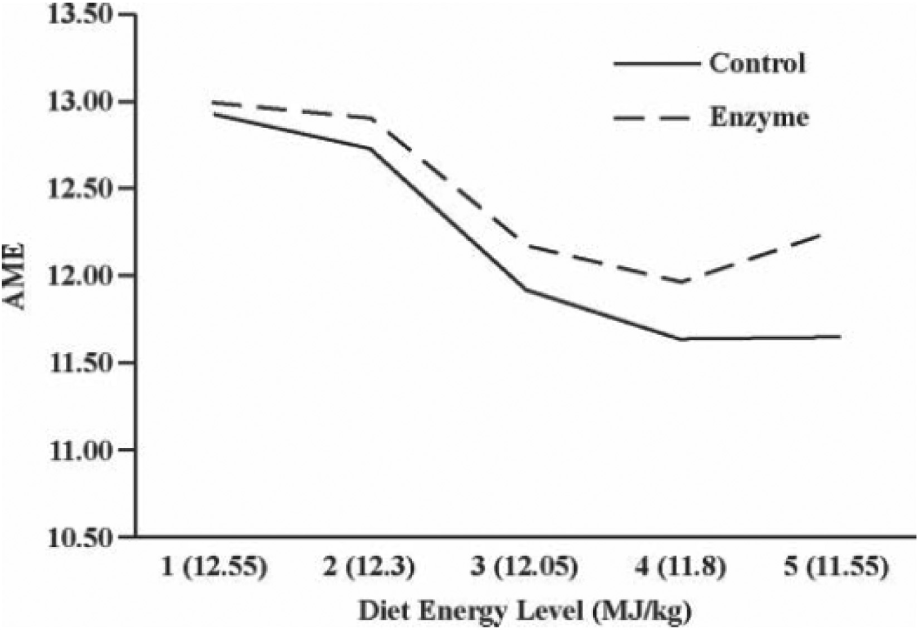
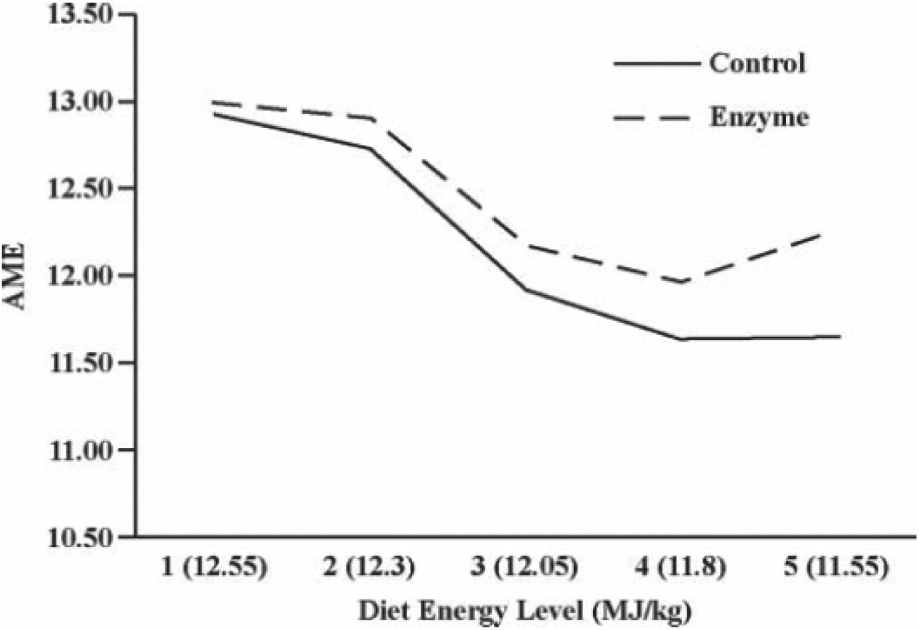
It appears that the positive effect of enzyme supplementation on the performance of broilers would become apparent only if the basal diets were formulated at sub-marginal level of energy and amino acids. This proposition is supported by the fact that most of the studies showing a positive response to supplementation of CE used 3000 kcal or lesser AME content (Table 5). Recently, Zhou et al. (Reference ZHOU, JIANG, LV and WANG2009) presented classical evidence showing that the improvement in AMEn content of diet with supplementation of CE increased with a reduction in the basal level of AME in experimental diets (Figure 1). These findings are consistent with earlier reports showing that the magnitude of the effect of CE in improving the AME of wheat-based diets was negatively correlated with the basal level of AME (Flores et al., Reference FLORES, CASTANON and MCNAB1994). A reflection of the same phenomenon in terms of a direct effect on the live performance of broilers was presented by Cowieson and Ravindran (Reference COWIESON and RAVINDRAN2008a) who observed that supplementation of CE (with protease) to corn-soy diet resulted in significant improvement in body weight gain and feed efficiency at both the high and low level of the basal AME, but the effect was more pronounced in the later than the former (8 versus 4 FCR points).
Effect of enzyme supplementation on AME of diets (Zhou et al. Reference ZHOU, JIANG, LV and WANG2009)
In parallel, a number of studies (Table 5) used quite low levels of digestible lysine (Zanella et al., Reference ZANELLA, SAKOMURA, SILVERSIDES, FIQUEIRDO and PACK1999; Kidd et al., Reference KIDD, MORGAN, PRICE, WELCH and FONTANA2001a; Reference KIDD, MORGAN, ZUMWALT, PRICE, WELCH and BRINKHANS2001b; Café et al., Reference CAFÉ, BORGES, FRITTS and WALDROUP2002; Jackson et al., Reference JACKSON, ANDERSON, HSIAO, MATHIS and FODGE2003; Meng and Slominski, Reference MENG and SLOMINSKI2005) compared with those shown to optimise performance yield of the modern broiler strains (Kidd et al., Reference KIDD, CORZO, HOEHLER, MILLER and DOZIER III2005; Jiang, Reference JIANG2011). For instance, in the study reported by Café et al. (Reference CAFÉ, BORGES, FRITTS and WALDROUP2002) used basal diets containing ‘adequate’ levels of energy but quite low level of lysine (1.05, 0.97, and 0.84% total lysine, respectively for 1-16, 17-35, and 36-49 day post-hatch) in relation to the requirement of the male Cobb 500 broilers used in the study. In this context, the observed improvement in gain with the supplementation of the basal diets with CE in this study may well be an effect mediated through an improved protein/amino acid digestibility (Meng et al., Reference MENG, SLOMINSKI, NYACHOTI, CAMPBELL and GUENTER2005; Meng and Slominski, Reference MENG and SLOMINSKI2005; Rutherfurd et al., Reference RUTHERFURD, CHUNG and MOUGHAN2007). On the basis of these findings, it seems advisable that the practical use of CE in corn-soy-based diets should involve a strategic reduction in nutrient/energy content of the diets to realize equal performance yield with savings in the net feed cost, instead of an on-the-top addition to nutritionally-adequate diets.
batch-to-batch variation in enzyme products
Kocher et al. (Reference KOCHER, CHOCT, ROSS, BROZ and CHUNG. T.K.2003) observed that supplementation of a corn-soy diet with two different batches of a commercial CE resulted in different response in terms of an improvement in AMEn (12.90 versus 12.69 MJ per kg DM; P<0.001). It suggests that target activity of the enzymes (as per manufacturer's recommendations) should be assessed in test diets before being utilised in a balance or performance trial.
single versus multiple enzyme activities
There is evidence to suggest that using a combination of CE activities to target several substrates can prove more effective than either of the activities presented singly. Kocher et al. (Reference KOCHER, CHOCT, ROSS, BROZ and CHUNG. T.K.2003) reported an improved AME of corn-soy-based diets, with supplemental CE complex containing β-glucanase, hemicellulase, and pectinase activities, and a further increase in AME was recorded when additional activities of α-amylase, and endo-protease were added. Meng et al. (Reference MENG, SLOMINSKI, NYACHOTI, CAMPBELL and GUENTER2005) observed that the combined addition of cellulase, pectinase, xylanase, glucanase, and mannanase was more effective in improving feed efficiency of broilers than the other treatments involving supplementation of the single or duplicate sets of activities. Sub-additive effects of CE on energy digestibility and performance of broilers have also been reported by the others (Cowieson et al., Reference COWIESON, BEDFORD and RAVINDRAN2010). These findings suggest that strategic use of more than one enzyme activities can prove beneficial. This conclusion, however, should not lead to the generalisation that ‘the greater the number of activities the better’ since the use of an additional enzyme activity would likely yield a lesser response when used on the top of another (Cowieson and Bedford, Reference COWIESON and BEDFORD2009). Thus the decision regarding the number of enzyme activities should be based on the expected cost-benefit ratio.
age of the birds
When measured with a variety of feed ingredients, lower starch digestibility for 21-day-old broilers compared with those with adult cockerels suggest that endogenous supply of amylase could have been limiting factor during early age (Yuste et al., Reference YUSTE, LONGSTAFF, MCNAB and MCCORQUODALE1991). Based on the direct measurements of gut enzymes in broiler chicks, it was demonstrated that the secretion of most endogenous enzymes do not peak during the early few days post-hatch (Noy and Sklan, Reference NOY and SKLAN1995; Uni et al., Reference UNI, NOY and SKLAN1995). These findings led to the hypothesis: does augmenting the endogenous supply of amylase from exogenous sources prove beneficial during the early few days? Supporting this proposition, Gracia et al. (Reference GRACIA, ARANIBER, LAZARO, MEDEL and MATEOS2003) recorded 2.9 and 1.9% improvement in starch digestibility of corn-soy based diet with supplemental α-amylase, respectively at day 7 and 21 post-hatch. More recently, Zhou et al. (Reference ZHOU, JIANG, LV and WANG2009) demonstrated that supplemental enzyme complex (xylanase, amylase, and protease) improved AME of a corn-soy based diet by 0.62, 0.55, and 0.43 MJ per kg, respectively for the determinations made at 12, 22, and 42 days post-hatch. In similar dietary models, α-amylase has shown to improve body weight gain and feed efficiency of broilers at day 4 post-hatch but not thereafter (Gracia et al., Reference GRACIA, LAZARO, LATORRE, MEDEL, ARANIBER, JIMENEZ-MORENO and MATEOS2009). An analogous age dependent effect is unlikely to be of significance when it comes to the enzyme activities which are not part of the mono-gastric digestive system, e.g. in wheat-based diets, the greater relative improvements in feed efficiency following supplemental xylanase and β-glucanase were recorded during 22-42 than 1-21 days post-hatch (Bedford and Morgan, Reference BEDFORD and MORGAN1996).
dose of supplemental enzyme
An effect of enzyme supplementation should be expected only when it is presented in quantities enough to give ‘desired’ activity at the site of activity within the gut. An assessment of the optimum dose of enzyme preparations requires experiments involving more than one level of supplementation (Kocher et al., Reference KOCHER, CHOCT, PORTER and BROZ2002; Jackson et al., Reference JACKSON, ANDERSON, HSIAO, MATHIS and FODGE2003; Cowieson and Ravindran, Reference COWIESON and RAVINDRAN2008b; Li et al., Reference LI, XIANG, YIQUN, ZHIMIN and YUNHE2010). Kocher et al. (Reference KOCHER, CHOCT, PORTER and BROZ2002) reported and improved AMEn and ileal protein digestibility of corn-soy based diet when CE was supplemented at five times, but not at one times the recommended dose. Cowieson and Ravindran (Reference COWIESON and RAVINDRAN2008b) observed that supplementation of CE at the rate of 500 g per ton resulted in an improved growth performance and AME of corn-soy diet- an effect that was absent when the dosage was 250 g per ton. Similar findings were reported with β-mannanase, where the application at the rate of 2 g per ton improved AME while no effect was observed with 1 g per ton of diet (Li et al., Reference LI, XIANG, YIQUN, ZHIMIN and YUNHE2010). These findings suggest a need for careful evaluation of an ‘effective’ dose rate considering the potential loss of activity associated with the external (storage, feed processing), and the internal (gut pH, endogenous proteases) factors. It should be noted however, that too high dosage of enzyme can rather exacerbate the problem e.g. significant reduction in feed intake and gain have been reported when the dose of CE (galactanase and mannanase) was increased to 5 or 20 times the recommended dose rate (Vahjen et al., Reference VAHJEN, BUSCH and SIMON2005). Reasons for these responses are not apparent.
ingredient composition of the basal diet
Meng and Slominski (Reference MENG and SLOMINSKI2005) noted an improvement in the ileal and total tract starch digestibility of corn when the diet was based on casein-fish meal-soy protein isolate, while no improvement was observed when the same batch of corn was included in more-practical-type diets based either on soybean meal, canola or peas as sole source of protein. It suggests that the effect of CE on nutrient digestibility should be assessed with the actual/practical dietary model to be able to reach conclusions of applied significance.
presence of phytase enzyme
Essentially all of the studies reviewed in the current article were those which did not used phytase enzyme in the basal diet. Since phytase is often used in commercial poultry feeds, it seems important to question if the magnitude of the effect of supplemental CE noted in these studies would have been observed if the diets were already supplemented with phytase. For example, supplementation of corn-soy diets singly with phytase or CE resulted, respectively in a 5.7 and 7.6% improvement in the ileal digestibility of threonine (Rutherfurd et al., Reference RUTHERFURD, CHUNG, MOREL and MOUGHAN2004; Reference RUTHERFURD, CHUNG and MOUGHAN2007). Should it mean that the combined effect (13.4% improvement) be assumed for threonine when the phytase and CE are used simultaneously? Since the magnitude of the response to enzyme supplementation in terms of improved digestibility would be dictated largely by the undigested fraction of energy (Ravindran et al., Reference RAVINDRAN, SELLE and BRYDEN1999) and amino acids (Cowieson and Bedford, Reference COWIESON and BEDFORD2009) in the test diets, presence of an enzyme with a positive effect on the digestibilities of these components would diminish the response of the ‘second’ enzyme, and thus a complete additivity of phytase and CE should not be expected in most instance. Based on the survey of published literature, mainly with wheat-based diets, the effect of phytase and CE have been suggested to be sub-additive, additive, or synergistic depending upon the amino acid in question (Cowieson and Bedford, Reference COWIESON and BEDFORD2009). It seems reasonable to argue that phytase be included in all the basal or reference-standard diets involving in the assessments of the effect of CE (and protease). Outcome of such experiments is expected to give practical information regarding the potential nutrient-sparing effects of CE in question.
Conclusions
A range of carbohydrases, displaying single or multiple activities, have been shown to elicit significant improvements in the nutrient digestibility and growth performance of broiler chickens fed corn-soy diets. Given the diversity of the substrates offered by this dietary model, these observations make it difficult to reach precise conclusions as to which activity, or set of activities, should be considered most relevant. Based simply on the frequency of the presence in the test diets used in reports included in the current review, xylanase, glucanase, and amylase appear to be potential candidates. The usefulness of the other activities, however, cannot be overlooked. The practical use of carbohydrases should involve a strategic reduction in energy, and amino acid, content of the diets to realize equal performance yield at lower feed cost. These benefits are unlikely to be realised in situations where supplementation is made to ‘nutritionally-adequate’ diets.