Introduction
Bhutan is a small kingdom situated in the Eastern part of the Himalayan range between latitudes 26°45′ N and 28°10′ N, and longitudes 88°45′ E and 92°10′ E. It is a landlocked country bordered by Tibet (autonomous region of China) in the north, the Indian states of Bengal and Assam in the south, Arunachal Pradesh in the east and Darjeeling and Sikkim in the west.
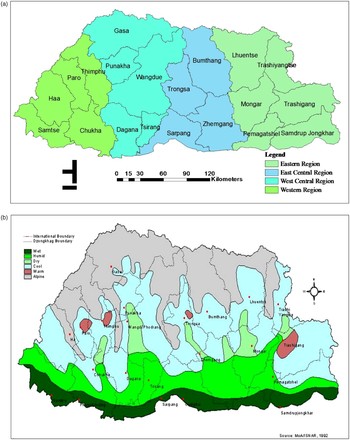
Bhutan has an area of 38 394 km2 (14 824 sq mi) with a population of 634 982 (RGoB, 2009). It has 20 districts, which are broadly divided into four developmental regions namely (Figure 1a): eastern region, east-central region, western region and west-central region.
(a) Twenty districts of Bhutan according to regions (Courtesy: Dorji, Reference Dorji2010a); (b) agro-ecological zones in Bhutan (MoA/ISNAR, 1992).

In addition to a rich flora and fauna that make Bhutan one of the ten global biodiversity hotspots, the country is also endowed with diverse domestic animal species including yaks, cattle, horses, sheep, goats, buffaloes, poultry and pigs. Domestic animals are found in almost all the six agro-ecological zones ranging from the subtropical to the alpine region (Figure 1b).
Bhutanese pigs have been an important contributor to human welfare in the past, and may possess characteristics that will be needed again to meet new or re-emerging needs. The loss of these genetic resources would be catastrophic to the livelihood of many poor rural communities. Therefore, it is urgent to draw up an inventory and understand the nation's pool of swine resources for promotion and sustainable utilization as envisaged in Bhutan 2020 vision (PCS, 1999).
Objectives
To document the socio-economic and cultural importance of pigs to the Bhutanese people, review current state of rural pig farming and its development initiatives, and assess the biodiversity and population trends of both improved and indigenous pigs. This paper will provide baseline information for future studies.
Importance of pigs in Bhutan
Bhutan has both indigenous and imported exotic breeds of pigs. The former are also called native or local to distinguish them from exotic breeds. The exotic breeds are frequently crossed with indigenous animals to generate composite breeds, commonly called “improved breeds” that are considered an upgraded form of the indigenous breed with a good blend of “superior quality” exotic germplasm. To be consistent with the terminology used within the country, both exotic and composite breeds are hereafter referred to as “improved breeds”.
Pigs are found throughout Bhutan, despite the strong Buddhist sentiment against rearing and slaughtering of pigs. The Southern Bhutanese, who are mainly Hindus, consist of multiple ethnicities with a caste system and pigs are reared by certain ethnic groups only (Rai, Limbu, Magar, Tamang, Sherpa, Tharu and Biswakarma). Unlike the Buddhist, there is little religious disapproval of raising and slaughtering of pigs among Hindus. Irrespective of ethnicities, pig raising has been economically beneficial, particularly to the rural poor and socially disadvantaged people (Timsina and Sherpa, Reference Timsina and Sherpa2005).
Bhutanese rear pigs for many purposes, including social, cultural and economic reasons. Traditionally, pig ownership and slaughtering conveyed status, wealth and informal power. In the early Bhutanese cashless society, pigs were a very important medium by which social significance was measured. Meals served with pork promoted group cohesion and identity, and facilitated civic and private celebrations. Even today, pork is one of the vital components of Bhutanese cuisines, be it during marriages, festivals or New Year celebrations. Penjor (2008) provides an account of the important roles of pigs during marriages in the lower Kheng of the Zhemgang district. In remote villages, people still carry pigs from one place to another either as a gift or in exchange for other commodities.
Pigs also serve as sacrificial animals, as votive offerings to local deities (Yul-Lha or Naep). Bonism and Shamanism (native religion of Tibet) rituals, which still prevail in many parts of Bhutan, require the sacrifice of pigs to the local deities for bountiful crops, to reduce the risk of natural calamities, to improve the health of an ailing person, and for peace, happiness and prosperity of the community. Such practices in the Bongo village of the Chukha district and in the Trashi Tokha village of Wangdue district have been documented by Wangchuk (Reference Wangchuk2005) and Dorji (Reference Dorji2004), respectively. Animal sacrifice provides a good source of protein for those involved in the rituals, which in some cases involve distribution of meat immediately after the sacrifice.
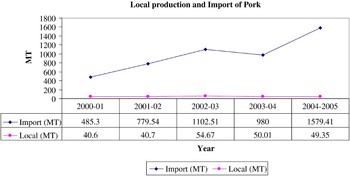
Consumption of pork is well imbedded in Bhutanese gastronomic tradition and continues to rise (DoL, 2007), despite increasing prices per kg of pork. The current cost of a kg of pork sold with bones intact is about Nu. 100 (~US$2.00). The consumption of pork is increasing every year (Figure 2) while domestic production remains static.
Trend in pork consumption.

Over the last five years, pork importation has increased significantly, more than threefold, in contrast to a negligible rise in domestic production. This averages Nu. 73.48 million (US$1.63 m) per year (DoL, 2007) contributing significantly to the trade deficit of the national economy.
Origin of indigenous pigs
It is not recorded when domestic pigs were introduced to Bhutan or who introduced them nor is there archaeological evidence. Linguistic evidence shows that there are not many words for pig in Bhutan despite several dialects. This suggests that pigs could have been introduced from one particular region and spread slowly towards other parts of the country relatively recently. Timsina and Sherpa (Reference Timsina and Sherpa2005) suggest that indigenous domestic and wild boar (Sus scrofa) could be considered to share a common genetic pool due to mating between village sows and wild boars. Feral pigs that are domestic pigs, which have escaped captivity, have not been reported in Bhutan.
A recent study of mitochondrial DNA sequences from 30 domestic and 3 wild pigs suggest three origins for Bhutanese pigs. (i) East Asia probably Tibet or China, (ii) Southeast Asia and (iii) East Indian wild boars (Tanaka et al., Reference Tanaka, Iwaki, Takizawa, Dorji, Tshering, Kurosawa, Maeda, Mannen, Nomura, Dang, Chhum-Phith, Bouahom, Yamamoto, Daing and Namikawa2008). The East Asian type was found to be distributed widely in Bhutan, whereas the Southeast Asian types were found only in the Mongar district. The native pigs in the southwest part of Bhutan were found to have experienced gene flow from East Indian wild boars. Because the sample size used in the study (Tanaka et al., Reference Tanaka, Iwaki, Takizawa, Dorji, Tshering, Kurosawa, Maeda, Mannen, Nomura, Dang, Chhum-Phith, Bouahom, Yamamoto, Daing and Namikawa2008) was small, further investigation is required to provide more comprehensive information on the origin of the indigenous pigs of Bhutan.
Rural pig farming in Bhutan
Pig farming in Bhutan is typically divided into two systems: the backyard pig farming seen in the villages and modern intensive farming seen in state operated farms. The village farming is normally characterized by small numbers of pigs reared by the subsistence farmers, either in a small confined pigsty constructed usually with locally available materials (stones, mud, wood, bamboo thatch) or pigs are tethered near the house or in a paddock. While farmers are required to enclose their pigs to comply with national health regulation, some still allow free-range scavenging for various reasons ranging from scarcity of feeds to the ease of management. More than 13percent of Bhutanese farmers rear pigs as free-range scavenging pigs (Timsina and Sherpa, Reference Timsina and Sherpa2005). Feeds consist of mainly brewery wastes, kitchen wastes (leftover foods, vegetable peels), bran (maize, millet and rice), wild weeds, nettle leaves, pumpkins, yams and taro. Oil cakes, flour and maize grain supplements are used to fatten pigs.
The indigenous pigs are hardy, resistant to many diseases and can adapt to harsh rural environment under low inputs (Timsina and Sherpa, Reference Timsina and Sherpa2005). Under scavenging, they have better mothering ability and increased survival of litters per farrowing than exotics (Timsina and Sherpa, Reference Timsina and Sherpa2005).
Exotic pigs and development programmes
Realizing the importance of pig farming in the livelihood of rural poor, the Royal Government of Bhutan (RGoB) initiated development programmes to improve pig production. Several exotic breeds of European origin have been introduced to the country since the early 1960s. The main objective was to generate lines of improved piglets or F1 (exotics vs local). The purebred progeny or F1 were hoped to have better production than pureline indigenous stock. The overall goal of the programme was to improve nutritional status of the rural population, increase income and alleviate poverty through increased meat and protein production.
The first exotic breed, Wessex Saddleback, was introduced to Bhutan during the First Five-year Plan (1961–1965) and reared in Samtse and Wangchutaba livestock breeding farm. Subsequently, Large White (Yorkshire) was introduced towards the end of the First Five-year Plan. This was followed by introduction of Landrace, which was imported from India. The focus on the white breeds aimed to exploit their relatively large litter size, higher growth rate and earlier sexual maturity than the indigenous pigs or most coloured exotic breeds.
The RGoB formulated another phase of the piggery development programme in 1981. Through a (United Nations Development Programme) UNDP/FAO (Food and Agricultural Organization)-funded project, 44 Duroc Jersey pigs were imported from the Philippines in 1981. With further assistance, Bhutan imported 30 head of Large Black from Australia in 1985, followed by 24 more Large White and Duroc Jersey from Bangkok, Thailand. These high productive breeds of pigs were reared in the government central farms at the National Pig Breeding Centre (NPBC), at Serbithang, and the Regional Pig and Poultry Breeding Centre (RPPBC) at Lingmithang (Mongar) and Gelephu. Various crosses were produced and the piglets were sold to the farmers at a government subsidized rate of Ngultrum 672.00 (~US$15.00) for a piglet weaned at 35–42 days.
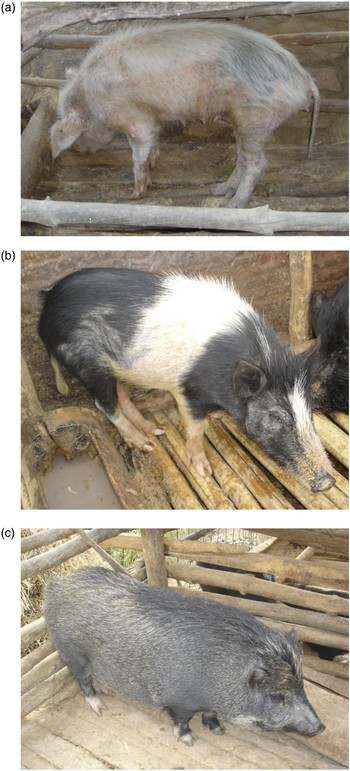
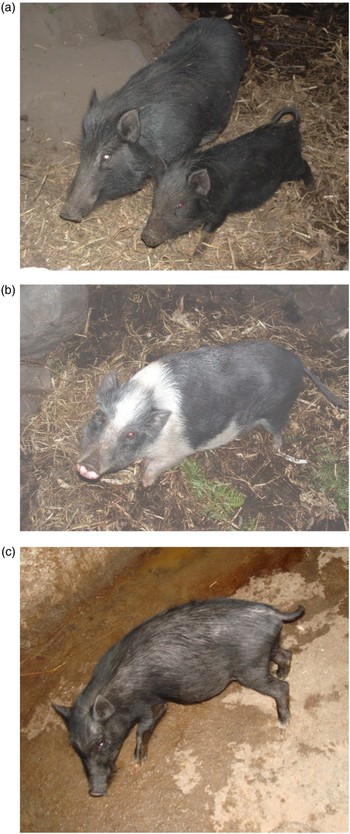
While there were reports of difficulty in management of exotic piglets at the village level, the major problem was the colour of the Large White and the Landrance pigs. Many white pigs suffered severe sunburn, with inflammation followed by scabbing and necrosis. The white parts of the body became reddened, oedematous and irritable, and the animals appeared to be in pain. The presence of reddening blistering and peeling of skin on the dorsal surface and flanks is an indication of exposure to sunlight and poor sanitation. In adults, exposure to such extreme environment would reduce fertility and prevent mating. Most white pigs with skin diseases had low production and some died in severe cases. Consequently, white pigs are unpopular among farmers in Bhutan. In practice, white pigs should be given good feed, shade, plenty of water and access to wallow. Figure 3a shows poor body conditioning and skin problems with government supplied white pig of Landrace origin. Hybrids (Figure 3b) thrive better than exotics whereas pure indigenous are the best suited under harsh rural environment.
Body conditioning of three different breeds of pigs reared in similar housing condition in Rinchengang village. Government supplied white pig of Landrace origin (a); hybrid of Saddleback origin (b); and pure indigenous with agouti coat (c).

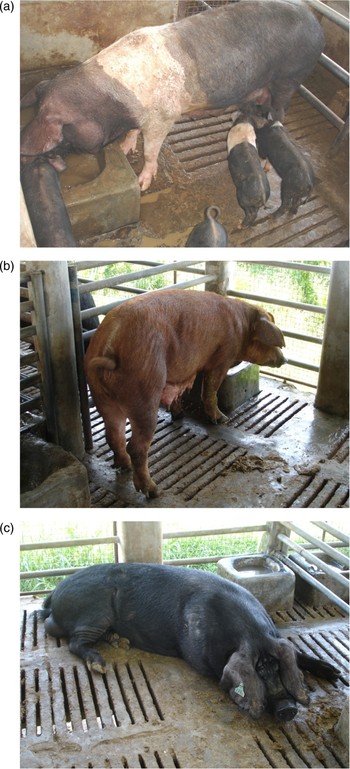
Considering these problems, the RGoB changed its approach by supplying coloured animals of the Large Black, Saddleback and Duroc breeds to the farmers. In 2000, a review was conducted on the status of this exotic pig germplasm in the country. It was found there were no proper records maintained on this pureline exotic germplasm in the country. Subsequently, coloured pureline breeds, namely Large Black, Saddleback and Duroc, were imported from the United Kingdom in 2003 with the assistance of FAO. Today, these pureline breeds (Figure 4) are carefully bred in the nucleus farm at Gelephu.
Saddleback (a) and Duroc (b) and Large Black (c) in Gelephu nucleus farm (Courtesy: Dorji, Reference Dorji2010b).

Biodiversity of pigs in Bhutan
At least four types of indigenous pigs (Dempha, Dromfak, Sofak and Jitu) have been reported in FAO's Domestic Animal Diversity Information System (DAD-IS) (FAO, 2010). However, caution must be taken as there are no evidences or adequate rational to this form of categorization. During the nationwide blood sampling of indigenous pigs for genetic study (Nidup et al., Reference Nidup, Silva, Joshi, Pem, Gongora and Moran2009, Reference Nidup, Silva, Joshi, Pem, Gongora and Moran2010), it was observed that Bhutanese indigenous pigs were generally non-descript. Their physical characteristics are described briefly based on distribution across four developmental regions in the country.
Eastern region pigs
Eastern Bhutan constitutes six districts namely Mongar, Lhuntse, Tashigang, Pemagatshel, Samdrup Jhongkhar and Tashiyangtse (Figure 1). Most of the pigs found in Eastern Bhutan (Figure 5) have long dense hair, whereas some have sparse hair, medium-sized body, bristles along the dorsal line, medium snout, medium-sized prick ears and curly to straight tail. Some of the indigenous pigs in Tashiyangtse are found to have white forehead and coat around their shoulders (Figure 5b).
Eastern region pigs: indigenous pigs in Ramjhar, Tashiyangtse (a, b); and indigenous grower in Uzorong, Tashigang (c).

East-central region pigs
The east-central region constitutes four districts, namely Sarpang, Zhemgang, Trongsa and Bumthang (Figure 1). Almost no pigs are present in Bumthang and very few pigs are found in Trongsa. Pigs from Bardo (Figure 6a) in the Zhemgang district have medium-sized body, sparse to medium hair density, medium-sized prick ears, straight snout, mature females have a sagging belly and most have a long straight tail.
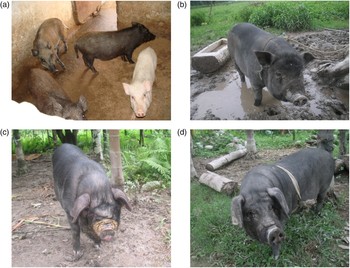
Most pigs in the Sarpang district (Figures 6c and d) are not indigenous but illegally imported across the Bhutan- Assam (India) border. These smuggled pigs are called “Machay Sunggur” after one of the tribes of the Indian state of Assam.
East-central region pigs: (a)indigenous pigs found in Bardo, Zhemgang. Machay madhuri pigs found in Trong, Zhemgang (b), Sarpang (c) and Dekiling, Sarpang (d).

Similarly, pigs found in Darla and Sampheling in the Chukha district are called “Madhuri”, which is another phenotypically similar pigs smuggled through Bhutan West Bengal (India) border. For simplicity, these similar looking smuggled pigs will be termed “Machay madhuri” in Bhutan. Machay madhuri are also becoming increasingly popular in other parts of the country particularly in west, west-central and east-central regions. Machay madhuri have similar phenotypic characteristics to Pakhribas and Kalo Dharane Sunggur of Nepal (Nidup et al., unpublished). Machay madhuri with shorter snouts look similar to Pakhribas and the longer snout to that of Kalo Dharane Sunggur. The most common characteristics of Machay madhuri are wrinkled and diamond-shaped face, large floppy ears and firm body.
Western region pigs
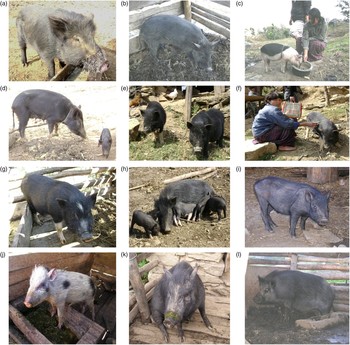
The western region constitutes five districts namely Chukha, Thimphu, Haa, Paro and Samtse (Figure 1). The most common characteristics of pigs (Figure 7) in this region are straight hair ranging from sparse to dense, short to medium with some cylindrical-shaped snout and most with short to medium-sized prick ears.
Pigs found in Western Bhutan. Pigs of Bongo (a, b, c, d) and Darla (e, f, g, h) both in the Chukha district; Dogar (i, j) and Naja (k) both in the Paro district; and Katsho in the Haa district (j).

There is not much difference between the pigs found in Chukha, Haa and Paro districts. Paro and Haa pigs had slender body length. Machay madhuri pigs were also found in Chukha and Samtse districts.
West-central region pigs
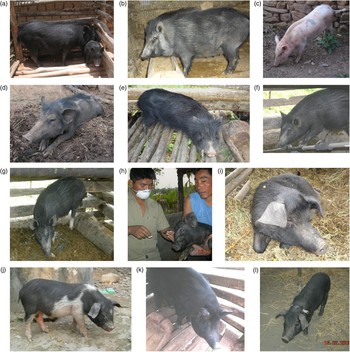
The five districts in the west-central region are Gasa, Punakha, Wangdue, Dagana and Tsirang (Figure 1). There are virtually no indigenous pigs in Gasa, only a few head of exotic pigs supplied from the central farm. Some differences between indigenous pigs in Rinchengang and Phagyul-Kazi in the Wangdue district were seen. Rinchengang pigs (Figures 8a and b) have bristles along the dorsal line, broad rectangular-shaped body with females having a slightly sagging belly, small-to-medium-sized prick ears, medium snout and dense hair. On the other hand, Phangyul-Kazi pigs (Figures 8c and d) have longer bodies bristles along the dorsal line, medium to slightly large ears, most with prick ears but some with slightly droopy ear, a somewhat cylindrical snout and long straight tail.
West-central pigs. Indigenous pigs found in Rinchengang (a, b) and Phayul-kazi in the Wangdue district; Drujegang (e) and Lhamoizingkha (f, g, h) in the Dagana district; crossbreds (i, j, k, l) found in various parts of west-central region.

The Dagana district has diverse pigs. For instance, pigs from Lhamoizingkha (Figures 8f, g and h) have sparse hair, prominent prick ears and pointed head, whereas pigs from Drujegang (Figure 8e) are slightly smaller with dense hair over their entire bodies. Some live piglets from Drujegang are usually sold at a weekly open market in Tsirang. For this reason, there are similarities between Drujegang and Tsirang pigs.
Characteristics of indigenous pigs
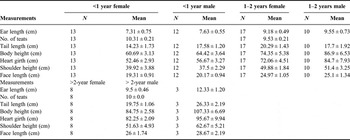
The official nationwide survey on the characterization of indigenous pigs (Timsina and Sherpa, 2005) concluded that there was only one type of indigenous pigs in Bhutan. It was based on the phenotypic similarities of indigenous pigs across the country. The phenotypic data that were merged to obtain a national average shows indigenous pigs attain sexual maturity at nine months of age. The litter size at birth and weaning is 6.0 and 5.0, respectively, with 2.0 farrowing index. In general, males have longer snouts and ears than their female counterparts (Table 1).
Current population of pigs across all 20 districts.

Body measurements of indigenous pigs according to age and sex groups.

Source: Generated from the original data (national average) obtained from Timsina and Sherpa (Reference Timsina and Sherpa2005).
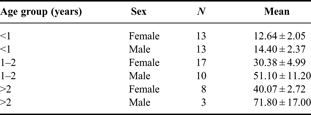
The live weight of indigenous pigs was estimated based on body length and heart girth measurements. The males are bigger and heavier than females. The live weight of indigenous pigs in various age groups is given in Table 2.
Live weight of indigenous pigs according to age and sex.
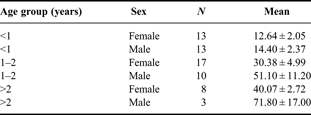
Calculated based on body length and heart girth measurement (Table 1).
However, caution should be taken with the above findings because of the method used for compilation and analysis of the data. In consistent geographical pattern of morphological variation does not imply lack of variation. For instance, European sheep breeds are readily distinguishable phenotypically but they do not possess that much genetic variation (Peter et al., Reference Peter, Bruford, Perez, Dalamitra, Hewitt and Erhardt2007). On the other hand, sheep breeds in the Middle-East are all of the “generic type” phenotypically and not easy to tell apart, but they display much more genetic variation than European breeds (Peter et al., Reference Peter, Bruford, Perez, Dalamitra, Hewitt and Erhardt2007). Similarly, Bhutanese indigenous pigs may retain high levels of genetic variation and potentially variation in productive ability regardless of the fact that there is no obvious portioning into breeds. Therefore, a nationwide survey to record on-farm production and phenotypic characterization of indigenous pigs across the country would be required once again.
On-station performance
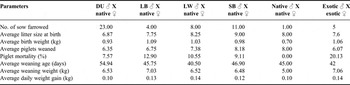
A breeding trial was conducted at NPBC (MoA, 1999) using exotics boars and indigenous female lines (Table 3). The performance of indigenous sows (mated with exotic boars) was better than exotics in terms of average litter size and piglets weaned per sow. The average daily weight gains of the piglets were more similar. However, piglet and maternal mortality was caused by a high incidence of dystocia since large exotic boars were mated with smaller indigenous sows. On the other hand, there was no piglet mortality seen with pureline indigenous (Table 3) whereas high percentage of piglet mortality (22 percent, Table 3) was observed with pureline exotic breed. The trial suggests that the overall performance of indigenous pigs under good management (feeding, housing and sanitation) is reasonably comparable with the exotic breeds. In spite of this, the RGoB did not make an attempt to improve indigenous pigs. Instead, it constantly pursued its policy of importation and introduction of exotic livestock into the country.
Performance evaluation of indigenous sows (mated with various exotic boars), pureline indigenous and exotic breeds at NPBC, Serbithang (NPBC, unpublished data)

Note: DU = Duroc; LB = Large Black; LW = Large White; SB = Saddleback.
Population of pigs in Bhutan
Overall population
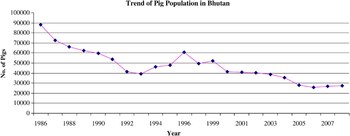
The populations of exotic and composite breeds have been merged as “improved breeds”. The overall pig population recorded in 1986 was 87 987 and this reduced to 27 501 in 2008.
The western part of the country has the highest number of pigs followed by west-central and eastern regions (Table 4). Today, Chukha district has the highest overall pig population whereas Gasa has recorded the least number of pigs (Figure 9). As expected, east-central region, particularly Bumthang and Trongsa districts, recorded the least number of pigs because of increasing Buddhist sentiments against raising and slaughtering of pigs.

Bumthang, which is the most religious centre, was the first district to prohibit pig farming. Trongsa, a historically important district, which shares its border with Bumthang, is influenced by the largest monk body in the country. Similarly, pig farming is becoming increasingly unpopular in the eastern region (Table 4) due to the influence of religious communities. However, there is no sign of reduction of pork consumption in these regions.
Looking at the national trend, the pig population in the country declined sharply from 1986 to 1995 (Figure 10) with slight increase between 1993 and 1996. After 1996, the population declined steadily but seems to have plateaued since 2006.
Pig population trend in Bhutan.

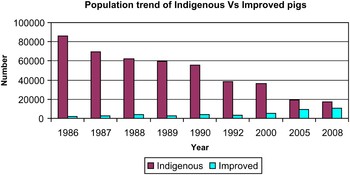
The possible reasons for this decrease in population are increased influence of religion on animal slaughter and growing social stigma against pig farming. Other reasons include shortage of feeds and increased purchasing power of the people coupled with availability of freshly imported pork. While overall pig population is decreasing, the population of improved breeds is slowly increasing (Figure 11).
Population trend of indigenous and improved pig breeds.

Increasing improved pig population
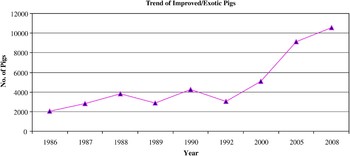
In spite of a declining overall pig population in the country, improved breeds of pigs are slowly increasing in numbers (Figures 11 and 12). Today, improved breeds constitute about 38percent of the total pig population with 5 383 males and 5 159 females when compared with a total of 2 055 heads in 1986. There was gradual increase in the population from 1986 to 1992 which picked up between 1992 and 2008 (Figure 12).
Increasing trend of improved breeds of pigs in Bhutan.

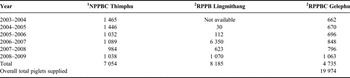
Records from the three government breeding farms indicate distribution of approximately 20 000 improved piglets in the last six years alone (Table 5).
Record of piglets supply from government breeding farms (unpublished data)

1National Pig Breeding Centre.
2Regional Pig and Poultry Breeding Centre.
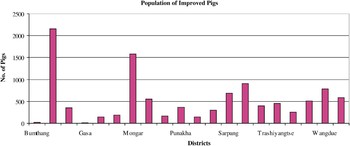
Today, Chukha has the highest number of improved pigs followed by Mongar, Thimpu, Wangdue and Sarpang (Figure 13). The high record of pig population in Mongar, Sarpang and Thimphu is due to the presence of government farms where exotic or improved breeds are reared.
Distribution of improved pigs across 20 districts in the country.

Despite of the intensity of introduction of exotic breeds since 1964, the current number of improved pigs in Bhutan is relatively low but increasing steadily. There are several factors to this slow pace of growth. First, because of the prolific growth rate of exotic pigs, the government supplied piglets were often fattened and slaughtered instead of being used for crossbreeding. Exotic breeds can attain market weight of 100 kg in less than a year. This fetches up to Nu. 10 000 (=~US$220.00), which is more than average annual rural income (Nu. 7 488 = ~US$166.40) of the Bhutanese farmers. Second, increasing incidence of “dystocia” or farrowing difficulty has been observed when crossbreeding exotic boars with indigenous sows and gilts leading to high piglet and maternal mortality. Finally, exotic breeds require good housing, sanitation and relatively good feed, and are more vulnerable to diseases when compared with local pigs. The mortality rate of exotic breeds is higher than indigenous pigs. In spite of these bottlenecks and slow population growth, the increase in numbers of improved pigs is seen as a threat to the survival of indigenous pigs.
Alarming loss of indigenous pig population
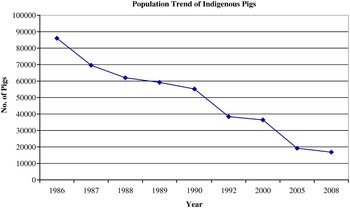
The status of indigenous pigs is alarming. More than 85 932 indigenous pigs were recorded in 1985 and this reduced to 16 959 in 2008 comprising 9 863 males and 7 096 females (Figures 14 and 16); a fivefold loss in the last two decades alone (Figure 14).
Population trend of indigenous pigs of Bhutan.

There were similar observations from the farmers in the field. In a mini survey (n = 55) conducted by Nidup (unpublished) in Haa, Wangdue, Samtse and Tashiyangtse districts, more than 56 percent of the farmers felt that the population of indigenous pigs is decreasing.
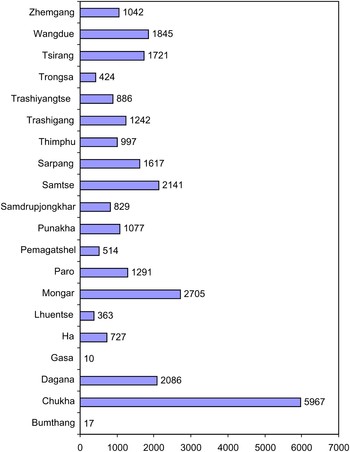
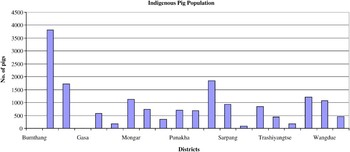
Today, of 20 districts in Bhutan, only 7 have equivalent to or more than 1 000 indigenous pigs. Chukha district has the highest number of indigenous pigs followed by Samtse, Dagana, Tsirang, Wangdue and Mongar. All other districts have less than 1 000 animals (Figure 15). Indigenous pigs in the Bumthang district are completely extinct.
Distribution of indigenous pigs in 20 districts of Bhutan.

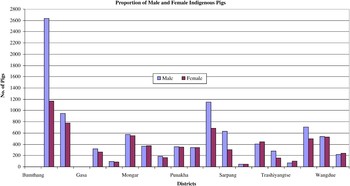
There are more males than female (Figure 16) in almost all the districts in Bhutan because male pigs (Pho pha) are usually used as sacrificial animals. In addition, most males are castrated, fattened and slaughtered for various purposes. Since there is limited information on the number of breeding males, it is difficult to determine the risk status of indigenous pigs in Bhutan.
Proportion of male and female indigenous pigs across 20 districts of Bhutan.

The rapid decline of indigenous pigs coupled with steady increase in the number of exotic pigs (Figures 11, 12 and 14) is a clear evidence of marginalization of indigenous population by the exotics. Such widespread practice that threatens the indigenous populations, particularly the pigs, is also evident in Sri Lanka and Nepal (Nidup and Moran, Reference Nidup and Moran2010, Subalini et al., Reference Subalini, Silva and Demetawewa2010). Considering the current population trend (Figure 14), indigenous pigs in Bhutan are likely to become extinct within the next decade, unless a serious effort is made in conservation, promotion and sustainable utilization of these important genetic resources.
Conclusion and recommendation
Pigs have socio-economic and cultural importance to many Bhutanese people, particularly the rural poor communities. Domestic pork production has remained constant, whereas imports have increased several folds contributing to a large trade deficit for the country. Government initiatives to improve pig farming are mainly focused on introduction of exotic breeds to crossbreed with indigenous pigs. Despite several bottlenecks and slow pace of population growth rate of exotic pigs, their presence in the country is now a threat to the survival of indigenous pigs. This is a clear evidence of growing marginalization of the indigenous pigs mainly driven by the introduction of exotic breeds. In addition to this, religious disapproval of pig breeding and slaughter, increasing purchasing power of the people and readily available imported pork are factors accelerating the reduction in the population of indigenous pigs in the country. Bhutan has lost more than 60 486 heads of pigs since 1986.
Bhutan can draw a lesson from a bird flu outbreak in the bordering Indian states, during which import of poultry and related products from India and other countries were banned (Nidup and Tshering, Reference Nidup and Tshering2007). The cost of poultry-related products increased dramatically due to limited production within the country. As a result, many people including middle-income earning could not afford to buy eggs (Nidup, Reference Nidup2008), let alone chicken meat which were virtually unobtainable. Similarly, a ban on live pigs and pork imports because of swine flu or other related outbreak of diseases in the neighbouring countries, and coupled with already depleted indigenous pig genetic resources, would endanger the food security of the country. Therefore, better understanding of the diversity of indigenous pig resources, their value and the environment in which they are reared is crucial so that government and other stakeholders will be able to fully appreciate this biodiversity and make strategic decision for its conservation and sustainable use.
In an effort to implement the Global Plan of Action (FAO, 2007a, 2007b), indigenous pigs should be protected, promoted and utilized in a sustainable manner. They have been genotyped using FAO and International Society for Animal Genetics recommended microsatellite markers (Nidup et al., Reference Nidup, Silva, Joshi, Pem, Gongora and Moran2009, Reference Nidup, Silva, Joshi, Pem, Gongora and Moran2010) and their mitochondrial DNA sequences are currently being analysed. These will provide baseline for both in situ and ex situ conservation. The in situ conservation includes protected areas or conservation farms, and payment of other support (e.g. subsidy) for those who keep rare breeds within their production environment. Cryopreservation or ex situ conservation of genetic material can provide a valuable complement to in situ approaches.
Efforts should be made to coordinate conservation activities, such as the participation of local communities, government institutions and NGOs. For instance, in situ conservation through community-based approach can be one of the viable options. Such strategy has been proven successful in maintaining indigenous Pelong pigs and Creole breed in rural Mexico (Pattison, Reference Pattison2002; Pattison et al., Reference Pattison, Drucker and Anderson2007). The National Biodiversity Centre (NBC) of the Ministry of Agriculture (MoA) has national mandate on the conservation of biological resources in the country. They should work together with the Department of Livestock (DoL), MoA, to establish conservation and nucleus farm so as to combat the dramatic decline of population of indigenous pigs in the country. The current ex situ conservation or cryopreservation facility at NBC needs to be strengthened with appropriate facilities including human resources. In addition, the Department of Livestock should start the recording number of breeding males and females in the Annual Livestock Census record so that risk status of indigenous pigs could be easily determined.
On the other hand, the livestock research institution should make an attempt to develop a synthetic breed with better litter size, growth rate, resistance to diseases and ability to cope with the harsh rural environment. While the Pakhribas breed in Nepal (Nidup et al., unpublished) is a good example, synthetic breeds containing a reasonable level of indigenous genes could provide viable source of parent stocks for meeting the consumption requirements of Bhutan, although this would do little to conserve biodiversity.
Finally, the role of local and indigenous communities and farmers as custodians of much of the country's agricultural biodiversity should be cherished and strengthened further. It must be noted that preservation of AnGR is linked with the promotion of historical, economical, social and cultural importance, and they are important components of Bhutan's development philosophy of Gross National Happiness.
Acknowledgements
We thank the Department of Livestock, Ministry of Agriculture, Royal Government of Bhutan, for providing valuable information on the importation of exotic pig breeds into the country. We also thank livestock staff members of Haa, Tashiyangtse and Samtse districts, and the College of the Natural Resources, Royal University of Bhutan, for helping to conduct a mini survey on the physical characterization of indigenous pigs.