


INTRODUCTION
Why do political actors choose to constrain themselves by enacting new reforms that increase their accountability and limit their discretion? Successful institutional reforms generally require political actors to subject themselves to some form of immediate costs, in anticipation of long-term, collective, or uncertain benefits. A broad literature has sought to explain the circumstances under which political actors will commit to such reforms, particularly in contexts where corruption and clientelistic politics remain widespread (e.g., Geddes Reference Geddes1994; Grzymała-Busse Reference Grzymała-Busse2006; Schneider and Heredia Reference Schneider and Heredia2003).
We seek to contribute to this debate by focusing on the specific area of transparency reforms, which have proliferated around the world over the last several decades. Transparency reforms have been hailed for their ability to contribute to government accountability and democratic quality by enabling political principals to better monitor their agents, and citizens to better participate in the political process (Florini Reference Florini2007; Stiglitz Reference Stiglitz and Gibney2003; Transparency International 2003).Yet for precisely these reasons, most politicians and officials should be expected to oppose and delay the enactment of such measures.
We argue that political competition is a major driver of transparency reforms. When competitive political environments create high uncertainty over future political control, such reforms can serve as insurance mechanisms enabling ruling groups to protect their access to government information, and to preserve means of monitoring future incumbents, in case they lose power.
In this article, we seek to provide new empirical evidence for this argument by testing it against competing hypotheses using a novel subnational dataset on the timing of adoption of access to information (ATI) laws across Mexican states between 2001 and 2007. Examining subnational variation has the benefits of holding constant any potentially confounding factors that vary across countries, allowing for stronger conclusions than cross-national studies.
Additionally, Mexico is an important case in which to study the politics of reform. The 2000 presidential victory of the Partido Acción Nacional (PAN) over the long-ruling Partido Revolucionario Institucional (PRI) has been heralded as marking a democratic transition, but corruption and patronage politics remain key features of the political system at all levels of government, and under all three major political parties.Footnote 1
Good governance advocates hailed Mexico’s 2002 Federal Law on Transparency and Access to Public Government Information as a milestone in the country’s democratic reform.Footnote 2 Similar to many other countries’ access to information laws, this law aimed to curb corruption and increase accountability by enabling citizens, journalists, civil society, and opposition politicians to access information about spending, procurement, policymaking, and other types of information from governments and public agencies (Bookman and Guerrero Amparán Reference Bookman and Amparán2009).
Indeed, Mexico’s federal ATI law is among the broadest and strongest in the world (Mendel Reference Mendel2008). However, the 2002 law applied only to agencies and information at the federal level, and required each of Mexico’s 31 states, and the Federal District, to pass their own legislation covering access to information of state-level governments and entities under their jurisdiction. The speed with which each state carried out this directive varied widely. Two states even passed their laws several months prior to final passage of the federal law, while other states delayed until as late as 2007. While this time range may be considered relatively short, it still left citizens in laggard states without crucial means of accountability during the important post-transition period. Further, explaining this variation provides important grounds for testing broader theories of institutional reform.
We use an event history approach to model the time to passage of ATI laws across Mexican states, in order to evaluate the role of political competition, controlling for diffusion processes, the strength of civil society, the extent of corruption, and other state-level factors. To preview our results, we find that access to information laws were passed sooner where state-level party competition was greater, and that this finding is not simply attributable to which party was in power.Footnote 3
We also are able to make use of the fine-grained nature of our data—at the level of state-days rather than state-months or state-years—to test between specific mechanisms by which political competition can drive reform. A finding that more competitive states passed laws sooner could imply either of two different theoretical mechanisms. Either incumbent parties see reform as a means of insurance in case they do lose office, or as a credible commitment ahead of elections in order to avoid losing office. We are able to differentiate between these two mechanisms by focusing on so-called “lame duck” periods, after elections have been held but before newly elected politicians have taken office. The disproportionately large number of laws passed during these periods is consistent with an insurance mechanism, but entirely inconsistent with a re-election mechanism. Thus we find the greatest support for the role of insurance, by which incumbent political parties who face substantial uncertainty over future political control seek to ensure their future access to government information and tools to monitor future incumbents. By constraining themselves, political parties can constrain their opponents and potential successors in power. Where state-level political dynamics were more competitive, political parties thus saw greater potential benefits to ATI passage which could outweigh the costs in terms of increased exposure and reduced discretion. However, in less competitive states, dominant political parties (whether PRI, PAN, or PRD) expected to remain in power and so delayed ATI passage for much longer.Footnote 4
These results contribute to a broad literature on the circumstances under which political actors undertake reforms that impose costs and constraints on themselves. Many scholars have argued that political competition can lead to such self-binding, including civil service reforms (Geddes Reference Geddes1994; Ting et al. Reference Ting, Snyder, Hirano and Folke2012), independent judiciaries (Ginsburg Reference Ginsburg2003; Landes and Posner Reference Landes and Richard A1975; Ramseyer Reference Ramseyer1994), fiscal transparency (Alt, Lassen, and Rose Reference Alt, Lassen and Rose2006), and oversight institutions like national accounting offices and anticorruption laws (Grzymała-Busse Reference Grzymała-Busse2006). Our study of the passage of state-level access to information laws in Mexico contributes not just a new case of such dynamics, but one in which the subnational units of analysis and fine-grained data on timing allow for stronger conclusions and more nuanced understanding of the mechanisms at work.
DEMOCRATIC TRANSITION AND ACCESS TO INFORMATION IN MEXICO
Although many observers date Mexico’s democratic transition to the 2000 presidential election, scholars of Mexican political development trace its roots back to the late 1970s (see Cleary Reference Cleary2010; Rodríguez and Ward Reference Rodríguez and Ward1995). The gradual development of electoral competitiveness and political autonomy in subnational units of government took place largely hand-in-hand. Under the PRI, despite a de jure federal system which spelled out a three-tiered system of government, Mexican states had little de facto independence from the national government. The PRI centralized decision-making authority with the institution of the presidency, and geographically concentrated power in Mexico City (Ward and Rodriguez Reference Ward and Rodriguez1999). Governors replicated the power of the presidency on the state level, rendering state legislatures irrelevant (Cornelius Reference Cornelius, Cornelius, Eisenstadt and Hindley1999).
Importantly, it was the very de jure decentralization—largely ignored in practice by the PRI—that offered the testing ground for other parties to begin to compete. Opposition parties specifically pursued a bottom-up strategy because they saw a greater chance of winning elections at the subnational level, given the uneven geographic distribution of their support and the PRI viewing the stakes of losing such races as much lower (Mizrahi Reference Mizrahi2003; Shirk Reference Shirk2005). The PAN won its first governorship in 1989 in Baja California, having already won a variety of municipal and local elections under its strategy of bottom-up contestation (Shirk Reference Shirk2000).Footnote 5
In the 1990s, with changes to the constitution in 1995 (under Article 116) as well as earlier changes to the electoral code, de facto independence of Mexican states (re-)emerged (Merchant and Rich Reference Merchant and Rich2003). These legislative changes provided for more competitiveness on the state level, particularly in Mexico’s unicameral state legislatures. Beer (Reference Beer2001, Reference Beer2003) contends that this competition led to more effective government, allowing for the institutionalization of democratic practices within state legislatures.Footnote 6 Careaga and Weingast (Reference Careaga, Weingast and Rodrik2003) and Hecock (Reference Hecock2006) both argue that more competitive subnational governments led to better government performance and public goods provision.
Levels of electoral competition have varied significantly across Mexican states (Beer Reference Beer2001). Indeed, Beer (Reference Beer2003, p. 5) writes that “Mexican states evince substantial variation in levels of electoral competition across states and through time while many structural and cultural variables are held constant.” As a result, the variation across Mexican states provides a good test case in which to study the politics of institutional reform. Cross-national research has been criticized for its inability to take into account unobserved heterogeneity between countries, often due to deep-rooted historical, cultural, or institutional differences. In part to deal with such criticisms, scholars of institutional design and change have increasingly turned to subnational political units as grounds to test mechanisms and relationships they have examined in cross-national analysis.Footnote 7 Analysis of subnational units such as federal states provide fertile grounds for testing cross-national hypotheses because of the ability to make more controlled comparisons and more meaningfully code data (Snyder Reference Snyder2001).
While the right to state information was included in Mexico’s 1977 constitutional reforms, and opposition PAN legislators had proposed a law in 1997, effective access to information was not possible during the decades of PRI control. When the PAN’s Vicente Fox was elected to the presidency in 2000, however, he promised in his campaign to present an ATI law to the Congress during the first year of his term (Pinto Reference Pinto2009).
The draft law that was leaked to the public in 2001, however, was criticized by many for the limited scope of information covered and the weak enforcement provisions. In response to this, an advocacy coalition formed, made up of civil society, journalists, and academics. Known as the “Grupo Oaxaca,” the coalition held conferences and workshops, kept the issue in the news, and, with assistance of international experts, drafted their own stronger version of the law (Michener Reference Michener2011a). Grupo Oaxaca convinced legislators from the PRD and ultimately from the newly-in-opposition PRI to support them, while the PAN was ironically the strongest opponent of their proposal (Pinto Reference Pinto2009). However, the sustained lobbying and media pressure by advocates ultimately succeeded, and the version of the law which was passed by the Congress and signed into law on June 10, 2002 was only slightly weaker than the Grupo Oaxaca proposal (Michener Reference Michener2011a ).Footnote 8 Indeed, the law was hailed as a major achievement by the Fox presidency, and as a model for other countries in Latin America and around the world (Mendel Reference Mendel2008; Michener Reference Michener2011a).
While implementation of the federal law faced many challenges, it has been broadly successful. Over 350,000 information requests were filed between 2003 and 2008, by requesters ranging from individual citizens to investigative journalists to businesspeople (Bookman and Guerrero Amparán Reference Bookman and Amparán2009). Research has found the law to have beneficial effects in areas ranging from more accountability in environmental policy (Baver Reference Baver, Laboy-Nieves, Schaffner, Abdelhadi and Goosen2008) to increased ability to monitor corruption (Benavides Reference Benavides2006). Activists have used ATI requests to uncover information in key areas such as maternal mortality (Díaz Echeverría Reference Díaz Echeverría, Fox, Haight, Hofbauer and Sánchez2007). As a respondent in an interview of public administration professors in Mexico stated, “This law is a step forward in the process to make our institutions more accountable and our citizens more participative” (quoted in Benavides Reference Benavides2006, p.475).
Access to information requests have also been used by journalists to expose corruption, both in Mexican and foreign media. For example, the Eme-Equis journalist Fátima Monterrosa (Reference Monterrosa2008) filed numerous information requests with the Office of the President and other agencies in carrying out her 2008 investigation of the Estado Mayor Presidencial—the Presidential Guard—for misuse of funds. The Pulitzer Prize-winning New York Times investigation into Wal-Mart’s use of bribery in Mexico was also carried out in part through the use of information requests.Footnote 9 Alejandra Xanic von Bertrab’s 18-month investigation involved hundreds of accesses to information requests filed with government offices. Indeed, von Bertrab said “I was shocked at how much they respected that law,” and “it was a great joy as a Mexican to prove how well the transparency law works.”Footnote 10
However, while the federal ATI law applied not only to federal agencies and the presidency but also to the legislative and judicial branches of government, it did not apply to Mexico’s 31 states, the federal district of Mexico City, or any entities under their jurisdiction. Instead, it mandated that states pass their own laws, which would have to be accomplished separately by each state’s legislature and governor. Because many public services and functions, in areas such as health, education and social infrastructure, had been devolved to state and local governments as a result of reforms in the 1980s and 1990s (Moreno Reference Moreno2005),Footnote 11 these state-level laws would be of great importance to citizens seeking information about issues mattering for their daily lives. Indeed, between 2003 and 2010 (the years for which data was available), government expenditure at the state level in Mexico accounted on average for 36.8 percent of total government expenditures.Footnote 12 Given this considerable share, state-level activities would represent a major gap in Mexico’s transparency regime if not covered by state-level laws.
In 2003, before most states had passed state-level ATI laws, Doyle (Reference Doyle2003, 64), wrote about the continuing difficulties in obtaining access to information from local levels of government:
The average citizen in Mexico has little access to information about even the most fundamental aspects of his or her life. The street in front of one’s building has been ripped up by municipal workers, who have since disappeared: When might one expect them to return to fix it? A couple’s first child is reaching school age: Can they see government statistics rating the local public schools? Funds were earmarked for a water treatment system three years ago, but there is still no water treatment system: What happened to the money? To these and countless other questions one might be tempted to ask, there is an infuriating response that every Mexican has heard a thousand times: “No sabría decirle” (“I wouldn’t know what to tell you”).
Similar to the federal ATI law, while Mexico’s state-level ATI laws face many challenges of implementation, they have for the most part not been mere “window-dressing” once passed. Indeed, the large numbers of information requests made using them speak to their importance. The number of state-level requests across all states rose from 44,075 in 2006 to 81,587 in 2007, 138,615 in 2008, and 219,941 in 2009 (López-Ayllón Reference López-Ayllón2010). In fact, in 2009 almost as many requests were filed with state governments as with the federal government, which received 225,835 requests in that year. Figure 1 in the Online Appendix shows the growth in numbers of requests from 2005 to 2009 for states with available data, based on data from López-Ayllón (Reference López-Ayllón2010). And while implementation of and compliance with these laws has tended to vary in practice, they function relatively well in most states. A 2010 study submitted 1,810 requests to a variety of agencies across all states, recording data on both the time frame and quality of responses. The average response time across all states was only 13.45 days, and in only two states was the average response time greater than 20 days. Further, in all but a few states the study concluded that the average quality of responses offered sufficient detail to be useful to citizens (López-Ayllón Reference López-Ayllón2010).
Legislative Partisanship and the Timing of ATI Law Passage

There is also variation in the design of state-level ATI laws, and most laws have been strengthened one or more times after being passed. State laws, as originally adopted, varied in the the range of sujeto obligados (obliged state-level agencies) under their purview, whether or not they created independent agencies to handle appeals and oversight, the structure and powers of those organizations, the procedures for making requests and the deadlines for officials to respond to requests and appeals (Merino Reference Merino2006).
However, some state laws actually went further than the national law, covering political parties and private organizations receiving public funding among the subject organizations. Variation in design persists to this day, with many state laws still failing to meet international standards (Terrazas Tapia Reference Terrazas Tapia2014). However, there is evidence that legal design may not be the most important factor in shaping the effectiveness of ATI laws in practice. López-Ayllón (Reference López-Ayllón2010) found no clear correlation between the strength of state ATI laws on paper with their performance in practice, concluding that “having solid laws is no guarantee of positive results in websites and citizen requests” (p. 22). This mirrors the cross-national context, whereby many laws that adhere closely to international standards on paper perform poorly in practice, while many other laws function relatively well despite shortcomings in their legal design (Michener Reference Michener2011a; Neuman and Calland Reference Neuman, Calland and Florini2007).
Where Mexico’s state-level ATI laws have been reformed at later points after initial passage, they have generally been strengthened rather than weakened, with many subsequent changes in fact extending the range of sujeto obligados and the powers of independent oversight agencies. In particular, a constitutional reform in 2007 set clearer standards for legal design, and many states’ laws were reformed to meet these new standards (Bookman and Guerrero Amparán Reference Bookman and Amparán2009). For example, many states initially lacked independent appeals and oversight agencies modeled after the federal Instituto Federal de Acceso a la Información, but created such agencies in order to meet the new standards (Bogado et al. Reference Bogado, Martinez-Morales, Noll and Bell2007).
Since the 2007 reform was a major milestone in strengthening access to information at the state level in Mexico, it is important to establish that state-level ATI laws in Mexico could still serve as tools to obtain information and monitor government officials even before the 2007 constitutional reform.Footnote 13 An expectation on the part of political actors that these laws could potentially “matter” in practice is crucial to our theory that those actors weighed the expected costs and benefits of passage. If state-level ATI laws could be expected to be mere “window dressing” after passage, no such calculations would be necessary.
Importantly, large numbers of requests were made even before the reforms, and the majority of requests received positive responses. According to data compiled by López-Ayllón (Reference López-Ayllón2010) from the states where laws were already passed by 2005 or 2006 and where data were available, individuals received the information they requested in 74.8 percent of instances in 2005 and 72.9 percent of instances in 2006. This falls in the same range as responses to requests at the federal level, where in 2005, 73 percent of requesters received information in some form (Fox and Haight Reference Fox, Haight, Fox, Haight, Hofbauer and Sánchez2007, p. 43). At the state level, individuals also received responses in, on average, 7.4 days in 2005 and 8.7 days in 2006. The growth in numbers of requests in each state, illustrated in Figure 1 in the Online Appendix, shows that while in some states sharp increases in requests took place after 2007, in many other states the growth followed a smoother trend over time.
One example of the uses of state-level ATI laws to hold officials to account comes from Coahuila in 2005. A civil society group used a combination of local-, state-, and federal-level information requests to show that the municipal water company in Saltillo had illegally overcharged over one hundred users, resulting in refunds for the individuals and a 1.6 million peso fine for the company.Footnote 14 More recently, state-level ATI laws have been used by civil society organizations to benchmark and compare the quality and transparency of government across states on issues like discrepancies in police officer salaries and benefits (Ruelas Serna and Dupuy Reference Ruelas Serna and Dupuy2013), and the use (and misuse) of official advertising budgets by elected officials (Sánchez Reference Sánchez2013).
While variation in the design, implementation, and effectiveness of state-level ATI laws in Mexico clearly exists, these are not the main focus of the present study.Footnote 15 The initial passage of these laws is our primary focus, representing a puzzling decision by political actors to create new constraints, risks, and costs which they will face in the future. While some ATI laws are stronger than others, Michener (Reference Michener2011a, p. 149) argues that “‘minimally effective’ is perhaps a more apt descriptor of a strong disclosure law [than ‘strong’ or ‘weak’], such is the universal resistance of authorities to surrendering sensitive information.” Even minimally effective laws offer the potential to hold political actors to account, and can empower journalists, civil society, and individual citizens. The remainder of this study thus focuses on explaining the initial passage of Mexican state-level ATI laws.
Variation in the timing of passage of state-level ATI laws is of clear real-world importance to citizens and organizations throughout Mexico, as well as offering an opportunity to test broader arguments about the drivers of institutional reform. In the time period between passage of the first law in 2001 and the last in 2007, citizens, journalists, civil society groups, and opposition politicians in “laggard” states did not have the same capacities to monitor and hold to account their political agents as did those in “leader” states (Morris Reference Morris2009). Indeed, this time period covered a crucial phase in Mexico’s democratic transition.
While two states, Jalisco and Sinaloa, had actually passed ATI laws while the federal law was still being drafted (see Guerrero Gutiérrez and Ramírez de Alba Leal Reference Guerrero Gutiérrez, Alba Leal and López-Ayllón2006), many other states took years to pass their own equivalents, delayed by resistance and opposition from state politicians. The last state to complete passage of its ATI law, Tabasco, did not do so until February 2007, just over five years after the first state law was passed in Jalisco.Footnote 16 Table 1 lists each state in order of ATI law passage, with the dates that each law was approved by the state legislature and published by the governor’s office.
Dates of Passage for Each State’s Access to Information Law

Note: Dates of legislative approval preceded dates of publication by governors’ offices by anywhere from one day to several months.
This variation in the timing of passage across Mexico’s states cannot simply be explained as a function of entrenched incumbent PRI parties refusing to relinquish their monopoly on state information and newly empowered PAN or PRD parties opening up the state to new transparency. In different states at different times, members of each party served as both advocates and opponents of ATI laws. Indeed, while the first state law in Jalisco was passed by a PAN legislature and governor, the second law was passed in Sinaloa by a PRI legislature and governor. Even in Jalisco, it was PAN members of the legislature who drove passage of the law, while the PAN governor, Francisco Ramírez Acuña, did not support the law and sought to delay and weaken it, though he ultimately did not veto the law’s passage (González Reference González2007, p. 73).
Figure 1 provides one way to examine the relationship between partisanship and the timing of passage. Each horizontal bar reflects the party with a plurality of legislative seats in each state, arranged in the order in which their legislatures passed ATI laws. In order to keep the figure as simple as possible, the shading for each party—light gray for the PRI, dark gray for the PAN, and medium gray for the PRD—reflect the party with either a plurality or a majority of seats (see the Online Appendix for a version in color). Diagonal lines in two different shades of gray indicate cases where two parties were tied for the most seats in a state legislature. New parties are shown as of the dates that new legislators took office, not as of the dates of elections. Finally, the dots show the dates that each legislature first passed an ATI law. This figure shows that, while many legislatures where the PAN was the largest party were among the “leaders” in passing laws relatively quickly, and many legislatures where the PRI was the largest party were among the “laggards,” this characterization is too simplistic to capture all the variation in timing. In fact, many legislatures where the PRI was the largest party were also among the leaders in passing ATI laws relatively quickly. Additionally, many legislatures where the PRD was the largest party, and even one where the PAN was the largest, were among the laggards.
POLITICAL COMPETITION AND INSTITUTIONAL REFORM
Many scholars have focused on the relationships between political competition and different types of government reform. While focusing on different types of reform concerning different branches of government, a common theme is that political actors in power must balance the costs of reform, in terms of new constraints or foregone patronage, against the benefits, which often accrue only under very specific sets of circumstances.
The classic work of Geddes (Reference Geddes1994) studied the determinants of civil service reforms in Latin American countries. In a context where political parties relied on patronage and clientelism in the civil services for support, such reforms would impose short-term costs on politicians in exchange for longer-term collective benefits. Geddes argued that only where political parties were roughly equal in power would the slim immediate benefits from passage, in terms of greater support from the public, outweigh the costs of lost patronage opportunities. More recently, Ting et al. (Reference Ting, Snyder, Hirano and Folke2012) argue that civil service reform is a result of incumbents’ desire to insulate bureaucracies when they expect to lose office, and support their argument with data from the adoption of civil service reforms in U.S. states. Besley and Persson (Reference Besley and Persson2011) argue that institutional reforms that create more cohesive institutions—placing more constraints on the executive—are more likely when the prospect of incumbent replacement is high.
Grzymała-Busse (Reference Grzymała-Busse2003, Reference Grzymała-Busse2006) has focused on the role of political competition in shaping the post-transition institutional paths of countries in eastern and central Europe. She argues that political parties were less likely to extract resources from the state and expand public administrations where high electoral uncertainty led them to constrain each other (Reference Grzymała-Busse2003). She also argues that robust political competition led to the creation of new institutions of government accountability and oversight (Reference Grzymała-Busse2006). These institutions, such as civil service regulations, national accounting offices, and anticorruption laws, served two political purposes. First, they served as insurance in case incumbents lost power, as “a way of constraining one’s political opponents from exploiting their access to state resources for their own gain,” and second, they enabled incumbents to constrain themselves, in order to “limit their discretion to extract state resources for fear of adverse publicity and electoral losses” (Grzymała-Busse Reference Grzymała-Busse2006, p. 15).
The insurance approach to judicial independence (Epperly Reference Epperly2013; Ginsburg Reference Ginsburg2003; Hanssen Reference Hanssen2004; Landes and Posner Reference Landes and Richard A1975; Nunes Reference Nunes2010; Ramseyer Reference Ramseyer1994) expects that when groups in power anticipate a serious risk that they may soon lose power, they can strengthen an independent judiciary as a way to protect the rights of groups out of power. In the Mexican case, Finkel (Reference Finkel2005) argues that the 1994 judicial reforms by PRI President Zedillo served the purpose of insurance, to protect PRI elites in the event that their party should lose power. Ingram (Reference Ingram2013) finds that political competition in Mexican states drove increases in judicial spending prior to the PAN’s 2000 presidential victory, but that afterwards its effect was dominated by ideological considerations.Footnote 17
O’Neill (Reference O’Neill2003, Reference O’Neill2005) makes a similar argument about the decentralization of government in Latin American countries. She argues that when a ruling political party expects that it may lose national power, but has the potential to remain subnationally strong, it can decentralize authority as a way to ensure some enduring political power in at least some parts of the country. In some cases, these future benefits can outweigh the present costs of giving up power to lower levels of government.
Alt, Lassen, and Rose (Reference Alt, Lassen and Rose2006) and Alt and Lassen (Reference Alt and Lassen2006) examine fiscal transparency in the context of American states and OECD countries, respectively. Building on principal-agent models of politics (Barro Reference Barro1973; Ferejohn Reference Ferejohn1986), they question why politicians (the agents) would increase the transparency of fiscal policymaking, thereby better enabling voters (their principals) to observe their actions, thus limiting the ability of the agents to pursue individual or partisan goals. They find that when the probability of losing office is large, incumbents can increase fiscal transparency as a way to “tie their own hands but also those of their potential successors” (Alt, Lassen, and Rose Reference Alt, Lassen and Rose2006, p. 35). They also find that under divided government, politicians may increase fiscal transparency in order to tie the hands of those with whom they share power.
Another body of work examines administrative procedures acts (McCubbins, Noll, and Weingast Reference McCubbins, Noll and Weingast1999, Reference McCubbins, Noll and Weingast1987), making the case that while such laws codify new individual rights and procedures of due process, they are actually passed as a means for incumbents to insulate their policies from future changes, and to enable “fire alarm” oversight of bureaucratic agencies (McCubbins and Schwartz Reference McCubbins and Schwartz1984). De Figueiredo (Reference de Figueiredo2002) develops a model in which electoral competition is a primary driver of such insulation. De Figueiredo and Vanden Bergh (Reference de Figueiredo and Vanden Bergh2004) study the timing of passage of state-level administrative procedure acts in the United States, and find that these acts are most likely to be passed by Democratic legislatures when they are likely to subsequently lose power, or when the governor is Republican.
Other authors do not find support for political competition as a driver of reform. For example, Bussell (Reference Bussell2010) studies the creation of computer-enabled service centers across Indian states, and finds no evidence in favor of competition-related variables, instead concluding that in more corrupt states, political actors are less likely to adopt as they avoid the consequences of increased transparency. While concerned more with public goods provision than with the creation of specific reforms, Cleary (Reference Cleary2007) finds that municipal-level electoral competition in Mexico has no effect on government performance. Chhibber and Nooruddin (Reference Chhibber and Nooruddin2004), studying party competition in Indian states, find that multiparty competition between more than two parties actually yields worse public goods provision than competition between two parties. They argue that this is because under two-party competition, politicians must appeal to the public at large, whereas under multiparty competition they can win by mobilizing narrower segments of the population.
Altogether, a large body of scholarship has investigated the relationships between political competition and various institutional reforms. However, rarely have individual studies been able to clearly differentiate between mechanisms. This article contributes to this literature with a new case of state-level reforms in Mexico, in which detailed data allow more nuanced testing of theoretical expectations. In the section below, we differentiate between mechanisms by which political competition may be expected to lead to reform, and the differing empirical expectations for each.
Political Incentives for Reform
In the case of Mexico, political competition markedly increased at the state level from the 1980s through to the 2000s, as the PRI increasingly faced electoral challenges from the PRD and PAN, and lost legislative and gubernatorial elections with increasing frequency in many states, while maintaining a dominant hold on power in others. Specific forms of political competition which may lead to reform must be considered in this context, and in light of both the institutional structures of Mexican states and the nature of ATI laws as an institutional reform. Governors and legislatures in individual states are elected separately, but like the federal ATI law, every state law applies not just to bureaucratic agencies and the executive branch, but also to the legislative and judicial branches as well. While individual politicians cannot run for reelection to consecutive terms, their subsequent political careers depend on their parties, and it is these political parties that we see as the key actors. Thus while ATI laws offer the general societal benefits of increased transparency and accountability of administrative agencies, they also impose costs on the political parties, and thereby also on the individual politicians, who must enact them. These political actors face new constraints on their range of action, an increased risk of exposure of corruption or misuse of office, and new threats to established clientelistic ways of operating. An explanation of why some states passed ATI laws quickly while others delayed must take these costs into account, and explain what specific benefits passage might offer to balance them.
We distinguish between two different mechanisms by which political competition may drive the passage of access to information laws: insurance incentives and re-election incentives. We also distinguish these from more basic partisan drivers of passage that are not directly related to political uncertainty. The remainder of this section details each of these, and how we empirically test them.
Insurance
First, passage can serve as insurance for incumbents who expect that they may lose power. Under circumstances of high uncertainty over future control of the legislature or the governor’s office, incumbent parties may tie their own hands in order to tie the hands of future parties in power, ensuring the future availability of tools to monitor incumbents and ensuring that they will not be shut out of access to government information. Ensuring the future availability of tools of monitoring means that journalists, civil society organizations, and even politicians themselves will be able to better hold future incumbents to account, potentially deterring unrepresentative governance or even exposing corruption scandals which may increase the likelihood that the party passing the law can return to power in the future. Ensuring that they will not be shut out of access to government information means that future incumbents face hurdles in seeking to use a monopoly on state government information as a tool of patronage and control, such as by steering private information about government contracts to allies and supporters, or by denying opponents information necessary for issue advocacy or mobilization. In addition, if a party loses power, then a greater proportion of the constraints, risks, and other costs of ATI laws will be borne by their successors, rather than by themselves. Importantly, insurance incentives can apply to political actors of any party, as long as there is a serious risk of losing power in the future.
Empirical expectation: Passage will be more likely when political competition is greater, as incumbent parties are more likely to subsequently lose power.
Re-election
However, it is important to consider an alternative mechanism which has similar, though not identical, empirical expectations as insurance incentives. When political competition is high, passage of ATI laws may be intended by incumbents as a public commitment to transparency, good governance, and fighting corruption, aiming to win support either from the public at large, or from specific constituencies. That is, passage may be directed at winning elections, rather than at ensuring better circumstances after losing them. While access to information is not likely to be the most salient issue for most voters and groups, it may make a difference in support on the margin, which is more important as elections are more competitive. Further, passage of an ATI law is a more credible commitment than simply making election-time promises to fight corruption and bring greater transparency to government. Importantly, while individual legislators cannot be re-elected, it is political parties that could be expected to employ such a strategy.
Empirical expectation: Similar to insurance incentives, the primary observable implication of re-election incentives is that passage will be more likely when political competition is greater. However, the fine-grained nature of our data on the timing of both passage and of political developments allows examination of another implication. If passage is primarily for re-election purposes, we would not expect ATI laws to be passed during so-called “lame duck” periods after elections have been held but before new elected officials have taken office.
Partisanship
Finally, passage may be part of partisan agendas associated with specific goals of one or more of the major political parties, rather than an outcome of uncertainty over future political control. It is important to assess the role of partisanship, to avoid mistaking simple party effects for either of the political competition mechanisms of insurance or re-election.
As the national ATI law was one of Vicente Fox’s campaign promises and he ultimately signed it into law, access to information could be seen as part of the PAN’s national agenda. This agenda may lead state-level PAN parties to promote similar laws. If this were the case, we would expect passage to be more likely under PAN governors and legislatures than under PRD or PRI control. In addition, as ATI laws can better enable the exposure of past corruption and wrongdoing in office, newly empowered parties may have greater incentives to pass them in order to expose the misdeeds of past incumbents. In the Mexican case, both the PAN and PRD took power from PRI incumbents in different states; therefore, if ATI laws were passed in order to expose past PRI corruption, we would expect passage to be more likely under both PAN and PRD control, and less likely under PRI control.
Empirical expectation: Passage will consistently be less likely under PRI legislatures and governors, and more likely under either PAN legislatures and governors, or both PAN and PRD legislatures and governors, depending on whether the partisan goals are pro-PAN or anti-PRI.
We test these mechanisms using data from Mexican states. While political competition explicitly refers to uncertainty over future political control, the measurement of this concept is made difficult by the impossibility of capturing incumbents’ precise beliefs over their probability of retaining office following subsequent elections. Following the approach used by most quantitative models involving political competition, we use measures of the competitiveness of the results of each election as a proxy for the expected competitiveness of the subsequent election. For example, where a PRI party holds 70 percent of the seats in a state legislature, they can reasonably expect to continue to hold power in the future, whereas where three parties hold roughly similar numbers of seats, uncertainty over which party, if any, will hold a majority in the future will be high. In principle, it is possible to further differentiate the empirical expectations of the insurance and re-election mechanisms: Passage under a re-election mechanism will be more likely the closer the incumbent party’s expected probability of victory is to 0.5, whereas passage under an insurance mechanism will be more likely the closer the incumbent party’s expected probability of victory is to zero. However, given the lack of systematic public opinion polling ahead of state elections over this time period, and the presence of three main parties competing for control of legislatures and governors’ offices, we believe that our measures of political competition would be unable to satisfactorily distinguish between these expectations, and instead capture both. The next section introduces our modelling approach and the measures used for our dependent variable, political variables, and other control variables.
DATA AND METHODS
We employ an event history approach to model the timing of first passage of state-level ATI laws across Mexican states. In an event history model, units are “at risk” for some event to occur—in this case, states are at risk of a law being passed. Since political competition changes over time, we incorporate time-varying covariates in a Cox proportional hazard model, which estimates the relationship between each covariate and the “hazard rate” of the event occurring (see Box-Steffensmeier and Jones Reference Box-Steffensmeier and Jones2004). Each state appears in the dataset from a specific starting point up until the point in time when each state passed its ATI law, at which time that state is no longer at risk of passage and so leaves the dataset. We employ the nonparametric Cox model, rather than any specific parametric event history model, because we do not have strong a priori reasons to justify a particularly distributional form of the duration times, and because we are interested primarily in hypothesis testing rather than in the baseline hazard. Further, Cox models are more readily adaptable to the inclusion of time-varying covariates than are other event history models.Footnote 18
Estimation is performed via partial likelihood and robust standard errors clustered by state are presented. For general interpretation, if the coefficient is negative, then we expect a decrease in the hazard and hence a longer survival time. In our case, a longer survival time is a government that takes a longer time to pass an ATI law. For example a coefficient of − .26 would imply a longer time to pass ATI laws where the value of that variable was greater.
While at first glance it might seem appropriate to set the starting point at the date the federal ATI law was passed, requiring each state to pass their own equivalent, this is contradicted by the fact that Jalisco actually passed its law several months beforehand, and several state legislatures had their own ATI bills under consideration already. As such, we set the starting point as March 22, 2001. On this date the first ATI bill was proposed in a state legislature, in Guanajuato. We consider all states as “at risk” of passage from this date onward.
While many analyses of policy adoption use country-years or state-years as the unit of analysis, we employ a more fine-grained approach. The timing of elections, both within and across years, varies from state to state. New legislatures are elected every three years, and new governors every six years, with election calendars staggered across all the states. In addition, the dates on which elections are held can be different in each state. Given that our focus is on the role of political competition, it is crucial to know if a law passed in an election year was passed before or after the election and before or after new elected officials took office. Since in some cases the passage of ATI laws fell just a matter of days before or after these key dates, we use the most fine-grained approach possible—data at the level of state-days. By using daily data for the political variables for which it is available, we take full advantage of all possible information that we might otherwise lose if we aggregated to the level of week, month, or year.Footnote 19 For variables that do not incorporate political data that changes with each election, each state takes the same value of a given variable for every day in a year, before updating to a new value when new data become available. However, since using data at the level of state-days yields a very large number of observations, potentially understating the level of uncertainty about the results, we cluster standard errors by state to correct for any such problem.Footnote 20
Our primary independent variables of interest are calculated based on the results of legislative and gubernatorial elections.Footnote 21 We also coded the dates of each election, and the dates that newly elected officials took office, to enable changes in political variables at the level of specific days.Footnote 22 Mexican state legislatures are elected on the basis of a mixed member electoral system, with both majoritarian and proportionally elected legislators. We use the seat shares of each party as the basis for the majority of our political competition variables. Given the two different ways in which legislators can be elected, it is not possible to use party vote shares as an alternative.Footnote 23
In a handful of cases, multiple parties ran as pre-electoral coalitions, appearing together as a single line in at least the proportional representation portions of the ballot. In these cases, we count such coalitions as a single party for purposes of calculating legislative seat shares, as it is not possible to assign a set number of seats to each constituent party of the coalition. In one case during the risk set of our analysis, the majority in a state legislature was held by such a coalition. In Baja California Sur in 2002, the PRD and PT (Partido del Trabajo) ran together for proportional representation seats, and their coalition won the most seats in the legislature. However, since both parties are ideologically left-wing, and the PT supported the PRD in many other instances in both state and nationwide elections, we categorize this case along with other PRD-majority legislatures. On the other hand, we code cases of PAN-PRD coalition governors as their own category, as such coalitions crossed the ideological spectrum and took place between two of the three major parties.
We code our dependent variable in two different ways. We primarily use the date that each state’s ATI law was approved by the state legislature. However, we also present results using the date that each law was published by the governor. In most states, only a few days elapsed between these dates, but in some cases it was longer. While we think that the date of approval by the legislature is the most sensible choice of dependent variable, as this is the stage at which the greater barriers to passage lie, we want to ensure that our results are similar under the alternative choice. All dates are coded from López-Ayllón (Reference López-Ayllón2006), González (Reference González2007), IFAI (2007), and López-Ayllón (Reference López-Ayllón2010). Where the sources disagreed on the precise dates, we sought additional sources and coded the dates that the majority of sources agreed upon.
Political Variables
We use several alternative measures of political competition, each of which capture the level of competitiveness of the political environment, irrespective of the identity of the parties in different positions. Legislative Majority Distance, following Ingram (Reference Ingram2013), subtracts 50 from the legislative seat share of the largest party (on a scale of 0 to 100). Thus if the largest party held 70 percent of the seats in a given state legislature, this would take a value of 20, whereas if the largest party had only a plurality with 40 percent of the seats, this would take a value of − 10. Governor’s Win Distance is a similar measure based on the vote share of the winning candidate for governor. Legislative Margin of Victory is the difference between the seat shares of the largest and second largest parties in the legislature. Importantly, this measure can take identical values in somewhat different situations, such as between a 40–39-percent split between the best and second-best performing parties, and a 50–49-percent split, both of which would yield a value of 1. Governor’s Margin of Victory is a similar measure based on the vote shares of the winning and second-place candidates for governor. Effective Number of Parties (ENP) is measure of party fragmentation, defined as 1 divided by the sum of squared seat shares for each party. An ENP of under 2 reflects single-party dominance, while increasing values beyond that reflect the extent to which effective competition is between two or more than two parties.Footnote 24 These measures of competition capture the extent of incumbents’ uncertainty over future political control, which we expect to increase the likelihood of ATI law passage.
In some models, we also control for whether the state government is unified or divided between different political parties, by creating dummy variables for three categories: Unified Majority Government, wherein the governor’s party also holds a majority in the legislature, Unified Plurality Government, wherein the governor’s party holds a plurality of seats in the legislature, and Divided Government, wherein the party with either a plurality or majority of seats in the legislature is different from the governor’s party.Footnote 25 We include the first and last of these in the models, omitting Unified Plurality as the reference category.
It is also essential to include variables capturing partisan control of state legislatures and governors’ offices. We create one set of dummy variables for each. No Majority is an indicator for legislatures where no party holds a majority of seats. PRI Majority, PAN Majority, and PRD Majority each take a value of one where that party holds a majority of seats. The PRD variable also includes one case of PRD-PT coalition majority, as noted previously. The variables PRI Governor, PAN Governor, and PRD Governor each take a value of one where the governor is from each party. The variable PAN-PRD Coalition Governor takes a value of one when the governor ran as a coalition candidate between the PAN and PRD. This situation is assigned a separate category, as such coalitions span the ideological spectrum. Finally, since one category from each set of variables must be omitted as a reference category, we omit the PRD category from each. In a robustness check, we replace these variables with a set of categorical variables capturing all observed combinations of legislative and gubernatorial partisanship.
Importantly, all of these variables change values only once new legislatures or governors take office, not when elections are held. If a law is passed after an election but before new elected officials take office, it is still the outgoing incumbents who are responsible, not incoming politicians, so it would be inaccurate for our political variables to change values immediately following elections. Indeed, if our data were aggregated to the level of state-months or state-years, rather than state-days, we would be in danger of implicitly including such inaccuracies in the dataset. However, we do include a control variable to capture the so-called “lame duck” periods in question. Indeed, the results for this variable can help to empirically distinguish between insurance and re-election incentives for passing ATI laws. The indicator Lame Duck Period takes a value of one if a day falls after either a legislative or gubernatorial election, but before new legislators or a new governor takes office.
Control Variables
We also control for other independent variables which may lead some states to pass ATI laws more quickly than others. We lag by one year each of the variables which are observed only annually. This avoids attributing, for example, data for the year 2005 to an observation in January 2005, when most of that year had not yet elapsed. One potential alternative hypothesis is that the level of corruption in a state determines the extent to which political actors seek to oppose or delay ATI law passage. For example, Bussell (Reference Bussell2010, Reference Bussell2011) argued that more corrupt states (in India) and countries (cross-nationally) were less likely to adopt public service reforms using new information technologies. We measure corruption with data from a survey conducted by the Mexican NGO Transparencia Mexicana in cooperation with Transparency International. The resulting National Index of Corruption and Good Government (El Indice Nacional de Corrupción y Buen Gobierno [INCBG]) measures corruption in public services across Mexican states, and was carried out in 2001, 2003, 2005, 2007, and 2010. To quantify the level of corruption, INCBG implements a scale that runs from 0 to 100, with 0 meaning the lowest level corruption and 100 meaning the highest. The index is calculated from a survey of heads of households based on their use of 35 bureaucratic and public services such as obtaining a driver’s license, receiving a scholarship to study or visiting a patient in a hospital not during official visiting hours. The index is calculated as the number of times a respondent gave a bribe for any of the 35 services divided by the total number of times any of these services was used. While the theoretical range is 0 to 100, empirically the index varied from 3 to 22.6 in 2001. Since the surveys were not conducted in all years, we use a number of different modeling assumptions. In the primary results, we linearly interpolate the data for the years not available. However, as alternatives we also use the average of 2001 and 2003 for all years, or repeat the last observed values for years not available.
We also include variables to control for demand by potential users of state-level ATI laws, using indicators of the presence of groups advocating for access to information, or making frequent use of information requests using the national-level law. Bookman and Guerrero Amparán (Reference Bookman and Amparán2009), in their analysis of the first several years of operation of the national-level law, found that in most years academics made up the largest single group of requesters in terms of occupation (followed by “other,” “self-employed,” “government,” and “media”). In order to control for the potential demand by academics, we create a time-varying variable for the log of the number of universities which provide graduate training by state. These data come from INEE (National Institute for Educational Assessment and Evaluation). Civil society organizations and journalists may also generate demand for ATI laws. We add a variable for the total number of Civil Society Organizations (CSOs) per state and the number of newspapers per state in 2001.Footnote 26 This variable also captures the potential role of the media as an alternative source of information, which could potentially have the opposite effect in reducing demand for ATI passage.
We also include a series of standard control variables to capture demographic and economic differences among Mexico’s states. Data for the average number of years of education come from INEGI (The National Institute for Statistics and Geography). Since these data are only available every five years until 2005 (and annually afterwards), we linearly interpolate the data where they are missing. We control for state level GDP, using data also from INEGI. We take data denominated in nominal pesos, and, using the IMF deflator for Mexico, convert real pesos to logged pesos denominated in 2005 prices. We also create a variable for yearly GDP growth. We control for the total population of each state, using data estimated yearly from 2000 onward by Centro de Estudios de las Finanzas Públicas based on census data.
To control for potential diffusion effects, we control for neighbor passage of ATI laws. We do so by using a k nearest-neighbor approach, where we set k = 8 and use the 8 capital cities closest to any state’s capital. We use this approach, rather than using the presence of other state capitals or borders within a given number of miles as indicators of neighbors, to avoid treating geographically central states differently from more outlying states like Baja California and Yucatan. Summary statistics for all variables discussed here can be found in the Online Appendix.
Potential endogeneity is a concern for any observational study. However, given that our study analyzes the timing of specific events (after which each political unit is no longer observed), we have no reason to expect that reverse causality is a problem. In terms of potential omitted variable bias, we have sought to exhaustively collect data on any variable which might be associated with both political competition and with states’ propensities to pass ATI laws sooner. While the possibility always remains that we have not captured a potential omitted variable, one of the major benefits of a subnational study as compared to cross-national analysis is to minimize this possibility. Endogeneity in event history models can also arise from dependence between a key variable and the duration for which each unit is observed (Box-Steffensmeier and Jones Reference Box-Steffensmeier and Jones2004). This could be an issue of concern if a secular trend of increasing political competitiveness across Mexican states over time meant that states which passed ATI laws later tended to become more competitive before ultimately passing them. However, this is not a major concern for this study for two reasons. First, while Mexican states have indeed tended to become more politically competitive over the last several decades, there is not any clear year-to-year trend in average competitiveness over the specific time range of the analyses presented here. Further, even if there was such a trend, any bias it created would go in the opposite direction of our argument (as greater competition arose over time in the states which delayed passage the longest), making our findings all the more notable.
RESULTS
Our results confirm the important role of political competition in driving the passage of state-level ATI laws, and provide the greatest support for an insurance mechanism, rather than a re-election mechanism or partisanship alone. Table 2 presents the results of six different model specifications. Models 1–3 each use different measures of political competition, based on majority distance, margin of victory, and the effective number of parties. Model 4, as a robustness check, instead includes indicator variables for the partisan alignment, or lack thereof, between legislatures and governors. Model 5 returns to the measures of competition used in Model 1, but also includes variables to capture the potential demand for ATI laws, which are included in a separate model since they are not all available for the Federal District, and so require a smaller sample size. Model 6 presents results using an alternative dependent variable, based on the date each state’s law was published by the governor, rather than approved by the legislature.
Cox Proportional Hazard Models of the Timing of Access to Information Law Passage by Mexican States Notes: LA: Date of legislative approval. GP: Date of publication by the governor

***p < 0.01, **p < 0.05, *p < 0.1
The results of the first three models show that, consistently across different measures of political competition, more competitive states are likely to pass ATI laws sooner than others. As expected, the coefficients for Legislative Majority Distance in Model 1 and Legislative Margin of Victory in Model 2 are negative and statistically significant, while the coefficient for Effective Number of Parties in Model 3 is positive and statistically significant. However, the coefficients for Governor’s Win Distance and Governor’s Margin of Victory are not statistically significant, reflecting that competition at the state legislative level is more important in driving the timing of ATI law approval than competition for the governor’s office. On the other hand, turning to the results of Model 6, the coefficient for Governor’s Win Distance is negative and statistically significant while the coefficient for Legislative Majority Distance is not significant. Since Model 6 used an alternative dependent variable based on the date each law was published by the Governor rather than approved by the state legislature, these results yield the sensible conclusion that the timing of legislative action is driven by legislative competition while the timing of executive action is driven by gubernatorial competition. The fact that our models are able to capture these fine-grained differences also highlights the importance of using data at the level of state-days, which allows us to take into account the staggered timing of different types of elections and inauguration dates across Mexican states in relation to the dates of approval and publication of ATI laws.
The finding that more politically competitive states tended to pass ATI laws sooner is consistent with two different causal mechanisms—insurance and re-election. However, the inclusion of an indicator for Lame Duck periods—after elections have been held but before new political actors have taken office—allows us to test between these two mechanisms. Simply put, if political competition drives ATI passage as part of a re-election strategy by political parties, then there would be no reason for passage after elections have already taken place. Yet in all models, the coefficient for Lame Duck Periods is positive and statistically significant, showing that passage is disproportionately likely during these periods of time. In terms of the raw data, seven laws were passed in periods after legislative elections but before newly elected legislators took office. These periods account for only 5.8 percent of the observations in the dataset, but a full 21.9 percent of the laws passed. This finding provides strong evidence against the potential role of a re-election mechanism as a systematic driver of state ATI law passage, and thereby highlights an insurance mechanism as the best interpretation for the role of political competition.
It is also possible that ATI passage is driven by partisan mechanisms—either by PAN politicians following the agenda of the national PAN party, or by PAN and PRD parties seeking to expose past corruption and abuses by the PRI. While we do find statistically significant results for several of the partisanship dummy variables included in the models, they are inconsistent with any one clear theoretical interpretation. The results of most of the models show that PRI legislative majorities tend to pass ATI laws the soonest, followed by PAN majorities, then PRD majorities (omitted from the models as the reference category), and finally by legislatures with no majority—where passage of any new legislation is more difficult.Footnote 27 Meanwhile PAN governors tend to pass laws the soonest, followed by PRD governors (omitted as the reference category), then PAN-PRD coalition governors, and finally by PRI governors. Thus while PRI governors do appear particularly resistant to speedy ATI law passage, PRI legislative majorities show exactly the opposite tendency—tending to pass laws sooner than even PAN majorities. Although PAN legislatures and governors do tend to pass laws relatively quickly compared to other parties, the result for PRI majorities weighs against an interpretation of the national PAN agenda as the primary driver of passage. Similarly, while the resistance of PRI governors to passage could be driven by a desire to guard the secrets of the past, PRI legislative majorities show no such tendency. These mixed partisan results further highlight the importance of an insurance mechanism relating political competition to the timing of passage.
In Model 4, we include indicator variables for partisan alignment between legislatures and governors, omitting the other political competition variables to avoid collinearity. The results show that the differences between Unified Majority Government, Unified Plurality Government (omitted as a reference category), and Divided Government are small and not statistically significant.
Model 5 includes additional variables to capture the potential demand for ATI law passage by three constituencies made up of frequent users of information requests: academics, civil society organizations, and newspapers. However, only the Log Number of Newspapers has a positive and statistically significant coefficient. Thus while states with more newspapers tend to pass their laws sooner, states with more universities and CSOs showed no such tendency.
None of the other control variables included in our models showed any consistent and significant relationships with the timing of ATI law passage, except for Corruption. However, rather than higher levels of corruption leading to resistance to ATI laws, we find that more corrupt states actually tended to pass their laws sooner than other states, possibly in response to pressure from constituents or the federal government. We found no evidence for a pattern of spatial diffusion among states, or for any systematic effects of population, wealth, economic growth, or education.Footnote 28
One way to explore the substantive significance of our main results is by simulating counterfactual outcomes for specific states. To further illustrate our findings, we use the results from Model 1 to simulate counterfactual scenarios in which the state of Hidalgo, the last state in which the legislature approved an ATI law, was more politically competitive. The PRI maintained control of both the governor’s office and the state legislature in Hidalgo for the entire time under observation. In fact, the PRI even increased its legislative dominance, winning 62 percent of the seats in both the 1999 and 2002 elections, and 72 percent of the seats in the 2005 election. We create simulated versions of Hidalgo in which the PRI retained control of the legislature but with smaller margins of victory in each of these elections. These simulated versions remain identical to the real Hidalgo on all other variables. To compare the outcomes of these simulated versions to the real Hidalgo, where the law was passed 2,109 days (5.77 years) from our start date of March 22, 2001, we focus on the date when the expected probability of passage crosses 0.5—the “half-life” of the duration until passage for that simulation.Footnote 29
We first simulate a version of Hidalgo where the PRI won only 52 percent of the seats in the 2005 election, thereby still retaining a majority but in a much more competitive political context, with greater uncertainty over maintaining control in the future. In this scenario, the half-life of passage is 1,562 days, or 4.28 years—almost a year and a half sooner than the real Hidalgo passed its law. Next, we simulate a version of Hidalgo where the PRI won only 52 percent of the seats even earlier, in the 2002 election, and then won the same in 2005. In this scenario, the half-life of passage is only 1,149 days, or 3.15 years—a reduction of over two and a half years compared to the real Hidalgo. That is, for the state of Hidalgo, a difference of only ten percent of the seats in the legislature in 2002 would be expected to speed passage of the ATI law by over two and a half years. These simulations highlight the large substantive significance of our results.
Robustness Checks
We also conduct a series of robustness checks, the results of which are presented in Table 3. Model 7 does not use a Cox proportional hazard model but rather employs a logit model with first-, second-, and third-order polynomials of the number of days at risk, following the method proposed by Carter and Signorino (Reference Carter and Signorino2010). The main results are broadly similar using this alternative modeling approach. Model 8 replaces the legislative and gubernatorial partisanship variables with a set of categorical variables capturing all nine observed combinations of legislative majority party and gubernatorial party, omitting PRI legislature/PRI governor as the reference category. The results for the political competition variable remain similar. The results for the partisanship categories show that, while legislatures with no majority party all tend to pass ATI laws slower than legislatures with a majority party (given the greater difficulty of passing any legislative agenda), among these passage tends to be quickest under PAN governors and slowest under PRI governors. Among legislatures with majority parties, passage tends to be quickest for PAN governors with PAN legislatures, followed by PRD governors with PRI legislatures, PAN-PRD coalition governors with PRI legislatures, PRI governors with PRI legislatures (the omitted reference category), and lastly the slowest for PRD governors with PRD legislatures. These results offer some tentative support for partisan interpretations, with PAN/PAN states likely to pass the quickest and PRI governors with no-majority legislatures likely to pass the slowest. On the other hand, PRI legislatures did not stand out as particularly slow to pass ATI laws. Importantly, political competition still stands out as an important driver of the timing of passage even under this alternative approach to the partisanship variables.
Cox Proportional Hazard Models of the Timing of Access to Information Law Passage by Mexican States Notes: Model 7 employs a logit model with first-, second-, and third-order polynomials of the number of days at risk (not included in the table, along with the constant term, to preserve space). Model 9 aggregates the observations to the level of state-weeks, while Model 10 aggregates to the level of state-months. All models use Date of Legislative Approval as the dependent variable.

*** p < 0.01, **p < 0.05, *p < 0.1
Models 9 and 10, instead of using data at the level of state-days, aggregate to the levels of state-weeks and state-months. While these approaches essentially throw away perfectly good information, they are important to show that our main results do not depend on our choice of state-days. Each observation in these approaches use independent variables observed for the first day of each week or each month, with the dependent variable being passage of an ATI law at any point during the ensuing week or month. These models therefore risk misconstruing the timing of lame duck periods, new elected officials taking office, and the passage of laws. However, in both models, the effects of political competition and lame duck periods remain statistically significant and in the expected directions. The only major substantive change in the results is for the effect of Neighboring States Adoption, which becomes statistically significant. This is likely due to the fact that, for each state, this variable only ever increases in value over time. Further research focusing specifically on such diffusion among states would be necessary to determine the extent to which a finding of such diffusion is, or is not, an artifact of the particular modeling approach used. Finally, Models 11 and 12 use alternative ways of dealing with missingness for the Corruption variable, yet show similar results.
Additionally, we conduct a preliminary analysis of the strength of Mexican state ATI laws as an additional test of our theory regarding political competition. If political competition creates incentives for political actors to institutionalize new transparency reforms, then we should observe not just relationships between competition and the timing of adoption of those reforms, but also relationships with the strength of their institutional design. Political actors facing greater political uncertainty should have more reason to pass stronger reforms. When political actors facing less uncertainty do end up adopting them, whether for political or other reasons, they should be more likely to pass weak reforms or reforms intended as “window-dressing.” Results of this preliminary analysis, presented in the Online Appendix, support these expectations. States with higher average levels of political competition over the 2000–2008 period are likely to have ATI laws that are not only stronger in terms of the principles and standards included in the 2007 constitutional amendment, but also stronger in terms of the capacities of their institutions for appeals and oversight. Footnote 30
CONCLUSION
Our findings in this article provide strong support for the role of political competition in driving the adoption of institutional reforms, using evidence from the timing of passage of state-level access to information laws by Mexican states. We found that more competitive states tended to pass laws sooner than others, even taking into account the parties in control of state legislatures and governors’ offices, levels of corruption, strength of civil society, spatial diffusion, and several other potentially important factors. Our use of data at the level of state-days also allows us to capture fine-grained differences in the timing of elections, inauguration dates, and dates of passage across states. Thus while a simple finding that competition is associated with the timing of passage could be interpreted as supporting either insurance or re-election mechanisms, we are able to offer some evidence to test between these two possibilities. By controlling for Lame Duck periods after elections are held but before new political actors take office, we find a disproportionate tendency for laws to be passed during these periods. This finding is inconsistent with a re-election mechanism, yet consistent with an insurance mechanism. We also find only mixed evidence for partisan effects. The empirical evidence therefore provides greatest support for an insurance mechanism, whereby incumbent political parties facing high levels of uncertainty over future control of office can pass ATI laws as a way of ensuring future access to government information and tools of monitoring future incumbents. Additionally, incumbents in such circumstances can reason that their political opponents are more likely to bear the future constraints imposed by the adoption of such laws. ATI laws allow incumbent political parties to tie their own hands in order to tie the hands of their opponents as well. Importantly, these dynamics apply to all political parties at the state level, rather than only to the newly empowered (at the national level) PAN, the long-ruling PRI, or the PRD.
This article provides new support to arguments about the role of political competition in leading to new political reforms. By using subnational data from states within a single country, we are able to rule out potential confounding by deep-rooted institutional or cultural differences between countries, a problem often faced by cross-national research. While these data are from one specific institutional reform in one specific country, our results contribute to a broader literature that seeks to explain the adoption of institutional reforms more generally, and which has studied a range of other specific cases of reform at scales ranging from global, to regional, to subnational within the United States.
Our conclusions support a contention that “horizontal” political contention among competing factions can generate new avenues of “vertical” accountability by which political principals can hold their agents to account. This is likely to take place, however, not because those agents have an interest in being held to account by their principals, but rather because they seek to lock in mechanisms of accountability that benefit their own faction vis-à-vis others. This implies that institutionalizing electoral competition among political groups can help to ultimately bring about stronger tools of democratic accountability. Conversely, however, it implies that attempts to foster greater accountability through institutional reforms in the absence of sustained political competition may be unlikely to succeed.
Finally, our findings also play into current concerns about the future of institutional reform in Mexico following the 2012 return of the PRI to the presidency. Although many have written of the PRI’s traditional “culture of secrecy,” the results of our study suggest that observers should understand commitment to transparency and reform as driven by dynamics of political competition which can shape the behavior of any party, regardless of their history, past behavior, or present platform.
SUPPLEMENTARY MATERIALS
To view supplementary material for this article, please visit http://dx.doi.org/10.1017/S0003055414000616
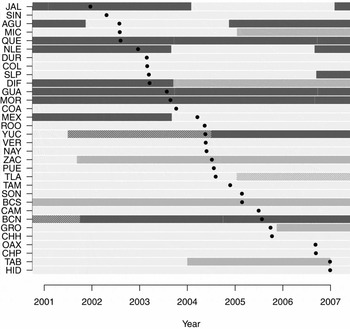
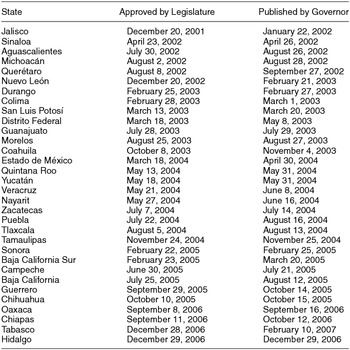
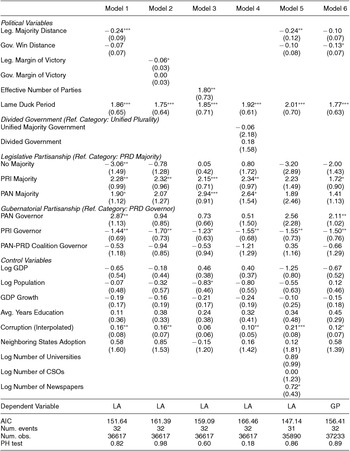
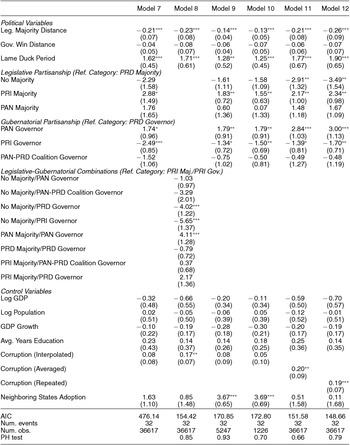




Comments
No Comments have been published for this article.