

Gaining patient consent for medical treatment, including surgery, is an integral part of the modern day healthcare system in England and Wales. Without this consent, clinicians are liable to be accused of assault [Mayberry and Mayberry, Reference Mayberry and Mayberry2003, p. 9]. The attainment of valid, informed consent is viewed as good practice in health care and ensures that the patient's human right of deciding what happens to their own bodies is maintained [Department of Health (DH), 2009]. Consent is also important in the lawfulness of treatment and protects the patient from the civil wrong of ‘trespass to the person’ (F v West Berkshire Health Authority [1990]). The law recognises that an adult, who is deemed capable, has the right to refuse consent to medical treatment even if this decision results in the patient's death [Griffith, Reference Griffith2008]. However, differences exist with gaining consent for medical treatment for children and young people, which can present ethical, legal and professional dilemmas for clinicians and the law courts.
One particular dilemma that does occur in practice, involves the refusal of consent to medical treatment by both parents of a child aged <16 years old. A real-life example from practice is the parental refusal to consent to the heart surgery for their 9-year-old child. This emotive example will now be reflected upon and critically examined from the viewpoint of the parents, the child and the children's nurse. An overview of clinical consent and children will also be presented in order to put this example into context.
Brief overview of consent to medical treatment and children in England and Wales
Young people aged 16 and 17 years have a statutory right to give consent to medical treatment under the Family Law Reform Act 1969:
Section 8(1): ‘The consent of a minor who has attained the age of 16 years, to any surgical, medical or dental treatment, which in the absence of consent, would contribute a trespass to the person, shall be as effective as it would be if he were of full age; and where a minor has by virtue of this section given an effective consent to any treatment it shall not be necessary to obtain any consent for it from his parent or guardian’.
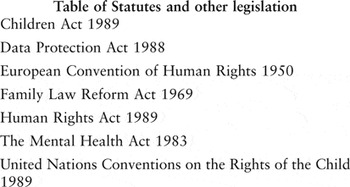
In the eyes of the law, this young person's decision to consent to medical treatment should not be overridden by their parents [DH, 2009] as there is a presumption that a young person over 16 years has the appropriate mental capacity to give consent [Dimond, Reference Dimond2008]. However, certain situations including the consent to mental health treatment may require the parents to give the consent. In this scenario, The Mental Health Act 1983 (as amended by the Mental Health Act, 2007) would then be referred for these young people.
In contrast, if a young person refuses to consent to life-saving medical treatment, the medical team would call upon the courts to override the young person's refusal. This process is echoed in the case of Re W (a minor) (medical treatment) [1992] whereby the Court of Appeal held that, although a 16-year-old girl had the statutory right to consent to treatment, the girl could not refuse essential treatment that could prevent her from dying from anorexia nervosa. The court overrode this refusal to consent and ruled in favour of her parents and the medical team by allowing the treatment to be given.
For children under the age of 16 years, the child's ability to give consent to medical treatment is judged upon whether they can be deemed as ‘Gillick competent’ (Gillick v West Norfolk and Wisbech Area Health Authority and another [1985]). A child is considered competent if it is decided, by those taking consent, that the child has the emotional and intellectual maturity to understand the proposed treatment and can therefore give valid consent [Cornock, Reference Cornock2007]. The provision of contraceptive advice or treatment to a child aged <16 years can be given without parental consent if the child can satisfy the requirements of the Fraser guidelines, which also stem from the Gillick v West Norfolk and Wisbech AHA [1985] case. These guidelines also now extend to gaining a child's consent to an abortion and treatment for sexually transmitted diseases without their parents’ knowledge.
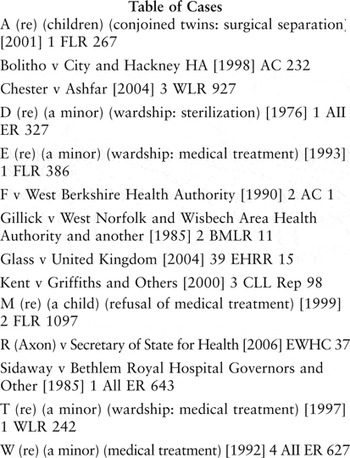
Where a child aged <16 years is not deemed ‘Gillick competent’, the persons with parental responsibility will give consent on behalf of the child [Griffith, Reference Griffith2008]. Parental responsibility is defined in the Children Act 1989.
Part 1 Section (3): ‘In this Act “parental responsibility” means all the rights, duties, powers, responsibilities and authority which by law a parent of a child has in relation to the child and its property’.
Variations of people and bodies exist who can have parental responsibility for a child; but in the main, the biological mother and the married father (or the unmarried father named on the child's birth certificate), have automatic parental responsibility. They therefore have the legal right to give consent for their child to receive medical treatment [Griffith, Reference Griffith2004].
The parental point of view
Mother knows best
Before any medical treatment is consented to, open and honest discussions between parents and clinicians must be established in order for any given consent to be valid [Bristol Royal Infirmary Inquiry, 2001]. By law, all possible risks associated with the medical treatment must be made known to the parents too so that the consent can be informed. Recommendations derived from the cases of Sidaway v Board of Governors for the Bethlem Hospital [1985] and Chester v Ashfar [2004] both recommended that informed consent is a legal and ethical requirement when gaining consent to medical treatment. Clinicians should also acknowledge the parents’ autonomy with the decision making for their child's treatment with a view to consent being given freely for the proposed treatment by both parents [O'Brien, Reference O'Brien, Duffy and O'Shea2010].
So what happens if the parents refuse consent for their child's medical treatment? In this situation, where the child is unable to give consent, the clinical team can involve the courts to help decide and or possibly invite the High Court to exercise its ‘inherent jurisdiction’ [Cooke, Reference Cooke2007, p. 295]. If the court decides that the medical treatment is in the best interests of the child involved, the wishes of the parents are then overruled and the permission is given to provide the treatment [Dimond, Reference Dimond2001].
This decision to overrule is demonstrated in the case of Re A (children) (conjoined twins: surgical separation) [2000] whereby the court decided to allow the separation of conjoined twins J and M, which went against their parents’ wishes. Judge Walker reasoned that the operation would be in the best interests for both twins but acknowledged that the consequence of this surgery would result in M's death. Another pertinent example is the case of Re D (a minor) (wardship: sterilization) [1976]. Mrs Justice Heilbron went against a mother's wishes when ruling that a sterilisation operation was not in the best interests of her child and so ordered that the surgery should not take place. Although only the mother is involved in this particular case, it demonstrates the power to make a child a ward of court in order to protect them from potential harm.
However, it may also be argued that the medical team and courts overruling the parents’ wishes could be viewed as a violation of their human rights. This argument is reflected in the case of Glass v the United Kingdom [2004], which was taken before the European Court of Human Rights. The medical team involved administered diamorphine to a child against the mother's wishes, and also put in place a ‘Do Not Resuscitate’ notice without her knowledge. The medical team were deemed in violation of Article 8 of The European Convention on Human Rights 1950, which is referred to in Section 1(1) in the Human Rights Act 1989. This is in reference to the team disrespecting the mother's right to have a ‘private and family life’ and only interfering with this right ‘as in accordance with the law’. By not seeking advice from the courts when making these decisions, the court upheld that there had been a breach of the mother's human rights.
When deciding upon medical treatment for children, the views of the parents should be listened to and respected; after all they often know their child very well and are legally responsible for their welfare. This can certainly be applicable when parents are the main carers of children with chronic health problems. Indeed, in the case of Re T (a minor) (wardship: medical treatment) [1997] it was ruled that the decisions regarding medical treatment should be left in the hands of the parents as they knew their child extremely well. These cases whereby the courts support the parents are rare especially if the treatment is recommended by a medical team. However, it does possibly suggest that the law opposing parental wishes is not always the ethical, right thing to do.
In the particular example being reflected upon in this article, the parents were adamant that their child would not have heart surgery for the correction of a congenital defect and could thus be potentially denying the child the chance to survive. The parents believed that God would heal their child and that the planned surgery was unnecessary. It was then in the child's best interests for the courts to intervene and potentially overrule the parents’ refusal to consent.
This illustrates another issue with regard to the religious beliefs of the parents and refusal to consent to medical treatment for their child. Example cases in English and Welsh law exist, which demonstrate the overruling of parents who hold certain religious beliefs. In the case of Re E (a minor) (wardship: medical treatment) [1993], Judge Ward ruled that notwithstanding the family and child being from the Jehovah Witness faith, a blood transfusion was essential for their child's survival and therefore gave the medical team the permission to administer this treatment against the parents’ wishes.
Ideally, no conflict should occur between the parents and medical team during the clinical decision making process but unfortunately this does occur. In addition to the issues that have been discussed, Taylor [Reference Taylor1999] suggests that, although parents make decisions for their child's welfare on a daily basis, consent for medical treatment can prove overwhelming. If legal involvement is necessary, the courts will always aim to act in the best interests of the child involved, but these important rulings are not decided upon lightly or without consideration of the parents’ views [Dimond, Reference Dimond2001].
The child's point of view
Children should be seen and heard and believed (author unknown)
As previously discussed, if a child is deemed ‘Gillick competent’ then consent can be obtained legally from the child. Governmental child-friendly literature is available for children and young people regarding the rights and procedures of giving consent, supporting the view that if capable, children should consent to medical treatment [DH, 2004]. Local information should also be provided for children by healthcare providers (NSF, 2004) and clinicians are advised to provide sufficient information to the ‘Gillick competent’ child so that any consent given is informed [BMA, 2001].
It is possible though that the children who are not seen as ‘Gillick competent’ can still have opinions about their healthcare. A moral viewpoint exists here that states that it is ethically irresponsible not to involve the child if they are capable of expressing these opinions [Dickey et al, Reference Dickey, Kiefner and Beidler2002]. This right to expression is supported by the United Nations Convention on the Rights of the Child (1989).
Article 13 (1): ‘The child shall have the right to freedom of expression; this right shall include freedom to seek, receive and impart information and ideas of all kinds, regardless of frontiers, either orally, in writing or in print, in the form of art, or through any other media of the child's choice’.
Children of all ages should be able to express their opinions towards all aspects of their healthcare services, which include the consent and information-giving processes. The National Service Framework guidelines [DH, 2004] state that children should be encouraged to give their views on the planning and creation of these services, but research literature shows that children are still excluded from decision making in the healthcare setting [Coyne, Reference Coyne2008]. Further work is therefore required to ensure children's involvement and that NSF guidelines, which include choice and consent, are adhered to in the healthcare setting [Coles et al, Reference Coles, Glasper E, Fitzgerald, LeFluffy, Turner and Wilkes-Holmes2007; Glasper, Reference Glasper2010].
It is clear then that listening to children and offering appropriate choices is important in healthcare. However, ethical issues arise with certain situations, such as end-of-life decisions, which present ethical dilemmas for the clinicians involved. Ideally, the child's wishes should dictate the care received, but if this conflicts with the child's best interests, then the parents and medical team can intervene with decisions regarding any medical treatment [Whitty-Rogers et al, Reference Whitty-Rogers, Alex, MacDonald, Perrynowski Gallant and Austin2009]. This argument is echoed in the case of Re M (a child) (refusal of medical treatment) [1999] whereby the child's refusal of a heart transplant was deemed to be not in the child's best interests. Rightly, M's maturity, intelligence and strong views on receiving the heart of someone else were acknowledged in the ruling of the case; however, Judge Johnson stated that any future resentment from M with regard to going against M's wishes outweighed the need to perform the life-saving surgery.
Farsides [Reference Farsides2007] suggests that, with regard to consent, ‘children benefit from closer attention and careful discrimination between individuals’ (p. 143). Regardless of their age or cultural background, each child is unique and so should be respected and individually assessed when making medical treatment decisions. If appropriate, it is important that a child is permitted to express their valued opinions and be included in discussions with clinicians [Purssell, Reference Purssell1995].
With regard to the example under discussion in this article, the views expressed by the 9-year-old child were ascertained and listened to by the surgical, medical and nursing teams. However, the teams decided that the child was too young and lacked the maturity in order to understand the full impact of the proposed heart surgery. The children's nurses involved with this example had a pivotal role to play when advocating for the child, which will now be examined in the next section of this article.
The children's nurse point of view
The people in your care must be able to trust you with their health and wellbeing (NMC Code of Conduct, 2008)
Consent for medical treatment is generally obtained by doctors or surgeons, but nurses have an important role to play within this process too. In particular, the children's nurse can help obtain the child's assent or informed consent, which contributes towards establishing the child's opinions about their health care [Harrington-Jacobs, Reference Harrington-Jacobs2005]. By participating in this obtainment, the children's nurse is acting as an advocate for the child by promoting the ‘Gillick competent’ child's right to consent and also by facilitating the empowerment and involvement of any child with decisions about their treatment [Orr, Reference Orr1999; Howlin, Reference Howlin2008]. The importance of this advocating role is echoed by the Royal College of Nursing (RCN) [2003] who state that the children's nurse should ‘listen to children and young people providing a means for them to convey their opinions and feelings and using these to guide decisions about the way their healthcare is delivered’.
Children's nurses should also suspend any negative personal views they may have regarding children's involvement with consent and ensure that they act in a professional manner throughout the consenting process [Pocock, Reference Pocock2003]. It is important that children's nurses should be supportive and work closely with the child and family during this process, but they also need to stay objective and not become too emotionally involved in the situation thus obscuring their nursing role [Albuquerque-Queriroz, Reference Albuquerque-Queriroz2008].
This can prove challenging if parents disagree to medical treatment. In this situation, it is expected that the children's nurse will respect the parents’ decision and should strive to remain impartial. This could be especially difficult if the parents ask the advice of the children's nurse but it is known that the healthcare professional should have no part in influencing any patient or parental decisions about medical treatment [Fullbrook, Reference Fullbrook2007a].
If the refusal is based on religious reasons, the children's nurse must fully respect and understand the parents’ beliefs even if these conflict with their own views [Gibson, Reference Gibson2008; Nursing and Midwifery Council (NMC), 2008]. As previously discussed, the courts could now possibly intervene to make the child a ward of court and give permission for clinicians to carry out the proposed medical treatment; however, before the law courts become involved, the local clinical team have a responsibility to persuade the parents that the treatment is essential for the well-being of their child.
Through involvement in family-centred care, the children's nurse is ideally placed in this situation to act as an ‘ethical mediator’, ensuring that the best interests of the child are maintained (Woods, 2001). So, how does a children's nurse ascertain that proposed medical treatment is ethically acceptable? The NMC Code of Conduct (2008) provides an essential overview of ethical guidance for nurses, but other bio-medical ethical frameworks exist that can be utilised by nurses effectively in practice to help assess ethical dilemmas.
The four principle-based approach devised by Beauchamp and Childress [Reference Beauchamp and Childress2001] is one framework that lends itself to assessing ethical decision making in nursing practice. Autonomy, beneficence, nonmalfeasance and justice are listed as the four principles that can be used individually or in combination when applied to an ethical dilemma. When applying these principles to the refusal of parental consent, the children's nurse would need to be satisfied that no unnecessary harm will come to the child (nonmaleficence) and that the family have been presented with the pros and cons of the recommended medical treatment (beneficence). The family should also be encouraged to vocalise what they think the child would want [McLeod, Reference McLeod2005]. This still remains an emotive and difficult scenario for the children's nurse, but Wheat [Reference Wheat2009] suggests that the nurse is acting ethically, purely by acknowledging the issues present and attempting to make a decent judgement on behalf of the child and family.
By ensuring that the best interests of the child are preserved, the children's nurse is also upholding their duty of care to the patient. This duty relates to all clinicians, including nurses, taking reasonable care not to cause harm to their patients and links with professional accountability [Griffith and Tengnah, Reference Griffith and Tengnah2010, p. 83]. Cases exist in the English and Welsh legal system that demonstrate how failing to respond appropriately to the needs of a patient can result in a judgement of a breach of duty of care (Bolitho v City and Hackney HA [1989]) and also possible clinical negligence (Kent v Griffiths and Others [2000]).
By conserving a duty of care and being aware of the need to prevent unnecessary harm, children's nurses are also preventing a breach of a child's human rights. Sadly, this phenomenon does exist with incidences of these breaches towards children documented in medical research and healthcare literature. Charles-Edwards and Glasper [Reference Charles-Edwards and Glasper2002] strongly suggest that clinicians need to learn from these past experiences and take every step to ensure that children's human rights are upheld at all times in the healthcare setting.
The welfare of the child in general is of the upmost importance to the children's nurse, who also has a role in safeguarding this potentially vulnerable group of patients too. Children who are deemed as not being ‘Gillick competent’ are viewed as especially vulnerable as they can rely entirely on others to make decisions about their treatment [Fullbrook, Reference Fullbrook2007b]. Unfortunately, child protection issues would have to be considered in this particular situation of parental refusal to consent to medical treatment. If at any point, the children's nurse felt that the parents’ reasons for refusing consent were suspicious or cruel, an explanation should be sought from the parents using an open, non-judgmental manner and would then be investigated further [Thornberry, Reference Thornberry2010]. Any discussions should be documented fully and contemporaneously as too ascertain the parents’ reason for refusal to consent [Griffith and Tengnah, Reference Griffith and Tengnah2010, p. 184]. All entries in the patient notes would of course be kept confidential and protected in line with the Data Protection Act 1988.
With reference to the real-life example from practice, the children's nurses involved remained objective and supportive towards the child and family throughout the hospital admission. The planned surgery was viewed as an ethical option for the child and the family's religious beliefs were acknowledged and respected. It was explained to the parents that the child would probably die if the heart surgery was not performed but the parents would still not consent. Both the nursing and medical team were concerned that the child's best interests were not being considered fully by the parents and discussions then took place with regard to involvement of the law courts. At this point, the child's ‘named’ nurses who had built a good relationship with the parents, suggested that the assistance from a minister associated with the family's church could be useful in the decision-making process. This decision was inspired as following liaison and reassurance from the minister, the parents consented to the heart surgery for their child. The courts were therefore not involved and the surgery went ahead as previously planned. The children's nursing team involved are to be commended, as due to this effective family-centred care approach, the parents were happy with their choice to consent and the child was now healthy.
Children's nurses need to recognise that they have a pivotal role to play when gaining consent from parents, young people and children. Because of their unique position, they can liaise and mediate between the family, the child and the medical teams [O'Brien, Reference O'Brien, Duffy and O'Shea2010]. The nurse's views can be very influential to all parties involved and will be listened to if necessary in a court of law [Delany in Tingle and Cribb, Reference Delany2007, p. 223]. Where possible, parental autonomy should be preserved but as the Gillick v West Norfolk Area Health Authority and another [1985] and R (Axon) v Secretary of State for Health [2006] cases show, erosion of parental control will happen if their wishes are overruled by the court [Fullbrook, Reference Fullbrook2007a]. Whatever the outcome from a refusal of parental consent situation, the children's nurse must strive to protect the child while providing a high standard of family-centred care.
Finally, in conclusion, situations of parental refusal to consent to medical treatment can prove emotive and challenging for all clinicians involved. Legal, professional and ethical frameworks are in place to help guide and assist with the decision-making processes, which all aim to establish the best course of action for the child and family. Of equal importance is the consideration of the child and parents’ views, which must be respected and considered in order to ensure the conservation of family-centred care. Children's nurses too must be aware of their essential role in this process where all parties involved are striving for the most important outcome – the welfare and best interests of the child.
The child- first and always (Motto of Great Ormond Street Hospital)
Acknowledgement
The author would like to thank Lucie Llewellyn and Sherri Ongston-Tuck.


