1. Introduction
With the widespread application of mobile robots in fields such as agriculture, rescue, field exploration, and engineering construction, terrain adaptability in complex environments has become a crucial indicator for evaluating robot chassis performance [Reference Villacrés and Padrón1]. Traditional wheeled or tracked robots exhibit good mobility on flat, solid ground but often suffer from significantly reduced travel efficiency or even immobility on soft, low-bearing-capacity terrain, such as sand, snow, mud, and granular surfaces, due to wheel sinkage and slip [Reference Guo, Liu, Liu and Zhao2]. Such soft terrain is common in natural environments, and its high deformability and low bearing capacity impose higher requirements on the structural design and drive methods of mobile robot chassis.
In recent years, research on locomotion methods for soft terrain has gradually increased [Reference Ren and Tong3]. Tracked drives improve load-bearing capacity by increasing the contact area, but their structures are complex, they have large turning radii, and they may cause considerable ground disturbance [Reference Guo, Liu, Sun and Zhao4]. Multi-legged walking mechanisms have good terrain adaptability, but their control is complex and their locomotion efficiency is relatively low [Reference Li, Huang, Wang, Tian and Ren5]. In contrast, screw-drive technology can generate propulsion in low-bearing-capacity environments such as sand, snow, and mud, offering advantages including a compact structure, smooth travel, and flexible motion [Reference G.S.V., R. and B.6]. Screw drives were initially used in amphibious vehicles and polar transport equipment and have recently been introduced into mobile robots to address locomotion problems on unstructured terrain [Reference Li, Lu, Xu and Hu7]. For instance, Chen [Reference Chen8] and Lin [Reference Lin9] developed leveling robots using screw propulsion. Liu [Reference Yan10] investigated the key components of a dual-screw-propelled lotus-root harvesting machine and found that the helix angle affected the slip ratio and speed stability of the locomotion mechanism. Chen et al. [Reference Chen, Zhou, Xie, Song, Liu and Xie11] developed a dual-screw-driven deep-mud paddy-field transplanter to reduce machine sinkage in deep mud. More recently, Hu et al. [Reference Hu, Shu and Han12] developed a mobile robot with Kresling origami wheels for sandy terrain and evaluated the effects of wheel-width variation on locomotion speed, propulsive force, climbing performance, and load-carrying capacity. Their study demonstrates the potential of terrain-adaptive wheel structures for improving robot mobility on deformable terrain.
Traditional screw-drive schemes often use externally mounted motors or transmission components that are directly exposed to the surrounding medium. In granular or dusty environments, such arrangements may increase the risk of particle intrusion, jamming, and mechanical wear. Previous studies have mainly focused on screw geometry, propulsion characteristics, and terrain trafficability [Reference Xu, Feng and Chen13, Reference Knight, Rush and Stinson14], while relatively limited attention has been paid to integrating the motor and transmission components within a protected screw wheel. To address this problem, this study develops an enclosed screw wheel with a built-in motor. The drive motor and key transmission components are housed inside a sealed drum, which is intended to reduce their direct exposure to sand and dust while retaining the propulsion function of the screw mechanism.
The remaining research question is whether the enclosed screw-wheel structure can provide the required motion functions while protecting its internal drive components from particle intrusion. It is hypothesized that housing the motor and key transmission components inside the screw wheel can reduce sand intrusion without preventing the chassis from performing forward, backward, steering, and in situ rotational motions. This hypothesis is evaluated through prototype motion tests and a sealing test in loose sand.
Accordingly, this study aims to design, control, and preliminarily evaluate an enclosed dual-screw robot chassis for soft-terrain locomotion. The proposed chassis uses two independently driven screw wheels with built-in motors. A simplified propulsion-force analysis is conducted to describe the axial and lateral force components, and a kinematic model is established for the main motion modes of the chassis. A finite state machine (FSM)-based control strategy is developed to coordinate the two screw wheels and provide smooth motion transitions and soft stopping. Finally, a physical prototype is tested in loose sand to evaluate speed regulation, travel speed, slip ratio, sinkage, and sealing performance.
2. Power and motion analysis of the dual-screw-driven robot
The interaction between a rotating screw wheel and deformable terrain is affected by the geometry of the screw blade and the mechanical properties of the surrounding medium. A complete terramechanical description would require detailed parameters such as particle size distribution, cohesion, internal friction, density, and moisture content. Since the present study focuses on chassis design and motion control, a simplified force decomposition is adopted to identify the dominant axial and lateral force components acting on the screw wheels. The resulting relationships are then used to explain the principal motion modes and establish the kinematic model of the chassis.
2.1. Simplified propulsion-force analysis
The interaction between a screw wheel and soft terrain is influenced by both the geometric parameters of the screw blade, including pitch, diameter, blade thickness, and helix angle, and the physical properties of the surrounding medium, such as particle size, density, friction, and flowability [Reference Hangjia, Wenfu, Zidan, Feng, Ping and Yan15]. A complete terramechanical model would require detailed characterization of the medium and its deformation during screw-wheel rotation. Since the present study focuses on chassis design and motion control, a simplified force decomposition is adopted to describe the dominant force components acting on the screw wheel.
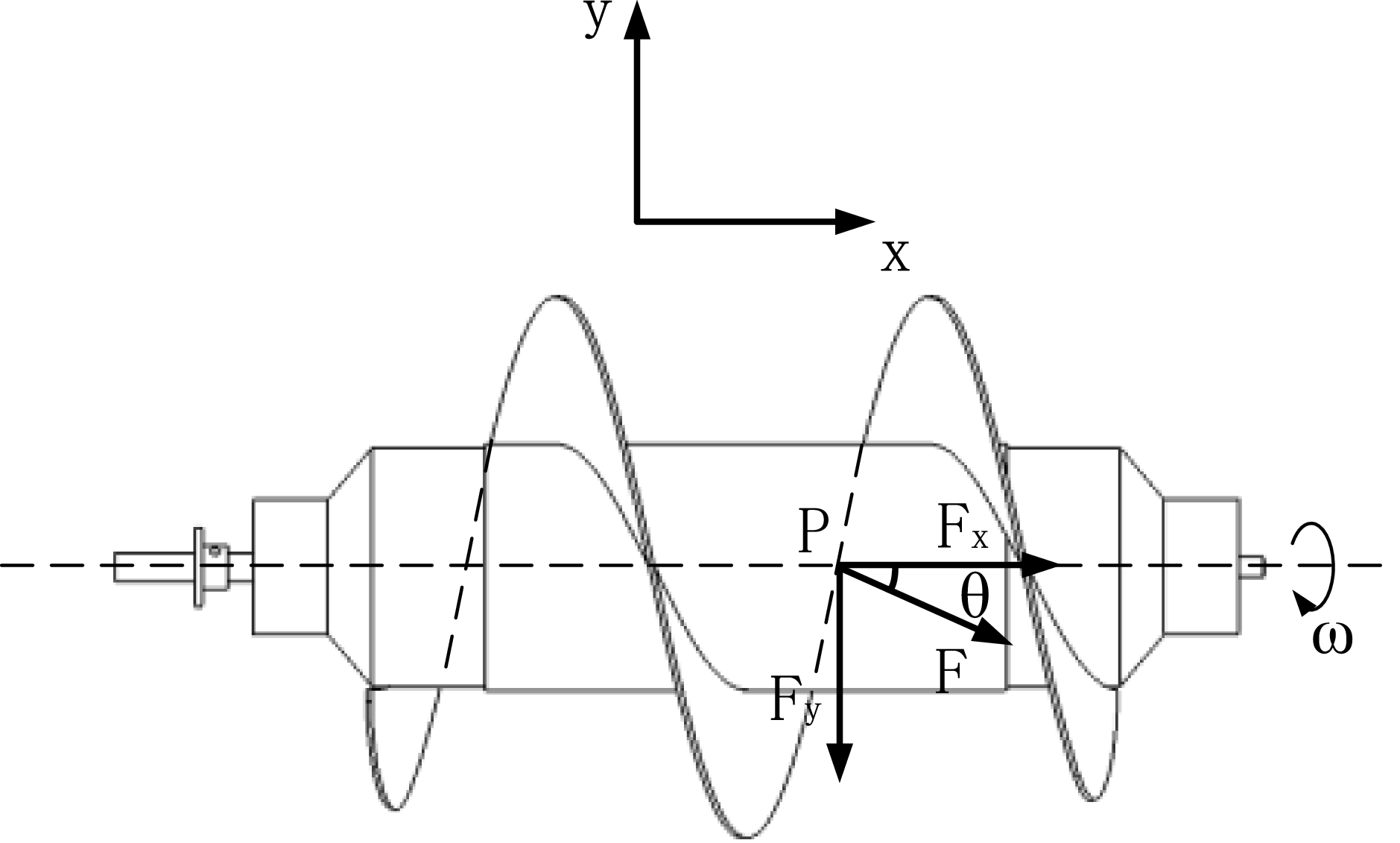
As shown in Figure 1, the surrounding medium exerts a normal reaction on the screw blade, together with a friction force opposite to the relative motion of the blade. The normal reaction can be decomposed into an axial component
 $F_{x}$
, parallel to the rotational axis of the screw wheel, and a lateral component
 $F_{y}$
, perpendicular to the rotational axis in the horizontal plane. The axial component contributes to the longitudinal propulsion of the chassis, whereas the lateral component affects the lateral force balance and rotational motion of the two-wheel system.
Propulsion force analysis diagram of the screw blade drive wheel.

In addition to the forces acting directly on the screw blade, the chassis experiences resistance as it moves through and displaces the medium ahead. This resistance is referred to here as the medium advance resistance. Because the present analysis is intended to explain the motion mechanism rather than calculate the exact traction force, transient particle flow, local compaction, and terrain failure are not explicitly modeled.
For an infinitesimal sector of the screw blade, the corresponding contact area can be approximated as:
 \begin{equation} dP{\left(\theta \right)}=\pi\, (R^{2}-r^{2}) \, d\theta \end{equation}
where
 $dP(\theta )$
is the micro-sector area;
 $d\theta$
is the angle corresponding to the micro-sector.
The total force
 $F$
on a single screw blade is:
 \begin{equation}\begin{cases} F= \displaystyle\iint (\tau \cos \xi -\sigma \sin \xi )dP \, d\theta \\[5pt] \xi =\tan ^{-1} [\!\cos \left(\eta \right)-\tan \theta ] \end{cases} \end{equation}
where
τ is the shear force of the screw blade on the medium;
σ is the normal pressure of the medium on the screw blade;
θ is the central angle between the screw blade and the medium;
η is the helix angle of the screw blade.
Based on geometric relationships, the force can be decomposed into an axial component force
 $F_{x}$
along the drive wheel rotation axis and a lateral component force
 $F_{y}$
perpendicular to the rotation axis:
 \begin{equation} F_{x}=\sum \mathrm{sgn}{\left(\omega \right)}F\sin \eta \end{equation}
 \begin{equation} F_{y}=\sum \mathrm{sgn}{\left(\omega \right)}F\cos \eta \end{equation}
where
ω is the rotational speed of the screw blade drive wheel.
Taking clockwise as positive:
 \begin{equation} \mathrm{sgn}{\left(\omega \right)}=\begin{cases} 1,\omega \gt 0\\ 0,\omega =0\\ -1,\omega \lt 0 \end{cases} \end{equation}
When the left and right screw drive wheels have opposite thread directions and rotate simultaneously, the axial thrusts generated by the left and right wheels are in the same direction, while the lateral forces are in opposite directions. Therefore, the resultant force on the chassis aligns with the direction of motion. Thus, the total force
 $F_{\text{total}}$
on the body is:
 \begin{equation} F_{\textit{total}}=F_{lx}+F_{rx} \end{equation}
where
 $F_{lx~}$
is the axial force of the left screw blade drive wheel (N);
 $F_{rx}$
is the axial force of the right screw blade drive wheel (N).
2.2. Motion mode analysis
The motion principle of the dual-screw-driven robot chassis is based on the differential and counter-rotation of the left and right screw drive wheels. By adjusting the speed and rotation direction of the left and right screw wheels in soft media, the chassis achieves various motion modes such as forward, backward, steering, and in situ rotation [Reference Hangjia16]. When the chassis is placed on a soft terrain surface, the control system adjusts the motor speed and direction according to commands, thereby changing the direction and magnitude of the thrust generated by the screw wheels. A microcontroller controls the motor operation by receiving commands from the host computer, thus realizing different motion states. The chassis is equipped with two sets of screw drive wheels, each independently driven by a DC planetary gear reduction motor.
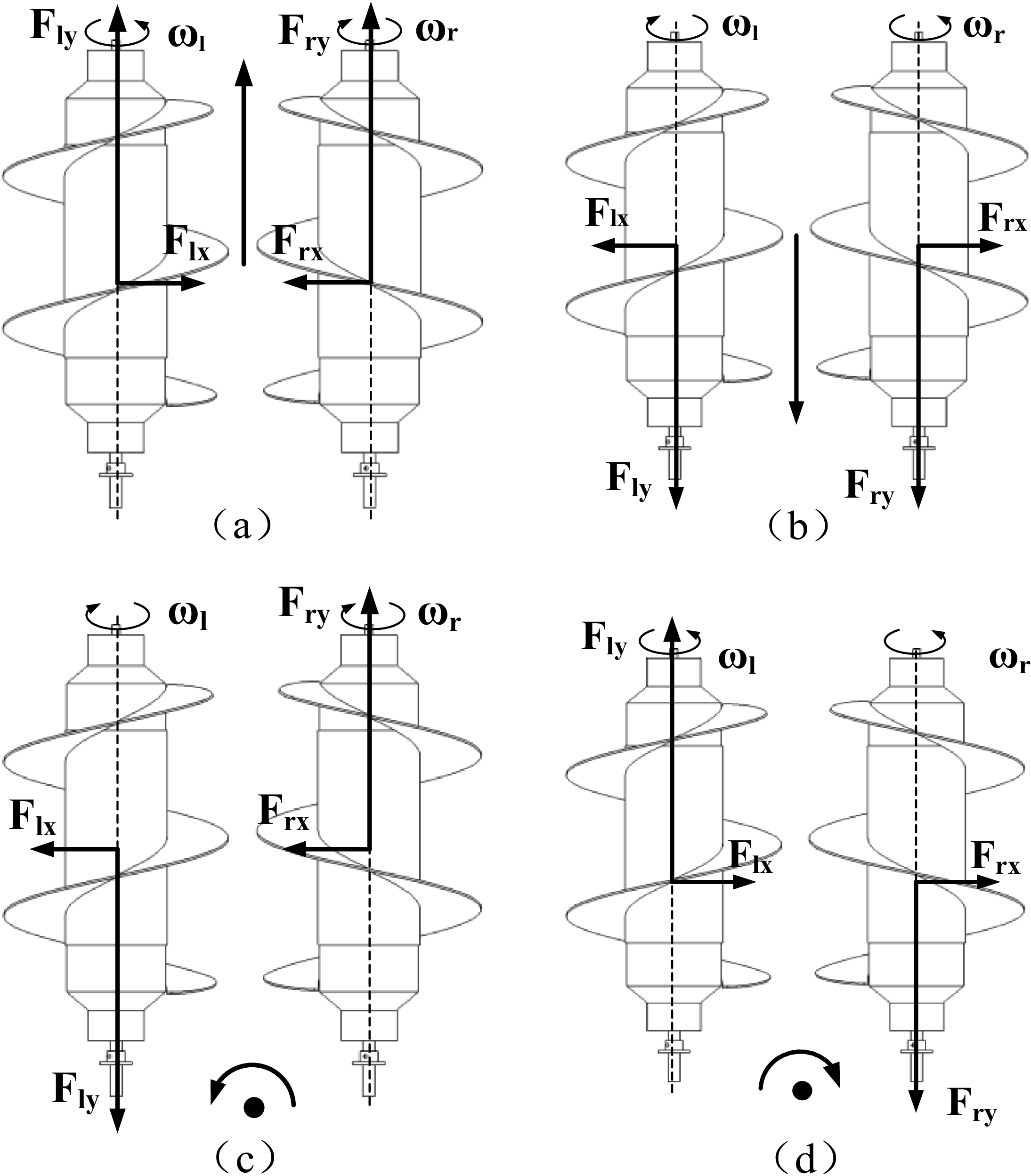
In Figure 2,
 $\omega _{l}$
and
 $\omega _{r}$
denote the rotational speeds of the left and right screw wheels, respectively. In the chassis-fixed coordinate frame,
 $F_{ly}$
and
 $F_{ry}$
are the axial force components, while
 $F_{lx}$
and
 $F_{rx}$
are the lateral force components. The relationship between the screw wheel rotation direction and the robot’s travel direction is shown in Figure 2.
Relationship between screw-wheel rotation and chassis motion: (a) forward motion; (b) backward motion; (c) counterclockwise rotation; and (d) clockwise rotation.

As shown in Figure 2(a) and (b), when the two drive wheels rotate at equal speed in opposite directions, the axial force
 $F_{ly}$
on the left wheel and the axial force
 $F_{ry}$
on the right wheel are equal in magnitude and direction. The lateral force
 $F_{lx}$
on the left wheel and the lateral force
 $F_{rx}$
on the right wheel are equal in magnitude, opposite in direction, and act along the same line. Thus, the robot moves forward or backward. As shown in Figure 2(c) and (d), when the two drive wheels rotate at equal speed in the same direction, the axial forces
 $F_{ly}$
and
 $F_{ry}$
acting on the left and right screw wheels, respectively, are equal in magnitude and opposite in direction. At the same time, the lateral forces
 $F_{lx}$
and
 $F_{rx}$
are equal in magnitude, identical in direction, and collinear, thereby generating a resultant moment that drives the locomotion mechanism into rotational motion.
2.3. Kinematic model
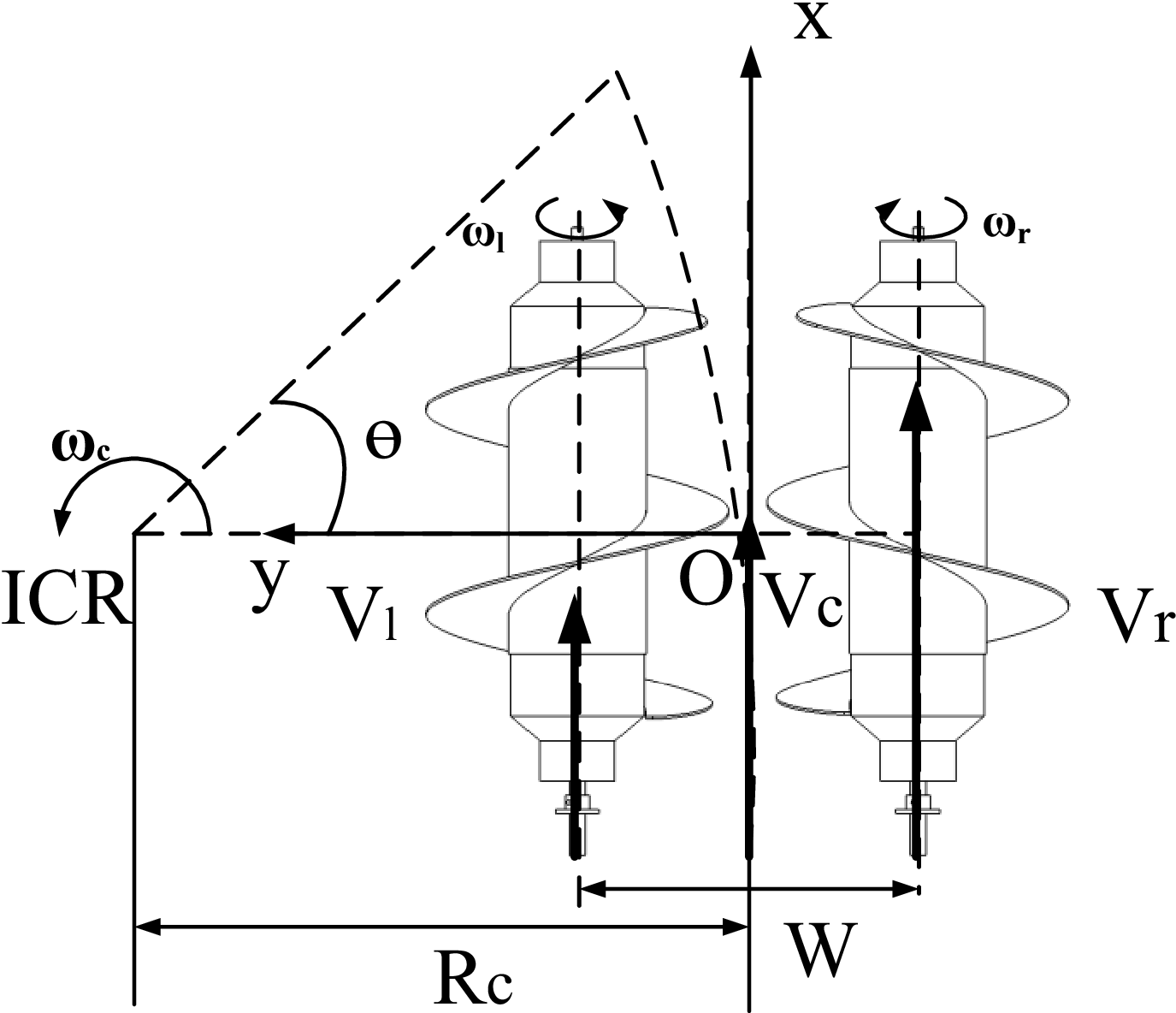
Figure 3 shows the simplified kinematic model of the dual-screw-driven robot and the corresponding robot coordinate system. Since the wheels must follow the overall motion, according to rigid body kinematics theorem, the velocity component of the robot in the X-direction at a single screw blade drive wheel is:
 \begin{align} V_{i}=V_{c}-\omega _{c}y_{i} \\[-20pt] \nonumber \end{align}
Simplified kinematic model of the dual-screw-driven robot chassis.

Assuming a no-slip constraint, the projection of the wheel velocity in the drive direction equals the theoretical linear velocity of the wheel:
 \begin{equation} V_{i}\cos \eta =r\omega _{i} \end{equation}
where
 $\eta$
is the helix angle (°);
 $r$
is the effective dynamic radius of the screw blade drive wheel (mm).
From Eq. (8), expanding the velocities for the left and right screw blade drive wheels (taking clockwise rotation of the screw drive wheel as positive):
 \begin{align} \begin{cases} \left(V_{c}-\omega _{c}\dfrac{W}{2}\right)\cos \eta =r\omega _{l}=V_{l}\\[9pt] \left(V_{c}+\omega _{c}\dfrac{W}{2}\right)\cos \left(-\eta \right)=-r\omega _{r}=V_{r} \end{cases} \end{align}
Thus, the inverse kinematic equations of the robot can be obtained, i.e., solving for the target speeds
 $\omega _{l}$
and
 $\omega _{r}$
of the left and right screw wheels based on the target velocities
 $V_{c}$
and
 $\omega _{c}$
of the robot:
 \begin{align} \begin{cases} \omega _{l}=\left(V_{c}-\omega _{c}\dfrac{W}{2}\right)\dfrac{\cos \eta }{r}\\[11pt] \omega _{r}=-\left(V_{c}+\omega _{c}\dfrac{W}{2}\right)\dfrac{\cos \eta }{r} \end{cases} \end{align}
Similarly, the forward kinematic equations are:
 \begin{align} \begin{cases} V_{c}=\dfrac{r\left(\omega _{l}-\omega _{r}\right)}{2\cos \eta }\\[6pt] \omega _{c}=-\dfrac{r\left(\omega _{l}+\omega _{r}\right)}{W} \end{cases} \end{align}
3. Screw drive wheel structural design
3.1. Structural design
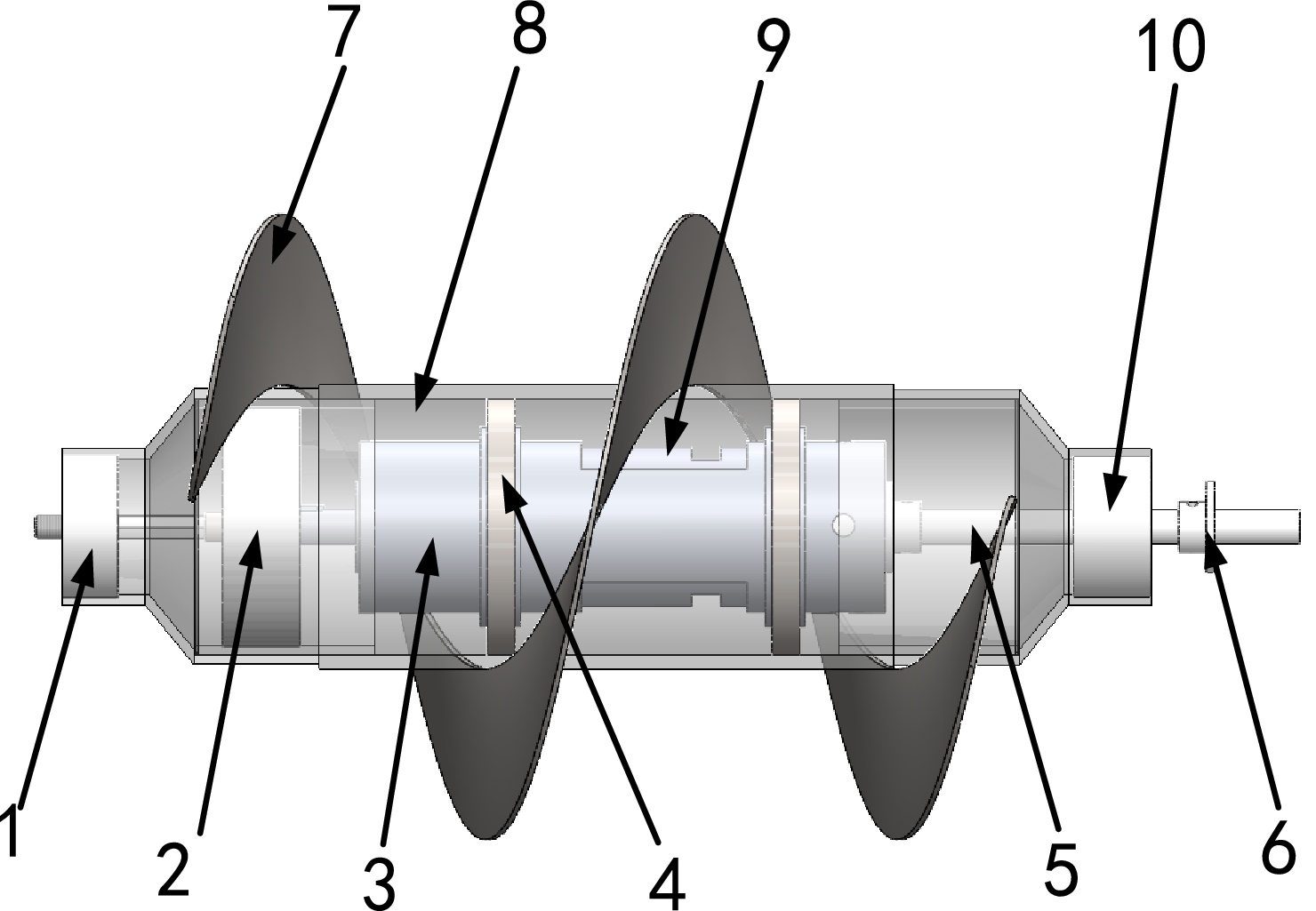
The screw drive wheel is the core component of the chassis locomotion mechanism. The drive wheel proposed in this study adopts an enclosed structure with a built-in motor, as shown in Figure 4. The numbered components are the screw bearing (1), fixed block (2), motor housing (3), large bearing (4), hollow aluminum rod (5), flange coupling (6), screw blade (7), drum shell (8), DC drive motor (9), and bearing pulley (10). The screw blade follows an Archimedean spiral and is connected to the motor shaft through the flange coupling. When the motor operates, the motor shaft drives the fixed block and drum shell, causing the screw blade to rotate and interact with the surrounding medium to generate propulsion.
This enclosed structure completely encapsulates the motor inside the drum, effectively preventing sand, water, or dust from entering the transmission system, improving the equipment’s protection level and operational life. Simultaneously, the drum shell is made of aluminum alloy material, offering structural robustness and sealed protection against particle intrusion.
Structural model of the enclosed screw wheel.

Figure 4. Long description
A diagram of an enclosed screw wheel structure. The structure includes ten labeled parts. Part 1 is located at the left end, part 2 is adjacent to part 1, and part 3 is next to part 2. Part 4 is situated in the middle of the structure. Part 5 is on the right side, adjacent to part 6, which is at the far right end. Part 7 is a curved element on the left side, part 8 is another curved element in the middle, and part 9 is a similar curved element on the right side. Part 10 is a small component near the right end. The arrows indicate the locations of the labeled structural components.
3.2. Main geometric parameters of the screw wheel
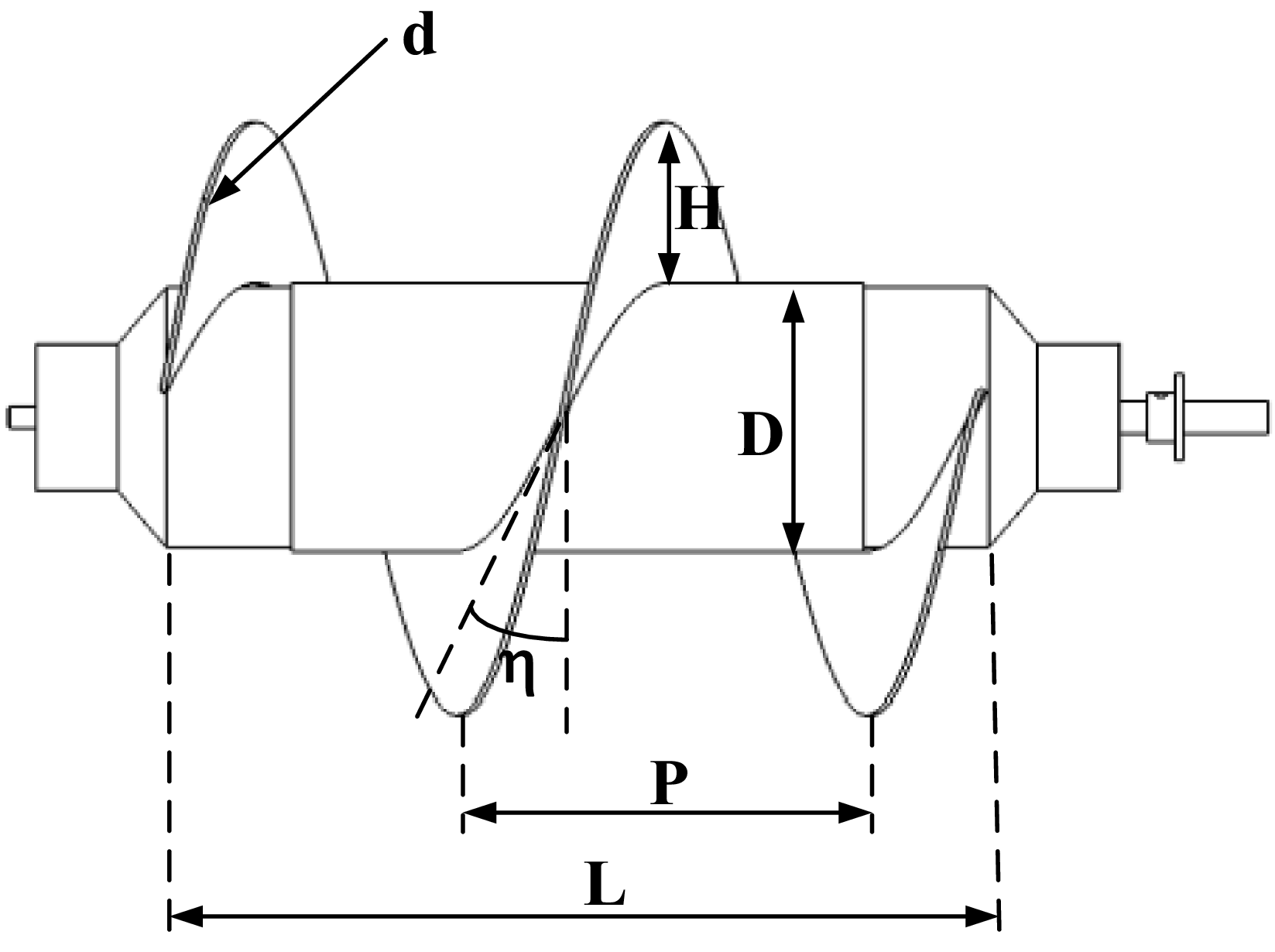
The main geometric parameters of the screw wheel are shown in Figure 5. The geometric parameters of the screw blade include the blade thickness
 $d$
, blade height
 $H$
, inner diameter
 $D$
, pitch
 $P$
, length
 $L$
, and helix angle
 $\eta$
.
Geometric parameters of the screw wheel.

3.2.1. Drum diameter and screw blade height design
In soft terrains such as sand and mud, the geometric dimensions of the screw drive wheel are key factors affecting the chassis’s support capacity, propulsion efficiency, and anti-sinkage performance. The drum diameter determines the contact area between the wheel and the ground, while the screw blade height affects its cutting depth and thrust generation process. Together, they determine the effective ground contact diameter and unit ground pressure distribution of the drive wheel.
When the drive wheel contacts soft terrain, the outer-edge region of the screw blade is expected to contribute significantly to thrust generation [Reference Nagaoka, Otsuki, Kubota and Tanaka17]. In the design, if the drum diameter is too small, it leads to insufficient contact area, making it prone to sink into the soft medium; if the diameter is too large, it increases structural mass and drive resistance, affecting energy efficiency. Similarly, if the screw blade height is too low, effective thrust is insufficient; if too high, it leads to increased energy consumption and structural complexity.
Therefore, the design of the drum diameter and blade height should balance support force, propulsion efficiency, and lightweight requirements. Typically, the screw blade height and the drum radius maintain a similar order of magnitude to ensure the drive wheel has a reasonable contact depth and thrust formation angle, thereby achieving high travel stability and anti-sinkage performance.
3.2.2. Helix angle and pitch
The relationship between the screw-blade pitch and the helix angle is given by:
 \begin{equation} \begin{cases} P=\pi R\tan \eta \\ R=r+H \end{cases} \end{equation}
where
 $R$
is the screw drive wheel radius (mm);
 $r$
is the drum radius (mm).
Based on theoretical calculations and referencing Cole et al.’s research [Reference Cole18], a helix angle of approximately 24° is selected. Using formula (1), the pitch is calculated to be about 140 mm. As the force-bearing surface in soft terrain, the screw blade needs properties such as corrosion resistance, high bending strength, and wear resistance. Therefore, 2 mm thick 304 stainless steel is chosen.
3.3. Motor selection
The dual-screw-driven robot chassis uses bilateral independent screw propulsion mechanisms as the travel drive device. Its core function is to drive the screw wheels to rotate via motors, achieving traction and propulsion of the chassis on soft terrain. The motor torque calculation formula is:
 \begin{equation} T=\frac{Fr}{\eta } \end{equation}
where
F is the force experienced during travel (N);
T is the motor torque (N·m);
η is the drive system efficiency (%).
The motor power
 $P_{m}$
calculation formula is:
 \begin{equation} P_{m}=\frac{Tn}{9550} \end{equation}
where
 $n$
is the motor speed (r/s).
Based on the propulsion force analysis results, the total propulsion force
 $F_{c}$
required for the system under stable travel conditions can be calculated. Substituting the equivalent radius
 $R$
of the dual-screw drive wheel into the formula yields the motor torque for the dual-screw drive travel device, and the motor power is obtained based on the rotational speed of the screw blade drive wheel [Reference Zhang, Wang, Li, Sun, Dong, Zhang, Ma and Wang19].
3.4. Internal structure design of the screw drive wheel
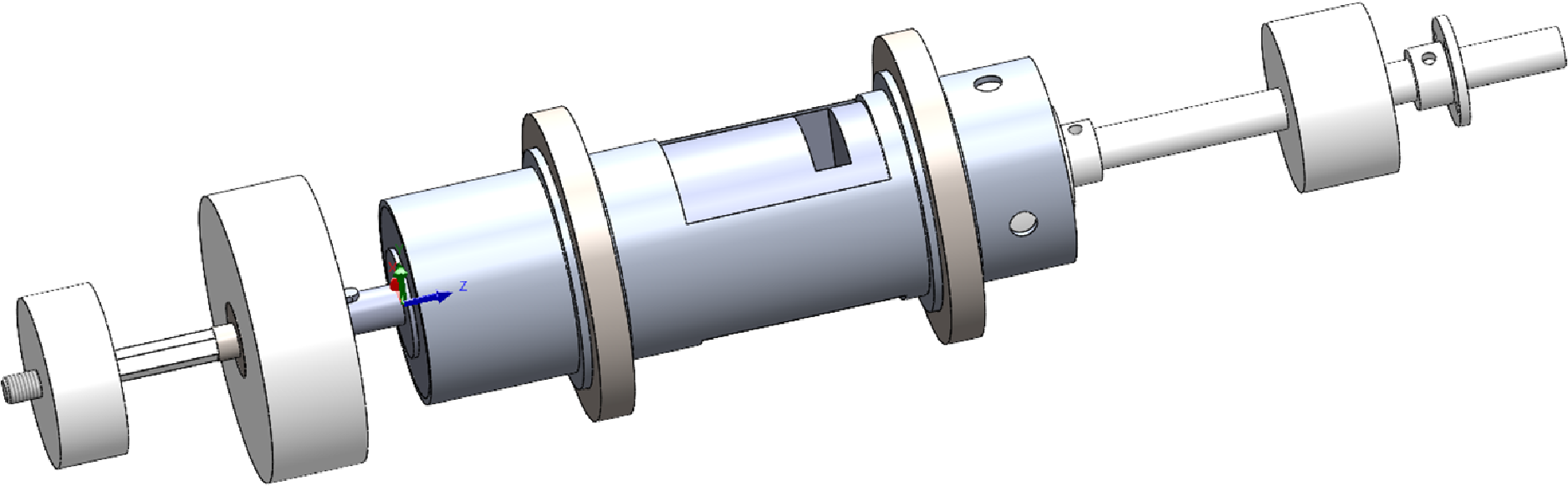
The internal structure of the enclosed screw drive wheel is shown in Figure 6. The overall design employs a coaxial layout aimed at achieving efficient transmission within a limited space. Its main components include the screw bearing, fixed block, motor housing, large bearing, hollow aluminum rod, flange coupling, DC drive motor, and bearing pulley. Structurally, the DC drive motor is positioned centrally. The motor shaft is connected to the fixed block to achieve stable power transmission. An aluminum alloy housing is installed outside the motor, and a large bearing is fitted on the aluminum alloy shell for support and fixation. A key challenge is whether the strength of the screw bearing at both ends of the transmission shaft and the hollow aluminum rod is sufficient to secure the motor and ensure the smooth rotation of the screw drive wheel. Here, an 8 mm diameter screw bearing and a 6 mm thick hollow aluminum rod are used.
Internal structure of the enclosed screw wheel.

3.5. Composition of the dual-screw-driven robot chassis
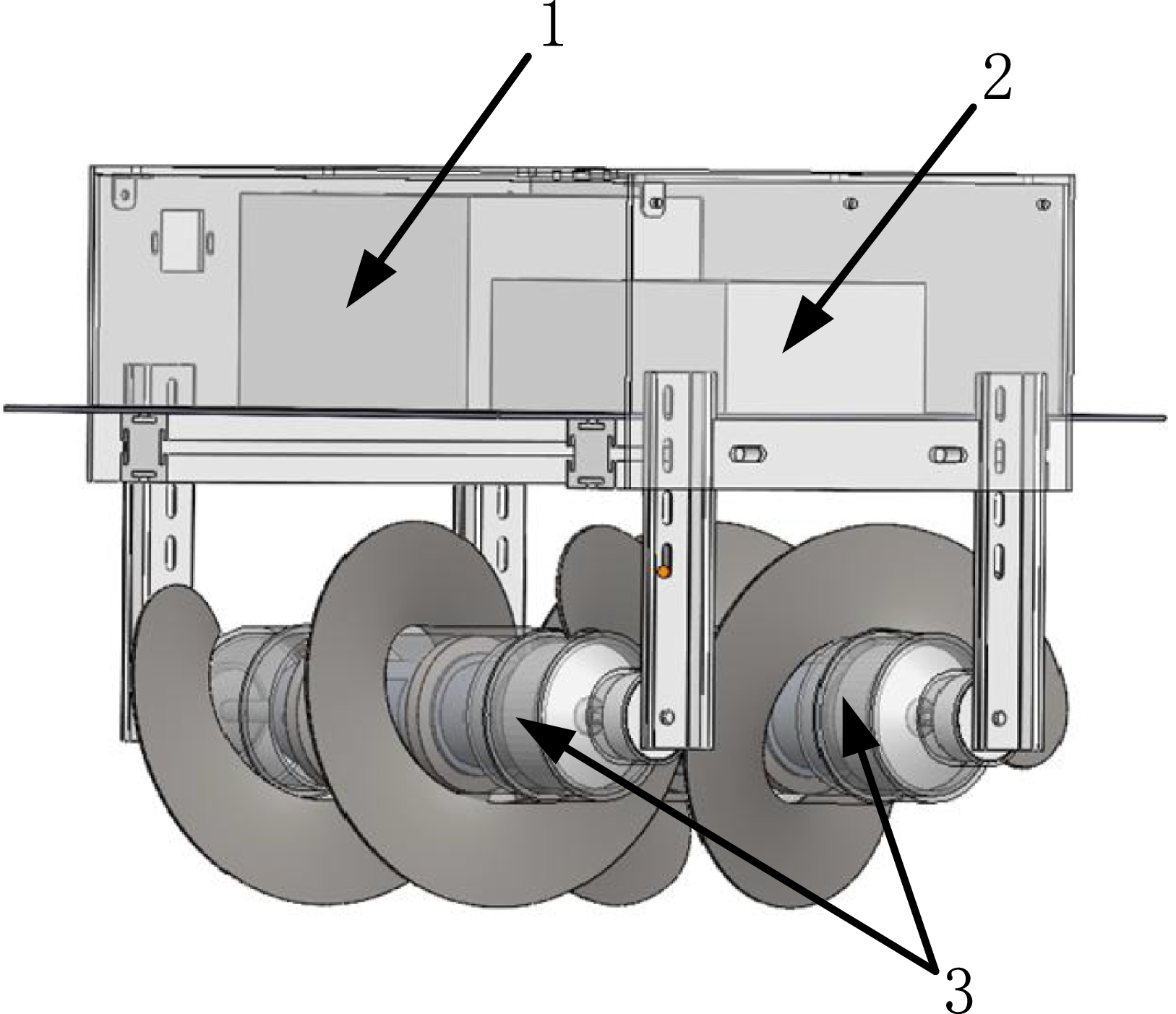
The 3D model of the dual-screw-driven robot is shown in Figure 7. The chassis mainly consists of the lithium battery module (1), main controller module (2), and dual-screw drive wheel modules (3). The drive wheel modules adopt a left–right symmetrical layout. Each screw drive wheel is driven by an independent DC motor, and differential control enables various motion modes such as forward, backward, rotation, and steering.
3D model of the dual-screw-driven robot chassis.

The propulsion principle of the screw-driven chassis is based on the cutting and extrusion effect of the screw blades in loose media [Reference Ishigami, Miwa, Nagatani and Yoshida20]. When the screw blades on the left and right drive wheels have opposite helical directions and rotate simultaneously, the chassis experiences axial thrust in the same direction, achieving forward or backward movement. When both drive wheels rotate in the same direction, the chassis generates a rotational motion around its center. By adjusting the speed and direction differences between the left and right drive wheels, differential steering and complex trajectory motions can be achieved. During movement, the screw blades continuously push the medium particles backward, thereby generating continuous axial propulsion force, allowing the chassis to maintain stable travel on sand, snow, and other soft terrains.
4. Robot test system design
After completing the propulsion force analysis and kinematic modeling of the dual-screw-driven robot, the test system was designed, comprising a host computer and a robot chassis control system. The host computer is based on a PC platform, developed using Python, and integrates the PyQt5 graphical interface and OpenCV vision processing library. The robot chassis control employs an embedded control system based on the ESP32 microcontroller running the Arduino framework, responsible for motor driving, sensor acquisition, and peripheral control.
4.1. Test control system composition
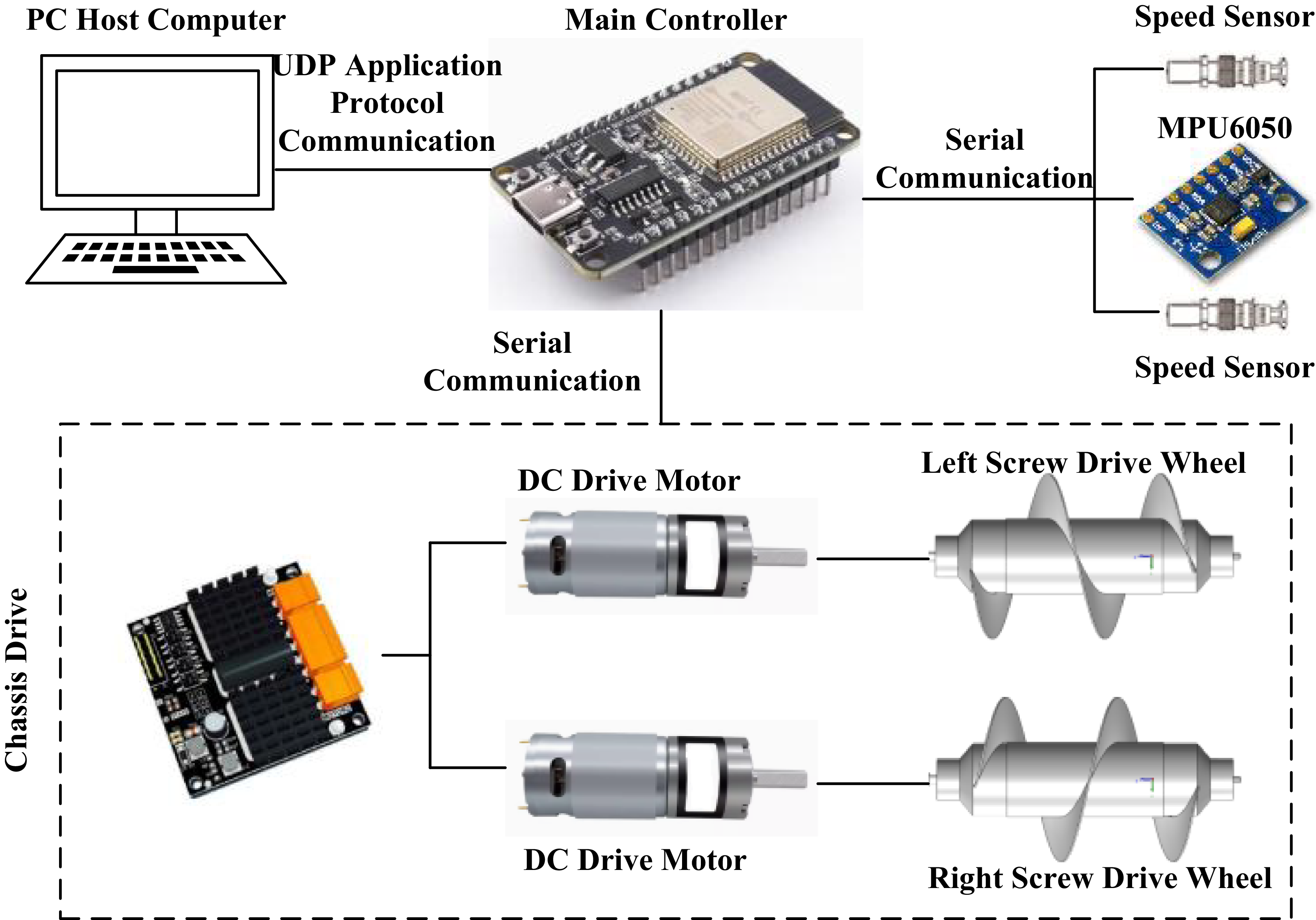
Effective control of travel direction and speed is key to ensuring normal operation of the mechanism on soft ground. The chassis control system composition shown in Figure 8 indicates that the system consists of four units: command, control, execution, and feedback. The command unit is based on the host computer. The control unit uses the ESP32-DevKitC controller as the main core. Through its built-in Wi-Fi module and based on the UDP application protocol, it receives control commands from the host computer and returns sensor data and system status in real time. The execution unit uses a 12A/24V dual-channel DC brushed motor driver. This driver can sustain a continuous working current of up to 12.8A/channel and a total power of 380W. It receives PWM signals from the ESP32-DevKitC controller for precise speed regulation and digital signals to control motor direction. The feedback unit includes speed sensors and a six-axis accelerometer. The speed sensors are used to monitor the rotational speed of the left and right screw drive wheels in real time. The MPU6050 six-axis accelerometer is responsible for measuring the attitude angles (pitch, roll, yaw) of the mechanism in real time, providing heading angle feedback for navigation control. During specific operation, the control module receives instructions via the wireless receiver and, integrating the wheel speed feedback from the speed sensors and the heading feedback from the six-axis accelerometer, sends precise commands to the motor drive module.
Control system composition.

Figure 8. Long description
A diagram of a control system for a screw-drive mechanism. Panel A: A PC host computer communicates with a main controller using UDP application protocol. The main controller is connected to an MPU6050 speed sensor via serial communication. Panel B: The main controller is also connected to a chassis drive, which includes two DC drive motors. Each motor drives a screw wheel, with one motor driving the left screw drive wheel and the other driving the right screw drive wheel.
4.2. Control principle
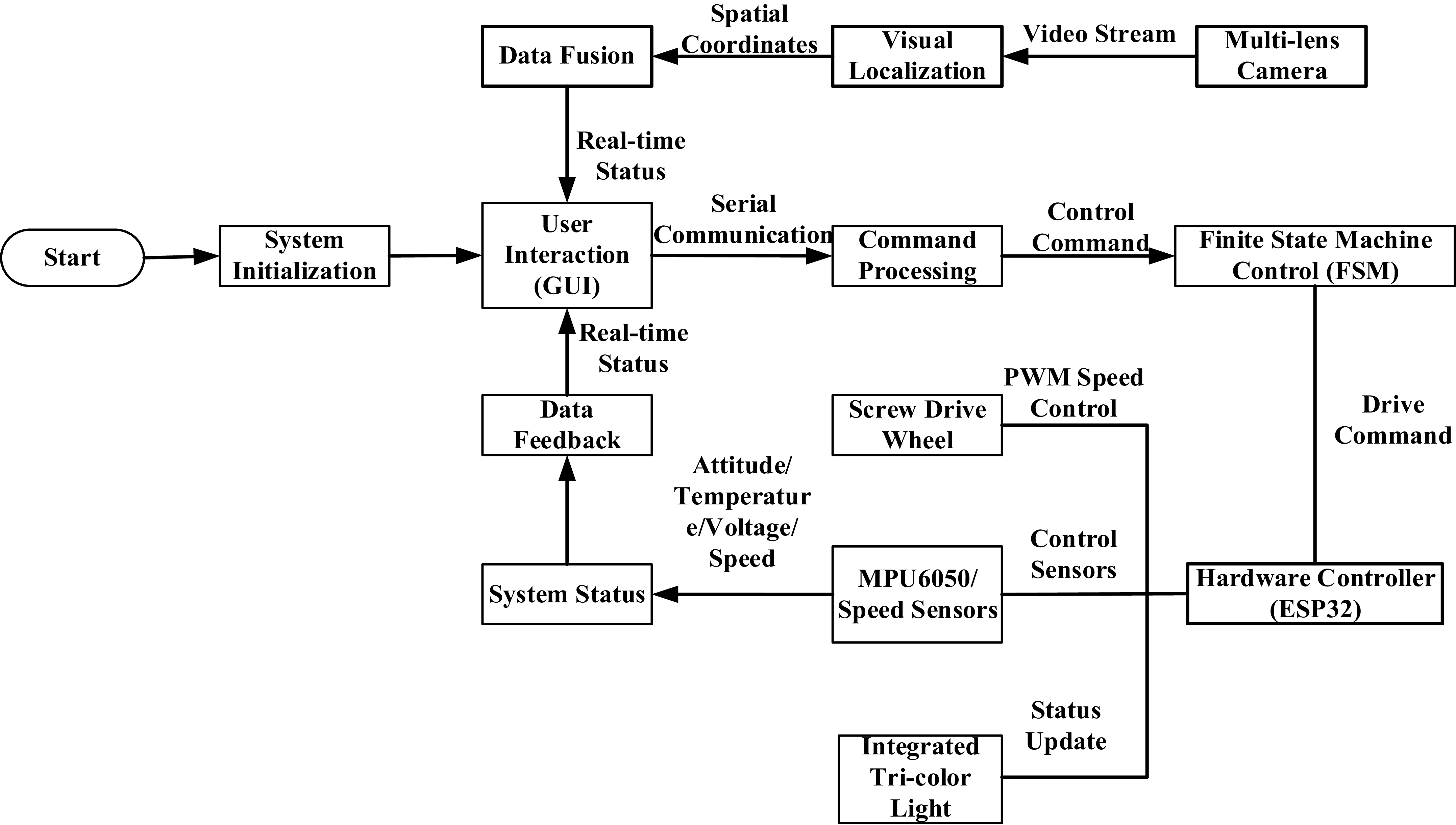
Figure 9 shows the software architecture of the dual-screw robot control system. The user sends commands through the GUI, and the backend control system transmits the commands to the ESP32-DevKitC controller via the UDP application protocol. The controller uses FSM logic to independently adjust the speed and direction of the left and right screw wheels, achieving six motion modes including forward, backward, and steering [Reference Li, Wang and Duan21]. The system monitors key parameters in real time, obtains attitude data via the MPU6050, and collects battery voltage and motor current using a 12-bit ADC, and a multi-vision system provides precise positioning. All status data is sent back to the control end via UDP for 3D visual monitoring. The system integrates intelligent deceleration mechanisms, including stepped speed reduction (10 steps/50 ms) and exponential decay stop (decay rate 0.88), ensuring operational safety.
Software architecture of the dual-screw robot control system.

4.3. Chassis motion control strategy
The motion control of the chassis requires independent adjustment of the speed and rotational direction of the left and right screw wheels. When the two wheels rotate at equal speeds in opposite directions, the chassis moves forward or backward, depending on the rotational directions. Differential steering is achieved by assigning different rotational speeds to the two wheels, while in-place rotation is obtained when both wheels rotate at equal speeds in the same direction. These wheel-speed combinations enable the chassis to perform forward, backward, steering, and rotational motions.
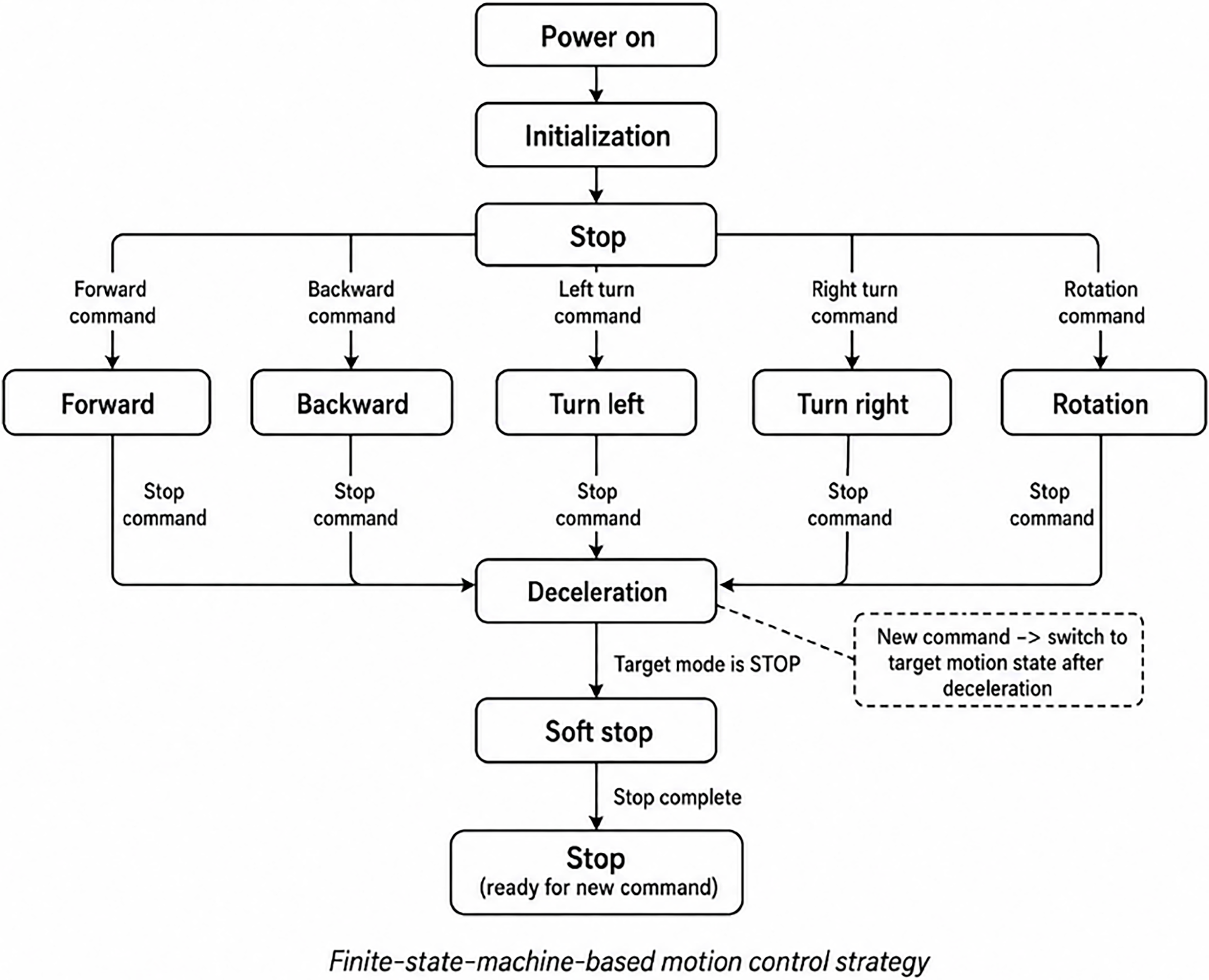
A FSM control strategy is used for motor control, as shown in Figure 10. Motion states include forward, backward, stop, left turn, and right turn. User GUI buttons trigger state transitions. During transitions, if the current state is motion, a deceleration process is executed to ensure a smooth transition. The system incorporates a soft-stop mechanism. When the user selects “Stop” or an abnormality is detected (e.g., high temperature or low battery), an exponential decay method (decay rate 0.88) is used to gradually reduce the motor power to zero. The state machine manages the power gradient, avoiding sudden stops that could impact the motor and mechanical structure, significantly extending equipment life and improving operational smoothness [Reference Wang, Liu and Zhang22].
Finite-state-machine-based motion control strategy.

Figure 10. Long description
A flowchart illustrating a finite-state-machine-based motion control strategy. The process begins with powering on, followed by initialization, and then proceeds to a stop state. From the stop state, commands can be issued to move forward, backward, turn left, turn right, or rotate. Each of these commands leads to a respective action state. From any action state, a stop command can be issued, leading to a deceleration state. After deceleration, the system enters a soft stop state, and once the stop is complete, it returns to the stop state, ready for new commands. If a new command is issued during deceleration, the system switches to the target motion state after deceleration.
5. Preliminary prototype exploration
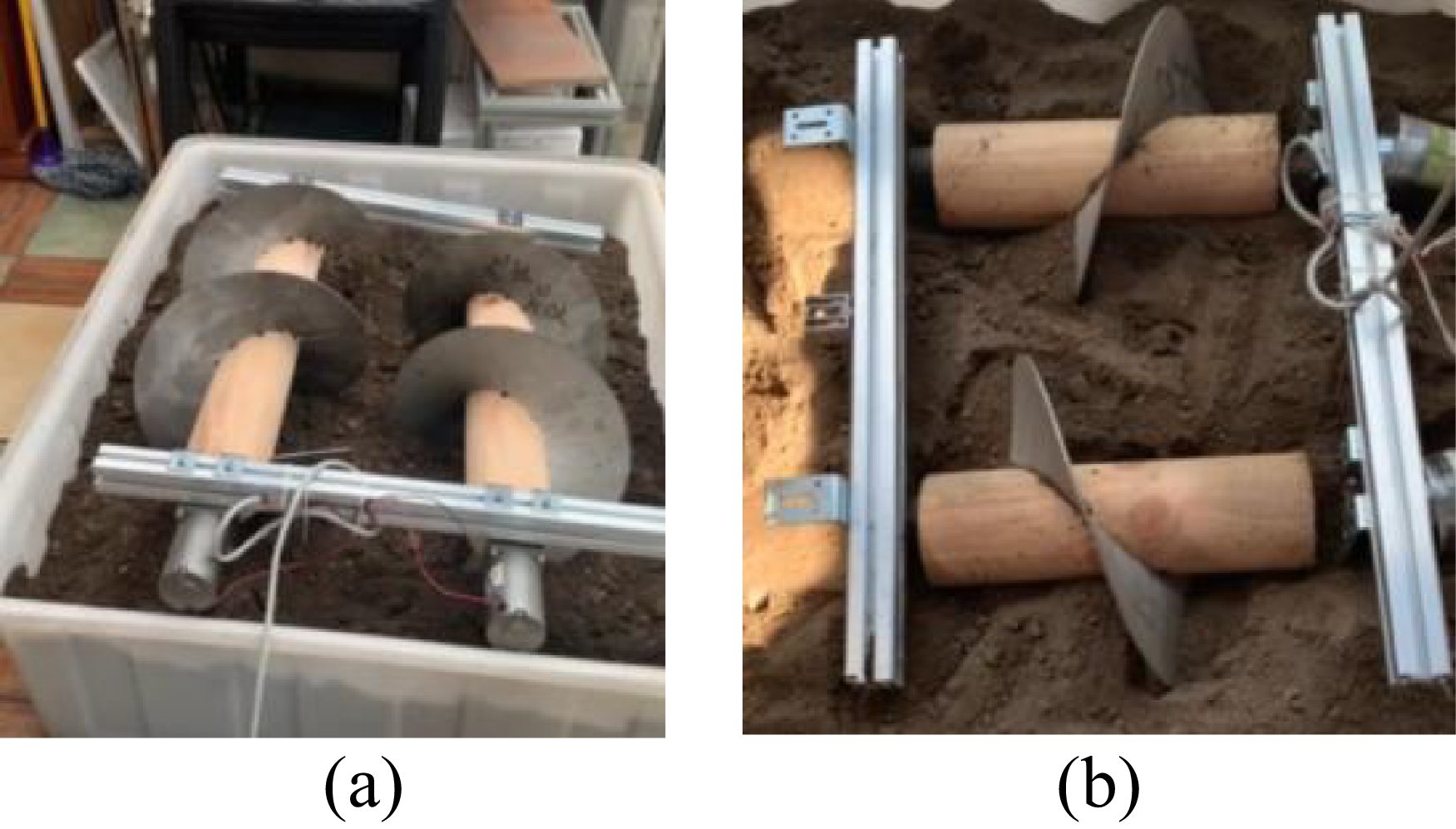
Figure 11 shows the mud-terrain tests conducted with two different motors using the same single-start screw blade configuration (pitch 300 mm, inner diameter 100 mm, outer diameter 300 mm). In Figure 11(a), a 15 W permanent-magnet DC gear motor with a rated torque of 0.04 N·m was unable to provide sufficient driving torque, and the prototype failed to move in the mud. In Figure 11(b), a 120W DC planetary gear motor with a rated torque of 19 N·m enabled successful forward locomotion. These preliminary results indicate that adequate output torque is essential for screw-driven motion in soft terrain.
Mud-terrain tests with different motors: (a) 15 W geared DC motor; (b) 120 W planetary geared DC motor.

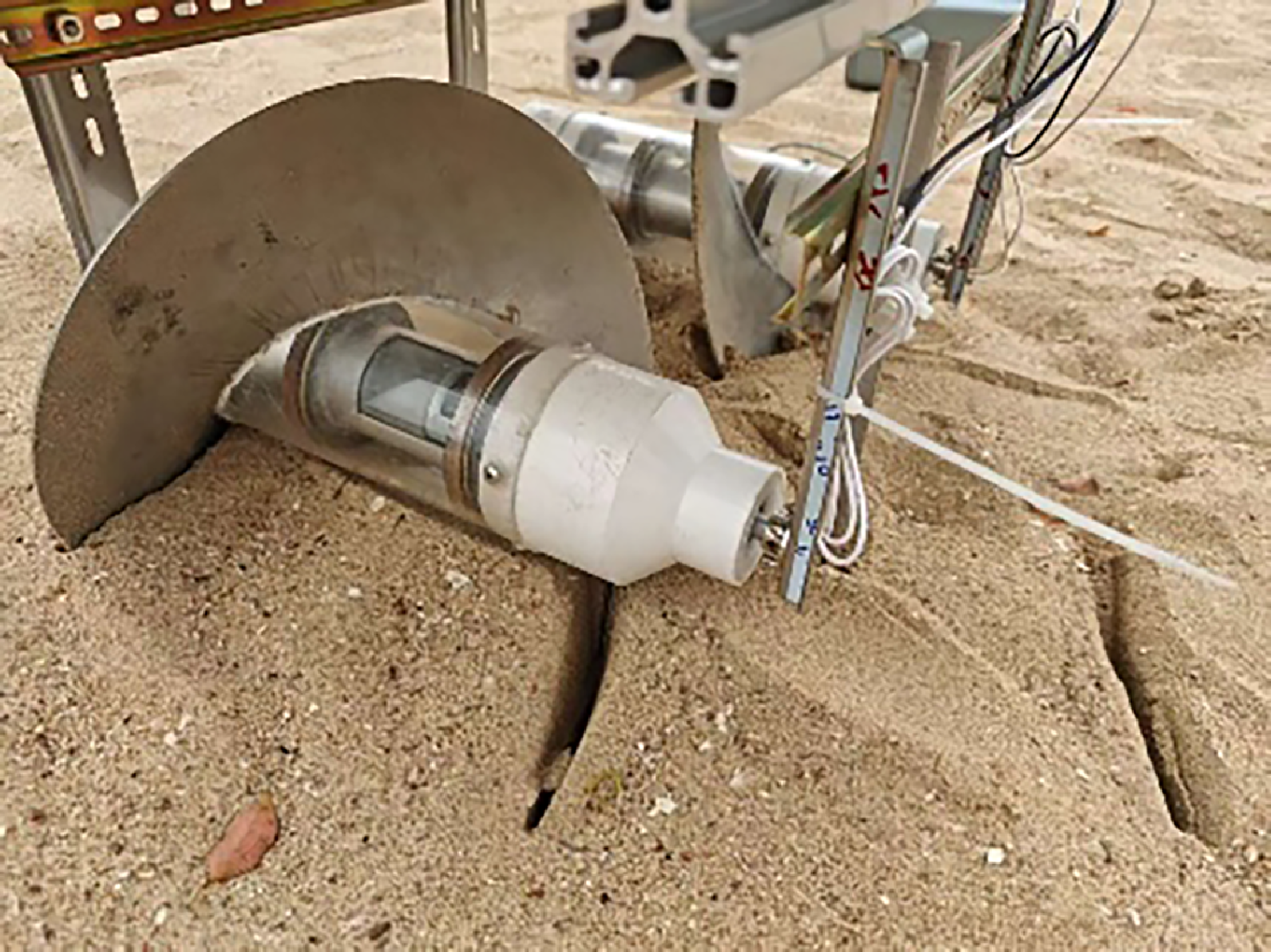
Figure 12 shows the first prototype tested with the same screw blade configuration while the other structural parameters remained unchanged. The test was unsuccessful because the screw blade adopted sharp right-angled edges rather than rounded edges, and its weight and outer diameter were excessively large. As a result, the screw wheel experienced severe sinkage, which markedly increased the running resistance beyond the motor output capacity. This preliminary test provided useful guidance for the subsequent refinement of the screw blade geometry and the overall prototype design.
Sinkage of the screw blade in soft terrain.

6. Loose sand travel experiment
6.1. Test prototype
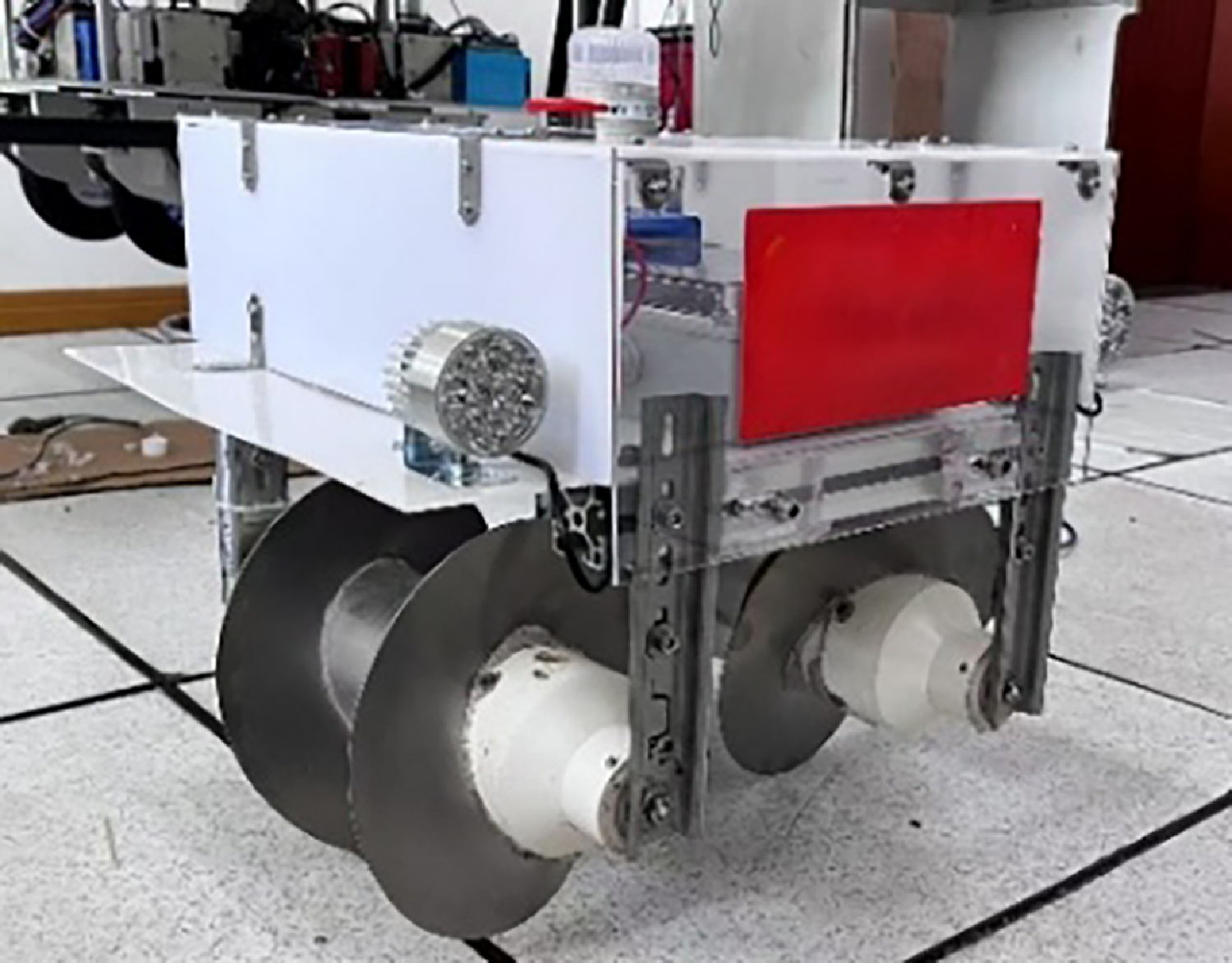
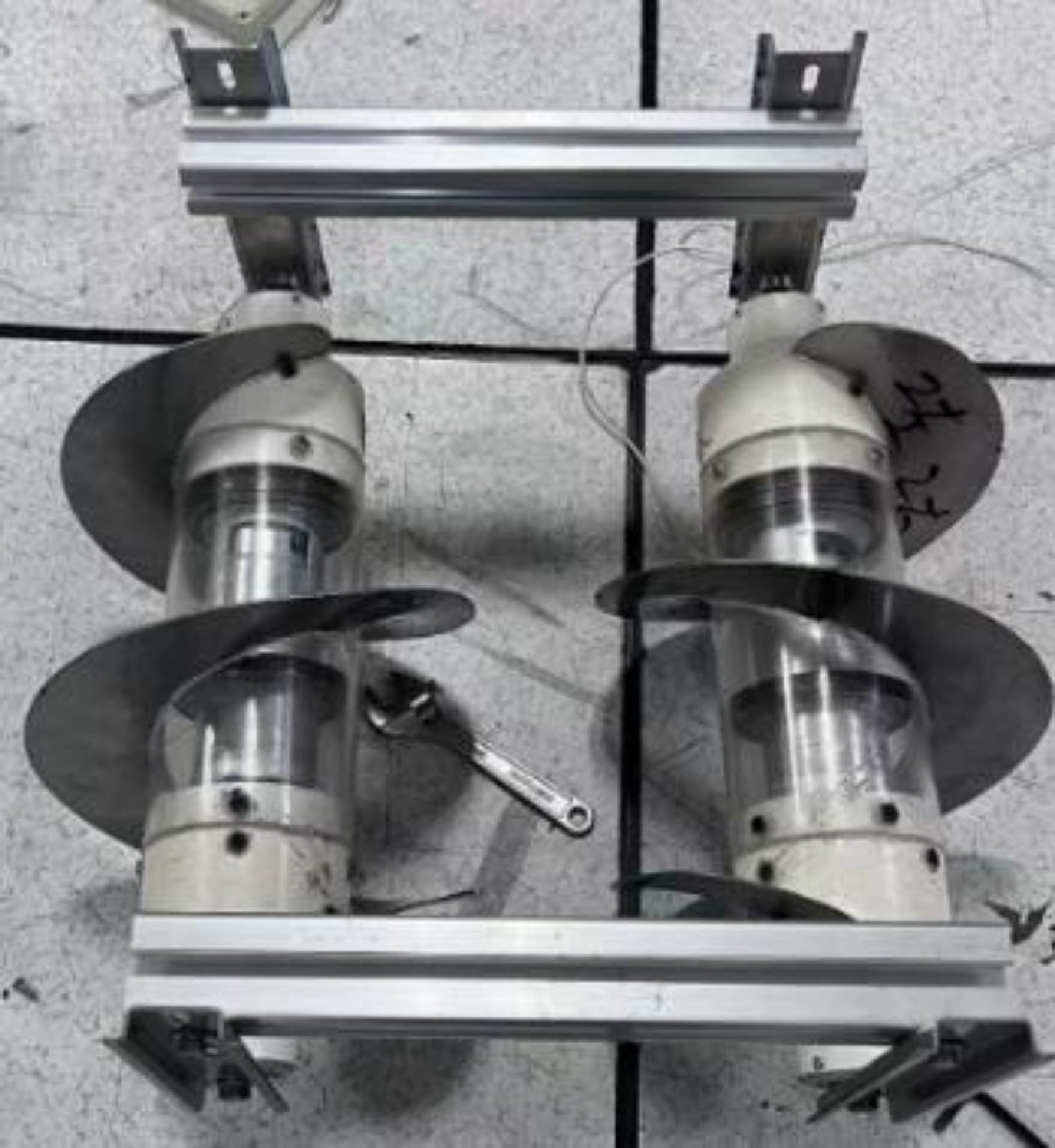
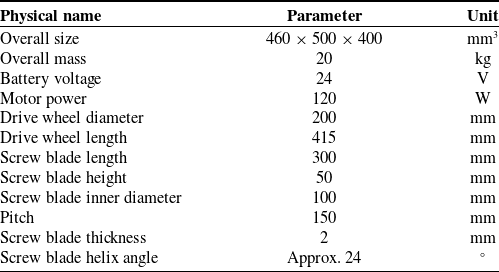
To verify the travel performance of the designed dual-screw-driven robot chassis in complex soft terrains and the reliability of the control system, a physical prototype of the dual-screw-driven robot was built, as shown in Figure 13. This prototype chassis adopts a symmetrically arranged enclosed screw drive wheel structure, as shown in Figure 14. Each drive wheel is driven by an independent DC brushless motor. The motor and transmission components are all housed within a sealed cavity. The middle drum uses a transparent quartz glass tube, allowing clear observation of whether sand particles and dust enter and the performance of the motor inside the drum. Table I lists the main design parameters of the dual-screw-driven robot.
Physical prototype of the dual-screw-driven robot.

Physical prototype of the dual-screw-driven robot chassis.

6.2. Performance evaluation
6.2.1. Slip rate
Slip in granular media is crucial for judging whether a vehicle can travel normally on soft ground. An excessive slip rate indicates poor travel performance on soft ground [Reference Guo, Liu, Sun and Zhao23].
Typically, robots operating on soft ground experience slip due to the compaction and failure of medium particles. The slip rate
 $S_{x}$
for a screw blade drive wheel traveling on soft ground is:
 \begin{equation} S_{x}=\frac{P\omega /2\pi -v}{P\omega /2\pi }\times 100\mathrm{\% } \end{equation}
 \begin{equation} v=\frac{P\left(1-S_{x}\right)}{2\pi }\omega \end{equation}
where
 $v$
is the travel speed of a single screw blade drive wheel. When the slip rate stabilizes, the travel speed
 $v$
is proportional to the rotational speed
 $\omega$
.
6.2.2. Sinkage
Sinkage is one of the important indicators for evaluating travel capability. Greater sinkage leads to increased travel resistance for the entire machine, consequently reducing the device’s travel capability. When the slip rate stabilizes, the sinkage also stabilizes. The calculation formula is:
 \begin{equation} Z=kS_{x}+Z_{0} \end{equation}
where
 $Z_{0}$
is the static sinkage, and
 $k$
is related to the ground physical parameters and screw geometry.
6.3. Test result analysis
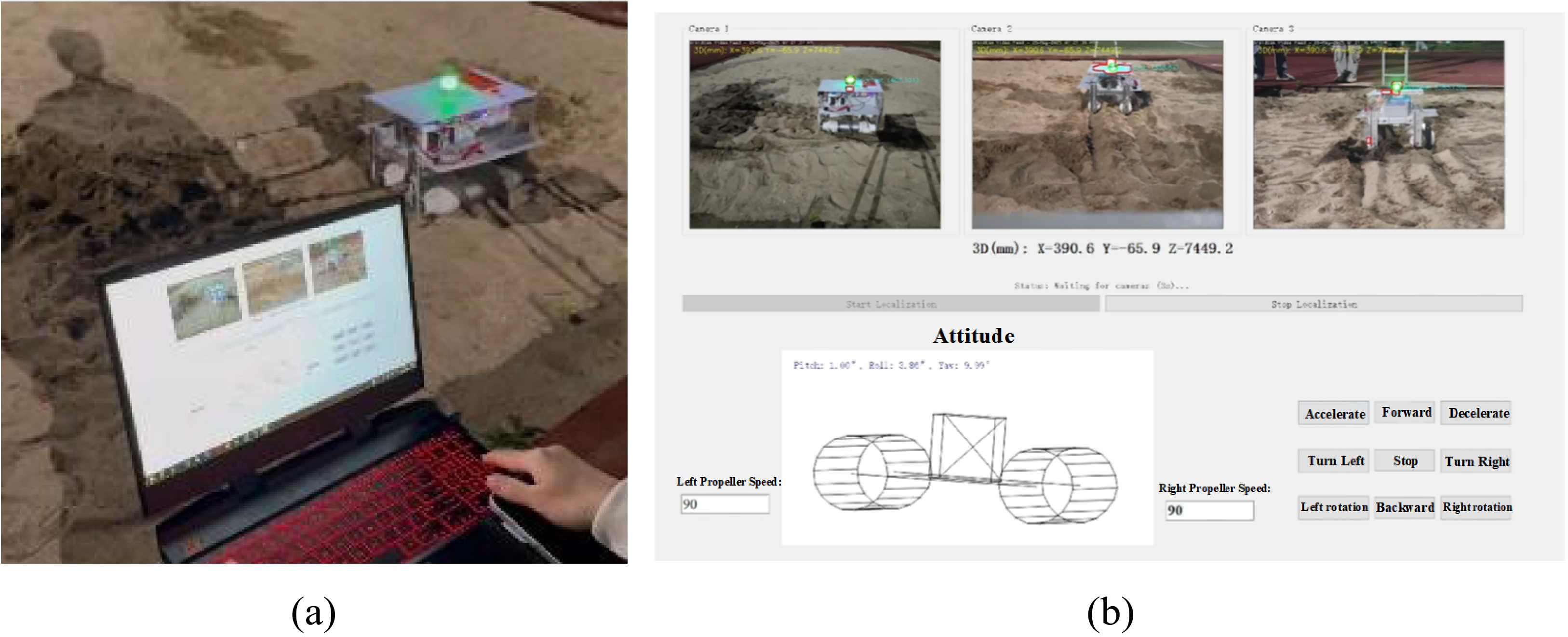
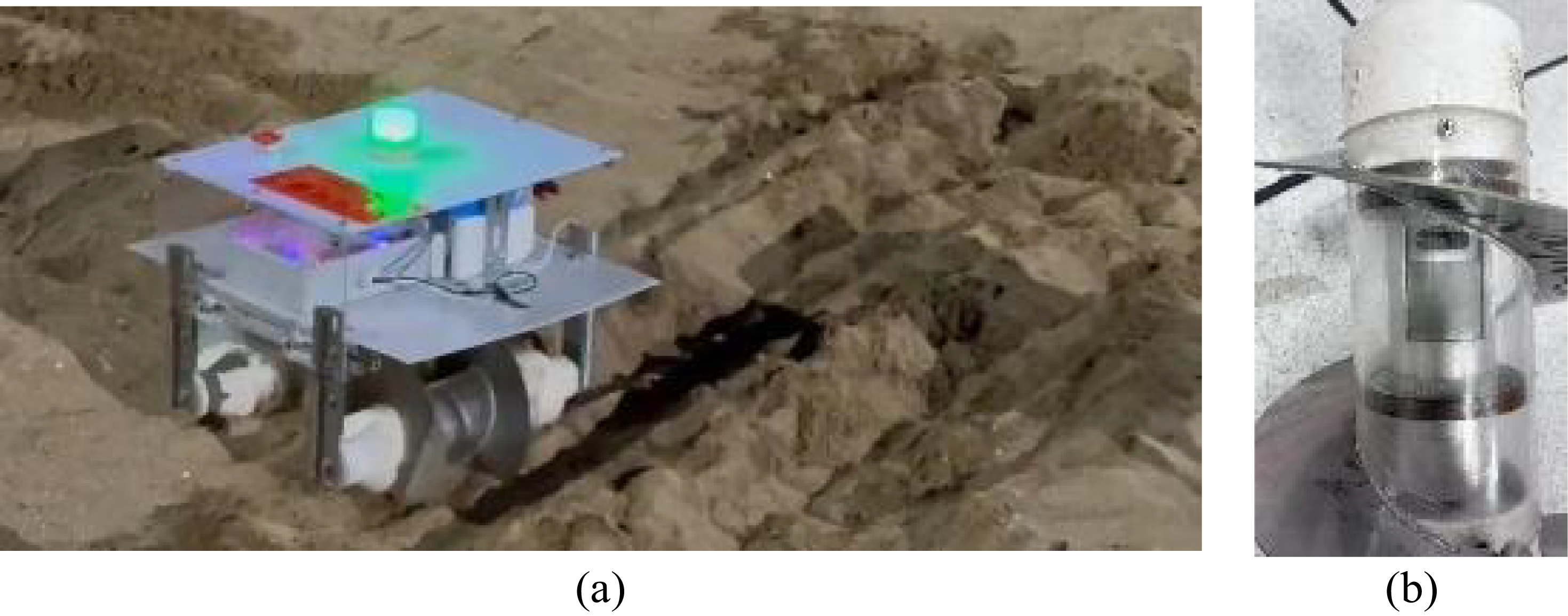
Experiments were conducted with the dual-screw-driven robot in a loose sand environment, as shown in Figure 15. The test site was an outdoor artificial sand area with a thick sand layer, low moisture content, and a flat surface. The test temperature was 25°C, and environmental conditions were stable. The host computer sent control commands in real time via the wireless communication module and collected data on motor speed, current, voltage, and IMU attitude for subsequent analysis.
Main parameters of the dual-screw-driven robot.

Table I. Long description
A table with 11 rows and 3 columns detailing the physical name, parameter, and unit of a dual-screw-driven robot. The columns are labeled ‘Physical name’, ‘Parameter’, and ‘Unit’. Row 1: Overall size, 460 x 500 x 400, mm^3. Row 2: Overall mass, 20, kg. Row 3: Battery voltage, 24, V. Row 4: Motor power, 120, W. Row 5: Drive wheel diameter, 200, mm. Row 6: Drive wheel length, 415, mm. Row 7: Screw blade length, 300, mm. Row 8: Screw blade height, 50, mm. Row 9: Screw blade inner diameter, 100, mm. Row 10: Pitch, 150, mm. Row 11: Screw blade thickness, 2, mm. Row 12: Screw blade helix angle, Approx. 24, degrees.
Dual-screw-driven robot test.

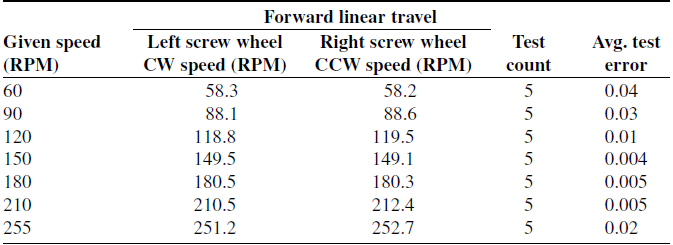
To investigate the relationship between the screw drive wheel speed and the robot’s linear travel speed, a speed test was conducted. The test used PWM signals to control the motor speed, with a target speed range of 30–255 RPM, measuring the actual speed of the left and right screw drive wheels in both clockwise and counterclockwise directions.
During the test, the rotational speed of the screw drive wheels was measured, as shown in Table II.
Screw drive wheel rotational speed error experiment.

Table II. Long description
A table titled Screw drive wheel rotational speed error experiment. The table has seven rows and five columns. The columns are labeled Given speed (RPM), Left screw wheel CW speed (RPM), Right screw wheel CCW speed (RPM), Test count, and Avg. test error. The rows present the following data: Row 1: Given speed, 60; Left screw wheel CW speed, 58.3; Right screw wheel CCW speed, 58.2; Test count, 5; Avg. test error, 0.04. Row 2: Given speed, 90; Left screw wheel CW speed, 88.1; Right screw wheel CCW speed, 88.6; Test count, 5; Avg. test error, 0.03. Row 3: Given speed, 120; Left screw wheel CW speed, 118.8; Right screw wheel CCW speed, 119.5; Test count, 5; Avg. test error, 0.01. Row 4: Given speed, 150; Left screw wheel CW speed, 149.5; Right screw wheel CCW speed, 149.1; Test count, 5; Avg. test error, 0.004. Row 5: Given speed, 180; Left screw wheel CW speed, 180.5; Right screw wheel CCW speed, 180.3; Test count, 5; Avg. test error, 0.005. Row 6: Given speed, 210; Left screw wheel CW speed, 210.5; Right screw wheel CCW speed, 212.4; Test count, 5; Avg. test error, 0.005. Row 7: Given speed, 255; Left screw wheel CW speed, 251.2; Right screw wheel CCW speed, 252.7; Test count, 5; Avg. test error, 0.02.
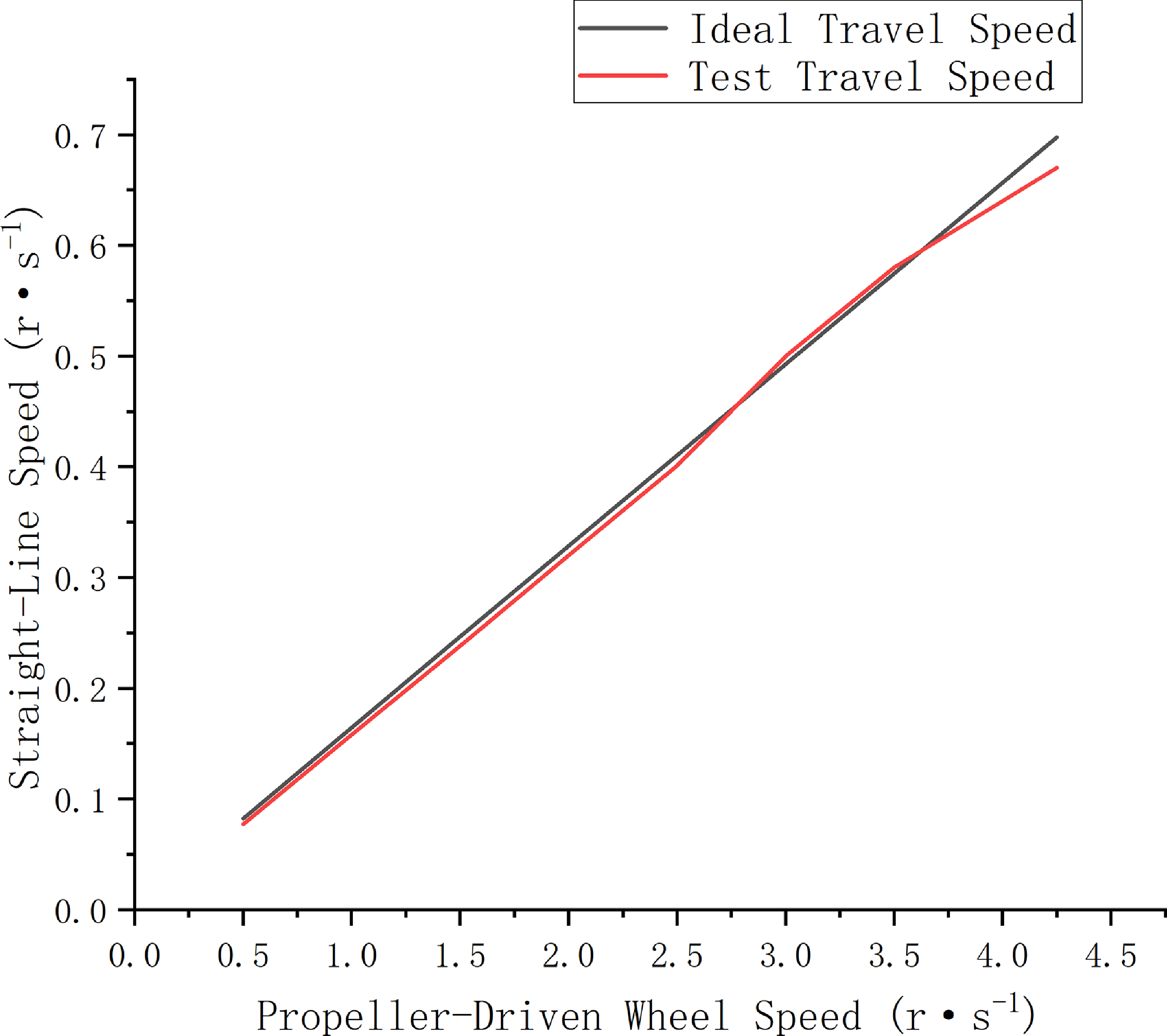
From the table, when the screw drive wheel performs rotational motion, the average error is about 0.026 when the given speed is between 0 and 120 RPM. When the given speed is between 120 and 210 RPM, the error is about 0.0046. At the maximum speed, the error becomes 0.02. This indicates that when the screw drive wheel rotates, the error decreases as the speed increases. Based on the test results, the fitted curve between the screw drive wheel speed and the robot’s linear travel speed is shown in Figure 16. The screw drive wheel speed shows a linear correlation with the travel speed, and as the screw drive wheel speed increases, the robot’s linear travel speed also increases. The coefficient of determination R2 is 0.9974, indicating a high linear correlation.
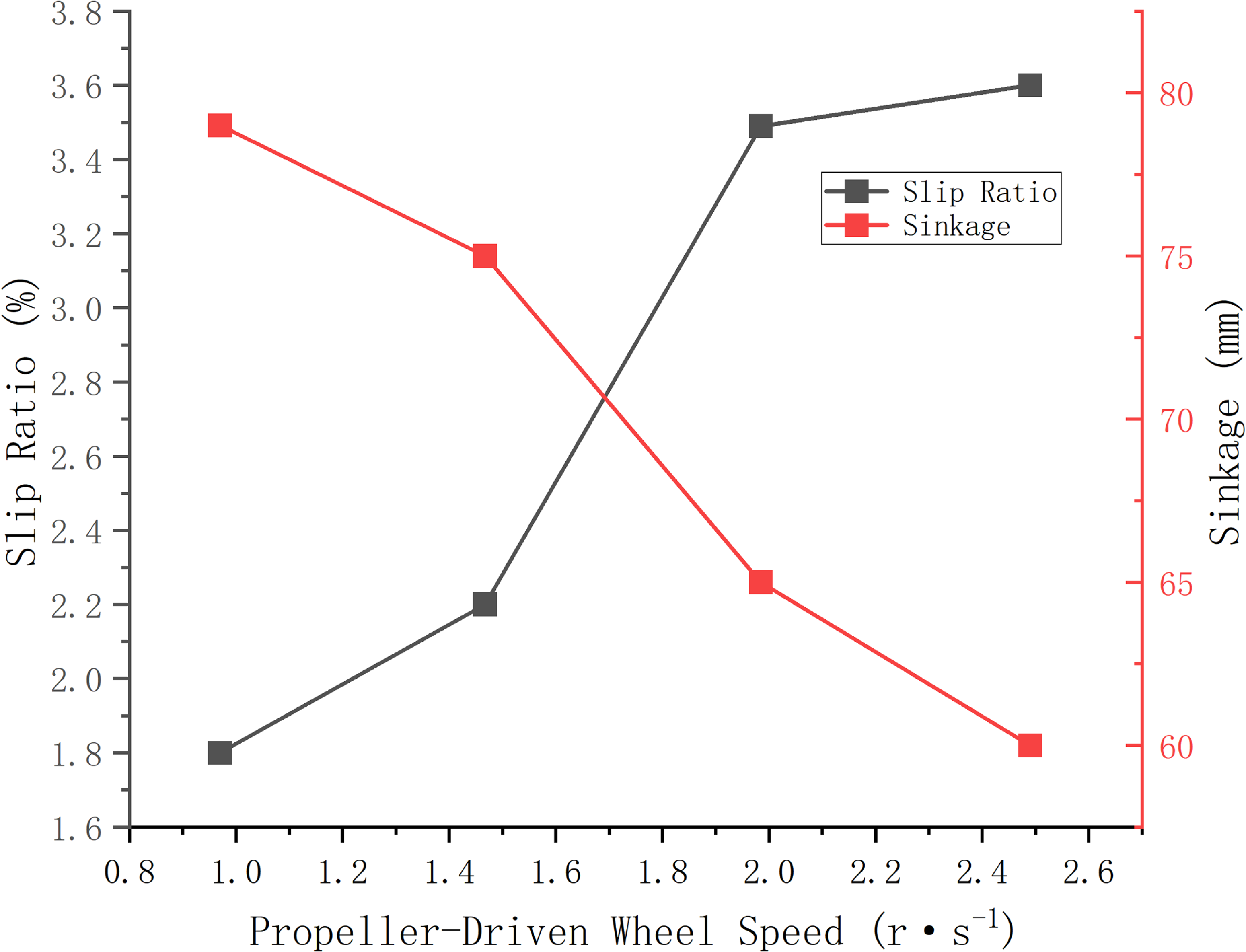
The travel slip rate calculated from the experimental travel speed and the ideal travel speed is shown in Figure 17. The experimental results show that as the screw drive wheel speed increases, and the robot’s travel speed increases, its slip rate also increases. When the screw drive wheel speed is 2.48 r·s−1, and the linear travel speed reaches 0.4 m·s−1, the slip rate reaches a maximum of about 3.6%. The maximum sinkage is about 79 mm. The tests prove that in the low and medium speed ranges, the chassis operates stably without significant slipping or sinking, indicating that the screw drive wheel has high propulsion efficiency in loose media.
The sealing verification of the screw drive wheel is shown in Figure 18. After 30 minutes of continuous operation in a loose sand environment, the chassis screw wheels were disassembled. In Figure 15(b), it can be clearly seen that the interior of the drive wheels remains clean, with no significant sand particle penetration or dust accumulation. The motor cavity and bearing surfaces show no wear marks, and the protective structure shows no loosening or damage. The results indicate that the enclosed screw drive structure has good protective capability in sandy environments, effectively avoiding mechanical wear and performance degradation caused by sand intrusion.
Fitted curve of screw drive wheel speed vs. robot linear travel speed.

Variation curves of slip rate and sinkage.

Screw drive wheel sealing test.

7. Discussion
The experimental results demonstrate that the proposed enclosed dual-screw-driven chassis can achieve stable locomotion on loose and deformable terrains. The maximum slip ratio of approximately 3.6% indicates that the screw propulsion mechanism can generate effective traction through continuous interaction between the screw blades and surrounding media, while the maximum sinkage depth of approximately 79 mm confirms the capability of the chassis to maintain mobility under low-bearing-capacity conditions. Previous studies have shown that the locomotion performance of screw-driven systems is strongly influenced by screw structural parameters, soil properties, and the interaction between screw blades and terrain media [Reference Villacrés and Padrón1, Reference Nagaoka, Otsuki, Kubota and Tanaka17]. The results obtained in this study further verify the feasibility of applying screw propulsion to compact mobile robot chassis for soft-terrain applications.
The main contribution of this work is the integration of propulsion capability and environmental reliability through the enclosed screw-wheel design. Traditional screw-driven vehicles generally expose propulsion components directly to external environments, which may reduce long-term reliability due to particle intrusion and mechanical wear in granular terrains [Reference Knight, Rush and Stinson14]. Recent studies have explored different approaches to improve robot adaptability in complex environments. Hu et al. proposed an origami-wheel robot for sandy terrain locomotion by improving terrain adaptability through structural deformation [Reference Hu, Shu and Han12]. Ge et al. developed a transformable wheel-spoke-paddle amphibious robot to achieve multi-environment locomotion through structural reconfiguration [Reference Ge, Gao and Chen24]. Compared with these approaches, the proposed chassis focuses on improving operational reliability by integrating the motor and transmission components inside the screw wheel. The sealing experiment, where no obvious sand intrusion was observed after continuous operation, provides experimental evidence supporting the effectiveness of the enclosed structure.
The interaction between the propulsion mechanism and deformable terrain is an important factor affecting robot mobility. Terramechanics studies have demonstrated that soil deformation, traction force, and slip conditions significantly influence robot locomotion performance on loose terrain [Reference Ishigami, Miwa, Nagatani and Yoshida20]. For screw-driven systems, geometric parameters of the screw structure directly affect propulsion characteristics. Liu et al. investigated the influence of screw structural parameters on propulsion performance and highlighted the importance of structural optimization [Reference Liu, Liu, Chen, Wang and Li25]. Furthermore, screw-based locomotion has recently been extended to extreme environments. Thakker et al. developed the EELS robot using a screw-based active skin mechanism, demonstrating the potential of screw-driven systems for mobility in challenging terrains [Reference Thakker, Paton, Strub, Swan, Daddi, Royce, Tosi, Gildner, Vaquero, Veismann, Gavrilov, Marteau, Bowkett, Loret, Nakka, Hockman, Orekhov, Hasseler, Leake, Nuernberger, Proença, Reid, Talbot, Georgiev, Pailevanian, Archanian, Ambrose, Jasper, Etheredge, Roman, Levine, Otsu, Melikyan, Nash, Rieber, Carpenter, Jain, Shiraishi, Pastor, Yearicks, Ingham, Robinson, Agha, Travers, Choset, Burdick and Ono26]. Although the propulsion model developed in this study is simplified, it provides a theoretical explanation of the axial and lateral forces generated during screw rotation and supports the analysis of the proposed chassis motion characteristics.
The control strategy also plays an important role in maintaining stable locomotion under deformable terrain conditions. Soft terrains introduce uncertainties caused by variable contact conditions and terrain deformation, which may affect robot motion stability and control performance [Reference Fahmi, Fink and Semini27]. The FSM-based controller adopted in this study provides a practical solution for coordinating the two independently driven screw wheels and enabling stable transitions among different locomotion modes. However, the current controller relies on predefined rules and lacks adaptive capability when facing unknown terrain variations and dynamic disturbances.
Several limitations should be noted. First, the current propulsion analysis is based on a simplified model and does not fully capture complex soil–screw interactions, including particle flow and soil compaction effects. Second, the experimental validation mainly focused on loose sand and mud-like terrains, and further investigations under different soil conditions, moisture levels, and external disturbances are required. Third, the current control framework does not incorporate environmental perception or learning-based optimization. Future work will focus on developing more accurate soil–robot interaction models and adaptive control strategies to further improve the autonomous mobility of the proposed chassis.
8. Conclusion and further work
This study proposed and developed an enclosed dual-screw-driven robot chassis for locomotion on soft and low-bearing-capacity terrains. The proposed design integrates the screw propulsion mechanism, internal drive motors, and protective housing into a compact structure, aiming to improve the reliability of mobile robots operating in sandy and granular environments. A simplified propulsion-force analysis and kinematic model were established to describe the motion characteristics of the chassis, and an FSM-based control strategy was developed to coordinate the two independently driven screw wheels and achieve stable transitions among different locomotion modes.
Prototype experiments verified the effectiveness of the proposed chassis for soft-terrain locomotion. The relationship between screw-wheel rotational speed and vehicle velocity exhibited strong linearity, with a coefficient of determination of
 $R^{2}=0.9974$
, demonstrating predictable motion characteristics. In loose sand experiments, the maximum slip ratio was approximately 3.6%, indicating that the dual-screw propulsion mechanism can effectively generate traction while maintaining low slip performance. The maximum sinkage depth was approximately 79 mm, confirming the adaptability of the proposed chassis to deformable terrain. Furthermore, the sealing experiment showed that no obvious sand intrusion occurred after continuous operation, demonstrating the capability of the enclosed structure to protect internal drive components and improve environmental reliability.
The proposed chassis provides a practical solution for combining terrain adaptability and mechanical reliability in soft-terrain mobile robots. By enclosing the motor and transmission components inside the screw wheel, the proposed design reduces direct exposure of critical components to external granular media while maintaining the advantages of screw propulsion. This approach provides a reference for the development of mobile robots intended for sandy, muddy, and other unstructured environments.
Despite these achievements, several limitations remain. The current propulsion model is based on simplified assumptions and does not fully capture complex soil–screw interactions, including particle flow, soil compaction, and variations in soil properties. In addition, the experimental validation was mainly conducted on loose sand and mud-like terrains, and further investigations under diverse soil conditions, moisture levels, and external disturbances are required. Moreover, the current FSM-based controller relies on predefined motion states and lacks autonomous adaptation capability in highly dynamic environments.
Future work will focus on improving the autonomous adaptability of the proposed chassis by integrating terrain perception, advanced soil–robot interaction modeling, and intelligent control strategies. Recent studies have demonstrated that soft mobile robot development is gradually moving toward more adaptive and intelligent locomotion strategies [Reference Sun, Abudula, Yang, Chiang, Wan, Ozel, Hall, Skorina, Luo and Onal28]. In particular, world-model-based reinforcement learning methods provide a promising approach for robot motion control by learning environmental dynamics and reducing the dependence on real-world trial-and-error interactions [Reference Ren, Zhang, Qu, Lu, Xu and Yu29, Reference Hafner, Pasukonis, Ba and Lillicrap30]. Therefore, combining the proposed enclosed dual-screw-driven mechanism with learning-based adaptive controllers may further enhance the autonomous mobility and generalization capability of robots operating in unknown soft-terrain environments.
Supplementary material
The supplementary material for this article can be found at https://doi.org/10.1017/S0263574726103890.
Author contribution
Zeng Xiangxu initiated the research and was responsible for the preliminary design and optimization. Gao Shangbin conducted the propulsion force analysis, kinematic analysis, experimental design, and validation. Sun Qiang provided scientific guidance and key suggestions on the research direction. All authors contributed to the writing of the manuscript and approved the final version.
Financial support
This research received no specific grant from any funding agency, commercial, or not-for-profit sectors.
Competing interests
The authors declare no conflicts of interest exist.
Artificial intelligence usage statement
During the preparation of this manuscript, the authors used the artificial intelligence tool ChatGPT for language and grammatical refinement, as well as for organizing research concepts. All AI-generated content was thoroughly reviewed and verified by the authors, who take full responsibility for the content and accuracy of this paper.