Introduction
Hazelnut (Corylus avellana L.) is the second-largest commercially grown nut crop worldwide, after almond (Prunus minutiflora Engeim.), and it is native to the Black Sea coast of Turkey, where it grows as a shrub on the steep slopes of the mountains and on the plains (Bozoglu et al. Reference Bozoglu, Baser, Topuz and Eroglu2019). This nut is grown in 31 countries, and Turkey is the world’s largest hazelnut producer (67.09%) and exporter (76%), followed by Italy, Spain, the United States, and Greece (FAO 2019). There has been an increase in production In Georgia, Azerbaijan, Chile, and some other countries due to the fact that world production is largely dependent on one country. Hazelnut is not only one of the most important export crops of Turkey, but also a key factor in maintaining social, economic, and environmental sustainability in the rural and urban parts of the Black Sea region in Turkey.
The natural growth of Turkish hazelnut is as multistemmed bush (called an “Ocak”) grown in commercial orchards and represents a different type of cultivation method compared with other countries. The Ocak growing system, the relatively high rainfall, and fertile soils of hazelnut orchards in the Black Sea Region favor the establishment of a wide range of annual and perennial weed species (Mennan et al. Reference Mennan, Ngouajio, Isik and Kaya2006). Weed management is critical in hazelnut production to reduce competition, conserve nutrients, and improve hand-harvesting efficiency. The normal weed control practice in hazelnut is two glyphosate applications, one in early spring and another in early July to facilitate picking of nuts from the ground in August (Mennan et al. Reference Mennan, Ngouajio, Isik and Kaya2006). Weed control without the use of glyphosate herbicides is an expensive and time-consuming task in orchard management. Mechanical weed control methods are perceived to be environmentaly friendly and could help to prevent public pressure to reduce herbicide use in orchards (Belding et al. Reference Belding, Majek, Lokaj, Hammerstedt and Ayeni2004; Buhler et al. Reference Buhler, Gunsolus and Ralston1992; Hooker et al. Reference Hooker, Vyn and Swanton1997). Mechanical weed management alone can be very expensive, and its use makes adequate long-term weed control while maintaining optimum yield in hazelnut difficult. Adopting glyphosate use to hazelnut production has resulted in important changes, enabling farmers to better capitalize on relatively low-cost weed control solutions and allowing them to move away from conventional plow-based to no-tillage and reduced-tillage production systems in Turkey.
Glyphosate is the most widely use herbicide in the world and is registered in more than 130 countries. Glyphosate is effective against more than 100 annual broadleaf weed and grass species and more than 60 perennial weed species (Dill et al. Reference Dill, Sammons, Feng, Kretzmer, Mehrsheikh, Bleeke, Honegger, Farmer, Wright and Haupfear2010). In 2015, the World Health Organization’s International Agency for Research on Cancer identified glyphosate as a probable human carcinogen (IARC 2015). Since March of 2015, many regulatory agency evaluations worldwide, including a European Food and Safety Authority evaluation and a U.S. Environmental Protection Agency evaluation, have been published that all reached a conclusion different from IARC by concluding that it is not likely that glyphosate is carcinogenic. The IARC evaluation created social concern in the political space beyond the scientific debate. Following a detailed toxicological and ecological assessment of the most extensive and relevant data set, the European Commission reached a decision, and glyphosate was reregistered until the end of 2022. Turkey is influenced by the European pesticide registration status of phytosanitary products. So the European Commission’s decision on glyphosate renewal in 2022 will affect Turkey as well.
Studies of the possible impacts of chemical phytosanitary products, including glyphosate, on the environment and human and animal health are important, but economic and ecological consequences of limiting the use of glyphosate in a country should not be overlooked. Appropriate, correct, and direct comparisons between glyphosate and alternative weed control options are often limited. Böcker et al. (Reference Böcker, Britz and Finger2018) have shown that possible restrictions of glyphosate lead to a tendency toward mechanical weed control in silage maize (Zea mays L.) production in Germany but do not lead to a more specific use of selective herbicides. Their model indicated a reduction in profit and an increase in energy consumption depending on maize price and yield expectations. In the United Kingdom, studies have shown that failure of glyphosate registration renewal would have a negative economic impact on agriculture, thus affecting gross domestic product (GDP), jobs, and tax revenues (Anonymous 2017). According to this Andersons Centre economic analysis, the possible ban of glyphosate could reduce the value of farm output by £940 million in the United Kingdom. Moreover, the impact of a glyphosate ban is not just limited to agriculture and may result in a GDP decrease of around £930 million. Falling profits in agriculture and the agricultural supply chain are projected to cause tax revenues to fall by £193 million. Similar research has been conducted in different parts of the world, and restriction of glyphosate in Asian countries resulted in higher weed control costs, lower weed control levels, and increased incidence of pests and disease (Malkanthi et al. Reference Malkanthi, Sandareka, Wijerathne and Sivashankar2019). In another study, Brookes (Reference Brookes2019) concluded that glyphosate restrictions may lead to the increased use of alternative herbicides, additional labor use, and mechanical and cultural weed control methods. These changes are expected to increase the annual cost of weed control between US$22 ha−1 and US$30 ha−1 (Brookes Reference Brookes2019).
Restrictions on the use of glyphosate in the world would affect not only conventional crops but also the cultivation of genetically modified herbicide-resistant (GMHR) crops. Potential economic and environmental impacts may affect global food security when genetically modified herbicide-tolerant crops are not cultivated (Brookes et al. Reference Brookes, Taheripour and Tyner2017). According to this assessment, a loss of US$6.76 billion in global farm income is expected. In particular, soybean [Glycine max (L.) Merr.], maize, and canola (Brassica napus L.) production will decrease by 18,600, 3,100 and 1,440 million kg, respectively. As a result, it is estimated that global welfare may decline by US$7.4 million per year. In addition, changes in land use are expected, and these land-use changes are likely to result in an additional 234 billion kg of carbon dioxide emissions (Brookes et al. Reference Brookes, Taheripour and Tyner2017).
Similar restrictions and prohibitions have already been enacted for many herbicides. Prohibition of 2,4-D and phenoxy herbicides in the United States may result in losses approaching US$1.2 billion by decreasing yield and increasing production costs and crop prices. Under the scenario of total phenoxy herbicide loss, the greatest yield losses obtained over the total cultivated areas were in peanut (Arachis hypogaea L.) (13%), alfalfa (Medicago sativa L.) (5.2%), barley (Hordeum vulgare L.) (3.8%), grain sorghum [Sorghum bicolor (L.) Moench. ssp. bicolor] (2.4%), and wheat (Triticum aestivum L.) (2.2%) (Szmedra Reference Szmedra1997). Comendant and Davies (Reference Comendant and Davies2018) indicated that paraquat restrictions caused a loss of US$29.8 to 60.2 million in the New Zealand GDP.
In many countries, including Turkey, glyphosate has probably experienced more scrutiny and debate in the media and by the public than any other pesticide. The possible restriction of glyphosate would have a negative economic impact on Turkish agriculture, affecting GDP, jobs, and tax revenues because of the role agricultural products play in the Turkish economy. However, “what-if scenarios” are not known to predict real challenges in hazelnut. The aim of this study was to determine the impact of the restriction of glyphosate on economic, social, and weed management aspects of Turkish hazelnut production.
Material and Methods
Study Areas
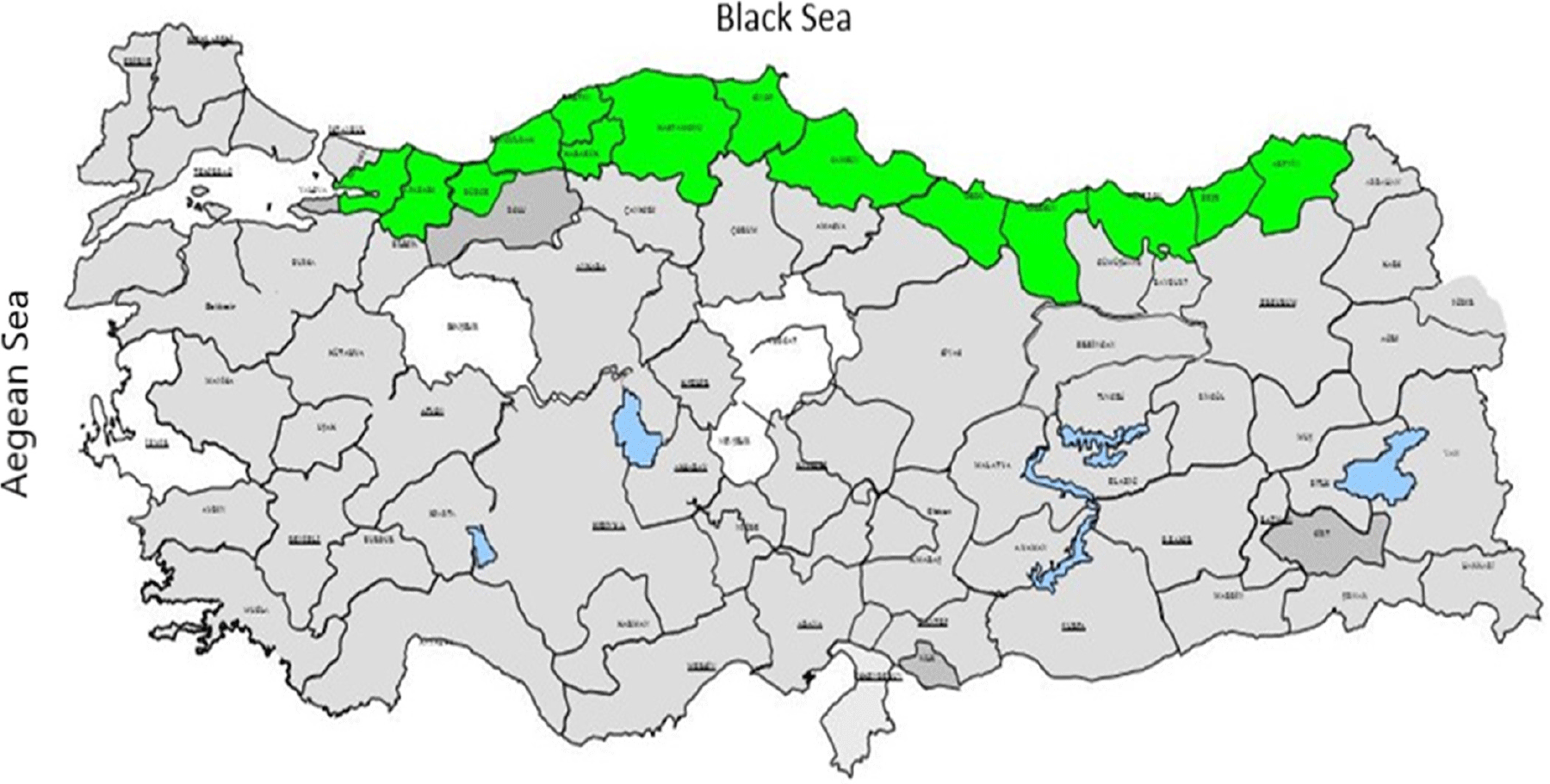
Surveys were conducted in 2018 and 2019 on the Black Sea coast of Turkey where hazelnut is intensively cultivated (Figure 1). The soil type of the region is mainly clay sandy and low pH (5.2 to 6.4. The average hazelnut orchards were 6- to 15-yr old, and each Ocak had 6 to 8 stems. All orchards were planted with trees 2.5 m apart within rows, with 4.5 m between rows.
Hazelnut planted and surveyed area (green) in the Black Sea region of Turkey.

Questionnaire Survey
The main data of the study were obtained by using face-to-face surveys with farmers. Sixty hazelnut-cultivating farmers were selected randomly from 16 provinces. The survey data were for the hazelnut production season of 2018 to 2019. The questionnaire was divided into five sections and included: population and farm characteristics, weed control practices, and economic and environmental impacts (Table 1). The first section included some questions on sociodemographic characteristics of farmers such as age, gender, education, and literacy. The second section focused on farm characteristics such as organization, land size, crop pattern, production values, and weed control costs. The third part of the survey mainly addressed weed control practices and solicited data on problematic weed species, herbicide use, application rate, formulation, treated area, herbicide application techniques, and alternative weed control methods. In the fourth part of the survey, we concentrated on the impact of weed control methods on hazelnut yields and cost analysis. The fifth and last part focused on farm-level environmental impacts such as changes associated with the possible reversal of carbon emission savings associated with reduced fuel use and additional soil carbon storage with no/reduced tillage. Secondary data sources such as databases of institutions, theses, reports, and articles were also used in this study (Işık et al. Reference Işık, Dok, Ak, Macit, Demir and Mennan2014; Kaya-Altop et al. Reference Kaya-Altop, Haghnama, Sarıaslan, Phillippo, Mennan and Zandstra2016; Mennan et al. Reference Mennan, Ngouajio, Isik and Kaya2006; Mennan and Ngouajio Reference Mennan and Ngouajio2012).
Summary of the main themes and details of the survey.

Benefit–Cost Analysis
Benefit–cost analysis (BCA) was used to estimate the economic effects of glyphosate restrictions at the farm level on hazelnut production. BCA has been widely used to determine economic losses caused by diseases or weeds in agriculture (Dijkhuizen and Morris Reference Dijkhuizen and Morris1997). The strength of BCA is that different preventive or intervention measures can be compared directly, because costs and benefits are expressed in monetary terms (Pinior et al. Reference Pinior, Köfer, Rubel, Clasen, Hamer, Lehnert, Petersen and Theuvsen2014). Weed control has direct and indirect effects on the quality and quantity of agricultural crops. Inadequate development of crops, low yields and inferior quality, and low prices and reduced income can be stated as the direct effects of weeds. However, the indirect effects of weeds may include an increase in the cost of herbicides; poor weed control, which may result in increased weed control efforts and costs in the following seasons; labor use; lost time; and reduced yields. There is a relationship between the yield losses caused by weeds and weed control costs.
Benefit–cost ratio (BCR) was estimated comparatively by using glyphosate and alternative methods such as cultivation, mechanical methods (string trimmer), and cover crops in weed control. We estimated partial benefits and costs in weed control methods for hazelnut production. The cost of glyphosate use includes the costs of glyphosate, spraying time, water use, amortization of machine and tools, repair and maintenance, the interest on capital and other costs. The cost of alternative weed control methods includes the costs of cultivation, mechanical, or biological weed control; amortization of machines and tools; repair and maintenance; and the interest on capital and other costs. The variable costs are directly related to the management of weed control, while the fixed costs are related to infrastructure, training, and organizational capacity. The variable costs include hired labor for weed control and spraying herbicides, fuel, and so on. The fixed costs include amortization, repair and maintenance of the equipment, and interest on capital. The total weed control cost is the sum of variable costs and fixed costs (Equation 1).
 $${\rm {Weed}}\ {\rm {control}}\ {\rm {cost}} = {\rm {Variable}}\ {\rm {cost}} + {\rm {Fixed}}\ {\rm {cost}}$$
To evaluate the economic impacts of different weed control strategies, the costs and benefits of different control strategies were used. The benefits of different weed control methods were estimated based on losses in yield and quality of hazelnut crop, as shown in Equation 2. Weed control benefits are the sum of monetary gain to prevent loss of yield and quality due to a weed control method compared with an alternative. It was assumed that the price premium of hazelnut crops shows the quality differences caused by using different weed control methods. BCR for control method of X is calculated using Equation 3 (Ashfaq et al. Reference Ashfaq, Razzaq, Shamsheer and Muhammed2015).
 $${\rm{Weed\ control\ benefit}}\,{\rm{ = }}\,{\rm{Yield\, losses + Quality\, losses}}$$
 $${\rm {BC}}{{\rm {R}}_X}\, = {{{{\rm{Benefits\;from\;weed\;control\;using\;}}X{\rm{\;method}}}}\over{{{\rm{Costs\;of\;weed\;control\;using\;}}X{\rm{\;method}}}}}$$
Benefits from the control of weeds are estimated by the losses per hectare of land caused by weeds if they are not controlled. This is called “losses avoided” after control. Therefore, per-hectare losses of hazelnut crops due to weeds were assumed as the benefits of a weed control method. In the case of glyphosate, the benefit can be derived from the value of reduction of economic costs in weed control measures. In other words, benefit is calculated as the difference of expected values of harvest loss (or increase) in different control strategies such as glyphosate use and alternative control methods. After estimating the costs and benefits for different weed control methods, the net benefits were determined to estimate the economic impacts of possible glyphosate restrictions on hazelnut production at farm levels.
Statistical Analysis
The survey data were analyzed using the Statistical Package for Social Sciences (SPSS v. 19, IBM, Armonk, NY, USA), and descriptive statistics are summarized as means, standard deviations, and percentages. ANOVA was conducted to evaluate differences regarding sociodemographic and population characteristics, farm characteristics, weed control practices, economic (farm-level) impacts, and environmental (farm-level) impacts. The t and chi-square tests were used to evaluate differences regarding sociodemographic and population characteristics, farm characteristics, and weed control practices. Principal component analysis (PCA) was conducted using SPSS to obtain covariance association among sociodemographic characteristics, farm characteristics, and weed control practices. The characteristics are represented as vectors whose length indicates the degree of association with the direction in ordination space. The appearance of characteristics and weed control practices in the same ordination space suggests an association of those characteristics with weed control practices (Kenkel et al. Reference Kenkel, Derksen, Thomas and Watson2002; Legere et al. Reference Legere, Stevenson and Benoit2005).
Results and Discussion
Sociodemographic Characteristics of the Farms
Sociodemographic characteristics of farmers were found to be key factors of success in hazelnut farming with a focus on the adoption of new weed control tools, innovation, technology transfer, experience and knowledge sharing among farmers. Ninety-three percent of farmers were male, and their average age was 55-yr-old. Forty percent of farmers had a high school or higher education, and the majority of farmers had more than 32 yr of experience in hazelnut cultivation. The average farm size was around 3 ha, and almost the entire farming area was allocated to hazelnut cultivation. Fifty-four percent of farmers were engaged only in farming practices, while the rest had a second part-time job in other sectors. In the Black Sea region, the majority of farms have less than 2.5 ha cropland due to geographic conditions. Therefore, limited farm size and reduced profitability are the main obstacles to transit from small-sized farm economies to commercially oriented production systems.
The overall average hazelnut yield using different weed control methods was 1,164 kg ha−1. However, there were differences among the weed control methods in terms of yield. In the long term, the average yield in the farms that control weeds by glyphosate was 1,288 kg ha−1, while the averages using other herbicides and mechanical control methods were 1,163 and 1,040 kg ha−1, respectively. The results showed us that characteristics such as the age of farmers, farm size, level of education, the profitability of the farm, hazelnut price, and costs have some influence over enterprise and technology choice. Considering sociodemographic, structural, and economic characteristics, there were two other important findings. One of the most important findings of the study was that agriculture business and employment sustained by hazelnut production constitute a significant part of the rural economy in the region. The other was the high dependence on glyphosate and diquat due to the farmer’s age and experience and the small size of the farm.
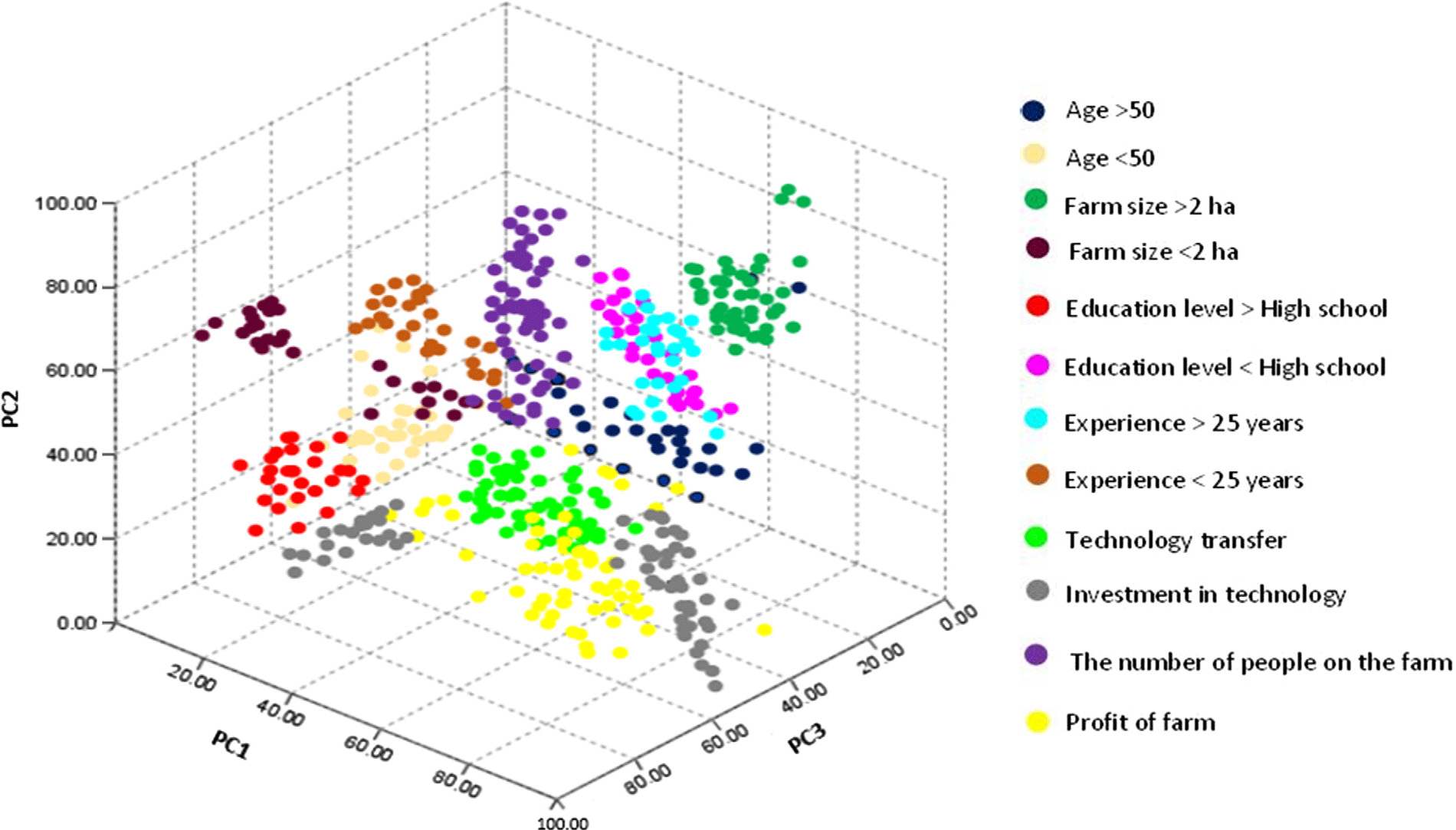
Using PCA, we found a high correlation between sociodemographic characteristics of farms and glyphosate dependency that can be explained by the complexity of the interactions between the various factors involved in farm practices (Figure 2). The use of glyphosate or other herbicides increased with the increasing age of farmers. Young farmers tended to use alternative weed control methods or to switch to organic agriculture to increase farm profitability. Similarly, the results showed that the use of glyphosate increased as the size of the farm and the number of people on the farm declined. Farmers engaged in small-sized production generally work as hazelnut growers as second jobs and try to solve the weed control problems by taking advantage of the rapid efficacy, reliability, and broad-spectrum control of glyphosate. The choice of technology transfer and technology investment by farmers was largely affected by education level, farm size, profits, and productivity. Of course, one of the other main constraints was the capital available to the farmers, knowledge of how to use the technology, and the price of hazelnut, which was determined by government policies.
Principal component analyses for association among sociodemographic characteristics, farm characteristics, and glyphosate use on hazelnut farms in Turkey.

Weed Control Methods and Herbicide Volume in Hazelnut Orchards
Weed species that are considered important by farmers in hazelnut orchards are as follows: Dominant broadleaf weed species in the survey included western brackenfern [Pteridium aquilinum (L.) Kuhn], common wormwood (Artemisia vulgaris L.), dwarf nettle (Urtica urens L.), Himalayan blackberry (Rubus armeniacus Focke), field bindweed (Convolvulus arvensis L.), common chickweed [Stellaria media (L.) Vill.], Canadian horseweed [Conyza canadensis (L.) Cronquist var. canadensis], lavndaisy (Bellis perennis L.), stickywilly (Galium aparine L.), German chamomile (Matricaria recutita L.), and drug fumitory (Fumaria officinalis L.). The grasses bermudagrass [Cynodon dactylon (L.) Pers.], green bristlegrass [Setaria viridis (L.) P. Beauv.], annual bluegrass (Poa annua L.), slender meadow foxtail (Alopecurus myosuroides Huds.), and Bromus spp. were reported as troublesome weed species. The results obtained from the surveys suggest that those weeds were able to colonize the available space and compete efficiently with hazelnut more than other weed species.
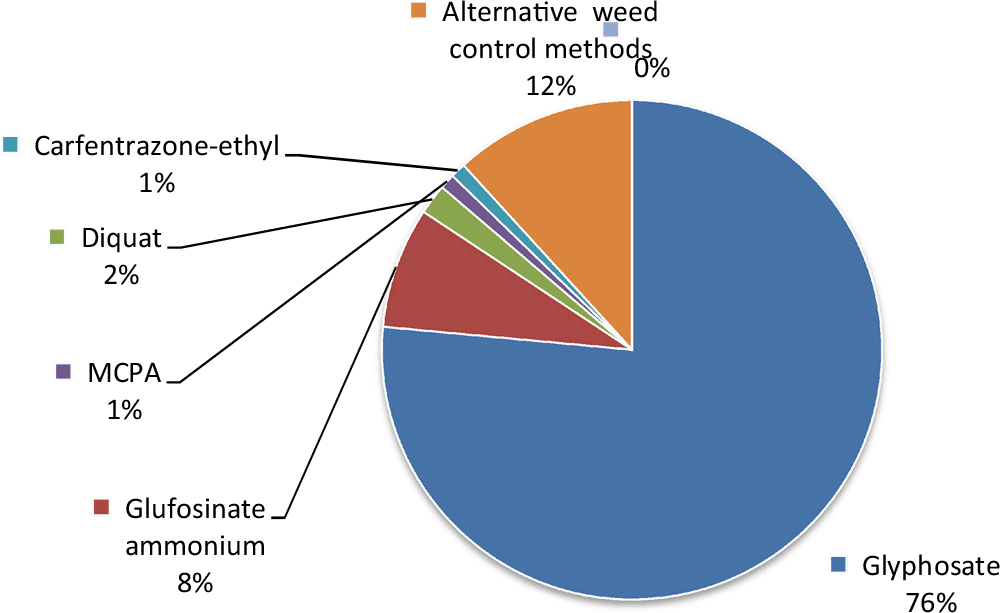
Farmers stated that weed management is critical in hazelnut production and limits nutrients for the trees, and it is one the most important obstacles for hand-harvesting efficiency. As seen in Figure 3, weed control in hazelnut orchards was achieved 88% by chemical control and 12% by other alternative weed control methods. Among the herbicides used, glyphosate had a 76% share, glufosinate-ammonium 8%, diquat 2%, and MCPA + carfentrazone-ethyl <1%. On the other hand, alternative products do not have better environmental and health profiles compared with glyphosate. In this context, diquat will be banned in Turkey in the near future.
Weed control practices and herbicide use in hazelnut orchards in Turkey in 2018.

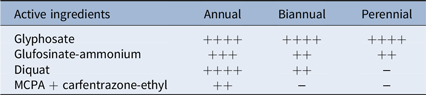
The most effective control was provided by glyphosate followed by glufosinate-ammonium, diquat, and MCPA + carfentrazone-ethyl based on both the farmers’ perspectives and the results of long-term studies (Table 2). The MCPA + carfentrazone-ethyl mixture or its solo products became commercially available in 2017, but its weed management ability was not acceptable to farmers, so it was not included in the benefit–cost model.
Herbicide efficacy based on farmers’ practices and experience.a

a ++++, Very good control; +++, good control; ++, suppressed; −, not controlled.
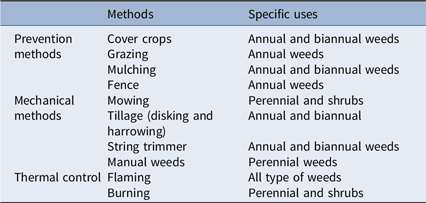
As an alternative to chemical control, farmers prefer to use preventive, mechanical, and thermal weed control methods. Cover crops, grazing, disking, harrowing, string trimmers, and burning were the most popular applications among the farmers (Table 3). Farmers indicated that alternative weed control methods reduced initial weed populations, but the level of control was not sufficient to prevent yield loss. In the same way, the mechanical methods alone resulted in large weed biomass at harvest, and this may interfere with harvesting operations.
Nonchemical alternatives to chemical weed management in hazelnut.

It was clear from the survey that glyphosate use for weed control in hazelnut production has made the production simpler and more economical, especially on larger farms (>3 ha). Farmers are aware that glyphosate-based hazelnut production systems are not sustainable if no alternative weed control methods are used and would result in the evolution of herbicide-resistant weeds and shifts in weed flora. This has been reported previously by others in different crops (Duary Reference Duary2008; Johnson et al. Reference Johnson, Davis, Kruger and Weller2009). Therefore, hazelnut farmers request innovative, environmentally friendly, economical, and new mechanism-of-action herbicides that can be integrated into existing and future cropping systems. It seems that this request is a big challenge, as development of new herbicide modes of action in the short term seems rather limited.
In previous research, Mennan et al. (Reference Mennan, Ngouajio, Isik and Kaya2006) found that mechanical control methods in combination with glyphosate provided more than 90% control of all grasses and broadleaf weeds such as P. annua, Armenian blackberry (Rubus discolor Weihe & Nees), A. vulgaris, common nipplewort (Lapsana communis L.), and perennial ryegrass (Lolium perenne L.). In the same study, weed species were shown to respond differently to control methods, and herbicides other than glyphosate had little effects on perennial species. Our survey findings were similar to those findings.
Benefit–Cost Analysis
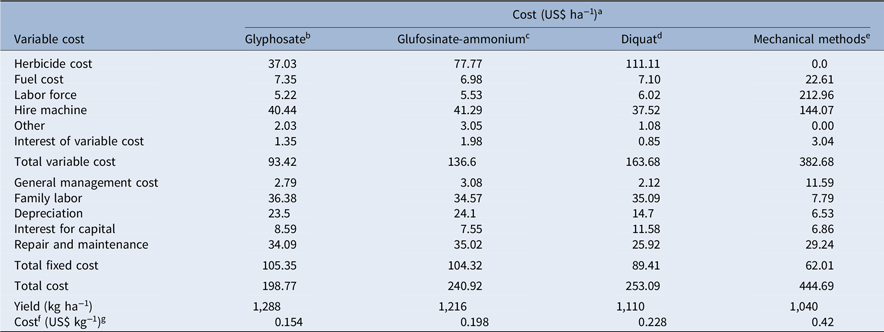
Weed control practices for hazelnut production were intensive, inconsistent, and costly if the weed pressure was heavy and/or multiple applications were not made in a timely manner. Table 4 shows a comparison of surveys and a typical weed control program that was used each year in Turkey. The costs of weed control were calculated based on seasonal application. However, to broaden the weed control spectrum, it was common to combine herbicide application and mechanical control methods for more effective control.
Herbicide application rates and other weed control methods costs for 1 yr to manage weeds in hazelnut.

a Includes application weed control and the fixed cost per hectare during hazelnut production.
b Glyphosate rate was calculated based on 5 L ha−1 dose.
c Glufosinate-ammonium rate was calculated based on 7 L ha−1 dose.
d Diquat rate was calculated based on 8 L ha−1 dose.
e Mechanical methods consist of tillage in spring and string trimmer just before harvest.
f Cost refers to weed control costs incurred for obtaining 1 kg of hazelnut.
g Hazelnut price was calculated based on US$2.96 kg−1. Turkish lira were converted to U.S. dollars at a rate of US$1 = TL 5.4.
Based on applications during the 2018 to 2019 season, the average cost of weed control was US$199, US$241, US$253, and US$445 ha−1 for glyphosate, glufosinate-ammonium, diquat, and mechanical methods, respectively. As shown in Table 4, the most economical application for the farmer is glyphosate.
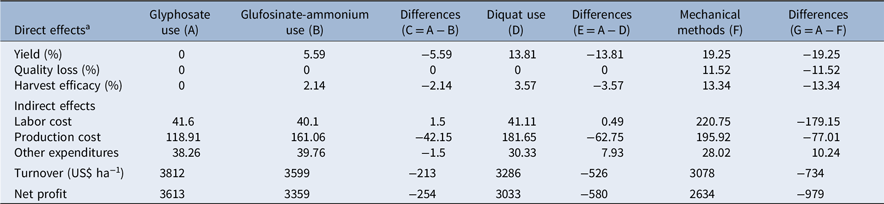
The benefit–cost and risk analysis model showed that yield, quality losses, and harvest efficacy were related to direct-effect parameters, while labor cost, production cost, and other expenditures were considered indirect-effect parameters (Table 5). The results derived from the surveys and models indicated that the average yield risks increased significantly in the absence of glyphosate. Yields decrease by 5.59%, 13.81% and 19.25% with the probability of using glufosinate-ammonium, diquat, and mechanical methods, respectively. It is estimated that the quality of hazelnut will decrease by around 11.52%, especially in areas where mechanical control methods are applied. Good weed control is one of the most important factors affecting harvest efficiency, and it is significantly affected in cases where glyphosate is not used. Because harvesting is carried out manually from the soil, other herbicides and mechanical weed control methods do not provide as clean a surface as glyphosate does, thus it causes a loss of harvest efficacy of a ratio of 2.14 to 13.34. The lower net profit obtained in mechanical weed control methods was caused by the yield loss due to the non-use of herbicides and to the higher production costs. The global impact of glyphosate restriction in the short term would have to take into account other control strategies apart from mechanical weed control methods in hazelnut.
Benefit–cost and risk analysis of glyphosate restrictions on hazelnut production and economy based on glyphosate direct and indirect effects.

a Yield, quality losses, and harvest efficacy were calculated based on surveys and published articles by Mennan et al. (Reference Mennan, Ngouajio, Isik and Kaya2006).
The Farm-Level Economic Impact of Glyphosate Use Restriction on Yield, Other Expenditures, Gross Income, and Net Profit
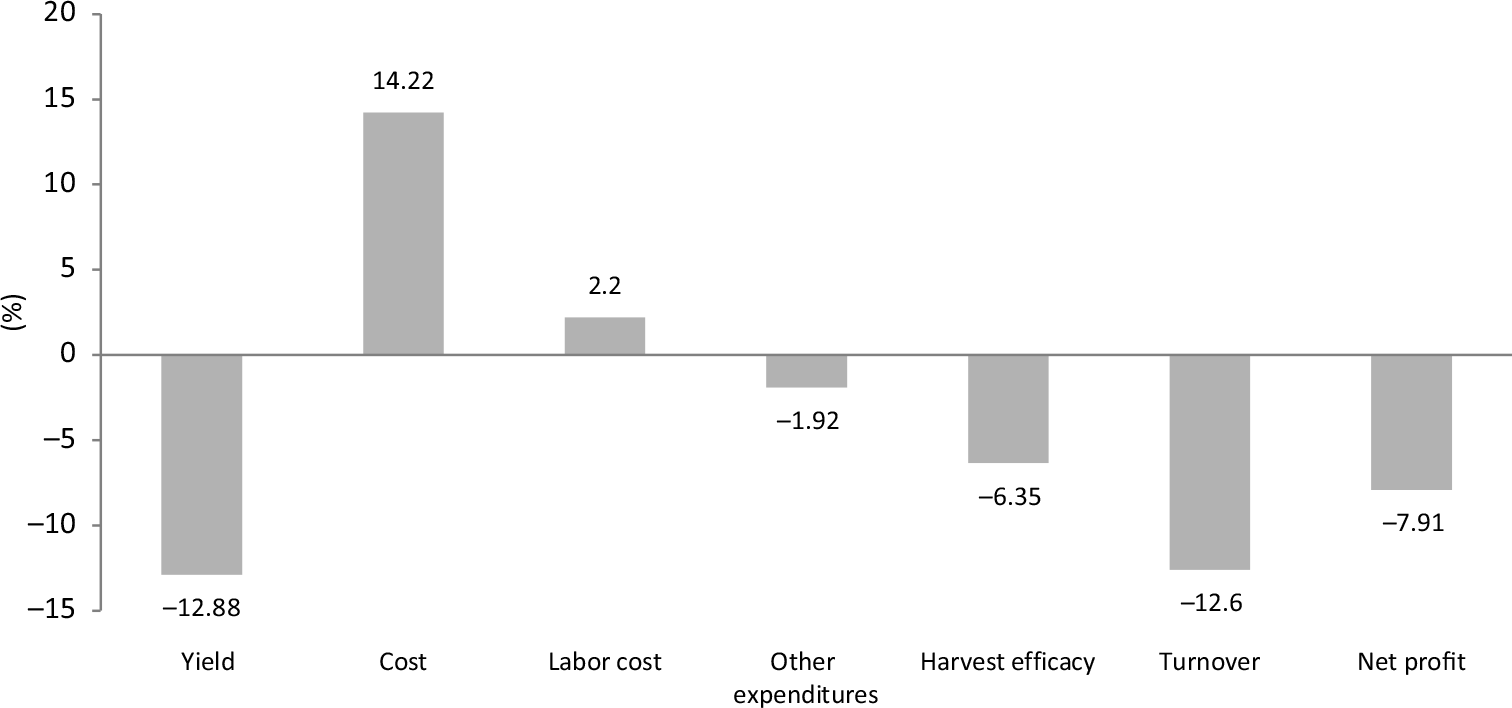
The impacts of glyphosate use restrictions in hazelnut orchards at the country level are given in Figure 4. As seen in Figure 4, a loss of 12.88% in hazelnut production is predicted and a 14.22% increase in production costs can be expected. At the same time, a decrease of 12.6% in gross income from hazelnut is expected to be realized, and it is estimated that the impact on the net profit of the farm will be around −7.91%. Although there is not much research on how possible glyphosate use restrictions may affect crop economies in the European Union (EU), similar results have been found in a few studies. According to Wynn et al. (Reference Wynn, Cook and Clarke2014), possible restrictions on glyphosate use may have very serious impacts on agriculture and the environment in Germany, France, and the United Kingdom, and potentially the wider EU25. This scenario could reduce winter cereals and canola up to 14.6 million kg across the EU25. They indicated that in order to prevent these production losses, an extra 2.5 million-hectare area may be needed in the EU. On the other hand, increasing the production area may increase greenhouse gas emissions up to 27 million kg CO2.
The economic impact (expressed in %) of glyphosate use restriction in hazelnut for weed control on yield, other expenditures, gross income, and net profit at the farm level aggregated across Turkey.

Brookes et al. (Reference Brookes, Taheripour and Tyner2017) indicated that the impact of a glyphosate ban would be an annual loss of farm income gains in GMHR soybean and maize of 63% and 25%, respectively. At the global level, in the same research, a ban on the use of glyphosate would cause soybean production to drop significantly in the United States, Canada, and South America by 1.9% (1.6 billion kg), 5.6% (0.2 billion kg), and 17.1% (10.5 billion kg), respectively. Similar restrictions and prohibitions already in place for 2,4-D, paraquat, atrazine, and phenoxy herbicides may result in losses in either conventional or GMHR crops (Comendant and Davies Reference Comendant and Davies2018; Szmedra Reference Szmedra1997).
At the country level, these production losses would be felt most dramatically in Turkey. A glyphosate restriction would reduce the direct contribution of the hazelnut processing and production sector to Turkey GDP by more than US$510 million annually. However, we estimate that glyphosate use restrictions will lead to a reduction in the tax revenues generated by hazelnut and its supply chain by some US$20.4 million. Parallel to the decrease in revenues, negative impacts on social, economic, and environmental sustainability in the rural and urban parts of the region will be seen within a short time. As a positive development, unemployment will be reduced due to the labor force needed for mechanical control methods.
At the global level, the decrease in hazelnut production will decrease Turkish farmers competitiveness in the world trade arena. We anticipate that global demands for hazelnut will increase. Therefore, the production would likely move to emerging markets such as Georgia, Azerbaijan, and some Balkan countries. The restrictions will also have a domino effect in hazelnut supply chains. Turkey provides crucial raw material to the global industry sector using hazelnut.
Facts and Myths of Glyphosate from the Farmer’s Point of View
Hazelnut farmers believe, correctly, that the relationship between glyphosate use and its possible harmful effect on human health and the environment has been extensively studied recently in the EU and the United States. They also believe there is still open debate on the subject of exposure risk for workers in the agricultural sector compared with other sectors. On the other hand, it is obvious that there is a substantial amount of misinformation about glyphosate circulating in nonscientific, political, and public discussions.
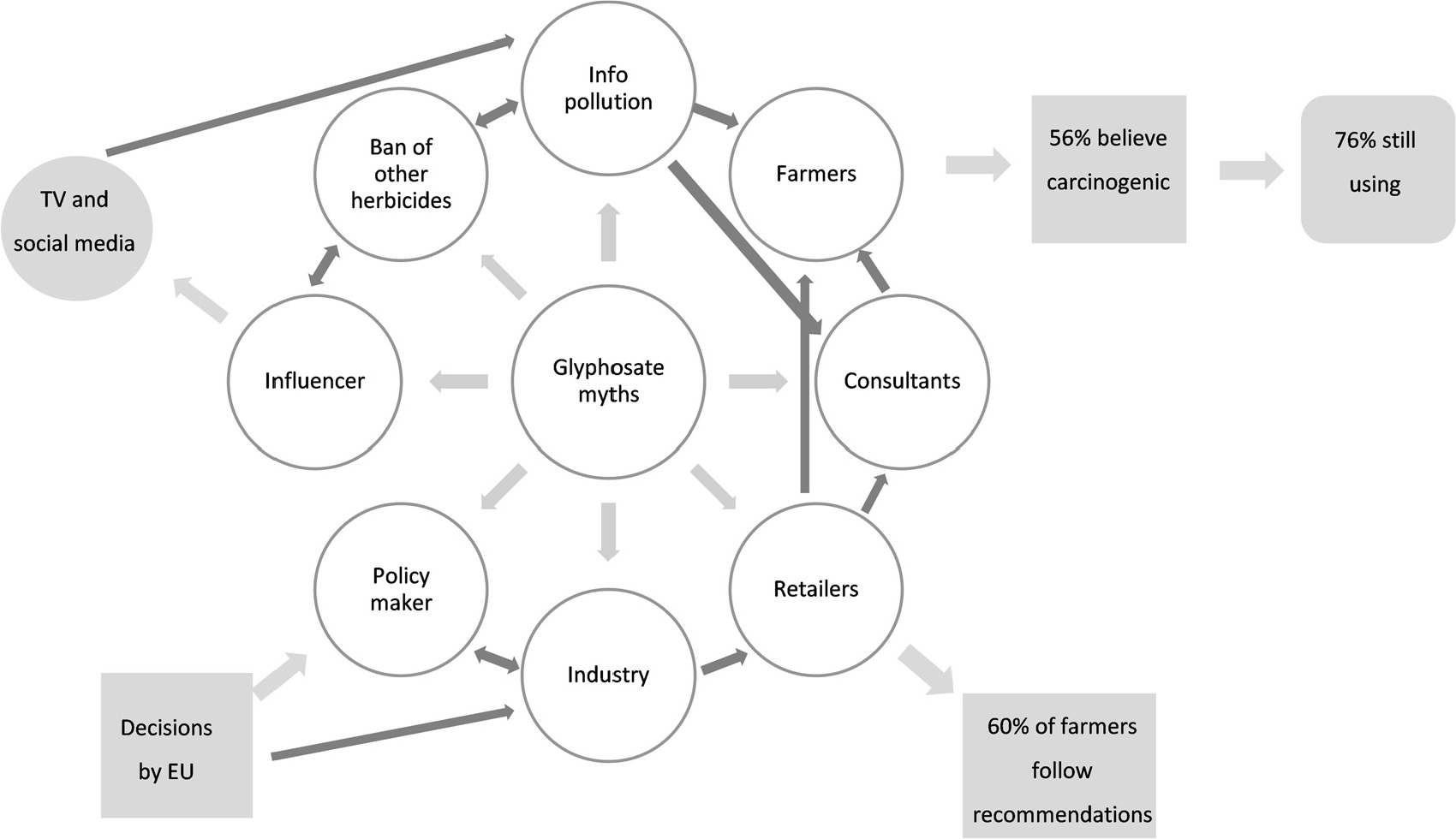
As a consequence, concerns have increased in recent years, and 56% of the hazelnut farmers stated that glyphosate is harmful to humans and the environment (Figure 5). However, 76% of those 56% still ignore their statements on the harmful effects of glyphosate due to three main factors: unrivaled consistent performance of glyphosate on weed control, minimal training needed to apply glyphosate, and increased cost of mechanical methods. It was observed that agricultural consultants and retailers had a great impact on farmers’ behavior in terms of using herbicides. It has been determined that these groups tend to recommend suboptimal use of glyphosate due to insufficient training and misinformation. Turkey is following EU laws in pesticide regulation. Therefore, policy makers are applying most EU decisions in the absence of country-specific benefit and risk analyses. This creates a high risk for glyphosate, as well as for all other herbicides. The results of surveys showed that farmers were influenced by negative news about glyphosate in social media, TV, and newspapers, irrespective of the scientific correctness of the information provided.
Impact factors for the different Turkish stakeholders as related to perception vs. the use of glyphosate.

Farmers indicated that weed management is critical in hazelnut production to limit competition by weeds, conserve nutrients for the trees, and improve hand-harvesting efficiency. There were two main conclusions from this research. The first is that restrictions of glyphosate use in hazelnut orchards make for more complex and less efficient weed management. The second is the potential development of herbicide-resistant weed species when less efficacious herbicides with different modes of action are used as alternatives. Farmers expected that new herbicides would become available to address resistant weed problems. The reality is that no new herbicide sites of action have been introduced for 20 yr. The evident long-term solution for sustainable hazelnut weed control in Turkey would be diversified weed control systems that include glyphosate as a cornerstone.
Hazelnut farmers tend to neglect long-term risks, like environmental impacts of herbicide use, and maximize short-term utility, as in direct weed control. Also, they exhibit a significant preference for using information gained through personal experience or the experiences of other farmers. As a result of this, misinformation on glyphosate may spread very quickly.
Glyphosate restriction would increase the demand for labor due to increased use of mechanical weed control strategies. The costs of these alternative methods are 124% more expensive compared with glyphosate weed control systems. The implemented benefit–cost model predicted that, in the case of no use of glyphosate, total hazelnut production would decrease by 12% to 21% due to inefficient weed control. Non-glyphosate weed control systems would reduce yields and would drive up prices. A glyphosate ban would result in a reduction in Turkey’s GDP. Yearly, an average of US$2 billion in revenue is obtained from hazelnut exports, and this number corresponds to 1.37% of Turkey’s annual export value.
Hazelnut farmers should be provided with more effective weed control technologies in order to increase their output and income. Hazelnuts are not only important for Turkey but also for providing global raw material for industrial processes. Georgia, Azerbaijan, Chile, and some other countries have scaled up their hazelnut cultivation areas in response to increasing demand. It will be critical for Turkish farmers to remain competitive with farmers from these emerging hazelnut-producing countries. Overall, successful weed management programs in orchards require a comprehensive approach that uses a combination of weed control practices and alternatives to prevent weed population shifts in favor of perennial species. It is clear that glyphosate is vital to sustainable weed programs in hazelnut production.
Acknowledgments
Funding for this research was provided by Bayer Agriculture BVBA, Brussels-Belgium. No conflicts of interest have been declared.