The severe acute respiratory syndrome coronavirus 2 (SARS-CoV-2) pandemic has led to over 4.4 million hospital admissions in the United States (CDC, 2022), severely straining healthcare systems (Grimm, Reference Grimm2021). Identified risk factors for hospitalization due to severe coronavirus disease 2019 (COVID-19) include age, obesity, asthma, hypertension, and diabetes (Garg et al., Reference Garg, Kim, Whitaker, O'Halloran, Cummings, Holstein and Fry2020), in addition to behaviors such as smoking (Hamer, Kivimäki, Gale, & Batty, Reference Hamer, Kivimäki, Gale and Batty2020). Various forms of distress, including depression, anxiety, and perceived stress, have also been implicated in elevated susceptibility to infections, including SARS-CoV-2 (Batty et al., Reference Batty, Deary, Luciano, Altschul, Kivimäki and Gale2020; Orlando et al., Reference Orlando, Rea, Savaré, Guarino, Mucherino, Perrella and Corrao2021; Taquet, Luciano, Geddes, & Harrison, Reference Taquet, Luciano, Geddes and Harrison2021; Yang et al., Reference Yang, Chen, Hu, Chen, Zeng, Sun and Song2020a), as well as increased severity of infectious disease (Aiello, Simanek, Stebbins, & Dowd, Reference Aiello, Simanek, Stebbins, Dowd, Kivimäki, Batty, Steptoe and Kawachi2018; Cohen et al., Reference Cohen, Doyle, Skoner, Fireman, Gwaltney and Newsom1995; Falagas, Karamanidou, Kastoris, Karlis, & Rafailidis, Reference Falagas, Karamanidou, Kastoris, Karlis and Rafailidis2010; Janicki Deverts, Cohen, & Doyle, Reference Janicki Deverts, Cohen and Doyle2017). Numerous prospective studies have additionally identified loneliness (LeRoy, Murdock, Jaremka, Loya, & Fagundes, Reference LeRoy, Murdock, Jaremka, Loya and Fagundes2017) and other factors associated with distress (e.g. small social network, low emotional support) (Cohen, Doyle, Skoner, Rabin, & Gwaltney, Reference Cohen, Doyle, Skoner, Rabin and Gwaltney1997; Cohen, Doyle, Turner, Alper, & Skoner, Reference Cohen, Doyle, Turner, Alper and Skoner2003) as potential contributors to a worse course of respiratory infections, although not consistently (Bu, Philip, & Fancourt, Reference Bu, Philip and Fancourt2020; Hamrick, Cohen, & Rodriguez, Reference Hamrick, Cohen and Rodriguez2002).
Better understanding of the links between psychological distress and risk of COVID-19-hospitalization may help prevent severe outcomes and strain on healthcare systems by identifying those at greatest risk. Although the Centers for Disease Control and Prevention have identified mental health conditions as risk factors for COVID-19 severity (People with Certain Medical Conditions, 2021), our understanding of the association of distress with COVID-19 severity remains incomplete. Prior studies have primarily investigated mortality as the outcome (Lee et al., Reference Lee, Yang, Moon, Yoo, Ha, Kim and Yon2020; Li, Li, Fortunati, & Krystal, Reference Li, Li, Fortunati and Krystal2020; Nemani et al., Reference Nemani, Li, Olfson, Blessing, Razavian, Chen and Goff2021; Wang, Xu, & Volkow, Reference Wang, Xu and Volkow2021), leaving the association with hospitalization comparatively unexplored. Most studies used medical records of mental illness diagnoses to measure psychological distress (Lee et al., Reference Lee, Yang, Moon, Yoo, Ha, Kim and Yon2020; Li et al., Reference Li, Li, Fortunati and Krystal2020; Nemani et al., Reference Nemani, Li, Olfson, Blessing, Razavian, Chen and Goff2021; Orlando et al., Reference Orlando, Rea, Savaré, Guarino, Mucherino, Perrella and Corrao2021; Taquet et al., Reference Taquet, Luciano, Geddes and Harrison2021; Wang et al., Reference Wang, Xu and Volkow2021; Yang et al., Reference Yang, Chen, Hu, Chen, Zeng, Sun and Song2020a). However, medical records have only moderate sensitivity to detect common mental disorders such as depression and anxiety (Beesley et al., Reference Beesley, Salvatore, Fritsche, Pandit, Rao, Brummett and Mukherjee2020; Spiranovic, Matthews, Scanlan, & Kirkby, Reference Spiranovic, Matthews, Scanlan and Kirkby2016; Townsend, Walkup, Crystal, & Olfson, Reference Townsend, Walkup, Crystal and Olfson2012), which are frequently undiagnosed (Gwynn et al., Reference Gwynn, McQuistion, McVeigh, Garg, Frieden and Thorpe2008; Ko, Farr, Dietz, & Robbins, Reference Ko, Farr, Dietz and Robbins2012; Perruche et al., Reference Perruche, Elie, Ussel, Ray, Thys, Bleichner and Claessens2011). Additionally, some medical record studies examined the diagnosis of any psychiatric disorder as a single exposure, reducing the utility for intervention and prediction (Li et al., Reference Li, Li, Fortunati and Krystal2020; Wang et al., Reference Wang, Xu and Volkow2021). No studies have examined other common manifestations of distress, such as perceived stress and loneliness in relation to hospitalization from COVID-19.
In the present study, we prospectively examined whether various manifestations of psychological distress prior to infection with SARS-CoV-2 predicted hospitalization among individuals after SARS-CoV-2 infection, using data from three large longitudinal cohorts: the Nurses' Health Study II (NHSII), the Nurses' Health Study III (NHS3), and the Growing Up Today Study (GUTS) (Bao et al., Reference Bao, Bertoia, Lenart, Stampfer, Willett, Speizer and Chavarro2016). We additionally examined the extent to which established risk factors for COVID-19 hospitalization (e.g. age, diabetes, asthma, hypertension, smoking, obesity) accounted for possible associations.
Methods
Study design and population
Study participants were drawn from the Nurses Health cohorts, a set of cohorts initiated in the early 1970s to study the long-term health effects of exogenous hormone use in the early 1970s in a medically sophisticated group. The NHSII is a cohort of 116 429 female registered nurses living in the US, enrolled in 1989 at ages of 25–42 years and followed biennially. The NHSII was established to study the health effects of oral contraceptive use and other health risk factors among women of reproductive age. The NHS3, currently recruiting, was established in 2010 and includes more than 40 000 female nurses aged 18 years and older, living in the US or Canada and followed biannually using web-based questionnaires. NHS3 recruited more participants of different race/ethnicity groups. Recruitment was extended to male nurses in 2015 (N = 856). GUTS began in 1996 when NHSII participants enrolled their offspring (N = 27 793) aged 9–17 years to study the potential impacts of factors (e.g. diet and exercise) that influence weight change trajectory throughout the life course.
From April 2020 to May 2020, we invited participants who returned the most recent main cohort questionnaire to complete a supplementary online COVID-19 survey. Of 105 662 invited participants, 58 612 (55%) responded to the first COVID-19 questionnaire from April 2020 to August 2020 (termed ‘baseline’ henceforth). Respondents were then administered monthly surveys. Additional weekly surveys were administered to those who self-identified as frontline healthcare workers (n = 23 053). In August 2020, the surveys changed to quarterly administration (online Supplementary Figs S1 and S2). The end of follow-up for the current analysis was 27 April 2021. Among 58 612 people who responded to the COVID-19 baseline survey, we further restricted the analysis to 54 781 participants with no documented history of SARS-CoV-2 infection and not hospitalized at baseline who returned at least one follow-up questionnaire.
The study was approved by the Partners Healthcare System Institutional Review Board. Return of questionnaires constituted implied consent.
Measures
Forms of distress
Chronic depression in the 10 years prior to the COVID-19 pandemic was derived from multiple indicators queried at varying intervals on main cohort questionnaires, 2010–2019. These included self-reported physician-diagnosed depression, use of antidepressants, and depressive symptoms as reported on the Center for Epidemiologic Studies Depression Scale-10 (CESD-10) and the Patient Health Questionnaire-9 (PHQ-9) (online Supplementary Table S1). Participants were considered to have a history of chronic depression if they reported any indicator of depression at two or more time points.
All other forms of distress were assessed at the COVID-19 study baseline. Current depression and anxiety symptoms were assessed with the PHQ-4, which combines a 2-item measure of depression (PHQ-2) and a 2-item measure of anxiety [Generalized Anxiety Disorder-2 (GAD-2)] (Kroenke, Spitzer, Williams, & Lowe, Reference Kroenke, Spitzer, Williams and Lowe2009). The PHQ-4 queries frequency of symptoms, with response options 0 (‘not at all’) to 3 (‘nearly every day’). A summed score of 3 or greater on each subscale indicates probable major depressive disorder or anxiety disorder (Kroenke, Spitzer, & Williams, Reference Kroenke, Spitzer and Williams2003; Kroenke, Spitzer, Williams, Monahan, & Lowe, Reference Kroenke, Spitzer, Williams, Monahan and Lowe2007). To create reference groups with no symptoms, and to examine possible dose-dependent relations, we divided these scores into three levels for analysis: 0 points (reference), 1–2 points (subclinical symptoms), ⩾3 points (probable depression or anxiety). The PHQ-2 and GAD-2 have been validated against clinical diagnosis (Kroenke et al., Reference Kroenke, Spitzer and Williams2003, Reference Kroenke, Spitzer, Williams, Monahan and Lowe2007, Reference Kroenke, Spitzer, Williams and Lowe2009; Lowe et al., Reference Lowe, Wahl, Rose, Spitzer, Glaesmer, Wingenfeld and Brahler2010). Worry about COVID-19 was assessed with a single question, ‘How worried are you about COVID-19?’ with response options: ‘not at all’, ‘not very’, ‘somewhat’, and ‘very worried’ (YouGov, 2020). ‘Not at all’ and ‘not very worried’ were combined to serve as the reference group, as only 5.9% participants responded ‘not at all worried’.
Due to concerns about participant burden, two additional forms of distress were assessed only among non-healthcare workers. The 4-item Perceived Stress Scale (PSS-4) (Cohen, Reference Cohen, Spacapan and Oskamp1988), a shortened version of the well-validated 14-item PSS (Cohen, Kamarck, & Mermelstein, Reference Cohen, Kamarck and Mermelstein1983), assesses the ability to cope with existing stressors. Total scores range from 0 to 16, with higher scores indicating higher levels of perceived stress, with satisfactory psychometrics (Cohen, Reference Cohen, Spacapan and Oskamp1988; Mitchell, Crane, & Kim, Reference Mitchell, Crane and Kim2008; Vallejo, Vallejo-Slocker, Fernandez-Abascal, & Mananes, Reference Vallejo, Vallejo-Slocker, Fernandez-Abascal and Mananes2018; Warttig, Forshaw, South, & White, Reference Warttig, Forshaw, South and White2013). Loneliness was assessed with the 3-item UCLA Loneliness Scale (Hughes, Waite, Hawkley, & Cacioppo, Reference Hughes, Waite, Hawkley and Cacioppo2004) which has demonstrated good internal consistency reliability and validity (Hughes et al., Reference Hughes, Waite, Hawkley and Cacioppo2004; Steptoe, Shankar, Demakakos, & Wardle, Reference Steptoe, Shankar, Demakakos and Wardle2013). Participants reported how often they felt: (i) lack of companionship; (ii) left out; and (iii) isolated from others. Responses were coded as 1 (‘hardly ever’), 2 (‘some of the time’), and 3 (‘often’), with higher scores indicating greater loneliness. We divided the score into three levels for analysis, 3 points (loneliness hardly ever, reference), 3–5 points (less than some of the time), and ⩾6 points (some of the time or often) (Steptoe et al., Reference Steptoe, Shankar, Demakakos and Wardle2013). For all continuous scores, effects associated with an increase of one interquartile range (IQR) were estimated. Because the distribution of the scores were skewed, IQRs were approximate.
COVID-19 infection and hospitalization
Past 7-, 30-, and 90-day positive SARS-CoV-2 diagnostic test (antibody, antigen, or PCR), COVID-19 symptoms, and hospitalization due to COVID-19 occurring since 1 March 2020, were self-reported on all questionnaires. Participants were asked specifically, ‘Have you been hospitalized because of COVID-19?’ and the treatments they received, including intravenous fluid, oxygen through nasal prong or facial mask, ICU admission, and invasive ventilation.
Covariates
All covariates were assessed prior to the pandemic in main cohort questionnaires, using the most recent data available (online Supplementary Table S2). Demographic factors included age, race/ethnic identity, sex, and educational attainment of the participant (GUTS) or their spouse/partner (NHSII and NHS3). Risk factors for COVID-19 severity included body mass index (BMI), smoking, and history of clinician-diagnosed: diabetes, hypertension, high cholesterol, asthma, and cancer (yes/no for each of the diseases).
Statistical analysis
To examine the association of distress and risk of SARS-CoV-2 infection, we compared level of distress among participants with and without a positive SARS-CoV-2 diagnostic test during follow-up. Among participants who reported a positive SARS-CoV-2 test, we compared the prevalence of established risk factors for severe COVID-19 and demographic factors by forms of distress at baseline. To examine the association of distress with risk of subsequent hospitalization for COVID-19, we fit Poisson regression models with hospitalization as the dependent variable with each form of distress as the independent variable in separate models adjusted for demographic factors, educational attainment, and healthcare worker status. To examine whether health risk factors that commonly co-occur with distress might account for possible associations, we further adjusted for: (1) health behavioral factors including BMI and smoking; and (2) health behavioral factors and history of hypertension, diabetes, high cholesterol, asthma, and cancer.
We conducted several sensitivity analyses. First, as frontline healthcare workers have higher risk of infection and increased psychological distress than non-healthcare workers (Chou et al., Reference Chou, Dana, Buckley, Selph, Fu and Totten2020; Preti et al., Reference Preti, Di Mattei, Perego, Ferrari, Mazzetti, Taranto and Calati2020; Sasaki, Kuroda, Tsuno, & Kawakami, Reference Sasaki, Kuroda, Tsuno and Kawakami2020; Zheng et al., Reference Zheng, Wang, Zhou, Liu, Li, Sun and Wang2020), we investigated the association of forms of distress with COVID-19 hospitalization stratified by healthcare worker status and tested a distress-by-healthcare-worker-status interaction term. Second, we further adjusted for month using indicator variables, to account for the different phases of the pandemic. Third, although we excluded participants who reported a positive SARS-CoV-2 test at baseline, some participants reported COVID-19-related symptoms at baseline. Therefore, to ensure that distress preceded SARS-COV-2 infection, we further excluded 175 respondents who were identified as possible cases using a symptom-based predictor of SARS-CoV-2 infection (Rich-Edwards et al., Reference Rich-Edwards, Ding, Rocheleau, Boiano, Kang, Becene and Lawson2021). Fourth, we excluded 104 participants who reported a positive SARS-COV-2 test within 30 days of return of the baseline questionnaire, to minimize the possibility that prodromal symptoms were causing psychological distress. Fifth, to remove possible effects of vaccination on SARS-CoV-2 susceptibility and severity, we excluded people who reported SARS-COV-2 infections after participants could have been fully vaccinated (1 February 2021 for active healthcare workers, N excluded = 225, and 1 April 2021 for non-healthcare workers, N excluded = 21). Sixth, we further adjusted for cohort and number of questionnaires. Seventh, to examine the possible difference in sex, we stratified the analysis by sex. As only 1 male participant was hospitalized, models restricted to males did not convergence. We presented analyses to female participants (n = 3535). Eighth, we fit models using the most recent measures of pre-infection psychological distress as independent variables. Ninth, to evaluate whether loneliness might be a proxy for low availability of getting care when sick, we adjusted for the living situation reported at baseline (living alone or not).
For all models, relative risks (RRs) were estimated using generalized linear models (Zou, Reference Zou2004) in SAS 9.4 (SAS Institute). A 2-sided p < 0.05 was considered statistically significant.
Results
The 54 781 participants who returned at least one follow-up questionnaire were primarily female (96.6%) and White (96.5%), with mean age = 57.5 years (s.d. = 13.8). More than one third of participants (38.0%) were frontline healthcare workers. We documented 3663 incident cases of SARS-CoV-2 (6.7% of participants) from 1 May 2020, to 1 April 2021. At baseline, the mean age of participants who had a positive SARS-CoV-2 test during follow-up was 55.0 years (s.d. = 13.8); 96.5% were female, 128 (3.5%) were male, 96.7% were White, and 52.1% were frontline healthcare workers. The mean (s.d.) age of male participants was 33.4 (4.9). 34 (26.6%) of male participants were active healthcare workers. The median time from return of baseline questionnaire to positive SARS-CoV-2 test was 30 weeks (range, 1–47 weeks). Active healthcare workers had elevated level of depression and anxiety at baseline compared to non-active healthcare workers (depressive symptoms: 1.18 v. 1.06; anxiety symptoms: 1.60 v. 1.35). The prevalence of all forms of distress at baseline was similar among respondents who reported a positive SARS-CoV-2 test during follow up and those who did not (online Supplementary Table S3).
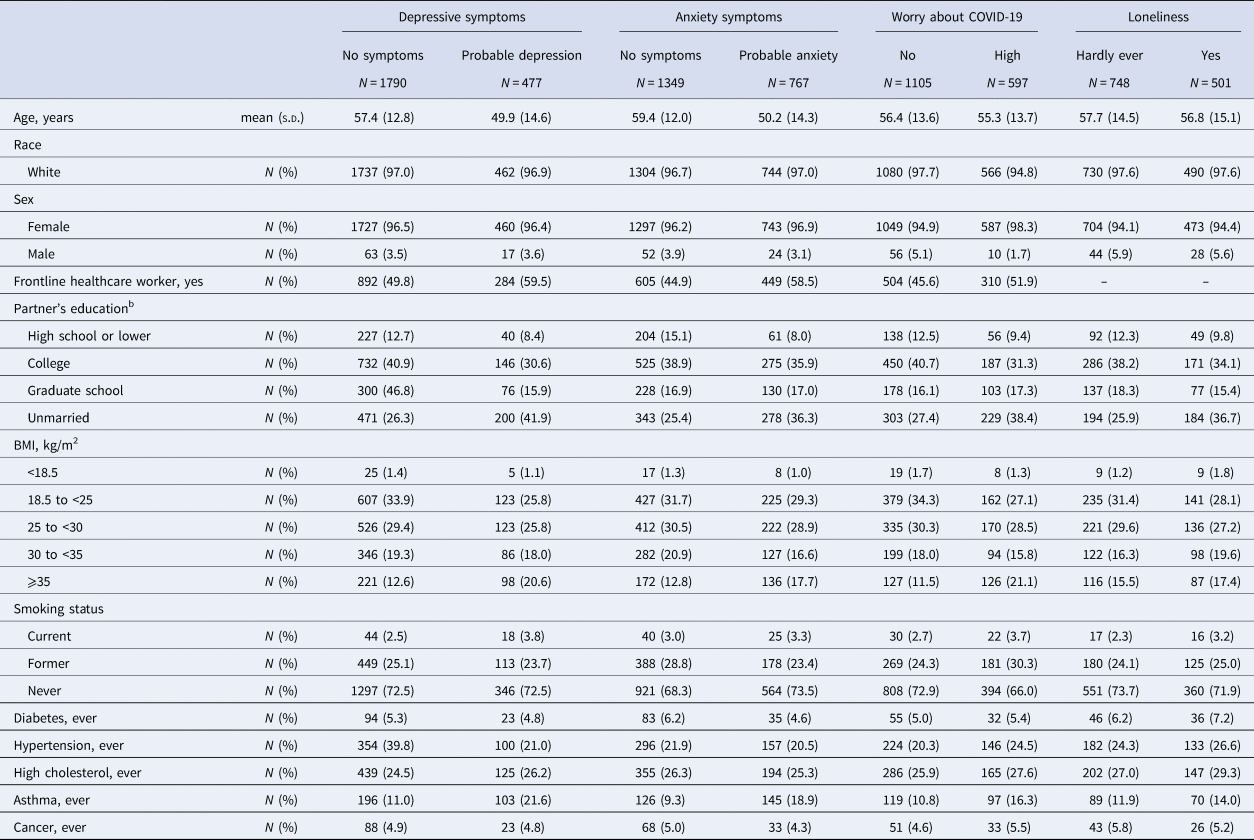
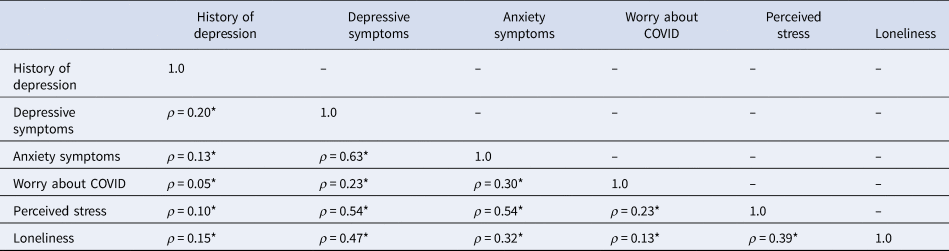
Respondents with probable depression or anxiety at baseline were younger, had higher BMI, had a higher prevalence of asthma, and were more likely to be frontline healthcare workers than those who had no symptoms of these disorders (Table 1). Compared with participants who reported not being worried or not very worried about COVID-19, those reporting being very worried were more likely to be female, to be racial or ethnic minorities, to be frontline healthcare workers, to have a higher BMI, and to have a comorbidity. Lonely participants were younger than participants who were hardly ever lonely. Chronic depression and all forms of distress at baseline were correlated (Table 2, all p < 0.001), with depression and anxiety most strongly correlated (Spearman correlation = 0.63). Despite appearing to be similar constructs, each of the 2 items that comprised the GAD-2 anxiety measure was only modestly correlated with worry about COVID-19 (rho = 0.29, 0.26, p < 0.001).
Health and demographic characteristics by forms of distress at baseline (April–August 2020), among participants who ever tested positive for SARS-CoV-2 between April 2020 – April 2021, N = 3663

aNumbers do not add to 100% because mid-levels of variables, i.e., subclinical depressive and anxious symptoms, somewhat worried, and somewhat lonely, are not shown due to space constraints; UCLA loneliness information was collected only in non-active health care workers.
bParticipants' own education attainment in GUTS (unmarried category did not apply).
Spearman correlations between forms of distress among persons with a positive SARS-CoV-2 test from April 2020 to April 2021, NHS II, NHS3, and GUTS, N = 3663

Note. NHS, Nurses' Health Study; GUTS, Growing Up Today Study. Perceived stress and loneliness were queried in non-active health care workers only.
*p < 0.001.
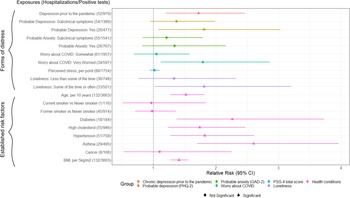
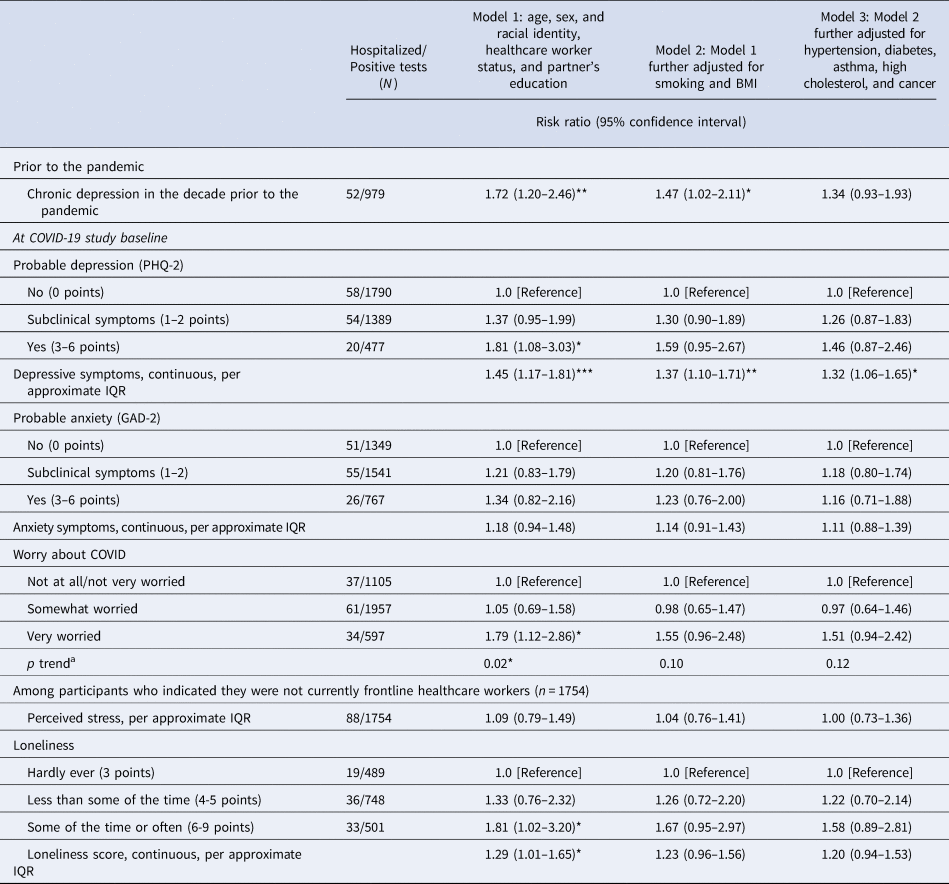
All subsequent analyses were conducted among the 3663 respondents with a positive SARS-CoV-2 test during follow-up. Of these, 132 (4%) were hospitalized due to COVID-19, of whom 75% received oxygen and 20% reported ICU admission. Chronic depression prior to the pandemic was significantly associated with COVID-19 hospitalization (risk ratio (RR) = 1.72; 95% confidence interval (CI) 1.20–2.46, Fig. 1) adjusted for demographic factors. Probable depression at baseline was also associated with COVID-19 hospitalization (RR = 1.81; 95% CI 1.08–3.03, p = 0.02, Table 3). In analyses examining depressive symptoms as a continuous measure, an IQR increase in depressive symptoms was associated with 45% increased risk of COVID-19 hospitalization (95% CI 17–81%, p < 0.001).
Relative Risks (RRs) and 95% Confidence Intervals (CIs) of the associations between forms of distress at baseline and established risk factors for severe COVID-19 in relation to COVID-19 hospitalization, April 2020 – April 2021, N = 3663. Multivariable model adjusted for age, sex, racial identity, healthcare worker status and partner's education (participants' own education attainment in GUTS). Perceived stress and loneliness were queried in non-active health care workers only.
Note. PHQ-2, 2-item Patient Health Questionnaire; GAD-2, 2-item Generalized Anxiety Disorder.

Association of forms of distress prior to infection and risk of COVID-19 hospitalization among persons testing positive for SARS-CoV-2, April 2020 – April 2021, N = 3663

Note. PHQ-2, 2-item Patient Health Questionnaire-2; GAD-2, 2-item Generalized Anxiety Disorder; perceived stress and loneliness were queried in non-active health care workers only. IQR, interquartile range.
a p trend analysis used indicator levels as a continuous variable.
*p < 0.05, **p < 0.01, ***p < 0.001.
Worry about COVID-19 was significantly associated with COVID-19 hospitalization (very worried, RR = 1.79; 95% CI 1.12–2.86; p trend = 0.02), as was loneliness (RR = 1.81, 95% CI 1.02–3.20, p = 0.04). An IQR increase in the continuous loneliness score was associated with 29% increased risk of COVID-19 hospitalization (95% CI 1–65%, p = 0.04). Anxiety and perceived stress were not associated with hospitalization, although perceived stress could only be assessed in non-healthcare workers. Figure 1 shows risk ratios for hospitalization associated with forms of distress and, for comparison, several established risk factors for severe COVID-19. The magnitude of the associations with COVID-19 hospitalization was as strong for chronic depression prior to the pandemic and worry about COVID-19 at baseline as for hypertension and high cholesterol.
In models further adjusted for smoking and BMI (Table 3, model 2), associations between chronic depression, depression at baseline, worry, and loneliness and COVID-19 hospitalization were attenuated (attenuation range, 13–29%). Higher BMI among persons with distress accounted for most of the attenuation. Associations were further attenuated after adjustment for comorbidities (additional attenuation, 6–25%; total attenuation due to all covariates, 23–46%), primarily due to the higher prevalence of asthma among persons with distress. Depressive symptoms coded continuously remained significantly associated with increased risk for COVID-19 hospitalization in the model fully adjusted for health behaviors and comorbidities (RR per IQR = 1.32, 95% CI 1.06–1.65, p = 0.01).
Associations of distress with COVID-19 hospitalization were generally somewhat stronger in non-healthcare workers than healthcare workers, though these differences were not statistically significant (data not shown). Results were comparable in models further adjusted for month, excluding probable baseline SARS-CoV-2 cases, excluding cases diagnosed within 30 days after return of baseline questionnaire, further adjusting for cohort number, restricting the analysis to female, and using the most recent distress measures prior to infection. In analyses of loneliness, results were similar in models further adjusted for living alone (online Supplementary Table S4).
Discussion
In this prospective study of 54 809 people who reported no history of SARS-CoV-2 infection, in demographically adjusted models, chronic depression prior to the pandemic, and probable depression, worry about COVID-19, and loneliness early in the pandemic were associated with increased risk for hospitalization due to COVID-19, among the 3663 individuals who subsequently became infected with SARS-CoV-2. There was no association of anxiety or perceived stress with risk of hospitalization, although we were not able to assess perceived stress among healthcare workers. Depression, worry about COVID-19, and loneliness were as strongly associated with hospitalization as were established risk factors for COVID-19 severity, such as high cholesterol and hypertension.
Higher prevalence of risk factors for COVID-19 severity, in particular, higher BMI and asthma accounted for 23–46% of these associations. In fully adjusted models accounting for all comorbidities, only depressive symptoms at baseline remained significantly associated with risk of COVID-19 hospitalization. We did not have information about whether distress preceded weight gain and asthma or the reverse. Evidence from longitudinal studies suggests a bi-directional association of depression and high BMI, with depression increasing risk of subsequent obesity and obesity increasing the risk of subsequent depression. Longitudinal and Mendelian randomization studies also indicate bi-directional effects between depression and adult-onset asthma, although evidence that asthma predicts incident depression is not consistent (Gao et al., Reference Gao, Zhao, Zhang, Gao, Shen, Chen and Zhang2015; Kim, Min, Oh, Lim, & Choi, Reference Kim, Min, Oh, Lim and Choi2019; Lehto, Pedersen, Almqvist, Lu, & Brew, Reference Lehto, Pedersen, Almqvist, Lu and Brew2019; Lu et al., Reference Lu, Chen, Xu, Bao, Ma, Guo and Ruan2018; Zhu et al., Reference Zhu, Zhu, Liu, Shi, Shen, Yang and Liang2019). Mendelian randomization studies show causal effects of both BMI and body fat on loneliness, but not loneliness on BMI (Abdellaoui et al., Reference Abdellaoui, Sanchez-Roige, Sealock, Treur, Dennis, Fontanillas and Boomsma2019; Day, Ong, & Perry, Reference Day, Ong and Perry2018); however, the direction of causality with asthma has not been well studied. Therefore, depression and loneliness may have increased risk of obesity and asthma, and obesity and asthma may also have increased risk of depression and loneliness.
A single prior study using data from the UK Biobank assessed depressive and anxious symptoms with the PHQ-4 in 2006–2010 and found an association between these symptoms and susceptibility to SARS-CoV-2 infection and COVID-19 hospitalization over an 1-year period in age- and sex-adjusted models, but not after further adjustment for ethnicity, comorbidity, and lifestyle factors (Batty et al., Reference Batty, Deary, Luciano, Altschul, Kivimäki and Gale2020). However, the study conflated risk of infection and risk of hospitalization, as the reference group included people uninfected with SARS-CoV-2 and people infected with SARS-CoV-2 who were not hospitalized. As risk factors for SARS-CoV-2 infection and COVID-19 severity may differ (Yang, Gui, & Xiong, Reference Yang, Gui and Xiong2020b), the implications of these findings are unclear.
Chronic depression is pro-inflammatory and immunosuppressive (Leonard, Reference Leonard2010). Psychological distress, more generally, may increase risk of severe clinical outcomes in respiratory infections (Aiello, Simanek, Stebbins, & Dowd, Reference Aiello, Simanek, Stebbins, Dowd, Kivimäki, Batty, Steptoe and Kawachi2018; Bu et al., Reference Bu, Philip and Fancourt2020; Falagas et al., Reference Falagas, Karamanidou, Kastoris, Karlis and Rafailidis2010; LeRoy et al., Reference LeRoy, Murdock, Jaremka, Loya and Fagundes2017), possibly through dysregulation of stress signaling pathways. Sustained stress leads to protracted HPA-axis stimulation and subsequent chronic immune suppression (Guilliams & Edwards, Reference Guilliams and Edwards2010) as well as elevated levels of circulating cortisol (Hannibal & Bishop, Reference Hannibal and Bishop2014), which leads to susceptibility to infection and more severe clinical outcomes among those infected (Tian, Hou, Li, & Yuan, Reference Tian, Hou, Li and Yuan2014). Chronic exposure to elevated cortisol may additionally result in an inability to attenuate levels of pro-inflammatory cytokines post-infection (Chi et al., Reference Chi, Zhu, Wen, Cui, Ge, Jiao and Zhou2013; Cohen et al., Reference Cohen, Doyle, Skoner, Rabin and Gwaltney1997; Tian et al., Reference Tian, Hou, Li and Yuan2014), which further compounds disease severity (Del Valle et al., Reference Del Valle, Kim-Schulze, Huang, Beckmann, Nirenberg, Wang and Gnjatic2020; Short, Kroeze, Fouchier, & Kuiken, Reference Short, Kroeze, Fouchier and Kuiken2014; Zhao et al., Reference Zhao, Huang, Zhang, Zhang, Li and Zhou2018) and increases risk of hospitalization (Yende et al., Reference Yende, Tuomanen, Wunderink, Kanaya, Newman, Harris and Kritchevsky2005). Despite common pathways linking depression, anxiety, stress, and loneliness to immune dysregulation, we did not find associations of anxiety and perceived stress with hospitalization risk. Of note, perceived stress has not been consistently associated with physical health outcomes (Macleod et al., Reference Macleod, Davey Smith, Heslop, Metcalfe, Carroll and Hart2002; Väänänen et al., Reference Väänänen, Murray, Koskinen, Vahtera, Kouvonen and Kivimäki2009).
The present study was conducted in a primarily female sample. Prior studies have suggested men with COVID-19 may face higher rates of hospitalization than women. A systematic review of COVID-19 outcomes in Europe found that men with COVID-19 experienced higher rates of hospitalization than women (Gebhard, Regitz-Zagrosek, Neuhauser, Morgan, & Klein, Reference Gebhard, Regitz-Zagrosek, Neuhauser, Morgan and Klein2020). Multicenter cohort studies have similarly found higher rates of COVID-19 hospitalization in men vs. women, although these studies were not adjusted for factors which may affect hospitalization, such as age and health comorbidities (Garg et al., Reference Garg, Kim, Whitaker, O'Halloran, Cummings, Holstein and Fry2020; Gomez et al., Reference Gomez, Du-Fay-de-Lavallaz, Fugar, Sarau, Simmons, Clark and Volgman2021). Past studies of SARS-CoV and MERS-CoV outbreaks have also found men to have higher case fatality rates than women (Ebrahim et al., Reference Ebrahim, Maher, Kanagasabai, Alfaraj, Alzahrani, Alqahtani and Memish2021; Karlberg, Chong, & Lai, Reference Karlberg, Chong and Lai2004). Additional research is therefore needed to investigate the association of distress with risk of COVID-19 hospitalization in men.
Our study has several strengths. Periodic surveys were sent to three large cohorts prospectively measuring distress, incident infection, and hospitalization over a 1-year period during an active stage of the COVID-19 pandemic. Distress was measured early in the pandemic, which may have more accurately captured recent distress compared with studies examining pre-pandemic medical records of mental illness. Findings were also robust to exclusion of persons with COVID-19 diagnosis within 30 days of the baseline questionnaire. We examined some largely unexplored forms of distress, such as loneliness, perceived stress, and worry about COVID-19.
Our study has several limitations. Baseline anxiety and depression were measured with brief screeners rather than clinician diagnoses and may have been misclassified. Worry about COVID-19 was measured with a single question, which may have lower reliability than a multi-item measure (Diamantopoulos, Sarstedt, Fuchs, Wilczynski, & Kaiser, Reference Diamantopoulos, Sarstedt, Fuchs, Wilczynski and Kaiser2012). SARS-CoV-2 infection and hospitalization due to COVID-19 were self-reported, although self-reported health outcomes have had good validity in these cohorts (Forman, Curhan, & Taylor, Reference Forman, Curhan and Taylor2008; Troy et al., Reference Troy, Hunter, Manson, Colditz, Stampfer and Willett1995). We were not able to capture COVID-19-related mortality. Finally, our sample of individuals infected with COVID-19 was relatively small, limiting statistical power, and was comprised primarily of white female nurses, limiting generalizability.
Conclusions
In this prospective study of adults, we found chronic depression prior to the pandemic and probable depression, worry about COVID-19, and loneliness predicted hospitalization due to COVID-19, which was in part accounted for by poorer physical health in persons with these forms of distress. Depressive symptoms early in the pandemic remained associated with COVID-19 hospitalization even after adjusting for health-related behaviors and comorbidities. Our findings suggest the need to consider psychological health in addition to physical health as risk factors of severe COVID-19. Future research should examine whether reducing distress, in addition to other medical interventions, improves outcomes in patients with SARS-CoV-2 and other infectious diseases.
Supplementary material
The supplementary material for this article can be found at https://doi.org/10.1017/S0033291722000691
Financial support
This research was supported by NIH NICHD grant 3R01HD094725-02S1 (to ALR). Other support includes grants U01HL145386, R24ES028521, U01 CA176726, R01 CA67262, and R01 HD057368 from the National Institutes of Health; the Dean's Fund for Scientific Advancement Acceleration Award from the Harvard T. H. Chan School of Public Health; and the Massachusetts Consortium on Pathogen Readiness Evergrande COVID-19 Response Fund Award.
Conflict of interest
WBE is the site PI for a COVID-19 therapeutics study funded by Gilead pharmaceuticals (funds to institution). Views expressed are those of the authors and do not necessarily represent those of the US Federal Government.