




No CrossRef data available.
Article contents
Sudan: the possible original focus of visceral leishmaniasis
Published online by Cambridge University Press: 12 July 2001
Abstract
Fifty-two Leishmania strains, obtained from human patients and dogs in a visceral leishmaniasis focus in Sudan, were characterized by isoenzyme electrophoresis (15 enzymes). The phylogenetic analysis showed that the 7 Leishmania zymodemes obtained hold ancestral positions on the phylogenetic tree, supporting the hypothesis of an East African origin of visceral leishmaniasis.
Keywords
Information
- Type
- Research Article
- Information
- Copyright
- © 2001 Cambridge University Press
INTRODUCTION
Visceral leishmaniasis (VL) is a protozoal disease caused by Leishmania parasites present in 47 countries in 4 continents, with an estimated annual incidence of 500000 cases Desjeux, 1996). Two species belonging to the Leishmania subgenus are usually incriminated: Leishmania donovani (anthroponotic cycle) and L. infantum (zoonotic cycle). According to Garnham (1965), VL primitive foci are supposed to be located in Central Asia. This hypothesis should be challenged by a recent eco-epidemiological investigation carried out in Sudan, with identification of a large amount of VL strains.
VL was first reported from Sudan by Neave (1904). Since that date, VL has been found to be endemic in various parts of the country, with the occurrence of epidemic outbreaks, and represents an important public health problem. The parasite responsible from VL in Sudan was initially assigned to Leishmania donovani or L. archibaldi, while L. infantum was detected later. The taxonomic status of the Leishmania responsible for VL from Sudan has always been controversial.
An eco-epidemiological investigation carried out in 1997–98 in Gedaref state of Sudan, lead us to re-evaluate the taxonomic status of the 3 taxa by isoenzyme description of a large sample of human and canine strains. The phylogenetic analysis based on these strains supports the hypothesis of an East African origin of visceral leishmaniasis.
MATERIALS AND METHODS
Strains
Fifty-two Leishmania strains were studied, of which 49 were obtained from humans, and included 43 from VL cases, 5 from post-kala-azar dermal leishmanoids (PKDL) and 1 from a cutaneous leishmaniasis case (CL), and 3 were obtained from canine VL (CVL). (Table 1).

The sample collection was made from inguinal lymph nodes in the VL cases, popliteal lymph nodes in CVL cases, and from cutaneous biopsies for PKDL and CL cases. The strains were isolated on NNN medium with rabbit blood and 9‰ saline plus 250000 I.U./ml benzyl penicillin.
Biochemical description
Starch gel electrophoresis was performed according to the method described by Rioux et al. (1990), using the following 15 enzymatic systems. Malate dehydrogenase, MDH, EC 1.1.1.37; malic enzyme, ME, EC 1.1.1.40; isocitrate dehydrogenase, ICD, EC 1.1.1.42; 6-phosphogluconate dehydrogenase, PGD, EC 1.1.1.44; glucose-6-phosphate dehydrogenase, G6PD, EC 1.1.1.49; glutamate dehydrogenase, GLUD, EC 1.4.1.3; NADH diaphorase, DIA, EC 1.6.2.2; purine nucleoside phosphorylase 1, NP1, EC 2.4.2.1; purine nucleoside phosphorylase 2, NP2, EC 2.4.2.*; glutamate-oxaloacetate transaminases, GOT1 and GOT2, EC 2.6.1.1; phosphoglucomutase, PGM, EC 5.4.2.2; fumarate hydratase, FH, EC 4.2.1.2; mannose phosphate isomerase, MPI, EC 5.3.1.8; glucose phosphate isomerase, GPI, EC 5.3.1.9.
Isoelectrofocusing was used as a technique of greater resolving power for glutamate oxaloacetate transaminase (Piarroux et al. 1994). The isoenzymatic profiles of the reference strains used are presented in Table 2.
Table 2. Enzyme profiles of the 53 reference strains of Old World Leishmania used in this study (Zymodemes found in Sudan in grey panel)

Phenetic and cladistic analysis
For the taxonomic study, 53 operational taxonomic units (OTU), corresponding to the zymodemes, were used. Of these 49 were included in the phylogenetic complexes as defined by Rioux & Lanotte (1993), 30 for the L. infantum phylogenetic complex, 16 for the L. donovani phylogenetic complex (including the L. archibaldi taxon), 2 for the L. tropica phylogenetic complex and 1 for the L. killicki phylogenetic complex, (these last 2 complexes being used as sister groups), and the 4 new zymodemes detected during the present study.
The phenogram was built using the Jaccard distance index (Sj), with the aggregative strategy of complete links (Jaccard, 1908). The cladogram construction was based on Hennig's principles (Hennig, 1965) and used the MIX software of Felsenstein.
RESULTS
Seven different zymodemes included in the 3 taxa L. donovani, L. archibaldi and L. infantum were obtained within the 52 Leishmania strains studied (Table 1). The distribution of these zymodemes according to host is as follows. L. donovani MON-18 (n = 31) and MON-274 (n = 1), L. infantum MON-30 (n = 10) and MON-267 (n = 1), L. archibaldi MON-257 (n = 5), and MON-258 (n = 1) from humans, and L. infantum MON-267 (n = 1) and L. archibaldi MON-82 (n = 1) and MON-257 (n = 1) from dogs (Table 2). Zymodemes MON-257, MON-258, MON-267 and MON-274 are new zymodemes found during the present study, to which is added the L. infantum MON-81 zymodeme previously described from Sudan (Moreno, 1989) (Table 2).
The phenogram based on 53 OTU shows 3 branches clearly individualized (Sj = 0.27) (Fig. 1). The first branch (A), corresponding to L. infantum, includes a group of 31 zymodemes: MON-1, MON-11, MON-24, MON-27, MON-28, MON-29, MON-30, MON-33, MON-34, MON-72, MON-77, MON-78, MON-80, MON-81, MON-98, MON-105, MON-108, MON-111, MON-136, MON-183, MON-185, MON-187, MON-188, MON-189, MON-190, MON-198, MON-199, MON-201, MON-228, MON-253 and MON-267. The second one (B), corresponding to L. donovani, includes a group of 16 zymodemes: MON-2, MON-3, MON-18, MON-31, MON-32, MON-35, MON-36, MON-37, MON-38, MON-73, MON-83, MON-84, MON-138, MON-191, MON-268 and MON-274. The third (C), corresponding to L. archibaldi, includes 3 zymodemes: MON-82, MON-257 and MON-258.

Fig. 1. The phenogram built on the base of 53 OTU (Jaccard index; complete links) shows 3 groups: Leishmania infantum (A), L. donovani (B) and L. archibaldi (C).
The most parsimonious cladistic tree, based on 15 characters (genenzymes) and 59 states (allozymes), has 70 evolutionary steps (Fig. 2). It clearly shows 3 branches, corresponding to L. infantum, L. archibaldi and L. donovani, as defined by Rioux et al. (1990), and directly depending on the variation of the glutamate oxaloacetate transaminase (GOT1 and GOT2), and markedly distinct from L. tropica and L. killicki.

Fig. 2. The most parsimonious cladogram has 70 evolutive steps. It shows clearly 3 branches corresponding respectively to the phylogenetic complexes Leishmania infantum, L. donovani and L. archibaldi.
The 8 zymodemes found in Sudan are located at the base of these branches, in an ancestral position.
DISCUSSION
Shortly after the discovery of the parasite causing VL in India (Laveran & Mesnil, 1903), it was named L. donovani. The worldwide distribution of the disease led the authors to name various taxa according to geographical origin and clinical and epidemiological features. So, in addition to L. donovani (India) the following names were proposed: L. infantum for the Mediterranean basis (Nicolle, 1908), L. donovani var. archibaldi for East Africa (Castellani & Chalmers, 1919), and L. chagasi in South America (Cunha & Chagas, 1937). Linnaean classifications essentially based on extrinsic characters (Lumsden, 1974), of which the up-dated version is that of Lainson & Shaw (1987), include all these taxa within the ‘L. donovani complex’.
The names L. donovani archibaldi and L. archibaldi have been used indiscriminately by various subsequent authors for the parasite responsible for VL in Sudan. Brumpt (1936) included L. donovani var. archibaldi as a synonym of L. donovani. L. donovani has also been reported in Sudan in sporadic cutaneous leishmaniasis cases in humans and in a few wild animals (Adler, Foner & Montiglio, 1966).
The first identifications of the parasite responsible for leishmaniasis in Sudan, using serological criteria, were made by Adler et al. (1966). The identification of the parasite as L. donovani was later confirmed by other criteria, such as excreted factor, DNA buoyant density and isoenzyme characters (Chance et al. 1978; Schnur & Zuckerman, 1977; Schnur et al. 1981).
Description of more Sudanese strains by isoenzymes showed polymorphism. Various L. donovani zymodemes were described by Le Blancq & Peters (1986), El-Hassan et al. (1993) and Ibrahim et al. (1995), and 4 zymodemes were reported as belonging to the 2 taxa, L. donovani and L. infantum, by Moreno (1989).
Numerical methods were applied to the taxonomy of Leishmania by Lanotte et al. (1981) using isoenzyme characters; within the ‘L. donovani complex’, these authors recognized the ‘L. infantum complex’. The continuation of the work of this group lead Moreno et al. (1986) to confirm the division of L. donovani s.l. into 2 new systematic complexes: L. donovani nov. sens and L. infantum nov. comb. This division was based on the variation of the GOT enzyme (GOT1131 and GOT1132 for L. donovani and GOT1001 and GOT1002 for L. infantum) and was supported by epidemiological arguments (anthroponotic zymodemes in the case of L. donovani versus zoonotic ones for L. infantum).
The name L. archibaldi was reintroduced by Rioux et al. (1990) for a single zymodeme (MON-82), the taxonomic position of which is not clearly established on the phenogram: sometimes this zymodeme clusters with L. donovani, sometimes with L. infantum, while it appears in the phylogenetic tree as a distinct branch, between the L. donovani and L. infantum branches. The zymodemes at the base of these branches are those from Sudan (MON-18 from L. donovani and MON-30 for L. infantum). Rioux et al. (1990), proposed a phenetic classification in which L. archibaldi was included in the phenetic complex L. donovani.
In the phylogenetic complexes suggested by Rioux & Lanotte (1993), L. archibaldi is included within the L. donovani complex, distinct from the L. infantum complex.
The 3 zymodemes MON-18, MON-82 and MON-30 originating from Sudan and placed in an ancestral position on the cladogram of Rioux et al. (1990), were found again in 2 later studies of different foci carried out by Ashford et al. (1992) and Oskam et al. (1998). According to Rioux et al. (1990), MON-18 is the ancestral zymodeme of the L. donovani complex and MON-30 is the ancestral zymodeme of the L. infantum complex.
Recognition of these systematic complexes on the basis of GOT enzyme variation is contested by various authors who suggest grouping the zymodemes belonging to these two taxa in a single group L. donovani sensu lato (Ashford et al. 1992).
During an epidemiological survey carried out in the Gedaref province of Sudan, the parasites responsible for human VL and CVL were identified using the same techniques as the previous works. In addition to the 3 zymodemes previously discussed and to the L. infantum MON-81 previously described (Moreno, 1989), 4 new zymodemes were found (MON-257, MON-258, MON-267, MON-274) among a large sample of strains.
Phenetic analysis showed 3 branches clearly delineated and linked at a high level (S = 0.27). Two of these groups were later designated as the phenetic complexes L. infantum (group A) and L. donovani (group B) (Rioux et al. 1990). The third group separated at the same level as the previous ones, should be designated as L. archibaldi, as including the MON-82 zymodeme. These 3 groups are also individualized on the cladogram as 3 distinct branches according to the values of the GOT enzyme, of which GOT1101 and GOT1102 are diagnostic for L. archibaldi.
The authenticity of the L. donovani and L. infantum phenetic and phylogenetic complexes, based on isoenzyme analysis and supported by epidemiological criteria (anthroponotic versus zoonotic), should allow the separation L. archibaldi as a new complex. The recent evidence of L. archibaldi in humans and dogs (Dereure et al. 2000) is in favour of a zoonotic origin for this complex, an hypothesis yet to be confirmed by a larger epidemiological investigation. An alternative possibility should be to consider these 3 groups as different clusters of the same unit and corresponding to L. donovani sensu lato.
All the zymodemes found in Sudan, including the 4 new ones described during the present study, hold ancestral positions on the phylogenetic tree. This work, based on the analysis of a large number of isolates, gives experimental support to the idea previously expressed by Ashford et al. (1992), that Sudan should be considered as the possible original focus of VL, from which the disease has spread around the world.
The authors would like to thank: Professors D. A. Evans and R. W. Ashford for revision of the manuscript; Y. Balard, G. Serres and P. Lami for expert technical assistance; Mr L. Bertolus for preparation of the figures; and Mrs I. Bourdel for typing the manuscript. This work received financial support from the European Community (INCO-DC no. ERBIC 18CT980373) and the French Ministry of Education, Research and Technology (contract PRFMNIP98). The Centre National de Référence des Leishmanioses receives financial support from French Ministry of Health.
References
ADLER, S., FONER, A. & MONTIGLIO, B. (1966). The relationship between human and animal strains of Leishmania from the Sudan. Transactions of the Royal Society of Tropical Medicine and Hygiene 60, 380–386.CrossRefGoogle Scholar
ASHFORD, R. W., SEAMAN, J., SCHORSCHER, J. & PRATLONG, F. (1992). Epidemic visceral leishmaniasis in southern Sudan: identity and systematic position of the parasites from patients and vectors. Transactions of the Royal Society of Tropical Medicine and Hygiene 86, 379–380.CrossRefGoogle Scholar
BRUMPT, E. (1936). Précis de Parasitologie. Masson & Cie, Paris.
CASTELLANI, A. & CHALMERS, A. J. (1919). Manual of Tropical Medicine, 3rd Edn. Baillière Tindall & Cox, London.
CHANCE, M. L., SCHNUR, L. F., THOMAS, S. C. & PETERS, W. (1978). The biochemical and serological taxonomy of Leishmania from the Aethiopian zoogeographical region of Africa. Annals of Tropical Medicine and Parasitology 72, 533–542.CrossRefGoogle Scholar
CUNHA, A. M. & CHAGAS, E. (1937). Nova especie de protozoario do gênero Leishmania pathogênico para o homen. Leishmania chagasi n. sp. O Hospital, Rio de Janeiro 11, 148–152.Google Scholar
DEREURE, J., BONI, M., PRATLONG, F., BUCHETON, B., EL-SAFI, S., FEUGIER, E., MUSA, M. K., DAVOUST, B., DESSEIN, A. & DEDET, J. P. (2000). Visceral leishmaniasis in Sudan: first identifications of Leishmania from dogs. Transactions of the Royal Society of Tropical Medicine and Hygiene 94, 154–155.CrossRefGoogle Scholar
DESJEUX, P. (1996). Leishmaniasis public health aspects and control. Clinics in Dermatology 14, 417–423.CrossRefGoogle Scholar
EL-HASSAN, A. M., HASHIM, F. A., SIDDIG ALI, M., GHALIB, H. W. & ZIJLSTRA, E. E. (1993). Kala-azar in western Upper Nile province in the southern Sudan and its spread to a nomadic tribe from the north. Transactions of the Royal Society of Tropical Medicine and Hygiene 87, 395–398.CrossRefGoogle Scholar
GARNHAM, P. C. C. (1965). The Leishmania, with special reference to the role of animal reservoir. American Zoology 5, 141–151.CrossRefGoogle Scholar
HENNIG, W. (1965). Phylogenetic systematic. Annual Review of Entomology 10, 97–116.CrossRefGoogle Scholar
IBRAHIM, M. E., EVANS, D. A., THEANDER, T. G., EL-HASSAN, A. M & KHARAZMI, A. (1995). Diversity among Leishmania isolates from the Sudan: isoenzyme homogeneity of L. donovani versus heterogeneity of L. major. Transactions of the Royal Society of Tropical Medicine and Hygiene 89, 366–369.CrossRefGoogle Scholar
JACCARD, P. (1908). Nouvelles recherches sur la distribution florale. Bulletin de la Société vaudoise des Sciences naturelles 44, 223–270.Google Scholar
LAINSON, R. & SHAW, J. J. (1987). Evolution, classification and geographical distribution. In The Leishmaniases in Biology and Medicine (ed. PETERS, W. & KILLICK-KENDRICK, R.), pp. 1–120. Academic Press, London.
LANOTTE, G., RIOUX, J. A., MAAZOUN, R., PASTEUR, N., PRATLONG, F. & LEPART, J. (1981). Application de la méthode numérique à la taxonomie du genre Leishmania Ross, 1903. A propos de 146 souches originaires de l'Ancien Monde. Utilisation des allozymes. Corollaires épidémiologiques et phylétiques. Annales de Parasitologie Humaine et Comparée 56, 575–592.CrossRefGoogle Scholar
LAVERAN, A. & MESNIL, F. (1903). Sur un Protozoaire nouveau (Piroplasma donovani Lav. et Mesn.), parasite d'une fièvre de l'Inde. Compte rendu hebdomadaire des séances de l'Académie des Sciences de Paris 137, 957–961.Google Scholar
LE BLANCQ, S. M. & PETERS, W. (1986). Leishmania in the Old World: 4. The distribution of L. donovani sensu lato zymodemes. Transactions of the Royal Society of Tropical Medicine and Hygiene 80, 367–377.CrossRefGoogle Scholar
LUMSDEN, W. H. R. (1974). Biochemical taxonomy of Leishmania. Transactions of the Royal Society of Tropical Medicine and Hygiene 68, 74–75.CrossRefGoogle Scholar
MORENO, G. (1989). Les complexes Leishmania donovani et Leishmania infantum. Implications taxinomiques, biogéographiques et épidémiologiques. A propos de l'analyse enzymatique de 548 souches de l'Ancien et du Nouveau Monde. Thèse Sciences, Université des Sciences et Techniques du Languedoc, Montpellier, France.
MORENO, G., RIOUX, J. A., LANOTTE, G., PRATLONG, F. & SERRES, E. (1986). Le complexe Leishmania donovani s.l. Analyse enzymatique et traitement numérique. Individualisation du complexe Leishmania infantum. Corollaires biogéographiques et phylétiques. A propos de 146 souches originaires de l'Ancien et du Nouveau Monde. In Leishmania, Taxonomie et Phylogenèse. Applications éco-épidémiologiques, (ed. RIOUX, J. A.), pp. 105–117. IMEEE, Montpellier.
NEAVE, S. H. M. (1904). Leishmania donovani in the Sudan. British Medical Journal 1, 1252.Google Scholar
NICOLLE, C. (1908). Culture du parasite du bouton d'Orient. Compte rendu hebdomadaire des séances de l'Académie des Sciences de Paris 146, 842–843.Google Scholar
OSKAM, L., PRATLONG, F., ZIJLSTRA, E. E., KROON, C. C. M., DEDET, J. P., KAGER, P. A. & SCHONIAN, G. (1998). Biochemical and molecular characterization of Leishmania parasites isolated from an endemic focus in eastern Sudan. Transactions of the Royal Society of Tropical Medicine and Hygiene 92, 120–122.CrossRefGoogle Scholar
PIARROUX, R., TROUVE, V., PRATLONG, F., MARTINI, A., LAMBERT, M. & RIOUX, J. A. (1994). The use of isoelectric focusing on polyacrylamide gel for the enzymatic analysis of Old World Leishmania species. Transactions of the Royal Society of Tropical Medicine and Hygiene 88, 475–478.CrossRefGoogle Scholar
RIOUX, J. A. & LANOTTE, G. (1993). Apport de la cladistique à l'analyse du genre Leishmania Ross, 1903 (Kinetoplastida, Trypanosomatidae). Corollaires éco-épidémiologiques. Biosystema 8, 79–90.Google Scholar
RIOUX, J. A., LANOTTE, G., SERRES, E., PRATLONG, F., BASTIEN, P. & PERIERES, J. (1990). Taxonomy of Leishmania, use of isoenzymes. Suggestions for a new classification. Annales de Parasitologie Humaine et Comparée 65, 111–125.CrossRefGoogle Scholar
SCHNUR, L. F. & ZUCKERMAN, A. (1977). Leishmanial excreted factor (EF) serotypes in Sudan, Kenya and Ethiopia. Annals of Tropical Medicine and Parasitology 71, 273–294.CrossRefGoogle Scholar
SCHNUR, L. F., CHANCE, M. L., EBERT, F., THOMAS, S. C. & PETERS, W. (1981). The biochemical and serological taxonomy of visceralizing Leishmania. Annals of Tropical Medicine and Parasitology 75, 131–144.CrossRefGoogle Scholar
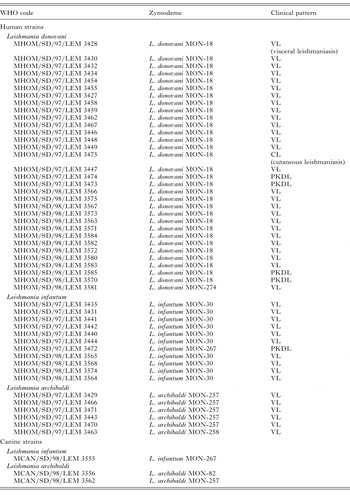
Table 1. WHO code and isoenzyme identification of 49 human and 3 canine strains studied from the Gedaref state (Sudan)
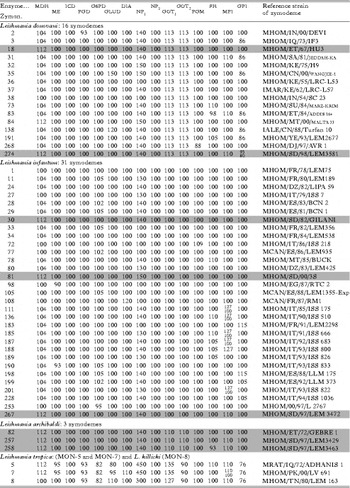
Table 2. Enzyme profiles of the 53 reference strains of Old World Leishmania used in this study
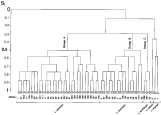
Fig. 1. The phenogram built on the base of 53 OTU (Jaccard index; complete links) shows 3 groups: Leishmania infantum (A), L. donovani (B) and L. archibaldi (C).
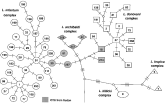
Fig. 2. The most parsimonious cladogram has 70 evolutive steps. It shows clearly 3 branches corresponding respectively to the phylogenetic complexes Leishmania infantum, L. donovani and L. archibaldi.
 You have
Access
- 50
- Cited by