Introduction
The field of endoscopic ear surgery has been steadily evolving over the last few decades, and more recently it has gained significant interest and popularity. This is in part because of advancements in endoscope technology, providing high magnification and wide-field views with improved resolution, which expand the application of this approach. There is a growing body of evidence supporting the safety and efficacy of endoscopic ear surgery, with outcomes comparable to traditional microscopic approaches.Reference Kiringoda, Kozin and Lee1
Training in endoscopic ear surgery requires the development and acquisition of unique surgical skills, and is therefore associated with a significant learning curve that only time and practice can address.Reference Doğan and Bayraktar2 Currently, most otolaryngology trainees have limited exposure to endoscopic ear surgery throughout their training, which further impedes the uptake and acquisition of relevant endoscopic ear surgery skills.
Surgical simulation is particularly effective at addressing such training challenges, in particular those associated with learning new surgical techniques. It is highly effective at flattening learning curves by providing high-fidelity training platforms that allow repeated practice in a controlled environment. Numerous studies have demonstrated that surgical simulation can improve transferrable skill acquisition and ultimately overall performance.Reference Sturm, Windsor, Cosman, Cregan, Hewett and Maddern3,Reference Sutherland, Middleton, Anthony, Hamdorf, Cregan and Scott4
A variety of simulation models have been utilised in endoscopic ear surgery training, ranging from high-fidelity models to synthetic task trainers. The cadaveric temporal bone remains the ‘gold standard’ for simulation training in all otological procedures. However, the cost, availability and local regulations limit access and regular usage. Synthetic models such as the Pettigrew temporal bone, which is a plastic casting of a human temporal bone, have been used in otology training, and their use as simulation models has been validated.Reference Awad, Ahmed, Taghi, Ghufoor, Wareing and Patel5
More recently, the feasibility of using ex vivo animal models, in particular the ovine temporal bone, have been explored as high-fidelity alternatives to the cadaveric temporal bone in endoscopic ear surgery simulation training.Reference Gocer, Eryilmaz, Genc, Dagli, Karabulut and Iriz6–Reference Schnabl, Glueckert, Feuchtner, Recheis, Potrusil and Kuhn8
This study aimed to compare the face and content validity of the ovine temporal bone and Pettigrew temporal bone against the gold standard cadaveric temporal bone for simulation training in endoscopic ear surgery.
Materials and methods
Materials
Human cadaveric temporal bones were prepared according to standard protocols for dissection. Lambs’ heads were obtained from a specialist medical meat supplier, fresh frozen and defrosted on the day. Modifications were made to the cartilaginous part of the external auditory canal in order to optimise access. The Pettigrew temporal bone utilised was ‘Bone 3’ (Stirling, Scotland, UK). It is embedded in malleable plaster foam and secured in a plastic container.
A standard set up for endoscopic ear surgery was arranged. This included 3 mm endoscopes connected to a camera and display monitor. Myringoplasty instruments were made available, along with additional grafting materials (Biodesign® Otologic Repair Graft) and partial ossicular replacement prostheses.
Study design
A prospective study day was organised to recruit candidates as part of a temporal bone training day. A pre-training questionnaire was completed to assess candidates’ level of surgical experience.
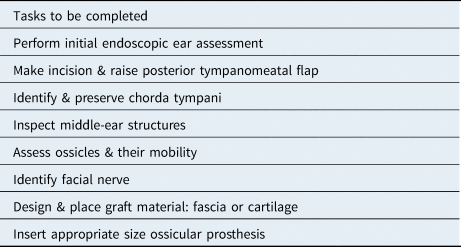
Participants were asked to perform all steps of an endoscopic transcanal tympanoplasty (type III) procedure on the three models (cadaveric, ovine and Pettigrew temporal bones) (Table 1). These were performed in sequence. This ensured exposure to the cadaveric temporal bone first, in order to set the bench mark, and to facilitate focused and objective observation of each models’ capabilities. We used endoscopic transcanal tympanoplasty as an index procedure, as it highlights the key challenges to performing endoscopic ear surgery and is a useful method of assessing model performance. Additional instructional manuals for the surgical steps were provided.
List of endoscopic transcanal tympanoplasty steps

Participants were guided through completion of all steps involved in endoscopic transcanal tympanoplasty
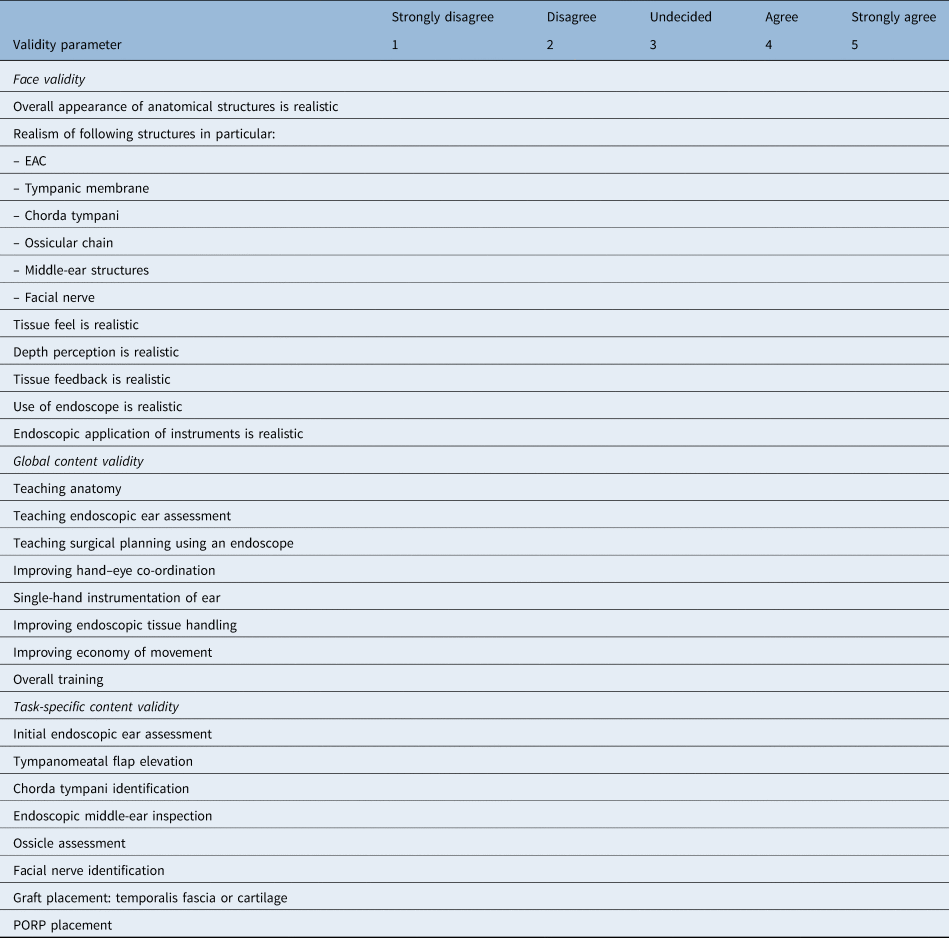
Participants assessed each model after the completion of tasks using a validation questionnaire, which evaluated three specific domains: face validity (assessing the realism of the model), global content validity (assessing the overall usefulness of the model as a training tool) and task-specific content validity (assessing the performance of the model at each specific step of the procedure). Participants responded to 28-items using 5-point Likert scales describing the extent to which they agreed or disagreed with statements (Table 2). The questionnaire design was adapted from previous simulation studies, in which similar questionnaires were used to validate other simulation models.Reference Awad, Ahmed, Taghi, Ghufoor, Wareing and Patel5,Reference Awad, Taghi, Sethukumar and Tolley9
Validation questionnaire

EAC = external auditory canal; PORP = partial ossicular replacement prosthesis
Data were prospectively collected and analysed using descriptive and non-parametric statistics. Wilcoxon signed-rank tests were used to compare and contrast model performance for each of the validity assessments (face, global content and task-specific validity) in the questionnaire. A median score of 4 (representing ‘agreement’ with the statements) was established as the threshold of validity. Statistical analyses were conducted using R statistical software, version 2.15.2.10
Ethical considerations
All animals were obtained from a licensed supplier compliant with all UK and EU laws regulating the use of animal products. The study parameters were compliant with the acceptable criteria recommendations of the Strengthening the Reporting of Observational Studies in Epidemiology (‘STROBE’) guidelines and the Animal Research: Reporting In Vivo Experiments (‘ARRIVE’) guidelines.
Results
Participants
A total of 10 participants, 5 trainees with an otology interest and 5 otology consultants, completed consecutive endoscopic tympanoplasties on each of the 3 models: cadaveric temporal bone, ovine temporal bone and Pettigrew temporal bone. This generated a total of 30 endoscopic procedures, with validation questionnaires completed for all assessments.
All otology consultants had endoscopic ear surgery experience, but the majority had predominantly microscopic ear surgery practice. The senior author has a predominantly endoscopic ear surgery practice, with extensive experience in endoscopic ear surgery. The grade of the assessed trainees ranged from specialty trainee years 5 to 8 (‘ST5’ to ‘ST8’; senior otolaryngology trainees) and included one clinical fellow. Trainees had all participated in (assisted in, been supervised performing or performed) at least 15 microscopic tympanoplasties, but had minimal experience of endoscopic ear surgery.
Feasibility assessment
Participant qualitative feedback regarding the feasibility of each model as a simulation tool was reviewed. As expected, the cadaveric temporal bone model was considered the gold standard for simulation training.
The ovine temporal bone was considered an excellent simulation tool, although some anatomical variations were highlighted relevant to the procedure. The external ear canal itself was ovoid in shape, and smaller in diameter compared to the human equivalent (4.5–6.6 mm). The tympanic membrane had a large pars flaccida and consequently low-lying chorda tympani. However, ossicle arrangement was similar to human anatomy, and all stages of the procedure could be performed adequately.
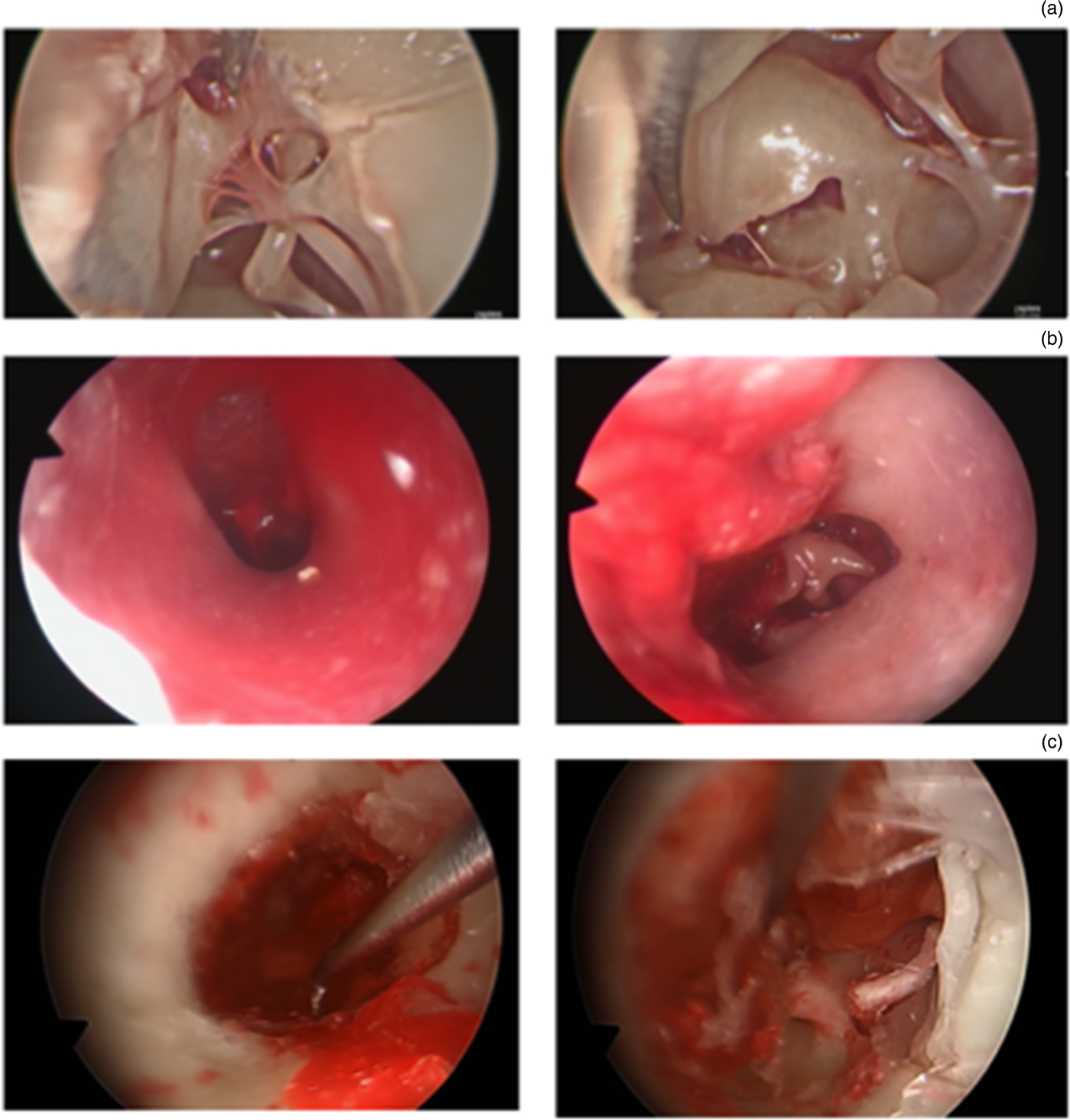
The feasibility of the Pettigrew temporal bone was also reviewed for endoscopic transcanal tympanoplasty. Tissue feel was considered inferior relative to the ovine temporal bone and cadaveric temporal bone models. Anatomical relations were largely similar, except that the Pettigrew temporal bone lacked chorda tympani, and the position of the facial nerve was deemed inaccurate. Other than identification of the chorda tympani, all operative steps in endoscopic transcanal tympanoplasty could be performed in the Pettigrew temporal bone model (Figure 1).
Endoscopic views of the: (a) cadaveric temporal bone, showing the middle-ear structures (left side); (b) ovine temporal bone, showing the external auditory canal and middle-ear structures (left side); and (c) Pettigrew temporal bone, showing the tympanic membrane and the middle-ear structures (left side).

Model validity
The models were assessed in terms of their validity as simulation tools using 5-point Likert scales, with a median score of 4 considered the threshold for validation. The cadaveric temporal bone, utilised as the gold standard, scored 5 for all categories, allowing a comparative assessment of the ovine and Pettigrew temporal bone models. A high level of concordance was noted between trainees and consultants in all areas assessed for each of the models.
Face validity
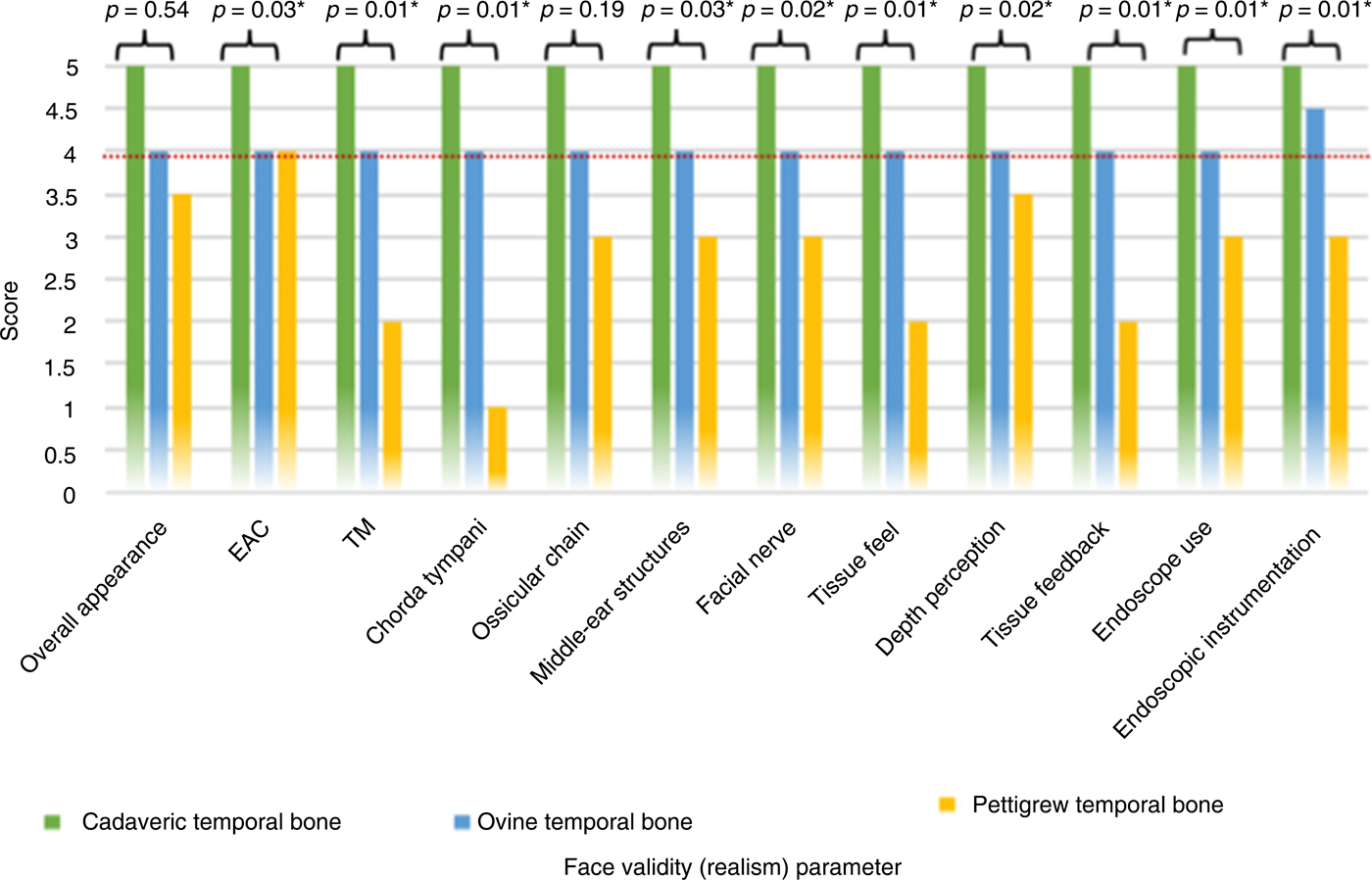
The ovine temporal bone model anatomy of the external ear canal, tympanic membrane, chorda tympani, ossicles, middle ear and facial nerve were considered realistic, with a median score of 4 for all categories. Tissue feedback and feel were similarly realistic, also achieving a median score of 4. The realism of depth perception, endoscope use and instrumentation had median scores of 4, 4 and 4.5, respectively. The overall face validity median score for the ovine temporal bone was 4. Therefore, the model achieved the validation thresholds for all aspects of the face validity assessments (Figure 2).
Bar chart demonstrating median Likert scale scores across all face validity items, for all three models. Red dashed line indicates validation threshold. P-values represent Wilcoxon signed-rank test assessments of ovine temporal bone versus Pettigrew temporal bone. Asterisks indicate significant results. EAC = external auditory canal; TM = tympanic membrane

The median scores for the realism of the Pettigrew temporal bone anatomy were as follows: external ear canal = 4, tympanic membrane = 2, chorda tympani = 1, ossicles = 3, middle ear = 3 and facial nerve = 3. Tissue feedback and feel scores demonstrated low model realism, with median scores of 2. The median scores for realism regarding the practical use of the model were higher, as follows: depth perception = 3.5, endoscope use = 3 and instrumentation = 3. Overall, the model achieved a median score of 3.5. Therefore, it did not reach the requisite thresholds for validation (Figure 2).
Comparative assessment of the ovine and Pettigrew temporal bone models demonstrated that the ovine temporal bone model was significantly superior for all aspects of endoscopic transcanal tympanoplasty simulation, except for realism of the ossicles and the overall realism (Figure 1).
Global content validity
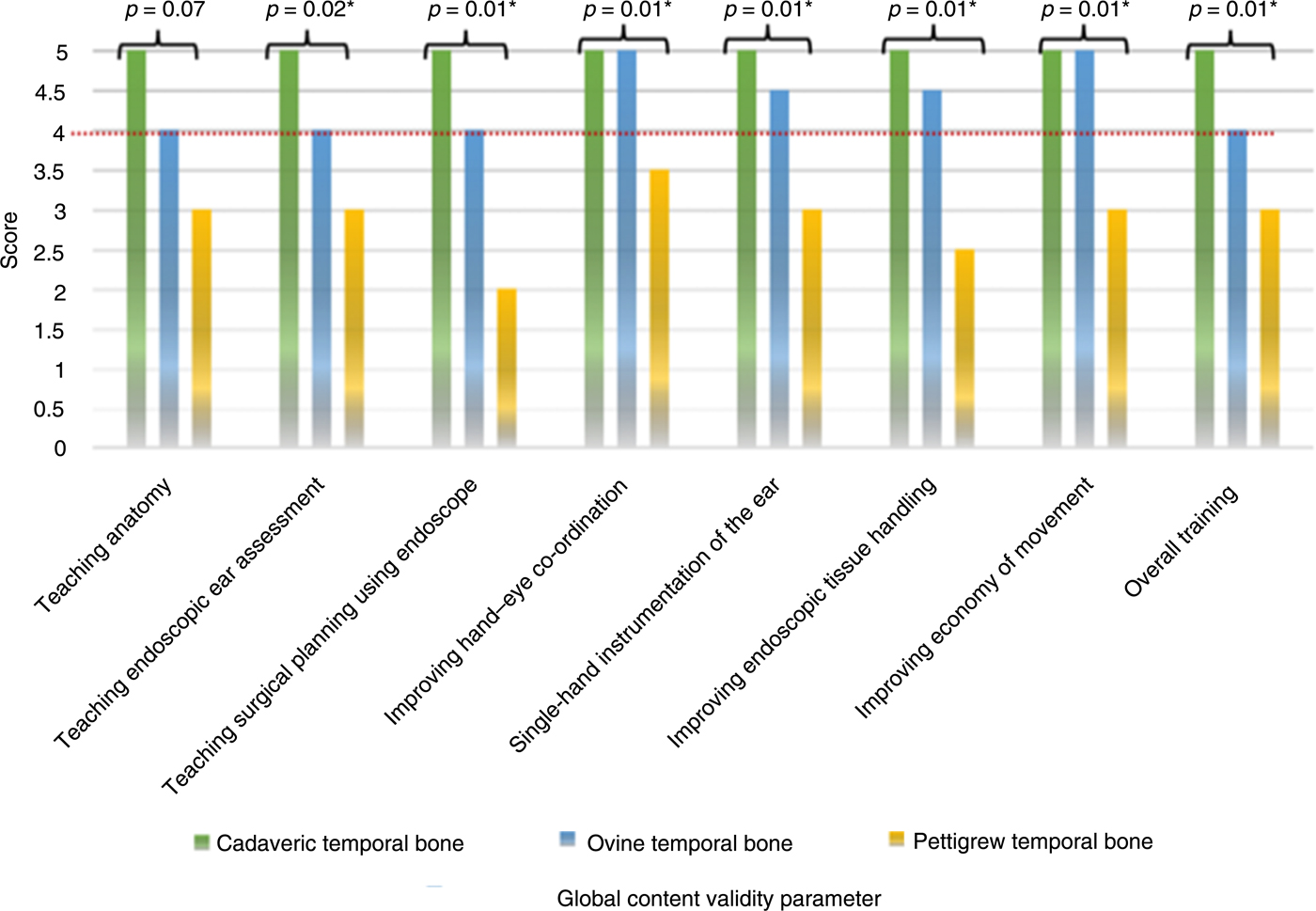
The ovine temporal bone model demonstrated the following global content validity median scores: teaching anatomy = 4, endoscopic ear assessment = 4, teaching surgical planning = 4, teaching single-handed instrument use = 4.5, improving tissue handling = 4.5, improving hand-eye co-ordination = 5 and economy of movement = 5. The overall median score for global content validity for the ovine temporal bone was 4. Therefore, the model achieved the requisite validation thresholds for all categories (Figure 3).
Bar chart demonstrating median Likert scale scores across all global content validity items, for all three models. Red dashed line indicates validation threshold. P-values represent Wilcoxon signed-rank test assessments of ovine temporal bone versus Pettigrew temporal bone. Asterisks indicate significant results.

The Pettigrew temporal bone model achieved the following global content validity median scores: teaching anatomy = 3, teaching endoscopic ear assessment = 3, teaching surgical planning = 2, improving hand-eye co-ordination = 3.5, teaching single-handed instrument use = 3, improving tissue handling = 2.5 and establishing economy of movement = 3. The overall global content median score for the Pettigrew temporal bone was 3. Therefore, the model did not achieve the adequate validation thresholds.
The ovine temporal bone model was significantly superior to the Pettigrew temporal bone model in all aspects of global content validity assessed, except in teaching anatomy (Figure 3).
Task-specific content
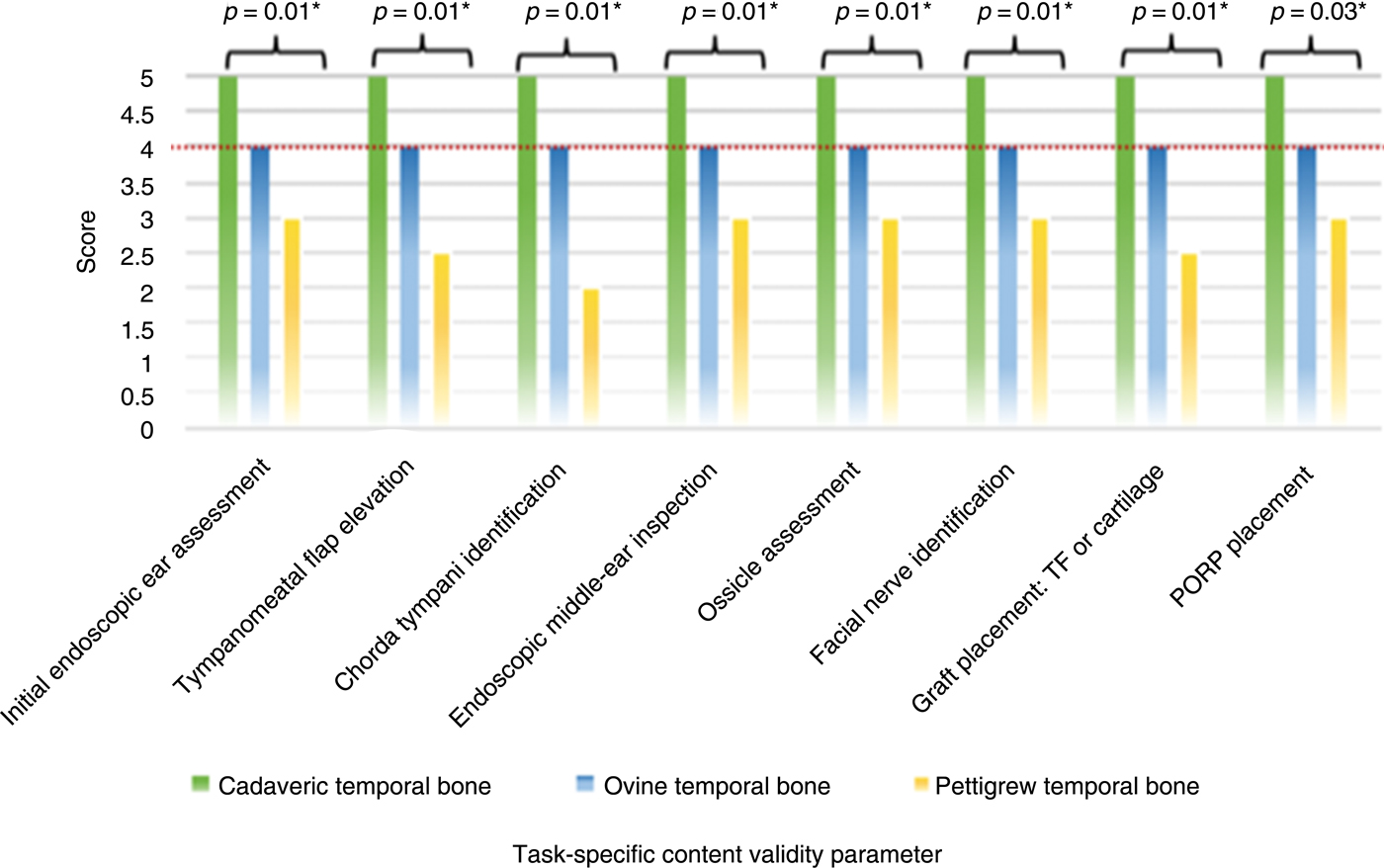
The ovine temporal bone model demonstrated a median validity score of 4 for all the task-specific content factors assessed. It therefore achieved the validation thresholds for all aspects of endoscopic transcanal tympanoplasty (Figure 4).
Bar chart demonstrating median Likert scale scores across all task-specific content validity items, for all three models. Red dashed line indicates validation threshold. P-values represent Wilcoxon signed-rank test assessments of ovine temporal bone versus Pettigrew temporal bone. Asterisks indicate significant results. TF = temporalis fascia; PORP = partial ossicular replacement prosthesis

The Pettigrew temporal bone demonstrated median validity scores for the endoscopic transcanal tympanoplasty operative steps as follows: endoscopic ear examination = 3, tympanomeatal flap elevation = 2.5, chorda tympani identification = 2, middle-ear inspection = 3, ossicle assessment = 3, facial nerve identification = 3, graft placement = 2.5 and ossicular prosthesis placement = 3. The Pettigrew temporal bone model was not considered a valid teaching tool for any of the endoscopic transcanal tympanoplasty steps. This is reflected in the comparison between the ovine temporal bone and the Pettigrew temporal bone, with validity scores significantly higher for the ovine temporal bone for all steps in the procedure (Figure 4).
Discussion
To our knowledge, this is the first comparative concurrent validation study to assess synthetic and ex vivo ovine models against the gold standard cadaveric temporal bone for simulation training in endoscopic ear surgery. This study has validated the ovine temporal bone model as a simulation tool for training in endoscopic transcanal tympanoplasty.
Overcoming the single-handed operating, lack of stereoscopic views, limited depth perception and fine motor skills are particular challenges to achieving competence in endoscopic ear surgery.
The associated learning curve for performing endoscopic tympanoplasty described by Doğan and BayraktarReference Doğan and Bayraktar2 demonstrates two distinct phases of learning: the first, occurring after 30 cases, reflects single-handed dexterity and fine motor skills acquisition; and the second, occurring after 60 cases, demonstrates improved speed, economy of movement and ultimately better outcomes when compared to microscopic approaches. However, this process takes a significant period of time (over two years), even with a concerted effort.
Furthermore, the impact of working time restrictions on trainee operative exposure creates an additional challenge for trainees’ prospects of achieving competencies in endoscopic ear surgery. This highlights the vital role of simulation training in addressing such training challenges.
• Endoscopic ear surgery is an evolving domain within the field of otology
• Achieving competence in endoscopic ear surgery can require a protracted learning curve, presenting a challenge to otolaryngology trainees
• This study reviewed the efficacy of ovine and Pettigrew temporal bones for simulating endoscopic ear surgery, in comparison to cadaveric dissection
• The ovine model was superior to the Pettigrew model, demonstrating a high degree of concordance with the human cadaveric model
• The ovine model was validated as a low-cost, high-fidelity simulator, with the potential to improve training in endoscopic ear surgery
In order to successfully adopt and implement any simulation model into a surgical curriculum, it is crucial to assess its feasibility and validity against the gold standard human cadaveric tissue. Cadaveric temporal bone is the ideal model for endoscopic ear surgery simulation, providing realistic anatomy and a superior tissue feel. In our study, both experts and trainees unanimously concurred that the cadaveric temporal bone was the most realistic model, comfortably accommodating all steps of the procedure, and validating it as an extremely useful model for simulation training in endoscopic ear surgery. However, because of cost, limited access and strict regulations governing their use, regular access to cadaveric temporal bone is particularly prohibitive.
In recent years, several authors have explored the feasibility of using different animal and synthetic models as alternatives to cadaveric temporal bone for simulation training in endoscopic ear surgery. The application of the ovine model has been explored in endoscopic procedures such as stapedectomy,Reference Cordero, del mar Medina, Alonso and Labatut7,Reference Cordero, Benítez, Reyes, Vaca, Polo and Pérez11 cochlear implantation,Reference Mantokoudis, Huth, Weisstanner, Friedrich, Nauer and Candreia12 middle-ear implantable devicesReference Schnabl, Glueckert, Feuchtner, Recheis, Potrusil and Kuhn8 and endoscopic myringoplasty.Reference Schnabl, Glueckert, Feuchtner, Recheis, Potrusil and Kuhn8,Reference Anschuetz, Bonali, Ghirelli, Mattioli, Villari and Caversaccio13 This is predominantly a result of the remarkable anatomical similarity and tissue quality that it shares with the cadaveric temporal bone.Reference Seibel, Lavinsky and De Oliveira14,Reference Seibel, Lavinsky and Irion15 However, its utility for endoscopic transcanal tympanoplasty has not been formally validated.
The authors consider endoscopic transcanal tympanoplasty to be an important index procedure of endoscopic surgical skills, as it incorporates all key technical and fine motor skills that are essential for endoscopic ear surgery. The anatomical arrangement and tissue feel of the lamb model was considered to be highly realistic, and, overall, the ovine temporal bone performed well across all global content and task-specific content validity domains, achieving requisite validation threshold scores. This study validates the ovine temporal bone as a realistic and useful tool, and supports its use in endoscopic ear surgery simulation and endoscopic transcanal tympanoplasty training.
A variety of synthetic temporal bone models are available on the market,Reference Bhutta16 with some utilising three-dimensional printing technologies.Reference Takahashi, Morita, Ohshima, Izumi, Kubota and Yamamoto17 The Pettigrew temporal bone is the most popular readily available synthetic temporal bone model in the UK, and has partially been validated for use in mastoid surgery simulation.Reference Awad, Ahmed, Taghi, Ghufoor, Wareing and Patel5 In our study, both experts and trainees concurred that the Pettigrew temporal bone was not a realistic model across nearly all face validity items. Important factors such as the absence of key structures including the cartilaginous external auditory canal and chordae tympani, poor tissue feedback, and limited tympanic membrane mobility were contributory factors. This also affected the model's performance across global content and task-specific content domains, failing to achieve requisite scores for validation. Therefore, the Pettigrew temporal bone model was not fully supported for use in endoscopic ear surgery simulation of endoscopic transcanal tympanoplasty by both experts and trainees.
Our findings differ from previous Pettigrew temporal bone validation assessments. This is because our study focused predominantly on the soft tissue work and middle-ear instrumentation, rather than mastoid drilling. The presence of an additional model (the ovine temporal bone) may have resulted in a comparatively lower score and poorer performance. We maintain that the Pettigrew temporal bone model has a role to play in otological simulation training, but significant modifications are required prior to successful incorporation in endoscopic ear surgery simulation, and the Pettigrew temporal bone may only be suitable as a low-fidelity model.
Statistical comparison of the ovine and Pettigrew temporal bone models revealed that the ovine temporal bone had significantly better scores across all assessed domains, in terms of face validity, global content validity and task-specific validity. This study therefore fully supports the use of the ovine temporal bone model as a high-fidelity, validated alternative to cadaveric temporal bone for simulation training in endoscopic ear surgery and endoscopic transcanal tympanoplasty. The lamb models are inexpensive (approximately £15), readily available, and provide high-fidelity, realistic anatomy suitable for developing and maintaining endoscopic ear surgery skills. In comparison, the Pettigrew temporal bone model costs £65.
Study limitations
This is a cohort study of linked operative assessments of models, and is therefore considered to provide level 3b evidence. A small number of assessors enrolled into this study, partly because of the logistical challenges inherent to the nature of simulation studies. The sequential assessment of models by a single assessor can result in a moderate risk of bias, where a model's performance is considered worse in comparison. Junior participants’ limited experience in endoscopic ear surgery may also have contributed to a potential bias in observations. However, this was partially addressed by the trainees completing the temporal bone training course prior to the study, as well as candidates’ moderate exposure to microscopic tympanoplasty (at least 15 procedures). Furthermore, consultant and trainee assessments demonstrated a high level of concordance. The absence of definitive assessment tools for the validation of simulation models was mitigated through the development of internal validation questionnaires, derived from previously utilised questionnaires in the literature.
Conclusion
Endoscopic ear surgery benefits from dynamic high-resolution magnified images, with access to difficult recesses, and reduces the need for excess bone removal. It is likely to significantly evolve in the coming years, both as a single entity and as an adjunctive procedure to aid conventional microscopic approaches. Therefore, trainees would benefit from developing the unique set of skills required for endoscopic ear surgery. This can be successfully accomplished using simulation training.
The ovine temporal bone provides a high-fidelity ex vivo alternative to cadaveric temporal bone, with realistic anatomy, tissue feel and tissue feedback. It accommodates the use of an endoscope in the confined space of the lamb's middle ear, facilitating the development of single-handed operating and fine motor skills for trainees. We believe that ovine temporal bone simulation training should be incorporated into the otology training curriculum alongside conventional microscopic teaching, in order to improve skills, flatten the learning curve, and ultimately improve training and outcomes.
Acknowledgement
We would like to acknowledge the assistance provided by Mr Ashok Rokade, Hampshire Hospitals NHS Foundation Trust, who aided in the facilitation of this study.
Competing interests
None declared