Intergenerational poverty and racism remain especially salient in rural parts of the southern United States, one of the nation's most economically disadvantaged areas (Proctor & Dalaker, Reference Proctor and Dalaker2003). African American children growing up in deeply impoverished rural towns face underperforming schools, substandard medical care, and limited access to mental health care (Dressler, Oths, & Gravlee, Reference Dressler, Oths and Gravlee2005). The neighborhoods in which they live may be isolated without afterschool programs and others may be disorganized owing to economic history (Ross & Mirowsky, Reference Ross and Mirowsky1999). As rural African American adolescents age into emerging adulthood, these persistent risk factors are compounded by limitations in employment opportunities, housing, and transportation (Kidder, Reference Kidder2006; US Department of Agriculture, 2019). This transition may also have particularly marked effects on an individual's life outcomes owing to the distancing of previously proximal protective factors (e.g., parental involvement and monitoring), while peer influences and experiences of interpersonal and institutional racism increase. Understanding how these individual and contextual factors impact psychosocial outcomes among rural African American emerging adults is critical.
For rural African Americans, emerging adulthood involves exposure to a host of new contextual risk factors with potentially far-reaching effects. In this paper, the concept of contextual risk refers to factors within a social environment that affect individuals. Several contextual risks are related to poor psychosocial outcomes among African American emerging adults. For instance, studies have shown that perceived stress (i.e., the degree to which an individual believes that a situation is causing stress) is related to substance use and mental health issues among African American adolescents and emerging adults (Barton et al., Reference Barton, Brody, Zapolski, Goings, Kogan, Windle and Yu2018; Causadias, Cicchetti, Hill, & Hoggard, Reference Causadias, Cicchetti, Hill and Hoggard2018) – a particularly troubling connection given that, in general, African American individuals bear a greater burden of stress than their peers (Copeland-Linder, Lambert, Chen, & Ialongo, Reference Copeland-Linder, Lambert, Chen and Ialongo2011). For many African Americans, the standard stressors that all individuals face are compounded by race-related contextual stressors, including racial discrimination (Clark, Anderson, Clark, & Williams, Reference Clark, Anderson, Clark and Williams1999) and financial strain stemming from hundreds of years of institutionalized racism and oppression (Gutman, McLoyd, & Tokoyawa, Reference Gutman, McLoyd and Tokoyawa2005).
Racial discrimination is itself a key contextual risk for a host of negative outcomes among African American emerging adults. In the United States, African Americans continue to experience institutional, structural, and interpersonal racism, and the perception of this discrimination can induce feelings of anger, frustration, and hopelessness and negatively impact mental health (Pascoe & Richman, Reference Pascoe and Richman2009). Among African American emerging adults, perceived racial discrimination is also associated with risky behaviors, such as substance use, with depressive symptoms partially mediating this relationship (Clark, Reference Clark2014; Clark, Salas-Wright, Vaughn, & Whitfield, Reference Clark, Salas-Wright, Vaughn and Whitfield2015). Among African American women, anticipatory race-related stress (i.e., stress produced by anticipation of experiencing racism) is indirectly related to depressive symptoms through rumination, a maladaptive coping mechanism where the individual repetitively thinks about the causes, situational factors, and consequences of negative experiences (Causadias et al., Reference Causadias, Cicchetti, Hill and Hoggard2018; Nolen-Hoeksema, Reference Nolen-Hoeksema1991). African American emerging adults who experience high levels of stress stemming from racial discrimination are at greater risk for problem drinking than those who experience lower levels of stress in response to perceived racial discrimination (Metzger et al., Reference Metzger, Carter, Anderson, Salami, Halliday-Boykins, Jernigan and Ritchwood2018). In addition to substance use and mental health, African American emerging adults’ experiences of perceived discrimination are linked to stress-related physiological responses, such as elevated blood pressure (Clark et al., Reference Clark, Anderson, Clark and Williams1999), and over time can accelerate health deterioration (Mays, Cochran, & Barnes, Reference Mays, Cochran and Barnes2007; Pascoe & Richman, Reference Pascoe and Richman2009). Clearly, the perception of racial discrimination magnifies the already negative direct effects of racial discrimination faced by African Americans – a double jeopardy facing African American emerging adults at a key developmental stage in their lives.
The low-income neighborhoods in which many rural African American emerging adults live may present other major contextual risks. Low-income neighborhoods are less likely to have high-performing schools, good jobs, and healthy food compared to high-income neighborhoods (Acevedo-Garcia, Osypuk, McArdle, & Williams, Reference Acevedo-Garcia, Osypuk, McArdle and Williams2008; Shonkoff & Phillips, Reference Shonkoff and Phillips2000), all key indicators of the contextual risks these neighborhoods present. In addition, for rural African American emerging adults (especially males) residing in low-income neighborhoods has been shown to amplify the impact of marijuana use on future substance use problems (Kogan, Cho, Brody, & Beach, Reference Kogan, Cho, Brody and Beach2017). That is, one's social network and neighborhood environment may reinforce unhealthy behaviors.
Parents, who to a large extent control and shape the contextual risks their children encounter, also play critical roles in helping their children develop into healthy adults. Positive parental involvement can protect children from the effects of stress, racial discrimination, and neighborhood disorder, but a negative or conflict-laden parent–child relationship (e.g., a relationship involving childhood maltreatment) can itself be a contextual risk. After using latent profile analysis (LPA) to categorize African American families based on parent–child conflict, Skinner and McHale (Reference Skinner and McHale2016) found that youth in high-conflict families reported more depressive symptoms and more risky behaviors than youth in lower-conflict families. Troubled parent–child relationships are also associated with weakened self-regulatory abilities among African American adolescents (Brody & Ge, Reference Brody and Ge2001), making it more likely these emerging adults will ignore their parents’ substance use recommendations (Brody, Ge, Katz, & Arias, Reference Brody, Ge, Katz and Arias2000). Some parents may also engage in child maltreatment by neglecting or emotionally, physically, or sexually abusing their child. African American emerging adults exposed to childhood maltreatment (by their parents or another individual) at an early age are at greater risk for poor psychosocial and health outcomes over their life span (Cohen, Menon, Shorey, Le, & Temple, Reference Cohen, Menon, Shorey, Le and Temple2017; Janusek, Tell, Gaylord-Harden, & Mathews, Reference Janusek, Tell, Gaylord-Harden and Mathews2017).
SHAPE
The Strong African American Families Healthy Adult Project (SHAPE; Brody et al., Reference Brody, Yu, Chen, Kogan, Evans, Beach and Philibert2013) is an extension of the Strong African American Families (SAAF) project, a family-based substance use prevention intervention for rural African American preadolescents (ages 11–12 years) and their primary caregivers. SHAPE continued to gather longitudinal data on SAAF's preadolescent participants into emerging adulthood in order to assess their trajectories of substance use, physical health, and self-regulation.
In one SHAPE study, Brody et al. (Reference Brody, Yu, Chen, Kogan, Evans, Beach and Philibert2013) followed preadolescents (age 11 years) into early emerging adulthood (19 years) in order to examine precursors of the phenomenon that African Americans evince higher levels of physical problems but similar or lower levels of psychological problems than White Americans. Their LPA identified five profiles of cumulative socioeconomic status (SES) risk and protective processes. The three largest profiles represented a “low-risk” group, a “resilient” group (characterized by high SES risk, low allostatic load, and adjustment problems), and a “physical health vulnerability” group (characterized by high SES risk, high allostatic load, and low adjustment problems). This SHAPE study's findings highlighted the heterogeneity of risk and protective factors among rural African American adolescents and early emerging adults, indicating that some youth have little exposure to SES risks, while others have high exposure to SES risks but are resilient or vulnerable. The current study builds on this and other prior SHAPE analyses by investigating the contextual risks and outcomes that occur exclusively during the emerging adulthood developmental period.
Theory of contextual influences on development
Because context directly and indirectly impacts human development, researchers and policymakers must understand the degree and manner through which contextual factors contribute to psychosocial outcomes, including the crime, substance use, unemployment, and educational challenges that plague rural African American communities in order to achieve social and health equity. Bronfenbrenner's (Reference Bronfenbrenner1979, Reference Bronfenbrenner1986) seminal work offers a schema for assessing contextual factors by mapping how development occurs within multiple interacting contextual systems. This schema includes five interactive systems: the microsystem, mesosystem, exosystem, macrosystem, and chronosystem. The proximal contextual system, the microsystem, refers to the ecological systems that the individual directly participates in, such as their family, peers, school, and neighborhood. These proximal systems are embedded within distal systems that the individual does not participate in, but which indirectly impact their development (e.g., their parent's childhood experiences, work climate, and day-to-day life experiences). Studies that take into account multiple contextual influences provide a fuller account of the experiences that shape human development. Dong et al. (Reference Dong, Anda, Felitti, Dube, Williamson, Thompson and Giles2004) analysis of the co-occurrence of 10 environmental risk factors found that environmental risks were more likely to occur together than separately. The current study uses Bronfenbrenner's framework to examine whether and how multiple contextual influences within the microsystem contribute to psychosocial outcomes, including education, future/goal orientation, depressive symptoms, substance use, and externalizing behaviors, in African American emerging adults.
Overview of the current study
To date, the majority of research on the relationship between contextual risk factors and behavioral outcomes among African American emerging adults has focused on urban areas. Comparatively, little is known about the types of contextual risk factors that rural African American emerging adults encounter and how these risk factors impact them across the life course. We investigated whether contextual risks differ among African American emerging adults who live in the rural South and to what extent these risks are associated with psychosocial outcomes in late emerging adulthood.
Using data from SHAPE, we addressed our two primary goals. First, we used LPA to identify profiles of contextual risks among rural African American emerging adults based on six key indicators of participants’ contextual risk (i.e., perceived stress, daily stress, community disadvantage, parent–child conflict, racial discrimination, and childhood trauma) assessed by SHAPE at ages 19–21 years. Our second goal was to examine how those profiles related to psychosocial outcomes (i.e., substance use, academic performance, goal/future orientation, depressive symptoms, and externalizing problems) assessed at age 25 years. In line with prior research on African American youth and emerging adults, we hypothesized that profiles indicative of higher levels of contextual risk would be associated with poorer psychosocial outcomes. In addition, given the severity of psychological damage that can arise from child maltreatment, we expected child maltreatment to emerge as a salient predictor of psychosocial functioning in emerging adulthood. Our analyses controlled for family SES, adolescents’ biological sex, and intervention status in all models.
Method
Participants
Data were drawn from SHAPE (Brody et al., Reference Brody, Yu, Chen, Kogan, Evans, Beach and Philibert2013). The SHAPE study participants and their families lived in nine rural counties in Georgia. These counties consist of small towns and communities with some of the highest poverty rates in the nation as well as unemployment rates above the national average (Proctor & Dalaker, Reference Proctor and Dalaker2003). At the first assessment, 667 families were randomly selected from lists of fifth-grade students (Mage = 11.2 years, SD = 0.34) that were provided by public schools. Among the households of these students, even though the primary caregivers worked an average of 39.4 hr per week, 46.3% of the students lived below the federal poverty threshold, with a reported median family income of $1655 per month. Follow-up assessments of student respondents were conducted at ages 11, 12, 13, 16, 17, 18, 19, 20, 21, and 25 years. About 77% (n = 516) of the original sample provided data on stress variables during at least one year from ages 19 to 21 years; we conducted our analyses on this group's data. Thus, our final sample size for the analyses was 516. Comparisons between these 516 respondents and the 151 original respondents who did not provide stress variable data revealed no significant differences between the groups in terms of demographic and study variables. At age 25 years, 406 respondents provided data on psychosocial outcomes. Compared with the sample of 516, the 406 respondents who provided data at age 25 years were more likely to be female (59.4% vs. 54.1%; χ2 (1) = 21.46; p < .001), and more likely to have received more parental support (M = 27.56, SD = 5.23 vs. M = 27.28, SD = 5.38; t (213) = 2.25; p = .025).
Procedures
All data were collected in respondents’ homes using a standardized protocol. At each wave of data collection, two African American field researchers conducted one home visit that lasted approximately 2 hr. Interviews were conducted privately, with no other family members present or able to overhear the conversation. Respondents were compensated $100 for each completed interview. At all data-collection points, respondents completed informed consent and assent forms. All procedures were approved by the University of Georgia Institutional Review Board.
Measures
Contextual risk indicators during emerging adulthood
Interviews conducted when respondents were 19, 20, and 21 years old included measures of six contextual risk indicators: perceived stress, daily stress, community disadvantage, parent–child conflict, racial discrimination, childhood trauma. Perceived stress was measured using 10 items from the Perceived Stress Scale (Cohen, Kamarck, & Mermelstein, Reference Cohen, Kamarck and Mermelstein1983). The Perceived Stress Scale is widely used and has demonstrated acceptable internal consistency reliability, test–retest reliability, factorial validity, hypothesis validity, criterion validity, construct validity, and predictive validity (Cohen & Williamson, Reference Cohen, Williamson, Spacapan and Oskamp1988; Lee, Reference Lee2012). The Perceived Stress Scale is also correlated with other measures of stress, health and health services, smoking, and help-seeking behavior (Cohen & Williamson, Reference Cohen, Williamson, Spacapan and Oskamp1988). Example items include how often during the past month the respondent had “felt nervous and stressed,” or “unable to control the important things in your life.” The 5-point response set ranged from 1 (never) to 5 (very often). Scores were summed to form a measure of perceived stress at each wave and were averaged across the three emerging adulthood assessment waves (i.e., ages 19, 20, and 21 years). Cronbach's alphas ranged from .81 to .82.
Daily stress (i.e., within the past 24 hr) was measured using 59 items adopted from the Daily Stress Inventory (Brantley, Waggoner, Jones, & Rappaport, Reference Brantley, Waggoner, Jones and Rappaport1987). The Daily Stress Inventory has demonstrated internal consistency reliability, test–retest reliability, concurrent validity, and construct validity (Brantley et al., Reference Brantley, Waggoner, Jones and Rappaport1987). Respondents were asked to report the extent of stress they felt related to events that had occurred within the past 24 hr. For each data collection wave, the research team asked the respondents to complete the entire online survey three times within 2 weeks. Example items include “ignored by others,” “heard about bad news,” and “thought about unfinished work.” The 6-point response set ranged from 0 (did not occur) to 5 (caused me to panic). Scores from each of three completed surveys were summed to form a measure of daily stress, and an average daily stress score was calculated for the 2-week period. This average daily stress score was then averaged across the scores for all three assessment waves in the emerging adulthood period. Cronbach's alpha was .97.
Community disadvantage was measured by 11 items from the Community Disorganization scale, which has high reliability (Sampson & Raudenbush, Reference Sampson and Raudenbush2004). Respondents were asked whether disorder was a problem in their neighborhoods (response set: 0 [not a problem] to 2 [a big problem]) or how often certain types of events happened in their neighborhood over the past 6 months (response set: 0 [never] to 2 [often]). Example items include “drinking in public,” “people selling or using drugs,” and “gang fights.” Scores were summed to form a measure of community disadvantage at each wave and averaged across the three emerging adult assessment waves. Cronbach's alphas ranged from .89 to .92.
Parent–child conflict was measured using an adaptation of the Ineffective Arguing Inventory (Kurdek, Reference Kurdek1994) The Ineffective Arguing Inventory has high internal consistency reliability, test–retest reliability, and face validity, and limited but promising concurrent criterion-related validity and predictive criterion-related validity in couples (Kurdek, Reference Kurdek1994). Using a scale from 1 (disagree strongly) to 5 (agree strongly), respondents rated the extent to which they agreed with statements such as: “you and your parent's arguments are left hanging and unsettled,” and “you and your parent go for days being mad at each other.” Scores were summed to form a measure of parent–child conflict at each wave and then averaged across the three emerging adult assessment waves. Cronbach's alphas ranged from .82 to .85.
Racial discrimination was measured using nine items from a version of the Schedule of Racist Events (Landrine & Klonoff, Reference Landrine and Klonoff1996). The Schedule of Racist Events has been shown to have extremely high internal consistency, split-half reliability, and good validity as a measure of culturally specific stress (Landrine & Klonoff, Reference Landrine and Klonoff1996). Items in the revised Schedule of Racist Events assessed the frequency during the previous year with which respondents experienced or perceived specific discriminatory events. Response options ranged from 0 (never happened) to 2 (happened a lot). These events included racially based slurs and insults, disrespectful treatment from community members, physical threats, and false accusations from business employees or law enforcement officials. Responses were summed to form the racial discrimination score, and those scores were averaged across the three assessment waves. Cronbach's alphas ranged from .91 to .92.
Childhood trauma was measured retrospectively via 28 items from the short form of the Childhood Trauma Questionnaire (Bernstein et al., Reference Bernstein, Fink, Handelsman, Foote, Lovejoy, Wenzel and Ruggiero1994). The short form of the Childhood Trauma Questionnaire has good criterion-related validity in a subsample of adolescents for whom corroborative data were available (Bernstein et al., Reference Bernstein, Stein, Newcomb, Walker, Pogge, Ahluvalia and Zule2003). The original and longer version of the questionnaire has good reliability and validity (Bernstein et al., Reference Bernstein, Fink, Handelsman, Foote, Lovejoy, Wenzel and Ruggiero1994). The items assessing childhood abuse addressed emotional abuse (e.g., “I thought that my parents wished I had never been born”), physical abuse (e.g., “I got hit so hard by someone in my family that I had to see a doctor or go to the hospital”), and sexual abuse (e.g., “someone in my family tried to touch me in a sexual way, or tried to make me touch them”). Items assessing childhood neglect included physical neglect (e.g., “I did not have enough to eat”) and emotional neglect (i.e., “there was someone in my family who helped me feel that I was important or special”). Respondents were asked to rate statements about their experiences in the home before age 16 years using a scale ranging from 1 (never true) to 5 (very often true). Responses were summed to form the childhood trauma scores, and these scores were averaged across the two assessment waves at ages 20 and 21 years. Cronbach's alphas ranged from .88 to .89. Because the childhood trauma score was skewed positively (see Table 1), the variable was log transformed to make the distribution more symmetrical.
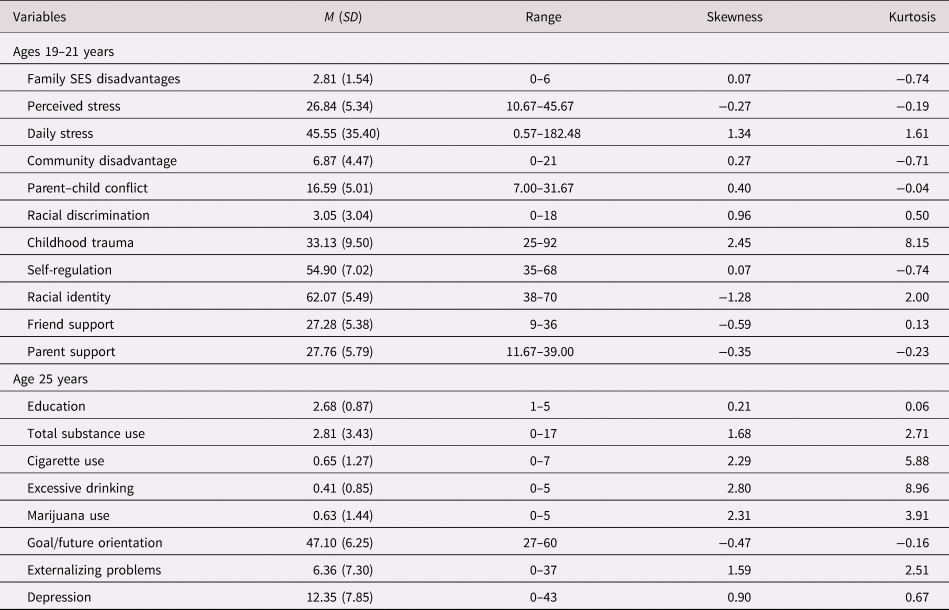
Sample statistics

Note. SES = socioeconomic status.
Psychosocial variables during emerging adulthood (19–21 years old)
Four psychosocial measures were assessed during emerging adulthood across three waves at ages 19, 20, and 21 years old. Respondents reported self-regulation in responses to the 23-item Self-Regulation Questionnaire (Brown, Miller, & Lawendowski, Reference Brown, Miller, Lawendowski, VandeCreek and Jackson1999). The Self-Regulation Questionnaire has good reliability and validity (Brown et al., Reference Brown, Miller, Lawendowski, VandeCreek and Jackson1999). Each item was rated on a Likert-type scale ranging from 1 (strongly disagree) to 4 (strongly agree). Example items included, “once I have a goal, I can usually plan how to reach it,” “I set goals for myself and keep track of my progress,” and “if I make a resolution to change something, I pay a lot of attention to how I am doing.” All items were summed to yield a self-regulation score. Cronbach's alphas ranged from .91 to .92.
Respondents reported racial identity using a 15-item Multidimensional Inventory of Black Identity (Sellers, Rowley, Chavous, Shelton, & Smith, Reference Sellers, Rowley, Chavous, Shelton and Smith1997). The Multidimensional Inventory of Black Identity has good reliability, internal validity, and external validity (Sellers et al., Reference Sellers, Rowley, Chavous, Shelton and Smith1997). The 14-item scale assessed the importance of being Black to the youth's identity and the extent to which the respondent embraced positive views and rejected negative views of African Americans. Example items included, “being Black is an important part of my self-image” and “I believe that because I am Black I have many strengths.” Possible responses ranged from 1 (strongly disagree) to 5 (strongly agree). Responses to items were summed to form the racial identity score at each wave. Cronbach's alphas ranged from .72 to .76.
Variables of parent support and friend support were measured by youth's responses to the Network Relationships Inventory (Furman & Buhrmester, Reference Furman and Buhrmester1985). The Network Relationships Inventory has high internal consistency reliability for all subscales and high test–retest reliability (Furman & Buhrmester, Reference Furman and Buhrmester1985, Reference Furman and Buhrmester2009). Using a scale ranging from 1 (never) to 4 (very often), youth responded to nine items about emotional and instrumental support and caregiving from their parent, and emotional and instrumental support and relationship security from a best friend. Responses to items were summed to form the parent support and friend support scores at each wave. Cronbach's alpha was .90 for parent support and ranged from .90 to .91 for friend support. Each psychosocial measure was averaged across all three waves of assessment.
Psychosocial outcomes at age 25 years
At age 25 years, respondents were assessed for five psychosocial variables: education, substance use (cigarette, alcohol, marijuana, and excessive alcohol use), future/goal orientation, depressive symptoms, and externalizing behaviors. Respondents reported the highest level of education they had completed (1 = less than high school graduation, 2 = high school graduate or GED, 3 = some college or trade school, 4 = bachelor's degree, 5 = some graduate training or more).
To assess substance use, respondents also reported their past month use of cigarette, alcohol, marijuana use, and excessive alcohol via a widely used instrument from the Monitoring the Future study (Johnston, O'Malley, Bachman, & Schulenberg, Reference Johnston, O'Malley, Bachman and Schulenberg2007). Using a scale ranging from 0 (none) to 5 (20 or more times), respondents indicated how many days during the past month they had consumed a drink of alcohol, consumed four or more drinks at one time, and smoked marijuana. Respondents also reported their cigarette smoking frequency during the past month, using a scale ranging from 0 (not at all) to 7 (more than 2 packs a day). Responses to these four substance use items (i.e., cigarette, alcohol, marijuana, and excessive alcohol) were summed to form a substance use composite score – a procedure consistent with our own and others’ prior research (Brody & Ge, Reference Brody and Ge2001; Newcomb & Bentler, Reference Newcomb and Bentler1988). Because each type of substance use and substance use total score were all skewed positively (see Table 1), these variables were log transformed to make the distribution more symmetrical.
Respondents reported their future/goal orientation using the future/goal orientation subscale of the MacArthur Reactive Responding Scale (Taylor & Seeman, Reference Taylor and Seeman1999). This subscale contains 12 items and was rated via a response set ranging from 1 (strongly disagree) to 5 (strongly agree). Example items include, “it is important to me to take time to plan out where I am going in life,” “I have many long-term goals that I will work to achieve,” and “I set goals for my future.” Cronbach's alpha was .74.
Self-reports of depressive symptoms were obtained with the widely used Center for Epidemiologic Studies Depression Scale (Radloff, Reference Radloff1977). The Center for Epidemiologic Studies Depression Scale has desirable psychometric properties, including high internal consistency, test–retest reliability, strong factor loadings, and theoretically consistent convergent and divergent validity with anxiety, schizotypy, and affect (Roberts, Andrews, Lewinsohn, & Hops, Reference Roberts, Andrews, Lewinsohn and Hops1990; Van Dam & Earleywine, Reference Van Dam and Earleywine2011). Respondents rated the prevalence of each of 20 symptoms on the following scale: 0 (rarely or none of the time), 1 (some or little of the time), 2 (occasionally or a moderate amount of time), or 3 (most or all of the time). Responses to these items were summed. Cronbach's alpha was .83.
Externalizing behaviors were measured using the 36-item Adult Self-Report (Achenbach & Rescorla, Reference Achenbach and Rescorla2003). In particular, three subscales were used to index externalizing behaviors: the aggressive subscale (e.g., “I get in many fights,” “I threaten to hurt people”), the intrusive subscale (e.g., “I try to get a lot of attention,” “I tease others a lot”), and the rule-breaking subscale (e.g., “I damage or destroy things,” “I do things that may cause me trouble with law”). Cronbach's alpha was .91. Because the externalizing behavior score was skewed positively (see Table 1), we normalized the distribution using log transformation.
Demographics: Family SES disadvantage, intervention status, and sex
When respondents were 19, 20, and 21 years of age, caregivers provided data on their family SES. Six dichotomous variables formed a socioeconomic disadvantage index. We assigned a score of 1 to each of the following SES indicators: Family poverty based on federal guidelines, primary caregiver unemployment, receipt of Temporary Assistance for Needy Families, primary caregiver single parenthood, primary caregiver education level less than high school graduation, and caregiver-reported inadequacy of family income. At each wave, the SES scores were summed to form the index and were averaged across the three assessment waves of emerging adulthood (ages 19, 20, and 21 years). The SHAPE cohort was initially recruited for a randomized controlled trial of a family-oriented intervention to prevent behavioral problems and substance use (Brody et al., Reference Brody, McBride Murry, Gerrard, Gibbons, Molgaard, McNair and Neubaum-Carlan2004). Thus, assignment to the intervention (1) or control (0) condition was included as a covariate in all models. Sex was dummy coded; male respondents were coded 1 and female respondents were coded 0.
Analytic strategy
We used LPA, a person-centered approach, to identify profiles or groups of emerging adults who showed similar patterns of stress indicators. LPA identifies latent profiles on the basis of observed response patterns (Muthén, Reference Muthén2006) and is conceptually similar to cluster analysis. We performed LPAs using Mplus version 8.0 (Muthén & Muthén, Reference Muthén and Muthén2017). LPA models are initially fit to a one-class model, and this number of classes is consecutively increased until there is no further improvement in the model. The implementation of LPA in this study allowed for missing data on the measured outcomes to be handled using full information maximum likelihood (FIML) estimation.
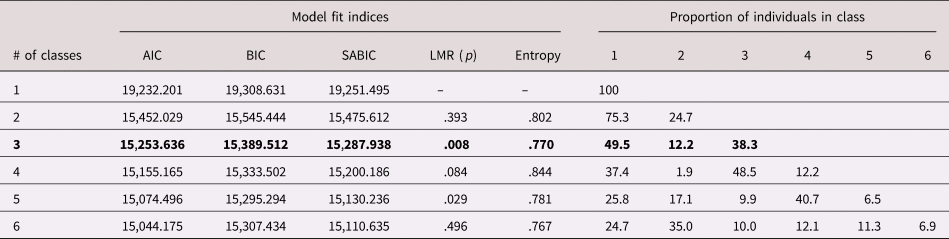
We conducted a model comparison using a series of standard fit indices, including the Bayesian information criteria (BIC; Schwarz, Reference Schwarz1978), the sample-size adjusted BIC (Sclove, Reference Sclove1987), and the Akaike information criterion (AIC; Akaike, Reference Akaike1987). For these indices, lower scores represent better-fitting models. We also examined model fit using the Lo–Mendell–Rubin (LMR) likelihood ratio test, which compares the estimated model with a model having one class less than the estimated model. The LMR likelihood ratio test produces a p value that indicates the better-fitting model. A p value less than .05 indicates that the estimated model is superior. In addition, we assessed entropy, which refers to average accuracy in assigning individuals to classes. Entropy values range from 0 to 1, with higher scores reflecting greater accuracy in classification.
Optimal models were chosen based on goodness-of-fit and parsimony. Sex, intervention status, and family SES disadvantage were included in each model as covariates. After the hypothesized profiles were identified, we then examined group differences regarding psychosocial outcomes during emerging adulthood. We used the three-step approach for distal outcomes in LPA analyses with Mplus (Asparouhov & Muthén, Reference Asparouhov and Muthén2014) to examine these group differences. The distal outcome variables were specified as auxiliary variables with unequal means and variances and estimated simultaneously with LPA models. This process allowed us to account for the uncertainty of the classification. Mplus also computes an overall test of association using Wald's test and pairwise class comparison between the auxiliary variable means. All models were estimated using the FIML estimator, which tests hypotheses against all available data from ages 19 to 21 years. Thus, missing data did not result in deleted cases. The previously described attrition analyses supported the use of the FIML estimator.
Results
LPA models
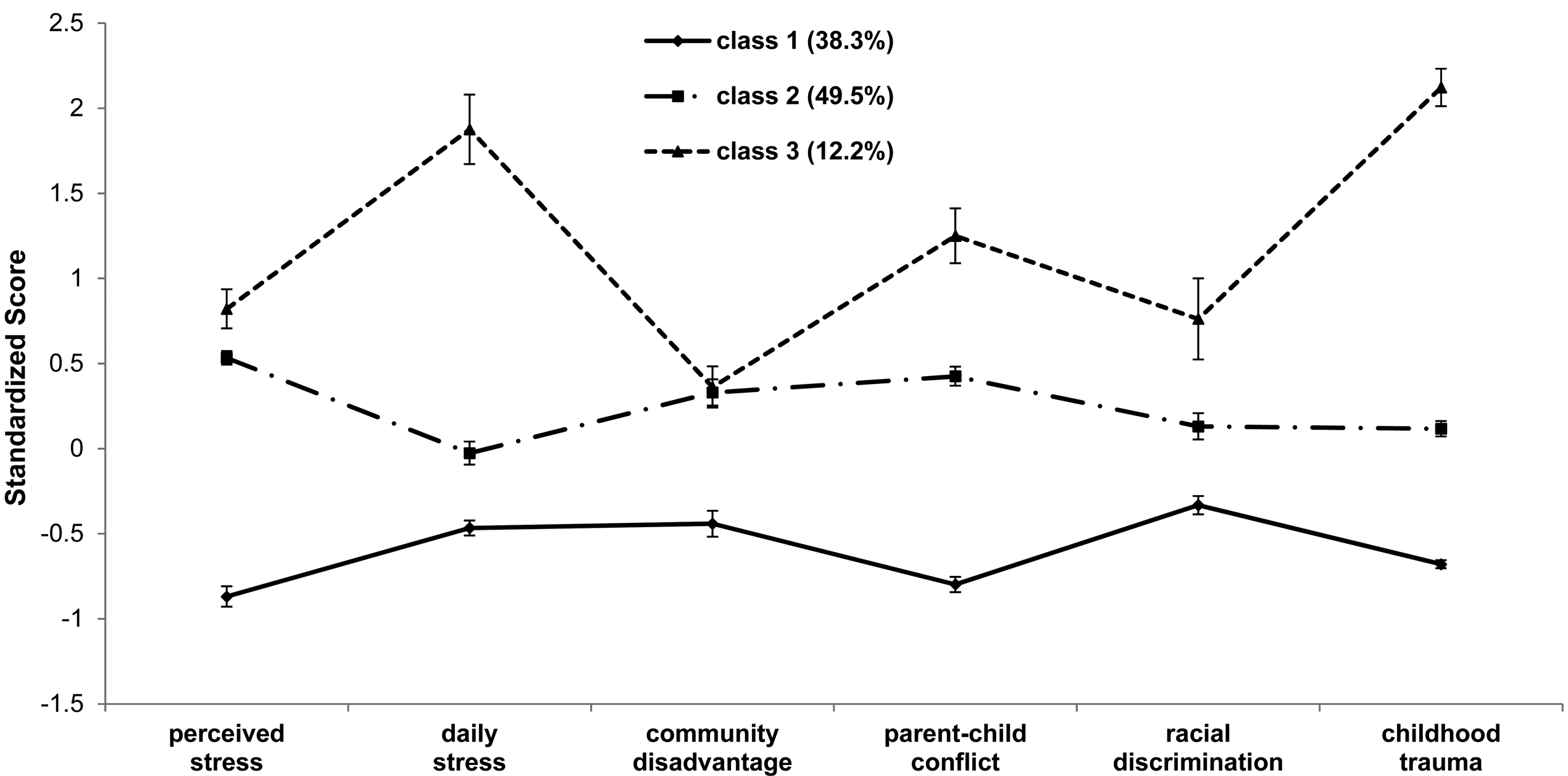
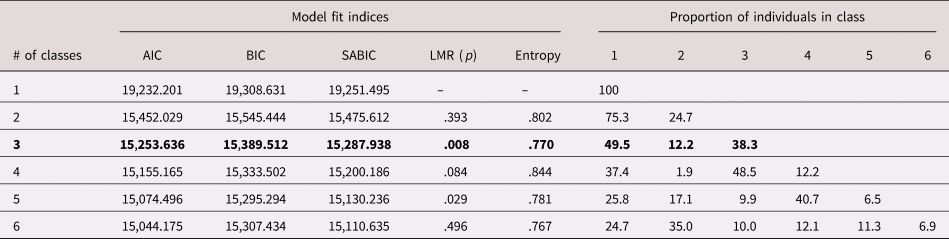
Table 1 presents the sample statistics for all variables in the study. Table 2 summarizes the fit statistics for LPA. The AIC and BIC values decreased as the number of classes increased. The LMR likelihood ratio test indicated that either the three-class model or the five-class model was preferable (p < .05). However, because the five-class model included a class with a sample size of only 6.5%, which was too small for the follow-up analyses, we selected the three-class LPA model as the final model. Figure 1 depicts the three latent class profiles with the standardized means of six contextual risk indicators. Of the study respondents, 38.3% were classified into a low contextual risk profile; 49.5% were classified into a high contextual risk profile; and 12.2% were classified into a high contextual risk and childhood trauma profile, hereafter referred to as the childhood trauma profile.
Latent profile membership standardized scores for the study sample.

Model fit indices for latent profile analysis
Note. AIC = Akaike information criterion; BIC = Bayesian information criterion; SABIC = sample-size adjusted BIC; LMR = Lo–Mendell–Rubin likelihood ratio test.
Latent profiles and their contextual risk indicators and covariates
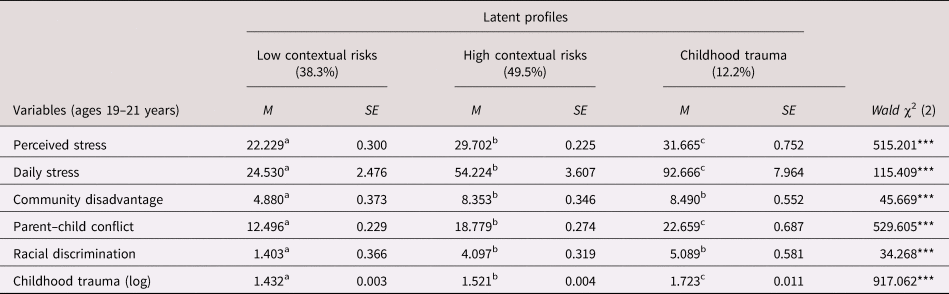
Table 3 presents the estimated means of the contextual risk variables for each profile along with Wald tests designed to detect variables that differ across the three profiles. We found significant overall differences among the three latent profiles for all the contextual risk indicators. Pairwise comparisons revealed that emerging adults in the childhood trauma profile and in the high contextual risk profile had grown up in more disadvantaged neighborhoods and experienced more racial discrimination than youth in the low contextual risk profile. Among the three profiles, the youth in the childhood trauma profile experienced the highest levels of perceived stress, daily stress, parent–child conflict, and childhood trauma. In addition, compared to youth in the low contextual risk profile, youth in the high contextual risk profile also experienced higher levels of perceived stress, daily stress, parent–child conflict, and childhood trauma.
Estimated mean differences in contextual risk indicators by latent profiles

Note. a,b,cMeans designated with different superscripts are significantly different across profiles based on equality tests of means using the three-step procedure in latent profile analysis (LPA) analyses.
*p < .05; **p < .01; ***p < .001.
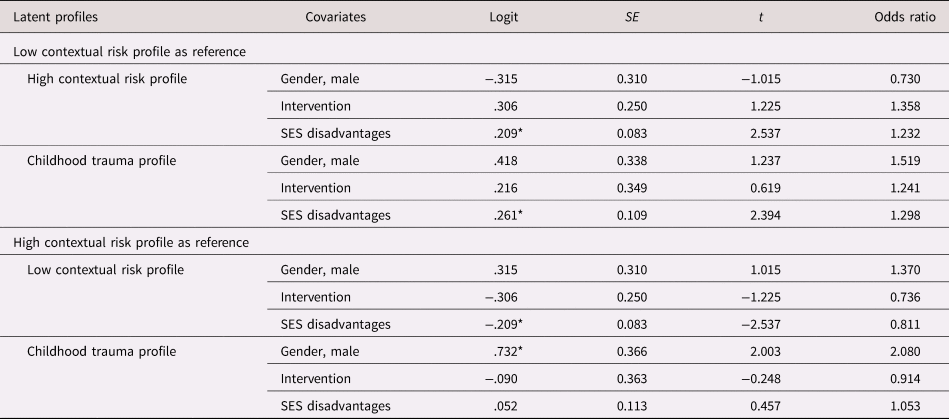
Table 4 displays the results of logistic regression estimated in the LPA analyses. These results reveal how the covariates of gender, intervention status, and family SES disadvantages were related to participants’ latent profile classification. Namely, they indicated that emerging adults living in low SES families were more likely to be in the high contextual risk profile and childhood trauma profile than in the low contextual profile. The childhood trauma profile had more male participants than did the high contextual risk and low contextual risk profiles. Intervention assignment was not significantly related to the classification.
Log odds coefficients and odds ratio for latent profiles with gender, intervention status, and family socioeconomic status (SES) disadvantages as covariates (N = 516)

*p < .05; **p < .01; ***p < .001.
Profile differences on psychosocial outcomes in emerging adulthood
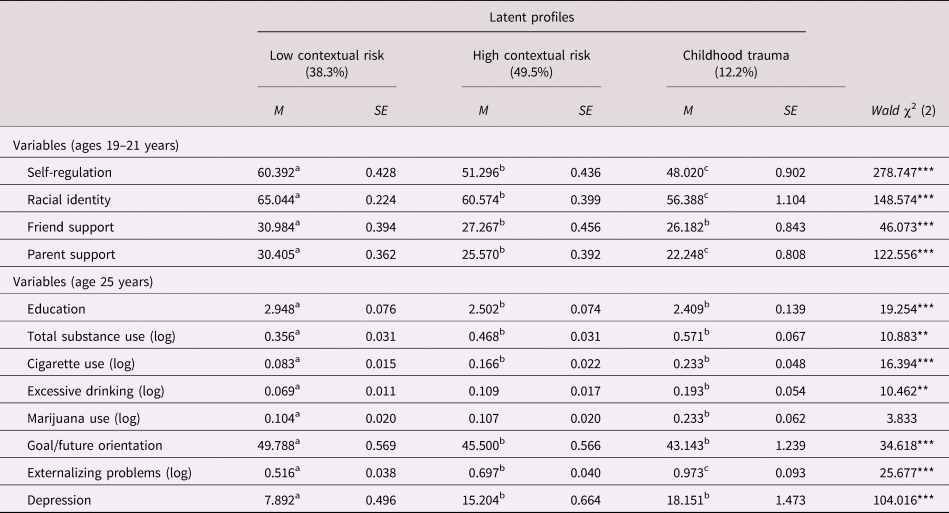
We performed a three-step approach for distal outcomes in the LPA analyses to determine whether psychosocial outcomes during emerging adulthood were comparable across the three latent profiles. We used these variables as auxiliary variables in the LPA models. As shown in Table 5, we found significant overall differences among the three profiles for all the psychosocial outcomes during emerging adulthood, except for marijuana use.
Estimated mean differences in psychosocial variables by latent profiles

Note. a,b,c Means designated with different superscripts are significantly different across profiles based on equality tests of means using the three-step procedure in latent profile analysis (LPA) analyses.
*p < .05; **p < .01; ***p < .001
Pairwise comparisons revealed that participants in the childhood trauma profile not only had the lowest levels of self-regulation and racial identity but also perceived the lowest amount of parental support among all three profiles. Similarly, compared with participants in the low contextual risk profile, participants in the high contextual risk profile also reported lower levels of self-regulation, racial identity, and support from parents. Participants in the high contextual risk profile and childhood trauma profile also reported less friend support than those in the low contextual risk profile.
At age 25 years, pairwise comparison revealed that participants in the high contextual risk profile and in the childhood trauma profile had completed lower levels of education; used more drugs, especially cigarette and marijuana smoking; had lower levels of goal/future orientation; had more externalizing problems; and had higher levels of depressive symptoms compared with participants in the low contextual risk profile. Participants in the childhood trauma profile also reported more excessive drinking and using more marijuana than emerging adults in the low contextual risk profile, and had more externalizing problems than emerging adults in the high contextual risk profile.
Discussion
This study sought to identify (a) whether heterogeneity exists in contextual risks among rural African American emerging adults, (b) whether these risks can be categorized in a meaningful way, and (c) whether differences in contextual risks are associated with psychosocial outcomes in emerging adulthood. Results indicated that this study's sample of rural African American emerging adults could be characterized by three patterns of contextual risks: low contextual risks, high contextual risks, and high contextual risks and childhood trauma. Our analyses revealed that these three risk profiles were significantly related to important psychosocial outcomes in emerging adulthood.
As noted, our LPA results revealed three latent profiles of rural African American emerging adults’ contextual risks. The low contextual risks profile, representing over one-third of the sample (38.3%), was the profile with the most positive outcomes. This finding is somewhat encouraging because it suggests that a substantial portion of the sampled emerging adults experienced low levels (relative to their peers) of measured contextual risks. The second profile, high contextual risks, was characterized by high levels of contextual risks but no report of childhood trauma. The high contextual risks profile represented half of the sample (49.5%). This strikingly high statistic is worrisome given that exposure to high contextual risks (e.g., regular stress) is associated with negative long-term consequences, including damage to the nervous, endocrine, and immune systems (McEwen & Stellar, Reference McEwen and Stellar1993) – all of which must function properly to maintain health. Thus, half of this sample may be at risk for experiencing poor health and other social problems. The third profile, childhood trauma (12.2% of the sample), was characterized by high levels of contextual risks combined with experiences of childhood trauma. In other words, one in eight rural African American emerging adults fell into this very high-risk profile. Altogether, the majority of the sample (61.7%) reported high levels of contextual risks. Our findings advance the relevant literature by revealing that (a) rural African American emerging adults experience distinct types and levels of contextual risks, and that (b) most of this sample's rural African American emerging adults were exposed to high levels of risk despite the prevailing myth that rural communities are exempt from significant risks.
When considering gender, intervention status, and family SES disadvantages, we found that emerging adults who grew up in low SES families were significantly more likely to be in the high contextual risk profile and the childhood trauma profile than in the low contextual risk profile. This finding highlights the parallel role of poverty in increasing exposure to contextual risks. Results also revealed that the childhood trauma profile had more male participants than the high contextual risk and low contextual risk profiles, suggesting that rural African American male adolescents and emerging adults may be at higher risk of experiencing high levels of contextual risks, including childhood maltreatment. This finding corroborates previous work that suggests that African American emerging adult males who live in low-income rural neighborhoods experience contextual factors that reinforce their own substance use and substance use problems over time (Kogan et al., Reference Kogan, Cho, Brody and Beach2017).
We used six variables as indicators of contextual risk: SES disadvantage, perceived stress, daily stress, community disadvantage, parent–child conflict, and perceived racial discrimination. Across the three latent profiles of contextual risk and all six indicators of risk, the childhood trauma profile consistently reported the highest frequency of contextual risks (e.g., more likely to live in disadvantaged neighborhoods, greater perceived racial discrimination), followed by the high contextual risk profile, and then the low contextual risk profile. For instance, the childhood trauma profile had a mean daily stress score of 92.67, which was substantially higher than the mean scores for either the high contextual risk profile (54.22) or the low contextual risk profile (24.53). Similarly, the childhood trauma profile had the highest mean perceived discrimination score (5.09) compared with the high contextual risk profile (4.10) and the low contextual risk profile (1.40).
This ordered pattern was consistent across all risk indicators and all latent profiles, suggesting that the effects of contextual risk are not only cumulative but also that contextual risks co-occur. This vicious cycle of co-occurring contextual risks is rarely experienced by White families (Acevedo-Garcia et al., Reference Acevedo-Garcia, Osypuk, McArdle and Williams2008). This ordered pattern is disturbing because the accumulation of contextual risks may be an especially pathogenic aspect of early poverty (Shonkoff & Phillips, Reference Shonkoff and Phillips2000), though these risks may be mitigated with increased resources, such as better education and jobs (Costello, Compton, Keeler, & Angold, Reference Costello, Compton, Keeler and Angold2003). Of note, for several variables, the childhood trauma profile's contextual risk scores were approximately double those of the low contextual risk profile. For example, daily stress in the low contextual risk profile was only 24.53, but it was 92.67 in the childhood trauma profile, indicating that emerging adults in the childhood trauma profile experienced nearly four times the daily stress of their low contextual risk peers. This doubling pattern held for other indicators of contextual risks, including community disadvantage, perceived discrimination, and parent–child conflict. Given that the childhood trauma profile experienced 2–4 times the amount of contextual risks experienced by the low contextual risk profile, we suggest that early childhood prevention interventions target African American youth with a history of childhood maltreatment and other contextual risks using micro and macro components to increase youth well-being.
The ordered pattern persisted across psychosocial variables measured at ages 19–21 years. The childhood trauma and the high-risk profiles (respectively) had the lowest levels of potential protective factors, including self-regulation, racial identity, and parental and friend support at ages 19 to 21 years. For example, both the childhood trauma profile (48.02) and the high contextual risk profile (51.30) reported lower mean levels of self-regulation than the low contextual risk profile (60.39). Some evidence has suggested that people who encounter elevated levels of contextual risks have difficulty self-regulating feelings or emotional distress; this difficulty is possibly owing to contextual factors, which may truncate opportunities to practice self-regulation (Bird & Rieker, Reference Bird and Rieker2008; Link & Phelan, Reference Link and Phelan1995). In addition, lower levels of parental and friend support and racial identity might indicate lower protection against the effects of contextual risks.
We also found significant overall differences among the three profiles for all psychosocial outcomes during emerging adulthood, except for marijuana use. Consistent with the pattern found at ages 19–21 years, at age 25 the childhood trauma and high contextual risk profiles were less likely to have positive psychosocial outcomes than the low contextual risk profile. Emerging adults in the childhood trauma and high contextual risk profiles had lower levels of educational attainment and goal/future orientation and greater levels of depressive symptoms, externalizing problems, and substance use compared with their low contextual risk peers. Similar to the doubling rates of contextual risks between the childhood trauma and low contextual risk profiles, rates of cigarette use, excessive drinking, marijuana use, and depressive symptoms were 2–3 times greater among the childhood trauma profile than among the low contextual risk profile. These findings are highly consistent with research by Mezuk et al. (Reference Mezuk, Ratliff, Concha, Abdou, Rafferty, Lee and Jackson2017) and Clark (Reference Clark2014), showing that greater exposure to contextual risks, such as perceived stress, is associated with a higher likelihood of using cigarettes, alcohol, and drugs. Consistent with the self-medication hypothesis, substances may be used as a maladaptive strategy (Clark, Reference Clark2014; Corbin, Farmer, & Nolen-Hoekesma, Reference Corbin, Farmer and Nolen-Hoekesma2013).
Childhood trauma had an exceptionally strong impact on the rural African American youth and emerging adults in our sample. In the present study, experiencing childhood trauma seems to have set highly at-risk individuals apart from both individuals who experienced low contextual risks during emerging adulthood and those who experienced high contextual risks during emerging adulthood but not childhood trauma. We suggest that childhood trauma does more than produce new risks later in life: it also negatively influences a range of psychosocial outcomes later in life in a way that is more pronounced than the influence of other contextual factors. Our study thus corroborates the broader body of research showing that childhood trauma is associated with negative life events later in life (e.g., Dovran et al., Reference Dovran, Winje, Øverland, Arefjord, Hansen and Waage2016). At the same time, our findings build on this scholarship by showing that childhood trauma (a) may be a distinct and more severe risk factor than the contextual risks measured in the present study and (b) can produce long-term physical and mental health consequences.
Study outcomes, such as low goal orientation, might be associated with a sense of hopelessness. Hopelessness is the expectation that desired outcomes are unlikely to occur and undesirable outcomes are likely to occur (Abramson, Metalsky, & Alloy, Reference Abramson, Metalsky and Alloy1989), and can emerge in response to experiences of racism. Hopelessness is associated with negative health outcomes, including mental health and physical health, among African Americans (Clark et al., Reference Clark, Anderson, Clark and Williams1999; Polanco-Roman & Miranda, Reference Polanco-Roman and Miranda2013). It is possible that some African American emerging adults who live in rural areas and face high contextual risks (including poverty and various types of racism) have become hopeless, causing them to have low goal and future orientation.
Research and practice implications
Findings from this study offer several important implications for future research and practice. Foremost, more research is needed to better understand these latent profiles, particularly the two high-risk profiles. Research on health and health disparities should build on our findings by examining (a) the ways in which contextual risks are associated with increases in adverse health outcomes in later adulthood, (b) the ways in which rural African American emerging adults cope with contextual risks and stressors including their cognitive, affective, and behavioral responses, and (c) the ways in which self-regulation and specific coping strategies can help to improve health. Because the childhood trauma profile had significantly more male participants, future studies and interventions could oversample or target African American males who may be at particularly heightened risk for high contextual risk exposure and thus poor psychosocial and health outcomes in adulthood.
Researchers should also examine the mechanisms underlying the relationship between contextual risks and psychosocial outcomes in order to help optimize future risk and trauma prevention programs. This work includes identifying which environmental or social factors buffer the effects of high-contextual risks. As noted above, some of these factors may include parental support and friend support, but these potential protective factors should be tested empirically with a sample of rural African American emerging adults. In this regard, researchers should seek to understand and recognize the resilience among African American emerging adults facing a host of contextual risks. Despite high exposure to contextual risks, not all rural African Americans succumb to the negative effects of these risks. More research is needed to understand African American individuals’ successful strategies for resilience, such as engaging in John Henryism as a coping strategy (James, Reference James1993). This study of resilience should be complemented by a study of hopelessness – an understudied but salient concept for rural African American emerging adults. Researchers should investigate potential protective factors (e.g., social support) that may buffer against contextual risks – especially racism and poverty – to prevent or mitigate hopelessness and its consequences. All these investigations could provide data highly useful to the design and modification of prevention programs.
Finally, beyond informing prevention interventions broadly, our findings could inform future modifications or expansions of the SAAF parent study. For example, our findings indicate that SAAF and other prevention programs should target and be tailored for African American males, particularly those exposed to high contextual risks with a history of childhood maltreatment. Enhancements may involve the inclusion of one-on-one or group counseling, greater emphasis on potential protective factors such as fostering racial identity and ethnic pride, and sensitivity to gender differences.
The current study has several demonstrable strengths and fills several gaps in the extant knowledge base. We used multiple, complimentary, reliable, and valid measures of contextual factors (including race-related factors) and psychosocial outcomes (e.g., substance use, academic performance) to acquire a nuanced and comprehensive picture of the relationship between contextual factors and outcomes in emerging adulthood. We examined contextual risk factors experienced specifically among rural African American emerging adults, which is a strength given the limited research on this population. Further, to better understand how contextual risk factors shape emerging adult outcomes, we used a longitudinal research design with the potential to highlight important time points and factors to target when designing interventions. To enhance our analyses of the prevalence and manifestation of contextual risk factors among rural African American emerging adults, we used LPA, a person-centered approach effective in investigating the co-occurrence of contextual risk factors (Lanza, Rhoades, Greenberg, & Cox, Reference Lanza, Rhoades, Greenberg and Cox2011). Finally, we used a contextual risk outcome-specific model that allowed us to assess relationships between each of the contextual risk factors and each of the outcomes (McMahon, Grant, Compas, Thurm, & Ey, Reference McMahon, Grant, Compas, Thurm and Ey2003).
Limitations
Notwithstanding the aforementioned strengths, the current study has limitations. First, our sample was composed of African American emerging adults from rural Georgia. As such, study findings should not be generalized to people who do not identify as African American, to youth or older adults, or to people who reside in urban or suburban areas. Second, the study measures were based on self-reported data. Future research should include additional data sources to allow for triangulation (e.g., collecting data on SES status from family members or government-sourced documentation). Third, because LPA is an exploratory data analysis technique, the study findings should be interpreted with caution.
Funding Statement
This article was supported in part by grants P30 DA027827 awarded to Gene H. Brody and K01DA035895 awarded to Trenette Clark Goings. The content is solely the responsibility of the authors and does not necessarily represent the official views of the National Institutes of Health.
Conflicts of Interest
None.