Right ventricular diastolic dysfunction is an intrinsic part of tetralogy of Fallot pathophysiology. In addition, if right ventricle systolic dysfunction occurs post intracardiac repair, it can increase the inotrope requirement and prolong the mechanical ventilation duration and ICU stay of the patient. Reference Sandeep, Huang, Xu, Su, Wang and Sun1–Reference Haddad, Couture, Tousignant and Denault3 Right ventricle dysfunction impairs organ hypoperfusion by backpressure changes through hepatic sinusoids leading to acute kidney injury, bowel oedema, poor feeding, ascites, etc. Reference Beaubien-Souligny, Eljaiek and Fortier4–Reference Eljaiek, Cavayas and Rodrigue8
Portal vein pulsatility fraction (PVPF) represents a simple bedside modality to assess right ventricle function, especially immediate post-operatively when there is a poor precordial window. Reference McNaughton and Abu-Yousef7–Reference Singh and Koratala11 Normal portal vein flow is continuous with minimal oscillations and at a 16–40 cm/second velocity. Right ventricle dysfunction leads to pulsatility of portal venous flow due to portal hypertension through the hepatic sinusoids.
The primary objective of this study was to assess the relationship between PVPF and duration of mechanical ventilation, ICU stay, and mortality in patients undergoing corrective surgery for tetralogy of Fallot. The secondary objectives were to evaluate the relationship between PVPF and conventional parameters of right ventricle fraction and other end-organ function parameters.
Materials and method
After approval from the Institute Ethics Committee, this prospective observational study was conducted at Postgraduate Institute of Medical Education and Research, Chandigarh, from June 2021 to December 2021 in patients of all age groups undergoing corrective surgery for tetralogy of Fallot. Written, informed consent and assent were taken from the patient or from the parent, wherever applicable. The study conforms with the STROBE guidelines and was prospectively registered in the clinical trials registry of India with number CTRI/2021/06/034187. Exclusion criteria included patients with more than mild tricuspid regurgitation pre-operatively, structural tricuspid regurgitation post-operatively, known liver pathology, and contraindication to transesophageal echocardiography probe placement.
Intraoperatively, before and after cardiopulmonary bypass, we performed an assessment of right ventricle function and portal venous flow with transesophageal echocardiography (time points 1 and 2, respectively). Post-operatively at 24 hours, 48 hours, at extubation, and at ICU discharge, we repeated the assessment with transthoracic echocardiography (time points 3 to 6, respectively).
On transthoracic echocardiography, portal vein velocity Doppler was obtained in the right posterior-axillary coronal view in the 9th–11th intercostal space after reducing the colour Doppler scale to 20 cm/second (Fig 1a). After aligning the portal vein with the ultrasound beam, pulse wave Doppler was applied and reject velocity was decreased to the minimum (Fig 1b). In transesophageal echocardiography, we obtained an image of portal vein flow by slightly advancing the probe from the inferior vena cava long-axis view in the lower oesophagus, then increasing the angle by 30–40° and turning the probe to the right (Fig 1c,1d). Ventilation was transiently stopped during the measurement.
Figures depicting the imaging of portal venous flow on echocardiography and the pulse wave Doppler waveform. ( a ): transthoracic echocardiography view of the portal venous flow, ( b ): pulse wave Doppler spectral waveform of portal venous flow by transthoracic echocardiography, ( c ): transesophageal echocardiography view of the portal venous flow, and ( d ): pulse wave Doppler spectral waveform of portal venous flow by transesophageal echocardiography.

PVPF was calculated as:
 $${\rm{PVPF}}\left( \% \right) = 100\left[ {\left( {{\rm{Vmax}} - {\rm{Vmin}}} \right)} \right]/\left( {{\rm{Vmax}}} \right){\rm{,}}$$
where Vmax is the maximal blood velocity of the portal vein and Vmin is the minimal blood velocity of the portal vein during the cardiac cycle.
Data collection and follow-up
In addition to PVPF, we assessed conventional parameters of right ventricle function, including hepatic vein waveform, inferior vena cava diameter, right ventricle fractional area change, tricuspid annular plane systolic excursion, tricuspid s’, tricuspid e’ at lateral tricuspid valve annulus, tricuspid E/A, tricuspid E/e’ and right ventricle global longitudinal strain. Right ventricle dysfunction was defined by a right ventricle fractional area change of less than 35%. Hepatic venous waveform was graded as 1: velocity of S wave > D wave, 2: velocity S wave < D wave, and 3: S wave reversal. The tricuspid regurgitation severity was graded as 0: no tricuspid regurgitation, 1: trivial tricuspid regurgitation, 2: mild tricuspid regurgitation, 3: moderate tricuspid regurgitation, 4: severe tricuspid regurgitation. Pulmonary regurgitation severity was graded as 0: no pulmonary regurgitation, 1: trivial pulmonary regurgitation, 2: mild pulmonary regurgitation, 3: moderate pulmonary regurgitation, 4: severe pulmonary regurgitation and the left ventricle dysfunction was graded as 0: normal left ventricle ejection fraction/ function,1: mild dysfunction, 2: moderate dysfunction, and 3: severe dysfunction. The clinical outcomes recorded in the post-operative period included duration of mechanical ventilation, ICU stay, and mortality. The post-operative clinical course was assessed regarding ratio of partial pressure of oxygen in arterial blood to fraction of inspired oxygen (P/F ratio), vasoactive ionotropic score, central venous pressure, serum lactates, post-operative acute kidney injury, and bleeding. Post-operative bleeding was defined as more than 8ml/kg in the first 4 hours in ICU, and post-operative acute kidney injury was defined according to RIFLE criteria. Reference Bellomo, Ronco, Kellum, Mehta and Palevsky12
Statistical analysis
The analyses were performed using Statistical Package for Social Sciences (IBM SPSS 28.0.1) and GraphPad Prism 8.4.1. Descriptive analyses were done using mean ± SD, median (interquartile range) for the continuous data, and proportions for the categorical variables. A mixed effects model with Tukey’s multiple comparison test was applied to compare PVPF among the different time points. Post hoc comparison was using Sidak’s multiple comparison test. The highest PVPF obtained in a patient during the study was denoted as PVPFmax. The degree and direction of correlation between PVPFmax and mechanical ventilation duration and ICU stay was assessed using Pearson’s correlation. In addition, logistic regression analysis was performed between the PVPF measured by transesophageal echocardiography post bypass (PVPF2) and the occurrence of a composite event (either mechanical ventilation duration >48 hours, ICU stay >7 days, or mortality). The relationship between PVPF and other parameters like right ventricle fractional area change, tricuspid annular plane systolic excursion, central venous pressure, and P/F ratio were obtained using Pearson’s correlation analysis, and correlation with hepatic vein waveform, left ventricle ejection fraction, tricuspid regurgitation, and pulmonary regurgitation was obtained using Spearman’s rho correlation. The difference in means of continuous variables was checked with the Mann–Whitney U-test as appropriate. Statistical significance was considered at p = 5%. A sample size of 50 was calculated using logistic regression analysis by considering composite event as a binary variable using odds ratio of 2.5 as clinical significance with an alpha of 0.05 and power of 90%. Including 10% dropouts, the sample size was finalised to 55.
Result
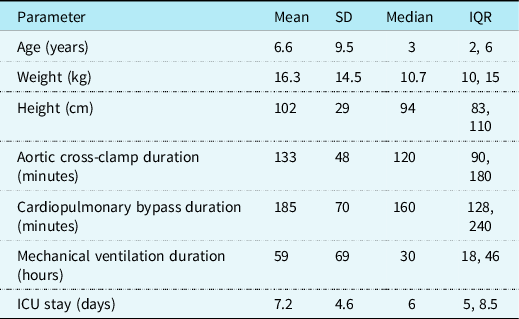
A total of 55 patients were enrolled in the study. The patients' ages range from 4 months to 43 years, with 77% of the population less than 18 years of age (Table 1). Out of 55 patients, three patients were excluded (two patients had moderate tricuspid regurgitation pre-operatively and one patient did not receive a transesophageal echocardiography examination intraoperatively), and mortality was in three patients (two patients had severe right ventricle dysfunction and one patient had severe biventricular dysfunction). Infundibular resection and/or valvotomy was performed in 20 patients, valved conduit was placed in 4 patients, and transannular patch was placed in 28 patients. PVPF measurement was feasible in 96% (290 out of 302) of the time points.
Table depicting patient demographics and outcome.

The mean PVPF in the study population increased from 35% in the pre-operative period to 50% on the first post-operative day, later decreasing to 29% at ICU discharge (Supplementary figure S1). A statistically significant rise of 12.01% in PVPF was observed at post-CPB compared to baseline PVPF, and a rise of 14.06% in PVPF was observed at 24-hour post-operatively compared to baseline (Supplementary figure S2).
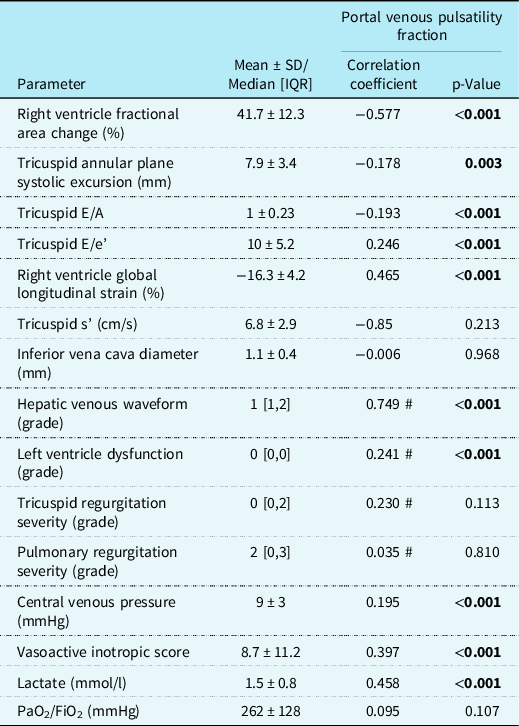
Table 2 depicts the correlation of PVPF with various parameters. There was a positive correlation between PVPFmax and mechanical ventilation duration (r = 0.303;p = 0.035) and ICU stay (r = 0.384; p = 0.007) (Supplementary figure S3, S4). Seventeen patients (32.7%) had the composite outcome of prolonged mechanical ventilation duration, prolonged ICU stay, or mortality. The PVPF in the immediate post-operative period (PVPF2) and PVPFmax were higher in the patients who experienced the composite outcome (Median[IQR] of 63[43.5,75] versus 38.7[31.25,50]; p = 0.003 and 72[48.8,79.25] versus 58[40.4,66.7]; p = 0.011, respectively). The area under the receiver operator characteristic curve between PVPF2 and the composite outcome was 0.768 (95% CI: 0.617 to 0.918; p = 0.003), and PVPF2 of more than 49% had a sensitivity of 73.3% and a specificity of 74.3% in predicting the occurrence of the composite outcome (Fig 2A).
Figure depicting relationship of portal venous pulsatility fraction (PVPF) with echocardiographic and clinical parameters. ( a ): Receiver operator characteristic curve depicting the area under the curve of PVPF obtained immediately post-bypass (PVPF2) in predicting the composite outcome, ( b ): scatterplot depicting the correlation between PVPF and right ventricle fractional area change (RVFAC), ( c ): scatterplot depicting the correlation between PVPF and right ventricle global longitudinal strain (RV strain), ( d ): boxplot depicting the correlation between PVPF and grade of hepatic venous flow waveform, ( e ): boxplot depicting the value of PVPF max in patients with and without acute kidney injury (AKI), ( f ): receiver operator characteristic curve depicting the area under the curve of PVPF in predicting right ventricle dysfunction.

Table depicting the correlation between portal venous pulsatility fraction and other echocardiographic and clinical parameters. #- spearman’s rho correlation.

Correlation was obtained between PVPF and right ventricle fractional area change (r = −0.577; p < 0.001) (Fig 2b), tricuspid annular plane systolic excursion (r = −0.178; p = 0.003), E/A (Pearson r = −0.193; p < 0.001), and E/e’ (Pearson r = 0.246; p < 0.001). Right ventricle global longitudinal strain measurement was possible in only 126 time points (41.6%) due to technical limitations. Positive correlation was obtained between PVPF and right ventricle global longitudinal strain (Pearson’s r = 0.465; p < 0.001) (Fig 2c). No correlation was obtained between PVPF and tricuspid s’ and inferior vena cava diameter.
A significant relationship was observed between PVPF and the severity of hepatic venous flow waveform (Spearman’s rho = 0.749; p < 0.001) (Fig 2d). Similarly, PVPF was higher in patients with a higher degree of left ventricle dysfunction (Spearman’s rho = 0.241, p < 0.001). No correlation was obtained between PVPF and tricuspid s’, tricuspid regurgitation severity, and pulmonary regurgitation severity. Correlation was obtained between PVPF and central venous pressure (r = 0.195; p < 0.001), vasoactive ionotropic score (r = 0.397; p < 0.001), and serum lactate (r = 0.458; p < 0.001).
No correlation was obtained between PVPF and P/F ratio. The PVPFmax value was higher in patients who developed acute kidney injury (n = 9) compared to those who did not develop acute kidney injury (n = 43) (Median [IQR] of 72 [66.7,77.7] versus 59 [43.8,70]; p = 0.042)(Fig 2e). All nine patients had grade 1 acute kidney injury. No patient had significant bleeding post-operatively.
The receiver operator characteristic curve between PVPF and right ventricle dysfunction had an area under the curve of 0.847 (95% confidence interval = 0.797 – 0.897, p = 0.00). PVPF of more than 45.75% had a sensitivity of 76.20 % and specificity of 82.30% in predicting the occurrence of right ventricle dysfunction (Fig 2f). The PVPFmax and right ventricle fractional area change were similar in patients who underwent pulmonary valve sparing procedures or conduit and in patients who underwent transannular patch placement (Supplementary table 1). The right ventricle E/e’ was higher in patients who had pulmonary valve sparing procedures or conduit compared to transannular patch placement (Median[IQR] of 17.7[11.8,19.2] versus 11.8[8.1,14.8]; p = 0.028, respectively) while the inferior vena cava diameter was higher in patients who had transannular patch placement compared to the others (Median[IQR] of 1.4 [1.2,1.7] cm versus 1.2 [0.9,1.4] cm; p = 0.03, respectively).
Discussion
In this observational study of patients undergoing corrective surgical repair for tetralogy of Fallot, we were able to measure PVPF with good success. Moreover, PVPF correlated with prolonged mechanical ventilation and prolonged ICU stay. There was also a good correlation between PVPF and parameters of right ventricle dysfunction.
Echocardiography is used in the perioperative period to assess conventional parameters of right ventricle function. However, due to the complex three-dimensional structure of right ventricle and the lack of fixed reference points for optimisation of right ventricle view, none of the parameters are reliable except for right ventricle fractional area change. Reference Singh, Kumar, Nagaraja and Manjunatha13,14 In addition, the assessment of right ventricle function is limited by a poor precordial transthoracic window. Due to the limitations of two-dimensional echocardiography, cardiac MRI remains the ‘‘gold standard’’ method for the assessment of right ventricle size and function. Reference Lai, Gauvreau, Rivera, Saleeb, Powell and Geva15,Reference Anavekar, Gerson, Skali, Kwong, Yucel and Solomon16 In addition, due to the requirement of higher filling pressures in tetralogy of Fallot, central venous pressure may also fail to accurately depict patients' haemodynamic status. Reference Singh and Koratala11,Reference Rola, Miralles-Aguiar and Argaiz17
Elevated right ventricle pressure due to systolic or diastolic dysfunction gets transmitted back to the portal vein through the liver sinusoids, resulting in a variation of the flow of the portal vein. Normal monophasic or biphasic portal vein flow with minimum oscillations converts to pulsatile flow with backpressure transmission through liver sinusoids. Reference Eljaiek, Cavayas and Rodrigue8 In our study, PVPF was found to be negatively correlated with parameters of systolic right ventricle function, suggesting that an increase in pulsatility of the portal vein is detrimental. The positive correlation of PVPF with tricuspid valve annulus E/e’ possibly indicates its utility in the diastolic dysfunction of the right ventricle. Hence, PVPF could be used as a surrogate marker of right ventricle systolic and diastolic dysfunction. An increase in PVPF was also associated with systemic hypoperfusion manifested by an increase in serum lactates and inotrope requirement (vasoactive ionotropic score). The maximum value of PVPF was higher in patients who developed acute kidney injury, suggesting renal congestion due to backpressure changes. The relationship between PVPF and acute kidney injury has also been described earlier. Reference Beaubien-Souligny, Benkreira and Robillard5 Right ventricle dysfunction, systemic congestion, and hypoperfusion can lead to increased morbidity in post-operative cardiac surgical patients. This was evident from the correlation of PVPF with mechanical ventilation duration and ICU stay in our study population.
Although hepatic vein flow is used to assess right ventricle function, hepatic venous waveform morphology is a complex waveform owing to the presence of four waves which requires electrocardiography gating. Portal venous waveform assessment is a quick and simple modality which does not require electrocardiography gating. We also demonstrated an increase in PVPF with an increase in the severity of the hepatic venous flow abnormality. Tricuspid regurgitation and liver parenchymal disease may also affect portal venous pressure. Tricuspid regurgitation of at least moderate severity may cause increased portal vein pulsatility. However, we did not find a significant relationship between PVPF and post-operative tricuspid regurgitation. The PVPFmax and right ventricle fractional area change were similar between patients who underwent valve sparing procedures and those who had a transannular patch. This is possible since the severity of pulmonary regurgitation was also similar in the two groups of patients.
This was the first prospective study evaluating the portal venous flow pulsatility as a marker of the clinical impact of right ventricle dysfunction and prolonged mechanical ventilation duration and ICU stay in patients of tetralogy of Fallot undergoing intracardiac repair. While other studies have correlated PVPF with parameters of right ventricle dysfunction in adult patients, our study included 92% of the paediatric population. Reference Eljaiek, Cavayas and Rodrigue8
Recently, the utility of portal vein pulsatility has also been studied in venous excess ultrasound score. It is an ultrasound-based scoring system that quantifies systemic congestion using Doppler flow indices of the hepatic vein, portal vein, and inferior vena cava. Reference Rola, Miralles-Aguiar and Argaiz17–Reference Bhardwaj, Vikneswaran and Rola19
The strength of our study is that majority of patients were in the paediatric age group. Second, we have correlated PVPF not only with echocardiographic parameters but also with clinical outcomes, thus validating the clinical utility of PVPF. Third, we have compared PVPF with all conventional parameters of right ventricle systolic and diastolic dysfunction, including right ventricle fractional area change, tricuspid annular plane systolic excursion, tricuspid E/e’, and patterns of hepatic vein waveform. Finally, we have compared PVPF with the right ventricle speckle-tracking strain, an upcoming promising modality of right ventricle function assessment.
The limitations of our study are that it was an observational study and was studied in a single centre. Nevertheless, there is sufficient evidence from the study demonstrating the clinical utility of portal vein assessment. The other limitation is that right ventricle speckle-tracking strain was possible only in 126 studies (41.7%) due to probe and machine limitations, which, however, correlated with PVPF wherever available. We also acknowledge that the post-operative tetralogy of Fallot patient may manifest with additional changes which may affect their outcome, for example, residual ventricular septal defect or aortic regurgitation, which were not recorded in this study. Therefore, portal venous flow assessment is not a substitute for echocardiography, especially when the clinical picture is not reassuring. Nevertheless, the presence of high PVPF may prompt the clinician to perform a more detailed echocardiography examination to look for additional lesions.
Conclusion
PVPF is an easily available bedside parameter to assess right ventricular dysfunction and predict prolonged mechanical ventilation, prolonged ICU stay, and mortality. Assessment of portal vein waveform (PVPF) can help in triaging the patients.
Supplementary material
To view supplementary material for this article, please visit https://doi.org/10.1017/S1047951123000239.
Acknowledgements
The authors would like to acknowledge Dr. Atul Kumar Goyal and Mr. Sunil Kumar Bijarania for the statistical analysis
Financial support
The study was supported by the special institutional research grant of Postgraduate Institute of Medical Education and Research, Chandigarh for the year 2021–2022.
Conflicts of interest
None
Ethical standards
This observational study was approved by the Institute Ethics Committee letter no. NK/6865/DM/161 dated 8.4.21. The study was registered prospectively in the clinical trials registry of India with number CTRI/2021/06/034187.