Introduction
Emotion dysregulation is a core clinical feature of borderline personality disorder (BPD). The development of emotion dysregulation in this illness is theorized to result from the interaction of specific biological vulnerabilities and a social environment in which one's emotions are invalidated by others (Linehan, Reference Linehan1993). These factors are thought to coalesce over the course of development to shape an emotional experience in BPD that is characterized by a heightened sensitivity to emotionally salient stimuli, a more intense subjective experience of negative emotions, and a slow return to one's baseline level of emotional arousal (Zanarini & Frankenburg, Reference Zanarini and Frankenburg2007). Research using ecological momentary assessments and other laboratory-based techniques support the notion that individuals with BPD show more variability over time in positive and negative emotions and are less willing to experience negative emotions in the pursuit of goal-directed behavior (Gratz et al. Reference Gratz, Rosenthal, Tull, Lejuez and Gunderson2006; Rosenthal et al. Reference Rosenthal, Gratz, Kosson, Cheavens, Lejuez and Lynch2008; Santangelo et al. Reference Santangelo, Bohus and Ebner-Priemer2012). These findings are bolstered by psychophysiological and neurobiological research on BPD that shows that these patients show hyperarousal to emotional stimuli (Ebner-Priemer et al. Reference Ebner-Priemer, Badeck, Beckmann, Wagner, Feige, Weiss, Lieb and Bohus2005; Ruocco et al. Reference Ruocco, Amirthavasagam, Choi-Kain and McMain2012).
This instability of emotional experiences typically seen in BPD may bias the perception of emotionally salient information. The suggestion by some researchers is that patients with BPD may have a heightened sensitivity to emotional stimuli (Lynch et al. Reference Lynch, Rosenthal, Kosson, Cheavens, Lejuez and Blair2006) that could result in an enhanced detection of emotions in some situations but difficulty recognizing emotions in other contexts. Research on this topic, however, has been mixed. Using paradigms to evaluate the lowest intensity at which emotions can be detected in faces, some studies found no differences or higher detection thresholds for youth with BPD pathology (Jovev et al. Reference Jovev, Chanen, Green, Cotton, Proffitt, Coltheart and Jackson2011; Robin et al. Reference Robin, Pham-Scottez, Curt, Dugre-Le Bigre, Speranza, Sapinho, Corcos, Berthoz and Kedia2012) whereas another study revealed a lower threshold for the recognition for anger (when blended at 50% intensity with disgust) in patients with BPD (Domes et al. Reference Domes, Czieschnek, Weidler, Berger, Fast and Herpertz2008). More compelling findings were provided in a study by Lynch et al. (Reference Lynch, Rosenthal, Kosson, Cheavens, Lejuez and Blair2006) that found that BPD patients had a lower threshold for detecting six different facial emotions. By contrast, there are several studies demonstrating that patients with BPD may be less accurate than healthy controls in their recognition of negative facial emotions when displayed at full intensity, including anger, fear, disgust and sadness (Levine et al. Reference Levine, Marziali and Hood1997; Bland et al. Reference Bland, Williams, Scharer and Manning2004; Dyck et al. Reference Dyck, Habel, Slodczyk, Schlummer, Backes, Schneider and Reske2009; Unoka et al. Reference Unoka, Fogd, Fuzy and Csukly2011). These findings were initially thought to reflect a more generalized deficit in the perception of negative emotions in BPD. Other research, however, indicated that these patients may be less accurate in recognizing faces showing no emotion (i.e. neutral) (Wagner & Linehan, Reference Wagner and Linehan1999) and surprised facial expressions, which can be construed as either positive, negative or even neutral (Lynch et al. Reference Lynch, Rosenthal, Kosson, Cheavens, Lejuez and Blair2006). Contrary to these studies were a smaller number of investigations that suggested that patients with BPD may in fact be more accurate in their recognition of fearful (Wagner & Linehan, Reference Wagner and Linehan1999; Merkl et al. Reference Merkl, Ammelburg, Aust, Roepke, Reinecker, Trahms, Heuser and Sander2010) and surprised facial expressions (Unoka et al. Reference Unoka, Fogd, Fuzy and Csukly2011). Perhaps more consistent, however, is the finding of no significant emotion recognition deficits in patients with this illness (Lynch et al. Reference Lynch, Rosenthal, Kosson, Cheavens, Lejuez and Blair2006; Minzenberg et al. Reference Minzenberg, Poole and Vinogradov2006; von Ceumern-Lindenstjerna et al. Reference von Ceumern-Lindenstjerna, Brunner, Parzer, Frey, Fiedler and Resch2007; Dyck et al. Reference Dyck, Habel, Slodczyk, Schlummer, Backes, Schneider and Reske2009; Robin et al. Reference Robin, Pham-Scottez, Curt, Dugre-Le Bigre, Speranza, Sapinho, Corcos, Berthoz and Kedia2012). Based on these results, it remains unclear whether patients with BPD indeed show deficits in facial emotion recognition and, if they do, whether these deficits might be limited to specific categories of emotion.
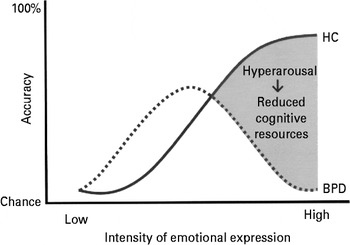
To shed light on these apparent inconsistencies, Domes et al. (Reference Domes, Schulze and Herpertz2009) provided a comprehensive narrative review on the topic of facial emotion perception in BPD, concluding that these patients may show subtle impairments in recognizing emotions in faces and a tendency to perceive emotionally ambiguous faces (i.e. neutral ones) more negatively. A negative perceptual bias is consistent with previous research on BPD that suggests a tendency to perceive ambiguous social cues more negatively (Arntz & Veen, Reference Arntz and Veen2001) and could contribute to the interpersonal difficulties that are commonplace in this illness (Koenigsberg et al. Reference Koenigsberg, Harvey, Mitropoulou, New, Goodman, Silverman, Serby, Schopick and Siever2001). A more clearly delineated theoretical model of emotion perception difficulties in BPD, however, is necessary to resolve the discrepancies in this literature. In particular, this model should account for the enhanced recognition of emotions in faces seen at lower levels of intensity but poorer recognition observed at higher levels of intensity. Our model of emotion recognition in BPD rests on the theory that individuals with this illness experience higher levels of arousal than healthy persons when presented with facial displays of emotion (Fig. 1). At lower of levels of intensity, higher arousal serves to enhance the recognition of emotions in faces for BPD patients, a supposition supported by research showing a lower detection threshold for patients with BPD (Lynch et al. Reference Lynch, Rosenthal, Kosson, Cheavens, Lejuez and Blair2006; Domes et al. Reference Domes, Czieschnek, Weidler, Berger, Fast and Herpertz2008). When viewing faces displaying high levels of emotional intensity, however, BPD patients are thought to experience hyperarousal to the extent that the cognitive resources required to disengage attention from highly salient emotional stimuli are progressively depleted. This circumstance interferes with their perception of the emotion displayed in a given face, and therefore reduces accuracy in recognizing these emotions (Levine et al. Reference Levine, Marziali and Hood1997; Unoka et al. Reference Unoka, Fogd, Fuzy and Csukly2011). Evidence from a series of dot-probe experiments seems to support this theory, in that BPD patients (in a negative mood state) show pronounced difficulties in disengaging attention from negative facial expressions of emotion (von Ceumern-Lindenstjerna et al. Reference von Ceumern-Lindenstjerna, Brunner, Parzer, Mundt, Fiedler and Resch2010). Whether this theory holds for all negative emotions or for specific emotions that may be relevant to BPD psychopathology (e.g. anger, sadness) has yet to be examined in a systematic manner with sufficient statistical power.
Model of facial emotion recognition in borderline personality disorder (BPD). HC, Healthy controls.

Since the time of the Domes et al. (Reference Domes, Schulze and Herpertz2009) review, several new studies of facial emotion recognition in BPD have emerged that may provide greater insight into the nature of emotion perception deficits in this illness. Moreover, narrative reviews do not reveal the magnitude of differences in emotion recognition capacities between groups when converged across studies and can only summarize whether statistical significance was achieved in the primary studies reviewed (e.g. using vote count strategies). In the current study, we accordingly adopted a quantitative approach to synthesize studies of facial emotion recognition in BPD to evaluate the nature and magnitude of these deficits in patients with this disorder. We hypothesized that patients with BPD would be less accurate than healthy controls in their recognition of facial emotion expressions when collapsing across all categories of emotion (including neutral). Based on previous studies and theoretical descriptions of BPD, we also examined whether patients would be less accurate in their recognition of negative emotional expressions (anger, sadness, fear and disgust) as a group. Given evidence of mood-congruent biases in emotion perception for patients with major depressive disorder (MDD; Gray et al. Reference Gray, Venn, Montagne, Murray, Burt, Frigerio, Perrett and Young2006), we also explored the relationship of depressive symptom severity and current antidepressant medication use with emotion recognition accuracy. Understanding the types of emotion recognition deficits that may be present in BPD and how pertinent co-morbidities may contribute to these findings may provide insight into the mechanisms that underlie symptoms of emotion dysregulation and social difficulties in this illness.
Method
Meta-analysis
Comprehensive Meta-Analysis (CMA) version 2.2.057 (Borenstein et al. 2010) was used to conduct the meta-analysis using a random effects modeling approach. We used standard meta-analytic techniques in our review of the literature (Cohen, Reference Cohen1988; Rosenthal, Reference Rosenthal1995). In addition to solving problems with traditional narrative reviews, meta-analysis provides tools for the analysis of magnitude. Magnitude can be indexed with the effect size estimate d, which can reflect the degree to which the dependent variable is present in the sample group or the degree to which the null hypothesis is false (Cohen, Reference Cohen1988). In mathematical terms, d is the difference between two group means calibrated in pooled standard deviation units. Individual study results (typically means and standard deviations from each group) and relevant moderator variables can be abstracted, quantified and assembled into a database that is analyzed statistically (Lipsey & Wilson, Reference Lipsey and Wilson1993). The main statistic presented in a meta-analysis is the mean effect size, which reflects the average individual effect across the sample of studies included in the synthesis. Moderator variables are then correlated with the effect size to tease out relationships that may influence the magnitude of the effect.
Heterogeneity of effect sizes across studies was examined using the Q statistic and T, an estimate of the standard deviation of effect size across studies. The effect sizes were also transformed into a non-overlap percentage using Cohen's (Reference Cohen1988) idealized distributions, which can be further transformed into an overlap percentage (OL%) to articulate the meaningfulness of an effect size (Heinrichs & Zakzanis, Reference Heinrichs and Zakzanis1998; Zakzanis, Reference Zakzanis1998, Reference Zakzanis2001). The OL% statistic represents the degree of overlap by subtracting the non-overlap from 100. In the present context, the OL% statistic represents the degree of overlap between patients with BPD and participants in the control group. To ascertain how robust our findings were, we also used Orwin's (Reference Orwin1983) fail-safe N (N fs) formula. N fs estimates the number of additional hypothetical studies needed to overturn the mean effect size obtained to a small and typically meaningless effect size (i.e. d = 0.10). We calculated this value to assess the possibility of error due to a publication bias of statistically significant studies (i.e. Type I publication bias error; Hedges & Olkin, Reference Hedges and Olkin1985).
Finally, it should be noted that statistical analysis of meta-analytic studies is not entirely uncontroversial (see Hunter & Schmidt, Reference Hunter and Schmidt1990). Because studies with large sample sizes have more statistical power than studies with smaller sample sizes, computations of mean effect size must be weighted accordingly. As suggested by Van Horn & McManus (Reference Van Horn and McManus1992), we used a correlational analysis (non-parametric, i.e. Spearman's) to assess the independent effects of moderator variables and made no attempt to weight the various studies according to their sample sizes. In assessing the potential effects of moderator variables we used unweighted population estimates from individual studies. Given that specific analyses could be based on a subset of the studies included in the larger meta-analysis, we specified the number of studies (n) that contributed to each analysis.
Literature search and inclusion criteria
Studies were selected for inclusion through a computerized literature search of PubMed, PsycInfo and Google Scholar databases from 1987 (corresponding with the publication of DSM-III-R) to April 2012. The following key words were used in various combinations: borderline personality disorder, borderline personality, emotion recognition, emotion identification, affect recognition, recognition, emotional sensitivity, emotion perception, and pictures of facial affect. In addition, a thorough manual search was performed using cross-references from original articles and reviews.
Eligible studies were those that included standardized tests of facial emotion recognition in patients with DSM-III-R- or DSM-IV-diagnosed BPD and healthy control participants. Standardized facial emotion recognition tasks were defined as tests that required ascribing a qualitative label, usually from a limited number of choices, to the picture of a facial expression. The response format was not limited to computerized tasks and could include paper-and-pencil versions. Trial-wise response times for computerized versions of the emotion recognition tasks were also extracted from primary studies and recorded. All studies included in the meta-analysis were required to have used emotional stimuli at 100% intensity (i.e. the prototypic expression). Trials in which two emotions were blended in one picture or that presented successive approximations of emotional intensities were excluded. All studies presented one stimulus at a time, asked the participant to recognize the facial expression depicted in the stimulus, and categorized answers in terms of the universal and neutral facial expressions. Based on task descriptions, eight studies emphasized speed and accuracy whereas two studies did not report an emphasis. The search was not limited exclusively to English-language publications. Potential studies meeting these requirements were unanimously approved for inclusion by all three authors. Studies included in the meta-analysis are marked with an asterisk in the References section.
Data extraction and transformations
Relevant data extracted for this meta-analysis included demographic characteristics (age, gender, ethnicity), medication status (current psychotropic use), clinical characteristics (diagnostic co-morbidity, symptom rating scales), and emotion recognition task information [test stimuli used, testing format, number of stimuli presented, recognition accuracy, reaction time (RT)]. For studies that did not report these data, the corresponding author of each study was contacted to request the relevant information.
Performance data for the emotion recognition tasks were converted to percentage accuracy, defined as the ratio of correct responses to the total number of stimuli. The mean and standard deviation of accuracy scores in eight emotion categories were extracted (where available): happy, angry, sad, neutral, fear, disgust, surprise, and a combined accuracy score collapsing across all emotion categories. Group means and standard deviations were converted to effect sizes (Cohen's d) measured as the difference between the two raw means divided by the pooled standard deviation. In instances where group means and standard deviations were not available, transformations of t and F statistics to Cohen's d were performed using the guidance of Ray & Shadish (Reference Ray and Shadish1996). Cohen (Reference Cohen1988) provided guidance for interpreting effect size statistics (d) as small (0.2), medium (0.5) and large (⩾0.8), although we acknowledge that the interpretation of effect sizes is dependent on context rather than these broadly based heuristics (see Zakzanis, Reference Zakzanis2001). All data were compiled into IBM PASW version 18.0 (IBM, USA) to conduct exploratory moderator variable analyses based on demographic characteristics, medication status and diagnostic co-morbidity. Both Spearman's rho (r s) and point-biserial correlations (r pb) were used in moderator analyses.
Results
Demographic and clinical characteristics
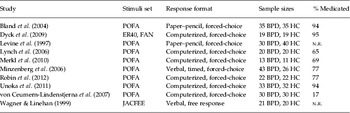
Ten unique studies contributed data pertaining to accuracy of emotion recognition in 266 patients with BPD and 255 healthy controls. Dyck et al. (Reference Dyck, Habel, Slodczyk, Schlummer, Backes, Schneider and Reske2009) used two emotional recognition tests in their study: the Penn Emotion Recognition Test (ER40; Gur et al. Reference Gur, Sara, Hagendoorn, Marom, Hughett, Macy, Turner, Bajcsy, Posner and Gur2002) and the Fear Anger Neutral (FAN) test, a shortened version of the ER40. Accuracy and RT data were readily available for both tasks and therefore this study was included in the meta-analysis as two separate entries; however, the sample characteristics from this study were not duplicated when calculating demographic and clinical variables. The following facial emotion stimulus sets were used in the primary studies: Pictures of Facial Affect (POFA; Ekman & Friesen, Reference Ekman and Friesen1976), Japanese and Caucasian Facial Expressions of Emotion (JACFEE; Matsumoto & Ekman, Reference Matsumoto and Ekman1988), the ER40 and the FAN test.
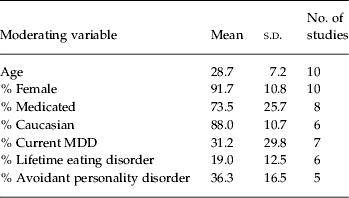
Descriptive statistics for demographic and clinical variables are presented in Table 1. The mean age of the patients with BPD was 28.6 years and they were mostly female (91.7%); healthy controls were on average 29.0 years old and also mainly female (90.7%). The two groups did not differ by age (t 18 = 0.11, p = 0.91) or gender (t 18 = 0.16, p = 0.87). The sample of patients with BPD was predominantly Caucasian (n = 6, mean = 88.0%, s.d. = 10.7) and their mean level of education corresponded to individuals with some college or university education (n = 7, mean = 13.0 years, s.d. = 2.0). The majority of patients with BPD were taking psychotropic medications at the time of the study (n = 8, mean = 73.5%, s.d. = 25.7), with the most common being antidepressants (n = 7, mean =51.2%, s.d. = 30.5). Too few studies reported information about suicidality and histories of trauma to examine these variables as moderators. Self-report symptom measures of mood and anxiety were reported infrequently. Only three studies reported severity of depression at the time of testing, indicating that patients generally fell within the mild to moderately depressed range (Lynch et al. Reference Lynch, Rosenthal, Kosson, Cheavens, Lejuez and Blair2006; Dyck et al. Reference Dyck, Habel, Slodczyk, Schlummer, Backes, Schneider and Reske2009; Merkl et al. Reference Merkl, Ammelburg, Aust, Roepke, Reinecker, Trahms, Heuser and Sander2010). Full-Scale IQ was comparable for BPD patients and controls in two studies (von Ceumern-Lindenstjerna et al. Reference von Ceumern-Lindenstjerna, Brunner, Parzer, Frey, Fiedler and Resch2007; Dyck et al. Reference Dyck, Habel, Slodczyk, Schlummer, Backes, Schneider and Reske2009), although one study found that patients had a lower Verbal IQ (Wagner & Linehan, Reference Wagner and Linehan1999). Avoidant personality disorder (n = 5, mean = 36.3%, s.d. = 16.5) was the most commonly diagnosed additional Axis II disorder.
Demographic and clinical characteristics of borderline personality disorder patients in studies of facial emotion recognition
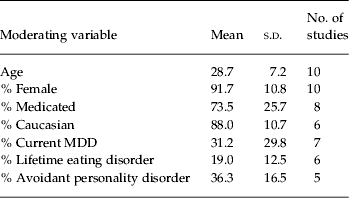
MDD, Depressive disorder; s.d., standard deviation.
Task details, sample sizes and medication information for studies of facial emotion recognition in borderline personality disorder (BPD) and healthy controls (HC)

POFA, Pictures of Facial Affect; ER40, Penn Emotion Recognition Test; FAN, Fear Anger Neutral Test (condensed version of the ER40); JACFEE, Japanese and Caucasian Facial Expressions of Emotion; n.r., not reported.
Emotion recognition accuracy
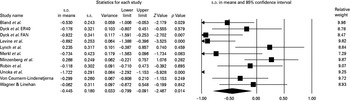
Collapsing across all categories of emotion (including neutral), patients with BPD were significantly less accurate than controls in facial emotion recognition, and this effect size difference fell within the medium range (d = − 0.45, n = 11, 95% CI −0.80 to −0.09, z = − 2.47, p = 0.01, OL% = 69, N fs = 39; Fig. 2). When negative facial emotions (anger, sadness, fear and disgust) were considered as a group, patients with BPD performed worse than controls (d = − 0.57, n = 7, 95% CI −1.19 to 0.07, z = − 1.81, p = 0.07, OL% = 63), although this result failed to reach statistical significance. Analysis of the individual negative emotion categories revealed that BPD patients had the greatest difficulty recognizing disgust (d = − 0.48, n = 7, 95% CI −0.92 to −0.04, z = − 2.14, p = 0.03, OL% = 68, N fs = 23) and anger (d = − 0.34, n = 8, 95% CI −0.69 to 0.00, z = − 1.94, p = 0.05, OL% = 76, N fs = 17). Differences between patients with BPD and controls did not reach statistical significance for facial expressions of sadness (d = − 0.30, n = 8, 95% CI −0.75 to 0.15, z = − 1.31, p = 0.19, OL% = 79), fear (d = − 0.22, n = 8, 95% CI −0.67 to 0.22, z = − 0.99, p = 0.33, OL% = 84) or surprise (d = − 0.12, n = 7, 95% CI −0.50 to 0.26, z = − 0.62, p = 0.54, OL% = 91).
Forest plot representing emotion recognition accuracy collapsed across all emotions: anger, disgust, fear, sadness, surprise, happiness and neutral. Effect sizes less than zero correspond to poorer emotion recognition accuracy. s.d., Standard difference; s.e., standard error.

Unexpectedly, the largest effect size difference was for neutral (no emotion) facial expressions (n = 6, d = − 0.82, 95% CI −1.32 to −0.32, z = − 3.21, p < 0.01, OL% = 52, N fs = 36), suggesting that BPD patients' greatest difficulties involved misattributing emotions to faces for which healthy individuals typically perceived no emotion. The effect size difference for happy facial expressions was not statistically significant (d = − 0.40, n = 8, 95% CI −0.93 to 0.14, z = − 1.46, p = 0.14, OL% = 73).
RT analyses
Nearly all of the instructional sets for the emotion recognition tasks included in this meta-analysis placed an equal emphasis on speed and accuracy of performance (two studies did not report instructions). It is possible, however, that patients with BPD were less accurate than controls on the emotion recognition tasks because they emphasized the speed of their response over accuracy, which would be reflected in faster response times to facial emotion stimuli. To test this hypothesis, we examined differences in RT on all emotion trials (including neutral) for BPD patients and controls and determined that, although not statistically significant, patients had slower RTs (d = 0.24, n = 4, 95% CI −0.08 to 0.54, z = 1.50, p = 0.13, OL% = 81, N fs = 6), suggesting that they did not sacrifice accuracy of responding for speed. Furthermore, there was no significant relationship between RT effect sizes and accuracy on the emotion recognition tasks (n = 4, r s = − 0.40, p = 0.60). RTs by emotion category were reported too infrequently to examine each emotion separately.
Associations with demographics, clinical characteristics and testing format
For patients with BPD, age was not related to accuracy (n = 11, r s = 0.11, p = 0.76) or RT (n = 4, r s = 0.32, p = 0.68) on the emotion recognition tasks. The association between depression and performance on these tasks was evaluated by correlating accuracy with the proportion of BPD patients with co-morbid MDD at the time of testing. These analyses revealed no significant association of current MDD with accuracy (n = 8, r s = − 0.06, p = 0.88). The relationship between depression and RT in BPD patients could not be examined because no single study reported data for both of these measures. Given prior work suggesting a relationship between social anxiety and deficits in emotion recognition (Winton et al. Reference Winton, Clark and Edelmann1995; Simonian et al. Reference Simonian, Beidel, Turner, Berkes and Long2001), we examined whether co-morbid avoidant personality disorder was associated with emotion recognition accuracy. There was, however, no signification relationship between effect size differences for total accuracy and rates of this personality disorder (n = 5, r s = 0.10, p = 0.87). With regard to possible relationships with medications, the proportion of BPD patients taking any psychotropic drug at the time of testing was not significantly correlated with effect size differences for total accuracy (n = 9, r s = − 0.37, p = 0.33) or RT (n = 4, r s =0.11, p = 0.89). Given that the POFA was the most frequently used emotion recognition task in these studies (see Table 2), we assessed whether accuracy on this task versus others was related to overall accuracy and found no significant association (n = 11, r pb = 0.03, p = 0.93). Testing format (dummy coded ‘1’ for computerized and ‘0’ for other) of the emotion recognition task was also not significantly associated with accuracy (n = 11, r pb = 0.05, p = 0.89).
Discussion
The present study used meta-analytic techniques to evaluate whether patients with BPD showed deficits in recognizing facial displays of emotion. This approach capitalized on the statistical power afforded by quantitatively synthesizing data across several studies to address the question of whether patients with BPD have difficulties recognizing specific emotions in faces, and if so, what the magnitude of this decrement might be. Based on a combined sample of 266 BPD patients and 255 healthy controls, we observed a deficit in overall recognition accuracy for BPD patients when collapsing across all emotions (happy, sad, anger, fear, surprise, disgust, and neutral). The effect size difference for this comparison fell within the medium range based on Cohen's (Reference Cohen1988) conventions for interpreting the magnitude of effect sizes. This reduced accuracy for BPD patients could not be attributed to a speed–accuracy trade-off on the emotion recognition tasks: they showed slower response times and the correlation between overall recognition accuracy (collapsing across all emotions including neutral) and RT was not statistically significant. These performance decrements also seemed to be independent of diagnostic co-morbidity with MDD, although analyses based on mood symptom rating scales were not carried out because these data were reported too infrequently in the primary studies.
Given that BPD is characterized by a marked reactivity of negative mood states, we also examined whether patients might show a selective deficit in the recognition of negative facial emotions (i.e. anger, sadness, fear and disgust). Analyses that collapsed across these emotions revealed that patients with BPD had a medium effect size difference compared to healthy controls, although this difference was not statistically significant. This result suggests that these patients may not have difficulties recognizing negative emotions more generally, which was an unexpected finding. In addition, considering that patients with BPD typically present with extensive histories of depression, we anticipated that they might show mood-congruent biases in facial emotion perception of the nature seen in patients with MDD (Surguladze et al. Reference Surguladze, Young, Senior, Brebion, Travis and Phillips2004; Gray et al. Reference Gray, Venn, Montagne, Murray, Burt, Frigerio, Perrett and Young2006). Whereas BPD patients showed a modest decrement in recognizing happy facial expressions compared to controls, this effect size difference was not statistically significant. One implication of these findings is that intact recognition of positive facial expressions may represent an important feature that might be useful for distinguishing patients with BPD from those with MDD alone, although more research is needed to determine the specificity of these results.
Although patients with BPD did not differ from healthy controls in their recognition of negative emotions when these emotions were considered as a group, a statistically significant deficit was detected for patients' recognition of angry faces. Anger is an important negative emotion that is heavily emphasized in the diagnostic criteria for BPD. These patients are more prone to inappropriate, intense and uncontrollable outbursts of anger when compared to patients with other personality disorders and those with bipolar II disorder (Henry et al. Reference Henry, Mitropoulou, New, Koenigsberg, Silverman and Siever2001; Koenigsberg et al. Reference Koenigsberg, Harvey, Mitropoulou, Schmeidler, New, Goodman, Silverman, Serby, Schopick and Siever2002). Experience sampling research also indicates that patients with BPD experience extreme changes in hostile emotions more frequently than those with MDD alone (Trull et al. Reference Trull, Solhan, Tragesser, Jahng, Wood, Piasecki and Watson2008). Along with our finding of a discrete deficit in recognizing anger in faces when displayed at 100% intensity, there is also research to suggest that BPD patients may in fact recognize facial displays of anger at lower levels of intensity compared to healthy individuals (Lynch et al. Reference Lynch, Rosenthal, Kosson, Cheavens, Lejuez and Blair2006; Domes et al. Reference Domes, Czieschnek, Weidler, Berger, Fast and Herpertz2008). These findings are consistent with our proposed model of emotion recognition in BPD, and may also indicate that our model may be most appropriate when applied to emotions that signify social threat for individuals with BPD. Indeed, facial displays of anger may induce higher levels of arousal in these patients compared to healthy individuals. The consequence may be an increased sensitivity to detecting this emotion in faces, thereby improving patients' accuracy in identifying anger at lower levels of intensity. At higher levels of intensity, individuals with BPD may have difficulties disengaging their attention from these highly salient stimuli, which may interfere with the cognitive processes required to accurately identify this emotion. To more comprehensively test this model, however, studies incorporating physiological measures of arousal along with tasks using successive approximations of emotional intensities beyond 100% are necessary (i.e. exaggerated beyond the prototypical expression).
Facial expressions of disgust were also significantly more difficult for patients with BPD to recognize compared to healthy controls. Disgust-related processing may be highly relevant to BPD for two reasons. First, there is some evidence to suggest that these patents may have higher disgust sensitivity than healthy controls (Rusch et al. Reference Rusch, Schulz, Valerius, Steil, Bohus and Schmahl2011). That is, individuals with BPD report that they subjectively experience more situations as disgusting and have a higher degree of distress associated with this experience. Second, sensitivity to interpersonal rejection is especially salient in BPD, reflecting a disposition to anxiously expect, readily perceive, and intensely react to rejection (Gunderson, Reference Gunderson2007). Patients with BPD show higher sensitivity to rejection sensitivity even compared to patients with social phobia, avoidant personality disorder, mood disorders and several anxiety disorders (Staebler et al. Reference Staebler, Helbing, Rosenbach and Renneberg2011). According to Downey & Feldman (Reference Downey and Feldman1996), people who experience severe and prolonged rejection by significant others develop anxious and defensive expectations of rejection and become more sensitive to subtle rejection cues. Rejection cues can include a variety of situations: feelings of abandonment, being alone and being socially excluded. Another salient rejection cue may lie in the facial expression of disgust, which can be thought of as a sociocultural display for rejecting people who have committed transgressions (Chapman & Anderson, Reference Chapman and Anderson2012). For patients with BPD, facial displays of disgust may represent a social cue of interpersonal rejection. As with anger, disgust may induce higher levels of arousal in patients with BPD because this emotion could be perceived as a sign of social threat. According to our model of emotion recognition in BPD, this heightened arousal could serve to enhance accuracy in detecting disgust at lower levels of intensity but interfere with the detection of this emotion when displayed at high levels of intensity. More research, however, is needed to clarify the relevance of facial displays of disgust to hyperarousal and rejection sensitivity in BPD, including studies using psychophysiological measures and facial displays at emotion beyond 100% intensity.
Adolphs (Reference Adolphs2002) has argued that the emotional valence of facial expressions is first determined through a serial-processing mechanism in the amygdala and the ventral striatum. Subsequently, the prefrontal cortex permits differentiation among facial expressions of negative valence and ascribes labels and verbal identifications for emotions (Hariri et al. Reference Hariri, Bookheimer and Mazziotta2000; Narumoto et al. Reference Narumoto, Yamada, Iidaka, Sadato, Fukui, Itoh and Yonekura2000). Considering the findings of the current meta-analysis, it seems that this initial process of discerning the emotional valence of facial expressions may be intact in BPD; however, the ensuing process of distinguishing among negative emotions might be disrupted. Evidence supporting this possibility comes from neuroimaging studies suggesting a dysfunction of prefrontal systems subserving negative emotion processing (Koenigsberg et al. Reference Koenigsberg, Fan, Ochsner, Liu, Guise, Pizzarello, Dorantes, Guerreri, Tecuta, Goodman, New and Siever2009; Ruocco et al. Reference Ruocco, Medaglia, Ayaz and Chute2010a) and social rejection (Ruocco et al. Reference Ruocco, Medaglia, Tinker, Ayaz, Forman, Newman, Williams, Hillary, Platek, Onaral and Chute2010b) in this illness. Disgust sensitivity and the recognition of facial displays of this emotion have also been uniquely associated with insular cortex activation (Phillips et al. Reference Phillips, Young, Senior, Brammer, Andrew, Calder, Bullmore, Perrett, Rowland, Williams, Gray and David1997; Calder et al. Reference Calder, Beaver, Davis, van Ditzhuijzen, Keane and Lawrence2007). Whereas facial displays of anger also activate this region, this finding is more robust for disgust than anger (Fusar-Poli et al. Reference Fusar-Poli, Placentino, Carletti, Landi, Allen, Surguladze, Benedetti, Abbamonte, Gasparotti, Barale, Perez, McGuire and Politi2009). Of note, a recent meta-analysis of functional magnetic resonance imaging studies of patients with BPD has shown that individuals with this illness show greater activation in the insula than healthy controls when processing a variety of negatively valenced emotional stimuli (Ruocco et al. Reference Ruocco, Amirthavasagam, Choi-Kain and McMain2012). Together, these findings implicate a possible link between the neural system abnormalities seen in BPD and those regions associated with the perception of anger and disgust in faces, suggesting an important neurobiological correlate that may underlie biases in perceiving these emotions for patients with BPD.
Although BPD patients showed significant deficits in their recognition of specific negative emotions, their most pronounced deficit was in identifying neutral facial expressions. There was very little information available from the primary studies regarding the specific emotions that these patients perceived on trials presenting these expressions. Two studies did indicate that patients were more likely to report negative emotions for faces displaying no emotion on the FAN (Dyck et al. Reference Dyck, Habel, Slodczyk, Schlummer, Backes, Schneider and Reske2009) and POFA tasks (Wagner & Linehan, Reference Wagner and Linehan1999), and there were also indications that BPD patients required more time than healthy individuals to recognize neutral faces accurately (Minzenberg et al. Reference Minzenberg, Poole and Vinogradov2006; Dyck et al. Reference Dyck, Habel, Slodczyk, Schlummer, Backes, Schneider and Reske2009). These findings are consistent with a hostile (or negative) attribution bias that has typically been associated with aggression in children (Orobio de Castro et al. Reference Orobio de Castro, Veerman, Koops, Bosch and Monshouwer2002). Given that very few studies reported information about patients' mood states, it is possible that these apparent difficulties in disambiguating neutral facial expressions could be accounted for by state-related biases in emotion perception. Further research is needed to clarify this issue and to explore whether there are also important personality trait dimensions that may underlie these perceptual biases.
Several limitations should be considered relating to the results of the current meta-analysis. First, most of the patient samples included in this study had high levels of diagnostic co-morbidity, particularly involving mood and anxiety disorders, and very few studies incorporated symptom rating scales at the time of testing to evaluate possible state-related biases in emotion perception. Given that mood disorders are prevalent in patients with BPD, the contribution of mood state to emotion perception biases is important to consider in this population. Importantly, studies of facial emotion recognition have reported no differences in accuracy or RT for BPD patients with and without mood disorders (Bland et al. Reference Bland, Williams, Scharer and Manning2004; Domes et al. Reference Domes, Czieschnek, Weidler, Berger, Fast and Herpertz2008; Dyck et al. Reference Dyck, Habel, Slodczyk, Schlummer, Backes, Schneider and Reske2009; Unoka et al. Reference Unoka, Fogd, Fuzy and Csukly2011; Robin et al. Reference Robin, Pham-Scottez, Curt, Dugre-Le Bigre, Speranza, Sapinho, Corcos, Berthoz and Kedia2012). There is some suggestion, however, that social phobia may also be associated with reduced accuracy in recognizing negative facial expressions, and co-morbidity of this disorder with BPD is considerable (Grant et al. Reference Grant, Chou, Goldstein, Huang, Stinson, Saha, Smith, Dawson, Pulay, Pickering and Ruan2008). Research on social phobia is mixed with regard to which specific emotions might be most difficult to recognize for these patients (e.g. Montagne et al. Reference Montagne, Schutters, Westenberg, van Honk, Kessels and de Haan2006; Bell et al. Reference Bell, Bourke, Colhoun, Carter, Frampton and Porter2011; Rector et al. Reference Rector, Daros, Bradbury and Richter2012). Nevertheless, future research should consider carefully the contributions of social anxiety to emotion recognition in BPD. Moreover, research should explore how deficits in emotion recognition might subserve interpersonal difficulties more broadly in BPD, perhaps with a greater focus on rejection sensitivity, rather than social anxiety per se, especially given the social implications for facial displays of disgust and anger in this patient group.
Second, given that many studies incorporated the POFA in their emotion recognition tasks, it is important to consider the significant ceiling effects observed for these facial emotion stimuli and their lack of ethnically diverse actors. Third, although patients with BPD were less accurate than healthy controls in recognizing some facial emotions, they remained at or above 80% in terms of accuracy, which suggests a subtle deficit as opposed to a frank impairment in this respect. Fourth, the instructional sets used for the facial emotion recognition tasks included in this meta-analysis are important to consider as they may impact the relative emphasis given to accuracy versus speed, which could lead to systematic biases in test findings. Although nearly all studies included in this review placed an emphasis on both speed and accuracy (two studies did not report this information), patients with BPD might use a strategy that maximizes the quickness of their responses while sacrificing accuracy. The results of our analyses suggested that this was probably not the case, as patients were both slower to respond and less accurate in their performances. Nevertheless, future work should consider the effects of emphasizing accuracy over speed, or allowing an unlimited amount of time to respond, to determine whether patients with BPD continue to show these subtle deficits in facial emotion perception.
Finally, as mentioned previously, meta-analyses are not without their own limitations and criticisms. First, it might be argued that conclusions cannot be logically drawn by comparing and aggregating studies that included different emotion recognition tasks and stimulus sets. We addressed this issue by exclusively analyzing emotional expressions at 100% intensity and converting raw scores to the proportion of correct responses. Furthermore, we found no systematic biases associated with differences in testing format (i.e. computerized versus paper-and-pencil) or stimulus set used. A second limitation involves the publication bias of significant effect studies compared to non-significant studies. We considered this issue by calculating the fail-safe N, which represents the number of studies that would be required to overturn the results of significance testing. Inspection of these results suggests that our significant findings are robust and unlikely to be strongly affected by publication biases. Third, the statistical power of our analyses of potential moderating variables was limited by the amount of information made available by authors, whether through reported results or personal correspondence. Although we made every attempt to gather all relevant data from the primary studies, we were not always able to obtain this information, which may have limited the power of our analyses.
Despite these limitations, this meta-analysis provides crucial information at an important juncture of research on emotion perception in BPD. This large-scale synthesis of emotion recognition studies in this illness allowed us to highlight promising venues of research concerning the recognition of anger, disgust and neutral facial expressions for patients with BPD. We also identified important methodological limitations that constrained the extent to which more definitive conclusions could be drawn regarding the pervasiveness of facial emotion recognition deficits in BPD by considering state influences of mood on emotion perception. Taken together, these findings implicate potentially important emotion recognition deficits in BPD that may prove useful for delineating the pathophysiology of emotion dysregulation and social–interpersonal problems in this illness.
Acknowledgments
We gratefully acknowledge the assistance through personal correspondence of several authors for primary studies included in this meta-analysis: G. Domes, M. Jovev, A. Merkl, M. Robin and Z. Unoka. We also thank S. Amirthavasagam and A. Rodrigo for their statistical consultation. This research was supported by an Ontario Graduate Scholarship awarded to A. R. Daros.
Declaration of Interest
None.