


I. Introduction
The case at stake concerns a preliminary ruling of the Court of Justice regarding the interpretation of a provision in the Tobacco Product Directive referring to three standards adopted by the International Organization for Standardization (ISO). Technical standards are documents that establish specifications to be fulfilled by a product, process or service, defining their characteristics, such as the levels of quality or safety.Footnote 1 Standards are adopted at national, European, and international levels by a heterogeneous set of standardisation organisations and consortia, mostly bodies governed by private law.
ISO is the first general international standard-setting organisation ever established,Footnote 2 and it is one of the most recognised ones. It is a non-governmental organisation whose standards are developed through an industry-driven and consensus-based process by technical committees composed of experts appointed by national standards bodies, and other stakeholders.Footnote 3
Technical standards are privately developed and, in principle, are voluntary and non-binding. In some instances,Footnote 4 however, the EU legislator directly refers to standards referencing them in the legislation to further detail the characteristics for products or services to comply with specific EU laws. By way of a direct reference, a standard produced externally to the EU institutional settings, becomes part of the EU legal framework.Footnote 5
The direct reference to standards in EU law gives rise to two distinct legal issues. On one hand, it creates a tension between the proprietary regime governing technical standards and the principle of publicity of the law, a pillar of the rule of law.Footnote 6 Making the text of the law accessible means enabling the public to understand their rights and obligations, strengthening compliance and legal certainty, but also guaranteeing scrutiny and allowing contestation of the law. Unlike EU legislation, technical standards are not generally freely accessible to the public. As they are subject to copyright claims by the standardisation organisations adopting them, they are most often hidden behind a “paywall.”Footnote 7 On the other hand, it comes forth the issue of the enforceability in the Union of non-publicly accessible standards. The Court has held that acts of the institutions and provisions in EU law can be enforced against individuals only where they are enabled to know precisely the extent of the obligations which are imposed on them.Footnote 8
The judgment at hand is relevant as it connects the constitutional requirement of transparency of the law with the enforceability of international technical standards referenced in EU legislation, holding that the latter depends on the former.
II. Facts
The facts underlying the present case date back to 2018. Since then, Stichting Rookpreventie Jeugd (the Foundation), a Dutch foundation campaigning against smoking habits among young people and tobacco use in general, has been fighting against “sjoemelsigaret” (fraudulent cigarettes), meaning cigarettes on the market that allegedly do not comply with the maximum emission levels enshrined in Article 3 of the Tobacco Product Directive (TPD),Footnote 9 where measured with methods alternative to the ones referenced in the Directive. In particular, the TPD explicitly prescribes maximum emission levels of harmful substances contained in cigarettes for them to be legally placed on the market.Footnote 10 Article 4(1) of the same directive states that emissions of tar, nicotine and carbon monoxide are to be measured with ISO standard 4387, ISO standard 10315, and ISO standard 8454, respectively.
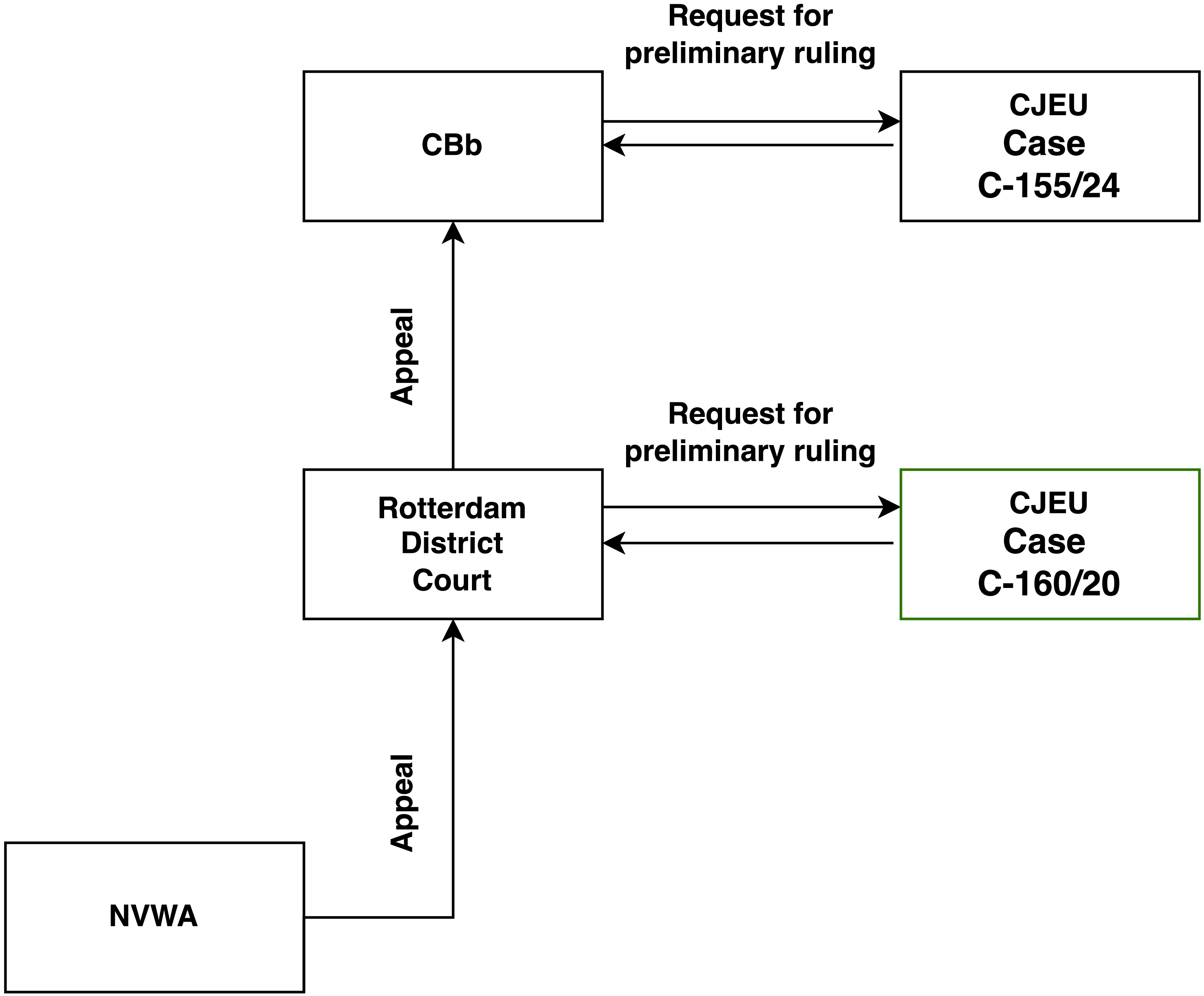
The Foundation initially contested the (adequacy of the) application of ISO standards as measuring methods before the Dutch Food and Consumer Product Safety Authority (NVWA) asking the authority to assess the compliance of cigarettes placed on the market by means of alternative, more stringent testing methods. After the NVWA refusal, the Foundation challenged the decision before the Rotterdam District Court, which, confronted with questions regarding the validity and interpretation of Article 4(1) TPD referred the matter to the Court of Justice of the European Union (the Court) for a preliminary ruling. Specifically, the Rotterdam Court was wondering whether one can be bound by technical standards that are not freely accessible.
The Court first confirmed that ISO standards referenced in Article 4(1) TPD are mandatory,Footnote 11 and then examined their legal effects. It held standards to be enforceable on those “undertakings” who had access to them, even though access required the payment of a fee.Footnote 12 Contrarily, on the basis of the principle of legal certainty, the Court found standards to be unenforceable on the “public generally” if, in the absence of publication on the OJEU, the “public generally” did not have the opportunity to make themselves acquainted with the standards.Footnote 13 The Court concluded that, where standards do not have a binding nature, compliance with the maximum emission levels may be verified through alternative methods. It is therefore left to the referring court to determine whether the methods “actually used to measure the emission levels of those substances comply with Directive 2014/40, without taking into account Article 4(1) thereof.”Footnote 14
On the basis of the Court’s preliminary ruling, the Rotterdam District Court found that the cigarettes on the market exceeded the maximum emission levels of harmful substances set out in the Directive when measured using the alternative chosen method and ordered their withdrawal from the market. This judgment was appealed before the College van Beroep voor het bedrijfsleven (CBb, Supreme Administrative Court for Trade and Industry), which entrained some doubts with regard to the two-tier system of enforcement stemming from the wording of Stichting I and on the concrete application of the judgment.Footnote 15 The CBb wondered inter alia whether the standards referenced in the TPD, still not published in the OJEU, could not be enforceable against individuals, such as the Foundation, who had access to the ISO standards under certain conditions. This brings us to the preliminary ruling under discussion (Figure 1).
Flowchart illustrating the legal proceedings and the two requests for preliminary rulings to the Court of Justice of the European Union.

III. Judgment
On 21 April 2026, the Grand Chamber of the Court delivered its judgment. The Court held that where an EU legislative act, such as the TPD, incorporates international technical standards, thereby rendering them mandatory, individuals must be able to “acquaint [themselves] with those standards.”Footnote 16
The Court recalled its findings in Public.Resources.Org; harmonised standards developed in the framework of the European standardisation upon request of the Commission “may, by the effects conferred on them by EU legislation, specify the rights conferred on individuals as well as their obligations and that those specifications may be necessary for them to verify whether a given product or service actually complies with the requirements of that legislation.”Footnote 17 Consequently, such standards must be publicly accessible. The Court held that the same also applies to ISO standards made mandatory in the EU legal system by way of reference in a legal act. Free access to ISO standards is necessary, first, to enable individuals to understand their rights and obligations and,Footnote 18 second, to allow competent national authorities and EU courts to review whether the legal requirements have been duly observed.Footnote 19
From the principle of the rule of law in Article 2 TEU, the Court derived that such access, in order to be free, must be “general, effective, without charge and non-discriminatory.”Footnote 20 The Court supported this by identifying an “overriding public interest” in ensuring access to the standards. Under the Access Regulation,Footnote 21 EU institutions cannot refuse access to documents if there is an overriding public interest trumping the commercial interests of natural or legal persons in keeping the documents undisclosed.Footnote 22 Thus, in case technical standards were to be protected by intellectual property rights, as claimed by ISO, their disclosure upon request would be justified due to the overriding public interest in transparency.
Having qualified the nature of the system of access to ISO standards, the Court deemed “irrelevant” whether the system relies on the “logistical, administrative and technical resources” of the EU or Member States. However, it clarified for the first time that the costs for setting up such a system must be borne by the EU.Footnote 23
Finally, the Court departed from the two-tier approach developed in Stichting I, which distinguished between “undertakings” and the “public generally” for the enforceability of standards. Instead, it clarified that accessibility is a condicio sine qua non for the enforceability of standards in EU law. Where an individual has access to the standard, the standard may be enforceable against them. In the specific case, the Foundation had access, although under some conditions, to the content of the ISO standards to which Article 4(1) TPD refers to and for this reason the Foundation “cannot rely on the fact that those standards were not published to have the emission levels measured [through] methods other than those provided for in those standards.”Footnote 24
IV. Comment
This judgment was anticipated for its potential to clarify whether the Stichting I ruling had to be adapted in light of Public.Resource.Org.Footnote 25 More specifically, the request for preliminary ruling raised the legal issue of whether technical standards directly referenced in EU law must be freely accessible as much as harmonised standards adopted in the framework of Regulation 1025/2012. The request also provided the Court with an opportunity to clarify the meaning of free access to standards, an expression that had remained ambiguous in the wake of Public.resource.org.Footnote 26 In its judgment, the Court defines or better, qualifies the essential characteristics that a system of access to standards must have in order to be considered “free”: access must be general, effective, free of charge and non-discriminatory.
1. General
The case under discussion was initially categorised as a case about the consequences of standards’ non-publication in the OJEU, as the questions posed by the referring court concerned the legal effects of the non-published ISO standards referenced in EU law. The Court, however, seems to have followed Advocate General (AG) Emiliou, who, after having discussed the difference between the matter of “publication” and the one of “access to documents,” clarified in his Opinion that the two distinct legal issues fall within “the broader issue of access to externally developed standards which the Union legal order has made binding.”Footnote 27
Although related, publication and access to documents as implemented by the Access Regulation present differences. Notably, a relevant difference between the two is the “generality” aspect. In fact, although based on the principle of the “widest possible access to documents,”Footnote 28 the right to access documents is not absolute; it is subject to a range of mandatory and discretionary exceptions, designed to protect certain public and private interests.Footnote 29 Second, and most importantly for our purposes, a system of access to documents as the one in the Regulation, works upon individual requests to individual institutions, agencies or bodies for individual documents.
Since access to documents is based on individual instances, it could be argued that the Court, where referring to a system that is “general” is imagining an alternative system of access to documents than the one in the Regulation, or at least it is referring to the latter as one of the possible alternatives (“inter alia”) to implement such a system.Footnote 30 In this regard, the Court refers to the Access Regulation and to the overriding public interest in disclosing the standards prescribed in Article 4(2) last limb of the Regulation as an ancillary argument, to support its conclusion that access to ISO standards must be free.Footnote 31
The Public.resource.org judgment was held by some parties to have been implemented in a too narrow way, meaning lacking the explicit requirement of publication of the content of standards in the OJEU, and by some others in a too broad manner; arguing that access to standards amounts to an illegal disclose, triggering academic discussion,Footnote 32 referrals to the OmbudsmanFootnote 33 and new litigation in Court.Footnote 34 It is now clear that technical standards must be freely accessible. How? Although the Court is not explicitly requiring proactive publication of standards, it is arguably drawing a new system of access different or alternative to the one foreseen in the Access Regulation.
2. Effective
With regard to the “effectiveness” dimension of the system of access to the “official and authentic” version of standards, I believe the Court is referring to the practical implementation of that system.Footnote 35 In the aftermath of Public.Resource.org, there are three differentiated routes to access harmonised standards depending on whether they originate from ISO/IEC, ETSI or CEN/CENELEC, all based on the Access Regulation.
In the first case, harmonised standards originating from international bodies are accessible through the Electronic Access to Commission Documents (EASE) with an EU login account. The readability platform allows read-only access to harmonised standards, which are disclosed according to the Access Regulation.Footnote 36 Harmonised standards originating from ETSI are available on their website.Footnote 37 ETSI allows standards to be “consulted, printed out and downloaded for free,” yet their reproduction has to be authorised by the body.Footnote 38 Contrarily, CEN/CENELEC ones are “freely accessible” through online national readability platforms. Individuals, in fact, are redirected to a page controlled by the two ESOs, which branches out into the various National Standardisation Bodies (NSB) pages.Footnote 39 Each NSB is then entrusted to make available through their own infrastructures the national adoptions of harmonised standards as and when they are the subject of a request for access to documents.
The differences between the national implementations, however, are striking. The Spanish UNE portal provides access to harmonised standards already disclosed under Regulation 1049/2001 in full, yet with watermarks, provided that the individual completes a registration to the website.Footnote 40 The Italian UNI, after requiring registration, provides a list of the harmonised standards accessible. However, most often it is only possible to read a preview.Footnote 41 Same for the Dutch NEN website.Footnote 42 Apart from the concerns previously expressed on relying on the Access Regulation to ensure “general” free access to standards, some concerns may be expressed on the “effectiveness” of the accessibility of standards, implemented in such a fragmented manner across the EU, and relying on different public and private infrastructures to ensure access to legally binding technical standards in their “official and authentic version.”
The Court, although holding “irrelevant” how the system is structured, clearly states that the system of access has to rely on “logistical, administrative and technical resources” of the “EU or of the Member States.”Footnote 43 Thus, the conditions of access are not to be “entirely left at the discretion of the external system of ISO and the respective national standards bodies,”Footnote 44 and access to the content must be provided by the EU or Member States.
3. Free of charge
It could seem a tautology to say that a free system of access to standards must be free of charge. However, given how standardisation has worked for decades and for the standards-setting business model, free access, meaning free of charge, is not a given.Footnote 45
In Public.Resource.Org., the Court already held that access to harmonised standards should be free.Footnote 46 However, it did not explicitly delve into whether copyright protection over harmonised standards could remain in place, and in the positive answer, who should compensate the standardisation organisations for free access.Footnote 47 In this judgment, the Court clarified only this latter aspect, holding that were technical standards covered by copyright, the fees should not be paid by individuals. Contrarily, it is on the EU’s to “bear the costs associated with creating access to the official and authentic version of those standards.”Footnote 48
While some scholars have argued that copyright claims over technical standards integrated in EU law are “neither necessary nor justified,”Footnote 49 others have focused on advancing some solutions to the intricate legal puzzle of private standards in EU law.Footnote 50 However, there is consensus in the literature that the EU should, in any case, cover the costs related to free access to standards.Footnote 51 It is, in fact, the EU legislator as the “master of the procedure” who chooses to refer to technical standards in the EU legislative acts, and it is therefore responsible for ensuring their public accessibility.
In a 2002 report, the Standardisation unit of DG Grow, while enlisting the advantages for making use of standards to support EU law, stated that “instead of being obliged to find solutions for difficult technical questions themselves, legislators can rely on the technical expertise of the standards developers and at the same time save public money.”Footnote 52 The Court clearly dismantles this “smart” trade-off system. Standardisation organisations should receive some sort of compensation for their original pieces of work (if any) and for the technical expertise legislators rely on, in the form of payment per standard referred to in legislation or in the form of a once-a-year contribution.Footnote 53
4. Non-discriminatory
Earlier discussions of non-discrimination in the context of standards were in the context of competition law and sought to ensure access on equal terms among undertakings to avoid anticompetitive advantages.Footnote 54 In this case, the Court derives non-discrimination from the principle of the rule of law. It overcame the two-tier approach in Stichting I, eliminating the distinction between “undertakings” and “public generally” for the enforceability of technical standards in EU law, and it clarified that enforceability depends on the (de facto) access to standards.Footnote 55 By doing so, the Court dispels any concern regarding legal certainty and possible fragmentation in the internal market which could have occurred as a consequence of the unenforceability of technical standards in EU law in case standards were to remain unpublished in the official journal and in the need to find alternative measurement method. Therefore, standards referenced in EU law must be made available to all under the same conditions.
V. Conclusion
Through this judgment, the Court reaffirmed that the publicity of the law is an essential requirement of a democratic polity founded on the rule of law. International technical standards incorporated by reference into EU legislation are no exception. Once such standards are integrated in the EU legal system, they must be accessible under a system that is general, effective, free of charge and non-discriminatory. While the Court leaves the practical modalities of implementation to the legislature, it affords little discretion as to the outcome: the official and authentic versions of incorporated standards must be made freely available, and the financial burden of ensuring such access must be bearded by the EU. The judgment will probably have important implications for the ongoing revision of Regulation 1025/2012,Footnote 56 and it signals to the legislator that any reform of the European standardisation framework must accommodate the constitutional “imperative”Footnote 57 of free access to technical standards. Moreover, although the pending ISO/IEC v Commission case before the General Court will likely shed some light on the issue of copyrightability of international standards in EU law and on the overriding public interest in disclosing them,Footnote 58 the CJEU has been very clear: “even if those standards were protected by intellectual property rights, that interest [meaning, transparency] should prevail over such rights claimed.”Footnote 59

 Open access

