Introduction
The persistence of brutal violence since the year 2000 in Thailand's southern, predominantly Muslim, border provinces has resulted in ever more deaths and led to militarisation, harassment, human rights violations, ethnic cleansing and rising numbers of refugees.Footnote 1 Relations between Buddhists and Muslims seem to be, at least in the media, characterised by deep hatred. While the media show gruesome images of burned or beheaded corpses, there is complete silence about the Songkhla Lake basin, where peaceful relations prevail. However, the violence in the Deep South provides the background to the relations between Buddhists and Muslims in the Songkhla Lake basin and raises the question of how far people at the margins of this conflict are affected by the circulation of these images.Footnote 2
Drawing on long-term ethnographic fieldwork in the Songkhla Lake area, I attempt to explain why people are able to maintain peaceful relations. Based on my data on multi-religious dynamics in the Songkhla Lake basin, I argue that an organic solidarity is at the heart of peaceful coexistence.Footnote 3 This solidarity consists of a complex arrangement of cultural resources (oral history, customary law and religious ethics), patronage networks and the ethical commitment of the community leaders to invest positively in relations beyond the religious divide. Theravada Buddhism and Islam are embedded in a hierarchical relation with ancestor spirit worship. The article does not aim to romanticise Buddhist–Muslim neighbourhoods. I do not propose that indigenous religion in southern Thailand is a resource of peaceful relations per se; it is very well possible that political processes may be hostile. As I have explained elsewhere, peaceful coexistence is not a static and diachronic reality, but a dynamic system (and thus fragile in its synchronicity).Footnote 4
I link the local management of cultural difference to the political positions and locations of local actors and the way that they ally themselves with external actors or resist their influence in the management of community resources. However, increased capitalist competition, the deterioration of the environment and living conditions of the peasants, dislocation and cultural fragmentation have made coexistence extremely fragile and have accentuated the notion of difference.Footnote 5 This notion of difference includes in particular the separation of cultural and social identities along religious lines, negates their multiple connections and crossovers and accentuates their political mobilisation.
The dynamics of change may affect the communities in different ways. In some communities, the cultural boundaries between Buddhists and Muslims may be enhanced and the economic position of Muslims may be very marginal. In other communities, the community may be morally and physically ‘exhausted’, meaning that people can no longer survive in the subsistence sector anymore and are culturally uprooted, but keep some elements of exchange and flexibility in dealing with cultural difference.Footnote 6 In yet other communities, the community leaders take faith into their own hands and apply a conscious strategy to prevent conflict. In that way, the revitalisation of religious ritual in no way reflects a homogeneous response in the direction of harmonious coexistence or hostility and hatred, but a very diverse and reflexive response to the same processes affecting people's livelihoods.Footnote 7
The plan of this article is as follows. In the first section, I provide a brief historical and geographical background to the Songkhla Lake area before discussing some theoretical implications of conceptualising coexistence. I argue that ethnic identities cannot be taken for granted and that ethnic categories are not an a priori determinant of identity and social coherence. Multi-religious ritual provides an arena in which traditions articulate with modernity, local and global processes are interwoven, and ethnic identities negotiated and contested. I provide the ethnographic example of a founder's cult in Tha Sala, Nakhon Si Thammarat province, to illustrate the transformation of multi-religious ritual, which produces increasingly rigid ethnic and religious categories. I argue that the transformation of multi-religious ritual reflects the political locations of particular actors. In the second part, I analyse the political and economic structures that affect the livelihood of the people and identify transnational Islamic missionary movements, the expansion of the Thai state and the expansion of markets as major influences of change. These influences put constraints on the livelihoods of Buddhists and Muslims, but also provide enhanced opportunities and aspirations. I argue that the traditional beliefs and ritual cultures accord with modernity and coexist with standardised national ritual and transnational, globalised ritual in an uneasy relationship that produces contradictions and tensions. The result is a scattered picture in which ethnic and religious categories are differently contested in every community and in which the reinforcement of ethnic and religious identities in the rural areas divides families and generations.
The research context
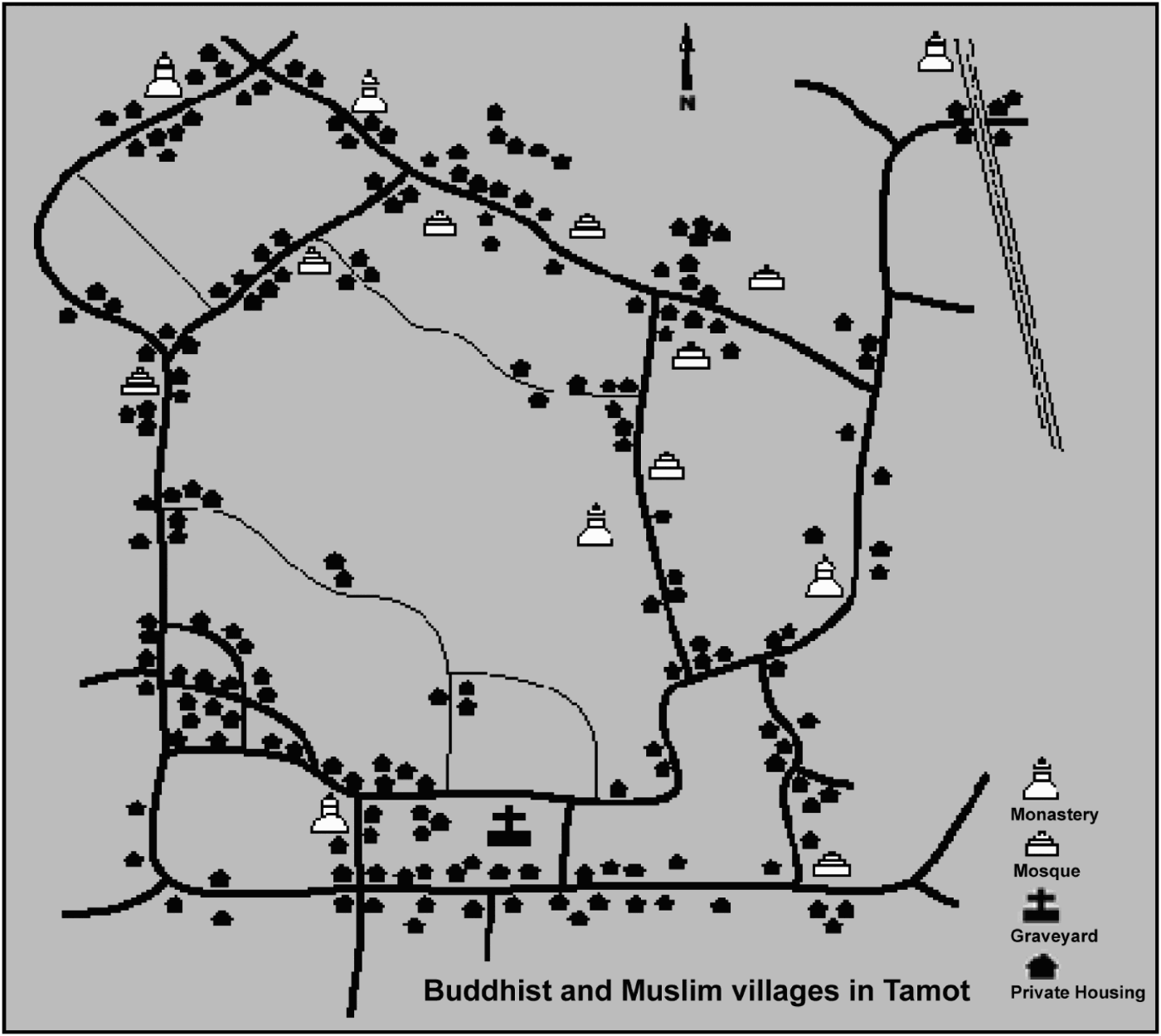
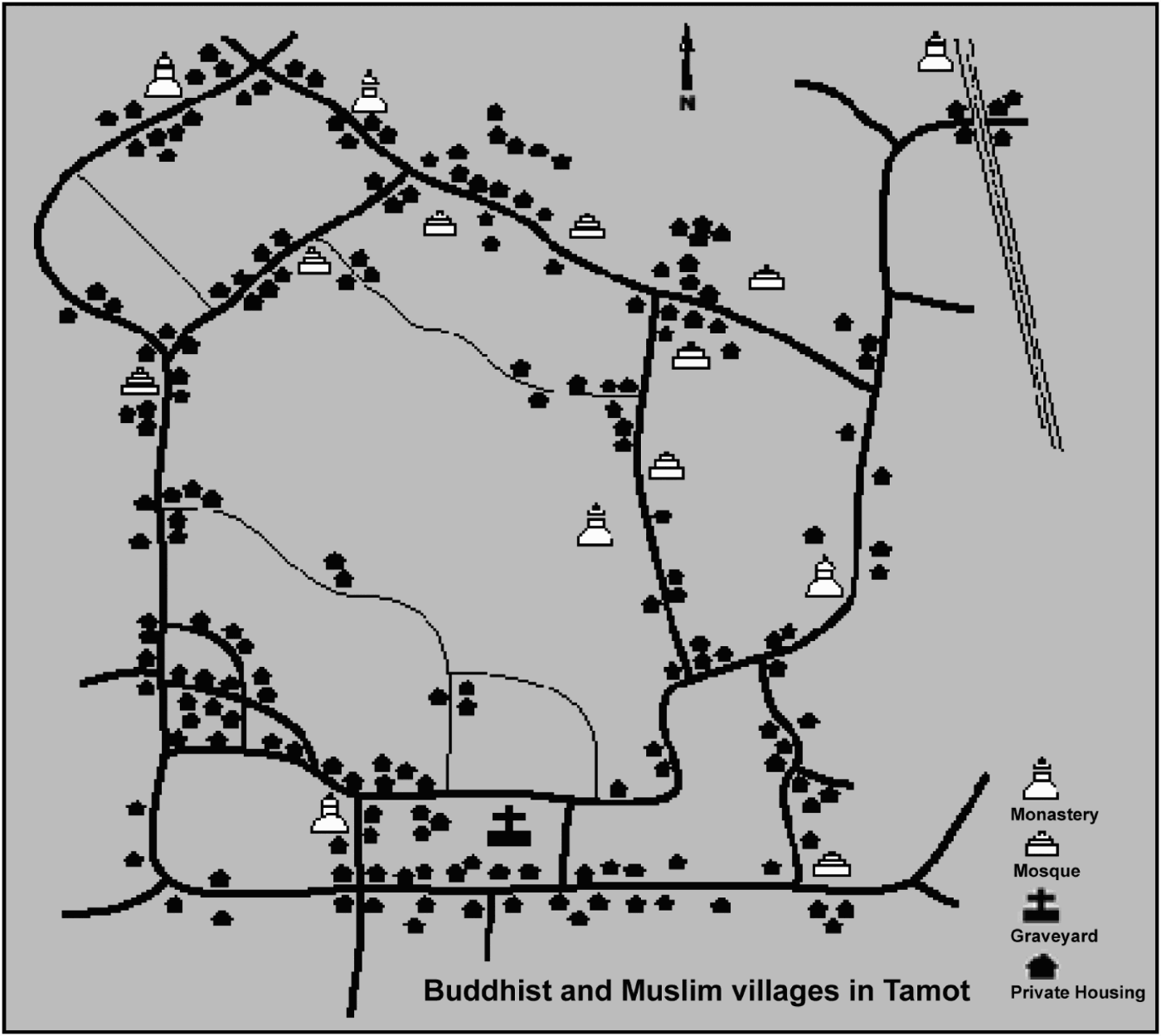
The study area is the Songkhla Lake basin and comprises the provinces of Songkhla, Patthalung and Nakhon Sithammarat. Tambralinga was one of the oldest kingdoms in Southeast Asia (see Figure 1).Footnote 8 The isthmus of Kra, on the west coast of southern Thailand, was a very important trade route from mainland to insular Southeast Asia along which Buddhist influences met and crossed with Islamic ones.Footnote 9 With the expansion of the Thai state, the Songkhla Lake area became dominated by Theravada Buddhism, as attested by the remains of major temples. These temples played an important role in the process and narrative of state building and national representation in Southern Thailand. Muslims settled in the Songkhla Lake area as migrants and sometimes as slaves and played a marginal and peripheral role. Thus, Songkhla, Patthalung and Nakhon Srithammarat are mainly Buddhist provinces with Muslim minorities. However, in some districts, there are approximately equal numbers of Buddhists and Muslims. Here, Buddhists and Muslims live in mixed neighbourhoods and contexts of coexistence. However, with time, the communities have become more clearly separated from each other along religious lines. Increasingly, Buddhists and Muslims distinguish themselves from each other by adopting more conspicuously religious dress and identity. In Tamot, Patthalung province, for example, Ban Tamot is a Buddhist community; Ban Hua Chang is a Muslim community. But the historical process of the communities is intertwined. The Buddhist temple is constructed on the remains of a Muslim cemetery and surau (Islamic prayer hall), while Ban Hua Chang used to be a Buddhist settlement with a Buddhist cave. The cemetery of Tamot used to be a Muslim cemetery, but has gradually been taken over by Buddhist villagers. Ban Tamot and Ban Hua Chang switched completely: the Buddhist villagers settled in the fertile valley, while the Muslims settled in the less fertile hills. In this sense, the religious landscape and resource use reflect the power relationships in the area. In Tamot, conversions did take place, both from Buddhism to Islam and from Islam to Buddhism. However, the noble elite in Tamot practised conversion to Buddhism during the time when the presence of the Thai state was growing. The reason may well be that conversion to Buddhism facilitated social mobility and integration into the local power elite. Today, Islam under the influence of transnational reformist forces no longer tolerates conversion to Buddhism (see Figure 2).
The Songkhla Lake basin, southern Thailand, bordering Songkhla and Patthalung provinces

The distribution of Buddhist and Muslim settlements in the fieldwork site, Ban (village) Tamot, Patthalung province, southern Thailand
Both Buddhism and Islam have been present in the Songkhla Lake region for several hundred years and can be considered indigenous religions. Both religions have syncretised with the traditional ritual and belief system. A hundred years ago, the villagers were living in unison with nature and believed even more in the power of spirits than they do today, especially ancestor spirits. These beliefs not only hold until today; spirit beliefs are also revitalised. In the Thale Sap Songkhla region, a very interesting tradition of Buddhist saints exists and some of these saints enjoy great popularity among southern people. Both Buddhism and Islam had interesting variations in the Songkhla Lake region and coexisted with ancestor spirit beliefs. Southern Thailand thus developed a unique ritual culture and arts that combined elements of ancestral cults, Theravada Buddhism and Islam. For example, Muslims believed that their ancestors visited after the communal meals, while Buddhists prepared large offerings for and prayed to their ancestors in the ceremony of the tenth month in October.
However, the influences of the national Sangha and the transnational Islamic missionary movements have divided the villagers and have sometimes put them under pressure to drop ancestral cults. Some religious leaders continue to practise old traditions, while also being under the strong influence of forces that claim to represent modernity. People find themselves in a situation where traditional beliefs coexist with more orthodox beliefs, both from Buddhism and Islam. In more recent times, the circulation of media images of the violence in the three border provinces through television, cyberspace, video CDs and DVDs has generated a discussion on the coexistence of Buddhists and Muslims in Thailand. On the one hand, Buddhist villagers maintain solidarity with the Buddhist minority in the border provinces, as Thai Buddhists have continued to migrate to safer places in the Songkhla Lake region. On the other hand, Muslims in the Songkhla Lake region joined translocal Islamic da'wa movements, such as the Tablighi Jama”at, and travelled to the Tabligh's centres in Yala and Bangkok. On the one hand, some Buddhist monks may have developed negative attitudes towards Muslims that could be easily tapped by anti-Muslim movements, while some imams might draw clearer boundaries between the Islamic and the Buddhist spheres. On the other hand, some religious leaders keep some form of organic civility, political alliances and cross-cutting ties to prevent hostility between Buddhism and Islam within their community. The article also argues that the people in the Songkhla Lake basin, although they are increasingly moving towards religious dogmatism, are still tied to traditional ancestor beliefs. The question is thus the tension between the syncretic culture and the more orthodox and dogmatic movements. I argue that this contradiction, characterising a great number of locations, remains largely unresolved.
While the state has never acknowledged the diversity in the South and has preferred to talk about Thai subjects, the article argues that the people have developed their own strategies to think about this diversity. The state was never interested in the multi-religious traditions of the South, but rather saw them as Buddhist traditions and tried to incorporate the Manora tradition. In a Foucauldian perspective, the state has aimed to formalise these cultural traditions and give them a distinctive Thai character. Yet, much of southern Thai culture has kept its flexibility and has resisted appropriation by the state or the Budhhist Sangha.
Organic civility versus religious hatred
The ritual tradition that developed in southern Thailand responded to the need of the multi-religious settings and initially had the potential to transcend ethnic and religious difference, although it gradually lost it. Analysis of the transformation of ritual culture helps us to understand how the people categorise diversity for themselves, question social orders or change ritual meanings. Ritual is thus seen as transformative and ‘efficient’, and not as stabilising and traditional.Footnote 10 In this perspective, traditions accord with modernity. People use their belief in spirits to enchant and engage the forces of commoditisation, rationalisation, normalisation and cultural fragmentation and thus keep modernity ‘spirited’.Footnote 11
Permanent low-scale communal violence in southern Thailand, Myanmar, Indonesia and the southern Philippines suggests an urgent need for the conceptualisation of ethnically diverse forms of coexistence.Footnote 12 While much of the literature focuses on ethnically motivated conflict, we know relatively little about how ethnically different people live in sustained peace. In this context, Alberto Gomes et al. make a very important argument for the notion of organic solidarity or civility.Footnote 13 They argue that only if we study the modus that people mobilise to peacefully coexist, we can understand why in some contexts coercion and violence develops, while in others they do not, despite the tense conditions.Footnote 14 The notion of organic civility does not gloss over or negate competition and conflict, but highlights the recognition and enactment of these differences and sees ritual practices as frames for action that are related to more cosmopolitan ideas. Precisely because religion becomes politicised in the context of communal violence, community leaders have to be aware of the danger of violence and have to develop mechanisms that allow them to settle disputes before they become violent. In this context, it is worth considering how the people in contexts of coexistence conceptualise diverse neighbourhoods, through what kind of categories they describe their own identity, and how they distinguish themselves from each other. The aim is to identify different modes of differentiating, articulating and mobilising ethnic identity, interaction and diversity. A close look at ritual traditions allows for the discovery of indigenous modes of organising claims and participation of appropriating a specific landscape that fundamentally differs from the ontology of the nation-state or universal transnational religious movements. It also offers a perspective on diversity, in which ethnic categories are not an a priori determinant of identity and social coherence. I thus welcome the proposal by François Robinne and Mandy Sadan to study ethnic categories ‘only once the networks and their modes of articulation (between neighbourhoods, communities, villages, and transnational networks) have been identified’.Footnote 15 In the context of the politicisation of religion, networks of communities become orthodox Buddhists or Muslims and these movements and dominant discourses organise, discipline and articulate ethnic and religious positions. However, local subaltern modes of articulating identity have also been revived and may actually resist the labelling of people into fixed tables of difference and insist on a common identity of people from the ‘South’ in which communal ties between people and villages are not yet overridden by processes of dogmatic ethnic identification. Such a view would allow us to analyse the permanent negotiation of ethnic and religious positions in a changing world and offer a timeline in which it is possible to observe how identities and boundaries have become more rigid and what they looked like before becoming distinctively separate.
Multi-religious ritual in the Songkhla Lake basin
Religious beliefs about ancestor spirits are integrated into everyday life and represent the practical order of southern Thai society. In multi-religious ritual, people reproduce their relations and reproduce themselves as a community, transcending difference. This cosmology is not restricted to the cultural sphere, but includes political and economic alliances, oral history traditions, customary law and local knowledge. Religion and traditional authority are used to prevent hostility and hatred in the community, settle disputes and prevent violence. The flexibility and fluidity expressed in the rituals allow for cross-cultural marriage between Buddhists and Muslims and prevent it from causing tension in the community. Multi-religious ritual allows for all kinds of cross-cultural encounters and cross-cutting ties, such as complex healing relations between spirit mediums, healers and patients.
It is part and parcel of a syncretic culture and an indicator that the villagers regarded both Muslim guardian spirits as well as Buddhist saints as their common ancestors. In multi-religious ritual, Buddhist and Muslim identities were subordinated to the cosmology of spirit beliefs and did not yet have the overriding function of political ideologies. The state remained largely ignorant of the local knowledge and wisdom of the community. Since the 1990s the villagers have responded to the assault on traditions by revitalising multi-religious ritual and integrating it into a more conscious and effective strategy and tool to engage the cultural crisis and fragmentation of the South. The revitalisation of Theravada Buddhism went hand in hand with an alternative development that envisaged nothing less than the reconstruction of the community and its traditions. In this reflexive move, the temple engages in safeguarding the environment, the watershed and the community forest, organising prayer walks and picnics in nature. In the symbolic actions of exchanging food, gestures and money, communal relations are constantly renewed. However, the performance of multi-religious ritual, besides facilitating renewal and refreshment of social ties, illustrates glimpses of the cultural and religious competition evolving in a changing community.Footnote 16
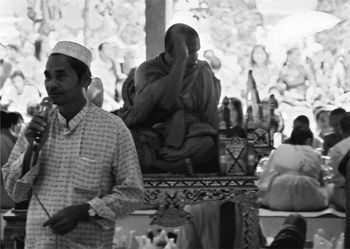
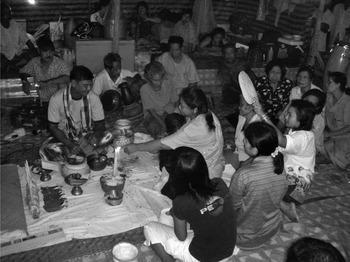
This can be observed in the ritual of two religions in Tamot, Patthalung. This public ritual on the common cemetery of Ban Tamot has achieved some fame in the region. While the religious leaders like to present this ritual as an ideal expression of harmonious coexistence, Theravada Buddhism and Islam compete for a dominant role in the community's self-representation and have both developed a negative attitude towards ancestor spirit beliefs, for which the ritual was originally designed. While the lay people exchange food and prayer gestures, Buddhist monks and Islamic imams are committed to religious orthodoxy. Some imams may not participate in this multi-religious ritual with Buddhist monks anymore, and some may be active in Islamic reformist movements, such as the Tablighi Jama”at, but still participate in order to confirm the commitment of the Muslim side to the consensus of peaceful coexistence (see Figure 3).
The ritual of two religions

A prevalent example of multi-religious arrangements on the east coast of southern Thailand is the dance drama performance and soul-calling ritual, Manora Rongkru (dance-stage-teacher).Footnote 17 In this ritual performance, the great ancestor spirits elevated to the highest status of teachers and deities are invited by dancing and singing to come down to earth for reunion with the living and family members. The Manora Rongkru has been traditionally used to settle disputes in the family and in the community and included Buddhist and Muslim offerings to the deities. Lately, the Manooraa Rongkruu has been revitalised as a prosperity cult to exhibit prestige and charisma. The state has attempted to appropriate the Manora folk tradition for its strategy of expansion in the South, and to integrate it into the national narrative as a Thai-Buddhist folk tradition, but was not entirely successful in this attempt. The people in southern Thailand see the Manora tradition as a tradition of the South that reflects its ethnic and religious diversity and its deep commitment to the belief of ancestor spirits. The Manora has been reconfigured to meet the modern needs of the people in southern Thailand and calls to the deities to engage with the anonymous forces of the market and the insecurities of everyday life. People want to recover a vision of a peaceful past and invest money for healing.
While the modern forces of state-building and market expansion may weaken traditional authority, revitalised local movements increasingly network on a spiritual basis and coordinate their activities against the grain. These local networks are driven by local intellectuals and young activists and focus on education, health and sustainable development. However, the local movement to improve the livelihood of the rural people is clouded by the exploitation of resources that is often concealed as development projects. Business people and gangsters invest in political offices to further their strategies of accumulation. In Tamot, the district head operated, in the name of ‘development’, a project of cutting down the community forest for a reservoir of dubious utility, and the people he bought were busily buying land to sell it at high profits in addition to the timber. The reservoir was guarded by armed thugs who threatened to kill the activists of the main monastery, Wat Tamot, if they would dare to make their case public. The project that included Muslim patronage networks had the potential to turn Buddhists against Muslims and to threaten peaceful relations.
Patterns of Buddhist–Muslim relations and coexistence in southern Thailand
In the Songkhla Lake basin, marriages between Buddhists and Muslims occur regularly and so do conversions in both directions. Sometimes, the groom converts to Islam only to return to Buddhism after staying one month at the bride's family's house. The double conversion or temporary conversion is done to please the family of the bride and the ancestors of the bride's house. This kind of flexibility of course contradicts the orthodox believers who claim that the villagers live in a ‘state of ignorance’. For the community, this is the smoothest way to regulate an otherwise particularly sensitive subject. Cross-cultural marriage enables the performance of a variety of multi-religious rituals: the so-called ‘ritual of two religions’ (Buddhism and Islam), the ordination for one day for Muslims just before circumcision, the practice of visiting a monk with a plate of rice and eggs to appease the Buddhist ancestor spirit, and the possession of a Buddhist body with a Muslim spirit during the multi-religious dance theatre and spirit possession Manora Rongkru.Footnote 18
My research shows that inter-religious marriages had different social prestige at different times. Thus, 100 years ago, in Ban Tamot, Patthalung, in tandem with the intensification of state formation, grooms and brides of the highest status tended to convert to Buddhism. Conversion seemed opportune as Buddhism promised social inclusion and mobility at a time when the Thai Buddhist state was strengthening its presence. Today, only lower-class Buddhist men tend to marry with lower-class Muslim women. These lower-class men mostly have to convert to Islam under the growing presence of Islamisation. Thus, whereas inter-religious marriage was once associated with social prestige, it is no longer the case today. There is also a competition of religions involved. The conversion of a young Buddhist man is perceived as the loss of a soul for Buddhism. Therefore, the abbot encourages a young groom to ordain as a monk before converting to Islam. Hence, even marriage is not a sign of harmony and equality in South Thailand anymore. Buddhist–Muslim relations are not to be romanticised either. Rather, different types of plural spaces and localities can be distinguished. In the Thai-speaking Songkhla basin, Muslims have lived for centuries under the growing influence of the Thai state and Thai hegemony. Many of the characteristics of Thai-speaking Muslims are due to the tacit knowledge that social mobility and access to resources was only possible through the recognition of the key symbols of Thai nationalism. Ethnic competition was further accelerated by the dynamics of globalisation in the 1990s.
Orthodoxy grows in the Buddhist as well as in the Muslim camp and tends to weaken traditional authority. In the southern border provinces, Malay indigenous culture, especially healing rituals, are increasingly marginalised by the pressure of the reformist Islamic teachers and returnees from South Asia and the Middle East, Da'wa revivalist movements and the continuous violence. Widespread beliefs in the power of spirits, music, performances, and the domain of healing came under strong criticism of a purifying discourse from missionaries and returnees from the Middle East, who considered Muslim traditions in the South as heretic.
Theravada Buddhism as the dominant religion has subordinated the power of the spirits under the authority of the Buddha and the Sangha by incorporating them in the Buddhist ritual calendar. The cultural traditions of the South are regarded as Buddhist and thus purified from their multi-religious heritage. The ancestor cult is seen as a primitive tradition, whereas Theravada Buddhism is presented as a civilisation. However, the ancestor cult is intimately intertwined with the current cult and worship of Buddhists saints, such as Luang Por Thuat. Yet, the cult of Luang Por Thuat has been actively promoted to further the consolidation of the nation-state in southern Thailand.Footnote 19 In Nakhon Sithammarat, Songkhla and Patthalung, villagers, both Buddhist and Muslim, share the southern Thai dialect. Although many Muslims are the descendants of Malay prisoners of war, they are mostly unable to speak Malay. Although there are 18 Islamic traditional boarding schools (pondok) in Patthalung, only teachers who studied in Patani are able to teach using Malay Islamic translations from Arabic (kitab jawi). Unlike in Patani, pondok in Patthalung do not represent strongholds of Malay Muslim identity.Footnote 20
Thai Buddhists call Muslim villagers in Nakhon Srithammarat, Songkhla and Patthalung ‘khaek’, a term with two different meanings. First, khaek means nothing other than ‘guest’. In southern Thailand, khaek is strongly affiliated with Islam, just as ‘Thai’ is affiliated with Buddhism. Khaek refers to all the immigrants who settled in Thailand from south and southwest Asia (India, Pakistan and Iran). While the term khaek is highly pejorative in Patani, Yala and Narathiwat, Muslims in the Songkhla Lake area call themselves khaek in relation to the Thais. Thus, conversion from Buddhism to Islam is called ‘entering khaek’ (khaokhaek). Malay-speaking Muslims have little contact with Thai-speaking Muslims, whom they regard as having been polluted by the Thai-Buddhist cosmology. It is only recently that the work of Islamic grassroots movements, whose determination to proselytise brings them to nearly every Muslim community in Thailand, including the south, has been extended from the Patani region down to the Lake basin region. This travelling culture involves a re-mapping of the territory, the heavy presence of the Tablighi Jemaat al-Dawa in all the mosques and on the streets, and a re-imagining of the Islamic landscape that is tied to the utopia of a global Islamic society. But even in the southern border provinces, there is a domain of friendly Buddhist–Muslim relations, however shrinking. On the local level, Buddhists and Muslims who have grown up together from an early age meet every morning in the coffee-club to exchange news. Buddhists have always been related to Muslims on a basis of friendship. In some localities, marriage does occur although strong pressure is involved for the Buddhist partner to convert to Islam. Muslims are known to consult Buddhist spirit mediums and vice versa even if that practice is frowned upon by the orthodoxy. In summary, Muslim–Buddhist relations are characterised by ambiguity and fragility. On the one hand, Buddhists and Muslims seem to keep a ritual domain alive in which conflicts can be settled within the community. The community elders who are recognised by the government as community leaders do not regard the state as competent in the matters of the community and keep the state outside of the ritual domain. Yet, there is a fundamental difference in the context influencing the Buddhist–Muslim dyad in the Songkhla basin and in the southern border provinces.
In the Songkhla basin, where the Muslim minority was exposed to Thai domination for hundreds of years, the rules of exchange are largely dominated by the Thai Buddhist side. Muslim participation in these rules is motivated by compromise. Compromise is not characterised by harmony or equality but by the certitude about the terms of power and the role of the Muslim minority in it. Muslims are members of an informal Buddhist temple parliament, because they see the value of it. The imam participates in the ritual of two religions in honour of the first ancestor who is believed to be Muslim, because the dissolution of this ritual would have severe consequences for the relationship between Buddhists and Muslims, although the ritual is heavily dominated by the Buddhist Sangha and Buddhist participants (see Figure 4).
The imam speaks in front of the Buddhist Sangha

The Buddhist leaders prepare donations for the renovation of the mosque or gifts for important Islamic rituals while the Muslims do not prepare sweets for the Buddhists. The Buddhists exchange Muslim prayer gestures for the ritual of two religions while the Muslims do not exchange Buddhist gestures. Thus, the relationship is largely asymmetric and the Buddhist community in a sense imposes its exchange on the Muslims. Yet, beyond that imposed exchange, there is a lot of spontaneous interaction going on, in which ethnic or religious affiliation plays only a minor role.
Syncretism and anti-syncretism in the Songkhla Lake basin
At a time when Muslims and Buddhists are drawing sharp boundaries between themselves in the Patani area, a culture developed in the Songkhla Lake region, where, although religious boundaries are not denied, difference is integrated into the local structure in an emphatic way. The most spectacular performance of a partial dissolution of these boundaries is a ritual with mixed religious elements that occurs in Songkhla.
In Songkhla and Nakhon Srithammarat there is mutual influence between Theravada Buddhism and Islam, which compete with each other in the Malay Peninsula. Malay-speaking Muslims fell under the influence of Siam in stages whereby, at the local level, villagers did not distinguish one another in public spaces. Buddhist villagers by and large shared a common and homologous social and economic structure, whereby both Buddhist and Muslim villagers used to share strong beliefs in powerful spirits that were bound to the villagers' environment, the rice fields, the ocean, the forest and the mountains. It is not always obvious which areas were settled first by Thai Buddhists and which by Muslims. In Singhanakon District, Songkhla Province, the tomb of Sultan Sulaiman indicates early settlement by a Muslim governor (jao müang), tolerated by Siam so long as he was loyal to the centre. The overlapping spheres are reflected in the myths and legends concerning the foundation of these villages. In Tha Sala, on the river Klai, villagers believe that the founder of the settlements was a mighty soldier from Saiburi (formerly Kedah). He migrated to Nakhon Sithammarat, co-operated with the Thai prince, married a Thai woman, fell into disgrace and had to flee back to the Klai river, where he was pursued by Siamese troops and subsequently fell after three days of fighting, colouring the Klai red, though his body temperature remained warm. The medium of the guardian spirit is a Thai man by a Chinese mother who married the former medium's Muslim daughter and converted to Islam, even though he remains a Thai Buddhist at heart and continues to participate in Buddhist merit-making ceremonies. The medium, a wealthy trader, stated that he had renovated the small mosque and also established the first Buddhist monastery in Ban Bangsarn. His daughters, who live in Pethburi, Bangkok and Nakon Sithammarat, are being brought up as Muslims, but they are equally bound to the power of the founding spirit, who ensures the well-being of the village and protects it from misfortune. Numerous small houses (sala) along the river Klai are dedicated to Thuat Klai, where the spirit lives and is worshipped by all the villagers, Buddhist, Muslim and Chinese alike.Footnote 21
The villagers hold an annual ritual in honour of the Thuat, in which they can ask for a boon that must be reciprocated after the spirit fulfils it. The offerings to the spirit, who likes cock-fighting as a pastime, betel and leaves, are included in addition to sweets made from flour and coconut milk as well as sticky rice. Only pork must be avoided so as not to offend the Muslim spirit. The structure of the yearly ritual varies with the ethnic composition of the village and features Chinese, Muslim and Buddhist elements; the ritual calendar starts in February in Bangsarn and ends in September in the mountains. In Bangsarn, for example, the ritual is conducted in February in the Buddhist part of the village, on the beach. After arranging the date, tents are set up to protect the villagers from the sun, and the women prepare a typical Chinese dish consisting of rice noodles with plenty of vegetables bought in the weekly markets. The medium summons the spirit of the Thuat with the following words: ‘Dear Thuat, dear father (por): we have not seen you for a long time. Please come to us and share your power and strength with us and ensure that we are protected from misfortune.’ On this occasion, only a few Muslims will join the ritual, the majority staying aloof. Those who attend do so not as Muslims, but as the relatives of Buddhists in a multi-faith village. I have also been told by Buddhist villagers that they perform the ritual in the Buddhist way ‘for ourselves’, the offerings being like those that are normally offered to Buddhist monks.
Old villagers recount that 30 years ago both Buddhist and Muslim villagers were eager participants in the ritual and that Muslims keenly worshipped the Muslim spirit. This medium, now 87 years old, symbolises the integration of diversity in this Southeast Asian society, since Chinese, Islamic and Buddhist influences are all being embodied by this medium. Still in good health, he now lives alone in a bungalow-style house in a coconut-tree garden on the beach of Bangsarn. He reflects a time in which neither Buddhist monasteries nor Islamic mosques were able to appropriate the founding cult that encompasses all villagers. However, even in the sleepy fishing village of Bangsarn, modernity has arrived with a vengeance. In the Muslim part of Bangsarn, the modern Da'wa grassroots movement visits the imam and the houses on a weekly basis. In the Buddhist part, the Buddhist minority of the village cannot provide enough novices to staff the monastery, the abbot and sole monk being a villager who was ordained at an advanced age. For the Buddhist Lenten festival, however, other monks from as far away as central Thailand come to join the monk in performing the ceremonies. These visiting monks therefore protect the village from the embarrassment of having a deserted temple during the tenth-month (deun sip) activities, when everybody living outside the village must return home to remember the ancestors and to feed the hungry ghosts. While neither the temporary monks nor the orthodox Da'wa grassroots movement have succeeded in replacing the local cosmology of the founding cult, the spirit of the Thuat has become marginal to the participating communities and, according to one medium, has vanished into the mountains, where illegal settlements are in conflict with the state. I shall return to this case study at the end of the article to demonstrate the appropriation of the spirit by influential representatives of the state.
Conversions take place in Nakhon Srithammarat, but they do not come from elements outside the community (for example, from proselytising organisations), but are part and parcel of the local system of dealing with religious difference. In multi-confessional villages in Tha Sala, where Thai is the basic medium of communication among the villagers, conversion in either direction occurs after marriage, the direction being greatly influenced by the respective social environments of the husband and wife. Although conversion to Buddhism is prohibited in orthodox Islam, it does nevertheless take place, and even multiple conversions are not a rarity for ‘patchwork’ families. Stories of conversion upon marriage are plentiful in this society. Conversions occur because families believe that husbands and wives should be of the same religion. In the villages on the Thale Sap Songkhla, the belief in ancestors is far stronger and explicit than in any other region of Thailand. According to Janet Carsten, who has worked on nearby Langkawi Island, just on the other side of the Thai–Malaysian border, kinship in a cognatic society tends to be projected less backwards into the past than forwards into the future. There is also a spatial and social dimension to kinship, which goes beyond ‘blood’: sibling relations, like kinship in general, must be produced by socialising children within the space of the house. Most of the villagers' ancestors came from the outside, and foreigners were integrated into the local society, eventually becoming ‘indigenous’.Footnote 22 Membership in the village is dependent on an acknowledgement that one is part of a system of relations that is bound to the ancestors and to the cosmological norms of the villagers, not to an individual ethnic identity.Footnote 23 It is for this reason that villagers must satisfy their ancestors when the latters' spirits possess their children. Ignoring the spirits of the ancestors would result in misfortune and illness. In this cosmological order, villagers distinguish neither the religion nor the gender of their collective ancestors. The problem begins when villagers do not acknowledge their ancestors anymore and turn to other opportunities and networks, which offer incentives for social mobility and prestige.
Some vignettes from the field may illustrate the persistence of local beliefs. In Ban Narai, Singhanakon District, Songkhla Province, I found my way to the current imam of the village. After my experiences of internal divisions in Tha Sala, I cautiously inquired into the state of Buddhist–Muslim relations in Ban Narai. The old imam told me that his mother had been a Buddhist and that nearly all the Muslim villagers in Narai had Buddhist ancestors. A large proportion of the population migrated to Hatyai when the economic situation in the Lake region became more difficult. Long ago, Muslim villagers migrated here from elsewhere, as resources were plentiful and there were ‘too many temples’ in their original village. At this point the young imam, the old imam's son, joined the discussion. Appeasing his Buddhist ancestors, who possessed his children and made them ill, was the only cure for them. His wife had therefore prepared a plate of sticky rice, eggs and betel leaves and brought it to the Buddhist monk, who had himself been born in the Muslim part of the village with the aid of a Muslim midwife. The imam and the monk went to school together and are related in a southern Thai form of ritual friendship known as glö.Footnote 24 As the first child was cured in this manner, the imam repeated the procedure for the following three children as well.
In Ban Narai, I met an old man resting after the hard work of harvesting rice. This old grandfather recounted that, in the past, he used to perform a ritual with a mixture of religious elements. To appease the ancestors' negative power, the most important Buddhist rite of passage, an ordination ceremony, had to be performed before circumcision. This ordination ceremony is the same as the Buddhist one, which means that the hair is shaved and an orange robe put on, except for a small detail: it is not performed in the temple but at the well of the private home. This is merely a temporary conversion, but it is necessary to be at peace with the spirits. Should the spirits be ignored, it is believed that the man would bleed excessively during circumcision.Footnote 25
In Ban Narai, the villagers and I discussed their economic situation. This small village is close to vanishing, as many people have left due to the low price of rice, the high price of fertiliser and the environmental problems in the lake. We met an old couple: the husband used to be a Buddhist who has converted to Islam. After some hesitation, the old lady informed us that she plays a central role in the Manora, which has been performed for hundreds of years by families living in the Lake area. The costly preparation requires a great deal of investment in both performers and costumes. On a selected day in May, the performers dance all day and night in honour of the ancestors. In the Manora, the medium-performer (nora) has access to the spiritual power of the ancestors and thus establishes a contact between the living and the dead (see Figure 5). Just like tayai ancestry, Manora chooses its preferred ancestors without distinguishing gender, the order of siblings or religious affiliation. Grandchildren who find themselves ill or who have to wander long distances to places far from home can ask the tayai for a cure or for protection during their journey by preparing a meal for them. This principle of reciprocity with the dead is called käbon, ‘to return merit’. In the case of the Manora, the cured person is obliged to dance for three days and three nights in honour of the ancestor-teacher, to perform the Manoora Rongkruu. In this ritual, the spiritual force of the nora performer is transferred to a higher status; the nora is a khru (teacher) or krumor (healer). The nora's capacity to heal comes from the spiritual power of the ancestors.
The Manoora Rongkruu performance

This power, like the aid of the Buddhist angels, is also sought by traditional healers, who combine traditional herbs with meditation and possession. Käbon is the fundamental principle of reciprocal relations in the multi-religious villages of southern Thailand. Villagers are able to express a desire to the guardian spirits, Buddhist saints or teachers of the Manora performance. If their desire is fulfilled, the person is obliged to give a donation, feast or concert to honour the spirit.
Here, the alien is bound to the self in a fascinating way. This example shows that world religion has not replaced the cosmological order; to the contrary, it has been adopted piecemeal and according to the local needs of the villagers. The power of the spirits may be a threat to a Muslim child who is possessed by a Buddhist ancestor, but it can also be a healing force that can be mobilised for help. The ancestor cult is a fundamental part of the cosmological order and provides the basis of ritual exchange in the plural spaces of peasant society.
This culture of innovation and appropriation was supported in the 1980s and 1990s by social networks among farmers who were beginning to campaign for the protection of the environment and of local resources with the help of non-governmental organisations (NGOs), as well as to be given a voice in political decision-making in the community and to become independent of economic middlemen and brokers by selling their products in green markets. In these networks, people are often able to ignore religious differences: thus, in Nakhon Sithammarat the guardian spirit (Thuat Klai) was mobilised in an anti-dam demonstration. Similarly, in a demonstration against the gas pipelines that brutally cut through the rice fields in southern Thailand, local people and (Buddhist) NGOs united in this common purpose, again bridging ethnic and religious differences. In the 1990s, civil society organisations flourished in southern Thailand, making small-scale fisherwomen and fishermen a powerful force for self-reliance.
At this point, I return to the changing significance of the worship of the guardian spirit in Tha Sala, Nakhon Srithammarat Province. In Tha Sala, where the bridge crosses the Klai River in Sa Geo district, the image of Thuat Klai now sits in a Buddha-like position in his sala, which had to be removed due to the construction of a four-lane highway, during which the main ritual was suspended for a year to avoid disturbing the guardian spirit. The monumental figure of the guardian spirit, sitting in the Buddhist fashion but still wearing Muslim clothes, was manufactured in Bangkok. Before then, Thuat Klai had just been one thuat among many other spirits worshipped by the peasants. Village spirits in the forest temple and the rice fields protected farmers from misfortune or theft. The thuat needed no image or ornament, and the placing of monumental but individual sculptures in the many small houses (sala) along the Klai is a very recent development.Footnote 26 The main tourist attraction at Wat Sa Keo Bridge is now being organised by a self-appointed committee of influential representatives of the Thai state, including village heads, district officials and primary schoolteachers. The head of the primary school at Wat Sa Keo has revived the local cult by integrating the legend of Thuat Klai as part of Thai folklore, which is narrated in schoolbooks and taught to the pupils, who are encouraged to draw the heroes of the legend.
While most communities organise the ritual in their own way, most of the sala are in the hands of this power clique and patronage network. In addition to the image, the sala are being rebuilt in more lasting concrete as part of local development schemes supported by the district fund. Thuat Klai is worshipped along with his Buddhist and Chinese followers. A shelter with a tin roof has also been erected next to the Thuat's house to protect the five participating Buddhist monks from the hot sun. The myth of Thuat Klai is therefore being reinterpreted in Thai-Buddhist communities by reinforcing its non-Muslim elements. Since Thuat Klai was a mighty soldier, his image is now very popular in the Thai army in Nakhon Sithammarat. The kingdom of Nakhon Sithammarat played a conspicuous role in the expansion of Siam into southern Thailand, and this guardian spirit is said to have protected the soldiers in battle. The Thuat is now associated with attached meanings that were not relevant for the participating communities. In the remainder of this article, I examine the forces that undermine exchange relations between Buddhists and Muslims in the Songkhla Lake area.
The new visibility of Da'wa Islamic missionary movements in southern Thailand
Although Muslims in Nakhon Srithammarat constitute a minority, they were among the pioneer settlers in Tha Sala, including prisoners of war from Patani, Yala and Narathiwat provinces, as well as migrants. Although my Thai-Buddhist informers said that the Muslims are merely a tiny minority found mainly in coastal areas and specialising in fishing, Muslims in Tha Sala are actually involved in a large range of activities, including trading, organising weekly markets and gardening. For those who do not own land, temporary migration to the plantations, factories or tourist facilities of Surat Thani, Phanggna and Krabi is necessary in order to make a living.
Buddhist and Muslim villagers express their reciprocal interest by preparing sweets for each other's feasts or by giving donations to a funeral ceremony. Recently, however, Tha Sala has become a showcase for the transnational Dawa movement or Tablighi Jama'at al-Dawa, a proselytising, pietist movement that originated in India and began to spread in Southeast Asia in the early 1970s. It is active in every country where Muslims live, including England and France.Footnote 27 Tablighi Jama'at originated in 1927 in India and is closely associated with the teaching of the Deobandi School in New Delhi. Mohammad Ilyas, its founder, reinterpreted Islam by stressing the missionary dawa character to counter the aggressive proselytising of rightist Hindu movements at the time. Focusing on ritual rather than on educational texts, the critical aim of Tablighi Jemaat is to spread its message outside of its own community.Footnote 28
Villagers know the Islamic network of Tablighi Jemaat as Dawa Tabligh or simply Tabligh. Many are not aware that the movement's leadership is concentrated in India and Pakistan. In Tha Sala, a missionary first introduced the message of the Tabligh from the centre (markaz) of Yala. The modern Dawa movement is now exercising enormous pressure on the syncretic practices of the villagers, dividing communities into supporters and opponents of Islam. In Mokhalan, the transformation of Muslim society has been dramatic, as the Tablighi Jemaat is literally taking over the space of the mosque. As elsewhere in Thailand, the mosque must register with the head office of the Muslim chair (Chularajamontri) in Bangkok, which presides over all mosques in the country. However, in Mokhalan, the young Tablighi firebrands have driven the imam's assistant out of the mosque, calling him a lazy good-for-nothing who is not prepared to get up for the early morning prayers. The village includes a clan that counts senior leaders of the Tablighi among themselves, one of them having studied in a Tablighi madrassah or Quranic college. This maulana is a senior leader of the Tablighi Jemaat in the Yala markaz, where he leads the prayers for jemaat arriving from South Asia. The markaz in Yala is mainly a centre from which the leadership organises operations and jemaat going abroad from Thailand. Villagers who go ‘on tour’ include senior leaders from the village as well as the local imam. Local villagers have become zealous tablighi, effectively controlling the space of the mosque, especially the call for prayer and leading the Friday prayers. The notice board at the mosque, with current news of mosque activities, includes a detailed calendar of incoming and outgoing jemaat, which reads like a ‘Who's who’ of the Tablighi Jama'at. The maulana (Islamic intellectual) in the village regularly goes to China and Cambodia, establishing strong ties with the minority Muslims there. These activities show the very cosmopolitan character of the Tablighi Jemaat. Locals who have spent long periods in Pakistan become important brokers who are able to bridge South and Southeast Asia by acting as interpreters of the spoken Urdu.
The core members of the Tablighi Jemaat are able to impose their ideological standards on the volunteers. On one occasion I travelled with the Tablighi to another village, where we based ourselves in the local mosque under the umbrella of the local imam. A young volunteer travelling for the first time badly wanted to go to the boxing match in a local town, where his small nephew was going to fight. Yet for the movement boxing, which involves gambling, is one of the evils of a secular, corrupted society, and the leader (amir) of the Jemaat did not allow the volunteer to go. Volunteers are socialised within the lifestyle regime of the Tablighi and consequently tend to change their lives. First, they change their appearance according to the model laid down by the amir (Islamic leader), wearing long white robes, beards and Muslim headwear, and sometimes add eye shadow and perfume. The most dramatic effect of the presence of the Tablighi Jemaat in the village concerns the remodelling of gender relations. Women are encouraged to veil themselves and cover themselves in a full veil (purdah). In the Tablighi view, women play a very modest role in the public sphere in Islam, restricting themselves to neighbourhood groups, Quran study groups and meditation groups. Women do go on tour with jemaat, but only in the company of male relatives for protection. Women as a rule do not stay or sleep in mosques as men do, but in prearranged housing. Women may be present in mass congregations, but in a hidden location. Nevertheless, women play a conspicuous role in missionary activities, persuading other women to submit themselves to the fundamentalist regime of Tablighi Jemaat. For women, the movement offers women new spaces by allowing them to join the global umma (community of Muslim believers). Pious women criticise the lavish expenses of wealthier women in their ceremonial lives, especially marriages.
However, Tablighi Jemaat has not yet been able to impose its norms on traditional Muslim society as a whole. Even though it enjoys the full support of the local imam, the imam does not necessarily conform to the movement's expectations. One of the major disputes concerns the treatment of the body at death: this dispute over funerals concerning the appropriate form of commitment to the deceased is dividing Muslim communities throughout the Malay Peninsula. Villagers insist on maintaining the tradition of staying with the dead person for seven nights and reading key passages from the Quran at the burial site in order to facilitate the deceased's passage to heaven and protect him from malevolent spirits.
During my stay in the village, the imam was suddenly informed about the death of an old villager who had been ill. He decided to postpone the funeral to the following day to allow preparations to be made and to avoid burying the body in the darkness of the night. The relatives and neighbours of the deceased, some of them Buddhists, came to the house of the deceased to express their condolences. One senior elder, who is also one of the leaders of the Tablighi Jemaat at the provincial level, told me that the villagers should have buried the dead body immediately as life was no more, and that, from a Tablighi point of view, the presence of the family at the cemetery was an unnecessary expense. However, while the imam rhetorically confirmed the legitimacy of the Da'wa organisation in the village, he observed the traditions of southern Thai local structure in this case.
The longer I stayed, the more I became aware that people either contradicted themselves or tried to hide their participation in traditional ritual. Only a few villagers dared to reject the new ideology openly, but they continued to practise the old traditions in secret. For the people it is just too painful to drop the deceased, to refuse food to the dead, as they fear that the spirits of the dead may wander in the village and disturb the villagers. For example, after listening to the tablighi elder, my assistant confused me by suddenly pointing to a powerful, malevolent spirit that was thought to be that of a mother who had lost her baby in pregnancy. The imam was called once again, but in this case to exorcise the powerful spirit whom the imam pretended to see. When I asked him whether he also specialises in magic, he said that he wanted to help needy villagers without, of course, disregarding Islamic precepts. Many villagers continue to feed the dead at the cemetery, although tablighi invest energy in encouraging villagers to cease all pre-Islamic rituals, including Malay ones. When I asked the imam and his wife if they carried out the ritual in honour of the rice goddess, they told me after some hesitation that they have stopped doing so. Yet, among the new rice I discovered the ritual items, the basket and betel leaves that are used in the ritual for the rice goddess.
Besides his qualities as a communal leader, Imam Whahab is also a specialist in magic. He used be one of the strong men (nakleng) of the village, having three wives at a time and having had children with all of them, and having some talent in shadow puppet theatre, or Wayang Kulit. He reports that all young women and men had to rush, missing dinner, to join the wayang or manora whenever manora troupes entered the village and attracted huge Buddhist and Muslim crowds. Today, villagers in Tha Sala seem to pay less attention to traditional entertainment, although some nakleng in the village continue to raise lucrative cattle and cocks for bull-fighting and cock-fighting, two major pastimes of the southern Thai people. These pastimes are also pleasing to the guardian spirit of Thuat Klai, who is said to have supported them, but not to Tablighi Jemaat, for whom they represent the vices of immature Muslims.
On the other hand, not all villagers share the commitment of Dawa, and sometimes they object violently to the intruders who come from outside. As continuous travel requires long absences from home of up to six months, villagers condemn as uncivilised men those who are prepared to leave their wives and children and perhaps not even return if their children went missing or were abducted. Lengthy travel is seen as representing an attitude of escape from the responsibilities of the secular world. People complain that tablighi youth are lazy, retreating into the easy world of nothingness. Other people, including established religious leaders, are very frustrated with the disrespect of Tablighi Jemaat for the traditional sources of the elders. One elder in Songkhla thus asked why Tablighi Jemaat, including his younger brother, had to go and ‘disturb’, as he put it, other communities ‘who already have their imam’. This imam was so frustrated with the new ideology that others had introduced that he was building his own small mosque behind his house, where he continued to teach his disciples.
The impact of state policies and Thai nationalism on local knowledge
The gradual takeover of the Thuat Klai ritual by state representatives is an indication of the rising influence of the state over local identities. Once the Buddhist club of influential figures in the local area had placed the image in the sala, it was no longer possible for Muslims to join the ceremony. The incorporation of this multi-religious ritual by the state was completed by mobilising the village commune (tambon) funds as state development projects and by fully integrating the Buddhist sangha into a founding cult by providing a concrete shelter for the monks. The latter, by chanting their verses in Pali, not only accompany the cult, but are also domesticating it to the needs of Buddhist political authority.
The incorporation of the cult reflects the Buddhist sangha's attitude towards local cosmologies. The pressure that the sangha exercises on local cosmologies is far subtler than the Muslim one, but it is still very effective. The key change concerns the transformation of the monastery from a place of Buddhist ritual and meditation to a place of state development. The Buddhist abbot of Ban Narai was born in the Muslim part of the village and raised by a Muslim midwife. During his career as abbot of the monastery, he mobilised support to expand the monastery, build a school, lay out a sports ground and build concrete roads. The abbot travels in his private van, with his own driver, to provincial meetings of the Buddhist sangha. He showed me with pride photographs of visiting politicians, such as ex-prime minister Prem Tinsulanonda and Queen Sirikit, as well as his many awards for his ‘development’ efforts. His developmentalist approach has made the abbot popular far beyond the boundaries of his village. His monastery is firmly integrated into regional and national circuits of power and influence. Nonetheless, he sticks to caring for the spiritual development of ‘his’ community. Among his pupils in school are many Muslim children from poor Muslim families, who receive a Buddhist education, including learning the dhamma (wisdom), in addition to a cup of white rice. The abbot is a close friend of the imam of the same village, from whom he accepts offerings of eggs and betel to cure his possessed children, as he commented with a broad smile.
In Bangsarn, the ritual summoning of the spiritual force of the guardian spirit to overcome the economic problems of the villagers, who make their living from fishing, is carried out in the Buddhist manner, and the offerings are shaped according to the material needs of the Buddhist monks. As fishing does not provide the basis for a livelihood, many Buddhist villagers have left the village for good. However, all the villagers have to return to the source of their lives in the tenth month of the year, carrying photographs of their ancestors. During the tenth-month festivities, the returnees chant Buddhist verses for their ancestors, thus establishing ties between the living and the dead. Buddhist monks are known as healers throughout the Malay Peninsula. When I visited a Muslim family breaking the evening fast, the father told me that he had been very ill since leaving the Thai army. He went to the hospital, but nobody could help him. Finally, he went to a spirit doctor, who exorcised the malevolent spirit and healed him. When I inquired about the healer, he identified him as a Buddhist monk.
Despite these tolerant attitudes, however, violence in the three southern border provinces has given rise to a chauvinistic discourse that is now demonising Islam. Buddhist monks describe Islam as a radical religion that promotes violence for its egoistical interests. Muslims who have been educated in the Middle East are suspected of being under ‘terrorist’ influences. ‘What kind of religion,’ the abbot asks me, ‘tells a person to kill in order to go to heaven?’ Many Buddhists regard Muslims as egoists who see only themselves. Muslims are also seen as fanatics, as people who spend all their time in prayer. When I inquired about the tayai, a Buddhist abbot replied that of course people distinguish between the religion of their ancestors, but even for himself it is difficult to draw the line where his own family history is concerned.
The charismatic Phra Khru Ajarn Sunthorn in Tamot is leading a Buddhist initiative to raise villagers' awareness of Theravada Buddhism as well as the environment. The monastery, which is built over the remains of an Islamic cemetery, is organising knowledge-training courses to which both Buddhist and Muslim villagers are invited. Muslim villagers from Ban Hua Chang have no problems in participating in secular activities as long as they do not have to honour the Buddhist monk or the Buddhist image (wai phra). Phra Sunthorn and leading Buddhist villagers teach the ordinary villagers about the importance of water and the forest and about natural herbs, performing Buddhist rituals in relation to any development project. In Tamot, Buddhist monks have a special relationship with the traditional imam of Ban Klong Nui as part of the traditional exchange systems with the dead. Thus, if there are any renovation works at either the monastery or the mosque, the monks participate and vice versa. When an Islamic kindergarten was established in Ban Hua Chang, Phra Sunthorn donated a Buddhist money-tree loaded with banknotes and handed it over to the imam. The special relationship between Buddhism and Islam is symbolically demonstrated in what might be called ‘the ritual of two religions’. During the important new year rituals, on 15 April, all the descendents of Tamot come together in the ritual, in which the traditional imam and the Buddhist participate and declare that there should be no separation between the religions of Tamot. However, the influence of Tablighi Jemaat among Muslim migrants from Patani has substantially reduced Muslim participation in the ritual. In 2005, the large majority of participants were Buddhist. Whereas Buddhist converts to Islam are always welcome to attend the ritual of the Buddhist temple, Muslim villagers who have converted to Buddhism are no longer allowed into the mosque. Thus, as in Klai, Buddhism has become the dominant religion in the exchange systems, especially in the founding cult that worships the founding spirits of Islam. In Tamot, the religious leaders come together at the cemetery to worship a pre-Islamic, Hindu, Brahmanical phallus, a symbol of fertility.
Concluding remarks
This article has identified a form of ritual knowledge in which the followers of Theravada Buddhism and Islam in the Songkhla Lake region acknowledge joint social membership in exchange systems with the dead. These systems can be identified as total institutions in the meaning of Marcel Mauss, because they combine religious, moral, kinship, social, emotional and legal ties. However, these institutions of ritual exchange are currently being squeezed between the forces of the Thai state from above and radical Islamisation from below. Theravada Buddhism, appropriated by the Thai state, now dominates many of the ancestor rituals, including founders' cults in southern Thailand, whereas Islam has retreated into the vast Islamic networks of transnational pietist movements. While some of the rituals have survived, such as the feeding of the dead by traditional Muslims, others have disappeared, like the Buddhist ordination of Muslim villagers with Buddhist ancestors. Other rituals are being transformed, as the case study of the founders' cult in Klai or the ‘ritual of two religions’ in Tamot clearly shows. Obviously, then, religious difference did not always have the importance that it has today. Ancestors were perceived as collective without religious or gender difference, and the great ancestors could be either Buddhist saints or Muslim patrons. In multi-religious ritual today, the groups involved jealously maintain and reinforce the boundaries between the religious other, rather than reproducing a communal spirit.
In my view, in the Songkhla Lake basin, we observe the coexistence of traditional beliefs and the influence of national and transnational modernising movements. The meaning of religion – in other words, what counts as religion and why – becomes increasingly contested. Sometimes, traditional values and modern ideologies coexist and are embodied by the same person. Thus, this article rejects essentialist explanations of culture that emphasise the continuity of social structures and values that deem the modernising ideologies of national and global forces redundant, as well as post-modernist approaches that assume the withering away and disappearance of traditions in a post-modern society that only has enough space for the spirit of capitalism and the culture of mass consumerism. This study of coexistence in the Songkhla Lake basin shows that ethnic idioms are framed in specific local configurations and social networks. What emerges is a complex picture of a fragile balance between Buddhists and Muslims, who are increasingly exposed to the outside and who increasingly distinguish themselves from each other by socialising in symbolically marked milieux. In these spaces, the revitalisation and reflexive transformation of multi-religious ritual and the increasing presence of orthodox religion produce all kinds of contradictions, tensions and fears. I argue that the artificial separation of the ancestors in Buddhist and Muslim ancestors constitutes a rupture, because a common belief in the power of ancestors enabled the social ties between Buddhists and Muslims. In many communities, this process of ‘religious cascading’ has produced a situation of mutual distrust and fear, while in other neighbourhoods, a conscious strategy of enhancing inter-religious solidarity has kept social relationships and exchanges largely intact. The result is a context in which the networks of neighbourhoods and villages maintain the boundaries of their religious identity more clearly and rigidly, but still participate in the institutional activities based on customary law and local knowledge in order to prevent the destabilisation of their neighbourhood, community or village. In addition to the increasing separation of Buddhist and Muslim life-worlds, families and neighbourhoods in the Buddhist and Muslim milieux themselves are also deeply divided. It remains to be seen how long the remainders of organic solidarity are able to withhold this process of increasing cultural fragmentation.