Introduction
Exposure to traumatic events, especially those involving interpersonal violence, is a global problem and carries the highest post-traumatic stress disorder (PTSD) risk.Reference Kessler, Ruscio, Shear, Stein and Steckler 1 , Reference Kessler, Aguilar-Gaxiola and Alonso 2 Most adults experience at least one potentially traumatic event during their lifetime.Reference Bryant 3 The vast majority of people have a brief acute stress response, but approximately 80% recover during the first month after the event and do not develop long-term sequelae.Reference Zohar, Juven-Wetzler and Sonnino 4 Lifetime prevalence estimates of those who develop PTSD range from 8% to 10% in the general population.Reference Kilpatrick, Resnick and Milanak 5 , Reference Miller, Wolf and Kilpatrick 6 Research has shown that 11% to 12% of patients in Veterans Affairs primary care facilities have PTSD.Reference Magruder, Frueh and Knapp 7 The trauma types that convey the highest burden are those comprising intimate partner sexual violence and the unexpected death of a loved one.Reference Kessler, Aguilar-Gaxiola and Alonso 2
Cognitive behavioral therapy (CBT) has received empirical support for its efficacy and is among the first-line treatments for PTSD.Reference Kar 8 Cognitive processing therapy (CPT) has also received strong empirical support for its efficacy and effectiveness.Reference Resick, Uhlmansiek and Clum 9 -Reference Chard, Heady, Martin, Ford and Courtois 11 However, prolonged exposure therapy (PE) is currently considered the gold standard psychological treatment for this disorder,Reference Powers, Halpern and Ferenschak 12 , Reference Zhou, Sun and Wang 13 as it has been studied and received extensive empirical support in the treatment of PTSD for over 30 years.Reference Hembree, Foa, Ford and Courtois 14
PE and CPT have been suggested to have different mechanisms of change.Reference Gallagher and Resick 15 One question raised by Gallagher and ResickReference Gallagher and Resick 15 was whether CBT, PE, and CPT differentially target some beliefs more effectively than others. For example, assuming that PE changes the belief that a person cannot handle thinking about the trauma, whereas CPT is more likely to change beliefs related to self-blame, then it may be possible to select the individual’s profile of beliefs to maximize treatment benefit.Reference Zalta 16
Trial-based cognitive therapy (TBCT)Reference de Oliveira IR 17 is a novel transdiagnostic approach effective in depressionReference Hemanny, Carvalho and Maia 18 and social anxiety disorder (SAD).Reference Neufeld, Palma and Caetano 19 -Reference Powell, Oliveira and Seixas 22 Although TBCT restructures cognition in a similar fashion as conventional CBT and CPT, TBCT is distinctive in that it introduces a new, organized, and systematic approach to modify dysfunctional core beliefs by presenting an easy-to-remember case-formulation model while allowing cognitive, emotional, and experiential work to be implemented simultaneously.Reference de Oliveira 23 One of the characteristics of TBCT is that its main technique simulates a legal trial, incorporating a courtroom metaphor by which the patient is allowed to express multiple internal characters to challenge core beliefs conceptualized as self-accusations.Reference de Oliveira 23 Furthermore, TBCT incorporates and integrates components of other psychotherapies, especially gestalt therapy, making it more experiential.Reference Delavechia, Velasquez and Duran 24
Effective treatments for PTSD may have a high rate of nonresponse and dropout. Schottenbauer et alReference Schottenbauer, Glass and Arnkoff 25 carried out a review of the literature on the rates of nonresponse and dropout in 55 studies of empirically supported PTSD treatments, and found nonresponse rates as high as 50% and widely ranging dropout rates depending on the nature of the study population. Another meta-analysisReference Goetter, Bui and Ojserkis 26 that assessed dropout rates in war trauma ranged from 5% to 78%, suggesting new and innovative strategies to improve treatment retention. More recently, Berke et alReference Berke, Yeterian and Presseau 27 reviewed data from three clinical trials of evidence-based PTSD treatment (namely CPT, present-centered therapy, and PE) in military service members and reported a 31% dropout rate. They suggested that dropout from PTSD treatment is significantly associated with treatment outcome, and that new strategies are needed to reduce dropout rates, especially in group and trauma-focused therapies. Thus, the development of new treatments for PTSD with lower potential for dropout may still be necessary.Reference Schnyder 28 , Reference Butollo, Karl and König 29
In this study, we carried out a two-arm randomized controlled trial to assess the efficacy of TBCT relative to PE in the treatment of PTSD. Because TBCT was especially designed to change dysfunctional core beliefs, we hypothesized that it would outperform PE in the primary outcome, as measured by the Davidson Trauma Scale (DTS), as well as the secondary outcome measures, as assessed by the Beck Depression Inventory (BDI), Beck Anxiety Inventory (BAI), and Dysfunctional Attitudes Scale (DAS). We also hypothesized that TBCT has a lower dropout rate than PE.
Methods
Recruitment
After dissemination of the recruitment notice in the media, 128 prospective patients voluntarily sought treatment for PTSD at the Anxiety Disorders Program of the Institute of Psychiatry at the University of São Paulo (São Paulo City, Brazil) from January 2014 to March 2015. After an initial interview, 95 participants were selected.
Inclusion criteria were age 18 to 65 years; fulfilled the diagnostic criteria for PTSD according to Diagnostic and Statistical Manual of Mental Disorders, Fourth Edition, Text Revision (DSM-IV-TR); being able to read, write, and follow the protocol instructions; and if on medication, the doses were stable during the study. Noninclusion criteria were current clinically relevant suicide risk, assessed by the Structured Clinical Interview for DSM (SCID); current self-mutilating behaviors (ie, cutting, burning, and hurting themselves deliberately), as assessed by the SCID; psychotic symptoms not stabilized with medication; current exposure to traumatic events; lack of awareness of the traumatic event; or active abuse of or dependence on alcohol or other drugs. In addition, patients who did not meet the diagnostic criteria or refused to participate in the research were excluded. Those not included in the study who required treatment were duly referred.
Sample size
Sample size was estimated based on the standard deviation of the difference in the scores of our primary outcome (ie, DTS) before and after treatment, which was 22.4 points in a study by Davidson et alReference Davidson, Tharwani and Connor 30 We assumed that this deviation would also be found in both proposed treatments. Based on the estimated sample size for comparing two meansReference Chow, Shao and Wang 31 at a significance level of 5% and 80% power, at least 42 patients were needed per group, a total of 84 patients.
Seventy-four patients completed all 13 therapeutic sessions and underwent at least the posttreatment assessment: 34 in the PE group and 40 in the TBCT group. We found no significant differences between groups in terms of baseline scores for any of the scales used in this study. In the total sample of 95 patients randomized to the trial, no significant sociodemographic differences were present between the two groups. The mean age was 41.7 years with an average of 13.1 years of education. The mean duration since the traumatic event was 7.4 years. We found no difference in distribution between the groups. This study was approved by both the institutional review board of the Institute of Psychiatry and the Hospital Ethics Committee (CAPPesq–HCFMUSP, approved protocol number 266643). The trial was registered at controlled-trials.com (identifier: ISRCTN58151265).
Instruments
In the initial patient screening, we used a sociodemographic questionnaire and the SCID, which used the DSM-IV-TR diagnostic criteria for diagnosing PTSD and comorbidities.
Primary outcome
Our primary outcome measure was the severity of PTSD symptoms as assessed by the DTS,Reference Davidson, Book and Colket 32 a self-rating scale developed to diagnose and measure symptom severity and treatment outcome in patients with PTSD.Reference Davidson, Tharwani and Connor 30 The scale is composed of 17 questions corresponding to the 17 DSM-IV PTSD symptoms, measured on a scale of 0 to 4 for severity and frequency. Questions 1 to 4 cover criterion B (traumatic event is persistently reexperienced); questions 5 to 11 concern criterion C (numbing of general responses); and questions 12 to 17 concern criterion D (hyperarousal or increased excitability). The maximum possible score is 136.
Secondary outcomes
The updated BDI-IIReference Beck, Steer and Garbin 33 , Reference Beck, Steer and Brown 34 is a 21-item self-assessment instrument developed to evaluate the psychological and somatic manifestations of major depressive episodes according to the DSM-IV criteria.Reference Wang and Gorenstein 35 Items are scored on a scale of 0 to 3, and the total maximum score is 63. The standard cutoff scores are 0 to 9 (minimal), 10 to 18 (mild), 19 to 29 (moderate), and 30 to 63 (severe).
The BAIReference Beck, Epstein and Brown 36 contains 21 self-rating items evaluating symptoms of anxiety on a scale of 0 to 3: 0 (not at all), 1 (mildly), 2 (moderately), and 3 (severely). The maximum score on the BAI is 63. The standard cutoff scores are 0 to 7 (minimal), 8 to 15 (mild), 16 to 25 (moderate), and 26 to 63 (severe). The Brazilian version of the BAI has been shown to present very similar psychometric properties in relation to the original study.Reference Osório, Crippa and Loureiro 37
The DASReference Weissman 38 , Reference Weissman and Beck 39 is a 40-item self-report scale designed to assess the presence and intensity of dysfunctional attitudes, with each item being a 7-point Likert scale statement. The scores range from 40 to 280, and the higher the score, the more dysfunctional the individual’s attitudes. The Brazilian version of the DAS was adapted by Orsini et alReference Orsini, Tavares and Tróccoli 40
Finally, the number of dropouts for any reason was also considered as a secondary outcome measure.
All scales used to measure primary and secondary outcomes were applied immediately before treatment, at the end of treatment, and 3 months after the end of treatment.
Study design
Randomization procedure and blinding
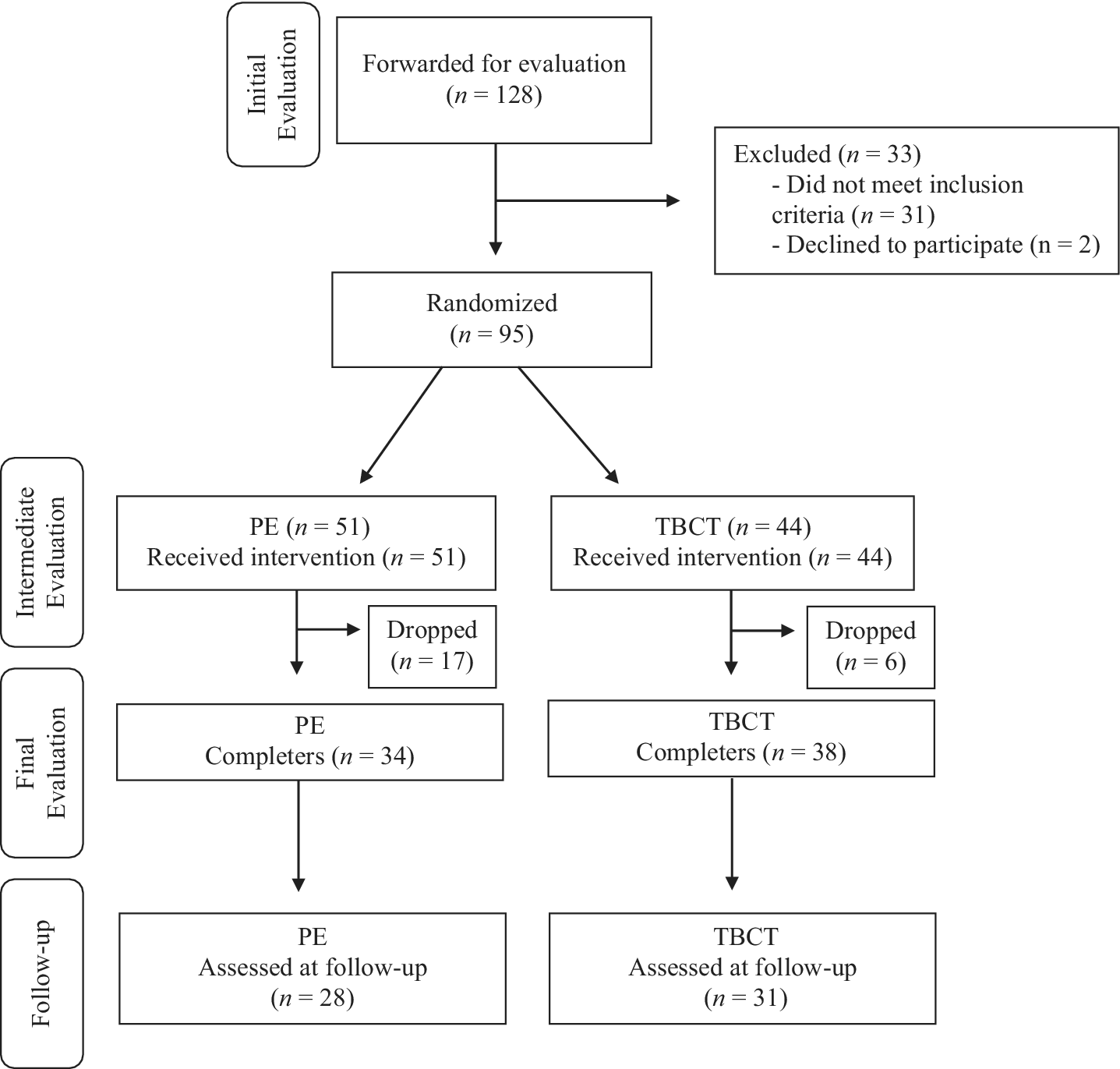
After meeting the inclusion criteria and signing the informed consent form, participants were randomly allocated to either TBCT or PE using a table of random numbers (http://www.dficcet.ufms.br/prrosa/metodologia/TNA.html) in the horizontal sequence, starting at the top of the first page to the left. Therapists and raters did not participate in the allocation procedure. Figure 1 shows the Consolidated Standards of Reporting Trials (CONSORT) diagram describing patient inclusion in the trial.
Participants in the study. Abbreviations: PE, prolonged exposure therapy; TBCT, trial-based cognitive therapy.

Assessments were performed by independent evaluators who were unaware of the assigned treatment condition. Therapists were experienced professionals with at least 6 and 5 years of practice for PE and TBCT, respectively. However, they received weekly 2-hour supervision from senior psychologists during the trial for both groups. Treatments were conducted in 13 sessions, 1 hour each. The therapy sessions were held once a week in the first 11 weeks and fortnightly in the last 4 weeks. To ensure that therapists complied with the intervention protocol, the senior therapist also listened to three audio-recordings randomly picked for each patient.
Interventions
PE is a set of exposure techniques for traumatic experiences based on the manual proposed by Foa et alReference Foa, Hembree and Rothbaum 41 It is a treatment protocol founded on prolonged imaginal exposure techniques using a hierarchy of feared situations from those eliciting the least anxiety or discomfort to those that are the most difficult. The two main components of PE were imaginal exposure involving revisiting and narrating aloud the disturbing traumatic event, and gradual in vivo exposure to the avoided trauma reminders. Homework was assigned weekly, which consisted of reading a leaflet with instructions explaining breathing techniques and relaxation, in vivo and imaginal exposure, and a hierarchy construction for the in vivo exposure. A trauma semistructured clinical interviewReference Foa, Hembree and Rothbaum 41 was applied to all patients in session 1. Session 2 consisted of psychoeducation of PTSD symptoms. All of the other sessions (3-13) involved imaginal exposure to the trauma memory. The six therapists who conducted PE (67% female, mean age 35.7 years) were all trained research assistants who graduated in psychology and specialized in behavioral therapy or CBT with at least 6 years of experience.
TBCT was based on the manual proposed by de OliveiraReference de Oliveira 42 and adapted to PTSD for the purpose of this study. In the manual, the first sessions address the first levels of cognition, represented by dysfunctional automatic thoughts. During treatment, therapists received weekly 2-hour group supervision from a senior therapist. As for the PE group, a trauma semistructured clinical interviewReference Foa, Hembree and Rothbaum 41 was applied to all patients in session 1, and session 2 consisted of psychoeducation of PTSD symptoms. Sessions 3 and 4 were dedicated to introducing the first level of the TBCT conceptualization diagram and restructuring dysfunctional automatic thoughts. Although the TBCT manual contemplates restructuring underlying assumptions and performing experiments consisting of exposure to avoided situations using the color-coded symptom hierarchy, for the purpose of this study, this technique was not employed. In session 5, the therapist could choose the participation grid technique to resolve guilt and shame, or the consensual role-play to restructure dysfunctional underlying assumptions (second level of the TBCT conceptualization diagram). From session 6 onward, the trial technique was used to change negative core beliefs (third level of the TBCT conceptualization diagram and the main mechanism of TBCT change). The trial is used to simulate a legal trial in which the patient is asked to role-play the investigated party (inquiry), the defendant, the prosecutor, the defense attorney, and the juror. The goal is for the patient to develop functional positive core beliefs after collecting evidence supporting and not supporting the dysfunctional negative core beliefs. In this phase, the patient is also assigned homework in which he or she is asked to gather evidence supporting the new functional positive core beliefs, a technique called “preparation for the appeal.” The five therapists responsible for conducting TBCT (100% female, mean age 34.0 years) were all trained research assistants who graduated in psychology and were certified TBCT therapists.
Although patients were not required to be on a stable medication regimen to start psychotherapy, they were asked to maintain their medication use stable throughout the treatment. Patients who refused medication were allowed to participate.
Statistical analysis
To evaluate the effects of TBCT vs PE on the main and secondary outcomes over the three time periods (preassessment, postassessment, and follow-up), we used a generalized estimating equation (GEE) method for each scale.Reference Feng, Diehr and Peterson 43 -Reference Fitzmaurice, Larid and Ware 45 The first-order autoregressive working correlation matrix was used to deal with the within-subject effect, expecting that measurements made further apart correlated less than those made closer together.Reference Gueorguieva 46 The following covariates were used in the models: allocation status (eg, randomized to receive TBCT or PE), time effect (ie, capturing changes in the outcomes over time regardless of the allocated arm and keeping the allocation constant), sex, use of medication (dichotomous variables), number of traumatic events, and age. Two different models were used: the unconditional and the conditional (ie, interaction effects). The unconditional model evaluated the effects of the intervention, given the random allocation status, on outcome, and the conditional model evaluated potential interaction effects between allocation and time on outcome. This conditional model was tested taking into account the following hypothesis: TBCT decreases the BDI scores more rapidly over time than PE. If the interaction term was not significant, it was removed from the conditional model; therefore, we returned to the unconditional model previously tested without including the interaction terms.
Due to missing data on outcomes, which is commonly observed in longitudinal designs, a multiple imputation procedure was used. As CONSORT advocates the intention-to-treat paradigm, techniques dealing with missing data must be used. One of the main flexible procedures for dealing with missing data in the context of randomized trials is multiple imputationReference Kenward and Carpenter 47; namely, replacing missing data with one or more specific values to allow statistical analyses that include all participants and not just those who do not have any missing data.Reference Li, Stuart and Allison 48 The specification for modeling the missing data was as follows: five data sets were imputedReference Rubin 49 and the variables entered in the unrestricted model were those cited previously (allocation, repeated time effect, sex, use of medication, number of traumatic events, and age) and the outcome measures across the item per se. The imputation method was fully conditional specification with no constraints in terms of the range of imputed continuous values (BAI and DAS).
For outcomes with missing data over the three assessments (eg, DTS, BAI, and DAS), the effects of the intervention are presented as pooled estimates derived from the multiple imputation procedure. For BDI, no multiple imputation was needed because at least one BDI score was obtained for each patient and GEE can accommodate this pattern of missing data.
Significance was set at 0.05, and all analyses were performed in SPSS version 24. 50 The effects of the covariates group assignment and time were reported in nonstandardized coefficient regression (represented by “B”) because, under the routine of multiple imputation, standardized effects are not available in SPSS.
Results
Forty-four patients were allocated to TBCT and 51 to PE. The groups were homogeneous in regard to demographic and clinical variables, including gender, education, age, duration of PTSD, previous psychiatric treatment, subclinical diagnosis according to SCID criteria, comorbidities, religion, number of traumatic events, and pharmacological treatment. The population included 76 females (80%), and 92 (87.4%) patients were using some kind of medication. Fifty-one patients (53.7%) were single or divorced, 37 (38.9%) married, and 7 (7.4%) widowed. In regard to religious beliefs, 45 patients (43%) were Catholic, 24 (23.3%) evangelical, 20 (18.6%) Kardecist, and 16 (15.1%) had no religious affiliation. Furthermore, 81 patients (76.7%) still presented with symptoms of PTSD, and only 25 (24.2%) presented with remission (33 [31.8%] in TBCT vs 18 [17.6%] in PE; P = .11).
Table 1 shows some of the baseline and sociodemographic features of the patients in each group.
Main Sociodemographic Features of Each Group

Abbreviations: PE, prolonged exposure therapy; SD, standard deviation; TBCT, trial-based cognitive therapy.
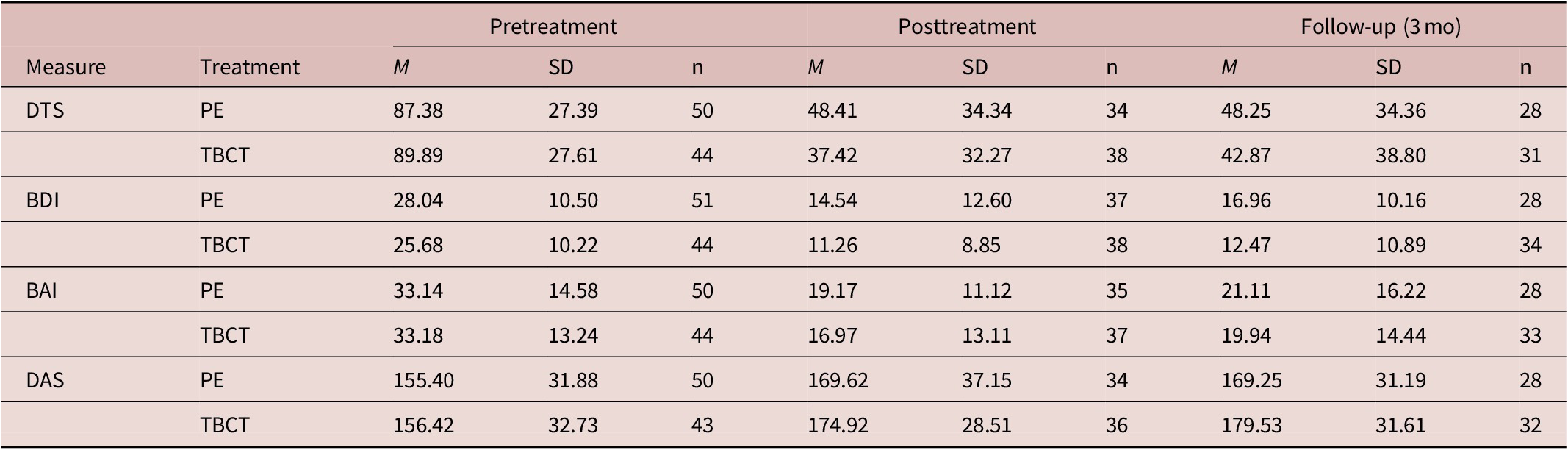
Table 2 presents the GEE effects for random allocation status and time after adjusting for sex, use of medication, number of traumatic events, and age.
Supplementary Measures Over Time in Each Group
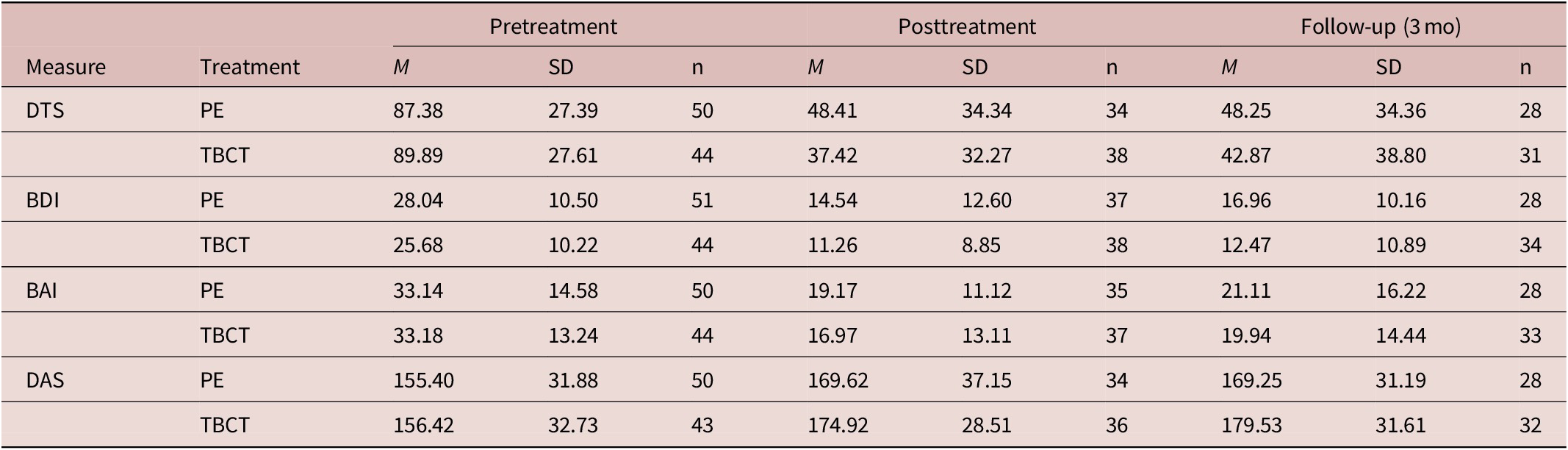
Abbreviations: BAI, Beck Anxiety Inventory; BDI, Beck Depression Inventory II; DAS, Dysfunctional Attitudes Scale; DTS, Davidson Trauma Scale; PE, prolonged exposure therapy; TBCT, trial-based cognitive therapy.
Regarding the primary outcome, the PE group had an average DTS score 4.42 points higher than the TBCT group across the study (P = .456) when controlled for sex, use of medication, number of traumatic events, age, and time. As shown in Table 2, time was significant, with an average reduction of 23 points in each assessment (P < .001). Twenty-three patients remitted during the study, 14 in the TBCT group and 9 in the PE group (P = .11).
In terms of secondary outcomes, the PE group had a significantly higher mean BDI-II score relative to the TBCT group (Β = 3.703, P = .049). No significant interaction effects of time and allocation group on the three outcomes were observed. Significance was not found with the BAI and DAS.
Twenty-three patients (n = 6 TBCT [13.6%] and n = 17 PE [33.3%]) dropped out during the treatment phase of the study (χ 2(1), P = .025). The reasons for withdrawal were inability to get a job that was compatible with the treatment schedule (n = 4 and 5), refusal to continue the treatment (n = 1 and 8), and lost contact (n = 1 and 4) in the TBCT and PE groups, respectively.
Discussion
This study aimed to evaluate the efficacy of TBCT and PE in PTSD patients, both posttreatment and 3 months after treatment. Several psychological treatments have been shown to be effective for PTSD.Reference Ford and Courtois 51 Two trauma-focused therapies (CPT and PE) are the most frequently studied psychotherapies for military-related PTSD, but nonresponse and dropout rates have remained high, with many patients continuing to experience symptoms.Reference Steenkamp, Litz and Hoge 52 , Reference Larsen, Fleming and Resick 53 After an extensive systematic review of the literature in different populations, Forman-Hoffman et alReference Forman-Hoffman, Middleton and Feltner 54 concluded that current psychological and pharmacological treatments have moderate to high strength of evidence regarding the efficacy of treating adults with PTSD, and that research is still needed on the comparative effectiveness of treatments.
Although CPT is the most widely used cognitive-based intervention for treating PTSD, and conventional CT is also widely used,Reference Ehlers, Murray, Ford and Courtois 55 our goal was to choose a new and innovative approach that addresses the most important aspect that needs to change in PTSD and many other disorders: dysfunctional negative core beliefs.Reference Wenzel 56
According to Wenzel,Reference Wenzel 56 TBCT is unique in that it outlines a series of systematic, concrete steps to achieve belief modification. TBCT is a transdiagnostic approach,Reference de Oliveira IR, Hemmany and Powell 57 whereas PE was designed as a particular exposure-based treatment protocol to treat PTSD.Reference Foa, Rothbaum and Riggs 58 Considering that TBCT has been demonstrated to be effective for depressionReference Hemanny, Carvalho and Maia 18 and SAD,Reference Neufeld, Palma and Caetano 19 -Reference Powell, Oliveira and Seixas 22 it may be considered an option for treating patients with PTSD and comorbid conditions, such as depression and SAD. The study by Caetano et alReference Caetano, Depreeuw and Papenfuss 20 included SAD patients with high rates of comorbid disorders, especially depression, and demonstrated that participants in the TBCT group had significantly decreased social anxiety, social avoidance, and depressive symptoms, whereas no differences were observed between pretreatment and posttreatment measures in the waitlist condition.
Orsillo et alReference Orsillo, Weathers and Litz 59 examined the prevalence of SAD and the comorbidity of SAD and PTSD in Vietnam veterans, and tested a theory of the etiology of social anxiety in trauma victims. They reported that 32% of the sample was positive for both SAD and PTSD, and that adversity of repatriation and shame about the reported experiences in Vietnam were significant predictors of current social anxiety levels. The authors suggested that social anxiety may be a significant problem among individuals with PTSD. These findings were confirmed by Crowson et alReference Crowson, Frueh and Beidel 60 in the same population, suggesting that veterans reported a high level of social anxiety and agoraphobia-like symptoms. In addition, Zayfert et alReference Zayfert, DeViva and Hofmann 61 found that, of 240 patients with principal PTSD, 43% had comorbid SAD, whereas only 7% of 57 patients with principal SAD had comorbid PTSD. In their sample, PTSD patients with SAD reported more trauma-related guilt. Two important TBCT techniques, namely the participation grid and the trial, were designed to deal with emotions such as guilt and shame. Although we did not objectively measure guilt and shame in the current sample, the previous dataReference Orsillo, Weathers and Litz 59 -Reference Zayfert, DeViva and Hofmann 61 allow us to speculate that TBCT acts on PTSD by regulating such emotions, suggesting further studies to clarify this hypothesis.
Negative cognition prior to trauma has been suggested to predict acute PTSD symptoms.Reference Su and Chen 62 In our study, although DAS scores were significantly decreased, no difference was observed between patients treated by TBCT and PE. This is important considering that the mechanism of change in PE has been suggested to be mainly based on behavioral techniques, whereas TBCT is supposed to act mainly on cognitive aspects. Dysfunctional attitudes have been explored in depression but, to the best of our knowledge, their possible relationship with PTSD symptoms has only been explored by KellerReference Keller 63 in PE-treated patients, showing no significant prediction of homework adherence and response to treatment.
Another well-known issue in PTSD treatment is the rate of premature treatment termination, as PTSD dropout rates vary greatly across studies, ranging from 28% to 68%.Reference Gross, Price and Yuen 64 , Reference Garcia, Kelley and Rentz 65 In a qualitative study of 28 veterans by Hundt et al,Reference Hundt, Ecker and Thompson 66 therapy-related barriers were reported by more than two-thirds of the sample, including not buying in to rationale or specific tasks, absence of improvement, and agreement with the therapist to switch to another therapy or level of care that may better fit the patient’s needs. In another study,Reference Scott and Stradling 67 only 7% (n = 14) of the patients in one sample completed the image habituation procedure as a homework assignment, and only 57% (n = 37) in a second sample complied with the audiotape exposure treatment, resulting in the conclusion that exposure-based treatments are not the choice for some clients. A randomized trial of 72 patients who received imaginal exposure or cognitive therapyReference Tarrier, Pilgrim and Sommerfield 68 found that, although improvements were seen in both groups, a significantly greater number of patients in the imaginal exposure group worsened and missed more sessions relative to the cognitive therapy group. The findings reported in these studies confirm the need for approaches that are as effective as the existing evidence-based PTSD treatments but have a lower dropout rate and greater treatment retention. In our study, the dropout rate was 13.6% for TBCT and 33.3% for PE (P = .025).
Patients with PTSD often have other psychiatric diagnoses (current and past). Among the patients attending a psychiatric trauma clinic in Copenhagen, the prevalence of depression, somatic illness, pain, low functioning, and social isolation was significantly associated with PTSD symptoms.Reference Buhman, Mortensen and Lundstrom 69 The same was found in this study, with high rates of comorbidity for generalized anxiety and depression according to the SCID. In addition, PTSD has been associated with disruptions in work, difficult social functioning, and poor physical health,Reference Powers, Halpern and Ferenschak 12 similar to the results in our patients. A transdiagnostic approach, such as TBCT, could be helpful for patients presenting with such comorbid conditions.
This study has some limitations. First, PTSD involves a number of different manifestations and the symptoms may change over time. Therefore, to adequately address the consequences of trauma, it is important to be aware of the information coming from different groups of victims, as the results of different types of trauma can vary considerably.Reference Kapczinski and Margis 70 In this study, we do not take this into account. According to Chu,Reference Chu 71 the nature and severity of traumatic events may influence whether prolonged psychological effects occur, and this may hinder the variables that actually help classify the predictive factors for treatment outcome. Another important limitation is that the majority of participants (n = 83) received pharmacotherapy throughout the study because of the severity of their clinical condition. In addition, patients were not required to be on a stabilized medication regimen to start psychotherapy. This may make it difficult to analyze predictors of the response to psychotherapy in this sample.
In conclusion, TBCT was as effective as PE in the treatment of PTSD. Nonetheless, TBCT was more effective in treating comorbid depression in this sample and presented fewer dropouts. Future research is needed to confirm these preliminary findings. Another important point that deserves further research is to understand the underlying mechanisms of change.
Acknowledgments
The authors would like to thank all of the staff and faculty of the Institute of Psychiatry Anxiety Program (AMBAN) of the School of Medicine of the University of São Paulo, who in different ways helped us complete this study.
Funding
This article was not funded or supported for its execution.
Disclosures
The authors authors have no conflict of interest to declare. Statement from Erica Duran: Opinions expressed in the submitted article are my own authority without interference from any official position of the institution or funding, as this study does not hear funding and other form of curation.