Introduction
Aphasia is an acquired communication disability affecting language skills such as speaking, understanding, reading, and writing (Hallowell & Chapey, Reference Hallowell, Chapey and Chapey2008). It has been estimated that one-quarter to one-third of all stroke patients admitted to hospital have aphasia (Pedersen, Jørgensen, Nakayama, Raaschou, & Olsen, Reference Pedersen, Jørgensen, Nakayama, Raaschou and Olsen1995; Wade, Hewer, David, & Enderby, Reference Wade, Hewer, David and Enderby1986). The social and psychological impact of aphasia can be profound. Negative social outcomes for people with aphasia such as social isolation, reduced participation in activities, and loss of friendships are frequently reported in the literature (Brown, Davidson, Worrall, & Howe, Reference Brown, Davidson, Worrall and Howe2013; Code, Reference Code2003; Cruice, Worrall, & Hickson, Reference Cruice, Worrall and Hickson2006; Parr, Byng, Gilpin, & Ireland, Reference Parr, Byng, Gilpin and Ireland1997; Sarno, Reference Sarno1997; Sjöqvist Nätterlund, Reference Sjöqvist Nätterlund2010; Zemva, Reference Zemva1999). Likewise, emotional problems in people with aphasia are highly prevalent (e.g., Hilari et al., Reference Hilari, Northcott, Roy, Marshall, Wiggins, Chataway and Ames2010; Kauhanen et al., Reference Kauhanen, Korpelainen, Hiltunen, Määttä, Mononen, Brusin and Myllylä2000; Thomas & Lincoln Reference Thomas and Lincoln2008). Alarmingly, emotional outcomes in people with aphasia may also decline over time. One study found that the frequency of major depression increased from 11% at 3 months to 33% at 12 months in people with aphasia after the stroke (Kauhanen et al., Reference Kauhanen, Korpelainen, Hiltunen, Määttä, Mononen, Brusin and Myllylä2000). Prevention and treatment of emotional problems post stroke is a priority as depression has been associated with poorer rehabilitation outcomes, increased mortality rates, and higher healthcare costs (Donnellan, Hickey, Hevey, & O'Neill, Reference Donnellan, Hickey, Hevey and O'Neill2010; Kutlubaev & Hackett, Reference Kutlubaev and Hackett2014).
Patient access to early evidence-based psychological care after stroke appears to be limited. In the Australian context, a Rehabilitation Services Report (National Stroke Foundation, 2014) found that of patients with stroke who were eligible only 39% received psychological assessment and 32% were offered counselling while in hospital. Of the patients who were eligible, it is not known how many people with aphasia received these services. Psychological treatments (e.g., cognitive behaviour therapy) may be unsuitable for people with aphasia who have difficulty communicating their thoughts and feelings (Thomas, Walker, Macniven, & Haworth, Reference Thomas, Thomas, Walker, Macniven and Haworth2013). Speech pathologists also report that their patients with aphasia often decline referral to professional psychological services (Sekhon, Douglas, & Rose, Reference Sekhon, Douglas and Rose2015). Additionally, qualitative reports from people with aphasia indicate that their social and emotional treatment needs post stroke are not always met (Parr et al., Reference Parr, Byng, Gilpin and Ireland1997). Hence, novel methods are needed to address the social and emotional impacts of aphasia.
There are very few interventions aimed at improving the emotional and social outcomes for people with aphasia early after stroke. Thomas et al. (Reference Thomas, Thomas, Walker, Macniven and Haworth2013) evaluated a behavioural therapy programme that sought to improve activity levels in people with aphasia who had low mood. The intervention was administered to people with aphasia who were on average 9 months post stroke. Improvements in mood outcomes were reported for participants with aphasia. The focus of this intervention was for people with aphasia living in their own homes, it may also be of benefit to evaluate the effect of treatments delivered while patients are receiving early rehabilitation services such as those provided in the inpatient setting. Indeed, Kneebone (Reference Kneebone2016) has proposed the use of a stepped psychological care approach for emotional problems after stroke that has a focus on the early detection and prevention of mood difficulties. Stepped psychological care includes four levels of treatment that are matched to an individual's level of need. Level one care may be provided to all people with stroke with input from all multidisciplinary stroke team members regardless of whether a clinical diagnosis of a mood disorder exists. Hence, treatment delivered to those without a diagnosis would focus on the prevention of emotional problems. A level one intervention may include active listening, providing advice, and information for adjustment and referral to support groups (Kneebone, Reference Kneebone2016). Accordingly, for people with aphasia post stroke, speech pathologists may be in the best place to first address any social and emotional problems that may arise because of their expertise in promoting communication access to information; and their comprehensive understanding of the impact of a communication disorder (Simmons Mackie & Damico, Reference Simmons-Mackie and Damico2011). Levels two to four of stepped psychological care is specialised treatment for more severe mood problems.
Several qualitative studies have explored the lived experience of people with aphasia with a focus on positive adaptation. Brown, Worrall, Davidson and Howe (Reference Brown, Worrall, Davidson and Howe2010) interviewed 30 people with chronic aphasia about their perspective on what it means to live successfully with this condition. Reported themes included being engaged in activity, maintaining meaningful relationships and striving for a positive way of life. Grohn, Worrall, Simmons-Mackie and Brown (Reference Grohn, Worrall, Simmons-Mackie and Hudson2014) continued work in the area and conducted a longitudinal study exploring the views of people with aphasia during the first year post stroke. Findings from this study indicated one overarching theme: ‘actively moving forward’. This theme highlighted how living successfully with aphasia was enabled across time by taking positive actions despite the sometimes overwhelming negative consequences of stroke and aphasia. Thus, in recognition of the need to improve the longer term outcomes for people with aphasia, findings from this body of research in positive adaptation were translated into an intervention programme called the Aphasia Action, Success, and Knowledge (Aphasia ASK) programme. Content of the programme includes goal setting, the provision of information and practical exercises found to be important for living successfully with aphasia. This pilot study therefore sought to explore the Aphasia ASK programme in a phase 1 intervention trial (Robey, Reference Robey2004; Whyte, Gordon, & Gonzalez Rothi, Reference Whyte, Gordon and Gonzalez Rothi2009) with the specific aims to
-
• determine the acceptability of the Aphasia ASK programme in terms of participant satisfaction;
-
• explore the perceptions of people with aphasia and their family member(s) about any positive and/or negative experiences of the programme; and changes that could be made;
-
• evaluate the potential impact of the Aphasia ASK programme on mood, communication confidence, self-esteem, and quality of life outcomes for people with aphasia.
Methods
Design
This study used a convergent parallel mixed methods design where qualitative and quantitative data were collected simultaneously (Creswell & Clark, Reference Creswell and Clark2011). Quantitative outcome measures were conducted at baseline (the week prior to the intervention), post-intervention (the week after the intervention), and at follow-up (3 months post intervention) for participants with aphasia. Qualitative data were collected through semi-structured interviews conducted at the post-intervention time point with both the person with aphasia and their family member(s) present.
Inclusion Criteria
Individuals over the age of 18, diagnosed with aphasia secondary to stroke by a qualified speech pathologist, and who were receiving usual care stroke rehabilitation services in an Australian metropolitan government funded hospital service, were eligible to participate. Participants were excluded from the study if they did not have adequate English to participate without a translator or if they had a concomitant neurological condition (e.g., dementia) or if they had a significant medical condition impacting on their health (e.g., cancer). Recruiting speech pathologists were instructed to approach a range of potential participants with aphasia (i.e., differing severity level) as early as possible post stroke, when potential participants were medically stable and perceived clinically ready for the intervention. Participants with aphasia were asked to nominate a close family member(s) and/or friend(s) to be involved in the study. No inclusionary criteria were set for the family members and/or friend(s) however, they required adequate English to participate without an interpreter.
Study Context
The intervention programme was conducted at an Australian government funded hospital service. This 1011 bed tertiary hospital provides speech pathology services to people with aphasia across the continuum of care. A majority of patients transition from an acute stroke unit to an inpatient subacute rehabilitation ward and once discharged home attend a day hospital programme. Length of stay in each phase of care varies depending on patient care needs, discharge requirements and bed availability; however, the median length of stay in the inpatient rehabilitation unit is approximately 30 days. Day Hospital (outpatient) therapy services are generally provided over a 12–18 month period post stroke, depending on patient goals. Usual care for a person with aphasia involves daily speech therapy in the rehabilitation ward (including individual, computer, and group therapy) and once to twice per week therapy in the Day Hospital context (including individual and weekly group therapy). People with aphasia may choose to continue to attend a weekly conversational based aphasia group once their Day Hospital therapy programme ceases.
Aphasia ASK Intervention
Aphasia ASK was based on the Medical Research Council's guidance on developing and evaluating complex interventions (Craig, Macintyre, Michie, Nazareth & Petticrew, Reference Craig, Dieppe, Macintyre, Michie, Nazareth and Petticrew2008). Aphasia ASK was informed by previous research findings in the area of living successfully with aphasia (e.g., Brown et al., Reference Brown, Worrall, Davidson and Howe2010; Grohn et al., Reference Grohn, Worrall, Simmons-Mackie and Hudson2014). Key themes from this qualitative research (e.g., meaningful activities, accomplishment, ability, positive adaptive strategies, social supports, and education) were used as search terms to identify any existing psychosocial interventions that may be appropriate for use with people with aphasia. A literature search was conducted during March and April 2012 using the following databases: CINAHL (EBSCOHost), Cochrane Central Register of Controlled Trials (Cochrane Library, Wiley), Ovid MEDLINE(R) (OvidSP and PubMed), and PsycINFO (OvidSP). Interventions with the highest available evidence were selected and incorporated into different modules of the programme. Components stemmed from positive psychology (Seligman, Steen, Park, & Peterson, Reference Seligman, Steen, Park and Peterson2005), social problem-solving theory (Grant, Elliott, Giger, & Bartolucci, Reference Grant, Elliott, Newman-Giger and Bartolucci2001), and Adult Learning Theory (Kimbarow, Reference Kimbarow2007). Aphasia-specific approaches included Supported Conversation for Adults with Aphasia (SCA; Kagan, Reference Kagan1998) and the Life Participation Approach to Aphasia (LPAA; Chapey et al., Reference Chapey, Duchan, Elman, Garcia, Kagan, Lyon, Simmons-Mackie and Chapey2008; LPAA Project Group et al., Reference Chapey, Duchan, Elman, Garcia, Kagan and Mackie2000). An initial draft of the Aphasia ASK programme was reviewed by a steering committee of experienced speech pathologists (n = 3) who critically appraised the programme and provided feedback on content and issues of feasibility within the workplace. Written feedback about the content and communication accessibility was also sought from a person with aphasia and family member.
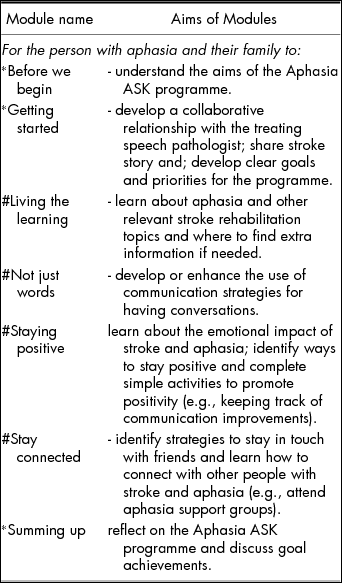
The final pilot Aphasia ASK intervention consisted of an introductory session ‘Before we begin’; one goal setting session ‘Getting started’; four content modules ‘Not just words; Living the learning; Staying positive; Staying connected’; and one goal review session ‘Summing up’. A decision making tool was included in the goal setting session to identify which of the four content modules each participant wanted to complete. Hence, not all content modules were required to be completed and their completion was left to the discretion of the therapists and participants. Completion of each of the introductory, goal setting, and summary sessions were required. Members of the research team obtained consent for the study and implemented the introductory module ‘Before we begin’ whereas the remaining modules were completed by the treating clinicians at the hospital site. Treating clinicians were provided with the intervention study manual and received advice and mentoring from the research team throughout the intervention delivery. An overview of the Aphasia ASK intervention as per the Template for Intervention Description and Replication (TIDieR) guide for study interventions (Hoffmann et al., Reference Hoffmann, Glasziou, Boutron, Milne, Perera, Moher and Michie2014) is provided in Table 1. An additional description of each of the Aphasia ASK modules and their overarching aims are provided in Table 2.
Description of the Aphasia ASK Intervention as Per the Template for Intervention Description and Replication (TIDieR) Guide for Study Interventions (Hoffmann et al., Reference Hoffmann, Glasziou, Boutron, Milne, Perera, Moher and Michie2014)

Brief Overview of Aphasia ASK Modules and Aims

*Compulsory module that was required to be completed by participants; # modules that participants could elect to complete (or not) and determine the order they were completed in.
Outcome Assessments
A number of self-rated assessments were included to identify the potential impact of the Aphasia ASK programme on mood, communication confidence, self-esteem, and overall quality of life for the participants with aphasia. The assessments were conducted by an independent research assistant who was not involved in the design of the Aphasia ASK intervention; nor had access to its content. The self-rated assessments included the following items:
Hospital Anxiety and Depression Scale (HADS; Zigmond & Snaith, Reference Zigmond and Snaith1983). This is a 14-item measure that yields a sub-scale score for depression (HADS-D). The HADS has been found to be an acceptable screening tool for depressive disorders post stroke with good discriminating ability at both acute and chronic phases (Kang et al., Reference Kang, Stewart, Kim, Jang, Kim, Bae and Yoon2013).
Communication Confidence Rating Scale in Aphasia (CCRSA; Babbitt, Heinemann, Semik, & Cherney, Reference Babbitt, Heinemann, Semik and Cherney2011). The CCRSA is a measure of communication confidence consisting of eight items. Literature has shown that the CCRSA has adequate test–retest reliability (Babbitt et al., Reference Babbitt, Heinemann, Semik and Cherney2011).
Visual Analogue Self Esteem Scale (VASES; Brumfitt & Sheeran, Reference Brumfitt and Sheeran1999). This is a 10-item measure with pictographic choices to assess self-esteem and mood in aphasia. The VASES is reported to have good internal consistency and test–retest reliability (Brumfitt & Sheeran, Reference Brumfitt and Sheeran1999).
ASHA Quality of Communication Life Scale (QCL; Paul et al., Reference Paul, Frattali, Holland, Thompson, Caperton and Slater2005). This is an 18-item assessment tool that measures the impact of communication impairment in areas such as socialisation/activities, confidence/self-concept, and roles and responsibilities. The ASHA QCL is reported to have adequate test–retest reliability (Paul et al., Reference Paul, Frattali, Holland, Thompson, Caperton and Slater2005).
An Aphasia ASK participant satisfaction questionnaire was also specifically designed using a 5-point Likert scale (1= definitely not – 5= definitely yes) with higher scores indicating greater satisfaction with the delivery and components of the intervention programme. The satisfaction questionnaire asked participants about (a) their involvement in goal setting, (b) the tailoring of the programme to suit their needs, (c) the information provided, and (d) the overall programme as a whole.
Post-Intervention Interviews
Participants with aphasia and their family member(s) participated in a semi-structured interview at the post-intervention time point. The interviews were conducted by members of the research team who had not been involved in the delivery of the intervention. Interview questions focussed on the participants’ experiences of attending the programme as well as potential changes that could be made to the programme. Questions asked during the interviews included ‘What was your experience of the program? ’; ‘What parts of the program did you find valuable or helpful?’; ‘What parts of the program did you find not valuable or unhelpful? ’ and ‘Are there any changes that we should make to the program? ’. The interviews were either audio or video-recorded. Each interview was transcribed verbatim by a professional transcription service.
Data Analysis
Quantitative data were analysed using SPSS (Statistical Package for the Social Sciences), Version 22. Line graphs displaying the raw data from individual participants for each time point and outcome measure were generated. Descriptive analyses (medians, interquartile ranges) were also calculated for each time point and outcome measure. Non-parametric Friedman tests were used to determine if the median difference for each of the outcome variables between the study outcome time points were statistically significant. An alpha level of .05 was accepted as statistically significant. If results were statistically significant, post-hoc analyses were completed using Wilcoxon signed-rank tests to determine at which time point(s) statistical differences occurred.
Qualitative data semi-structured interviews were analysed using content analysis (Graneheim & Lundman, Reference Graneheim and Lundman2004). An inductive approach was used whereby codes where generated directly from the text, rather than pre-determined. Transcripts were initially read consecutively and in their entirety to gain a sense of the data set as a whole. Meaning units (words, phrases, and sentences) of relevant content were then coded using descriptions containing the participants’ own words. Codes with similar meanings were then sorted and grouped into categories and themes within positive experiences, negative experiences, and changes that could be made to the programme.
Results
Participants
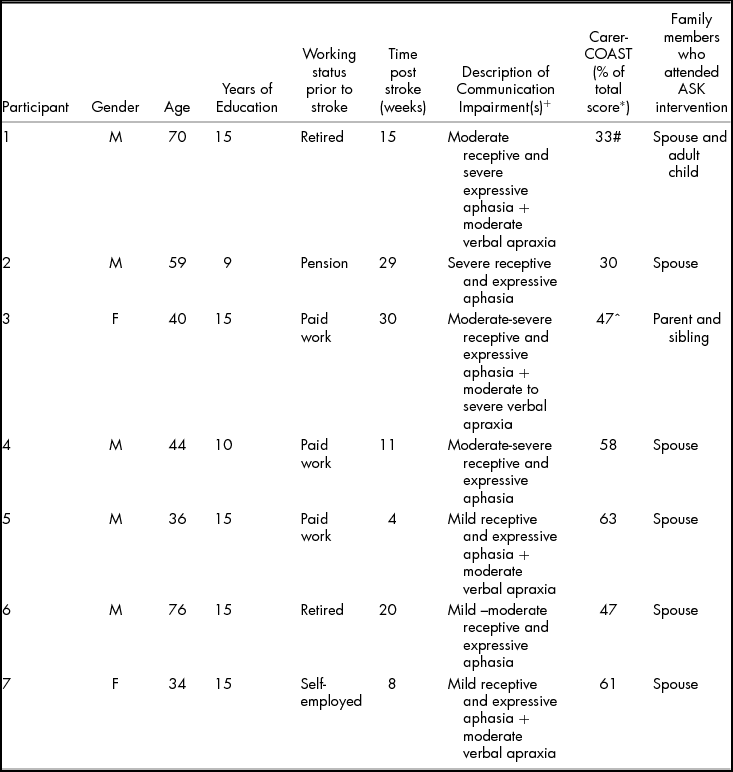
A convenience sample of nine people with aphasia completed the intervention. However, post-intervention data were not collected for one participant and a second participant completed another aphasia therapy research trial during the follow-up period. Hence, data for this study includes results from only seven participants with aphasia. To obtain information about the functional communication of the participants with aphasia, the Carer-COAST (Long, Hesketh, & Bowen, Reference Long, Hesketh and Bowen2009) was rated by family members. The Carer-COAST includes 20 questions: 15 questions measure the communication effectiveness of the person with aphasia; and five questions measure the impact of communication problems on the quality of life of the family member. Results for the Carer-COAST are reported as a % of the total score with higher % scores indicating a more desirable communication outcome. The Carer-COAST has good acceptability, internal consistency, and test–retest reliability (Long, Hesketh, & Bowen, Reference Long, Hesketh and Bowen2009). Demographic details of the participants with aphasia and their nominated family members are provided in Table 3 along with results obtained from the Carer-COAST.
Demographic Details of Participants with Aphasia and Family Members

+ Description of communication impairment(s) was provided by qualified speech-language therapist.
*Results obtained from the Carer-COAST (Long, Hesketh, & Bowen, Reference Long, Hesketh and Bowen2009) where data is rated on a 5-point Likert scale (1 = could not do it all – 5 = very well) rated by the participant's family members. A higher % score on the Carer-COAST indicates a more desirable outcome. # = data provided by spouse; ^ = data provided by parent.
Implementation
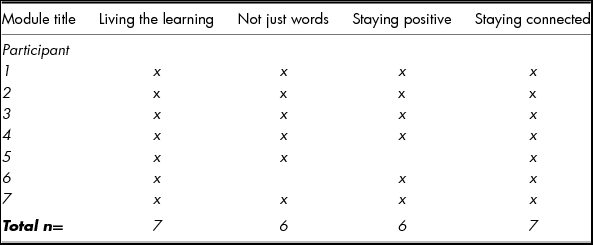
The intervention was administered at a time of the therapists’, patients’, and family's choosing. The commencement of the intervention was dependent on the participants readiness for the programme (i.e., adequate attention, concentration, and endurance to tolerate a 1 hour session), times available for scheduling amidst a busy rehabilitation programme, availability of a family member/carer to attend and availability of the ASK facilitator. The time post stroke that participants with aphasia commenced the Aphasia ASK programme ranged from 4 weeks to 30 weeks (M = 17 weeks; SD = 9 weeks). Of the seven participants with aphasia, two completed all sessions of the intervention as hospital inpatients; three participants started the intervention as inpatients and completed it as outpatients; and two completed all sessions as outpatients. Of the seven participants with aphasia, five completed all four content modules. Seven participants with aphasia completed the ‘Staying Connected’ and ‘Not Just Words’ modules; and six participants with aphasia completed the ‘Living the Learning’ and ‘Staying Positive’ modules. Table 4 provides information about each of the content modules completed by the participants with aphasia.
Content Modules Completed by Participants with Aphasia

Acceptability
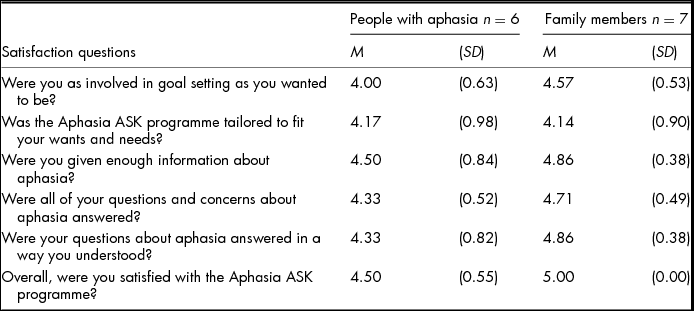
At the post intervention time point, both the participants with aphasia and their family members completed a specifically developed satisfaction questionnaire. Mean ratings from the satisfaction questionnaire are presented in Table 5 where it can be seen that both participants with aphasia and their family members reported a high level of satisfaction with their participation in the programme overall (average rating for overall satisfaction = 4.5/5 for people with aphasia and 5/5 for family members).
Participant Satisfaction Ratings

Likert Scale 1 = definitely not, 2 = no, 3 = neutral, 4 = yes, 5 = definitely yes; higher mean scores indicate greater satisfaction.
Post-intervention Interview Data
Positives
A valuable programme with relevant content
All participants (i.e., people with aphasia and their family members) reported that their participation in the Aphasia ASK programme had been worthwhile. General comments about the programme included:
‘I think it was very good, I really do.’ – FM2
‘We're quite happy with how it all went’ – FM7
‘It was good’ – PWA4
Participants explained that the content of the programme had been relevant to both the participants with aphasia and family members. The information supplied during the intervention was presented in a way they could understand and in a format that they liked. The participants who completed all of the modules felt that all of the content was relevant:
‘I think there were elements in all of them that were valuable and useful’ – FM1
‘They were all good. ’ – PWA2
Participants liked that the content explained what aphasia was and that it gave them strategies to help communicate with others:
‘Really good, good to get the information about aphasia’ – PWA7
Participants also liked that that the programme gave them access to information easily and in a variety of formats (e.g., booklets, DVD, websites). Participants liked the content on long-term stroke recovery and how living with aphasia may be managed within everyday life:
‘It helped us find a focus on what it is we're looking for in our long term recovery, staying focused, staying positive, keep sourcing the information, keep looking for the help if we're needing it and don't be frightened looking for it basically’ – FM4
Participants also enjoyed being given practical strategies and activities to complete, for example, using a diary to track communication improvements.
Tailoring of modules and information
Participants commented the programme had been tailored to meet their individual needs. For example, both a participant with aphasia and their family member said:
‘I think it also helps depending on the speech therapist that's doing the program with you because between them and yourself you expand on those things that are in there and that's what tailors it to you and your situation’ – FM2
And:
‘That gives you the topic to talk about and then depending on your speech I suppose you expand from that and it actually then adapts that to your situation’ PWA2
Participants liked that they were able to choose the modules they would like to complete and prioritise their order of completion with advice from the therapists. Participants also liked that the therapists tailored the information provided during the modules both in terms of the amount and level of detail.
Involvement of family members
Participants emphasised the positive involvement of family members:
‘Getting my family involved’ – PWA7
Participants liked that the programme provided a dedicated time to be together as a family, and that everyone had access to the same information and resources. Participants also mentioned they benefited from being able to include more than one family member in the programme.
Goal setting and achievement
The use of goal setting was a positive aspect of the programme that was mentioned by the participants. Setting goals for each of the modules provided a clear focus for the intervention and allowed participants to discuss what they wanted to achieve:
‘Good to have the goals and concentrate on those goals as you went through. I think without them we'd be at a loss, so it was good because we had the conversations with people and up top and – what was next?’ – PWA5
Some participants described that it was difficult to know what to expect in terms of goal and/or programme outcomes and that it was important to be guided by the therapist:
‘I must admit that the speech therapist helped us a lot because. . . we didn't even know what we were doing so it's very hard to set the goals, but it is good to do it, but you do need help from the therapist to actually set your first lot of goals.’ – FM2
And:
‘I thought that was a bit difficult. . .someone to set goals in that format. . . just having had a massive stroke, I think is too hard.’ – FM6
Participants also thought it was particularly important to reflect on their goal achievements at the end of the programme:
‘. . .when you get to the final one [module] and you actually compare where you are now to the goals and things that you set and where you thought you would be, that was very beneficial because you actually understand better the advances that you did make.’ – FM4
Sharing of experiences
Another positive of the programme was that it provided everyone an opportunity to share their feelings and experiences of stroke and aphasia. One participant commented:
‘I'd keep the stroke story in. I think that's a good component of the course and from a communication perspective to be able to tell your story, because it is a traumatic event for everybody involved. . .I think most people would appreciate that part of the course.’ – FM5
Participants particularly liked that they were able to share and listen to each of the family members’ experience of stroke in a supported environment:
‘It gave us an opportunity to talk about the stroke as well in a way that we haven't had, really, in the hospital context, say with the doctors, nurses and so on, so it was a really good’. – FM1
Negatives and Suggested Changes
Acknowledgement of the complexity of living with aphasia
Participants reported that a negative of the programme was that it had not fully acknowledged the complexity of living with aphasia. Participants explained that the programme needed to provide greater opportunity to express emotions such as the frustration, sadness, and grief associated with living with aphasia. Participants specially referred to changes that needed to be made to the ‘staying positive’ module. For example, a family member commented:
‘I had fairly mixed feelings about staying positive. . .because I think given the kind of complexity of the situation I think it's realistic to acknowledge that you can't be positive all the time. . . .staying positive of course is important. . . .but it was just a little bit broader than that. . . ..You need to be allowed to say this is pretty rough sometimes and that's fine, that's okay as well’ – FM3
Discussion-led rather than content completion
Some participants gave feedback about some aspects of the intervention delivery could be changed. For example, one participant commented that they would have preferred to discuss the content rather than actually complete the prompt questions and activities within the modules:
‘. . .it was very much focused around a book, wasn't it, and I think we're both more talkers. It was quite sort of clunky around paperwork for me’ – PWA5
Two participants also explained how they found some topics and/or activities to be overly repetitious if they discussed all of the content within each of the modules exactly as presented:
‘The only thing that we found was in the first couple of modules you tend to repeat a lot of things as you go, you don't need to repeat to reinforce things’ – FM2
And:
‘There were some things that probably felt a little redundant for us but then that is but I can see how it could be helpful to other people.’ – PWA7
These participants therefore suggested that the programme completion needed to be more patient-led and topics within the modules evolve more organically:
‘. . .not letting the pre-determined questions actually determine the direction of the way that the program goes’ – FM1
Facilitator consistency and follow-up
The programme was delivered by different therapists to some participants due to a therapist being away on leave and scheduling conflicts. These participants however, described that rapport would have been better maintained if only one therapist had delivered the programme:
‘We would rather do the program than not do it but it would be good if you could have a consistent person’ – FM3
Similarly, some participants commented how the programme could also be improved if it included a follow-up component. Participants also suggested that it would be good to be contacted by the same therapist a few months after completing the programme to see if they needed further support or information:
‘I think, yeah, I just think a follow up down the track in terms of focusing on things like "How are you travelling?’ – FM5
Impact on Mood, Communication Confidence, Self-Esteem, and Quality of Life Outcomes for People with Aphasia
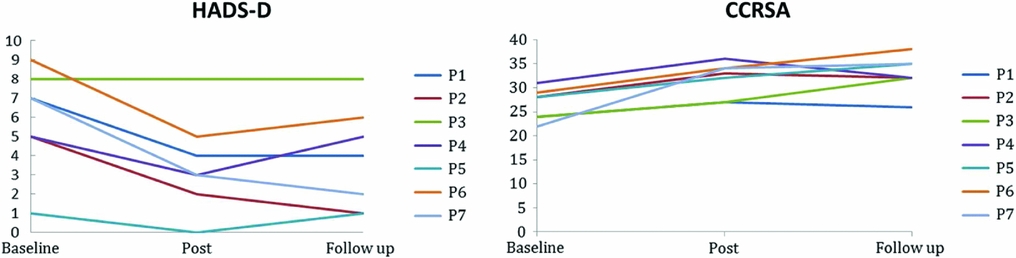
Inspection of the line graphs displaying the raw data for each outcome measure revealed a positive pattern of improvement for both the HADS-D and CCRSA across the three study time points. The line graphs for the HADS-D and CCRSA outcome measures are presented in Figure 1. Inspection of the VASES and QCL line graphs revealed variable individual patterns of data. Friedman tests determined that both the HADS-D and CCRSA group medians were statistically significantly different across the three study time points, where χ 2(2) = 7.524, p = .023 (Mdn = 7.0), (Mdn = 3.0), and (Mdn = 4.0) at pre, post, and follow-up, respectively for HADS-D, and χ 2(2) = 10.571, p = .005 (Mdn = 28), (Mdn = 33), and (Mdn = 32) at pre, post, and follow-up, respectively for CCRSA. Group median for the VASES improved from pre (Mdn = 37.00) to the post (Mdn = 43.00), and follow-up time points (Mdn = 45.00), but a Friedman test determined that the differences were not statistically significant, χ 2(2) = 2.889, p = .236. Similarly, group medians for the QCL outcomes improved from pre (Mdn = 3.65) to post (Mdn = 3.94), and follow-up time points (Mdn = 4.00), but the differences were also not statistically significant, χ 2(2) = 2.000, p = .368. Subsequent Wilcoxon signed-rank tests revealed a statistically significant change for HADS-D from the pre to post treatment (z = −2.214, p = .027) and that the gains were maintained from post to follow-up (z = .707, p = .480). There was also a statistically significant change for the CCRSA from pre to post treatment (z = 2.388, p = .017) and that the gains were maintained from post to follow-up (z =−.768, p = .443).
HADS-D and CCRSA scores for the pre, post, and follow-up study time points.

Discussion
This pilot study examined the Aphasia ASK intervention programme that was translated from prior qualitative research in the field of living successfully with aphasia. The Aphasia ASK programme was multifaceted and included goal setting, information provision, and practical exercises relevant to participant goals. The aims of this study were trifold (1) to determine the acceptability of the Aphasia ASK programme in terms of participant satisfaction; (2) to explore the perceptions of people with aphasia and their family member(s) about any positive and/or negative experiences of the programme; and changes that could be made, and (3) to evaluate the potential impact of the Aphasia ASK programme on mood, communication confidence, self-esteem, and quality of life outcomes for people with aphasia. Overall, this study has shown that the Aphasia ASK intervention is a suitable programme for participants with aphasia and their family members and that it may have promising outcomes.
The Aphasia ASK programme was successfully implemented to a small number of participants in a tertiary hospital through both inpatient and outpatient speech pathology services. Overall, there was a high uptake of the programme content with all participants with aphasia and their family members. Participants and their family members participated in all of the compulsory sessions (i.e., introductory session, a goal setting session, and a final goal review session) and each participant elected to complete at least three of the four content modules. Acceptability of the programme was considered in terms of participant satisfaction. Participants with aphasia and their family members reported a high level of satisfaction with their participation in the programme overall. While this pilot intervention included a convenience sample of participants with aphasia, attempts were made to ensure the programme was delivered to a range of people with differing aphasia severities early post stroke. These results provide initial support for the processes of the Aphasia ASK intervention and the content it covers including the delivery of the programme to those with a more severe aphasia. This is an important finding given that the presence of severe aphasia is often an exclusion criterion in many stroke psychosocial intervention studies.
Prior literature has identified that goal setting is a critical element of psychosocial interventions (Kirkevold, Bronken, Martinsen, & Kvigne, Reference Kirkevold, Bronken, Martinsen and Kvigne2012). Qualitative feedback from the participants in this study has added to this body of evidence. Example goal topics that were set by participants during the intervention included to learn about positive coping strategies; to understand more about aphasia recovery and; to find information about support groups. One benefit of the goal setting process was that it provided overall structure for the intervention and a mechanism for feedback about achievements made. This is an encouraging finding given that previous literature has demonstrated a positive relationship between goal achievement and mood and self-efficacy outcomes at 6 months post stroke rehabilitation (Brock et al., Reference Brock, Black, Cotton, Kennedy, Wilson and Sutton2009).
Qualitative feedback from participants highlighted the positive involvement of family members in the intervention. Participants in this study liked that the programme gave family members an opportunity to share their experiences as well as access to information and resources they would have otherwise not received. Prior aphasia literature has established the need for aphasia rehabilitation to focus on family members and to ensure their information and support needs are also met (Grawburg, Howe, Worrall, & Scarinci, Reference Grawburg, Howe, Worrall and Scarinci2013; Howe et al., Reference Howe, Davidson, Worrall, Hersh, Ferguson, Sherratt and Gilbert2012). Aphasia ASK may therefore be considered an intervention that addresses the family unit rather than just the person with aphasia.
One negative aspect of the programme identified by participants was that the programme did not fully acknowledge the complexity of living with aphasia, particularly within the ‘Staying positive’ module. Prior literature has identified that an important part of adjustment is the acknowledgement and sharing of feelings such as anger, loss, and uncertainty that may occur after stroke (Ch'Ng, French, & Mclean, Reference Ch'Ng, French and Mclean2008). The programme has therefore been revised so that the name of the ‘Staying positive’ module is now ‘Finding the positive’ and content within the module has been changed to better acknowledge the challenges of living with aphasia and the negative emotional impacts. Prior research has also identified the importance of storytelling for the renegotiation of one's identity after the onset of aphasia (Shadden, Reference Shadden2005). As such an additional module named ‘Your story’ has been added to the programme that will give both the people with aphasia and their family members the opportunity to share their experience of stroke in a dedicated session. The addition of this session will also provide participants an opportunity to share their experiences without a focus on completing module questions.
Mental health needs are recognised as a high priority in Australian stroke care. Of particular note therefore were the positive mood outcomes that were obtained as measured using the HADS-D. For this measure, Kang et al. (Reference Kang, Stewart, Kim, Jang, Kim, Bae and Yoon2013) suggests a cut-off score of ≥5 for minor depression and ≥7 for major depression. Before the intervention, six participants were above the minor depression cut-off (i.e., considered to have at least a minor depression), with four of these participants also scoring above the major depression cut-off (i.e., considered to have major depression). Immediately after the intervention, only two participants remained above the minor depression cut-off, with only one of these participants also scoring above the major depression cut-off. Statistical analyses of the HADS-D identified that the results obtained after treatment were significant and that the gains were maintained at follow-up. As other studies have found that early depression is a predictor of persisting depression post stroke, this is an encouraging finding (Hilari et al. Reference Hilari, Northcott, Roy, Marshall, Wiggins, Chataway and Ames2010; Thomas & Lincoln, Reference Thomas and Lincoln2008). However, it will be important that a larger scale trial (e.g., a phase III/IV trial; Robey, Reference Robey2004) be conducted before conclusions about the effectiveness of the Aphasia ASK programme on long-term depression outcomes are determined. Other interventions such as behavioural therapy (Thomas, Walker, Macniven, & Haworth, Reference Thomas, Thomas, Walker, Macniven and Haworth2013) and solution focussed brief therapy (Northcott, Burns, Simpson, & Hilari, Reference Northcott, Burns, Simpson and Hilari2015) have shown promise in improving mood outcomes in people with chronic aphasia. If Aphasia ASK is proven effective, it will be an important mood treatment for people with aphasia who are earlier post stroke.
Overall, results from this phase I study suggest that the Aphasia ASK programme may provide speech pathologists with a systematic manner to deliver psychoeducation that promotes positive adaptation for people with aphasia and their families early post stroke. The promising pilot results will inform an Australian multi-centre cluster-randomised controlled trial (RCT) to determine whether the Aphasia ASK intervention leads to better mood and quality of life outcomes for people with aphasia. This trial is registered in the Australian New Zealand Clinical Trials Registry (ANZCTR) as ACTRN12614000979651 as of the 11th of September 2014. An additional aim of the larger trial will be to determine if the programme can lead to less caregiver burden and better mental health for their family members.
Limitations and Future Directions
Although this was designed as a phase I study to evaluate the Aphasia ASK programme, several cautions exist regarding interpretation. Participants received usual care speech language therapy in the same hospital alongside the provision of the Aphasia ASK programme. Without an experimental control group, we are unable to determine if the improvements in mood and confidence would have automatically occurred over time among people with aphasia regardless of whether they participated in the intervention or not. Furthermore, the baseline data set was only collected at one time point whereas a multiple baseline study may have allowed us to draw conclusions that changes made were due to the treatment rather than other factors. Caution must therefore be taken when interpreting the effectiveness of the programme on participant outcomes as improvements identified may not necessarily be due to the implementation of the Aphasia ASK programme. No data were collected about whether or not the participants were also receiving pharmacological treatment for depression or other mood disorders during the study period. Training provided to the treating speech pathologists was in the form of a written therapy manual with mentoring support from the research team. Further research including rigorous attention to collection of control data along with the fidelity of the treatment (i.e., video review of therapy sessions) will need to be conducted before the effectiveness of Aphasia ASK can fully be determined. This study only reports on some aspects of feasibility and other aspects including factors affecting the timing of the intervention as well as the ease or difficulty of implementation should be fully explored in future studies (Bowen et al., Reference Bowen, Kreuter, Spring, Cofta-Woerpel, Linnan, Weiner and Fernandez2009).
Acknowledgements
We would like to thank the speech pathologists and consumers involved in the intervention development steering committee including Tania Quaglio and Dr Anna Farrell from Queensland Health that provided invaluable advice on the development of the Aphasia ASK programme. Prof Ian Kneebone is also thanked for his advice about revisions to the updated ‘Finding the positive’ Aphasia ASK module that will be evaluated in the larger RCT.
Financial Support
This study was supported by an Australian National Stroke Foundation Small Project Grant awarded in 2012.
Conflict of Interest
Aphasia ASK was developed by the authors of this paper.
Ethical Standards
The authors assert that all procedures contributing to this work comply with the ethical standards of the relevant national and institutional committees on human experimentation and with the Helsinki Declaration of 1975, as revised in 2008.