

This article documents an internal effort by one avocational archaeology club, the Oregon Archaeological Society (OAS), to obtain cultural objects collected by its members in the 1950s through the 1970s for donation to tribal and educational institutions. Lacking a template for the undertaking (we were unable to identify another club involved in similar activities), we set forth on a path that, through much trial and error, can offer guidelines for other clubs seeking to do the same. The collector-archaeologist relationship is the subject of many important discussions in academic and agency settings documented by a number of exemplary scholars, many of whom are contributors to this issue. In 2015, the Society for American Archaeology (SAA) implemented a task force to define appropriate relationships between the two communities and their findings, along with recommendations that were published in 2018 (Pitblado Reference Pitblado2014; Pitblado et al. Reference Pitblado, Shott, Brosowske, Butler, Cox, Espenshade and Neller2018) and included in the introductory article of this issue. At the time the task force identified key problems and standardized guidelines, the OAS had already begun its collection recovery work. Archaeologists proactive in their approach to engaging collectors cite numerous reasons for doing so, including transmission of knowledge regarding locations of Paleoindian and other sites (Fagan Reference Fagan, Willig, Melvin Aikens and Fagan1988; Pitblado Reference Pitblado2014), inferences of inter- and intrasite variability (Connolly Reference Connolly2015), and access to obscure and important collections (Hopkins et al. Reference Hopkins, Garfinkel, Rodgers, Carpenter, Skinner, Hopkins and Garfinkel2016). Those opposed to relationships with collectors also have very good reasons (Goebel Reference Goebel2015). However, one would be hard pressed to find an archaeologist that has not benefited in some way from knowledge directly obtained from collectors. Conversely, it would be equally difficult to find a collector who has not been berated or belittled by a professional archaeologist. It is incumbent on archaeologists to build better relationships or lose significant—though indirect—ties to the past. For this project, we work with early members of the Oregon Archaeological Society (OAS) to obtain significant collections for donation to educational and tribal institutions, seeking to build bridges between collectors, archaeologists, and tribal entities. The primary goal is to manifest OAS's commitment to better communication with Oregon's tribes and respect for their concerns in alignment with SAA recommendations.
Currently, over 300 members compose the Oregon Archaeological Society. The OAS was established in 1951 primarily as a collective of avocational archaeology enthusiasts who were interested in the material culture of past peoples and all aspects of collecting and excavating. There is no elephant in the room: it is well known that many OAS members were often more interested in amassing personal collections of artifacts than in the public preservation of Oregon heritage. One only has to thumb through 1950s–1960s back issues of the OAS newsletter, Screenings, to find photographs and accounts of collection trips throughout the state and beyond. Some of those collections are now the stuff of legend, involving (literally) tons of cultural objects collected from sites. The damage was appalling, causing irreconcilable emotional injury to Indigenous people witnessing it. It ruined the society's standing in tribal relationships. Even now, there is a lingering notion that the OAS is still more about collecting than it is about public service and heritage preservation. However, it is a much different organization from what it was in those early days.
In 2014, board members became aware of comments made within an Oregon tribal community indicating that suspicions regarding OAS activities are still prevalent. The board prepared a statement acknowledging past collecting activities, an overview of the transition away from them, and a request for guidance to address ongoing concerns. Two themes emerged in response: (1) the need to increase public education and outreach regarding the importance of Oregon's cultural heritage and (2) the need to recover collections amassed by OAS collectors for curation at educational and tribal repositories. We report successes on both fronts below. This report has three sections that include historical background documenting the transition from a “keeper” club to a service society; public outreach and educational efforts; and case studies of the types of collections that have been recovered, considerations involved in appropriate disposition, and potential for repatriation and research.
PHASES OF THE OAS
Early Days (1951–1974)
In the beginning, the OAS supported professional archaeologists with salvage excavations at sites under threat of inundation by newly constructed dams along the major waterways in Oregon and massive infrastructure projects. The OAS was established in 1951 by 51 charter members, with the support and assistance of Luther S. Cressman (University of Oregon) and David French at Reed College (Steele Reference Steele2011). Two formative meetings were held at the Oregon Museum of Science and Industry, and lectures have been held there on the first Tuesday of each month since. Cressman lent considerable prestige to the proceedings, having just received word that sagebrush sandals recovered from Fort Rock Cave were approximately 9,000 years old (Arnold and Libby Reference Arnold and Libby1951; Cressman Reference Cressman1951)—much earlier than many archaeologists aside from Cressman believed possible and among the first artifacts assayed using the new radiocarbon dating method. Cressman consulted with OAS members on some projects, as did Tom Newman and Dan Scheans of Portland State College (now University). The first fieldwork relationships were with Louis Caywood of the National Park Service and Joel Shiner of the Smithsonian at The Dalles in 1952 (Butler Reference Butler2007), and with Warren Caldwell, Douglas Osborne, and Robert Butler (University of Washington) at Wakemap Mound and other sites along the Long Narrows of the Columbia River from 1954 until 1957. Some worked with Cressman and David Cole at Five Mile Rapids on the Oregon Side of the river during the same time period.
Some members desired a sustained association with the professional community, whereas others were concerned about divulging too much information about prized site locations. The OAS was, after all, a collector's club at heart, and the 1951 statement of objectives describes it as “Pot Hunters with a Purpose” (Oregon Archaeological Society 1997). Academic archaeologists needed OAS labor to move dirt, but cultural objects were understood to belong to those who found them. Steele (Reference Steele2011) argues that researchers had unconditional access to the objects, referencing documents in the OAS archives, whereas Butler (Reference Butler2007) references an OAS agreement indicating that researchers could retain objects for two weeks. Some could be reexamined after that time if necessary. The OAS was defined as the repository. Objects were held and traded among club members or donated to public institutions, but they were not sold. The premise was well intentioned but unsustainable in practice. Temporary scientific access to the cultural objects was also the common procedure for salvage projects on publicly owned land overseen by professional archaeologists when time and finances allowed no other means of recovering data. Some members would donate items for preservation of the site record, but many kept them. Salvage excavations were months or sometimes just weeks in advance of bulldozers. Archaeologists wanted cultural histories of the Indigenous inhabitants, volunteers wanted collections, and builders wanted hydroelectric power and development. Tribes watched their history disappear or drown.
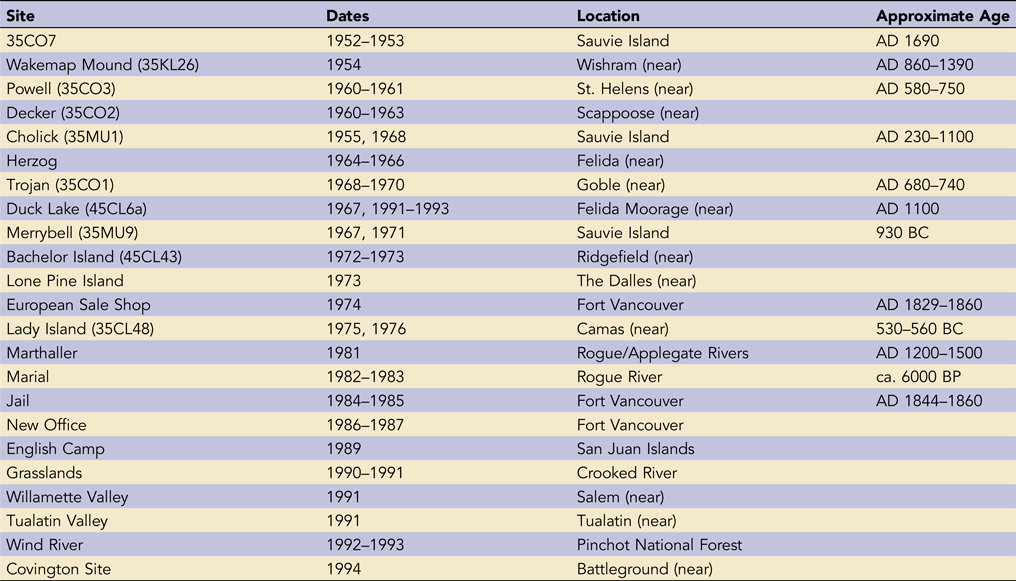
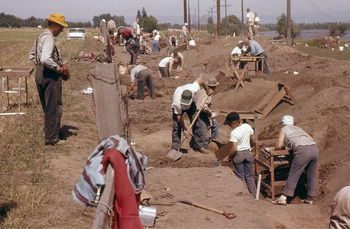
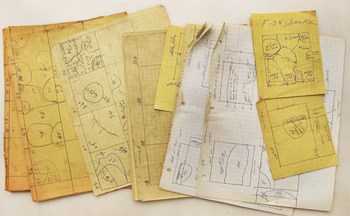
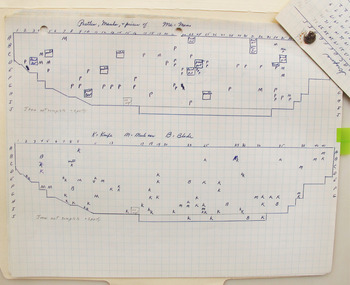
Members found opportunities to dig and surface collect on private holdings along the Columbia and Willamette Rivers, among other places (Table 1), often on land owned by OAS members or community members receptive to excavation on their property. Members paid five dollars per day to dig as much as they could in roughly 2 × 2 m (6 × 6 ft.) excavation squares laid out in advance (Figure 1). During those events, all excavated objects were bagged with the excavator's names on them and stored until fall when cataloging parties over two or three Saturdays provided opportunities to label, sketch, inventory, and compile notes (Figures 2–4). The OAS ended up with an accounting of items recovered from the site, and excavators were allowed to take the objects home. Table 1 was compiled by Harvey Steele, a charter OAS member, keeper of the society's history, and one of the early advocates of scientific archaeological support. It offers a review of sites where the OAS conducted excavations both as society activities and in support of scientific research.
OAS-Sanctioned Projects, 1952–1994, as Compiled by Harvey Steele.

Notes: The gap between Lone Pine Island and the European Sale Shop (Fort Vancouver) marks the transition from individual collection-focused excavation to scientific volunteerism. Approximate ages were provided when records allowed. The list does not include post-1994 activities, after documentation control shifted entirely to the sponsoring institutions.
An OAS excavation project at the Decker site, 1960. (Courtesy OAS Archives.)

Unit sketch maps and notes from the Decker project. (Courtesy David L. Minick.)

Decker site map of units laid out with alphabetic/numeric coordinate system, showing locations of (top) ground stones and (bottom) flaked tools. (Courtesy David L. Minick.)

Decker site tables from 1960 cataloging sessions. Look carefully at the counts for various categories of cultural objects. (Courtesy David L. Minick.)

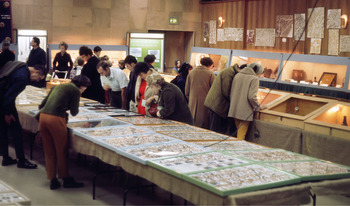
While more or less scholarly pursuits were underway, members were fanning out across the state individually and in groups to collect. Exploits were reported monthly in the newsletter, Screenings. It offered a miscellany of historical and ethnographic information about tribes, editorials, updates from collecting trips, typological information, digging and surveying advice, and an occasional poem. The early issues provide a “Who's Who” of the most prolific members, their activities, and their collections, serving as a source of astonishment and despair for professional archaeologists. Screenings is still published monthly with a much different focus. By the late 1960s, it was clear to the federal government, the academic community, and many OAS members that the pace of archaeological destruction was untenable (Figure 5). Changes were needed, and some within the OAS sought a path toward scientific and scholarly associations, whereas others wanted to maintain a collector's focus.
“Artifact Fairs” were annual OAS member events, and they offer perspective of the impact occurring to sites around the Pacific Northwest. (Courtesy OAS Archives, 1969.)

A Time of Transition (1974–1977)
In 1974, the widening schisms separating the collecting and scientific factions of the OAS abruptly clashed when the membership established a code of ethics that stipulated that those participating in excavation activities for personal gain would be expelled, and everyone had to sign a document stating that they would not be participants. It read,
Code of Ethics: Members shall abide by all local, state and federal laws governing archaeological excavation, and the collection, acquisition or sale of artifacts. Members will be mindful of the need to preserve valuable archaeological information. b) Members shall report to appropriate authorities any threats or acts of destruction to possible prehistoric and historic archaeological sites, as well as unauthorized disposal, or export or import, of prehistoric and historic artifacts. c) Failure to abide by this Code of Ethics shall result in expulsion from the Society in accordance with Article III Section 17 [Oregon Archaeological Society 1974].
The new code of ethics and shift in focus was a deadly combination for members who were more interested in personal gain than public service. Two slates of candidates were fielded for the board elections that occurred in December 1974, and the outcome resulted in a policy shift that changed the society forever. The candidates who wanted to continue the focus on digging and surface collecting for personal gain ended up being defeated by the narrowest of margins by those preferring a more scientific and service-based focus. The choice to move forward in a positive direction had clear consequences. It was not long after the elections that membership collapsed from almost 700 to fewer than 300.
The shift to an altruistic focus on archaeological pursuits came with increasing awareness that site protections were lacking in Oregon's legislative umbrella. The OAS introduced legislation in 1975 calling for an official state organization to administer site registration and permit processes, spearheaded by a former League of Women Voters lobbyist Carol Steele and three other members. That bill died in committee, but the four returned in 1977 and were responsible for the passage of two bills relating to the protection of Indigenous American burials and the archaeological permit process, including Oregon Revised Statutes 97.740-97.760 (Indian Graves and Protected Objects) and 358.905-358.955 (Archaeological Objects and Sites). A third bill focused on site preservation was incorporated into other legislation, and the Oregon State Historic Preservation Office was established that same year, though not by the doings of the OAS. The 1970s was a decade of major change within the society through bold moves that pushed it out of the shadows of its past and firmly into the realm of public service and policy.
Addressing Tribal Concerns (2015–Present)
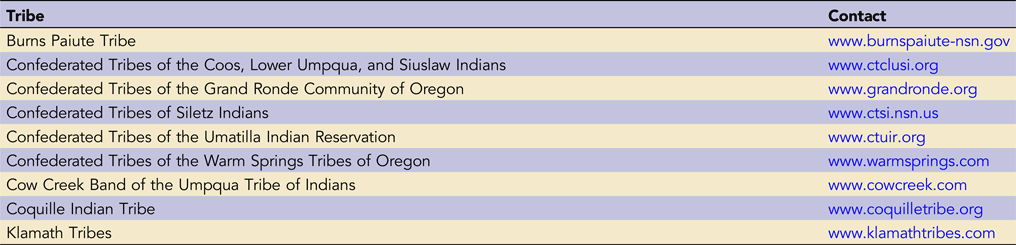
The actions of the past weigh heavily on the relationships of the present. OAS members once caused destruction to places of tribal importance for personal gain, and the society has worked diligently to change. The past cannot be changed, but it can be instructive. With this tone, the OAS approached the nine federally recognized tribes of Oregon for guidance (Table 2), drafting a statement (O'Grady et al. Reference O'Grady, Taylor, Steuber, Minick, Hill, Grant, Dorset, Dolan and Chaivoe2015) that was first presented to them at the January 2015 Natural Resources Workgroup and Cultural Resources Cluster Joint Meeting, then read into the record as testimony at the Legislative Council on Indian Services Meeting at the Oregon State Capitol on February 18, 2015. Afterward, tribal recommendations focused on increasing public education and outreach regarding the importance of Oregon's cultural heritage and obtaining cultural collections amassed by OAS collectors. Both of these objectives were already being pursued in various forms, and the processes are detailed in the sections below.
Oregon's Nine Federally Recognized Tribes.

Public Outreach and Education (1982–Present)
The focus on education comes in the form of citizen science, research support, and public outreach. Volunteers are active in a variety of projects throughout the Northwest. The OAS sponsors a 40-hour “Archaeology for the Curious” class in archaeological fundamentals that builds membership and provides volunteers for the Bureau of Land Management, Fort Vancouver National Historic Site, US Forest Service, and Southern Oregon University Laboratory of Anthropology. Volunteers have logged tens of thousands of hours on University of Oregon Paleoindian research alone since 2007.
The OAS also funds school-aged children, college students, and rock art research. The Loring Grant has provided $18,800 for rock art research by OAS members, and the Roy Jones Scholarship has devoted $32,000 for undergraduate and graduate student research related to Oregon archaeology. The OAS School Field Trip program was implemented in February of 2015, giving $7,800 for Oregon students in third through twelfth grades to take field trips to museums and educational institutions, meet professional archaeologists at places of cultural significance, and cover expenses for guest speakers. Kalapuya elder Esther Stutzman spoke to grade school students under the program. Archival support is also provided to college students seeking information on early OAS projects. One notable recent example is Kelly Prince Martinez's work on the Decker site (Martinez Reference Martinez2019; Figures 1–4), employing private and museum collections and using documents located by the OASCRC in the OAS archives. Archival material from various projects is being digitized for curation in several institutions (O'Grady and Boettcher Reference O'Grady and Boettcher2012).
The society has featured free monthly public lectures since its inception, bringing experts from around the country and throughout the world. Financial support is provided to the Oregon Archaeological Celebration, the Portland State University Archaeology Roadshow, and the Archaeological Legacy Institute. Stewardship, training, scholarships, publications, and school field trips present the OAS in positive ways. Member George Poetschat was the 2011 Society for American Archaeology Crabtree Award winner for his volunteerism on behalf of the OAS.
COLLECTIONS RECOVERY COMMITTEE: PROCESSES AND PROTOCOLS
The OAS has been working for many years to recover archaeological collections from the early members. Member David Minick recalibrated the effort in 2014 after seeing significant collections appear in online auction houses, at times in their entirety but often offered “by the frame” or as individual items. Minick began to address the need for a “Collections Recovery Committee” (OASCRC) to work with individual collectors to facilitate recovery, to address public inquiries regarding donations, and to funnel information to tribes and institutions when word of auctions or sales appeared in various venues. An exhaustive search for similar programs in the United States found none. The program and protocols for donations needed to be created from scratch. The move to formalize the committee accelerated with the interest from Oregon tribes.
The OASCRC assists members’ families and the general public possessing precontact cultural objects to find tribal and scientific institutions suited for preserving their collections. The committee seeks to halt the dispersal and commodification of cultural objects and to encourage academic research, and it is uniquely positioned to facilitate such transfers as access to undispersed collections rapidly diminishes. Many charter and other early members have now handed collections over to descendants who would like, at a minimum, to honor and preserve them but are uncertain about appropriate ways of doing so. They seek a path that gives something back to the organization that meant so much to their elders while insuring long-term protection of the cultural objects, recognition of the family, and accessibility for scientific research and public exhibits. The committee provides a conduit of safe passage from family to the repository deemed to be the “best fit” based on the collection's place of origin and scientific or cultural significance. Such judgments are not ours alone to make. They are determined through consultation with tribal cultural heritage committees, museum administrators, curators, and—on occasion—law enforcement officers.
The committee assesses each collection to help facilitate the transfer. The protocols for the transfer of a collection from the donor to a repository are tailored to ensure donors can receive a detailed record of the collection. David Minick is a professional photographer as well as the steward of the OAS website and all incoming OASCRC correspondence. He provides photo documentation of collections prior to curation. Daniel Stueber is a long-established lithic analyst who provides archaeological expertise and assesses the technological aspects of stone tools and other cultural objects included in the collection. Many OAS members are based in Portland but Minick and Stueber travel frequently to meet descendants, view collections, and discuss donation and transfer options. Pat O'Grady digitally preserves maps, level forms, and site photographs; coordinates student support for cataloging and advance curatorial documentation; and helps with guidance regarding collections disposition.
The OASCRC was initially envisioned as a program specific to acquisition and return of collections, but Minick was quick to recognize the value of monitoring local and national online auction houses, classified listings, and Craigslist for sales of recognizable cultural objects. Quick action and rapid communication with law enforcement and tribal entities has led to intercepting and terminating sales of important collections. Knowledge of past members and their collections, archival documentation, and regular monitoring are effective tools in the process. Much can be accomplished by even one person who is willing to track sales outlets. In such situations, fostering relationships with tribal governments and enforcement arms of state and federal agencies yields far-reaching benefits. The section to follow provides information for archaeological societies considering similar programs, including methods of contact, types of contact, objects of inquiry, and the OAS response.
Establishing Multiple Lines of Contact for Donor Inquiries
Inquiries come from a wide variety of age groups, and the OAS provides access through various avenues, including a dedicated phone line, public website and e-mail address, Facebook page, Instagram page, Twitter account, and eNews service. The Screenings newsletter is available to members only. Minick manages all but the newsletter, which is edited by member Glenda Satterthwaite. OASCRC inquiries may come through any of the electronic pathways, and the phone number is frequently used. Most come to the general e-mail address (info@oregonarchaeological.org) or to the OASCRC address (oascollectionsprogram@oregonarchaeological.org).
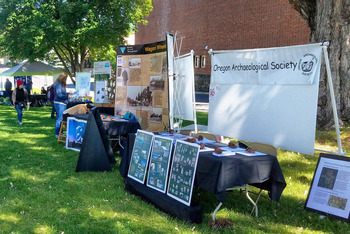
Public events offer opportunities for direct contact and nuanced conversations about the importance of responsible curation practices and repatriation. Many come through the monthly meetings and through “tabling” at heritage fairs, the Oregon State Fair, and other gatherings. The OAS participates in the annual Portland State University Archaeology Roadshow and the Archaeology Roadshow and Cultural Crawl events in the cities of Bend (Figure 6) and Burns, Oregon. The Oregon Historical Society organizes gatherings with community museum representatives and affiliated societies to share ideas and promote its activities, at which the OAS provides information about the OASCRC mission and insights garnered from its work. There, the OASCRC offers consultation on donated cultural objects that may be unfamiliar or not worthy of display and suggest institutional donation or repatriation pathways for objects that may be slated for removal.
The OAS information booth at the Portland State University Archaeology Roadshow in Bend, Oregon. 2019. (Courtesy David L. Minick.)

Who Makes Contact?
The committee may be contacted by OAS members, their descendants, or associates. Announcements can be made in the monthly meetings, through Screenings, and on the OAS website. OAS member collections are frequently accompanied by maps, level forms, photos, news clippings, and scrapbooks; all add tremendously to the context. Indirect information, through recollections by other OAS members regarding donors and the projects, provide additional layers of knowledge that are precious and fleeting. They are sought and recorded whenever possible.
People not affiliated with the OAS will often contact the OASCRC when they are downsizing, disposing of possessions, or following the directive of a will. Such families often have strong ties to Oregon or a particular region within the state. The collector's objectives were often less focused than was the case with OAS members; documentation is generally limited to nonexistent. Collectors or family members can usually provide context such as location of collecting, time frame, and personal significance. Descendants may or may not have knowledge regarding the objectives of archaeology, but they understand that the cultural objects were valued by their family member and seek to honor that. Less frequently, contact is made by second-generation descendants (grandchildren, nieces, nephews, cousins, etc.). Except in rare circumstances, the farther removed the family member, the less information there is regarding the collection.
Family-held collections are preferred because the intention of the donors is well meaning and often accompanied by efforts to seek out and gather as much related documentation as possible. Less common, but not rare, are individuals who report being given or having purchased a collection and seek information about it. Exercise caution when this is the case. They often want to know about the rarity of the objects, their age, or their site context, and—by extension—their value. They may also seek some form of documentation by way of an e-mail or letter from a professional archaeologist or educational institution that the collection is of value. The intent is to build a level of legitimacy for the collection by offering evidence that the material has been examined, even in a cursory fashion, which allows them to sell items with additional cachet (i.e., more monetary value). We do not travel down this road with them, which is why OASCRC documentation is only offered to those who donate their collections. Letters requesting appraisals are fielded and responded to with a form letter explaining why the OAS does not offer appraisals and instead seeks to encourage donations or repatriation of collections. We understand that some families may need to convert their collections into liquid assets for various reasons, but we cannot lend support to that.
The Collection Committee Response
Response to inquiries is delivered in three forms, including a form letter encouraging more contact, explaining the program, and requesting photos. A link to the OASCRC page on the website is also included at this time. Once this information has been received by potential donors and they have responded, a second form letter is sent to explain that the OAS does not offer appraisals and why. They are encouraged to consider donation if they are exploring other options. Phone calls and e-mail exchanges frequently lead to in-person examination and on-site discussions regarding the next steps if the donation route is pursued.
Once the extent of the collection is evident, details are worked out regarding family preferences for curation of the collection, the level of documentation sought, and a timeline for each event. The latter must be quite generous due to the fact that this is an all-volunteer effort, which is dependent in part on scheduling constraints of the other institutions involved. As written, the process seems simple, but each collection is different, and many complexities can occur during the transfer from donor to institution. There is no “cookbook” approach to the process, and a few case studies follow to illustrate why.
Allan Smith Collection
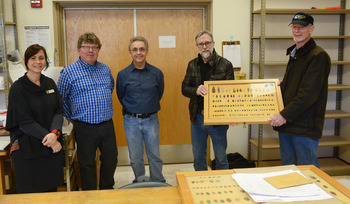
Mr. Smith collected stone tools between 1960 and 1971, primarily on the farmlands of family and neighbors as a boy and young adult. He describes himself during that time as a nerdy kid who kept copious notes and maps of his collecting activity. He collected in the central Willamette Valley of western Oregon, where most land is privately held because westward migration began in the early 1840s. Not a member of the OAS, Smith made contact in 2016 after reading about the program on the website. One meeting occurred at a local restaurant, and Mr. Smith handed over his collection and extensive documentation immediately afterward. His wish was to see the collection donated to the University of Oregon Museum of Natural and Cultural History (MNCH). Arrangements were made for the transfer shortly after the meeting, which he attended (Figure 7).
Transfer of the Smith Collection to the University of Oregon Museum of Natural and Cultural History, 2016. From left: Elizabeth Kallenbach, Curation Manager; Pat O'Grady; Daniel O. Stueber; Thomas Connolly, Research Director; and Allan Smith. (Courtesy David L. Minick.)

Marty Rosenson Collection
In 2019, Marty Rosenson's daughter made contact regarding cultural material that had been collected during field schools that he had taught at a mid–Willamette Valley site in the 1980s as an instructor for Linn-Benton Community College. Although the cultural objects were documented with field notes, level records, and maps, they were apparently not synthesized into a site report at the time. While dealing with his estate, Rosenson's daughter made e-mail contact via the OAS website, and the collection was transferred to MNCH in February 2020. Because everything was in Mr. Rosenson's personal possession, the usual protocols for transfer from one academic institution to another were not in place, and the OASCRC served as a fortuitous go-between. In earlier times, it was not uncommon for professors to maintain a workspace at home to devote time to projects outside of regular work hours. Although well intentioned, such practices have been discontinued due to circumstances such as this. Two large baskets that belonged to Rosenson and were unrelated to the field school were passed along with the other items.
Orville “Red” DeMars Collection
The DeMars Collection was the first to be transferred to the OASCRC in 2014. Orville DeMars was an early OAS member who expressed a wish for his extensive and eclectic collection to stay together and be donated to a museum. He was interested in many Indigenous American arts and crafts and collected both modern and precontact stone tools, ground stone, basketry, and art. Much of the collection came from western Oregon, and some came from a friend's large ranch near Prineville in central Oregon. After DeMars died, his family contacted Daniel Stueber and discussed a transfer of the extensive collection of ground stone, much of which was from western Oregon. Arrangements were made with the Confederated Tribes of the Grand Ronde for a direct transfer to Chachalu Museum. The collection was considered a significant contribution at the time.
Hand Family Collection
This small assemblage included a framed display of stone tools and a small box of loose objects consistent with collections gathered by informal and infrequent efforts in times past. The granddaughter of Mr. Hand, Lindasue Spencer, contacted the OASCRC through the website in 2020, noting that he had collected them in Lake County (central Oregon) from the 1940s into the 1960s. Two tribes that have territorial ties to that area were contacted, and the Burns Paiute Tribe accepted them in August 2021.
Leonard Collection
In 2019, Jean Leonard (a pseudonym) contacted the OASCRC regarding her and her late husband's (both OAS members) collection from digging at the Trojan site in the late 1960s and other unnamed places along the Columbia River. The Trojan project was conducted under the auspices of Portland General Electric, with limited guidance from archaeologists based at Portland State University and Fort Vancouver National Historic Site. Ms. Leonard was anxious to see the collection reach the most appropriate institution, and she commented that human skeletal remains in the collection had always made her uncomfortable. That information indicated that the OASCRC could not be directly involved. Other measures would be required to assure that the wishes of Oregon tribes would be honored regarding ancestral remains and that mandates under state and federal laws would be upheld. After discussing the gravity of the situation and the importance of repatriation with Ms. Leonard, the OASCRC got in touch with Oregon State Police (OSP) personnel, who accompanied the committee to her residence to gather the remains and cultural materials. The transfer was direct, and the extent of the collection is unknown, but a “Columbia River style” clay figurine was noted among the objects and not associated with the Trojan site. Limited documentation makes it unlikely that distinctions can be made between cultural objects originating from Trojan or other places. It is likely that all will be considered burial associated and repatriated with the human remains. The collection and skeleton are in the possession of the Oregon medical examiner until a decision among tribal entities is made regarding disposition. Progress is slow, possibly indicating that there is either (1) insufficient labor and/or funding for such efforts or (2) no formal mechanism for dispersal or reburial of remains and grave-related cultural objects from private collections in the state of Oregon. The OASCRC had a clear direction in this matter: the ancestral remains had to be given to OSP for proper care and investigation. An examination of Native American Graves Protection and Repatriation Act guidelines and case histories show that it is primarily designed to repatriate cultural objects and human remains from institutional settings, with procedures and mandated timelines designed for maximum tribal feedback and participation. It does not provide a framework for the dispersal or repatriation of private collections. This lack of guidance creates new opportunities for state, federal, and tribal entities to define procedures for the responsible return of cultural objects that exist outside of institutions.
Renfroe Collection
In 2015, Pete Renfroe (a pseudonym) contacted the OASCRC about his collection from the Trojan site, which included stone tools of various kinds, flakes, animal bones, metal objects, beads, a mortar and pestle, a broken pestle, a net weight, and a large geofact. Pete and his two brothers were taken to the site as boys by their mother, who thought it was a good way to keep them busy during their summer vacation from school. No human remains were mentioned as the collection was being transferred to the OASCRC. It was later learned that the Renfroe excavation unit was adjacent to the Leonard unit, where a human burial was excavated. The proximity of the burial led to reconsideration of the Renfroe Collection as potentially grave related. The OSP officer in charge of the Leonard Collection was contacted and apprised of the situation. The OASCRC made the recommendation that the collection be considered for repatriation. The family wanted the right thing done and deferred to the judgment of OSP and any concerned tribes. Discussions regarding disposition are currently underway.
The Smith, Rosenson, DeMars, and Hand case studies demonstrate simple transfers from the collector to an academic or tribal museum with limited involvement from the OASCRC. The committee does its most effective work when it is possible for families to move cultural objects to the best circumstance quickly, whether to a curation facility or to the sovereign institutions of those whose ancestors occupied the sites. Other case studies show the challenges that can quickly emerge when issues of repatriation arise. The Leonard Collection is a good example of a smooth transfer of human remains from the collector to the prevailing agency—in this case, the Oregon State Police. In Oregon, protocols involving human remains found during fieldwork or within collections always begin with the OSP. We believe the Renfroe Collection was handled in the most prudent fashion once additional information suggested that a move to repatriation might be in order, as will ultimately be determined through discussions between the OSP and concerned tribes.
SUMMARY AND CONCLUSIONS
There is still much to learn, but the above case studies show encouraging progress in the transfer of collections. Here are our recommendations for developing a program.
(1) Be committed. The core committee has to be motivated and prepared to remain involved for the long term. Institutional memory is important for understanding what does and does not work, how certain kinds of problems have been addressed in the past, and how duties should be allotted.
(2) Establish and maintain frequent communication. Clearly state intent to your society board and members and to tribes. In the OAS example, a statement was crafted for presentation to Oregon tribes to recognize past behaviors, accept responsibility, and seek advice regarding how best to address concerns. Establish a single point of contact for all collections-based correspondence to avoid mixed messages, confusion, and delayed responses. Maintaining open communication with state and federal law enforcement officers and with tribal cultural resources staffs is of utmost importance.
(3) Be community builders. Many inquiries from the public involve natural objects, such as curiously shaped and naturally broken stones and other organic or inorganic materials. Be prepared to point the person toward geology and botany departments at universities, community colleges, and historical societies. Know the network of experts in your state, and let them share in the interactions; all will appreciate the opportunity to engage. Promote your organization with educational materials, web links, and videos.
(4) Master knowledge of state and federal laws. Individual states have cultural resource laws that differ and overarching federal laws that also apply. Each state historic preservation office (SHPO) provides a list of the appropriate laws, and staff can provide guidance. Oregon and federal laws can be found at https://www.oregon.gov/oprd/OH/Pages/lawsrules.aspx.
(5) Understand chain of custody. Each SHPO also has well-established protocols for dealing with human remains in the field. Any collections that contain—or may be associated with—human remains should follow the same chain of custody. Oregon's protocols are at the website above, listed under the “Inadvertent Discovery Plan Template.” For Oregon, the first contact is always OSP; OASCRC involvement ceases thereafter. In field discoveries, the OSP is contacted first, then the SHPO, then the Oregon Legislative Commission on Indian Services (LCIS). LCIS directs the fieldworker to the appropriate tribal contact. With collections, OSP takes responsibility for all interactions after the collection is transferred. It remains important for committees to understand how the process works in their state to avoid violating protocols.
(6) Be clear regarding human remains in collections. Avoid the potential for ethical dilemmas when dealing with potential donors. Make it clear at the beginning of an interaction that, if the collection contains human remains, the transfer will be made directly to law enforcement, who—with tribal entities—will make decisions regarding the disposition of the collection. Avoid creating situations where potential donors might choose to withdraw after informing the committee that they possess such remains. Well-intentioned donors will go forward knowing that the collection will be moving, albeit slowly, toward the most appropriate outcome.
To this point, the purpose of the article has been to document our effort to act on the recommendations of the Oregon tribes after their input in 2015. The OAS openly acknowledged the past, asked for guidance, and proceeded to address the suggestions that were offered. Little communication occurred between the OASCRC and tribes as collections were sought. Efforts to increase public outreach, build a collection committee, obtain collections, direct them to research and tribal institutions, and provide guidelines for the process are described in detail above. Writing this article serves to document the process, but it would have been incomplete without additional input from the tribes regarding our results. Our request to forward a draft of the article for tribal review was greeted enthusiastically by both the SAA editors and the special issue editors. The review draft was submitted to Danny Santos, then director of the Oregon Legislative Commission on Indian Services, which he forwarded to the nine tribes. Kasandra Rippee of the Tribal Historic Preservation Office for the Coquille Tribe read the draft and invited us to participate at the LCIS Cultural Resources Cluster Meeting on June 8, 2021, which allowed two weeks for tribal review of the article.
Patrick O'Grady represented the OASCRC during the online meeting, which began with a summary of the article followed by questions. This meeting provided the first update to the tribes on the collection committee's effort, and two themes quickly emerged from the responses: concern about how decisions were made regarding curation and the importance of including tribes in the process at the beginning of such negotiations. We stated that we followed the wishes of the collector, and additional decisions were made with input from multiple parties. If the collector left the disposition unspecified and good location information for the cultural objects was available, we would approach tribes with the strongest regional ties to the location where collection had occurred. The Oregon LCIS provides information on request regarding tribal jurisdiction for a given location, limiting the possibility of a false presumption. That was the case when the Hand Collection and the DeMars Collection were sent to the Burns Paiutes and the Confederated Tribes of the Grand Ronde, respectively. One respondent made the point that a collector might not know that tribes can receive a collection—an obvious and overlooked consideration for the OASCRC. A number of participants stressed the importance of tribal participation at the initiation of a possible transfer, and some frustration was voiced that we had not done so with these collections. From our viewpoint, we felt that we needed to make some forays into the process to create a framework for input and future tribal participation. Without actual cases to discuss, we could not provide evidence that the process was yielding results, identify what worked and what was unsatisfactory, and build on that foundation. A number of tribal representatives requested that the OASCRC schedule periodic meetings with them to discuss collections that are being donated. After the meeting, it was suggested that tribes be given enough time to consider the article further prior to publication, and September 1 was set as the target date for additional comments. No new suggestions were added, although one person reiterated the need for early involvement in the process.
The OASCRC was formed to facilitate recovery of Indigenous cultural objects collected from OAS-sanctioned activities and by nonaffiliated members of the public. The appearance of recognizable member names and sites attached to collections on internet auctions, eBay, and elsewhere simultaneously signaled the diminution of the early OAS membership and irreconcilable dispersal of Oregon's heritage. Intercepting and removing collections from the commercial stream was identified as a high priority by the federally recognized tribes of Oregon. Six collections are mentioned above, and four more are in motion. Each transfer represents a victory in the effort to reduce the commodification of cultural objects, to continue rehabilitating the reputation of the OAS from its earliest origins, to show the tribes where the OAS stands in relation to their concerns, and to help donors do the right thing. There is much that goes into developing a collection recovery program, but there is also a great deal that can be accomplished by a relatively small group. Ultimately, it all comes down to long overdue recognition that the cultural heritage of our First Nations should be treated with care and respect by all. We can never heal the wounds inflicted on tribes by the destruction of archaeological sites for the sake of personal gratification, but we can work in small ways to recover and return cultural objects whenever possible for both tribal and academic benefit.
Acknowledgments
Sean Morgan crafted the Spanish translation of the abstract. Dr. Thomas Connolly of the University of Oregon provided helpful editorial advice for an early draft. A great debt is owed to the many OAS volunteers who have worked to improve the club over these seven decades. Most of all, we are grateful to the Oregon tribes who gave their time, attention, and advice regarding our efforts, and for their willingness to participate in the future direction of the collection committee. No permits were required for this work.
Data Availability Statement
Data used in the preparation of this manuscript—including correspondence, photographs, site records, financial documents, and academic references—are curated in a digital archive of the University of Oregon Museum of Natural and Cultural History. The records are not available directly through public access due to certain restrictions regarding documents containing site locations or culturally sensitive information. Those are exempt from access through the Freedom of Information Act. Information can be provided on a case-by-case basis, and some requests may require consultation with the Oregon State Historic Preservation Office or the Oregon Legislative Commission on Indian Services.