Introduction
Resilience research has been characterized as having gone through several “waves” over the years that have involved different conceptualizations and approaches to investigations (Masten, Reference Masten2007). While resilience has been defined in multiple ways across these waves (Masten, Reference Masten2001), one common conceptualization is the “capacity of…systems to adapt successfully…to challenges that threaten the function, survival, or development of the system” (Masten et al., Reference Masten, Lucke, Nelson and Stallworthy2021). In line with this notion, in this article, we focus on resilience as a type of thriving, that is, the experience of positive outcomes in the face of adversity. It is important to note, however, that when considering outcomes, resilience can sometimes be domain-specific (Luthar et al., Reference Luthar, Cicchetti and Becker2000). That is, it is possible that individuals exposed to adversity will show thriving in one life domain (e.g., mental health), but not others (e.g., physical health). This suggests the importance of considering outcomes across multiple systems within an individual in order to gain a more holistic understanding of resilience.
While the study of psychological resilience largely originated in developmental psychopathology circles (Cicchetti & Garmezy, Reference Cicchetti and Garmezy1993), researchers have more recently expanded to discussing resilience in other domains such as physical health (Dunkel Schetter & Dolbier, Reference Dunkel Schetter and Dolbier2011; Zautra et al., Reference Zautra, Hall and Murray2008). In this context, and with respect to childhood health, at least two different types of resilience theories have emerged – shift-and-persist (SAP) and skin-deep resilience (SDR) (Chen & Miller, Reference Chen and Miller2012; Chen et al., Reference Chen, Brody and Miller2022). In previous research, these theories have been tested separately. In the present study, we consider for the first time how these two theories might fit together and be integrated to understand multisystem outcomes in the context of adversity.
Shift-and-persist
The SAP theory postulates that there are two psychological coping strategies that, when utilized together, will facilitate better physical health outcomes for children living under adversity (Chen & Miller, Reference Chen and Miller2012; Chen, Reference Chen2012). Shifting refers to the ability to adjust oneself in response to stressors, for example through emotion regulation strategies such as reappraisals that allow one to reframe the meaning of a stressor in a less threatening manner. Persisting refers to the idea of enduring adversity with strength, finding meaning in difficult situations, and maintaining optimism in the face of adversity. The theory postulates that it is not just shifting or persisting, but instead the ability to utilize the combination of the two together that will reduce physiological responses to stressful situations acutely among those experiencing ongoing adversity. Over the long-term, this combination of coping approaches will mitigate the progression of pathogenic processes leading to chronic diseases such as cardiovascular disease.
Previous research has demonstrated empirical support for this theory, in terms of higher levels of SAP being associated with better health outcomes specifically among those who experience adversity. For example, among children experiencing the adversity of living in a low-income household, greater use of SAP was associated with lower body mass index (Kallem et al., Reference Kallem, Carroll-Scott, Rosenthal, Chen, Peters, McCaslin and Ickovics2013). Similarly, in healthy adolescents from lower socioeconomic status (SES) households, greater use of SAP was associated with better inflammatory profiles in terms of heightened glucocorticoid sensitivity (i.e., greater responsiveness of immune cells to inhibitory signals from cortisol) (Chen et al., Reference Chen, McLean and Miller2015). In these studies, among those who were not experiencing adversity (i.e., those higher in SES), there were no associations of SAP with health outcomes. These patterns have also been observed in other physiological systems and disease contexts; for example, in a sample of children experiencing the adversity of living in a low SES household and with a parent who was HIV+, higher levels of SAP were associated with the more adaptive profile of steeper daily cortisol slopes (Chen, Li, et al., Reference Chen, Li, Imami, Lin, Zhao, Zhao and Zilioli2019). With respect to clinical health outcomes, among children experiencing the adversity of low SES in terms of low perceived social status, greater use of SAP has been associated with fewer school absences and fewer daily symptoms due to asthma (Chen et al., Reference Chen, Strunk, Trethewey, Schreier, Maharaj and Miller2011; Lam et al., Reference Lam, Miller, Chiang, Levine, Le, Shalowitz, Story and Chen2018). With respect to mental health outcomes, several studies have found evidence suggesting that SAP buffers the links between adversity – in this case, defined as experiences with discrimination – and depressive symptoms (Christophe & Stein, Reference Christophe and Stein2022; Christophe et al., Reference Christophe, Stein, Martin Romero, Chan, Jensen, Gonzalez and Kiang2019; Stein et al., Reference Stein, Jensen, Christophe, Cruz, Romero and Robins2022).
Skin-deep resilience
The SDR theory refers to the idea that overcoming adversity is sometimes associated with a tradeoff, such as when mental health is achieved at the expense of physical health (Chen et al., Reference Chen, Brody and Miller2022; Miller et al., Reference Miller, Chen, Yu and Brody2020). For example, some individuals who grow up under adversity expend high levels of effort to change their circumstances, including displaying a hard-driving work ethic, high levels of prolonged striving, and constant efforts at self-control. These qualities have been found to help individuals achieve successes in life, such as higher educational attainment and better psychological well-being, but at the same time, this high level of striving appears to take a cumulative toll physically, taxing physiological systems and contributing to later health problems (Brody et al., Reference Brody, Yu, Chen, Miller, Kogan and Beach2013; Miller et al., Reference Miller, Cohen, Janicki-Deverts, Brody and Chen2016). This phenomenon has been referred to as SDR because of the idea that resilience is evident above the skin, in terms of external indicators of success, such as educational attainment and income, but below the skin, individuals appear to be struggling in terms of their physical health.
Previous research has demonstrated empirical support for this theory, in terms of striving/self-control being related to good mental health but poor physical health among individuals experiencing adversity. For example, a prospective analysis found that low SES Black adolescents who engaged in high striving were more likely to finish college, earn higher incomes, and have less depression in young adulthood compared to those with low striving. However, these same youth were also more likely to develop diabetes by age 29 compared to their counterparts who were also low in SES but had low levels of striving. In contrast, among those not experiencing adversity (high SES), striving was beneficial for both life outcomes and diabetes (Brody et al., Reference Brody, Yu, Miller and Chen2016). Similarly, other prospective studies have found that low SES Black adolescents who show high self-control had lower levels of internalizing and externalizing problems, but higher levels of allostatic load (a multisystem indicator of health risk, including blood pressure, obesity, etc.) and faster epigenetic aging of immune cells (a measure based on DNA methylation patterns that reflects the discrepancy between a person’s biological and chronological age) compared to those with low self-control (Brody et al., Reference Brody, Yu, Chen, Miller, Kogan and Beach2013; Miller et al., Reference Miller, Yu, Chen and Brody2015). Similarly, in chronically ill populations, Black and Latinx children with asthma who exhibit high self-control under stressful school conditions had better mental health (less anxiety and depression) but worse asthma inflammatory profiles compared to those who showed low self-control (Chen, Shalowitz, et al., Reference Chen, Shalowitz, Story, Hayen, Leigh, Hoffer, Austin, Lam, Brody and Miller2019).
Studies that have investigated related constructs find similar patterns. For example, conscientiousness is a personality trait that overlaps with striving and self-control (e.g., including items such as being planful and hard-working). Low SES Black men high in conscientiousness had better psychological well-being but also higher metabolic syndrome scores than Black men who were low in SES and low in conscientiousness (Duggan et al., Reference Duggan, Jennings and Matthews2019). In other studies, low SES Black adults who showed high levels of high-effort coping, hard work, and a single-minded determination to succeed (John Henryism) evinced higher blood pressure and a greater risk of hypertension compared to those with low levels of John Henryism (James et al., Reference James, Strogatz, Wing and Ramsey1987, Reference James, Keenan, Strogatz, Browning and Garrett1992).
The present study
One question from the research described above that remains unanswered is: how might these two theories fit together? Within the same sample, can we see evidence of both SAP and SDR simultaneously? And how does each manifest across different life domains? For example, we know from previous research that SDR manifests as good mental health but poor physical health within the same individual (Miller et al., Reference Miller, Chen, Yu and Brody2020). But what about SAP: is it possible that individuals who are high on SAP could show the opposite pattern of good physical health but poor mental health? And if we see evidence of both SAP and SDR in the same sample, are these patterns being driven by different individuals? That is, are individuals who are high on SAP low on SDR and vice versa?
In the present study, we investigate these questions by testing associations of SAP and the key SDR strategy of high striving/self-control with outcomes across several life domains, including physical health, mental health, and behavioral outcomes. We do so in a sample of children with a chronic illness, asthma. Both theories postulate the importance of exhibiting resilience in the context of adversity. In many previous studies, adversity has been defined as low SES. However, in previous papers, we have also speculated that other types of adverse life experiences that are experienced as uncontrollable and long-standing will result in similar patterns (Chen & Miller, Reference Chen and Miller2012; Lam et al., Reference Lam, Miller, Chiang, Levine, Le, Shalowitz, Story and Chen2018). One such example suggested in previous articles is chronic illness. Asthma is the most common chronic illness in childhood, with significant burdens including seven million school days missed because of asthma in the US among school-aged children (Sullivan et al., Reference Sullivan, Ghuschchyan, Navaratnam, Friedman, Kavati, Ortiz and Lanier2018). Hence in the present study we focus on a sample of children experiencing the adversity of asthma as a chronic illness.
Childhood asthma
Asthma is characterized by inflammation and obstruction of the airways. Both innate and adaptive immune processes have been implicated in the course of asthma. The innate immune system is the body’s front-line, rapid, and nonspecific line of defense, and it plays an important role in the airway pathology underlying asthma (Finn & Bigby, Reference Finn and Bigby2009; Simpson et al., Reference Simpson, Brooks and Douwes2008). Through Toll-like receptors (TLR), immune cells recognize microbes, allergens, pollutants and other asthma triggers, and respond by producing pro-inflammatory cytokines (such as interleukin (IL)-6 and tumor necrosis factor (TNF)-α), which orchestrate events aimed at removing the stimuli. In the context of asthma, these cytokines signal cells to migrate to the airways and carry out inflammatory responses that result in mucus production, airway obstruction, and the resulting clinical symptoms of asthma (Jackson et al., Reference Jackson, Gangnon, Evans, Roberg, Anderson, Pappas, Printz, Lee, Shult, Reisdorf, Carlson-Dakes, Salazar, DaSilva, Tisler, Gern and Lemanske2008; Sigurs et al., Reference Sigurs, Gustafsson, Bjarnason, Lundberg, Schmidt, Sigurbergsson and Kjellman2005; Finn & Bigby, Reference Finn and Bigby2009; Simpson et al., Reference Simpson, Brooks and Douwes2008). Adaptive immune responses, in contrast, utilize B and T cells, and rely on immunologic memory to generate powerful responses to specific pathogens. These cells also play an important role in airway inflammation and asthma symptoms (Busse & Lemanske, Reference Busse and Lemanske2001; Chung & Barnes, Reference Chung and Barnes1999). Such inflammatory processes can be simulated in the laboratory by stimulating participants’ immune cells with different ligands (modeling exposure to different microbes and allergens) and quantifying the amount of cytokines produced (Lam et al., Reference Lam, Chen, Chiang and Miller2022; Miller et al., Reference Miller, Chen and Parker2011). Conceptually, this provides a proxy for the magnitude, or aggressiveness, of a person’s inflammatory responses to challenges. In the present study, we report on innate immune profiles, or cytokine production in response to ligands that activate TLRs, with the idea that greater cytokine production is indicative of a more pro-inflammatory phenotype.
Glucocorticoids (cortisol in humans) also play a major role in regulating the immune processes that underlie asthma and in the medications used to manage asthma symptoms. Physiologically, cortisol regulates the intensity and duration of many innate and adaptive immune functions, and at higher levels generally has inhibitory effects. In line with this, pharmacologically, synthetic cortisol is prescribed to attenuate asthma inflammation and alleviate symptoms. Thus, a second laboratory paradigm for measuring inflammatory processes involves assessing how sensitive immune cells are to the inhibitory signals of cortisol by incubating cells with a combination of a ligand together with cortisol (Lam et al., Reference Lam, Chen, Chiang and Miller2022; Miller et al., Reference Miller, Chen and Parker2011). Cells that are less sensitive to glucocorticoid inhibition will produce higher quantities of cytokines under this condition, another indication of a pro-inflammatory phenotype.
In a sample of children experiencing the adversity of a chronic illness, we hypothesize that high levels of SAP will be associated with better physical health outcomes (fewer asthma symptoms, less asthma-relevant inflammation), whereas higher levels of the SDR strategy of striving/self-control will be associated with worse physical health outcomes. In contrast, consistent with previous research, we hypothesize that higher levels of striving/self-control will be associated with better mental health outcomes (less anxiety and depression, better emotional functioning in the context of asthma), and that the same might hold true for SAP. Furthermore, given the pro-active nature that characterizes SDR, we also hypothesize that higher levels of striving/self-control will be associated with better behaviors related to asthma (better medication adherence, more collaborative relationship with medical providers, fewer behavioral limitations in daily activities). Because the SAP theory has not made predictions about behavioral outcomes, we explore these associations for any differential patterns between SAP and SDR.
Method
Participants
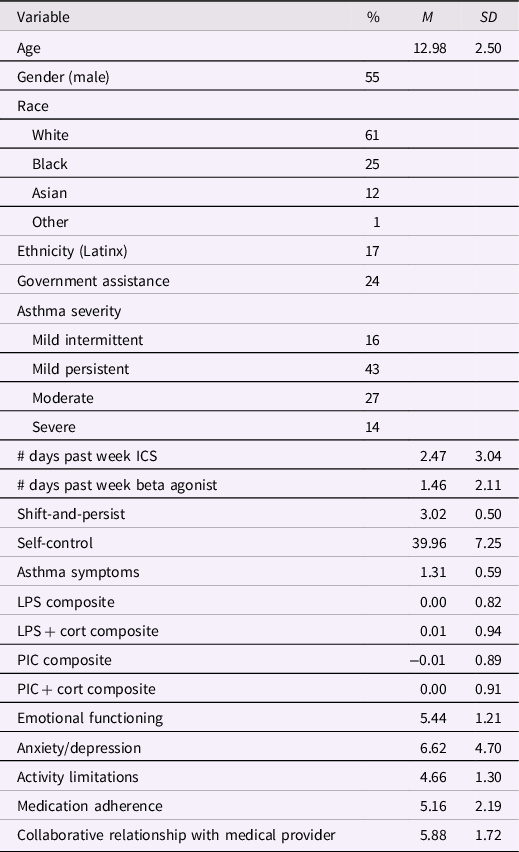
Three hundred and eight youth ages 8–17 years old, physician-diagnosed with asthma, were recruited from the Chicagoland area through the NorthShore University Health System and Erie Family Health Center, via referrals from community pediatricians and family practitioners. All patients had a current diagnosis of asthma, and had seen a physician for asthma within the past 24 months. Inclusion criteria were: fluency in English, and no acute respiratory illness at the visit. Exclusion criteria were other chronic physical illnesses. Youth gave written assent and parents provided written consent. This study was approved by the Northwestern, NorthShore, and Erie Institutional Review Boards. See Table 1 for information about sample demographics.
Demographics of sample

Note. ICS = inhaled corticosteroid. LPS = lipopolysaccharide. PIC = Poly I:C. Cort = cortisol.
Procedures
Participants completed interviews, questionnaires, and a venous blood draw. Parents and youth were each compensated $80.
Measures
Skin-deep resilience
To assess the SDR strategy of high striving/self-control, children completed the 15-item Self-Control Inventory (Humphrey, Reference Humphrey1982), which assesses the ability to stay focused on one’s goals, the ability to plan ahead, and the ability to not get distracted from one’s goals (e.g., ‘How often do you work toward a goal?’). Items are scored on a 0–4 scale (ranging from 0 = never to 4 = almost always). Cronbach’s alpha = .79. Higher scores indicate higher levels of self-control.
Shift-and-persist
Children completed the Shift-and-Persist Questionnaire to assess how often they adjusted themselves to stressors (shift: e.g., “I think about the positive aspects, or the good that can come from [a stressful] situation”) and how often they endured adversity with strength and through finding meaning (persist: “I feel my life has a sense of purpose”), on a 1 (not at all) to 4 (a lot) scale (Chen et al., Reference Chen, McLean and Miller2015; Lam et al., Reference Lam, Miller, Chiang, Levine, Le, Shalowitz, Story and Chen2018). This scale has been shown to have good reliability and validity in samples of adults and adolescents (Chen et al., Reference Chen, McLean and Miller2015; Lam et al., Reference Lam, Miller, Chiang, Levine, Le, Shalowitz, Story and Chen2018). We computed a shift score by averaging across the six shift items, and a persist score by averaging across the seven persist items (Cronbach’s alpha ranging from .72 to .80). Shift and persist scores were moderately and positively correlated with each other (r = .43, p < .001). Because the theory predicts that these two constructs have the greatest impact on health specifically when used in combination, we created a composite by averaging the shift and persist scores. This scoring method is consistent with previous research on SAP (Chen et al., Reference Chen, McLean and Miller2015; Kallem et al., Reference Kallem, Carroll-Scott, Rosenthal, Chen, Peters, McCaslin and Ickovics2013; Lam et al., Reference Lam, Miller, Chiang, Levine, Le, Shalowitz, Story and Chen2018).
Physical health outcomes
Asthma symptoms. Parents reported on their children’s asthma symptoms, responding to the item “How often has your child had a cough, wheeze, shortness of breath, or chest tightness during the past month?” (Bacharier et al., Reference Bacharier, Strunk, Mauger, White, Lemanske and Sorkness2004) Response options ranged from ≤2 times/week to continuously. Higher numbers indicate more asthma symptoms.
Pro-inflammatory phenotype
Stimulated cytokine production. In this paper, we report on innate immune profiles, that is, the secretion of pro-inflammatory cytokines following TLR stimulation in peripheral blood mononuclear cells (PBMCs). Although airway cells would better reflect activity at the site of disease, obtaining them requires a highly invasive procedure that would be inappropriate for children without a clinical indication. For that reason, pediatric asthma studies have often relied on assays with PBMCs, and research shows they correspond to measures taken via bronchoalveolar lavage, and to eosinophil count and disease severity (Corrigan & Kay, Reference Corrigan and Kay1990; Gemou-Engesëth et al., Reference Gemou-Engesëth, Kay, Bush and Corrigan1994). Antecubital blood was drawn into BD Cell Preparation Tubes (Becton Dickinson, Franklin Lakes, NJ) containing sodium heparin, and PBMCs were isolated by density-gradient centrifugation according to the manufacturer’s instructions, and dispensed into 12-well culture plates in the presence of different ligands.
Specifically, 0.5 × 10⁶ PBMCs were dispensed into plates containing either 0.1 ng/mL of lipopolysaccharide (LPS, a molecule found on the surface of Gram-negative bacteria, which stimulates the TLR-4 pathway; Invivogen, San Diego, CA) or 100 ug/mL of Poly I:C (PIC, double stranded RNA that stimulates viral infection, acting via the TLR-3 pathway; Invivogen, San Diego, CA), and incubated for 24 hr at 37°C in 5% CO2, similar to previous studies (Miller, Chen, et al., Reference Miller, Chen, Fok, Walker, Lim, Nicholls, Cole and Kobor2009; Wright et al., Reference Wright, Visness, Calatroni, Grayson, Gold, Sandel, Lee-Parritz, Wood, Kattan, Bloomberg, Burger, Togias, Witter, Sperling, Sadovsky and Gern2010). An unstimulated well was also included on the plate to quantify nonspecific cytokine release. After incubation, the supernatants were harvested and frozen at −80°C until the end of the study, at which time they were assayed in batch for pro-inflammatory cytokines (IL-1β, IL-6, and TNF-α) using a Sector Imager 2400a, and a custom MSD Human Pro-Inflammatory Tissue Culture kit (both from MesoScale Discovery). Interassay coefficients of variation were 3.47–10.27%, and unstimulated values were subtracted out prior to analysis. Higher values are indicative of a more pro-inflammatory phenotype, that is, cells that respond more aggressively to stimulation by producing greater quantities of cytokines.
Glucocorticoid sensitivity. To measure the sensitivity of immune cells to the anti-inhibitory signaling effects of the hormone cortisol, 0.5 × 10⁶ PBMCs were co-incubated with either LPS or PIC and 1.38 × 10⁻⁶ M hydrocortisone (Sigma-Aldrich, St. Louis, MO) for 24 hr at 37°C in 5% CO2, similar to previous studies (Miller, Gaudin, et al., Reference Miller, Gaudin, Zysk and Chen2009; Miller & Chen, Reference Miller and Chen2010). An unstimulated well was also included on the plate. Supernatants were assayed in batch using the MSD kit, as per above, and unstimulated values were subtracted out prior to analysis. At the dose used, cortisol suppresses production of cytokines, so higher values can be interpreted as reflecting greater insensitivity to the inhibitory signals of cortisol.
Mental health outcomes
Child anxiety/depression. Children completed the 13-item anxious/depressed scale from the validated Youth Self-Report (YSR) (Achenbach & Rescorla, Reference Achenbach and Rescorla2003), focusing on the past 6 months (e.g., “I am nervous or tense” “I feel worthless or inferior”). Items are scored on a 0–2 scale (ranging from 0 = not true to 2 = very true or often true). Cronbach’s alpha = .84. Higher scores indicate more anxiety/depression symptoms.
Asthma emotional functioning. Children reported on their emotional functioning in the context of asthma using the Pediatric Asthma Quality of Life Questionnaire (Juniper et al., Reference Juniper, Guyatt, Feeny, Ferrie, Griffith and Townsend1996). Children responded to questions on a 1–7 scale about how often they experienced negative emotions related to their asthma. Cronbach’s alpha = .88. The measure is scored such that higher scores indicate better quality of life – that is, better emotional functioning in the context of asthma.
Behavioral outcomes
Medication adherence. The Family Asthma Management System Scale (FAMSS) (McQuaid et al., Reference McQuaid, Walders, Kopel, Fritz and Klinnert2005) is a semi-structured interview that queries how adherent children are to their asthma medications. Interviewers ask parents and children to describe their daily medication routines, and adherence ratings were made by interviewers on a 9 point scale. Validity for this interview has been established through associations with asthma symptoms and functional impairment (McQuaid et al., Reference McQuaid, Walders, Kopel, Fritz and Klinnert2005). It has been used in children as young as 7, and inter-rater reliability (ICC) for our team ranged from .87 to .93 across FAMSS subscales. Higher scores on this interview indicate better medication adherence.
Collaborative relationship with provider. The FAMSS was also used to assess how collaborative families’ relationships with their medical provider was. Interviewers ask parents and children to describe how well they felt they worked together with their medical provider in managing their child’s asthma, and ratings were made by interviewers on a 9 point scale. Higher scores on this interview indicate more collaborative relationships with providers.
Behavioral limitations in daily activities. This was measured by child-report using the Activity Limitations subscale of the Pediatric Asthma Quality of Life Questionnaire (Juniper et al., Reference Juniper, Guyatt, Feeny, Ferrie, Griffith and Townsend1996). Children responded to questions on a 1–7 scale about how much their asthma bothered them when they were doing their typical weekly behavioral activities. Cronbach’s alpha = .80. Higher scores indicate better quality of life – that is, fewer activity limitations because of asthma.
Statistical analyses
Composite scores for cytokines were derived by standardizing each measured cytokine and then averaging across standardized scores. For each ligand tested, one composite score was created for stimulated cytokine production (cytokine production after ligand stimulation), and a second score for sensitivity to inhibitory signals (cytokine production after stimulation by the ligand + cortisol). This scoring approach has been used in previous research (Chen et al., Reference Chen, Shalowitz, Story, Ehrlich, Levine, Hayen, Leigh and Miller2016; Ehrlich et al., Reference Ehrlich, Miller, Shalowitz, Story, Levine, Williams, Le and Chen2019) because it has two advantages over analyzing each cytokine individually: statistically, the composite reduces the number of comparisons to be made and thus reduces the risk of false discoveries, and conceptually, it reflects the integrated nature of the inflammatory response, which entails multiple cytokines acting simultaneously.
Multiple regression analyses were conducted in which physical health, mental health, and behavioral outcomes were regressed upon predictor variables. In the first step, covariates of child age, sex, race (White vs non-White), SES (family receiving government assistance or not), medication usage (number of days in the past week of inhaled corticosteroid use, number of days in the past week of beta agonist use), and asthma severity were included. In two analyses, we did not include the full set of covariates: asthma severity was not included as a covariate in analyses with asthma symptoms as the outcome because symptoms factor into the scoring of asthma severity; and beta agonist and inhaled corticosteroid use were not included as covariates in analyses with FAMSS medication adherence as the outcome because of the overlap of these variables. In the second step of regression analyses, the SAP or SDR (striving/self-control) variable was entered. Simultaneous multiple regression analyses were also conducted in which the SAP and striving/self-control variables were entered at the same time in Step 2 to test their independent effects.
We also categorized participants as being either high or low on SAP and on the SDR strategy of striving/self-control using median splits, and created four groups (low SAP-low SDR; low SAP-high SDR; high SAP-low SDR; high SAP-high SDR). We ran ANCOVAs to test for overall group differences in outcomes, using the same covariates described above, and using simple contrasts to examine differences between specific groups.
Missing data. Incomplete data on covariates were present for one participant, bringing the total possible sample to 307. Of these 307, 1 was missing their FAMSS medication adherence rating, 2 were missing their anxiety/depression scores, and 27 were missing data on the Self-Control Inventory (because of the measure being added late to the protocol). For biological measures, 16 participants were missing blood samples, and 31 had insufficient numbers of cells collected during the blood draw to be able to conduct stimulated cytokine assays.
Results
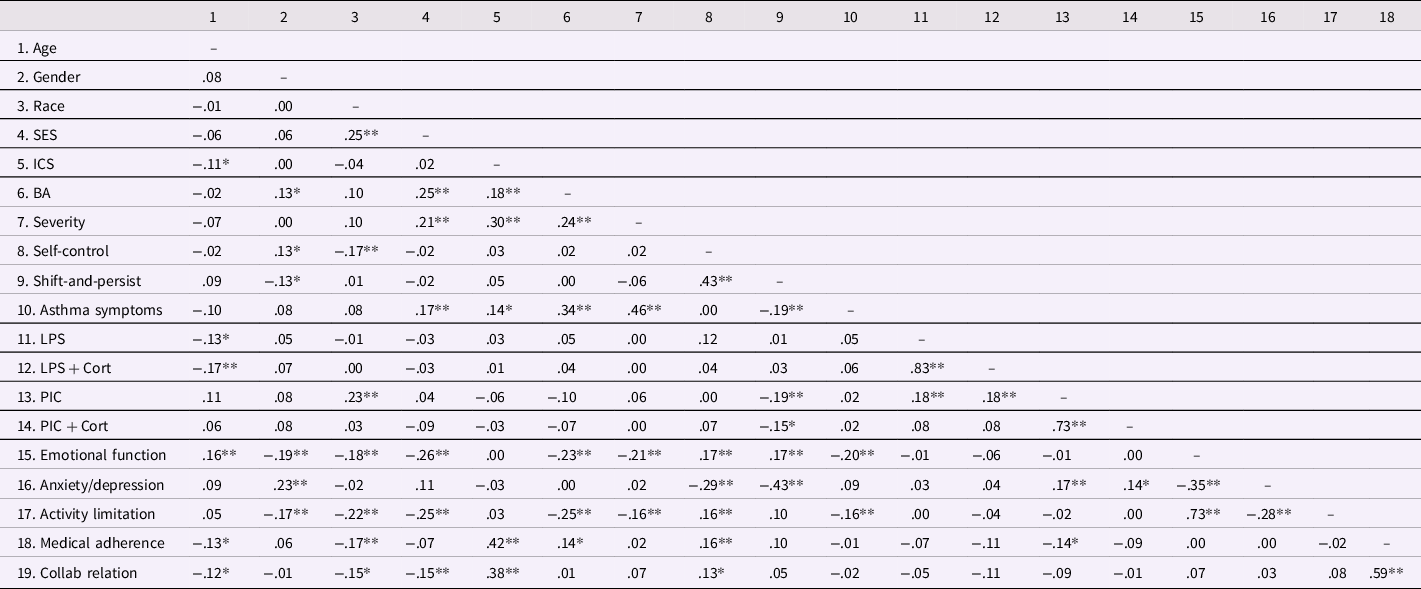
See Table 1 for information about the demographics of the sample and means and standard deviations for study variables. See Table 2 for a correlation table of study variables. SAP and the SDR variable of striving/self-control were correlated at r = .43, p < .001, indicating that while those higher in SAP tended to also be higher in striving/self-control, the responses to these two questionnaires were sufficiently distinct to be able to answer the research questions posed in this paper.
Correlations among study variables

Note. SES = socioeconomic status. ICS = inhaled corticosteroid. BA = beta agonist. LPS = lipopolysaccharide. Cort = cortisol. PIC = Poly I:C. Collab relation = Collaborative relationship with medical provider. *p < .05; **p < .01.
Associations of SAP with asthma outcomes
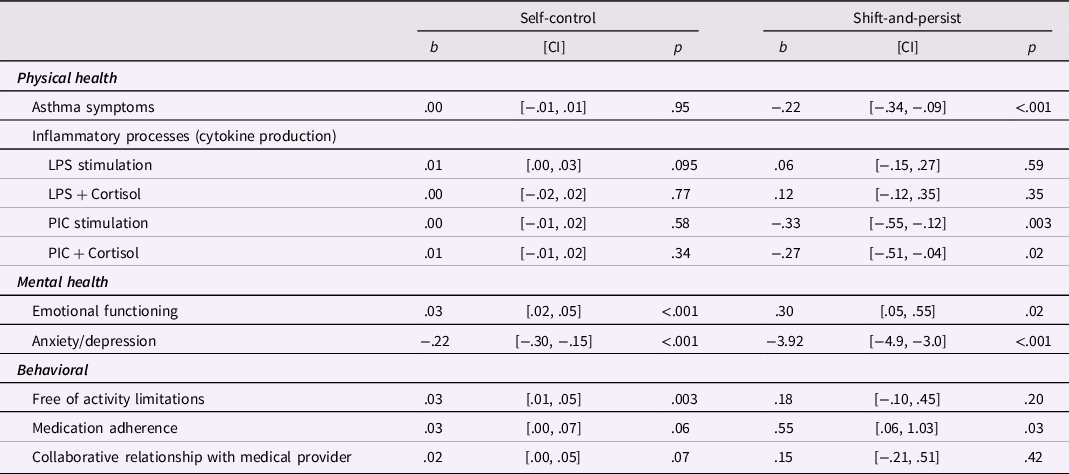
Table 3 summarizes the results of regression analyses linking SAP with child outcomes. These analyses revealed that children who were higher in SAP displayed better physical health, in terms of fewer asthma symptoms (β = −.18, p < .001; overall R 2 = .17; R 2 change = .03). Children higher in SAP also showed indications of less of a pro-inflammatory phenotype, as indicated by lower production of pro-inflammatory cytokines in response to PIC stimulation (β = −.18, p < .01; overall R 2 = .13; R 2 change = .03), and higher glucocorticoid sensitivity (lower levels of cytokine production after stimulation by PIC + cortisol, β = −.14, p < .05; overall R 2 = .05; R 2 change = .02).
Separate regression analyses of striving/self-control and shift-and-persist with physical health, mental health, and behavioral outcomes in children with asthma

Note. Analyses control for age, gender, race, socioeconomic status, asthma severity, asthma beta agonist use, and asthma inhaled corticosteroid use in Step 1. In Step 2, either striving/self-control or the shift-and-persist variable was entered (each was run as a separate regression analysis). b = unstandardized regression coefficient. CI = 95% confidence interval. LPS = lipopolysaccharide. PIC = Poly I:C.
In terms of mental health, children who were higher in SAP had lower levels of anxiety and depression (β = −.42, p < .001; overall R 2 = .24; R 2 change = .17), and as well, better asthma-related emotional functioning (β = .12, p < .05; overall R 2 = .19; R 2 change = .02).
With respect to behavioral outcomes, children who were higher in SAP had higher levels of medication adherence (β = .13, p < .05; overall R 2 = .07; R 2 change = .02).
Associations of striving/self-control (SDR) with asthma outcomes
Table 3 also summarizes the results of regression analyses linking striving/self-control with child outcomes. Analyses revealed that children who were higher in striving/self-control tended to have greater production of pro-inflammatory cytokines in response to LPS stimulation, though this association did not reach conventional levels of significance (β = .11, p < .10; overall R 2 = .04; R 2 change = .01).
In terms of mental health, children who were higher in striving/self-control had lower levels of anxiety and depression (β = −.34, p < .001; overall R 2 = .19; R 2 change = .11), and as well, better asthma-related emotional functioning (β = .20, p < .001; overall R 2 = .22; R 2 change = .04).
With respect to behavioral outcomes, children who were higher in striving/self-control had better profiles in terms of behavioral limitations (that is, fewer activity limitations due to asthma, β = .17, p < .01; overall R 2 = .17; R 2 change = .03). Children higher in striving/self-control also had marginally better medication adherence (β = .12, p = .055; overall R 2 = .08; R 2 change = .01), and marginally stronger collaborative relationships with their medical provider (β = .10, p = .07; overall R 2 = .20; R 2 change = .01).
Simultaneous regression analyses
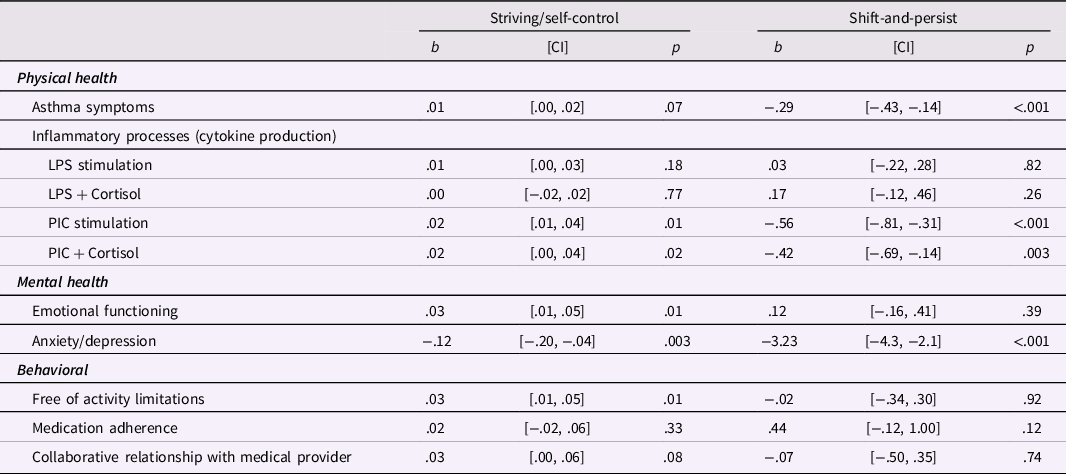
We then repeated the above analyses, this time including both SAP and striving/self-control simultaneously in Step 2 of regression analyses. Table 4 summarizes the results. With respect to physical health, analyses revealed a pattern of higher SAP but lower self-control being associated with better health. That is, children higher in SAP experienced fewer asthma symptoms (β = −.25, p < .001; overall R 2 = .18). In contrast, children higher in striving/self-control experienced marginally greater asthma symptoms (β = .12, p = .07; overall R 2 = .18). Children higher in SAP also displayed less of a pro-inflammatory phenotype, in terms of lower levels of pro-inflammatory cytokines produced in response to PIC (β = −.31, p < .001; overall R 2 = .17), and greater glucocorticoid sensitivity (fewer pro-inflammatory cytokines in response to PIC + cortisol, β = −.22, p < .01; overall R 2 = .08). In contrast, children higher in striving/self-control showed indications of a greater pro-inflammatory phenotype, in terms of higher production of pro-inflammatory cytokines in response to PIC (β = .19, p < .01; overall R 2 = .17), and less glucocorticoid sensitivity (more pro-inflammatory cytokines produced in response to PIC + cortisol, β = .17, p < .05; overall R 2 = .08).
Simultaneous regression analyses of striving/self-control & shift-and-persist with physical health, mental health, and behavioral outcomes in children with asthma

Note. Analyses control for age, gender, race, socioeconomic status, asthma severity, asthma beta agonist use, and asthma inhaled corticosteroid use in Step 1. In Step 2, striving/self-control and the shift-and-persist variable were entered simultaneously. b = unstandardized regression coefficient. CI = 95% confidence interval. LPS = lipopolysaccharide. PIC = Poly I:C.
With respect to mental health, simultaneous regression analyses revealed that both resilience strategies appeared to be beneficial. That is, higher levels of striving/self-control were associated with less anxiety/depression (β = −.18, p < .01; overall R 2 = .28), and the same was true for higher SAP (β = −.35, p < .001; overall R 2 = .28). Higher striving/self-control also was associated with better asthma emotional functioning (β = .17, p < .01; overall R 2 = .23).
With respect to behavioral outcomes, simultaneous regression analyses revealed associations with striving/self-control, but not SAP. Higher levels of striving/self-control were associated with better profiles in terms of behavioral limitations (that is, fewer activity limitations due to asthma, β = .17, p < .01; overall R 2 = .17). Higher levels of striving/self-control were also marginally associated with engaging in a more collaborative relationship with medical providers (β = .11, p = .08; overall R 2 = .20).
See Table 4 for details.
Groups of SAP and striving/self-control
To gain further clarity on how combinations of these attributes might relate to outcomes, we divided participants using median splits into high and low SAP, and high and low striving/self-control (SDR, for SDR). We then created four groups by combining those above and below the median split on each variable. The biggest group was the low SAP-low SDR group (31%). Next was the high SAP-high SDR at 27%. Low SAP-high SDR comprised 15% of the sample, and high SAP-low SDR similarly comprised 17%.
We then tested for differences amongst the four groups on outcomes. A significant ANCOVA was found for PIC cytokine production (F = 4.45, p < .01). The general pattern showed those who were high on SAP to have lower levels of stimulated cytokine production than the other groups, see Figure 1 Panel A. Specifically, those who were high on SAP but low on SDR produced fewer pro-inflammatory cytokines in response to PIC compared to those who were low SAP-high SDR (p = .003) or those who were low SAP-low SDR (p = .003). Similarly, those who were high SAP-high SDR also had lower cytokine production in response to PIC compared to those who were low SAP-high SDR (p = .04) and to the low SAP-low SDR group (p = .05). With respect to PIC + Cort, the overall patterns were similar to Figure 1 Panel A, with a significant contrast showing those in the high SAP-low SDR group to have greater glucocorticoid sensitivity (i.e., less cytokine production) compared to the low SAP-high SDR group (p = .02). Asthma symptoms also showed a similar overall pattern, with a significant contrast of those in the high-high group having fewer asthma symptoms than those in the low-low group (p = .05).
Physical health, mental health, and behavioral outcomes by groups of children: those low on shift-and-persist (SAP) and low on the skin-deep resilience (SDR) strategy of striving/self-control; those low on SAP but high on SDR; high SAP but low SDR; and those high on both SAP and SDR. Figures are shown for one representative outcome within each domain: stimulated cytokine production in response to the ligand Poly I:C (Panel A), anxiety and depression symptoms (Panel B), and interview ratings of the extent of collaboration families had with their medical provider (Panel C).

For anxiety/depression, a significant ANCOVA also was found, (F = 18.00, p < .001). Here the general pattern showed a roughly linear trend, see Figure 1 Panel B. Children who were high on both SAP and SDR had lower levels of anxiety/depression than those who were high SAP-low SDR (p = .003), those who were low SAP-high SDR (p < .001), or those who were low SAP-low SDR (p < .001). Also those who were high SAP-low SDR had lower levels of anxiety/depression than those in the low–low group (p = .002). The overall pattern for asthma emotional functioning was similar to Figure 1 Panel B, and specifically the high–high group had significantly better asthma-related emotional functioning than the low-low group (p = .02).
Behaviorally, there was a significant ANCOVA for medication adherence, (F = 3.68, p = .01). Here the pattern was similar to anxiety/depression (linear trend), with the high–high group having significantly greater medication adherence than the low–low group (p = .002). Also the high SAP-low SDR group had greater medication adherence than the low–low group (p = .03). For collaborative relationship with the provider, a significant contrast emerged, with the high–high group having a significantly stronger relationship with their medical provider than the low–low group (p = .02). See Figure 1 Panel C for a graphical depiction of the pattern for collaborative relationships, which suggests overall that being higher in SDR is beneficial for this behavioral outcome.
Discussion
In this article, we investigate associations of two health resilience strategies, SAP and SDR (indicated by striving/self-control), with physical health, mental health, and behavioral outcomes in the context of childhood asthma. Consistent with previous literature (Chen et al., Reference Chen, Strunk, Trethewey, Schreier, Maharaj and Miller2011, Reference Chen, McLean and Miller2015; Kallem et al., Reference Kallem, Carroll-Scott, Rosenthal, Chen, Peters, McCaslin and Ickovics2013; Lam et al., Reference Lam, Miller, Chiang, Levine, Le, Shalowitz, Story and Chen2018), we find that SAP is associated with better physical health, in terms of fewer asthma symptoms and a less pronounced pro-inflammatory phenotype. Also consistent with previous literature (Brody et al., Reference Brody, Yu, Chen, Miller, Kogan and Beach2013, Reference Brody, Yu, Miller and Chen2016, Reference Brody, Yu, Miller, Ehrlich and Chen2018; Chen, Shalowitz, et al., Reference Chen, Shalowitz, Story, Hayen, Leigh, Hoffer, Austin, Lam, Brody and Miller2019; Miller et al., Reference Miller, Yu, Chen and Brody2015), we find the opposite pattern for SDR, whereby higher striving/self-control is associated with worse asthma outcomes, although effects are in some analyses are marginal. In contrast to physical health, we find that both SAP and striving/self-control are associated with better mental health outcomes. However, only striving/self-control is associated with behavioral outcomes, such as having fewer activity limitations and marginally with engaging in more collaborative relationships with medical providers.
This divergent pattern of results across resilience strategies and across outcomes highlights the importance of taking a multiconstruct and multisystem approach when seeking to understand what promotes resilience in children experiencing adversities such as chronic illness (Masten et al., Reference Masten, Lucke, Nelson and Stallworthy2021). By limiting a study to only one type of outcome (e.g., mental health), researchers would arrive at different conclusions about what types of psychological strategies are linked to resilience among children facing adversity. Instead by including a diverse array of outcomes within a single study, we can paint a fuller picture of the links to health and well-being in children.
How then do we utilize the results of this study to arrive at a more integrative understanding of the SAP and SDR theories? First, we observed that these two strategies are not mutually exclusive. That is, although SAP is associated with better physical health, whereas SDR is associated with worse health, the correlation between the two was moderate (r = ∼.4) and, surprisingly, positive. Rather than those who are high on striving/self-control being low on SAP or vice versa, we find that children higher on one strategy tend to also be higher on the other. At the same time, the two strategies are clearly distinct, as indicated by the modest magnitude of the correlation between the two, and their divergent associations with physical health measures. When we investigate groupings of children, we find that roughly 1/3 are low on both, ∼1/3 are high on both, and the remainder are high on one and low on the other (with a roughly equivalently split, ∼15% each, in terms of which they are high and which they are low on).
When we investigate trends in outcomes by groups, we find that patterns differ by type of outcome. For physical health outcomes, those groups that are high in SAP appear to do best, with the high SAP/low striving group having the least pronounced pro-inflammatory phenotype. For mental health outcomes, there is a linear trend going from the low-low to the high-high group, with the high SAP/high striving group having the best mental health profiles. Finally for behavioral outcomes, the high striving group generally appears to be doing best, in terms of outcomes such as medication adherence and engaging in collaborative relationships with one’s medical provider. If we consider all outcomes together, we suggest that it points to the idea that encouraging children to engage in both SAP and high striving/self-control might have the greatest net positive benefit, as the high SAP/high striving group had good profiles across all outcomes. In fact, it is possible that for SDR youth who engage in high levels of striving and self-control, nurturing them toward also adopting SAP strategies could help to offset the physical health costs of their high striving that have previously been demonstrated (Brody et al., Reference Brody, Yu, Miller and Chen2016; Chen, Shalowitz, et al., Reference Chen, Shalowitz, Story, Hayen, Leigh, Hoffer, Austin, Lam, Brody and Miller2019; Miller et al., Reference Miller, Cohen, Janicki-Deverts, Brody and Chen2016).
But how would this be possible, especially when the two strategies might seem diametrically opposed? That is, wouldn't one expect children who are high strivers to not gravitate toward a shifting coping strategy of accepting stressors and adjusting themselves to the stressors in their lives? While this might seem true at first blush, we speculate that there might be ways in which SAP and high striving/self-control can co-exist. High strivers are ones who identify clear goals and persist in their pursuit of these goals, working hard, not giving up, planning ahead, and avoiding temptations and distractions that could pull them away from their goals. At the same time, when seeking to understand children who are experiencing ongoing, chronic adversity (i.e., adversity being a necessary condition for resilience), it is important to remember that many experiences and environmental conditions in these children’s lives will fall largely outside of their control. This would be true of poverty, maltreatment, chronic illness, and many other childhood adversities. When these sorts of situations arise, or under these sorts of conditions, it may in fact be most adaptive to take an approach of acceptance, of seeing what one can learn from difficult situations, and of maintaining optimism about the future, all components of SAP. As it then relates to striving, perhaps the optimal approach is to accept and learn from those situations that are uncontrollable, while at the same time, continuing to hold on to one’s goals, not wavering in the pursuit of one’s goals, and if necessary, finding other ways (new approaches) to get to the same end goal when obstacles are placed in one’s way. In this way, youth experiencing adversity might be able to both exhibit high striving while also being able to SAP with respect to specific uncontrollable and challenging circumstances that arise in whatever types of life adversities they are confronting.
While we believe that these ideas are important to consider in multisystem studies of childhood resilience, we caution that they are still speculative. We need studies that assess in greater detail the multitude of ways in which children approach the adversities that arise in their lives. Further work is also needed to determine whether SAP or SDR may operate in conjunction with other adaptive systems or factors to promote resilience, as has been suggested with the notion of multisystem patterns of resilience (Masten et al., Reference Masten, Lucke, Nelson and Stallworthy2021). Measures of resilience that go beyond self-report also would be ideal. Additional measures of factors that contribute to SDR beyond striving/self-control would be helpful. This study is of course limited by its cross-sectional measures, so directionality and causality are unclear. This study was also limited by combining all non-White groups into one category (given limited numbers within specific racial/ethnic categories) for our covariate of race/ethnicity. Exploring these associations in other populations who are experiencing different types of adversities would allow us to better determine the generalizability of our conclusions.
Nonetheless, these findings have implications for future research and intervention efforts. First, they speak to the importance of continuing to prioritize multisystem investigations of resilience (Masten et al., Reference Masten, Lucke, Nelson and Stallworthy2021). Only by including measures of multiple systems within individuals will we be able to gain a more holistic picture of resilience. In addition, multisystem approaches will also need to be applied on the independent variable side as well (Masten et al., Reference Masten, Lucke, Nelson and Stallworthy2021), investigating not only individual child psychological factors as this study did, but also family-, school-, neighborhood-, and societal-level factors that contribute to resilience. In addition, the present study’s findings should be considered in future intervention efforts aimed at promoting resilience in children and adolescents. Caution should be taken when undertaking intervention efforts to ensure that we don't inadvertently harm some outcomes (e.g., physical health) in an effort to promote other outcomes (e.g., academic success) when implementing interventions (Chen et al., Reference Chen, Debrosse, Ham, Hoffer, Leigh and Destin2021). That said, the results of the present study suggest that it might be possible to promote combinations of strategies that could be beneficial across multiple life domains. That is, the fact that almost 1/3 of our sample naturally engaged in both high SAP and high striving/self-control suggests that it might be possible to develop interventions that could teach children and adolescents how and when to engage in the two in ways that are adaptive for both psychological and physical well-being.
In sum, the present study sought to better integrate two health resilience theories, SAP and SDR. We found that while SAP was associated with better physical health outcomes, the SDR strategy of high striving/self-control was associated with worse physical health. Both, however, were associated with better mental health. And only striving/self-control was associated with better behavioral outcomes, such as fewer asthma-related activity limitations. Given that the two strategies have a positive correlation with each other, we suggest that future interventions work to cultivate high levels of both as a way of promoting an overarching profile – across multiple domains – of health and well-being in children and adolescents experiencing adversity.
Funding statement
This research was supported by NIH grants HL108723, HD093718, and HL136676.
Competing interests
None.