

Introduction
Whole cereal grain feeding has been practised for many years in most parts of the world, being especially popular in Europe (Uddin et al., Reference Uddin, Rose, Hiscock and Bonnet1996; Noirot et al., Reference Noirot, Bouvarel, Barrier-guillot, Castaing, Zwick and Picard1998). The interest in this system continues to grow in countries such as Canada and Australia. Whole grain feeding may be driven largely by economic factors, because producers are able to reduce costs by using home-grown grain together with feedmill supplied concentrates (Liu et al., Reference Liu, Fox, Khoddami, Neilson, Truong, Moss and Selle2015). Additionally, whole grain feeding can be preferred by the majority of consumers as it is a more natural way of feeding (Gabriel et al., Reference Gabriel, Mallet and Leconte2008). Whole grain can increase grinding capacity in the gizzard, which has been linked to reducing pathogenic bacteria in the gut and improving digestion (Svihus and Hetland Reference Svihus and Hetland2001; Engberg et al., Reference Engberg, Hedemann, Steenfeldt and Jensen2004). The majority of the work on whole grain feeding used wheat with few studies on other cereal grains. The use of whole sorghum (WS) in broiler diets is limited, partly because inclusion levels for optimum broiler performance is inconsistent within trials. Variation in findings might be due to a number of factors, including differences in experimental methodology, inclusion level of whole grain, type, and quality of grain, age of birds, and feeding regime (Amerah and Ravindran, Reference Amerah and Ravindran2008).
Sorghum is the world's fifth major cereal crop, with annual global production being 56 million tonnes. In eastern Australia it is a major livestock feed due to its tolerance of hot dry tropical climates (Selle et al., Reference Selle, Gill and Downing2010). Apparent metabolisable energy (AME) ranges from 13.5 to 17.7 MJ/kg, and protein concentration varies from 7 to 17% (Mabelebele et al., Reference Mabelebele, Siwela, Gous and Iji2015).
Broiler trials on WS feeding have indicated that relative gizzard weight at 21 days of age increased (Biggs and Parsons, Reference Biggs and Parsons2009), and productive performance was enhanced (Wu et al., Reference Wu, Ravindran and Hendricks2004). However, it is still not clear what proportion of WS can be included in broiler diets to optimise performance. The majority of the studies have used an inclusion rate of 100–200 g/kg in feed (Wu et al., Reference Wu, Ravindran and Hendricks2004; Amerah and Ravindran, Reference Amerah and Ravindran2008; Fernandes et al., Reference Fernandes, Pereira, Hackenhaar, Rodrigues and Terra2013) with no adverse effects, whereas some went further to increase the levels up to 400 g/kg, with no negative impact on performance (Hetland et al., Reference Hetland, Svihus and Olaisen2002). However, when inclusion levels of WS were increased to 500 g/kg, Wu et al. (Reference Wu, Ravindran and Hendricks2004) reported a negative impact in performance of chickens. It is evident that inconsistencies in inclusion levels and sources for WS feeding may be responsible for the contradictory results. The aim of this trial was to determine the effects of different WS inclusion rates and feed form on the performance and digestive organ development of broiler chickens.
Materials and methods
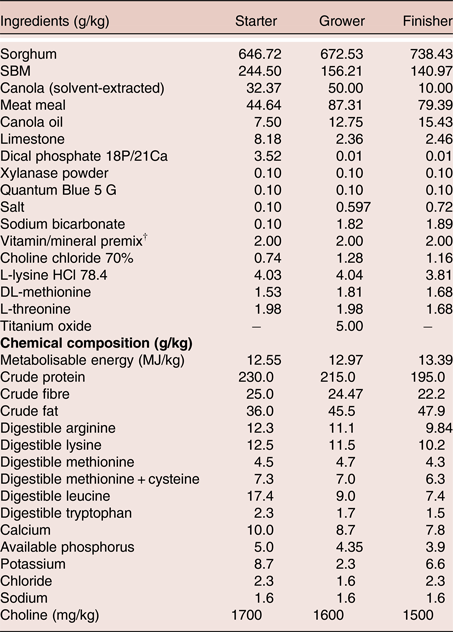
A total of 432 one-day-old Ross 308 broiler chicks, obtained from a local hatchery, were randomly assigned to 48 cages (42×75×25 cm) in four-tier battery brooders housed in an environmentally controlled house. Initial brooding temperature was 33°C, which was gradually reduced to 24 ± 1°C at 19 days of age. A three-phase feeding programme was used with starter diets fed from hatch to 10 days, grower diets from 11 to 24 days, and finisher diets from 25 to 35 days of age. The feeding trial duration was 35 days of age. The WS levels were 0, 25, 50, and 75% and diets were provided in either a mash or pellet form, within a 2 × 4 factorial, completely randomised design having six pen replicates with nine birds per pen. The ingredient and nutrient composition of the dietary formulations used in the starter, grower, and finisher phase are shown in Table 1.
Ingredients and nutrient contents of starter, grower, and finisher diets.

†The active ingredients contained in the vitamin–mineral premix were as follows (per kg of diet): vitamin A 12000 IU, vitamin D3 3500 IU, vitamin E 30.0 mg, vitamin K3 2.0 mg, thiamine 2 mg, riboflavin 6 mg, pyridoxine 5 mg, vitamin B12 0.02 mg, niacin 50 mg, pantothenate 12 mg, biotin 0Æ01 mg, folic acid 2 mg, Fe 60 mg, Zn 60 mg, Mn 80 mg, Cu 8 mg, Se 0Æ1 mg, Mo 1 mg, Co 0Æ3 mg, I 1 mg.
The sorghum used in this study was sourced from the local suppliers in Armidale, New South Wales, Australia, and was from a red seed variety with a thousand-kernel weight of 33 ± 1 g. Diets were offered as either mash or pellet. Particle size distribution of both mash and pellet diets was determined by a wet sieve method as described by Lentle et al. (Reference Lentle, Ravindran, Ravindran and Thomas2006). Pellet quality was measured using a Seedburo durability tester (Seedburo Equipment Company, Chicago, Illinois). A representative sample of pellets weighing 500 g was screened, tumbled for 10 min and re-screened to weigh the whole pellet samples. The pellet durability index was calculated by dividing the weight of the whole pellets by 500 and multiplying by 100. Digestibility in the birds was assessed by use of a titanium marker in feed.
All management and procedures in this study were carried out in accordance with the requirements of the UNE Code of Practice for Experimental Animals, approval number AEC15-082.
Body weight (BW) and feed intake (FI) were measured on a pen average basis at 10, 25, and 35 days of age. Mortality in each pen was recorded daily until the end of the trial, and feed conversion ratio (FCR) was corrected for mortality. On days 10, 25 and 35, two birds were randomly selected from each pen, weighed and humanely killed by cervical dislocation for measurement of visceral organ weights. The proventriculus plus gizzard, small intestine with contents, pancreas, spleen, liver, heart, and bursa of Fabricius were removed and weighed, and expressed as g/100 g of body weight. The pH of digesta samples from the gizzard, distal and proximal jejunum and ileum was measured.
At 25 days of age, two birds were randomly selected and humanely slaughtered by cervil dislocation, and the ileum, extending from Meckel's diverticulum to a point 40 mm proximal to the ileo-caecal junction, was excised. The contents of the lower half of the ileum were collected by gently flushing with distilled water into plastic containers, were pooled from the duplicate birds, freeze-dried, ground to pass through a 0.5 mm screen size, and stored in air tight containers at 4°C until analysis (along with samples of feed) for DM, titanium (Ti), nitrogen (N) and energy. Meat characteristics of the chickens were determined at 35 days of age and included carcass, breast, drum and thigh weights.
Nitrogen content was determined according to the Dumas combustion technique using a LECO FP-2000 automatic nitrogen analyser (LECO Corp., St Joseph, Michigan, USA) following the method of Sweeney (Reference Sweeney1989). The concentration of TiO2 in the diets and ileal digesta was measured using methods described by Short et al. (Reference Short, Gorton, Wiseman and Boorman1996). The apparent ileal protein (N×6.25) digestibility coefficients were calculated by the following formula:
 $$\eqalign{& \hbox{Apparent nutrient digestibility coefficient} \cr &{= 1 - \displaystyle{{\left( {Nutrient/Ti} \right)\; diet - \left( {Nutrient/Ti} \right)\; ileal} \over {\left( {Nutrient/Ti} \right)\; diet}}}}$$
Where; (Nutrient/Ti) diet is ratio of nutrient and titanium in diet and (Nutrient/Ti) ileum is ratio of nutrient and titanium in ileal digesta.
Data were statistically analysed using the general linear model procedure in SAS version 10 software program (SAS, 2008). Tukey's test was used to compare means where the effect of treatments was significant at the ≤5% level of probability. Regression equations were used to determine the optimum WS inclusion level and feed form for overall productivity.
Results
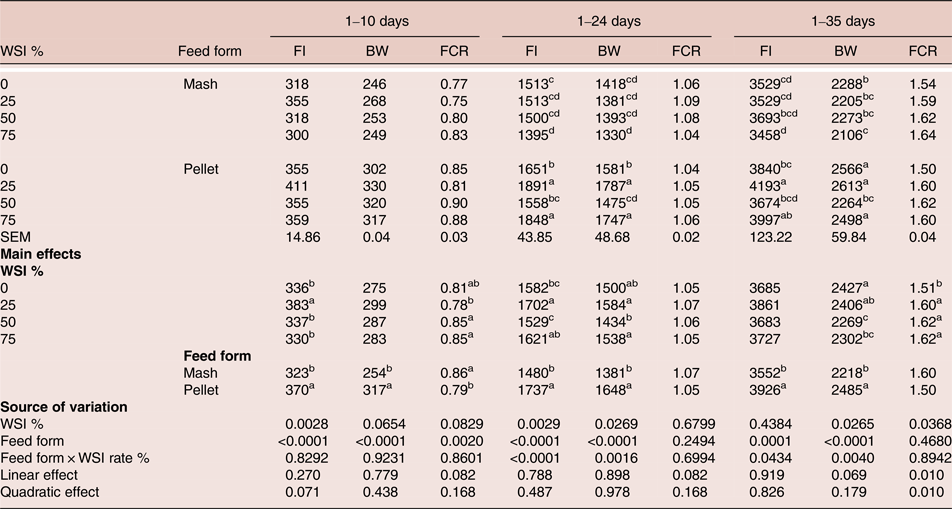
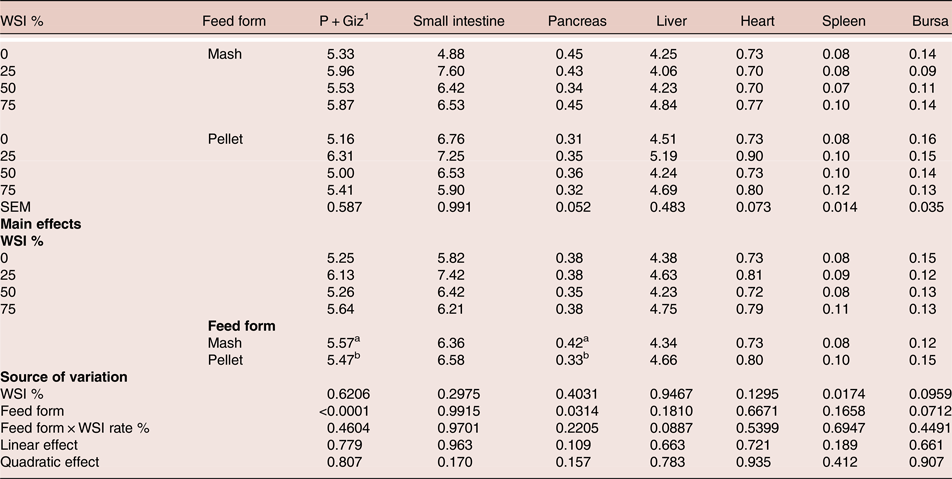
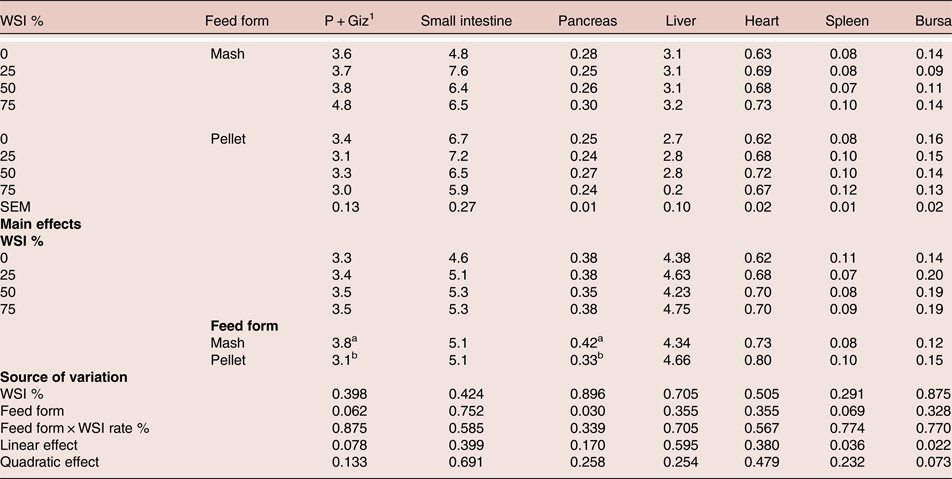
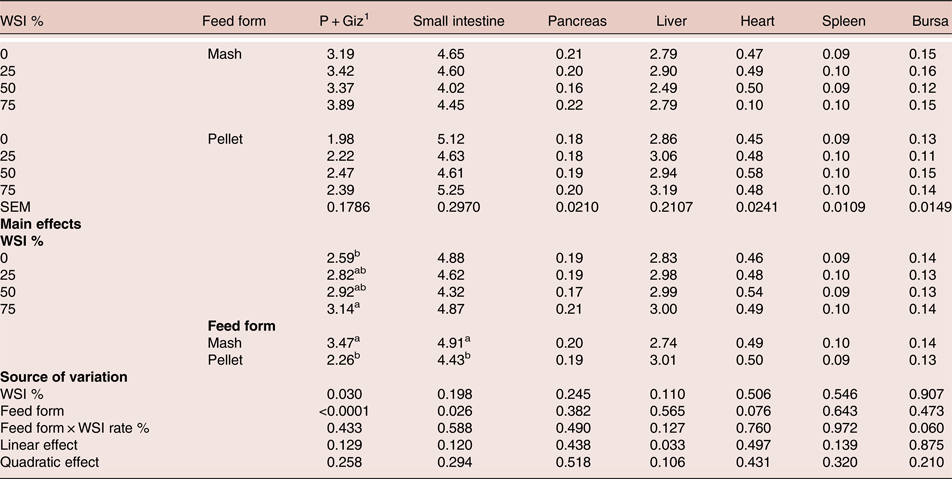
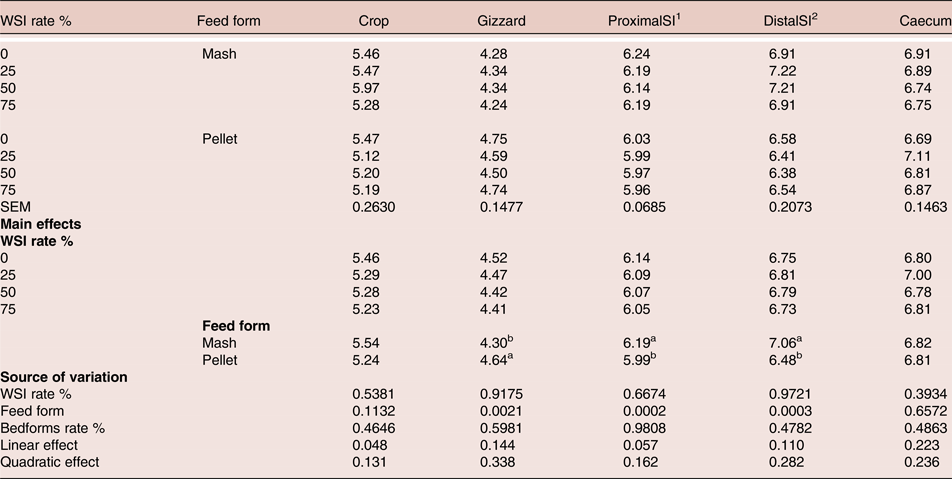
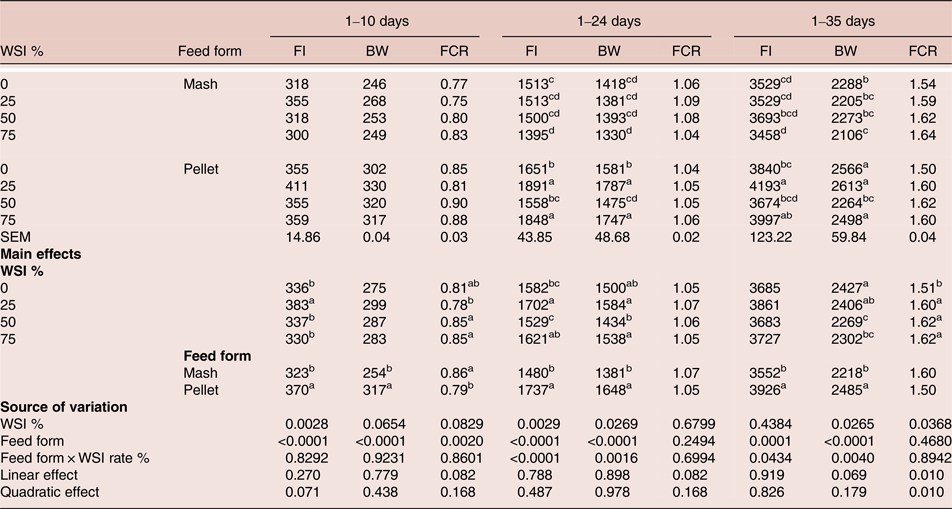
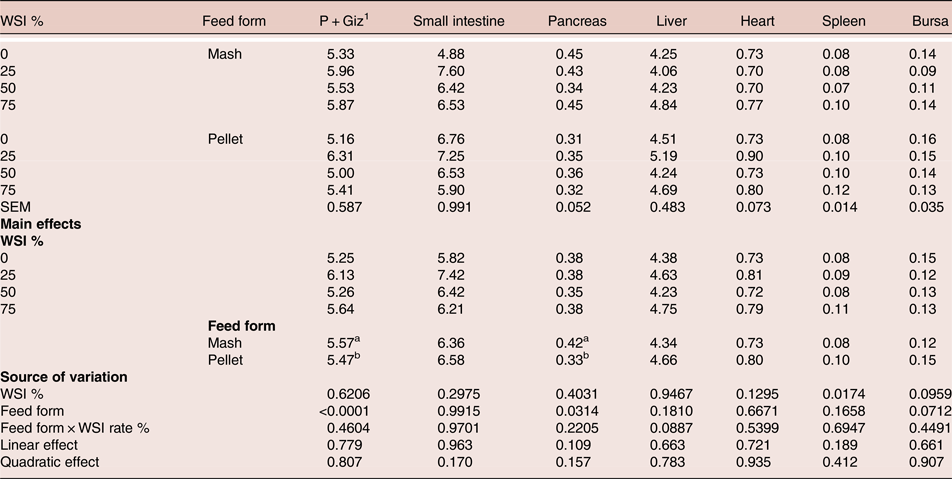
The effects of WS inclusion rate and feed form on performance of broiler chickens are presented in Table 2. Significant treatment interactions (P<0.01) were observed for both feed intake and body weight of broiler chickens at 24 and 35 days of age. Broiler chickens fed pelleted diets had better feed intake and body weight (P<0.05) compared to chickens receiving mash diets. A linear increase in FCR (P=0.01) at 35 days of age was observed in line with WS inclusion. Visceral organs were weighed at 10, 24 and 35 days of age (Tables 3, 4 and 5). Relative bursa (P=0.037, quadratic effect) and liver (P=0.033, linear effect) weight at 35 days increased with WS inclusion. Broiler chickens on mash diets had heavier (P<0.05) proventriculus plus gizzard and pancreas weights at 10 and 24 days of age than chicks on pellets. At 35 days, proventriculus plus gizzard and small intestine were heaviest (P<0.05) for birds offered mash diets. No treatment interaction (P>0.05) was observed for the visceral organs at all ages. Birds offered mash diets had lower (P<0.05) pH in the gizzard and higher (P<0.05) pH in the proximal and distal small intestine than those on pelleted diets (Table 6). No treatment interaction was observed; however, a decrease in pH in the crop (P<0.048) and proximal small intestine (P<0.057) was observed with increasing WS inclusion.
Effect of whole sorghum inclusion (WSI) and feed form on feed intake (FI (g/bird)), body weight (BW (g/bird)) and feed conversion ratio (FCR (g: g)) of broiler chickens aged 1–35 days
abcd Means in the same column with different superscripts are statistically different (p<0.05) SEM Standard error of the mean.
Each value represents the mean of six replicates (nine birds/pen).
Effect of whole sorghum inclusion (WSI) and feed form on visceral organ (g/100 g BW) weights of broiler chickens aged 10 days
P + Giz1, Proventriculus and gizzard weight; ab Means in the same column with different superscripts are statistically different (p<0.05).
SEM Standard error of the mean. Each value represents the mean of six replicates (nine birds/pen). Weights were taken with digesta.
Effect of whole sorghum inclusion (WSI) and feed form on visceral organ (g/100 g BW) weights of broiler chickens aged 24 days
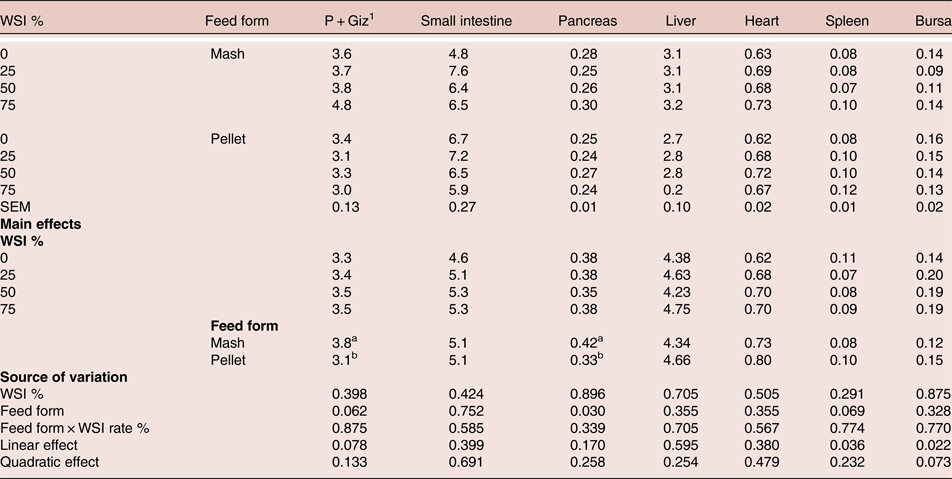
P + Giz1, Proventriculus and gizzard weight; ab Means in the same column with different superscripts are statistically different (p<0.05).
SEM Standard error of the mean. Each value represents the mean of six replicates (nine birds/pen). Weights were taken with digesta.
Effect of whole sorghum inclusion (WSI) and feed form on visceral organ (g/100 g BW) weights of broiler chickens aged 35 days
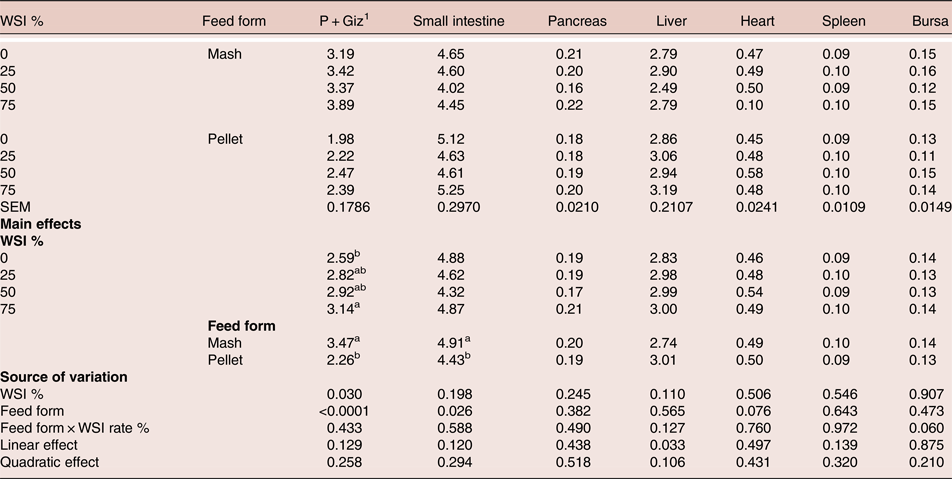
P + Giz1, Proventriculus and gizzard weight. Each value represents the mean of six replicates (nine birds/pen). Weights were taken with digesta.
ab Means in the same column with different superscripts are statistically different (p<0.05), SEM Standard error of the mean.
Effect of whole sorghum inclusion rate (WSI (%)) and feed form on gut pH of broiler chickens aged 35 days
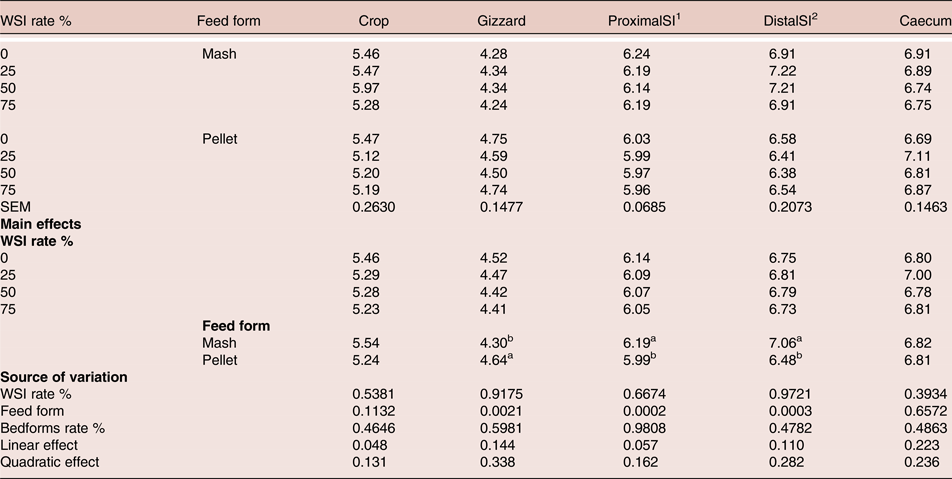
ProximalSI1, Proximal small intestine DistalSI2, Distal small intestine, ab Means in the same column with different superscripts are statistically different (p<0.05), SEM Standard error of the mean
Each value represents the mean of six replicates (nine birds/pen).
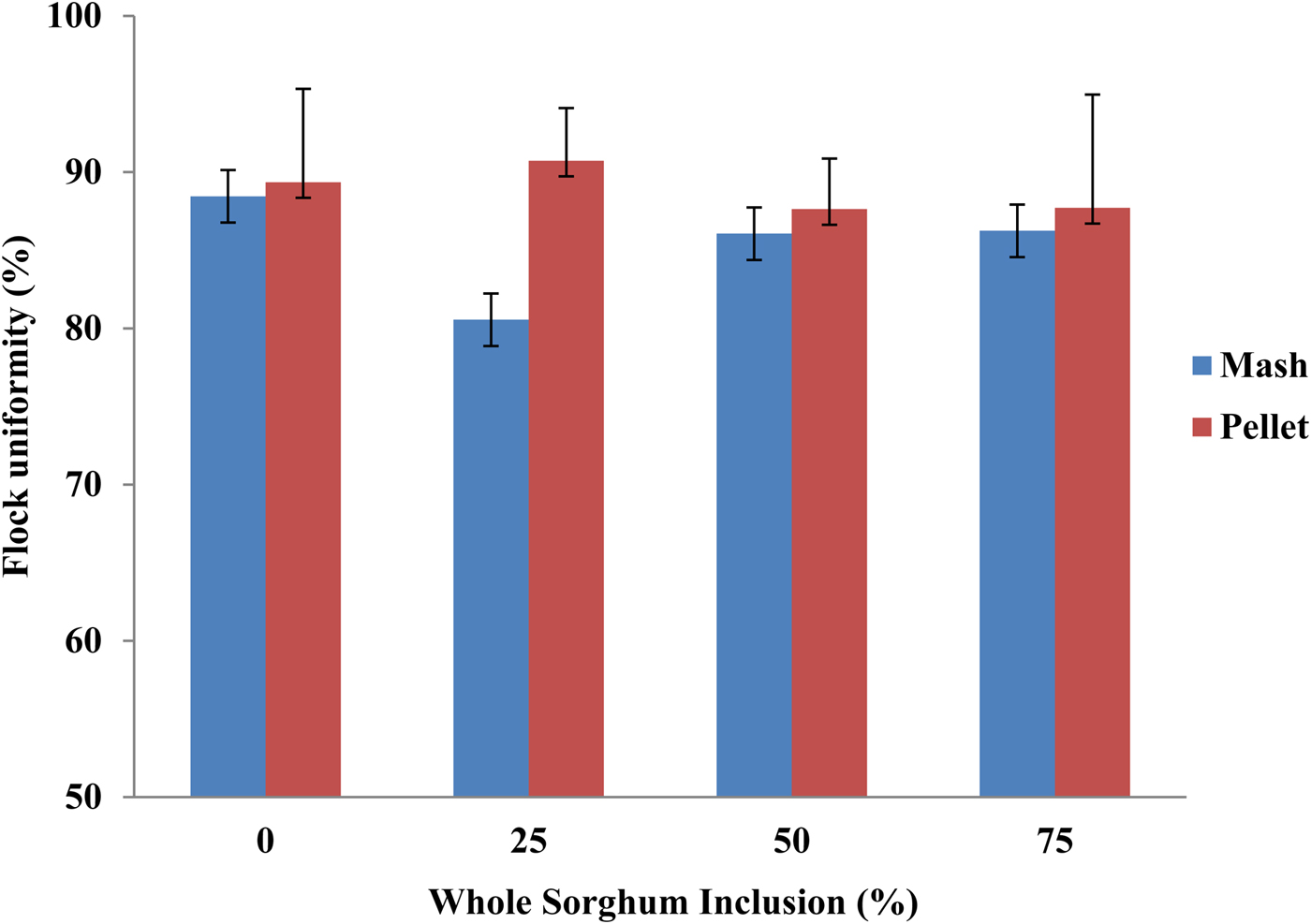
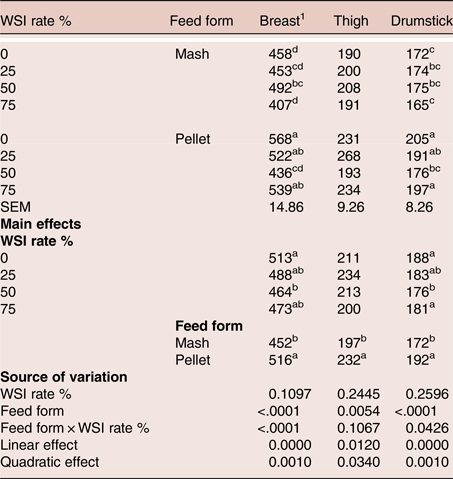
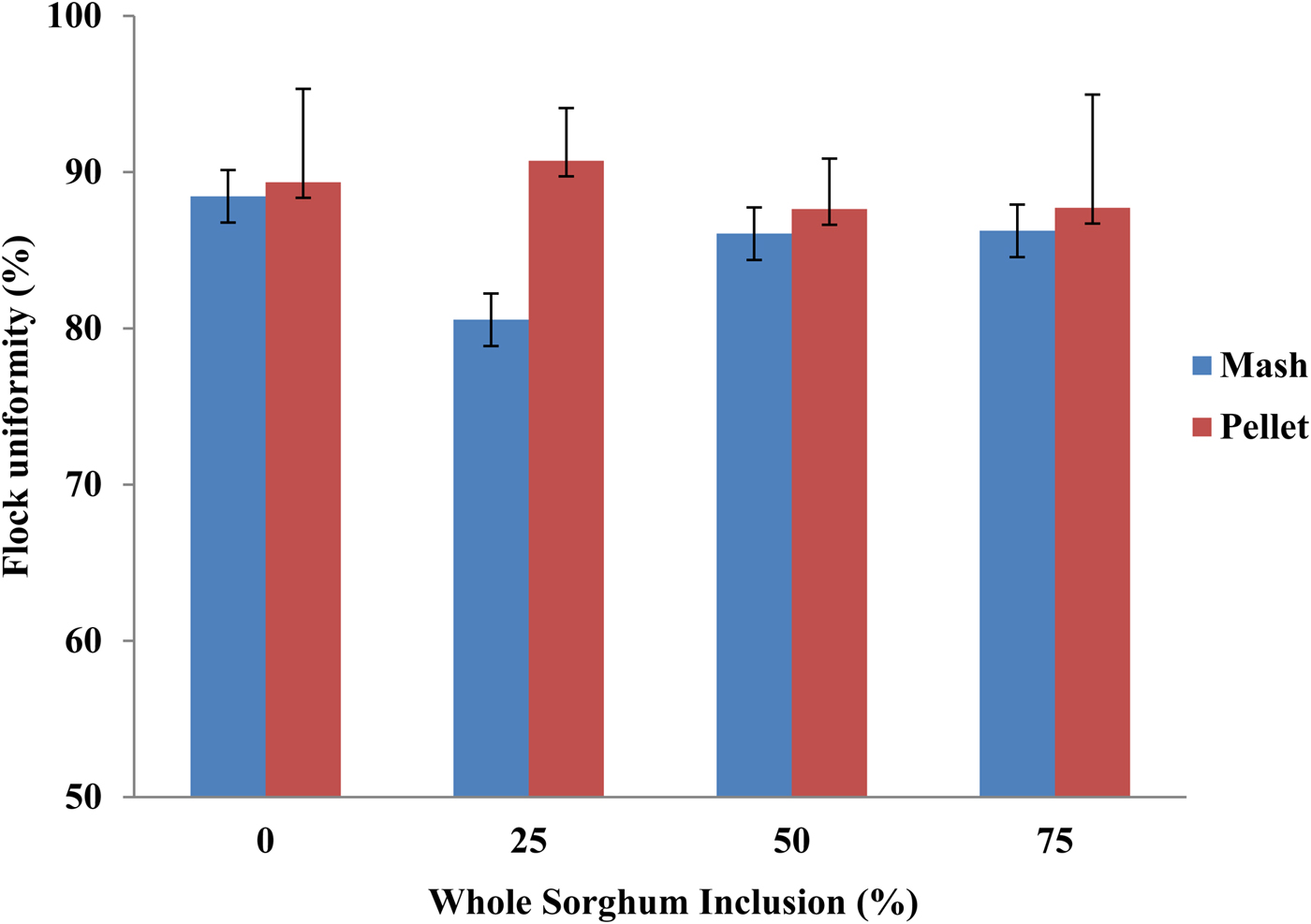
The effects of whole grain inclusion rate and feed form on meat yield at 35 days are shown in Table 7. There was a significant decrease in breast and drumstick (P<0.05) weight between the 0 and 50% WS inclusion diets. Birds on pelleted diets had heavier (P<0.05) carcass parts than those on mash diets. Feed form and WS inclusion did not affect (P>0.05) flock uniformity of broiler chickens aged 35 days of age (Figure 1). No treatment interactions (P>0.05) were observed.
Flock uniformity of broiler chickens at 35 days of age at different whole sorghum inclusion rate fed as mash or pellet
Effect of whole sorghum inclusion rate (WSI (%)) and feed form on meat part yield (g/100 g BW) of broiler chickens aged 35 days
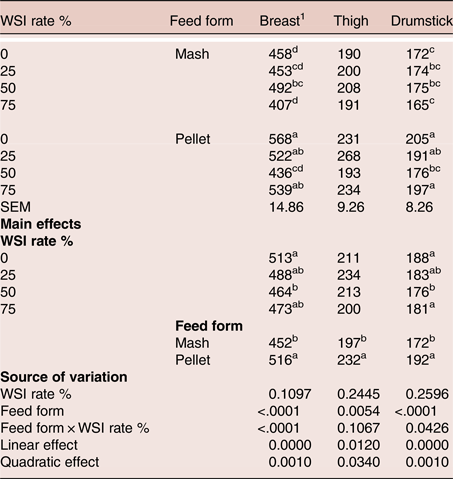
abc Means in the same column with different superscripts are statistically different (p<0.05);
SEM Standard error of the mean; 1 Breast with bone; Each value represents the mean of six replicates (nine birds/pen).
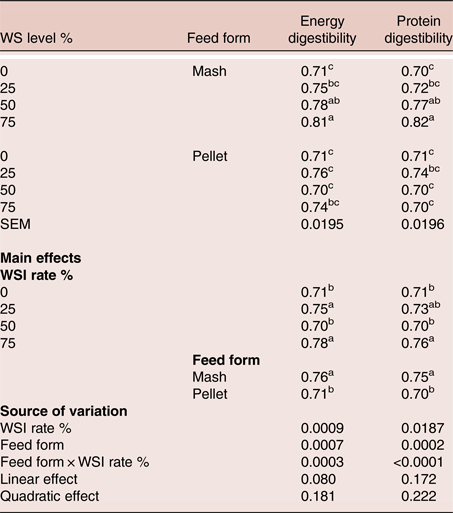
Broiler chickens offered mash diets had significantly higher (P<0.05) energy and crude protein digestibility than those fed pelleted diets (Table 8). WS inclusion level tended to (P=0.080) increase gross energy digestibility linearly with higher inclusion rates (Table 8). A significant treatment interaction for both energy (P=0.0003) and protein (P<0.0001) digestibility was observed.
Effect of whole sorghum inclusion rate (WSI) and feed form on nutrient digestibility in the ileum of broiler chickens
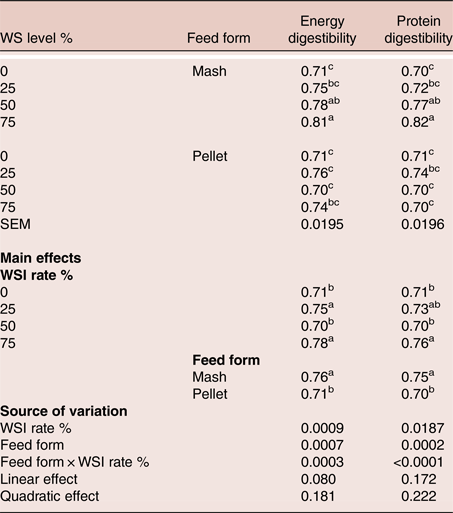
abc Means in the same column with different superscripts are statistically different (P<0.05).
SEM Standard error of the mean; Each value represents the mean of six replicates (nine birds/pen).
Discussion
The sorghum used in the current study was a non-tannin variety, with a gross energy value of 16.8 MJ/kg and a crude protein content of 10.9 %, which are comparable to levels in high quality maize (Zhai, Reference Zhai2002; Gao, Reference Gao2002). WS inclusion affected feed intake, body weight, and FCR in growing broilers, which was similar to data reported by Singh (Reference Singh2013), who indicated that whole maize inclusion increased performance to a certain level and then levelled off. There was a linear change in FCR with higher WS inclusion levels. In whole maize inclusion studies, feed intake was depressed with higher whole maize, and weight gain followed a similar trend (Singh, Reference Singh2013) which was contrary to the current finding. Uddin et al. (Reference Uddin, Rose, Hiscock and Bonnet1996) and Hetland et al. (Reference Hetland, Svihus and Krogdahl2003) observed reduced weight gains and improved feed efficiency when ground wheat was replaced by whole wheat. Fernandes et al. (Reference Fernandes, Pereira, Hackenhaar, Rodrigues and Terra2013) compared WS inclusion and maize fed to broiler chickens up to 21 days, and reported that similar performance levels were obtained. Whole pearl millet inclusion of 20% to broiler diets did not affect the performance of broiler chickens aged 21 days (Torres et al., Reference Torres, Pizauro, Soares, Silva and Nogueira2013).
Pellet quality was improved with an increase in WS inclusion (data not shown). Typical benefits associated with pellet diets include decreased feed ingredient separation, less feed wastage and enhanced intakes (Torres et al., Reference Torres, Pizauro, Soares, Silva and Nogueira2013). When the effect of feed form on the productivity of broiler chickens was evaluated the pelleted diets enhanced feed intake and body weight compared to mash diets throughout the 35 day growing period. Nir et al. (Reference Nir, Hillel, Ptichi and Shefet1995), McKinney and Teeter (Reference McKinney and Teeter2004), and Chewning et al. (Reference Chewning, Stark and Brake2012) showed pelleted diets to be superior to mash diets, which was similar to the current findings. FCR in the present study was not affected by feed form at 24 and 35 days of age. Only in the early stages of growth, from one to 10 days, did pelleted diets improve FCR compared to mash diets. In a report by Lv et al. (Reference Lv, Wei, Yang, Wang, Liang, Gao and Chai2015) mash diets gave poorer feed efficiency than pelleted diets in broiler chickens at a similar age. It is unclear why the FCR was not affected by feed form when measured over this current entire study, as feed form and particle size interactions have been observed in the studies of Amerah (Reference Amerah and Ravindran2008) and Chewning et al. (Reference Chewning, Stark and Brake2012).
Particle size affects the development of the gizzard in broiler chickens, which affects gut health and nutrient utilisation. Gizzard development is a nutritional strategy that can be achieved by manipulating feed particle size. Nir et al. (Reference Nir, Twina, Grossman and Nitsan1994) reported a positive relationship between gizzard weight and particle size. In the current study, whole sorghum inclusion did not affect the relative weight of the gizzard and small intestine. The pH of the gizzard at 35 days of age in the current study was lower in mash than pellet diets, which is an indication of increased secretion of HCl in the proventriculus, which in turn affects the gastric function, as stimulated by sorghum inclusion. This observation supports the findings of Nir et al. (Reference Nir, Twina, Grossman and Nitsan1994), Gabriel et al. (2003) and Singh (Reference Singh2013), who reported a decrease in gizzard pH with addition of whole grain to coarse diets. Feed form affected the gizzard relative weight at 1–24 and 1–35 days of age. Broiler chickens offered mash diets had heavier relative gizzard weight than those on pellet diets. A study by Singh (Reference Singh2013) indicated that the gizzard relative weights of broiler chickens fed whole maize at different inclusion levels were higher for mash than pellet diets. The heavier weight of the gizzards observed for mash diets was, as suggested, perhaps associated with the frequency of contraction to reduce the particle size (Roche, Reference Roche1981; Singh, Reference Singh2013).
Whole sorghum inclusion affected meat parts yield with an increase seen with inclusion rate in a quadratic manner. In previous studies on inclusion of whole maize fed as mash, no such effect was recorded (Dozier et al., Reference Dozier, Behnke, Twining and Branton2009; Clark et al., Reference Clark, Behnke and Fahrenholz2009). Chickens offered diets in a pellet form had a heavier carcass than those on mash diets. As speculated by Parsons et al. (Reference Parsons, Buchanan, Blemings, Wilson and Moritz2006), the reason chickens on mash diets had lower meat yields, especially for breast meat, is probably because they utilise feed energy for development of the gizzards as opposed to heavier carcass meat.
Conclusions
Whole sorghum inclusion did not affect feed intake and weight gain of growing broiler chickens. Feed form affected growth of the broiler chickens, with pelleted diets resulting in better performance than mash diets. Although mash diets increased the weight of gizzard and lowered pH, chickens offered these diets had poorer productive performance. It is important to note that the FCR figures reported in this study were within the normal ranges.
Conflicts of interest
There authors declare that there are no conflicts of interest.
Acknowledgments
The authors would like to acknowledge and appreciate the funding from National Research Foundation (NRF- GUN no: 97095), South Africa and AB Vista Marlborough, UK for making this work possible.