





Impact statement
This project (Behnke Reference Behnke2025) addresses the increasing disconnect between urban children and nature by presenting an experimentation toolkit for nature education in primary schools. Focusing on children aged 8–12, it aims to help children reconnect with nature, in the hope that they carry pro-nature values and attitudes into adulthood. By contributing both to educational methods and tools for nature education and to academic discourse on regenerative and more-than-human design, this project offers insights relevant to educators, designers, and researchers working at the intersection of design, education, and ecology.
The urban–nature disconnect
Spending time in nature is a vital part of childhood, supporting children’s development, wellbeing, and the formation of positive environmental attitudes and values (Gill Reference Gill2014). These experiences are also linked to stronger feelings of connection with nature, and most children identify natural environments as their favourite places (Price et al. Reference Price, Maguire, Firth, Lumber, Richardson and Young2022). Yet, for children growing up in urban environments, direct access to nature is often limited. Cities tend to conceal, modify, or even erase natural dynamics, and attempts to incorporate green spaces rarely succeed in creating ecologically and socially healthy environments. As a result, children in urban areas tend to be less knowledgeable about and connected to the natural world (Pitman and Daniels Reference Pitman and Daniels2020; Price et al. Reference Price, Maguire, Firth, Lumber, Richardson and Young2022).
This reduced access to nature contributes to a broader decline in both ecological literacy and nature connectedness (Pitman and Daniels Reference Pitman and Daniels2020; Price et al. Reference Price, Maguire, Firth, Lumber, Richardson and Young2022). Ecological literacy refers to the ability to understand ecological systems, including how they function and interconnect. A widespread lack of ecological knowledge and understanding is recognised as a major barrier to achieving sustainability (Coyle Reference Coyle2005; Orr Reference Orr1992). While such understanding forms the basis for well-informed, sustainable decision-making, nature connectedness is equally important for pro-environmental attitudes and behaviours (Price et al. Reference Price, Maguire, Firth, Lumber, Richardson and Young2022).
Fewer than half of Dutch children feel strongly connected to nature, and many lack the skills or opportunities to engage with it meaningfully (van den Berg Reference van den Berg2023). Studies further indicate that nature connectedness begins declining as early as age 7–8, reaching a low point in early adolescence, around age 12–14 (Price et al. Reference Price, Maguire, Firth, Lumber, Richardson and Young2022; Richardson et al. Reference Richardson, Hunt, Hinds, Bragg, Fido, Petronzi, Barbett, Clitherow and White2019). This decline is concerning, as it not only affects children’s wellbeing but also pro-environmental attitudes and behaviours in adulthood. Tackling this decline during childhood could therefore help a greater share of the future adult population reconnect with nature at levels where pro-environmental behaviours are more likely (Price et al. Reference Price, Maguire, Firth, Lumber, Richardson and Young2022).
Together, these findings highlight the urgency of strengthening both ecological literacy and nature connectedness through nature education in primary schools to raise future generations who understand, care for, and act to protect natural environments. This project (Behnke Reference Behnke2025) focuses on urban children aged 8–12.
Situating living artefacts in place-based education
The concept of place Footnote 1 recurs across models for ecological literacy, transformative learning, and individual creativity, revealing where education, ecology, and design intersect. In each, place provides a meaningful context that shapes how people think, feel, and act in relation to the world around them. This shared recognition highlights the potential of situating nature education in local environments that are familiar, authentic, and engaging – outside of the classroom.
This also reveals an opportunity for living artefacts to play a role in nature education. Living artefacts are biodesign outcomes that integrate living organisms to enable novel functionalities, interactions, and expressions in everyday contexts (Karana et al. Reference Karana, McQuillan, Rognoli and Giaccardi2023). By inviting children to find and engage with a place of nature in their local urban surroundings, connect with it, and grow to care for it, living artefacts can help shape sustainable values and attitudes that carry into adulthood.
Fungi were chosen as the focus of this project for three reasons. First, fungi play an essential but often overlooked ecological role, as more than 80% of land plants engage in symbiotic relationships with mycorrhizal fungi (Tedersoo et al. Reference Tedersoo, Bahram, Põlme, Kõljalg, Yorou, Wijesundera, Ruiz, Vasco-Palacios, Thu, Suija, Smith, Sharp, Saluveer, Saitta, Rosas, Riit, Ratkowsky, Pritsch, Põldmaa, Piepenbring, Phosri, Peterson, Parts, Pärtel, Otsing, Nouhra, Njouonkou, Nilsson, Morgado, Mayor, May, Majuakim, Lodge, Lee, Larsson, Kohout, Hosaka, Hiiesalu, Henkel, Harend, Guo, Greslebin, Grelet, Geml, Gates, Dunstan, Dunk, Drenkhan, Dearnaley, De Kesel, Dang, Chen, Buegger, Brearley, Bonito, Anslan, Abell and Abarenkov2014; van der Heijden et al. Reference van der Heijden, Bardgett and Van Straalen2008, Reference van der Heijden, Martin, Selosse and Sanders2015). Second, fungi are largely invisible to children, both literally and educationally: they mostly exist underground as mycelium and only become visible as fruiting bodies, and they are rarely covered in Dutch primary education. Third, fungi fit naturally with more-than-human perspectives associated with living artefacts. In related design research, Oktay et al. (Reference Oktay, Barati, Lee and Wakkary2026) investigated how caring for a living mycelium probe can extend one’s sensibility to care for and in place, while Correa and Holbert (Reference Correa and Holbert2021) developed a biodesign toolkit supporting interspecies creative learning in children.
Shaping, placing, and visiting living artefacts: a toolkit for nature education
To address the disconnect between urban children and nature, and to draw on the potential of living artefacts to foster ecological literacy, we conceptualised an experimentation toolkit for place-based nature education in primary schools. The toolkit consists of presentation slides, enactment cards, a workbook, and a shapeable mycelium-receptive composite. We tested the shaping and placing activities it facilitates with 71 children across four classes.
The work adopts a research-through-design approach (Stappers and Giaccardi Reference Stappers and Giaccardi2014), combining methods from material-driven (Karana et al. Reference Karana, Barati, Rognoli and Zeeuw van der Laan2015) and participatory design while including more-than-human perspectives (Nicenboim Reference Nicenboim2024). Within this approach, the concept of a mycelium-receptive composite functioned as a design probe: a generative material proposition that shaped and helped test the pedagogical framework of situating place-based activities in nature education. Material explorations in multispecies contexts examined the feasibility of such a composite by investigating how biodegradable and living materials can support mycelial growth and interaction. In parallel, a workshop conducted with primary school children explored how nature-based learning can lead to understanding and empathy for non-human organisms.
Drawing on Parisi and Rognoli (Reference Parisi and Rognoli2017), Bhardwaj et al. (Reference Bhardwaj, Rahman, Wei, Pei, Truong, Lucht and Zou2021), and Bai et al. (Reference Bai, Van Wijngaarden, Silberstein and Wisniewska2025), the material explorations aimed to create a shapeable, biodegradable composite of flaxseed and hemp straw, intended as a safe, child-friendly, and potentially mycelium-receptive material. Flaxseed mucilage was introduced as a gelling agent to enable free-hand shaping prior to fungal colonisation. Prototypes combining blended and pre-soaked hemp with three-hour rested flaxseed gels showed noticeably improved cohesion and shape retention over earlier iterations, but were not shapeable beyond golf-ball-sized forms. Literature on aqueous mucilage extraction suggests that outcomes were constrained by suboptimal extraction and processing conditions (Bai et al. Reference Bai, Van Wijngaarden, Silberstein and Wisniewska2025; Dzuvor et al. Reference Dzuvor, Taylor, Acquah, Pan and Agyei2018; Fabre et al. Reference Fabre, Lacroux, Valentin and Mouloungui2015; Hu et al. Reference Hu, Shim and Reaney2020; Kaushik et al. Reference Kaushik, Dowling, Adhikari, Barrow and Adhikari2017; Lorenc et al. Reference Lorenc, Jarošová, Bedrníček, Smetana and Bárta2022; Vieira et al. Reference Vieira, Mantovani, Raposo, Coimbra, Vicente and Cunha2019; Ziolkovska Reference Ziolkovska2012), indicating that optimising these conditions could make a workable, clay-like composite feasible in future work.
While a fully shapeable and receptive composite was not achieved, the probe nonetheless informed the temporality, situatedness, and more-than-human orientation of the resulting toolkit. For the evaluation, light brown fireclay was used as a substitute material, since the evaluation focused on children’s engagement with the pedagogical structure of shaping, placing, and reflecting rather than on fungal colonisation. The clay is also presented in this demo.
The insights from the literature, experiments and workshop informed the conceptualisation of an experimentation toolkit for nature education in primary schools. This toolkit:
-
• allows children to notice their surroundings from the perspective of fungi, rather than as individuals who use them (e.g. as food);
-
• supports teachers in providing nature education that is engaging and reflective, and decentres humans as users;
-
• encourages children to find and connect with natural places, even in highly urbanised areas.
Design elements
The toolkit is not a physical box of materials, but a collection of components that together support teachers in teaching about fungi. The toolkit was developed and tested in the Netherlands; therefore, the materials shown in the figures are in Dutch, with English translations provided in the figure captions. It consists of the following materials:
-
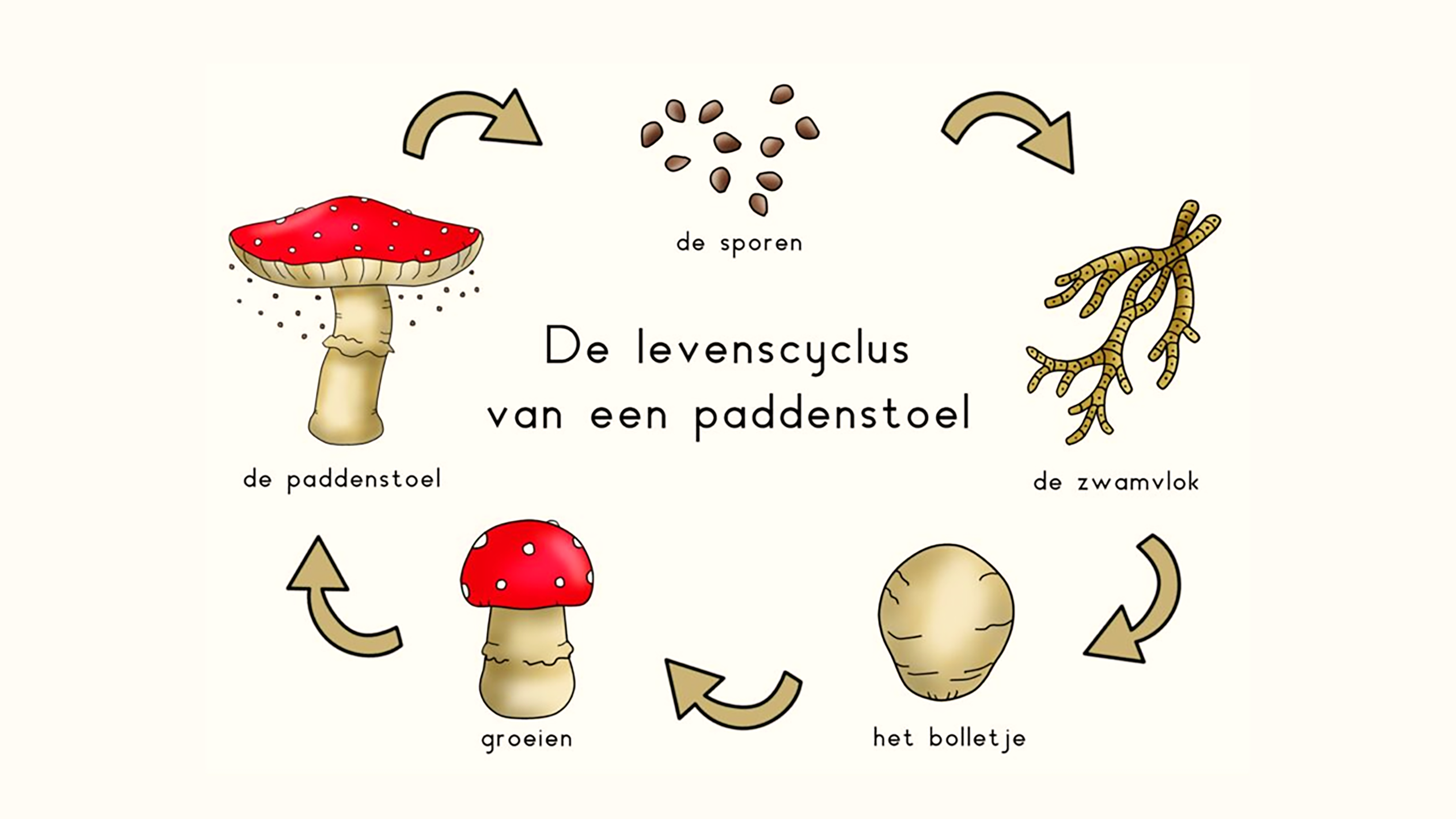
• Presentation slides for a short lesson on fungiFootnote 2 (Figure 1)
Figure 1.One of the presentation slides, depicting the life cycle of a mushroom. The labelled stages are de sporen (spores), de zwamvlok (mycelium), het bolletje (primordium), groeien (growing), and de paddenstoel (mushroom).

-
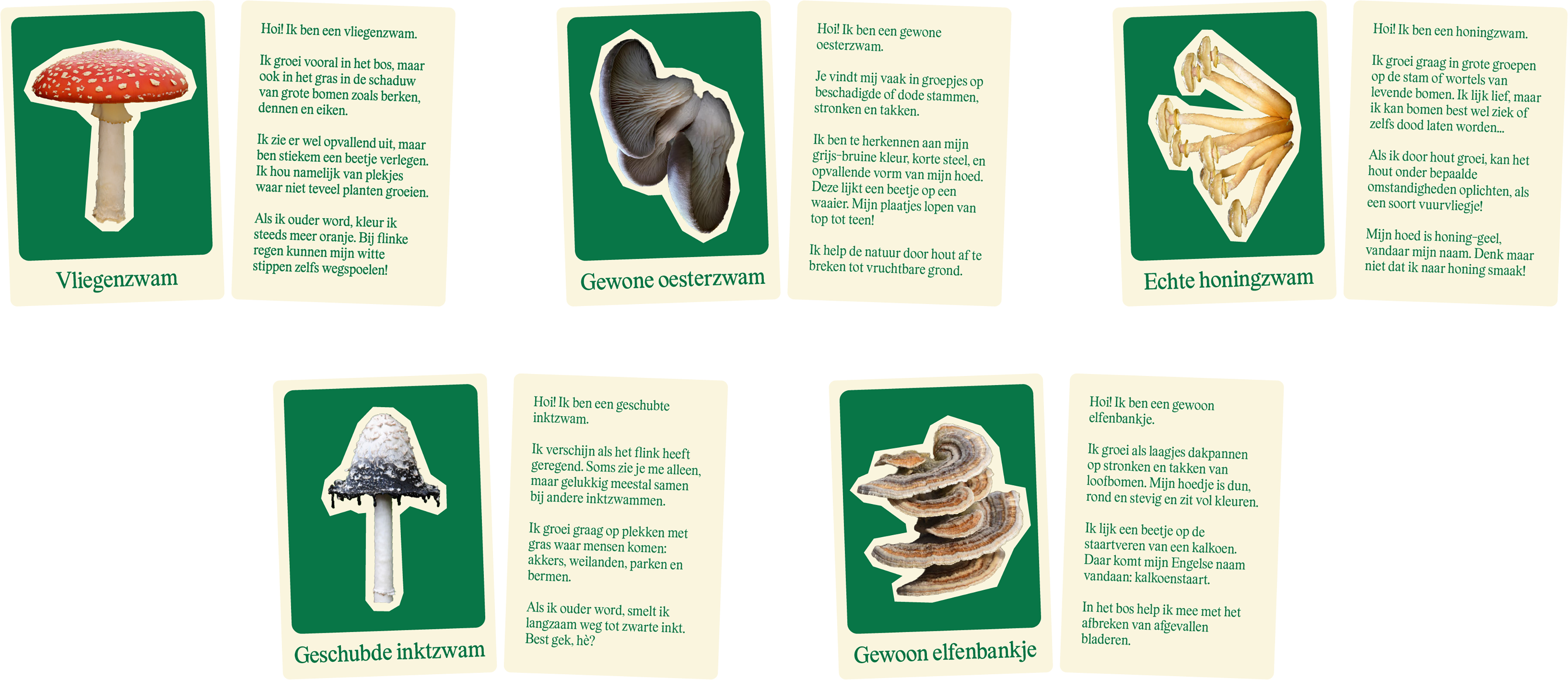
• Fungi enactments cardsFootnote 3 (Figure 2)
Figure 2.Fungi enactment cards, with a mushroom depicted on one side (without its surroundings), and a first-person description on the other. The cards shown depict (left to right, top row) vliegenzwam (fly agaric), gewone oesterzwam (oyster mushroom), and echte honingzwam (honey fungus); (bottom row) geschubde inktzwam (shaggy ink) cap and gewoon elfenbankje (turkey tail). Each description includes a combination of appearance, preferred habitat, ecological role, and a fun fact.
-
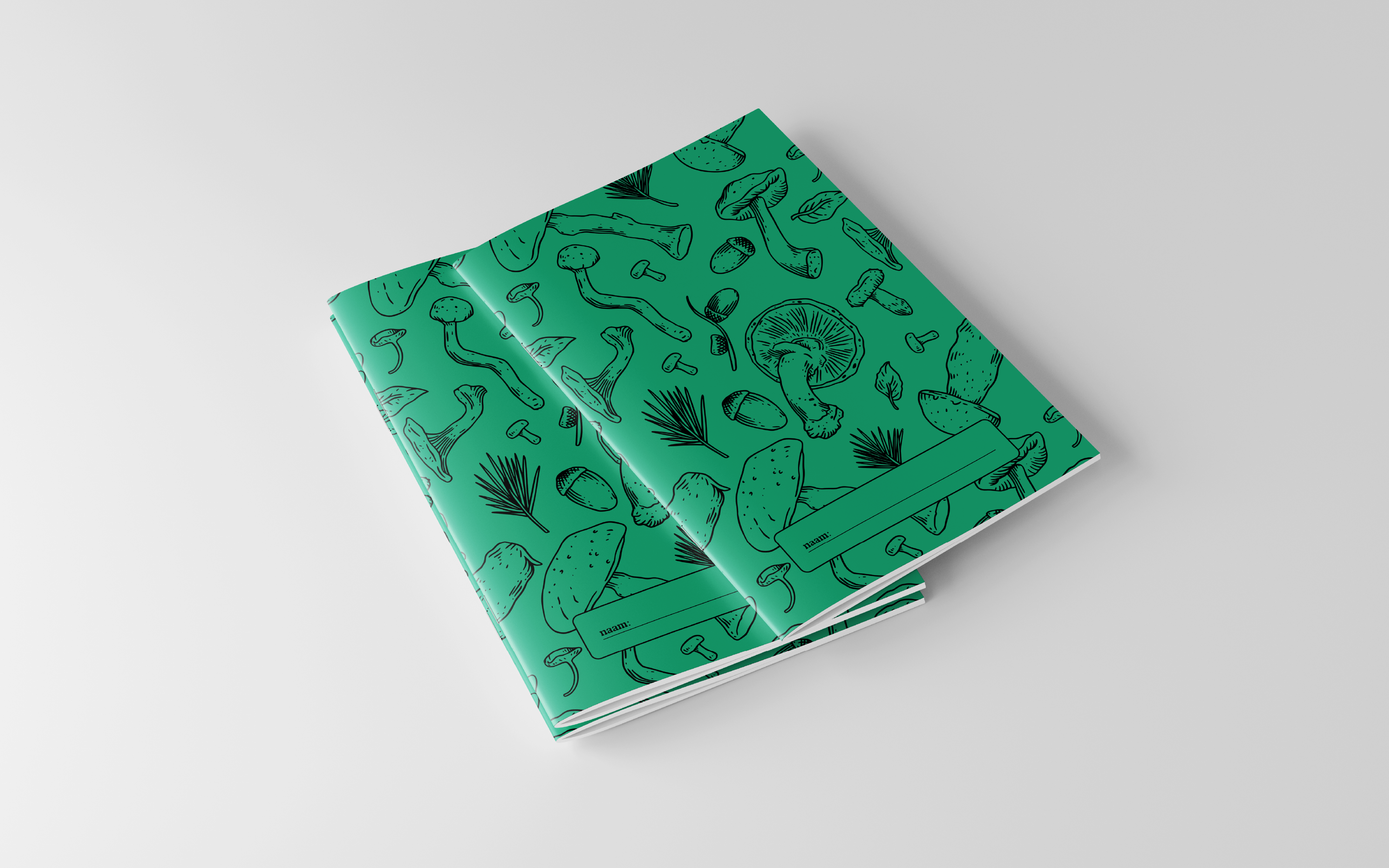
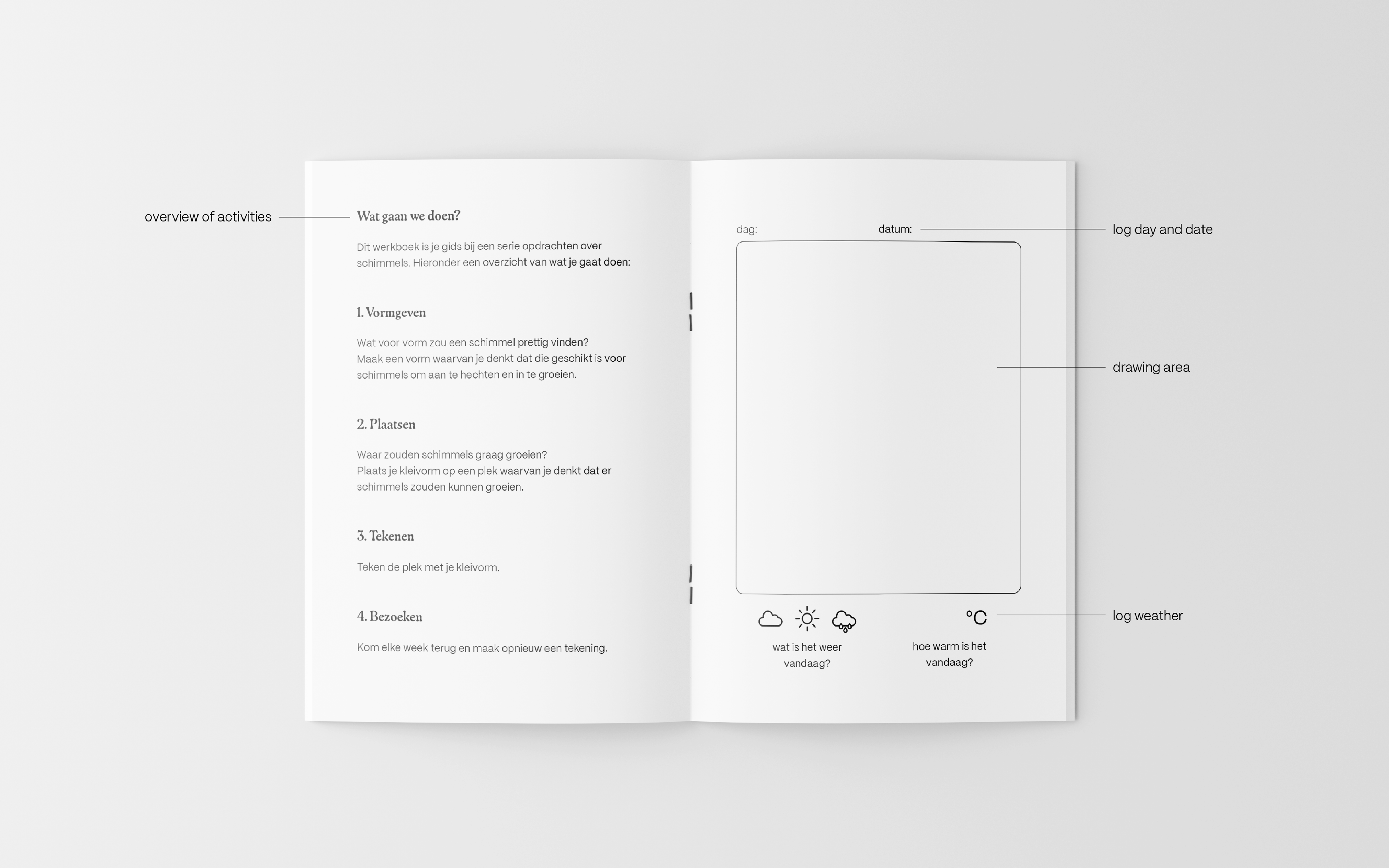
• Pocket-sized workbook (A6) (Figures 3 and 4)
Figure 3.Three A6-sized workbooks.
Figure 4.Workbook overview, with instructions and an overview of activities on the left-hand page, and a drawing area and fields to document the day and weather conditions on the right-hand page. The four activities listed are Vormgeven (shaping), Plaatsen (placing), Tekenen (drawing), and Bezoeken (visiting).
-
• Shapeable mycelium-receptive composite


While the toolkit focuses specifically on fungi, its components are intended to be modular, allowing the toolkit to be adapted toward the needs and temporalities of other organisms or ecological principles. The outdoor, place-based context remains constant, while the presentation slides and workbook can be adapted to other organisms or ecological principles. The enactment cards were developed for the workshop to explore children’s capacity to empathise with fungi, and their applicability to other topics would need to be evaluated. The toolkit’s adaptability beyond fungi was not tested in this project and remains a direction for future work.
Interaction scenario
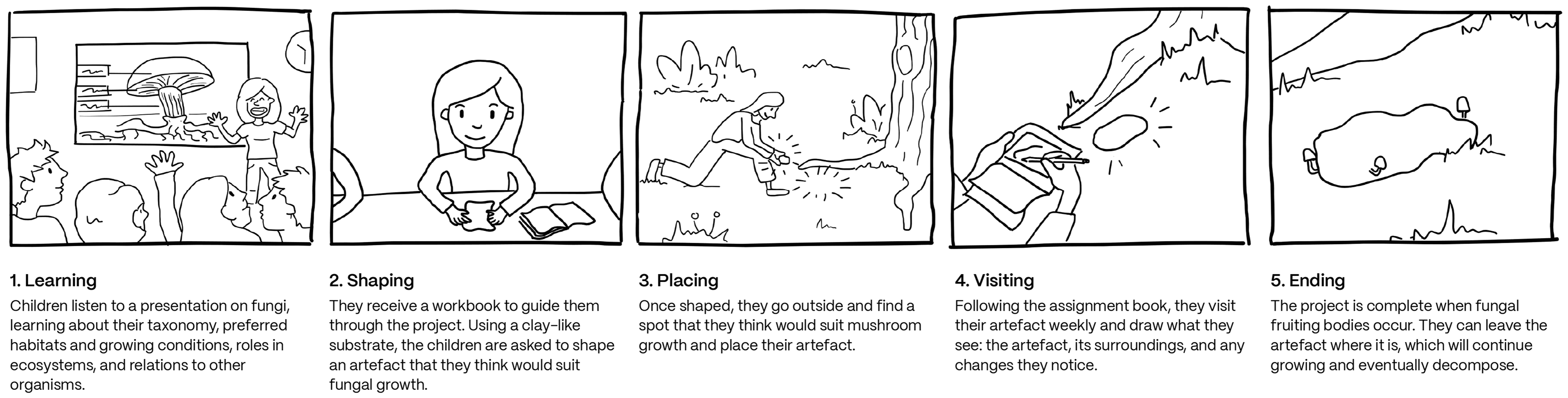
The storyboard in Figure 5 illustrates the children’s interactions and activities when the toolkit is used to facilitate nature education.
Storyboard illustrating the flow of activities facilitated by the experimentation toolkit.

Figure 5. Long description
Panel 1: A classroom setting where children are listening to a presentation on fungi. The teacher is pointing to a diagram on the screen. Panel 2: A child is sitting at a table with a workbook, reading and taking notes. Panel 3: A child is outside, shaping a clay-like substance into an artefact and placing it in a suitable spot for mushroom growth. Panel 4: The child is visiting the artefact weekly, drawing observations of the surroundings and any changes. Panel 5: The project is complete when fungal fruiting bodies occur, and the child can leave the artefact to continue growing and decomposing.
In the Shaping phase, children shape artefacts from a biodegradable, clay-like substrate that, in theory, supports fungal growth. This shifts agency to the children as the final designers of the mycelium-receptive artefacts, inviting them to apply their ecological understanding through creative expression and material exploration.
During the Visiting phase, children return weekly to their chosen sites to observe and document changes in their artefacts and their surroundings. They draw what they see, note the weather conditions, and record any visible signs of growth or transformation. Through these repeated visits, observation becomes a practice of noticing.
Finally, in the Reflecting phase, children look back on their experiences, considering how factors including placement, weather, and shape may have influenced their experiment outcomes. This reflection connects action with understanding, helping them recognise the interdependencies between living organisms, materials, and environmental conditions.
Concept evaluation in context
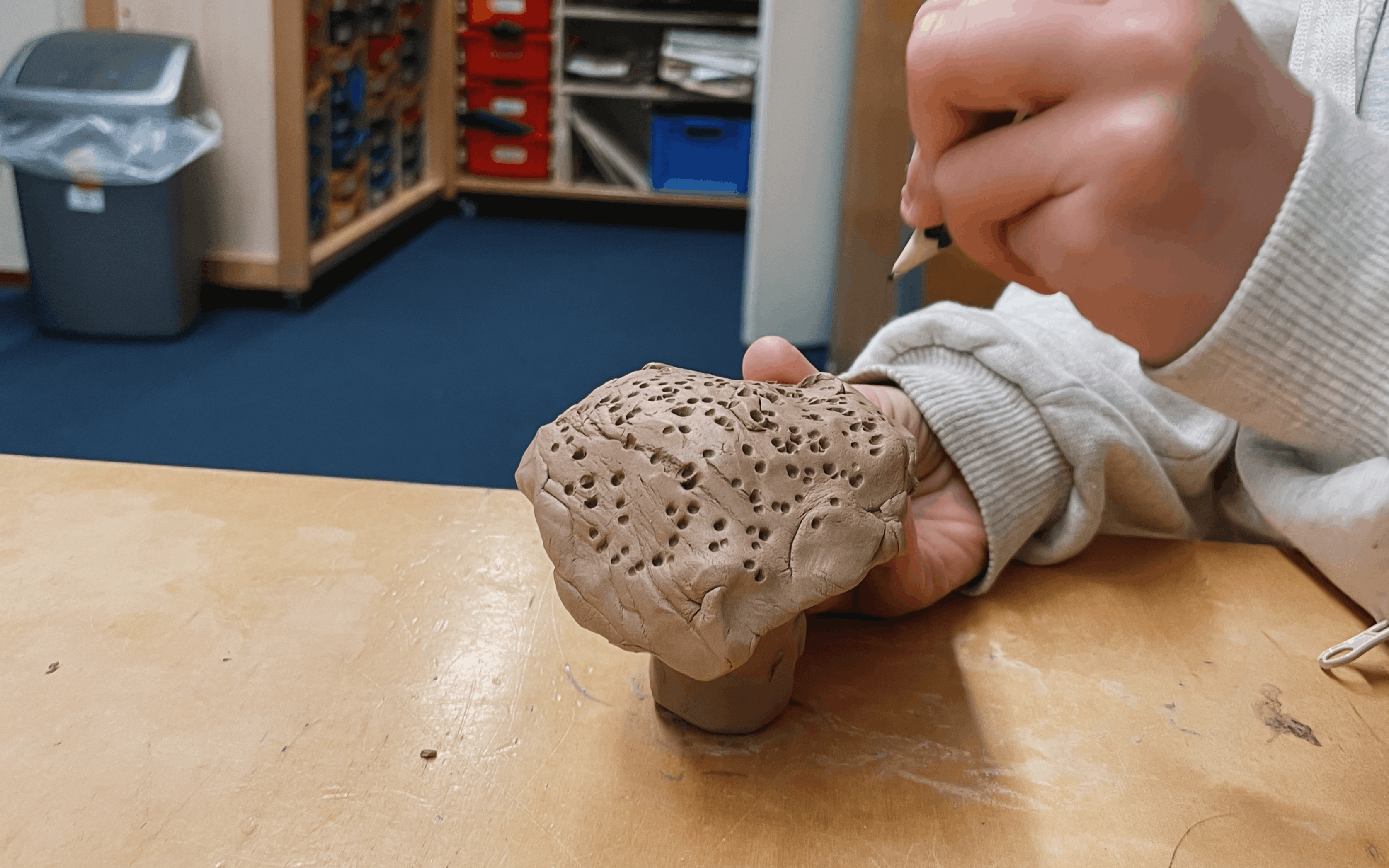
To evaluate whether the toolkit could contribute to improving children’s knowledge of and connection with nature, part of the concept was tested with 71 children from four classes, spanning groups 5–8. The evaluation focused on the shaping and placing activities (Figures 6–9).
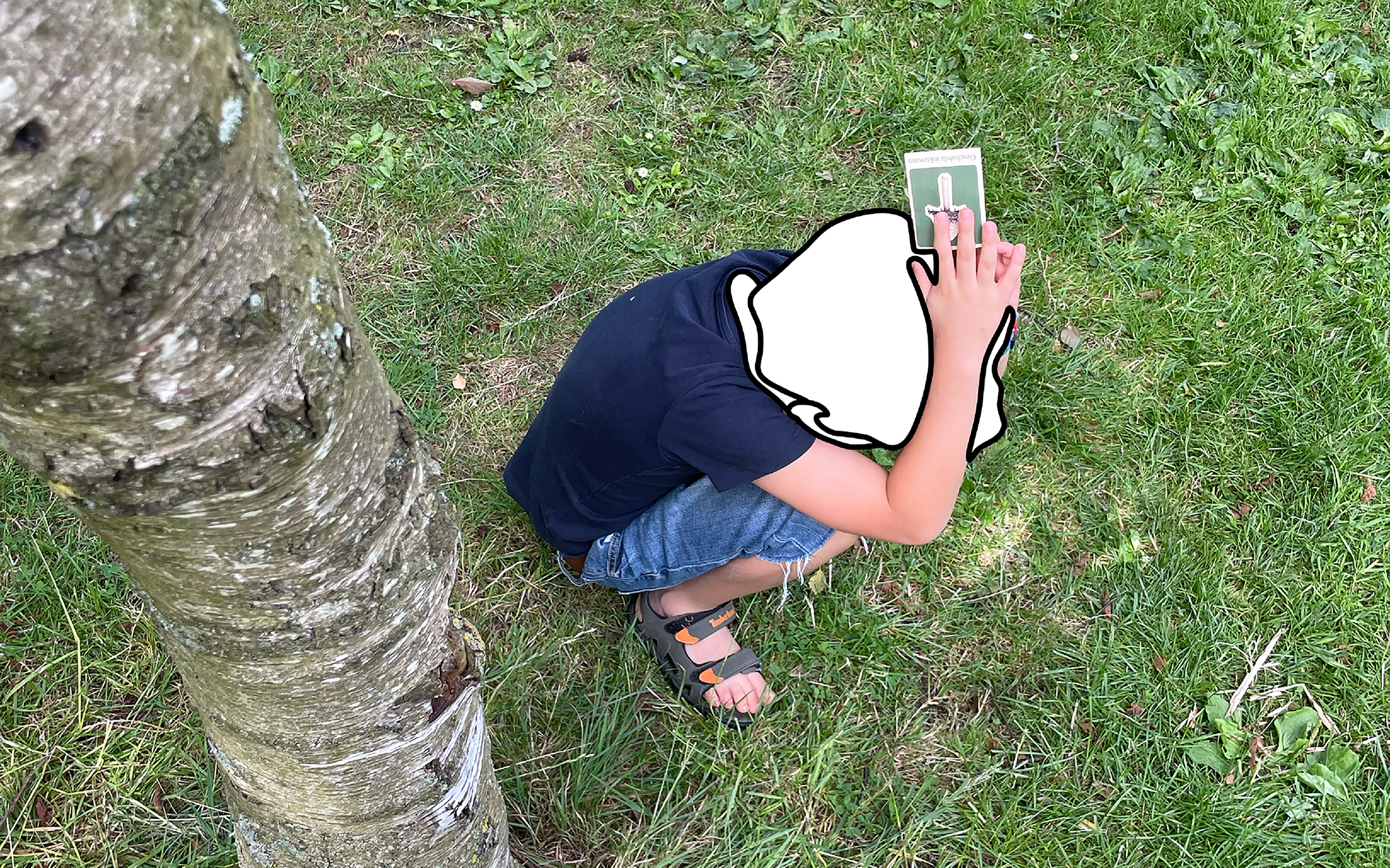
A child portraying a melting ink cap mushroom based on their enactment card.

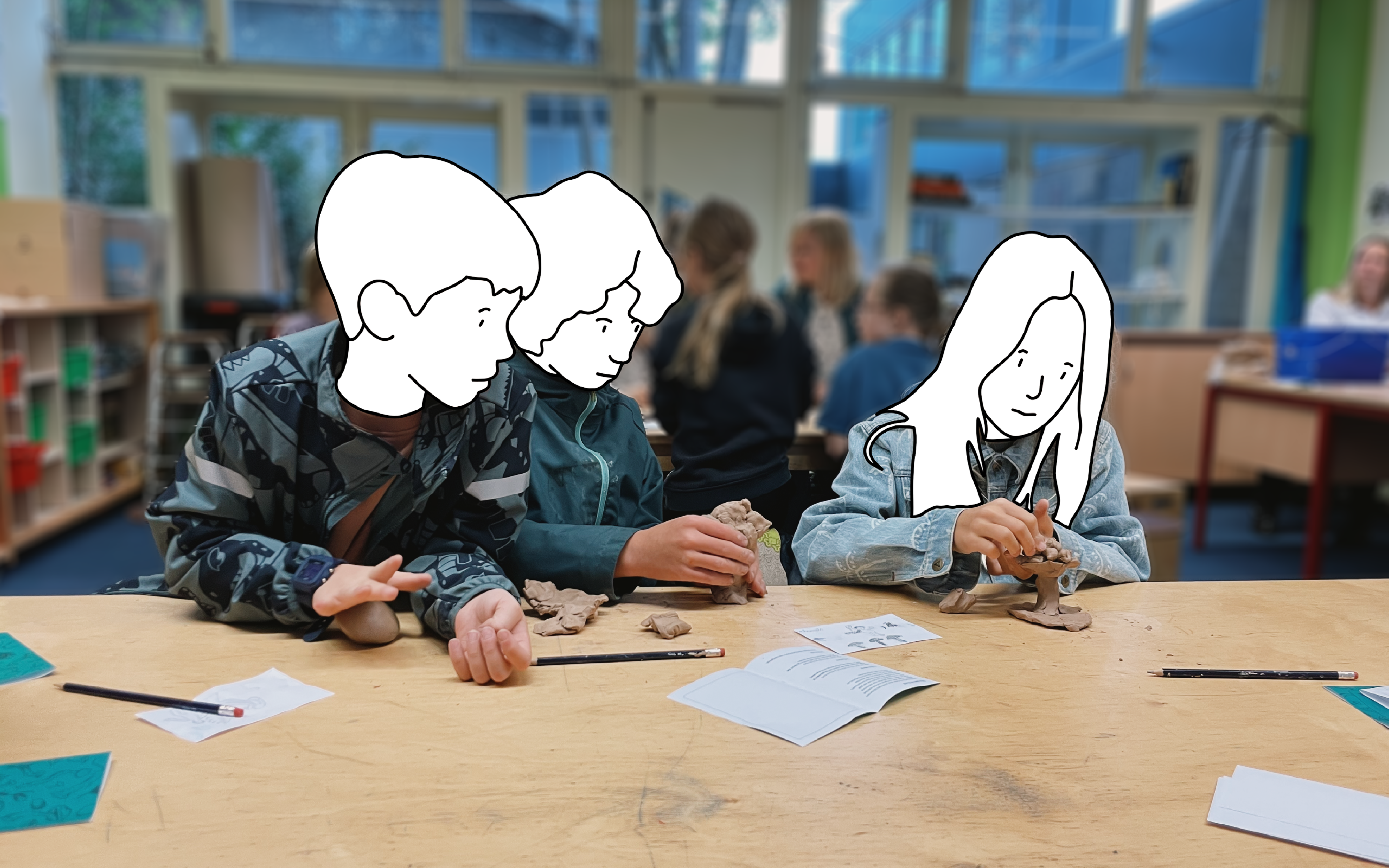
Children kneading and shaping clay.

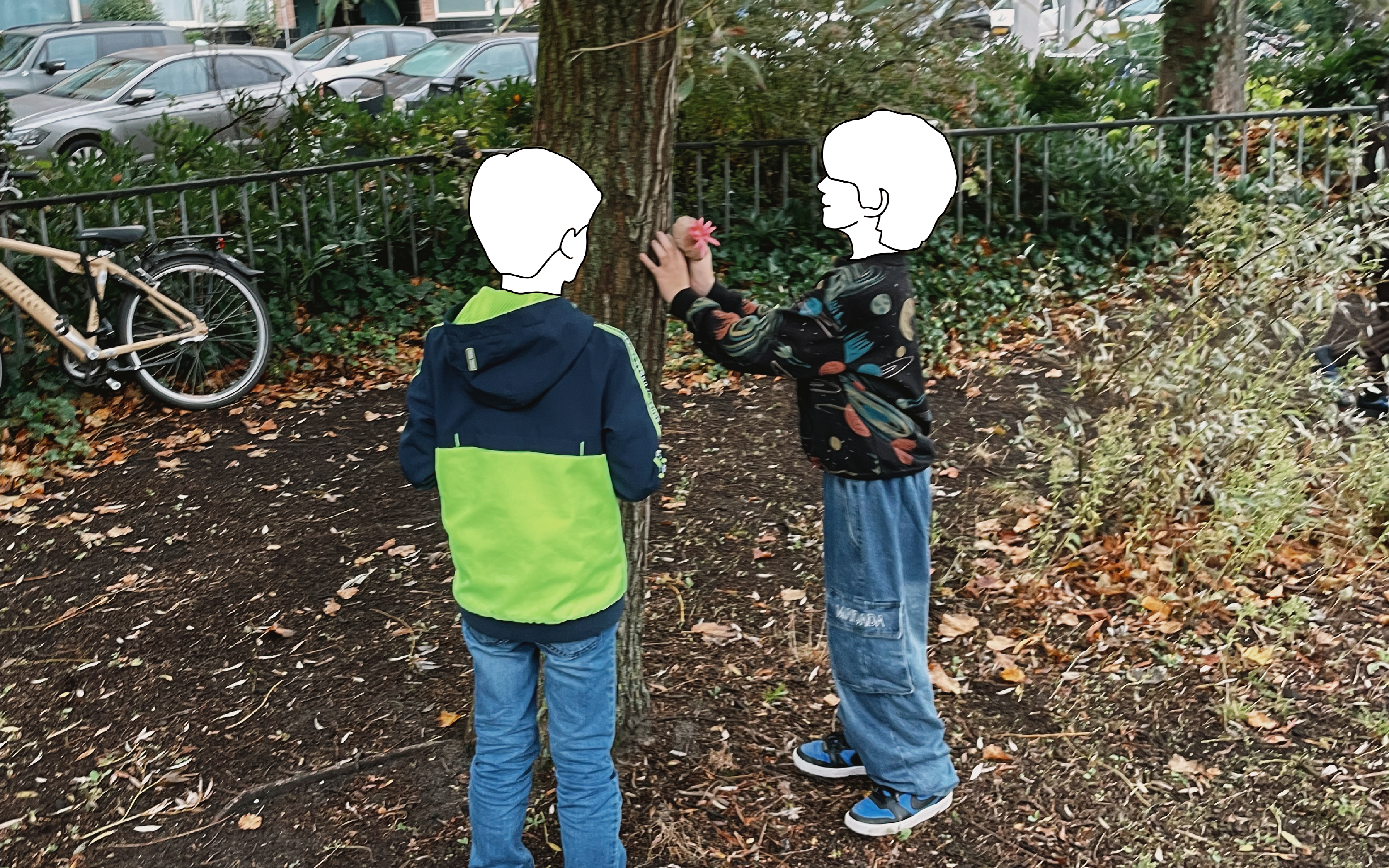
A child places their clay artefact on a living tree and subsequently removes it after reflecting on the potential impact on the tree, as mushrooms growing on trees are commonly associated with decay.

A child pokes holes in their clay shape “so that oxygen can reach the fungus.”

Their creations and placement decisions revealed sensitivity and empathy toward fungi and their environments, particularly when encouraged to reflect on their actions. The main contributor observed the first two evaluation sessions; the teacher facilitated the remaining two independently and confirmed that they felt comfortable doing so without the contributor’s presence. This suggests the toolkit’s feasibility in a real-world educational context, where teachers would run the workshop themselves.
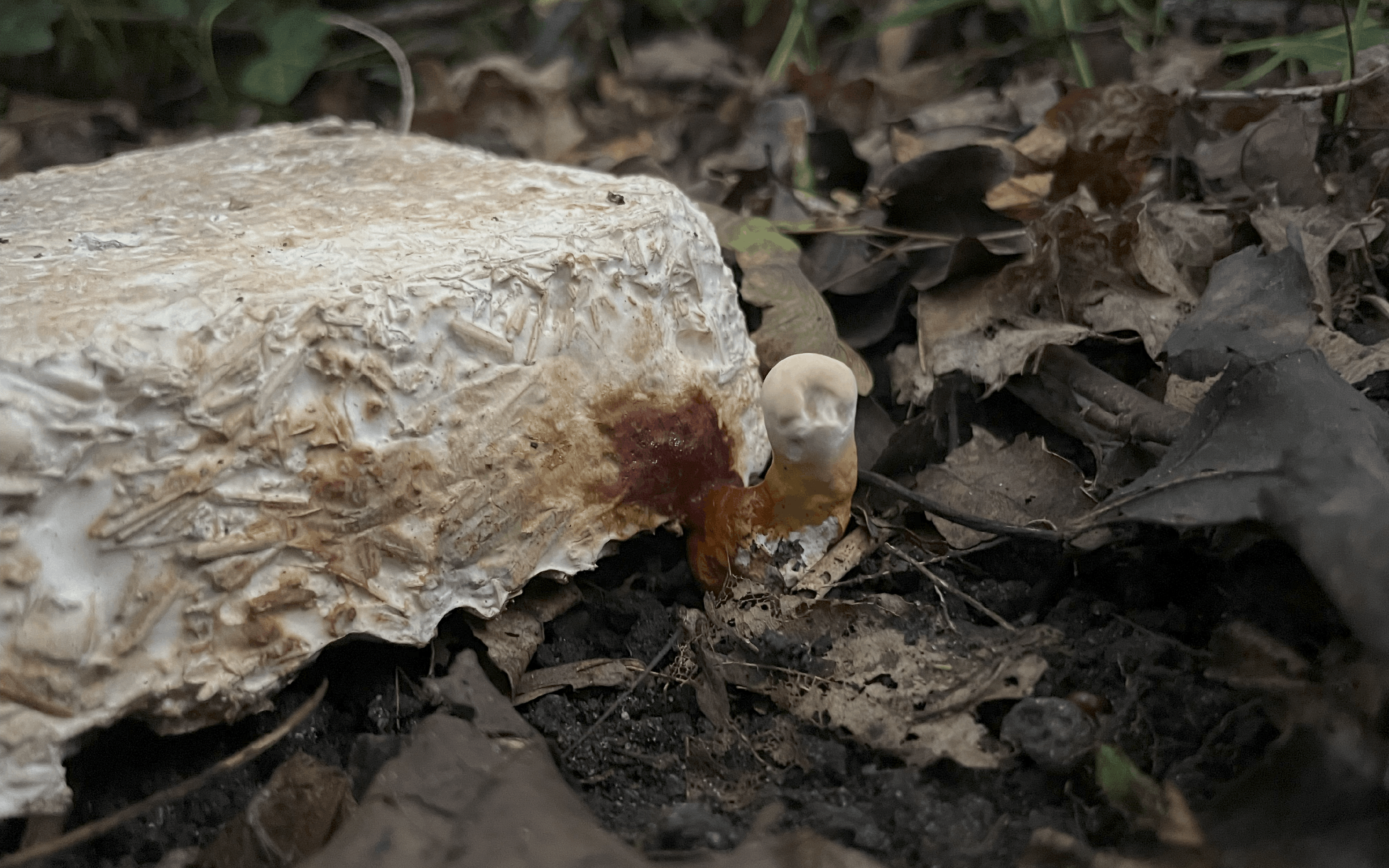
Findings suggest that the shaping, placing, and reflecting activities can support ecological literacy and caring relationships with non-human life, indicating the toolkit’s potential to reconnect children with nature. While the situatedness and more-than-human dimensions of the toolkit were tested, the temporality afforded by living materials was not (Figure 10). Future research is needed to test whether situated interactions with living materials further strengthen ecological literacy and nature connectedness.
Close-up of a mycelium-composite artefact in the wild, interacting with the surrounding ecology. Captured during preliminary testing, this image represents how the mycelium-composite artefact could be used in the learning activity of the toolkit.

Demo description
The demo invites conference attendees to engage with the components of the toolkit. Displayed elements include:
-
• The fungi enactment cards and workbook;
-
• A selection of clay artefacts as illustrative prototypes of forms created by children during the evaluation;
-
• A mycelium-based composite grown from a pre-inoculated substrate, included as a reference example of the material category to which the toolkit’s proposed composite belongs;
-
• A screen displaying photographs from the workshop and evaluation sessions, to convey the outdoor, place-based context in which the toolkit is intended to be used;
-
• Textual materials describing the project’s aims, design process, workshop and evaluation structure, and key findings.
All demo materials will be provided either in English or in their original language with English translations.
Attendees may engage with the demo in two ways: they may explore the toolkit materials, clay artefacts, photographs, and accompanying descriptions independently; or they may opt for a guided walkthrough, where the main contributor will walk attendees through the toolkit, workshop structure, and evaluation insights, and discuss design decisions and observed learning outcomes.
The demo requires a table for display and a power outlet for the screen.
Data availability statement
The data that supports the findings of this study are openly available in the TU Delft Repository at https://resolver.tudelft.nl/uuid:361d53d1-09fc-47a7-8b1b-f1e80ca07db8.
Acknowledgements
We are grateful for the advice, input during discussions, and equipment lent to facilitate experiments by E.G. Groutars, as well as for the thoughtful reviews which helped us to improve the quality and contribution of the manuscript.
The authors used Claude (Opus 4.7) to improve spelling, grammar, clarity, and readability during manuscript preparation. After using this tool, the authors carefully reviewed and edited the text and take full responsibility for the accuracy, integrity and originality of the content.
Author contributions
Conceptualisation: L.B (main contributor); S.P; I.N. Supervision: S.P; I.N. Visualisation: L.B. Writing original draft: L.B. Writing – review & editing: L.B; S.P; I.N. All authors approved the final submitted draft.
Financial support
This research received no specific grant from any funding agency, commercial or not-for-profit sectors.
Competing interests
None.
Ethical standards
The research meets all ethical guidelines, including adherence to the legal requirements of the study country. This study was approved by the Human Research Ethics Committee (HREC) of Delft University of Technology. Informed consent was obtained from the parents or guardians of all child participants prior to their participation.

 Open access

