Introduction
Migration within state borders is four times more common than international migration (United Nations Development Programme, 2009) and the majority of internal migrants reside in emerging economies. India has the largest number of internal migrants (309 million), comprising nearly 30% of the country’s population (Registrar General of India, 2001). Nearly 100 million people migrated internally between 1991 and 2001. The urban agglomeration of Mumbai was the destination with the highest number of migrants of all Indian cities.
With an increasing number of people on the move, migrant health and well-being has become a global public health issue and has received significant attention from researchers. There is rising concern that migrant health needs are not always adequately met (Ghent, Reference Ghent2008). In addition, advocacy, legislation and policy have therefore been aimed at addressing issues related to migrant health issues. However, the focus has been more on international migration, not internal migration, and the latter even less so for India.
Internal migration within a country is due to the interplay of ‘push’ and ‘pull’ factors (Singh, Reference Singh2010). Low wages and lack of suitable employment or livelihoods in source areas act as the main push factors. Expectations of improved employment opportunities and higher wages/income are the chief pull factors (Srivastava, Reference Srivastava2005). The pull of urban agglomerations is even stronger, especially in the case of big cities such as Mumbai (Singh, Reference Singh2010), which is regarded as the financial capital of India.
Migration has both positive and negative consequences for migrants depending on the circumstances of their migration. Although improved economic status is the main potential benefit of migration, poor migrants often end up in lower segments of the labour market with lower wages and hence suffer severe deprivation (Srivastava, Reference Srivastava2005). In India, the living and working environments of urban poor migrants are often deficient, lacking basic amenities such as safe water, sanitation and clean air. The social environment of the city to which they have migrated may not be migrant-friendly and the probability of them facing discrimination is high. Such adverse physical and social environments pose health risks to migrants, making them prone to disease. The ‘healthy migrant hypothesis’, which states that migrants fair better in terms of health compared with the resident population in destination cities, may not hold true for emerging economies (Li et al., Reference Li, Stanton, Chen, Hong, Fang and Lin2006; Singh et al., Reference Singh, Rai and Singh2012; Liu et al., Reference Liu, Hu and Mak2013). In fact, there is evidence that migrants face significant health problems, even if they have benefited in terms of livelihood opportunities (Singh et al., Reference Singh, Rai and Singh2012; Gerritsen et al., Reference Gerritsen, Bocquier, White, Mbacké, Alam, Beguy and Collinson2013).
Moreover, migrants’ access to health care may be limited by regulatory, administrative and socioeconomic barriers. There is evidence from developing countries that migrants are largely excluded from urban services, including access to public health services (Hu et al., Reference Hu, Cook and Salazar2008; Babu et al., Reference Babu, Swain, Mishra and Kar2010; Kusuma et al., Reference Kusuma, Kumari, Pandav and Gupta2010; Borhade, Reference Borhade2011; Lohiya et al., Reference Lohiya, Nongkynrih and Gupta2014). A longitudinal study from Indonesia highlighted that barriers to health utilization and increased work-related stressors prevented improvement in the health status of migrants (Lu, Reference Lu2010). Access to health care, a key determinant of health status, is often poor because of patient/consumer- and provider-level issues. Consumer-level issues include ‘health not being a priority in comparison with livelihood for poor migrants’, ‘lack of awareness of location of health services’, ‘perceived alienation from government health services’ and ‘affordability of services’ (Borhade, Reference Borhade2012). From the providers’ perspective, in emerging economies such as India, general administrative systems in urban areas, including the health care system, are already over-burdened and hence not able to respond to the needs of the ever increasing number of migrants. Even where health services exist, these may not be migrant-sensitive or culturally and linguistically appropriate. Such barriers limit migrants’ access to health care services (Faetanini & Subrahmanian, Reference Faetanini and Subrahmanian2012).
Women’s health is one of the most important and sensitive indicators of development. In most emerging economies there has been limited progress in women’s rights, and women continue to have inadequate autonomy despite some improvements recently. This results in early marriages, malnutrition and repeated pregnancies resulting in poor maternal health (Dasgupta, Reference Dasgupta2011; Rashid, Reference Rashid2011). Although this is true for women across all sections of society, migrant women are even more marginalized and vulnerable. In Shanghai, risk of maternal death was found to be higher amongst internal migrant women compared with permanent resident women (Du et al., Reference Du, Qin, Zhang, Xu and Zhu2012).
The disparities in maternal and infant mortality have primarily been attributed to differential access to maternal health care (Stephenson et al., Reference Stephenson, Matthews and McDonald2003; Chen Reference Chen2007; Wehby et al., Reference Wehby, Murray, Castilla, Lopez-Camelo and Ohsfeldt2009; Zhu et al., Reference Zhu, Qin, Du, Jia, Yang, Walker and Wen2009; Zhang et al., Reference Zhang, Zhang, Qiu, Zhang, Hipgrave and Wang2014). Even with respect to other important determinants such as nutritional status of women, recent internal migrants have disadvantages (Dwivedi et al., Reference Dwivedi, Kumar and Sogarwal2007). Access to health care depends on structural determinants such as economic status, gender, education, social status and age (Antai, Reference Antai2010; Sanneving et al., Reference Sanneving, Trygg, Saxena, Mavalankar and Thomsen2013). Studies on access to maternal health care among migrants using empirical data are scarce in India. Most of the existing literature comes from China, a country second to India in terms of number of internal migrants. In both countries, the maternal health care received by migrant women has been found to be worse than that for urban non-migrant women (Shaokang et al., Reference Shaokang, Zhenwei and Blas2002; Du et al., Reference Du, Wu, Xu, Ye, Huang and Wang2009; Pandit et al., Reference Pandit, Trivedi and Das2011; Singh et al., Reference Singh, Rai and Singh2012; Zhao et al., Reference Zhao, Huang, Yang, Pan, Smith and Xu2012; Heaman et al., Reference Heaman, Bayrampour, Kingston, Blondel, Gissler and Roth2013; Kusuma et al., Reference Kusuma, Kumari and Kaushal2013). Among migrants, those who lacked access to maternal health care had a higher risk of maternal death than those who did have access (Chen, Reference Chen2007; Zhu et al., Reference Zhu, Qin, Du, Jia, Yang, Walker and Wen2009; Zhang et al., Reference Zhang, Zhang, Qiu, Zhang, Hipgrave and Wang2014). Provision of maternal health care (supply) can reduce this risk, and evidence for this has been found for Shanghai, China (Du et al., Reference Du, Qin, Zhang, Xu and Zhu2012). Provision alone (supply) may not be sufficient in the absence of a felt-need for maternal health care (demand). This is because preventive care is often accorded lower priority than curative care among poor migrants, who worry first about livelihood, then health care. Hence, there is a need to consider both supply- and demand-side factors (McNamee et al., Reference McNamee, Ternent and Hussein2009).
Data on maternal health care among migrants in India are limited, although there are some recent data from large-scale population surveys like the National Family Health Survey (NFHS). One study, based on secondary analysis of NFHS data, found utilization of safe delivery care to be least among poor migrant women in the period between 1992 and 2006 (Singh et al., Reference Singh, Rai and Singh2012). However, analysis based on secondary data has one inherent limitation: migrants include all those who reside at a place different from their birth place. This definition includes marriage migration as well. In other words, a girl married to a permanent resident living in another district is also classified as ‘migrant’ even though the family may not have migrated. This phenomenon is common in India, which is predominantly a patriarchal society where girls leave their home towns and settle with their husbands. Although any form of migration adds to the vulnerability of those who migrate, poor migrants who move for their livelihood, especially to the metropolitan cities, are socially and culturally likely to be alienated and hence additionally vulnerable. This results in additional vulnerability for migrant women in patriarchal settings and these women are likely to fare worst in such situations.
The latest District Level Household Survey (DLHS-IV) data found Mumbai to have better utilization of maternal health care compared with other districts in India, but this did not collect data on migration status (IIPS, 2014). Government reports, based on its routine health information systems, provide aggregated data for all users of the government health care delivery system but have no specific details on migrants’ health care utilization.
The situation of poor migrants’ health status at present is only gauged from studies and surveys of slum populations. This calls for a systematic study based specifically on poor migrants so as to understand their access to health care, and more particularly, the access of migrant women. There are a few published cross-sectional studies that have assessed access to maternal and child health care (Kusuma et al., Reference Kusuma, Kumari, Pandav and Gupta2010, Reference Kusuma, Kumari and Kaushal2013; Rustagi et al., Reference Rustagi, Prasuna and Vibha2011); however, none of these covered Mumbai, the city with the largest number of internal migrants. It is important to understand the situation of maternal health care among poor migrants in Mumbai and identify barriers to utilization.
Recognizing the need for health system reform, the Government of India launched the National Urban Health Mission (NUHM), which is now part of the integrated National Health Mission (NHM). The NUHM envisages meeting the health care needs of the urban population with a focus on the urban poor, by making essential primary health care services available to the urban poor and reducing their out-of-pocket expenses for treatment. The NUHM prioritizes migrants, but there are no data on access to health care among this vulnerable group. It is expected that findings from this study will identify the determinants of access in Mumbai, and that the information will be useful for planning and implementing the NUHM in India. The objectives of this study, therefore, included assessing utilization of maternal health care services amongst migrant women in Mumbai, determining the factors associated with access to health care and identifying barriers to access.
The public health system in Mumbai
The city of Mumbai was created during British rule in the nineteenth century as a naval port when seven islands inhabited by the fishing community were wedged together. The city also became an industrial hub during British rule but was de-industrialized in the 1980s and 90s. De-industrialization resulted in the growth of the unorganized sector, which now accounts for nearly two-thirds of jobs in the city (Sundaram, Reference Sundaram1997). Low incomes (average of about US$120 per month in 2009) and higher property rates have forced most poor migrants to find informal housing resulting in the growth of slums (Mundu & Bhagat, Reference Mundu and Bhagat2012). Access to water, electricity and toilet facilities continues to be limited, while there is an open sewer system in most slums (Mundu & Bhagat, Reference Mundu and Bhagat2012). Often poor migrants who come to the city end up staying in the peripheral areas of older slums where the living conditions are far worse than in the slums themselves. The authors’ discussions with members of slum communities also revealed that people spend up to 30 Rs (US$0.5) per day on drinking water, which is a considerable burden for them. Thus, the living and working conditions of migrants in Mumbai are precarious at best.
The Municipal Corporation of Greater Mumbai (MCGM) has a massive three-tier infrastructure set-up for health care provision. This includes health posts and maternity homes (primary level), peripheral hospitals (secondary level) and medical colleges (tertiary level). The latter two provide delivery care. Each urban health post has a defined geographic area and a responsibility to deliver primary health care, including maternal health care. Auxiliary Nurse Midwives (ANMs) are key personnel at health posts and are responsible for outreach activities. They are assisted by Community Health Volunteers (CHVs). The CHVs are not employees of the MCGM but receive an honorarium and incentive-based payments. All health posts in a ward are under the administrative control of a Medical Officer of Health (MOH). An Executive Health Officer, along with her/his deputy and additional health officers, constitute the top-level health personnel. The Additional Municipal Commissioner (Health) is the administrative head for all public health programmes in Mumbai. The Ministry of Women and Child Development (WCD) implements the Integrated Child Development Scheme (ICDS). The mother and child health interventions of the ICDS are delivered through peripheral service provision facilities called anganwadis (AW). There is one anganwadi per 1000 population. Each anganwadi is operated by one anganwadi worker (AWW), who supports the ANM in the delivery of maternal health care.
Methods
Study design
This study was part of a larger multi-centre study involving six major and seven minor cities in India. The study aimed to assess access of migrants to health care, including maternal and child health. Mumbai was one of the major cities in this larger study and the data presented here are limited to those related to access to maternal health care. A cross-sectional mixed methods approach was used. Information on utilization of maternal health care among migrants, as well as predictor variables, was obtained using a quantitative survey method. In addition to quantifying the utilization of health care data, it was imperative to understand both community (migrant) and health care provider perspectives on access to health care. This helped us to explore the perceived needs of migrants, as well as the perceived barriers and facilitators to accessing health care services. Finally, an attempt was made to map out provider-level issues such as preparedness to provide services to the ever increasing migrant population, barriers and facilitators, including financial and human resources, infrastructure-related issues, health service delivery and behaviour-related issues. The qualitative component of the study was designed to provide such insights.
Migration refers to the movement of people from their usual place of residence. A woman who had migrated to Mumbai and who had been living in Mumbai for a period of 30 days to 10 years, and all of her current household members who also had less than 10 years stay in Mumbai, were considered for inclusion in this study. Women who have migrated recently are much more vulnerable that those who have resided in the city for longer as they and their families often lack a social network and are less familiar with the health care system of their destination city.
Sampling framework
The first decade of this millennium witnessed a decline in the population of Mumbai city (original city limits) and an increase in its suburban population (Registrar General of India, 2011). New migrants who are economically disadvantaged are more likely to settle in suburban slums as the cost of living is less there. Hence, this study was conducted in suburban Mumbai. Six out of fifteen suburban wards with a higher proportion of slum population were selected. These were L, M (East), M (West), N, P (North) and S. The census generally provides data on the number of migrants; however, the 2011 census was not available at the time of initiating this study. Therefore, the total slum population was used as a proxy indicator and the sample size for each ward was determined in proportion to the total slum population of that ward. Cluster random sampling was used for selecting migrant households. It was important to select clusters with a high proportion of migrants. To identify such clusters, all slums, both notified and non-notified, in the selected wards were listed. Clusters with a high concentration of migrants were identified with the help of key informant interviews. The key informants included community leaders, NGO representatives and health care providers. The initial two to three days in each ward were utilized for identifying such clusters and estimating the number of migrants in these clusters. The sample size for the ward was then divided into these clusters in proportion to the estimated population of migrants.
Study participants
For the quantitative component of the study, migrant mothers were interviewed. Currently married migrant women over 18 years of age who had delivered a baby in the two years prior to the date of interview were eligible to participate in the maternal health care component of the study. A total of 3909 eligible households were approached, of which 3725 consented to participate. For these 3725 households, 234 women met the inclusion criteria for the maternal component and were interviewed.
Participants for the qualitative component of the study included migrant women, health care providers and managers from the MCGM and representatives of voluntary organizations. Migrant women who were forthcoming with information and concerns related to health care access were purposively selected. Ten migrant women who had delivered in Mumbai and an equal number of those who had delivered outside Mumbai in the previous two years formed the qualitative sample. The top-level health programme managers included the Executive Health Officer and programme manager of the Reproductive and Child Health Programme. Health care is provided in health facilities by medical officers and staff nurses. A total of ten medical officers from primary and secondary health care facilities and two staff nurses from maternity homes frequented by migrants were purposively selected. Health services in the community are provided by auxiliary nurse midwives (ANMs) and anaganwadi workers (AWWs). Four ANMs and two AWWs who served community pockets where migrants were residing were purposively selected. Amongst the providers, those who more forthcoming with relevant information were chosen. Representatives from four non-governmental organizations and five community-based organizations provided insights into the issue. The transcribed interviews were read and re-read. This helped to confirm that saturation had been achieved as no new information or perspective was being identified in the later interviews.
Face-to-face interviews were undertaken using structured interview schedules after an initial pilot test. The interview schedule included questions regarding migration, personal and family characteristics and utilization of antenatal, delivery and postnatal care. Unstructured in-depth interview guides were used for the qualitative component of the study.
Outcome measures
Outcome measures of access to health care included utilization of basic antenatal care and delivery facilities at the health centre/institutional delivery. Basic (full) antenatal care was defined as in the DLHS-IV and was used to operationally define basic antenatal care: a minimum of three antenatal care visits, at least one tetanus toxoid (TT) injection during pregnancy and consumption of at least 100 iron and folic acid (IFA) tablets. However, secondary data show that consumption of IFA tablets was very low in Mumbai (DLHS-III). Hence, another outcome measure of antenatal care that excluded IFA tablets (three antenatal visits and one tetanus injections) was also considered for analysis.
Explanatory variables
Age of the woman, difference in age between the woman and her husband, education of the woman, parity, type of family, family income, religion and caste, years since migration and home state were considered as independent variables for all outcome measures of access to health care. Age of woman, difference in age between the woman and her husband, education of the woman, parity and years since migration were included as continuous variables in the analysis. A logarithmic transformation of family income was used. Family type of the woman’s household was classified either as nuclear or joint. A nuclear household is defined as one that consists of parents and their unmarried children. A single variable of religion and caste was created. Articles 341 and 342 of the Indian Constitution and subsequent amendments define Scheduled Castes and Scheduled Tribes and highlight the need to reduce the societal inequalities faced by both as they are at the bottom of the social hierarchy, have the fewest resources and have a historical social disadvantage. For the purpose of this study, lower caste includes Hindu women from Scheduled Castes and Tribes and also tribal women who reported non-affiliation to any religion. Upper Caste includes all other Hindu women and Sikh women. Muslim women comprise the third group.
In India, eight states (Bihar, Jharkhand, Madhya Pradesh, Chhattisgarh, Rajasthan, Orissa, Uttar Pradesh and Uttarakhand) fall into the category of Empowered Action Group (EAG) states. These states lag behind in key human development indicators such as health and education. The performance of EAG states is poorer than that of non-EAG states for all indicators of maternal health care utilization (Gupta, Reference Gupta2013). This poor utilization of health care can be attributed to individual (age, parity) as well as societal factors (cultural norms and practices). The social environment of the migrant’s home state may influence utilization of health care even after migration. Hence, home state was classified in three categories, namely intra-state migrants, inter-state migrants from EAG states and inter-state migrants from non-EAG states.
The study respondents were classified as recent (those who migrated in the last five years prior to the date of interview) or non-recent migrants (those who migrated more than five years back). However, for multivariate analysis, migration was included as a continuous variable in the regression equation. In addition, certain variables were considered specifically for each outcome measure. Migrant women often visit their home town during pregnancy, may deliver there and return to the city later. Access to maternal health care in the city depends on the duration of stay in Mumbai during pregnancy and place of delivery in or outside of Mumbai. Hence, for basic antenatal care, duration of stay in Mumbai during pregnancy was included in addition to the other predictor variables discussed above. Similarly, whether the delivery happened in Mumbai or the home town (referred to as ‘place of stay at time of delivery’) was included in the analysis for delivery at a health facility.
Data collection
The interview schedules included questions related to antenatal care and general socioeconomic characteristics that were drawn from the NFHS. The questions were translated into languages understood by the migrants (Hindi and Marathi). These tools were pilot-tested in the slums of Navi Mumbai, which has the same migrant profile as Mumbai. During the pilot, the questions that were not understood by the respondents or those that did not elicit information being sought were identified. These questions were re-framed and/or newer questions added. A team of four research staff collected data for the study after intensive training in the study tools. Data were collected from August 2011 to April 2012. The principal investigator and co-principal investigator visited the field at least twice a month to supervise data collection. The research team was trained in collection of qualitative data. In order to improve the quality of data being collected, initial interviews in each subgroup (women and health care providers) were read to assess whether appropriate probes were being used to obtain in-depth information and these were discussed with the research team, which helped them in asking relevant questions to probe when needed.
Analysis
The quantitative data were coded and entered into SPSS Version 18. The team then undertook a descriptive analysis of the data pertaining to socio-demographic variables, living conditions, migration characteristics, antenatal care utilization, care during delivery, quality of antenatal and delivery care and postpartum care. As migrants often travel to their home town for delivery, their access to health in the city depends on how long they are actually in the city. Hence, certain key aspects of access to health care were also analysed based on migrant women’s stay during pregnancy in Mumbai or their home town.
Bivariate and multivariate analyses were performed to identify factors associated with the outcome measures. Bivariate analyses were done to identify the socioeconomic groups that utilized health care better. All three outcome measures were categorized as dichotomous (basic antenatal care utilized or not, basic antenatal care excluding IFA utilized or not, and institutional delivery or not). Since the dependent variables were dichotomous in nature (whether a service was received or not), logit regression, which is suited to assess the influence of certain variables on the probability of occurrence of an event, was used. The event in this case was the probability of receiving a specific maternal health service. The logit of the probability of occurrence, p, is expressed as a function of a set of explanatory variables {X i } as
 $${\rm logit(}p{\rm )=log}\,(p/(1{\minus}p))=\beta _{0} {\plus}\Sigma \beta _{i} X_{i} $$
where {β i } are the regression coefficients to be estimated.
From the estimated coefficients, the predicted odds for a given set of values of {X i } can be computed as exp(β 0+Σβ i X i ) and the predicted probability of occurrence as exp(β 0 +Σβ i X i )/[1+exp(β 0 +Σβ i X i )]. Logistic regression can also be used if one or more of the explanatory variables are categorized. In such a case, a category needs to be designated as the ‘reference category’. In the analysis, the reference categories for the variables with categories were: ‘joint’ for type of family, ‘Hindu non-SC/ST’ for caste/religion and ‘Maharashtra’ for home state. The logit regression coefficient for a category of a variable is interpreted in relation to the reference category; exp (coefficient for a category) gives the ‘odds ratio’ or the ratio of odds for the specified category to the odds for the reference category. Other variables, including age of women, age gap between husband and wife, education of women, parity, family income, year since migration and duration of migration, were included as continues variables. Globally, the evidence indicates that women’s education plays a crucial role in determining utilization of maternal health care. In developing countries, wife’s education correlates with husband’s education, with wives being less educated than husbands. There was a very high collinearity between migrant women’s education and that of their husbands. Hence, husband’s education was not included in the adjusted analysis. The results of logistic regression are presented by estimated odds ratio with 95% Confidence Interval (CI). The entire analysis was performed using SPSS Version 16.0.
Qualitative data were gathered either by note-taking or through recordings using audio recorders. A database of transcribed interviews was created in Atlas Ti Version 6. Transcripts were read and re-read and codes were assigned to the statements of the study participants using a grounded theory approach. The quotes from each code were pulled together and read again. Codes were manually categorized into domains and the analysis of these domains resulted in the identification of themes. Narratives from women and providers were merged to describe typical behaviour. Atypical behaviour was also noted and alternative explanations were considered.
Ethical considerations
The institutional review board of the first two authors approved the study. Eligible individuals were provided a participant information sheet and informed consent form in a language they could read. In the case of an illiterate individual, documents were read to them in a language they were familiar with in the presence of a witness. Those who consented to participate were interviewed. All participating migrant women were informed that their responses would be treated anonymously. Pseudonyms were used to protect the identity of study participants.
Results
Socio-demographic and migration characteristics of sample
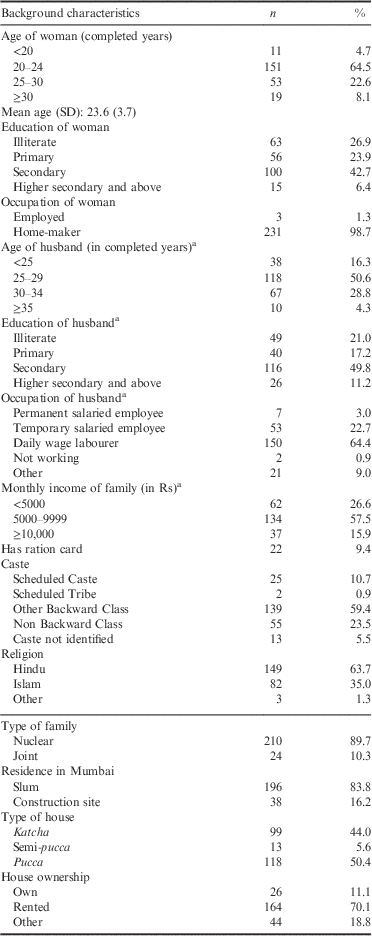
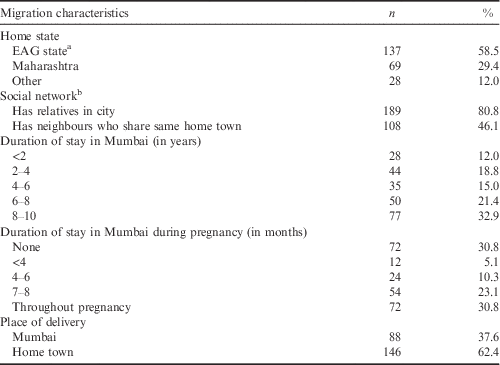
There were 234 women with children less than two years of age in the 3725 households who participated in the study. Table 1 shows that the majority of the respondents were in the age group 20–24 with a mean age of 23.56. Almost a quarter were illiterate and another quarter had primary education only; very few had completed ten years of formal school. Nearly all women were home-makers and most of their breadwinning husbands were temporary wage workers. The majority of them were Hindus and a very few belonged to Scheduled Castes (SC) and Scheduled Tribes (ST). A majority of these women were residing in slums, almost all non-notified. Nearly half were living in katcha/semi-pucca houses made of tin/asbestos sheets, thatch, etc. Those living in pucca houses with concrete walls were renting them. Very few had ration cards in Mumbai and most had no access to food grains through the public distribution system of the city. More than two-thirds of the migrant women were inter-state migrants, mostly from states with poorer development and health indicators or EAG states (Table 2). More than a quarter had migrated from the same state (intra-state migrants), i.e. Maharashtra. Most had relatives in the city and nearly half had neighbours who were from the same home districts/states, i.e. neighbours with similar cultural background.
Background characteristics of migrant women who had given birth in the last two years, Mumbai, India (N=234)
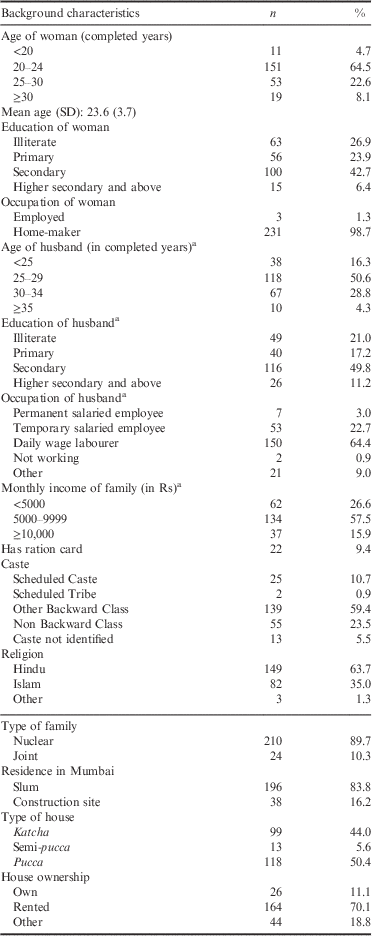
a Data not available for one recent migrant.
Migration characteristics of women, Mumbai, India (N=234)
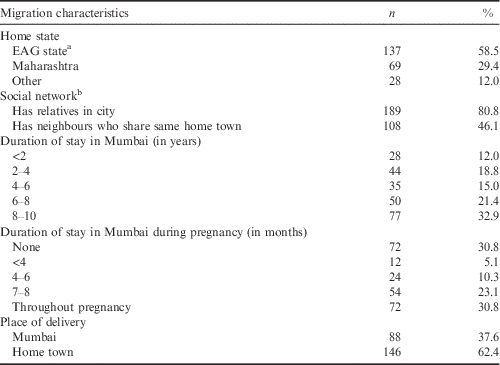
a EAG states are Empowered Action Group states, which include Uttar Pradesh, Uttarakhand, Bihar, Jharkhand, Odisha, Rajasthan, Madhya Pradesh and Chhattisgarh.
b Multiple responses.
Decision to stay in city or travel to home town during pregnancy and for childbirth
Many women went back to their home towns for delivery and only about a third delivered in Mumbai (Table 2). Non-recent migrants had stayed in the city for a longer time, with one-third (49 of 152) remaining in Mumbai throughout their pregnancy (data not shown in table). Compared with this, nearly half of the recent migrants (42 of 82) went to their home towns for their whole pregnancy. Most migrants delivered in their home towns, the proportion being higher among newer migrants (68.3%) compared with older migrants (59.2%).
The qualitative study also confirmed the above findings: that migrant women preferred to be in the familiar setting of their home town where women experienced better social support due to strong social networks.
There is no one here to do work [household work or taking care of women during pregnancy and after delivery], in village [home town] there are many who support, elder sister-in-law is there. (Migrant woman from an EAG state)
Migrants have nuclear families in city, there are no joint families. Husbands go to work and the woman is alone at home. Some can communicate well with others [in society and at health care facilities] but not all. (Staff nurse at maternity home)
It is also common for most Indian women to have their first delivery in their parents’ place. This cultural practice also results in migrant women opting to return home for their pregnancy. Social support and cultural norms override the benefits provided by the city. An intra-state migrant woman who went to her home town said:
Life here is hectic, room is 12 by 12 [144 square feet], this is not convenient. At my home town, my mother and father are there and it will be convenient, I thought [about it] and went to my home town. City is good in a way, we can go anywhere [during emergency]. Vehicle or ambulance is readily available in city. Not so in village.
Women also said that the cost of living in the city was high as well as maternal and child health costs, another reason for many going back to their home town for delivery. One inter-state migrant (EAG state) woman who went to her home town said:
… city has good facilities, means from all aspects, you know. Treatment is also possible here, treatment is good here. So much care is not available in home town. I did not deliver here as my family does not have a high income and do you know that expenditure is so high here? How much more expenditure? How can one stay here with many children?
Young women in low-income communities seldom have the opportunity to decide for themselves. Among migrants, the choice to deliver in the city or in their home town is made either by men or by elder women (mostly mothers-in-law). Upon asking one migrant woman about her preferred place of stay during pregnancy, she responded ‘I will stay where [in city or home town] my family asks me to.’ Another migrant woman stayed in the city even in the absence of social support because her husband was working there and she was expected to do household duties.
In contrast to this, some women did express concern about the maternal health care quality in their home town and preferred to stay in the city. A migrant (intra-state) woman who chose to deliver in the city said:
… there is no facility for Caesarean in my village, one has to travel far for hospital. My daughter is studying in standard V and if I had gone to my home town, she would have missed school for a month.
Is maternal health care a ‘felt-need’?
Accessing maternal health care is not a common practice for women in their home towns, especially for inter-state migrants, who mostly come from EAG states where the utilization of maternal health care is very poor. One inter-state migrant, who delivered in her home town, said:
In my village, [laughs] there is nothing like registering for pregnancy, registration is done only if there is illness. It [registration for antenatal services] does not happen in our villages, it happens here.
Seeking health care for routine check-ups during pregnancy in the absence of illness is also rare, as is the expectation that one should. An inter-state migrant woman (who delivered in Mumbai) who did not use antenatal services said:
I did not avail of any service for during pregnancy of my elder two children and I did not face any problem. I wonder why women here [in Mumbai] go for check-up.
Women also feel that home delivery is safe and they should go to hospital only if they face complications during labour. Women who have had home deliveries in the past without major complications see no need to have an institutional delivery.
One participant also mentioned that there are methods like an analgesic injection used by traditional delivery attendants (dai) which make the process of labour and delivery very easy. A felt-need, especially for delivery at an institution, was mainly reported by those women who had complications during their current or previous pregnancy and/or delivery.
One auxiliary nurse midwife (ANM) revealed that migrants were interested in basic amenities including water, kerosene (fuel for cooking), sanitation and food rations and not very much interested in preventive health care, including maternal health care.
Utilization of antenatal care
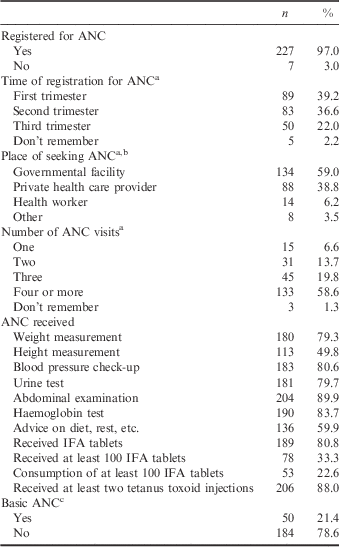
Almost all women had utilized antenatal care services at least once (Table 3) but a majority did so only after completion of their first trimester. A majority accessed services from the public sector. However, in-depth interviews revealed that migrants, being new to the city, were not aware of the health care facilities in the city, including the MCGM maternal health care facilities. The choice of service provider is decided generally after consulting neighbours and friends and based on the respondent’s past experience. Even if the service provider suggested by neighbours and friends is far away, migrants will travel to such providers rather than go to a nearby service provider that has not been recommended by someone in their social network. Migrant women reported being more comfortable with lady physicians from their community.
Utilization of antenatal care (ANC) among migrant women, Mumbai, India (N=234)
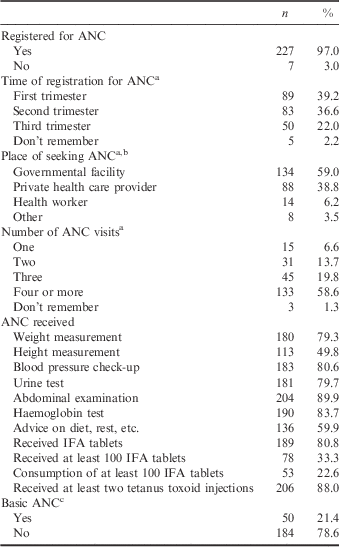
a Percentages calculated from those who had antenatal care.
b Multiple responses,
c Basic ANC defined as having at least three ANV visits, consumed at least 100 IFA tablets and received one tetanus toxoid injection.
Nearly a quarter of women did not even have three antenatal care visits. There was a feeling that one or two visits was adequate to confirm whether the pregnancy was progressing well. Migrant women, especially inter-state migrants, leave the house much less frequently than non-migrants and have fewer interactions with neighbours and health workers. This is not only because they are new to Mumbai but because they are women. Even if they want to access health services, migrant women’s household responsibilities, including child care, limit their freedom to move out of the slum.
Pregnant women in general prefer public health facilities as they do not have to incur consultation costs. A staff nurse at a maternity home said that migrants with the capacity to pay access health care privately but poor ones choose the public sector. The private sector is also preferred because services are perceived to be of better quality. Since, for most migrants, private care providers are available in their vicinity, they are able to avoid the high travel and opportunity costs (loss of wages for husband) of going to public health care facilities.
The low consumption of iron folic acid (IFA) tablets was found to be the weakest component of health care. This resulted in only less than a third of respondents receiving basic antenatal care in spite of accessing other services better. The qualitative study highlighted several myths and misconceptions surrounding consumption of IFA tablets. Migrant women felt that they only had to consume IFA tablets if they felt weak. Some did not consume them because of adverse effects such as indigestion and vomiting. One participant said:
I did not take tablets because she [neighbour] said taking them will result in a big baby and delivery will be difficult.
Community needs are far broader than IFA tablets and maternal health needs. One health care provider (ANM) said:
… these people [migrants and slum dwellers] ask why you [ANM] come again and again? What do you give us? Nothing! We do not have enough food, you say take tablets, we need food, we need food rations and kerosene [fuel to cook], water.
Delivery and postpartum care
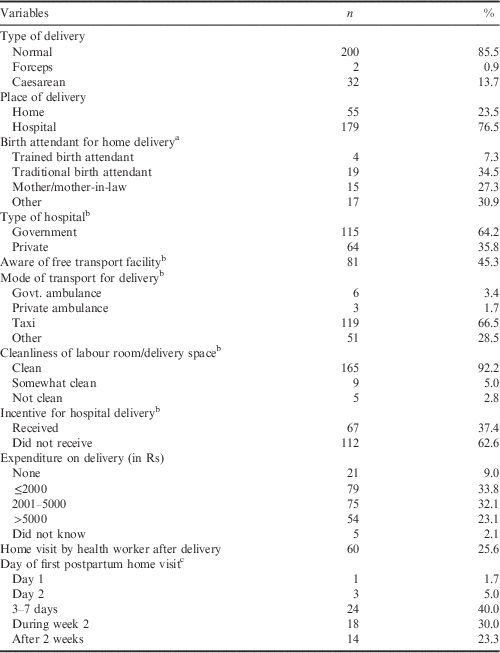
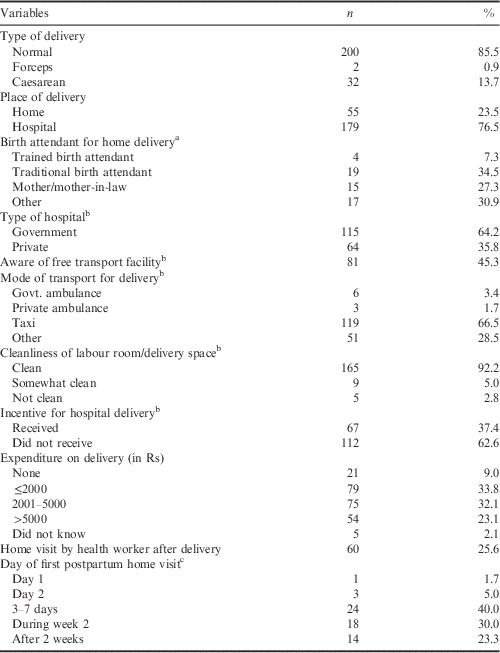
The utilization of delivery and postpartum care among the migrant women is shown in Table 4. A total of 55 (23.5%) women delivered at home helped only by unskilled birth attendants. Most women did not use ambulance services to reach hospitals. Only a third received incentives under the Janani Suraksha Yojana (JSY) scheme for an institutional delivery. Nearly a quarter spent more than 5000 Rs (US$1=50 Rs) for delivery.
Delivery and postpartum care among migrant women, Mumbai, India (N=234)
a Of those who delivered at home.
b Of those who delivered at health facility.
c Of those who were visited at home.
Maternal health care in migrants and residents
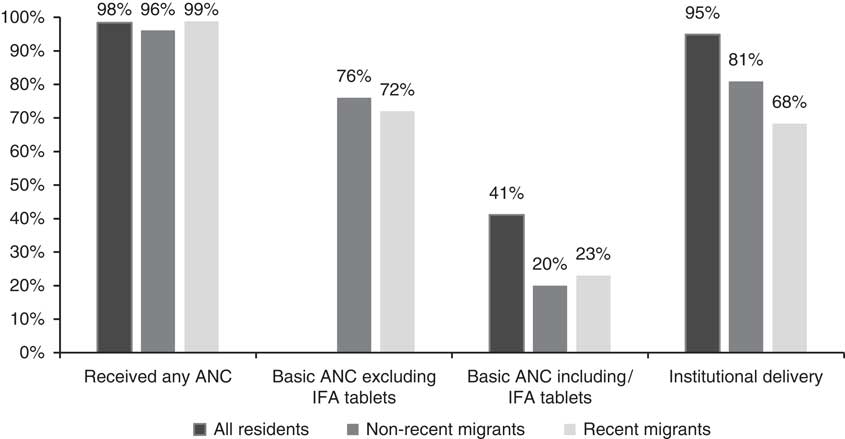
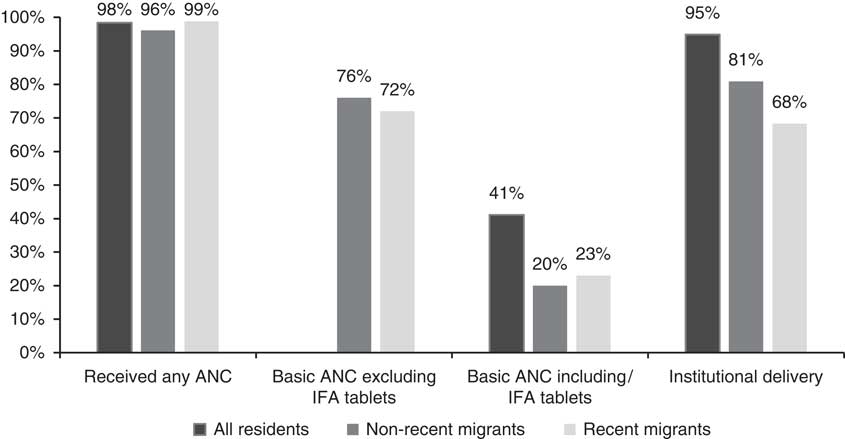
The DLHS-IV report of suburban Mumbai provided information on the utilization of maternal health care among residents (both migrants and non-migrants). The utilization rates of all residents were compared with those of recent migrants (who had migrated less than five ago) and non-recent migrants (more than five years in Mumbai) from the present study (Fig. 1). Across these three groups, almost all received some form of antenatal care but the basic antenatal care was very poor. Basic antenatal care utilization was worse for migrants than for all residents. Inequities between migrants and others were more obvious in institutional deliveries; the recent migrants had poorer indicators than non-recent migrants.
Comparison of maternal health care among all residents (DLHS-IV 2012), recent migrants (less than five years since migration to Mumbai) and non-recent migrants (more than five years in Mumbai). ANC, antenatal care.
Access to maternal health care in Mumbai and home town
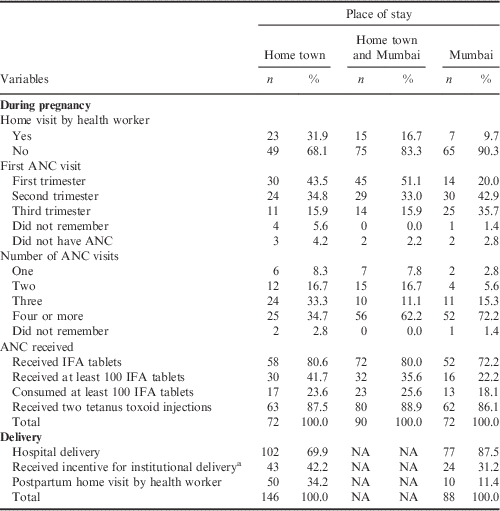
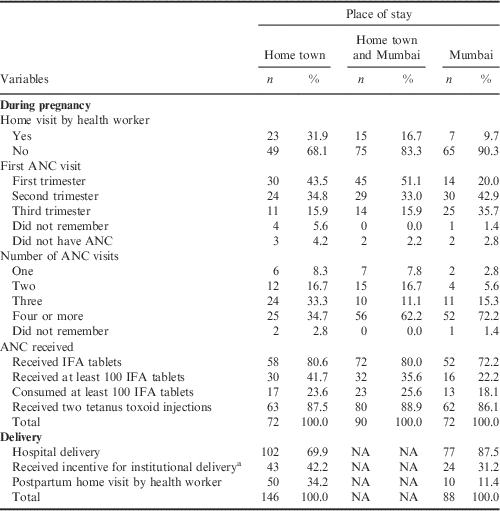
With a majority of migrant women going to their home town for delivery, it was important to assess whether their access to health care was better in their home town or in Mumbai. Data revealed that migrants who stayed in the city used antenatal care services more often (Table 5). However, there was not much difference in the proportion who received basic antenatal care amongst those who stayed in the city, those who stayed in their home town and those who split their time between their home town and Mumbai during pregnancy. The proportion of institutional deliveries was much higher among those who delivered in Mumbai. Thus, residing in the city seemed to have had a positive effect on the utilization of health care. However, the women residing in the city were less likely to be visited by health workers. This was true for both antenatal and postpartum visits.
Access to maternal and child health care by place of stay during pregnancy and delivery of migrant women, Mumbai, India N=234
a Of institutional deliveries.
NA, not applicable.
This contrast was probed further in the qualitative study. Women who went to their home town for delivery mentioned that health workers, especially ASHAs (Accredited Social Health Activists), visited their home and motivated them to use antenatal care as well as delivery services. In Mumbai, however, the population that used the services provided by ANMs was much larger. Migrant women often stay in rented accommodation and these are often in non-notified slums. With women not stepping out of their homes, health workers find it very difficult to identify migrant pregnant women. This is aggravated by the fact that migrant families change residence every eleven months because most rented accommodation is on lease for eleven months. The fact that migrant women also travel to their home towns during pregnancy and for delivery prevents health workers from making home visits. Although home visits were fewer in Mumbai, the antenatal care visits and institutional deliveries were better in the city because of the availability of services in the close vicinity.
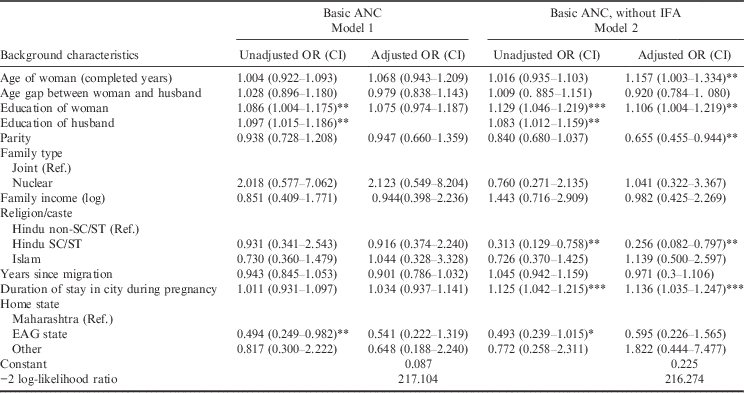
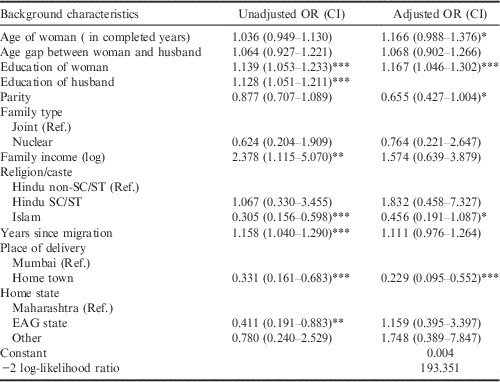
Factors determining health care utilization
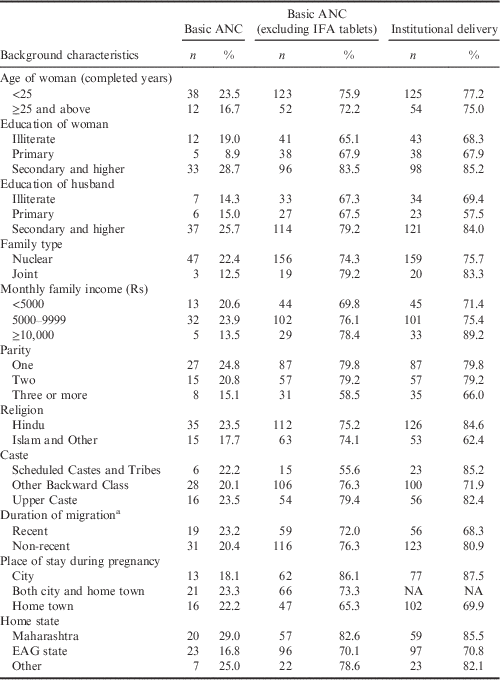
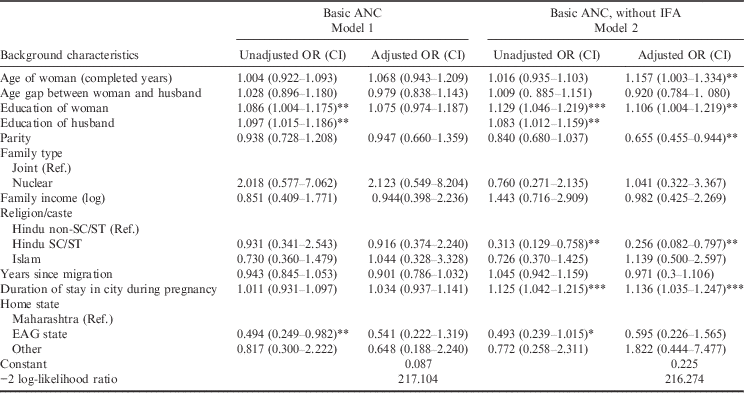
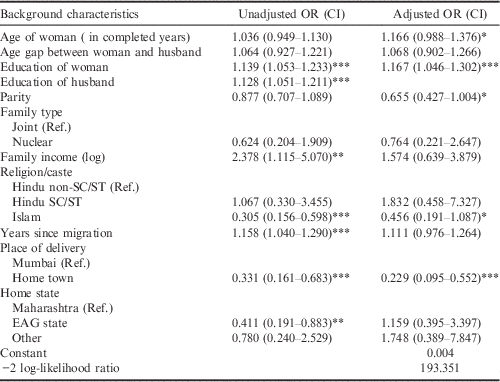
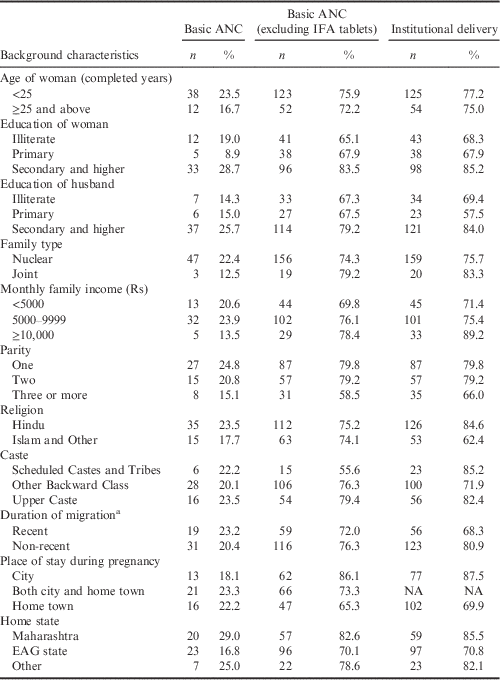
Table 6 give details of the utilization of maternal health care by socio-demographic characteristics. The results of the bivariate (unadjusted) and multivariate (adjusted) analyses are presented in Table 7 and 8. The unadjusted analysis shows that coverage for all three outcome measures improved significantly with higher education of women and that of their husbands. Even after adjusting for other variables, maternal education was a significant predictor of service utilization for basic antenatal care (excluding consumption of IFA tablets – Model 2) and institutional delivery. Increase in age was found to be positively associated with institutional delivery. Parity was negatively associated with utilization of basic antenatal care (Model 2) and institutional delivery, although the association was weak. In-depth interviews with service providers revealed that in Mumbai benefits under the Janani Suraksha Yojana scheme were limited to the first two children only. Service providers also stated that there was a tendency to conceal information regarding parity for two reasons: absence of benefits for birth order three and above and a non-willingness to use family planning methods. Migrants from the Scheduled Castes and Tribes were less likely to use antenatal care (Model 2 – excluding IFA) compared with Upper Caste Hindus.
Utilization of ANC and delivery care among migrant women by socio-demographic characteristics, Mumbai, India, N=234
a Recent category includes migrants who have resided in Mumbai for less than five years and non-recent migrants include those who have resided in Mumbai for more than five years.
NA, not applicable.
Logit regression results for basic antenatal care of migrant women, Mumbai, India
OR, odds ratio; CI, confidence interval; SC, Scheduled Caste; ST, Scheduled Tribe; Ref., reference category.
Education of husband not considered for multivariate analysis due to high collinearity with women’s education.
*p<0.10; **p<0.05; ***p<0.01.
Logit regression results for institutional delivery of migrant women, Mumbai, India
OR, odds ratio; CI, confidence interval; SC, Scheduled Caste; ST, Scheduled Tribe; Ref., reference category.
Education of husband not considered for multivariate analysis due to high collinearity with women’s education.
*p<0.10; **p<0.05; ***p<0.01.
Utilization of institutional delivery care improved as migrants were in the city for longer, but this effect was not observed after adjusting for other variables. Circular migration to home town for care during pregnancy, delivery and infant care was negatively associated with health care utilization. Those who stayed in Mumbai better utilized antenatal care (Model 2). Institutional deliveries were significantly more common for migrants who chose to stay in Mumbai. Intra-state migrants had significantly higher coverage of basic antenatal care (Model 1) and institutional deliveries than inter-state migrants from EAG states. However, after adjusting for other variables such as circular migration to home town for pregnancy and delivery, this factor was not found to be of much relevance.
Health-system-level issues
Issues and challenges at the health system level in terms of provision of services to migrants were explored in the qualitative component of the study. Findings are grouped under availability and accessibility of MCGM health care systems, especially emergency obstetric care, the migrant-friendliness of the systems and specific programmes for migrant women.
Availability and adequacy of municipal health care systems including emergency obstetric care
Antenatal care is provided at primary (urban health post), secondary (peripheral hospitals and maternity homes) and tertiary (medical colleges) facilities. Timings of antenatal clinics in government settings are not convenient for women as they often coincide with their husbands’ work hours. Long queues and less time with providers were shortfalls common to both the public and private sectors. Migrant women were often not aware of the location of government health facilities. Moreover, as stated earlier, their choice of health care provider was dependent on the suggestions made by close relatives, neighbours and their own past experience.
Migrant women were found to have less contact with the general health care delivery system than non-migrants, resulting in fewer opportunities for them to receive health education. Even when they access services, their lack of freedom of movement prevents them from being at the health facilities for a longer time, thus limiting the health education they receive. Municipal authorities mentioned that health education material has been prepared in various languages but many of the migrant women are illiterate. To overcome this difficulty, the government has also provided pictorial health education materials; however, home-bound migrant women mentioned that they had not seen this.
Delivery care is not available at primary facilities and secondary care facilities are often inadequate. A staff nurse at a maternity home reported that many cases are referred to the tertiary care facilities because the availability of gynaecologists at maternity homes is not 24/7. Lack of human resources and lack of equipment and other facilities often result in maternity homes only conducting normal deliveries. More complicated cases that need intervention are referred to the tertiary care facilities. One migrant woman who delivered in the city was referred to a tertiary care facility but travelling there was inconvenient. She had no option but to deliver at a private health facility at a high cost. High parity is a known risk factor for complicated deliveries. Staff nurses at maternity homes said that they referred multiparous women to tertiary facilities as they were not equipped to handle complications should they arise. One staff nurse at a maternity home mentioned that delay in seeking obstetric care was due to the location as the maternity home inside a congested area with poor access by road. She pointed out that migrant women in nuclear families are alone when their husbands leave for work. In the absence of anyone able to accompany them or make decisions, they do not go to hospital immediately after the onset of labour pains. Such delays sometimes result in complicated deliveries, deliveries while being transported or deliveries at home.
Are health facilities migrant friendly?
Poor access to health care can only be partly explained by lack of felt-need, poor education and the cultural norms of the migrants. The nature of health care delivery systems is equally responsible. Migrant women come from a socio-cultural background where higher parity is a matter of pride, which is in contrast to the smaller family norms of Mumbai. Failing to recognize this, health care providers have a negative attitude towards women with higher order births, especially illiterate migrants. This attitude is reflected in the behaviour of staff and hence migrant women do not want to go to municipal facilities as they fear verbal abuse during interactions with staff and physical abuse during labour. A migrant woman who had four home deliveries in Mumbai was afraid to visit a health facility. She said:
… they verbally abuse [gaali dete hain], beat us [marate hain], I am afraid of this.
Maternal health check-ups require patients to undress but migrant women are not comfortable doing so in settings that are not familiar to them. The environment in their home town is perceived to be much more cordial. Migrant women also mentioned that in the city hospitals health care providers can suggest the need for a Caesarean section and some migrants have socio-cultural beliefs against such intervention.
Programmes for migrant women
The municipal corporation implements reproductive and child health programmes for all city dwellers. However, there is no specific programme for migrant women. Janani Suraksha Yojana (JSY) provides cash incentives so that women can access maternal health services. The scheme covers all pregnancies for women below the poverty line in EAG states but in Maharashtra it covers only the first two births. Thus, migrant women coming from EAG states are not eligible to receive JSY benefits for the third or higher order birth when in Mumbai. Women also reported difficulties in accessing these benefits as they did not have any proof of address in Mumbai or any other proof of identity. The MCGM has an HIV prevention programme for migrants but there are no formal mechanisms to link HIV interventions and reproductive and child health programmes.
Discussion
The health status of migrants has received global attention in public health circles in recent years. The National Urban Health Mission (NUHM), India, clearly articulates the need to gather information on migrants’ health and their access to health services. The present study has aimed to fill this gap by understanding access to maternal health care amongst poor migrants in Mumbai. The findings highlight that internal migrant women, particularly recent migrants, have poor access to maternal health care. They are similar to previously published findings on internal migrants in India and abroad (Shaokang et al., Reference Shaokang, Zhenwei and Blas2002; Singh et al., Reference Singh, Rai and Singh2012; Zhao et al., Reference Zhao, Huang, Yang, Pan, Smith and Xu2012; Kusuma et al., Reference Kusuma, Kumari and Kaushal2013), and suggest barriers to utilization of maternal health care are due to a complex interplay of structural, individual and social factors. Although some of these issues have been pointed out in other case studies across the world, some unique issues have been highlighted for the Mumbai case. Inhibitive factors regarding migrants accessing health care pointed out in other studies include maternal age, education of the woman, parity and social status (socially disadvantaged groups are less likely to access health care). In addition to these, this study suggests that issues of temporary reverse migration of migrant women to their home towns (source city/village or city/village of natal kin) for delivery and policy- and programme-level inadequacies in catering to migrants’ needs are important.
Individual factors
The study found that utilization of services was less among recent migrants (those who had migrated to Mumbai less than five years ago) than in non-recent migrants (those who had lived in Mumbai for more than five years). This is consistent with the findings of previous studies (Kusuma et al., Reference Kusuma, Kumari, Pandav and Gupta2010, Reference Kusuma, Kumari and Kaushal2013) of migrant women in Delhi. As migrants stay longer in cities, they become familiar with the service delivery systems in the city. Their social capital also improves, which may result in better utilization of health services. However, the effect of this disappears, according to the present study, when other factors are controlled for, and the place of stay during pregnancy and delivery is instead found to play a significant role. Recent migrants have weaker social support mechanisms and are more likely to go back to their home town for delivery. Better utilization of health care services among settled migrants could at least in part be explained by the fact that they remain in Mumbai city, which has better infrastructure and availability of health services.
The present study found that maternal age is positively associated with institutional delivery, something that has been documented previously (Singh et al., Reference Singh, Rai and Singh2012). This is often attributed to ‘greater say in household’, more confidence and experience in using health services (Gabrysch & Campbell, Reference Gabrysch and Campbell2009).
Increase in parity was negatively associated with utilization of maternal health care. The absence of complications in previous pregnancies and deliveries reduces the perceived risk of complications. This study suggests that a lack of perceived need to access health care services and the responsibility of caring for other children are reasons that migrant women do not use services, something once again found in earlier studies (Gabrysch & Campbell Reference Gabrysch and Campbell2009). The impact of education on the utilization of antenatal care (Shaokang et al., Reference Shaokang, Zhenwei and Blas2002; Zhao et al., Reference Zhao, Huang, Yang, Pan, Smith and Xu2012; Kusuma et al., Reference Kusuma, Kumari and Kaushal2013) and institutional delivery (Singh et al., Reference Singh, Rai and Singh2012; Kusuma et al., Reference Kusuma, Kumari and Kaushal2013) has been well documented in the literature over the years. This study found this to be of importance as well.
Ability to pay for services determines utilization of services where user fees exist. There are no direct costs for utilization of antenatal care or for immunization, particularly in the public sector. However, for deliveries, nearly one-third of women who delivered in private hospitals incurred out-of-pocket expenses. Even among those who accessed government services, there were indirect costs (loss of wages for husband, travel costs, etc.). Although family income was positively associated with institutional delivery in the bivariate analysis, the effect did not persist in the logit regression. This is possibly because those who were poorer chose to go back to their home town for delivery. Another possible reason could be that this study was limited to poor migrants, mostly with a monthly family income of below US$200.
Social factors
Social inequities are known to result in disparities in health. In India, these social inequities are linked to the social hierarchy of the deeply rooted caste system, with Scheduled Castes and Scheduled Tribes being known to have poor health indicators (Alagarajan, Reference Alagarajan2003; Nayar, Reference Nayar2007). This is also the case for Muslims and vulnerable poor migrants. Inadequate antenatal care was more common among Scheduled Castes and Tribes and home deliveries were more common among Muslims.
Maternal health care is not a felt-need because socially pregnancy is viewed as a physiologically healthy state. Local contextual beliefs and experiences result in under-utilization of preventive health services (Finlayson & Downe, Reference Finlayson and Downe2013). Data from NFHS and DLHS reveal that antenatal care is becoming the norm in Mumbai but not so in the northern states, which contribute to the major share of recent migrants in Mumbai (IIPS & Macro International, 2007; IIPS, 2010). Migrant women come from societies where home delivery is the norm and literacy levels are low and hence seeking ANC is not a felt-need. Furthermore, extreme poverty in Mumbai pushes migrants to resort to choices like temporary migration to their home town where they either engage the services of traditional birth attendants or make use of their own family and social network (elderly women in the family or neighbourhood or close relatives).
Social stratification, social norms and poverty are not the only social factors that limit use of health services – deep rooted gender inequity is an equally important factor. In this study, decisions on seeking health care and choosing health care providers were not in the hands of migrant women; nor were decisions on using contraceptives and regulating fertility. Many migrants belong to communities where community members such as religious leaders preach against the use of contraceptives. The prevailing social milieu determines fertility decisions taken within the family; women are seldom part of the process.
While the social factors discussed so far apply for non-migrants as well, their effects are more pronounced in poor and vulnerable migrants. Migrants in general and migrant women in particular face a relative lack of social support in urban areas. The majority of their friends and relatives are in the city for livelihood reasons and cannot provide care because of loss of wages. Moreover, many families are nuclear, rather than extended, so women end up having multiple responsibilities making it difficult for them to access health services.
Structural factors
Migrants’ needs in terms of basic services such as water, shelter and sanitation are not met, so access to preventive health care seems not to be a priority. In other words, there is no demand for it from the migrants themselves. Moreover, as they have no secure housing, migrants have no proof of residence and are subsequently excluded from many government programmes, including the public distribution system and health care (Bhagat, Reference Bhagat2011). This issue of lack of access to government programmes has a negative effect on the utilization of delivery care among slum dwellers in Mumbai (Das et al., Reference Das, Bapat, More, Chordhekar, Joshi and Osrin2010). There is a need, therefore, to address these broad structural determinants. The provision of iron folic acid tablets alone will not change the nutritional status of women if the larger issues of food and nutrition security are not addressed.
Janani Suraksha Yojana (JSY) aims to ensure adequate maternal health care delivery. However, although Maharashtra is a well performing state with regard to maternal health care, the cash incentive scheme is limited to the first two births. In Mumbai, incentives under JSY are available mostly to those who deliver at public health facilities, though a few private facilities are covered. Vulnerable migrants are adversely affected by this as they often deliver in private facilities. Other health interventions such as HIV prevention projects reach migrants but they are vertical in approach. Migrants who are aware of HIV prevention seldom hear about JSY and the maternity benefits provided by the MCGM. Thus there is a need to integrate interventions.
The study also found that health care in Mumbai is tilted towards curative services with primary health care not receiving an adequate share of attention. Primary health centres (urban health posts) have not grown in number for over two decades, though the population has grown enormously, resulting in pressure on resources due to limited staff, especially at the lowest levels (ANMs and MPWs). Although there are maternity homes, most are not able to manage difficult cases resulting in referrals to tertiary care centres, none of which are in the suburban areas where most migrants live. These issues need to take priority. The National Urban Health Mission (NUHM) is expected to provide a much needed boost in terms of resources for health care (Government of India, 2012). In order to address inequities, resources alone will not be enough, and the careful allocation of money for innovative strategies to meet the needs of migrants is essential. The NUHM should not only look at the supply side but also creatively generate demand. The study shows a weak demand for maternal health care. With most recent migrants coming from out of state from varied cultural backgrounds, migrants as a group are not a strong collective force. There is both a lack of willingness to come together and a lack of time for them to engage in social activities as their top priority is securing a livelihood. The NUHM should attempt to get the community involved in health activities, which at present does not happen. This will require consultation with migrants and other stakeholders. Successful interventions need to be scaled up to improve access to maternal health care.
Reforms to the urban health system, both in terms of policy and programmes, could result in less alienation of migrants from the health systems of the city. This hopefully will result in better access to health care in the city and decrease the gap in service utilization between that of migrants and local residents. Focusing on urban health care delivery systems is only half the solution. On the one hand, this study has confirmed that migrants have poor access to health care. However, migrant women who continue to stay in the city during pregnancy, child birth and thereafter are more likely to receive services than those who migrate temporarily to their home city/village. This effect was also observed in a recent study among slum dwellers where the proportion of institutional deliveries was higher among those who chose to stay in Mumbai (Das et al., Reference Das, Bapat, More, Chordhekar, Joshi and Osrin2010). Access to health facilities has been a barrier in rural areas, although antenatal, delivery and postpartum services are provided free of cost. This is because there are indirect social costs associated with utilization of services and these prevent people seeking care (Finlayson & Downe, Reference Finlayson and Downe2013). Reforms to the rural health care delivery system must address issues of migrants otherwise they will continue to miss out on health care services both in the city and in their home towns and villages.
The study was part of a bigger study to assess health care access of migrants and hence was not specifically aimed at detecting differences in coverage or identifying factors that determine access to maternal health care. The quantitative component of the study did have questions about the presence of social networks in the city but these were not aimed at measuring the strengths of social networks or the autonomy of women. Needless to say, these are important factors that need to be considered while developing innovative solutions to the problem.
In conclusion, access to maternal health care was found to be poor among migrants in Mumbai. It was poorer among younger women, those of low educational status, those from the lower social strata of society, those living in nuclear families and those who temporarily migrate to their home city/village. Poor access was due to social and structural factors such as lack of felt-need, lack of available social support, inadequate health facilities and health programmes lacking a migrant focus. The study reiterates the important fact that migration should be considered integral to urban development and their access to health care should be achieved through legislative and policy reforms. Basic amenities must be provided to migrants and they should not be excluded from the rights given to all other citizens. Migrants should be given basic entitlement to government schemes, including the public distribution system and specific maternal health care (JSY) programmes. The NUHM should aim to reduce inequalities and innovative solutions involving community and service providers need to be piloted so that successful models can be scaled up.
Acknowledgment
Data for this paper came from a multi-centric National Taskforce study on ‘Migration, Vulnerability and Access to Healthcare in Cities’ funded by the Indian Council of Medical Research (ICMR), New Delhi.