Implications
Protein nutrition has a direct influence on milk production, reproductive efficiency and feed costs of dairy cows. Substituting soybean meal with other protein sources can be advantageous to reduce production costs by improving milk production and milk composition without increasing nitrogen losses into the environment.
Introduction
Soybean meal is the most commonly used protein ingredient in ruminant diets. It is palatable, offers a good balance and availability of amino acids, and its amino acid profile is similar to that of ruminal bacteria. In addition, soybean meal is superior to other protein sources of plant origin. However, the cost and competitiveness of this ingredient have resulted in the search for alternatives to maintain or maximize cow performance, reduce production costs, and minimize environmental pollution resulting from the excretion of nitrogen. Yeast-derived microbial protein (YMP) is one alternative that can be used to improve protein utilization by ruminants. This protein source is similar to microbial protein, providing high-quality protein with an amino acid profile similar to that of microbial protein synthesized in the rumen. Another alternative is the use of slow-release urea (SRU), which consists of a physically protected non-protein nitrogen source. The use of a non-protein nitrogen source that is released slowly in the rumen has the advantages of reducing the risks of intoxication with urea and replacing true protein sources of high cost as well as those of limited availability. In addition, this source can improve the synchronization of nutrients in the rumen without compromising the productive performance of dairy cows (Das et al., Reference Das, Kalahandi and India2014).
Microbial protein is characterized by a high nutritional value. Among the protein sources used by ruminants, the amino acid profile of microbial protein most closely resembles the amino acids found in milk and muscles, that is, those required by the animal (Schwab, Reference Schwab1994). Metabolizable protein is defined as the true protein that is digested in the post-ruminal portion of the digestive tract and whose amino acids are absorbed by the intestine (National Research Council (NRC), 2001). Thus, the metabolizable protein that reaches the intestine is the sum of microbial protein synthesized in the rumen, dietary protein not degraded in the rumen and endogenous protein (Kalscheur et al., Reference Kalscheur, Vandersall, Erdman, Kohn and Russek-Cohen1999).
Soybean meal is one of the main protein sources used in feeds for dairy cows because of its amino acid profile rich in lysine, despite a slight deficiency in methionine (Singh et al., Reference Singh, Kumar, Sabapathy and Bawa2008). However, since soybeans are an agricultural commodity and Brazil is a major producer and exporter of this crop, its price oscillates according to international prices and thus drives the values of its byproducts. In addition, there is growing demand for soybean in poultry and intensive pig farming, as human food, and in the energy industry for production of biofuels (Souza et al., Reference Souza, Almeida, Silva, Piekarski, Jesus and Pereira2010). Therefore, the identification of other protein sources as substitutes of soybean meal, provided that they do not compromise animal performance, might be a strategy to reduce the feed costs of dairy herds. However, these alternative protein sources must be efficient, safe and economical, and must result in a productive performance similar to that observed in animals fed traditional diets (Pina et al., Reference Pina, Valadares Filho, Valadares, Campos, Detmann, Marcondes, Oliveira and Teixeira2006).
The replacement of plant protein with non-protein nitrogen sources could be an alternative to reduce the competition between humans and animals for protein sources. A safe and efficient source of non-protein nitrogen for ruminal microorganisms is SRU, which can supply nitrogen to ruminal bacteria at a speed that can improve its conversion into microbial protein, minimize the risks of intoxication, can stimulate the growth of fibrolytic bacteria, and create space for the inclusion of digestible fiber and energy in the diet (Akay et al., Reference Akay, Tikofsky, Holtz and Dawson2004). According to Akay et al. (Reference Akay, Tikofsky, Holtz and Dawson2004), SRU is degraded within a period of 16 h, with slow and constant solubilization in the ruminal environment. The same authors compared the in situ degradation of SRU, urea and soybeans, and found that SRU followed a two-phase degradation pattern which closely resembled that of soybean.
A second source of high-quality protein may be YMP, whose amino acid composition is similar to that of microbial protein (Table 1). Yeast-derived microbial protein is able to partially escape ruminal degradation due to its capacity to move with the rumen fluid and thus provides high-quality protein to ruminants since the rumen alone is unable to meet the requirements of growing and high-producing cows (Sabbia et al., Reference Sabbia, Kalscheur, Garcia, Gehman and Tricarico2012).
Ingredients and nutrient composition of the experimental diets formulated for lactating cows

RDP=rumen degradable protein; EE=ether extract; TDN=total digestible nutrients; N-ADF=nitrogen retained in the ADF; N-NDF=nitrogen retained in the NDF; DM=dry matter.
1 YMP=yeast-derived microbial protein (Demp, Alltech Inc., Nicholasville, KY, USA).
2 SRU=slow-release urea (Optigen, Alltech Inc., Nicholasville, KY, USA).
3 Formulated to contain per kilogram: 15 to 20 g Ca; 6900 mg P; 4300 mg S; 200 mg Na; 4.42 mg Co; 43.95 mg Cu; 141.82 mg Zn; 0.91 mg Se; 3.13 mg I; 9550 IU vitamin A; 34.5 IU vitamin E; 2400 IU vitamin D.
4 TDN was estimated using the equation of Weiss et al. (Reference Weiss, Conrad and Stpierre1992).
Lysine and methionine account for 15.8% and 5.2%, respectively, of all essential amino acids in microbial protein, while these two amino acids account for 16.0% and 3.6% of all essential amino acids in YMP (Sabbia et al., Reference Sabbia, Kalscheur, Garcia, Gehman and Tricarico2012). It is therefore expected that the use of a source of YMP, combined with SRU, provides true protein and non-protein nitrogen, complementing, respectively, the amounts of nitrogen necessary in the rumen in order to improve the nutrition of different groups of ruminal microorganisms and to maximize the production of microbial protein.
The objective of this study was to evaluate the effects of partial replacement of soybean meal with YMP, combined or not with SRU, in the diet of lactating Holstein cows on dry matter (DM) intake, milk production and milk composition, as well as blood parameters and nitrogen balance.
Material and methods
All experimental procedures were approved by the Ethics Committee on Animal Experimentation of Instituto de Zootecnia, Nova Odessa, SP, Brazil.
Animals, housing and treatments
Eight first-lactation Holstein cows averaging 75±8 days on milk, 558±78 kg of BW and 26±3 kg of milk production at the beginning of the trial were used. The body condition score of the animals was 3.5 according to the classification of Wildman et al. (Reference Wildman, Jones, Wagner, Boman, Troutt and Lesch1982) (1=extremely thin to 5=very fat).
The cows were individually housed in stalls (17 m2) with paddles to provide the diets according to each treatment and water ad libitum. The diet was provided twice daily after each milking. The concentrate and roughage were mixed homogeneously and supplied to the animals.
The animals were randomly assigned to a duplicate contemporary 4×4 Latin Square design in a 2×2 factorial arrangement to evaluate the effects of feeding two levels of YMP as a protein source (0% or 1.5% of DM; Demp®, Alltech Inc., Nicholasville, KY, USA) and two levels of SRU (0% or 0.75% of DM; Optigen®, Alltech Inc., Nicholasville, KY, USA). The diets were formulated using the Spartan Ration Evaluator-Balancer for Dairy Cattle 3.0.3 program for lactating cows according to daily milk production, with the animals consuming approximately 20 kg DM per day (Table 1). The substitution of soybean meal with other protein sources (YMP, SRU or both) increased the space for including a larger amount of corn in the treatments in which soybean meal was replaced only with SRU or with the combination of SRU and YMP.
The daily diet of each animal was weighed and half the amount was provided at 0800 h and the remaining at 1600 h in individual feed bunks, immediately after milking. The amount of feed provided daily was adjusted as a function of refusals of the previous day to allow for 10% refusals.
The experiment was divided into four 28-day periods of 21 days for adaptation and 7 days for data collection.
Measurements and samplings
Feed and refusal samples were collected daily from days 22 to 28 for chemical analysis. Weekly samples were pooled, representing the experimental period of each animal. The samples were frozen after each collection for subsequent bromatological analysis.
The cows were milked daily at 0700 and 1600 h. On day 27 of each experimental period, one milk sample per cow per day was obtained which consisted of 50% of the morning sample and 50% of the afternoon sample. The milk samples were collected into plastic flasks containing preservative (2-bromo-2 nitropropane-1,3-diol) and sent to the Milk Clinic of ESALQ/USP, Piracicaba, SP, Brazil, for analysis of somatic cell count (SCC), fat, protein, lactose, total solids, solids not-fat (SNF), casein and urea nitrogen.
For SCC, decimal logarithmic transformation was performed (log SCC). Milk production was measured in volumetric flasks.
The milk yield obtained was corrected for 4% fat (fat-corrected milk, FCM) using the equation proposed by the NRC (2001): FCM (kg/day)=(0.4×milk production (kg))+(15×fat production (kg/day)). Milk yield was corrected for energy (energy-corrected milk, ECM) according to the equation proposed by Ulbrich et al. (Reference Ulbrich, Hoffmann and Drochner2004): ECM (kg)=((0.38×fat (%)+0.21×protein (%)+1.05) × milk production (kg))/3.28.
One blood sample per cow per period was collected at 0500 h on day 22 of each experimental period for the determination of urea nitrogen content. Blood was collected by puncture of the jugular vein using individual and disposable materials. A 40×16 mm needle and syringes with a maximum volume of 3 ml were used to avoid the formation of air bubbles, which resulted in measurement errors of the device and loss of the cartridge.
Urine samples were collected for 3 consecutive days from days 22 to 24, 4 h after the morning feeding. Urination was stimulated by massaging the vulva. The urine samples were pooled to represent the experimental period per animal. For the calculation of nitrogen balance, creatinine concentration was determined in a 50 ml spot urine sample (Valadares et al., Reference Valadares, Broderick, Valadares Filho and Clayton1999). For analysis of creatinine concentration, 50 ml urine was collected, homogenized and filtered. Aliquots (5 ml) were diluted in 20 ml 0.036 N sulfuric acid and the pH was adjusted to below 3 to avoid bacterial destruction of purine derivatives (allantoin, uric acid, xanthine and hypoxanthine). The samples were stored in properly identified plastic containers and frozen (−20°C) for subsequent analysis. A pure urine sample was stored for the determination of nitrogen.
Fecal samples were collected directly from the rectal ampulla of each animal for 3 consecutive days from days 22 to 24 of each experimental period. The samples were pooled to represent the experimental period per animal. To determine the volume of excreted feces for calculation of the nitrogen balance, the total feces excreted by each animal were collected and weighed over a period of 72 h, starting when the animals returned to the pen after morning milking on day 22 until the same time of day 25 of each experimental period.
Chemical analyses
The samples of feed (offered and leftovers) and feces were dried for 3 h at 105°C to determine DM (National Forage Testing Association, 2006; method 2.2.2.5) and subsequently incinerated at 550°C until they reached a stable mass to assess the ash content (Association of Official Analytical Chemist (AOAC), 1990; method 942.05). The N content was determined using the Kjeldahl method and then multiplied by 6.25 to determine the CP content (AOAC, 1990; method 954.01). The ether extract was determined by the Soxhlet method which uses as reagent petroleum ether (AOAC, 2005; method 945.16). Acid-detergent fiber and NDF were obtained using the method of Van Soest (Reference Van Soest1963) and hemicellulose was determined as described by Van Soest et al. (Reference Van Soest, Robertson and Lewis1991). Lignin and cellulose were obtained by hydrolysis of the ADF residue in sulfuric acid as described by Van Soest et al. (Reference Van Soest, Robertson and Lewis1991). Nitrogen retained in the NDF and ADF fractions (N-NDF and N-ADF, respectively) was obtained by analyzing the nitrogen content of the NDF or ADF residue using the Kjeldahl method and the result is expressed as %N-NDF and %N-ADF (DM basis). Total digestible nutrients were calculated using the equation of Weiss et al. (Reference Weiss, Conrad and Stpierre1992). Nitrogen-free extract was obtained as Nitrogen-free extract=(100)−(% CP+% Ash+% Ether Extract+% Crude Fiber).
Milk fat, protein, lactose, total solids and SNF were analyzed by IR spectrometry in a Bentley 2000 analyzer (Bentley Instruments®). Somatic cell counting was performed by flow cytometry in a Somacount 300 (Bentley Instruments®, Chaska, MN, USA). Casein content was determined by Fourier transform IR spectroscopy with a Combi Foss 6000 FTIR system and urea nitrogen was analyzed by a colorimetric or IR enzymatic method in a ChemSpec 150 analyzer (Bentley Instruments®).
Individual venous blood samples were collected carefully and immediately filled into the cartridges of the blood gas analyzer for use in the i-STAT analyzer. An Abbott® EC8+ cartridge (Abbott Park, IL, USA) was used. In addition to urea nitrogen content, this cartridge also permits the determination of sodium, potassium, chloride, glucose, pH and partial carbon dioxide pressure. The measurements were also used to determine bicarbonate, base excess, total carbon dioxide, anion gap and hemoglobin.
Urinary creatinine concentrations were measured by a kinetic colorimetric enzymatic assay in a SBA-200 CELM® analyzer using commercial kits (Laborlab®, Guarulhos, Brazil). Total daily urinary volume was estimated as the ratio between daily urinary excretion of creatinine and creatinine values observed in spot urine samples according to Oliveira et al. (Reference Oliveira, Valadares and Valadares Filho2001). The daily urinary volume of each animal was quantified by multiplying the respective live weight by the amount of creatinine excreted daily and dividing the product by the creatinine concentration (mg/l) in the spot sample. The average of 24.05 mg/kg obtained by Chizzotti et al. (Reference Chizzotti, Valadares Filho, Valadares, Chizotti and Tedesch2008) was adopted to obtain total daily excretion of creatinine.
The N balance was calculated as the difference between total N intake and the sum of urinary, fecal and milk N secretions, and is expressed as % of total N intake.
Data analysis
The results were analyzed in a duplicate contemporary 4×4 Latin square design in a factorial arrangement of treatments with two levels of SRU (0% or 0.75%) and two levels of YMP (0% or 1.5%) using the Mixed procedure of the SAS program (SAS Institute Inc., 2009). Data were examined for outliers and the normality of residuals was tested using the Shapiro–Wilk test (UNIVARIATE procedure; SAS Institute Inc.; Cary, NC, USA).
The main effects of SRU and YMP and their interaction were included as fixed effects, and square, period and animal within square were included as random effects. When a significant effect of the treatment was observed, means were compared by the Student t-test using the PDIFF option of the SAS program.
Results and discussion
Dry matter intake
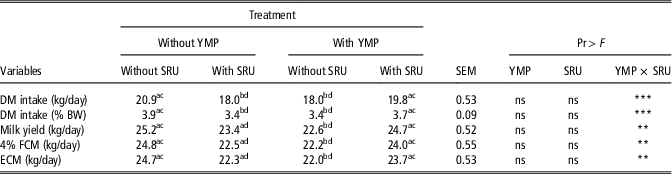
There was an interaction between YMP and SRU (P<0.001; Table 2). In diets without YMP, the inclusion of SRU decreased DM intake (in kg and as % of BW) but did not affect milk production in kg/day or 4% FCM and ECM. On the other hand, for diets with YMP, the inclusion of SRU increased DM intake (P<0.05). When diets with SRU were compared, the inclusion of YMP increased DM intake (P<0.05), with no differences in milk production (kg/day). For diets without SRU, the inclusion of YMP decreased DM intake (P<0.05).
Effect of yeast-derived microbial protein (YMP) and slow-release urea (SRU) on dry matter (DM) intake, milk production and 4% fat-corrected milk (FCM) and energy-corrected milk (ECM) in lactating cows

a,bMeans in the same row followed by different superscript letters differ for SRU within YMP.
c,dMeans in the same row followed by different superscript letters differ for YMP within SRU.
**P<0.01, ***P<0.001.
In the present study, mean DM intake ranged from 3.4% to 3.9% of the animal’s live weight. The lowest DM intake was observed for the treatments that used either SRU or YMP alone. However, when this encapsulated urea was combined with YMP (YMP+SRU), DM intake was higher and did not differ from the diet containing soybean meal as the main protein source (without YMP and without SRU). The inclusion of a non-protein nitrogen source usually reduces DM intake because of low palatability, sensory factors or systemic mechanisms, among other factors. However, since the non-protein nitrogen content used in this study was only 0.75% DM and ruminal degradation was slow because of protection of the non-protein nitrogen source, a reduction in DM intake due to sensory factors seems unlikely.
The negative impact of substituting soybean meal with YMP observed in this study was unexpected and it is difficult to explain how supplementation with YMP reduced DM intake. Within this context, Neal et al. (Reference Neal, Eun, Young, Mjoun and Hall2014), studying the replacement of protein sources in the lactation diet of Holstein cows, also found an unexplainable decrease in DM intake when soybean meal was replaced with YMP. Sabbia et al. (Reference Sabbia, Kalscheur, Garcia, Gehman and Tricarico2012) investigated lactating Holstein cows supplemented with increasing concentrations of YMP, replacing soybean meal in high-forage diets, and observed a cubic effect on DM intake in cows fed YMP concentrations of 0%, 1.14%, 2.28% and 3.41% DM. In contrast to the present study, Sabbia et al. (Reference Sabbia, Kalscheur, Garcia, Gehman and Tricarico2012) found an increase in DM intake of cows fed 1.14% YMP (300 g/day) compared to control.
Milk production and efficiency
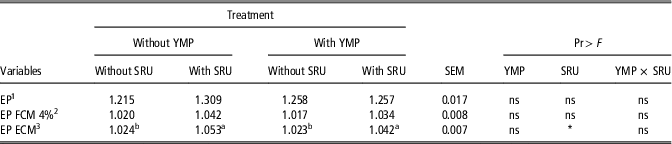
There was an interaction between YMP and SRU (P<0.01) for milk production of animals that received the experimental diets as shown in Table 2. However, no interaction was observed for milk production efficiency (P>0.05) (Table 3).
Effect of yeast-derived microbial protein (YMP) and slow-release urea (SRU) on the efficiency of milk production (EP), efficiency of milk production 4% fat-corrected milk (EP FCM) and efficiency of milk production energy-corrected milk (EP ECM) in lactating cows

a,bMeans in the same row followed by different superscript letters differ by the Student t-test (P<0.05).
1 EP=efficiency of milk production, calculated as kilogram milk production per day divided by kilogram dry matter (DM) intake per day.
2 EP FCM 4%=efficiency of milk production corrected for 4% fat, calculated as kilogram FCM per day divided by kilogram DM intake per day.
3 EP ECM=efficiency of milk production corrected for energy, calculated as kilogram ECM per day divided by kilogram DM intake per day.
*P<0.05.
No difference in milk production was found in animals fed the diet containing SRU, regardless of the presence of YMP (P>0.05). Animals that received the diet with SRU had lower intakes when SRU was not combined with YMP, but there was no effect on milk production. Thus, animals fed the diet containing only SRU were more efficient than animals that received YMP+SRU. It should be noted that cows fed YMP+SRU had milk productions similar to those of cows receiving soybean meal as the main dietary protein source (without YMP and without SRU), with no difference in DM intake, a finding justifying replacement of the protein source. Susmel et al. (Reference Susmel, Sphangero, Stefanon and Mills1995) observed that the addition of a non-protein nitrogen source to the diet of dairy cows increased milk production due to improved dietary fiber utilization by microorganisms.
Milk production efficiency, which was on average 1.26, was not affected by the exclusive or combined presence or absence of YMP (P>0.05) and SRU (P>0.05) in the diets. The same was observed for milk production efficiency corrected for 4% fat, which was on average 1.03. Similar results have been reported by Oliveira et al. (Reference Oliveira, Valadares and Valadares Filho2001) who found no effect of diets on the production efficiency of lactating cows. In contrast, ECM production efficiency was higher for the diets with SRU compared to those not containing this non-protein nitrogen source (1.05 and 1.02, respectively). Thus, the presence of SRU, combined or not with YMP, improved the milk production efficiency of cows.
Milk composition
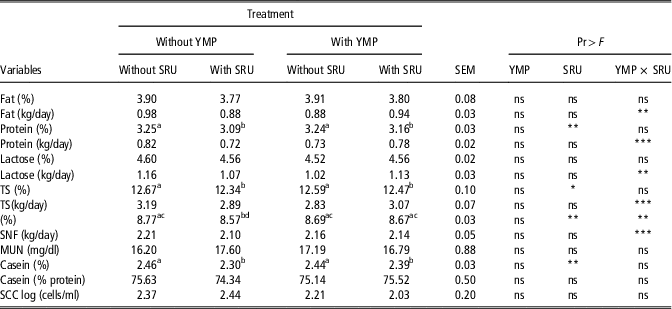
There was no interaction between YMP and SRU for milk components (P>0.05) (Table 4), except for SNF (P<0.01), fat (P<0.01), protein (P<0.01) and lactose (P<0.05) in kg/day, as shown in Table 4.
Effect of yeast-derived microbial protein (YMP) and slow-release urea (SRU) on total milk components of lactating cows

TS=total solids; SNF=solids not-fat; MUN=milk urea nitrogen; SCC=somatic cell count; log SCC=log 10-transformed SCC.
a,bMeans in the same row followed by different superscript letters differ for SRU within YMP.
c,dMeans in the same row followed by different superscript letters differ for YMP within SRU.
*P<0.05, **P<0.01, ***P<0.001.
In the present study, there was an interaction between YMP and SRU for SNF. No difference was observed for the diets containing YMP, irrespective of the presence of SRU (P>0.05). The finding of the highest protein concentrations, including casein and total solids, in the diets without SRU might be explained by the supply of metabolizable protein to the animal. Indeed, in agreement with Neal et al. (Reference Neal, Eun, Young, Mjoun and Hall2014), microbial protein synthesis may have been maximized by supplementation with protein sources rich in rumen undegradable protein, such as YMP, or sources with a good amino acid profile, such as soybean meal.
Differences were observed for the percentages of protein (P<0.01), casein (P<0.01) and total solids (P<0.05).
A difference in total solids content was observed in the present study (P<0.05), with this component reflecting the composition of all milk components, except water. Since there was no difference in fat content, this difference in total solids is probably due to the variation in protein content (including its casein fraction and respective percentage), which differed significantly between the treatments studied. The lowest total solids content was observed for the diet containing SRU (12.4%) compared to those without SRU (12.63%). Souza et al. (Reference Souza, Almeida, Silva, Piekarski, Jesus and Pereira2010) evaluated the effect of partial replacement of soybean meal with coated urea on milk composition and found that supplementation with coated urea decreased the percentage of fat and total solids of milk. However, unlike in the present study, these authors found no differences in protein production or content between treatments.
In this study, an interaction between YMP and SRU was observed for SNF. A difference in SNF content was observed for animals fed the diets without YMP (without YMP and SRU v. with SRU) and with SRU (SRU v. YMP+SRU). Animals fed the diets without YMP and without SRU had higher SNF concentrations than animals that received the SRU diet. This variation in SNF is also likely to be due to the differences in protein content, including casein, since this variable does not include fat content.
Blood parameters
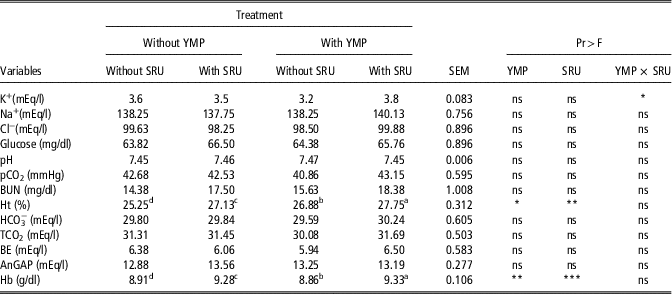
There was no interaction between YMP and SRU (P>0.05) or differences between treatments (P>0.05) for the blood parameters studied, except for potassium concentration (Table 5), which remained in the normal range. Tsiamadis et al. (Reference Tsiamadis, Panousis, Kritsepi-Konstantinou, Arsenous and Valergakes2016) suggested that the primiparous condition of cows can reduce potassium levels. This author evaluated 154 blood samples from primiparous and multiparous Holstein cows with mean daily milk productions of 24 kg and observed a difference in potassium concentration between the different groups of animals, with lower levels in primiparous cows at the beginning of lactation.
Effect of yeast-derived microbial protein (YMP) and slow-release urea (SRU) on metabolites and blood gases of lactating cows

pCO2=partial carbon dioxide pressure; BUN=blood urea nitrogen; Ht=hematocrit; HCO3 -=bicarbonate; TCO2=total carbon dioxide; BE=base excess; AnGAP=anion gap; Hb=hemoglobin.
a,bMeans in the same row followed by different superscript letters differ for SRU (P<0.05).
c,dMeans in the same row followed by different superscript letters differ for YMP (P<0.05).
*P<0.05, **P<0.01, ***P<0.001.
Differences in blood parameters were observed between diets with and without YMP and diets with and without SRU. In this respect, animals that received the diets with YMP had higher hematocrit and hemoglobin concentrations than those fed the diets without YMP, and animals that received the diets with SRU had higher hematocrit and hemoglobin concentrations than those fed the diets without YMP. These findings agree with Gonçalves et al. (Reference Gonçalves, Pedreira, Pereira, Santos, Souza and Porto Junior2014) who studied the replacement of soybean meal with different nitrogen sources for feedlot lactating cows and found a difference in hematocrit and hemoglobin when soybean meal was replaced with SRU in the diet, with the observation of lower hematocrit and hemoglobin concentrations for the control treatment. The kidneys produce the hormone erythropoietin, which stimulates the production and maturation of red blood cells and the incorporation of iron into these cells. One hypothesis that can be raised is that SRU plays some role in the production of red blood cells (Thrall et al., Reference Thrall, Weiser, Allison and Campbell2012).
Nitrogen balance
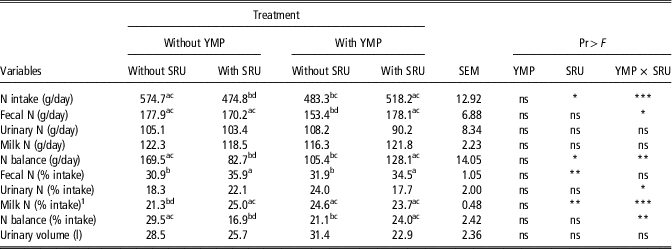
Table 6 shows the nitrogen intake, secretion and excretion, nitrogen balance and urinary volume.
Effect of yeast-derived microbial protein (YMP) and slow-release urea (SRU) on nitrogen intake, nitrogen excretion and nitrogen balance of lactating cows

a,bMeans in the same row followed by different superscript letters differ for SRU (P<0.05).
c,dMeans in the same row followed by different superscript letters differ for YMP (P<0.05).
1 Efficiency of nitrogen utilization measured as the ratio between N content in milk and N intake by the cow, divided by 100.
*P<0.05, **P<0.01, ***P<0.001.
The reductions in DM intake observed when protein supplements replaced soybean meal led to a decrease in nitrogen intake for the diets containing SRU, YMP or both compared to the treatment using only soybean meal (without YMP and without SRU).
There was no difference in protein nitrogen secretion in milk (g/day) (P>0.05). However, replacement of soybean meal with YMP, SRU or both increased the efficiency of N utilization (milk protein N/N intake) (P<0.01). According to Bequette et al. (Reference Bequette, Backwell and Crompton1998), the efficiency of conversion of ingested nitrogen into milk nitrogen rarely exceeds 30% in dairy cows. A similar result was found in the present study in which the best results did not exceed 25%. Migliano et al. (Reference Migliano, Silano, Martins, Arcari and Santos2016) found a total nitrogen content in milk (g milk N/% total N) of 20.3% and reported that lower nitrogen secretion is related to lower excretion of non-protein nitrogen. This may be due to the amino acid profile especially of soybean meal, which could promote better utilization by ruminal microorganisms and consequently reduce the excretion of nitrogen compounds.
Santos et al. (Reference Santos, Dias Júnior, Bitencourt, Lopes, Siécola Júnior, Silva, Pereira and Pereira2011) showed that ruminants are inefficient in nitrogen utilization, excreting about 26% of ingested nitrogen in the milk and losing about 27% in urine. Supporting this inefficiency, Tamminga (Reference Tamminga1992) reported losses higher than 70% of ingested nitrogen in feces and urine. These numbers are a matter of concern considering the environmental impacts caused by the excretion of nitrogen.
Neal et al. (Reference Neal, Eun, Young, Mjoun and Hall2014) studied protein replacement in the lactation diets of dairy cows and observed an increase in the efficiency of conversion of feed nitrogen to milk nitrogen for cows fed YMP compared to the control treatment without YMP or SRU. Although decreased nitrogen intake was the main reason for the increased efficiency, the fact that YMP is able to escape ruminal fermentation and provide high-quality amino acids also affected nitrogen efficiency for milk production (Neal et al., Reference Neal, Eun, Young, Mjoun and Hall2014). However, inconsistent results have been reported in many studies that investigated supplementation with different rumen undegradable protein sources. For example, the supply of different amounts and sources of rumen undegradable protein is responsible for the depression of microbial protein synthesis or the inability of rumen undegradable protein to provide the limiting amino acid.
There was no interaction between YMP and SRU for the mean proportion of nitrogen excreted in feces, but a difference was observed between the diets with and without SRU. Higher concentrations of fecal N (% intake) were observed for the diets containing SRU, regardless of the presence of YMP. Gonçalves et al. (Reference Gonçalves, Pedreira, Pereira, Santos, Souza and Porto Junior2014) used 0.9% SRU on a DM basis and found higher fecal nitrogen excretion (36.25%).
In the present study, in view of the degradation rate of nitrogen compounds, the rate of nitrogen utilization by ruminal microorganisms for their growth may have caused in animals subjected to all treatments an imbalance between nitrogen and energy in the rumen, decreased nitrogen compound utilization efficiency and consequently increased the synthesis of urea by the liver, with subsequent urinary excretion. Associating this variable with nitrogen intake, higher nitrogen excretion was observed, which is not desirable in production systems (Pereira et al., Reference Pereira, Véras, Ferreira, Batista, Marques and Fotius2007).
Conclusions
The inclusion of YMP, SRU or both as partial substitutes of soybean meal in dairy cow diets affected milk production. The presence of SRU increased milk production efficiency. The diet containing both ingredients, YMP+SRU, resulted in milk production similar to that observed for the diet containing only soybean meal.
Partial replacement of soybean meal with YMP, SRU or both in dairy cow diets also affected milk composition. The treatment with YMP and without SRU provided a composition similar to that of soybean meal (without YMP and without SRU), creating space for the inclusion of cheaper byproducts such as soybean hull, citrus pulp, wheat bran or corn grain, which would reduce costs and increase energy supply to the animal. Diets without SRU resulted in an increase in protein, casein, total solids and SNF, affecting the efficiency and quality of dairy products. This is an interesting finding for the dairy industry and for producers who receive payments based on the quality attributes of milk.
The replacement of soybean meal with YMP, SRU or both improved the efficiency of nitrogen utilization.
Acknowledgements
This project was supported by the Alltech® do Brasil Agroindustrial Ltda.
Declaration of interest
The authors declare no conflicts of interest.
Ethics statement
All procedures of animal handling were approved by CEUA-IZ of Instituto de Zootecnia, Nova Odessa, SP, Brazil (protocol number 162).
Software and data repository resources
None of the data were deposited in an official repository.