Disasters, such as hurricanes, floods, winter storms, and human-induced incidents (eg, chemical spills, terrorism), devastate US communities every year, leading to increased morbidity and mortality among the population. Reference Horney1–Reference Molesky5 The year 2020 was no exception with a record-breaking 30 named storms during the Atlantic hurricane season, wildfires burning more than 8.8 million acres, and heavy rain leading to flooding in several areas of the country; all on top of the global coronavirus disease (COVID-19) pandemic. 6–11 Unfortunately, disasters do not impact society equitably with certain population groups facing greater risk before, during, and after disasters, including, but not limited to, access to resources and supports as well as exposure to disasters themselves. Reference Horney1,12,Reference Flanagan, Gergory and Hallisey13 For example, low-income communities and communities of color may have access to fewer resources, higher social vulnerability, and less access to health care. Reference Ross14,Reference Wolkin15 They also are more likely to live in areas prone to natural disasters. Reference Ross14,Reference Wolkin15 Once a disaster strikes, these pre-existing gaps are often exacerbated. Therefore, it is essential that preparedness policies, plans, and practices account for social, economic, and health inequities.
Millions of dollars are allocated each year for US hospital preparedness, and yet a large portion of disaster-related morbidity and mortality occurs before individuals ever have the opportunity to be transported to a hospital. Reference Chiu, Schnall and Mertzlufft16 Further, much of the disaster-related morbidity and mortality that occur are indirectly related to the disaster (eg, they are associated with living in damaged or destroyed infrastructure). 17–Reference McKinney, Houser and Meyer-Arendt19 Therefore, household preparedness is essential to a successful response and can help mitigate loss of life, injuries, and illnesses immediately after a disaster’s impact. During a disaster, household members may be on their own for a period of time because of the ongoing response efforts, size of the affected area, loss of communication, impassible roads, and safety purposes that lead to shelter-in-place. 20 Therefore, a common recommendation is to promote household preparedness through the preparation of an emergency supply kit (ESK). 21–23 An ESK is a collection of basic items (eg, water and food, radio, flashlight) that a household may need in a disaster that are stored together in a manner that can be easily accessed, such as in large boxes, bins, or bags. Having an ESK can aid in short-term survival by providing essential items for use during a disaster or emergency, thus limiting the need to rely on emergency services or leave a safe structure into a hazardous environment to secure necessary items.
While an ESK is essential for everybody, it is even more essential for those who cannot (or will not) evacuate from their home. This often includes those in low-income or minority communities, persons with disabilities, and/or those with chronic medical conditions who may lack mobility (eg, no transportation, rely on others to be physically mobile) and be less able to evacuate on short notice. 24–Reference Elder, Xirasagar and Miller26 Yet, as ESKs can be costly and require additional storage space within the home, the same households that may be unable or unwilling to leave, may also face barriers in assembling and storing an ESK. A review of published literature on the use of ESKs following a disaster found that data tend to focus on general ESK ownership, including prevalence, factors associated with ownership, and interventions to increase ownership. Reference Olympia, Rivera and Heverley27–Reference Bagwell, Liggin and Thompson46 Data often focus on specific populations, making it difficult to generalize across studies because of the variation in population groups and questions researched. In general, ESK ownership varies based on the population assessed (eg, geographic location, demographics), with estimates ranging from as low as 22% to upward of 81%. 36,Reference Olympia, Rivera and Heverley47 The most comprehensive data are from the Federal Emergency Management Agency’s (FEMA) National Household Survey (NHS), which surveys approximately 5000 adults yearly to track progress in personal disaster preparedness. 48 In 2021, 45% of respondents reported they have gathered supplies, comparable to the 81% and 80% reported in 2020 and 2019, respectively. 34–36 While people often express optimism about having ample supplies to endure 3 days without electricity or running water, studies suggest that even with regional variation, less than half of households actually assemble dedicated ESKs. 34,Reference Kohn, Eaton and Feroz44 Factors such as previous disaster experience, education in the field of disaster response or emergency management, and health status of individuals as well as demographic factors and social determinants of health such as education, marital status, race, ethnicity, and gender all have potential impacts on the likelihood of owning an ESK. Reference Ablah, Konda and Kelley37,Reference Bagwell, Liggin and Thompson46
The ongoing COVID-19 pandemic has had a major impact on many aspects of life, directly and indirectly, and may have affected the way households prepare for emergencies such as how supplies are gathered and the items to include in ESKs (eg, masks, hand sanitizer). 34 Because of this, many of the preparedness estimates before 2020 may no longer be accurate. In addition, with more households potentially staying at home during a disaster to avoid potential COVID-19 exposure, ESKs are even more essential. At the time of our survey implementation, there were limited current (ie, 2020–2021) national data on ESK ownership publicly available. Therefore, our goal was to characterize ESK possession on a national level to help guide next steps to better prepare for and respond to disasters and emergencies—specifically, describing the proportion and distribution of ESK ownership, exploring any regional differences, and examining how factors such as social determinants of health, previous experience, and beliefs may impact preparedness and ESK ownership.
Methods
The Centers for Disease Control and Prevention (CDC) added 10 questions to the existing Porter Novelli’s (PN) ConsumerStyles surveys in fall 2020 and spring 2021. PN ConsumerStyles is a cross-sectional market survey of a random sample of non-institutionalized adults (age 18 years or older) from Ipsos’ KnowledgePanel®. Reference Bagwell, Liggin and Thompson46 In 2020, FallStyles was sent to 4548 panelists between September 24 and October 10. In 2021, SpringStyles was sent to 10 919 panelists between March 23 and April 13. For both surveys, reminders were sent to non-responders on days 3, 7, and 13 and those who completed the survey received 5000 cash-equivalent reward points (worth approximately US $5) and were eligible for a sweepstakes. While sampled from the same KnowledgePanel® pool, the 2020 FallStyles and 2021 SpringStyles are 2 separate samples; there is no way of knowing if any respondents participated in both surveys.
While the specific questions related to ESKs remained the same in both surveys, there were changes to some demographic variables between fall 2020 and spring 2021 (eg, income, household type). All modifications were accounted for by creating matching variables between 2020 FallStyles and 2021 SpringStyles, except for employment which could not be aligned and, therefore, could not be directly compared. Both surveys are weighted on several demographic and household factors. Reference Yeager, Krosnick and Chang49,50
Descriptive analyses examined distributions of demographic characteristics, preparedness levels (ie, having 1 or more of the 5 FEMA recommended plans Reference Elder, Xirasagar and Miller26 ), previous disaster experience and beliefs, and ESK possession and items. Missing data were minimal in both surveys for all variables (< 5%). Chi-square tests investigated the associations between ESK ownership and demographics, disaster experience and perceptions of preparedness, and beliefs. Because FallStyles and SpringStyles data were similar in terms of descriptive statistics and significant associations, we ran a multivariable logistic regression on the most recent SpringStyles data to help explain the importance of key variables (eg, race, ethnicity, income, education) in terms of their relationship with overall ESK ownership, in the presence of others. The authors used a backward stepwise elimination procedure, beginning with all demographic variables in the model and eliminating those that did not statistically predict (P < 0.05) the dependent variable (ESK ownership) 1 by 1. Only the final model is presented in the text. All data presented within this report, including the tables, are weighted. Data are presented with fall 2020 first followed by spring 2021 unless otherwise noted. However, data are presented as 1 value if they were the same for the 2 surveys. If the 2 data points had less than 1% difference, they are reported as 1 value with an approximate (∼) sign.
Results
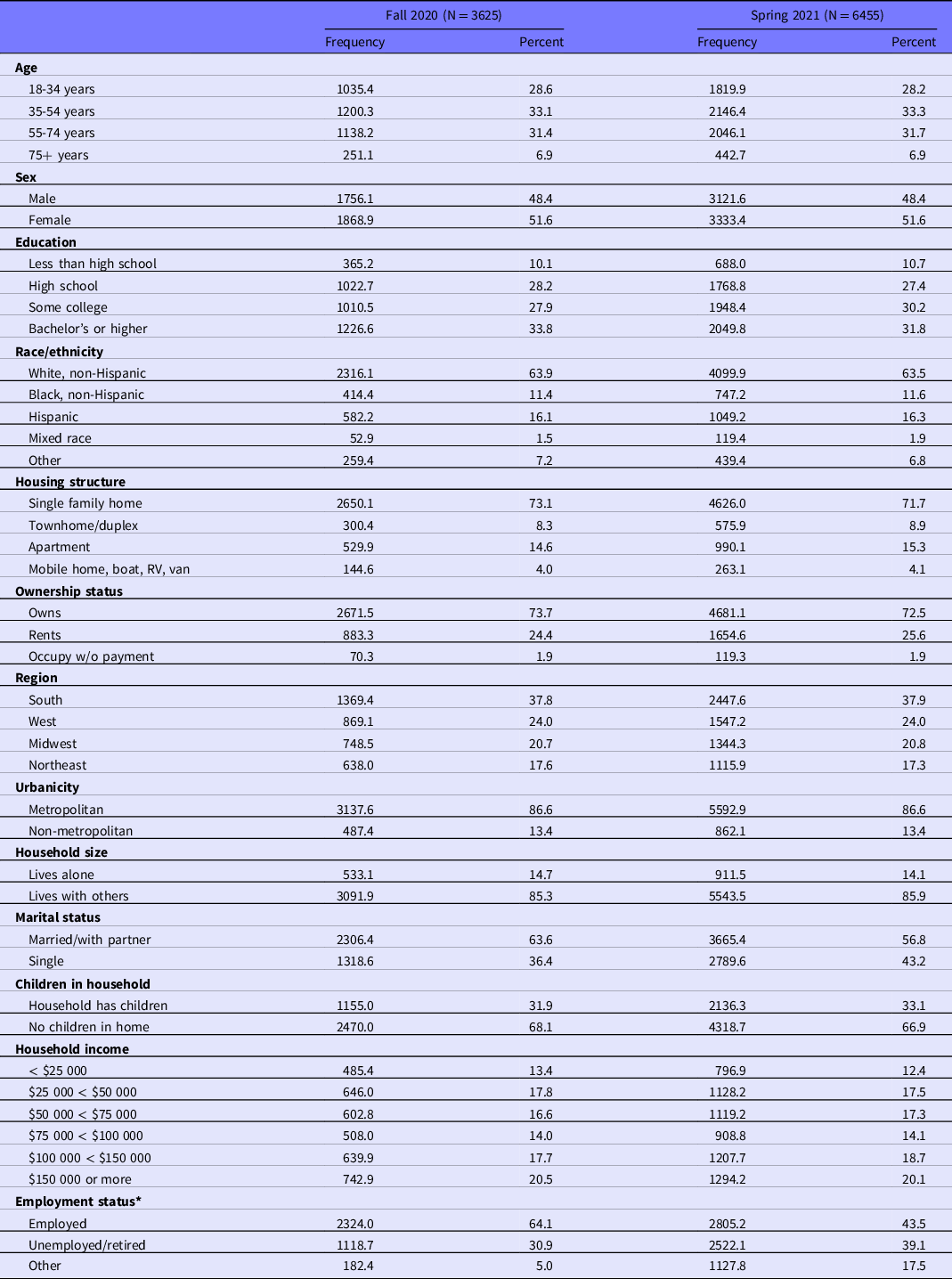
A total of 3625 (79.7%) completed the 2020 FallStyles survey and 6455 (59.1%) adults completed the 2021 SpringStyles. Overall, the fall and spring weighted demographics were comparable (Table 1). Slightly more than half of respondents (51.6%) were female and educational attainment was distributed across categories. Roughly 63% self-identified as white with ∼11% black, ∼16% Hispanic, and less than 2% multiracial. Most live in single-family homes (73.1%, 71.7%), with ∼15% in apartment homes, ∼8% in townhomes or duplexes, and ∼4% in mobile homes, RVs, boats, or vans. The majority (73.7%, 72.5%) own their homes with a quarter (24.4%, 25.6%) renting and 1.9% living in their home without payment. The South had the most representation with ∼38%, followed by the West (24%), Midwest (∼21%), and Northeast (∼17%), with the majority living in metro areas (86.6%) compared to non-metro (13.4%). Less than 15% live alone.
Weighted demographics of respondents, United States: 2020–2021

* Fall 2020 “Employed” includes all currently employed persons, and “Other” includes those who are temporarily out of work; Spring 2021 “Employed” is employed full-time only, and “Other” are those who are employed part-time. Therefore, these are separate categories and should not be compared.
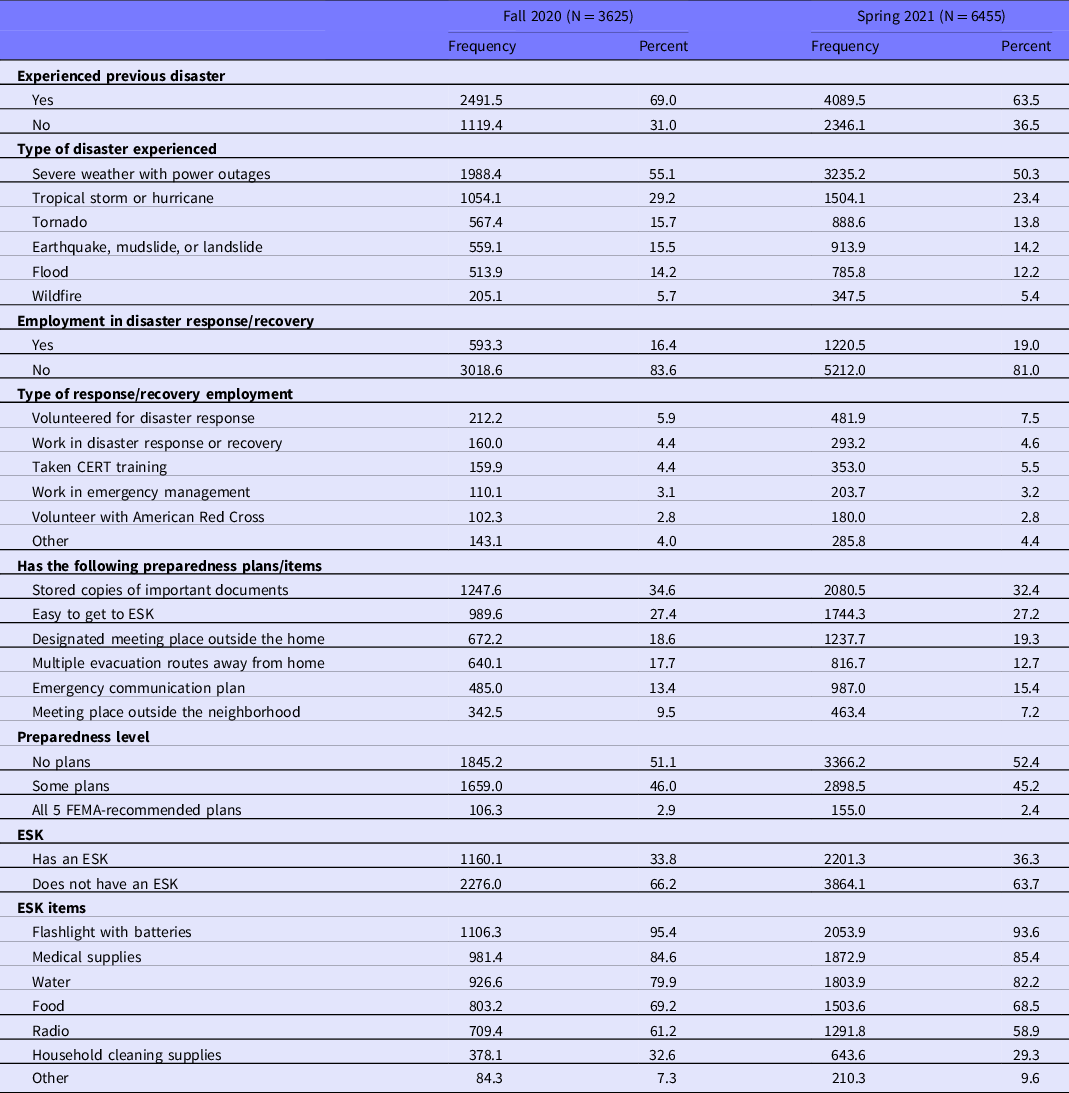
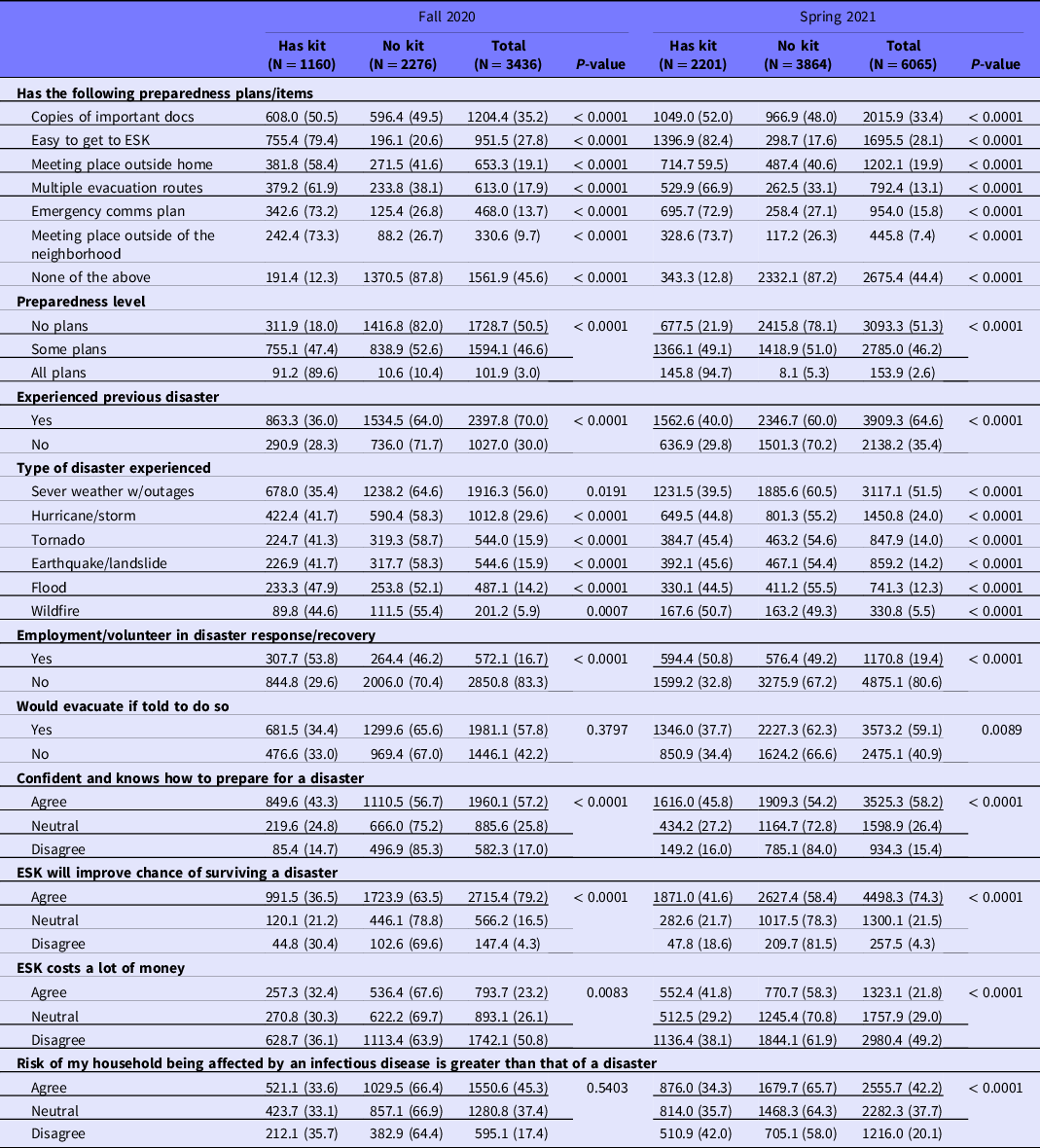
Most respondents (69.0%, 63.5%) have experienced a disaster, with severe weather with power outages being the most common (55.1%, 50.3%), followed by a tropical storm or hurricane (29.2%, 23.4%) (Table 2). A tornado; earthquake, mudslide, or landslide; or flood was experienced by roughly 15% for each disaster type. Several (16.4%, 19%) responded that they, or somebody in their household, worked, volunteered, or trained in disaster response or recovery. Overall, ∼27% of respondents stated they had an “easy to get to” ESK as part of the preparedness plans and items. When given the definition of an ESK in a separate question, approximately a third (33.8%, 36.3%) reported having one. This difference in response could be because of the definition provided or the lack of “easy to get to” in the question. Of those who had an ESK based on the latter question (ie, with the definition provided), almost all (95.4%, 93.6%) reported having a flashlight with batteries, ∼85% reported medical supplies, ∼80% reported having water, almost 70% had food, and roughly 60% had a radio. Household cleaning supplies were present in approximately a third (32.6%, 29.3%) of ESKs.
Weighted preparedness levels and disaster experience, United States, 2020–2021

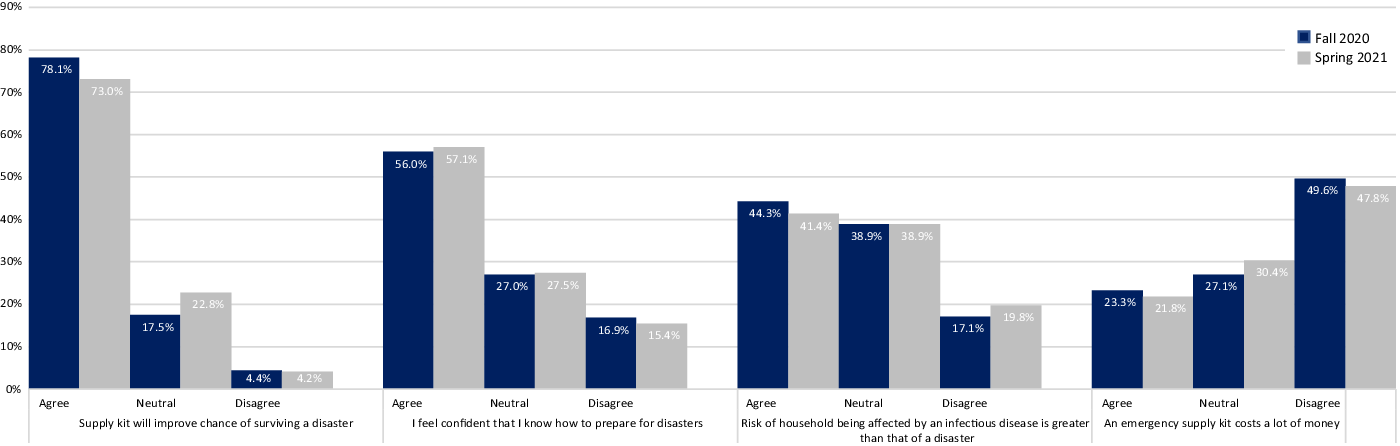
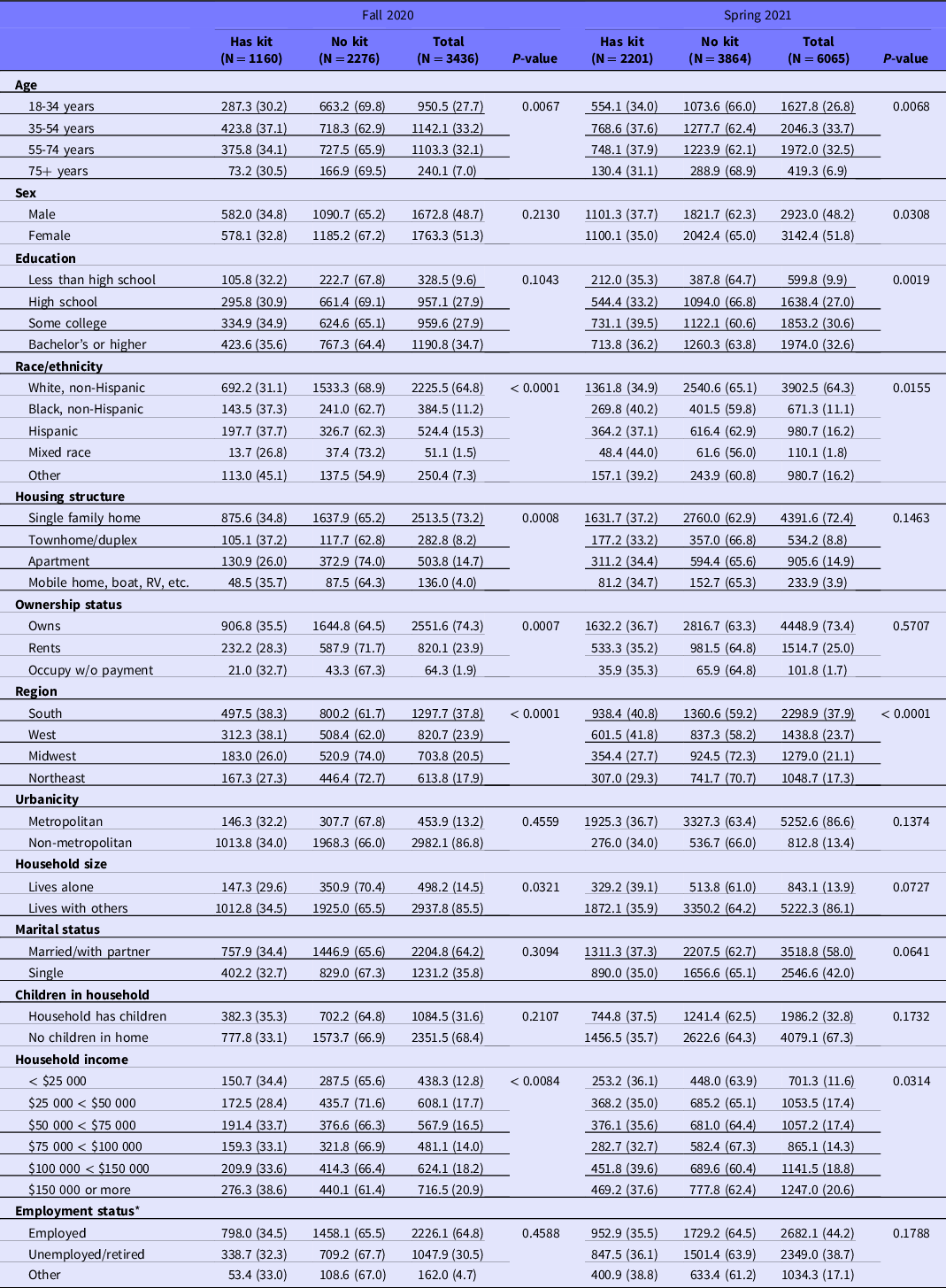
When asked whether an ESK would help their chance of surviving a disaster, three-quarters (78.1%, 73.0%) agreed while few (∼4%) disagreed (Figure 1). The cost of an ESK does not seem to be a barrier for almost half (49.6%, 47.8%), but slightly more than 20% agreed that an ESK costs a lot of money. When asked whether the risk of their household being affected by an infectious disease was greater than that of a disaster, slightly more agreed in the fall (44.3%) than the spring (41.4%). Based on chi-square tests, there is a significant association between ESK ownership and age, race/ethnicity, region, and household income for both surveys (Table 3). In addition, ESK ownership is associated with housing structure, household size, and ownership status in FallStyles and education in SpringStyles. Preparedness level, disaster experience, and beliefs are also associated with ESK ownership (Table 4). All preparedness plan items are significantly associated with increased ESK ownership. Of those who do not have any preparedness plans, 82.0% and 78.1% also do not have an ESK. Of those who have all 5 preparedness plans, 89.6% and 94.7% have an ESK. Experience through work, volunteering, or training in disaster response or recovery is also associated with ESK ownership. Roughly half of those who indicated they or a household member had experience in the response and recovery field had an ESK (53.8%, 50.8%).
Weighted beliefs about disasters and emergency supply kits (ESKs), United States, 2020 -2021.

Emergency supply kit (ESK) ownership by demographic characteristics (weighted) United States, 2020–2021

* Fall 2020 “Employed” includes all currently employed persons, and “Other” includes those who are temporarily out of work; Spring 2021 “Employed” is employed full-time only, and “Other” are those who are employed part-time. Therefore, these are separate categories and should not be compared.
Emergency supply kit (ESK) ownership by preparedness, disaster experience, and beliefs (weighted) – United States, 2020–2021

As far as beliefs, being confident in knowing how to prepare for a disaster and agreeing that ESKs will improve chance of survival are significantly associated with having an ESK; over 40% of those who agree they are confident have a kit (43.3%, 45.8%) and a higher percentage of those who agree a kit will improve the chance of surviving a disaster own a kit versus those who disagree (36.5% vs 30.4%; 41.6% vs 18.6%). Additionally, the belief that ESKs cost a lot of money is associated with kit ownership; those who are neutral have lower reported kit ownership than those who either agree or disagree with the statement. However, there is some discrepancy between FallStyles and SpringStyles with regards to the perception that the risk of an infectious disease is greater than that of a disaster. While there is no significant association in the fall data (P = 0.5403), there is a significant association in SpringStyles with 42.0% of those who disagree that infectious disease is a greater risk to their household than a disaster reporting kit ownership.
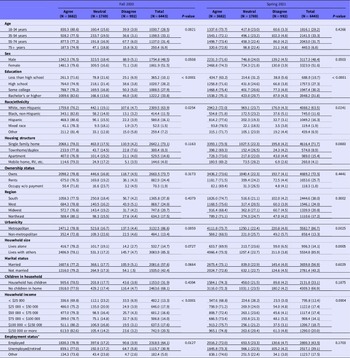
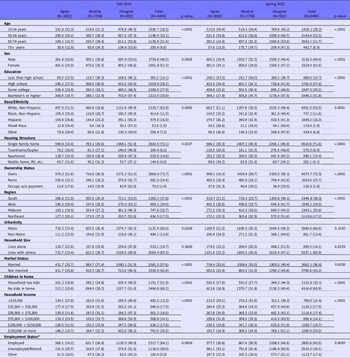
With regard to believing an ESK will improve their chance of survival (Table 5), education level, race/ethnicity, urbanicity, and household income all have significant associations in both surveys. Also, several variables are associated with believing that ESKs are expensive (Table 6). For example, women were more likely than men to agree that an ESK is expensive. In addition, of those with a household income of less than $25,000, ∼29% agree supply kits are expensive compared to 19.7% and 14.9% of those with a household income of more than $150,000 annually, and ∼28% households with kids agree kits are expensive compared to 20.8% and 18.9% of homes without kids.
Respondent believes an emergency supply kit (ESK) improves chance of survival (weighted) – United States, 2020–2021

* Fall 2020 “Employed” includes all currently employed persons, and “Other” includes those who are temporarily out of work; Spring 2021 “Employed” is employed full-time only, and “Other” are those who are employed part-time. Therefore, these are separate categories and should not be compared.
Respondent believes emergency supply kits are expensive – United States, 2020 - 2021

* Fall 2020 “Employed” includes all currently employed persons and “Other” includes those who are temporarily out of work; Spring 2021 “Employed” is employed full time only and “Other” are those who are employed part-time. Therefore, these are separate categories and should not be compared.
Adults ages 35–54 years and 55–74 years have a 32.0% and 37.8% increased odds, respectively, of having an ESK compared to older adults ages 75 years and more (data not shown). In addition, there is a 10.9% decreased odds that women will have a kit (compared to men). As mentioned, region plays an important role, with those in the Midwest and Northeast being close to half (44.6% and 40.4%, respectively) as likely to have a kit as those in the South. The South and the West were comparable.
Those who are fully prepared (ie, have all 5 FEMA recommended plans), are ∼64 times more likely to have an ESK (data not shown). But, having any plans increases the likelihood of also having an ESK (OR = 3.4). When analyzed individually, the preparedness plan with the highest odds ratio was an emergency communication plan (OR = 6.5). When it comes to disaster experience, experiencing a previous disaster increases the odds of having an ESK by 57% (OR = 1.6). Among individual disasters included in the questionnaire, experiencing wildfires had the highest odds for ESK ownership (OR = 1.9). Working, volunteering, or having training (eg, Community Emergency Response Team [CERT]) increases the likelihood of having a kit more than twofold (OR = 2.1).
Those who are confident (ie, agree with the statement) that they know how to prepare for a disaster have almost 4.5 times the odds of having a kit as those who disagree and almost 3 times the odds of being prepared (OR = 2.9) (data not shown). Furthermore, those who believe that an ESK will improve their chance of surviving a disaster are also more than 3 times as likely to have a kit as those who disagree with that sentiment (OR = 3.1). They are also 86.0% more likely to be prepared overall (OR = 1.9). When it comes to beliefs about the cost of ESKs, those who agree they cost a lot of money are more likely to have a kit than those who disagree (OR = 1.2), but those who are neutral are 33.2% less likely to have a kit (OR = 0.7). Finally, those who believe the risk of their household being affected by an infectious disease is greater than that of a disaster are 28.0% less likely to have an ESK (OR = 0.7) and 15.5% (0.8) less likely to be prepared.
Limitations
These data are not without limitations. ConsumerStyles surveys are cross-sectional and limited to only those within the panel. Therefore, while we have 2 surveys, they are only 2 snapshots in time and do not represent a longitudinal analysis. Also, even though KnowledgePanel® works to ensure representativeness of the respondents on several key aspects, there are some potential differences in areas that have traditionally mattered in disaster preparedness and response, such as household structure, home ownership, and persons within the home (eg, marital status, living with others, having kids). However, none of these determinants were found to be significant in our modeling. Further, the panel only represents those within the 50 US states and does not include panel members from the territories. The US territories are prone to disasters and should be included in all disaster research. However, as previous data have shown, the island territories may have different preparedness needs as, for example, the traditional 3-day supply of food and water may not be enough for such harder-to-reach geographies. Reference Schnall, Wolkin, Roth and Ellis31 As far as the survey questions, the demographic categories changed between fall 2020 and spring 2021, making it impossible to compare employment and limiting the analysis of household type by combining mobile homes with boats, RVs, and vans. Finally, because all questions were closed-ended, any reasoning for certain responses (eg, “other”) had to be inferred. While this research is integral in acquiring knowledge of current possession of ESKs, it does not address the gap in knowledge regarding actual use and effectiveness of ESKs during a disaster. Therefore, a needed step is to explore in detail the actual effectiveness of ESKs with more granular data. This would require an immediate post-impact survey assessing whether households had an ESK, what they did (and did not) use within the kit, what items were missing or needed that required them to leave the home or call for emergency services, and related questions.
Discussion
This analysis reflects nationally representative samples characterizing ESK possession in the United States during the COVID-19 pandemic. Overall, the fall and spring samples are comparable and show that ESK ownership remains lacking across the country. While most respondents believed that an ESK would help their chance of survival, only a third have one. Of note, for those respondents only reporting 1 preparedness plan or item, an ESK was the second most popular (after copies of important documents). This shows that, while ownership is low, ESKs are still one of the top preparedness items among households. Similarly, there is a strong increase in the likelihood of having an ESK when having 1 or more emergency preparedness plans.
Results highlighted that there seems to be some confusion about what comprises an ESK. Two questions were asked within the survey (as part of the preparedness plans and separately) and answers varied by roughly 10%. Of those who reported not having an ESK when asked directly, roughly 8% reported having an “easy to get to emergency supply kit” in the previous question. While the wording differed (one specifying “easy to get to” and the other providing a definition), the varied responses are concerning and indicate a need for communication efforts to clearly define ESKs to the general population. Despite this confusion, of those who reported having an ESK, the most common item was a flashlight with batteries, followed by medical supplies, water, food, and a radio; all of which are recommended on both FEMA and CDC websites. However, because the question did not define medical supplies (eg, it included a 7-day supply of prescription medication) or the amount of food and water (ie, a 3-day supply), it is unclear whether the ESK would be adequate for the household during an emergency response.
Therefore, it is vital to provide clear guidance on the essential components of a household ESK. While there are suggested items on FEMA, CDC, American Red Cross, and several other agency (both local and federal) websites, there is little consistency among these lists, and several include over 20 items, which can cost hundreds of dollars depending on the size of the family. 51 In fact, an environmental scan synthesizing recommendations identified 36 common items (defined as listed on at least a third of lists) among the 196 ESK lists around the United States. 51 While no single item was listed on all 196 lists, the most common item was a flashlight (83%), followed by a radio (82%), batteries (81%), and medications (80%). While ESKs should have some items tailored to regional or local needs (eg, sunscreen, mylar thermal blankets), there should be a core set of common items recommended on all lists (eg, food, water). In addition, creative solutions must be implemented to ensure that cost is not a barrier to preparedness. This could include campaigns that encourage purchasing 1 item each month to reduce cost burden, making homemade kit items, providing discounts for prebuilt kits in major retailers, or providing kits at no cost to low-income households.
The identified gaps in ESKs are not equitable across the nation, with several social and demographic factors associated with kit ownership including age, gender, education level, and region of the country. These data are comparable to the recently released FEMA NHS, which collected data in the first half (February through May) of 2021 and found that 45% had “assembled or updated supplies,” with lower percentages among groups at higher risk (eg, non-primarily English-speaking households, socioeconomically disadvantaged, minority populations). 34 Interestingly, race, income, housing structure type, and home ownership status were not significant within the multivariable models of our data. This could potentially be because these factors are overlapping with the other components (eg, education level) or are modifiers of the relationship, which has been found in other research. Reference Nukpezah and Soujaa52,53 This is also consistent with our understanding of race as a social construct disproportionately associated with social, economic, and environmental disadvantages because of systemic and structural racism. Reference Braveman, Arkin and Proctor54 While income may not be a barrier to having an ESK, the fact that roughly a quarter cited that ESKs cost a lot of money suggests that this is a potential barrier that needs to be addressed. Those who think it costs a lot report higher kit ownership than those who disagree or are neutral so their perception could be based on their experience in purchasing items. Further analysis into this relationship between cost (or perception of cost) and possession of an ESK is warranted.
Of particular concern are older adults (those 75 years or more) who were less likely than other age groups to have a kit. Older adults tend to have more chronic conditions, mobility issues, or other factors that may impact their health and safety during a disaster. Men are more likely than women to have an ESK as well as be confident in preparing for a disaster. In addition, those who completed at least some college were more likely to have a kit than those with just a high school education. There are several promotional efforts that could be done to help mitigate the potential financial barrier and address the demographic disparities (eg, older adults, women) such as campaigns that suggest gathering supplies over time to reduce the financial burden, marketing pre-made kits at discounted prices in common retailers, and using preparedness funds to help provide kits to those in need. Reference Al-rousan, Rubenstein and Walla40,Reference Bagwell, Liggin and Thompson46 This could help ensure that those who are both most in need and least likely to have a kit have a basic level of preparedness.
Despite their importance, social determinants were not the only factors that mattered in terms of ESK ownership. As expected, being prepared in 1 area increased the likelihood of having an ESK. In fact, those who had all 5 recommended FEMA plans were almost 64 times more likely to have an ESK. Even having some plans increased the odds of having a kit by almost 3.5 times. This positive impact on having an ESK by having 1 or more emergency preparedness plans can be leveraged to further increase awareness and education around preparedness planning and encourage the creation of such plans by households. In addition, those who felt confident in preparing for a disaster had over 4 times the odds of having an ESK and had almost 3 times the odds of being prepared. Also, those who believed that ESKs would improve their chance of surviving a disaster were 3 times more likely to have a kit. This is important in terms of people’s mindset and is consistent with previous research on preparedness and several theories on behavior modifications. Reference Paek, Hilyard and Fremuth55–57
Believing that a disaster is not the greatest threat to the household also has an impact. Those who believe the risk of an infectious disease is greater than that of a disaster were less likely to have a kit than those who disagreed with the statement. This is important to help inform and target communication efforts to households. For example, if someone is confident in their preparedness for a disaster or does not believe that a disaster will affect their home, they may not listen to standard approaches to messaging. In addition, the personal experiences of respondents played a key role in both attitudes and behaviors. Most respondents had experienced some type of disaster. This factored into their preparedness with those experiencing any type of disaster reporting higher levels of kit ownership than those who had not. While respondents in these surveys experienced mostly natural disasters, such as flooding and wildfires, ESK recommendations should not be limited to such incidents. ESKs are beneficial to any disaster or emergency that may necessitate staying within the home for a period of time or that limits access to resources (eg, road blockages, supply chain issues). The COVID pandemic served to reinforce this point and the continued need for such an all-hazards approach to preparedness.
The impact of respondent disaster experience was amplified when it came to experience working or volunteering in disaster response or recovery. Those who had such experiences had more than 100% increased odds of having a kit and almost 200% increased odds of being prepared. Those who have experienced wildfires were the most likely to have an ESK. This is important since wildfires can occur without warning and in unpredictable ways, causing necessary evacuations to happen quickly. The disaster-type associations could be linked to regional associations as geographic region significantly impacts ESK ownership. Respondents in the South and West were more likely to report having ESKs. Texas and California are the 2 most disaster-prone states in the United States with 102 and 100 federal major disaster declarations since 1950, respectively. 57 However, while the South had the most disaster declarations in that time frame (n = 989), the Midwest had the second most disaster declarations with 576, and New York state (in the Northeast) ranked fourth. Therefore, while true that Southern states have the most experience and therefore could be more prepared based on such experience, disasters can (and do) happen in all regions.
Conclusion
Overall, these data show that, as a nation, there is much work to be done in terms of ESK ownership. While these data are important to provide a national picture to federal agencies, the significant regional differences also highlight the fact that all disasters are local. Therefore, efforts must continue to be made at the local level to both inform and address ESK ownership. For example, the need for tailored strategies focused on groups that have been marginalized and under-resourced communities who are both at high risk for disasters and have low levels of emergency kit ownership. These include focused communication strategies to address barriers, including those related to costs, as well as efforts to provide ESKs. These data are an essential starting point in characterizing ESK ownership and can be used to help tailor public messaging, work with partners to increase ESK ownership, and guide future research.
Author contributions
Conceptualization, Schnall, Hanchey, Bayleyegn, and Daniel; Methodology, Schnall, Hanchey, Daniel, and Stauber; Formal Analysis, Schnall, Kieszak, Heiman, Hanchey, and Stauber; Writing – Original Draft Preparation, Schnall; Writing – Review & Editing, Schnall, Kieszak, Hanchey, Heiman, Bayleyegn, Daniel, and Stauber; Supervision, Daniel, Bayleyegn, Heiman, and Stauber; Funding Acquisition, Schnall and Daniel.
Conflict(s) of interest
None.
The findings and conclusions in this report are those of the author(s) and do not necessarily represent the official position of the Centers for Disease Control and Prevention/the Agency for Toxic Substances and Disease Registry.
Ethical standards
These data were considered not human subjects research by the CDC’s National Center for Environmental Health (NCEH) Office of Science on August 14, 2020; therefore, it was exempt from the human subjects institutional review board review.