INTRODUCTION
Schistosomiasis has been known since antiquity (Adamson, Reference Adamson1976; Davis, Reference Davis, Cook and Zumla2009) and, from a global public health perspective, is the most important water-based disease (Steinmann et al. Reference Steinmann, Keiser, Bos, Tanner and Utzinger2006). On the one hand, schistosomiasis has been eliminated from Japan and Tunisia, and is close to elimination in Morocco and some Caribbean islands (Tanaka and Tsuji, Reference Tanaka and Tsuji1997; Hillyer et al. Reference Hillyer, Tsang, Vivas-Gonzalez, Noh, Ahn and Vorndam1999; Jordan, Reference Jordan2000; Laamrani et al. Reference Laamrani, Khallaayoune, Madsen, Mahjour and Gryseels2000). Moreover, substantial progress has been made in the control of this disease in Brazil, China and Egypt (Engels et al. Reference Engels, Chitsulo, Montresor and Savioli2002; Utzinger et al. Reference Utzinger, Zhou, Chen and Bergquist2005; Stothard et al. Reference Stothard, Chitsulo, Kristensen and Utzinger2009). On the other hand, schistosomiasis has spread to previously non-endemic areas and there are growing concerns that water-resource development projects such as large dams and irrigation systems (Lerer and Scudder, Reference Lerer and Scudder1999; Fenwick, Reference Fenwick2006; Steinmann et al. Reference Steinmann, Keiser, Bos, Tanner and Utzinger2006; Li et al. Reference Li, Raso, Zhao, He, Ellis and McManus2007) and global warming (Martens, Jetten and Focks, Reference Martens, Jetten and Focks1997; Yang et al. Reference Yang, Vounatsou, Zhou, Tanner and Utzinger2005; Zhou et al. Reference Zhou, Yang, Yang, Wang, Hong, Sun, Malone, Kristensen, Bergquist and Utzinger2008) might further exacerbate schistosomiasis transmission. Schistosomiasis is still concentrated in sub-Saharan Africa where the bulk of the at-risk population, existing schistosome infections, mortality, morbidity and burden due to the disease resides (WHO, 2002; Gryseels et al. Reference Gryseels, Polman, Clerinx and Kestens2006; Steinmann et al. Reference Steinmann, Keiser, Bos, Tanner and Utzinger2006).
Despite the public health importance of schistosomiasis and the risk that the disease might further spread and intensify in the absence of comprehensive mitigation measures, schistosomiasis has been neglected for decades, due to many interrelated factors. Firstly, the occurrence of schistosomiasis is confined to the tropics and subtropics, primarily affecting the poor segments of a population and the distribution of the disease is focal (Lengeler, Utzinger and Tanner, Reference Lengeler, Utzinger and Tanner2002; Hotez and Fenwick, Reference Hotez and Fenwick2009). Poor rural and urban communities are usually underserved and marginalized, and their voices not heard sufficiently to establish this disease firmly within a national political agenda (Hotez et al. Reference Hotez, Brindley, Bethony, King, Pearce and Jacobson2008). Moreover, national health budgets are chronically under-funded and governments have to target interventions and prioritize among many competing interests (Baltussen, Reference Baltussen2006). Secondly, schistosomiasis is a chronic and debilitating disease, causing mainly subtle morbidities. Hence, schistosomiasis features much less prominently on national strategic plans and on global health initiatives, which still tend to focus on mortality outcomes and consequently focus on malaria, tuberculosis and HIV/AIDS (Hotez et al. Reference Hotez, Molyneux, Fenwick, Ottesen, Ehrlich Sachs and Sachs2006; King and Bertino, Reference King and Bertino2008). This is despite the paradigm shift introduced with the World Development Report 1993, when one started to consider reducing overall burden of diseases instead of maximizing good health as a basis for priority setting and resources allocation (World Bank, 1993). Thirdly and connected to this paradigm shift, the global burden of schistosomiasis, as expressed in disability-adjusted life years (DALYs) lost, has been seriously underestimated for schistosomiasis. Hence, insufficient resources have been allocated for research and control (King, Dickman and Tisch, Reference King, Dickman and Tisch2005; Bergquist, Utzinger and McManus, Reference Bergquist, Utzinger and McManus2008; King and Dangerfield-Cha, Reference King and Dangerfield-Cha2008; Hotez and Fenwick, Reference Hotez and Fenwick2009).
In this paper we focus on Africa and first recall the schistosomiasis situation in mid-2003, just before the launch of a new wave of large-scale control initiatives. On the basis of schistosomiasis endemicity and recommended treatment strategies put forward by the World Health Organization (WHO), we estimate annual treatment needs with praziquantel among the school-aged population. We then review the collective burden of the neglected tropical diseases, including current uncertainties, and welcome new research that will re-estimate the global burden of more than 150 diseases and risk factors, including schistosomiasis. Next, we discuss the concept of integrated control of neglected tropical diseases and compare vertical mass campaigns with more systemic approaches. The scope and limits of contemporary initiatives to control schistosomiasis and other neglected tropical diseases are examined. We conclude that for achieving integration and sustainability of neglected tropical disease control, a package of interventions is required that is readily tailored to a given endemic setting and is fine-tuned over time. Interventions therefore must not only consider the environment inclusive of the intermediate host snails of schistosomes and the potential of new geospatial tools and preventive engineering strategies, but also the interrelated demographic, health and social systems contexts.
SCHISTOSOMIASIS IN AFRICA
The mid-2003 estimates
A systematic review and collation of population statistics for mid-2003 revealed the following estimates: on a global scale, 779 million people were at risk of schistosomiasis and 207 million individuals were infected with schistosome worms (Steinmann et al. Reference Steinmann, Keiser, Bos, Tanner and Utzinger2006). Regarding the at-risk population, an estimated 660 million were concentrated in Africa, accounting for 85% of the global at-risk estimate. An alarming 201·5 million schistosome infections (mainly Schistosoma haematobium) were estimated to occur in Africa, accounting for more than 97% of the estimated number of infections worldwide.
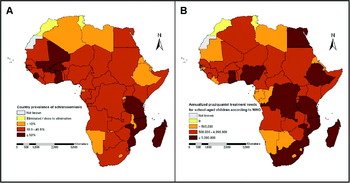
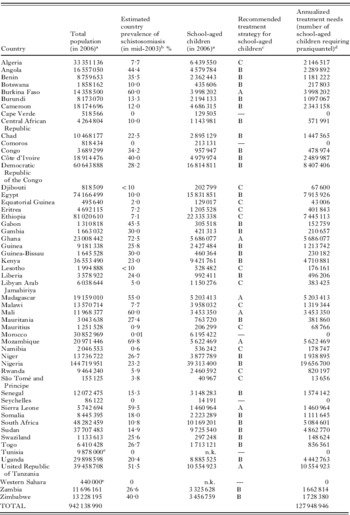
Table 1 summarises the total population in Africa in 2006 (WHO, 2008) and schistosomiasis prevalence estimates in mid-2003, stratified by country (Steinmann et al. Reference Steinmann, Keiser, Bos, Tanner and Utzinger2006). Care is indicated regarding the country prevalence estimates, due to the scarcity of up-to-date empirical data across large parts of Africa (Brooker et al. Reference Brooker, Kabatereine, Gyapong, Stothard and Utzinger2009a, Reference Brooker, Kabatereine, Smith, Mupfasoni, Mwanje, Ndayishimiye, Lwambo, Mbotha, Karanja, Mwandawiro, Muchiri, Clements, Bundy and Snowb). Guidelines issued by WHO suggest a threshold of 10% of Schistosoma spp., as determined by parasitological methods in school surveys, to distinguish between low-prevalence and moderate-prevalence communities. At a threshold of 50%, distinction is made between moderate-prevalence and high-prevalence communities (WHO, 2002). Adhering to these endemicity cut-offs, Fig. 1A depicts the schistosomiasis situation across Africa in mid-2003, just before the launch of a new wave of major schistosomiasis control initiatives. Four countries in West Africa (i.e. Burkina Faso, Ghana, Mali and Sierra Leone) and three countries in East Africa (i.e. Madagascar, Mozambique and the United Republic of Tanzania) were classified as high-prevalence settings. Most countries (n=29) were in the moderate-endemic class with Schistosoma prevalence estimates ranging between 10% and 50%. Schistosomiasis is absent from Cape Verde owing to the absence of permissive snail intermediate hosts, as well as Comoros and Seychelles. The disease was eliminated from Tunisia some 30 years ago and is close to elimination in Morocco (Laamrani et al. Reference Laamrani, Khallaayoune, Madsen, Mahjour and Gryseels2000; Engels et al. Reference Engels, Chitsulo, Montresor and Savioli2002). Schistosomiasis occurs at prevalence levels below 10% in the remaining 12 countries and territories of Africa.
Country-specific prevalence estimates for schistosomiasis in Africa, stratified into low-prevalence (<10%), moderate-prevalence (10·0–49·9%) and high-prevalence (⩾50%) in mid-2003 (A) (source: Steinmann et al. (Reference Steinmann, Keiser, Bos, Tanner and Utzinger2006), webappendix 2), and estimated annual treatment needs with praziquantel to be administered to school-aged children (B).

Schistosomiasis endemicity across Africa at the onset of new control initiatives in mid-2003, including stratification of countries into three different treatment strategies according to WHO recommendations, and estimated numbers of school-aged children requiring praziquantel treatment at the unit of a year (n.k., not known)

a Total population estimates and the number of school-aged children (5–14 years) in 2006 were obtained from the 4 July 2008 Weekly Epidemiological Record (WHO, 2008).
b Country-specific estimates for schistosomiasis prevalence in mid-2003 were obtained from webappendix 2, put forth by Steinmann and colleagues (2006).
c Countries were stratified into (A) high-prevalence (⩾50% of individuals infected) warranting treatment of school-aged children once a year; (B) moderate-prevalence (10·0–49·9% of individuals infected) warranting treatment of school-aged children once every two years; and (C) low-prevalence (<10% of individuals infected) warranting treatment of school-aged children twice during schooling, once on school entry and once before leaving school (WHO, 2002).
d Annualized praziquantel treatment needs were estimated as follows: (A) for high-prevalence countries it is recommended that school-aged children are treated once every year, hence we considered that the entire school-aged population is eligible for treatment each year; (B) for moderate-prevalence countries it is recommended that school-aged children are treated once every second year, hence we considered that half of the school-aged children are eligible for treatment every year; (C) for low-prevalence countries it is recommended that school-aged children are treated twice during schooling (assuming an average duration of 6 years), hence we considered a third of the school-aged population eligible for treatment each year.
e Population estimates for 2005 (source: World Population Prospects: The 2008 Revisions).
Projected treatment needs with praziquantel
With the exceptions of Egypt (El-Khoby et al. Reference El-Khoby, Galal, Fenwick, Barakat, El-Hawey, Nooman, Habib, Abdel-Wahab, Gabr, Hammam, Hussein, Mikhail, Cline and Strickland2000; Fenwick et al. Reference Fenwick, Savioli, Engels, Bergquist and Todd2003) and Morocco (Laamrani et al. Reference Laamrani, Khallaayoune, Madsen, Mahjour and Gryseels2000; Engels et al. Reference Engels, Chitsulo, Montresor and Savioli2002), little progress was made in the control of schistosomiasis on the African continent in the 1990s. However, recognizing the experiences and successes of schistosomiasis morbidity control programmes in Brazil, China and Egypt, which emphasised the large-scale administration of antischistosomal drugs, a sea change occurred in the new millennium. Indeed, in May 2001, during the 54th World Health Assembly (WHA), a resolution was passed and signed by over 200 member states. Among other issues, the resolution urged member states to attain, by 2010, a minimum target of regularly administering anthelminthic drugs to at least 75% and up to 100% of all school-aged children at risk of morbidity. In October 2001, WHO convened an expert committee, during which the global strategy for the prevention and control of schistosomiasis and soil-transmitted helminthiasis was refined (WHO, 2002). The significance of WHA Resolution 54.19 for the control of schistosomiasis has been stressed elsewhere, including a concern that it might thwart basic and operational research efforts pertaining to schistosomiasis (Colley, LoVerde and Savioli, Reference Colley, LoVerde and Savioli2001; Colley and Secor, Reference Colley and Secor2004). The key points of WHA Resolution 54.19 and the refined global strategy for the prevention and control of schistosomiasis and soil-transmitted helminthiasis issuing from this WHA resolution and the WHO expert committee meeting are discussed in an accompanying WHO editorial, published in this special issue of Parasitology (Savioli et al. Reference Savioli, Gabrielli, Montresor, Chitsulo and Engels2009).
An unfortunate aspect of a nearly unique focus on large-scale anthelminthic drug administration was – and continues to be – the lack of concern within the global health community for prevention strategies such as emphasising access to clean water, improved sanitation and hygiene activities that could serve as the backbone of multi-component integrated and sustainable disease control programmes (Utzinger et al. Reference Utzinger, Bergquist, Xiao, Singer and Tanner2003). There is a fundamental disconnect between the substantial number of engineering projects and community-led initiatives in the developing world focusing on clean water and sanitation and the vertical campaign-based nearly ‘drugs-only’ programmes (Singer and Castro, Reference Singer and Castro2007). Hence, it is important to recognize that efforts to improve international health through better access to clean water and sanitation will require intersectoral approaches (Prüss-Üstün et al. 2008; Bliss, Reference Bliss2009). This will require advocacy and action from the health community to foster cooperative ventures with engineering groups (e.g. non-governmental organizations (NGOs), private foundations, government engineering corps), and vice versa, to achieve sustainable schistosomiasis control. Schistosomiasis is unique in the context of ‘safe water and engineering’ as it is the only significant water-based disease that is transmitted by direct water contact through skin penetration rather than the faecal-oral route as most other water-borne diseases. Costs upfront for implementation of water supply and sanitation services are high, which calls for the establishment of a multilateral institution through which international funds could be channelled, analogous to the Global Fund to Fight AIDS, Tuberculosis, and Malaria (Bliss, Reference Bliss2009). In addition, school-based control needs to be mainstreamed into the school health plans of education sectors (Bundy et al. Reference Bundy, Shaeffer, Jukes, Beegle, Gillespie, Drake, Lee, Hoffman, Jones, Mitchell, Wright, Barcelona, Camara, Golmar, Savioli, Takeuchi, Sembene, Breman, Measham, Alleyne, Claeson, Evans, Jha, Mills and Musgrove2006).
With praziquantel-based morbidity control – firmly set as the centre pillar of the global strategy to combat schistosomiasis – it is interesting to examine strategic guidelines for recommended praziquantel treatment schedules put forth by WHO (WHO, 2002). For high-prevalence communities, it is recommended to treat school-aged children once every year; for moderate-prevalence communities, school-aged children should be treated once every second year; and for low-prevalence communities, the recommendation is to treat school-aged children twice during primary schooling, i.e. best upon entry and again before children are leaving school. Using these strategic guidelines by considering country-specific schistosome prevalence data summarised in Table 1 and assuming the basis of school-aged population statistics from a recent WHO publication (WHO, 2008) that, on average, primary schooling in a typical African setting lasts for six years, facilitated estimation of praziquantel treatment needs. Table 1 summarises how many school-aged children would require treatment with praziquantel at the unit of a year, assuming that the goal of attaining a 100% target be met. Fig. 1B depicts the projected annual number of praziquantel treatments, stratified by country.
Recognizing that our estimates are based on a number of assumptions, we calculate that approximately 128 million school-aged children would need to be given praziquantel on a yearly basis. On average, a school-aged child would be administered between one and a half and three 600 mg tablets of praziquantel (at the current recommended dosage of 40 mg/kg body weight), and hence between 192 and 384 million tablets would be needed in Africa alone every year. This raises the question of whether this amount of praziquantel tablets could be produced at all. Based on an analysis for the year 2005, the answer is yes, as five pharmaceutical companies (E. Merck in Germany, Shin Poong in Korea and three companies in China) produced a total of 200 metric tons of praziquantel active ingredient, which is equivalent to 320 million tablets (Frost et al. Reference Frost, Reich, Fenwick, Thompson, Frost and Reich2008). However, there are formidable challenges built around procurement issues, shipment to the respective countries and distributions within-county to the most remote areas and consumption of the drugs before they expire and, despite the fact that praziquantel has become cheap (less than US$ 0.10 per tablet), the costs for treating 128 million children every year cannot be neglected. In Nigeria, for example, praziquantel would need to be administered to almost 20 million school-aged children every year. More than 5 million school-aged children would require praziquantel treatment annually in another eight countries, namely the Democratic Republic of the Congo, Egypt, Ethiopia, Ghana, Madagascar, Mozambique, South Africa and the United Republic of Tanzania. The majority of African countries and territories would require between 500 000 and 5 million school-aged children to be treated with praziquantel every year. A further challenge in certain countries is low school enrolment rates, especially in West Africa where enrolment can be as low as 30% (WHO, 2008). Hence, innovative approaches are required to target non-enrolled children to enhance compliance. Finally, a number of mainly sparsely-populated countries and territories, classified as low-prevalence settings where school-aged children would need to be treated twice during primary schooling, might be targeted for schistosomiasis elimination (e.g. Djibouti, Equatorial Guinea, Eritrea, Lesotho, Libyan Arab Jamahiriya, Mauritius, Namibia and Sâo Tomé and Principe).
The following issues are important when interpreting our projected annual treatment needs with praziquantel. First and foremost, these estimated treatment needs are based on a number of assumptions, which need scrutiny. Indeed, there is a paucity of reliable, up-to-date and spatially-explicit empirical data regarding schistosome infection distributions, especially at the local level (Brooker et al. Reference Brooker, Kabatereine, Gyapong, Stothard and Utzinger2009a, Reference Brooker, Kabatereine, Smith, Mupfasoni, Mwanje, Ndayishimiye, Lwambo, Mbotha, Karanja, Mwandawiro, Muchiri, Clements, Bundy and Snowb). In the absence of such data, we utilised country-specific schistosome prevalence estimates for mid-2003 (Steinmann et al. Reference Steinmann, Keiser, Bos, Tanner and Utzinger2006). However, a key epidemiological feature of schistosomiasis is its focal distribution (Lengeler et al. Reference Lengeler, Utzinger and Tanner2002; Brooker et al. Reference Brooker, Kabatereine, Gyapong, Stothard and Utzinger2009a), and hence such broad-scale prevalence estimates belie the marked variation in prevalence within countries, and even within moderate- and low-prevalence countries there may remain large pockets of high prevalence. This aspect further emphasises the importance of having detailed information on the geographical distribution of schistosomiasis at local levels and in real time in order to target treatment to areas in greatest need. The scope and limits of rapid mapping surveys, including rapid diagnostic tests, warrant further exploration (Brooker et al. Reference Brooker, Kabatereine, Gyapong, Stothard and Utzinger2009a; Stothard, Reference Stothard2009). Keeping sustainable control in mind, the same approaches in mapping, surveillance and predictions can be used to target combined biomedical, health education and engineering interventions in the same communities.
Secondly, it is interesting to note that, in mid-2003, the number of schistosome infections in Africa was estimated at 201·5 million (Steinmann et al. Reference Steinmann, Keiser, Bos, Tanner and Utzinger2006). In view of our current estimate of 128 million school-aged children warranting praziquantel treatment per year, some 72·5 million infections would be missed. Focusing treatment and control activities of schistosomiasis exclusively on school-aged children might therefore need reinvestigation. In highly endemic areas, for example, preschool-aged children (Stothard and Gabrielli, Reference Stothard and Gabrielli2007) and other high-risk groups such as fishermen, car washers and sand harvesters (Melman et al. Reference Melman, Steinauer, Cunningham, Kubatko, Mwangi, Barker Wynn, Mutuku, Karanja, Colley, Black, Secor, Mkoji and Loker2009) must be considered.
Thirdly, the Schistosomiasis Control Initiative (SCI), which is discussed in greater detail below, assisted six African countries in establishing and implementing their national schistosomiasis control programmes. Annual treatment needs with praziquantel in these SCI-supported countries (i.e. Burkina Faso, Mali, Niger, Uganda, United Republic of Tanzania and Zambia), according to our estimates, would amount to 26 million school-aged children. The actual number of individuals treated every year between 2005 and 2008, according to SCI data published in this special issue of Parasitology (Fenwick et al. Reference Fenwick, Webster, Bosque-Oliva, Blair, Fleming, Zhang, Garba, Stothard, Gabrielli, Clements, Kabatereine, Toure, Dembele, Nyandindi, Mwansa and Koukounari2009) ranged between 8·2 and 12·8 million. One might therefore conclude that coverage ranged between 31% and 49%. However, one of the first steps of scaling-up schistosomiasis control activities within SCI-supported countries was to delineate high-risk areas. Hence, the control programmes took into consideration, as best they could, the focal distribution of schistosomiasis in an effort to enhance the cost-effectiveness of treatment interventions (Clements et al. Reference Clements, Lwambo, Blair, Nyandindi, Kaatano, Kinung'hi, Webster, Fenwick and Brooker2006, Reference Clements, Garba, Sacko, Toure, Dembele, Landoure, Bosque-Oliva, Gabrielli and Fenwick2008; Brooker et al. Reference Brooker, Kabatereine, Fleming and Devlin2008). It follows therefore that projected praziquantel treatment needs presented in Table 1 and displayed in Fig. 1B, might considerably overestimate the real annual needs. This is an important issue when estimating coverage, and hence it is conceivable that SCI-supported countries reached coverage rates among the school-aged population that were close to the 75–100% targets issued in WHA Resolution 54.19. Little is known, however, about treatment needs, coverage rates and adherence over time during active control programmes. For example, will praziquantel administration – year after year – really be necessary in high-prevalence communities or is there scope for ‘treatment holidays’? Will children who feel better after the first or second treatment round be willing to take praziquantel again and again? Experience from China suggests that adherence to praziquantel treatment declines during prolonged large-scale chemotherapy-based control efforts (Guo et al. Reference Guo, Cao, Hu, Lin, Li, Zhu and Xu2005). How could a rapid and inexpensive yet accurate monitoring and surveillance component be integrated into a schistosomiasis control programme, resulting in real-time prevalence estimates, which in turn will guide the frequency of treatment longitudinally? Simple questionnaires administered through the education system have proven useful for rapid and inexpensive identification of high-risk communities of urinary schistosomiasis, but we do not know how they perform over time during active control (Lengeler et al. Reference Lengeler, Utzinger and Tanner2002). Recent research from Zanzibar suggests that reagent strips for measuring blood in urine as a proxy for S. haematobium infection among school-aged children perform well over the course of a schistosomiasis control programme (French et al. Reference French, Rollinson, Basáñez, Mgeni, Khamis and Stothard2007). There is a need for developing and validating novel rapid diagnostic and mapping tools (Brooker et al. Reference Brooker, Kabatereine, Gyapong, Stothard and Utzinger2009a; Stothard, Reference Stothard2009).
Another issue needs highlighting: the spatial distribution of schistosomiasis in Mali showed little change when comparing data from the mid-1980s before instigating a national control programme, with data from 2004, when SCI support facilitated the re-establishment of a national schistosomiasis control programme. This experience demonstrates that an externally-funded control programme (German Technical Cooperation; GTZ), which emphasised large-scale administration of praziquantel, failed to become sustainable, as the situation reverted to pre-interventions levels after several years of no drug interventions (Clements et al. Reference Clements, Bosque-Oliva, Sacko, Landoure, Dembele, Traore, Coulibaly, Gabrielli, Fenwick and Brooker2009). Two features that are different when comparing the 1980s, when the schistosomiasis control programme in Mali was funded through GTZ, and the current SCI activities are the larger scale of operation and the significantly lower cost of praziquantel in the new era. However, the SCI-supported activities are unlikely to be sustainable. They continue to impose a strong dependence on drugs for de-worming already infected persons while addressing insufficiently the need for prevention of re-worming. Intersectoral co-operation, particularly the co-ordination with engineering groups and encouraging community-led activities, could target clean water and sanitation provision. In addition, collaboration with the education sector is crucial for health education, ultimately leading to behavioural changes towards improved hygiene activities. These steps, carried out in the same communities where praziquantel is administered annually could lead to sustainable reduction, if not elimination, of schistosomiasis. The prevention component of such a programme would provide for a substantially reduced demand for praziquantel. Moreover, an impact beyond the target disease schistosomiasis is likely to occur as recently demonstrated in China where an integrated schistosomiasis control approach showed an ancillary effect on soil-transmitted helminthiasis (Wang et al. Reference Wang, Guo, Wu, Chen, Wang, Zhu, Zhang, Steinmann, Yang, Wang, Wu, Wang, Hao, Bergquist, Utzinger and Zhou2009a).
It is worth noting that the highest number of individuals treated with praziquantel during the SCI campaigns – 12·8 million in 2005 – accounted for 10% of the estimated treatment needs among school-aged children on the African continent. It would be interesting to know how many praziquantel treatment courses were administered concurrently through other vertical control programmes (e.g. Carter Foundation operating in Nigeria and elsewhere (Richards et al. Reference Richards, Eigege, Miri, Jinadu and Hopkins2006), local NGOs and research institutions (Tchuem Tchuenté and N'Goran, Reference Tchuem Tchuenté and N'Goran2009)), as well as more horizontally through the existing health systems.
Finally, in view of the focal distribution of schistosomiasis and the chronic nature of the disease with mainly subtle morbid sequelae, the following proposal has been made. Entire at-risk populations in Africa should be targeted with praziquantel for at least 5 years. An estimated 400 million people would need to be treated, amounting to 1·2 billion praziquantel tablets every year. The costs have been estimated at US$ 100 million per year (Hotez and Fenwick, Reference Hotez and Fenwick2009). The challenge of implementing such a large-scale vertical control approach cannot be over-emphasised, including issues of coverage, adherence and the risk for the development of praziquantel resistance. The costs and benefits of this proposal should be carefully examined and compared to other more integrated and sustainable control approaches emphasising health education, water, sanitation and hygiene activities.
NEGLECTED TROPICAL DISEASES
Collective burden
Schistosomiasis is but one of several so-called neglected tropical diseases that are pervasive in Africa and elsewhere in the developing world. An initial inventory listed 13 neglected tropical diseases: seven helminth infections (i.e. schistosomiasis, along with three common soil-transmitted helminth infections (ascariasis, hookworm disease and trichuriasis), dracunculiasis, lymphatic filariasis and onchocerciasis), three vector-borne protozoan infections (Chagas disease, human African trypanosomiasis and leishmaniasis) and three bacterial infections (Buruli ulcer, leprosy and trachoma) (Hotez et al. Reference Hotez, Molyneux, Fenwick, Ottesen, Ehrlich Sachs and Sachs2006). Moreover, cysticercosis/taeniasis and food-borne trematodiasis were explicitly stated as neglected tropical diseases in the Hotez et al. (Reference Hotez, Molyneux, Fenwick, Ottesen, Ehrlich Sachs and Sachs2006) landmark review. Meanwhile, the case has been made for inclusion of a host of additional neglected tropical diseases. The WHO, for example, in a 2006 publication listed cholera/epidemic diarrhoeal disease, dengue/dengue haemorrhagic fever and endemic treponematoses (e.g. yaws, pinta and endemic syphilis) alongside the above-mentioned 13 diseases (WHO, 2006a). One year later, the Public Library of Sciences (PLoS) launched a new journal – PLoS Neglected Tropical Diseases – which is exclusively devoted to research and control of the neglected tropical diseases (Hotez, Reference Hotez2007). The scope of PLoS Neglected Tropical Diseases has evolved since its inaugural issue in October 2007 and now includes additional helminth, bacterial and protozoan infections, as well as tropical fungal and viral infections (Hotez and Yamey, Reference Hotez and Yamey2009).
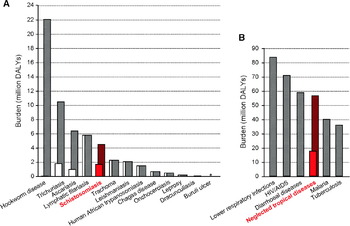
Focusing on the initial 13 neglected tropical diseases put forth by Hotez and colleagues (2006), it is interesting to examine global burden estimates. Fig. 2A shows disease-specific burden estimates for the year 2002, drawing on different data sources. Of note, for schistosomiasis, the global burden has been estimated at 1.7 million DALYs according to annexe table 3 of the World Health Report 2004 (WHO, 2004), whereas a WHO expert committee put forth an estimate of 4.5 million DALYs (WHO, 2002). The most dramatic uncertainty occurs around hookworm disease, with estimates ranging between 59 000 DALYs to 22.1 million DALYs, a 375-fold difference (WHO, 2002; Hotez et al. Reference Hotez, Molyneux, Fenwick, Ottesen, Ehrlich Sachs and Sachs2006). It is also noteworthy that, at present, no estimates are available for Buruli ulcer and the myriad of other neglected tropical diseases. Taken together, the global burden of the 13 neglected tropical diseases featured in Fig. 2A, ranges between 17.7 million DALYs (WHO, 2004) and 56.6 million DALYs (Hotez et al. Reference Hotez, Molyneux, Fenwick, Ottesen, Ehrlich Sachs and Sachs2006). There is a clear need to reconcile such differing estimates based on a coherent scientific inquiry.
Global burden estimates of the initial set of 13 neglected tropical diseases, including current uncertainties (A) (source: WHO, 2004; Hotez et al. Reference Hotez, Molyneux, Fenwick, Ottesen, Ehrlich Sachs and Sachs2006) and comparison of global burden estimates of the neglected tropical diseases with other major communicable diseases (B) (source: Lopez et al. Reference Lopez, Mathers, Ezzati, Jamison and Murray2006).

Fig. 2B compares the global burden estimate for the initial set of 13 neglected tropical diseases with the other major communicable diseases (Lopez et al. Reference Lopez, Mathers, Ezzati, Jamison and Murray2006). There is a growing consensus that the ‘true’ collective burden of the neglected tropical diseases is considerably higher than currently appreciated; this can be explained in at least two ways. Firstly, there are high incidence rates for many of the neglected tropical diseases but their disability weights are seriously underestimated (Jia et al. Reference Jia, Zhou, Wang, Utzinger, Steinmann and Wu2007; Finkelstein et al. Reference Finkelstein, Schleinitz, Carabin and McGarvey2008). Secondly, at present, virtually no burden estimates are available for several of the neglected tropical diseases (e.g. Buruli ulcer, cysticercosis/taeniasis, food-borne trematodiasis and strongyloidiasis). New research pertaining to schistosomiasis, including decision tree modelling, a validated quality of life approach, systematic reviews and meta-analyses suggest that the true burden might be several-fold higher than the upper WHO estimate of 4.5 million DALYs (King et al. Reference King, Dickman and Tisch2005; King and Dangerfield-Cha, Reference King and Dangerfield-Cha2008). We applaud new efforts to re-estimate the global burden and risk factors of more than 150 diseases. Schistosomiasis and the neglected tropical diseases at large are part of the communicable disease cluster with dozens of experts pursuing systematic reviews of the published and unpublished literature and extracting data in a standardized manner which will ultimately lead to more accurate and consistent global burden estimates (Murray et al. Reference Murray, Lopez, Black, Mathers, Shibuya, Ezzati, Salomon, Michaud, Walker and Vos2007; King and Bertino, Reference King and Bertino2008).
In recent years, there has been growing advocacy, political will and international interest in scaling up the control of neglected tropical diseases, going hand-in-hand with a changing funding landscape with new opportunities for research and development of the next generation of drugs, diagnostics and vaccines (Moran, Reference Moran2005; Keiser and Utzinger, Reference Keiser and Utzinger2007; Kolaczinski et al. Reference Kolaczinski, Kabatereine, Onapa, Ndyomugyenyi, Kakembo and Brooker2007; Hotez et al. Reference Hotez, Fenwick, Savioli and Molyneux2009). The recent publications of the genomes of S. mansoni and S. japonicum will add further impetus for target-based drug, diagnostics and vaccine discovery (Berriman et al. Reference Berriman, Haas, LoVerde, Wilson, Dillon, Cerqueira, Mashiyama, Al-Lazikani, Andrade, Ashton, Aslett, Bartholomeu, Blandin, Caffrey, Coghlan, Coulson, Day, Delcher, DeMarco, Djikeng, Eyre, Gamble, Ghedin, Gu, Hertz-Fowler, Hirai, Hirai, Houston, Ivens, Johnston, Lacerda, Macedo, McVeigh, Ning, Oliveira, Overington, Parkhill, Pertea, Pierce, Protasio, Quail, Rajandream, Rogers, Sajid, Salzberg, Stanke, Tivey, White, Williams, Wortman, Wu, Zamanian, Zerlotini, Fraser-Liggett, Barrell and El-Sayed2009; The Schistosoma japonicumGenome Sequencing and Functional Analysis Consortium, 2009). However, health sector advocacy regrettably continues to ignore the pressing need for, and long-term benefits of, integration with the engineering sector and vice versa (Singer and Castro, Reference Singer and Castro2007).
Contemporary control initiatives
In view of the growing awareness of the high collective burden due to the neglected tropical diseases and the mounting advocacy that controlling these diseases is a key factor to ascertain progress towards achieving the millennium development goals (Hotez et al. Reference Hotez, Molyneux, Fenwick, Kumaresan, Ehrlich Sachs, Sachs and Savioli2007b), it is not surprising that new alliances have been formed and significant new financial, operational and technical resources have become available. Two of the most powerful arguments that convinced the donor community, public health experts and disease control managers alike to invest in the simultaneous control of multiple neglected tropical diseases were: (1) the issue of co-endemicity (i.e. multiple neglected tropical diseases occur in the same individual (polyparasitism) and they are entrenched in the same communities) (Raso et al. Reference Raso, Luginbühl, Adjoua, Tian-Bi, Silue, Matthys, Vounatsou, Wang, Dumas, Holmes, Singer, Tanner, N'Goran and Utzinger2004; Brady, Hooper and Ottesen, Reference Brady, Hooper and Ottesen2006; Brooker and Clements, Reference Brooker and Clements2009), and (2) access to a readily available and simple public health intervention, namely the deployment of safe and efficacious drugs at a large scale for morbidity control (Molyneux, Hotez and Fenwick, Reference Molyneux, Hotez and Fenwick2005; Hotez et al. Reference Hotez, Molyneux, Fenwick, Ottesen, Ehrlich Sachs and Sachs2006, Reference Hotez, Molyneux, Fenwick, Kumaresan, Ehrlich Sachs, Sachs and Savioli2007b).
The changing landscape of the neglected tropical diseases and its control is also mirrored in the peer-reviewed literature from 2005 onwards. Prominent language associated with the control of the neglected tropical diseases include, among other statements: ‘rapid impact packages’, ‘pro-poor strategies’, ‘quick fixes’ and ‘best buy in public health’. Such articulations generally go hand-in-hand with vertical control programmes, emphasising a mass campaign approach. Justification for such a mass campaign is encapsulated in the following statement ‘need for parallel delivery systems because of health system failures’. Box 1 summarises advantages and disadvantages of mass campaigns versus a more horizontal health systems approach. Throughout, however, there is a pervasive blind spot in the health community that avoids coming face-to-face with the fact that integrated engineering-biomedical solutions supported by local communities are required for long-term success (Utzinger et al. Reference Utzinger, Bergquist, Xiao, Singer and Tanner2003; Singer and Castro, Reference Singer and Castro2007).
Box 1 Advantages and disadvantages of mass campaigns and systemic control approaches.

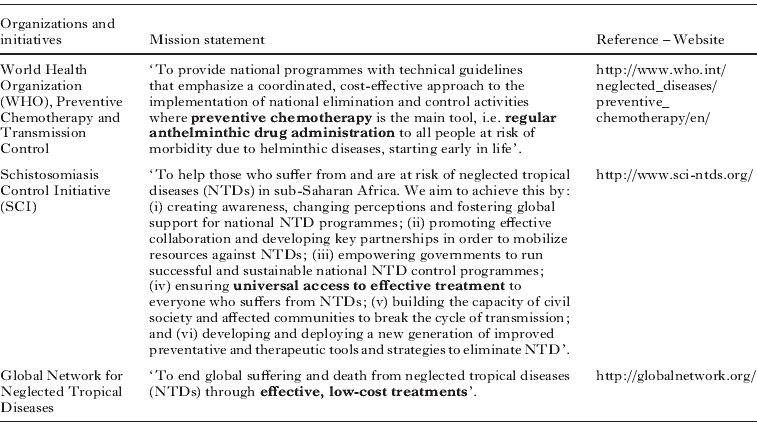
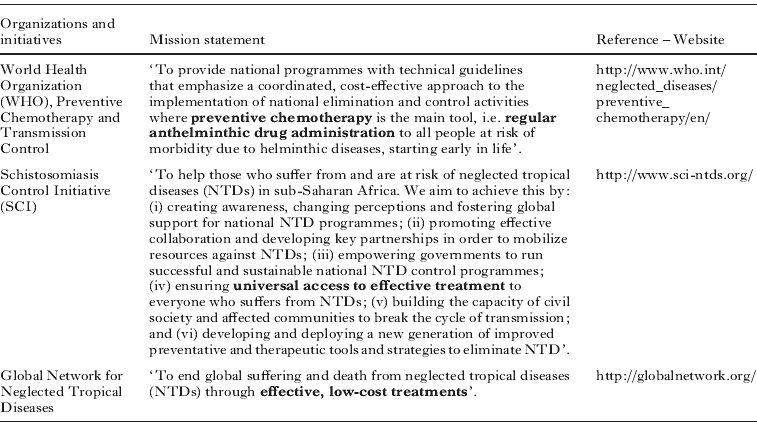
Issuing from WHA Resolution 54.19 was a call for action and, thanks to a US$ 30 million grant from the Bill and Melinda Gates Foundation, the London-based SCI got off the ground in 2003 (Fenwick et al. Reference Fenwick, Webster, Bosque-Oliva, Blair, Fleming, Zhang, Garba, Stothard, Gabrielli, Clements, Kabatereine, Toure, Dembele, Nyandindi, Mwansa and Koukounari2009; Savioli et al. Reference Savioli, Gabrielli, Montresor, Chitsulo and Engels2009). In line with the WHA resolution and strategic guidelines put forth by WHO, SCI aimed from its onset at the concurrent control of schistosomiasis and soil-transmitted helminthiasis (Fenwick et al. Reference Fenwick, Webster, Bosque-Oliva, Blair, Fleming, Zhang, Garba, Stothard, Gabrielli, Clements, Kabatereine, Toure, Dembele, Nyandindi, Mwansa and Koukounari2009). The central feature of control was the large-scale administration of anthelminthic drugs to at-risk populations (i.e. school-aged children) without prior diagnosis, a strategy now termed ‘preventive chemotherapy’ (WHO, Reference Raso, Matthys, N'Goran, Tanner, Vounatsou and Utzinger2006b). Deployment of anthelminthics (praziquantel against schistosomiasis and albendazole or mebendazole against common soil-transmitted helminth infections) was primarily executed through the education system once or twice a year. Table 2 emphasises that ‘preventive chemotherapy’, regular anthelminthic drug administration and universal access to effective, low-cost treatments have been endorsed in the mission statements of the Preventive Chemotherapy and Transmission Control Department of WHO, SCI and the Global Network for Neglected Tropical Diseases. Approaches of preventive environmental management and community-led total sanitation are largely missing from this discussion.
Organizations and initiatives and their mission statements regarding the prevention and control of schistosomiasis and other neglected tropical diseases (emphasis added in bold)
INTEGRATED CONTROL
What is meant by integration?
There is a growing body of literature on the integrated control of neglected tropical diseases (Lammie, Fenwick and Utzinger, Reference Lammie, Fenwick and Utzinger2006; Hotez et al. Reference Hotez, Raff, Fenwick, Richards and Molyneux2007a; Kolaczinski et al. Reference Kolaczinski, Kabatereine, Onapa, Ndyomugyenyi, Kakembo and Brooker2007; Grépin and Reich, Reference Grépin and Reich2008; Rumunu et al. Reference Rumunu, Brooker, Hopkins, Chane, Emerson and Kolaczinski2009). However, it is the understanding of the term ‘integration’ that matters. According to the Oxford English Dictionary, integrated is defined as follows: ‘Combined into a whole; united; undivided’, and ‘Uniting in one system several constituents previously regarded as separate’. Drawing on this definition, it is correct, albeit very narrow that uniting two or more drugs (previously used in separate applications, targeting different diseases), for the simultaneous control of multiple neglected tropical diseases can be considered integrated. However, deploying two rather than a single anthelminthic drug utilises one and the same tool; a drug to control morbidity. Can such a ‘magic bullet’ approach work, and is it sustainable? Clearly, there are other and much more comprehensive ways of uniting multiple constituents to achieve a truly integrated approach. The most obvious one is the strengthening of the health system, which then serves as the backbone for drug delivery and myriad other preventive and curative services. Other ways of integration entail the administration of anthelminthic drugs through the existing education system, alongside with locally-adapted health education messages and, if need be, nutrition programmes (Bundy et al. Reference Bundy, Shaeffer, Jukes, Beegle, Gillespie, Drake, Lee, Hoffman, Jones, Mitchell, Wright, Barcelona, Camara, Golmar, Savioli, Takeuchi, Sembene, Breman, Measham, Alleyne, Claeson, Evans, Jha, Mills and Musgrove2006; Stothard et al. Reference Stothard, Mook, Mgeni, Khamis, Khamis and Rollinson2006). Improving access to clean water and adequate sanitation necessitates bridge building between the health and engineering sectors (Singer and Castro, Reference Singer and Castro2007; Bliss, Reference Bliss2009). Whenever possible, such inter-programmatic and intersectoral collaborations should be fostered to increase the chances of sustainable control of multiple neglected tropical diseases (Utzinger et al. Reference Utzinger, Zhou, Chen and Bergquist2005; Holveck et al. Reference Holveck, Ehrenberg, Ault, Rojas, Vasquez, Cerqueira, Ippolito-Shepherd, Genovese and Periago2007). Most importantly, if we wish to achieve sustainability of any disease control efforts beyond cycles of funding, integrated neglected tropical disease control implies full integration into the existing health and social systems; not only into the public systems but into the system and network of all existing health services providers in a given area. This requires systemic approaches that are readily aligned and harmonised with locally-owned national programmes (Utzinger and de Savigny, Reference Utzinger and de Savigny2006).
Prospect and challenges
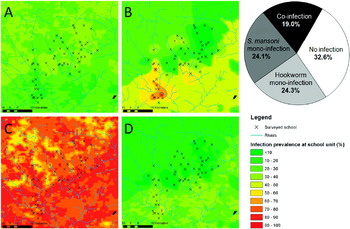
With growing emphasis on, and need for, integrated control of neglected tropical diseases, new insight has been gained regarding the prospect and challenges of this approach (Kolaczinski et al. Reference Kolaczinski, Kabatereine, Onapa, Ndyomugyenyi, Kakembo and Brooker2007; Rumunu et al. Reference Rumunu, Brooker, Hopkins, Chane, Emerson and Kolaczinski2009). Several issues are elaborated here. The first one pertains to co-endemicity, and hence co-morbidity, which is of considerable public health relevance and offers opportunities for integrated control. It has been speculated that the control of seven neglected tropical diseases can be attained in a cost-effective manner through administration of just four drugs (Molyneux et al. Reference Molyneux, Hotez and Fenwick2005). Control interventions could be further enhanced through targeting of co-endemic areas, and the important role of geospatial tools (geographical information systems, remote sensing and spatial statistics) must be emphasised (Brooker and Utzinger, Reference Brooker and Utzinger2007). To illustrate this issue, the following example is provided. In a cross-sectional epidemiological survey carried out in 57 schools of western Côte d'Ivoire, some 4000 children were examined for S. mansoni, soil-transmitted helminths and malaria parasitaemia. Focusing on S. mansoni and hookworm, it was found that 19% of the children were co-infected, whereas 24% were infected with either S. mansoni or hookworm (Raso et al. Reference Raso, Matthys, N'Goran, Tanner, Vounatsou and Utzinger2005, Reference Raso, Vounatsou, Gosoniu, Tanner, N'Goran and Utzinger2006a, Reference Raso, Vounatsou, Singer, N'Goran, Tanner and Utzingerb). Risk maps of single infections, mono-infections and co-infection were produced using Bayesian-based geostatistical models that included demographic, environmental and socio-economic covariates (Raso et al. Reference Raso, Matthys, N'Goran, Tanner, Vounatsou and Utzinger2005, Reference Raso, Vounatsou, Gosoniu, Tanner, N'Goran and Utzinger2006a, Reference Raso, Vounatsou, Singer, N'Goran, Tanner and Utzingerb, Reference Raso, Vounatsou, McManus and Utzinger2007; Vounatsou et al. Reference Vounatsou, Raso, Tanner, N'Goran and Utzinger2009). The risk maps produced for S. mansoni and hookworm single infections and for S. mansoni-hookworm co-infections are shown in Fig. 3. Interestingly, the prediction of mono-infections revealed distinctive and quite different spatial patterns compared to single infection risk maps, particularly for hookworm. It is conceivable that the relative importance of mono-infections in settings where several parasites co-exist will increase in the face of repeated large-scale anthelminthic drug administration, as the likelihood of co-infection with multiple parasites decreases. This means that an increasing proportion of individuals will be treated with two drugs unnecessarily (Raso et al. Reference Raso, Vounatsou, McManus and Utzinger2007).
Predicted risk maps for no infection (A), S. mansoni mono-infection (B), hookworm mono-infection (C), and S. mansoni-hookworm co-infections (D) in the region of Man, western Côte d'Ivoire (sources: Raso et al., Reference Raso, Matthys, N'Goran, Tanner, Vounatsou and Utzinger2005, Reference Raso, Vounatsou, Gosoniu, Tanner, N'Goran and Utzinger2006a, Reference Raso, Vounatsou, Singer, N'Goran, Tanner and Utzingerb).

Secondly, co-administration of drugs targeting multiple neglected tropical diseases requires detailed safety and efficacy investigations (Reddy et al. Reference Reddy, Gill, Kalkar, Wu, Anderson and Rochon2007), and there is a need for establishing pharmacovigilance platforms. Moreover, regular administration of multiple drugs at a large scale poses the risk of development and spread of drug-resistant parasites (Smits, Reference Smits2009). This issue already causes great economic losses in livestock production (James, Hudson and Davey, Reference James, Hudson and Davey2009). Clearly, there is a need for establishing and standardizing protocols for anthelminthic drug efficacy monitoring (Scherrer et al. Reference Scherrer, Sjöberg, Allangba, Traoré, Lohourignon, Tschannen, N'Goran and Utzinger2009) and for early detection of multi-parasite drug resistance.
The third issue refers to tools and strategies that are required for integrated and sustainable control of multiple neglected tropical diseases. There are diverse needs for different diseases. For the helminthic diseases (e.g. schistosomiasis, soil-transmitted helminthiasis, lymphatic filariasis and onchocerciasis) and trachoma, the recommended strategy for their control in highly endemic areas relies on the large-scale and regular administration of anthelminthic drugs. Spatially-explicit risk profiling is an important ingredient, due to the focal distribution of helminth infections. At an early stage of control, an integrated chemotherapy approach holds promise for control of co-morbidity. To lower dependency on a ‘drugs-only’ approach and to enhance sustainability, from the onset of control, complementary measures should be implemented, which will depend on available resources (Utzinger et al. Reference Utzinger, Bergquist, Xiao, Singer and Tanner2003; Smits, Reference Smits2009). The package of intervention needs to be tailored to a given eco-epidemiological setting and adjusted and fine-tuned over time as the nature and impact of control changes. With regard to bacterial infections such as Buruli ulcer and leprosy, and vector-borne protozoan infections, such as human African trypanosomiasis and leishmaniasis, case finding and management is of central importance. The strengthening of health systems is the key prerequisite to facilitate integrated and sustainable control of neglected tropical diseases.
Finally, the differing starting points and end-points of control of different neglected tropical diseases must also be considered, including recognition of diagnostic challenges at different stages of control (Bergquist, Johansen and Utzinger, Reference Bergquist, Johansen and Utzinger2009; Stothard, Reference Stothard2009). A system of real-time and flexible monitoring should allow adaptation of strategies and targets as control programmes move along. Experience and lessons learnt from implementing a national schistosomiasis control programme in China for over half a century are instructive and might stimulate control coordinators in Africa (Wang, Utzinger and Zhou, Reference Wang, Utzinger and Zhou2008).
The way forward
In our view, strong district health systems that are nationally-owned are the main prerequisite for successful, cost-effective and sustainable control of neglected tropical diseases. For achieving a true integration of disease control, interventions must be readily adapted to the local endemic settings, based upon local priorities and idiosyncrasies, using locally-owned resources and targeting those at greatest need. Hence, besides the environment, the prevailing demographic, health and social systems contexts need to be considered (Wang et al. Reference Wang, Utzinger and Zhou2008; Gurarie and Seto, Reference Gurarie and Seto2009).
We feel that vertical mass campaigns and broad systemic approaches are not mutually exclusive. In contrast, the two approaches can be aligned and combined and, if properly co-ordinated allow the harnessing of complementarities and synergies. Campaigns hold the greatest promise for health issues that are characterized by a wide geographical distribution, affecting a large proportion of the population and representing a dominant factor regarding economic and social development. Unfortunately, over large parts of Africa, schistosomiasis and other helminthic infections still meet these characteristics, and hence disease-associated morbidity is rampant. Large-scale anthelminthic drug administration through vertical control programmes is therefore still required for the foreseeable future. Once morbidity control is consolidated, the strategy must shift to transmission control emphasising access to clean water and adequate sanitation, as demonstrated in successful past helminth control programmes in the southern United States (Stiles, Reference Stiles1939) and as currently witnessed in China (Wang et al. Reference Wang, Chen, Guo, Zeng, Hong, Xiong, Wu, Wang, Wang, Xia, Hao, Chin and Zhou2009b). Adequately equipped and staffed routine health systems that are readily embedded and owned by the country will ultimately provide good, comprehensive and permanent quality health care. Alongside this vision, it is of paramount importance to repair the broken bridges between the biomedical and engineering sectors that would have the most profound positive effect on control of neglected tropical diseases. The essential role of this linkage was recognized and acted upon in the early decades of the past century (Stiles, Reference Stiles1939). The past lies ahead of us and re-forging co-operative linkages here is a top priority for the future.
ACKNOWLEDGEMENTS
We thank Dr. J. Russell Stothard for inviting us to prepare this article for a special issue of Parasitology and for continued discussions and exchanges of ideas built around the epidemiology and control of neglected tropical diseases. We are grateful to Nadine Riedel for her kind help in preparing Fig. 1. With regard to funding, J. Utzinger is supported by the Swiss National Science Foundation (project no. PPOOB-102883, PPOOB-119129), S. Brooker by a Research Career Development Fellowship (081673) from the Wellcome Trust and E. K. N'Goran acknowledges financial support from FAIRMED Switzerland.