





Impact statement
This study provides new insights into the conditions under which sustainable land management (SLM) practices can be effectively adopted in Sahelian contexts. It demonstrates that the sustainability of agricultural systems cannot be adequately understood at a single scale, nor without explicitly integrating a gender perspective. By examining adoption patterns across multiple levels (household, community and national), the study shows that interactions between gender and SLM vary significantly depending on local contexts. The findings reveal that gender inequalities are not uniform but are spatially differentiated and shaped by institutional, social and economic conditions that are specific to each setting. These results call for moving beyond standardized approaches that treat gender as a homogeneous variable. Instead, they highlight the need for context-specific policies and interventions that account for the diversity of women’s experiences within agricultural systems. By offering a multi-scale and context-sensitive analysis, this research contributes to improving the design of land restoration and climate adaptation strategies under the Great Green Wall initiative. More broadly, it supports the development of more inclusive and effective approaches to promoting sustainable agricultural systems in dryland regions.
Introduction
In the dry areas of the Sahel, agriculture provides livelihoods for more than 60% of the population (Harsch, Reference Harsch2016; FAO, 2024a). This sector is significantly weakened by land degradation (Diarisso et al., Reference Diarisso, Corbeels, Andrieu, Djamen, Douzet and Tittonell2016; Krenz et al., Reference Krenz, Greenwood and Kuhn2019; Camara et al., Reference Camara, Georges and Éric2024), which is linked to continued population growth and the effects of climate change (IPCC, Reference Edenhofer, Pichs-Madruga, Sokona, Farahani, Kadner, Seyboth, Adler, Baum, Brunner, Eickemeier, Kriemann, Savolainen, Schlömer, von Stechow, Zwickel and Minx2014; Crossland et al., Reference Crossland, Winowiecki, Pagella, Hadgu and Sinclair2018; Allen et al., Reference Allen, Heinrigs and Heo2018; Seleshie, Reference Seleshie2022; Shayegh and Dasgupta, Reference Shayegh and Dasgupta2022. Since 1990, various sustainable land management (SLM) practices have emerged as effective solutions for restoring degraded land, improving agricultural productivity and ecosystem sustainability, and reducing the vulnerability of rural communities (Blanchard, Reference Blanchard2010; Liniger et al., Reference Liniger, Studer, Hauert and Gurtner2011; Epule et al., Reference Epule, Ford and Lwasa2018; UNCCD, 2020). Scaling up these SLM practices is a key priority for national, regional and global initiatives, including AFR 100, the Bonn Challenge, Regreening Africa and the Great Green Wall (UNCCD, 2020). Beyond the financial and technical resources mobilized through these initiatives, the active participation and commitment of rural communities are crucial for attaining long-term goals and results (Brown et al., Reference Brown, Paul, Rinaudo, Tefera and Tofu2010; Liniger et al., Reference Liniger, Studer, Hauert and Gurtner2011; FAO, 2024b; UNCCD, 2020; Bihan, Reference Bihan2021). Under the Great Green Wall program, the large-scale promotion of these practices is limited by the insufficient involvement of rural stakeholders, particularly women, who represent 70% of the agricultural workforce and play a crucial role in maintaining agricultural production systems (UN Women, 2021). In this context, it is necessary to understand the main factors influencing women’s adoption of these practices to increase their impact and ensure equitable access to the advantages and benefits of initiatives to restore degraded ecosystems in rural areas.
Several studies highlight women’s active role in SLM (Kiptot and Franzel, Reference Kiptot and Franzel2011; Degrande and Arinloye, Reference Degrande and Arinloye2015; Theriault et al., Reference Theriault, Smale and Haider2017; Mbile et al., Reference Mbile, Atangana and Mbenda2019; Wekesah et al., Reference Wekesah, Mutua and Izugbara2019). Women are involved in practices that are consistent with traditional knowledge and effective in preserving biodiversity (Kiptot and Franzel, Reference Kiptot and Franzel2011; Wekesah et al., Reference Wekesah, Mutua and Izugbara2019). Their contribution to the rehabilitation of marginal lands for the benefit of their families is recognized (Monimart and Diarra, Reference Monimart and Diarra2021). Women are involved in agroforestry by producing seedlings and planting nitrogen-fixing fruit trees in semiarid areas of southern Africa (Kiptot and Franzel, Reference Kiptot and Franzel2011). They are also involved in the assisted natural regeneration of trees that are useful for consumption, health protection and artisanal use (Monimart and Diarra Doka, Reference Monimart and Diarra2021). The same is true of their expertise in preserving soil fertility through crop combinations or the use of compost in Chad (ATVPE, 2014). The expertise of women in soil water conservation through the assembly and transport of rubble for the construction of stone bunds is recognized in Burkina Faso (Koudougou et al., Reference Koudougou, Stiem-Bhatia, Bary and Tall2017) and Niger (Monimart and Diarra, Reference Monimart and Diarra2021). Women organize themselves into natural resource management groups and play a leadership role in land management (Iddi et al., Reference Iddi and Fao2000; Abane, Reference Abane2007; Mbile et al., Reference Mbile, Atangana and Mbenda2019) in the implementation of SLM projects (Grundy et al., Reference Grundy, Campbell, White, Prabhu, Jensen and Ngamile2004; Stiem and Krause, Reference Stiem and Krause2016; Samndong and Kjosavik, Reference Samndong and Kjosavik2017).
Women’s capacity to engage in SLM is shaped by institutional, socioeconomic and biophysical factors. The literature highlights the sociodemographic characteristics of producers, such as age, gender, education level and occupational activities, as key factors influencing the adoption of SLM practices (Iheke and Agodike, Reference Iheke and Agodike2016; Van Aelst and Holvoet, Reference Van Aelst and Holvoet2016; Lawson et al., Reference Lawson, Alare, Salifu and Thompson-Hall2020; Jha and Gupta, Reference Jha and Gupta2021; Mponela et al., Reference Mponela, Manda, Kinyua and Kihara2023). Women’s marital status is also considered a determining factor in the adoption of SLM practices (Van Aelst and Holvoet, Reference Van Aelst and Holvoet2016). Married and older women are more inclined to adopt these practices (Iheke and Agodike, Reference Iheke and Agodike2016; Lawson et al., Reference Lawson, Alare, Salifu and Thompson-Hall2020). For example, in Pakistan, land empowerment combined with responsibility for controlling agricultural income and household decision-making has positive effects on the adoption of SLM practices (Nadeem et al., Reference Nadeem, Wang, Shahbaz, Haq and Boz2023). According to several studies, perceived climate risk influences the decision to adopt SLM practices, such as erosion control dikes, windbreaks and water management (Assan et al., Reference Assan, Suvedi, Schmitt Olabisi and Allen2018; Lawson et al., Reference Lawson, Alare, Salifu and Thompson-Hall2020; Dibakoane et al., Reference Dibakoane, Siyongwana and Shabalala2022). In South Africa, Dibakoane et al. (Reference Dibakoane, Siyongwana and Shabalala2022) report that climate vulnerability is prompting female farmers to modify their planting dates and implement a greater number of crop rotations. Other variables, such as rural migration, play a contrasting role in the adoption of these practices depending on local context. In Central America, Davis and Lopez-Carr (Reference Davis and Lopez-Carr2014) report that migration has no effect on decisions to adopt these practices. Conversely, in Nepal, Karki Nepal et al. (Reference Karki Nepal, Nepal and Bluffstone2023) assert and demonstrate that migration promotes the adoption of agricultural intensification practices and encourages households to diversify their livelihoods.
Despite extensive research on the adoption of SLM practices, the contextual variability and spatial disparities in the determinants of adoption remain only partially documented (Van Aelst and Holvoet, Reference Van Aelst and Holvoet2016; Lawson et al., Reference Lawson, Alare, Salifu and Thompson-Hall2020; Jha and Gupta, Reference Jha and Gupta2021; Nadeem et al., Reference Nadeem, Wang, Shahbaz, Haq and Boz2023; Mponela et al., Reference Mponela, Manda, Kinyua and Kihara2023). Existing studies most often focus on only one of the following scales: national, regional, village or community (Koudougou et al., Reference Koudougou, Stiem-Bhatia, Bary and Tall2017; Fayama et al., Reference Fayama, Dabiré, Bastide, Somé, Seghieri and Brouwers2023). Furthermore, existing studies most often focus on a single practice or a limited number of practices, whereas actions to restore degraded land combine a variety of practices (Coleman and Mwangi, Reference Coleman and Mwangi2013; Mbile et al., Reference Mbile, Atangana and Mbenda2019; Musafili et al., Reference Musafili, Ayuya, Birachi and Ngabitsinze2024). This study aims to identify and enhance the understanding of the factors that shape women’s engagement in SLM across Great Green Wall countries. To our knowledge, there are no data available to analyse the variability at different scales of factors influencing the adoption of SLM practices according to gender, which is nevertheless necessary for sizing projects and targeting land restoration actions.
The present research seeks to elucidate the factors that shape women’s engagement in SLM practices at the household, community and national levels in Djibouti. It is grounded in two main hypotheses. First the determinants of adoption of SLM practices vary depending on the scale of analysis and the socio-environmental context in which they are embedded. Second, the influence of gender inequalities on the adoption of these practices is shaped by local institutional, socio-economic and cultural conditions. These hypotheses are based on the assumption that adoption of SLM practices is a context-dependent process shaped by the interaction of biophysical constraints, institutional arrangements and socio-economic conditions that differ across territories and levels of governance.
To test these hypotheses, we integrate socioeconomic and biophysical data collected through a comprehensive survey representative at the national, community and household levels in Djibouti. Particular attention is paid to the influence of farming systems, crop diversification, vulnerability to climate-related hazards, a land access and tenure security, migration dynamics and other structural and contextual factors influencing women’s choices and involvement in SLM practices. By integrating these different dimensions, the study seeks to provide a more nuanced understanding of the differentiated mechanisms underpinning women’s participation in SLM and to contribute to ongoing debates on gender-responsive environmental governance in dryland regions.
Materials and methods
Study sites
The study sites are located in Djibouti, whose capital city of the same name is situated at 11.8251° north latitude and 42.5903° east longitude (Supplementary Figure S1). Beyond Djibouti city, the study encompasses 5 regions and 19 rural villages, 11 of which fall within the original intervention area of the Great Green Wall (Supplementary Figure S1). The climate is hot and arid, with an average annual rainfall of 130 mm (Ozer and Mahamoud, Reference Ozer and Mahamoud2013; EVA Djibouti, 2015). Temperatures range from 23 °C in the winter to 42 °C in the summer (IGAD, 2020a). The topography of the sites is characterized by altitudes ranging from 300 m to 2,000 m in mountainous areas and less than 300 m in valleys or wadis.
The soils are mostly low in organic matter, poorly developed, stony and highly degraded (Cheik, Reference Cheik2023). Annual losses of arable soil are estimated to be between 4% and 5% (EVA Djibouti, 2015). Agriculture and livestock constitute the primary economic activities and sources of livelihood for this predominantly rural population. Given the irregularity of rainfall, oasis-type agriculture is therefore dominant. Such agriculture is practised around wadis, near shallow water tables connected to valleys, owing to the development of an irrigation system consisting mainly of motor pumps, wells and channels (IGAD, 2020a). Traditional and family farms are small (averaging approximately 0.5 ha) and are dominated by vegetable crops combined with arboriculture, cereal crops and fodder crops.
Survey methods
The field survey was carried out using two structured questionnaires designed with the Kobotoolbox platform (https://kf.kobotoolbox.org/accounts/login/). The first questionnaire, administered to female farm managers, is designed to collect data on their involvement and specific contribution to agricultural practices. The second questionnaire, administered to male farmers and heads of the household, aims to collect data on household functioning and men’s perceptions of women’s agricultural work. The two questionnaires were constructed using the same structure, comprising five thematic modules, which were divided into sections and subsections. The modules address respondents’ profile and contextual elements (marital status, level of education, profession, age, etc.), the description of rural production systems (type of crop, mode of access to land, management of agricultural income, etc.), the SLM practices implemented (types of practices, selection criteria, actors of implementation, etc.) and the determinants of women’s involvement in these practices (agricultural participation, rural migrations, etc.).
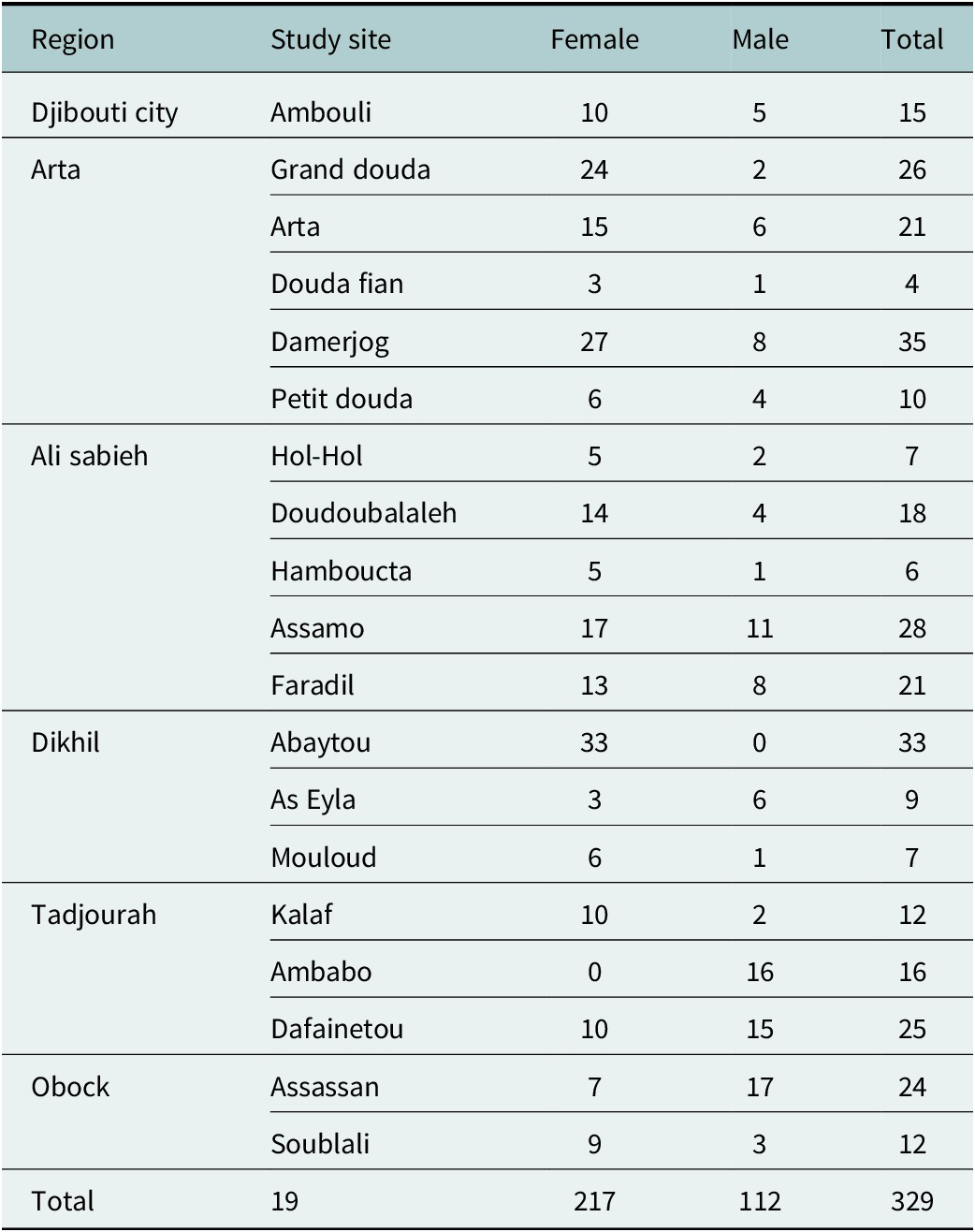
The study population was determined from a list of 1,350 farmers, representing 68% of the total farmers in Djibouti. The 32% of farmers not included correspond to those for which complete administrative and logistical information was not available. The determination of the number of sites per region followed the sampling recommendations proposed by the FAO (2017), while the overall sample size of farmers was calculated using the statistical framework proposed by Krejcie and Morgan (Reference Krejcie and Morgan1970), complemented by recent adaptations proposed by Sandagari (Reference Sandagari2024). Application of this formula (Krejcie and Morgan, Reference Krejcie and Morgan1970; Supplementary Formula S0, Table 1) indicated that at least 322 farmers needed to be surveyed. A stratified sampling approach was subsequently employed to determine the number of agricultural sites to be studied per region and the number of farmers per agricultural site (Supplementary Formula S1). The agricultural sites included in the survey were selected using a random sampling approach based on Marshall’s formula (Marshall, Reference Marshall1996) and the methods of Frey et al. (Reference Frey, Botan and Kreps2000). Table 1 presents the distribution of respondents by gender for each study site.
Distribution of respondents by region, study site and gender

Table 1. Long description
The table contains five columns: Region, Study site, Female, Male, and Total.
* Djibouti city: Ambouli site has 10 females, 5 males, total 15.
* Arta region: Includes Grand douda (24 F, 2 M, 26 total), Arta (15 F, 6 M, 21 total), Douda fian (3 F, 1 M, 4 total), Damerjog (27 F, 8 M, 35 total), and Petit douda (6 F, 4 M, 10 total).
* Ali sabieh region: Includes Hol-Hol (5 F, 2 M, 7 total), Doudoubalaleh (14 F, 4 M, 18 total), Hamboucta (5 F, 1 M, 6 total), Assamo (17 F, 11 M, 28 total), and Faradil (13 F, 8 M, 21 total).
* Dikhil region: Includes Abaytou (33 F, 0 M, 33 total), As Eyla (3 F, 6 M, 9 total), and Mouloud (6 F, 1 M, 7 total).
* Tadjourah region: Includes Kalaf (10 F, 2 M, 12 total), Ambabo (0 F, 16 M, 16 total), and Dafainetou (10 F, 15 M, 25 total).
* Obock region: Includes Assassan (7 F, 17 M, 24 total) and Soublali (9 F, 3 M, 12 total).
The final row indicates a grand total of 217 females and 112 males across 19 study sites, resulting in a total of 329 respondents.
Within each selected site, participants were randomly approached during field visits according to their availability. Prior to each interview, the objectives of the study were clearly explained, and informed consent was obtained by confirming participants’ willingness and availability to take part in the survey. To minimize language-related biases and improve the reliability of responses, all team members were fluent in the local languages spoken in the study areas, namely Afar and Somali. For participants who did not speak French or English, questionnaires were administered directly in the local language through real-time translation.
Statistical analyses
To assess the level of farmers’ engagement in SLM, a synthetic adoption index was developed based on the 10 most widely implemented practices identified in the study area: organic fertilization, agroforestry, intercropping, crop rotations, hedgerows and fences, water management, pasture management, zai pits and half-moons, fallowing and stone bund the construction (Supplementary Table S2). Each practice was coded as a binary variable, taken the value of 1 when the practice was adopted by the farmer and 0 otherwise. The synthetic adoption index was obtained by summing the scores attributed to the 10 practices and normalizing the resulting value by total number of practices considered (Supplementary Formula S2). A continuous score ranged from 0 (no practices adopted) to 10 (all practices adopted). Accordingly, the synthetic index is used as a dependent variable in regression models to identify the factors explaining the different levels of adoption between farms. The reliability and validity of the constructed index were assessed through several complementary statistical diagnostics. First, residual normality was evaluated graphically using distribution diagnostic plots presented in the appendix (Supplementary Figure S2; Supplementary Table S2), in order to verify the adequacy of the models with respect to the required statistical assumptions (Faraway, Reference Faraway2006; Bliese, Reference Bliese2012). Second, we applied the reference criteria proposed by Rex B. Kline (Reference Kline2023), particularly the skewness and kurtosis indicators presented in Supplementary Table 1. These metrics were used to assess the normality of the data distribution and, consequently, the statistical robustness of the index construction. The observed values fall within the thresholds recommended by Kline, thereby confirming an acceptable distributional structure. To explain the variations in the adoption index for SLM practices, we selected several explanatory variables. These are divided into the following five categories: farmer profile, agricultural and land assets, farm characteristics, agricultural vulnerability and migration dynamics in rural areas. These variables have been identified in the literature as determinants of adoption (Van Aelst and Holvoet, Reference Van Aelst and Holvoet2016; Lawson et al., Reference Lawson, Alare, Salifu and Thompson-Hall2020; Jha and Gupta, Reference Jha and Gupta2021; Nadeem et al., Reference Nadeem, Wang, Shahbaz, Haq and Boz2023; Mponela et al., Reference Mponela, Manda, Kinyua and Kihara2023).
The multiple linear regression model is an extension of simple linear regression and allows one to predict and/or explain a dependent variable (Y) on the basis of several explanatory or independent variables (Xi). The general form of the regression model is provided in Supplementary Formula S3. Equations of the incremental regression models used in the study, based on the theoretical model’s key determinants (model variables). The first model is designed to explain the adoption index of SLM practices (Yi) on the basis of explanatory variables at the national level (Supplementary Formula S4). To explain the index of adoption of SLM practices, the initial theoretical model includes 11 variables (β 1 to β 11). To eliminate the least relevant variables, the Step() function in R was used (https://rdrr.io/r/stats/step.html). This function adds or removes a variable based on the AIC (Akaike information criterion). When the added variable decreases the AIC, it is retained as an explanatory factor. Otherwise, when a variable increases the AIC, it is removed from the model. Finally, Step() provides a final model containing the variables that best explain the SLM variable while minimizing the AIC. We used the Step() function to construct the three linear regression models presented here.
In the national level, the equation for Model 1, produced by the Step() function and excluding the regional and village survey variables, is given as Supplementary Formula S5. The Model 2 specification adds the “region” variable to the initial model to consider disparities between different geographical areas of Djibouti. The model equation, generated by the Step() function in RStudio and considering the “region” variable, is translated as Supplementary Formula S6. This Model 3 accounts for village-specific characteristics that may influence the adoption of these practices, adding the “surveyed villages” variable to the base model (Supplementary Formula S7). To examine the influence of gender inequalities in greater detail, Model 4 includes interactions between gender and certain explanatory variables (Supplementary Formula S8).
Several tests were conducted to assess the validity of the models. To verify whether we have the minimum number of observations to perform multiple linear regression, we used the formulas proposed by Barbara Tabachnick and Linda Fidell (Reference Tabachnick and Fidell2014). These authors state that the number of observations we have must be at least 10 times greater than the number of independent variables to test the multiple correlation coefficient (R 2). They propose two conditions, expressed as Supplementary Formula S9. The mean residuals are practically zero, with a result close to zero (7.14 × 10⁻¹⁷) for all the models. The collinearity hypothesis was tested in R using the Car package. For all three models presented, the obtained VIF values are less than 10, suggesting the absence of multicollinearity in the models (Supplementary Table S1). In accordance with the criteria defined by Kline (Reference Kline2023), the data distribution was normal (skewness values <±3 and kurtosis <±10; Supplementary Table S2 and Supplementary Figure S2). To detect outliers, leverage and Cook’s distance were used. Analysis of these two parameters confirmed that the assumptions of the multiple regression were met.
Results
General results
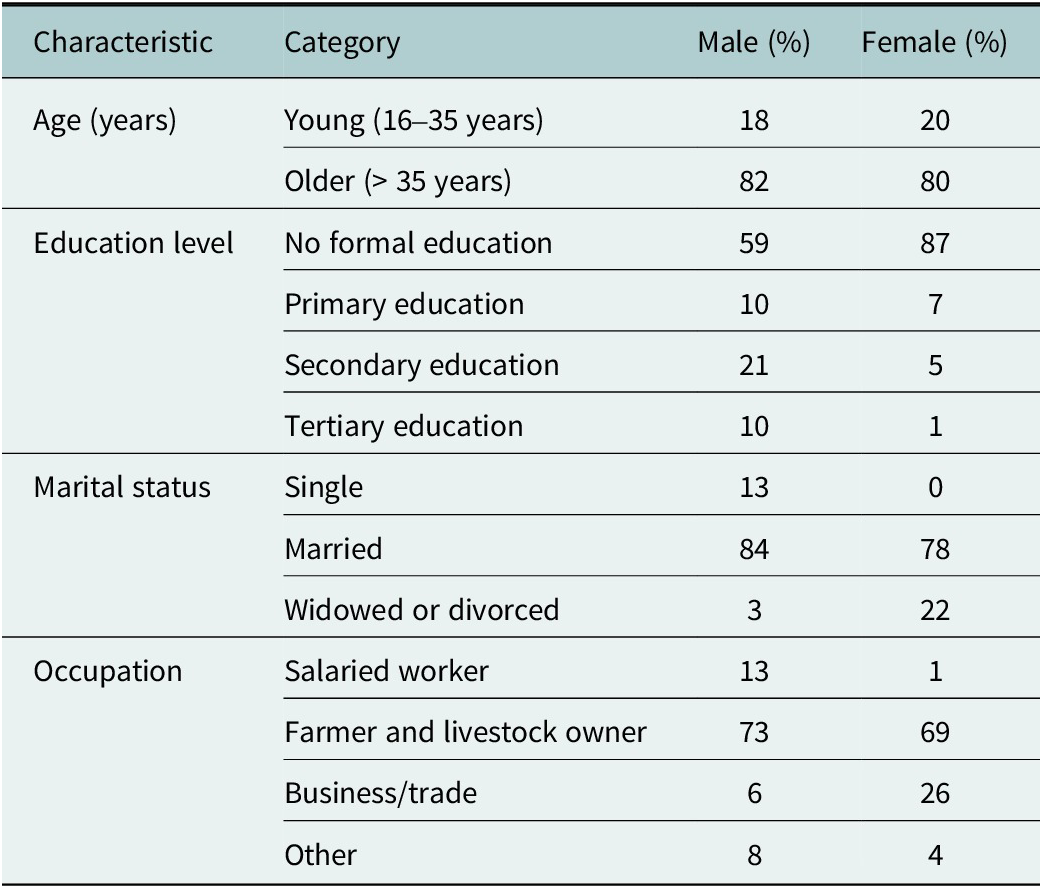
The surveyed population consists of one-third men and two-thirds women. Young people (16–35 years old) represent only one-fifth of the surveyed population, which is composed mainly of heads of household (Table 2). Despite the youthfulness of this population, 78% of women and 83% of men are married; the proportion of widowed or divorced women is five times greater than that of widowed or divorced men, which can also be explained by the decision to focus on female heads of the household (Table 2). All of the single people surveyed are men (13%). Women also stand out for their lower levels of education (14%) compared to men (42%). Their level of involvement in agricultural activities is comparable to that of men, but their investment in commercial activities is much greater (Table 2). Women are less represented in salaried employment, which is occupied predominantly by men.
Sociodemographic characteristics of the surveyed population (N = 329)

Table 2. Long description
The table consists of four columns: Characteristic, Category, Male percentage, and Female percentage.
* Age (years): For the Young category (16 to 35 years), males are 18 percent and females are 20 percent. For the Older category (greater than 35 years), males are 82 percent and females are 80 percent.
* Education level: No formal education includes 59 percent of males and 87 percent of females. Primary education includes 10 percent of males and 7 percent of females. Secondary education includes 21 percent of males and 5 percent of females. Tertiary education includes 10 percent of males and 1 percent of females.
* Marital status: Single individuals are 13 percent of males and 0 percent of females. Married individuals are 84 percent of males and 78 percent of females. Widowed or divorced individuals are 3 percent of males and 22 percent of females.
* Occupation: Salaried workers are 13 percent of males and 1 percent of females. Farmers and livestock owners are 73 percent of males and 69 percent of females. Business or trade accounts for 6 percent of males and 26 percent of females. Other occupations account for 8 percent of males and 4 percent of females.
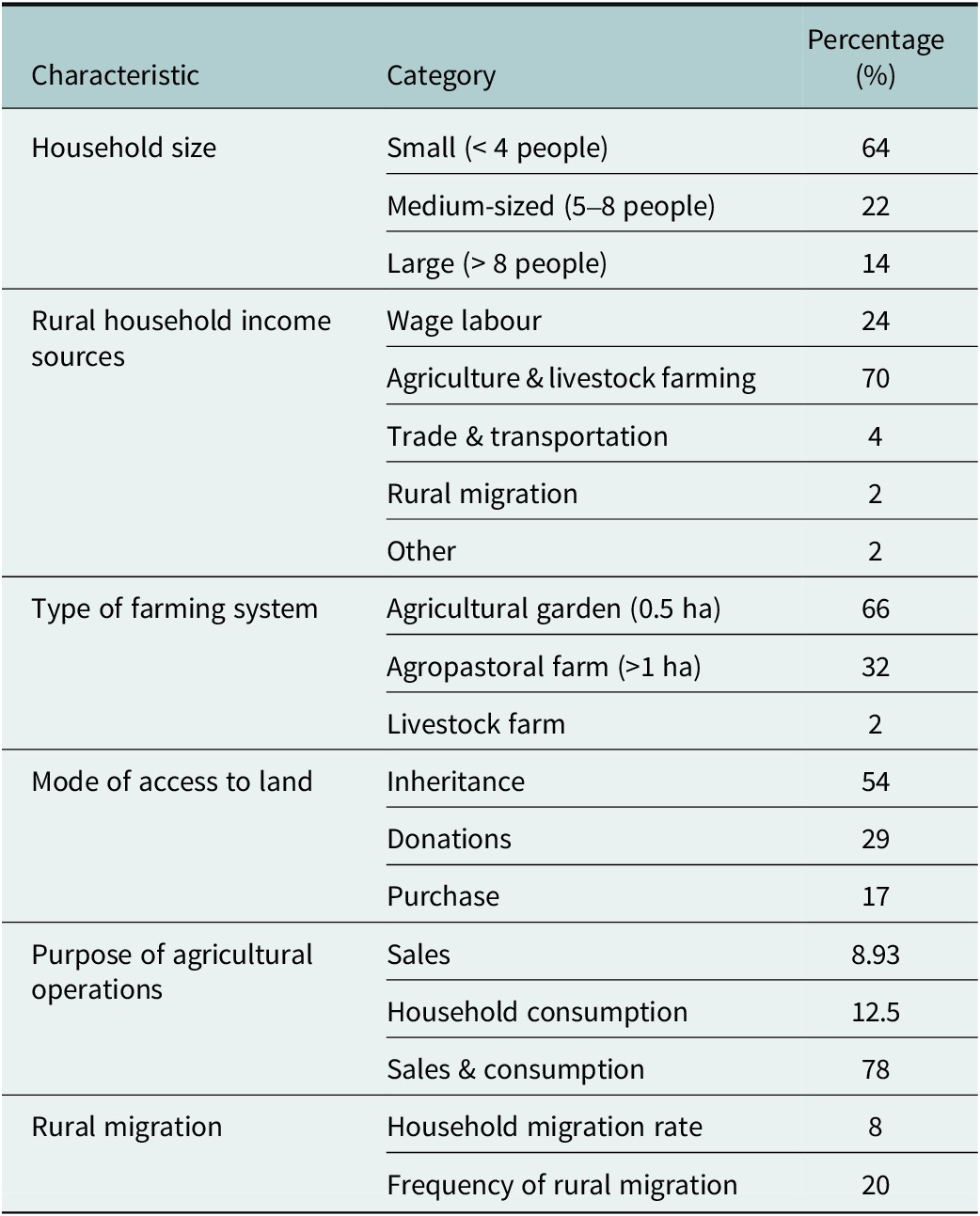
The households surveyed were divided into three categories according to the number of members (Table 3). The majority of these households are small (<4 members), with households of more than 8 people remaining marginal. Agriculture and livestock farming are the main sources of income (70%), followed by wage labour (24%) and trade and/or transport (Table 3). Rural migration as a source of income diversification concerns 8% of the households surveyed. The average number of men in households that recorded at least one migration is 1.67 compared with 0.33 among women. Agricultural activities are carried out mainly in small gardens, agropastoral farms or livestock farms. The percentage of women with access to land varies between 17% and 54% (for purchase and inheritance, respectively). Inheritance and gifts are the main modes of access, followed by purchases (Table 3).
Socioeconomic and agricultural characteristics of rural households (N = 329)

Table 3. Long description
The table consists of three columns: Characteristic, Category, and Percentage.
* Household size: Small (less than 4 people) at 64 percent; Medium-sized (5 to 8 people) at 22 percent; Large (greater than 8 people) at 14 percent.
* Rural household income sources: Agriculture and livestock farming at 70 percent; Wage labour at 24 percent; Trade and transportation at 4 percent; Rural migration at 2 percent; Other at 2 percent.
* Type of farming system: Agricultural garden (0.5 ha) at 66 percent; Agropastoral farm (greater than 1 ha) at 32 percent; Livestock farm at 2 percent.
* Mode of access to land: Inheritance at 54 percent; Donations at 29 percent; Purchase at 17 percent.
* Purpose of agricultural operations: Sales and consumption at 78 percent; Household consumption at 12.5 percent; Sales at 8.93 percent.
* Rural migration: Frequency of rural migration at 20 percent; Household migration rate at 8 percent.
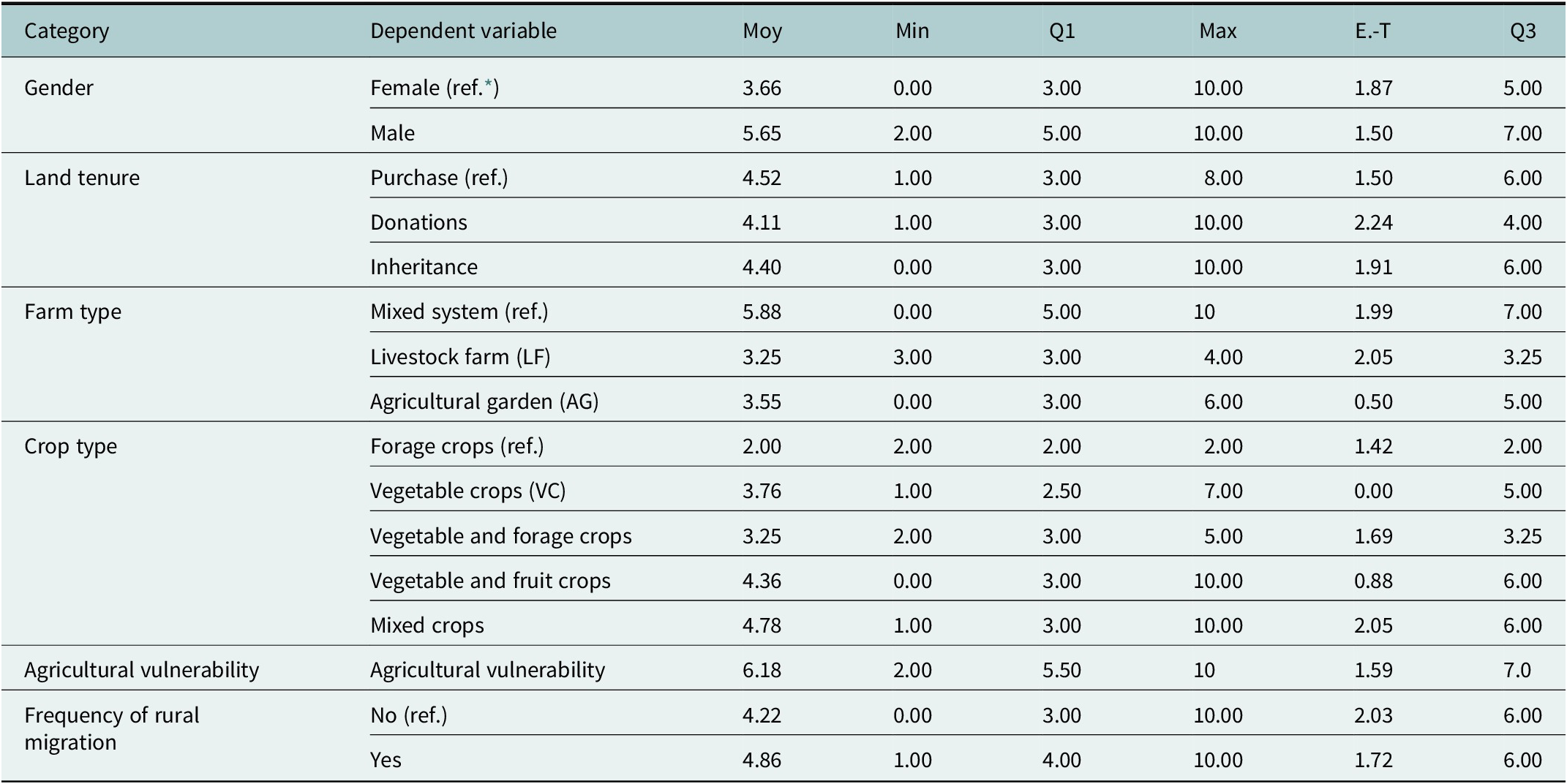
The index for adopting SLM practices is on average higher among men than among women (5.65 ± 1.50 vs 3.66 ± 1.87; Table 4 and Supplementary Figure S3). The index varies according to land access, the type of farming operation and crop and the perception of environmental risks. The greatest indices were obtained for landowners who had acquired land through purchase, practising mixed farming (crops and livestock) and mixed cropping. The lowest indices are associated with the land tenure system of donation and fodder farms (Table 4).
Descriptive statistics of regression variables (N = 329)

Table 4. Long description
The table presents descriptive statistics for N = 329. The columns are Category, Dependent variable, Moy (Mean), Min, Q 1, Max, E.-T (Standard Deviation), and Q 3.
* Gender: Female (reference) has a mean of 3.66, min 0.00, max 10.00, and standard deviation 1.87. Male has a mean of 5.65, min 2.00, max 10.00, and standard deviation 1.50.
* Land tenure: Purchase (reference) mean 4.52; Donations mean 4.11; Inheritance mean 4.40.
* Farm type: Mixed system (reference) mean 5.88; Livestock farm (L F) mean 3.25; Agricultural garden (A G) mean 3.55.
* Crop type: Forage crops (reference) mean 2.00; Vegetable crops (V C) mean 3.76; Vegetable and forage crops mean 3.25; Vegetable and fruit crops mean 4.36; Mixed crops mean 4.78.
* Agricultural vulnerability: Mean 6.18, min 2.00, max 10, standard deviation 1.59.
* Frequency of rural migration: No (reference) mean 4.22; Yes mean 4.86.
Footnote: ref. denotes the reference category; Moy is Mean; E T is Standard deviation; Q 1 and Q 3 are the first and third quartiles.
* ref. denotes the reference category against which the estimated coefficients (β) are compared; Moy Mean; Min = Minimum; Q1 = First quartile (25th percentile); Max = Maximum; ET = Standard deviation; Q3 = Third quartile (75th percentile)
Effect of the national scale
Analysis of variance reveals that gender is the greatest determining factor with a significant contribution (p < 0.001, Supplementary Table S3). Farm type (F = 66.56, p < 0.001) and crop type (p = 0.000278) contribute similarly to the adoption of SLM practices. The contribution of agricultural vulnerability is significant at the 5% threshold (p = 0.000865). The variable mode of access to land (land tenure) does not have a significant effect at this scale (p = 0.671, Supplementary Table S3). Analysis of the coefficients of the variable modalities indicates positive coefficients, reflecting a greater adoption of SLM practices among men (β = 1.4) than among women and among mixed farming systems or agropastoral farms than among agricultural gardens (β = −1.9) and livestock farms (β = −1.4, Supplementary Table S4). Compared with farms specializing in market gardening (β = 0.90) or forage production, mixed farms are characterized by coefficients ranging from 1.3 to 1.6, reflecting a high adoption rate of integrated pest management (SLM) practices. A positive and significant effect (β = 0.28, p < 0.001) of agricultural vulnerability on the adoption of these practices is also observed (Supplementary Table S4).
Effect of the regional scale
The “region” variable is greatly significant (p = 3.30e-05), as it increases the model’s R2 from 0.49 to 0.53 (Supplementary Table S4). The overall effect of gender remains very strong (p < 2.2e-16), while the type of farm (p < 0.001) and agricultural vulnerability (p = 0.0055) remain significant variables in the adoption of SLM practices (Supplementary Table S3). Land tenure (the method of accessing land) obtains a score close to significance (p = 0.065). Analysis of the coefficients of the variable categories at the regional level indicates a trend similar to that at the national level. The determinants of the adoption of SLM practices are gender, farm type, crop type and agricultural vulnerability.
Effect of local conditions
At the village level, R2 varies from 0.53 to 0.58, demonstrating that taking village-specific characteristics into account improves the understanding of the factors determining adoption (Supplementary Table S4). In addition to gender, which remains a determining factor in adoption (p < 2.2e-16), the “village” variable is highly significant (p = 9.76e-07, Supplementary Table S3). The variables “type of farm” (p = < 2.2e-16), “type of crop” (p = 0.0008), and “agricultural vulnerability” (p = 0.0035) remain determining factors. In addition to these are “land tenure” (p = 0.0433) and “frequency of migration” (p = 0.0465, Supplementary Table S3). Analysis of the coefficients for the variable categories reveals a decrease in the coefficient associated with the “male” category, illustrating the influence of local variations on the gender effect (Supplementary Table S4). Land access becomes significant at the village level. Thus, farmers who acquired their land through inheritance (β = −0.36) are less likely to adopt SLM practices than are those who obtained it through donation (β = 0.20) or purchase (reference category; Supplementary Table S4).
With regard to the nature of farming, the reference modality is the mixed agricultural system. The negative coefficients observed for agricultural gardens (β = −2.1) and livestock farms (β = −1.5) indicate that these types of farms engage in fewer sustainable practices than do mixed systems (Supplementary Table S4). Conversely, the variable “type of crops” is marginally significant at the village level (p = 0.061), whereas vulnerability to environmental hazards continues to have a positive and significant effect (β = 0.27, p = 0.002). At this scale, migration frequency becomes a significant determinant (β = 0.45, p = 0.047, Supplementary Table S4), suggesting that a high migration rate within villages is associated with greater adoption of practices. In summary, at the village level, in addition to gender, the nature of the farm, crop type (marginal effect) and perception of agricultural vulnerability are key determinants for explaining differences in adoption between villages. At this scale, the frequency of rural migration also contributes significantly to adoption (Supplementary Table S4).
Gender inequality
The inclusion of these interactions improves the model’s performance, with a coefficient of determination reaching R 2 = 0.61 (Supplementary Table S4). Notably, the direct coefficient associated with gender becomes nearly zero (β = 0.01), indicating that the effect of gender cannot be explained solely by the farmer’s sex, but rather by its interaction with other structural factors (Supplementary Table S4). The results show, in particular, a significant interaction between gender and the type of agricultural holding. In vegetable gardens, the interaction is strongly positive (β = 1.5, p < 0.001), meaning that men adopt SLM practices more than women in this type of holding (Supplementary Table S4).
Discussion
This study highlights the multidimensional aspects of SLM practice adoption within the Great Green Wall region of Djibouti. We identified, on the one hand, key biophysical factors influencing the adoption of practices at all scales of investigation and, on the other hand, socioeconomic factors influencing the adoption of practices at the local level. These results confirm the hypothesis of variability in the factors influencing the adoption of SLM practices across different scales of analysis and demonstrate strong interactions between factors related to gender, access to productive resources, particularly land, and migration dynamics at the local level. These results make an original contribution to studies analysing the determinants of the adoption of SLM practices in relation to gender, which have most often focused on a single scale (Kiptot and Franzel, Reference Kiptot and Franzel2011; Degrande and Arinloye, Reference Degrande and Arinloye2015; Van Aelst and Holvoet, Reference Van Aelst and Holvoet2016; Theriault et al., Reference Theriault, Smale and Haider2017; Mbile et al., Reference Mbile, Atangana and Mbenda2019; Wekesah et al., Reference Wekesah, Mutua and Izugbara2019; Lawson et al., Reference Lawson, Alare, Salifu and Thompson-Hall2020; Jha and Gupta, Reference Jha and Gupta2021; Mponela et al., Reference Mponela, Manda, Kinyua and Kihara2023).
The interactions among gender, access to land and the adoption of SLM practices result in a decrease in the effect of gender and the emergence of land tenure as a determining factor when moving from the national to the village level. The strong impact of the “gender” variable at the national level is explained by the fact that it is considered consistently in this study and that its influence is analysed through the average of observations. At the regional and village levels, the influence of the gender variable diminishes, whereas that of the land variable becomes significant. This finding suggests that in villages where women have access to land, they are more likely to adopt SLM practices, which is consistent with studies that have demonstrated the link between women’s access to agricultural land and their investment in adopting SLM practices (Deininger and Ali, Reference Deininger and Ali2008; Benjamin et al., Reference Benjamin, Ola, Sauer and Buchenrieder2021; Nadeem et al., Reference Nadeem, Wang, Shahbaz, Haq and Boz2023; Stiem-Bhatia and Koudougou, Reference Stiem-Bhatia and Koudougou2022). Land ownership has increased the likelihood of women planting, reforesting, and investing in agroforestry in Kenya and Malawi (Collantes et al., Reference Collantes, Kloos, Henry, Mboya, Mor and Metternicht2018). Gender-sensitive land certification and registration programs have increased the likelihood of women engaging in water conservation and soil management practices in Ethiopian villages by 20 to 30 % (Dugasseh et al., Reference Dugasseh, Aapengnuo and Zandersen2021). However, land access alone does not guarantee the substantial engagement of women in SLM practices. Variables such as plot size and natural soil fertility can influence women’s participation in SLM. In Ghana and Tanzania, recent studies have reported how significant gender differences in plot size affect women’s investment in SLM (Monimart, Reference Monimart and Verschuur2012; Awoke et al., Reference Awoke, Löhr, Kimaro and Sieber2025). Our qualitative field investigations provide important insights into these dynamics. These distinct tenure pathways appear to shape adoption behaviour differently. Women with inherited land tenure often display greater long-term investment capacity and are more likely to recruit agricultural labourers – frequently migrants from Ethiopia and Somalia – who contribute directly to the day-to-day implementation of SLM practices. In contrast, women accessing land through collective donation schemes typically operate on smaller shared plots and tend to prioritize short term, immediately productive practices, such as organic manure application and water management, which require limited surface area and generate faster agronomic returns. Analysing the influence of these variables would therefore be useful to complement the multi-scale analysis proposed in this study.
Our study reveals that there are potential interactions among gender, rural migration and the adoption of practices, resulting in significant adoption rates of SLM practices in villages with high-level migration dynamics. These findings are consistent with the process of the “feminization of farms” and empowerment observed in areas with high-level male migration, where women become the primary managers of farms (Achandi et al., Reference Achandi, Mujawamariya, Agboh-Noameshie, Gebremariam, Rahalivavololona and Rodenburg2018). Rural migration leads to a new reconfiguration of gender relations, in which women acquire more decision-making power and are more likely to adopt SLM practices (De Haas and Van Rooij, Reference De Haas and Van Rooij2010; Mponela et al., Reference Mponela, Manda, Kinyua and Kihara2023). Increased responsibility and decision-making power for women in agricultural activities has been observed in rural migration contexts in Egypt, Kenya and Burkina Faso (Brink, Reference Brink1991; Nelson, Reference Nelson1992; Hampshire, Reference Hampshire2006; Sunderland et al., Reference Sunderland, Achdiawan, Angelsen, Babigumira, Ickowitz, Paumgarten and Shively2014; Chandrasekhar et al., Reference Chandrasekhar, Sahoo and Swaminathan2022; Martey and Etwire, Reference Martey and Etwire2025).
This situation has also been observed more recently in Ethiopia and Madagascar as well as in Mali (Achandi et al., Reference Achandi, Mujawamariya, Agboh-Noameshie, Gebremariam, Rahalivavololona and Rodenburg2018; Mponela et al., Reference Mponela, Manda, Kinyua and Kihara2023), where increased female empowerment in decision-making has led to an increase in the size of the area dedicated to legumes in agricultural fields. The adoption rates of practices observed at the village level in this study reflect the decision-making autonomy and indirect empowerment of female farmers, linked to changes in gender relations in farm management brought about by male migration within villages. The adoption of SLM practices in villages with high migration rates could also be the result of a knock-on effect linked to households reinvesting part of their migration income in agricultural technologies designed to improve productivity in the long term. Several studies have shown that households with more members migrating re-invest some of the remittances in agricultural assets, thereby promoting innovation and sustainability (Martey and Etwire, Reference Martey and Etwire2025). Djibouti is also a transit country for many migrants from Ethiopia and Somalia attempting to reach the Middle East (IGAD, 2020b). Several of the study villages are situated along the Ethiopia–Djibouti–Saudi Arabia migration corridor. These agricultural villages are host areas for temporary migrants who provide a dynamic agricultural workforce, with farming skills firmly acquired in their country of origin, and who may have contributed to the local dissemination of SLM practices. These observations are consistent with several studies on the diffusion of SLM practices in migrant-hosting areas and on the role of intervillage or translocal community social networks (Rockenbauch et al., Reference Rockenbauch, Sakdapolrak and Sterly2019; Chamberlin et al., Reference Chamberlin, Jayne and Sitko2020). This high frequency of temporary migrants constitutes another parameter that explains the emergence of the “rural migration” variable as a significant determinant of the adoption of SLM practices at the village level. However, our study did not examine the profiles of the migrants and did not consider the length of their stays in the host villages or the diversity of agricultural practices experienced by these migrants. Research incorporating migrant profiles could further refine our understanding of how this agricultural workforce contributes to the diffusion of SLM practices in villages.
The multi-scale approach adopted here highlights the limitations of analyses restricted to a single scale in understanding local and contextual variations in the factors influencing the adoption of SLM practices. The results obtained provide a better understanding of the influence of gender inequalities on the adoption of these practices, suggesting that greater consideration of land tenure issues and migration dynamics would make it possible to more effectively anticipate the mobilization of local actors in development programmes for climate change adaptation and strengthening the local resilience of agropastoral production systems.
Conclusions
This study is based on the analysis of 10 SLM practices in the Great Green Wall area of Djibouti. This work highlights relatively stable biophysical variables influencing the adoption of SLM practices as well as socioeconomic variables that fluctuate significantly depending on the scale considered. Furthermore it highlights the importance of a multi-scale approach to analyse the gender-related determinants of the adoption of SLM practices. The results indicate that at the national level, gender, the nature of the agricultural production system, crop diversity and agricultural vulnerability significantly explain the adoption of these practices. By successively integrating the regional and village dimensions, variables such as access to land and the frequency of rural migration become significant determinants of the adoption of these practices. The initial gender disparities diminish with the addition of contextual variables, highlighting that inequalities in access to resources and opportunities, shaped by territorial conditions, truly determine the differences in the adoption of practices between men and women and not the gender of the farmer alone. Our study thus found that (i) determinants of the adoption of SLM do vary significantly by scale and (ii) gender inequalities in assuming SLM practices are shaped by multi-factorial influences. We therefore recommend that future SLM approaches better address both these insights to achieve greater success.
Open peer review
For open peer review materials, please visit http://doi.org/10.1017/dry.2026.10043.
Supplementary material
The supplementary material for this article can be found at http://doi.org/10.1017/dry.2026.10043.
Data availability statement
The data presented in this study are public and available on request from the corresponding author.
Acknowledgments
We thank the reviewers for the careful reading of our manuscript and their insightful comments and suggestions. We would like to thank all the field investigators (Oubah Mahamoud Moussa, Radia Ali Gohar, Ahmad Farid Abdi, Abdilakhi, Choueb) as well as the farmers who assisted us.
Author contribution
Study conception: O.N., O.M.I., and F.B.; field data collection in 2024: O.N., S.C., and A.D.; statistical analyses and drafting of the manuscript: O.N. All other authors reviewed the manuscript. All authors have approved the manuscript and agree with its submission to Drylands.
Funding statement
This research was primarily funded by French Research Institute for Development (IRD). Djibouti Center for Study and Research (CERD) provided technical and logistical support for conducting field surveys.
Declaration of interest
The authors declare no conflicts of interest.


 Open access


Comments
Dear Editor,
We are pleased to submit the manuscript entitled “ A multiscale analysis of the gendered determinants of sustainable land management practice adoption in Great Green Wall intervention areas in Djibouti” for consideration for publication in Cambridge Prisms: Drylands.
This manuscript examines the determinants of the adoption of sustainable land management (SLM) practices in dryland contexts, with a particular focus on gender dynamics across multiple spatial scales (village, regional, and national levels). Drawing on mixed quantitative and qualitative data collected in six regions of Djibouti—four of which are targeted by the Great Green Wall initiative—the study highlights how socio-economic and biophysical factors interact differently across scales to shape women’s engagement in SLM practices.
By explicitly addressing gender disparities and spatial heterogeneity, this research contributes to the literature on land management and socio-environmental systems and provides policy-relevant insights for the design of inclusive land restoration and climate adaptation strategies in dryland and developing-country contexts. We believe that the manuscript aligns well with the scope of Cambridge Prisms: Drylands, particularly its focus on sustainable land management, drylands, and applied research with implications for policy and practice.
We confirm that this manuscript is original, has not been published previously, and is not under consideration for publication elsewhere. All authors have approved the manuscript and agree with its submission to Cambridge Prisms: Drylands.
Thank you for considering our manuscript. We would be grateful for the opportunity to have it reviewed and remain at your disposal for any further information.
Yours sincerely,
Oumarou MALAM ISSA
Senior soil scientist, IRD
oumarou.malamissa@ird.fr