Introduction
Since the Last Glacial Maximum (LGM), global temperatures have risen and rainfall has increased, creating favourable ecological conditions for the domestication of plants and animals. Between c. 11 000 and 5000 BP, archaeological evidence shows that rice (Oryza sativa) and millets (Setaria italica and Panicum miliaceum) were domesticated and utilised in the Yangtze and Yellow River valleys respectively (e.g. Deng et al. Reference Deng, Qin, Gao, Weisskopf, Zhang and Fuller2015; Zuo et al. Reference Zuo, Lu, Li, Song, Xu, Zou, Wang, Huan and He2016; He et al. Reference He, Lu, Zhang, Wang and Huan2017). In contrast, it is generally accepted that hunting and gathering persisted across southern China and Southeast Asia down to c. 5000 BP (Zhang & Hung Reference Zhang and Hung2012). A recent cranio-morphometric study of prehistoric and present humans in East Asia proposes the existence of two distinct populations, described as ‘Two Layers’, with the first composed of pre-Neolithic hunter-gatherers occupying southern China and Southeast Asia, and the second (the farming population) in North-east Asia and expanding into Southeast Asia after 4 kya (Matsumura et al. Reference Matsumura2019).
The subsistence strategies of the ‘complex’ hunter-gatherers of southern China and across Southeast Asia, as well as the transition to agriculture, have been the subject of intensive investigation in recent years (e.g. Zhao et al. Reference Zhao, Lu and Fu2005; Zhang & Hung Reference Zhang and Hung2010, Reference Zhang and Hung2012; Lu Reference Lu2011; Chen Reference Chen2016; Chen et al. Reference Chen and Yu2017a & Reference Chen and Yub; Oxenham et al. Reference Oxenham2018; Zhang et al. Reference Zhang, Li and Wang2018). These studies have examined lithics, faunal and archaeobotanical assemblages, bone objects and human dental caries to provide indirect evidence for the change in the basis of subsistence (e.g. Zhang & Hung Reference Zhang and Hung2012; Oxenham et al. Reference Oxenham2018). Few studies, however, have used isotope analyses of human skeletal remains to address directly questions of dietary heterogeneity among human populations, diachronic shifts in diet and the impact of changing subsistence strategies on human health.
Stable carbon and nitrogen isotope (δ13C & δ15N) analyses of human skeletal remains can provide direct evidence for human mobility and diet, and have been widely applied to investigate past human subsistence strategies (e.g. Makarewicz & Sealy Reference Makarewicz and Sealy2015). In China, such studies have been conducted for some three decades, establishing an approximate framework for the development of prehistoric human subsistence strategies in East Asia (Hu Reference Hu2018). It should be noted, however, that, to date, studies have concentrated on the Yellow River Valley and, to a lesser extent, the Yangtze River Valley; few stable isotope studies have been undertaken on human remains from southern China (Hu et al. Reference Hu, Li, Wang and Richard2010; Wu et al. Reference Wu, Ge and Chen2016; Lee et al. Reference Lee, Chen and Wu2018). This situation is explained by the generally poor preservation of bone and collagen in the acidic soils of the tropical and sub-tropical south.
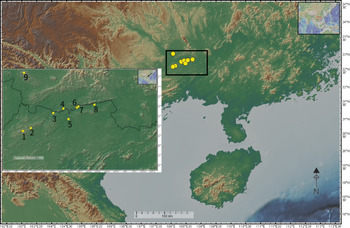
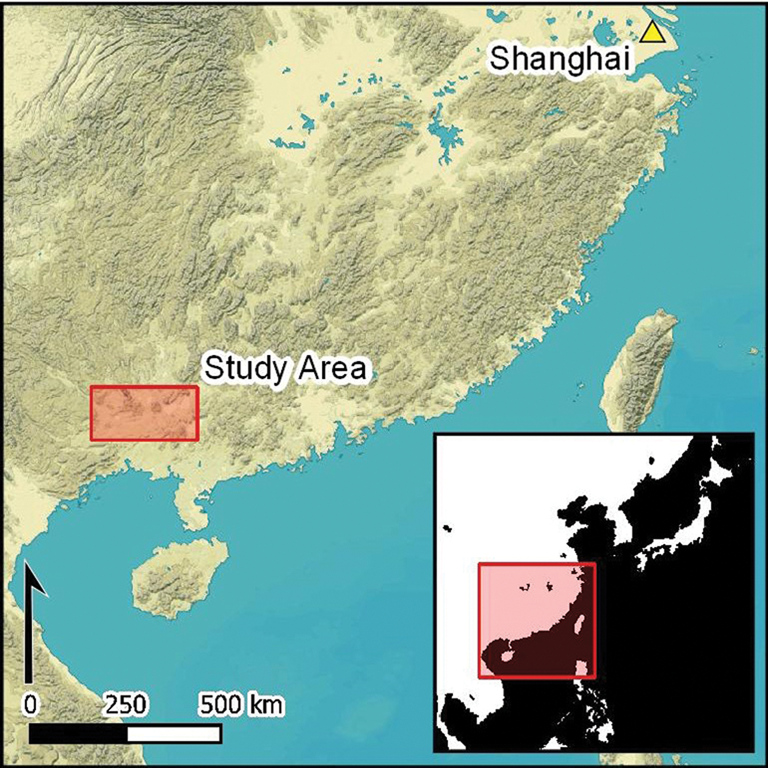
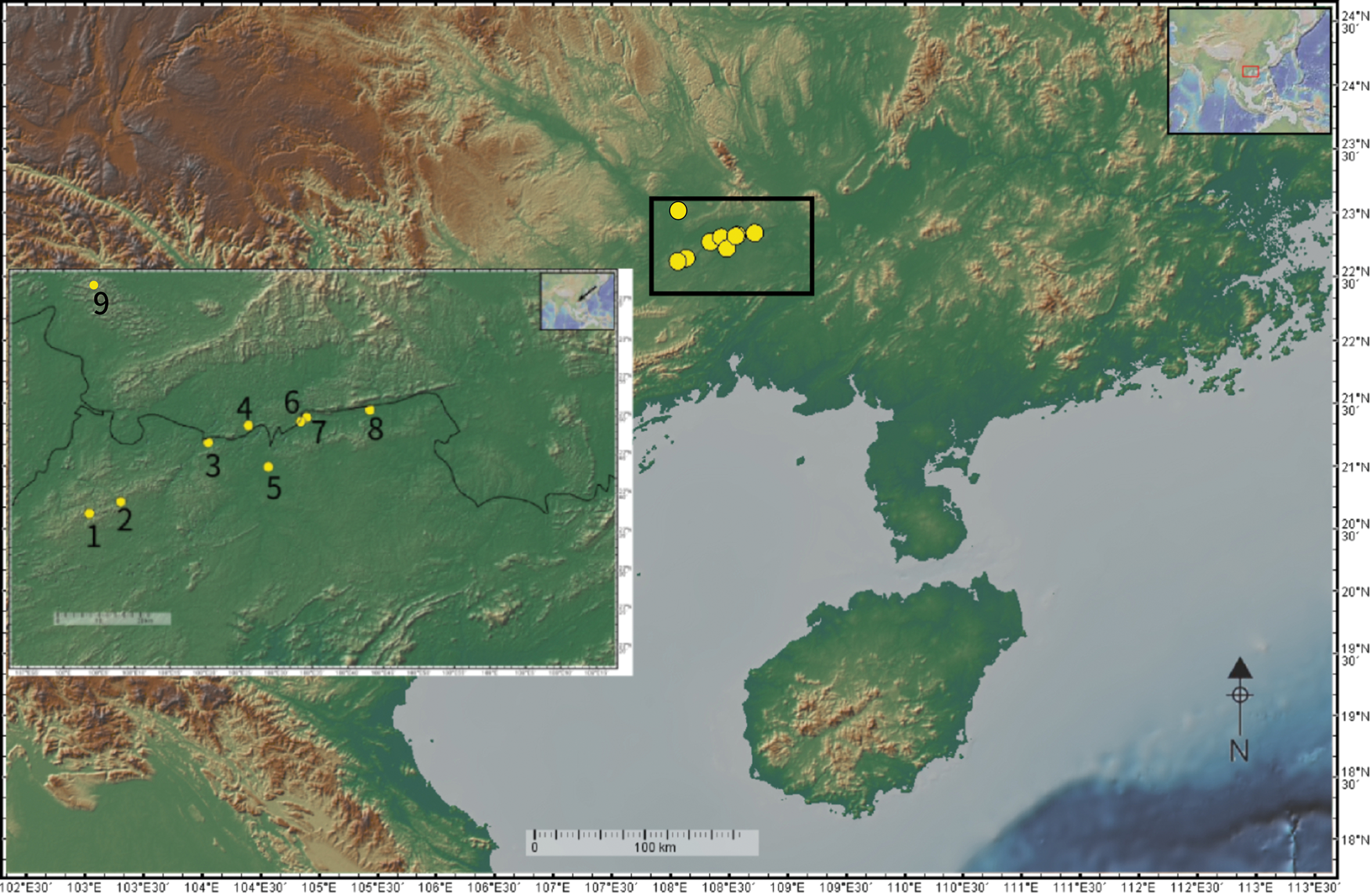
To explore the potential of stable isotope (δ13C & δ15N) analysis for our current understanding of subsistence practices and health in late prehistoric southern China, we collected 121 human bones from 79 Middle Neolithic individuals from the shell-midden site of Dingsishan, in Guangxi, China (Figure 1). To our knowledge, this represents the largest sample of human remains from southern China and Southeast Asia subject to stable isotope analyses so far. The resulting data, along with unpublished animal isotope (δ13C & δ15N) data provided by Xianglong Chen of the Chinese Academy of Social Sciences, provide evidence for human mobility and dietary variations between population groups and over time. Most importantly, the data allow us to investigate the influence of varied subsistence strategies on human health, and to compare with other agricultural populations in the Yellow and Yangtze River Valleys to the north.
Dingsishan cultural sites in China: 1) Jiangxian; 2) Ganzao; 3) Baozitou; 4) Huiyaotian; 5) Dingsishan; 6) Niulanshi; 7) Lingwu; 8) Luosishan; 9) Liyupo (maps were created by S. Zhu using Geo Map v. 3.6.10).
Archaeological context
Zhang and Hung (Reference Zhang and Hung2012) divide the Late Pleistocene and Early Holocene hunter-gatherers of southern China into three cultural phases: Late Palaeolithic to Early Neolithic (18 000–7000 BC), Middle Neolithic (7000–5000 BC), and the early phase of the Late Neolithic (5000–3000 BC). The site of Dingsishan in Guangxi Province, China (22°43′48″ north, 108°28′6″ east; Figure 1), was first discovered and investigated by the Institute of Archaeology, Chinese Academy of Social Sciences in 1997, with further excavations taking place between 1998 and 2000 (Fu et al. Reference Fu, Li, Li, Zhang and Chen1998; Fu Reference Fu2002). Geographically, the site is located at the confluence of two rivers: the Qingshui and Bachi. The site yielded a total of 331 graves and a large number and range of artefacts, including pottery sherds and stone implements, along with substantial quantities of shellfish and aquatic and terrestrial faunal bones. Based on artefact typology and stratigraphic relationships, occupation at Dingsishan can be roughly divided into four broad cultural phases: phase 1) c. 10 000 BP; phases 2–3) 8000–7000 BP; and phase 4) c. 6000 BP (Fu et al. Reference Fu, Li, Li, Zhang and Chen1998).
The site lends its name to the Dingsishan Culture, which is widely distributed across Guangxi Province, western Guangdong Province and Northern Vietnam (Fu Reference Fu2002; Zhang & Hung Reference Zhang and Hung2012; Li et al. Reference Li, Wang, Fu, Dobney, Li, Chen and Yu2013), and which is characterised by the evidence of phases 2 and 3. Typical sites of the Dingsishan Culture (Figure 1) comprise shell middens associated with indigenous foragers (Zhang & Hung Reference Zhang and Hung2012). These sites are regarded as the earliest Holocene open-air sites in southern China and Southeast Asia (Oxenham et al. Reference Oxenham2018). Multiple radiocarbon dates for the Dingsishan Culture have been reported, and are summarised in Table S1 of the online supplementary material (OSM). The dates derived from shell samples are generally older than those from typological analyses, except at the Jiangxian site (Table S1). Based on the dates for samples of human bone/teeth and plant seeds 9030–6741 BP (Table S1), combined with relative (typological) dates, we can suggest a general span of c. 9000–7000 BP for phases 2–3. Comparisons of Dingsishan phase 4 pottery vessels and other cultural remains with sites across Guangxi suggest that this phase should date to c. 4500–4000 BP (Li Reference Li2011; Zhang & Hung Reference Zhang and Hung2012; Chen Reference Chen2016; Hung et al. Reference Hung, Zhang, Matsumura, Li, Matsumura, Hung, Li and Shinoda2017; Li et al. Reference Li, Hung, Huang, Matsumura, Shinoda, Matsumura, Hung, Li and Shinoda2017).
Previous analyses on the faunal and floral remains from Dingsishan have provided a basic understanding of human utilisation of plant and animal resources. Animal bones (e.g. deer, pig, dog and buffalo) and shells are found in every cultural phase, indicating sustained consumption of terrestrial and aquatic animal resources (Lu Reference Lu2010, Reference Lu2011). Statistical analysis of animal species, using number of identified species (NISP), minimum number of individuals (MNI) and weight, along with faunal bone measurements, suggests that, in phase 1, the hunting of terrestrial animals was supplemented by fishing, while the gathering of shellfish dominated in phase 2 (Lu Reference Lu2010). In phase 3, hunting, fishing and the collection of shellfish played equally important roles in human subsistence, while in phase 4, shellfish and fishing declined in importance and hunting became more significant again (Lu Reference Lu2010, Reference Lu2011). At the same time, phytolith analysis indicates the presence of Panicoideae and Pooideae (Zhao et al. Reference Zhao, Lu and Fu2005). Although rice (Oryza sativa) phytoliths were recovered from phase 4, perhaps suggesting that rice cultivation might have appeared in southern China c. 6000 BP (Zhao et al. Reference Zhao, Lu and Fu2005), recent archaeobotanical analyses strongly indicate that rice agriculture in southern China dates to c. 5000–4000 BP (Bellwood & Oxenham Reference Bellwood, Oxenham, Bocquet-Appel and Bar-Yosef2008; Zhang & Hung Reference Zhang and Hung2010; Fuller Reference Fuller2011; Yang et al. Reference Yang2018; Deng et al. Reference Deng, Hung, Li, Carson, Huang, Huang and Lu2019).
Most of the 331 graves at Dingsishan are associated with phases 2 and 3. The graves comprised two main burial types: flexed and dismembered (Li et al. Reference Li, Wang, Fu, Dobney, Li, Chen and Yu2013). The former type is suggested to belong to the typical Southeast Asian hunter-gatherer mortuary tradition (Hung et al. Reference Hung, Zhang, Matsumura, Li, Matsumura, Hung, Li and Shinoda2017; Hung Reference Hung2019). In contrast, there are two potential interpretations for the dismembered burials: they could either represent individuals from a non-local population (Li et al. Reference Li, Wang, Fu, Dobney, Li, Chen and Yu2013), or they may represent individuals from the local population buried using a special rite perhaps reserved for individuals that died in specific circumstances, such as during hunting or warfare (Tan Reference Tan2010). Pan (Reference Pan2004) suggests that these latter individuals may have been dismembered prior to burial to prevent them from returning home to disturb the living. The high prevalence of dental caries in the 169 individuals from phases 2–3 at Dingsishan may be due to the increased consumption of carbohydrates, such as tubers and other sugar-rich foods in southern China (Zhang et al. Reference Zhang, Li and Wang2018).
Materials and methods
Ribs and long bones have different bone turnover rates and therefore inform us about diet during different periods of an individual's life. Complete turnover in femora, for example, averages around ten years, while ribs reflect the diet of around 3–5 years prior to the individual's death (Bocherens & Druker Reference Bocherens and Drucker2003; Hedges et al. Reference Hedges, Clement, Thomas and O'Connell2007). Thus, sampling both types of skeletal element can help us to identify any changes in an individual's diet during their final years of life. Here, 121 samples (43 human ribs, 77 human long bones and 1 animal bone; for details, see the OSM) from 79 individuals were selected for carbon and nitrogen isotope analysis.
The methods used for collagen extraction, isotope measurements and osteological and demographic analyses are detailed in the OSM. As previously mentioned, bone in southern China generally does not preserve well due to acidic soils. Even within the shell midden in this study, only 38 collagen samples from 121 bones (Table S2) yielded acceptable C/N ratios within the range of 2.9–3.6, N% above 4.8, C% above 13 and collagen yields higher than 0.5 per cent (DeNiro Reference DeNiro1985; Ambrose Reference Ambrose1990). In addition, unpublished animal isotope data from the Dingsishan site provided by Xianglong Chen are also considered and used as an isotopic baseline.
Results
Isotope data for humans and animals
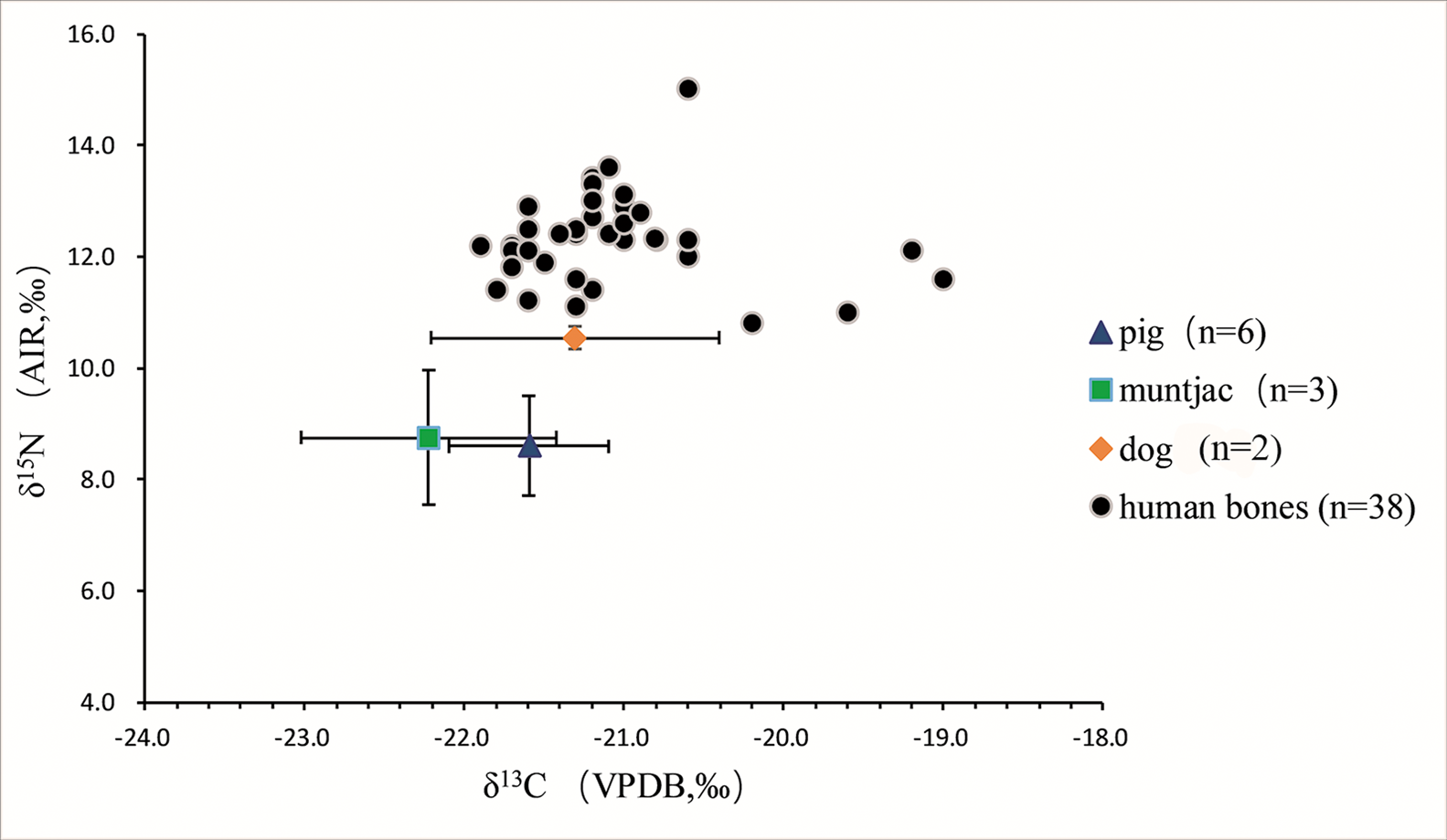
Figure 2 presents the scatterplot of isotope data for humans and animals. The δ13C values for terrestrial animals, comprising muntjac deer (Muntiacus reevesi), pig (Sus sp.) and dogs (Canis lupus familiaris), average −22.2±0.8‰ (n = 3), −21.6±0.5‰ (n = 6) and −21.3±1.0‰ (n = 2), respectively, showing that they consumed exclusively C3-based foods. The average δ15N value of the herbivorous muntjac and/or small Cervidae is 8.8±1.2‰ (n = 3), which can be used an isotopic baseline to evaluate the δ15N values of other animals and humans. Pigs (8.6±0.9‰ (n = 6)) most closely resemble the δ15N values of muntjac (see Figure 2), indicating that they subsisted predominantly on plant foods, even though they can be omnivorous. The dogs have higher δ15N values (10.5±0.2‰, n = 6) compared with the deer and pigs, suggesting the presence of animal protein in their diets.
Isotopic scatter plot for humans and animals at the Dingsishan site (animal data provided by X. Chen; figure by S. Zhu).
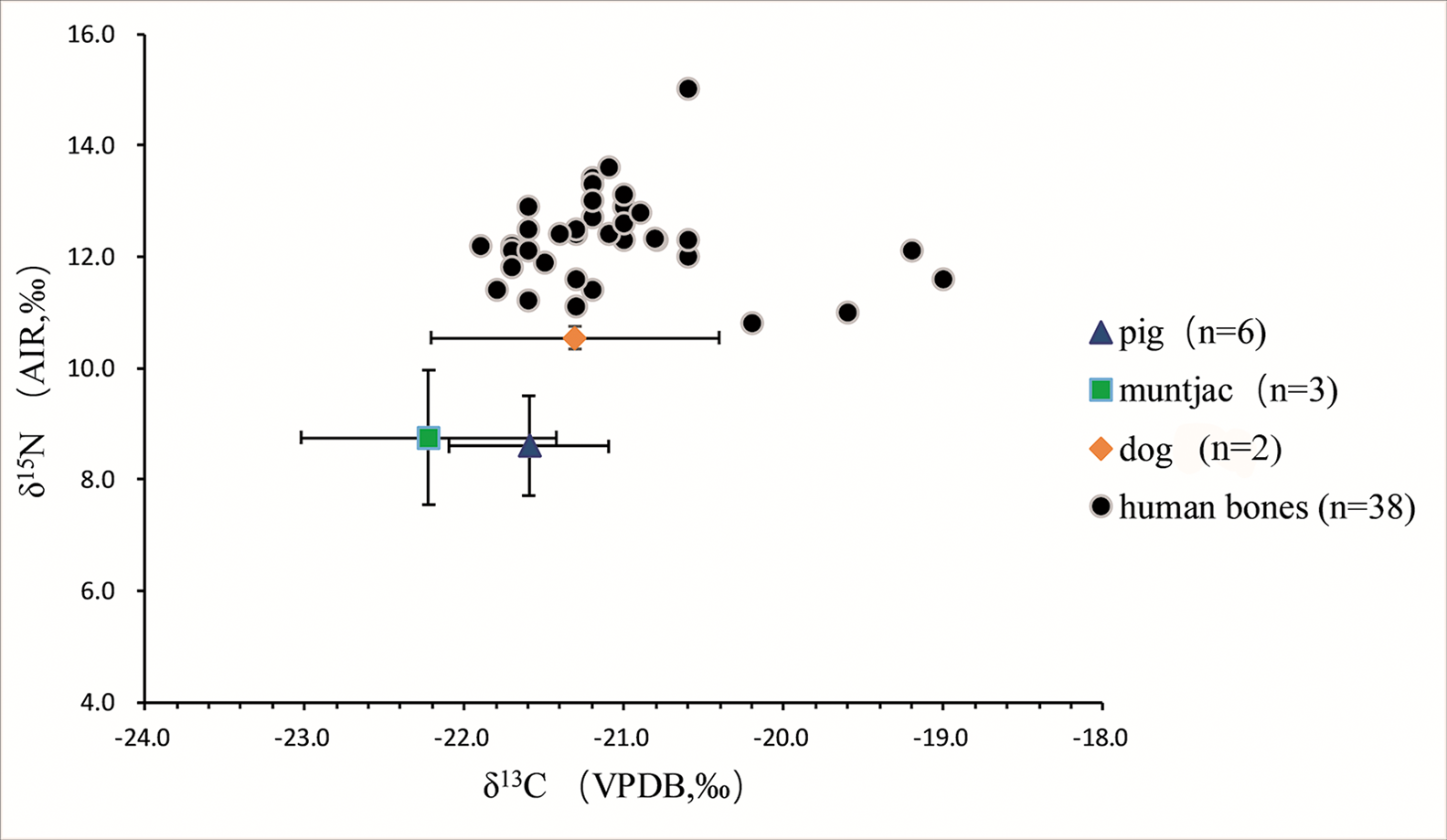
The human δ13C values range from −21.9‰ to −19.0‰, averaging −21.1±0.7‰ (n = 38). This strongly suggests that they consumed C3-based diets. δ15N values ranging from 10.8–15.0‰, with a mean of 12.3±1.8‰ (n = 38), suggest that people relied on large quantities of animal protein. These δ15N values are around 2‰ higher than those of the dogs, implying that the animal protein in the human diets could have come predominantly from freshwater sources. Individual M56—an infant aged 0–5 months at death—has the highest δ15N value (15.0‰), which probably reflects exclusive breastfeeding (Fuller et al. Reference Fuller, Richards and Mays2003).
Isotopic comparisons between human ribs and long bones, and differences by sex, age and burial type
Eight individuals with well-preserved collagen provide paired isotopic data from both ribs and long bones. No significant differences are observed between these elements for any individual using the ANOVA test and t-test (Table 1), indicating that they experienced little dietary change and/or long-distance mobility over the final decade or so before death.
Differences between stable isotope values of collagen from ribs and long bones.

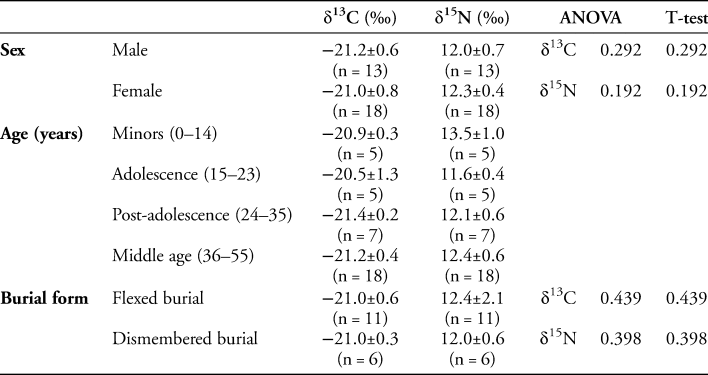
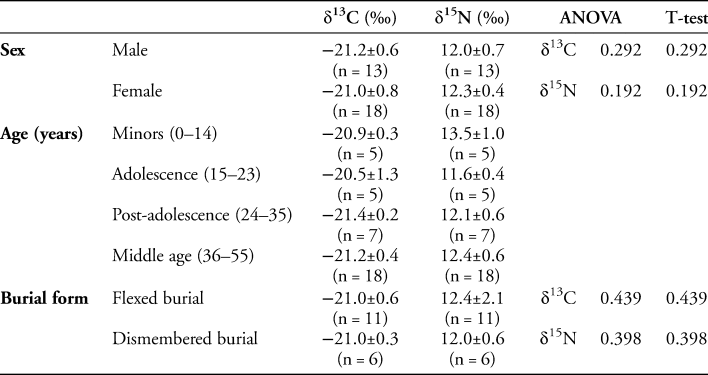
Similarly, we find no significant differences in isotopic data by individual sex, age or burial type (Table 2), suggesting that these factors did not influence diet across the wider population.
Differences between sex, age and burial forms in stable isotope values of collagen from human bones.
Demographic reconstruction
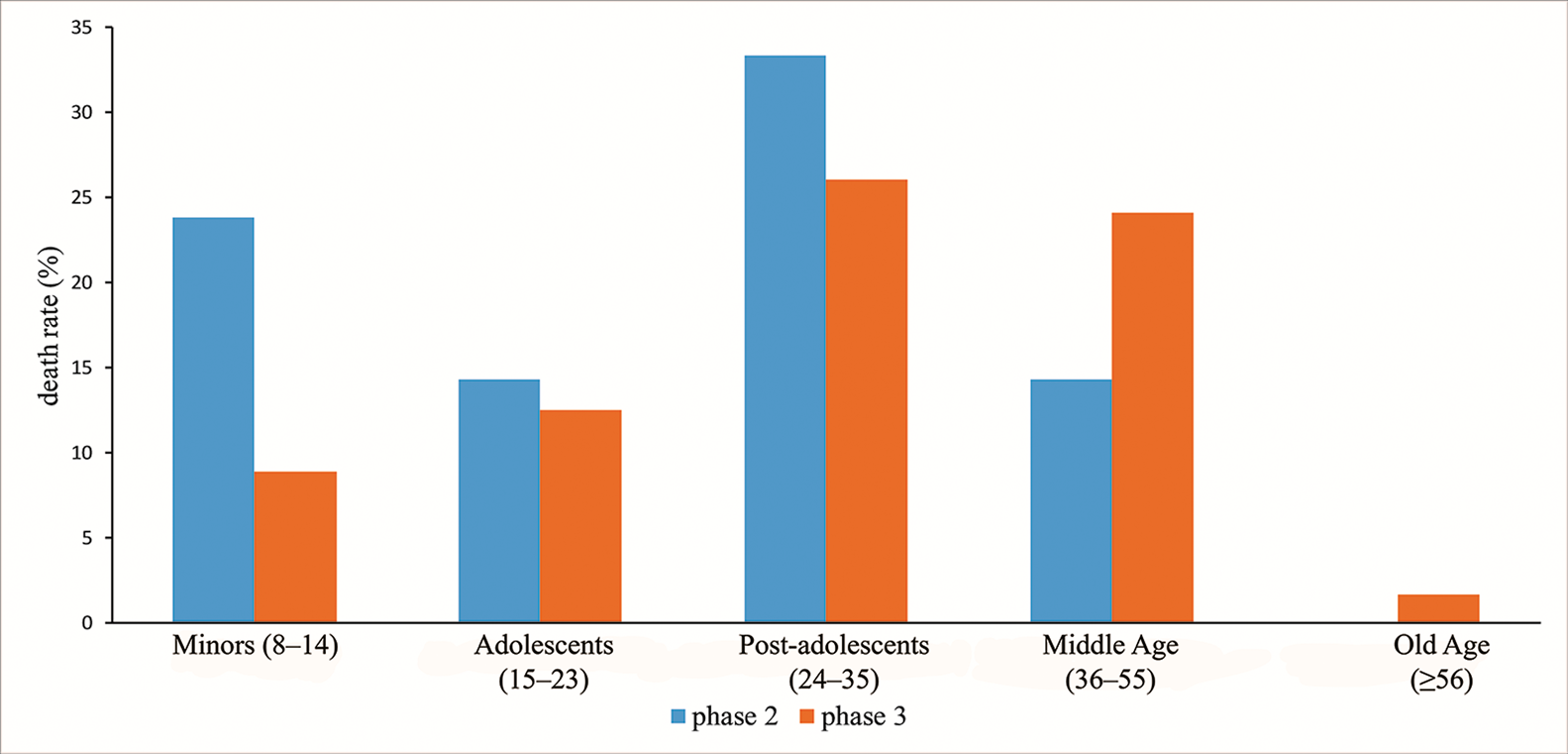
Analyses of age structures and mortality patterns provide an important method of inferring the nutritional status of ancient populations (Hockett & Haws Reference Hockett and Haws2005). As shown in Table S3 and Figure 3, age-at-death at Dingsishan concentrates predominantly in post-adolescence (24–35 years) and middle age (36–54 years). In phase 2, most people died during post-adolescence (33.33 per cent), with the death rate in both adolescence and middle age being 14.29 per cent. In phase 3, the death rates in adolescence, post-adolescence and middle age are 12.47, 26.04 and 24.10 per cent, respectively. No individual survived to old age (above 56 years) in phase 2.
Bar chart of human death rates during phases 2–3 at the Dingsishan site (figure by S. Zhu).
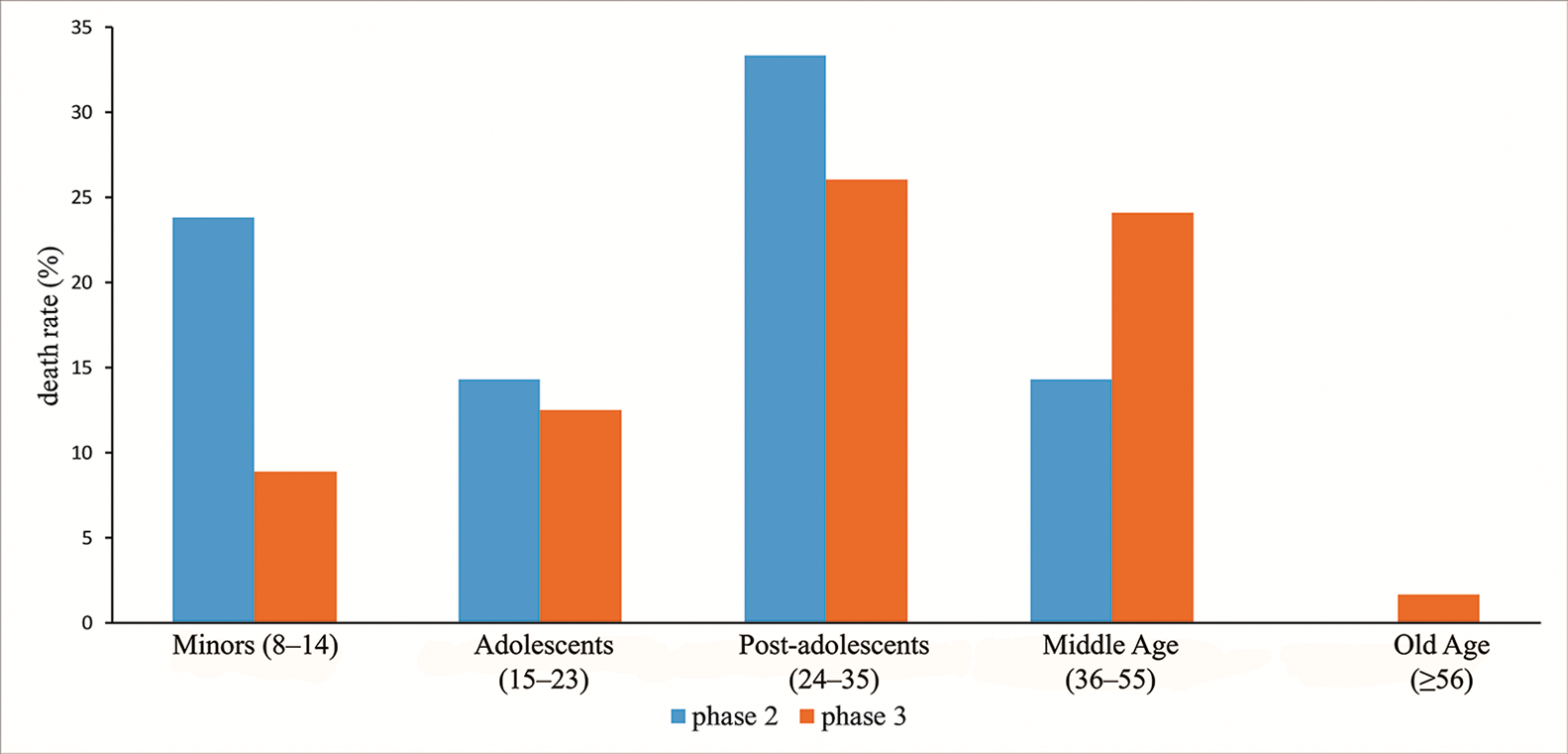
The average human lifespan within populations is also an important indicator of general health status (Wang Reference Wang2009; Oster et al. Reference Oster, Shoulson and Dorsey2013). The average lifespan of the Dingsishan population throughout all periods is 30.55 years old (n = 282), and those specifically from phases 2–3 are 21.75 (n = 18) and 31.15 (n = 264) respectively (Figure 3). The death rate in the 0–14 age bracket declines between phases 2 and 3, with the peak age at death shifting from post-adolescence to middle age. This demographic pattern suggests an increase in average human life expectancy from phases 2–3 at Dingsishan.
Discussion
Human subsistence at Dingsishan
Prehistoric humans in southern China and Southeast Asia are regarded as complex hunter-gatherers (Zhang & Hung Reference Zhang and Hung2012; Oxenham et al. Reference Oxenham2018). The isotope analyses presented here provide the first direct evidence of the importance of fishing in these regions. Although terrestrial animal and plant resources could have been important components of human diets (Zhao Reference Zhao, Lu and Fu2005; Lu Reference Lu2011; Zhang et al. Reference Zhang, Li and Wang2018), the isotopic data from human collagen—particularly the high δ15N values—clearly demonstrate that freshwater resources in the form of either fish or molluscs, dominated the protein intake of humans. Thus, faunal, floral and isotopic evidence indicates that multiple subsistence strategies—gathering, hunting and fishing—had existed at the Dingsishan site for 2000 years. Furthermore, the lack of any significant isotopic differences between human ribs and long bones suggests that individuals were not mobile and occupied the site for extended periods of time.
Although the flexed burials are characteristic of hunter-gatherer mortuary traditions in southern China and Southeast Asia (Hung et al. Reference Hung, Zhang, Matsumura, Li, Matsumura, Hung, Li and Shinoda2017; Hung Reference Hung2019), uncertainty remains concerning the relationship between flexed and dismembered burials (Tan Reference Tan2010; Li et al. Reference Li, Wang, Fu, Dobney, Li, Chen and Yu2013). A lack of statistical differences in the isotopic data (Table 2) between the flexed and dismembered burials from Dingsishan suggests that the above two populations could belong to the same population. Given the small sample numbers, however, further analysis is required to confirm this.
Diachronic dietary shifts
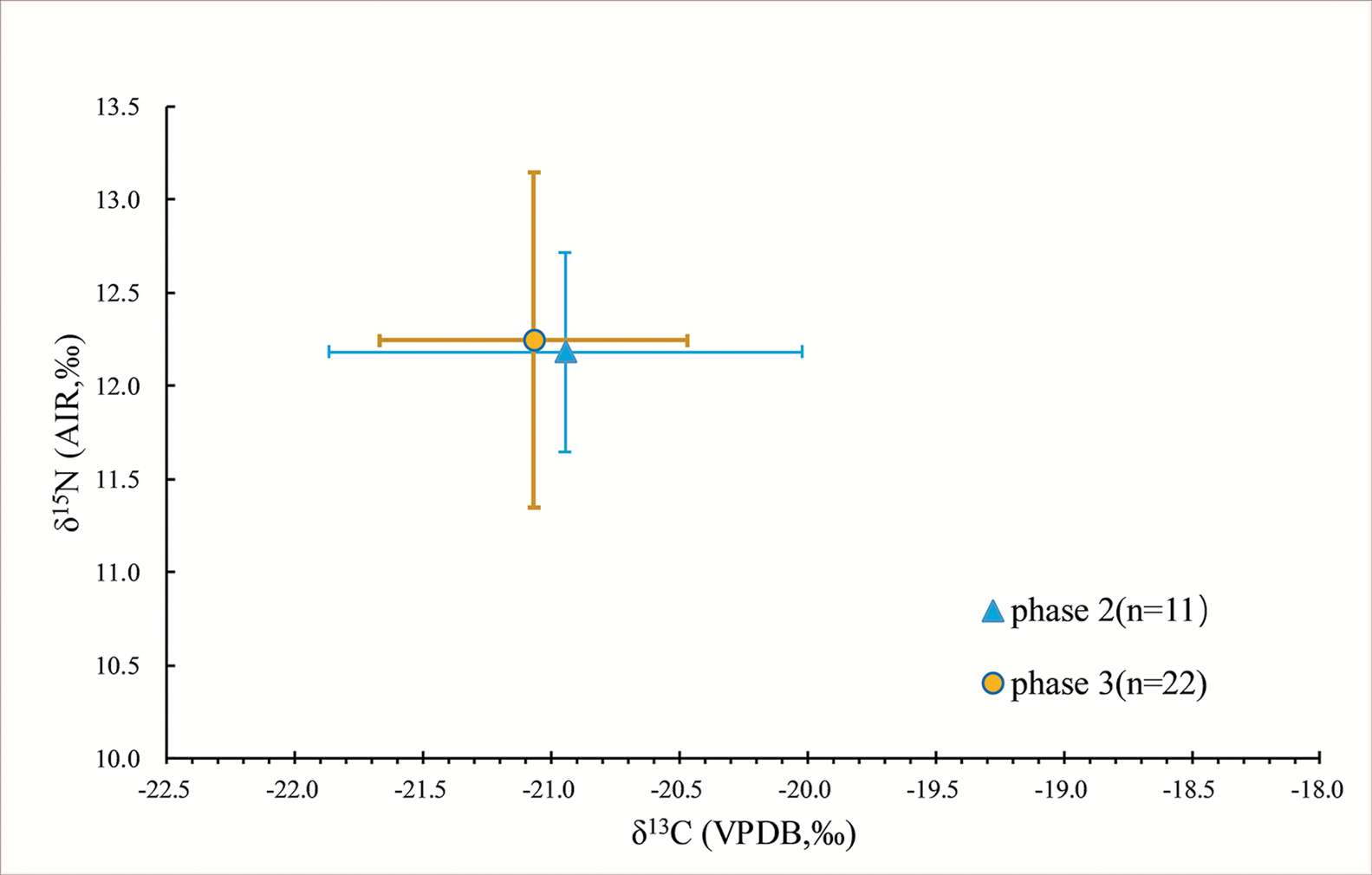
To investigate any possible diachronic dietary shifts, the error bar plot of the isotope data is plotted in Figure 4. The isotope data of phase 4 are not included, due to the small sample size (n = 5) and their uncertain dates.
The error-bar plot of isotopic data for each period at the Dingsishan site (figure by S. Zhu).
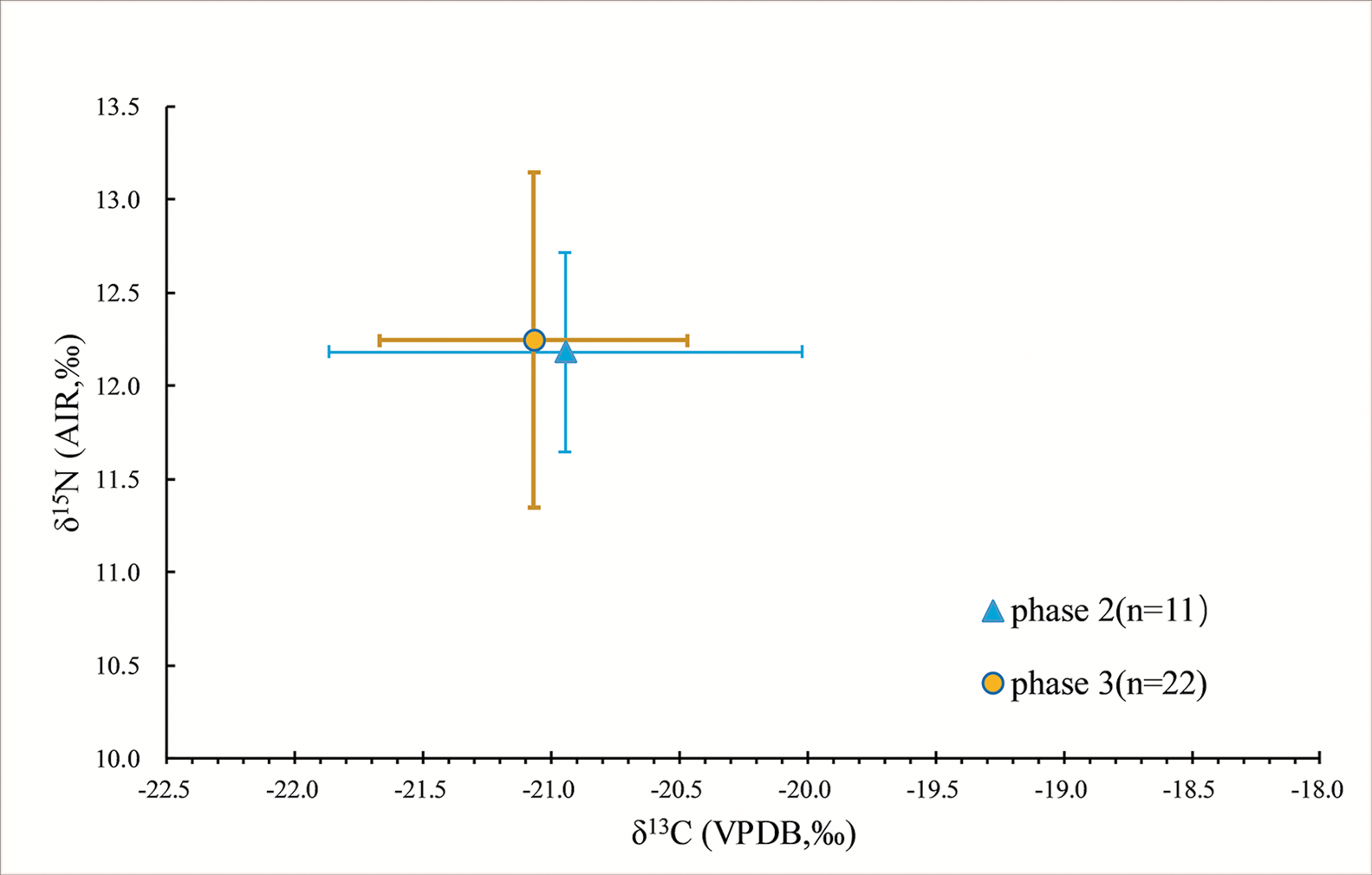
Figure 4 shows little isotopic difference between humans during phases 2–3, and no significant differences (ANOVA: δ13C: p = 0.292; δ15N: p = 0.192; t-test: δ13C: p = 0.292; δ15N: p = 0.192) can be identified. This suggests that there was no diachronic dietary shift at Dingsishan—a finding consistent with earlier faunal analyses (Lu Reference Lu2011). It should be noted, however, that the phase 2 humans have a wider δ13C value range (−21.8‰ to −19.0‰) and a greater standard deviation (−20.9±1.0‰, n = 11) than those during phase 3 (−21.9‰ to −19.6‰; −21.1±0.5‰, n = 22). This may reflect a more restricted choice of foods in phase 3. The presence of fish hooks restricted to phase 3 deposits (Chen Reference Chen2016) may suggest an improvement in fishing techniques, and that fishing became the dominant subsistence strategy at Dingsishan during phase 3.
Demographic analysis shows that the average life expectancy increased from phase 2 to phase 3, and the peak in age-at-death shifted to later in life (Table S3 & Figure 3). Thus, it is reasonable for us to propose that increasing reliance on fishing from phases 2–3 may have contributed to an improvement in human health. It is possible that the adoption of new technologies such as fishhooks permitted more stable and reliable resource management.
The impact of subsistence strategies on human health
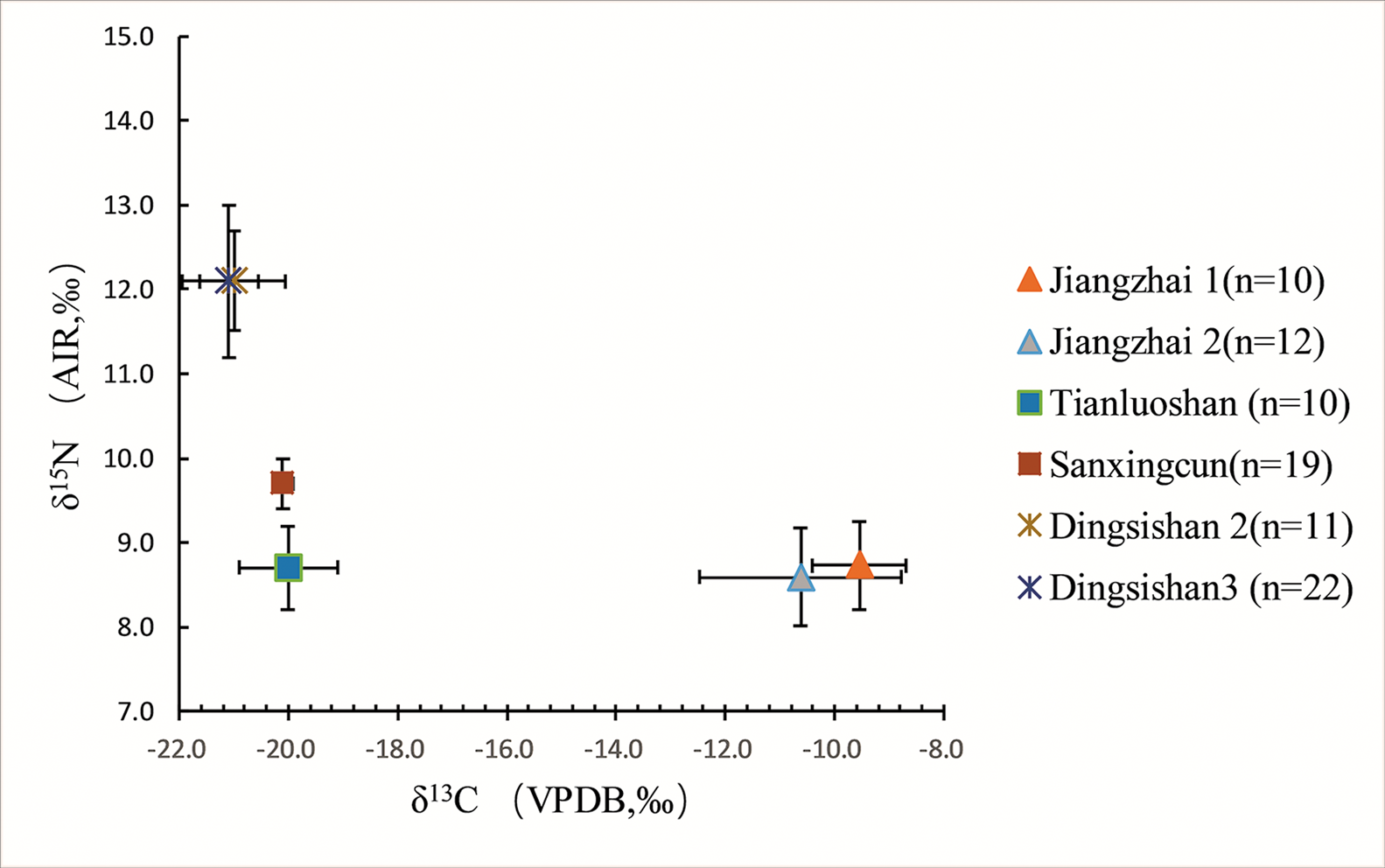
Dietary preferences probably had great effects on human health, especially during the transition from hunting and gathering to agriculture (Larsen Reference Larsen2003). On one hand, a relatively sedentary lifestyle may have led to an increase in human fertility, an improvement in weaning foods and population growth following the development of agriculture (Bellwood & Oxenham Reference Bellwood, Oxenham, Bocquet-Appel and Bar-Yosef2008). Conversely, sedentism, agriculture and animal domestication can lead to overcrowding and the rapid spread of infectious disease (Armelagos et al. Reference Armelagos, Goodman and Jacobs1991). Frequencies of non-specific childhood stress (as exhibited by conditions such as cribra orbitalia and linear enamel hypoplasia) and dental pathologies are also expected to increase (Obertová & Thurzo Reference Obertová and Thurzo2008; Liebe-Harkort Reference Liebe-Harkort2012). Thus, the transition to agriculture could have had negative impacts on human health (Temple Reference Temple2007, Reference Temple2010). Three subsistence strategies were practised on the Chinese mainland during the Middle Neolithic (9000–7000 BP): millet farming, rice farming and the continuation of hunting-gathering-fishing. To assess the effects of different subsistence patterns on human health, we compare our isotope and demographic data from Dingsishan with those from several roughly contemporaneous or slightly later archaeological sites from eastern and northern China (Figures 5–6; site information, including dates and locations, is listed in Table S3).
Figure 5 and Table S3 show that the inhabitants of the Yellow River Valley (the Jiangzhai site, 6900–6000 BP) have the most positive δ13C values and lowest δ15N values, while humans in the Yangtze River Valley (the Tianluoshan site 7000–5500 BP and the Sanxingcun site 6000–5500 BP) have more negative δ13C values and slightly higher δ15N values. Meanwhile, the individuals from southern China have the lowest δ13C values and highest δ15N values. These isotopic differences reflect differing lifestyles: the highly developed millet agriculture of the Yellow River Valley (Guo et al. Reference Guo, Hu, Gao, Wang and Richards2011), the less developed rice cultivation of the Yangtze River Valley (Hu et al. Reference Hu, Wang, Cui, Dong, Guan and Wang2007; Nan et al. Reference Nan, Song, Zhong and Sun2011) and the heavy reliance on freshwater fishing in southern China (Dingsishan).
The average δ13C and δ15N values for Middle Neolithic sites in China (figure by S. Zhu).
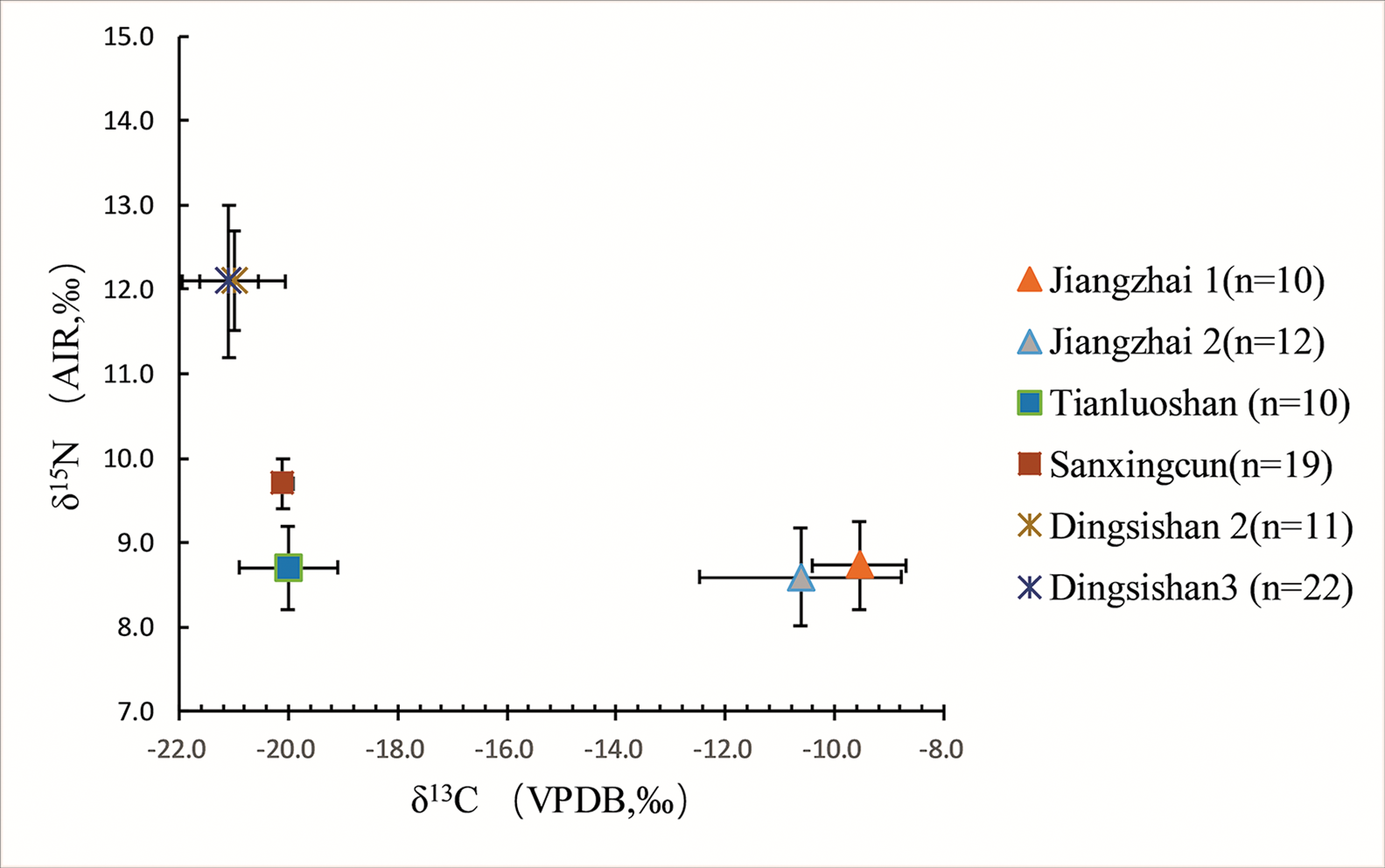
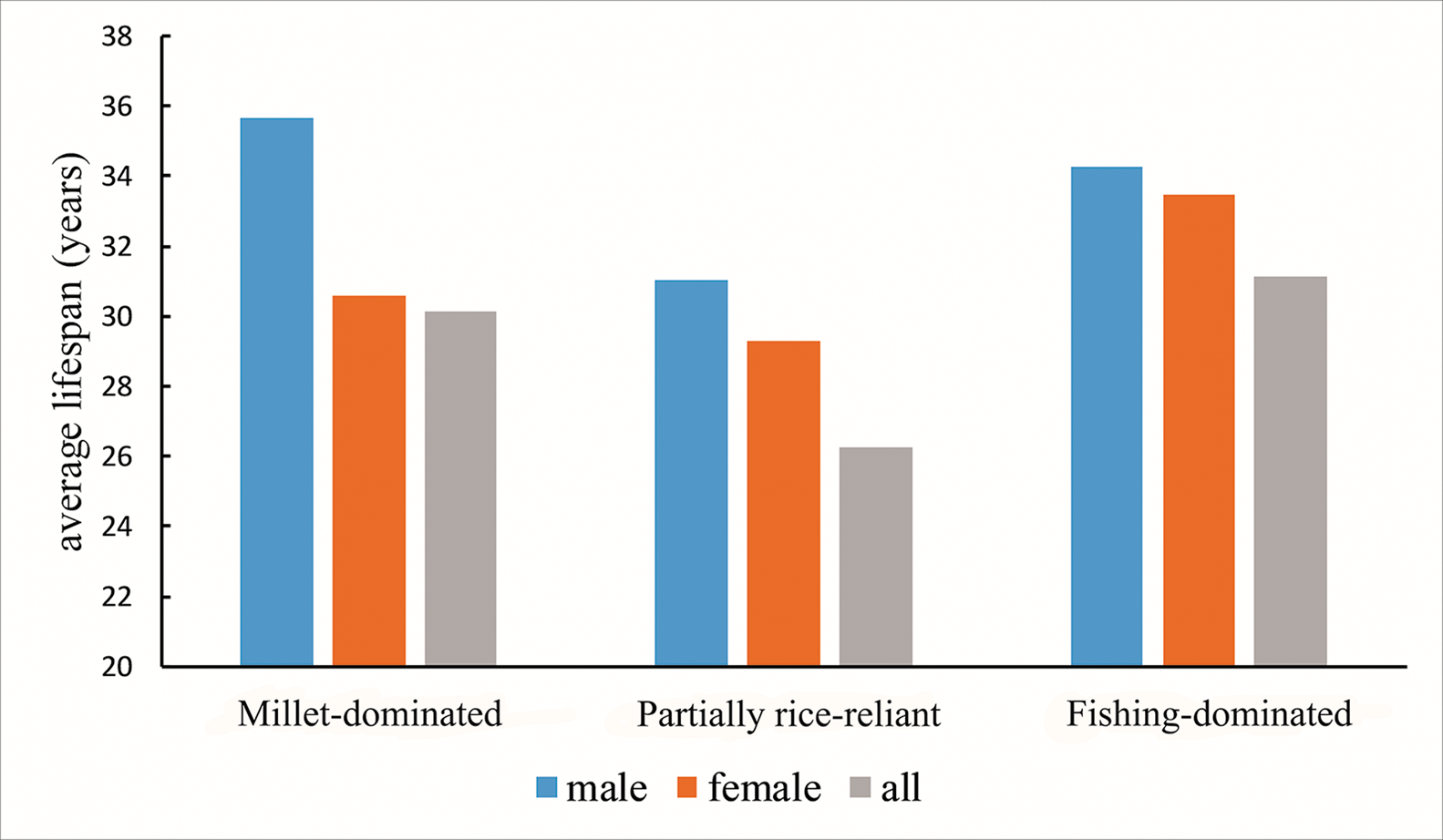
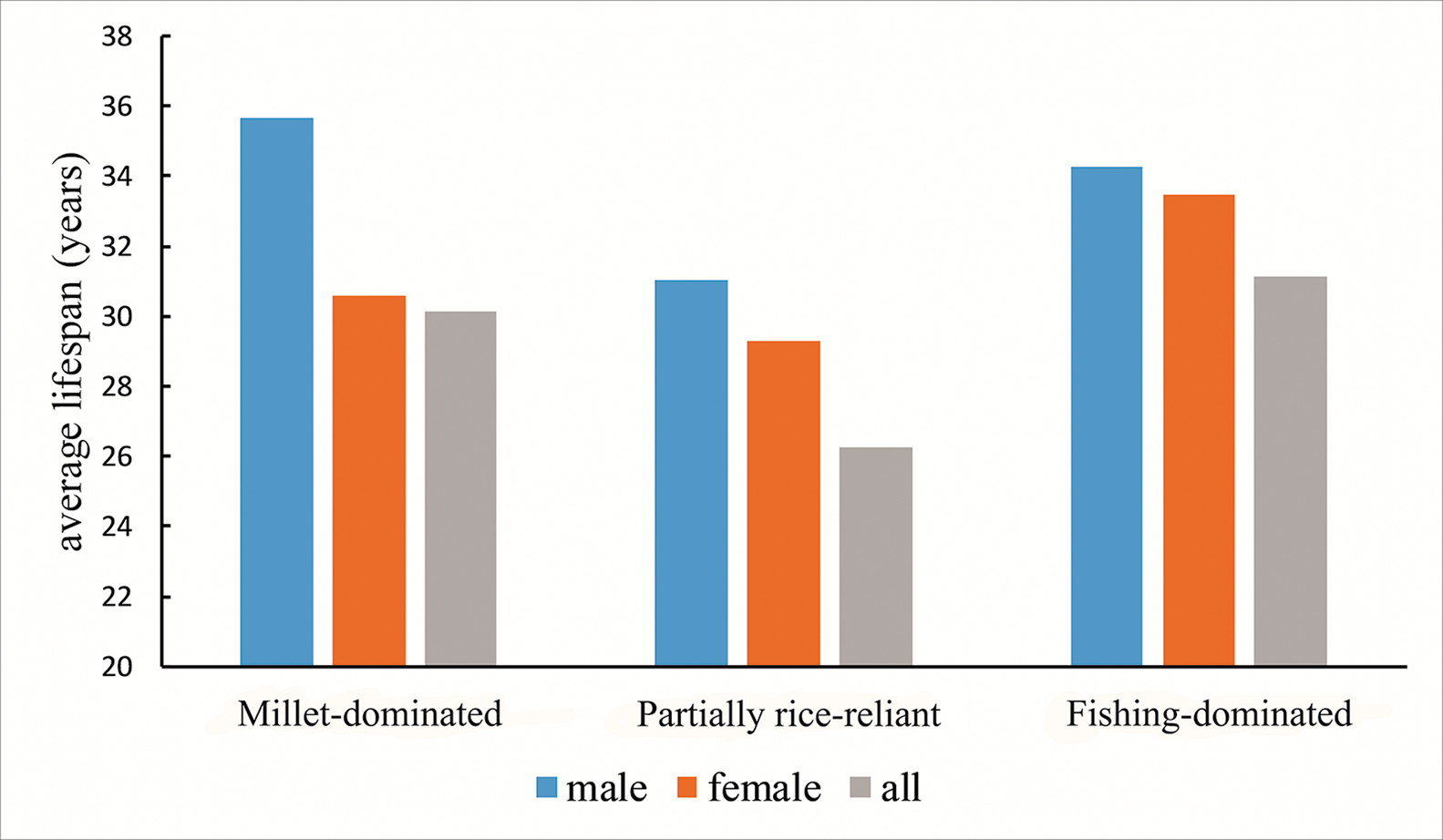
Figure 6 compares the average lifespans of populations practising the three different subsistence strategies. The hunter-gatherer-fishers—particularly the females—seem to have had a slightly longer average lifespan than those populations relying on millet and rice. Although agriculture produced larger harvests to meet the demands of increasing populations, human health may have worsened as a consequence of increased workload and limited niche occupation. Furthermore, increasing fertility during the transition from foraging to farming led to a reduced birth interval between children, resulting in increased nutritional pressures for both mothers and their offspring (Hassan & Sengel Reference Hassan and Sengel1973; Bocquet-Appel Reference Bocquet-Appel2011). Increased mortality rates in childhood and female adolescents therefore lower the average life expectancy for agriculture populations. It should be noted, however, that this inference requires further testing, given that the sample sizes are quite uneven across the sites (Table S3). Furthermore, variation in mortuary practice, such as child burial in residences rather than in cemeteries in northern China (Xu Reference Xu1989), could influence the demographic data, as might other social factors, such as differences in gender roles in different societies. The accumulation of more demographic data and an improved understanding of the nutritional contribution of diet to human health will help to clarify the influence of different human subsistence strategies on health and society.
The average lifespan of populations with different subsistence practices in Middle Neolithic China (figure by S. Zhu).
Conclusions
Isotope analyses of human bone from the Dingsishan site indicate a heavy reliance on freshwater resources, and technological improvements in fishing may have resulted in increasing life expectancy over time. A lack of significant isotopic difference between bone elements (ribs and long bones), or by sex, age or burial type, suggests that the residents settled at the site for long periods and that both sexes had equal access to food types. The relatively settled life and heavy reliance on freshwater resources illustrate the unique subsistence strategy of people at the Dingsishan site, representing the ‘first layer’ inhabitants in southern China during the Middle Neolithic period. Furthermore, the hunting-gathering-fishing population at Dingsishan seem to have had a longer average life expectancy than broadly contemporaneous populations in northern and eastern China who relied on millet agriculture and rice agriculture respectively. The combination of isotopic, osteological and demographic analyses presented here offer a valuable new insight into prehistoric human subsistence patterns and health in southern China and Southeast Asia.
Acknowledgements
We would like to thank the two anonymous reviewers for their thoughtful and helpful comments, which improved this article.
Funding statement
The work was supported by the National Science Foundation of China (grants 41773008 and 41373018).