





Introduction
Diabetes mellitus (DM) is a metabolic disorder characterized by insufficient insulin secretion or the ineffective utilization of insulin (Poznyak et al., Reference Poznyak, Grechko, Poggio, Myasoedova, Alfieri and Orekhov2020). DM is one of the most common chronic diseases worldwide and has a negative impact on global health. According to the International Diabetes Federation, the prevalence of DM among adults is projected to reach 12.2% by 2045 (Sun et al., Reference Sun, Saeedi, Karuranga, Pinkepank, Ogurtsova, Duncan, Stein, Basit, Chan and Mbanya2022). Furthermore, diabetes-related complications adversely affect patients’ quality of life (Gedebjerg et al., Reference Gedebjerg, Almdal, Berencsi, Rungby, Nielsen, Witte, Friborg, Brandslund, Vaag and Beck-Nielsen2018; Kovacova and Shotliff, Reference Kovacova and Shotliff2022; Ong et al., Reference Ong, Stafford, McLaughlin, Boyko, Vollset, Smith, Dalton, Duprey, Cruz and Hagins2023). Patients often experience reduced personal competence, the risk of physical limitations, anxiety about the development of complications, and fear of death. The multiple complications associated with DM can contribute both to an increased number of years lived with disability and to a shortened lifespan (Bukhsh et al., Reference Bukhsh, Goh, Zimbudzi, Lo, Zoungas, Chan and Khan2020; Crocker et al., Reference Crocker, Palmer, Marrero and Tan2021; Aliche et al., Reference Aliche, Ifeagwazi and Ezaka2023). Type 2 diabetes mellitus is associated with serious microvascular and macrovascular complications that significantly impair quality of life and increase mortality. Diabetic kidney disease develops in approximately 30–40% of individuals with diabetes, while diabetic neuropathy affects nearly 40–60% of patients. Additionally, diabetic retinopathy is reported in nearly one-third of individuals with diabetes. Cardiovascular diseases, including coronary artery disease and stroke, occur 2–4 times more frequently among individuals with type 2 diabetes compared with the general population. Furthermore, approximately 15–25% of diabetic individuals develop diabetic foot ulcers during their lifetime (Gedebjerg et al., Reference Gedebjerg, Almdal, Berencsi, Rungby, Nielsen, Witte, Friborg, Brandslund, Vaag and Beck-Nielsen2018; Kovacova and Shotliff, Reference Kovacova and Shotliff2022). Therefore, effective management of diabetes and ensuring patients’ adherence to treatment are of great importance (Adam et al., Reference Adam, O’Connor and Garcia2018).
One of the most critical interventions for preventing the micro and macrovascular complications of DM is to strengthen patients’ perception of complication risk (Nie et al., Reference Nie, Han, Xu, Huang and Mao2018). In the field of health, risk perception is defined as individuals’ subjective judgements about the characteristics of a disease and its potential impact on their health status (Slovic, Reference Slovic1987). Increased risk perception has been associated with greater awareness of disease-related risks, adoption of appropriate health behaviours, and more effective disease management among patients (Rouyard et al., Reference Rouyard, Kent, Baskerville, Leal and Gray2017; Zhang et al., Reference Zhang, Wang, Li, Liu, Li and Jia2025). However, studies examining patients’ perceptions of DM-related complication risks indicate that these perceptions are often marked by optimistic bias and limited risk awareness (Rouyard et al., Reference Rouyard, Kent, Baskerville, Leal and Gray2017; Sağlam and Bektas, Reference Sağlam and Bektas2023). Factors contributing to inadequate risk perception include communication barriers with healthcare professionals, underestimation of the severity of potential outcomes, and insufficient knowledge regarding diabetes-related complications (Rouyard et al., Reference Rouyard, Kent, Baskerville, Leal and Gray2017; Phoosuwan et al., Reference Phoosuwan, Ongarj and Hjelm2022; Zhang et al., Reference Zhang, Wang, Li, Liu, Li and Jia2025). The literature clearly highlights those interventions tailored to individual characteristics, simulation-based training, the use of enjoyable learning methods through interactive group settings, the education of healthcare professionals, and the reinforcement and expansion of screening programmes are effective in enhancing patients’ risk perception regarding diabetes complications (Silva-Tinoco et al., Reference Silva-Tinoco, Cuatecontzi-Xochitiotzi, De la Torre-Saldaña, León-García, Serna-Alvarado, Guzmán-Olvera, Cabrera, Gay and Prada2020; Hosseini et al., Reference Hosseini, Shamsi, Khorsandi and Moradzadeh2021; Zhang et al., Reference Zhang, Wang, Li, Liu, Li and Jia2025).
The Gender Equality Index 2025 highlights gender as a key determinant of health experiences and identifies health behaviours (The Gender Equality Index, 2025). Gender-based differences in disease characteristics and social responsibilities also influence the course of illness (Ciarambino et al., Reference Ciarambino, Crispino, Leto, Mastrolorenzo, Para and Giordano2022). The biological and sociocultural characteristics of individuals with DM can affect their risk perception regarding diabetic complications and their symptom self-efficacy (Sağlam and Bektas, Reference Sağlam and Bektas2023). Women tend to exhibit stronger emotional responses, experience motivation loss more frequently, and are more prone to fatigue and anxiety, whereas men are more likely to require spousal support in caregiving and to engage in risk-taking behaviours when managing their health. These factors may impact diabetes self-management (Hara et al., Reference Hara, Hisatomi, Ito, Nakao, Tsuboi and Ishihara2014; Ramírez-Morros et al., Reference Ramírez-Morros, Berenguera, Millaruelo, Buil-Cosiales, Gomez Garcia, Cos, Ávila Lachica, Artola, Millaruelo and Mauricio2024). Gender emerges as a particularly significant variable in studies conducted with patients diagnosed with DM (Othman et al., Reference Othman, Al-Wattary, Khudadad, Dughmosh, Furuya-Kanamori, S. and Daher-Nashif2022; Phoosuwan et al., Reference Phoosuwan, Ongarj and Hjelm2022). Metabolic and sociological differences exist between men and women with DM. For example, men are at a higher risk of fatty liver disease than women, whereas women may experience a more rapid deterioration in glycaemic control during menopause, together with an increased risk of obesity and genitourinary infections, reflecting important physiological differences (Hocking et al., Reference Hocking, Samocha-Bonet, Milner, Greenfield and Chisholm2013; Ciarambino et al., Reference Ciarambino, Crispino, Leto, Mastrolorenzo, Para and Giordano2022). From a sociological perspective, in societies with traditionally patriarchal social structures, such as Türkiye, women often have lower educational attainment than men. Additionally, employed women may experience higher levels of occupational stress due to workplace inequalities, including the glass ceiling effect (Hocking et al., Reference Hocking, Samocha-Bonet, Milner, Greenfield and Chisholm2013; Ciarambino et al., Reference Ciarambino, Crispino, Leto, Mastrolorenzo, Para and Giordano2022). Additionally, women often carry the burden of a ‘second shift’ encompassing responsibilities such as childcare and family caregiving. The tendency for women to assume greater caregiving responsibilities than men has a direct impact on their own health status (Alahan et al., Reference Alahan, Aylaz and Yetiş2015; Arslan and Rençber, Reference Arslan and Rençber2022). Men, in contrast, are often burdened by the societal expectation of serving as the primary breadwinners, which may result in increased stress related to financial pressures. Consequently, gender role–related stress experienced by patients with DM may influence symptom management self-efficacy (Hara et al., Reference Hara, Hisatomi, Ito, Nakao, Tsuboi and Ishihara2014; Ramírez-Morros et al., Reference Ramírez-Morros, Berenguera, Millaruelo, Buil-Cosiales, Gomez Garcia, Cos, Ávila Lachica, Artola, Millaruelo and Mauricio2024). Furthermore, the responsibilities patients assume due to gender roles, as well as the sociocultural influences to which they are exposed, may directly affect their access to healthcare services (Silva-Tinoco et al., Reference Silva-Tinoco, Cuatecontzi-Xochitiotzi, De la Torre-Saldaña, León-García, Serna-Alvarado, Guzmán-Olvera, Cabrera, Gay and Prada2020). For these reasons, greater sensitivity among nurses to sex-specific differences and sufficient knowledge regarding the effects of gender roles on chronic disease management are essential for improving the quality of healthcare services (Kristoffersson et al., Reference Kristoffersson, Andersson, Bengs and Hamberg2016; Lindsay and Kolne, Reference Lindsay and Kolne2022).
Self-management interventions designed for patients with DM may yield more effective outcomes when individualized by considering gender differences and the sociocultural characteristics of the population (Gazzaruso et al., Reference Gazzaruso, Fodaro and Coppola2016). A lack of gender awareness among healthcare professionals may lead to inequalities in the delivery of care (Figueroa and Hiemstra, Reference Figueroa and Hiemstra2024). Therefore, nurses play a critical role in helping patients prevent DM-related complications and enhance symptom management self-efficacy (Bukhsh et al., Reference Bukhsh, Goh, Zimbudzi, Lo, Zoungas, Chan and Khan2020). However, a review of the international literature reveals a lack of studies – particularly among those involving the Turkish population – that evaluate how DM patients’ perceptions of complication risk and levels of gender role stress influence their symptom-related self-efficacy. Therefore, this study aimed to examine the associations among complication risk perception, gender role stress, and symptom management self-efficacy in patients with Type 2 diabetes mellitus and to identify factors associated with these constructs.
Material and methods
Research design and participants
This analytical cross-sectional study was conducted at the Endocrinology Clinic of Ankara Training and Research Hospital between December 2024 and April 2025. The target population comprised women and men aged 18–65 years who had been diagnosed with Type 2 diabetes mellitus (DM) and attended the clinic during the study period. Patients attending the clinic were assessed for eligibility according to the predefined inclusion and exclusion criteria. Eligible patients were listed separately by sex. Selected patients were informed about the purpose and procedures of the study and invited to participate. Recruitment continued until 250 women and 250 men had been enrolled, resulting in a final sample of 500 participants.
The inclusion criteria were being aged 18–65 years, having a confirmed diagnosis of Type 2 DM, being able to understand and respond to the study questions, having no communication, hearing, cognitive, or functional impairment that would prevent completion of the questionnaires, and voluntarily agreeing to participate. Patients with Type 1 DM or gestational diabetes, those who withdrew their consent at any stage, and those who submitted incomplete data collection forms were excluded. A post-hoc power analysis conducted using G*Power version 3.0.10 indicated that, with an effect size of 0.705 and an alpha level of 0.05, the final sample provided approximately 100% statistical power. The study was reported in accordance with the Strengthening the Reporting of Observational Studies in Epidemiology (STROBE) guidelines.
Data collection tools
2.2.1. Individual information form (IIF)
IIF was prepared by the researchers (Cloete, Reference Cloete2021; Rashidi and Kıskac, Reference Rashidi and Kiskac2024). The IIF consisted of 10 questions related to sociodemographic and clinical characteristics, Body Mass Index (BMI), chronic diseases other than DM, and diabetes-related features (such as disease duration, DM education, and microvascular complications).
2.2.2. Risk perception survey-diabetes mellitus scale (RPS-DM)
The RPS-DM was developed by Walker et al. (Reference Walker, Caban, Schechter, Basch, Blanco, DeWitt, Kalten, Mera and Mojica2007) to measure the risk perceptions of DM patients regarding diabetes complications (Walker et al., Reference Walker, Caban, Schechter, Basch, Blanco, DeWitt, Kalten, Mera and Mojica2007). The RPS-DM consists of 25 items. The scale has two dimensions: Risk Knowledge and Composite Risk Perception. The scale items are Likert-type and are evaluated on a range from 1 point (strongly disagree) to 4 points (strongly agree). A higher score on the Risk Knowledge dimension indicates that patients perceive a higher level of personal control over diabetes complications, while a higher score on the Composite Risk Perception dimension and its subdimensions (such as concern levels regarding diabetes complications, optimistic bias, disease risks, and environmental risks) indicates a higher perception of those factors. The Turkish validity and reliability of the scale were conducted by Taşkın et al. (Reference Taşkın Yılmaz, Karakoç Kumsar and Celik2018). In this study, the Cronbach alpha value for the Risk Knowledge dimension was determined to be 0.631, and for the Composite Risk Perception dimension, it was 0.733.
2.2.3. Symptom management scale for self-efficacy (SMSSE)
Successful symptom management self-efficacy in chronic diseases improves an individual’s quality of life. The ability of patients to manage their self-care is vital for their continued participation in normal life processes. In this context, SMSSE was developed by Özel et al. (Reference Özel, Özkaraman and Aykar2019) to assess individuals’ self-efficacy levels in symptom management. The scale consists of 13 items, and the items are scored using a 10-point Likert scale (0: Not sure at all, 10: Completely sure). The total score on the scale can range from 13 to 130. A score between 13 and 59 is considered low self-efficacy, between 60 and 114 is considered moderate self-efficacy, and between 115 and 130 is considered high self-efficacy. The Cronbach alpha value of the scale was determined to be 0.86 (Özel et al., Reference Özel, Özkaraman and Aykar2019). In this study, the Cronbach alpha value of the scale was calculated to be 0.865.
2.2.4. Feminine gender role stress scale (FGRSS)
The FGRSS was developed by Koç et al. (Reference Koç, Avcı and Bayar2017) to determine the stress levels related to gender roles among women in Turkish society. The scale consists of 20 items and uses a five-point Likert scale (1 = Not stressful for me, 2 = Stressful for me, 3 = Neutral, 4 = Stressful for me, 5 = Very stressful for me). The total score on the scale can range from 20 to 100. A higher score indicates increased stress related to gender roles in women. The Cronbach alpha value of the scale was determined to be 0.92 (Koç et al., Reference Koç, Avcı and Bayar2017). In this study, the Cronbach alpha value of the scale was calculated to be 0.91.
2.2.5. Masculine gender role stress scale (MGRSS)
The MGRSS was developed by Bayar et al. (Reference Bayar, Avcı and Koç2018) to determine the stress levels related to gender roles among men in Turkish society. The scale consists of 27 items and uses a five-point Likert scale (1 = Not stressful for me, 2 = Stressful for me, 3 = Neutral, 4 = Stressful for me, 5 = Very stressful for me). The lowest possible score on the scale is 27, and the highest possible score is 135. A higher score indicates an increase in gender role stress in men. The Cronbach alpha value of the scale was determined to be 0.90 (Bayar et al., Reference Bayar, Avcı and Koç2018). In this study, the Cronbach alpha value of the scale was calculated to be 0.908.
Procedure
The data were collected face-to-face by the researchers at a training and research hospital in. The eligibility of individuals diagnosed with DM who visited the endocrinology outpatient clinic was assessed (n = 543). Individuals over 65 years old (n = 22), those diagnosed with Type 1 DM (n = 2), those with hearing impairments (n = 1), and those who were not willing to participate (n = 8) were excluded from the study. Participants were provided with detailed information about the purpose and process of the study. While IIF, RPS-DM, and SMSSE were completed by all participants, FGRSS was completed by women, and MGRSS was completed by men. The time it took for participants to fill out the data collection forms was approximately 20 minutes, and this did not interfere with their examination process. Participants who wished to withdraw (n = 2) and those who filled out the forms incompletely (n = 8) were excluded from the study. The study was completed with the participation of 250 women and 250 men, totalling 500 individuals.
Ethical considerations
The necessary ethical committee approval (Date no: 11.2024/Approval no: 84892257-300-319875) and institutional approval (Date no: 11.2024/Approval no: E-93471371-000-260569257) were obtained for the implementation of the study. Permission for the scales used in the study was obtained from the authors via email. The study adhered to the ethical guidelines outlined in the World Medical Association’s Declaration of Helsinki. Participation in the research was voluntary, and all participants provided written informed consent before taking part.
Data analysis
The data were analyzed using the Statistical Package for the Social Sciences (IBM SPSS Statistics, version 27), with the significance level set at p<0.05. Categorical variables were summarized using frequencies and percentages, while numerical variables were presented using appropriate descriptive statistics, including means, standard deviations, medians, and interquartile ranges. Before selecting the statistical tests, the normality of the numerical variables was assessed using the Kolmogorov–Smirnov test and skewness and kurtosis values. As the relevant variables did not follow a normal distribution, non-parametric tests were used. The Mann–Whitney U test was used to compare measurement values between two independent groups, whereas the Kruskal–Wallis H test was used for comparisons involving three or more independent groups. For variables with significant differences between three or more groups, pairwise comparisons were made using the Bonferroni correction. The relationship between two non-normally distributed continuous variables was evaluated using Spearman correlation analysis. The strength of the correlation coefficients was interpreted according to Schober et al. (Reference Schober, Boer and Schwarte2018) as negligible (0.00–0.10), weak (0.10–0.39), moderate (0.40–0.69), strong (0.70–0.89), and very strong (0.90–1.00), based on their absolute values. The direction of the relationship was determined by the positive or negative sign of the coefficient (Schober et al., Reference Schober, Boer and Schwarte2018). “Pearson-χ2” cross-tabulations were used to examine the relationships between two categorical variables. To identify factors influencing low/moderate self-efficacy, “Binary Logistic Regression: Backward LR model” was used. Binary logistic regression analysis was performed using the Enter method. Age, sex, education level, BMI, duration of diabetes, FGRSS, MGRSS, and composite risk perception scores were included in the model. Model fit was assessed using the Hosmer–Lemeshow goodness-of-fit test and Nagelkerke R 2 values. Low and moderate categories were combined to ensure adequate sample size and improve statistical stability in logistic regression analyses.
Results
The comparison results of the descriptive characteristics and scale scores of Type 2 diabetes mellitus patients according to sex are provided in Supplementary Material 1 and 2. Women had lower education levels, employment rates, and smoking habits compared to men; however, they had higher numbers of children, BMI, DM duration, the prevalence of chronic diseases other than DM, and the rate of experiencing microvascular DM complications (p < 0.05). Additionally, women scored higher on the Worry and Environmental Risk subscales compared to men (Z = −2.551, p = 0.011; Z = −6.275, p < 0.001, respectively). On the other hand, men scored higher on the Optimistic Bias subscale and SMSSE scores compared to women (Z = −5.379, p < 0.001; Z = −7.096, p < 0.001, respectively).
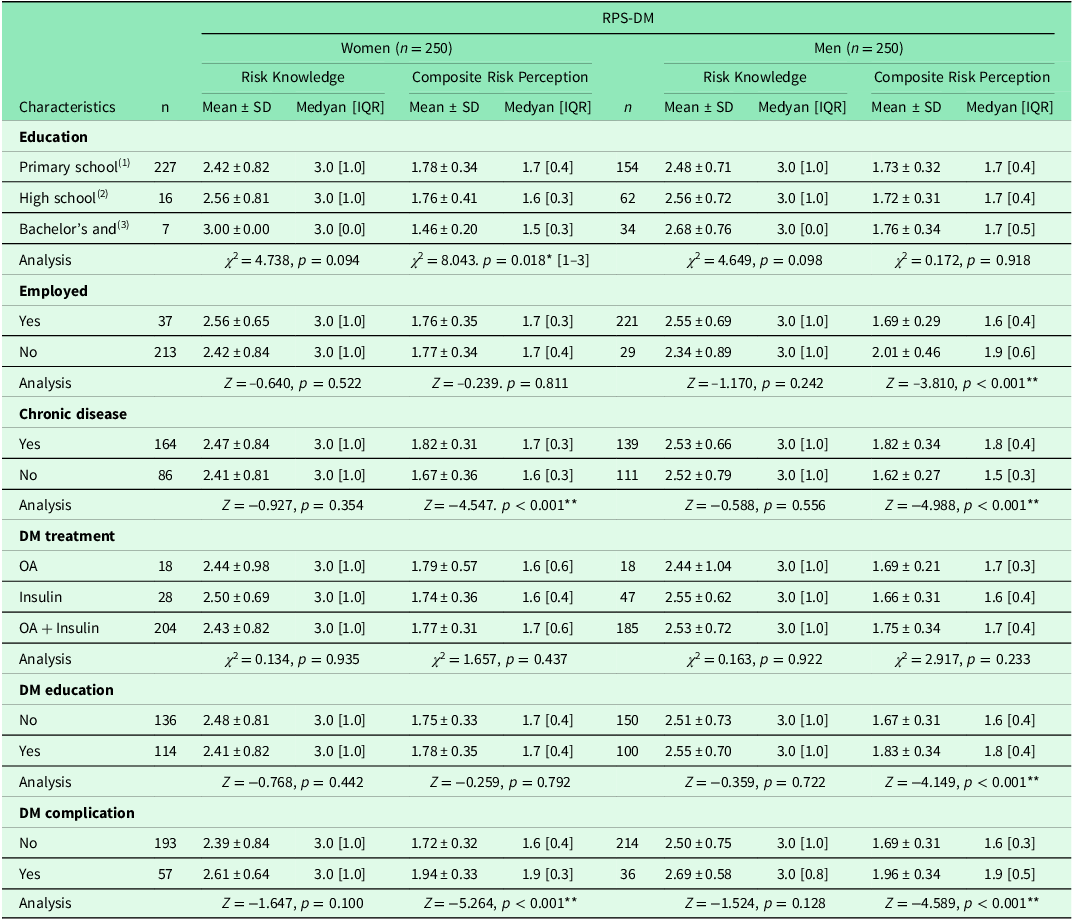
Table 1 presents the comparisons between the complication risk perceptions and some characteristics of Type 2 diabetes mellitus patients according to sex.
Comparison of participants’ sociodemographic and clinical characteristics and RPS-DM scores by sex

Table 1. Long description
The table compares risk knowledge and composite risk perception among Type 2 diabetes mellitus patients by sex and various characteristics. It has 250 women and 250 men, with data on education, employment, chronic disease, DM treatment, DM education, and DM complications. For women, education levels include primary school, high school, and bachelor’s degree, with corresponding risk knowledge and composite risk perception values. For men, similar education levels are provided with their respective risk knowledge and composite risk perception values. The table also includes data on employment status, chronic disease presence, types of DM treatment, DM education, and DM complications, with corresponding risk knowledge and composite risk perception values for both women and men. Analysis results, including statistical tests and p-values, are provided for each characteristic.
RPS-DM: Risk Perception Survey-Diabetes Mellitus Scale, DM: Diabetes mellitus, OA: Oral antidiabetic, SD: Standard deviation, IQR: Interquartile range, χ2: Kruskall-Wallis H test, Z: Mann–Whitney U test other than DM.
*p < 0.05, **p < 0.001.
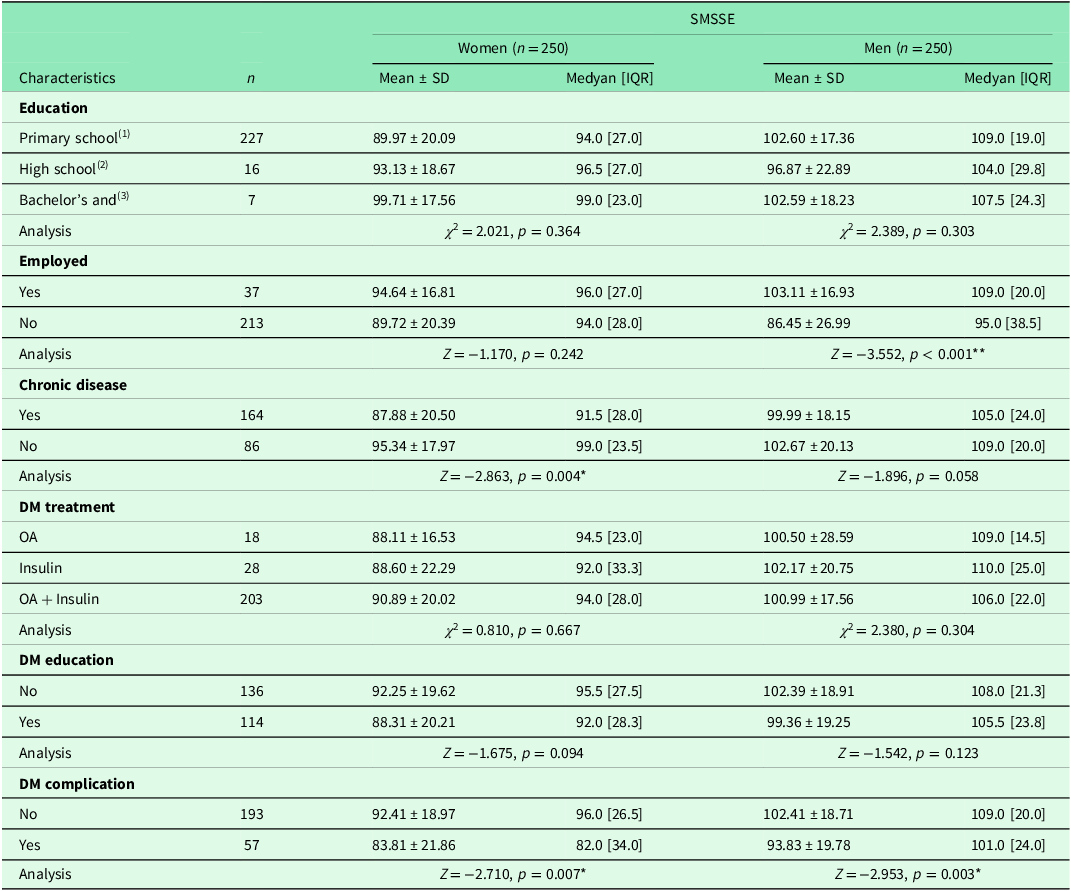
Table 2 presents the comparisons between the symptom management self-efficacy (SMSSE) scores and some characteristics of Type 2 diabetes mellitus patients according to sex.
Comparison of participants’ sociodemographic and clinical characteristics and SMSSE scores by sex

Table 2. Long description
A table comparing sociodemographic and clinical characteristics and SMSSE scores by sex. The table has 12 rows and 7 columns. Column headers are Characteristics, n, Women (n = 250) Mean ± SD, Women (n = 250) Median [IQR], Men (n = 250) Mean ± SD, Men (n = 250) Median [IQR]. Row labels include Education, Employed, Chronic disease, DM treatment, DM education, and DM complication. Each row provides mean, standard deviation, median, and interquartile range values for women and men. Notable trends include variations in SMSSE scores based on education level, employment status, chronic disease presence, diabetes treatment type, diabetes education, and diabetes complications.
SMSSE: Symptom Management Scale for Self-Efficacy, DM: Diabetes mellitus, OA: Oral antidiabetic.
SD: Standard deviation, IQR: Interquartile range, χ2: Kruskall-Wallis H test, Z: Mann–Whitney U test other than DM *p < 0.05, **p < 0.001.
The correlations between the RPS-DM and SMSSE scores and quantitative characteristics of DM patients according to sex are presented in Supplementary Material 3.
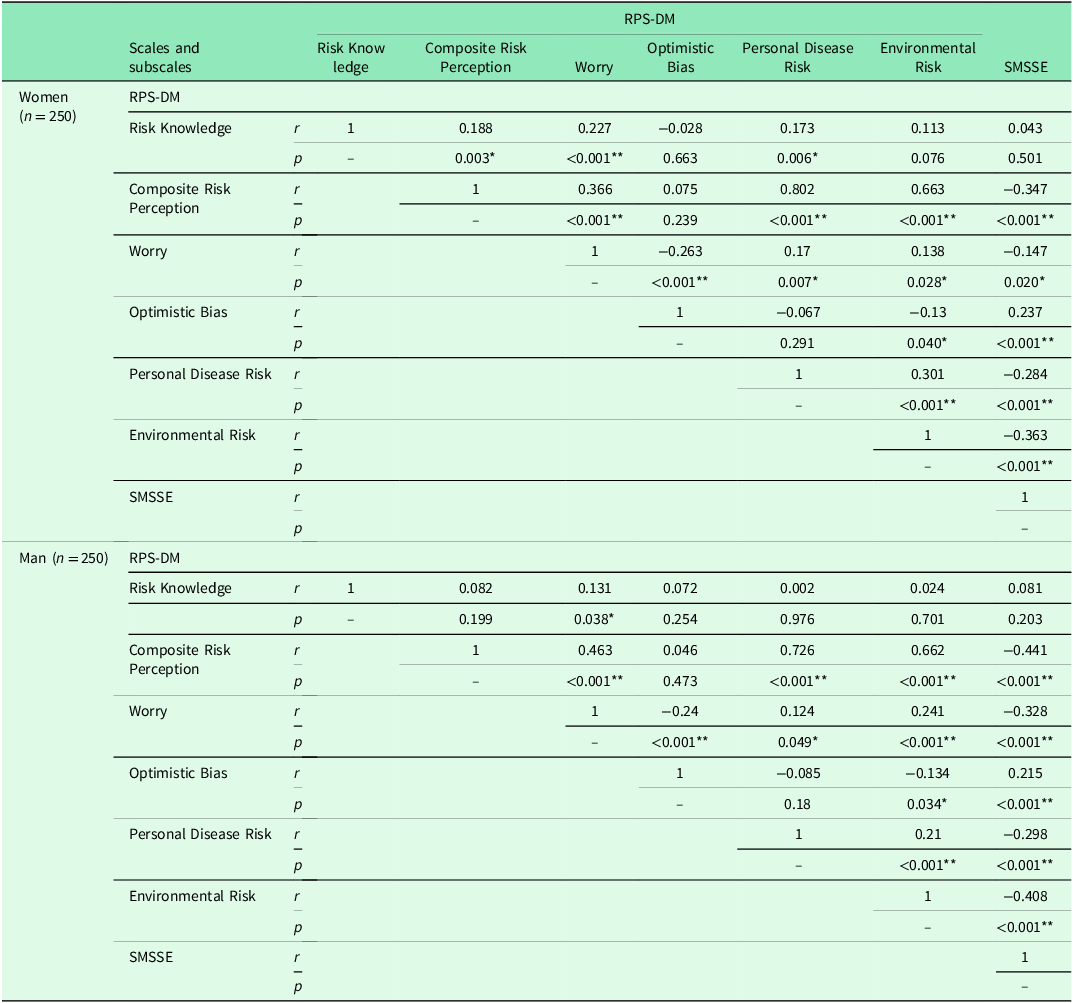
Table 3 presents the correlations between the RPS-DM and SMSSE scores for women and men. In both women and men, a moderate positive significant correlation was found between Composite Risk Perception scores and the Worry, Personal Disease Risk, and Environmental Risk subscale scores (r = 0.366, p < 0.001; r = 0.802, p < 0.001; r = 0.663, p < 0.001 in women; r = 0.463, p < 0.001; r = 0.726, p < 0.001; r = 0.662, p < 0.001 in men, respectively).
The correlations between RPS-DM and SMSSE scores in women and men

Table 3. Long description
A table comparing correlations between RPS-DM and SMSSE scores for women and men. The table has 12 rows and 9 columns. Column headers are Scales and sub-scales, Risk Knowledge, Composite Risk Perception, Worry, Optimistic Bias, Personal Disease Risk, Environmental Risk, and SMSSE. Row labels include RPS-DM, Risk Knowledge, Composite Risk Perception, Worry, Optimistic Bias, Personal Disease Risk, Environmental Risk, and SMSSE. The table is divided into two sections: Women and Men, each with 250 participants. Each section presents correlation coefficients (r) and p-values (p) for various sub-scales. Notable trends include significant correlations between Composite Risk Perception and other sub-scales in both women and men.
RPS-DM: Risk Perception Survey-Diabetes Mellitus Scale, SMSSE: Symptom Management Scale for Self-Efficacy..
r: Spearman correlation coefficient.
*p < 0.05. **p < 0.001.
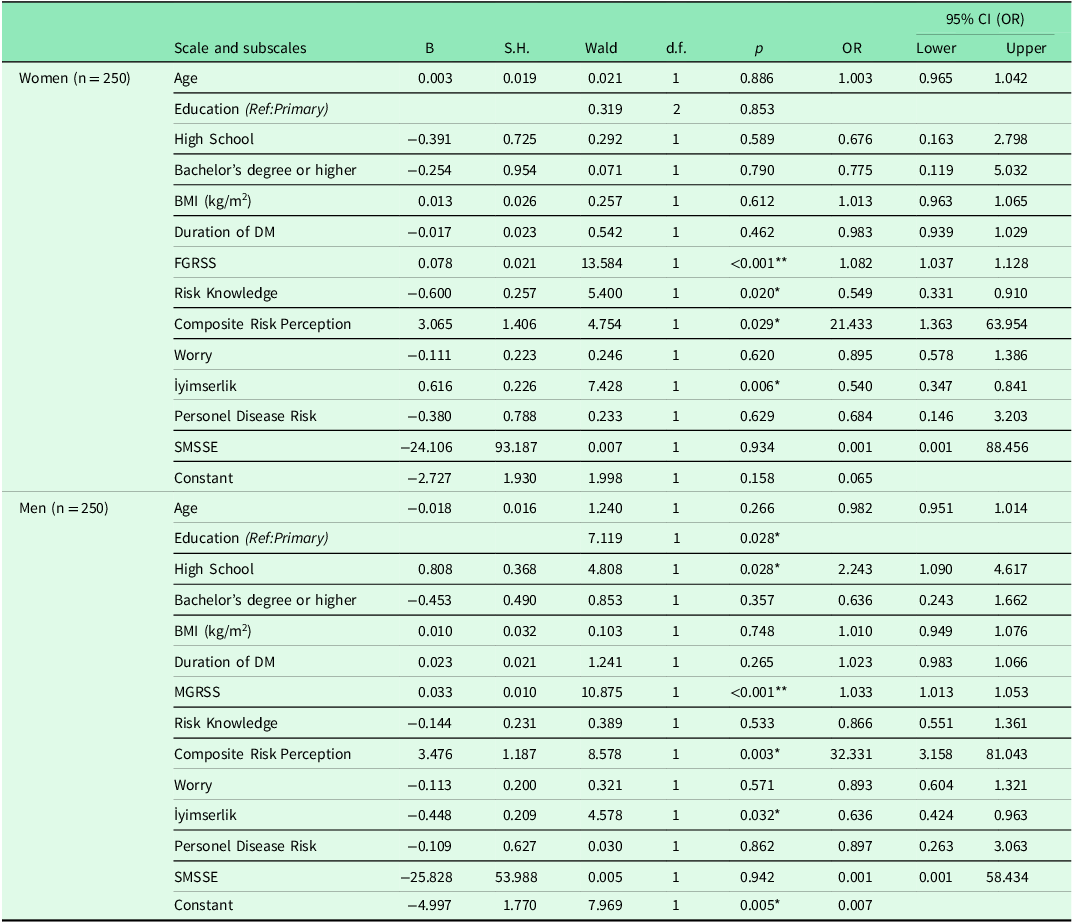
In Figure 1, the heat-map graph shows the correlation between FGRSS and MGRSS scores with other scales (RPS-DM and SMSSE). In Table 4, the results of the Logistic Regression model, based on low/moderate self-efficacy risk by variables, are presented. For women, the Nagelkerke R2 value was 0.310, and the Hosmer–Lemeshow test result was χ 2(8) = 10.004, p = 0.265. For men, the Nagelkerke R 2 value was 0.352, and the Hosmer–Lemeshow test result was χ 2(8) = 7.310, p = 0.504. The goodness-of-fit of the logistic regression models developed separately for women and men was considered acceptable. In both models, Hosmer–Lemeshow test p values greater than 0.05 indicated adequate agreement between the observed and predicted data. Additionally, the Nagelkerke R2 values suggested that the models explained a moderate proportion of the variance in the dependent variable, accounting for 31.0% in women and 35.2% in men. According to the Logistic Regression analysis (Backward: LR model) for low/moderate self-efficacy risk in women, higher Risk Knowledge scores were associated with lower odds of low/moderate self-efficacy (OR = 0.595). In contrast, higher Composite Risk Perception scores were associated with greater odds of low/moderate self-efficacy (OR = 7.377) (Table 4). According to the Logistic Regression analysis (Backward: LR model) based on low/moderate self-efficacy risk in women, with a 1 unit increase in FGRSS scores, low/moderate self-efficacy will increase by 8.5% (OR = 1.085) (Table 4).
Correlation heat-map between gender stress scales & RPS-DM and SMSSE. FGRSS: Feminine Gender Role Stress Scale, MGRSS: Masculine Gender Role Stress Scale, RPS-DM: Risk Perception Survey-Diabetes Mellitus Scale, SMSSE: Symptom Management Scale for Self-Efficacy, r: Spearman correlation coefficient.

Logistic regression model based on low/moderate self-efficacy risk in women and men

Table 4. Long description
The table presents logistic regression model results for women and men based on low/moderate self-efficacy risk. It includes columns for B, S.E, Wald, d.f., p, OR, and 95% CI (OR) with Lower and Upper bounds. The table is divided into two main sections: Women (n = 250) and Men (n = 250). Each section lists various scales and subscales such as Age, Education, BMI, Duration of DM, FGRSS, Risk Knowledge, Composite Risk Perception, Worry, optimistic bias, Personnel Disease Risk, SMSSE, and Constant. Notable trends include significant p-values for FGRSS, Risk Knowledge, Composite Risk Perception, and optimistic bias in women, and for Education, MGRSS, Composite Risk Perception, and optimistic bias in men. The bold values indicate statistical significance with p-values less than 0.05.
RPS-DM: Risk Perception Survey-Diabetes Mellitus Scale, FGRSS: Feminine Gender Role Stress Scale, MGRSS: Masculine Gender Role Stress Scale, SMSSE: Symptom Management Scale for Self-Efficacy, BMI: Body Mass Index, OR: Odds ratio, CI: Confidence interval, d.f.: Degrees of freedom, S.E.: Standard Error *p < 0.05, **p < 0.001.
In men, positive significant correlations were found between MGRSS and Composite Risk Perception, Worry, Personal Disease Risk, and Environmental Risk subscale scores (r = 0.327, p < 0.001; r = 0.312, p < 0.001; r = 0.140, p = 0.027; r = 0.318, p < 0.001, respectively). In men, based on the Logistic Regression analysis (Backward: LR model) for low/moderate self-efficacy risk, higher Composite Risk Perception scores were associated with greater odds of low/moderate self-efficacy (OR = 16.933) (Table 4). A moderate negative and statistically significant correlation was found between MGRSS and SMSSE scores in men (r = −0.527, p < 0.001) (Figure 1). Furthermore, higher MGRSS scores were associated with greater odds of low/moderate self-efficacy (OR = 1.033) (Table 4).
In addition, Multivariate linear regression analyses were additionally performed using diabetes self-efficacy as the dependent variable. Potential confounders, including age, sex, education level, BMI, diabetes duration, and risk perception, were entered into the model. After analysis for these variables, risk perception was not significantly associated with self-efficacy. However, inclusion of gender role stress significantly improved the explanatory power of the model (ΔR2 = 0.092, p < 0.001) (Supplemential Material 5).
Discussion
This study examined sex-based differences in the risk perception of diabetes complications, gender role stress, and symptom management self-efficacy levels among patients with Type 2 DM. Previous studies have indicated that women tend to have higher levels of risk perception and worry about disease management compared to men. Women are also reported to experience greater anxiety regarding risks that could affect their health, such as environmental and climatic issues. On the other hand, men tend to engage in more risk-taking behaviours and may report lower attention to disease management (Phoosuwan et al., Reference Phoosuwan, Ongarj and Hjelm2022; Ramírez-Morros et al., Reference Ramírez-Morros, Berenguera, Millaruelo, Buil-Cosiales, Gomez Garcia, Cos, Ávila Lachica, Artola, Millaruelo and Mauricio2024; Wester et al., Reference Wester, Salas Alfaro, Lama and Benouar2024). In this study, women with DM reported greater concerns regarding the development of complications and higher perceptions of environmental risks than men, whereas men demonstrated higher optimistic bias and greater symptom management self-efficacy. These findings were generally consistent with previous literature. Several contextual factors may be associated with these differences, including women in the study having more children, higher BMI values, longer DM duration, more microvascular complications, and a greater number of comorbid chronic conditions than men. Additionally, caregiving responsibilities and social expectations related to family roles may be associated with heightened concern and risk perception among some women. Likewise, higher optimistic bias and symptom management self-efficacy among men may reflect differences in perceived disease burden or coping patterns. While some studies have yielded findings consistent with previous research, others have shown differences between genders in complication burden, perception, and symptom self-efficacy. These differences may be associated with sociocultural norms, gender-based coping styles, and differences in health-related attitudes and behaviours (Baroni et al., Reference Baroni, Caruso, Dellafiore, Ausili, Barello, Magon and Arrigoni2022; Tseng et al., Reference Tseng, Nkimbeng and Han2022; Ramírez-Morros et al., Reference Ramírez-Morros, Berenguera, Millaruelo, Buil-Cosiales, Gomez Garcia, Cos, Ávila Lachica, Artola, Millaruelo and Mauricio2024). To effectively manage this process, gender differences and their impact on chronic illness self-management should be considered at different stages of life. Nurses should consider sex-related and sociocultural factors when planning care for patients with Type 2 diabetes mellitus.
According to the literature, key determinants of risk perception regarding diabetes complications include age, sex, education level, adequate knowledge of DM, receipt of diabetes education, experience DM complications, and DM duration (Galán et al., Reference Galán, León, Guerrero-Martín, Jurado and Durán-Gómez2021; Phoosuwan et al., Reference Phoosuwan, Ongarj and Hjelm2022; Zhang et al., Reference Zhang, Wang, Li, Liu, Li and Jia2025). In this study, women with lower education levels and unemployed men who had received DM education demonstrated higher composite risk perceptions regarding diabetes complications. In addition, among both sexes, longer DM duration, the presence of additional chronic diseases, and microvascular diabetes complications were associated with higher composite risk perception. Furthermore, among women, increasing age was associated with higher composite risk perception for diabetes complications and lower risk knowledge. These findings are generally consistent with previous literature. The elevated composite risk perception observed among unemployed men who had received diabetes education may be associated with increased health awareness or greater attention to diabetes-related complications in this subgroup. These findings suggest that individualized nursing interventions considering sex-specific and clinical factors may contribute to the management of risk perceptions related to complication development in patients with Type 2 diabetes mellitus. In this context, factors such as age, DM duration, and comorbid chronic conditions should be considered when evaluating patients’ perceptions of diabetes-related risk.
In this study, working men, women without chronic diseases other than DM, and individuals of both sexes who had not experienced microvascular diabetes complications demonstrated higher levels of symptom management self-efficacy. Additionally, higher BMI in women and longer DM duration in men were associated with lower symptom management self-efficacy. The finding that patients reported greater confidence in symptom management when they had not experienced microvascular diabetes complications, regardless of sex, is consistent with the literature (Gulbahar Eren et al., Reference Gulbahar Eren, Celik, Celik, Yon and Can Ozturk2023; Yang et al., Reference Yang, Sun, Shao, Zhang, Bai and Cao2021). Women without chronic diseases other than DM may devote greater attention to diabetes management, and lower BMI may be associated with higher self-efficacy. Similarly, employment status among men may be related to greater confidence in symptom management, possibly reflecting differences in daily functioning and perceived responsibility. In addition, concern regarding complication development may contribute to increased motivation for symptom management. Providing education and counselling to patients with Type 2 diabetes mellitus who have comorbidities or microvascular DM complications, and implementing interventions aimed at enhancing self-management skills, may contribute to reducing the burden of diabetes Mellitus.
The influence of sex on shaping health behaviours and management is frequently emphasized in the literature (Othman et al., Reference Othman, Al-Wattary, Khudadad, Dughmosh, Furuya-Kanamori, S. and Daher-Nashif2022; Phoosuwan et al., Reference Phoosuwan, Ongarj and Hjelm2022). Previous studies suggest that men may be less likely to seek medical care for chronic diseases and are often socially perceived as being more resistant to pain, whereas women may delay addressing health complaints because of time constraints, increased household responsibilities, and social perceptions characterizing them as overly emotional. These gender-related expectations may contribute to health disparities associated with sociocultural norms (Thompson et al., Reference Thompson, Anisimowicz, Miedema, Hogg, Wodchis and Aubrey-Bassler2016; Samulowitz et al., Reference Samulowitz, Gremyr, Eriksson and Hensing2018;). These results of this study are consistent with the existing literature. Higher levels of gender role–related stress in both men and women were associated with increased risk perceptions regarding DM complications and lower self-efficacy in managing DM symptoms. Therefore, nurses should consider gender-related factors when planning interventions for diabetes management. Studies examining chronic disease management in relation to gender variables remain limited in the literature. This limitation may restrict the interpretation of the present findings within the context of existing evidence. The study found that higher perceived risk of complications was associated with lower symptom management self-efficacy among both women and men. This finding is consistent with the literature (Harding et al., Reference Harding, Pavkov, Magliano, Shaw and Gregg2019; Yang et al., Reference Yang, Sun, Shao, Zhang, Bai and Cao2021). Inadequate management of DM may negatively affect multiple dimensions of individuals’ lives (Gedebjerg et al., Reference Gedebjerg, Almdal, Berencsi, Rungby, Nielsen, Witte, Friborg, Brandslund, Vaag and Beck-Nielsen2018). A review of the literature suggests that the relationship between gender role stress and diabetes self-management can be theoretically explained through Role Strain Theory, which posits that stress arising from competing or demanding social role expectations may reduce individuals’ psychological resources and functional capacity (Goode, Reference Goode1960). In the context of chronic disease management, individuals experiencing elevated gender role stress may have diminished mental, emotional, and physical resources available to manage their condition effectively. According to Goode, such strain may lead to reduced self-care behaviours, difficulties in health management, and lower levels of symptom management self-efficacy.
As healthcare professionals who often spend substantial time with patients, nurses should assess individual differences in perceived complication risk among patients with DM, identify appropriate nursing diagnoses related to care needs, and provide holistic nursing care supported by current technological interventions. Such an approach may enhance the visibility and effectiveness of diabetes nursing care. According to the study findings, increased risk knowledge among both women and men with DM was also associated with higher levels of anxiety. Although previous studies have reported that increased DM knowledge may reduce anxiety (Wen et al., Reference Wen, Han, Sun, Wang, Zhu, Wang and Wang2023; El-Tantawy et al., Reference El-Tantawy, AlZhrany, ALZahrani, ALZahrani, Al Zahrani, ALGhamdi, Abouhussien, Alzahrani and Shanawaz2024). The present finding differs from the existing literature. One possible explanation is that greater knowledge regarding DM-related risks may be associated with increased awareness of personal risk factors and, consequently, greater concern about potential complications. In primary healthcare settings, nurses should therefore assess not only patients’ level of risk knowledge but also how they perceive and respond emotionally to this information. Individualized, sex- and gender-sensitive education that communicates complication risks without increasing unnecessary concern may support realistic risk perception and symptom management self-efficacy. Routine assessment of these factors during diabetes follow-up may also help identify patients requiring additional counselling and self-management support.
Conclusion
Sex-related differences were observed in complication risk perception, gender role stress, and symptom management self-efficacy among patients with Type 2 DM. Employment status, number of children, BMI, duration of DM, microvascular complications, and co-existing chronic diseases were associated with one or more of these variables. Among women, higher risk knowledge was associated with higher symptom management self-efficacy. In both women and men, higher gender role stress and perceived complication risk were associated with lower symptom management self-efficacy. Given the limited evidence on these relationships, further studies involving diverse populations are warranted. Longitudinal and interventional studies are also needed to clarify the direction of these relationships and determine whether addressing complication risk perception and gender role stress could improve symptom management self-efficacy. These findings may help nurses recognize sex- and gender-related differences when planning individualized diabetes care.
Limitations
This study has several limitations that should be considered when interpreting the findings. First, the study was conducted at a single centre, which may limit the generalizability of the results to different populations and healthcare settings. Second, the data were based on participants’ self-reports and may therefore be subject to recall and social desirability biases. Third, the cross-sectional design precludes establishing temporal relationships and drawing causal inferences regarding the observed associations. In addition, the Risk Knowledge subscale demonstrated relatively low internal consistency (Cronbach’s α = 0.631); therefore, findings involving this subscale should be interpreted with caution. This value may be related to the limited number of items, the heterogeneity of the construct, or sample-specific characteristics. Future multicentre and longitudinal studies involving more diverse populations are recommended to strengthen the generalizability of the findings and clarify the direction of the observed relationships.
Supplementary material
The supplementary material for this article can be found at https://doi.org/10.1017/S1463423626102072.
Data availability statement
No datasets were generated or analysed during the current study.
Acknowledgements
We thanks to all Diabetes Mellitus patients who participated in our research.
Funding statement
None.
Ethical standards
Ethics committee approval for the study was obtained from the Ethics Committee Unit of Ankara Yildirim Beyazit University (Date no: 11.2024/Approval no: 84892257-300-319875). Institutional approval for the implementation of the study was obtained from The Ankara Training and Research Hospital (Date: 11.2024/Approval No: E-93471371-000-260569257). The study was conducted according to the ethical principles outlined by the World Medical Association’s Declaration of Helsinki. Participation was voluntary. Signed informed consent was obtained from all participants included in this study.



 Open access

