Introduction
Clonorchiasis, one of the serious food-borne zoonoses, is induced by Clonorchis sinensis (C. sinensis) infection. It is mainly prevalent in China and other Asian countries (Lun et al., Reference Lun, Gasser, Lai, Li, Zhu, Yu and Fang2005; Wu et al., Reference Wu, Qian, Huang and Hong2012; Qian et al., Reference Qian, Utzinger, Keiser and Zhou2016). People were infected with C. sinensis mainly by consumption of raw or undercooked fish with viable C. sinensis metacercariae (Tang et al., Reference Tang, Huang and Yu2016b). Clonorchis sinensis metacercariae excyst in the duodenum and move into hepatic bile ducts, then mature into adult worms (Keiser and Utzinger, Reference Keiser and Utzinger2009). Progressive immunological stimulation of C. sinensis in the bile ducts results in chronic liver injury with the presentation of inflammation, fibrosis and even cholangiocarcinoma (Choi et al., Reference Choi, Han, Hong and Lee2004). Hence, prevention of clonorchiasis deserves more attention.
Recent research on the development of vaccines against parasites has been documented (Epstein and Richie, Reference Epstein and Richie2013; Levenhagen et al., Reference Levenhagen, Conte and Costa-Cruz2016; Reed et al., Reference Reed, Coler, Mondal, Kamhawi and Valenzuela2016). Compared to vaccines with other immunization routes, oral vaccines have many advantages, such as needle-free, cost-saving, labour-saving as well as high-efficiency (Vela Ramirez et al., Reference Ramirez, Sharpe and Peppas2017). In addition, oral vaccines can induce both systemic and local immunoreaction (Daifalla et al., Reference Daifalla, Cayabyab, Xie, Kim, Tzipori, Stashenko, Duncan and Campos-Neto2015). Oral vaccines are often prone to degrade when they pass through the digestive tract, resulting in reduced immune response and immune tolerance. Research on Bacillus subtilis as a vehicle of oral vaccine by genetic transformation of spores has made progress. Heterologous proteins fused on the coat of B. subtilis were able to elicit a mucosal immune response (Permpoonpattana et al., Reference Permpoonpattana, Hong, Phetcharaburanin, Huang, Cook, Fairweather and Cutting2011; Karauzum et al., Reference Karauzum, Updegrove, Kong, Wu, Datta and Ramamurthi2018; Vogt et al., Reference Vogt, Armua-Fernandez, Tobler, Hilbe, Aguilar, Ackermann, Deplazes and Eichwald2018). As a commonly used animal feed additive, B. subtilis is a non-pathogenic probiotic. The spores-forming B. subtilis could integrally across the gastrointestinal tract, colonize and continuously display the heterologous epitopes in intestine. Bacillus subtilis, as an oral vaccine vehicle delivered proteins from C. sinensis, has been studied in our laboratory in recent years (Zhou et al., Reference Zhou, Xia, Hu, Huang, Li, Li, Ma, Chen, Hu, Xu, Lu, Wu and Yu2008; Wang et al., Reference Wang, Chen, Tian, Mao, Lv, Shang, Li, Yu and Huang2014; Tang et al., Reference Tang, Shang, Chen, Ren, Sun, Qu, Lin, Zhou, Yu, Jiang, Zhou, Li, Huang, Xu and Yu2016a; Jiang et al., Reference Jiang, Chen, Sun, Tang, Yu, Lin, Ren, Zhou, Huang, Li and Yu2017; Sun et al., Reference Sun, Lin, Zhao, Chen, Shang, Jiang, Tang, Zhou, Shi, Zhou, Ren, Qu, Lin, Li, Xu, Huang and Yu2018).
Serpins, as one of the largest super-family of peptidase inhibitors, plays an important role in a series of the biological process including coagulation, inflammation, cell migration and immunoregulation (Law et al., Reference Law, Zhang, McGowan, Buckle, Silverman, Wong, Rosado, Langendorf, Pike, Bird and Whisstock2006; Rau et al., Reference Rau, Beaulieu, Huntington and Church2007; Mangan et al., Reference Mangan, Kaiserman and Bird2008). In our previous studies, three serpins of C. sinensis were identified. They all highly express in metacercaria stage (Yang et al., 2009, Reference Yang, Hu, Wang, Liang, Hu, Wang, Chen, Xu and Yu2014; Lei et al., Reference Lei, Tian, Chen, Wang, Li, Mao, Sun, Li, Xu, Liang, Huang and Yu2013). As a component of cyst wall, C. sinensis serpins (CsSerpin) might involve in cercaria invasion, metacercaria survival, and immune evasion. In this report, we constructed a recombinant B. subtilis expressing CsSerpin3 on the coat of the spore and evaluated the immune responses in BALB/c mice orally treated with the recombinant spores.
Materials and methods
Expression and purification of rCsSerpin3
The recombinant plasmid pET28a-CsSerpin3 in E. coli BL21 was constructed and stored in our laboratory. The recombinant CsSerpin3 (rCsSerpin3) was obtained by inducing the fresh bacterium solution with 0.2 mm Isopropyl β-D-Thiogalactoside (IPTG) for 4 hours at 30°C and purification was done successively with a protein purification kit (Invitrogen, USA). Briefly, bacterial lysate containing poly-histidine-tagged CsSerpin 3 protein was applied to a 0.2 mL bed volume of His Pur Cobalt Resin in a spin column. Then, the resin was washed three times with 0.4 mL of wash buffer containing 10 mm imidazole to remove other protein. Next, his-tagged proteins were eluted three times with 0.2 mL of elution buffer containing 150 mm imidazole. Finally, imidazole in elution buffer was removed by dialysis and the recombinant CsSerpin 3 was purified. The detailed methods were described previously by Yang et al. (Reference Yang, Hu, Wang, Liang, Hu, Xu, Huang and Yu2014).
Acquirement of B. subtilis WB600 with recombinant plasmid pEB03 including fuse gene of coat protein C (CotC) and CsSerpin 3 (pEB03-CotC-CsSerpin3)
The B. subtilis WB600 with the recombinant plasmid of pEB03 including coding sequence of CotC (pEB03-CotC) was constructed and stored in our laboratory (Tang et al., Reference Tang, Shang, Chen, Ren, Sun, Qu, Lin, Zhou, Yu, Jiang, Zhou, Li, Huang, Xu and Yu2016a). The coding sequence of CsSerpin3 was amplified by polymerase chain reaction (PCR) using specific primers as follows from pET28a-CsSerpin 3 (Yang et al., Reference Yang, Hu, Wang, Liang, Hu, Xu, Huang and Yu2014). The forward primer was 5′-AAA CAC TAC AAG CTT ATG GAG AGT GAA ATG G-3′ with restriction enzyme site of Hind III and the reverse primer was 5′-AAA GTG CTA GAG CTC CTA CAG GAC CTC AGG TTC-3′ with the site of Sac I. pEB03-CotC plasmid was linearized by Hind III and Sac I, and then pBE03-CotC-CsSerpin3 was constructed by using the ClonExpress II One Step Cloning Kit (Vazyme Biotech, Nanjing, China) referring to the instruction. pBE03-CotC-CsSerpin3 was firstly transformed into E. coli DH5α for easier cloning and store. After identified by sequencing, the recombinant plasmid of pEB03-CotC-CsSerpin3 was then transformed into B. subtilis WB600 by using the method of Li et al. (Reference Li, Xue, Huang, Xiong and Wang2011). The whole process is shown in the schematic diagram (Fig. S1). Coat proteins of B.s-CotC-CsSerpin3 spores and B.s-CotC spore were extracted according to the methods described before by Tang et al. (Reference Tang, Shang, Chen, Ren, Sun, Qu, Lin, Zhou, Yu, Jiang, Zhou, Li, Huang, Xu and Yu2016a).
SDS-polyacrylamide gelelectrophoresis (SDS-PAGE) and western blot analysis
The B.s-CotC-CsSerpin3 and B.s-CotC spores induced by culturing in DSM for 0 h, 6 h and 24 h, respectively, were treated by SDS buffer with DL-Dithiothreitol (DTT). After boiling water bath, they were subjected to polyacrylamide gel for electrophoresis. The gels were dyed by Coomassie brilliant blue (CBB) and photographed to evaluate the expression of the fusion protein. The spores and separated proteins in the gels were transferred onto polyvinylidene fluoride (PVDF) membranes, then blocked with 5% skim milk dissolved in phosphate buffer containing 0.5‰ Tween 20 (PBST) for 2 h at RT. The membranes were successively incubated with rat anti-rCsSerpin3 serum (dilution of 1:1000) for 2 h at RT and HRP-conjugated goat anti-rat IgG (dilution of 1:2000, proteintech, USA) for 1 h at RT. After washing by PBST for three times, the membranes were induced luminescence by ECL kit (Advansta, USA).
Immunofluorescence
To make the CotC-CsSerpin3 protein visible, immunofluorescence was implemented according to the improved methods described previously (Zhou et al., Reference Zhou, Xia, Hu, Huang, Li, Li, Ma, Chen, Hu, Xu, Lu, Wu and Yu2008; Wang et al., Reference Wang, Chen, Tian, Mao, Lv, Shang, Li, Yu and Huang2014). 50 μL spores were fixed in the formalin solution at RT for 30 min at ice for 1 h. The fixed spores were washed by PBS for three times and suspended in GTE solution (50 mm glucose, 10 mm EDTA, 20 mm Tris-HCl (pH = 7.5), 2 mg of lysozyme/mL). Then the spores were transferred onto slides and dried at 37°);C. After treating in the methanol for 5 min and acetone for 30s at −20°C, the slides were blocked in goat serum (dilution of 1:200 in PBST) at 4°C overnight and incubated with rat anti-CsSerpin3 sera for 1 h at RT. The slides were washed three times followed by incubation with Cy3-labeled goat anti-rat IgG (dilution of 1:400 in PBST, Invitrogen, USA) for 1 h at RT in darkness. After staining with 4′,6-diamidino-2-phenylindole solution (DAPI), the samples were observed under a fluorescent microscope (Leica DFC500 Digital Camera, German) in dark.
Flow cytometry
Flow cytometry was used to estimate the positive expression rate of the recombinant spores. 1 × 10⁵ spores were washed with PBST and suspended in 30 mm NaPO4 buffer (pH = 7.4, 2.4% paraformaldehyde, 0.04% glutaraldehyde) followed by incubation at RT for 10 min and on ice for 50 min. After washing three times, the spores were incubated with rat anti-rCsSerpin3 sera (dilution of 1:400 in 1% BSA-PBS) for 1 h at 37°C. After washing, FITC-conjugated goat anti-rat IgG was added, and the samples were incubated for 1 h at RT. At last, the samples were washed thoroughly and analyzed with a Gallios instrument (Beckman Coulter, USA).
Oral immunization of mouse and samples collection
Thirty BALB/c mice were randomly divided into three groups. BALB/c mice in B.s-CotC group and B.s-CotC-CsSerpin3 group were intragastrically administrated with 1.0 × 10⁹ corresponding spores in 100μL PBS. BALB/c mice in the PBS group was administrated with the same volume of PBS. Mice were administrated once a day on day 1, 2, 3, 15, 16, 17, 29, 30 and 31.
Serum and faecal samples were collected on 2, 4 and 6 weeks after the first administration and stored at −20°C. For each group, five BALB/c mice were sacrificed by euthanasia 6 and 8 weeks after the first administration. The serum, bile and intestinal mucous samples were collected by the method described by Yu et al. (Reference Yu, Chen, Xie, Liang, Qu, Shang, Mao, Ning, Tang, Shi, Zhou, Huang and Yu2015). The ilea of mice were isolated and cut into 5 mm thick followed by immersed in the Bouin's solution for histological analysis.
Detection of CsSerpin3-specific antibody by indirect ELISA
CsSerpin3-specific IgG in the serum and CsSerpin3-specific IgA in the faecal, bile and intestinal mucus were detected by indirect ELISA. 96-well ELISA plates were coated with 5 μg/mL rCsSerpin3 dissolved in the coating buffer (0.05 M carbonate-bicarbonate, pH = 9.6, 100 μL per well). The plates were incubated at 4°C overnight followed by washing three times with PBST. The 5% skim milk was added to block for 2 h. After washing, the plates were incubated with serum (1:100 dilution), supernatant of faecal (1:50 dilution), bile (1:100 dilution), or intestine (1:50 dilution) in 37°C for 2 h followed by incubation with HRP-conjugated goat anti-mouse IgG or IgA (1:2000 in 1% BSA-PBST, Santa Cruz, USA) in 37°C for 1 h. After washing five times, the tetramethylbenzidine solution (TMB, BD, Franklin Lakes, USA) was added (100 μL per well) to react for 15 min in dark. 2 M H2SO4 (50 μL per well) was added as a stop buffer. The optical density of each well was detected at 450 nm wavelength (OD450).
Histology staining
Two weeks after the last immunization, intestinal fragments or liver of the BALB/c mice were collected, fixed by 4% paraformaldehyde solution and embedded in paraffin, followed by sliced into 5 μm sections. The sections were deparaffinized and rehydrated. Then the intestinal sections were treated with AB-PAS reagent (Baso, China), while the liver sections were subjected to haematoxylin and eosin (H&E) staining.
Analysis of relevant enzymatic indexes in sera
Two weeks after the final immunization, the activity of glutamic pyruvic transaminase/alanine aminotransferase (GPT/ALT) and glutamic oxaloacetic transaminase/aspartate aminotransferase (GOT/AST) in sera were measured by employing an alanine aminotransferase assay kit and an aspartate aminotransferase assay kit (Jiancheng, China), respectively.
Challenging infection and histopathology of liver
Two weeks after the last immunization, each mouse was challenging infected with C. sinensis metacercariae. Metacercariae were collected from artificially infected fishes by the methods described by Tang et al. (Reference Tang, Shang, Chen, Ren, Sun, Qu, Lin, Zhou, Yu, Jiang, Zhou, Li, Huang, Xu and Yu2016a). Then 20 metacercariae were orally gavaged to each mouse in PBS group and B. s-CotC-CsSerpin group. Four weeks after infection, the BALB/c mice were sacrificed. Then their livers were isolated, fixed with 4% paraformaldehyde, sliced into 5 μm sections and turned into sasson trichrome staining. The severity of liver fibrosis was estimated by Ishak score as described before. Ishak score system uses the following parameters to estimate the severity of liver fibrosis, which included degree of fragmented necrosis at the interface of the periportal or peripheral area of liver, fusion necrosis degree in the liver, degree of focal (porphyritic) lytic necrosis, apoptosis, and focal inflammation in the liver, degree of portal tract inflammation in the liver and fibrosis score of the liver (Ishak et al., Reference Ishak, Baptista, Bianchi, Callea, De Groote, Gudat, Denk, Desmet, Korb and MacSween1995).
Statistical analysis
Experimental data were presented as the mean ± standard deviation (s.d.) values. Student's t-test was performed to determine significant differences between groups using SPSS software 13.0 software. P values < 0.05 were considered as statistically significant.
Results
Expression of CotC-CsSerpin3 fusion protein identified by SDS-PAGE and western blot
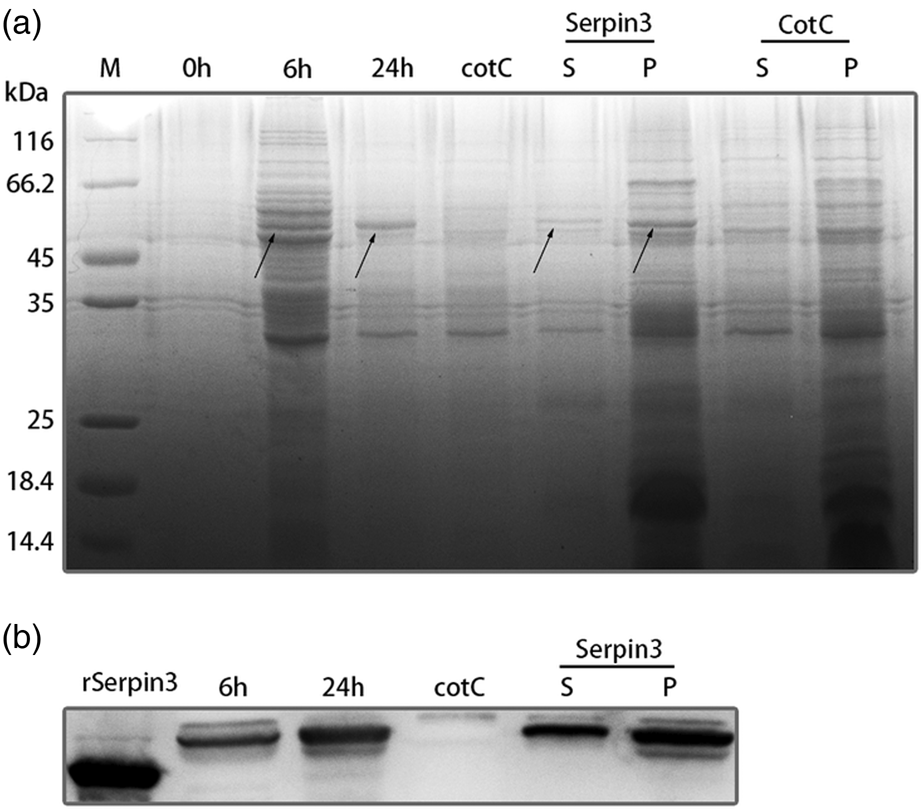
Full length of CsSerpin3 was confirmed to be cloned into the plasmid of pEB03-CotC by PCR with specific primers, double-enzyme digestion and sequencing (Fig. S1). The B.s-CotC-CsSerpin3 and B.s-CotC spores were formed in DSM with the exhaustion method. SDS-PAGE analysis showed that the fusion protein mainly expressed after cultured 24 h, and molecular weight (MW) of the fusion protein was about 52.5 kDa which corresponded to MW of CsSerpin3 (43.7 kDa) plus CotC (8.8 kDa). In addition, most of the CotC-CsSerpin3 fusion protein was present in the precipitation of the coat proteins extract (Fig. 1a). Western blot analysis showed the fusion protein was probed with rat anti-rCsSerpin3 serum at protein band higher than MW of rCsSerpin3 as expected (Fig. 1b). However, there was no corresponding band in the lane of B.s-CotC spores neither in SDS-PAGE nor western blot.
Identification of expression of CotC-CsSerpin3 fusion protein in B. subtilis spore. (a) SDS-PAGE analysis. The arrows indicated the expression band of fusion protein. (b) Western blot analysis. Rat anti-rCsSerpin3 serum was employed as the primary antibody.

Surface display of CsSerpin3 by immunofluorescence
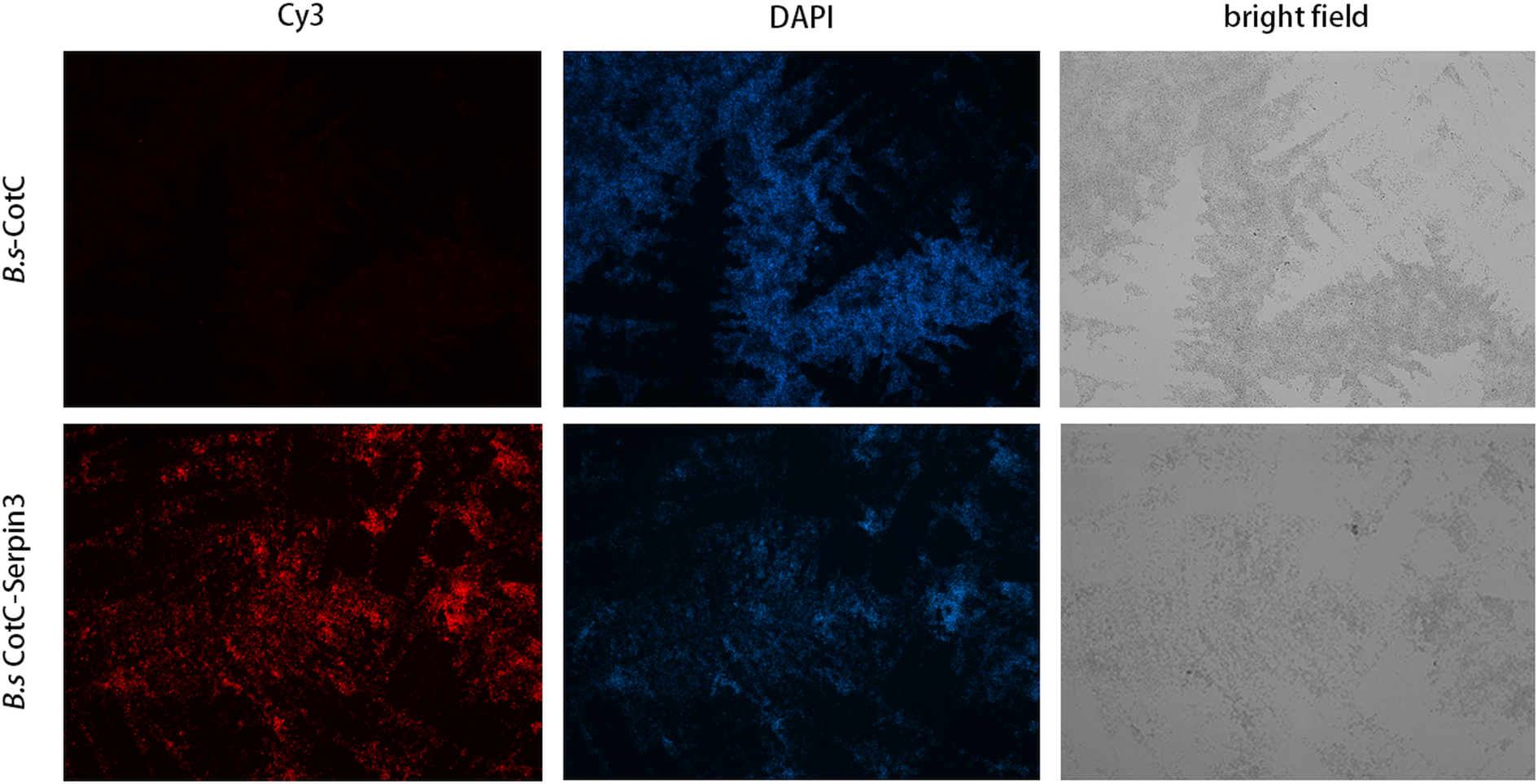
To validate the expression of CsSerpin3 on the coat of B. subtilis spore, we implemented immunofluorescence with rat anti-CsSerpin3 sera followed by Cy3-labeling goat anti-rat IgG and DAPI. Red fluorescence was detected on B.s-CotC-CsSerpin3 spores after 24 h sporulation. While no red fluorescence could be detected when B.s-CotC spores incubated with anti-CsSerpin3 sera (Fig. 2).
Expression analysis of CotC-CsSerpin3 by immunofluorescence. After incubating with rat anti-rCsSerpin3 serum and Cy3 labelled goat anti-rat IgG, the specific protein was visible under the microscope (red). The nucleus was stained with DAPI (blue). All spores were also observed under a bright field. The same process was implemented in B.s-CotC spore as a contrast. All images were magnified at × 400.

Flow cytometry
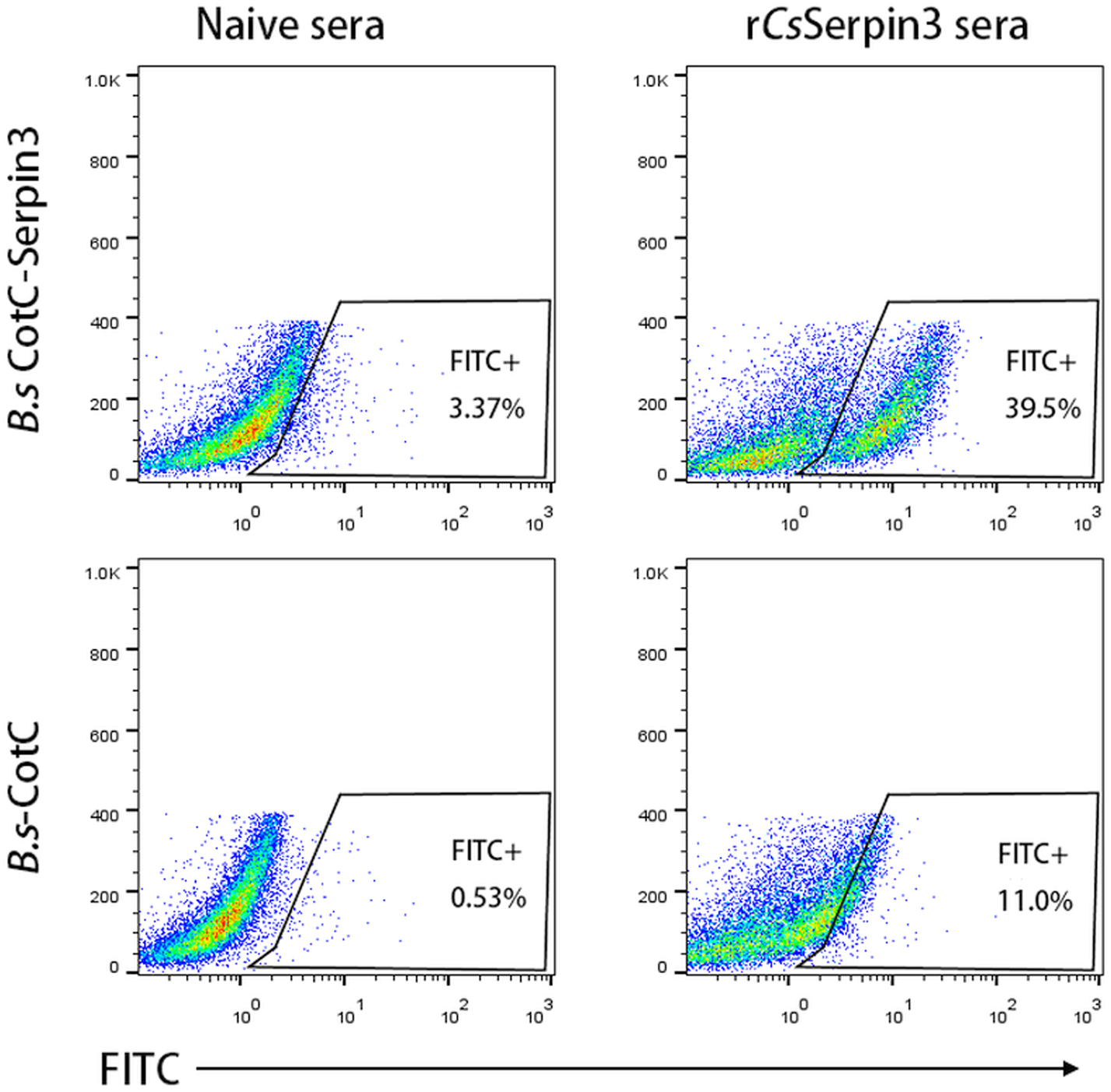
The spores were successively incubated with rat anti-rCsSerpin3 serum and FITC-conjugated goat anti-rat IgG. Flow cytometry indicated that there were 39.5% spores with specific fluorescent (green) in 2 × 10⁵ B.s-CotC-CsSerpin3 spores. As a contrast, the positive expression rate was quite low in B.s-CotC spores incubated with rat anti-rCsSerpin3 serum or B.s-CotC-CsSerpin3 spores treated with sera from naïve rat as a primary antibody (Fig. 3).
The flow cytometry analysis of recombinant CsSerpin3 expression on the spore surface. 2 × 10⁵ spores were counted in each experiment. Positive spores were enclosed in the polygon.

CsSerpin3-specific antibodies levels in serum, faecal, bile and intestinal mucus of mice
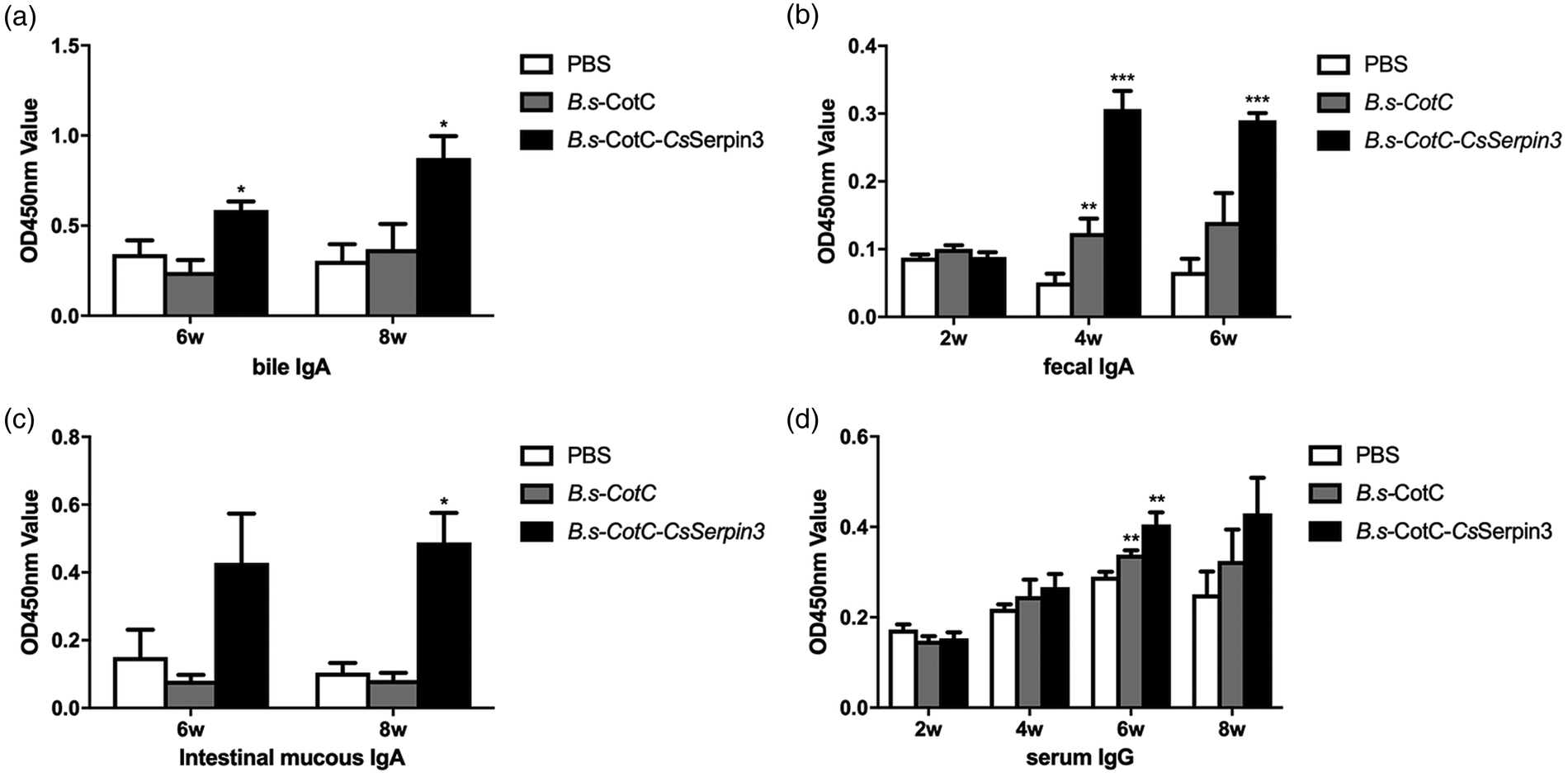
CsSerpin3-specific IgA level in the bile of B.s-CotC-CsSerpin3 group was significantly increased on 6 and 8 weeks after the first administration compared with that of PBS group (Fig. 4a). IgA level in faecal elevated on 4 and 6 weeks (Fig. 4b) and IgA level in intestinal mucous significantly increased on 6 weeks (Fig. 4c). IgA levels in bile, faecal and intestinal mucous of B.s-CotC group BALB/c mice were not obviously different from those of PBS group. CsSerpin3-specific IgG levels in sera from B.s-CotC-CsSerpin3 group and B.s-CotC group showed no significant difference (Fig. 4d).
CsSerpin3-specific antibodies analysis of spores orally administrated BALB/c mice by indirect ELISA. The OD450 Values of bile IgA (a), faecal IgA (b), intestinal mucus IgA (c) and serum IgG (d) in three groups were compared. The data in histograms present the mean ± s.d.. t-test was applied to analyse statistical significance between spore group and PBS group (*P < 0.05, **P < 0.01, ***P < 0.001).

Histology analysis by AB-PAS staining
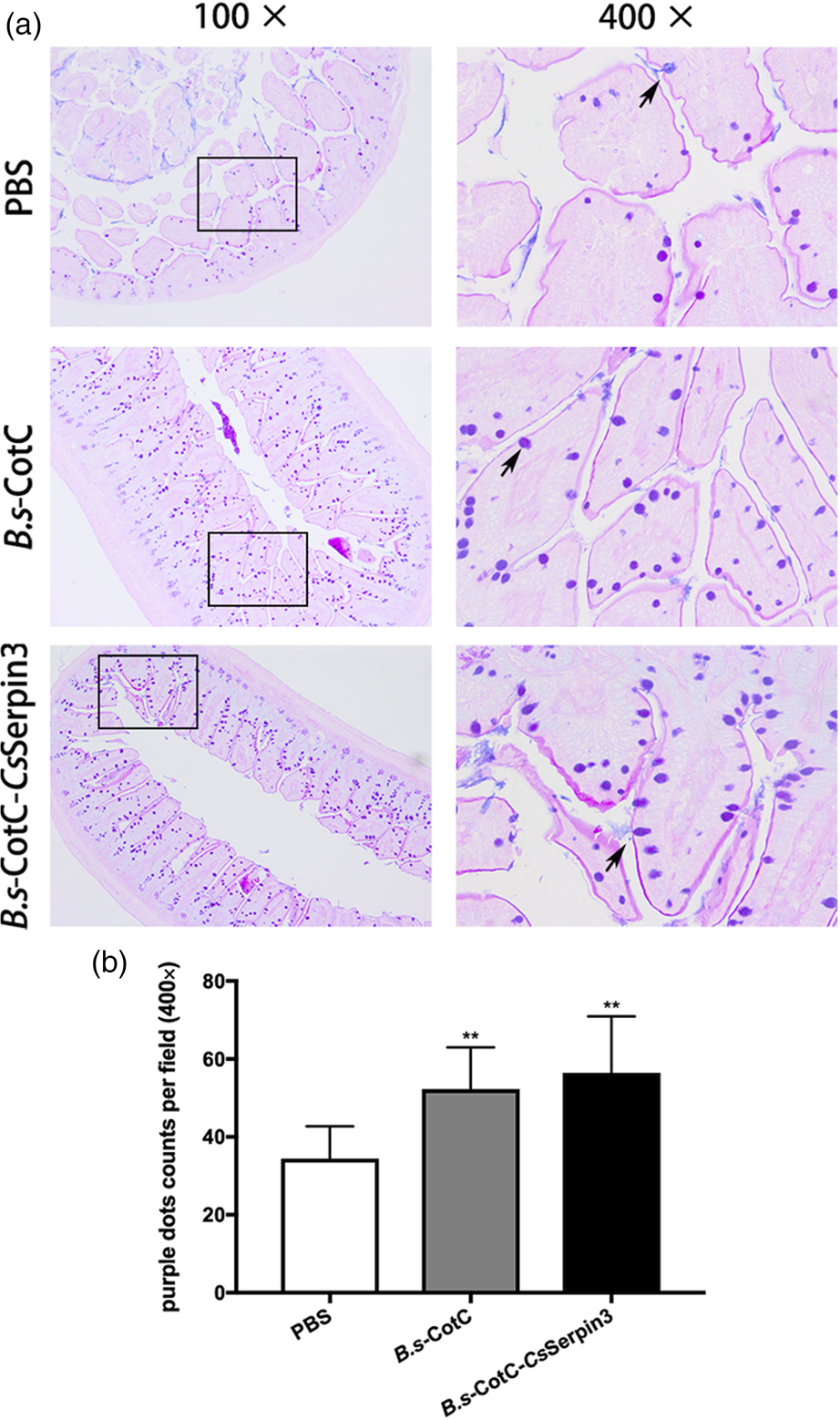
After AB-PAS staining, the goblet cells and productions of mucus in the intestinal epithelium were stained purple. Compared with the PBS group, the goblet cells and productions of mucus in B.s-CotC group and B.s-CotC-CsSerpin3 group were significantly increased (Fig. 5).
AB-PAS staining of intestinal epithelium from oral administrated BALB/c mice. The goblet cells and mucus production were dyed to purple. The mucins were secreted into the interval of intestinal villi. (a) The arrows indicated the goblet cells. (b) The numbers of purple dots in each field ( × 400) were counted and compared (*P < 0.05, **P < 0.01).

Enzymatic indexes in sera
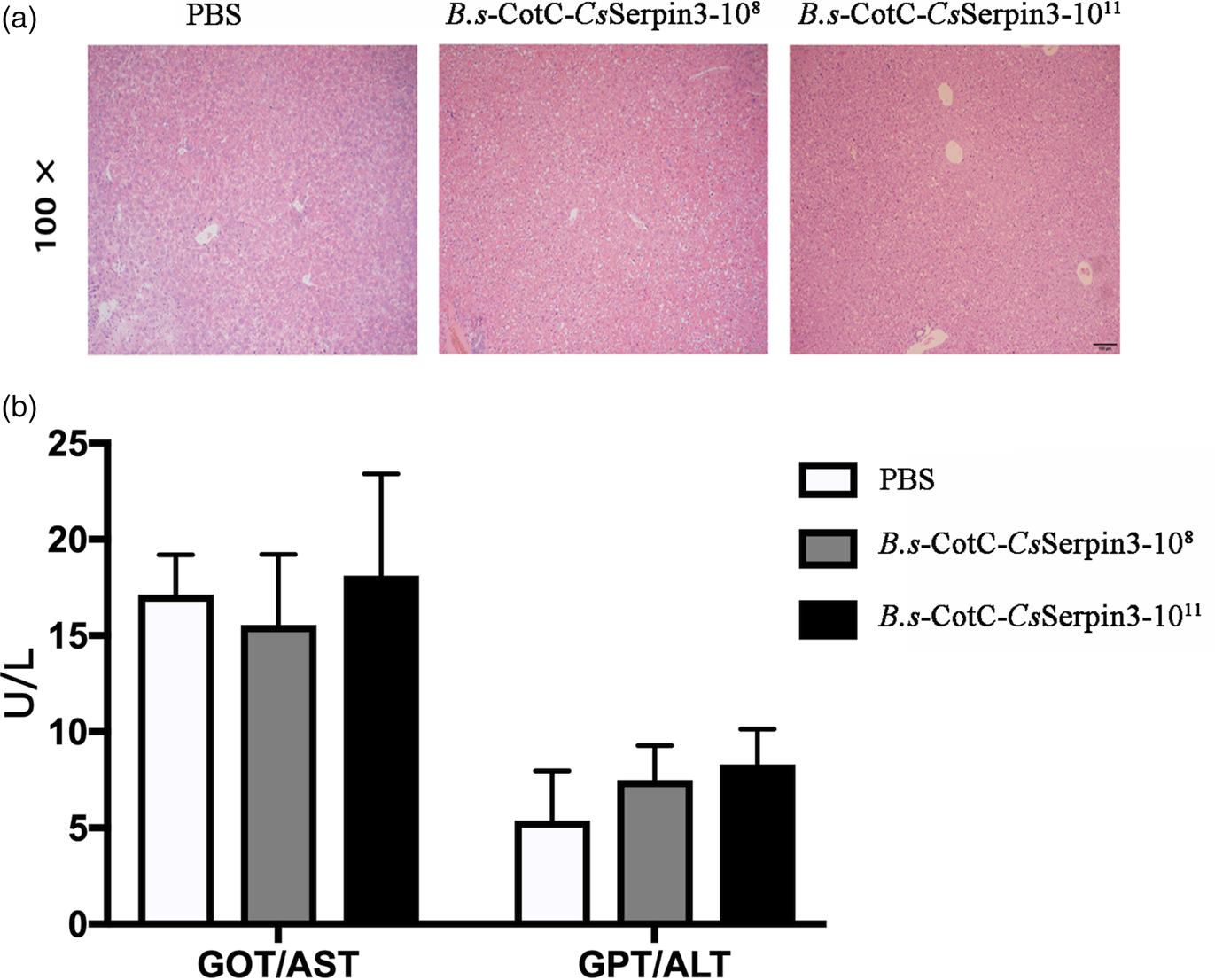
No significant difference in the activities of GPT/ALT and GOT/AST were observed between PBS group and CotC-CsSerpin3 group (Fig. 6b).
Liver histopathology analysis and biochemical indices level of orally immunized BALB/c mice. (a) H&E staining showed no pathological changes and no inflammatory cell infiltration in liver slices of BALB/c mice in each group. (b)The activities of GPT and GOT in sera of orally immunized BALB/c mice. The data were presented as mean ± s.d.. There was no significant difference among the groups.

Histopathology of livers after immunization and challenging infection
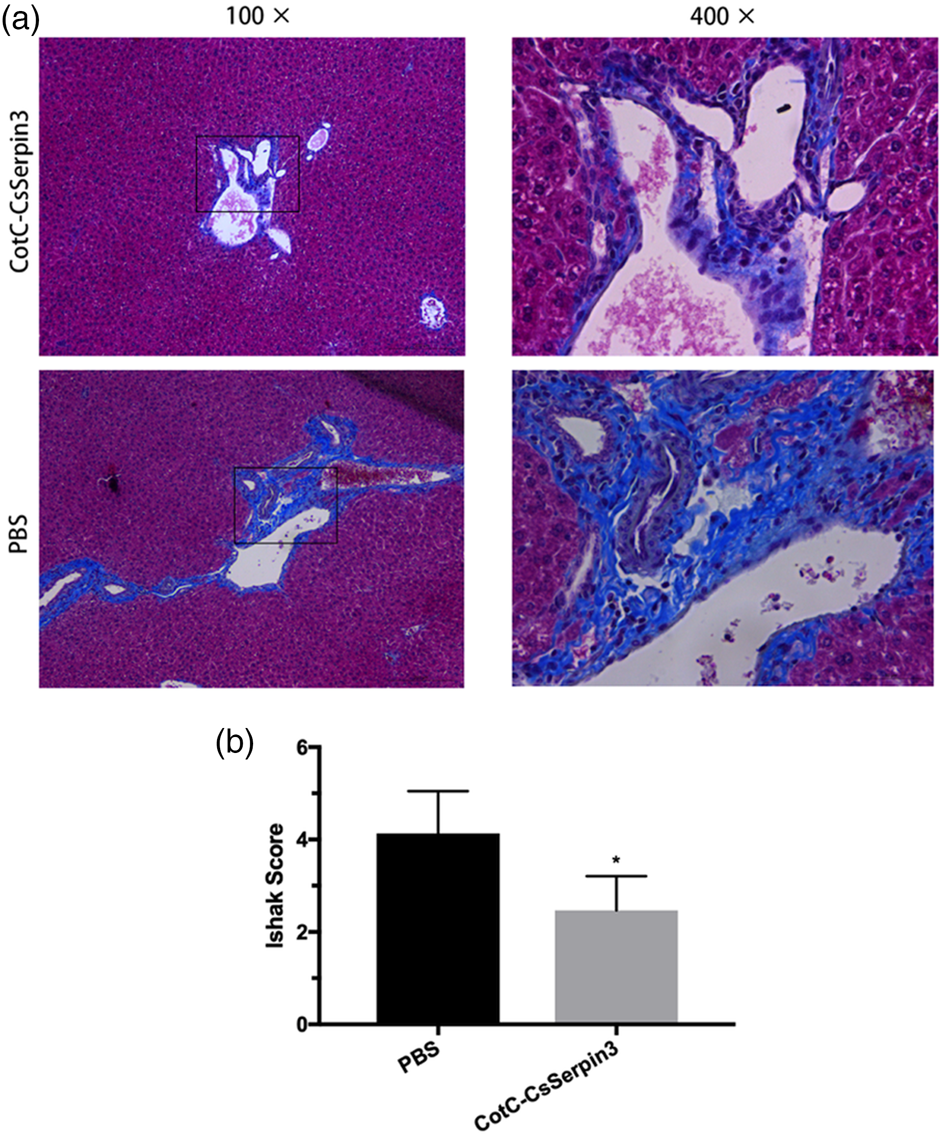
Compared with the PBS group, there was no obvious infiltration of inflammatory cells or observable damage in liver tissues of BALB/c mice from B.s-CotC-CsSerpin3 groups after immunization (Fig. 6a). By masson staining, blue-purple collagens deposited in the bile duct or hepatic parenchyma in B.s-CotC-CsSperin3 group were dramatically less than those in the PBS group after challenging infection (Fig. 7a). Ishak score reflecting the degree of hepatic fibrosis in B.s-CotC-CsSerpin3 group was statistically lower than that of PBS group (Fig. 7b).
Masson staining analysis and Ishak scores analysis after challenging infection. (a) livers histopathological analysis by using Masson staining. Collagen was dyed blue. PBS: BALB/c mice were treated with PBS; CotC-CsSperin3: BALB/c mice were treated with CotC-CsSperin3 spore; (b) statistical analysis of Ishak scores by t-test, (*P < 0.05).

Discussion
In this study, we constructed a fusion gene of CotC-CsSerpin3 and confirmed its surface expression on B. subtilis spore, and then their use as an oral vaccine upon experimental challenge in BALB/c mice.
SDS-PAGE showed MW of the fusion protein (CotC-CsSerpin3) was between 66.2 kDa and 45 kDa (Fig. 1a) which was in accordance with its theoretical MW of 52.5 kDa. The expression level of the fusion protein increased along with the induction time. Western blot also showed that MW of the fusion protein was a little higher than that of rCsSerpin3 protein (Fig. 1b), demonstrating successfully the expression of the fusion protein. Furthermore, the fusion protein existed in precipitation of the coat proteins extraction but not in the supernatant, indicating that CsSperin3 located on the surface of B. subtilis spores. The results of immunofluorescence (Fig. 2) and flow cytometry (Fig. 3) collectively verified the expression of CotC-CsSerpin3 fusion protein on the surface of the spore. Flow cytometry showed that the proportion of positive spores was 39.5% in our study. In previous studies, the positive proportion of spores displaying CsCP and CsTP22.3 was 98.04% (Tang et al., Reference Tang, Shang, Chen, Ren, Sun, Qu, Lin, Zhou, Yu, Jiang, Zhou, Li, Huang, Xu and Yu2016a) and 46.9% (Zhou et al., Reference Zhou, Xia, Hu, Huang, Li, Li, Ma, Chen, Hu, Xu, Lu, Wu and Yu2008), respectively. The difference might be due to the characteristics of a different protein or the different antibodies used for protein detection.
After taken by the definitive hosts, C. sinensis metacercariae could integrally pass through host's stomach and excyst in the duodenum, and finally develop into adults in the intrahepatic bile ducts (Lun et al., Reference Lun, Gasser, Lai, Li, Zhu, Yu and Fang2005). In this process, the cyst wall of metacercaria plays an important role, which ensures that the larvae can survive in gastric acid and be detached in the duodenum. It has been demonstrated that the CsSerpin was abundantly expressed in the adult worm, metacercariae and eggs of C. sinensis. Furthermore, recombinant CsSerpin protein could inhibit the activity of trypsin, thrombin as well as chymotrypsin. When metacercariae excyst in duodenum, the CsSerpins may be excreted to inhibit the digestion of trypsin or chymotrypsin from the host, hence, the parasite can migrate and survive in host for a long time (Lei et al., Reference Lei, Tian, Chen, Wang, Li, Mao, Sun, Li, Xu, Liang, Huang and Yu2013). In light of the above, CsSerpin might facilitate evasion of the worms and protect them from the digestion of host proteases and might be a potential vaccine candidate.
In recent years, B. subtilis as a good carrier of intestinal immunization has become a hot spot (Permpoonpattana et al., Reference Permpoonpattana, Hong, Phetcharaburanin, Huang, Cook, Fairweather and Cutting2011; Vogt et al., Reference Vogt, Armua-Fernandez, Tobler, Hilbe, Aguilar, Ackermann, Deplazes and Eichwald2018; Guoyan et al., Reference Guoyan, Yingfeng, Zabed, Qi, Yang, Jiao, Li, Wenjing and Xianghui2019; Yao et al., Reference Yao, Chen, Cui, Zhang, Zhou, Guo, Li and Zhang2019). Some candidate antigens of C. sinensis were also successfully expressed on the surface of B. subtilis spore and explored their potential as oral vaccines against clonorchiasis (Zhou et al., Reference Zhou, Xia, Hu, Huang, Li, Li, Ma, Chen, Hu, Xu, Lu, Wu and Yu2008; Tang et al., Reference Tang, Shang, Chen, Ren, Sun, Qu, Lin, Zhou, Yu, Jiang, Zhou, Li, Huang, Xu and Yu2016a; Sun et al., Reference Sun, Lin, Zhao, Chen, Shang, Jiang, Tang, Zhou, Shi, Zhou, Ren, Qu, Lin, Li, Xu, Huang and Yu2018). In the present study, ELISA results showed that specific IgA levels induced by B.s-CotC-CsSerpin3 remarkably increased from 4 to 8 weeks, especially in faecal and intestinal mucus (Fig. 4). It indicated that CsSperin3 displayed on the surface of the spore surface endured the extreme environment of the gastrointestinal tract and its immunogenicity retained after oral administration. Indeed, B.s-CotC-CsSerpin3 induced a strong mucosal immune response in BLAB/c mice. It has been reported that sIgA is the dominant antibody in secreted intestinal mucus, which serves as the first line of defence against pathogens including parasites (Mantis et al., Reference Mantis, Rol and Corthésy2011). Hence, the increased sIgA level in intestinal mucus could help to inhibit the migration or maturation of C. sinensis, and even eliminate it from the host.
Mucus layer secreted by goblet cells of gastrointestinal tract is also an important part of the first line defended against pathogens. The increase of goblet cells was closely related to the immune response against helminths (Turner et al., Reference Turner, Stockinger and Helmby2013; Oeser et al., Reference Oeser, Schwartz and Voehringer2015). Acidic mucins such as sialomucin and sulfomucin were reported to be involved in the maturation of intestinal barrier and protection of the mucosa from pathogens (Deplancke and Gaskins, Reference Deplancke and Gaskins2001). Our AB-PAS staining of the intestinal tissue showed that goblet cells and mucus production in B.s-CotC group and B.s-CotC-CsSerpin3 group significantly increased compared with those in the PBS group (Fig. 5). The results suggested that oral treatment with B.s-CotC-CsSerpin3 could improve defence capability of intestinal tract in the BALB/c mice.
Bacillus subtilis spore has been employed as a probiotic and food additive for its no toxicity (Mingmongkolchai and Panbangred, Reference Mingmongkolchai and Panbangred2018). GOT and GPT are most commonly employed and most sensitive indices for hepatocyte damage evaluation (Takahashi et al., Reference Takahashi, Sekiya, Yazaki, Ono, Sato, Hasebe, Ishikawa, Okuno, Yamada and Namiki1986). They release from damaged hepatic cells and that results in an obvious increase in serum. Our results demonstrated that there was no significant difference in GOT and GPT activities between B.s-CotC-CsSperin3 group and control group (Fig. 6). The histopathology analysis also showed no observable damage in liver tissue of BALB/c mice from B.s-CotC-CsSperin3 group (Fig. 7). Taken together, it indicated that oral administration of B.s-CotC-CsSperin3 spores had no side-effects on liver function of the BALB/c mice.
The parasitism of C. sinensis in bile ducts of the host could induce serious collagen deposition in liver (Tang et al., Reference Tang, Huang and Yu2016b). Pathological change is closely related to worm burden in the host (Lun et al., Reference Lun, Gasser, Lai, Li, Zhu, Yu and Fang2005; Qian et al., Reference Qian, Utzinger, Keiser and Zhou2016). In the present study, collagen deposition in BALB/c mice from CotC-CsSperin3 group was statistically less than that in the control group. Ishak score, reflecting the liver histopathology change was also significantly lower than that of control groups (Fig. 7). Our results suggested that oral administration of B.s-CotC-CsSperin3 spores might be helpful for preventing the development of liver fibrosis induced by C. sinensis infection. We could not recover C. sinensis adults 4 weeks after the challenging infection although C. sinensis eggs were detected in the stools from BALB/c mice. That might be due to the relatively low infection density or the small bile ducts of BALB/c mice. So in our further research, more repeated challenge experiments should be carried out. Rabbit would also be used as animal models to evaluate the protective efficacy of B.s-CotC-CsSperin3 spores. The comparison of protective efficacies induced by B.s-CotC-CsSperin3 spores and spores displaying CsCP or CsTP22.3 constructed in our previous studies was also included in our further research plan.
Concluding remarks
CsSerpin3 was successfully expressed on the surface of B. subtilis spores. Oral treatment of B.s-CotC-CsSerpin3 spores could elicit both systemic and local immune response in BALB/c mice. In addition, the mucus production and the number of goblet cells in the intestinal mucosa of administrated BALB/c mice dramatically increased. The recombinant spores had no side-effects on inspected liver function enzymes. Furthermore, Oral administration of B.s-CotC-CsSperin3 spores could reduce collagen deposition in liver tissue of BALB/c mice after challenging infection. Taken together, B. subtilis spores displaying CsSerpin3 on the surface might be a potential oral vaccine against clonorchiasis.
Financial support
This work was supported by the national key research and development program of China (2017YFD0501300), Guangdong marine economy promotion projects fund [GDOE(2019)A29], the science and technology planning project of Guangdong province (No.2014B020203001), Guangdong science and technology research project of medicine (A2017141) and Special fund for basic and applied basic research of Guangdong province (2017A030310515).
Ethical standards
The BALB/c mice experiments were approved by the Animal Care and Use Committee of Sun Yat-Sen University (Permit Numbers: SYXK (Guangdong) 2010–0107). All work with BALB/c mice were according to the National Institutes of Health on animal care and the ethical guidelines.
Conflict of interest
The authors declare that they have no competing interests.
Supplementary material
The supplementary material for this article can be found at https://doi.org/10.1017/S0031182020000797