




No CrossRef data available.
Article contents
Prophylactic potential of autoclaved Leishmania donovani with BCG against experimental visceral leishmaniasis
Published online by Cambridge University Press: 09 October 2003
Abstract
The prophylactic efficacy of autoclaved Leishmania donovani (ALD) and autoclaved L. major (ALM) – a heterologous vaccine developed against cutaneous leishmaniasis (used as a reference vaccine), along with BCG – was evaluated against L. donovani in hamsters (Mesocricetus auratus). Animals were immunized with triple doses (21 days apart) of either ALD or ALM (1·0 mg) with or without BCG (0·1 mg) and challenged 21 days later with 1×10⁶L. donovani amastigotes intracardially. Animals immunized with ALM+BCG and ALD+BCG yielded 94·3% and 86·1% parasite inhibition respectively in comparison to the BCG only and unvaccinated controls. Fifty and 33·3% of the vaccinated animals (ALM+BCG and ALD+BCG respectively) were completely devoid of parasites when tested on day 45 post-challenge (p.c.) and survived till the experiment was terminated. The mean survival of ALM+BCG and ALD+BCG groups (animals harbouring parasites) was longest (168 and 139 days respectively). No significant increase in anti-leishmanial antibody level (ELISA) was noticed in ALD+BCG and ALM+BCG groups whereas it increased progressively in the rest of the experimental groups. The lymphoproliferative responses to PHA and Con A, of the 2 vaccinated groups were comparable to that of normal controls on day 45 p.c. The study suggests that ALD along with BCG can offer substantial protection against visceral leishmaniasis in hamsters.
Information
- Type
- Research Article
- Information
- Copyright
- 2003 Cambridge University Press
INTRODUCTION
Visceral leishmaniasis (VL), caused by an obligate protozoan parasite Leishmania donovani, is characterized by fever, hepatosplenomegaly, leucopaenia and impairment of cell-mediated immune responses (Rezai et al. 1978). It is often fatal if not treated or inadequately treated at an early stage of infection (Ho et al. 1982; Badaro et al. 1986). The disease is prevalent in the eastern part of India (Choudhury et al. 1990; Thakur, 1993; Gupta et al. 1993; WHO, 1998) and approximately 250000 new cases of VL develop each year in one state (Bihar) alone (Sundar et al. 1997). Mortality is high since 37–64% of newly diagnosed, previously untreated patients, are unresponsive to sodium stibogluconate, the standard drug used for therapy (Sundar et al. 1997; Jha et al. 1998). The immune system is not always able to control the disease or augment the effects of the drugs (Alexander, 1988; Berger & Fairlamb, 1992). Thus, there is an urgent need for a reliable vaccine against VL.
Several vaccination strategies have been successful for cutaneous leishmaniasis in animal models such as live, attenuated, irradiated or killed promastigotes, recombinant proteins and DNA vaccines. These studies have been extensively reviewed by Greenblatt (1980), Handman (2001) and Mauel (2002). However, few such attempts have been made against visceral leishmaniasis (Dube et al. 1998; Misra et al. 2001). Killed leishmania vaccines have been tested against human cutaneous and visceral leishmaniasis and have been found to be safe (Mayrink et al. 1985; Castes et al. 1994; Momeni et al. 1998; Armijos et al. 1998; Khalil et al. 2000; Misra et al. 2001). However, apart from a single report in which killed parasites given with BCG showed an efficacy of 72% in CL, the results of other trials of similar vaccines were far from satisfactory (Mayrink et al. 1985; Castes et al. 1994; Armijos et al. 1998; Momeni et al. 1998). In a trial against VL in Sudan, a significant protection was seen only among vaccine recipients who became skin test positive (Khalil et al. 2000). We have previously shown that autoclaved Leishmania major (ALM) along with BCG was protective against L. donovani in a simian model for VL (Dube et al. 1998). In this communication we are reporting the prophylactic efficacy of a homologous vaccine against L. donovani challenge. Following new legislation against the use of primates for laboratory research, we have employed the hamster model to evaluate the protective effect of autoclaved Leishmania donovani (ALD)+BCG and compare it with previously evaluated ALM+BCG.
MATERIALS AND METHODS
Animals
Laboratory bred, male golden hamsters (Mesocricetus auratus) of approximately 50 g weight were used as the experimental host. They were housed in climatically controlled rooms in plastic cages and fed with standard rodent food pellet (Lipton India Ltd) and water ad libitum.
Parasites
L. donovani (MHOM/IN/80/DD8), a WHO reference strain, was obtained from Imperial College, London and maintained through in vivo serial passage in hamsters. For bulk cultivation promastigotes were maintained in L-15 medium (GIBCO BRL, USA) with L-glutamine, supplemented with 10% tryptose phosphate broth (Himedia, India), 0·1% gentamycin and 10% fetal calf serum (FCS) (GIBCO BRL, USA) at 26 °C (Sharma et al. 1998). Parasites were harvested on day 4–5 of culture.
Preparation of soluble promastigote antigen
Soluble promastigote antigen (SPA) was prepared following the method of Choudhury et al. (1990). Briefly, promastigotes were washed in phosphate buffered saline (PBS, pH 7·2) by centrifugation at 2500 rpm. The washed promastigotes were resuspended in PBS and sonicated (Soniprep 150) on ice for 2 periods of 1·5 min each, separated by an interval of 3 min, at medium amplitude. The sonicate was rapidly frozen and thawed 4 times using liquid nitrogen and left at 4 °C for 1 h for complete release of soluble antigen. The suspension was centrifuged at 4000 g for 20 min at 4 °C. The supernatant was ultracentrifuged at 40000 g for 30 min, the protein content estimated and then stored in aliquots at −70 °C.
Preparation of ALD vaccine
Autoclaved L. donovani promastigote vaccine was prepared as previously described (Misra et al. 2001). In brief, freshly harvested (1×10¹⁰) stationary phase promastigotes (1×10¹⁰) of L. donovani-Dd8 strain were suspended in 5 ml of PBS in a screw-cap glass vial under sterile conditions. The vials were autoclaved (at 15 lb) for 30 min. Protein content was evaluated by the method of Lowry et al. (1951) and the antigen was stored at 4 °C until use.
Vaccines
The autoclaved L. major promastigote vaccine (ALM) was obtained through WHO (prepared by Dr H. Fesharki–Hashemi and his group at Razi State Institute for Vaccine and Serum, Tehran, Iran). This vaccine has shown efficacy against cutaneous leishmaniasis in mice and primates when used with IL-12 as adjuvant (Afonso et al. 1994; Gicheru et al. 2001) and was provided by WHO for evaluation against visceral leishmaniasis. BCG, a live freeze-dried preparation from an attenuated strain of Mycobacterium bovis, was a gift from Evans Medical Limited, Leatherhead, England.
Experimental protocol
Twelve hamsters were injected intradermally with ALD (1 mg protein/hamster) either alone or in combination with BCG (0·1 mg/hamster) in 2 separate groups of 6 each, followed by 2 boosters of the same amount at intervals of 21 days. Similarly, another group of 12 hamsters (6 animals per group) were given ALM with or without BCG as per doses as mentioned above. Control groups with 6 animals each received either BCG alone or no vaccines. Twenty-one days following the last booster, animals were challenged by intracardiac inoculation of 1×10⁷L. donovani (Dd8) splenic amastigotes. Splenic biopsy was performed on day 45 post-challenge (p.c.) through a small incision in the upper left quarter of the abdomen and a small piece of splenic tissue was cut and dab smears were made on slides. The incised portion was stitched with nylon suturing thread. Following biopsy, an adequate amount of antibiotic powder (Neosporin; Burroughs Wellcome Ltd, India) was applied on the stitched portion and finally sealed with Tincture of Benzoin. In addition, Neosporin sulphate (100 mg/kg of body weight) was also given orally the day before and the day after the biopsy for healing. The smears were fixed in methanol and stained with Giemsa stain and the number of amastigotes/1000 cell nuclei were counted and the animals in which no parasite could be detected in the whole smear/slide were considered as completely protected. The experimental animals were also observed for survival and the experiments were terminated by day 180 p.c. Blood was collected via the retro-orbital plexus of the animals at various intervals for serum separation, and was stored for evaluation of the humoral immune response.
ELISA for estimation of anti-leishmanial antibody
ELISA was carried out as described by Voller et al. (1979). Briefly, ELISA plates (Nunc, Denmark) were coated with 1 μg of SPA per well in 100 μl of coating buffer. Then 100 μl of serum samples were added at a dilution of 1[ratio ]100. All washings were done in PBS at pH 7·2 containing 0·05% Tween-20. Peroxidase-labelled goat anti-hamster IgG (H+L) (Kirkegaard and Perry Laboratories Inc., Gaithersburg, MD, USA), at a dilution of 1[ratio ]1000, was used as detection antibody and colour was developed with OPD (orthophenylenediamine; E-Merck); the assay was read at 492 nm.
Lymphocyte proliferation assay
Spleens of 3 animals from each group were excised aseptically for the proliferative assay. Excised spleens were placed in sterile Petri dishes containing RPMI medium, minced and splenocyte suspensions were loaded on Histopaque 1077 density-gradient centrifugation (Misra et al. 2001). The mononuclear cells were washed thrice with RPMI and 100 μl of cell-suspension (1×10⁶ cells/ml) were cultured in 96-well, flat-bottom tissue culture plates (Nunc, Denmark) in complete RPMI medium (HEPES-buffered RPMI 1640 supplemented with streptomycin (100 μg/ml), penicillin (100 U/ml), L-glutamine (2 mM), β-mercaptoethanol (5×10⁻⁵M) and 10% heat-inactivated FCS). Then 100 μl of mitogens (PHA (1 mg/ml), Con A (1 mg/ml); Sigma) or antigen (ALD and ALM (1 mg/ml each)) were added to triplicate wells. Wells without stimulants served as controls. Cultures were incubated at 37 °C in a CO2 incubator with 5% CO2 for 3 days in the case of the mitogens, and for 5 days in the case of the antigens. Eighteen hours prior to termination of the culture, 0·5 μCi of 3H-thymidine (BARC, India) was added to each well. The cells were harvested on to glass-fibre mats (Whatman) and counted in a liquid scintillation counter and results expressed as mean counts of triplicate wells/min. Results were expressed as Stimulation Index (SI) which was calculated as mean CPM of stimulated culture/mean CPM of unstimulated control. SI values of unvaccinated and challenged group were compared with the values of vaccinated and challenged groups and SI of more than 2·5 was considered as positive response.
Statistical analysis
Results were expressed as mean±S.D. Three sets of experiments were performed and Fisher Behran's d-test was applied for the statistical analysis of the prophylactic efficacy. The antibody titres were compared using Student's t-test. No statistical tests were applied for the lymphoproliferative data since there were 3 animals per group.
RESULTS
Parasite burden
The mean parasite burden on day 45 p.c. in different groups is given in Table 1. When compared to the unvaccinated group, groups vaccinated with ALD+BCG showed 86·1% and ALM+BCG showed 94·3% parasite inhibition. Groups vaccinated with ALD and ALM alone showed 76·6% and 67·6% parasite inhibition respectively. BCG alone inhibited the parasite burden by 36·1% compared to the control.

Out of 18 animals in each group, 6 of the ALD+BCG vaccinated group, 9 of the ALM+BCG vaccinated group and 2 animals vaccinated with ALD alone had no amastigotes in the splenic smear on day 45 p.c. None of the animals given either ALM or BCG alone showed complete protection (Table 1).
Post-challenge mean survival of hamsters
The mean (±S.D.) post-challenge survival in the ALD+BCG vaccinated group was 139·8±4·0 days, in the ALM+BCG vaccinated group was 168·8±5·3 days, in the ALD vaccinated group 132·3±3·2 days and in the ALM vaccinated group 104±3·3 days. The survival of 84·8±2·1 days in the BCG vaccinated group was comparable to the 86·6±1·6 days in controls. The animals, which were found to be negative on spleen biopsy, survived till the termination of experiments.
Anti-leishmanial antibody profile
The Leishmania-specific antibody profiles of vaccinated and unvaccinated groups at different time-intervals are presented in Fig. 1. The pre-immunization (i.e. day 0 of immunization or day 63 of challenge) OD values of the 6 groups ranged from 0·18±0·03 to 0·21±0·03. No significant increase in OD value was noticed in the ALD+BCG and ALM+BCG vaccinated groups either pre-challenge i.e. day 63 post-vaccination or day 0 of challenge (0·48±0·05 and 0·32±0·02 respectively) or post-challenge i.e. day 45 p.c. (0·41±0·05 and 0·38±0·01 respectively). However, in the ALD and ALM vaccinated groups OD values showed a significant increase over base-line when tested pre-challenge (0·21±0·03 to 0·32±0·03; P<0·01 and 0·20±0·02 to 0·31±0·01; P<0·05 respectively). The values rose further following challenge i.e. on day 45 p.c. (0·511±0·012; P<0·01 and 0·615±0·017; P<0·01). The BCG vaccinated group and control group did not show any increase in OD pre-challenge; however there was a significant increase post-challenge (0·749±0·032 and 1·019±0·12; P<0·01) respectively.

Fig. 1. Anti-leishmanial antibody profile in ALD/ALM vaccinated and unvaccinated control hamsters at pre-vaccination ([squf ]), pre-challenge (□) and pre-biopsy (). The values for the ALD vaccinated animals between pre-vaccination and pre-challenge and between pre-challenge and pre-biopsy are significant at P<0·01; values for the ALM vaccinated group between pre-vaccination and pre-challenge and between pre-challenge and pre-biopsy are significant at P<0·05 and P<0·01 respectively. Values for BCG vaccinated and control groups between pre-challenge and pre-biopsy are significant at P<0·01.
Lymphoproliferative response
The lymphoproliferative responses to PHA in ALD+BCG and ALM+BCG vaccinated groups on day 45 p.c. was similar to normal controls (SI=31·8±1·9, 43·0±9·5 and 37·2±8·4 respectively); the response to Con A was higher than in the controls (SI=105±10·4, 131±19·5 and 23·8±3·3 respectively). Animals vaccinated with ALD or ALM alone also had PHA and Con A responses comparable to controls which were lower than the groups which received ALD or ALM along with BCG. The LTT response to Con A in the BCG vaccinated group was similar to the response observed in normals; the response to PHA in the BCG vaccinated group and to Con A and PHA in unvaccinated, infected animals was lower than both to Con-A and PHA in normals (Fig. 2).

Fig. 2. Lymphoproliferative response to PHA ([squf ]) and Con A (□) each at a dose level of 10 μg/ml in vaccinated and unvaccinated control hamsters challenged with Leishmania donovani.
The antigen-specific proliferative responses of various vaccinated groups to ALD and ALM is shown in Fig. 3. These responses were very low or absent in unvaccinated infected controls (0·77±0·1 and 0·9±0·1), normal controls (1·24±0·2 and 1·0±0·3) and the BCG vaccinated group (1·32±0·2 and 1·84±0·5). Demonstrable lymphoproliferative responses against ALD and ALM antigens were seen in ALD (7·4±1·6 and 8·0±1·4), ALM (5·1±1·1 and 6·9±1·4), ALD+BCG (12·3±2·6 and 3·4±0·5) and ALM+BCG (3·9±0·3 and 6·1±0·8) vaccinated groups. ALD-specific LTT responses were stronger in the ALD+BCG vaccinated group as compared to the ALM+BCG vaccinated group. Similarly, the ALM-specific response was stronger in the ALM+BCG vaccinated group as compared to the ALD+BCG group.

Fig. 3. Lymphoproliferative response to ALD ([squf ]) and ALM (□) each at a dose level of 10 μg/ml in vaccinated and unvaccinated control hamsters challenged with Leishmania donovani.
DISCUSSION
We previously reported significant but incomplete protection offered by ALM+BCG in a non-human primate model for L. donovani (Dube et al. 1998). In the present study a vaccine composed of killed L. donovani (ALD)+BCG was produced and evaluated for efficacy, to assess whether a homologous system would produce stronger protection than the previous heterologous system. Evaluation was done on a large sample size and reproduced thrice, and was designed to compare the protective potential of ALM+BCG with the homologous vaccine of autoclaved Leishmania donovani (ALD)+BCG against an L. donovani challenge.
ALD+BCG and ALM+BCG gave comparable levels of inhibition of parasite load on day 45 p.c. ALD and ALM were similar but gave significantly less protection than with the same antigen combined with BCG. BCG alone was significantly less effective than the other vaccinated groups. Complete protection or complete clearance of parasites was also seen more frequently in the animals of the 2 groups given parasite antigen with BCG rather than the groups given these alone. Combination of ALD and ALM with BCG significantly enhanced the mean survival period of animals as compared to controls. These data clearly indicate that addition of BCG to ALM or ALD increases the protective activity of antigen.
The cross-protection offered by ALM against challenge with L. donovani, has been previously reported by us in the monkey model (Dube et al. 1998). Cross-reactivity between L. major and L. donovani (Gicheru, Olobo & Anjili, 1997) and partial protection by L. donovani crude antigen against L. major have been previously reported (Gicheru, Olobo & Anjili, 1997; Nurit & Jaffe, 1993; Mitchell & Handman, 1987). However, it is interesting to note in the present study that ALD alone was more efficient at inhibiting parasite burden than ALM alone and the mean survival of ALD vaccinated animals was longer than ALM vaccinated animals. However, ALM+BCG was more effective than ALD+BCG, thereby suggesting that the BCG effect overrides the protective role of the antigen itself. BCG has been shown to play a protective role against leishmaniasis as it is a known inducer of Th1 type of responses characterized by IL-12 (Flesch et al. 1995) and gamma-interferon production (Frommel & Lagrange, 1989). These responses are protective in animal models of VL (Misra et al. 2001) and IFN-γ responses have been shown to be the best marker of protection in human studies (Lagranderie et al. 1996). The induction of a Th1 response by BCG thus helps in its role as an efficient adjuvant.
The increase in antibody titre, following parasite challenge, reflected the parasite load, being highest in unvaccinated controls, less in BCG group, ALD and ALM vaccinated groups. The ALD+BCG and ALM+BCG vaccinated groups did not show any enhancement in antibody titre over pre-challenge values. One of the hallmarks of visceral leishmaniasis has been a polyclonal hypergammaglobulinaemia (Handman, 2001). However, the close relationship of parasite load and high antibody titre, suggests that there is activation of the antigen-specific B cell pool by the multiplying parasites. However, antibodies have not been shown to have any protective role in this disease (Howard & Liew, 1984).
The lymphoproliferative responses to the T cell mitogen PHA, of ALD+BCG and ALM+BCG vaccinated groups were comparable with that of naïve animals; the responses of the ALD and ALM alone groups were less than that of the naïve animals. The responses of the BCG vaccinated and unvaccinated infected controls were insignificant showing a poor T cell status of these animals. Loss of antigen-specific responses precedes loss of PHA responses and denotes a more generalized immunosuppression as has been seen in HIV (Bretscher et al. 2001). Here, too, the PHA responses reflected the parasite load, being well preserved in vaccinated groups, which had low parasite load and good protection, slightly lowered responses in groups, which had partial protection and severely suppressed in the BCG vaccinated and unvaccinated groups which had high parasite load. It has been previously reported that L. donovani infection causes severe depression of CMI (assessed by proliferative response as well as the level of cytokines, namely, IL-2 and IFN-γ) in kala-azar patients (Carvalho et al. 1985, 1994) and in the monkey model of the disease (Dube et al. 1999). Due to the unavailability of cytokine reagents specific for hamsters the estimation of the level of cytokines, particularly IL-2 and IFN-γ, could not be done and only LTT was performed. The proliferative responses to Con A followed a similar trend except for the enhanced responses seen in the ALD+BCG and ALM+BCG groups. Con A activates a wider spectrum of cells than PHA including B cells. However, we can offer no satisfactory explanation for the enhanced Con A responses in these groups.
The LTT responses of the ALD+BCG vaccinated group were greater to ALD antigen than to ALM antigen while the ALD vaccinated group had a comparable response to both ALD and ALM. The LTT responses in the ALM and ALM+BCG vaccinated groups were higher with ALM than with ALD; the responses of the 2 groups were comparable. Thus, the in vitro responses were higher to the homologous antigen (ALD) than to the heterologous antigen (ALM) as was observed with the in vivo efficacy when the antigen alone was used as a vaccine. However, when BCG was added the heterologous combination i.e. ALM+BCG was more protective than ALD+BCG. Thus, BCG plays an important role in enhancing the protective immune response of leishmanial antigen. Since BCG is widely accepted for human vaccination without any major side-effects, it is a cheap and effective compound to add to the vaccine.
The technical assistance by Mr S. C. Bhar is gratefully acknowledged. Thanks are due to M. Srivastava, Division of Biometry for carrying out the statistical analysis. J. K. S., P. S. and A. M. are recipients of the ‘Scientist Pool Scheme’ of the Government of India, Research Associateship and Senior Research Fellowships of CSIR, New Delhi respectively. Our sincere thanks to Dr Farrokh Modabber for his valuable suggestions during the preparation of the manuscript. This investigation received financial support from the UNDP/World Bank/WHO Special Programme for Research and training in Tropical Diseases (TDR). This is CDRI communication No. 5993.
References
REFERENCES
AFONSO, L. C.,
SCHARTON, T. M.,
VIEIRA, L. Q.,
WYSOCKA, M.,
TRINCHIERI, G. &
SCOTT, P.
(1994).
The adjuvant effect of interleukin-12 in a vaccine against Leishmania major.
Science 263, 235–237.CrossRefGoogle Scholar
ALEXANDER, J.
(1988).
Chemotherapy and immune response. In
Leishmaniasis: The Current Status and New Strategies for Control: NATO-ASI Series A., Vol. 163
(ed. Hart, D. T.),
pp. 839–843.
Plenum Press, New York.
ARMIJOS, R. X.,
WEIGEL, M. M.,
AVILES, H.,
MALDONADO, R. &
RACINES, J.
(1998).
Field trial of a vaccine against New World Cutaneous leishmaniasis in an at-risk child population. Safety, immunogencity, and efficacy during the first 12 months of follow-up.
Journal of Infectious Diseases 177, 1352–1357.Google Scholar
BADARO, R.,
JONES, T. C.,
CARVALHO, E. M.,
SAMPAIO, D.,
REED, S. G.,
BARRAL, A.,
TEIXEIRA, R. &
JOHNSON, jrW. D.
(1986).
New perspectives on a subclinical form of visceral leishmaniasis.
Journal of Infectious Diseases 154, 1003–1011.CrossRefGoogle Scholar
BERGER, B. J. &
FAIRLAMB, A. H.
(1992).
Interaction between immunity and chemotherapy in the treatment of trypanosomiasis and leishmaniasis.
Parasitology 105, S71–S78.CrossRefGoogle Scholar
BRETSCHER, P. A.,
ISMAIL, N.,
MENON, J. N.,
POWAR, C. A.,
UZONNA, J. &
WEI, G.
(2001).
Vaccination against and treatment of tuberculosis, the leishmaniasis and AIDS: Perspectives from basic immunology and immunity to chronic intracellular infections (Review).
Cellular and Molecular Life Sciences 58, 1879–1896.CrossRefGoogle Scholar
CARVALHO, E. M.,
BACELLAR, O.,
BROWNELL, C.,
REGIS, T.,
COFFMAN, R. L. &
REED, S. G.
(1994).
Restoration of IFN-γ production and lymphocyte proliferation in visceral leishmaniasis.
Journal of Immunology 152, 5949–5956.Google Scholar
CARVALHO, E. M.,
BADARO, R.,
REED, S.,
JONES, T. C. &
JOHNSON, W. D.
(1985).
Absence of gamma-interferon and interleukin-2 production during active visceral leishmaniasis.
Journal of Clinical Investigation 76, 2066–2069.CrossRefGoogle Scholar
CASTES, M.,
BLACKWELL, J.,
TRUJILLO, D.,
FORMICA, S.,
CABRERA, M.,
ZORRILLA, G.,
RODAS, A.,
CASTELLANOS, P. L. &
CONVIT, J.
(1994).
Immune response in healthy volunteers vaccinated with killed leishmanial promastigotes plus BCG I. Skin-test reactivity T-cell prolfieration and interferon-γ production.
Vaccine 12, 1041–1051.Google Scholar
CHOUDHURY, A.,
GURU, P. Y.,
SAXENA, R. P.,
TANDON, A. &
SAXENA, K. C.
(1990).
Enzyme linked immunosorbant assay in diagnosis of kala-azar in Bhadohi (Varanasi) India.
Transactions of the Royal Society of Tropical Medicine and Hygiene 84, 363–367.CrossRefGoogle Scholar
DUBE, A.,
SHARMA, P.,
SRIVASTAVA, J. K.,
MISRA, A. &
KATIYAR, J. C.
(1998).
Vaccination of langur monkeys (Presbytis entellus) against Leishmania donovani with autoclaved L. major plus BCG.
Parasitology 116, 219–221.Google Scholar
DUBE, A.,
SRIVASTAVA, J. K.,
SHARMA, P.,
CHATURVEDI, A.,
KATIYAR, J. C. &
NAIK, S.
(1999).
Leishmania donovani: cellular and humoral immune responses in Indian langur monkeys Presbytus entellus.
Acta Tropica 73, 37–48.CrossRefGoogle Scholar
FLESCH, I. E.,
HESS, J. H.,
HUANG, S.,
AGUET, M.,
ROTHE, J.,
BLUETHMANN, H. &
KAUFMANN, S. H.
(1995).
Early interleukin 12 production by macrophages in response to mycobacterial infection depends on interferon gamma and tumor necrosis factor alpha.
Journal of Experimental Medicine 181, 1615–1621.CrossRefGoogle Scholar
FROMMEL, D. &
LAGRANGE, P. H.
(1989).
BCG: A modifier of immune responses to parasites.
Parasitology Today 5, 188–189.CrossRefGoogle Scholar
GICHERU, M. M.,
OLOBO, J. O.,
ANJILI, C. O.,
ORAGO, A. S.,
MODABBER, F. &
SCOTT, P.
(2001).
Vervet monkeys vaccinated with killed Leishmania major parasites and interleukin-12 develop a type-1 immune response but are not protected against challenge infection.
Infection and Immunity 69, 245–251.CrossRefGoogle Scholar
GICHERU, M. M.,
OLOBO, J. O. &
ANJILI, C. O.
(1997).
Heterologous protection by Leishmania donovani for Leishmania major infection in Vervet Monkey model of the disease.
Experimental Parasitology 85, 109–116.CrossRefGoogle Scholar
GREENBLATT, C. L.
(1980).
The present and future of vaccination for cutaneous leishmaniasis. In
New Developments with Human and Veterinary Vaccines Progress in Clinical and Biological Research47,
(ed. Mizrahi, A.,
Hertman, I.,
Klingerg, M. A. &
Kohn, A.),
pp. 259–285.
Alan R Liss, New York, New York.
GUPTA, S.,
SRIVASTAVA, J. K.,
RAY, S.,
CHANDRA, R.,
SRIVASTAVA, V. K. &
KATIYAR, J. C.
(1993).
Evaluation of enzyme linked immunosorbant assay in the diagnosis of kala-azar in Malda district (West Bengal).
Indian Journal of Medical Research 97, 242–246.Google Scholar
HANDMAN, E.
(2001).
Leishmaniasis: current status of vaccine development.
Clinical Microbiology Review 14, 229–243.CrossRefGoogle Scholar
HO, M.,
SINGOK, T. K.,
LYERLY, W. &
SMITH, D.
(1982).
Prevalence and disease spectrum in a new focus of visceral leishmaniasis in Kenya.
Transactions of the Royal Society of Tropical Medicine and Hygiene 76, 741–746.CrossRefGoogle Scholar
HOWARD, J. G. &
LIEW, F. Y.
(1984).
Mechanisms of acquired immunity in leishmaniasis.
Philosophical Transactions of the Royal Society, B 307, 87–98.CrossRefGoogle Scholar
JHA, T. K.,
OLLIARO, P.,
THAKUR, C. P. N.,
SINGH, I. J.,
SINGH, N. K. P.,
AKHOURI, S. &
JHA, S.
(1998).
Randomised controlled trial of aminosidine (paromomycin) vs sodium stibogluconate for treating visceral leishmaniasis in North Bihar, India.
British Medical Journal 361, 1200–1205.CrossRefGoogle Scholar
KHALIL, E. A. G.,
EL-HASSAN, A. M.,
ZIJLSTRA, E. E.,
MUKHTAR, M. M.,
GHALIB, H. W.,
MUSA, B.,
IBRAHIM, M. S.,
KAMIL, A. A.,
EHSHEIKH, M.,
BABIKER, A. &
MODABBER, F.
(2000).
Autoclaved Leishmania major vaccine for prevention of visceral leishmaniasis: a randomized, double-blind, BCG-controlled trial in Sudan.
Lancet 356, 1565–1569.CrossRefGoogle Scholar
LAGRANDERIE, M. R.,
BALAZUC, A. M.,
DERIAUD, E.,
LECLERC, C. D. &
GHEORGHIU, M.
(1996).
Comparison of immune responses of mice immunized with five different Mycobacterium bovis BCG vaccine strains.
Infection and Immunity 64, 1–9.Google Scholar
LOWRY, O. H.,
ROSEBROUGH, N. J.,
FARR, A. L. &
RANDALL, R. J.
(1951).
Protein measurement with folin-phenol reagent.
Journal of Biological Chemistry 193, 265–275.Google Scholar
MAUEL, J.
(2002).
Vaccination against leishmania infections.
Current Drug Targets–Immune, Endocrine and Metabolic Disorders 2, 201–226.CrossRefGoogle Scholar
MAYRINK, W.,
WILLIAMS, P.,
DACOSTA, C. A.,
MAGALHAES, P. A.,
MELO, M. N.,
DIAS, M.,
LIMA, A. O.,
MICHALICK, M. S. M.,
CARVALHO, E. F.,
BARROS, G. C.,
SESSA, P. A. &
DE ALENCAR, J. T. A.
(1985).
An experimental vaccine against American dermal leishmaniasis: experience in the state of Espirito Santo, Brazil.
Annals of Tropical Medicine and Parasitology 79, 259–269.CrossRefGoogle Scholar
MISRA, A.,
DUBE, A.,
SHARMA, P.,
SRIVASTAVA, J. K.,
SRIVASTAVA, B.,
KATIYAR, J. C. &
NAIK, S.
(2001).
Successful vaccination against Leishmania donovani infection in Indian langurs using Alum-precipitated autoclaved L. major (ALM) with BCG.
Vaccine 19, 3485–3492.Google Scholar
MITCHELL, G. F. &
HANDMAN, E.
(1987).
Heterologous protection in murine cutaneous leishmaniasis.
Immunology and Cell Biology 65, 387–392.CrossRefGoogle Scholar
MOMENI, A. Z.,
JALAYER, T.,
EMAMJOMEH, M.,
KHAMESIPOUR, A.,
ZICKER, F.,
GHASSEMI, R. L.,
DOWLATI, Y.,
SHARIFI, I.,
AMINJAVAHERI, M.,
SHAFIEI, A.,
ALIMOHAMMADIAN, M. H.,
FESHARKI, R. H.,
NASSERI, K.,
GODAL, T.,
SMITH, P. G. &
MODABBER, F.
(1998).
A randomised, double-blind controlled trial of a killed Leishmania major plus BCG against zoonotic cutaneous leishmaniasis in Iran.
Vaccine 17, 466–472.Google Scholar
NURIT, R. &
JAFFE, C. L.
(1993).
Pure protein from Leishmania donovani protects mice against both cutaneous and visceral leishmaniasis.
Journal of Immunology 150, 2322–2331.Google Scholar
REZAI, H. R.,
ARDEHALI, S. M.,
ALMIRHAKIMI, G. &
KHARAZMI, A.
(1978).
Immunological features of kala-azar.
American Journal of Tropical Medicine and Hygiene 27, 1079–1083.CrossRefGoogle Scholar
SHARMA, P.,
ANURADHA,
SRIVASTAVA, J. K.,
GUPTA, H. P. &
KATIYAR, J. C.
(1998).
Immunization against Leishmania donovani: efficacy of Mycobacterium habana in combination with killed promastigotes in hamsters.
Current Science 70, 770–773.Google Scholar
SUNDAR, S.,
SINGH, V. P.,
SHARMA, S.,
MAKHARIA, M. K. &
MURRAY, H. W.
(1997).
Response to interferon-γ plus pentavalent antimony in Indian visceral leishmaniasis.
Journal of Infectious Diseases 176, 1117–1119.CrossRefGoogle Scholar
THAKUR, C. P.
(1993).
Kala-azar background paper, Status paper on kala-azar in Bihar.
Core Group Discussion on Kala-Azar Control in India. 24–25 September, 1993.Google Scholar
VOLLER, A.,
BIDWELL, D. E. &
BARTLETT, A.
(1979).
The Enzyme-Linked Immunosorbent Assay (ELISA): a Guide with Abstracts of Microplate Application.
Fileroline Press, Guernsey, Channel Islands.
WHO
(1998).
Advances in battle against leishmaniasis.
TDR News 34, 1–7.

Table 1. Parasite burden in vaccinated hamsters on day 45 following challenge with live Leishmania donovani amastigotes
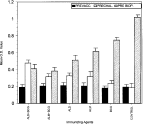
Fig. 1. Anti-leishmanial antibody profile in ALD/ALM vaccinated and unvaccinated control hamsters at pre-vaccination ([squf ]), pre-challenge (□) and pre-biopsy (). The values for the ALD vaccinated animals between pre-vaccination and pre-challenge and between pre-challenge and pre-biopsy are significant at P<0·01; values for the ALM vaccinated group between pre-vaccination and pre-challenge and between pre-challenge and pre-biopsy are significant at P<0·05 and P<0·01 respectively. Values for BCG vaccinated and control groups between pre-challenge and pre-biopsy are significant at P<0·01.
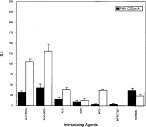
Fig. 2. Lymphoproliferative response to PHA ([squf ]) and Con A (□) each at a dose level of 10 μg/ml in vaccinated and unvaccinated control hamsters challenged with Leishmania donovani.
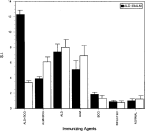
Fig. 3. Lymphoproliferative response to ALD ([squf ]) and ALM (□) each at a dose level of 10 μg/ml in vaccinated and unvaccinated control hamsters challenged with Leishmania donovani.
 You have
Access
- 26
- Cited by