Implications
Alternative flooring solutions have demonstrated positive impacts on welfare and performance of cattle, continue to be a focus of scientific research, and are a developing commercial market within the beef industry. This highlights the need for further research to evaluate the effect of floor type on the performance of beef cattle. The results of this study suggest that the use of different floor types to accommodate growing and finishing beef cattle had no effect on their performance, cleanliness, carcass characteristics or meat quality. Accommodating beef cattle on fully slatted flooring during the growing period had no adverse effects on their performance during the finishing period.
Introduction
Fully slatted flooring is a prevalent housing system used to accommodate growing and finishing beef cattle, particularly during the winter months due to inclement weather conditions. The advantages of fully slatted flooring are that it eliminates the need for a bedding substrate and allows producers to adopt a lower space allowance compared with bedded systems (Scientific Committee on Animal Health and Animal Welfare, 2001). However, their use in beef production has been criticised as they do not lead to good welfare. Key welfare measures indicating that fully slatted flooring is poorer for animal welfare is the higher number of atypical lying down and standing up movements and a greater number of lying down intentions compared with fully slatted flooring covered with rubber and a solid floor covered with straw bedding (Absmanner et al., Reference Absmanner, Rouha-Mülleder, Scharl, Leisch and Troxler2009). Scientific literature has demonstrated welfare benefits associated with slatted flooring with rubber or a solid floor covered with straw for finishing beef cattle compared with fully slatted flooring (Rouha-Muelleder et al., Reference Rouha-Muelleder, Absmanner, Kahrer, Zeiner, Scharl, Leisch, Stanek and Troxler2012; Brscic et al., Reference Brscic, Ricci, Prevedello, Lonardi, De Nardi, Contiero, Gottardo and Cozzi2015b). However, there is conflicting evidence that these floor types also improve performance (Lowe et al., Reference Lowe, Steen, Beattie and Moss2001). Straw availability is also an important aspect which needs to be considered. In particular, regions where the proportion of arable land is low, straw available for bedding beef cattle can be limited, and therefore may not be an economically viable option. Rubber flooring has a higher initial cost than fully slatted flooring. However, Brscic et al. (Reference Brscic, Ricci, Prevedello, Lonardi, De Nardi, Contiero, Gottardo and Cozzi2015b) concluded that rubber flooring is a valid alternative to fully slatted flooring, demonstrated by less inactivity and a higher average daily gain in bulls accommodated on fully slatted flooring covered with rubber compared with fully slatted flooring. Rouha-Muelleder et al. (Reference Rouha-Muelleder, Absmanner, Kahrer, Zeiner, Scharl, Leisch, Stanek and Troxler2012) reported no long-term effects on the welfare or performance of young bulls reared on straw bedding and finished on fully slatted flooring compared with bulls accommodated on fully slatted flooring for the entire experimental period. However, the authors concluded that this housing system is preferable as it reduces the time young bulls spend on fully slatted flooring.
Animal cleanliness is a food safety concern; under the Fresh Meat (Hygiene and Inspection) Regulations for Northern Ireland (1997), all animals presented for slaughter must be clean to reduce the risk of meat contamination. According to Schulze Westerath et al. (Reference Scott and Kelly2007), wetness and soiling of the floor surface influences animal cleanliness, and different lying surfaces can soil in different ways. Therefore, it is important that the current study also includes an assessment of animal cleanliness. Kirkland (Reference Kirkland2003) reported that increasing the time animals are kept indoors increases the dirtiness of cattle. Therefore, by accommodating growing beef cattle on floor types which positively influence animal cleanliness will result in cleaner animals during the finishing period, reducing the risk of meat contamination at slaughter.
Factors which affect the beef-eating quality such as carcass suspension techniques, electrical stimulation, ageing and chilling rate have been extensively studied. However, little is understood of the environmental conditions which may affect meat quality (Dunne et al., Reference Dunne, Rogalski, Moreno, Monahan, French and Moloney2008). According to a European study on attitudes towards animal welfare, 48% of participants stated that the main reason they purchase food products produced in a more welfare-friendly way is that they are better quality, with 34% of participants reporting that they taste better (Eurobarometer, 2007). However, there is limited scientific evidence to suggest that animals produced on floor types which enhance welfare also improve meat quality.
Previous research has suggested that reducing the time animals spend on fully slatted flooring improves animal welfare. However, there is currently limited scientific knowledge on the effect of floor type on growing beef cattle. The objective of the current study was to assess the effect of using a combination of floor types throughout both the growing and finishing period on beef cattle performance, cleanliness, carcass characteristics and meat quality.
Material and methods
Animals and treatments
The study was conducted at the Agri-Food and Biosciences Institute, Hillsborough, Co. Down, Northern Ireland, from October 2015 to May 2016. Before the commencement of the study, bulls were reared on pasture from June 2015 until October 2015, receiving 2-kg concentrates/head per day. During the grazing period, all bulls were managed the same but divided into two groups based on live weight to reduce competition at the trough. All bulls were regularly treated for internal and external parasites 3 weeks after turn-out and every 6 to 8 weeks thereafter. At an average of 8 months of age, bulls were housed at the Agri-Food and Biosciences Institute, Hillsborough, on the 19 October 2015.
The total duration of the experimental period was 204 days. The first 101 days was defined as the growing period, with the remainder of the study defined as the finishing period. In total, 80 dairy origin young bulls (46 pure Holstein, 32 Holstein (bred from Holstein×Swedish Red×Jersey cows) and two Limousin×Holstein) with a mean initial live weight of 224 kg (SD=28.4 kg) and an average age of 246 days (SD=20 days) were divided according to live weight into 20 blocks, each of four animals. Cattle within each block were randomly assigned to one of four treatments and treatments were balanced as far as possible for breed. Treatments included the following: (1) bulls were accommodated on fully slatted flooring throughout the entire experimental period (CS); (2) bulls were accommodated on fully slatted flooring covered with rubber strips (Comfort Slat Mat, Irish Custom Extruders Ltd, Dublin, Ireland) for the entire experimental period (RS); (3) bulls were accommodated on fully slatted flooring during the growing period and moved to a solid floor covered with straw bedding during the finishing period (CS-S); (4) bulls were accommodated on fully slatted flooring during the growing period and moved to fully slatted flooring covered with rubber strips during the finishing period (CS-RS). All bulls were slaughtered before they reached 16 months of age in three groups, balanced for age and treatment. Mean age of bulls at slaughter on CS was 459 days, 456 days on RS, 454 days on CS-S and 461 days on CS-RS. In treatment one, two bulls from separate pens were removed from the study on days 175 and 196 due to injuries. Due to the nature of finishing bulls, we were unable to replace these animals to maintain the space allowance within the pens. In treatment three, one bull was removed from the study due to peritonitis observed at slaughter.
Experimental pens
The dimensions of the experimental pens were 3.4×2.7 m for fully slatted and rubber flooring treatments, and 3.6×4.9 m for pens with a solid floor covered with straw bedding. The fully slatted flooring was made of concrete and the individual slats measured 12.5 cm wide with a 4 cm void between them, thus giving a drainage area of 24% of the total area. The rubber strips were placed over each individual slat securely fixed into place using the designed grips at both sides. The drainage area was reduced to 18% (13.5-cm wide and 3-cm void area) of the total area in the fully slatted flooring covered with rubber strips pens. Animals were housed in pens of four, and remained in these social groups for the entire experimental period. The space allowance for bulls accommodated on fully slatted flooring and fully slatted flooring covered with rubber strips was 2.3 m2/animal, and 4.4 m2/animal for those accommodated on a solid floor covered with straw bedding. These space allowances are in line with the recommendations of the Farm Quality Assurance Scheme (2014) for Northern Ireland based on a 500 kg animal. Bulls accommodated on a solid floor were regularly bedded using unchopped barley straw to maintain a clean and dry lying surface. An experienced stockman carried out a subjective assessment of the need for replenishment on a daily basis. Straw was replenished on average every 2.5 days at an average rate of 6.12 kg/animal per day, and completely cleaned out twice during the finishing period. During the growing period all bulls were housed in pens within the one building. Bulls accommodated on CS, RS and CS-RS remained in the same building during the finishing period, whereas bulls accommodated on CS-S were relocated to solid floor pens in a separate building due to flooring availability. However, they remained in the same social groups throughout the study.
Experimental diet and feed intakes
Bulls were fed once daily and two diets were provided during the study; bulls were offered ad libitum grass silage supplemented with concentrates during the growing period and concentrates supplemented with ad libitum chopped barley straw during the finishing period. All bulls were initially supplemented with 2.0 kg concentrates/head per day, which was increased by 0.5 kg at the beginning of each week until intake reached ad libitum. Concentrates were placed on top of the grass silage during the growing period following feeding; during the finishing period concentrates were fed in plastic boxes capable of holding 65 kg and placed at the front of the feed barrier outside of the pen. To ensure feed was offered ad libitum grass silage and chopped barley straw was offered to allow a 10% refusal each day. Grass silage refusals were recorded and removed twice per week during the growing period. Chopped barley straw refusals were recorded and removed once per week during the finishing period. Once ad libitum concentrate intake had been achieved, the amount of concentrates offered daily was based on the previous day’s intake plus an additional 10%. During the finishing period, refused concentrates were recorded and removed at the beginning of each week. Feed intakes were measured on a per pen basis, assuming that each bull within a group consumed an equal proportion of the feed. The quantities of feed offered were recorded daily throughout the experiment. During the growing period grass silage feed samples were collected daily and refused feed samples collected twice per week. During the finishing period straw feed samples were also collected daily and refused material weekly. Grass silage and straw samples were dried at 80°C for 24 h to determine dry matter (DM). Concentrate samples were collected daily and bulked fortnightly, then dried at 60°C for 36 h to determine DM. Straw bedding samples were also collected weekly during the finishing period and dried at 80°C for 24 h to determine DM. All dried feed and straw bedding samples were analysed for ash, gross energy, ADF and NDF as described by Little et al. (Reference Little, O’Connell, Welsh, Barley, Meade and Ferris2016).
Live weight and back fat
All bulls were weighed on 2 consecutive days before allocation to treatment (days −5 and −6), and at the end of the growing (days 100 and 101) and finishing period (days 203 and 204) to obtained average initial and final live weights due to variations in gut fill. All bulls were also weighed every 14 days during the growing and finishing periods. The mean live weight of the bulls at the end of the growing period also provided the initial live weight of the bulls entering the finishing period. All bulls were ultrasonically scanned (SonoScape AV6 Veterinary Ultrasound Scanner with a Convex Probe 5 to 9 MHz, SonoScape UK, Liverpool, United Kingdom) for back fat depth monthly during the growing period, and fortnightly during the finishing period alongside weighing. One back fat depth image was taken from each bull on the right side. Each bull was restrained using a head crush and the probe placed at the last rib by palpitation along the 3rd lumber vertebra at 90° to the backbone. A contacting agent (soya oil) was used to ensure a good contact between the skin and probe. Three back fat depth measurements were taken from the scanned image at the median, first and third quartiles of the back fat image. These were averaged for each bull. Back fat gain was calculated by subtracting the initial back fat depth from the final back fat depth for both the growing and finishing periods.
Animal cleanliness
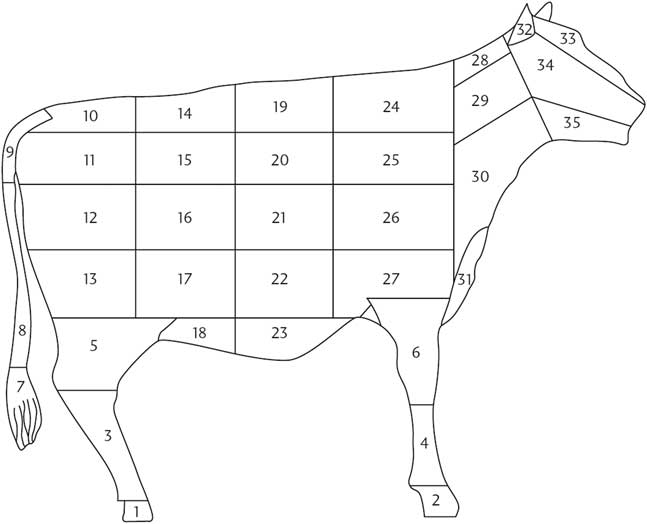
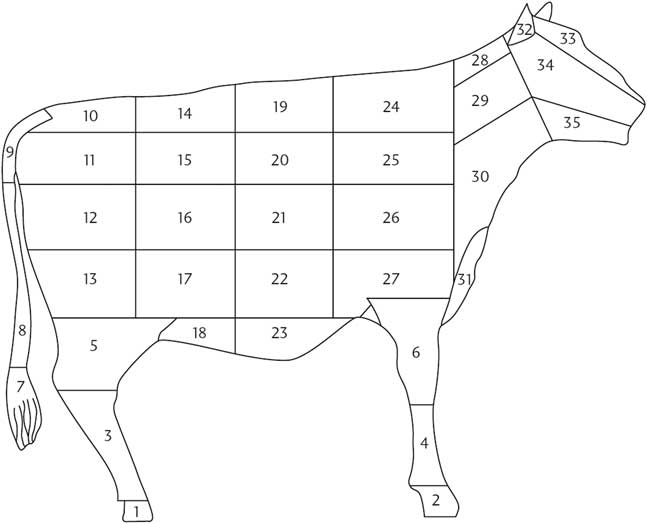
Bulls were scored for cleanliness on days 5, 50, 101, 151 and 197 following morning feeding, according to the scoring system reported by Scott and Kelly (Reference Tessitore, Brscic, Boukha, Prevedello and Cozzi1989). Each bull was divided into 70 sections, 35 sections on each side, and each section was scored from 0 (clean) to 3 (very dirty) (Figure 1). A score of 0 represented no manure on the coat, 1 represented small areas of manure on the coat but mainly clean, 2 represented manure on the coat but the hair was still visible, and 3 represented a section completely covered in manure and no hair was visible. The scores were then summed for each section giving an overall cleanliness score for each bull. Two observers scored the cattle and preliminary scoring was carried out to verify the repeatability of the results. The repeatability score was 4.65 (British Standards Institution, 1975).
Sections of one side of an animal used to score cleanliness (Scott and Kelly, Reference Tessitore, Brscic, Boukha, Prevedello and Cozzi1989). Each bull was divided into 70 sections, 35 sections on each side, and each section was scored from 0 (clean) to 3 (very dirty).
Carcass measurements and instrumental meat quality
Conformation and fat scores were mechanically graded for all carcases on a continuous 15-point scale according to the EU beef carcass classification scheme, with 15 representing the highest conformation score (E+) and highest fat score (5+), and one representing the lowest conformation score (P−) and leanest fat score (1−). Cold carcass weight was measured after slaughter. Channel, cod and kidney fat was removed from both sides of the carcass by two trained processors at the abattoir and the combined weight recorded. Abscesses and discolouration of the liver was scored using a five-point scale devised by Marsh (Reference Marsh2013) immediately following slaughter. On the day following slaughter, each side of each carcass was divided between the 9th and 10th ribs and the l. dorsi was scored for marbling according to the Meat Standards Australia scoring system (Meat and Livestock Australia (MLA), 2011) and the average taken across both sides. The depth of the subcutaneous fat surrounding the l. dorsi was measured at the median, first and third quartiles using a digital calliper, with the average taken as the subcutaneous fat depth. Colour and pH assessments were carried out using a 2.5 cm sample taken from the inside of the l. dorsi within 1 week following slaughter. The pH was measured at the centre of the muscle using a pH probe (Lonode IJ44c; Lonode Pty Ltd, Queensland, Australia) connected to a pH meter (Jenway 370; Cole Parmer, Staffordshire, UK) fitted with a temperature probe. Colour was measured on the l. dorsi surface, allowing 45 min for the meat to fully bloom, using a Konica Minolta Colorimeter (CR-410; Konica Minolta Sensing Europe B. V., Warrington, UK) and reported as L* (lightness), a* (redness), b* (yellowness) values. The meter illuminant was set to daylight (D65) and light source was a pulsed xenon lamp using a 2° observer angle set. Warner–Bratzler shear force (WBSF) and cooking loss of the l. dorsi were determined according to the method described by Dawson (Reference Dawson2012) on day 7 following slaughter. Further assessments of WBSF and cooking loss were carried out on day 14 following slaughter.
Statistical analysis
All analysis was carried out using Genstat release 18 statistical package (Payne et al., Reference Payne, Harding, Murray, Soutar, Baird, Glaser, Channing, Welham, Gilmour, Thompson and Webster2015). Animals removed from the study were not included in the analysis. Feed intake, daily live weight gain (DLWG), back fat and cleanliness data were analysed with linear mixed model methodology using REML estimation with pen as a random effect and treatment as a fixed effect in all analyses. In addition start weight was used as an additional fixed effect in the live weight analyses. Pairwise differences between treatment means were assessed using Fisher’s LSD test. Carcass characteristics and meat quality data were also analysed using linear mixed model methodology with treatment as a fixed effect and kill date as a random effect. Conformation scores, fat scores and liver scores were analysed using a permutation test to calculate the significance probability for a χ 2 test of the independence of rows and columns in a two-dimensional contingency table.
Results
Feed intake
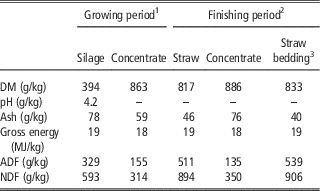
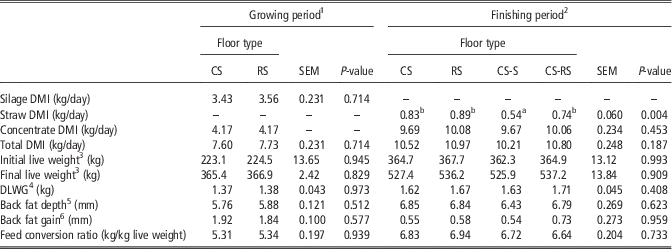
The chemical composition of the feed offered and straw bedding are given in Table 1. There was no significant effect of floor type on concentrate dry matter intake (DMI) (kg/day) or total DMI (kg/day) during the growing and finishing period (Table 2). During the growing period there was also no significant effect of floor type on silage DMI (kg/day). Bulls accommodated on CS-S had a significantly lower straw DMI (kg/day) compared with those accommodated on any other floor type (Table 2).
Composition of feed offered to dairy origin bulls during the growing and finishing periods

DM=dry matter.
1 Growing period: days 0 to 101 of the experiment.
2 Finishing period: days 101 to 204 of the experiment.
3 Only bulls on treatment 3 were accommodated on straw bedding as part of the experimental design.
The effect of floor type on feed intake and performance of dairy origin bulls

DMI=dry matter intake; CS=fully slatted flooring throughout the entire experimental period; RS=fully slatted flooring covered with rubber strips for the entire experimental period; CS-S=fully slatted flooring during the growing period and moved to a solid floor covered with straw bedding during the finishing period; CS-RS=fully slatted flooring during the growing period and moved to fully slatted flooring covered with rubber strips during the finishing period.
a,bMeans on the same row with the same superscript do not differ significantly (P>0.05).
1 Growing period: days 0 to 101 of the experiment.
2 Finishing period: days 101 to 204 of the experiment.
3 Live weights were collected at the start and end of both the growing and finishing periods.
4 DLWG=daily live weight gain, bulls were weighed every 14 days during the growing and finishing periods.
5 Bulls were ultrasonically scanned for back fat depth monthly during the growing period and every 14 days during the finishing period.
6 Back fat gain was calculated by subtracting the initial back fat depth from the final back fat depth for both the growing and finishing periods.
Growth performance, back fat and feed conversion ratio
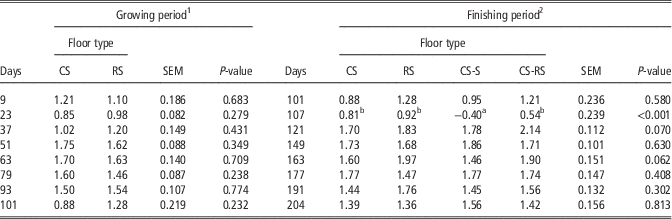
Floor type had no significant effect on the DLWG, back fat or feed conversion ratio of the bulls during the growing and finishing period (Table 2). There was, however, a negative significant effect of floor type on DLWG from days 101 to 107 in bulls accommodated on CS-S, following the transition from the growing to the finishing period (Table 3).
The effect of floor type daily live weight gain (DLWG) of dairy origin bulls during the growing and finishing periods

CS=fully slatted flooring throughout the entire experimental period; RS=fully slatted flooring covered with rubber strips for the entire experimental period; CS-S=fully slatted flooring during the growing period and moved to a solid floor covered with straw bedding during the finishing period; CS-RS=fully slatted flooring during the growing period and moved to fully slatted flooring covered with rubber strips during the finishing period.
a,bMeans on the same row with the same superscript do not differ significantly (P>0.05).
1 Growing period: days 0 to 101 of the experiment.
2 Finishing period: days 101 to 204 of the experiment.
Animal cleanliness
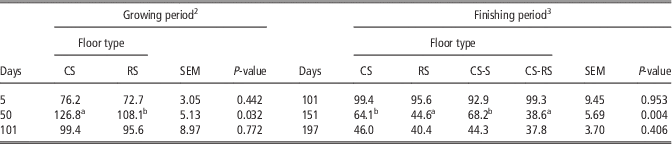
The cleanliness of the bulls did not differ at the beginning of the experimental period. Bulls accommodated on CS were significantly dirtier than those accommodated on RS on day 50 during the growing period (P<0.05). During the finishing period, bulls accommodated on CS and CS-S were significantly dirtier than those accommodated on RS and CS-RS (P<0.01). However, by the end of the growing and finishing period, there was no significant effect of floor type on the cleanliness of the bulls (Table 4).
The effect of floor type on the cleanliness scoresFootnote 1 of dairy origin bulls during the growing and finishing periods

CS=fully slatted flooring throughout the entire experimental period; RS=fully slatted flooring covered with rubber strips for the entire experimental period; CS-S=fully slatted flooring during the growing period and moved to a solid floor covered with straw bedding during the finishing period; CS-RS=fully slatted flooring during the growing period and moved to fully slatted flooring covered with rubber strips during the finishing period.
a,bMeans on the same row with the same superscript do not differ significantly (P>0.05).
1 Bulls were cleanliness scored according to the method reported by Scott and Kelly (Reference Tessitore, Brscic, Boukha, Prevedello and Cozzi1989).
2 Growing period: days 0 to 101 of the experiment.
3 Finishing period: days 101 to 204 of the experiment.
Carcass measurements and meat quality
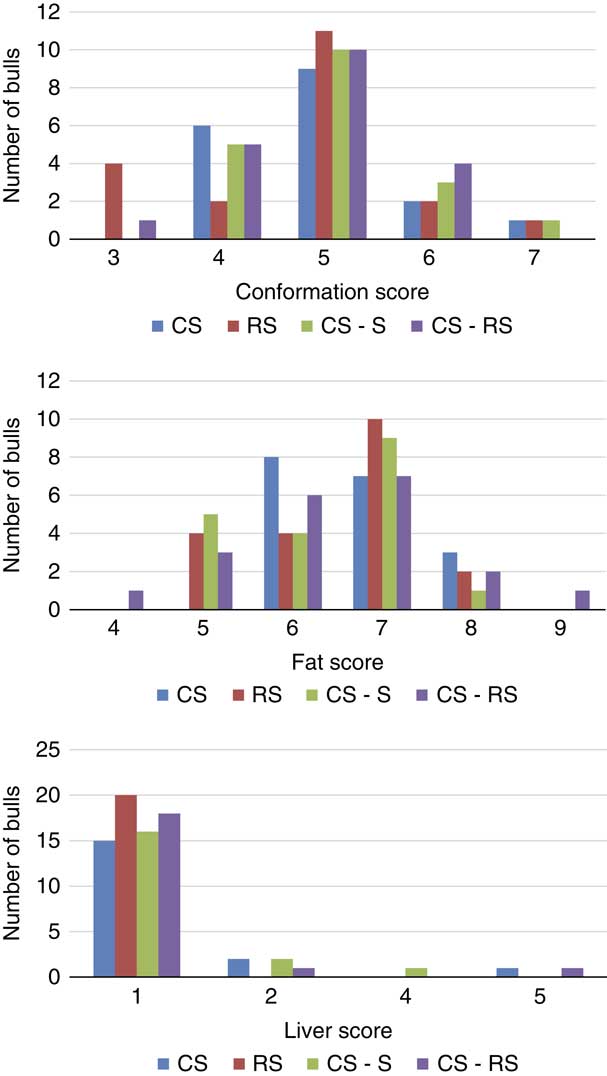
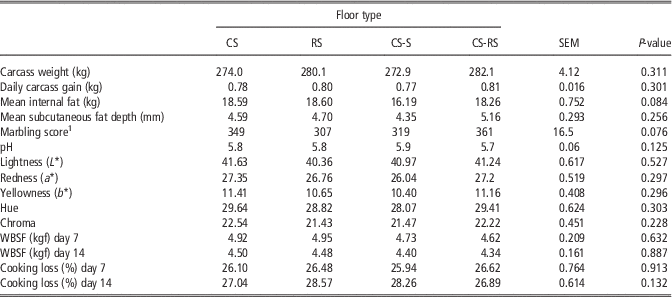
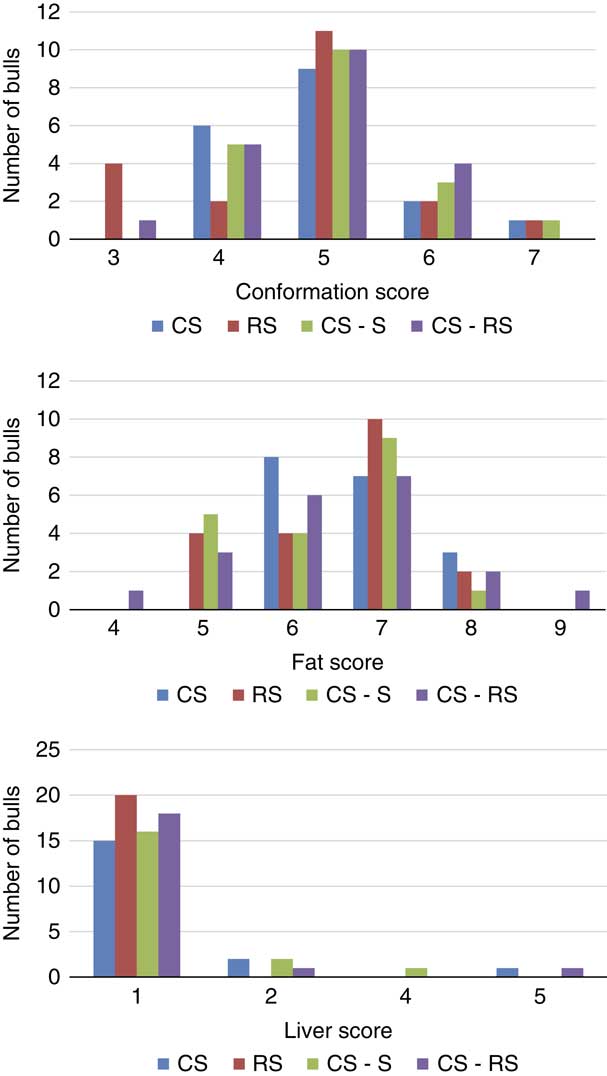
Floor type had no significant effect on carcass characteristics or meat quality of the bulls (Table 5). However, there was a tendency for bulls accommodated on CS-S to have a lower mean internal fat (channel, cod and kidney fat) compared to those accommodated on CS, RS and CS-RS (Table 5). There was no association between conformation, fat or liver score and floor type (Figure 2).
The association between floor type and conformation, fat and liver score. CS=fully slatted flooring throughout the entire experimental period; RS=fully slatted flooring covered with rubber strips for the entire experimental period; CS-S=fully slatted flooring during the growing period and moved to a solid floor covered with straw bedding during the finishing period; CS-RS=fully slatted flooring during the growing period and moved to fully slatted flooring covered with rubber strips during the finishing period.
The effect of floor type on carcass characteristics and meat quality of dairy origin bulls

CS=fully slatted flooring throughout the entire experimental period; RS=fully slatted flooring covered with rubber strips for the entire experimental period; CS-S=fully slatted flooring during the growing period and moved to a solid floor covered with straw bedding during the finishing period; CS-RS=fully slatted flooring during the growing period and moved to fully slatted flooring covered with rubber strips during the finishing period; WBSF=Warner–Bratzler shear force.
1 Meat Standards Australia marbling score range from 100 to 1190 in increments of 10.
Discussion
The use of different floor types to accommodate growing and finishing beef cattle had no effect on feed intake or feed efficiency, which is in line with the findings of previous studies (Lowe et al., Reference Lowe, Steen, Beattie and Moss2001; Cozzi et al., Reference Cozzi, Tessitore, Contiero, Ricci, Gottardo and Brscic2013; Keane et al., Reference Keane, McGee, O’Riordan, Kelly and Earley2015). The lower straw DMI observed in bulls accommodated on CS-S is likely to be the result of the bulls eating the straw present in their floor type treatment. As shown in Table 1, the chemical composition of the straw bedding was similar to the chopped straw used for feeding.
In agreement with the findings of Lowe et al. (Reference Lowe, Steen, Beattie and Moss2001) and Dunne et al. (Reference Dunne, Rogalski, Moreno, Monahan, French and Moloney2008), there was no effect of floor type on the performance of beef cattle. The differences observed between concrete slats and rubber flooring in previous studies (Graunke et al., Reference Graunke, Telezhenko, Hessle, Bergsten and Loberg2011; Cozzi et al., Reference Cozzi, Tessitore, Contiero, Ricci, Gottardo and Brscic2013) may be explained by the different designs of rubber flooring available, thus making it difficult to make comparisons with the current study. The differences observed between the present study and Graunke et al. (Reference Graunke, Telezhenko, Hessle, Bergsten and Loberg2011) may be explained by the pre-experimental design; bulls were accommodated on straw bedding for 14 weeks before the commencement of Graunke et al. (Reference Graunke, Telezhenko, Hessle, Bergsten and Loberg2011) study compared with a summer at pasture in the present study. In a review, Ingvartsen and Andersen (Reference Ingvartsen and Andersen1993) reported that accommodating cattle on slatted floors at a space allowance of 1.5 m2/animal compared with 4.7 m2/animal reduced performance, likely as a result of stress. However, space allowances used in the present study were not reduced to the lower value reported by Ingvartsen and Andersen (Reference Ingvartsen and Andersen1993). Similarly, Gupta et al. (Reference Gupta, Early and Crowe2007) reported an increase in plasma cortisol concentrations and reduced performance in bulls accommodated on slatted flooring at a space allowance of 1.2 m2/animal. However, Gupta et al. (Reference Gupta, Early and Crowe2007) also reported that accommodating bulls on slatted flooring at a space allowance of 2.7 m2/animal and 4.2 m2/animal had no effect on plasma cortisol concentrations, potentially indicating that bulls in the present study were not sufficiently stressed to affect performance as a result of space allowance. Significant differences observed on DLWG between fully slatted flooring, rubber flooring and straw bedding may be explained by larger group sizes in previous studies (Rouha-Muelleder et al., Reference Rouha-Muelleder, Absmanner, Kahrer, Zeiner, Scharl, Leisch, Stanek and Troxler2012; Brscic et al., Reference Brscic, Ricci, Prevedello, Lonardi, De Nardi, Contiero, Gottardo and Cozzi2015b). In a review, Estevez et al. (Reference Estevez, Anderson and Naevdal2007) reported that larger group sizes reduces conflict and aggression. Previous studies (Brscic et al., Reference Brscic, Ricci, Prevedello, Lonardi, De Nardi, Contiero, Gottardo and Cozzi2015b; Keane et al., Reference Keane, McGee, O’Riordan, Kelly and Earley2015) have also used continental breeds as opposed to the full dairy bred cattle used in the present study. Continental beef cattle have a greater biological potential to achieve higher live weights, which may also be associated with significant differences observed on DLWG between floor types in previous studies (Rouha-Muelleder et al., Reference Rouha-Muelleder, Absmanner, Kahrer, Zeiner, Scharl, Leisch, Stanek and Troxler2012; Cozzi et al., Reference Cozzi, Tessitore, Contiero, Ricci, Gottardo and Brscic2013). The effect of floor type on the performance of beef cattle is therefore influenced by many factors and requires further investigation. The negative effect of floor type following the transition from the growing to the finishing period in the DLWG of the bulls accommodated on CS-S was unexpected. This result may indicate that bulls were stressed due to being relocated to a different building. However, although bulls in neighbouring pens were different, bulls were relocated within the same social groups which should have alleviated some stress (Færevik et al., Reference Færevik, Jensen and Bøe2006). Another potential explanation for reduced performance may be housing design, such as ventilation and roof slope. However, it is unlikely that the design of the building impacted performance as there was no long-term negative effect on DLWG.
Previous studies have reported contradictory results regarding the cleanliness of beef cattle accommodated on different floor types. Brscic et al. (Reference Brscic, Ricci, Prevedello, Lonardi, De Nardi, Contiero, Gottardo and Cozzi2015b) reported cleaner animals accommodated on concrete slats compared with rubber slats. Graunke et al. (Reference Graunke, Telezhenko, Hessle, Bergsten and Loberg2011) concluded that the differences observed between the cleanliness of cattle accommodated on concrete slats and rubber flooring is the result of differences in drainage area. However, in agreement with Keane et al. (Reference Keane, McGee, O’Riordan, Kelly and Earley2015), cattle accommodated on concrete slats in the present study were significantly dirtier than those accommodated on rubber flooring, despite a greater drainage area (24% and 18% for concrete slats and rubber flooring, respectively). One potential explanation may be that the rubber strips were angled upwards, which improved drainage and prevented the accumulation of dirt on the floor surface and positively influenced animal cleanliness. Lowe et al. (Reference Lowe, Steen, Beattie and Moss2001) reported cleaner animals accommodated on rubber strips compared with those accommodated on rubber mats. Although the rubber strips had a greater drainage area (19% v. 13%, respectively), the authors observed the grooves in rubber mats, designed to reduce slipping, collected faeces and exacerbated dirtiness. These results indicated that the design of rubber flooring may have a greater influence on the cleanliness of beef cattle than drainage area. According to Gygax et al. (Reference Gygax, Siegwart and Wechsler2007), the cleanliness of cattle is positively influenced by increasing space allowance. However, in the present study, bulls accommodated on straw bedding were significantly dirtier than those accommodated on rubber strips on day 151 despite a greater space allowance (4.4 and 2.3 m2, respectively). This is in agreement with the findings of Gottardo et al. (Reference Gottardo, Ricci, Fregolent, Ravarotto and Cozzi2003), who reported that animals accommodated on straw bedding did not necessarily produce cleaner animals. Brscic et al. (Reference Brscic, Gottardo, Tessitore, Guzzo, Ricci and Cozzi2015a) reported that in a study involving bulls, the animals that were accommodated on straw bedding were significantly dirtier than those accommodated on concrete slats. The authors concluded that this finding was the result of inadequate straw bedding management (~1.5 kg/animal per day). However, in the present study, straw bedding was replenished at a rate of 6.12 kg/animal per day, which is in line with 6 kg/animal per day, as suggested by Daelemans and Maton (Reference Daelemans and Maton1987). Despite sufficient bedding, straw bedded pens were becoming increasingly wetter before the bedding had to be completely cleaned out and renewed. This may explain why bulls accommodated on CS-S were significantly dirtier than those accommodated on RS and CS-RS on day 151. Therefore, the cleanliness of bulls accommodated on straw bedding requires both adequate litter management and routine renewal (Tessitore et al., Reference Schulze Westerath, Gygax, Mayer and Wechsler2009). Although there were significant differences in the cleanliness of bulls during the growing and finishing period, no differences were observed before slaughter. This is consistent with the findings of Lowe et al. (Reference Lowe, Steen, Beattie and Moss2001) and Keane et al. (Reference Keane, McGee, O’Riordan, Kelly and Earley2015) who reported no effect of floor type on the cleanliness of beef cattle before slaughter. Scott and Kelly (Reference Tessitore, Brscic, Boukha, Prevedello and Cozzi1989) reported that animals become dirtier in wetter weather regardless of floor type. Therefore, the increase in dirtiness observed in bulls on day 50 may be explained by a higher rainfall (mean rainfall for November was 120.8 mm and 186.1 mm for December (Met Office, 2016)). However, bulls accommodated on RS were significantly cleaner, suggesting that floor type can influence animal cleanliness in wetter conditions. Kirkland (Reference Kirkland2003) reported that cattle dirtiness increases with the length of time cattle are housed. However, during the finishing period, overall bull cleanliness improved across all treatments, possibly as a result of the bulls shedding their winter coat nearer to spring as suggested by Scott and Kelly (Reference Tessitore, Brscic, Boukha, Prevedello and Cozzi1989). An animal with a shorter coat improves cleanliness as there is less hair for the dirt to cling on to (Scott and Kelly, Reference Tessitore, Brscic, Boukha, Prevedello and Cozzi1989). Another potential explanation for improved cleanliness is diet; the higher DM of the chopped straw compared with the grass silage (Table 1), potentially changed the faeces to a drier and thicker consistency, making it more difficult to cling to the animal’s coat.
Scientific literature has demonstrated welfare benefits associated with covering fully slatted flooring with rubber or a solid floor covered with straw for finishing beef cattle compared with fully slatted flooring (Rouha-Muelleder et al., Reference Rouha-Muelleder, Absmanner, Kahrer, Zeiner, Scharl, Leisch, Stanek and Troxler2012; Brscic et al., Reference Brscic, Ricci, Prevedello, Lonardi, De Nardi, Contiero, Gottardo and Cozzi2015b). However, the public perception that animals produced in a more welfare-friendly way improves meat quality (Eurobarometer, 2007), was not observed in the present study, confirming the findings of Lowe et al. (Reference Lowe, Steen, Beattie and Moss2001). Overall, the pH of the l. dorsi was higher in the present study compared with those reported in previous studies (Brugiapaglia and Destefanis, Reference Brugiapaglia and Destefanis2012; Moran et al., Reference Moran, O’Sullivan, Kerry, Picard, McGee, O’Riordan and Moloney2017) and Kirkland and Keady (Reference Kirkland and Keady2006) involving full dairy bred bulls. However, there was no evidence to suggest that bulls were stressed as a result of floor type to adversely affect meat quality. Therefore, the higher pH observed in the current study is likely the result of many other stressors experienced by bulls at the abattoir or during transportation, such as mixing with cattle from other social groups, transport distance, stocking density and weather. In a review, Ingvartsen and Andersen (Reference Ingvartsen and Andersen1993) reported that loose housed cattle fed high levels of concentrates are more at risk of liver abscesses. However, in the present study, overall liver scores were low, and may be the result of the slow gradual increase in concentrate levels (0.5 kg/week). In the present study, bulls accommodated on CS-S had a tendency for less channel, cod and kidney fat compared with those accommodated on CS, RS and CS-RS. Absmanner et al. (Reference Absmanner, Rouha-Mülleder, Scharl, Leisch and Troxler2009) reported a lower number of lying and short-standing bouts in bulls accommodated on slatted flooring compared with straw bedding and rubber mats. Therefore, the tendency for leaner bulls accommodated on CS-S may be due to increased exercise. Indeed, Dunne et al. (Reference Dunne, O’Mara, Monahan, French and Moloney2005) reported in a study evaluating the effect of exercise on the muscle colour of steers, that despite feeding animals the same diet, exercise increased energy expenditure, resulting in decreased fatness.
In conclusion, the results of this study demonstrated that floor type had no effect on the performance of growing and finishing beef cattle. In addition, accommodating beef cattle on concrete slats during the growing period had no detrimental impact on their performance during the finishing period. The negative effect of relocating beef cattle on their performance to another building suitable for straw bedding suggests a level of stress. However, further measures are needed to measure stress, such as cortisol concentrations. Although bulls accommodated on rubber strips were cleaner during the study, there was no effect of floor type at the end of the growing and finishing period. There was also no evidence to suggest that bulls accommodated on different floor types during the finishing period were stressed to adversely affect meat quality. Bulls accommodated on straw bedding tended to be leaner than those accommodated on any other floor type suggesting bulls were more active.
Acknowledgements
This research project was funded by the Department of Agriculture, Environment and Rural Affairs in Northern Ireland. The authors would also like to greatly acknowledge the Agri-Food and Biosciences Institute Sustainable Beef Unit staff.