


I. INTRODUCTION
Between 1909 and 1917, in various articles and essays, Gustavo Del Vecchio (1883–1972)Footnote 1 proposed a theory of circulation that has been considered one of the first attempts to integrate money into the Walrasian general equilibrium framework.Footnote 2 His early writings, in which he set out his thought on the utility and value of money, credit, the discount rate, banking, and international payments were, in chronological order: Principii della teoria economica della moneta (1909), Il capitale disponibile e la circolazione del capitale (1911), La teoria economica del credito (1913), Sulla teoria economica delle crisi (1914), Teorie dello sconto (1914), Lineamenti generali della teoria dell’interesse (1915), and Questioni fondamentali sul valore della moneta (1917).
Reading all these articles together—which Del Vecchio (henceforth DV) considered to form a unitary work on the topic of money—may be assisted by some methodological notes on his overall approach to economics. First, each article combined theoretical features, such as the utility and value of money, with applied aspects such as the discount rate, the interest rate, and credit, given that DV considered applied economics as providing ‘proof’ concerning the realism of more abstract theories.Footnote 3 Second, DV anchored his theories to the international debate on the topic. He examined the most-debated proposals, comparing them with his own views. In this case, too, DV’s criticism of other theories enabled him to clarify his ideas. DV did not merely cite his predecessors and contemporaries: he presented their theories and discussed them. He did so with Léon Walras, Albert Aupetit, Eugen von Böhm-Bawerk, Carl Menger, Irving Fisher, Ludwig von Mises, Friedrich von Wieser, John Bates Clark, Joseph A. Schumpeter, Gustav Cassel, Alfred Marshall, Georg F. Knapp, and Knut Wicksell, to mention only some of the authors writing on monetary topics whom he considered. Third, it should be noted that DV often made use of a rhetorical device whereby he expounded statements or theories that he then subjected to thorough analysis. This procedure enabled him to reach conclusions that did not seem definitive, in the sense that the hypotheses were not completely rejected or accepted. However, this was typical of DV’s approach, whose main objective was not to reach the “absolute truth” but rather to show the complexity of any issue pertaining to the economic world.
In short, DV built a theory of money as a medium of exchange where organizational and social aspects were investigated in depth, first by means of a conventional static investigation and then by adopting a dynamic perspective.Footnote 4 DV believed that money, credit, accumulation, and crisis could no longer be theorized with time omitted, and this induced him to formulate dynamic statements that put forward claims about money as a store of value. The organizational and social dimensions of money, time, and uncertainty were all important and interconnected aspects in his scientific inquiry, for they all sprang from his conceptualization of money as a medium of exchange.
There is a further recommendation that should be followed if DV’s proposals are to be thoroughly understood: consider him to be a disciple of neither Léon Walras nor Vilfredo Pareto. DV’s monetary analysis, particularly when he introduced uncertainty and time, made him a forerunner of topics subsequently made famous by Frank Knight, the Austrian School, and others. Even if these topics induce us to single out in DV’s works a connection between the Walrasian approach and the Austrian method,Footnote 5 he was an original thinker whose ideas to date have not been sufficiently well known.
The history of economic thought places DV among Walras’ followers. In particular, it considers him to be one of the scholars who first tried to develop Walras’ monetary services approach (Schumpeter Reference Schumpeter1954, p. 1082; Marget Reference Marget1932a and 1935).Footnote 6 In pursuit of this objective, DV addressed the long-standing problem of establishing the causal connection between the utility and value of money without dissipating it. In fact, he was able to circumvent the problem by shifting from a static monetary theory to a dynamic one. This shift enabled DV to refine his most important contribution to the monetary debate during the early years of the last century: that is, introducing the problem of a monetary theory involving uncertainty into the debate.Footnote 7
The originality of DV’s approach also makes it necessary to provide a brief introductory overview of his notion of economic science. This overview is furnished in section II, where DV’s conception of economics as a science of social organization is outlined. The subsequent sections are devoted to monetary topics, although organizational aspects continuously reappear. Specifically, section III clarifies DV’s position on quantity theory. Section IV develops his notions of monetary utility from both the individual and social viewpoints. Section V is centered on the role of the rate of interest in both static and dynamic conditions, a crucial step towards full understanding of DV’s overall theory of circulation. Section VI describes his insights into time and uncertainty. Section VII singles out DV’s main statements about monetary services. Section VIII makes some concluding remarks.
II. ECONOMICS AS THE SCIENCE OF SOCIAL ORGANIZATION
When we look at the spread of economic theory in Italy, DV’s works represent a point of junction, if not synthesis, between the late nineteenth-century evolutionary approach, which, in its turn, was the result of classical, organic, and historical theories, and the equilibrium perspective mainly derived from Walras and Pareto’s theoretical frameworks.
DV was persuaded that an absolute knowledge of the “economic facts” could emerge only from the contiguity between theory and history. Consequently, all his economic theories in both pure and applied economics made recourse to both static and dynamic methods. The complementarity between universal and relative schemes was, therefore, a constant feature of his works, although he never confounded theoretical and historical methods, so that each treatment was always clearly recognizable.
The distinctiveness of DV’s approach derived from the fact that he viewed economic theory as a “theory of self-interest relationships among human actions” (1915, p. 316), but directed attention more to relative than absolute magnitudes, more to titles than physical quantities. Indeed, in DV’s perspective, economics was nothing more than the discipline that analyzes human beings in their relationships concerning goods and with goods: “there are not things but economic relations” ([1932] 1967, p. 9, fn). He was more interested in the relationships springing from wealth than in wealth itself.
The notion of “economic relationship” gives a touch of originality to DV’s theory vis-à-vis traditional economic schools of thought. While this attention paid to relative magnitudes and to entitlements was clearly indicative of the widespread advent of “pragmatism” in Italy during the first decades of the century (Faucci Reference Faucci and Becattini1990, p. 200), the origins of this concept lay in organicism and recalled the German economic-law school of the mid-nineteenth century.Footnote 8 That the latter was well known to DV is shown by his early essay Beni immateriali e capitali immateriali (1908).Footnote 9
An immediate consequence was that DV could not strictly adhere to the theory of commodity-based money and assert a direct utility of money as a commodity. Nor could equating the utility of money with the utility of goods purchased fully satisfy him. The focus, he argued, had be trained on entitlement and, more generally, on the economic relationships springing from money. Once economics was based on relationships, it would inevitably have to place organizational and subjective features at its center. Never, as in this case, is money more a relational good than a commodity.
If we postulate that economics “studies certain processes instead of making the inventory of wealth” (1908, p. 235), we can understand DV’s interest in the processes by which markets and enterprises are organized, and in social competition. Hence, DV’s monetary theory must be examined in light of his assumption that economics is a science of economic organization,Footnote 10 where the latter is defined “[a]s the less visible side, but also the side that is nearest to political economy, since organization, in the strict sense of the word, is the main object of economic theory” (1933, p. 45).
Therefore, because “organization is essentially a dynamic economic aspect” (1908, p. 268), the task of economics is to investigate market transformations in light of economic dynamics. Although the next two sections focus on monetary features, they confirm that DV’s view of monetary functions must be interpreted according to the attention that he paid to their organizational features.
III. MONEY AS AN ORGANIZATIONAL TECHNOLOGY
From the first pages of the Principii della teoria economica della moneta (1909), DV’s best-known article on monetary topics, he reaffirmed his adherence to the neoclassical principle that money performs a unique function as a medium of exchange:
Money … is money if it deserves to be exchanged, only during the exchange is it useful, and even if we can affirm that it is useful since it has value … certainly it is useful when it is exchanged; in less abstract terms, we can say that its utility coincides with its exchangeability (1909, p. 509).
The stress on ‘exchangeability’ did not contrast with DV’s above-mentioned idea of ‘money as a relation’ backed by transactions. On the contrary, the weight that DV attributed to ‘relations’ requires us to put ‘exchangeability’ at the center of his monetary theory and therefore to conceive DV’s money, first of all, as a technology of exchange,Footnote 11 which raises questions about the organization of the productive and consumption economy.
DV’s discourse started from his criticism/rejection of the neoclassical dogma par excellence: the quantity theory. From the outset, he detached himself from such a broadly accepted theory (1909, p. 258), introducing new concepts in order to confute the explanatory power of the quantity theory. In particular, he replaced the velocity of circulation of money with the effectiveness of money, E (1909, p. 261), a notion expressing the relation between the quantity of goods exchanged and the quantity of money, which DV suggested was equal to the reciprocal of the velocity of circulation of money (1909, p. 263)
This was not only a terminological adjustment, because by means of the effectiveness of money DV pointed out that the velocity of money could not be treated as a constant, as in mainstream thought, because it changed according to the type of economic organization and to individual behaviors. DV reiterated this point in 1925, when he underlined his refusal to apply average values to the quantity theory. He argued that magnitudes such as velocity of circulation of money and mass of money could not be assumed as averages, owing to their changeability according to the development of the country or the region. In his words:
We must replace our considerations on one mass of commodities, one mass of money and one level of price, etc., with many heterogeneous masses of commodities, many heterogeneous masses of money and many levels of prices.… We must obtain a scheme more complex than that given by the quantity theory of money ([1925] 1967, p. 314).
Briefly, he historicized the quantity theory, and consequently the demand for money, by making them depend on the behavior of the social or productive groups prevailing in a given society ([1925] 1967, pp. 317–318). Hence, DV proposed a theory of money that was neither micro- nor macro-founded but constituted a meso-theory built on the organization of a given economy in productive/social groups. According to DV, money accounts more for organization than for prices.
DV made reference to the volumes of spending among the main components of the economy (landowners, entrepreneurs, farmers, workmen, domestic servants, and so on), as Richard Cantillon did in his Essai sur la nature du commerce ([1755] 1931) when treating of monetary circulation.Footnote 12 Neither the individual nor the country, but the productive (or social) group, becomes the subject expressing demand for money according to the quantity of goods exchanged. Put briefly, the demand for money depends on the quantity of homogeneous goods produced and exchanged by social groups. Hence, if a society comprises three social groups, A, B, and C, producing respectively three quantities of goods, QA, QB, and QC, the demand for money in that economy depends on the goods produced Q = QA + QB + QC, taking into account the effectiveness of money, E:

The function must be introduced because M follows the variations of Q according to productive conditions. In fact, DV linked the effectiveness of money to the efficiency of the productive groups in the society. If we posit that A is the “main group,” the goods produced by A, QA, sustain the demand for money by the country as a whole, M, to an extent varying with both the characteristics of the main group and the number of other groups. In a certain sense, the ‘main group’ fixes the demand for money by the country as a whole.
But, what does “main group” mean? Although DV was not clear on this point, one may suppose that the main or most efficient group is that in which one unit of money exchanged moves the greatest quantity of goods.
[The main] “group” will be determined for each period of time; after that, a unit of money can be used to make another exchange: if this period is very long we would have a very high value of money; if the period is very short, we would have a very small value of moneyFootnote 13 (1909, p. 162).
Accordingly, one unit of money moves a greater quantity of goods; i.e., the effectiveness of money increases. Since the monetary relations established by the most efficient group tend to spread among the other groups, we can say that the demand for money by the main group determines the entire demand for money.Footnote 14
Bearing in mind that, according to the intermediary function of money alone, the value of money is the reciprocal of the level of prices, we can conclude that the more competitive the market, the lower the prices, and the higher the value of money. But DV sought a definition of value of money that was independent from the many levels of prices. He stated that the value of money, VM, is equal to the ratio between the mass of goods produced by the most efficient group, QA, and the mass of money, M, times the effectiveness of money, E:

In conclusion, DV’s argument appears more consistent if we read the ratio between quantities of goods and money as expressing both the efficiency of the main group and its capacity to make valuable use of money.
This analysis also recalls the distinction drawn by Walras ([1926] Reference Walras1954, p. 380) between a “periodic” market and a “continuous” market. The former is characterized by large groups and by a reduced number of transactions; the latter, by small groups and by many transactions. Consequently, the demand for money grows with the number of transactions; the latter in its turn depending on the characteristics of the market. The larger the social groups or sectors are, the fewer the transactions (1909, p. 263).
Summing up, the quantity of circulating money depends on the structure of the economic system, while it is independent from the value of money. By contrast, the value is determined by the most efficient group, by demand, and by the effectiveness of the circulating money. The most plausible conclusion to this analysis is that DV posited a different value of money according to the productive structure (that is, economic organization) of the country. This prevented him from also building a general theory of the value of money where money has mainly an intermediary function.
IV. INDIVIDUAL AND SOCIAL UTILITY OF MONEY
According to advocates of the utility of money, DV sought to insert money into the utility function of the agent, in that this would mean integrating money into the theory of value. But he never stated that the value of money is determined by its marginal utility (see also 1956b, p. 278). On the contrary, as we will see in the next section, it is the final utility of goods that affects the rate of interest, which, in its turn, influences the value of money. But let us dwell for a moment on the utility of money, which, as in the case of goods, is always a final utility. This is because DV thought that the utility of money must involve two dimensions: mass of money and time ([1932] 1967, p. 15). Only the notion of final utility encompasses both the mass of money (or of goods) and the time until money (or goods) is spent (or consumed). Money has an incremental utility equal to the difference in utility perceived by the individual as a consequence of time passing or of change. DV proposed the following comparison:
We think of money as a means of transport … the final utility of which is not the utility of the less useful merchandise it has carried, nor the utilities of the two less useful goods carried in the double direction, but is the sum of the differences between the utilities at the final point and the starting point: so the final utility of money is the addition of the differences between the utilities of the goods purchased and that of the goods not purchased (1909, p. 518).
DV stressed the importance of the final utility of money in accordance with its time dimension, thereby distinguishing himself from Wieser and the other scholars of the marginal utility of money. But in 1909, it was clear that DV did not accept the Walrasian notion of service, either. At most, he reinterpreted the notion. However, there is a case in which he accepted monetary service per se: when money produces a service independently from the goods that it allows to be purchased; that is, when money has a social utility. This is an aspect subsequently dropped by DV, but it is nevertheless worth mentioning because it represents further proof of the organizational character that DV ascribed to money.
In the 1909 Principii, DV attempted to determine whether a social utility of money exists besides its individual utility. Although in static conditions money performs a unique function, the intermediary one, this does not rule out the possibility that money furnishes a “further and additional service” (1909, p. 270). In fact, DV hypothesized that money may be held “because hoarding it represents the satisfaction of a need that is different from the need to purchase” (1909, p. 513), and thus opening a new perspective on social utility:
The individual point of view must be distinguished from the social point of view; it is necessary to know the relationships between the two perspectives and to replace the notion of utility with that of service; finally, studies must be focused on these two aspects: the services offered by money to individuals and those given to society as a whole (1909, p. 514).
DV wrote that only thus is it possible to explain the common tendency of individuals to hold money, although it seems contrary to “the economic principle.” To understand this point, it should be borne in mind that DV treated circulation in a different way from production. While the sum of individual productions is equal to the aggregate amount of production itself, the social utility deriving from the circulation of money is greater than the sum of individual utilities. This is because social phenomena assume a form (forma) different from that of individual phenomena (1909, p. 515, fn. 1).
Social utility appears only by assuming aggregates of individuals exchanging among themselves: “Money does not present final utility for a group of individuals treated as a unique individual, but we cannot say that such utility does not exist when we consider a group made up of single individuals” (1909, p. 517).
The reason for this lies in the additional contribution that money makes to the economic organization. DV wrote:
In general, the equality of final utilities is a condition allowing economic equilibrium: but, in the case of organizational factors the principle according to which the total utility exceeds the utilities of the individuals … is true (1909, pp. 517–518, fn. 1).
Although money is neutral, in its social dimension it furnishes a service that is a factor in economic organization. Money allows the circulation of goods and, according to DV, this must be considered a service that appears on considering individuals as components of an aggregate (Cantillon’s social group).
Money, therefore, has a social utility that is different from its value; or better, a social service that differs from individual ones. Because individuals are aware of this social service, they hold liquidity. At this point, it is also clear that the individual utility of money is different from the utility of the goods that money makes it possible to purchase.
Moreover, the organizational properties of money clarify why DV preferred to treat his proposal as a theory of circulation and not of money in the strict sense. For the same reasons, we cannot assert that DV rejected every kind of direct utility of money.Footnote 15 Social utility is a direct utility, and monetary service also exists in stationary conditions. It is true that such utility is inseparable from exchanges, even when they do not occur, but individuals, on perceiving both the individual and social role of money, decide to hold it.
V. THE PSYCHOLOGICAL RATE OF INTEREST
Now introduced is another pillar supporting DV’s monetary construct: a psychological conception of the rate of interest.
As he wrote in 1909: “The monetary theory should be built as an application of the theory of interest” (1909, p. 519), meaning that there is a relationship between the value of money and the interest rate. DV thus accelerated his transition from a static monetary theory to a dynamic one by integrating the monetary function of medium of exchange with that of store of value for future payments.
The crucial point in this shift was growing attention to the interest rate, which is a variable that casts the shadow of money into the future. In this regard, ever since the Principii, and all the more so in the subsequent essays, DV sought to anchor the value of money to the interest rate.Footnote 16 It should be stressed that DV did not consider the interest rate to be a monetary variable clearing savings and investments; on the contrary, he regarded it as a psychological variable that influences the monetary market. The interest rate thus lost its objective character, typical of the discount rate, and became a relative variable. If the “terms of interest must all be subjective” (1915, p. 292), it is clear that aspects such as habits and expectations gain the upper hand.
Recall that individuals exchange on the basis of comparisons between the final utilities of goods, and that the interest rate springs from a subjective comparison between utilities of goods. In our example, if group A produces a and purchases b, a member of this group can express the final utility of one good in terms of another:

This is the final comparative utility of an individual in group A, or of group A if homogeneity among members of that group is admitted.
A member of group B, which produces b and purchases a, can do the same by giving UB, etc. Hence, DV defines the rate of interest, i, for that individual (or that group) as (1909, p. 536):

In deciding to hold money, individuals compare the utility of money with the utility of the goods whose purchase is delayed:
Each individual holds money in such a quantity and for some time till he obtains from the last quantity of money held and for the last period of time during which he detains money an increment of utility equal to the decrease in the utility of the goods that he will purchase (1909, p. 521 ff.).
DV stated that each individual forms his own idea of the (real) interest rate according to his needs, the availability of goods, and the historical time. In 1909, and then in his 1915 Lineamenti generali della teoria dell’interesse, DV spoke of an individual psychological rate of interest that may differ from the market rate of interest determined by the length of the productive process (1909, p. 519, fn. 1; 1915, p. 327); and from this we may assume that it is equal to the discount rate, d.Footnote 17 Each individual psychological rate of interest tends to the market rate of interest, but it is not necessarily the same. Thus, individuals take decisions about (future) transactions on the consumption of goods according to their subjective costs of holding money, to their habits, and to their expectations.
Although the rate of interest has an individual character, it is possible to consider a prevailing psychological rate of interest, i, which depends on the utility of goods and has a fully subjective character. It may be said that this rate of interest depends on the belief, trust, habits, and forecasts prevailing at the particular moment, according to economic trends and social customs. Only apparently do organizational concerns remain in the background, because any change and “unification” of markets influences the rate of interest (1915, p. 395). This confirms that, even from an individual or micro viewpoint, DV’s theory of money continued to be a theory of economic organization.
Considering that the demand for money depends on the consumption of goods, the rate of interest, i, indirectly affects the circulating money (and therefore the value of money). The greater the rate of interest, the more delayed the consumption will be, and the smaller the demand for money. Considering the psychological rate of interest only, we have:

Integrating (1) into the (5) yields:

DV believed that, in economic equilibrium, which is also a stationary equilibrium, the discount rate, d, influencing the purchase of capital goods must be equal to the interest rate, i, conditioning consumption choices:

Hence:

But out of equilibrium, that is, given dynamic conditions, this equivalence is not necessarily respected (1956b, p. 254).
DV implicitly stated that changes in the interest rate, by influencing decisions about goods, cause changes in the value of money. There thus gradually emerges a theory of circulation where the money rides on the interest rate: the higher (lower) the interest rate, the smaller (larger) the amount of goods purchased and, thus, the smaller (larger) the demand for money.
In dynamic conditions, given that the interest rate influences the composition of liquidity, it also affects the circulation of money, which cannot be postulated, in line with the interpretations of the quantity theory predominant in DV’s time:Footnote 18
by determining the cost of money, the interest rate regulates purchases … if it decreases, the amount of transactions grows and, consequently, the value of money increases; conversely, if the interest rate increases the opposite occurs (1909, p. 537).
The obvious conclusion to this reasoning is that variations in the value of the “service” furnished by money follow changes in the interest rate:
VM = V(i), but taking (2) into account we have:
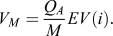
On including money as a store of value for future payments, the value of money loses part of the objective character expressed in (2) and acquires a subjective dimension.
Contrary to neoclassical thought, also savings are mainly determined by social and psychological factors, such as individual ambitions, and only partially by economic factors such as wages, profits, and wealth (1915, p. 306 ff.). Finally, the interest rate does not matter, because it never equalizes savings and investments. Clearly, organizational aspects crop up again and again.
Summing up, the value of money, when money is stored for future transactions, is conditioned, if not determined, by at least two interest rates:Footnote 19 the psychological rate of interest, i, and the current interest rate determined by the discount rate, d.
Out of equilibrium, that is, in ‘normal’ or ‘current’ conditions, i ≠ d, (9) is rewritten as follows:
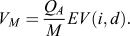
According to the early DV, we may state that the value of money is simultaneously determined by the demand for, and the supply of, money, where demand mostly depends on psychological factors (habits, preferences), while supply is affected by institutional determinants such as the discount rate or banking rules.Footnote 20 At first sight, DV replaced the objective meaning of the value of money with a more subjective concept. But it is also true that he did not fail to point out that “changes in the psychological rate of interest do not always influence the current interest rate” (1914b, p. 404), which had a strictly monetary basis.
VI. TIME AND UNCERTAINTY
Given that a time gap exists between the selling and the buying of goods, DV stressed the need to pay general attention to the uncertainty surrounding every decision on the cash to be held for consumption. Time, and therefore uncertainty, became important factors in defining the value of money in DV’s theory.Footnote 21 Since the interest rate is treated as the variable that gives expression to time in that theory, subjective elements consequently increase their influence on monetary circulation.
In this regard, DV criticized von Wieser’s proposal (1909, 1914b) that the value of money should be deduced from past economic transactions. On the contrary, he believed that the value of money is determined by future economic transactions, by the interest rate, and, finally, by individual forecasts (the notion of expectations in embryonic form). In Questioni fondamentali sul valore della moneta, DV wrote that “a category of dynamic facts springs … from the differences between expected and real events” (1917, p. 167):
we can observe that expectations (attese) of higher prices increase the velocity of circulation of money and, indeed, forestall the effects deriving from a growth of the stock of money. Expectations of lower prices produce opposite effects (1917, p. 173).
The importance of (future) time had already been adumbrated in 1909, but it acquired a primary role only in 1917, after DV had written about crises (1914a), the discount rate (1914b), and the interest rate (1915).
Time and dynamic features are not merely additional, because they mold the functions attributed to money:
The fundamental element in our treatment of the value of money is not a static fact, neither is it deducible from current conditions nor does it depend on the past phenomena. Essentially, it hinges on the future conditions and most precisely on those among them that influence the current judgements (1917, p. 159).
Thus, prices, and indirectly the value of money, are determined by expectations about future transactions. Money is useful as a medium during exchange, but also before it, when an individual decides on the basis of the interest rate and of his expectations.
At this point, the current value of money is grounded on “predicted future conditions” influenced by psychological perturbations (1917, p. 121). Dynamic facts associated with uncertainty are here represented by the parameter z. We may thus rewrite (10) as follows:
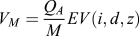
Although uncertainty seems to condition the value of money, DV never claimed that this would endanger the exchangeability of money. Quite the opposite: exchangeability was a guarantee against the uncertainty surrounding individual choices. We can thus understand how the ‘exchangeability of money’ is a source of economic organization.
Subsequently, DV defined the difference between dynamics in economics and dynamics to be found in mechanics and other exact sciences on the basis of the conception of time adopted:
We can modestly recall that the use of time in mechanics is possible because it is reduced to space, whilst in economics we have to deal with a real and not abstract (psychic and non-physic) time that cannot be treated with the instruments used in physics (1956b, p. 248).
We may say that time in economics does not flow independently of the individual’s perception of his relationships and of economic changes. The psychic or psychological time evoked by DV can be translated as expectation time, a notion implied by DV in his works on the interest rate and crises, even though in the early years of the twentieth century the concept of expectation had not yet been introduced into the economic literature.
Summing up, in comparison with the 1909 Principii, in the 1917 Questioni DV seems aware that the value of money depends on market forecasts: “money is worth today what it will be worth in the future without limitation of time” (1917, p. 132). Consequently, the pivotal role attributed to the interest rate is clear. In addition, as we know, in dynamic conditions the equivalence between the discount rate and the interest rate does not necessarily hold.
VII. MONETARY SERVICES
We are finally able to define the exact meaning of the additional or secondary, or also dynamic, services that DV attributed to money.Footnote 22 As stressed by Giovanni Demaria, a pupil of Del Vecchio (Reference Del Vecchio1961: XVIII), DV seemingly espoused the neoclassical principle that money performs a function only when it is used as a medium of exchange. Nevertheless, from 1909 onwards, he admitted that money furnishes “secondary” services as a consequence of being held, even if it is not immediately used for transactions (Zanni Reference Zanni1989, p. 143). Finally, this additional function improves the economic organization of the system.
In detail, on exploring all the roles that can be attributed to money in this context, DV recognized at least three further utilities. Money is an instrument of accumulation when “in certain historical conditions, it cannot be invested in other movable or immovable assets” (1917, p. 170).
Money is also a static reserve or a dynamic one:
no fund decreases below a stated level in order to avoid inconveniences. This is the static utility of money. In a real dynamic economy, this level should be higher, because of the greater amplitude of the variations and the smaller capacity to forecast them. This is the utility of money as a dynamic reserve (1917, p. 170).
Finally, money is a reserve for credit, “since credit partially substitutes money as intermediary instrument; however, it needs a monetary base” (1917, p. 170; see also 1914b).
DV regarded the discount rate as a variable whose short-term changes have monetary rather than real consequences. The ‘real’ interest rate conditioning investments depends on psychological aspects, like the interest influencing consumption, while the discount rate depends on monetary facts alone (1914b, p. 404).
Returning to monetary services, although DV did not give them functions of equal importance to the intermediary one, he acknowledged other activities or services that must be evaluated pragmatically with regard to the value of money. If these services increase the demand for money, the value of money will rise (1917, p. 171).
Such functions (judged “of the greatest importance” when related to “a long enough period”) shed light on a theory of money open to reformulation. Yet, additional monetary services exist. And they do not appear in dynamic perspectives alone, as the maintaining of a static reserve in order to avoid inconveniences demonstrates.
At this point, DV had all the components with which to build a heterodox (non-neoclassical) theory of money based on linkages between the organizational properties of money and the uncertainty surrounding individual choices: the meso-level approach, the interest rate, an early theory of uncertainty, and the thesis that money furnishes a service in itself. Unfortunately, however, DV did not rigorously formulate such a theory.
Instead, in the case of his monetary theory as well as others, his “complex” view of economic phenomena prevented him from focusing his analysis on a few specific determinants. DV looked for an all-inclusive dynamic theory, and this led him, like other scholars in that period,Footnote 23 towards a more sociological than economic analysis.Footnote 24 He bound himself to a dynamic methodology that required attention to be paid not only to applied economics but also to sociological and political aspects. DV was not satisfied with one or a few determinants of the value of money.
The outcome was the “composite” constructs characterising DV’s subsequent dynamic reasoning.Footnote 25 This composite approach certainly represented an interesting proposal, but it also impeded the understanding and diffusion of his monetary theory.
VIII. CONCLUSION
On considering the history of monetary theory, we may ask where DV should be placed in it. He was a heterodox neoclassical scholar who seemed to adhere to the marginalist school but refused to link the value of money to its utility. He undertook monetary analysis by looking at groups as well as individuals, and by exploring the organizational properties of money. But he did so at the cost of disregarding the relation between money and prices. He revived the Walrasian notion of service, but introduced into the debate a subjective perspective on the rate of interest as determining expenditures and accumulation according to habits, expectations, and economic organization.
But it is precisely these apparent contradictions that highlight what can be considered DV’s most important contribution to this area of economic analysis: the links between organizational features, and the uncertain nature of both the demand for money and the value of money. The introduction of uncertainty into monetary analysis, perhaps without DV’s being fully aware of its theoretical outcomes, did not contradict his stress on the intermediary role of money. Exchanges need time, and they occur in time, which is the basis on which DV was able to justify the additional service of money and, finally, the subjective value of money.
DV may perhaps be reproached for not translating his statements on the subjective determinants of the demand for money into more formal or mathematical terms. But it should not be forgotten that the works analyzed here were written between 1909 and 1917.


