Introduction
When and whether a person with dementia should move to a care home is reported to be one of the most difficult decisions faced by many family carers (Elliott et al., Reference Elliott, Gessert and Peden-McAlpine2007, Reference Elliott, Gessert and Peden-McAlpine2009). With increasing numbers of older people with dementia and limited social support, deciding when is the right time (if any) to move to a care home is a pertinent question. Indeed, one of the top research priorities identified by the Dementia Priority Setting Partnership between the UK Alzheimer's Society and James Lind Alliance (Alzheimer's Society 2013a) was “when is the optimal time to move a person with dementia into a care home setting?” The question indicates the pressing need to understand the decision-making process about care home moves and what enhances confidence in the timing of the decision.
The person with dementia is often cast as a passive agent in this moving process, with words such as “placed” and “abandoned” used (Sandberg et al., Reference Sandberg, Lundh and Nolan2001). A report by the United Kingdom think-tank DEMOS highlighted the fears that older people, people with dementia, and the general public have about moving to a care home (The Commission on Residential Care, 2014). For many, it appears that residential care is still “the last resort” with limited options and very low expectations of care (Alzheimer's Society 2013b).
This systematic review of existing literature aimed to gain an understanding of the decision-making experience to distinguish what the drivers of decisions about residential care may be, and to identify if the literature indicated an “optimal” or best time (if any) for a person with dementia to move to a care home. The review spanned two main subject areas regarding a person with dementia moving into a care home: (1) reasons for the move and how these decisions are made, and (2) the timing of the move.
Methods
Inclusion criteria
Studies included in this review were international studies in English language, up to December 2016, that described the experience of moving to a care home from their own home, from the perspectives of people with dementia, family carers, and professionals. We focused specifically on inductive studies that elicited rich descriptions of the decision-making process. Only empirical primary research was considered; therefore, editorials, opinion pieces, and letters were excluded. Literature reviews were not included but their primary studies were considered. Papers were also excluded if
1. the person with dementia did not move (or plan to move) from their own home to a care home.
2. people with dementia (or their family carers) could not be distinguished from other participants in the study sample.
3. a deductive approach was used, which included studies that only focused on the predictors or risk factors of a person with dementia moving to a care home (including clinical drug trials).
4. the findings from the qualitative element of a mixed methods study could not be distinguished from the quantitative data.
Search procedure
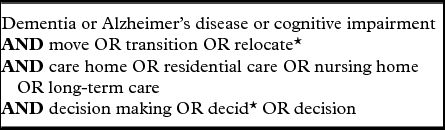
Six English language bibliographies were searched for relevant national and international literature: Cumulative Index to Nursing and Allied Health Literature (CINAHL; EBSCO), EMBASE (OVID), PsycINFO (OVID), PsycARTICLES (OVID), Social Policy and Practice (OVID), and MEDLINE (OVID and EBSCO). No date restrictions were imposed, and papers were searched up to the date of the search (December 2016). To establish relevant search terms, the mnemonic PICo (Participant, phenomenon of Interest, Context) was used. PICo is a recognized tool for searching literature systematically (Joanna Briggs Institute, 2011). Consequently, the derivatives and variations of the following search terms were used: “Dementia” (Participants) AND “decision-making” (phenomenon of interest) AND “move” (phenomenon of interest) AND “care home” (context). Examples of terms used in the search are provided in Table 1. In addition to the database search, the final included papers’ reference lists were hand searched for relevant papers meeting the inclusion criteria.
Examples of search terms used

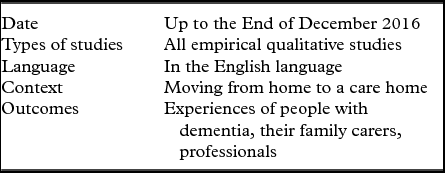
All titles and abstracts from the final search were screened against the inclusion criteria. Full texts of selected papers were then screened, and finally, included papers were identified. Screening was initially completed by one researcher (author 1), and included papers were selected and agreed upon by the three authors (author 1, author 2, and author 3). Included papers were subject to data extraction (author 1). This involved extracting data in a systematic way from each paper, using the inclusion criteria summarized in Table 2.
Inclusion criteria

Definitions
In England, the term “care home” refers to long-term care facilities providing care and support (Orellana et al., Reference Orellana, Manthorpe and Moriarty2017). Care homes are sub-divided into care homes with nursing, which are required to have a registered nurse on duty at all times, and care homes, often referred to as residential homes, which do not employ registered nurses. However, many different terms are used for these facilities, which vary internationally (e.g. Sanford et al., Reference Sanford2015). For this review, long-term institutional care, care homes (with and without nursing support), nursing homes, and residential homes were included. We were particularly interested in the permanent move made from home to a long-term care facility providing 24-h care, where an individual would consider themselves to be a resident. For this reason, assisted living facilities, sheltered housing, or retirement villages were not included, as these are often transitional settings before a move to a long-term care facility, where individuals consider themselves to be in their own private home and not sharing with other “residents.” The term “carer” is used in this paper to mean family member or friend providing care and support; often also referred to as a caregiver.
The review did not discriminate between young onset and later onset dementia; and studies were not eliminated based on dementia diagnosis (e.g. Korsakoff dementia). Studies were included that covered people with all types of dementia.
Assessment of quality
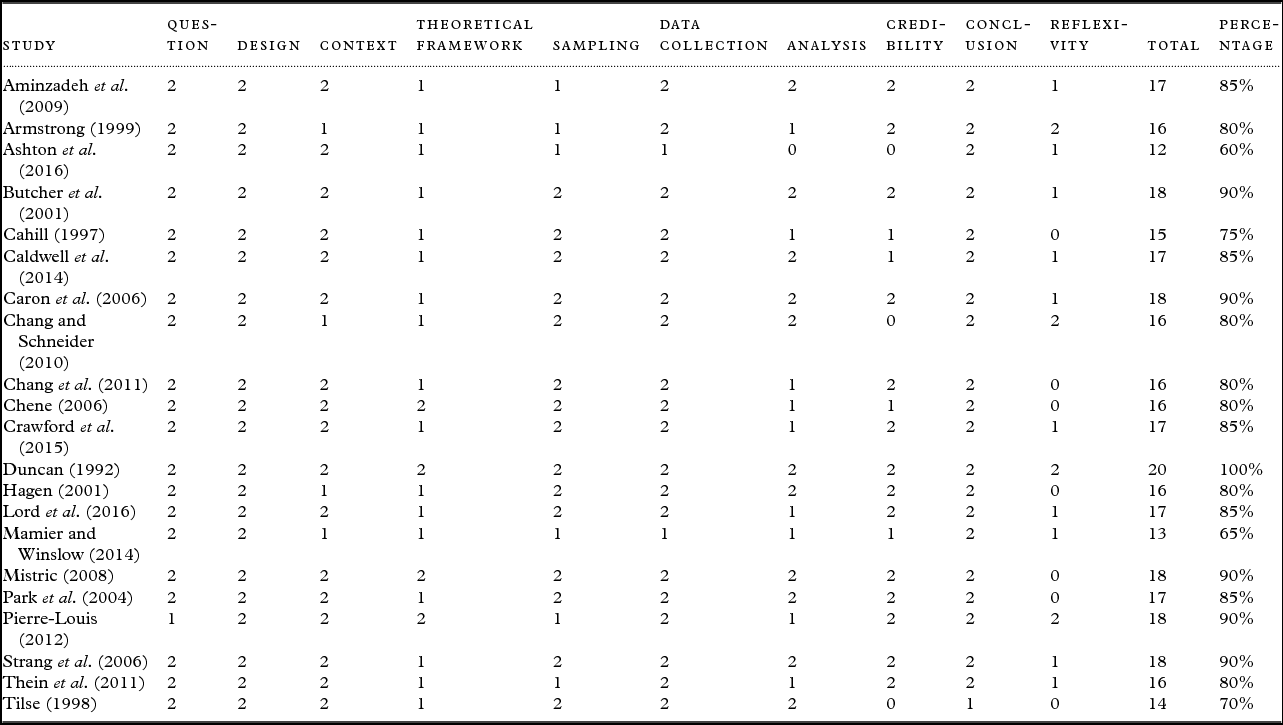
An assessment of quality was performed on each paper meeting the inclusion criteria for this search. The QualSyst scale (Kmet et al., Reference Kmet, Lee and Cook2004) was used for this purpose, as it has protocols for both qualitative and quantitative methodologies. The scale consists of ten criteria, which evaluate the appropriateness of the study design, clarity, and justification of the methods used, and the credibility of the study. Each criterion is scored as met (2), partially met (1), or not met (0). A total percentage is gained for each paper (score/possible score × 100). Consequently, higher percentages indicate high-quality papers. The authors of the QualSyst scale used a threshold of 55% for inclusion of papers. Consequently, for this review, authors identified papers having a total score of 55% or lower as low quality and not included in the review. Papers scoring between 55% and 69% were considered “adequate,” and those 70% and above being of good quality. All papers were independently rated by (author 1) and then a quarter was second rated by (author 2). Two papers gave rise to discrepancies between researcher scores; these were discussed and resolved between researchers (authors 1, 2, and 3).
Analysis
Each paper was thematically analyzed. All text and tables in the results and discussion sections of included papers were considered data. Commonalities in relation to circumstances and factors that affected the decision to move to a care home or timing of the move were coded. These codes were grouped into larger themes and two researchers (author 1 and author 2) discussed the appropriateness of emergent themes. A third researcher (author 3) provided verification on the decision. A summary of appraisal scores is displayed in the final column of Table 3.
Assessment of the quality of qualitative papers using QualSyst (Kmet et al., Reference Kmet, Lee and Cook2004)

Results
Search results: characteristics of studies and assessment of quality
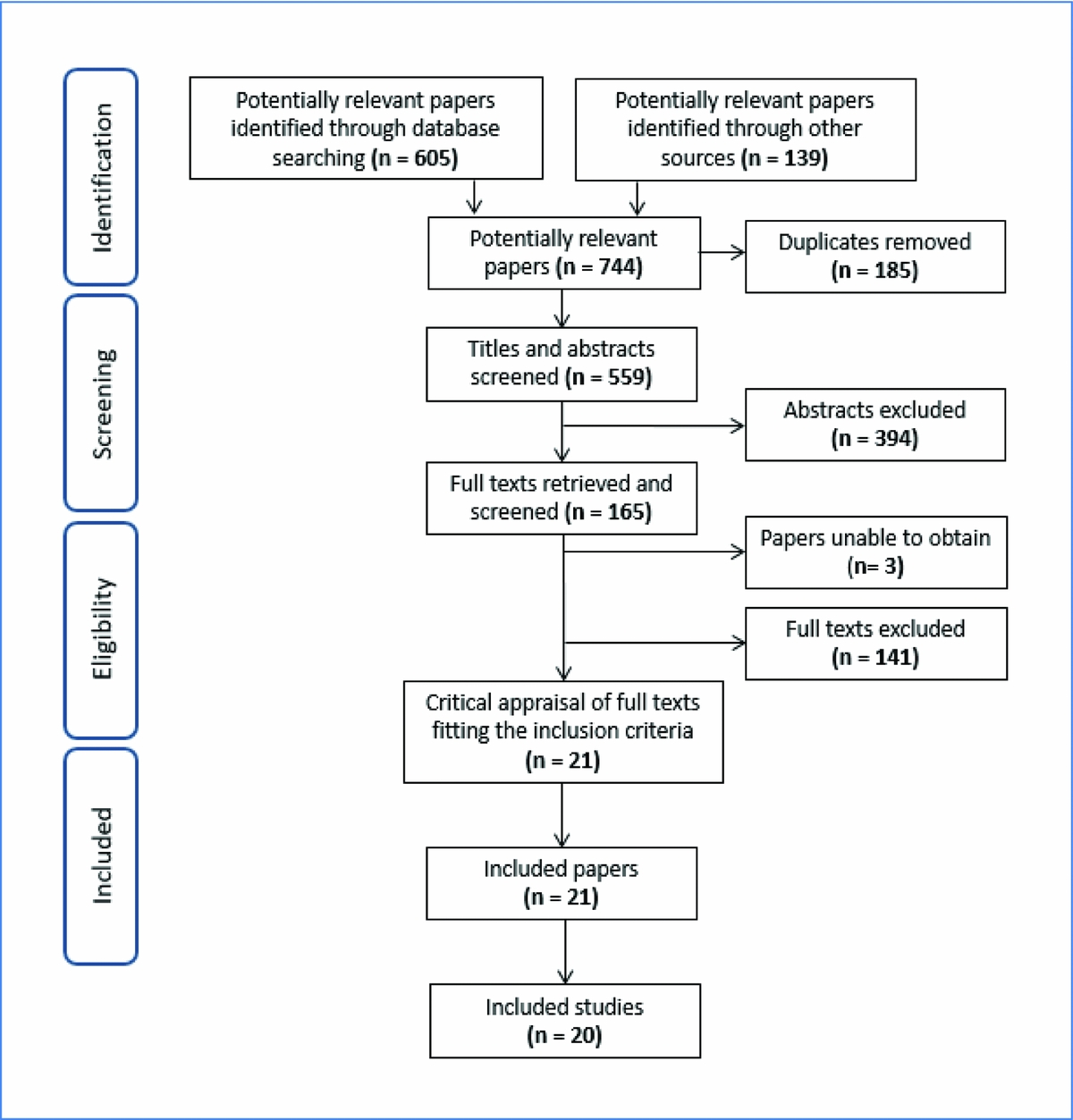
A total of 744 papers were found in the search, and after 185 duplicates were removed, 559 titles and abstracts were screened, and 394 were excluded. The full text of potentially relevant papers was retrieved and screened against the inclusion and exclusion criteria. A further 141 papers were excluded, and four papers were unavailable. The remaining papers were rated for quality. In total, 21 papers were included in the review, which documented 20 studies. The process of screening and selecting papers is illustrated in the flow-diagram, Figure 1.
PRISMA flow diagram: search and selection procedure (Moher et al., Reference Moher, Liberati, Tetzlaff, Altman and Group2009).

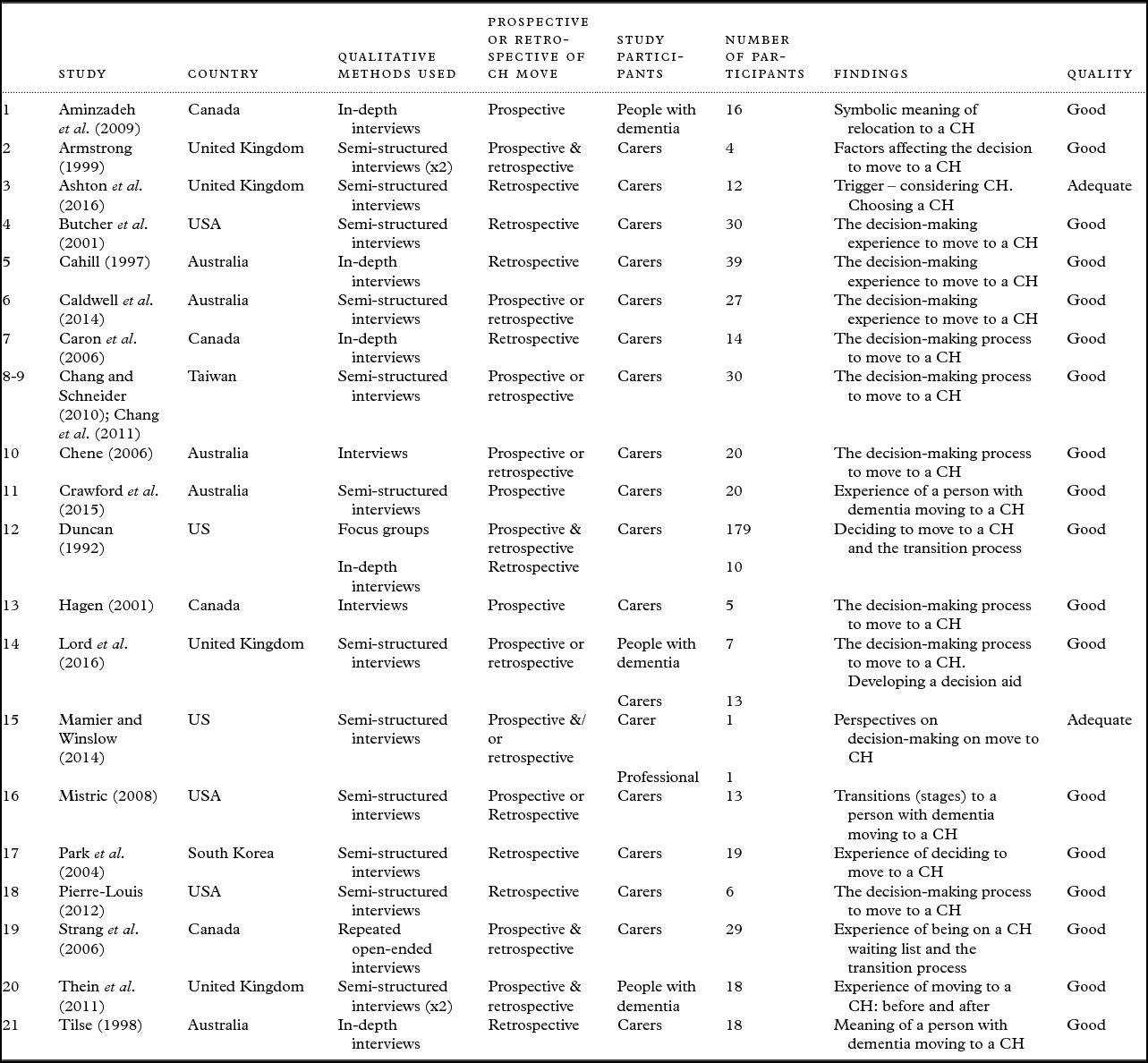
Nearly all papers were published between 2001 and 2016; four papers were published in the 1990s. The majority were from the USA (n = 5); with other contributions from Australia (n = 5), the United Kingdom (n = 4), Canada (n = 4), South Korea (n = 1) and Taiwan (n = 1). Two papers were from the same study (Chang and Schneider, Reference Chang and Schneider2010; Chang et al., Reference Chang, Schneider and Sessanna2011).
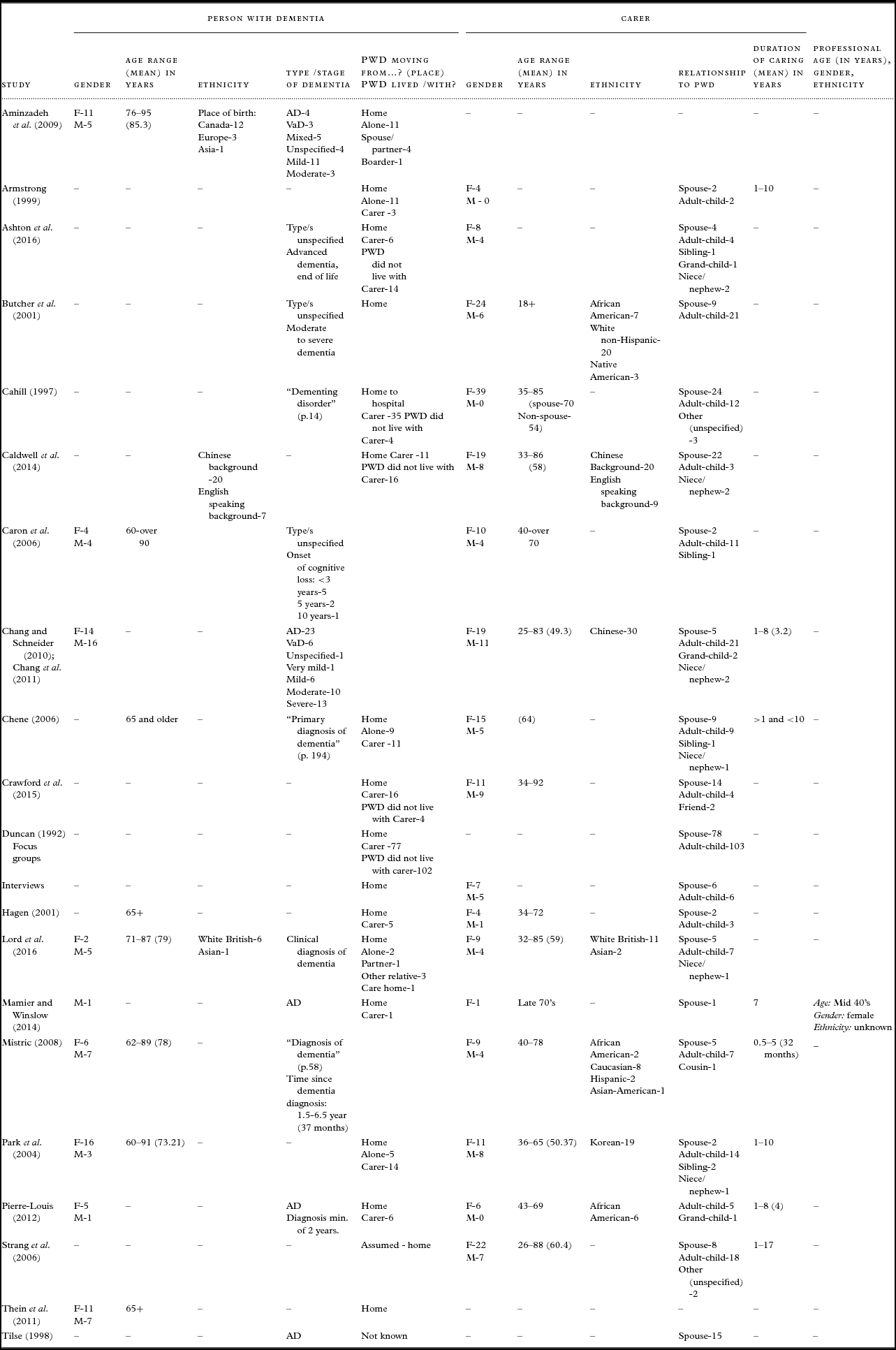
All studies used semi-structured or in-depth interviews in their methodology. Duncan (Reference Duncan1992) was the only study to additionally use focus groups. Three studies included people with dementia in their sample: of these two exclusively interviewed people with dementia (Aminzadeh et al., Reference Aminzadeh, Dalziel, Molnar and Garcia2009; Thein et al., Reference Thein, D'Souza and Sheehan2011) and one involved people with dementia and family carers (Lord et al., Reference Lord, Livingston, Robertson and Cooper2016). Only one study included the views of a professional (a social worker) alongside a carer (Mamier and Winslow, Reference Mamier and Winslow2014). All other studies (n = 16) sought the views of carers alone. The majority of the studies asked participants about their experiences of the move retrospectively (n = 7); three were prospective experiences, and five were mixed (participants who had already moved and those about to move). Five studies interviewed participants before and after the move. A total of 19 papers were of good quality, and two studies were of adequate quality (Mamier and Winslow, Reference Mamier and Winslow2014; Ashton et al., Reference Ashton, Roe and Jack2016); consequently, no papers were excluded on quality. Characteristics of the included papers are summarized in Table 4. Characteristics of the individuals involved in the studies (i.e. people with dementia, carers, and professionals) are summarized in Table 5.
Methodological characteristics, findings, quality ratings of included qualitative papers

CH = care home.
Table of people with dementia and carers’ characteristics

KEY: -No information provided. AD = Alzheimer's disease. F = Female. M = Male. PWD = Personal with dementia. VaD = Vascular dementia.
Thematic analysis
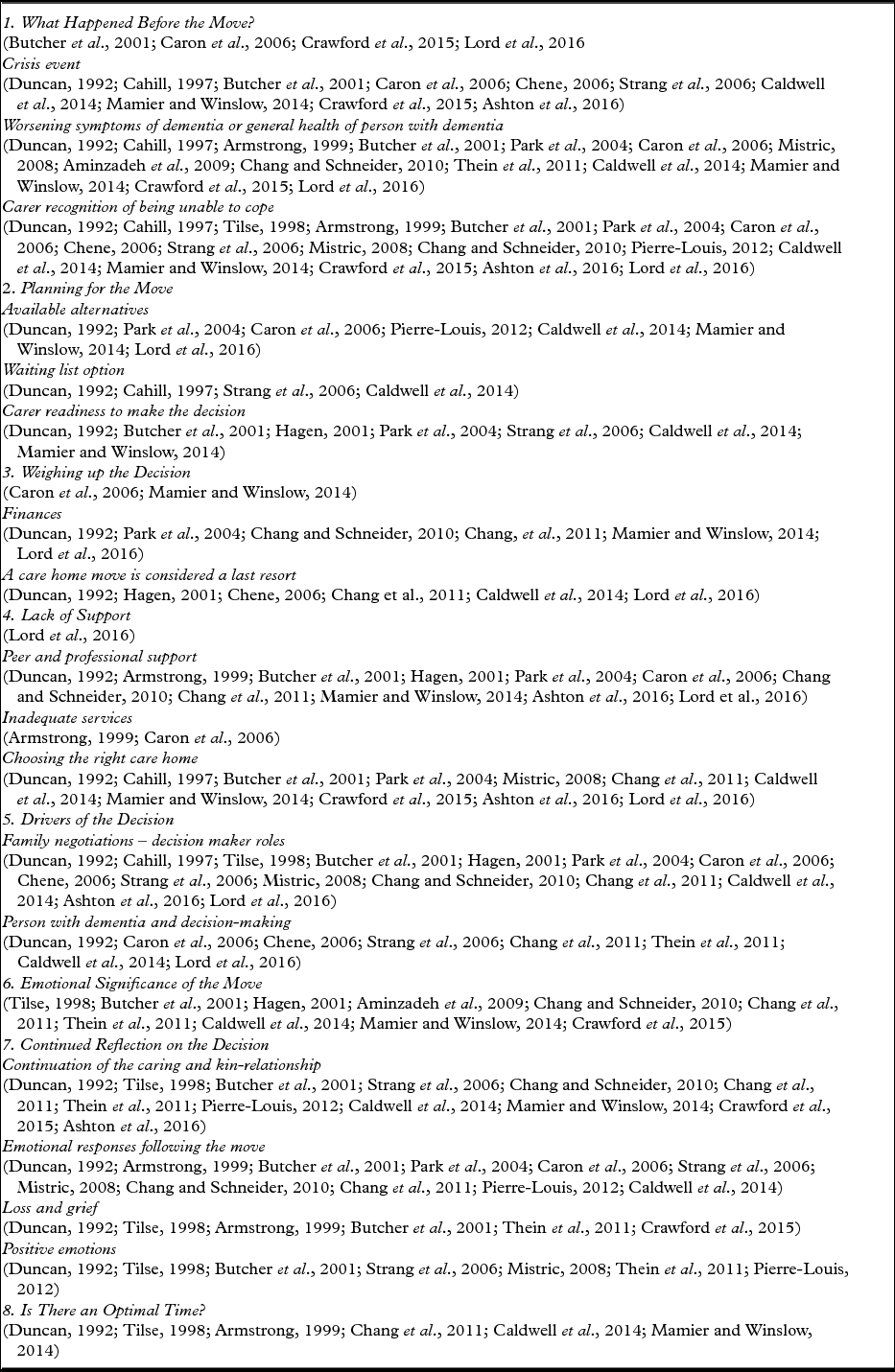
Findings from the review revealed seven overarching themes that described the decision-making experience connected with the move of a person with dementia to a care home: (1) what happened before the move; (2) planning for the move, (3) weighing up the decision, (4) lack of support, (5) drivers of the decision, (6) emotional significance of the move, (7) continued reflection on the decision. A summary of these themes is presented in Table 6.
Summary of themes

What Happened Before The Move?
Reasons for the move to a care home were often declared complex and not due to just one factor. The metaphors of “‘tipping points,” “triggers,” or “breaking points” were described as the time at which factors culminated or were combined such as to necessitate a move to a care home (Butcher et al., Reference Butcher, Holkup, Park and Maas2001; Crawford et al., Reference Crawford, Digby, Bloomer, Tan and Williams2015; Lord et al., Reference Lord, Livingston, Robertson and Cooper2016). Often contextual factors influenced the decision to move to a care home (Caron et al., Reference Caron, Ducharme and Griffith2006). Among the many different reasons were: a crisis event; worsening symptoms of dementia or general health of the person with dementia; and carer perception of being unable to cope. Each of the themes is inter-related.
Crisis event
Crisis events most often involved a hospital admission (Duncan, Reference Duncan1992; Cahill, Reference Cahill1997; Caron et al., Reference Caron, Ducharme and Griffith2006; Chene, Reference Chene2006; Strang et al., Reference Strang, Koop, Dupuis-Blanchard, Nordstrom and Thompson2006; Mamier and Winslow, Reference Mamier and Winslow2014; Crawford et al., Reference Crawford, Digby, Bloomer, Tan and Williams2015; Ashton et al., Reference Ashton, Roe and Jack2016). Sometimes the need for a move to a care home was framed as “medical” following a hospital admission, as it was not considered viable or practicable (due to the environment and adaptations required) for the person with dementia to return home (Caldwell et al., Reference Caldwell, Low and Brodaty2014). A crisis could also be an indicator to the carer that the person with dementia's cognitive decline had reached a critical point (Butcher et al., Reference Butcher, Holkup, Park and Maas2001) that was now unmanageable. Up until this time, the carer may have not noticed the slow gradual cognitive changes (Strang et al., Reference Strang, Koop, Dupuis-Blanchard, Nordstrom and Thompson2006).
Worsening symptoms of dementia or general health of person with dementia
Carers often evaluated the reasons for the move, they cited the safety of the person with dementia as one of the main reasons for the move to a care home (Butcher et al., Reference Butcher, Holkup, Park and Maas2001; Park et al., Reference Park, Butcher and Maas2004; Mistric, Reference Mistric2008; Caldwell et al., Reference Caldwell, Low and Brodaty2014; Lord et al., Reference Lord, Livingston, Robertson and Cooper2016). Concerns around falls, misuse of electrical equipment, and lack of safe environments were the main risks identified (Duncan, Reference Duncan1992; Lord et al., Reference Lord, Livingston, Robertson and Cooper2016); and similarly worries about monitoring medication, falls, and accidents (Caldwell et al., Reference Caldwell, Low and Brodaty2014) were reported as “triggering” factors. Such concerns could lead to a carer feeling that they needed to be always present to ensure the person with dementia's safety (Butcher et al., Reference Butcher, Holkup, Park and Maas2001) and also to appease the person with dementia's anxiety (Crawford et al., Reference Crawford, Digby, Bloomer, Tan and Williams2015); not surprisingly this negatively affected the carer's well-being (Mamier and Winslow, Reference Mamier and Winslow2014; Crawford et al., Reference Crawford, Digby, Bloomer, Tan and Williams2015). Alternatively, some carers were concerned about their own safety when in the presence of the person with dementia due to their challenging behaviors (Park et al., Reference Park, Butcher and Maas2004). The person with dementia's behavior sometimes seemed so unmanageable that it negatively affected the carer's (Cahill, Reference Cahill1997) and the whole family's well-being (Chang and Schneider, Reference Chang and Schneider2010). Examples of behaviors that affected this decision were: swearing, aggression, wandering, sleeplessness, and the carer's inability to reason with the person with dementia (Armstrong, Reference Armstrong1999; Mistric, Reference Mistric2008; Chang and Schneider, Reference Chang and Schneider2010). Duncan (Reference Duncan1992) found that negative changes in the person with dementia's behavior were more difficult for adult–children to cope with than for spouse carers, and the former were more likely to cite these as the reason for seeking a move to a care home.
When people with dementia were consulted, they identified their functional and physical difficulties as reasons for a move to a care home, attributing this to their age and not to their cognitive problems (Aminzadeh et al., Reference Aminzadeh, Dalziel, Molnar and Garcia2009; Thein et al., Reference Thein, D'Souza and Sheehan2011). For those who realized their own difficulties (such as the need for monitoring or watching over), this made it easier for them to come to terms with the idea of moving to a care home (Thein et al., Reference Thein, D'Souza and Sheehan2011; Lord et al., Reference Lord, Livingston, Robertson and Cooper2016).
Some carers attributed the person with dementia's physical problems as a reason for moving to a care home. As other studies noted, concerns included falls, but also pain or the difficulties of making adjustments to the home (Caron et al., Reference Caron, Ducharme and Griffith2006; Lord et al., Reference Lord, Livingston, Robertson and Cooper2016), which could further change over time (Caron et al., Reference Caron, Ducharme and Griffith2006). Carers found managing multiple co-morbidities difficult. For example, the onset of urinary and fecal incontinence was a specific trigger that made some carers feel that caring had now become impossible (Duncan, Reference Duncan1992; Cahill, Reference Cahill1997; Armstrong, Reference Armstrong1999; Caldwell et al., Reference Caldwell, Low and Brodaty2014).
Generally, carers were uncertain about the future rather than thinking there was a known care pathway. They realized that something was wrong and recognized the person with dementia's health problems (Butcher et al., Reference Butcher, Holkup, Park and Maas2001). However, due to the progressive but unpredictable nature of the dementia, carers did not know what the future would entail for themselves, the person with dementia, or the caring situation (Lord et al., Reference Lord, Livingston, Robertson and Cooper2016).
Carer recognition of being unable to cope
Contextual influences that changed or accumulated over time meant that carers faced the possibility of the person with dementia moving to a care home in order to ensure their care needs were being met (Duncan, Reference Duncan1992; Caron et al., Reference Caron, Ducharme and Griffith2006; Mamier and Winslow, Reference Mamier and Winslow2014; Crawford et al., Reference Crawford, Digby, Bloomer, Tan and Williams2015). Carers decided that they were unable to cope with caring for the person with dementia at home on the basis of two main reasons: their own health problems and the stress of caring.
Some carers were unable to continue to care for the person with dementia at home due to their own physical health problems (Cahill, Reference Cahill1997; Armstrong, Reference Armstrong1999; Butcher et al., Reference Butcher, Holkup, Park and Maas2001; Chene, Reference Chene2006; Mistric, Reference Mistric2008; Chang and Schneider, Reference Chang and Schneider2010; Caldwell et al., Reference Caldwell, Low and Brodaty2014; Lord et al., Reference Lord, Livingston, Robertson and Cooper2016). This seemed of particular significance for spouse carers who could also be experiencing their own age-related illnesses (Chene, Reference Chene2006; Lord et al., Reference Lord, Livingston, Robertson and Cooper2016). The stress of caring for a family member with dementia resulted in some carers feeling emotionally and physically exhausted (Duncan, Reference Duncan1992; Cahill, Reference Cahill1997), causing social withdrawal, and weight loss (Armstrong, Reference Armstrong1999; Pierre-Louis, Reference Pierre-Louis2012). However, some carers did not seem to acknowledge or accept that they could no longer emotionally and physically cope with the care of the person with dementia, and it was their own healthcare practitioner who had instigated the need for the person with dementia to move to a care home for the sake of the carer's health (Pierre-Louis, Reference Pierre-Louis2012).
Carers’ perceptions of their own ability to continue to care for the person with dementia were an important factor, as many carers were apprehensive about their current caring situation. Some carers felt they had learned to care for their relative through trial and error, but felt out of control as the person with dementia's care needs grew (Park et al., Reference Park, Butcher and Maas2004) and some worried about their continued ability to meet their relative's physical and emotional needs (Strang et al., Reference Strang, Koop, Dupuis-Blanchard, Nordstrom and Thompson2006; Mistric Reference Mistric2008; Ashton et al., Reference Ashton, Roe and Jack2016). Taking on new roles and responsibilities within the household contributed to the stress of the caring situation (Butcher et al., Reference Butcher, Holkup, Park and Maas2001; Park et al., Reference Park, Butcher and Maas2004). Carers reported arguing with the person with dementia and having no time for themselves (Mistric Reference Mistric2008; Caldwell et al., Reference Caldwell, Low and Brodaty2014). A history of “anger, sadness, frustration, and distress” made carers also feel unable to cope (Tilse, Reference Tilse1998, p. 32). In one study, a carer reported that feeling unable to cope made them fear physically harming the person with dementia through overwhelming feelings of frustration (Park et al., Reference Park, Butcher and Maas2004).
Planning For The Move
In planning for a possible move to a care home, some carers recounted how they had explored alternative care options. This exploration sometimes reflected the carer's stage of “readiness” for the person with dementia to move from their home to a care home.
Available alternatives to a move to a care home
Alternative or rather supplementary additions to a carer's support for the person with dementia were sought from a variety of sources, such as family, friends, and professionals (Caldwell et al., Reference Caldwell, Low and Brodaty2014). Options considered included: moving the person with dementia to live with an adult child (Pierre-Louis, Reference Pierre-Louis2012; Caldwell et al., Reference Caldwell, Low and Brodaty2014), acquiring extra home care assistance (Duncan, Reference Duncan1992; Caldwell et al., Reference Caldwell, Low and Brodaty2014; Lord et al., Reference Lord, Livingston, Robertson and Cooper2016), arranging “meals on wheels” (home delivered meals), taking up a place in a day center to give the carer a break (Caron et al., Reference Caron, Ducharme and Griffith2006) or a day hospital, or arranging a short-stay in a geriatric unit. However, the financial costs of these often meant that they proved problematic or not viable (Caldwell et al., Reference Caldwell, Low and Brodaty2014). In addition, carers often felt that there would ultimately be a time when this level of care would not be enough for their relative with dementia (Caldwell et al., Reference Caldwell, Low and Brodaty2014).
Residential respite or short-break services were viewed by many as a step toward long-term care (Caldwell et al., Reference Caldwell, Low and Brodaty2014; Mamier and Winslow, Reference Mamier and Winslow2014), and an effective strategy for the person with the dementia and the carer to get used to the idea of the move from home. However, this was only if the respite experience was a positive one and suited the person with dementia's needs (Caldwell et al., Reference Caldwell, Low and Brodaty2014). Not all carers had been offered respite care and some stated that they would have liked government assistance or interventions (Park et al., Reference Park, Butcher and Maas2004).
Waiting list option
Carers sometimes perceived their relative's place on the waiting list of a care home as a viable and positive option (Duncan, Reference Duncan1992; Cahill, Reference Cahill1997; Strang et al., Reference Strang, Koop, Dupuis-Blanchard, Nordstrom and Thompson2006; Caldwell et al., Reference Caldwell, Low and Brodaty2014). Although not quite ready to relinquish their care responsibilities completely, asking to go on a waiting list seemed to be a first step to recognizing that a move to a care home may be required eventually (Caldwell et al., Reference Caldwell, Low and Brodaty2014). Some carers were ready but anticipated a long wait until a room in a particular care home became available and wanted to prepare for the time when they could no longer cope with caring for the person with dementia at home (Caldwell et al., Reference Caldwell, Low and Brodaty2014). Such limited care home vacancies meant that for some a care home place was not available at the point that they needed one and were ready for the move to be made (Duncan, Reference Duncan1992; Strang et al., Reference Strang, Koop, Dupuis-Blanchard, Nordstrom and Thompson2006).
Carers’ readiness to make the decision
Ultimately, carers said they needed to feel prepared and ready for the move (Butcher et al., Reference Butcher, Holkup, Park and Maas2001; Mamier and Winslow, Reference Mamier and Winslow2014). Several factors needed to align for “readiness” to be determined: such as both the carer and person with dementia realizing that care at home was no longer sustainable (Caldwell et al., Reference Caldwell, Low and Brodaty2014). Hagen (Reference Hagen2001) found six inter-related factors affecting the ability of carers in their study to make a decision about a move, and therefore their readiness for the move: (1) independence in their relationship to the person with dementia, (2) perceived support from others, (3) feelings of guilt, (4) sense of existential self, (5) fear of loneliness after placement, and (6) negative views of care homes (Hagen, Reference Hagen2001). As noted, synchronicity was also important, such as a place in the home being available at the same time as the carer being ready (Strang et al., Reference Strang, Koop, Dupuis-Blanchard, Nordstrom and Thompson2006).
Park and colleagues found that carers weighed up the responsibilities of caring for others in the family (including themselves) with the person with dementia's needs as part of determining their readiness for the move (Park et al., Reference Park, Butcher and Maas2004). In addition, carer readiness was determined by a “gut-feeling” and “intuition,” which was termed by authors as a form of self-support (Duncan, Reference Duncan1992, p. 70).
From a professional point of view, there is an indication from one US case study (covering one carer and one social worker) that social workers may consider it their role to help carers emotionally come to terms (be ready) with their family member's dementia diagnosis (Mamier and Winslow, Reference Mamier and Winslow2014). However, they found that this particular social worker's and carer's point of “readiness” did not coincide. The carer was ready for the move but the social worker did not realize this. At this critical time, the carer was concerned about finances, while the social worker was concerned about the carer being emotionally ready for the move and separation.
Weighing-Up The Decision
Carers considered the “anticipated consequences” for all family members involved, should the person with dementia move to a care home, before making the final decision (Caron et al., Reference Caron, Ducharme and Griffith2006) and needed to feel confident about making the right choice. The decision to move to a care home was evaluated over time with some concluding that “now” was not the best or right time for the person with dementia to move.
While there is very limited evidence from professionals’ point of view, one US case study, reported a social worker positioning herself in a neutral position, to be able to assist the family carer in making their decision (Mamier and Winslow, Reference Mamier and Winslow2014).
Finances
Paying for care was found to be a significant factor in the decision-making process for some carers (Chang, et al., Reference Chang, Schneider and Sessanna2011; Mamier and Winslow, Reference Mamier and Winslow2014) and people with dementia (Lord et al., Reference Lord, Livingston, Robertson and Cooper2016). Carers with limited finances found the decision more “challenging and frustrating” (Chang et al., Reference Chang, Schneider and Sessanna2011, p.439) and in one case financial problems had delayed the decision (Mamier and Winslow, Reference Mamier and Winslow2014). The decision about the “place of care” was hugely influenced by the finances available to the carer and the person with dementia. Carers were concerned about the cost of a “good” care home (Duncan, Reference Duncan1992; Chang and Schneider, Reference Chang and Schneider2010), with some saying they accepted a care home place that they could afford but then worried about its quality of care (Chang and Schneider, Reference Chang and Schneider2010). Carers’ decisions centered around finding the best care home for the cheapest price, and some were “savvy” or knowledgeable that care homes with a “lavish” exterior did not “always mean the best” (Duncan, Reference Duncan1992, p. 73).
Making the decision about a care home move also initiated a conversation about payment sources and difficult debates about using a parent's hard-earned money to pay for their care. Additionally, spending a parent's money in this way would affect the size of the adult child's inheritance, potentially causing some family conflict (Duncan, Reference Duncan1992).
Park and colleagues found that carers who gave up work to care for their relative full-time, quickly ran out of money, and had to resume employment to support the family. It was this return to work that necessitated the person with dementia's move to a care home (Park et al., Reference Park, Butcher and Maas2004). In one case study financial considerations and strains were present throughout the decision-making process and continued after the care home move (Mamier and Winslow, Reference Mamier and Winslow2014). Lack of information about the different financial options and resources available from the government increased carer burden (Chang et al., Reference Chang, Schneider and Sessanna2011).
A care home move is considered a last resort
All carers in Lord and colleagues’ (Reference Lord, Livingston, Robertson and Cooper2016) study expressed a desire for their relative with dementia to stay in their own home for as long as possible; with many carers from this and other studies (Duncan Reference Duncan1992; Caldwell et al., Reference Caldwell, Low and Brodaty2014) stating that they were able to manage this and viewing a move to a care home as a last resort. Carers considered it important that the person with dementia's home surroundings were familiar to them and that the person could continue their usual daily activities and routines (Lord et al., Reference Lord, Livingston, Robertson and Cooper2016). Likewise, carers in Caldwell et al.’s (Reference Caldwell, Low and Brodaty2014) study stated: “It's just too early stage . . . going to nursing home is just like going to jail” (Caldwell et al., Reference Caldwell, Low and Brodaty2014 p. 418). These comments were related to negative perceptions of care homes as being of poor quality care, restrictive of autonomy, and rights (Caldwell et al., Reference Caldwell, Low and Brodaty2014) and the feeling that this would be their final home (Chene, Reference Chene2006), and “a place to wait for death” (Chang et al., Reference Chang, Schneider and Sessanna2011, p. 440). Carers with negative attitudes toward care homes seemed to find the decision-making process particularly difficult (Hagen, Reference Hagen2001). Carers saw care home placement as a last resort if the person with dementia was reluctant to move due to fears of poor quality care, from past experiences or perceptions of care homes, sometimes linked to cultural or historical standards of poor care (Caldwell et al., Reference Caldwell, Low and Brodaty2014).
Lack Of Support
Carers stated that they did not know where to turn to in order to gain support; they felt as though they did not “know all the questions to ask. . .” (Lord et al., Reference Lord, Livingston, Robertson and Cooper2016, p. 5). They were generally unaware of available services and felt unable to negotiate health and social care systems (Lord et al., Reference Lord, Livingston, Robertson and Cooper2016).
Peer and professional support
Carers acknowledged that the “presence or absence of support” influenced the decision-making process (Butcher et al., Reference Butcher, Holkup, Park and Maas2001, p. 476; Hagen, Reference Hagen2001; Caron et al., Reference Caron, Ducharme and Griffith2006). A perceived lack of support was a major indicator for a move to a care home (Park et al., Reference Park, Butcher and Maas2004). Support from a peer-group was thought helpful in providing guidance and in hearing of others’ experience (Duncan, Reference Duncan1992); although carers may not always want to attend a group throughout the whole transition (Mamier and Winslow, Reference Mamier and Winslow2014). A frequent finding was that carers often did not feel as if they had access to sufficient information about possible different options or alternatives to a care home (Butcher et al., Reference Butcher, Holkup, Park and Maas2001; Park et al., Reference Park, Butcher and Maas2004; Chang and Schneider, Reference Chang and Schneider2010; Chang et al., Reference Chang, Schneider and Sessanna2011; Ashton et al., Reference Ashton, Roe and Jack2016). Having someone to listen to carers’ needs, understand their problems, and explain information was considered vital (Armstrong, Reference Armstrong1999).
The idea of developing a decision aid that focused on the future place of care for a person with dementia was considered by carers and people with dementia in one study to be a potentially extremely beneficial tool (Lord et al., Reference Lord, Livingston, Robertson and Cooper2016). However, it was thought that such an aid should not just focus on a move to a care home but should contain options and information about other alternatives types of care. Participants in that study also wanted information on the “changes that may occur” that might influence the decision (e.g. change in carer's health). How to access helping organizations and the remit of these agencies were also thought potentially useful information. They thought the decision aid should be delivered by a professional, face-to face, as the need for human interaction would be imperative. All participants agreed that this aid should not be provided at the point of diagnosis but the time should be determined by a supportive professional (e.g. a clinician at a memory clinic) (Lord et al., Reference Lord, Livingston, Robertson and Cooper2016).
Inadequate services
Carers receiving services often considered them inadequate for their needs (Caron et al., Reference Caron, Ducharme and Griffith2006) and should: “(a) be available and accessible, (b) be flexible, (c) be continuous and co-ordinated among the various service providers, and (d) have an acceptable waiting time for services, without unreasonable delays” (ibid p. 199). In another study, carers felt that they were offered help at the wrong times of the day, and generally support was offered when it was not needed. They felt that the provision of 24-h help, or at least night-care would have been more supportive, and could have even prevented a care home move (Armstrong, Reference Armstrong1999). In addition, in order for professionals to be supportive to carers in the decision-making process they should be “empathic, supportive, and accessible” (p. 200) and be positive about the abilities of the carer to care for the person with dementia (Caron et al., Reference Caron, Ducharme and Griffith2006).
Choosing the right care home
Generally, carers expected their family member with dementia's basic care needs to be met while in the care home (Mistric, Reference Mistric2008). Desirable care home characteristics from the perspectives of carers included being clean, spacious, illness related, and staff to be friendly/caring/communicative, and trained, personalized care, a homely environment (Butcher et al., Reference Butcher, Holkup, Park and Maas2001, Mistric, Reference Mistric2008), no smell, being culturally appropriate (Ashton et al., Reference Ashton, Roe and Jack2016), and where their family physician or general practitioner could continue to act as the person's doctor (Caldwell et al., Reference Caldwell, Low and Brodaty2014). Other desirable considerations were location; being near friends and other relatives (Ashton et al., Reference Ashton, Roe and Jack2016; Lord et al., Reference Lord, Livingston, Robertson and Cooper2016), and the organization and management of the care home (Duncan, Reference Duncan1992, Mistric, Reference Mistric2008). In addition, some family carers applied early for a culturally appropriate care home, or one with a good reputation (e.g. an “ethno-specific” care home; Caldwell et al., Reference Caldwell, Low and Brodaty2014, p. 418). Korean family carers were described as lacking experience of long-term care and, therefore, were unsure about their options, or how to control the situation (Park et al., Reference Park, Butcher and Maas2004).
Carers in one UK study had been provided with a list of care homes by their social workers, and given the task of choosing a care home for their relative with dementia (Ashton et al., Reference Ashton, Roe and Jack2016). They described feeling like “inspectors” walking round care homes, and felt ill equipped to make such an important choice (Ashton et al., Reference Ashton, Roe and Jack2016). Receiving assistance in a hospital setting in choosing an appropriate care home was a diverse experience; carers in Crawford's (Reference Crawford, Digby, Bloomer, Tan and Williams2015) Australian study had positive experiences with hospital staff and social workers, conversely, the carer in the Mamier and Winslow's (Reference Mamier and Winslow2014) US case study felt she did not receive enough support from the hospital social worker. Generally, carers felt that there was little professional support when choosing a care home (Chang et al., Reference Chang, Schneider and Sessanna2011) and navigating procedures to secure a place (Cahill, Reference Cahill1997).
Sometimes, however, there was little choice of a care home, which may be due to the limited numbers of care homes providing specialist dementia care (Cahill, Reference Cahill1997; Chang et al., Reference Chang, Schneider and Sessanna2011). Some people with dementia may not be accepted by a care home if the home feels it cannot support their needs such as those arising from severe behavioral and psychological symptoms of dementia (Chang et al., Reference Chang, Schneider and Sessanna2011). Alternatively, there may be some urgency to take up an offer of an available bed in a care home. This could be a pressure if the person with dementia needed to be discharged from hospital and it was not feasible to return home. It could result in accepting the “next best” option (Duncan, Reference Duncan1992).
Drivers Of The Decision
Family negotiations – decision maker roles
Many carers considered moving a person with dementia to a care home was too large a decision for them to make alone and generally sought the opinions of other family members (Strang et al., Reference Strang, Koop, Dupuis-Blanchard, Nordstrom and Thompson2006; Chang and Schneider, Reference Chang and Schneider2010; Chang et al., Reference Chang, Schneider and Sessanna2011; Ashton et al., Reference Ashton, Roe and Jack2016; Lord et al., Reference Lord, Livingston, Robertson and Cooper2016). In Mistric's study, family members were influential in the decision-making, but the primary carers had the ultimate, final decision on whether the move to a care home should occur (Mistric, Reference Mistric2008). Families understood the need to move to a care home if they were involved with caring and supported the carer (Duncan, Reference Duncan1992). This was particularly the case among adult children (Duncan, Reference Duncan1992), when a primary carer was not easily identified (Caron et al., Reference Caron, Ducharme and Griffith2006), or when carers felt that they had to make the decision on behalf of the person with dementia, as they no longer had the necessary cognitive abilities or insight to make such a decision for themselves (Lord et al., Reference Lord, Livingston, Robertson and Cooper2016). Spouses were found in Duncan's (Reference Duncan1992) study to be responsible for the decision rather than other family members.
Carers often found the shift to their new role as decision maker difficult and somewhat overwhelming (Lord et al., Reference Lord, Livingston, Robertson and Cooper2016). For spouses, a decision not made jointly led to feelings of guilt and betrayal of their marital vows (Tilse, Reference Tilse1998). Moving to a care home, if not via hospital, especially felt like a rejection (Tilse, Reference Tilse1998). Carers felt alone in the decision-making process as the person with dementia was not able to contribute (Chene, Reference Chene2006) or corroborate the decision (Duncan, Reference Duncan1992; Tilse, Reference Tilse1998). Lord et al. (Reference Lord, Livingston, Robertson and Cooper2016) noted that none of their participants could draw on formally expressed statements of wishes made in advance by the person with dementia. However, carers seemed to find the decision easier if they had some independence in their relationship with the person with dementia. Difficulties occurred when the relationship with the person with dementia was more enmeshed (Hagen, Reference Hagen2001).
Not surprisingly, conflict made the decision difficult and complicated the process further (Butcher et al., Reference Butcher, Holkup, Park and Maas2001; Chang and Schneider, Reference Chang and Schneider2010). Conflict was reported to occur if it was difficult to bring up the subject of a move (initiating the decision), or the need for a move to a care home was disputed between family members, which could delay the final decision (Park et al., Reference Park, Butcher and Maas2004; Caldwell et al., Reference Caldwell, Low and Brodaty2014). Chang and Schneider described three types of family decision-making: (1) consensual – family members and the main carer are in agreement about the move; (2) partial consensual – the family are not in full agreement with the move but the main carer decides on a move; and (3) reluctant – the main carer does not agree with the move but is persuaded by family members (Chang and Schneider, Reference Chang and Schneider2010). Family disagreements could damage relationships between family members (Cahillet al., 2011; Chang et al., Reference Chang, Schneider and Sessanna2011). Two-thirds of the carer sample in Park et al.’s (Reference Park, Butcher and Maas2004) Korean study said that their relationship with their family members was already strained due to caregiving, and that this worsened due to conflicts in the decision-making process (Park et al., Reference Park, Butcher and Maas2004). Family disagreement and tense relationships were reported to remain after the person had moved to the care home (Chang and Schneider, Reference Chang and Schneider2010).
Person with dementia and decision-making
The “willingness” of people with dementia to move to a care home was a crucial factor in the decision-making process (Chene, Reference Chene2006; Chang et al., Reference Chang, Schneider and Sessanna2011). Deciding whether to involve the person with dementia was difficult as carers feared they would not want to move (Chang et al., Reference Chang, Schneider and Sessanna2011). Some carers described how it was the person with dementia's wishes not to move, to stay living in their own home, and the immense pain this caused in going against their wishes (Chene, Reference Chene2006; Chang et al., Reference Chang, Schneider and Sessanna2011). Two people with dementia had threatened self-harm if they were moved to a care home (Chene, Reference Chene2006). Reciprocity in the relationship between the person with dementia and the carer was affected by past and present relationships and current circumstances and ability to make decisions (Duncan Reference Duncan1992). If the expectations of the person with dementia differed from those of their carers then the decision became problematic (Strang et al., Reference Strang, Koop, Dupuis-Blanchard, Nordstrom and Thompson2006; Caldwell et al., Reference Caldwell, Low and Brodaty2014).
In Caron and colleagues’ (Reference Caron, Ducharme and Griffith2006) study, carers said, where possible, the person with dementia had been involved in the decision-making process (according to their abilities). However, if the person with dementia over-estimated their ability to stay safe and well at home then their decision-making abilities could be brought into question, which could cause conflict (Caron et al., Reference Caron, Ducharme and Griffith2006).
A UK study was one of the few to interview people with dementia and carers on this topic; here the majority of people with dementia reported that they had not been supported enough to make their own decision and resented being excluded from the decision-making process (Lord et al., Reference Lord, Livingston, Robertson and Cooper2016). Participants described being “taken over,” having “no control or influence,” and “forced” into the decision (Lord et al., Reference Lord, Livingston, Robertson and Cooper2016, p. 3). People with dementia questioned the “rights” of others (e.g. family members, professionals) to make these decisions on their behalf. However, others were happy that the decision had been shared with their members of their family (ibid).
In one of the few studies that interviewed people with dementia before and after their move to a care home, most people with dementia considered a visit to a care home as an important part of the decision-making process (Thein et al., Reference Thein, D'Souza and Sheehan2011). However, only a few people with dementia indicated that they had made such a visit before their move (although it was noted that others may have forgotten their visit) (Thein et al., Reference Thein, D'Souza and Sheehan2011).
Emotional Significance Of The Move
Carers thought that making the decision was unavoidable (Butcher et al., Reference Butcher, Holkup, Park and Maas2001; Caldwell et al., Reference Caldwell, Low and Brodaty2014), yet a difficult and painful experience (Butcher et al., Reference Butcher, Holkup, Park and Maas2001; Hagen, Reference Hagen2001; Chang and Schneider, Reference Chang and Schneider2010; Chang et al., Reference Chang, Schneider and Sessanna2011; Caldwell et al., Reference Caldwell, Low and Brodaty2014; Crawford et al., Reference Crawford, Digby, Bloomer, Tan and Williams2015). Tilse's (Reference Tilse1998) study found that moving a person with dementia to a care home was more difficult than moving a person with physical problems because of the “meaning of the move.” For people with dementia, the move was typically due to the carer no longer being able to cope with behaviors that challenged, as opposed to an increase in health needs, which made the move seem more personal.
The “meaning of the move” was of concern to the professional and the carer in the US single case study (Mamier and Winslow, Reference Mamier and Winslow2014). The social worker tried hard to make the carer understand that moving her spouse with dementia to a care home did not mean rejection. However, the carer was guilt-laden as she felt that she was giving up the “fight” of dementia and this conflicted with her marriage vows (Mamier and Winslow, Reference Mamier and Winslow2014).
The meaning of the move from the person with dementia's perspective meant an end of an era, leaving the home behind. It was a time to have some rest: “Just kick off your shoes and your meals are ready and your place is clean and it means so much” (Aminzadeh et al., Reference Aminzadeh, Dalziel, Molnar and Garcia2009, p. 490). Similarly, moving to a care home meant being cared for, having company, being relieved of daily chores (Thein et al., Reference Thein, D'Souza and Sheehan2011). However, there was some anticipation that the move would entail some loss of independence and that their world would be slightly more restrictive (Aminzadeh et al., Reference Aminzadeh, Dalziel, Molnar and Garcia2009; Thein et al., Reference Thein, D'Souza and Sheehan2011). Those with more severe cognitive impairment were more anxious and apprehensive about the impending move, which in this Canadian study was about two months prior to the planned relocation (Aminzadeh et al., Reference Aminzadeh, Dalziel, Molnar and Garcia2009). Of the 16 people with dementia interviewed most felt that they would draw from their own rich past and life experiences, their personal characteristics, and resources that they had accumulated over the years to deal with the change in their living situation (Aminzadeh et al., Reference Aminzadeh, Dalziel, Molnar and Garcia2009).
In Thein and colleagues’ study (Reference Thein, D'Souza and Sheehan2011); one participant thought that it might be depressing to live with other older people, which seemed to reflect common stereotypes about care homes. However, even those who were hesitant about how they would fit in to their new surroundings remained predominantly positive about the move (Aminzadeh et al., Reference Aminzadeh, Dalziel, Molnar and Garcia2009).
Continued Reflection On The Decision
A final theme included the continued reflections on the decision, including continuation of the caring and kin relationship, and the emotional responses moving evoked.
Continuation of the caring and kin-relationship
Visiting the family member in the care home was described as a difficult experience by some carers (Tilse, Reference Tilse1998; Strang et al., Reference Strang, Koop, Dupuis-Blanchard, Nordstrom and Thompson2006; Pierre-Louis, Reference Pierre-Louis2012). However, carers wished to remain involved in their relative's care as the familial relationship continued, albeit in a different context (Butcher et al., Reference Butcher, Holkup, Park and Maas2001; Strang et al., Reference Strang, Koop, Dupuis-Blanchard, Nordstrom and Thompson2006). For one, this meant working with the care staff (Mamier and Winslow, Reference Mamier and Winslow2014). Establishing a good relationship with care staff at the care home was identified by carers as an important adjustment to the new situation (Duncan, Reference Duncan1992). However, conflict between staff and carers was sometimes brought about by the differences in how the person with dementia was formerly (carer's knowledge) and how the person was now (staff encouraging family member to accept the current presentation of the person with dementia) (Tilse, Reference Tilse1998).
Losing control of the care of the person with dementia was problematic for some carers, as they expressed their concern about what was happening to their relative when they were not there visiting (Strang et al., Reference Strang, Koop, Dupuis-Blanchard, Nordstrom and Thompson2006; Crawford et al., Reference Crawford, Digby, Bloomer, Tan and Williams2015). An early study described this as “trying to hold on while letting go” (Duncan, Reference Duncan1992, p. 77).
Carers wanted the person with dementia to be cared for better than when they were at home (Butcher et al., Reference Butcher, Holkup, Park and Maas2001; Caldwell et al., Reference Caldwell, Low and Brodaty2014). This meant with dignity (Strang et al., Reference Strang, Koop, Dupuis-Blanchard, Nordstrom and Thompson2006), and with their care needs being met (Ashton et al., Reference Ashton, Roe and Jack2016). Negative experiences around the time of the move were further heightened when carers thought that they were not receiving as much care, or the best quality of care as they had originally thought, and had to readjust their expectations (Chang and Schneider, Reference Chang and Schneider2010; Chang et al., Reference Chang, Schneider and Sessanna2011). Consequently, carers changed their care role and took on the responsibility of assessing the environment, the person with dementia, staff, and management of the care home (Duncan, Reference Duncan1992). Carers constantly evaluated and monitored the quality of care, which included the staff's behaviors and interactions with other residents in the care home, and assessed whether their relative appeared to be content and happy in their new home (Duncan, Reference Duncan1992; Butcher et al., Reference Butcher, Holkup, Park and Maas2001; Strang et al., Reference Strang, Koop, Dupuis-Blanchard, Nordstrom and Thompson2006; Chang and Schneider, Reference Chang and Schneider2010). If they perceived the quality of life of the person with dementia in the care home to be poor, or the person with dementia's health or cognition to have deteriorated, they tended to blame themselves for this decision-making and abandoning their family member (Chang et al., Reference Chang, Schneider and Sessanna2011). From the person with dementia's perspective, being visited by family members was of great benefit to them, and they observed how these visits helped their family member too (Thein et al., Reference Thein, D'Souza and Sheehan2011).
Emotional responses following the move
Carers’ emotional responses after the person with dementia had moved to the care home seemed largely related to individual beliefs and values (Duncan, Reference Duncan1992). Some studies report that care for one's parents and elders in old age is a commitment that is very strong in some cultures, especially in Asian societies, where this is often referred to as “filial piety” and to not do this is abandonment or a “sin,” as they feared what others would say (Park et al., Reference Park, Butcher and Maas2004; Chang and Schneider, Reference Chang and Schneider2010; Chang et al., Reference Chang, Schneider and Sessanna2011). This moral obligation to care was also noted in Pierre-Louis’ (Reference Pierre-Louis2012) study of African-American daughters. However, with the changing dynamic of the family and Western influences, the studies suggest there is a shift in this thinking, as many families struggle to cope with the competing demands and responsibilities of the younger members of the family, balancing providing care with work, finances, and the needs of younger dependents. Consequently, new definitions of “filial piety” may be created to fit current social norms (Park et al., Reference Park, Butcher and Maas2004; Chang and Schneider, Reference Chang and Schneider2010; Caldwell et al., Reference Caldwell, Low and Brodaty2014). Nonetheless, Korean carers were concerned about what others outside of the family would say about not looking after one's parents as common perceptions were that moving a person to a care home was “inhumane,” “immoral,” and seen as “dumping a parent” (Park et al., Reference Park, Butcher and Maas2004, p. 353). In this study, some carers had traumatic memories of the move, recalling their distress at seeing locked doors and windows in the home (Park et al., Reference Park, Butcher and Maas2004). Feelings of guilt and shame were intense among some carers elsewhere (Butcher et al., Reference Butcher, Holkup, Park and Maas2001; Park et al., Reference Park, Butcher and Maas2004; Caldwell et al., Reference Caldwell, Low and Brodaty2014); for example, those who stated that the person with dementia had never wanted to move to a care home (Armstrong, Reference Armstrong1999). When guilt was felt about the decision to move the person to a care home, carers looked to justify their decision by demonstrating the need for specialist care or the move being a physician's decision (Mistric, Reference Mistric2008). However, while feelings of shame, especially among adult children, were reported, others acknowledged mixed feelings: “In the guilt, I feel relief” (Duncan, Reference Duncan1992, p. 83; Mistric, Reference Mistric2008; Pierre-Louis, Reference Pierre-Louis2012).
“Intensive self-questioning and self-reflecting” (Park et al., Reference Park, Butcher and Maas2004, p. 351), asking themselves if they had done the right thing (Strang et al., Reference Strang, Koop, Dupuis-Blanchard, Nordstrom and Thompson2006; Mistric, Reference Mistric2008), and seeking reassurance about the decision made (Butcher et al., Reference Butcher, Holkup, Park and Maas2001) were also reported. Other family members were not always available to offer reassurance about the decision made, so the burden of the decision lay with the carer (Strang et al., Reference Strang, Koop, Dupuis-Blanchard, Nordstrom and Thompson2006). However, carers did not feel as much guilt if the decision to move the person with dementia to a care home had been initiated by a professional (Caron et al., Reference Caron, Ducharme and Griffith2006; Pierre-Louis, Reference Pierre-Louis2012).
Loss and grief
Spouse carers described how they found it difficult to live alone at home once the person with dementia had moved, as they felt lonely, loss, and without a sense of purpose (Duncan, Reference Duncan1992; Crawford et al., Reference Crawford, Digby, Bloomer, Tan and Williams2015). The grief of the physical loss of their family member (Butcher et al., Reference Butcher, Holkup, Park and Maas2001) was further exacerbated by a sense of losing the person due to the effects of the dementia on their personality and behavior (Crawford et al., Reference Crawford, Digby, Bloomer, Tan and Williams2015), and their relationship (Armstrong, Reference Armstrong1999). Grief was expressed openly by carers in Tilse's (Reference Tilse1998) study, many crying during the interviews as they recounted their stories.
People with dementia who recalled negative experiences of the move to the care home stated that they missed their independence and being with their close family members (Thein et al., Reference Thein, D'Souza and Sheehan2011). Some residents said they had not been involved in the decision to move, and resented the secrecy and decisions being made for them (Thein et al., Reference Thein, D'Souza and Sheehan2011).
Positive emotions
Positive emotions were also experienced by many carers after the move, as they expressed their relief that the person with dementia was now safe, and realization of the reduction of stress (Duncan, Reference Duncan1992; Tilse, Reference Tilse1998; Butcher et al., Reference Butcher, Holkup, Park and Maas2001; Pierre-Louis, Reference Pierre-Louis2012). This was explained as a personal reorganization, which meant that the carer could experience freedom and enjoy a quiet and relaxed atmosphere (Duncan, Reference Duncan1992). For people with dementia, importance was placed on being able “to start a new life,” and being accepted by others in the care home (Thein et al., Reference Thein, D'Souza and Sheehan2011, p. 13). Carers seemed more able to relinquish the need for caring if they could see that the person with dementia was being cared for well in the care home (Strang et al., Reference Strang, Koop, Dupuis-Blanchard, Nordstrom and Thompson2006; Mistric, Reference Mistric2008).
Is there an optimal time?
Evidence on the timing of the move to a care home is very limited, and papers in the review referred to it by stating: “when the time comes” or when the time was “right,” without explaining when exactly this might be (Duncan, Reference Duncan1992; Tilse, Reference Tilse1998; Armstrong, Reference Armstrong1999; Caldwell et al., Reference Caldwell, Low and Brodaty2014). The “right time” was seen as being intuitive and subjective (Mamier and Winslow, Reference Mamier and Winslow2014). One social worker perspective was that there is no “right or wrong time,” but that it is about the carer's “readiness,” and that “the ‘appropriate time for placement’ is subjective, that is ‘when one's personal level [limit] of stress and caregiving is reached’” (Mamier and Winslow, Reference Mamier and Winslow2014, p. 16). Similarly, Caldwell and colleagues found that the time for a move was reached when both the carer and the person with dementia realized that they were no longer coping with care at home and they felt “‘ready’ to accept a place” (Caldwell et al., Reference Caldwell, Low and Brodaty2014, p. 421). The “readiness” of carers (p. 16) and their ability to cope with increasing care needs (p. 13) have already been described in this paper, and appear to be crucial components when discussing the “timing” of the move to a care home.
Armstrong found that the timing of many moves occurred just before the Christmas period (Armstrong, Reference Armstrong1999) although this was not commented upon by others. This was viewed as a particularly stressful time of the year and “the straw that broke the camel's back” (Armstrong, Reference Armstrong1999, p. 36), as there would be a lack of support around this holiday time.
However, as noted above, deciding when is the right time for a family member with dementia to move to a care home may be a cause for disagreement amongst other family members (Chang et al., Reference Chang, Schneider and Sessanna2011).
Discussion
One of the key findings from this review was the cyclical nature of the decision-making process, with carers constantly re-evaluating when might be the time to make the move. This conceptualizes the care move as one of transition or “as a continuum before and after admission” (Ashton et al., Reference Ashton, Roe and Jack2016, p. 23), because relocation “is not a time-limited event, but an on-going process of adjustment” (Aminzadeh et al., Reference Aminzadeh, Dalziel, Molnar and Garcia2009, p. 494). As the “decision-making process continues over time” (Caron et al., Reference Caron, Ducharme and Griffith2006, p. 199), people with dementia and family carers experienced a range of emotions, which revealed the transition from home to a care home to often be an intensely emotional experience for all of those involved in the decision. The range of emotions, being both negative (e.g. guilt, loneliness, and shame) and positive (e.g. relief) have been described.
The transitional phases experienced by carers making a decision about a care home move for a person with dementia were described in many of the included papers. They identify stages that highlighted carers’ growing recognition of their need for extra support, their evaluation of other options of care, choosing a care home, relinquishing care at home, and coming to accept their role as a visitor to the care home. These phases are reflected in this review, as the main themes share a temporal element, moving through the decision-making process over time. The emotions of carers and people with dementia strongly influenced the decision-making process, which prevailed through all stages of transitioning from home to a care home. Included in this was the “readiness” of carers and people with dementia to make the move. This appears to be a significant factor in the transitioning period. However, what constitutes an individual being “ready” and how readiness is measured is not known, and this requires further investigation.
The review also identified the need to consider the social and cultural context of expectations around family care. In societies where there is stigma about care home use, the timing of a move may be affected by the risks of stigma and feelings of guilt and ostracism from the wider society or even family. Societal perspectives of care homes may also affect the timing of a move, with evidence that the persistence of a care home being a “last resort” may impact on wishes to stay at home for as long as possible (pull factor) and a wish to avoid moves to a setting that may be neglectful or abusive (push factor).
The financial support available to carers and people with dementia considering a move to a care home varies across countries. However, some sort of financial assistance from the government is available to low-income individuals in all the countries covered by this review. Consequently, decision-making based on the cost of long-term care may be more pertinent to middle- and upper-income individuals, as they are more likely to pay for the care that is provided and may have more to lose in terms of future inheritances.
Limitations
The review was limited by including only English language papers, which may have accounted for the dominance of Western, high-income country studies within the review and additional cultures’ studies being overlooked. However, four studies focused on participants from specific cultural and ethnic backgrounds; Chinese (Chang and Schneider, Reference Chang and Schneider2010; Chang et al., Reference Chang, Schneider and Sessanna2011; Caldwell, et al., Reference Caldwell, Low and Brodaty2014), Korean (Park et al., Reference Park, Butcher and Maas2004); and African-American (Pierre-Louis, Reference Pierre-Louis2012). Twelve studies recorded no information on the ethnicity of their participants. Two additional restrictions were imposed by the review's methodology. The first was the exclusion of the term “assisted living facilities” from the search. This decision was made due to the wide heterogeneity in services defined as assisted living facilities internationally. The limitations of this are that we may have missed some studies; however, our checking of references and citations did not reveal fresh papers for inclusion. The second was to include only qualitative studies. Justification for this decision was to include rich, detailed data about the experiences of those involved in the decision-making process. However, it is acknowledged that some mixed-method studies may have been beneficial to this review had their qualitative data been more easily distinguishable within the paper. The relevance of some of the studies may be brought into question, due to four studies being published in the last century (Duncan, Reference Duncan1992; Cahill, Reference Cahill1997; Tilse, Reference Tilse1998; Armstrong, Reference Armstrong1999). Consequently, it could be argued that these studies may not reflect contemporary views and experiences of care homes. In addition, the QualSyst scale (Kmet et al., Reference Kmet, Lee and Cook2004) used to establish the quality of papers that met the inclusion criteria had its limitations, as it was often difficult to identify the correct score for the papers on each item on the scale. However, despite these limitations, the review was able to identify several high-quality studies that captured a range of experiences, as discussed above.
Gaps in current literature
The studies included in this review provided a “snap-shot,” of the decision-making process. Three studies explored experiences of carers (Duncan, Reference Duncan1992; Armstrong, Reference Armstrong1999; Strang et al., Reference Strang, Koop, Dupuis-Blanchard, Nordstrom and Thompson2006) and of people with dementia (Thein et al., Reference Thein, D'Souza and Sheehan2011) over time. However, there was no real chronology of the person with dementia's situation or caring relationship. Although studies gained rich data from face-to-face interviews (and focus groups), none of the studies in the review used triangulation techniques to support their findings. Using additional methods to throw light on social contexts, such as the use of genograms, network mapping tools, or eco-grams to show the level of support and social interactions of those living with dementia at home, may prove useful to those conducting future research in this area.
Finally, the majority of the views and experiences documented in this review were from the carer perspective. Although there was some input from people with dementia, generally their presence in the research process was under-represented. The general omission of people with dementia from the research may in part be due to many being unable to relate their experiences due to the level of their cognitive impairment and other communication difficulties. However, two papers had sought to gather the views of the people who were moving. Surprisingly, only one paper captured the perspectives of professionals, and this was a single case study, therefore any generalizations from this account should be made with caution. While there is a gap in the evidence to gain the perspective of people with dementia about the timing of this important decision and transition, the views of care home managers, care home staff, and other dementia care practitioners are also not represented in this body of work. Future research should consider gaining the perspectives of these important influencers or decision makers.
Future research
Future research should consider the perspective of all parties and influencers in the decision-making process and the timing of the possible move of person with dementia to a care home, namely the person with dementia, the family carer, care home manager, care home staff, and other practitioners. Only when all of these perspectives have been gained will we be able to better understand the intricate interpersonal dynamics and emotional impact of the decision-making process for all involved and what (if any) is an optimal time to move to a care home.
Conflict of interest
None.
Description of authors’ roles
The research question was initiated by KS and JM. LC and KS designed the study and LC carried out the search, selected the papers, conducted the data extraction, and drafted the paper. Quality checks were undertaken by KS and LC. Thematic analysis was initiated by LC and verified by KS; with any discrepancies being verified by JM. All authors contributed to the drafting of the paper and agreed on the final paper for publication.
Disclaimer
This paper reports independent research funded by the National Institute for Health Research School for Social Care Research (NIHR SSCR). The views expressed in this publication are those of the authors and not necessarily those of the NIHR SSCR, the NHS, the National Institute for Health Research or the Department of Health and Social Care.
Acknowledgments
None.