Literature Review
The coronavirus disease (COVID-19) pandemic has highlighted the numerous vulnerabilities that exist within our public health infrastructure. The country has failed to navigate the contentions between policy-making, biodefense activities, and government transparency. Reference Vogel1 The September 11 terror attacks uncovered weaknesses in the national public health infrastructure that were further exposed in the first occurrence of domestic bioterrorism during the Amerithrax attacks. Similar vulnerabilities exposed during the 2001 incidents are the same that are being exposed during the COVID-19 pandemic. The vulnerabilities exposed during the pandemic accelerate the threat of bioterrorism within the United States, necessitating a strong health care infrastructure in order to remain resilient.
Caves and Carus have suggested 6 advancements in global affairs prior to COVID-19 that provided an increasing threat of bioterror incident: “1) the shifting roles of the great powers; 2) new pressures on arms control and nonproliferation regimes; 3) more roles for chemical and biological weapons; 4) expanding use of financial sanctions as an instrument of nonproliferation and other policies; 5) new types of delivery vehicles and more scope to develop and deploy them; and 6) other emerging and disruptive technologies with Weapons of Mass Destruction (WMD) relevance including artificial intelligence, biotechnology, quantum systems, and additive manufacturing.” Reference Caves and Carus2 The climate created by the pandemic, along with anti-vaccination conspiracies could be leveraged to disrupt the pandemic response of the current COVID-19 pandemic or to complicate the response to a bioterror attack in the future. In addition, advancements in synthetics and biotechnology, along with the democratization of biology, provide terrorists with a large array of tools they can leverage to conduct a bioterror attack. Reference Sandberg and Nelson3 Cruickshank and Rassler suggested that with the interdependencies between human technological advances and the advances in biological and health sciences, “we should already conclude that the likelihood of a future terrorist using a highly potent, clandestinely produced, difficult to detect/identify/track, easily transportable and dispersible, and quite lethal biological weapon is rising significantly.” Reference Cruickshank and Rassler4 Despite the awareness of the threat of bioterrorism, the emphasis on preparing the US health care workforce for such disasters is inadequate. Reference Veenema, Walden, Feinstein and Williams5,Reference DiGiovanni6
Emergency Medical Services (EMS) are uniquely positioned in the health care system to be a key part of a response to bioterror incidents. EMS providers are often the first health care workers to evaluate and treat patients. While EMS training focuses on swift and effective patient care, there is a lack of comprehensive patient assessment skills which “could result in an inaccurate diagnosis where early symptoms of an emerging or re-emerging [highly infectious disease] could be mistaken for a routine influenza-like illness.” Reference Le, Buehler and Maniscalco7 With only 1.3% of national EMS education standards and curricula addressing the complexity of infectious diseases, there would be a diminished level of capability of EMS providers to correctly suspect a bioterror attack. A study found that 14.6% of frontline-level respondents incorrectly marked anthrax as transmitted via human-to-human contact. Reference Le, Buehler and Maniscalco7 These gaps in knowledge and capabilities are vulnerabilities in the health care system that could limit the effectiveness and safety of a response to a bioterror attack.
The necessity of EMS in disaster response is complicated by the willingness of health care workers to report for duty in the event of a disaster depending on the nature of the disaster. Reference Qureshi8 A study found that the percent of health care workers willing to respond to a mass casualty incident due to a building collapse or fire was 87% while to a mass casualty incident from a biological agent was only 58%. Reference Cone and Cummings9 Numerous studies have been conducted to investigate the barriers to a willingness to respond Reference Chaffee10 ; however, few have investigated a willingness to respond and preparedness for a bioterror incident. Previous barriers of being willing to respond included the “type of disaster, concern for family, and concerns about personal safety.” Reference Chaffee10 Additional personal concerns included family care, such as pet needs, and a lack of personal protective equipment, which is related to the personal safety concerns. Reference Chaffee10 While research is limited on bioterrorism preparedness of health care workers, a study of Florida’s community health care providers found that only one-third were prepared for a bioterrorism attack, suggesting there is a larger trend across the United States. Reference Harbison, Crane, McCluskey and Johnson11 Such information is necessary to understand the landscape of health care providers in order to best prepare for a disaster. Understanding the influences and factors that implicate the willingness to respond and the preparedness of health care workers can allow for a multidisciplinary approach to ensure there is success in meeting the high demand for health care services in the event of a disaster.
To effectively prepare for and respond to a bioterrorist attack, all levels of the health care system need to have the clinical skills, knowledge, and abilities necessary to treat patients exposed. As the COVID-19 pandemic continues with well over 2 years of impact, few studies have evaluated bioterrorism preparedness of EMS, even in the accelerating environment of biothreats.
Objectives
The aim of the study was to investigate Nebraska’s EMS providers’ clinical and administrative competencies to manage a bioterrorism attack and to determine their willingness to respond to such an incident. Additionally, this study assessed the current level of preparedness of Nebraska’s Emergency Medical Service structure to identify and manage a bioterrorism event.
Materials and Methods
Study Population
This study was designed to investigate the level of preparedness and willingness to respond to a bioterrorism attack and identify factors that predict each respective level among Nebraska EMS providers. The target population was any EMS provider who was currently employed full-time, part-time, or per-diem or who volunteers their services. All levels of clinical care were engaged in the survey, including paramedics and emergency medical technicians. The survey was administered online via Qualtrics survey, which was emailed to providers through an Office of Emergency Medical Services (OEMS) distribution list by the OEMS staff. Reminders were sent every 2 weeks until the end of the 1 month data collection period. No benefits were provided to survey participants. All study information was collected anonymously. The primary investigator had access to results of the survey through the Qualtrics results link.
Questionnaire Design and Administration
The questionnaire that was utilized in this survey was adapted from a survey used in a study by Harbison et al. (2010). Reference Harbison, Crane, McCluskey and Johnson11 The questionnaire in that study was tested for its validity and reliability and was suggested to be used to assess the level of preparedness to respond to a bioterrorism attack in other states and in a certain type of health care providers. Reference Harbison, Crane, McCluskey and Johnson11 Permission to adapt the survey for assessment of EMS providers in Nebraska was obtained from Dr Jeffrey Crane whose dissertation led to the Harbison et al. (2010) study. Reference Harbison, Crane, McCluskey and Johnson11 This study collected participant demographics, including age, gender, years of experience, clinical role, and place of employment or volunteering. The demographics investigate both individual and workplace characteristics, which may be associated with bioterrorism preparedness and a willingness to respond. The questions then determine the willingness to respond to a bioterrorism attack, the administrative competencies, and clinical competencies. The survey consisted of 66 questions, which followed the basic format of the Crane survey. Questions were asked to reflect the objectives of the survey, but none of the questions were leading in nature. A copy of the questionnaire is available from the author on request.
The survey was administered through the EMS Specialists from the Department of Health and Human Services within Nebraska. EMS Specialists were provided with the link to the survey by Department of Health and Human Services administration who then provided the survey link to the services under their regions. The survey was open from October 13 to November 13, 2021. Reminders were sent twice at 1.5-week intervals during the survey duration. Subjects who opted into the survey were permitted access to the survey questions, and data were collected. Participants were able to answer questions in any order and skip any questions that they did not wish to answer. Providers were able to return to previous questions and change answers within the same survey submission. Access to the data was maintained on Qualtrics with password protected access. Once the survey was closed, data were downloaded from the platform and placed into SPSS (IBM Corp, Armonk, NY) for data cleaning and analysis.
Trial Outcomes
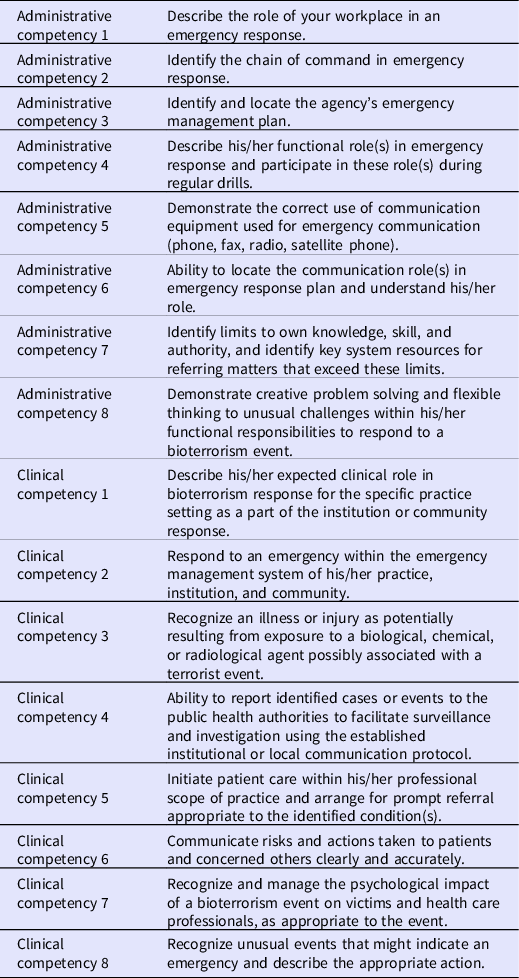
To remain consistent with the Florida study in 2010, the same core competencies, administrative and clinical, were adopted for this study (see Table 1).
Administrative competencies (AC) and clinical competencies (CC) Reference Harbison, Crane, McCluskey and Johnson11

Assessment of Provider’s Current Preparedness Level
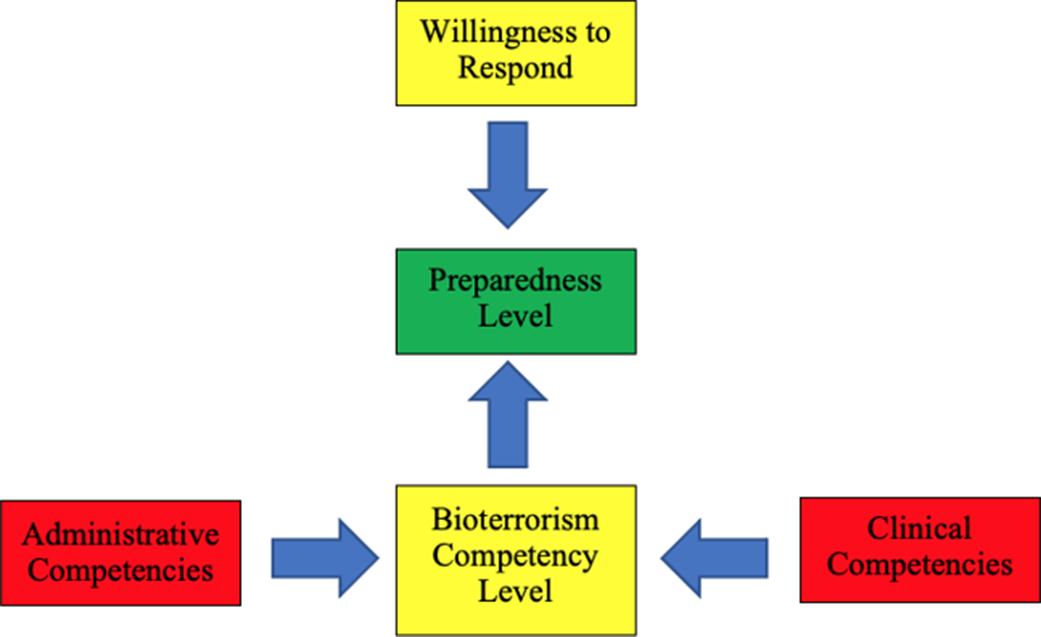
To determine the preparedness of providers, following the model suggested by Harbison et al., the preparedness level is a culmination of the administrative competencies, clinical competencies, and provider’s willingness to respond. Reference Harbison, Crane, McCluskey and Johnson11 Each of the competency themes are composed of their 8 individual competencies. The individual competencies are useful in identifying potential weaknesses or areas to focus on for improvement efforts. The weighted administrative and clinical competency levels create the weighted bioterrorism competency level. Each provider was gauged on their willingness to respond to bioterrorism incidents. The willingness to respond ratings were combined with the bioterrorism competency levels to create the overall preparedness level (see Figure 1). The basis for the conceptual framework is derived from the Theory of Reasoned Action to evaluate an individual’s willingness to respond, the Public Health Workers’ Emergency Preparedness Core Competencies for Emergency Response and Bioterrorism, and Emergency Response Clinician Competencies in Initial Assessment and Management for bioterrorism.
Conceptual model of Nebraska’s bioterrorism preparedness level.

Ethical Approval
The study was reviewed and approved by the University of Nebraska Medical Center Institutional Review Board (IRB). The IRB deemed the research to be a Human Subjects Exempt Research. This survey was a minimal risk due to the structure of the survey in which no identifiable information was collected and the anonymity of the survey. Informed consent for participation in the survey was obtained using a mandatory consent form before being granted access to the survey. Data collection in this study was limited to an online survey, a procedure that, outside the research context, does not require written consent. However, as mentioned, participants had to check the “I consent” button to enter the survey so implied consent is assumed. All demographic data were self-reported and cannot be linked back to any individual’s survey responses.
Statistical Analysis
Statistical analyses were performed using IBM SPSS Statistics Software Version 27 (Release 27.0.1.0) (SPSS Inc., Chicago, IL, USA). Evaluations at a P < 0.05 were considered statistically significant. Calculations for each of the sub-scores was conducted following the formulas suggested by Crane. Reference Crane12 Willingness to respond scores were calculated as the average of health care providers’ willingness score to respond to a high risk and low risk event in each of the location measures. Willingness to respond scores were based on a 5-point Likert Scale measurement from very likely to very unlikely to respond. Reference Harbison, Crane, McCluskey and Johnson11 The demographic variables including age, gender, education, years as an EMS professional, patient volume, and workplace type were tested for the prediction of the preparedness level using a logistic regression model. The administrative and clinical competency levels were measured based on each individual competency. The weight to each of the competencies for both the administrative and clinical competencies followed the Crane study and was suggested by experts at the time of survey construction. The percentages of overall preparedness level of each professional grouping (clinical level) were compared using the chi-square test (χ2) at a significance level of 0.05 (α = 0.05). Logistic regressions were used to determine predictive research questions.
Results
Description of Study Subjects
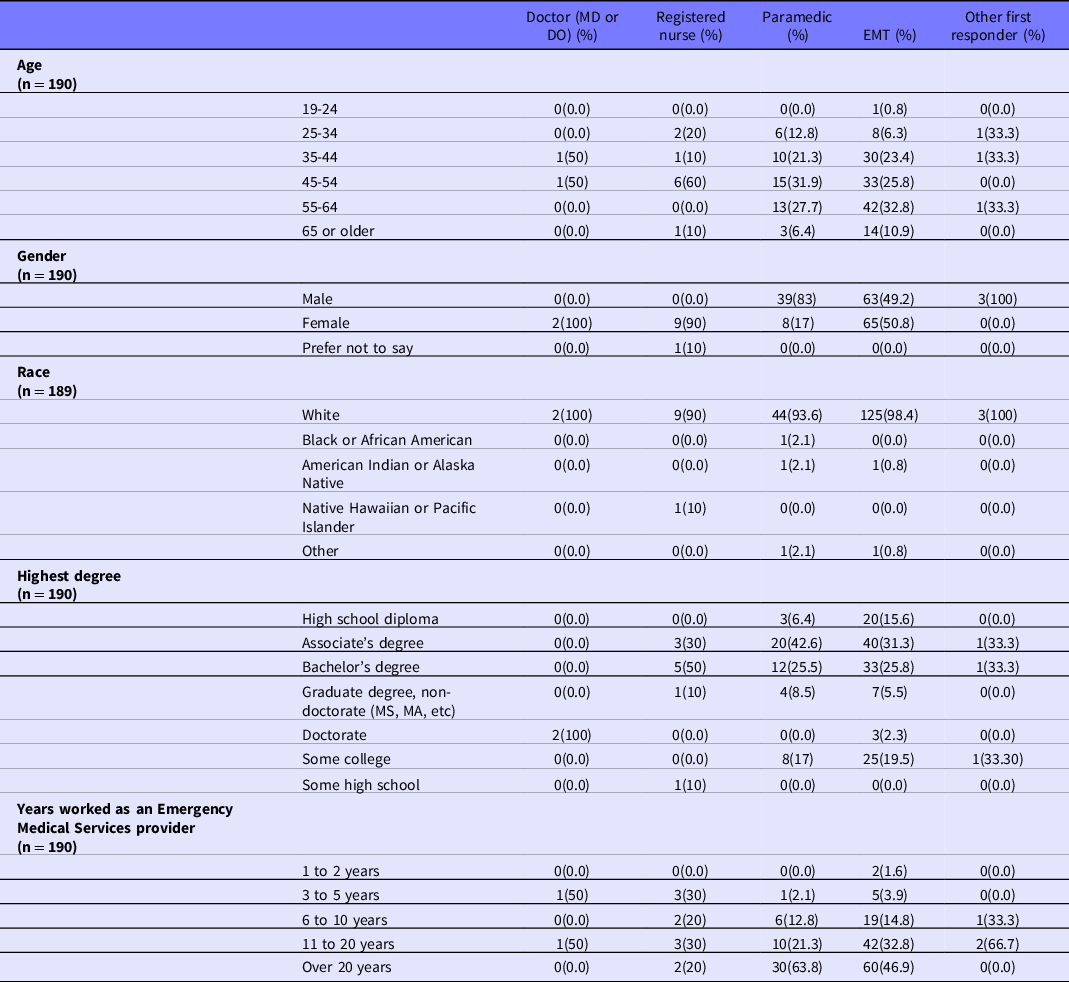
There were 190 respondents to the survey. It is not clear how high the response rate was as Nebraska Department of Health and Human Services personnel sent the survey to various agencies throughout the state who were to then distribute the survey further. As of February of 2022, there were 6,834 licensed EMS providers in the state of Nebraska. 13 This would yield a survey response rate of a minimum of 2.78%, but the response rate is likely much higher. A majority of the respondents were emergency medical technicians (n = 128, 65.3%). The other survey respondents were paramedics (n = 47, 24%), registered nurses (n = 10, 5.1%), physicians (MD or DO) (n = 2, 1%), and other responder (n = 3, 1.58%). More than half (53.6%) were men (n = 105), and most providers were in the age range of 35 to 64 years (n = 154, 78.6%). Almost all the survey participants were white (n = 183, 93.4%) (see Table 2).
Nebraska’s health care provider demographics

Sample n is based on the number of completions of each question.
Of all the respondents, 32.7% had an associate’s degree (n = 64), and 26% (n = 51) had a bachelor’s degree. The remaining had either some college (n = 34, 17.3%), a graduate but non-doctorate degree (MS, MA, etc) (n = 12, 6.1%), high school diploma (n = 23, 11.7%), a doctorate degree (n = 5, 2.6%), or some high school (n = 1, 0.53%). Most of the respondents had over 20 years of work experience as an EMS provider (registered nurse, n = 2, 20%; paramedic, n = 30, 63.8%; and EMT, n = 60, 46.9%).
Description of Subjects’ Work Place
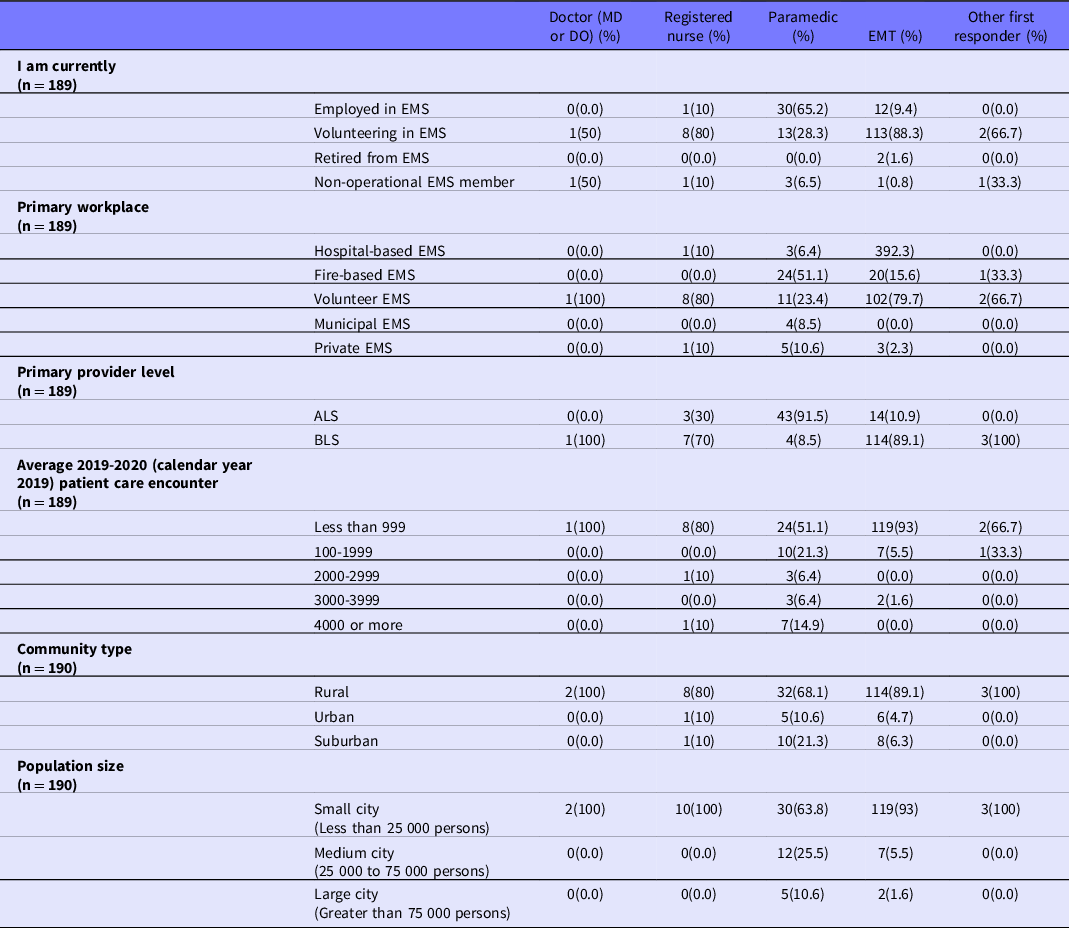
Most of the respondents are volunteering as an EMS provider (n = 137, 69.9%), while 21.9% (n = 43) are employed in EMS, 3.6% (n = 7) are non-operational EMS members, and 1% (n = 2) are retired from EMS. Similarly, most of the subjects work in a volunteer EMS system (n = 124, 63.3%). The remaining work in a fire-based EMS system (n = 45, 23%), private EMS (4.6%), hospital-based EMS (3.6%), and municipal EMS system (2%). The majority provider level was Basic Life Support (BLS) (n = 129, 65.8%). There were 60 respondents (30.6%) who were Advanced Life Support (ALS) providers. The providers generally had less than 999 annual patient encounters (n = 154, 78.6%), working primarily in a rural area (n = 19, 81.1%) with a population size less than 25 000 (n = 164, 83.7%) (see Table 3).
Nebraska EMS providers’ workplace demographics

Provider Competency Levels
Administrative competencies (AC)
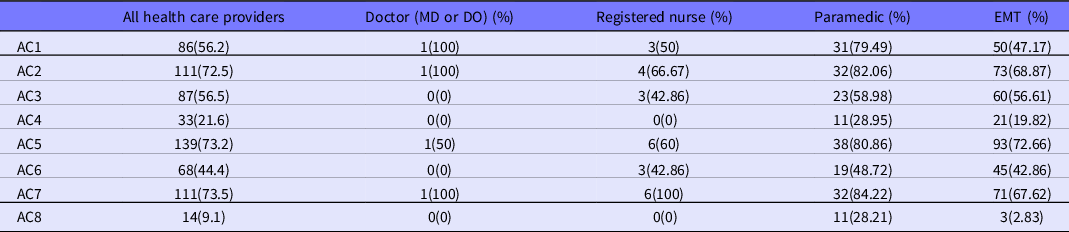
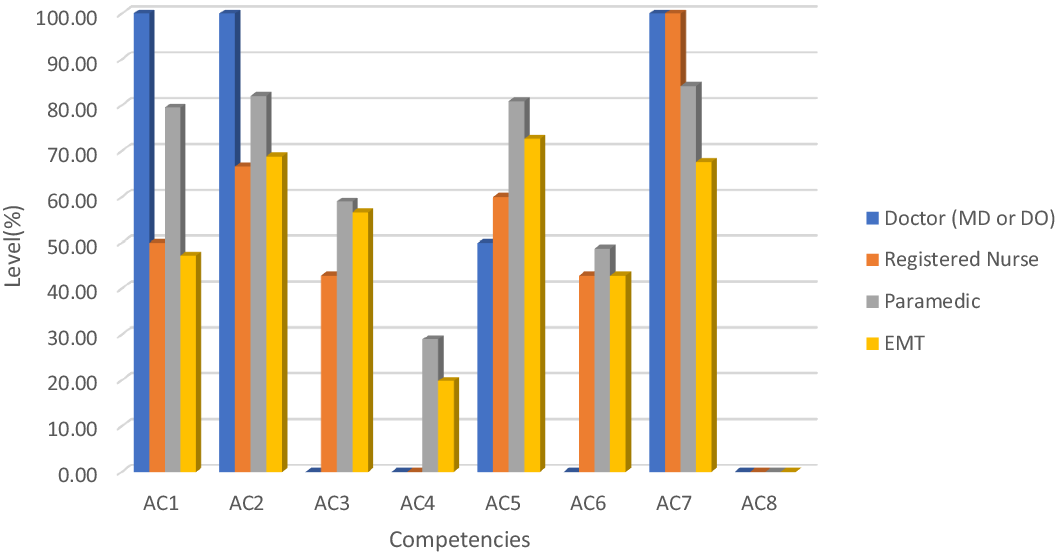
The unweighted administrative competency levels were computed for each level of provider. Paramedics (61.44%) had the highest unweighted competency level between EMTs (47.31%) and registered nurses (45.3%) (see Table 4 and Figure 2). EMS providers overall were the most competent when identifying limits to own knowledge, skill, and authority, and identifying key system resources for referring matters that exceed these limits (Administrative Competency 7; all providers 73.5%, EMTs 67.62%, paramedics 84.22%, registered nurses 100%, and doctors 100%). Additionally, EMS providers were competent overall in the correct use of communication equipment used for emergency communication (Administrative Competency 5; all providers 73.2%, EMTs 72.66%, paramedics 80.86%, registered nurses 60%, and doctors 50%). The EMS providers were skilled at identifying the chain of command in emergency response (Administrative Competency 2; all EMS providers 72.5%, EMTs 68.87%, paramedics 82.06%, registered nurses 66.67%, and doctors 100%).
Administrative competency levels of Nebraska EMS providers

AC1: Describe your workplace role in an emergency response. AC2: Identify the chain of command in an emergency response.
AC3: Identify and locate the agency’s emergency management plan.
AC4: Describe his/her functional role(s) in emergency response and participate in these role(s) during regular drills. AC5: Demonstrate the correct use of communication equipment used for emergency communication (phone, fax, radio, satellite phone).
AC6: Ability to locate the communication role(s) in the emergency response plan and understand his/her role.
AC7: Identify limits to own knowledge, skill, and authority, and identify key system resources for referring matters that exceed these limits.
AC8: Demonstrate creative problem solving and flexible thinking to unusual challenges within his/her functional responsibilities to respond to a bioterrorism event.
EMS providers were the weakest when demonstrating creative problem solving and flexible thinking to unusual challenges within his/her functional responsibility to respond to a bioterrorism event (Administrative Competency 8; EMTs 2.83%, registered nurses 0%, and doctors 0%). The EMT subgroup (19.82%) also had a weakness in Administrative Competency 4, which was the ability to describe their functional role(s) in emergency response and participate in these role(s) during regular drills.
Provider administrative competency levels for bioterrorism preparedness.

Clinical competencies (CC)
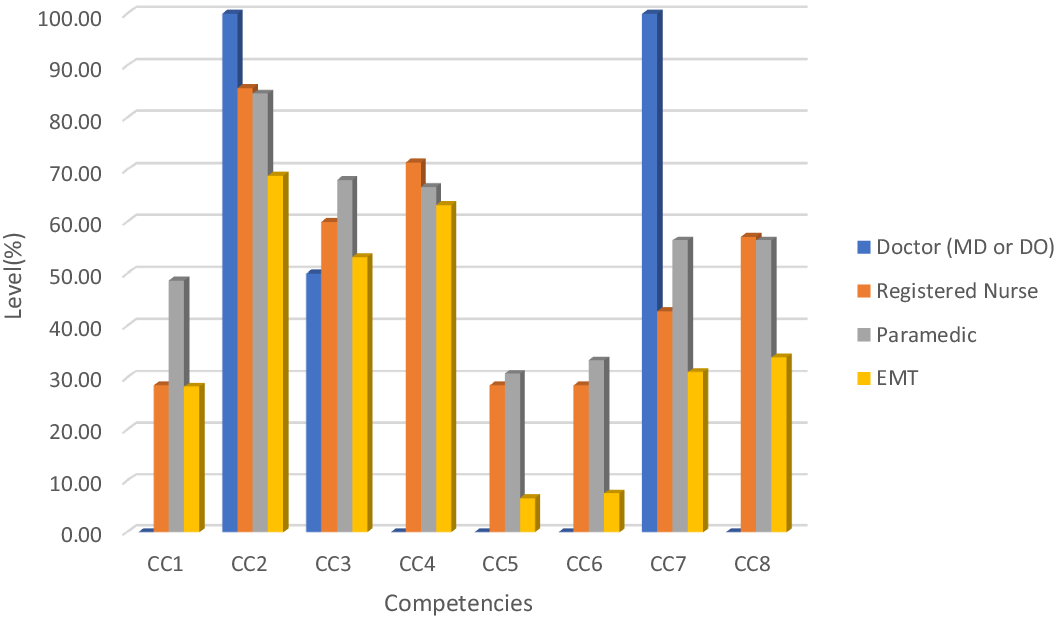
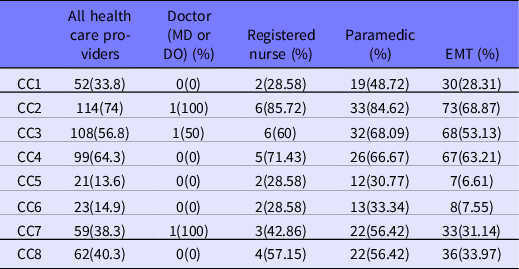
Similar to the administrative competencies, paramedics (55.63%) also had the higher unweighted clinical competency levels than EMTs (36.6%) and registered nurses (50.36%) (see Figure 3 and Table 5). There were more deficits in the clinical competency skills than in the administrative core competency set. The provider clinical competency levels ranged from a low of 13.6% (Clinical Competency 5: ability to initiate patient care within his/her professional scope of practice and arrange for prompt referral appropriate to the identified condition(s)) to a high of 74% (Clinical Competency 2: the ability to respond to an emergency within the emergency management system of his/her practice, institution, and community). The clinical competency levels examined skills not afforded by normal EMS job responsibilities and involved specialized bioterrorism training and skills.
Provider clinical competency levels for bioterrorism preparedness.

Clinical competency levels of Nebraska health care providers

CC1: Describe his/her expected clinical role in bioterrorism response for the specific practice setting as a part of the institution or community response.
CC2: Respond to an emergency within the emergency management system of his/her practice, institution, and community.
CC3: Recognize an illness or injury as potentially resulting from exposure to a biological, chemical, or radiological agent possibly associated with a terrorist event.
CC4: Ability to report identified cases or events to the public health authorities to facilitate surveillance and investigation using the established institutional or local communication protocol.
CC5: Initiate patient care within his/her professional scope of practice and arrange for prompt referral appropriate to the identified condition(s).
CC6: Communicate risks and actions taken to patients and concerned others clearly and accurately.
CC7: Recognize and manage the psychological impact of a bioterrorism event on victims and health care professionals, as appropriate to the event.
CC8: Recognize unusual events that might indicate an emergency, and describe the appropriate action.
Paramedics had their highest competency strengths with Clinical Competencies 2, 3, and 4 (respond to an emergency within the emergency management system of his/her practice, institution, and community [84.62%]; recognize an illness or injury as potentially resulting from exposure to a biological, chemical, or radiological agent possibly associated with a terrorist event [68.09%]; and ability to report identified cases or events to the public health authorities to facilitate surveillance and investigation using the established institutional or local communication protocol [66.67%], respectively). EMTs’ strongest clinical competency was responding to an emergency within the emergency management system of his/her practice, institution, and community (68.87%). All provider subgroups demonstrated the lowest clinical competency level with Competency 5, initiating patient care within his/her professional scope of practice and arrange for prompt referral appropriate to the identified condition(s) (paramedics 30.77%, nurses 28.58%, and EMTs 6.61%).
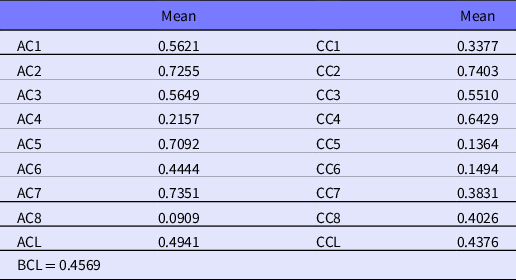
The mean score for the administrative competency level (ACL) is 0.4941. This suggests that 49.41% of subjects are competent in the administrative core competencies. Similarly, the mean score of 0.43776 for the clinical competency level (CCL) suggests that, on average, each subject is competent in 43.76% of the overall core administrative competencies.
The weighted mean score for the bioterrorism competency level suggests that 45.69% of subjects have the necessary competence level to respond to a bioterrorism event (see Table 6).
Weighted bioterrorism competency level scores for Nebraska’s health care providers

Willingness to Respond
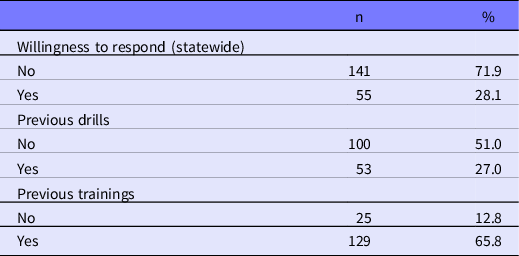
Nebraska providers were willing to respond to high risk and low risk events within their local communities (77% and 89.9%, respectively) (see Table 7). A high risk event is defined as a bioterrorism agent that does NOT have a known treatment and/or vaccination. A low risk event is defined as a bioterrorism agent that has a known treatment and/or vaccination. Proximity is defined as the distance from providers’ normal workplace to ground zero of the event. Reference Crane12 Paramedic providers were the most likely of the subgroups to respond to either event within their local community and tended to report a higher willingness to respond to a high risk event than other providers throughout the levels of proximity. EMTs were most likely to respond to a low risk event in their local community (88.24%). Overall, only 33.8% were willing to respond to a high risk event nationwide (registered nurses 42.86%, paramedics 40.55%, and EMTs 31.38%) and 42.2% to a low risk event nationwide (registered nurses 42.86%, paramedics 43.25%, and EMTs 42.58%). The responses of EMS providers showed that the willingness to respond to bioterrorism outside their local community dropped dramatically. While 77% were willing to respond to a high risk incident in their local community, only 56.1% were willing to do so statewide.
Percentage of Nebraska health care providers’ willingness to respond to a bioterrorism attack

The total n does not include the “others” category of provider.
High risk event was defined as a bioterrorism agent that does NOT have a known treatment and/or vaccination.
Low risk event was defined as a bioterrorism agent that has a known treatment and/or vaccination. Proximity was defined as the distance from providers’ normal workplace to ground zero of the event.
Local was defined as the providers’ local community.
Regional was defined as counties surrounding the providers’ normal workplace.
Statewide was defined as responding anywhere in the State of Nebraska.
Nationwide was defined as responding anywhere in the United States.
Workplace Emergency Plan
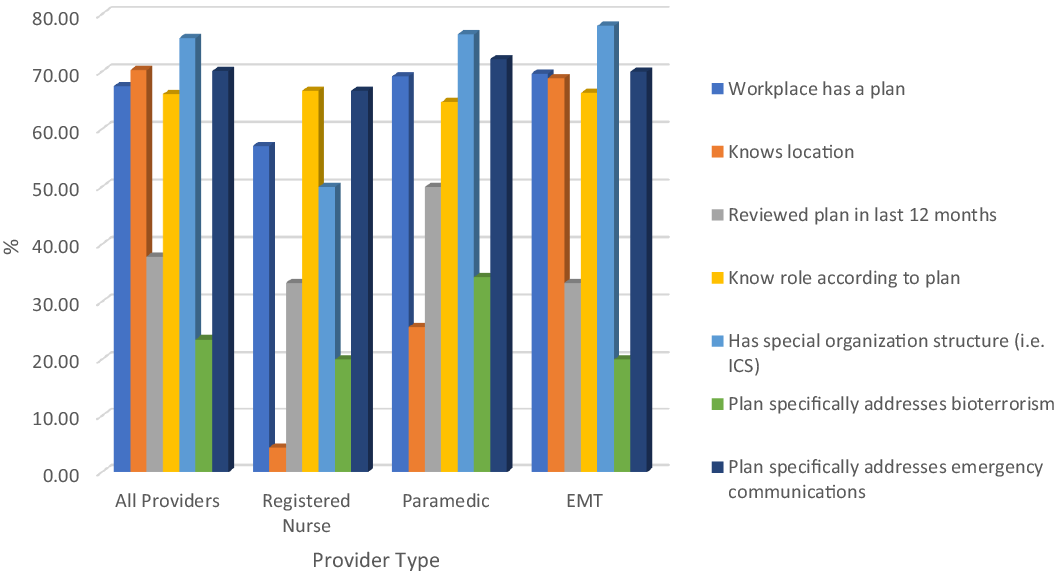
Of the EMS providers, 67.5% (registered nurses 57.1%, paramedics 69.2%, and EMTs 69.7%; see Table 8 and Figure 4) knew whether their workplace had an emergency plan, and 70.29% (registered nurses 4.4%, paramedics 25.6%, and EMTs 68.9%) of those who knew had knowledge of where it was located.
Providers’ knowledge of a workplace emergency plan and its contents

Provider’s knowledge of a workplace emergency plan and its contents.

Emergency Preparedness Drills
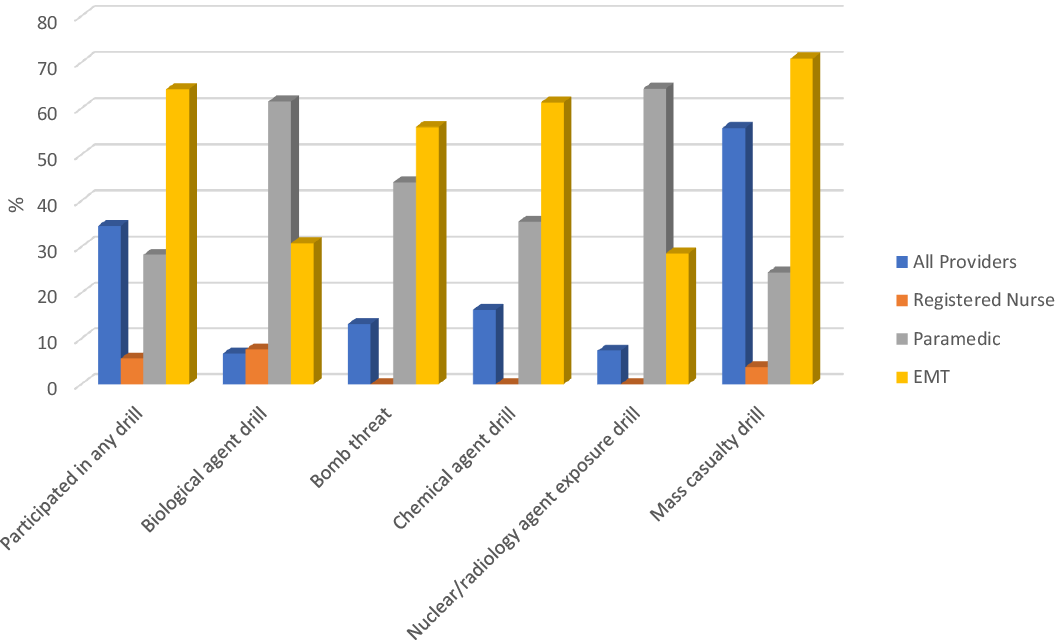
The survey findings suggest that 34.6% of providers (registered nurses 5.7%, paramedics 28.3%, and EMTs 64.2%; see Table 9 and Figure 5) had participated in emergency drills in the past 12 months and of those, only 6.8% (registered nurses 7.7%, paramedics 61.5%, and EMTs 30.8%) had participated in a bioterrorism related drill.
Provider participation in emergency preparedness drills

Provider participation in emergency preparedness drills.

Emergency Preparedness Training Activities
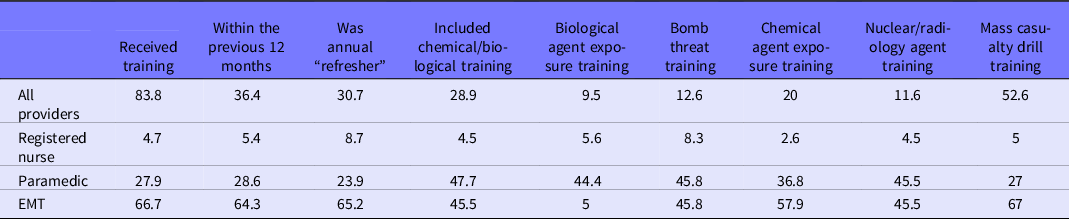
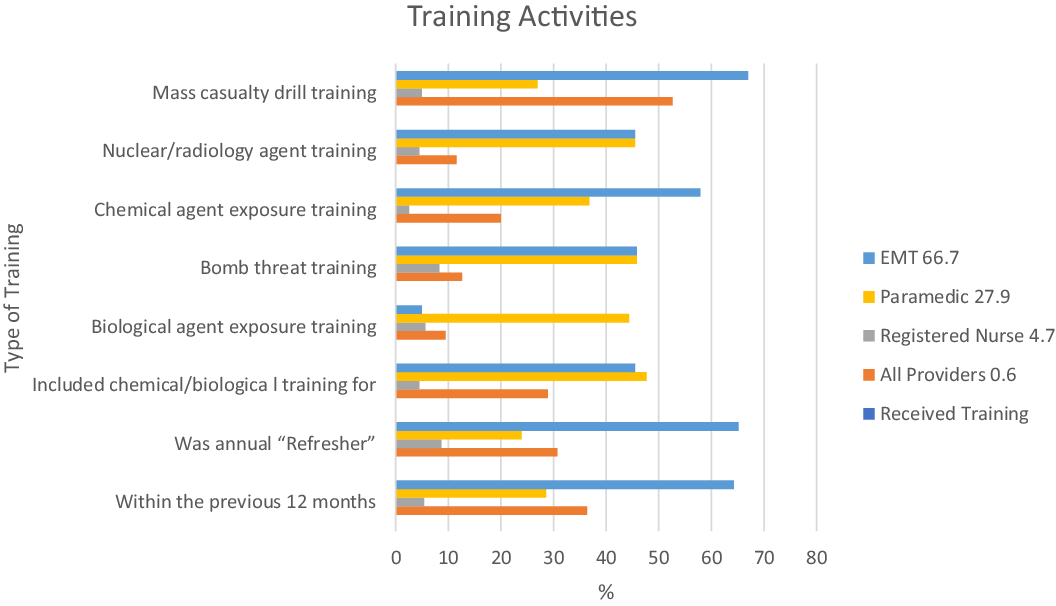
The findings, reported in Table 10 and Figure 6, suggest that 83.8% (registered nurses 4.7%, paramedics 27.9%, and EMTs 66.7%) of Nebraska’s EMS providers have participated in an emergency training in disaster awareness, preparedness, and response sometime during their career. Of those, only 36.4% (registered nurses 5.4%, paramedics 28.6%, and EMTs 64.3%) participated in the training within the previous 12 months. Only 28.9% stated that the training included a chemical or biological component, and even fewer providers (9.5%) stated that the training focused specifically on a biological agent exposure.
Providers’ emergency preparedness training activities

Providers’ emergency preparedness training activities.

Method/Modality of Bioterrorism Training Received
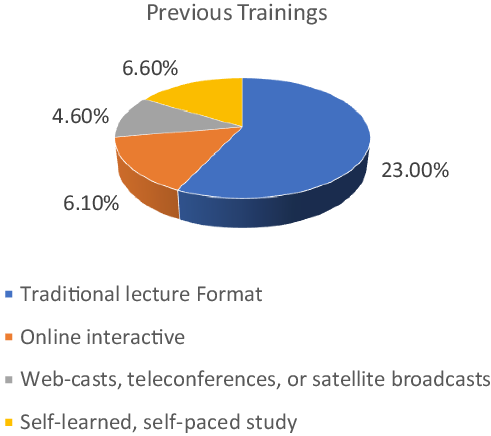
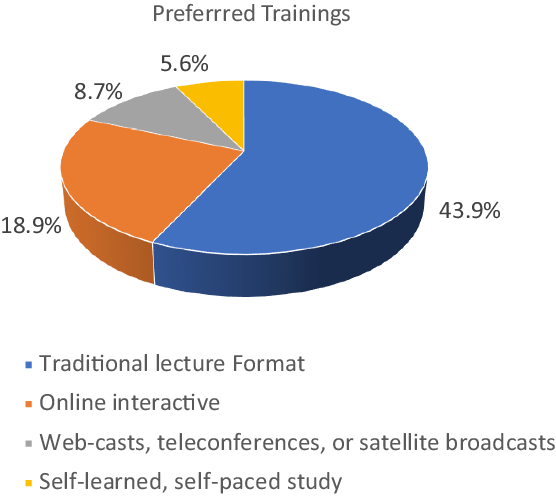
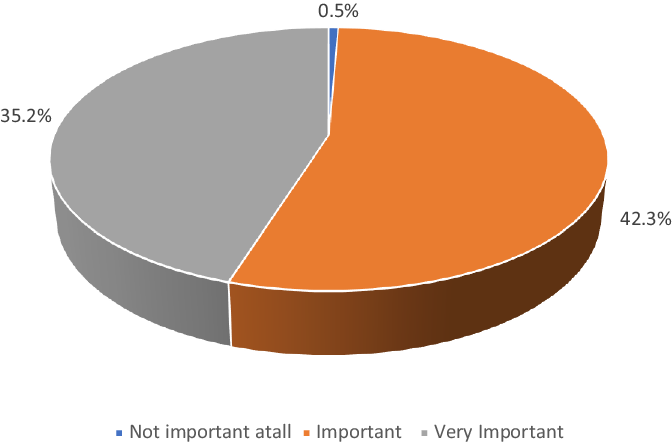
Only 23% of respondents had received training in a traditional lecture format with 6.6% using self-learned, self-paced studies (see Figure 7). Of the total respondents, 43.9% preferred traditional lecture formatting for future training and 18.9% preferred online interactive courses (see Figure 8); 35.2% of providers reported that it was very important for EMS providers to be trained to identify a bioterrorism event, while 42.3% indicated it was important, and only 0.5% believed it was not important (see Figure 9).
Types of bioterrorism training methods/modalities for providers.

Types of bioterrorism training methods/modalities for providers.

The providers’ perceived benefits of bioterrorism training (PBT).

Perceived Threats of the Risk of Bioterrorism
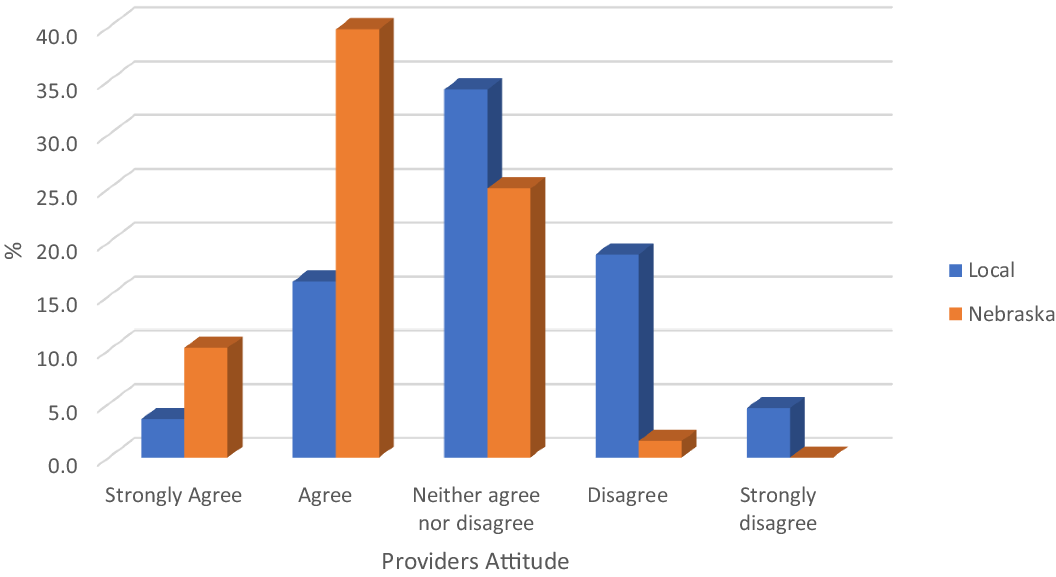
Half of EMS providers believed that bioterrorism is a real threat within the state, but the percentage dropped to 19.9% when asked whether bioterrorism is a threat within their community (see Table 11 and Figure 10); 34.2% were neutral or disagreed with the statement.
The providers’ perceived threats of the risk of a bioterrorism attack at the state and local levels

The providers’ perceived threats of the risk of a bioterrorism attack at the state and local levels.

Preparedness of Nebraska EMS
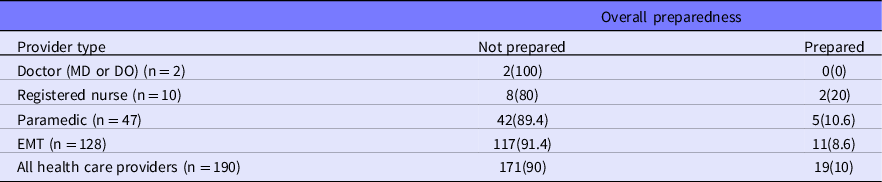
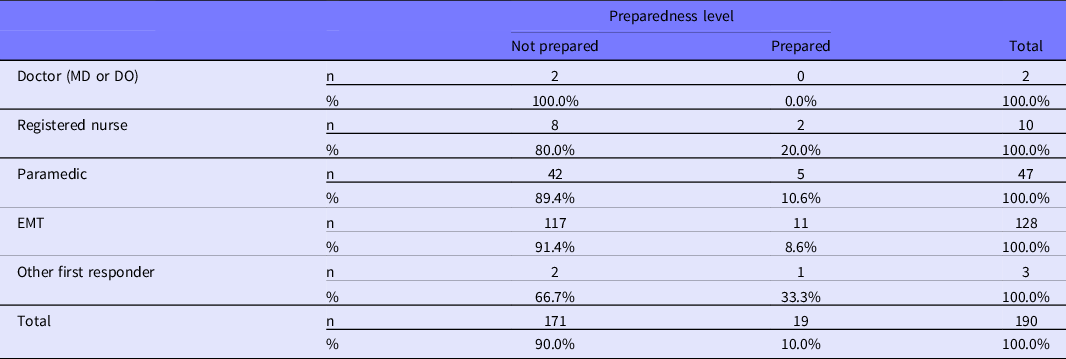
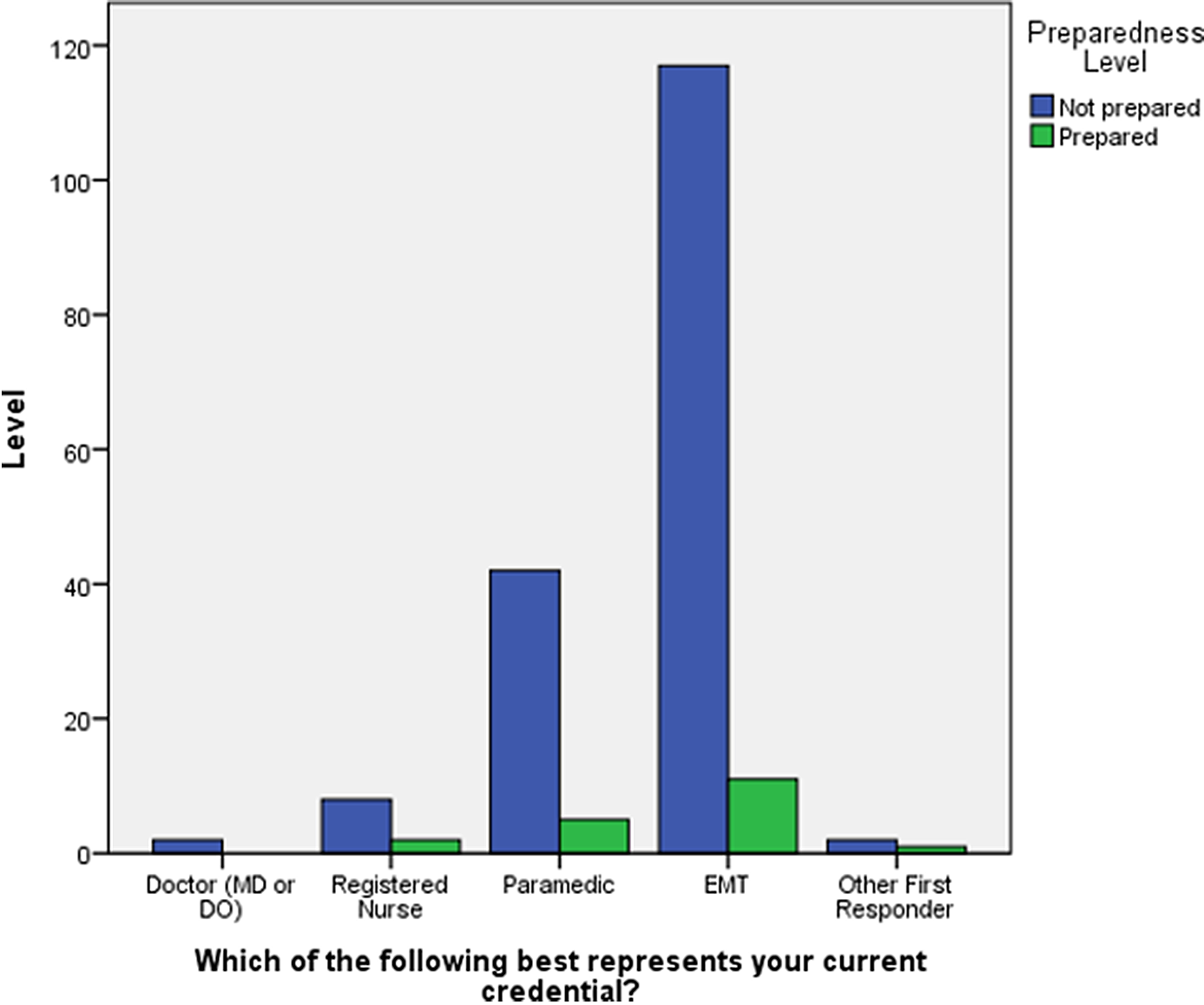
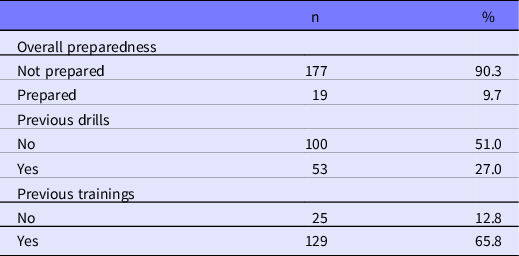
The preparedness level of Nebraska EMS providers for a bioterrorism attack was 10% with 90% being unprepared for such an incident (see Table 12). The bioterrorism competency level (BCL) indicated that 45.69% of the respondents had the minimal competencies needed to respond to a bioterrorism event, and only 58.8% were willing to respond to a bioterrorism attack in Nebraska. An evaluation of those with both the willingness and minimal level of competency to effectively respond to a bioterrorism attack showed that only 10% of the respondents (20% registered nurses, 10.6% paramedics, and 8.6% EMTs) were both willing and able to effectively function in a bioterror environment. The EMTs had a lower level of preparedness compared to paramedics and nurses (8.6% vs 10.6% and 20%), but a Pearson chi-squared test of percent preparedness of these EMS subgroups showed there was no significant difference between the levels of preparedness of each group (P = 0.485) (see Table 13).
Preparedness levels of Nebraska’s health care providers

The total n does not include the “others” category.
Overall bioterrorism preparedness level (PL) by provider type

χ2(4) = 3.451, P = 0.485
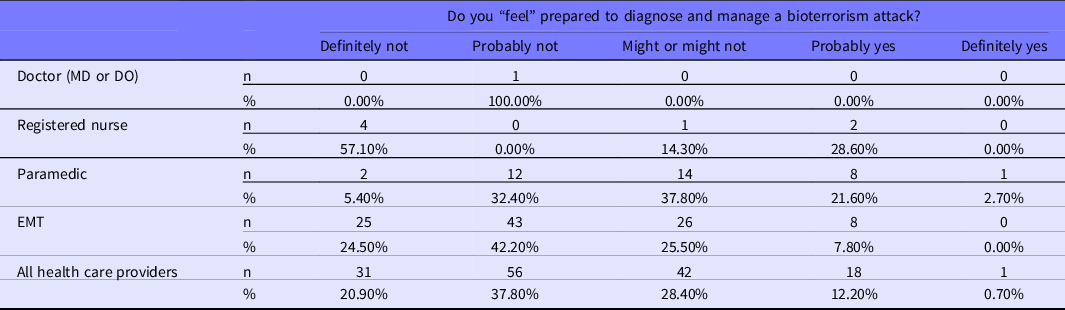
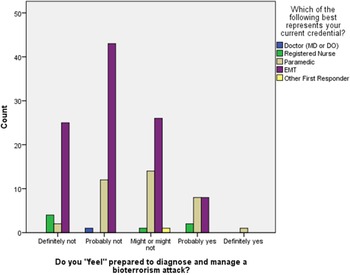
Twenty percent (20.9%, n = 31) of the EMS responders (registered nurses, n = 4, 57.10%; paramedics, n = 2, 5.40%; and EMTs, n = 25, 24.50%) did not feel prepared, and 37.8% (registered nurses 0%, paramedics 32.4%, and EMTs 42.20%) likely did not feel prepared to identify and manage a bioterrorism attack (see Table 14). Twelve percent (12.2%) (registered nurses 28.6%, paramedics 21.6%, and EMTs 7.8%) likely felt prepared, and only 0.7% of Nebraska providers (registered nurses 0%, paramedics 2.7%, and EMTs 0%) most likely felt prepared to identify and manage a bioterrorism attack (see Figure 11 and Figure 12).
Percentage of providers who “feel” prepared

Overall bioterrorism preparedness level (PL) by provider type.

Percentage of providers who “feel” prepared.

Predictive Factors
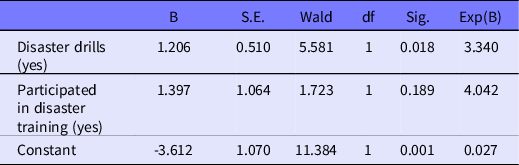
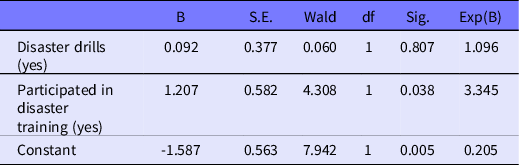
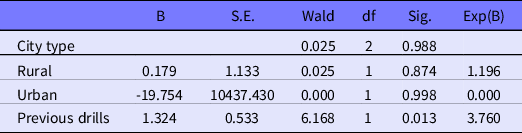
A logistic regression showed that previous trainings (β = 1.397, P = 0.189) were not a significant predictor of overall preparedness while drills were a significant predictor (β = 1.206, P = 0.018) (Tables 15 and 16). If a provider has previous drills, they are 3.34 times more likely to be prepared for a bioterrorism incident. Previous trainings were a significant predictor of a willingness to respond (β = 1.207, P = 0.038) (Tables 17 and 18). If the EMS providers had previous trainings, they were 3.345 times more likely to have the willingness to respond to a bioterrorism attack compared to those with no previous trainings. Previous drills (β = 1.324, P = 0. 013) were the only significant predictors of overall preparedness of the Nebraska health care providers (Table 19). The Appendix highlights all regression analyses, including those that were not significant.
Descriptive statistics of the variables in the logistic regression model (1)

Logistic regression significant results (1)

Descriptive statistics of the variables in the logistic regression model (2)

Logistic regression significant results (2)

Logistic regression significant results (3)

Discussion
The COVID-19 pandemic has highlighted the immense vulnerabilities that exist within the bio-preparedness within the United States. The devastation of the pandemic and its impact on health, life, and the economy serve to expedite the threat of bioterrorism. Reference Lyon14 This study highlights the critical areas for bioterrorism preparedness that can be supplemented by training, education, and drills. The main component of this study was to evaluate the competency levels of EMS providers in the state of Nebraska. The individual competencies that are used to derive the overall competencies are crucial in understanding the gaps that exist within the current preparedness structure. The core bioterrorism competency indicates the ability of providers to administratively manage a bioterrorism incident and the ability to clinically manage victims of a bioterrorism attack.
The administrative components of this survey were meant to be unattenuated from EMS specific knowledge. The competencies involved using the appropriate communication platforms in a response. Harbison et al. found that only 72.7% of Florida health care providers had the acceptable competency level in this area. Reference Harbison, Crane, McCluskey and Johnson11 In this study, only 49.41% of EMS responders were competent in the administrative competencies. Over half of the EMS providers would not be able to provide the appropriate communication to identify and report a potential bioterrorism attack. Only 9.1% of all EMS providers demonstrated creative problem solving and flexible thinking to unusual challenges within his/her functional responsibilities to respond to a bioterrorism event. Additionally, only 21.6% of EMS providers reported being able to describe his/her functional role(s) in emergency response and that they participate in these role(s) during regular drills.
The clinical competency levels are the more common measures of what would traditionally be expected of EMS providers’ clinical ability to identify and manage the results of a bioterrorism incident. The clinical competency of the EMS provider population was below that of the administrative competency (43.76% of providers were competent). Few of the EMS providers were able to initiate patient care within his/her professional scope of practice (13.6%) and arrange for prompt referral appropriate to the identified condition(s) or communicate risks and actions taken to patients and concerned others clearly and accurately (14.9%). Only 56.8% of providers (60% registered nurses, 68.09% paramedics, and 53.13% EMTs) were able to recognize an illness or injury as potentially resulting from exposure to a biological, chemical, or radiological agent possibly associated with a terrorist event. This has the potential threat of implicating responder safety given they may not recognize the need for additional precautions or for the treatment of the patient who may not get the necessary immediate and appropriate care for their exposure.
The willingness to respond is another key consideration of overall preparedness of the EMS system. Most bioterrorism incidents will likely be initially high risk as identification of the agent will take time and the use of novel agents would eliminate the ability to have providers already vaccinated to the agent. While a majority of providers (76%) were willing to respond to a high risk incident in their community, which will be crucial for an initial response, various biological agents, as seen with the COVID-19 pandemic, can lead to a prolonged response that exceeds the borders of an individual community. This will necessitate the sharing of resources to address the potential rapid spread of a threat that exceeds community borders. Only 56.1% of providers were willing to respond to a high risk incident statewide, which is a significant gap in the ability to effectively respond to a threat. Trainings, however, were a significant predictor of a willingness to respond (P = 0.038) and should be a focus of training officers and providers themselves in order to increase the number of responders who are willing to respond to supplement the resource needs as a bioterror attack strains the system. Providers recognized a need for training with 35.2% of providers reporting that it was very important for EMS providers to be trained to identify a bioterrorism event while 42.3% indicated it was important. With a majority of the respondents being volunteers (69.9%), it is important to consider the constraints that volunteers might have that limit their ability to respond. Volunteers may have other careers outside of EMS that require a heavy monopoly of their time. This further limits their ability to respond to a protracted event or to an event in which they are concerned about the response having an impact on their ability to work due to a contracting illness. This is also associated with the potential for familial responsibilities that may cause providers to be unwilling to leave their families to respond to a bioterrorism event. Providing contingencies and protections for these providers, including through aid such as financial support during a terrorism incident or through community childcare services, may better allow providers the opportunity and thus willingness to respond to an incident.
Each of the competency levels was weighed in their relation to the overall bioterrorism competency level. Only 45.69% of the EMS providers were found to have the minimum bioterrorism competency to identify and manage a bioterrorism attack without placing themselves in harm’s way or being able to appropriately assist a patient. With the increasing threat of bioterrorism and the need to protect frontline health workers who are crucial to resilience, the findings of this study should convince the Department of Health and Human Services, policy-makers, and EMS agencies/providers themselves to place an increased focus on preparing for bioterrorism incidents through increased training and drills. The study found that drills were a significant predicter of overall level of preparedness of the health care providers (P = 0.018). However, only 34.6% of providers (5.7% registered nurses, 28.3% paramedics, and 64.2% EMTs) had participated in emergency drills in the past 12 months, and of those only 6.8% had participated in a bioterrorism related drill (7.7% registered nurses, 61.5% paramedics, and 30.8% EMTs). EMS providers are a key part of the health care system and are a crucial cog in the ability of the United States to remain resilient in the face of a bioterrorism incident. With only 10% of the respondents (20% registered nurses, 10.6% paramedics, and 8.6% EMTs) both willing and able to effectively function in a bioterror environment, there is a significant threat of devastating consequences of a bioterrorism attack in Nebraska. EMS providers will be some of the first to encounter a potential attack. Their ability to recognize and treat the potential bioterrorism incident will have major implications on the health and safety of not only victims, but also providers themselves.
The results from this study showed some similarities between the willingness and ability of EMS providers to respond to bioterrorism incidents and the findings in Florida. Reference Harbison, Crane, McCluskey and Johnson11 While there were similar levels of willingness to respond on the local level for both high risk and low risk events, the differences in willingness to respond to nationwide incidents were stark. In Florida, 48.2% of health care providers were willing to respond to high risk events nationwide and 47.0% for low risk events. Reference Harbison, Crane, McCluskey and Johnson11 In contrast, only 33.8% of respondents in this study were willing to respond to a nationwide high risk event and 42.2% to low risk events. The level of response to threats may be linked to the different mix of populations between the 2 states as well as the rural nature of many Nebraska locations. Nebraska also appears to be less prepared for a bioterrorism event as only 10% of respondents were both willing and able to respond to an incident compared to the 32.5% of the health care providers in Florida having both the minimal level of competency to efficiently function and the willingness to respond to an attack. These findings may be linked to the perception differences of threat risk in the 2 states. In Nebraska, only half of the providers believed that bioterrorism is a real threat in the state and only 19.9% felt that it is a threat within their community; 86.4% of health care workers in Florida agreed or strongly agreed that bioterrorism is a threat within the state, and still 59.8% felt that there is a real threat in their community. Reference Harbison, Crane, McCluskey and Johnson11 Additionally, 46% of health care workers in Florida believed that it is very important, and 50% believed that it is important for providers to be trained to identify a bioterrorism event. Reference Harbison, Crane, McCluskey and Johnson11 Of the Nebraska EMS providers, only 35.2% felt it is very important and 42.3% felt it is important for EMS providers to be trained for bioterrorism events. These differing perceptions may play a key role in identifying the likelihood of willingness to respond to and the capacity of health care providers around the country to effectively address a bioterrorism attack. All states should identify their individual providers’ willingness and abilities while also working together to ensure that the nation has the human capital resources necessary to respond to a nationwide event.
Limitations
There are likely various factors that are related to the willingness to respond to a bioterrorism incident. The multifaceted and complex considerations that cause a personal decision about willingness to respond are difficult to capture. There is likely a multitude of variables that predict the likelihood of preparedness of providers based on their willingness to respond which were not covered in this study. The sample size and response rate are major limitations in this survey. The survey was distributed by the Department of Health and Human Services to EMS Specialists who then contacted the agencies within their response jurisdiction to administer the survey. This could have limited reach of the survey as well as the sample size. The use of emails to provide a link to the survey could have limited the number of responses as well as eliminate certain populations who had outdated emails. The population was also difficult to reach due to the burnout and fatigue experienced during the ongoing COVID-19 pandemic response. The limited sample size can limit the representativeness and robustness of survey response. This can further limit the generalizability of the results as those who participated in the survey may be biased with interests in bioterrorism compared to those who are uninterested and did not wish to take a survey related to such a topic. The responses and the similarities between the initial emergence of COVID-19 and a potential bioterrorism attack could have influences with some socially desirable bias integrated within the responses. This study should thus serve as preliminary support for the findings of the Florida study and suggests the need for further investigation in Nebraska and around the country.
Recommendations
This study provides important insight into the clinical and administrative competencies of Nebraska EMS workers to manage a bioterrorism attack and evaluate their willingness to respond to a bioterrorism event within the state. The study also evaluates the overall level of preparedness of the EMS community to identify and respond to a bioterrorism threat. The study suggests that there exists a need to improve the training and mobilization of management models for EMS providers in the state of Nebraska. The competencies in the study should serve as a baseline evaluation of the preparedness of EMS providers and be used to gauge improvements through targeted trainings and drills that involve bioterrorism incidents. Nebraska has the ability to serve as a model for public health preparedness by evaluating the weaknesses in the overall prepared providers, who are clinically competent and willing to respond, and targeting training and legislation to support the increase of a more resilient EMS workforce. Volunteers are a bulk of providers in Nebraska and similar structures exist throughout the United States. While volunteer services may be amicable for normal EMS operations without additional support through financial and societal support systems, funded through various legislation, this population of the workforce may be unable to respond to a bioterrorism event, an incident in which their services are the difference between life and death. The training and drills that will increase the competencies in bioterrorism incidents will also serve as a more generalizable purpose to increase the preparedness of EMS providers to identify and manage other novel threats such as COVID-19.
Conclusions
This study found low rates of clinical and administrative competencies to manage a bioterrorism attack amongst Nebraska EMS providers leaving a structure that would struggle to identify and manage an incident. Respondents also were unwilling to widely respond to such an incident outside of their local jurisdictions. To be prepared for the increasing threat of bioterrorism or other novel emerging infectious disease outbreaks, local, state, and federal EMS service providers need to be aware of the extent of their available workforce. A resilient nation relies on a prepared set of emergency service providers who are willing to respond to biological terrorism events.
Supplementary material
To view supplementary material for this article, please visit https://doi.org/10.1017/dmp.2022.201.