Defining Risk
Risk
In simplest terms, risk is the probability that a specific outcome will occur (out of all possible outcomes; Box 1 [available online only]). This outcome may be beneficial or adverse. This relationship may be represented as:
 $${\it p}\,\left( {{\rm risk}} \right){\equals}{\int} {{\it p}\,({\rm outcome}).} $$
Risk represents the effect of uncertainty on outcomes. 1 Uncertainty is a state or condition that involves a deficiency of information and leads to inadequate or incomplete knowledge or understanding. 2 Uncertainty exists whenever the knowledge or understanding of an event, consequence, or likelihood is inadequate or incomplete. 2 Statistical uncertainty is calculated as the interval around the measurement in which repeated measurements will fall. Expressions of risk therefore include estimations of uncertainty, as follows:
 $$\it {p}\left( {{\rm risk}} \right){\equals}{\int} {p({\rm outcome})\,\pm\,{\rm uncertainty}{\rm .}} $$
Impact
In general terms, risk is conceptualized as the probability of events and the severity of outcomes (eg, consequences) that would arise if the events take place. The severity of consequences (usually conceptualized as losses or damage) is frequently described in terms of impact. Correspondingly, the United Nations International Strategy for Disaster Reduction (Geneva, Switzerland) defines impact as “the degree of severity associated with … consequences….” 3 Thus, the term consequence is not synonymous with impact. Consequence is a qualitative description of the loss, while impact is a quantitative measure of that loss.
Risk Assessment
Risk assessment is the process of estimating the probability of an outcome. Risk is assessed as a function of the probability that an adverse event (referred to as a hazard) and its resultant impact will occur during a given timeframe. This relationship is described as follows in what is commonly referred to as the “risk equation:”Reference Wharton 4
 $${\it p}\left( {\rm R} \right){\equals}{\int} {{\it p}\left( {{\rm H}\,{\times}\,{\rm I}} \right)} \,\pm\,{\rm uncertainty}$$
where, R= risk; H=hazard incidence; and I=degree of impact.
Hazards are defined as “an agent or a situation…with the inherent capability to have an adverse effect.” 5 Examples of health hazards include: viruses, chemicals, tobacco, and even direct sunlight. Risk is the joint probability that (in the future): (1) one of these hazards will occur; and (2) that there will be a resultant impact.
Risk Management
According to ISO 31000 (International Organization for Standardization; Geneva, Switzerland), a set of international standards relating to risk management, risk management is the activity directed toward assessing, communicating, and treating risks. 1 It is the systematic approach and practice of managing uncertainty to minimize potential harm and loss. This involves a process of evaluating alternative actions, selecting options, and implementation guided by risk assessment. The decision making will incorporate scientific information, but also requires value judgements (eg, on the tolerability and reasonableness of costs; Figure 1).
Components of Risk Management.

Risk Assessment
Risk assessment is the process of estimating the probability an outcome, under a specific set of conditions, and for a certain timeframe. Thus, risk assessments are intended to express risk in terms of forecasting the statistical probability for a specific, measurable, and time-based outcome.
Risk Communication
Risk communication is an interactive process involving the exchange among individuals, groups, and institutions of information and expert opinion about the nature, severity, and acceptability of risks and the decisions taken to combat them.Reference Dorfman 6
Risk Treatment
Risk treatment measures are put in place to control risk, whenever possible. These, in turn, include:Reference Dorfman 6
∙ Risk Avoidance - avoiding the risk altogether;
∙ Risk Reduction - reducing the negative effect of the risk;
∙ Risk Transfer - transferring the risk to another party; and
∙ Risk Acceptance - accepting some or all of the consequences of a risk.
Defining Health Risk
Health, Disease, and Illness
According to the World Health Organization (Geneva, Switzerland), “Health is a state of complete physical, mental, and social well-being and not merely the absence of disease or infirmity.” 7 Disease is defined as “a deviation from normal health that derives from an identifiable pathological process and which the patient experiences as an illness.” 5 In comparison, illness is the “subjective sense of feeling unwell that often motivates a patient to consult a physician.” 5
Casual Factors for Disease
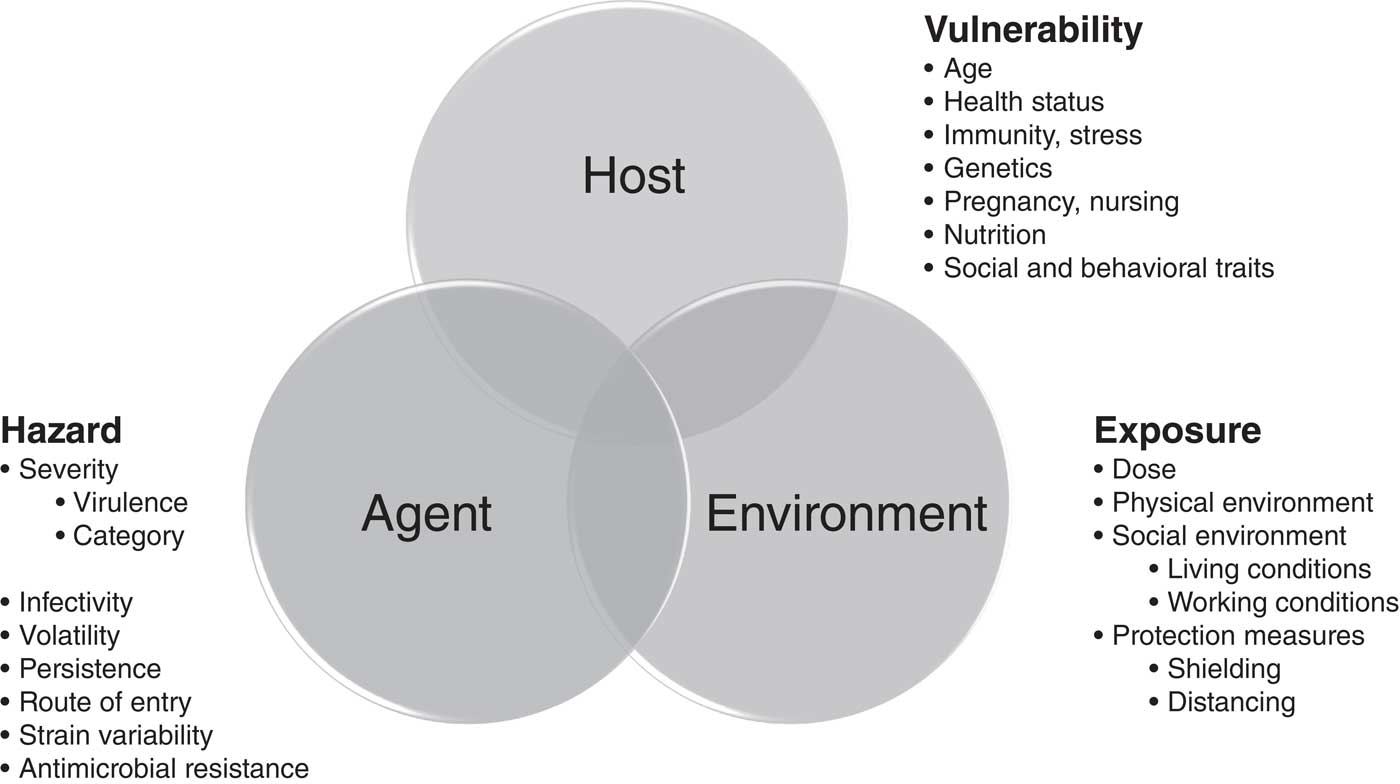
Disease does not occur randomly. It is caused when vulnerable hosts are exposed to an environment containing agents that are hazardous to health. It is therefore possible to study the causal pathways involving the agent, host, and environment, including both risk and protective factors. Causal factors are any behavior, omission, or deficiency that if corrected, eliminated, or avoided probably would have prevented the disease. Figure 2 illustrates how disease is caused by a complex interaction between the person (host), the disease agent (hazard), and the environment (exposure).Reference Frost 8
Causal Factors for Disease.Reference Frost 8 , Reference Keim 17

Health Hazards
Health hazards are defined as an agent or a situation that, when exposed to a human, has the inherent capability to cause an adverse health outcome (disease), resulting in morbidity (illness and/or injury) and mortality (death).
Biological hazards which transfer infection are those microbiological organisms (bacteria, viruses, parasites, or fungi) that cause infectious disease. 9
Hazards which transfer energy (mechanical, chemical, thermal, or radiological) are usually associated with injury. 9
In some cases, environmental hazards cause injuries such as dehydration, malnutrition, drowning, and hypothermia (through the absence of essential requirements for life such as water, food, oxygen, or heat, respectively). 9
Categories of Disease
Three major categories of disease include: communicable disease, non-communicable disease, and injury.
Communicable disease is an infectious disease that can be passed (transmitted) from person to person. Infectious disease is “caused by pathogenic microorganisms, such as bacteria, viruses, parasites, or fungi; the diseases can be spread, directly or indirectly, from one person to another.” 10
Non-communicable diseases, also known as chronic diseases, are not passed from person to person. They are commonly associated with exposures related to lifestyle (eg, diet, exercise, smoking, or a workplace) and are typically of long duration and generally slow progression. Four main types of non-communicable diseases include cardiovascular diseases (like heart attacks and stroke), cancers, chronic respiratory diseases (such as chronic obstructive pulmonary disease and asthma), and diabetes. Exacerbations of endemic, non-communicable diseases are common among all disasters.
Injury is a category of disease “caused by acute exposure to physical agents such as mechanical energy, heat, electricity, chemicals, and ionizing radiation interacting with the body in amounts or at rates that exceed the threshold of human tolerance.”Reference Haddon 11 , Reference Gibson 12
Some experts consider that the interval between exposure and the appearance of injury can be relatively long, such as in poisoning from carbon monoxide, alcohol abuse, or heavy metals. Acuteness is certainly a factor: the shorter the time from exposure to a hazard to its physical effects, the more likely the resulting condition will be called “injury” rather than “disease.” This distinction is somewhat arbitrary, but it is conceptually useful for classification, research, and policy, as well as this discussion.
Natural History of Disease
The fundamental principle upon which disease management is based is a recognition of distinct stages in the development of disaster-related disease. If left untreated, a disease will evolve through a series of stages that characterize its natural history. But if an intervention is applied, the natural history is modified, producing a typical clinical course for the condition.
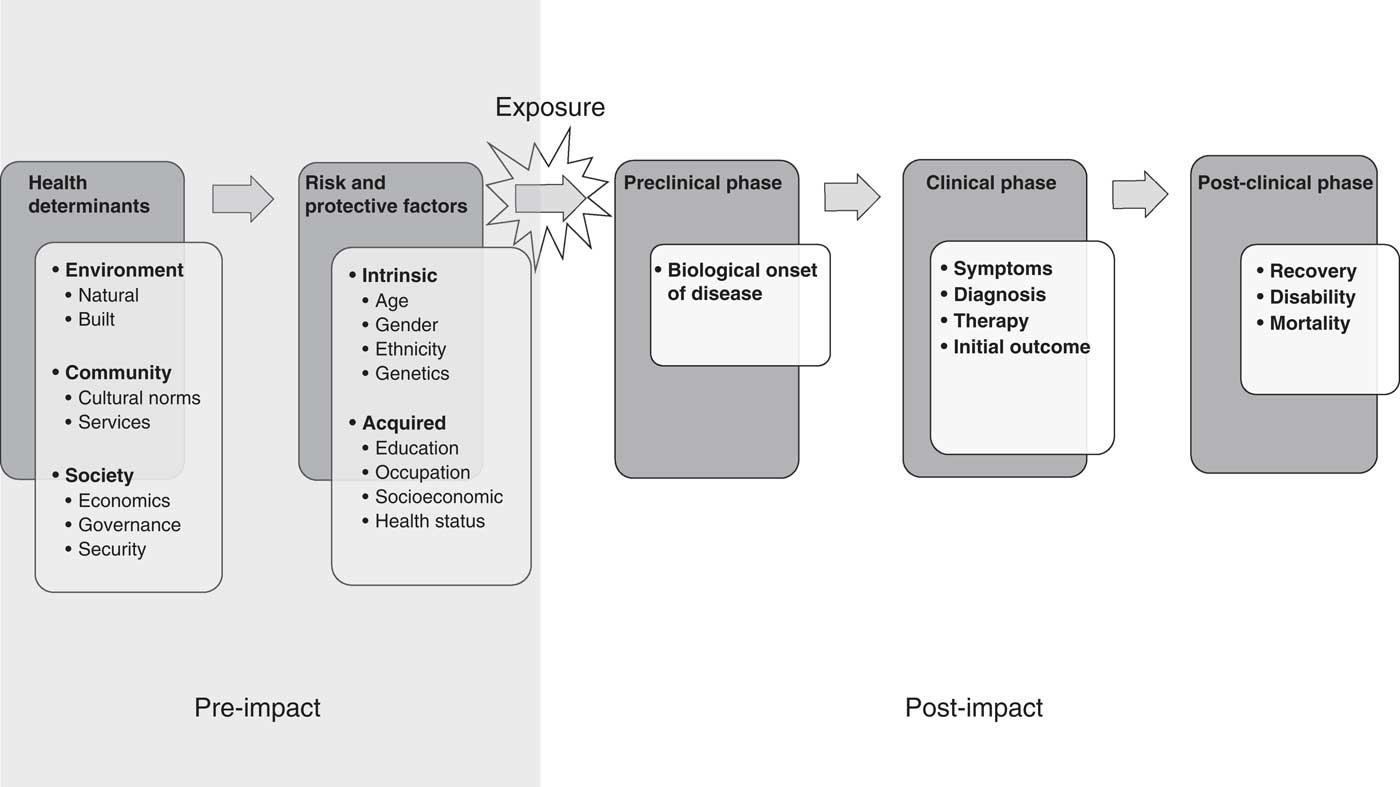
Figure 3 represents the “natural history of disease,” the concept of disease as a process that unfolds over time in a series of steps. 5 Effective disease management requires not only management of the immediate problem, but also management of the patient’s risk factors, and finally of the underlying determinants.
Natural History of Disease. 5

Figure 3 depicts the relationship between health determinants, risk factors, and disease. After exposure to a hazard (noted by the marked arrow), there is a theoretical point at which the disease process may begin. Symptoms may appear after a delay that can vary from seconds (as with injury) to days (as with infections) to years (as with cancer). The patient may interpret their symptoms as indicating an illness and may seek professional care. Shortly after a medical diagnosis, therapy is normally begun and short- and longer-term outcomes can be recorded.
Risk Factors for Disease
The definition of a risk factor is “any attribute, characteristic, or exposure of an individual that increases the likelihood of an outcome, in this case developing a disease.” 13 Risk factors associated with vulnerability are those characteristics inherent to the person that increase the statistical probability that a person will develop disease. The term risk factor is also used to describe an exposure variable such as the amount of a factor to which a group or individual was exposed; in contrast to the dosage, the amount that enters or interacts with the organism.
Some health-related risk factors have a direct and probabilistic effect on the likelihood of an adverse outcome. Others form part of a complex causal pattern, as with the effect of age, in which health status, disability, and education interact with numerous other factors. But, these risk factors themselves also have causes, called health determinants.
Health Determinants
Health determinants refer to underlying characteristics of society that ultimately shape the health of individuals and communities. These can be thought of as the “causes of the causes” of disease, or as the origin of the causal chain. But the term should not be misconstrued to imply inevitability. Determinants include non-specific factors (eg, poverty or lack of educational opportunities) and policies aimed at improving health, in general, rather than particular diseases.
Health Risk (RH)
The epidemiological definition of health risk is “the probability that an adverse health event (disease) will occur” (eg, that an individual will become ill or die within a stated period of time or age). It is formally defined as the proportion of initially disease-free individuals who develop disease over a defined period of observation. This risk is described in terms of disease incidence rate (eg, the measure of the number of new cases per unit of time):
 $${thus,\,R_{H} {\equals}{\int} {{{\it p}\left( D \right)} }^ $$
where, RH=health risk, and D=disease incidence (cases over time).
When applied to public health, health risk is the probability that, in a certain timeframe, an adverse outcome will occur among a population that is exposed to a hazardous agent. Placed in terms of health risk, disease is caused by the complex interaction of risk and protective factors associated with:
∙ Agent (hazards);
∙ Host (vulnerabilities); and
∙ Environment (exposure).
Health Impact
The impacts of health hazards are customarily assessed according to factors associated with the interaction between the environment and the host population (respectively) as follows: 8,14
∙ Exposure dose:
○ magnitude of the hazard itself (eg toxicity, virulence, or potential energy); and
○ amount of hazard contacted over time (dose rate).
∙ Vulnerability of the host population to that specific hazard:
○ susceptibility to disease onset; and
○ severity of disease after onset.
Impact is a measure of disaster outcome. 3 The incidence of disease is one example of a measure of health outcome and thus a measure of impact. Health impact (IH) is expressed as a rate and measured in terms of disease incidence p(D) resulting from exposure and vulnerability to a particular hazard:
 $${{\rm thus},\,{\it p}{\rm (I}_{{\rm H}} {\rm )}{\equals}{\int} {{\it p}\left( {{\rm E}\,{\times}\,{\rm V}} \right)} }^ $$
where, p(IH)=health impact; E=exposure dose; and V=vulnerability of population.
Assessing Health Risk
Risk assessment is the process of estimating the probability an outcome (in this case, impact of a chemical, physical, microbiological, or psychosocial hazard on a specified human population) under a specific set of conditions and for a certain timeframe. Thus, health risk assessments are expected to express risk in terms of the probability of a specific health outcome (bad or good).
However, it is important to recognize that health risk is not synonymous with disaster risk.
Defining Disaster Risk
Disasters
A disaster is “a serious disruption of the functioning of a community or a society causing widespread human, material, economic, or environmental losses that exceed the ability (or capacity) of the affected community or society to cope using its own resources.” 3 These losses result in human needs. Thus, per this model, disasters are a mismatch of needs and resources.
Disasters are defined as a fundamental mismatch of needs and resources resulting in losses. Disaster risk is defined as the probability of this mismatch of needs and resources. Disasters are considered as part of a continuum of societal effects that result from this mismatch.
Disaster risk is a measure of not only the probability of disaster impact, but also includes the capacity of the population to avoid a mismatch of needs (caused by losses) and resources (capacity for resilience).
Emergencies, Disasters, and Catastrophes
Emergencies are defined as a mismatch of societal needs and resources that may be effectively resolved using its own resources. Along that same continuum, disasters are described as a mismatch of needs and resources that may be effectively resolved, only with external assistance to the affected population. Accordingly, catastrophes have been further described as a mismatch of needs and resources that are not effectively resolved, even with external assistance to the affected population.Reference Keim 15 The goal of reducing disaster risk is to lessen the likelihood of occurrence for this entire continuum of events.
Categories of Disasters
The Sendai Framework recognizes two groups of disasters: natural and human-induced. There are five sub-types of disasters: three induced by natural hazards (biological, hydro-meteorological, and geological) and two induced by human activity (technological and societal). 16
Disaster Risk
Disaster risk is widely assessed by national emergency management agencies and expressed in terms of societal outcomes that relate to social, health, economic, political, and national security concerns. Disaster risk is based upon the general risk equation:Reference Wharton 4
 $$\left( {{\rm R}_{{\rm D}} } \right)\,{\equals}\,\int {\it p}\left( {\rm H} \right)\,{\times}\,{\it p}\left( {\rm I} \right)]$$
where, RD=risk of disaster; H=hazard; and I=impact of that hazard.
However, per the definition of disaster, risk is based upon the probability of a mismatch between needs (caused by impact), as compared to resources (eg, capacity) available to meet those needs (without additional losses). To summarize:
∙ Hazards create losses:
○ The severity of losses is expressed in terms of impact;
∙ Impacts create needs:
○ Abilities required to meet the needs are expressed in terms of capabilities; and
∙ Capabilities meet needs:
○ The measure of a capability that is available over time is expressed in terms of capacity.
Disaster risk (RD) is therefore expressed as:
 $$\eqalignno{ {\rm R}_{{\rm D}} {\equals}&{\it p}\left( {{\rm Disaster}\,{\rm hazard}} \right){\times}\,{\it p}\left( {{\rm Disaster}\,{\rm impact}} \right);{\rm or} \cr & \left( {{\rm R}_{{\rm D}} } \right){\rm }{\equals}{\rm }\int {\it p}\left( {\rm H} \right)\,{\times}\,{\it p}\left( {\rm I} \right)]. $$
Disaster losses create needs. Capacity is used to meet these needs. Disaster risk is defined as the probability that a hazard will occur resulting in needs that will exceed resources. Thus, disaster impact is the net risk that results when needs exceed resources.
 $$\eqalignno{& {\rm In}\,{\rm other}\,{\rm words},\,{\it p}( {{\rm Disaster}\,{\rm impact}} ) \cr& \quad{\equals}\int {\it p}( {{\rm Disaster}\,{\rm needs}} \,{\hbox -}\,{\rm Disaster}\,{\rm resources} ); \cr & {\rm thus},{\rm R}_{{\rm D}} \,{\equals}\,\int {\it p}[( {{\rm Disaster}\,{\rm hazard}} )\,\cr &\quad\quad\quad\quad\quad{\times}\,{\it p}( {{\rm Disaster}\,{\rm needs}} \hbox \,{\hbox -}\,{\rm Disaster}\,{\rm resources}} ). $$
Effective disaster risk management requires not only management of the immediate problem (disaster-related injuries and disease), but also of the patient’s risk factors and of the underlying health determinants. This requires an accurate and well-validated process for assessment of the determinants of disease. Disaster risk management is the systematic process of using capacities in order to lessen the adverse impacts of hazards and the possibility of disaster.
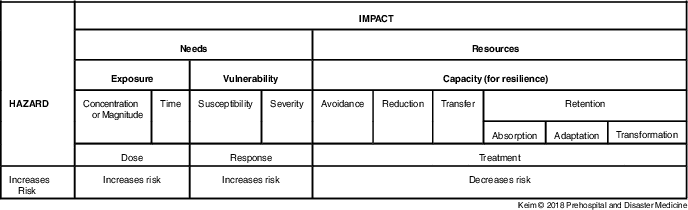
Table 1 Reference Keim 17 - Reference Keim 19 depicts the functional relationship between the various components of disaster risk.
Relationship between the Components of Disaster RiskReference Keim 17 - Reference Keim 19

Hazards (H)
Disaster hazards are defined as “a dangerous phenomenon, substance, human activity, or condition that may cause loss of life, injury, or other negative health impacts; property damage; loss of livelihoods and services; social and economic disruption; and/or environmental damage.” 3
The Sendai Framework recognizes two groups of hazards: natural and human-induced. There are five sub-types of hazards: three induced by natural hazards (biological, hydro-meteorological, and geological) and two induced by human activity (technological and societal). 16 A disaster might involve a combination of these hazards. For example, earthquake-related damages to natural gas infrastructure often result in an increased human exposure to fire hazards.
Impact (I)
United Nations International Strategy for Disaster Reduction also defines disaster impact as “the degree of severity associated with disaster consequences, often measured in terms of number of fatalities and injuries; functionality of critical facilities and community lifelines; property and environmental damage; economic, social, and political disruptions; and size of the area or number of people affected.” 3
Thus, disaster impact is a measure of the resultant net balance of outcomes resulting from human needs (caused by exposure and vulnerability) and human resources (capacity) that are available to meet those needs.
Exposure (E)
Exposure is defined as “proximity or contact with a source of a disease agent in such a manner that effective transmission of the agent or harmful effects of the agent may occur.” 20 Exposure is a function of the dose rate (magnitude/volume/time) of the hazard and the duration of exposure over time. 13 For health, exposure is calculated as a function of hazard dose.
Exposure assessment is the qualitative and/or quantitative evaluation of the likely contact with biological, chemical, and physical agents (hazards). This assessment involves identification and evaluation of the human population exposed to a hazardous agent, describing its composition and size, as well as the type, magnitude, frequency, route, and duration of exposure. 21
Exposure science (eg, exposure and dose reconstruction) is a well-developed field of empirical investigation in public health and medicine. There are three commonly accepted routes of human exposure: inhalation, ingestion, and direct contact to the body.
Dose
Dose is the amount of a substance available for interactions with metabolic processes or biologically significant receptors after crossing the outer boundary of an organism. 21 Hazard dose associated with physical agents (involving a transfer of energy to the body; ie, kinetic, nuclear, electromagnetic, chemical, and thermal energy) is calculated as a function of the hazard magnitude and the contact rate. Contact rates vary according to the route of exposure (eg, respiratory rate, ingestion, or absorption.)
For example, chemical dose is calculated according to the concentration (mass/volume) and contact rate (mass/volume/time) multiplied by the duration of exposure (time):
 $$\eqalignno{ & \quad\quad\quad\quad\quad\quad\quad\quad{\rm thus},\,{\it p}\left( {\rm E} \right){\,\equals}\,\int \left[ {{\it p}\left( {{\rm dose}} \right)} \right] \cr & {\it p}\left( {\rm E} \right)\,{\equals}\,{\it p}\left( {{\rm dose}} \right)\,{\equals}\,\int \left[ {{\it p}\left( {{\rm dose/time}} \right)\,{\times}\,{\it p}\left( {{\rm duration}\,{\rm of}\,{\rm exposure}} \right)} \right]. $$
In comparison, dose of microbiological hazards (pathogenic bacteria and viruses) is expressed as an “infectious dose,” the amount of pathogen (measured in number of micro-organisms) required to cause an infection in the host. 14
Populations may also be exposed to a hazard, without any adverse effect. Thus, the term “exposure” is not synonymous with the term “affected” (as per criteria used by the Center for Research on the Epidemiology of Disasters [Brussels, Belgium] EM-DAT database). 22
Vulnerability (V)
Vulnerability is defined as “the characteristics and circumstances that make a community or individual, or a system or asset, susceptible to the damaging effects of a hazard.” 3 Given the exact same exposure, some assets or individuals belonging to the population are more likely than others to suffer loss (risk) than others. This variability of risk is a function of the vulnerability of the population.
Vulnerability is considered to be that set of risk and protective factors inherent to the individual. It should not be confused with capacity which represents external resources. Unlike exposure, the vulnerability of the individual does not change according to geographical location (environment). It’s also important to recognize that some factors recognized as vulnerability (eg, age, health status, or disability) may actually represent a collinearity for higher risk of exposure.
Vulnerability has been categorized according to four sets of attributes:Reference Keim 17
∙ Demographics (eg, age, gender, and family position);
∙ Education and personal experience (eg, educational level and disaster training);
∙ Race, language, and ethnicity (eg, minority status in the affected population and language barriers); and
∙ Health status (eg, chronic illness, physical disability, malnutrition, mental illness, and dependence upon life-sustaining treatment).
Vulnerability to health hazards has been described as either intrinsic or acquired.Reference Weisser-Lohmann 23 Examples of intrinsic factors that influence human vulnerability (Vi) include: age, gender, genetics, and ethnicity. Examples of acquired factors that influence human vulnerability (Va) include: health status, education, disability, and immunization status:
 $${\rm thus},\,{\it p}\left( {\rm V} \right){\equals}{\int} {{\it p}\left( {\sum{\rm V}_{{{\rm i}\,\ldots\,}} {\plus}\sum{\rm V}_{{{\rm a\,\ldots\,}}} } \right).} $$
Vulnerability to adverse health effects is known to vary among individuals according to two key factors: susceptibility and severity. 14 Given the same exposure, some individuals are more susceptible to the onset of disease than others. And then subsequently, given the same disease onset, some individuals (eg, immunocompromised, extremes of age, or co-morbidity) tend to suffer a more severe course of illness than others, resulting in prolonged impairment, permanent disability, or death.
Capacity (C)
Capacity is defined as “the combination of all the strengths, attributes, and resources available in a community, society, or organization that can be used to minimize (adverse outcomes) following exposure to a hazard.” 3 Although this definition is here narrowed to risk acceptance, capacity may also be used to treat risk in other ways. In other words, capacity represents resources that are used for risk treatment. Capacity is therefore considered as an input to the system that influences disaster outcome.
Capacity has been described to exist at the following hierarchical organizational levels: individual, household, community, and society.Reference Winderl 18
Capacity has also been described to include four major categories of resources:Reference Winderl 18
∙ Economic (eg, occupation, income, savings, and health insurance);
∙ Material (eg, durable goods, equipment and supplies, utilities, shelter, and transportation);
∙ Behavioral (eg, psychological, emotional, cognitive, and developmental); and
∙ Sociopolitical (eg, social capital, status, political influence, and ethnicity).
Populations apply individual, household, community, and societal capacity to reduce risk at every of possible stage of intervention (eg, avoidance, reduction, transfer, and acceptance).Reference Winderl 18 This capacity includes economic, material, behavioral, and sociopolitical resources for reducing disaster risk at each stage. Contrary to misconception, capacity is applied not only to residual risk during response and recovery, but also throughout other phases of emergency management, including: prevention, preparedness, mitigation, response, and recovery.
Capacity is most commonly represented as an asset inventory (ie, number of meals, amount of water, or number of tents). However, this application recognizes only resources. It does not take into consideration the efficiency of operations that implement capacity and effectively increase certainty of outcome. In other words, mere existence of a capacity does not ensure its maximum utilization. On the contrary, the efficient utilization of capacity is notoriously challenging during emergency response operations.
Capacity is measured as a performance rate over time (ie, number of meals delivered per day; liters of water delivered per person - per day; or number of tents erected per day). Thus, the maximum capacity (not the resources) of the population represents a rate limiting step for reducing disaster impact.Reference Winderl 18
Differentiating Capacity from Capability
An objective is defined as, “A purpose to be achieved, or a result to be obtained.”Reference Henry 24 A capability is, “the ability to achieve a desired operational effect” (purpose or result) “under specified standards and conditions through combinations of means and ways to perform a set of tasks.”Reference Henry 24 Capability is considered as an output of the system created by inputs of resources into an organizational process.
Capability should not be confused with capacity. Objectives are outcomes to be achieved. Capability is the ability to accomplish an objective. Capacity is the rate at which resources become available to accomplish an objective. Consider this contrast of capacity and capability. Imagine that there are two resources of water (one is a 15-liter barrel and one is a 300 ml glass) that one may refill only once daily. One’s objective is to stay alive. The capability of the water is to hydrate the human body. Thus, both resources have that exact same capability of hydration. However, in terms of volume, the barrel is 50 times greater than that of the glass. And, in terms of its effect as a rate limiting factor for accomplishing the objective (ie, survival), the capacity of the barrel is 15 liters/person/day (adequate according to international standards) as compared to only 300ml/person/day from the glass, which cannot sustain life. The objective was limited by the capacity of the resources, and not necessarily its capability.
Consider a final example contrasting capacity and capability, in which there has been a mass-casualty incident at a school resulting in many seriously injured pediatric patients. The objective is to provide adequate hospital care for all patients. While some area hospitals may be able to offer care, they do not have the capability to treat pediatric patients. In comparison, the one small pediatric hospital in the city has the capability to treat pediatric trauma, but does not have enough capacity (eg, care givers, equipment, and supplies) to adequately treat all of the patients at once. Thus, excess mortality may occur as a result of this mismatch in capability (to accomplish the goal) and the capacity (to do so efficiently). This also implies that “capacities as an output do not tell us anything about the extent to which these capacities are actually used in case of a disaster (or a simulation), and – even more importantly – if they are effective.”Reference Winderl 18
Resilience
There is currently a myriad of definitions and interpretations for the term resilience.Reference Winderl 18 Despite its current influence, no agreement exists over the exact meaning of the concept. The United Nations International Strategy for Disaster Reduction defines resilience as the ability of a system, community, or society exposed to hazards to resist, absorb, accommodate to, and recover from the effects of a hazard in a timely and efficient manner, including through the preservation and restoration of its essential basic structures and functions. 3
A resilient control system is one that maintains: (1) state awareness, and (2) an accepted level of operational normalcy in response to disturbances, including threats of an unexpected nature. This ability to recover is the one fundamental concept shared among these various definitions of resilience. However, characterization of this recovery varies widely among the various sectors. Thus, resilience may reasonably be defined as recovery of an individual, household, community, or society to a state of accepted level of normalcy. Thus, disaster capacity may be expectedly referenced as “capacity for resilience,” or resilience capacity.Reference Winderl 18
Capacity for Resilience
Resilience is the ability of a system, community, or society exposed to hazards to resist, absorb, accommodate to, and recover from the effects of a hazard in a timely and efficient manner, including through the preservation and restoration of its essential basic structures and functions. 3 Populations apply capacity to reduce risk and improve resilience before and after the disaster event itself. Capacity is applied not only during the post-event setting for response and recovery, but it is also used throughout pre-event phases of emergency management, including: prevention, preparedness, and mitigation. Resilience capacity is used to minimize losses by avoiding hazards, reducing exposures, transferring risk, and finally accepting risk (eg, response and recovery; Table 1).
Components of “resilience capacity” applied to risk acceptance/retention include: absorptive, adaptive, and transformative capacities.Reference Winderl 18 These three elements commonly vary along a continuum related to the intensity of the change necessary for recovery, as well as the transactional cost that may be associated with doing so.
On one end of the spectrum is absorptive capacity, the measure of an ability to absorb and assimilate the effects of the hazard. Absorptive capacity is based upon the stability of the system and its function to buffer impact without significant change in the process itself. Adaptive capacity requires less stability and more flexibility as required in order to make incremental adjustments in the process so that outcomes will improve. And finally, transformative capacity is a measure of the ability to transform or change processes entirely to optimize outcome. Transformative capacity requires the highest degree of system flexibility and comes at the highest transactional cost.Reference Winderl 18
Individuals, households, communities, and societies each tend to apply these three elements of capacity in a nearly sequential order. Initially, those systems affected respond by rapidly absorbing inputs (ie, patients or displaced people) to a given threshold (also known as “surge capacity”); then, adapting to accommodate a larger, more efficient or more effective version of the same process (eg, coordination with local emergency response); and then finally, transformation of the entire process into one that is more suitable for the expected outcome (ie, multi-national humanitarian assistance).
Differentiating between the Risk of Hazards, Health Effects, and Disasters
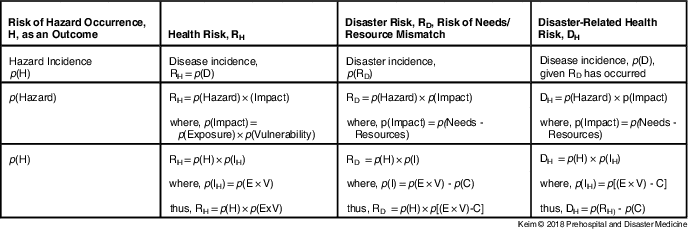
Ambiguity regarding the context of risk is a common challenge for risk assessment. Some assessments may incorrectly equate the incidence of the hazard with the risk of disaster. This approach tends to neglect the role of other factors that contribute to the hazard’s impact (eg, exposure, vulnerability, or capacity). Other risk assessments inaccurately equate the risk of adverse health outcome with the risk of disaster (or vice versa). It’s therefore important to differentiate between the risks of hazards, health effects, and disasters so that the context for the risk assessment may be accurately established as the foundation for reproducibility in subsequent investigations and interventions. Table 2 offers a comparison of the descriptions for risk as applied to hazards, health, and disasters.
A Comparison of Hazard Risk, Health Risk, and Disaster Risk

Differentiating Health Risk from Disaster Risk
Disasters are defined by a characteristic mismatch of needs and resources. Table 2 compares health risk and disaster risk as applied to capacity. Health risk differs from disaster risk in that (by definition) disaster risk is a measure of not only the probability of adverse health outcomes (eg, health risk), but also the ability of the target population to avoid a mismatch of health needs (caused by losses) and health resources (eg, the capacity needed to avoid disease).
Differentiating Disaster Hazards from Health Hazards
Besides health risk, it is also important to differentiate disaster hazards from health hazards. Disaster hazards represent the dangerous phenomenon (eg, wildfire, flood, pandemic, and terrorism) responsible for causing the disaster event (ie, a mismatch of needs and resources). In comparison, health hazards (ie, heat, water, viruses, mechanical force, chemicals, and radiation) are created by disaster hazards. Health hazards are then responsible for causing disease (including injury) through a specific route of exposure and pathological mechanism.
Health hazards are defined as “an agent or a situation…with the inherent capability to have an adverse effect.” 5 Hazard risk, p(H), is calculated from the annual hazard incidence and is described in terms of number of hazard occurrences per year. In comparison, the epidemiological definition of health risk is “the probability that an adverse health event (disease) will occur” within a stated period of time or age. 5
This differentiation is important during the assessment process as the specific mechanism of injury is considered for attribution of disaster-related morbidity and mortality and development of effective countermeasures that specifically address disaster-related health risk.
Differentiating Health Risk (RH) from Disaster-Related Health Risk (DH)
Health risk is customarily reported as the proportion of initially disease-free individuals who develop disease over a defined period of observation. Health risk is calculated as the annual case incidence rate (eg, mortality rate or morbidity rate) and described as the proportion of individuals within a given population who develop disease over a defined time. In other words, health risk is equal to the likelihood of disease during a given timeframe:
 $$\quad \eqalignno{ & \quad\quad\quad\quad\quad {\rm thus},{\it p}\left( {{\rm R}_{{\rm H}} } \right){\equals}\,{\it p}\left( {\rm D} \right) \cr & {\rm where},\,{\it p}\left( {{\rm R}_{{\rm H}} } \right){\equals}\,{\it health\,\,risk};{\rm }{\it p}\left( {\rm D} \right){\equals}{\rm disease}\,{\rm incidence}. $$
Note that the disaster risk equation differs from the general risk equation in that disaster risk also includes the effect of capacity in its determination of impact, whereas the general risk equation (and health risk assessments, in general) deal only with pre-event probability. These calculations therefore do not take into consideration various elements of risk treatment that may be applied (eg, risk avoidance, reduction, transfer, and acceptance).
It is therefore important to recognize that health risk is not synonymous with disaster-related health risk. While both represent health-related outcomes, the outcome predicted by disaster-related health risk is the post-event probability of disease given a mismatch in terms of collective or societal needs and resources. On the contrary, in this instance, health risk is considered as the pre-event probability of disease, in absence of any attempts at reducing or treating the risk.
Thus, per this relationship, health risk represents the probability of health needs, but it does not represent the disaster resources (capacity) available to address those needs (treat the risk).
Disaster-related health risk is represented as the health risk minus the risk that can be ameliorated by capacity. In other words:
 $${\rm D}_{{\rm H}} {\equals}\,{\it p}\left( {{\rm R}_{{\rm H}} } \right)\,\,{\hbox -}\,\,{\it p}\left( {{\rm C}_{{\rm H}} } \right) \,\,(Table\,\,2).$$
Accordingly, disaster-related health impact (ID) is a function of exposure, vulnerability, and capacity of the population at risk:
 $${\it p}\left( {{\rm I}_{{\rm D}} } \right){\equals}\,\int \left[ {{\it p}\left( {\rm E} \right)\,{\times}\,{\it p}\left( {\rm V} \right)} \right]\,{\hbox -}\,\,{\it p}\left( {\rm C} \right)]].$$
This equation represents the risk of adverse outcome faced by a vulnerable population (P) when disaster-induced needs (caused by hazard exposure) exceed the resources (capacity) of the population.
As indicated in Table 2, health risk is dependent upon the probability of the hazard and the resultant health impact. In comparison, disaster-related health risk includes both the likelihood of a mismatch between health impact and the capacity necessary to avoid disease. In effect, disaster-related health risk is measured as the net health risk present when health needs exceed capacity. Thus, for disasters, the disaster-related health impact must include: not only health impacts expected to occur from being vulnerable to a hazard exposure, but also the supplemental risk that accrues due to a mismatch in acute health needs and the capacity to avoid disease.
Conclusion
Assessments of health risk have become an integral part of local, state, and national emergency preparedness programs. One of the strengths of these assessments lies in that they typically bring together multi-sectoral input for public health decision making and plans. However, this diversity of input also creates challenges in development of a common nomenclature for assessing and communicating the characteristics of this risk.
A standard nomenclature is needed for communicating disaster-related health risk that is consistent with international standards for risk management and the advancement of public health science. This report is intended as a primer for defining disaster-related health risk. This framework is discussed within a nomenclature that is consistent with international standards for risk management and public health prevention.
Supplementary Material
To view supplementary material for this article, please visit https://doi.org/10.1017/S1049023X18000390