INTRODUCTION
The long-term consequences of changes in the foetal environment have been well-recognized since the first reports of Barker et al. (Reference Barker, Osmond, Golding, Kuh and Wadsworth1989) describing epidemiological data linking birth-weight and later health in humans. In other epidemiological studies, the children born to mothers who were pregnant during the Dutch famine in 1944–1945 experienced increased incidence of type II diabetes and cardiovascular disease (Lumey et al. Reference Lumey, Stein and Susser2011). Negative human health outcomes have also been seen following maternal stress during pregnancy (King et al. Reference King, Dancause, Turcotte-Tremblay, Veru and Laplante2012). These adverse effects are generally classified under the developmental origins of health and disease hypothesis (Gluckman & Hanson Reference Gluckman and Hanson2004) and are probably mediated by epigenetic, non-Mendelian inheritance (Ford & Long Reference Ford and Long2011). Among the variety of animal models used to investigate underlying mechanisms, the sheep has proved popular since it is similar to the human in respect of maternal and foetal sizes, organ development and maturity at birth (Luther et al. Reference Luther, Redmer, Reynolds and Wallace2005). To date, however, less emphasis has been placed upon the consequences of disturbances to the foetal environment for the health and welfare of the lamb within the bounds of the animal production environment.
In a parallel review on cattle, Arnott et al. (Reference Arnott, Roberts, Rooke, Turner, Lawrence and Rutherford2012) identified a wide variety of stressors the dam could be exposed to during gestation and which may perturb the uterine environment with adverse consequences for the subsequent welfare and health of the offspring. The stressors identified included under-nutrition (UN), social stress imposed by management practices such as stocking density, acute stress from handling and transport and thermal stress by being maintained outside the thermoneutral zone. Arnott et al. (Reference Arnott, Roberts, Rooke, Turner, Lawrence and Rutherford2012) employed the systematic review process advocated by Sargeant et al. (Reference Sargeant, Rajic, Read and Ohlsson2006) to minimize systematic and random errors in study selection. The object of the current review was to apply the approach of Arnott et al. (Reference Arnott, Roberts, Rooke, Turner, Lawrence and Rutherford2012) to identify stressors applied to the ewe during gestation which were practically relevant and to identify the consequences for the welfare of the lamb. Because of the large number of studies identified and the variety of stressors imposed and lamb outcomes reported, the review process was divided into two parts dealing with the lamb up to weaning (current review) and from weaning into adulthood.
MATERIALS AND METHODS
Comprehensive details of the methodologies employed are given in Arnott et al. (Reference Arnott, Roberts, Rooke, Turner, Lawrence and Rutherford2012).
Searches
The online database ‘ISI Web of Knowledge’ was used to search the literature. Within Web of Knowledge the following databases were searched simultaneously: ISI Web of Science (1970–present), MEDLINE (1950–present) and BIOSIS Previews (1969–present). The search terms used were designed to combine words relating to sheep and to prenatal stress. The final search string was as follows: (prenatal or perinatal or maternal or fetal or foetal or gestation*) and (stress or programm* or nutrition*) and (sheep or ovine or ewe*). The initial search was carried out in November 2009 and regularly updated until the end of December 2011. Recovery of other relevant articles was as described by Arnott et al. (Reference Arnott, Roberts, Rooke, Turner, Lawrence and Rutherford2012) and included an online search of relevant journals, and additions recommended by experts in the field of ovine early life research.
Search results and classification
Following removal of duplicates, the initial search yielded 3069 publications. The papers, and abstracts if available, were imported into a bibliographic database (Reference Manager, version 11) for manipulation. Within the database, publications were initially screened for relevance. This involved reading the title and removing any obviously irrelevant references (2388 in total). The remaining publications (681) were examined in more detail, using a combination of the title and abstract. Those where maternal nutrition was manipulated or where a stressor was applied to the dam and where offspring outcomes were measured were retained for further examination.
Quality assessment
As recommended by Sargeant et al. (Reference Sargeant, Rajic, Read and Ohlsson2006), a quality assessment of the studies was made. References were selected using the following criteria (Arnott et al. Reference Arnott, Roberts, Rooke, Turner, Lawrence and Rutherford2012): treatment intervention adequately described; inclusion of a suitable control; use of a large enough sample size; appropriate statistical methods; avoidance of data repetition (e.g. where components of a single study are reported in several papers); exclusion of conference abstracts/proceedings. Studies remaining at this point formed the raw material for detailed review.
Organization of review process
The remaining studies were first classified into the following categories according to outcomes measured in offspring: welfare; birth-weight/growth; reproduction; others not encompassed by the above groups. Based on the welfare-related aims of the current review, and the relatively large number of references, a decision was taken that the first two categories (welfare outcomes and birth-weight/growth) would form the raw material for the review. Within these two categories, a more detailed inspection of the offspring outcomes yielded the following categories: behavioural changes; adverse effects on body weight (LW) and live-weight gain (LWG) at key stages of life; survival and changes in physiological state such as the ability to thermo-regulate, immunoglobulin G (IgG) status of the neonate and changes in the hypothalamic–pituitary–adrenal (HPA) axis. The most commonly reported outcomes, not surprisingly, were birth-weight, weaning-weight and LWG. There were 108, 60 and 43 such reports, respectively. Detailed analysis also revealed a different pattern of outcomes depending on the age of the lamb. Pre-weaning (less than 3 months of age) studies focussed largely upon outcomes relevant to neonatal survival including the ability to thermo-regulate, and behavioural indicators of both lamb vigour and ewe–lamb bonding. In contrast, post-weaning studies (>3 months of age) tended to focus on behavioural responses in more detail, assessing aspects of emotional reactivity and response to stress and including quantifying physiological changes. For convenience, studies where behavioural responses such as emotional reactivity were reported for lambs of less than 3 months of age were grouped with other behavioural studies.
The next step in the review process was to classify studies according to the prenatal treatment applied. Initially, the nine hazard categories identified by Arnott et al. (Reference Arnott, Roberts, Rooke, Turner, Lawrence and Rutherford2012) were applied: social environment, housing system, nutrition and feeding method, husbandry practices, environmental parameters, infectious environment and maternal health and artificial challenges (involving exogenous manipulation of HPA axis function). However, a more detailed inspection of the studies revealed that a nutritional treatment (0·70 of studies) was the most frequent hazard imposed while either a behavioural (social environment; husbandry practice, e.g. shearing) or physiological (artificial challenge) stress hazard made up the majority (0·26) of the remaining studies.
Therefore, given the large number of studies to be considered, it was decided to address the outcomes in two sections depending upon the age (pre- or post-weaning) of the lamb. Within each life-stage section, the effects of prenatal treatments on welfare relevant outcomes are discussed using the two main hazard types stated above (nutrition and stress) while noting the inevitable overlaps that occur. The current review will examine pre-weaning outcomes, whereas post-weaning outcomes will be the subject of a companion review.
RESULTS
Nutrition
In the context of the review, UN is defined as a supply of energy and global nutrients to the ewe below that required for the sum of maintenance of the ewe and for pregnancy. Conversely, over-nutrition (ON) is where energy is supplied in excess of requirements. In addition, there are studies where energy requirements are met but a specific nutrient is supplied either in excess of, or below requirement.
Sheep production systems are frequently seasonal in terms of both breeding cycle and herbage availability, and mobilization of maternal adipose tissue often results when herbage availability is low. Therefore, there may be a period of UN particularly in the first 100 days of the 147 day gestation when supplementary feeding is not normally practiced. Depending on the individual production system, ewes may be housed in late gestation and fed to meet requirements for lamb growth, or breeding is timed so that sufficient herbage is available to meet requirements. Therefore, in practice, the effects of UN are likely to be of greater importance during the first 100 days of gestation. UN during late gestation is most likely to occur when grass growth is inadequate or access to herbage prevented, for example, by snowfall. Deficiency or excess of a specific nutrient may occur at any time where specific feeds are used or where soil micro-nutrient status induces herbage nutrient imbalance.
Under-nutrition: birth-weight
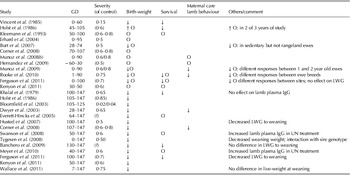
Table 1 summarizes UN studies: more details of individual studies are given in Table S1 of the Supplementary Material (go to http://journals.cambridge.org/AGS). There were differences in the effect of UN on birth-weight depending on when the ewe experienced UN. Studies can be split into two categories; first where UN was applied only in the first and second thirds of pregnancy (gestation day (GD) 1 to GD100 of 147 day ovine pregnancy; early/mid gestation); and secondly where UN continued or began after GD100 (late gestation). In late gestation (Khalaf et al. Reference Khalaf, Doxey, Baxter, Black, FitzSimons and Ferguson1979; Holst et al. Reference Holst, Killeen and Cullis1986; Dwyer et al. Reference Dwyer, Lawrence, Bishop and Lewis2003; Husted et al. Reference Husted, Nielsen, Tygesen, Kiani, Blache and Ingvartsen2007; Corner et al. Reference Corner, Kenyon, Stafford, West, Lopez-Villalobos, Morris and Oliver2008, Reference Corner, Kenyon, Stafford, West, Morris and Oliver2010a ; Tygesen et al. Reference Tygesen, Tauson, Blache, Husted and Nielsen2008; Banchero et al. Reference Banchero, Quintans, Lindsay and Milton2009; Hammer et al. Reference Hammer, Thorson, Meyer, Redmer, Luther, Neville, Reed, Reynolds, Caton and Vonnahme2011; Wallace et al. Reference Wallace, Milne, Green and Aitken2011) birth-weight was reduced, regardless of the extent of UN.
Summary of pre-weaning outcomes of UN studies classified by stage of gestation (GD where term is GD147) when UN applied. Symbols, ↑, ↓ and O denote response increased, decreased or not different from control group fed to meet requirement

Severity of challenge: values in brackets are where severity of challenge not given by authors but estimated from data published. For studies with multiple references, first published study is cited.
Where UN ended before GD100 (early/mid gestation), more variable responses were observed. Studies were categorized according to the extent of UN (relative to maintenance requirement): <0·4=severe; between 0·4 and 0·8=moderate; between 0·8 and 1·0=mild. Where authors stated a level of UN this was adopted, otherwise the extent of UN was estimated from either food intake and/or ewe LW change. The most severe UN challenge before GD100 was imposed by Vincent et al. (Reference Vincent, Williams and Hill1985), who restricted ewes to 0·15 of requirement between GD0 and GD60. Birth-weight was reduced from 4·3 to 3·6 kg and there was an accompanying increase in mortality from 6 to 42%, with the lambs most prejudiced by low birth-weight not surviving. Holst et al. (Reference Holst, Killeen and Cullis1986) imposed moderate UN from mating to GD 103 and replicated the experiment over 3 years. There were no decreases in birth-weight or increases in mortality; in two out of three years, birth-weight actually increased in lambs born to UN ewes. A series of studies (UN from 60 days before mating until GD30 (Hernandez et al. Reference Hernandez, Matthews, Oliver, Bloomfield and Harding2009); UN between GD30 and GD50 of pregnancy (Kenyon et al. Reference Kenyon, Pain, Hutton, Jenkinson, Morris, Peterson and Blair2011); UN between GD50 and GD100 (Kleemann et al. Reference Kleemann, Walker, Walkley, Ponzoni, Smith, Grimson and Seamark1993; Kenyon et al. Reference Kenyon, Morris, Revell and McCutcheon2002b )) imposed moderate UN without any effect on birth-weight.
In other studies, reduced birth-weight was observed but in specific circumstances. Munoz et al. (Reference Munoz, Carson, McCoy, Dawson, O'Connell and Gordon2008b , Reference Munoz, Carson, McCoy, Dawson, O'Connell and Gordon2009) applied mild UN between GD40 and GD90 to 1-year-old, 2-year-old and adult ewes. There were ewe-age-dependent effects on birth-weight: in both 1- and 2-year-old ewes, birth-weight was reduced by UN, whereas in adult ewes (as also noted by Holst et al. (Reference Holst, Killeen and Cullis1986) above) birth-weight was increased by UN. Oldham et al. (Reference Oldham, Thompson, Ferguson, Gordon, Kearney and Paganoni2011), in a large-scale experiment across two sites and years, imposed moderate UN between GD0 and GD100 and recorded a modest decrease in birth-weight on one of the two sites. Rooke et al. (Reference Rooke, Houdijk, McIlvaney, Ashworth and Dwyer2010) imposed moderate UN between GD1 and GD90 and found that whereas in Scottish Blackface ewes, lamb birth-weight was not changed by UN, lambs born to UN Suffolk ewes had reduced birth-weight. In a similar study, employing moderate UN between GD28 and GD100, Burt et al. (Reference Burt, Hess, Nathanielsz and Ford2007) found that whereas lambs born to UN ewes from a harsh range-land environment had similar birth-weights to control ewes, birth-weight was reduced in UN ewes adapted to a ‘sedentary well-nourished’ environment. Therefore genotype may influence partition of nutrients between dam and foetus.
In summary and in contrast to UN in late gestation, UN before GD100 reduced birth-weight in only four out of ten studies. Where reductions in birth-weight were observed due to UN before GD100 these may have resulted from differences in ewe breed (Burt et al. Reference Burt, Hess, Nathanielsz and Ford2007; Rooke et al. Reference Rooke, Houdijk, McIlvaney, Ashworth and Dwyer2010), age (Munoz et al. Reference Munoz, Carson, McCoy, Dawson, O'Connell and Gordon2008b , Reference Munoz, Carson, McCoy, Dawson, O'Connell and Gordon2009) or environment (Holst et al. Reference Holst, Killeen and Cullis1986; Oldham et al. Reference Oldham, Thompson, Ferguson, Gordon, Kearney and Paganoni2011). A possible explanation for the variation in birth-weight response to early/mid-UN is that foetal weight may be reduced by UN but compensatory growth during late pregnancy when nutrient supply was normalized allowed birth-weight to return to values not different from control fed animals (Luther et al. Reference Luther, Aitken, Milne, Matsuzaki, Reynolds, Redmer and Wallace2007) in some but not all studies.
Under-nutrition: mortality
In situations where gestational UN reduces birth-weight, then associated increases in mortality are likely given the well-established link between birth-weight and mortality (Wu et al. Reference Wu, Bazer, Wallace and Spencer2006). Indeed lamb mortality was increased in most studies (Khalaf et al. Reference Khalaf, Doxey, Baxter, Black, FitzSimons and Ferguson1979; Vincent et al. Reference Vincent, Williams and Hill1985; Banchero et al. Reference Banchero, Quintans, Lindsay and Milton2009; Munoz et al. Reference Munoz, Carson, McCoy, Dawson, O'Connell and Gordon2009) where birth-weight was reduced. However, there are contradictory reports (Holst et al. Reference Holst, Killeen and Cullis1986; Munoz et al. Reference Munoz, Carson, McCoy, Dawson, O'Connell and Gordon2008b ). In these studies, where UN during early pregnancy increased birth-weight, lamb survival was reduced.
Under-nutrition: maternal and lamb behaviours
An important mechanism for lamb survival is successful establishment of the ewe–lamb bond. Impairment of bonding can arise both from poorer expression of the appropriate maternal behaviours and/or reduced lamb vigour (often assessed by the ability to progress through the necessary behaviours, e.g. standing, udder-seeking, successful sucking) and their interactive effects. In a detailed behavioural study, Dwyer et al. (Reference Dwyer, Lawrence, Bishop and Lewis2003) found that while UN throughout gestation did not affect lamb behavioural progress, the ewe-lamb bond was less well-established as a result of UN: at 3 days after birth, scores for maternal attachment and lamb behaviour were inferior in UN lambs compared to controls.
Other studies have examined effects of UN on specific aspects of ewe and lamb behaviour. Munoz et al. (Reference Munoz, Carson, McCoy, Dawson, O'Connell and Gordon2008b , Reference Munoz, Carson, McCoy, Dawson, O'Connell and Gordon2009) reported differential effects depending upon the age of the ewe and whether UN was imposed during early (GD1 to GD40) or mid (GD40 to GD90) pregnancy. There were no effects of early pregnancy UN in adult ewes but primiparous 1-year-old, and therefore inexperienced, UN ewes showed an increased incidence of rejective behaviours. Lambs born after mid-pregnancy UN of both adult and 1-year-old ewes progressed more slowly through the repertoire of lamb behaviours than controls. Corner et al. (Reference Corner, Kenyon, Stafford, West, Morris and Oliver2010a ) exposed ewes to UN between GD70 and term by restricting pasture allowance (2 v. 4 cm height). Under-nourished ewes produced fewer low-pitched bleats than controls while their lambs vocalized more. This was interpreted as a reduced expression of maternal care and increased expression of lamb need. Finally, ewes of divergent breeds (Blackface and Suffolk) were undernourished between GD1 and GD90 (Rooke et al. Reference Rooke, Houdijk, McIlvaney, Ashworth and Dwyer2010) and differences in expression of behaviour were observed (Dwyer et al. Reference Dwyer, McIlvaney, Coombs, Ashworth, Rooke, Koletzko, Brands and Hanson2010a , Reference Dwyer, McIlvaney, Coombs, Rooke, Ashworth, Lidfors, Blokhuis and Keeling b ). Lambs from UN Suffolk but not UN Blackface ewes tended to take longer to progress through behavioural milestones. Lambs from UN dams of both breeds took longer to suck from their mothers. Under-nourished ewes of both breeds displayed poorer maternal care, as they were more likely to prevent their lambs from sucking and less likely to approach their lambs and interact with them.
Thus there is evidence that UN adversely affects the establishment of the ewe–lamb bond. The parity and thus experience of the ewe may be an important factor, since poorer establishment effects were found most frequently in primiparous ewes (Dwyer et al. Reference Dwyer, Lawrence, Bishop and Lewis2003; Munoz et al. Reference Munoz, Carson, McCoy, Dawson, O'Connell and Gordon2009; Rooke et al. Reference Rooke, Houdijk, McIlvaney, Ashworth and Dwyer2010).
Under-nutrition: passive immune transfer and thermoregulation
Absorption of nutrients from colostrum during the first 24 h of life has a major influence on lamb survival. The amounts of nutrients absorbed are dependent on the amount and composition of colostrum produced by the ewe, co-operation between the ewe and lamb in facilitating colostrum intake, ability of the lamb to seek the udder and consume colostrum, and appropriate development of the absorptive capacity of the intestines of the lamb. The amount of IgG present in the lamb's circulation, typically at 24 h of age, and the ability of the lamb to thermoregulate have been used as indices of adequate colostrum intake. The effects of UN on these variables are inconsistent. Khalaf et al. (Reference Khalaf, Doxey, Baxter, Black, FitzSimons and Ferguson1979) reported no difference in lamb plasma IgG concentration at 24 h of age as a result of late UN in a study where lamb birth-weight and survival to 1 month of age were reduced. Munoz et al. (Reference Munoz, Carson, McCoy, Dawson, O'Connell and Gordon2008b , Reference Munoz, Carson, McCoy, Dawson, O'Connell and Gordon2009) reported increased zinc sulphate turbidity (an index of IgG absorption) as a result of UN during early pregnancy in multiparous ewes but no differences in 1- and 2-year-old ewes; the increase in IgG was associated with increased birth-weight compared to controls. Finally, Hammer et al. (Reference Hammer, Thorson, Meyer, Redmer, Luther, Neville, Reed, Reynolds, Caton and Vonnahme2011) reported two experiments (Swanson et al. Reference Swanson, Hammer, Luther, Carlson, Taylor, Redmer, Neville, Reed, Reynolds, Caton and Vonnahme2008; Meyer et al. Reference Meyer, Reed, Neville, Taylor, Hammer, Reynolds, Redmer, Vonnahme and Caton2010) with ewe UN imposed from GD50 to term. Increased IgG concentrations at 24 h of age in lambs from UN ewes were associated with decreases in birth-weight. The only report of UN on the ability of the lamb to thermoregulate (Rooke et al. Reference Rooke, Houdijk, McIlvaney, Ashworth and Dwyer2010) found no differences in lamb rectal temperatures. The increases in lamb plasma IgG reported by Munoz et al. (Reference Munoz, Carson, McCoy, Dawson, O'Connell and Gordon2008b ) and particularly Hammer et al. (Reference Hammer, Thorson, Meyer, Redmer, Luther, Neville, Reed, Reynolds, Caton and Vonnahme2011) are somewhat counter-intuitive but since neither colostrum composition, intake nor lamb plasma volume were measured in these studies it is not possible to comment on mechanisms. However, the above studies overall do suggest that the ability of the lamb to acquire IgG can be influenced by maternal UN in the absence of reduced birth-weight.
Under-nutrition: weaning weights and weight gain to weaning
Consistent with birth-weight, differences in the rate of growth to weaning as a result of pregnancy UN depended upon when during pregnancy UN was imposed. When UN occurred before GD100 (Munoz et al. Reference Munoz, Carson, McCoy, Dawson, O'Connell and Gordon2008b , Reference Munoz, Carson, McCoy, Dawson, O'Connell and Gordon2009; Rooke et al. Reference Rooke, Houdijk, McIlvaney, Ashworth and Dwyer2010; Oldham et al. Reference Oldham, Thompson, Ferguson, Gordon, Kearney and Paganoni2011; Thompson et al. Reference Thompson, Ferguson, Campbell, Gordon, Kearney, Oldham and Paganoni2011) there were no effects on weaning LW or LWG. However, others (Husted et al. Reference Husted, Nielsen, Tygesen, Kiani, Blache and Ingvartsen2007; Tygesen et al. Reference Tygesen, Tauson, Blache, Husted and Nielsen2008; Neville et al. Reference Neville, Caton, Hammer, Reed, Luther, Taylor, Redmer, Reynolds and Vonnahme2010) reported that weaning LW was reduced when UN occurred after GD100.
Over-nutrition
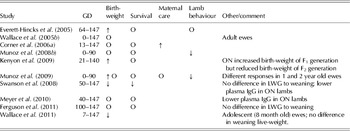
Although the seasonality of sheep production means that UN is more likely to be encountered than ON, it is necessary to consider whether benefits in welfare outcomes are possible if requirements for maternal body maintenance and the normal growth of the products of conception are exceeded. An ovine model (Wallace et al. Reference Wallace, Regnault, Limesand, Hay and Anthony2005a , Reference Wallace, Milne, Green and Aitken2011) for the consequences of teenage pregnancy in the human is relevant. Pregnancies were established in adolescent (8-month-old Dorset Horn×Greyface) ewes by embryo transfer. When these ewes were offered a high-quality diet ad libitum, they consumed approximately twice their energy requirements (Wallace et al. Reference Wallace, Regnault, Limesand, Hay and Anthony2005a ). These ON adolescent ewes partitioned nutrients to maternal growth at the expense of foetal growth such that lamb birth-weight was reduced by 30%. These reductions in birth-weight were more severe than those observed with UN (Wallace et al. Reference Wallace, Milne and Aitken2010). Furthermore, this effect was not observed with adult ewes (Wallace et al. Reference Wallace, Milne and Aitken2005b ). A number of research groups have examined the consequences of ON in a more practical setting (see Table 2, and Table S1 in the Supplementary Material (go to http://journals.cambridge.org/AGS) for details).
Summary of ON studies with pre-weaning outcomes, classified by stage of gestation (GD where term is GD 147) when ON applied. Symbols, ↑, ↓ and O denote response increased, decreased or not different from control group fed to meet requirement

For studies with multiple references, first published study is cited.
Munoz et al. (Reference Munoz, Carson, McCoy, Dawson, O'Connell and Gordon2008b , Reference Munoz, Carson, McCoy, Dawson, O'Connell and Gordon2009) applied the same ON intervention to 1-year-old, 2-year-old and adult ewes. Over-nutrition was applied at double the requirement between GD1 and GD39 (similar to Wallace et al. Reference Wallace, Milne and Aitken2010) and then at 1·4-times requirement between GD40 and GD90. The ON imposed was therefore less substantial and for a shorter time than the Wallace model. In 1-year-old ewes, ON between GD1 and GD39 tended to increase lamb birth-weight, while later ON had no effect (Munoz et al. Reference Munoz, Carson, McCoy, Dawson, O'Connell and Gordon2009). Lamb mortality, weaning LW and IgG status were not influenced by ON. However, ON between GD40 and GD90 resulted in poorer behavioural progression of lambs from birth to sucking; these lambs required more assistance at lambing than their UN or control counterparts. Over-nutrition during early pregnancy in 2-year-old ewes (Munoz et al. Reference Munoz, Carson, McCoy, Dawson, O'Connell and Gordon2009) increased birth-weight while ON during mid-pregnancy had no effect. This increased birth-weight, as also observed with 1-year-old ewes, was associated with an increase in dystocia. In adult ewes (Munoz et al. Reference Munoz, Carson, McCoy, Dawson, O'Connell and Gordon2008b ), ON between GD1 and GD39 resulted in increased birth-weight with no penalty of increased dystocia. Similar to 1-year-old ewes, ON between GD40 and GD90 impaired behavioural progression from birth to sucking. Therefore any benefits associated with increased birth-weight from ON tended to be accompanied by adverse effects on dystocia and lamb vigour, which were dependent on ewe age.
In studies from North Dakota State University, adolescent ewes were fed 1·4-times requirement from GD40 to term. In one experiment, birth-weight was reduced in response to ewe ON but there was no difference in LWG to weaning (Neville et al. Reference Neville, Caton, Hammer, Reed, Luther, Taylor, Redmer, Reynolds and Vonnahme2010) and ewe ON increased lamb morbidity and mortality and reduced lamb IgG concentrations (Hammer et al. Reference Hammer, Thorson, Meyer, Redmer, Luther, Neville, Reed, Reynolds, Caton and Vonnahme2011). In a subsequent experiment of similar design, ewe ON had no effect on lamb birth-weight or LWG (Meyer et al. Reference Meyer, Reed, Neville, Taylor, Hammer, Reynolds, Redmer, Vonnahme and Caton2010), lamb morbidity or mortality but again lamb plasma IgG decreased (Hammer et al. Reference Hammer, Thorson, Meyer, Redmer, Luther, Neville, Reed, Reynolds, Caton and Vonnahme2011).
In a multi-year, two-site study, Merino ewes were allocated to a range of herbage allowances (800 to>3000 kg herbage DM/ha) from GD 100 and maintained on these pastures until weaning (Ferguson et al. Reference Ferguson, Thompson, Gordon, Hyder, Kearney, Oldham and Paganoni2011). Thus, prenatal effects may be confounded by differing ewe intakes post-lambing. It was difficult to ascertain the impact of herbage allowance on ewe nutritional status since ewe condition scores were not reported. However, the allowances offered covered the range from UN to meeting requirement at the lower allowances to ON at the highest allowance. Responses in birth-weight and survival to 48 h were only found at the two lowest herbage allowances (representing either UN or maintenance; 800 and 1100 kg DM/ha; Oldham et al. Reference Oldham, Thompson, Ferguson, Gordon, Kearney and Paganoni2011) above which there were no differences. Therefore there was no evidence for any responses to ON.
The effects of differing pasture allowances on ewe and lamb performance have been studied in New Zealand. Again it is difficult to make judgments on absolute nutritional status where herbage allowance was deemed as ‘normal’ (Everett-Hincks et al. Reference Everett-Hincks, Blair, Stafford, Lopez-Villalobos, Kenyon and Morris2005) or low/maintenance level (Morris et al. Reference Morris, Kenyon and West2005; Kenyon et al. Reference Kenyon, Blair, Jenkinson, Morris, Mackenzie, Peterson, Firth and Johnston2009, Reference Kenyon, Pain, Hutton, Jenkinson, Morris, Peterson and Blair2011). Overall, consistent positive responses were not found in studies classified as ON. Everett-Hincks et al. (Reference Everett-Hincks, Blair, Stafford, Lopez-Villalobos, Kenyon and Morris2005) found no differences in behavioural progress of lambs to allowances of 1600 and 2000 kg DM/ha between GD64 and term. Morris et al. (Reference Morris, Kenyon and West2005) found no responses in birth-weight to treatments designed to increase adolescent ewe conceptus-free LWG and fed from GD13 to term, although weaning LW were increased. On the same group of animals (Corner et al. Reference Corner, Kenyon, Stafford, West and Morris2006a ), lambs from ON treatments bleated more frequently than controls with a corresponding increase in ewe low-pitched bleating frequency, possibly indicating improved ewe–lamb bonding. Kenyon et al. (Reference Kenyon, Blair, Jenkinson, Morris, Mackenzie, Peterson, Firth and Johnston2009) offered maintenance or ad libitum herbage from GD21 to term and found an increase in birth-weight of lambs from ewes fed ad libitum; this difference was maintained until weaning but there was no effect on lamb survival. However, when these ewe lambs produced by Kenyon et al. (Reference Kenyon, Blair, Jenkinson, Morris, Mackenzie, Peterson, Firth and Johnston2009) became mothers themselves (van der Linden et al. Reference Van Der Linden, Kenyon, Lopez-Villalobos, Jenkinson, Peterson and Blair2010), lambs born to ewes whose dams had been fed ad libitum were of lower birth-weight than those born to lambs which originated from maintenance-fed ewes: that is, any benefits in increased birth-weight in one generation were antagonistic to the subsequent generation. Finally, Kenyon et al. (Reference Kenyon, Pain, Hutton, Jenkinson, Morris, Peterson and Blair2011) compared maintenance and ad libitum allowances of pasture in either early (GD30 to GD50) or mid/late gestation (GD50 to term) and found no advantage to the ad libitum herbage allowance.
Overall, it can be seen that there is no clear evidence indicative of improved lamb welfare to feeding ewes during pregnancy more than that required for ewe maintenance and growth of the products of conception and in some cases, there may be disadvantages such as increased dystocia, reduced lamb vigour and lamb survival.
Specific nutrients
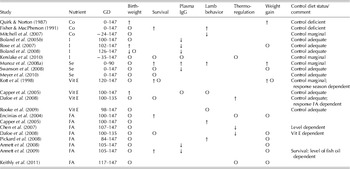
There are three areas where the provision of specific nutrients in the maternal diet may influence lamb welfare: deficiency/depletion; toxicity; and where supply of the nutrient is above requirement but below toxicity and may give a positive outcome. The likelihood of an effect will depend on the extent of maternal reserves; the severity and length of nutrient under/over-supply and additional factors including the form in which the nutrient is supplied and the potential for antagonistic effects with other nutrients (present both in deficit or excess). Rooke et al. (Reference Rooke, Dwyer and Ashworth2008) reviewed this area and found relevant information mainly for micro-nutrients because clinical or sub-clinical deficiencies arise in practice. The micro-nutrients identified by Rooke et al. (Reference Rooke, Dwyer and Ashworth2008) which passed the stricter criteria in inclusion of the systematic review process were the trace elements cobalt (Co), iodine (I) and selenium (Se) and the fat-soluble vitamin, α-tocopherol (vitamin E). Rooke et al. (Reference Rooke, Dwyer and Ashworth2008) also identified a cohort of studies in which the fatty acid (FA) composition of the maternal diet was manipulated and implications for lamb outcomes reported. It is the intention of this section to summarize the relevant information from Rooke et al. (Reference Rooke, Dwyer and Ashworth2008) and to add new information (see Table 3 and Table S2 (go to http://journals.cambridge.org/AGS).
Summary of studies where specific nutrient content of the diet is varied for differing periods (GD where term is GD 147) and with reported lamb pre-weaning outcomes. Symbols, ↑, ↓ and O denote response increased, decreased or not different from control group

For studies with multiple references, first published study is cited.
Cobalt
Cobalt is required for synthesis of vitamin B12 within the rumen; the Co status of sheep is therefore assessed from plasma vitamin B12 concentrations. Quirk & Norton (Reference Quirk and Norton1987) supplemented ewes (3–4 years old) grazing pasture low in Co (0·046–0·1 mg/kg DM) throughout gestation with 0·03 or 0·06 mg Co/day. The ewes without supplementary Co were at least sub-clinically deficient. Supplementation increased lamb birth-weight and LWG to levels comparable with a positive control group. Fisher & MacPherson (Reference Fisher and MacPherson1991) reported two experiments. In each experiment, ewes were fed either a Co deficient or supplemented diet throughout gestation: blood vitamin B12 concentrations indicated that the un-supplemented ewes were sub-clinically deficient. In experiment one, a third group of ewes were supplemented until GD74 whereas in experiment two, supplementation began on GD74. Lamb birth-weight was not influenced by Co status in either experiment, while mortality was reduced by Co supplementation in experiment one but not in experiment two. In experiment two, lamb behavioural progression to sucking was improved by Co supplementation. Finally, Mitchell et al. (Reference Mitchell, Robinson, Watt, McEvoy, Ashworth, Rooke and Dwyer2007) supplemented Blackface ewes of marginal Co status with Co during gestation. There was no positive effect of Co status on lamb birth-weight or behavioural progression to suckling. Thus, although responses varied from experiment to experiment, less than adequate maternal Co status can prejudice lamb birth-weight and behavioural progression. Clearly in areas of known low Co status, adequate supplementation should be supplied to avoid potential problems with lamb vigour and welfare.
Iodine
Iodine deficiency is marked by goitre, reduced fertility and increased neonatal mortality (Suttle Reference Suttle2010). Recent research has focussed on the consequences of I over-supply but below accepted toxicity levels. The initial finding was that excess mineral intakes, when ewes were allowed free access to mineralized salt blocks in late pregnancy, reduced lamb plasma IgG concentrations (Crosby et al. Reference Crosby, Boland, Brophy, Quinn, Callan and Joyce2004). In further studies, twin-bearing ewes were given mineral supplements from GD90 onwards. There were no differences in ewe colostrum IgG concentration, or in lamb birth-weight (Boland et al. Reference Boland, Brophy, Callan, Quinn, Nowakowski and Crosby2005a , Reference Boland, Guinan, Brophy, Callan, Quinn, Nowakowski and Crosby b ). Cross-fostering established that the depression in lamb plasma IgG occurred because of a reduced ability of the lamb to absorb IgG and was specifically a dose-dependent effect of ewe I intake. The depression in IgG absorption was part of a more general disruption of absorption (Boland et al. Reference Boland, Callan, Brophy, Quinn and Crosby2006) and the critical period was the last 2 weeks before parturition (Guinan et al. Reference Guinan, Harrison, Boland and Crosby2005; Boland et al. Reference Boland, Hayes, Sweeney, Callan, Baird, Keely and Crosby2008). The mechanism for the disruption in IgG absorption in the lamb is unclear but links with thyroid hormone metabolism are likely (Rose et al. Reference Rose, Wolf and Haresign2007; Boland et al. Reference Boland, Hayes, Sweeney, Callan, Baird, Keely and Crosby2008). The key practical finding from these studies was that the depression of absorption was observed at I intakes <0·40 of that considered toxic and therefore intakes of mineral supplements should be controlled in late pregnancy. In contrast, Kerslake et al. (Reference Kerslake, Kenyon, Stafford, Morris and Morel2010) created two groups of ewes with inadequate and adequate I status by injection of iodine 35 days prior to mating and found that ewe I status had no effect on lamb birth-weight, thyroid status or ability to thermo-regulate.
Selenium
The consequences of Se depletion and deficiency include reduced lamb vigour and survival and are dealt with in detail by Suttle (Reference Suttle2010). Rooke et al. (Reference Rooke, Dwyer and Ashworth2008) summarized all available literature and found variable responses to Se supplementation during pregnancy. For example, there were decreases in lamb mortality in three out of seven reports and improvements in lamb vigour in two out of five reports from Se supplementation. The variability was likely to have been not only due to differences in ewe Se status prior to supplementation but also to the amount, timing, route (injection or in-feed) and form of Se supplement (inorganic or organic).
More recently, two dietary models have been used to assess the effects of Se supplementation. Munoz et al. (Reference Munoz, Carson, McCoy, Dawson, O'Connell and Gordon2008a ) supplemented or did not supplement adult ewes with 0·5 mg/day of organic Se from 14 days before mating to GD90. The Se status of the ewes prior to the experiment was marginal, as was the control diet. Selenium supplementation did not influence birth-weight. However, lambs born to Se-supplemented ewes were quicker to progress through the neonatal behaviour repertoire than control lambs, LWG to weaning was improved and mortality reduced. In two studies (Meyer et al. Reference Meyer, Reed, Neville, Taylor, Hammer, Reynolds, Redmer, Vonnahme and Caton2010; Neville et al. Reference Neville, Caton, Hammer, Reed, Luther, Taylor, Redmer, Reynolds and Vonnahme2010), ewes were fed an Se-adequate (approximately 0·3 mg/day) or Se-supplemented diet (organic-Se; approximately 5 mg/day) throughout pregnancy. There were no differences in lamb birth-weight, LWG, mortality or plasma IgG concentration with Se supplementation in either study (Hammer et al. Reference Hammer, Thorson, Meyer, Redmer, Luther, Neville, Reed, Reynolds, Caton and Vonnahme2011).
In conclusion, improving maternal Se status during pregnancy can improve lamb outcomes but the effects are variable and probably dependent on ewe Se status prior to supplementation, as indicated by the positive responses (Munoz et al. Reference Munoz, Carson, McCoy, Dawson, O'Connell and Gordon2008a ) in ewes of marginal status compared to the lack of response in ewes of adequate status (Meyer et al. Reference Meyer, Reed, Neville, Taylor, Hammer, Reynolds, Redmer, Vonnahme and Caton2010; Neville et al. Reference Neville, Caton, Hammer, Reed, Luther, Taylor, Redmer, Reynolds and Vonnahme2010).
Vitamin E (α-tocopherol)
Rooke et al. (Reference Rooke, Dwyer and Ashworth2008) reviewed all available literature on supplementing ewe diets with the anti-oxidant vitamin E on offspring outcomes and again reported variable responses. For example, a reduction in mortality was noted in two out of eight studies and improved lamb vigour in two out of three studies. It was concluded that there was evidence for positive outcomes where ewe vitamin E status was adequate, primarily where vitamin E supplementation was from GD 120 onwards. Kott et al. (Reference Kott, Thomas, Hatfield, Evans and Davis1998) reported reductions in lamb mortality and improved LWG in one of two experiments and Capper et al. (Reference Capper, Wilkinson, Kasapidou, Pattinson, Mackenzie and Sinclair2005, Reference Capper, Wilkinson, Mackenzie and Sinclair2006) increased birth-weight and improved vigour with vitamin E supplementation (depending on background diet composition). In both these cases, the supplementary vitamin E was approximately 10-times requirement. Rooke et al. (Reference Rooke, Matheson, Ison, Jack, Ashworth and Dwyer2009) offered twin-bearing ewes of adequate vitamin E status four levels of supplementary vitamin E ranging from 1 to 5 times requirement from GD100. No responses to supplementation were observed in lamb birth-weight, mortality, LWG or vigour. It is possible that potential for a response to supplementary vitamin E may depend upon whether the ewe or lamb was exposed to oxidative stress. In this context, Capper et al. (Reference Capper, Wilkinson, Kasapidou, Pattinson, Mackenzie and Sinclair2005, Reference Capper, Wilkinson, Mackenzie and Sinclair2006) only observed improved vigour in lambs born to ewes supplemented with vitamin E when the diet of the ewe contained unsaturated FA (a source of nutritional oxidative stress). Similarly Dafoe et al. (Reference Dafoe, Kott, Sowell, Berardinelli, Davis and Hatfield2008) in a 2×2 factorial design fed ewes diets with increased amounts of FA for 35 days in late pregnancy with or without supplementary vitamin E. There were no differences in birth-weight but lambs born to ewes fed the diet including FA without vitamin E were less able to maintain body temperature and this impairment was absent in the presence of vitamin E.
In summary, for the three trace elements Co, I and Se and for vitamin E, an inadequate supply during pregnancy can have adverse consequences for lamb outcomes. The potential for response will depend on several factors but sub-optimal maternal status is likely to be important. However, evidence for responses to supplementation above requirement is either non-existent (Co) or equivocal, with adverse effects being observed for I and no or positive effects for Se and vitamin E. For positive welfare outcomes, it is therefore important that adequate mineral and vitamin supplementation of the maternal diet is provided particularly during the last trimester of pregnancy.
Fatty acids
Two hypotheses for including unsaturated FA in ewe diets have been evaluated. First, inclusion of the n-6 polyunsaturated FA, linoleic acid (LA), may modify brown adipose tissue in the lamb and thereby increase non-shivering thermogenesis and tolerance to chilling, leading to increased lamb survival. Secondly, diets fed during late pregnancy to housed sheep contain no or low concentrations of the long-chain n-3 polyunsaturated FA, eicosapentaenoic (EPA) and docosahexaenoic (DHA) acids. These are important for brain development, which is rapid during late pregnancy. It has been proposed that FA supplementation may improve neural development and neonatal vigour.
Encinias et al. (Reference Encinias, Lardy, Encinias and Bauer2004) fed isoenergetic diets from GD100 onwards which contained or did not contain safflower seeds as a source of LA. There were no differences in birth-weight in either of two experiments; in one experiment a reduction in mortality was found when safflower seeds were fed. When the thermogenic response was examined, there was no response to the diet containing safflower seed. Chen et al. (Reference Chen, Carstens, Gilbert, Theis, Archibeque, Kurz, Slay and Smith2007) compared three different dietary FA inclusions containing two different proportions of unsaturated FA from GD107 onwards and observed no differences between diets in birth-weight or thermogenesis. In fact, inclusion of the highest FA level adversely affected thermogenesis in lambs, although this effect may have been confounded by reduced feed intake. Finally, as noted for vitamin E above, Dafoe et al. (Reference Dafoe, Kott, Sowell, Berardinelli, Davis and Hatfield2008) fed ewes supplements containing safflower seed in the presence or absence of vitamin E from GD 112 onwards. In the absence of vitamin E, the safflower seed (FA) supplement adversely affected lamb thermoregulation and reduced subsequent LWG and survival. Overall these studies do not support a positive effect of dietary LA or other FA in improving thermogenesis and survival of the lamb.
Two dietary models have been used to supply n-3 FA: inclusion of fish oil or specifically increasing the DHA content by inclusion of an algal DHA source. Capper et al. (Reference Capper, Wilkinson, Kasapidou, Pattinson, Mackenzie and Sinclair2005, Reference Capper, Wilkinson, Mackenzie and Sinclair2006) included FA in the diet from GD103 as either saturated or n-3 FA in the presence or absence of supplementary vitamin E. Although inclusion of n-3 FA had no birth-weight effect, lambs born to n-3 FA-fed ewes tended to stand and suckle more quickly than their saturated FA-fed controls, indicative of improved lamb vigour. Pickard et al. (Reference Pickard, Beard, Seal and Edwards2008) fed DHA from algal biomass for varying periods between day 84 and term. Feeding DHA for longer than 6 weeks reduced the time lambs took to stand after birth with no differences in birth-weight or LWG. Annett et al. (Reference Annett, Carson and Dawson2008) increased the n-3 FA content of diets from GD 100. The diets were fed with low or high digestible undegradable protein (DUP) contents in a 2×2 factorial design. Feeding n-3 FA in the presence of high DUP had no effect on lamb birth-weight, plasma IgG concentration or LWG. However, in the presence of low DUP, survival of lambs was poorer and plasma IgG lower when n-3 FA was fed. This effect is likely to have been mediated by reduced ewe colostrum output for this diet combination, possibly as a result of lower ewe feed intakes and so the poorer survival of these lambs may not have been a prenatal effect. In a subsequent experiment, Annett et al. (Reference Annett, Dawson, Edgar and Carson2009) fed two levels of fish oil (the greater of the two levels, 40 g/kg being equivalent to Annett et al. Reference Annett, Carson and Dawson2008) and ceased feeding the fish oils 24 h after birth. Although colostrum IgG output and lamb plasma IgG concentration at 24 h of age was reduced by feeding fish oil, lamb survival was improved, particularly at the lower level of fish oil inclusion. Keithly et al. (Reference Keithly, Kott, Berardinelli, Moreaux and Hatfield2011) fed ewes algal biomass (similar to Pickard et al. Reference Pickard, Beard, Seal and Edwards2008) from approximately GD100. Lambs born to ewes fed DHA did not differ in birth-weight from controls but tended to maintain higher body temperature when exposed to a cold challenge (0 °C for 30 min at 1 h after birth). Growth rate of lambs born to DHA-fed ewes was reduced until 38 days of age; this again may be attributed to poor colostrum and milk quality since milk fat was lower in both colostrum and milk from DHA-fed ewes. Keithly et al. (Reference Keithly, Kott, Berardinelli, Moreaux and Hatfield2011) fed the experimental diets until day 38 of lactation and therefore the effects on milk composition and lamb LWG again may not be prenatal effects. In summary, where responses can be attributed solely to effects during gestation (birth-weight or lamb vigour: Capper et al. Reference Capper, Wilkinson, Mackenzie and Sinclair2006; Pickard et al. Reference Pickard, Beard, Seal and Edwards2008; Annett et al. Reference Annett, Dawson, Edgar and Carson2009), positive effects of feeding n-3 acids have been reported; the adverse effects noted by Annett et al. (Reference Annett, Carson and Dawson2008) and Keithly et al. (Reference Keithly, Kott, Berardinelli, Moreaux and Hatfield2011) need consideration in a practical situation.
Stress
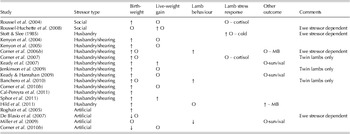
Ewes have been subject to a variety of stressful situations during pregnancy and the post-natal consequences investigated (Table 4 and for details see Table S3: (go to http://journals.cambridge.org/AGS).
Summary of studies where ewes were shorn† or other behavioural or physiological stress was applied to the ewe and resulting lamb pre-weaning outcomes were measured. Symbols, ↑, ↓ and O denote response increased, decreased or not different from control group (MB denotes maternal behaviour).

† Studies recorded for shearing of ewes are in addition to those cited by Kenyon et al. (Reference Kenyon, Morris, Revell and McCutcheon2003).
Shearing
The idea that shearing of the pregnant ewe increased lamb birth-weight was first reported by Rutter et al. (Reference Rutter, Laird and Broadbent1971) and since then many studies have investigated different aspects of the response. Since Kenyon et al. (Reference Kenyon, Morris, Revell and McCutcheon2003) critically reviewed the literature, their conclusions will be discussed here in relation to more recent studies. Shearing induced a significant birth-weight response in most studies (see Table 4 for summary). Indeed, even where the birth-weight response to shearing was not significant (Corner et al. Reference Corner, Kenyon, Stafford, West and Oliver2007; Jenkinson et al. Reference Jenkinson, Kenyon, Blair, Breier and Luckman2009; Banchero et al. Reference Banchero, Vazquez, Montossi, De Barbieri and Quintans2010; Cal-Pereyra et al. Reference Cal-Pereyra, Benech, Da Silva, Martín and González-Montaña2011), there were numerical increases in birth-weight, confirming the conclusion of Kenyon et al. (Reference Kenyon, Morris, Revell and McCutcheon2003) that shearing did not decrease birth-weight.
Kenyon et al. (Reference Kenyon, Morris, Revell and McCutcheon2003) identified timing of shearing, increases in ewe feed intake, longer gestation lengths and the depth of wool stubble remaining after shearing as factors that could influence any response in birth-weight and concluded that these factors did not explain variation in the birth-weight response. Subsequent studies confirm this conclusion. Banchero et al. (Reference Banchero, Vazquez, Montossi, De Barbieri and Quintans2010) reported a larger increase in birth-weight in response to shearing at GD 70 than GD 120, but only in one of two experiments. Corner et al. (Reference Corner, Kenyon, Stafford, West and Oliver2006b , Reference Corner, Kenyon, Stafford, West and Oliver2007) found that shearing increased gestation length but again only in one of two experiments. Keady & Hanrahan (Reference Keady and Hanrahan2009) reported increases in ewe feed intake in response to shearing. As an overall hypothesis to explain variation in the occurrence of a birth-weight response, Kenyon and co-workers suggested that fulfilment of two criteria was necessary. The ewe must first have the potential to respond (lambs born to unshorn ewes destined to have low birth-weight) and secondly, the ability to respond to shearing (adequate maternal body reserves or nutrition). The absence of an increase in birth-weight in response to maternal shearing observed in singleton lambs by Corner et al. (Reference Corner, Kenyon, Stafford, West and Oliver2007, Reference Corner, Kenyon, Stafford, West and Oliver2010b ) and Jenkinson et al. (Reference Jenkinson, Kenyon, Blair, Breier and Luckman2009) could be ascribed to the first of the above criteria. However, Kenyon et al. (Reference Kenyon, Morel and Morris2004) failed to find any interaction between ewe body condition score (BCS) (over a wide range) and response to shearing.
Kenyon et al. (Reference Kenyon, Morris, Revell and McCutcheon2003) considered three lamb responses in addition to birth-weight: survival, thermoregulatory capacity and growth to weaning, and found responses were inconsistent. In more recent studies, Kenyon et al. (Reference Kenyon, Sherlock, Parkinson and Morris2005) mimicked the thermoregulatory responses by injecting ewes with thyroxine but did not observe any response in birth-weight. Lamb survival was reported in three studies (Corner et al. Reference Corner, Kenyon, Stafford, West and Oliver2006b ; Keady et al. Reference Keady, Hanrahan and Flanagan2007; Keady & Hanrahan Reference Keady and Hanrahan2009) with no advantage to shearing. In 10 of 12 studies weaning weights were reported and there were significant increases in weaning LW in only three studies (Kenyon et al. Reference Kenyon, Morel and Morris2004; Keady et al. Reference Keady, Hanrahan and Flanagan2007; Sphor et al. Reference Sphor, Banchero, Correa, Osorio and Quintans2011) and only in the latter two studies was LWG to weaning increased. Other lamb responses, e.g. lamb vigour and behaviour not considered by Kenyon et al. (Reference Kenyon, Morris, Revell and McCutcheon2003) are discussed below.
Other responses
Corner et al. (Reference Corner, Kenyon, Stafford, West and Oliver2006b , Reference Corner, Kenyon, Stafford, West and Oliver2007, Reference Corner, Kenyon, Stafford, West and Oliver2010b ) focussed on the effects of shearing ewes in mid-pregnancy in conjunction with other treatments. In the first experiment (Corner et al. Reference Corner, Kenyon, Stafford, West and Oliver2006b ), ewes were gathered on GD80, fasted for 24 h and then shorn or not shorn. Fewer lambs born to shorn ewes failed to suckle than control ewes or ewes housed and fasted for 24 h but not shorn. Corner et al. (Reference Corner, Kenyon, Stafford, West and Oliver2010b ) compared control ewes with ewes that (a) were isolated for 1 h on two or ten occasions; (b) ewes that were shorn and, importantly (c) ewes that were sham-shorn (not shorn but otherwise treated identically to shorn ewes). Only in the shorn treatment was birth-weight increased, suggesting that the birth-weight response was not related to acute stress associated with shearing but a physiological response of the ewe to removal of the fleece. Banchero et al. (Reference Banchero, Vazquez, Montossi, De Barbieri and Quintans2010) in each of two experiments sheared ewes on either GD70 or GD120. In both experiments, there were improvements in behavioural progress of the lamb to suckling as a result of shearing, suggesting there are responses to shearing which could not be attributed directly to increased birth-weight.
Stressors not related to shearing also have effects on pre-weaning outcomes. Roussel et al. (Reference Roussel, Hemsworth, Boissy and Duvaux-Ponter2004) isolated ewes twice weekly from GD112 onwards and reported increased birth-weight in response to isolation although the weight difference had disappeared by weaning. In a subsequent experiment (Roussel-Huchette et al. Reference Roussel-Huchette, Hemsworth, Boissy and Duvaux-Ponterc2008), ewes were exposed to a similar isolation stress but an additional group of ewes were isolated and transported; there were no differences in birth-weight but lambs in the transport treatment were heavier at weaning. Hild et al. (Reference Hild, Coulon, Schroeer, Andersen and Zanella2011) compared gentle with aversive handling of ewes from GD100. Lambs born to aversively handled ewes were heavier at birth with no differences in maternal behaviour towards the lamb between treatments.
Finally Stott & Slee (Reference Stott and Slee1985) compared the effects of heat (26 °C) or cold (shorn and exposed to 6 °C) exposure of ewes from GD133 onwards on neonatal lamb outcomes. There were no differences in lamb birth-weight from the treatments imposed. However, lambs born to cold-stressed dams were more capable of mounting a response to cold stress than those born to control or heat-stressed ewes. Thus, lambs from the cold-stress treatment had the smallest reduction in rectal temperature when they were subject to cold stress themselves and the greatest increase in metabolic rate when stimulated by adrenaline.
Glucocorticoid treatment of ewes has been used to perturb the HPA axis. Lamb responses were dependent upon the timing of treatment. Administration of dexamethasone once in early pregnancy (GD27) had no effect on birth-weight (Roghair et al. Reference Roghair, Segar, Sharma, Zimmerman, Jagadeesha, Segar, Scholz and Lamb2005; De Blasio et al. Reference De Blasio, Dodic, Jefferies, Moritz, Wintour and Owens2007). However, administration later in pregnancy reduced birth-weight. Moss et al. (Reference Moss, Sloboda, Gurrin, Harding, Challis and Newnham2001) injected betamethasone either once (150 mg betamethasone on GD104) or four times (GD104, GD111, GD118 and GD125). Administration of betamethasone four times reduced birth-weight compared to controls, with a single injection of betamethasone being intermediate. These differences in birth-weight were still apparent at 3 months of age. Using a different protocol (1·5 or 3 mg of dexamethasone on either GD130 or GD141; 2×2 factorial design), Miller et al. (Reference Miller, Jackson, Blache and Roche2009) reported a litter-size-dependent effect of treatment; there was no birth-weight reduction in single lambs but a dose-dependent birth-weight reduction in twins.
Thus there appears to be a marked difference in outcomes between behavioural and chemical stress-treatments applied to ewes (see Table 4 for summary). Whereas behavioural stress had no adverse consequences for lamb birth-weight or behavioural progression, chemical stress in late pregnancy had adverse consequences for birth-weight. Consistent with this, when Corner et al. (Reference Corner, Kenyon, Stafford, West and Oliver2010b ; see above) applied a variety of behavioural stressors with no adverse outcomes, a ewe treatment designed to mimic these events by injection with cortisol reduced birth-weight.
DISCUSSION
The information presented to date has summarized evidence that prenatal treatments imposed upon the ewe had effects upon the offspring that potentially impacted its wellbeing and covered the period until approximately weaning age. There was consistent evidence that the prenatal treatments did influence the offspring but there was also considerable variability in response and it is therefore relevant to consider sources of variation and their impacts. Variability can arise from three sources: the nature of the challenge itself; the characteristics of the dam and those of the lamb.
Characteristics of challenge
Severity
The severity of the prenatal treatment is a product of the nature (type and intensity) of the specific challenge and how long the challenge was imposed. The most relevant information is that obtained where treatments were imposed within the same experiment and interactive effects of treatments reported. In late gestation (GD100 onwards) increasing severity of UN resulted in greater reductions in birth-weight whether achieved by imposing a greater degree of UN (Khalaf et al. Reference Khalaf, Doxey, Baxter, Black, FitzSimons and Ferguson1979) or by increasing the length of UN (Bloomfield et al. Reference Bloomfield, Oliver, Giannoulias, Gluckman, Harding and Challis2003). Where UN included both early/mid and late pregnancy UN (Holst et al. Reference Holst, Killeen and Cullis1986; Corner et al. Reference Corner, Kenyon, Stafford, West, Lopez-Villalobos, Morris and Oliver2008; Ferguson et al. Reference Ferguson, Thompson, Gordon, Hyder, Kearney, Oldham and Paganoni2011; Kenyon et al. Reference Kenyon, Pain, Hutton, Jenkinson, Morris, Peterson and Blair2011), results were more equivocal. In only one study was birth-weight significantly decreased by early/mid UN (Ferguson et al. Reference Ferguson, Thompson, Gordon, Hyder, Kearney, Oldham and Paganoni2011) and thus any interactions between periods of UN could not be assessed. As noted when discussing stress challenges the number (Moss et al. Reference Moss, Sloboda, Gurrin, Harding, Challis and Newnham2001) and the amount (in twin lambs only) of glucocorticoid administered (Miller et al. Reference Miller, Jackson, Blache and Roche2009) reduced birth-weight. Thus the severity of prenatal challenge does impact upon lamb outcome but the extent is dependent on challenge type and gestational timing.
Additivity
Ewes will probably encounter more than one type of stressor during pregnancy (e.g. UN and handling). However, few experiments designed to investigate interactions between different maternal treatments have been found.
Shearing
Kenyon et al. (Reference Kenyon, Morris, Revell and McCutcheon2003) in their critical review found no good evidence for interactions between level of nutrition and the effect of shearing. However, two studies cited in the review did address this issue specifically where either maintenance and ON (Kenyon et al. Reference Kenyon, Morris, Revell and McCutcheon2002b ) or maintenance and UN (Kenyon et al. Reference Kenyon, Morris, Revell and McCutcheon2002a ) were compared. No interactions between shearing and ON were observed but when ewes were subjected to UN, no increase in birth-weight was observed in response to shearing. However, this effect could not be attributed solely to the level of feeding as ewes which were allocated to UN were also the lightest ewes in the experimental group and thus would have had lower body energy reserves. Although shearing will increase the potential for cold stress to be imposed upon the ewe, Kenyon et al. (Reference Kenyon, Morris, Revell and McCutcheon2003) found little evidence for this largely because environmental conditions were not reported in most studies and this is true for studies subsequent to the review. However, it should be noted that even in housed conditions, environmental conditions may be important (type of housing and bedding system). For example, Bøe et al. (Reference Bøe, Nedkvitne and Austbø1991) reported an increase in lamb birth-weight when ewes were shorn and housed in an un-insulated shed compared with ewes housed in an insulated shed.
Other studies
Kott et al. (Reference Kott, Thomas, Hatfield, Evans and Davis1998) have noted that supplementary vitamin E improved lamb survival in the early but not the late part of the lambing season, suggesting a response to supplementation when the environment was more challenging. There are experiments where different nutritional perturbations have been combined. Supplementation with Se and variation in nutrition has been examined by Meyer et al. (Reference Meyer, Reed, Neville, Taylor, Hammer, Reynolds, Redmer, Vonnahme and Caton2010), Munoz et al. (Reference Munoz, Carson, McCoy, Dawson, O'Connell and Gordon2008a ) and Swanson et al. (Reference Swanson, Hammer, Luther, Carlson, Taylor, Redmer, Neville, Reed, Reynolds, Caton and Vonnahme2008). Munoz et al. (Reference Munoz, Carson, McCoy, Dawson, O'Connell and Gordon2008a ) reported only one interaction from the many possible, indicating the effects of Se and nutrition were largely independent. In two experiments of similar design (Swanson et al. Reference Swanson, Hammer, Luther, Carlson, Taylor, Redmer, Neville, Reed, Reynolds, Caton and Vonnahme2008; Meyer et al. Reference Meyer, Reed, Neville, Taylor, Hammer, Reynolds, Redmer, Vonnahme and Caton2010), there were interactions between treatments for birth-weight in one experiment and for lamb morbidity/mortality in both experiments. Where the amounts of protein and fish oil fed were varied (Annett et al. Reference Annett, Carson and Dawson2008) there were interactions such that lamb survival was prejudiced when fish oil was fed against a low protein but not high-protein background. The limited evidence suggests that whether different nutritional treatments have additive or interactive effects will be treatment-dependent. More importantly, to translate the experimental data into practical recommendations, an understanding of how different stressors interact is a prerequisite and a need for future study.
Characteristics of the ewe
Body reserves
The extent of maternal body energy reserves (recorded as BCS where higher scores, normally on a 5-point scale, indicate increasing adiposity) and their mobilization may reduce the impact of nutrition. There are few studies where the interactive effects of BCS and nutrition have been specifically addressed. The interactive effects of heavy and light ewes (differing in BCS between 2 and 3) and maintenance and ad libitum pregnancy feeding have been investigated in New Zealand (Kenyon et al. Reference Kenyon, Blair, Jenkinson, Morris, Mackenzie, Peterson, Firth and Johnston2009; van der Linden et al. Reference Van Der Linden, Kenyon, Blair, Lopez-Villalobos, Jenkinson, Peterson and Mackenzie2009, Reference Van Der Linden, Kenyon, Lopez-Villalobos, Jenkinson, Peterson and Blair2010). Birth-weight was only reduced where ewes of low BCS were fed a maintenance rather than ad libitum diet, suggesting that ewes of greater adiposity (BCS 3) were able to buffer the effects of maintenance feeding from maternal reserves. Many of the studies reviewed reported ewe BCS when treatments were imposed. However when the effects of UN, whether in early/mid or late pregnancy, were examined in relation to ewe BCS, no clear pattern emerged between ewe BCS and the effect of nutritional treatment probably because of the many other potentially confounding factors.
Breed
Although many studies report the breed of sheep used, only two have directly compared breeds with similar outcomes (Burt et al. Reference Burt, Hess, Nathanielsz and Ford2007; Rooke et al. Reference Rooke, Houdijk, McIlvaney, Ashworth and Dwyer2010). Burt et al. (Reference Burt, Hess, Nathanielsz and Ford2007) compared ewes of the same original genotype but maintained either in a harsh rangeland or more favourable conditions for 30 years, whereas Rooke et al. (Reference Rooke, Houdijk, McIlvaney, Ashworth and Dwyer2010) compared ewes of a hill-breed (Scottish Blackface) with a lowland breed (Suffolk). In both cases, lamb birth-weight was reduced in response to maternal UN only in the ewes adapted to favourable conditions, suggesting an adaptive response of ewes accustomed to harsh conditions which partitioned nutrients in favour of the foetus rather than maternal tissues. Therefore, breed may be an important and largely unquantified determinant of response. The sire breed may also be relevant. Tygesen et al. (Reference Tygesen, Tauson, Blache, Husted and Nielsen2008) bred Shropshire ewes to Shropshire rams selected either for high or low Longissimus dorsi cross-sectional area. Late pregnancy UN reduced birth-weight more severely in lambs sired by the high L. dorsi ram and this effect was still present at 110 days after birth.
Age
The best described effect of ewe age is the model of Wallace et al. (Reference Wallace, Regnault, Limesand, Hay and Anthony2005a ) where 8-month-old ewes were allowed ad libitum access to good quality feed. Lambs born to the ON ewes had severely reduced birth-weight. However, this is a specific model where pregnancies were generated by embryo transfer and recipient ewes had limited energy reserves (BCS 2·4) and the energy intakes achieved were 2-fold maintenance. Munoz et al. (Reference Munoz, Carson, McCoy, Dawson, O'Connell and Gordon2008b , Reference Munoz, Carson, McCoy, Dawson, O'Connell and Gordon2009) examined the effects of ON in 1- and 2-year-old and adult ewes in a more practical context where intakes were lower at 1·4 times maintenance and BCS was higher (3·4) and found no adverse effects. Thus the impacts of the Wallace model appear of limited value in an agricultural context.
Characteristics of offspring
Sex
Offspring sex was included in the statistical model used in many studies either directly or as a covariate for birth-weight, and the vast majority of studies reported no significant sex effects. There were, however, a few exceptions: Erhard et al. (Reference Erhard, Boissy, Rae and Rhind2004) reported that female but not male lamb birth-weight was reduced by UN. There were also sex-related outcomes in response to dose of dexamethasone (Miller et al. Reference Miller, Jackson, Blache and Roche2009): male but not female lamb birth-weight was reduced at a higher dose of steroid. However, female lambs exposed to the higher dose of steroids had greater rectal temperatures than other females and grew faster to weaning; there were no such effects on male lambs. In general therefore, for the prenatal challenges studied so far, there are few interactions between maternal treatment and lamb sex in offspring responses.
Litter size
It may be expected that the increased nutrient demand required to produce the greater weight of products of conception (foetus plus placenta) would render twin and triplet lambs more susceptible to effects particularly of maternal nutrition. When triplet lambs were compared with other litter sizes there was evidence for a greater adverse effect of UN on triplets. Everett-Hincks et al. (Reference Everett-Hincks, Blair, Stafford, Lopez-Villalobos, Kenyon and Morris2005) reported that lamb survival and ewe–lamb behaviours improved with increasing pasture allowance in triplets but not in twins. Similarly lamb survival in triplets but not other litter sizes was adversely affected when nutrition was reduced in late pregnancy (Kleemann et al. Reference Kleemann, Walker, Walkley, Ponzoni, Smith, Grimson and Seamark1993). Birth-weight of both twins and triplets was reduced as a result of UN (Khalaf et al. Reference Khalaf, Doxey, Baxter, Black, FitzSimons and Ferguson1979). In contrast to the above, Corner et al. (Reference Corner, Kenyon, Stafford, West, Lopez-Villalobos, Morris and Oliver2008) found no differences between twins and triplets.
When comparing singles and twins, reports were less consistent. In several studies, no differences were reported between singles and twins (Holst et al. Reference Holst, Killeen and Cullis1986; Corner et al. Reference Corner, Kenyon, Stafford, West and Oliver2007, Reference Corner, Kenyon, Stafford, West, Lopez-Villalobos, Morris and Oliver2008; Oldham et al. Reference Oldham, Thompson, Ferguson, Gordon, Kearney and Paganoni2011). However, reduced twin but not single lamb birth-weight due to UN was noted by Kenyon et al. (Reference Kenyon, Blair, Jenkinson, Morris, Mackenzie, Peterson, Firth and Johnston2009) and Khalaf et al. (Reference Khalaf, Doxey, Baxter, Black, FitzSimons and Ferguson1979). The variable responses in single and twin lambs to shearing have already been noted.
In summary, the impact of maternal treatments on offspring outcomes was influenced by other variables. The most important are ewe body reserves, breed and litter size. In relation to the treatments imposed themselves there is a need for more evidence most particularly on how the effects of different maternal stressors interact.
The material reviewed here can be viewed in terms of the balance between the welfare of the ewe and lamb resulting from the relative impacts of stressors on the ewe and the outcomes on the lamb. Where impacts are negative or positive for both ewe and lamb, then assessment of welfare impact is straightforward. More problematic is where a negative impact on the ewe has a positive outcome for the lamb and vice versa.
Negative maternal stressors with negative lamb impacts
Under-nourishment and corticosteroid treatment of the ewe were the stressors that had negative impacts upon the lamb. With one exception (Holst et al. Reference Holst, Killeen and Cullis1986), negative impacts upon lamb survival, expression of maternal or lamb behaviours, etc. were not observed in the absence of a reduction in birth-weight. Therefore, avoidance of reduced birth-weight is key to avoiding adverse effects on lamb welfare. Consistent decreases in lamb birth-weight are only observed when UN occurs in the last third of gestation. Therefore, adequate feeding during this period is important for lamb welfare. In the first two-thirds of gestation, the effect of UN on birth-weight is less consistent. This difference is consistent with a change in the major demand for nutrients from that required for placental development to foetal development in late pregnancy. The variability in response probably also reflects plasticity in response of the foetus to early UN allowing catch-up growth when adequate nutrition is restored. In terms of welfare, the length and severity of UN necessary for a negative effect on lamb birth-weight have been largely unexplored. In late pregnancy, Bloomfield et al. (Reference Bloomfield, Oliver, Giannoulias, Gluckman, Harding and Challis2003) who restricted ewes to 0·02 of control energy intakes for 10 or 20 days from day 105 of pregnancy reported a progressive reduction in lamb birth-weight as the time of restriction increased but this was a severe restriction of intake close to starvation.
Positive maternal treatments with positive lamb impacts
The positive maternal treatments which have been reported are ON of the ewe and feeding specific dietary components to ewes of adequate status. In this context, supplementary fatty acids are the most relevant example as for the other minerals (Co, I and Se) and vitamin E, it is not clear in most cases whether control ewes were in adequate rather than deficient status (Co, Se and vitamin E) or receiving toxic amounts (I) of the trace elements. There was no clear evidence indicative of improved lamb welfare to over-feeding ewes during pregnancy and in some cases, there may be disadvantages. Similarly dietary LA or other FA did not improve lamb thermogenesis or survival. Only where the ewe was fed n-3 fatty acids have positive responses in birth-weight and survival been noted but there may be accompanying adverse effects on ewe milk yield. Overall, there is no clear evidence for positive lamb outcomes to feeding the ewe nutrients in excess of requirements and in fact there are potentially adverse effects (see below), and so nutrition to meet the requirements of ewe and developing foetus is optimal for both ewe and lamb welfare.
Negative maternal stressors with positive neonatal lamb impacts
The most striking example of a conflict in welfare terms is shearing of the pregnant ewe. This imposes stress because of the handling of the ewe associated with shearing and possible thermal stress associated with removal of the fleece. This has to be weighed against the consistently observed increase in lamb birth-weight. The mechanism is unclear but increased nutrient supply to the foetus is a strong candidate. Maternal feed intake (e.g. Keady & Hanrahan Reference Keady and Hanrahan2009); gestation length (Corner et al. Reference Corner, Kenyon, Stafford, West and Oliver2006b ; Banchero et al. Reference Banchero, Vazquez, Montossi, De Barbieri and Quintans2010) and plasma glucose concentrations (independent of feed intake; Symonds et al. Reference Symonds, Bryant, Shepherd and Lomax1988; Morris et al. Reference Morris, McCutcheon and Revell2000) have been noted to increase after shearing. All the above would increase nutrient supply to placental and foetal tissues. The response in lamb birth-weight appears to be related to removal of the fleece specifically, since sham-shearing (Corner et al. Reference Corner, Kenyon, Stafford, West and Oliver2010b ) did not provoke an increase in lamb birth-weight. The welfare balance between ewe and lamb will depend upon conditions experienced by the ewe after shearing. A negative impact on the ewe is more likely if the ewe remains outside on pasture after shearing but will be minimized if the ewe is housed, and shearing may in fact be positive for the ewe if the housed environment and the stocking density of ewes is such that the unshorn ewe may be exposed to heat stress.
Other maternal treatments which can be classified as stress-related have also been associated with positive lamb outcomes. Isolation and transport of the ewe (Roussel et al. Reference Roussel, Hemsworth, Boissy and Duvaux-Ponter2004; Roussel-Huchette et al. Reference Roussel-Huchette, Hemsworth, Boissy and Duvaux-Ponterc2008) was associated with increases in lamb birth-weight and weight gain. Aversive handling of the ewe (Hild et al. Reference Hild, Coulon, Schroeer, Andersen and Zanella2011) tended to increase lamb weight at 24 h of age. Lambs born to ewes cold-stressed for the last 14 days before parturition were better able to respond to a cold challenge (Stott & Slee Reference Stott and Slee1985). Finally in one experiment where ewes were treated with corticosteroids (Roghair et al. Reference Roghair, Segar, Sharma, Zimmerman, Jagadeesha, Segar, Scholz and Lamb2005) lamb birth-weight was increased, although this was not a consistent response.
From the above, and in contrast to UN, stress-related treatments imposed on the ewe (shearing, handling, isolation) do not appear to have adverse effects on the lamb and in fact may have beneficial effects. Clearly, the welfare balance needs to be judged on a case-by-case basis.
Positive maternal stressors with negative lamb impacts
Examples relate primarily to ON of the ewe. The model developed by Wallace et al. (Reference Wallace, Milne and Aitken2005b ) for teenage pregnancy where ON adolescent ewes partition nutrients to maternal growth at the expense of foetal growth is the clearest example. It should however be noted that, when ON was evaluated in conditions more applicable to sheep husbandry, the reported adverse effects upon lamb birth-weight were less apparent (e.g. Munoz et al. Reference Munoz, Carson, McCoy, Dawson, O'Connell and Gordon2008b , Reference Munoz, Carson, McCoy, Dawson, O'Connell and Gordon2009; Swanson et al. Reference Swanson, Hammer, Luther, Carlson, Taylor, Redmer, Neville, Reed, Reynolds, Caton and Vonnahme2008; Kenyon et al. Reference Kenyon, Pain, Hutton, Jenkinson, Morris, Peterson and Blair2011).
The present review should be considered in light of the foetal origins of adult disease hypothesis, where the uterine environment that the foetus is exposed to influences development, with postnatal consequences particularly for adult health as exemplified by the development of hypertension, cardiovascular disease and type II diabetes in the human (Barker et al. Reference Barker, Eriksson, Forsen and Osmond2002). Although the current review addresses the effects upon offspring up to weaning (effects into adulthood being dealt with in a future review), specific features of the hypothesis are worthy of note.
First the offspring responses to any perturbation of the uterine environment depends upon when during pregnancy the perturbation is imposed, in other words, there are specific windows in development during which the foetus is sensitive. These have been summarized for the sheep by Symonds et al. (Reference Symonds, Sebert and Budge2010). Although most challenges imposed upon the ewe, such as UN, were chronic in nature, the importance of specific windows can be demonstrated. The timing of UN has already been discussed. A more specific example is the response to administration of steroids on day 27 of pregnancy which, although it did not perturb birth-weight (Roghair et al. Reference Roghair, Segar, Sharma, Zimmerman, Jagadeesha, Segar, Scholz and Lamb2005; De Blasio et al. Reference De Blasio, Dodic, Jefferies, Moritz, Wintour and Owens2007), increased resting blood pressure of the offspring at 2 years of age (Dodic et al. Reference Dodic, Abouantoun, O'Connor, Wintour and Moritz2002).
A second consequence of the foetal origins hypothesis is the idea of the ‘predictive adaptive response’ (Nettle et al. Reference Nettle, Frankenhuis and Rickard2013). Thus the environment the foetus experiences during development primes it to alter its phenotype for the environment it is likely to experience during post-natal life through changes in gene expression and epigenetic mechanisms (Ford & Long Reference Ford and Long2011). Adverse consequences for adult health occur when the post-natal environment is not as expected (‘environmental mismatch’), e.g. when foetal UN is followed by plentiful nutrient supply during adult life. In most of the material reviewed here, a negative impact on the dam (e.g. UN) had a negative consequence for the offspring (e.g. lower birth-weight) probably directly through a reduction in nutrient supply to the foetus rather than by other mechanisms. Perhaps the one clear example of the effect of the foetal environment is demonstrated in the study where ewes were offered maintenance or ad libitum pasture and birth-weights of lambs were greater (5·7 v. 5·2 kg) when ad libitum pasture was offered (Kenyon et al. Reference Kenyon, Blair, Jenkinson, Morris, Mackenzie, Peterson, Firth and Johnston2009; van der Linden et al. Reference Van Der Linden, Kenyon, Blair, Lopez-Villalobos, Jenkinson, Peterson and Mackenzie2009, Reference Van Der Linden, Kenyon, Lopez-Villalobos, Jenkinson, Peterson and Blair2010). When these ewe lambs were mated and fed to requirement throughout pregnancy (i.e. not ad libitum), lambs whose grand-dams had been fed maintenance were heavier (4·7 v. 4·3 kg) at birth than lambs whose grand-dams had been fed ad libitum. Thus, ewe–lambs whose dams had experienced maintenance conditions in utero were more able to cope with similar conditions when they became pregnant themselves than ewe–lambs which had been fed ad libitum.
In conclusion, the current review has identified maternal UN as the chief maternal challenge that has consistent adverse outcomes for the lamb, mainly manifest through reductions in birth-weight. Lamb birth-weight is reduced consistently when UN is imposed after day 100 of pregnancy. Although UN imposed earlier in pregnancy has a more variable effect on birth-weight, absence of a depression in birth-weight does not imply that foetal development is not perturbed by UN. Perturbed foetal development may have longer-term consequences for the lamb than those examined during the pre-weaning period upon which this review has focussed; these consequences will be discussed in a companion review. The current review has also focussed primarily on consequences for the welfare of the lamb. The immediate and longer-term consequences of the maternal treatments for the ewe must also be considered when animal welfare is assessed. This is particularly important for maternal treatments, such as shearing, which may have a positive outcome for the lamb. The overall balance of welfare for both ewe and lamb should be considered. Finally the review has highlighted areas requiring future study. The most important of these is the consideration of interactions between different maternal stressors, which have not been investigated and which are important in practice since the ewe is likely to encounter more than one stressor during normal animal husbandry. In this context, the scarcity of studies considering the impact of disease in the ewe on lamb outcomes is noteworthy although the ethical considerations of carrying out such studies are recognized.
We gratefully acknowledge funding from the UK Department for Environment, Food and Rural Affairs (Defra, Project AW0509: Early environment effects on animal welfare, health and productivity) and the Scottish Government (SPASE Module 2: Effects of early environment on behaviour, reproduction, welfare and product quality of livestock.
The supplementary material for this paper can be found at http://journals.cambridge.org/AGS.